Haftarat Bereishit—Isaiah: A Reason to Exist

Every week of the year has its own Torah portion (a reading from the first five books of the Bible) and its own haftarah (an accompanying reading from the books of the prophets). This week we read the very first Torah portion, Bereishit (Genesis 1:1-6:8) and the haftarah is Isaiah 42:5-43:10.

In the beginning are the gods, or one god. The god(s) make the sky and the earth.  Later, the god(s) invent human beings.

That order of creation appears in most of the myths of the ancient Near East, from the Sumerians of circa 3000 B.C.E. to the Israelites of circa 530 B.C.E. But the reason why human beings were created changes.

Creation of the Human in Enuma Elish

The Sumerian creation myth was retold in Mesopotamia for thousands of years, with different names for the gods. The most complete expression of this myth that archaeologists have found so far is several copies of the Enuma Elish, a seven-tablet book in Akkadian cuneiform dating to about 1100 B.C.E.

Tiamat pursued by Marduk

The story begins when the two primordial gods mixed their waters together”, and the female, Tiamat, gives birth to more gods.  The gods multiply, and two factions fight against each other.  The hero-god (Marduk, in the copy from Babylon) kills Tiamat, the leader of the other faction, and creates the world out of parts of her body. Then he has a clever idea: the gods won’t have to work to get their own meals if they create humans to serve them.  The gods bind Tiamat’s favorite consort, Kingu, and an older god, Ea, makes humankind out of Kingu’s blood.

            From his blood he created mankind,

            On whom he imposed the service of the gods, and set the gods free.  (Enuma Elish, Tablet 6, lines 33-34)

Tablet Seven of Enuma Elish specifies the work the humans will do for the gods: providing lavish food offerings, taking care of their shrines, burning incense for them, and retelling their heroic stories.

Creation of the Human in Genesis 2

The first Torah portion in the Bible offers two creation myths.  It opens with an account organized into seven days, which was probably written sometime between the 9th and 6th centuries B.C.E. during the time of the first temple in Jerusalem. This account is immediately followed by a story that was probably written down earlier, in the 10th century B.C.E.

The second story begins:

On the day of God’s making the earth and the heavens, no bushes of the field existed yet on the earth, and no greens of the field had sprouted yet, because God had not made it rain upon the earth, and there was no adam to work the ground.  But fresh water ascended from the earth and watered all the surface of the ground. God vayitzer the adam out of dirt from the ground, and blew into its nostrils the breath of life, and the adam became an animated animal. (Genesis/Bereishit 2:4-7)
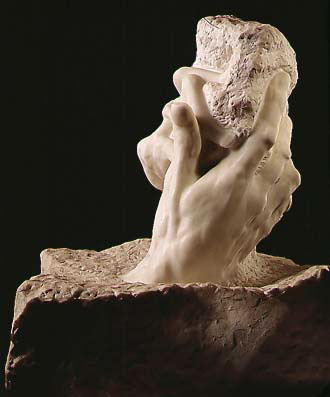
Hand of God, by Auguste Rodin
Hand of God,
by Auguste Rodin

adam (אָדָם) = human, humankind.

vayitzer (וַיִּיצֶר) = then he/it shaped, formed. (From the root yatzar (יָצַר) = shaped, formed, fashioned.)

In this creation myth there is only one god, and no sex. God makes the earth and the sky, but the writer does not care how. The important thing is that the earth consists of bare, moist dirt.  This is God’s raw material for making humankind, along with God’s own breath. One can imagine God as a human artist shaping a figure as if modeling clay, then blowing into its nostrils and bringing it to life.

And God took the adam and put it in the garden of Eden, to tend it and to watch over it. (Genesis 2:15)

God runs a few experiments, telling the adam not to eat from the tree of knowledge, inviting it to name animals, splitting it into male and female humans, and providing a talking snake.  Eventually God sends the two humans back into the world, which now contains rain, plants, and animals as well as dirt.

God does not create the adam to serve as a slave. Instead, the adam must watch the garden—while God is watching the adam.

Creation of the Human in Genesis 1

The redactors of the Bible placed the creation myth written during the time of the first temple at the very beginning of the book, before the earlier story about God making the adam out of dirt and breath. This story starts:

In a beginning, God created the heavens and the earth. (Genesis 1:1)

In this account, God is a spirit and a voice that speaks things into being. No raw materials are necessary. The account is divided into seven days, and God does not create humans until the sixth day, right after the other mammals.

Sixth Day of Creation, Nuremberg Chronicle, 1493
Sixth Day of Creation,
Nuremberg Chronicle, 1493

And God created the adam in Its image, in the image of God It created it; male and female It created them. And God blessed them, and God said to them: “Be fruitful and multiply and fill the earth and subjugate it! And rule over fish of the sea and birds of the skies and all animals that crawl over the earth.” (Genesis 1:26-27)

Today it is obvious that we have gone overboard in subjugating the earth and its animals. But in the Torah, before God assigns humankind that job, God says the human is made in God’s image. Perhaps humans are God’s proxies, assigned to handle the administration of the earth in place of God.

Creation of the Human in Second Isaiah

The second half of the book of Isaiah was written around 550-510 B.C.E., when King Cyrus of Persia finished conquering the Babylonian Empire. The prophet encourages the Israelite families that were deported to Babylon by Nebuchadnezzar’s conquering army to take advantage of King Cyrus’s policy of letting subjugated populations return to their former lands and rebuild temples for their own gods.

The exiles needed a lot of encouragement. Many of them doubted that the god of a nation that no longer existed would have the power to help them.  This week’s haftarah declares that God still has a purpose for the Israelites and will indeed redeem them.  Second Isaiah alludes to both of the creation stories in Genesis, reminding the Israelites that their god is the ultimate god, the creator of the world and all humankind, before he or she turns in a new direction.

            Thus said the god, God—

                        Creator of the heavens, stretching them out,

                        Spreader of the earth and her products,

                        Giver of breath to the people upon it,

                        And spirit to those who walk on it—   

by Waithamai
by Waithamai

           “I am God.  I summoned you with right conduct,

            And I held you firmly by your hand,

           Ve-etzarekha, and I gave you

            A covenant of a people, a light of nations.

           To open the eyes of the blind…” (Isaiah 42:5-7)

ve-etzarekha (וְאֶצָּרְךָ) = and I shaped you.  (From the root yatzar.)

Here God giving breath and spirit to all humanity, then “shapes” the children of Israel, using the same verb, yatzar, as when God shaped the adam our of dirt in Genesis 2. Second Isaiah implies that God yatzar the children of Israel in order to receive a covenant. Next the old covenant between God and the Israelites acquires a new purpose: in addition to obeying all of God’s rules, the people must now enlighten other nations.

What are the people of other nations (as well as many exiled Israelites) not seeing?

According to the haftarah, the Israelites must spread the word that God’s prophecies always come true, and the God of Israel is the only real god.

           You are My witnesses,

                        declares God,

            And My servant whom I have chosen. (Isaiah 43:10)

*

In all four creation stories from the ancient Near East, gods create the world and then add human beings.  In Enuma Elish, the purpose of humankind is to work for the gods.

In the oldest creation story in Genesis, the purpose of humankind seems to be to increase knowledge: human knowledge of the garden and of good and bad, and divine knowledge of human nature.

In the opening creation story in Genesis, the purpose of humankind is to rule over the earth and its other animals.

In second Isaiah, the purpose of the Israelites is to enlighten other peoples, ultimately leading them to convert to worshiping the God of Israel as the only real god.

Today the theory of evolution provides a logical explanation of why human beings exist, and many people consider our mental complexity an accidental side-effect of the process. In this line of thinking, humankind seems to have no purpose; the best we can do is follow Sartre and invent our own individual reasons for being.

But modern science cannot explain everything; there is room for a new concept of God, and even for the idea of a collective purpose.  What if there is a purpose for humankind in general?  What might it be?

Haftarat Matot—Jeremiah: Doomed to a Calling

Every week of the year has its own Torah portion (a reading from the first five books of the Bible) and its own haftarah (an accompanying reading from the books of the prophets). This week the Torah portion is Mattot (Numbers 30:2-32:42) and the haftarah is Jeremiah 1:1-2:3.

Jeremiah discovers his calling in this week’s haftarah:

The word of God happened to me, saying:

     Before I enclosed you in the womb, I knew you.

     And before you went out from the womb, I consecrated you;

     A navi to the nations I appointed you. (Jeremiah 1:4-5)

navi (נָבְיא) = prophet. (Plural = neviyim (נְבִיאִים).)

There are two kinds of neviyim in the Bible: those who have ecstatic experiences of the divine but do not speak for God; and those who serve as mouthpieces or translators for God, giving God’s messages to other people. Jeremiah is the second kind of navi, like thirteen prophets who came before him: Moses, Bilam, Samuel, Natan, Elijah, Elisha, Jonah, Joel, Amos, Hosea, the first Isaiah, Micah, and Nahum.

Jeremiah is an adolescent when he hears God tell him he is a navi.

And I said:

     Ahahh! My master, God!

     Hey! I do not know how to speak,

     Because I am a youth. (Jeremiah 1:6)

Ahahh (אֲהָהּ) = a cry of alarm, like “oh no!” or “alas!”

Jeremiah does not want the job

Moses tried to get out of being God’s prophet by claiming his speech and his tongue were heavy. Jeremiah protests that he would be a poor speaker because he is too young.

Perhaps he is wise for his age and knows that speaking out effectively against what others are doing requires the kind of insight one gains from life experience. Of course, knowing that at a young age would actually make him more qualified!

More importantly, God consecrated Jeremiah as a navi before he was born. The language in these poetic verses reflects an observation that we explain today through genetics: human beings are born with genes for certain talents and dispositions, which change from potential to actual in the right environment. Skills can be developed through education and practice, but you can become a stellar dancer only if you were born with certain physical traits, a stellar mathematician only if you were born with certain mental traits, a stellar prophet only if you were born with—what?

My guess is that a competent navi must be born with both the kind of intelligence needed by translators and eloquent speakers, and an unusual spiritual sensitivity.  Jeremiah must have had a way with words as a child, and he must have experienced glimpses or echoes of a reality behind our mundane reality.

People enjoy using their talents. So why is Jeremiah horrified at news that he must serve as a navi?

The haftarah opens by stating that Jeremiah began prophesying in the 13th year of the reign of Josiah, king of Judah, which scholars date to the 620’s B.C.E. Two neviyim are already active in Jerusalem at that time: Zephaniah (who has his own book) and Huldah (who is mentioned only when she utters a prophecy for King Josiah five years after Jeremiah’s call, in 2 Kings 22).

King Josiah began his reign at the age of eight. While he was growing up, Zephaniah was predicting a day of reckoning when God would wipe out Jerusalem, Judah, and most of the world for injustice and idol worship, while giving refuge to a small number of survivors.

When Jeremiah is called to prophesy, Josiah is 21 and has not yet begun his campaign of wiping out the images, shrines, and priests of other gods. The kingdom of Judah is still full of polytheists worshipping Baal, Ashtoret, Molekh, Khemosh, Milkom, and various astral deities. Furthermore, the political situation in the region is shifting. The Assyrian Empire, which had earlier swallowed up the northern kingdom of Israel and made Judah its vassal state, is weakening. Wars are brewing between powers bigger than the little state of Judah. It would be all too easy for a sensitive person to imagine God using foreign armies to punish and destroy the Israelites.

Jeremiah probably expects that the speeches he must make as a navi will be at least as grim and unwelcome as Zephaniah’s. If Jeremiah hopes that at least his private life will continue as before, that hope probably dies when he hears God’s response to his attempt to excuse himself on the grounds of youth.

prophet 1

And God said to me:

     Do not say “I am a youth”

     Because anywhere I send you, you will go,

     And anything I command you, you will speak.

     Do not be afraid in front of them,

     Because I will be with you to rescue you –declares God. (Jeremiah 1:7-8)

Theoretically Jeremiah could refuse the call, but God already knows Jeremiah will obey—and that he will need rescuing from “them”, some people who have not yet been named.

In case Jeremiah did not get the hint, later in this haftarah God says:

     And they will attack you

     But they will not vanquish you

     Because I will be with you—declares God—to rescue you. (Jeremiah 1:19)

How reassuring!

prophet 2

Jeremiah rants against dishonesty, injustice, and the worship of other gods until King Josiah is killed in 609 B.C.E. During the reigns of the next four kings of Judah, Nebuchadnezzar of Babylon vanquishes the old Assyrian empire and his army conquers Judah, putting Jerusalem under siege in 589 B.C.E.

Jeremiah blames idol-worship for the Babylonian attack, and advises each successive king of Judah (Yeho-achaz, Yehoyakim, Yehoyakin, and Tzidkiyahu) to surrender and make Judah a vassal of the new Babylonian empire. He knows it is the only way to save lives and preserve Jerusalem and its temple.

Despite all of Jeremiah’s prophesies, the people do not repent, and none of the kings submit to Babylon.  The Jerusalem faction that opposes surrender flogs, imprisons, and attempts to murder Jeremiah, so he will stop interfering with their power over the king.

prophet 3

When the Babylonians finally do raze Jerusalem and its temple, and kill or take captive most of its leading citizens, all Jeremiah can do is save the lives of a few people who helped him. He spends the rest of his own life in exile in Egypt, prophesying about other countries whose kings do not listen to him.

Maybe Jeremiah glimpses his own future when God first calls him to serve as a navi. That future would make anyone cry Ahahh!


When I was young, I was one of many Americans who believed that if you discovered your true calling and did it, you would be successful and happy. The 1970’s and 80’s were the era of “Do your own thing” and “Follow your bliss”.

Gradually I realized that even when you pursue work you have a talent for and are passionate about, the world does not always rearrange itself to give you a clear path.

Some individuals are lucky; I believe my father was born to be an engineer, and he had a profitable and satisfying career in that field. Some are unlucky, and pursue what speaks to their innermost heart only to end up broke and miserable. In some countries, those who pursue the work of a prophet speaking out against the government end up imprisoned (like Jeremiah) or killed (a fate he narrowly escaped).

And some people never try to pursue their calling, either because what they were born to do is something society expects from them anyway, or because they run away from the first intimation that they might have a calling.

What if you realized, with deep inner clarity, that you were called to devote your life to work that would lead to frustration and failure like Jeremiah’s?

Pinchas & 1 Kings: Zealots

Every week of the year has its own Torah portion (a reading from the first five books of the Bible) and its own haftarah (an accompanying reading from the books of the prophets). This week the Torah portion is Pinchas (Numbers 25:10-30:1) and the haftarah is 1 Kings 18:46-19:20.

My god is better than your god.

Holding this opinion (even when your “god” is atheism) is human nature. The trouble begins when someone with religious zeal (great energy and enthusiasm) becomes a zealot (fanatical and uncompromising). When two zealots oppose one another, no compromise is possible; one of them must quit or die.

This week both the Torah portion and the haftarah include a clash between a zealot for the God of Israel and a zealot for the gods of another religion.

Pinchas

Pinchas Impales Zimri & Cozbi, by J.C. Weigel
Pinchas (Phineas),
by J.C. Weigel

The Torah portion, Pinchas, opens with God’s declaration:

Pinchas, son of Elazar son of Aaron the High Priest, turned back My hot wrath from the Israelites through his kina beside My kina in their midst so I did not finish off the Israelites through My kina. Therefore say: Here I am, giving him my covenant of peace. And it will be for him and for his seed after him a covenant of priesthood forever… (Numbers/Bemidbar 25:11-13)

kina (קְנְאָ) = zeal, fervor, passion, jealousy.

God has afflicted the Israelites with a plague because many of them started worshiping the local god, Ba-al of Pe-or. While the Israelites are weeping, an Israelite man brings a local woman into a chamber of a tent (possibly God’s Tent of Meeting). Pinchas follows them in and impales them—and God’s plague stops. The Torah uses the same word, kubah (קֻבָּה) for both the tent chamber and the woman’s inner “chamber” where Pinchas’s spear skewers them both. (See my post Balak: Wide Open.)

This week’s Torah portion names the impaled couple: Zimri, a leader in the tribe of Shimon, and Cozbi, the daughter of a Midianite chieftain of Moab.

Why would either of these people walk in front of Moses and engage in sex right in or next God’s Tent of Meeting—in the middle of a plague?  Tikva Frymer-Kensky suggests in Reading the Women of the Bible that Cozbi is a priestess, a role often given to the daughter of a king, and that Zimri brings her over to conduct a religious sexual ritual to end the plague.

Frymer-Kensky imagines Cozbi might even perform her ritual in the name of the God of Israel. But I imagine Cozbi as so zealous for Ba-al that she wants to save her new neighbors, the Israelites, from their plague-inflicting god by bringing in some positive energy from Ba-al. She does not ask for permission to practice her religion in the Israelite’s holy place; she just does it, in an act of passionate conviction.

In this clash between two zealots, Pinchas wins and Cozbi dies. God (the God character in the Torah) admits to being carried away by zeal, as well, and rewards Pinchas for stopping God from destroying the Israelites.

Elijah

The haftarah from the first book of Kings tells a different story about two zealots: the battle between the queen of Israel and Israel’s foremost prophet.

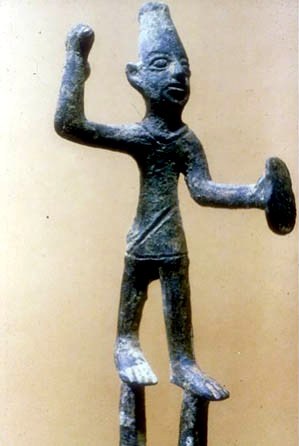
Ba-al Preparing Thunder and Lightning
Ba-al Preparing
Thunder and Lightning

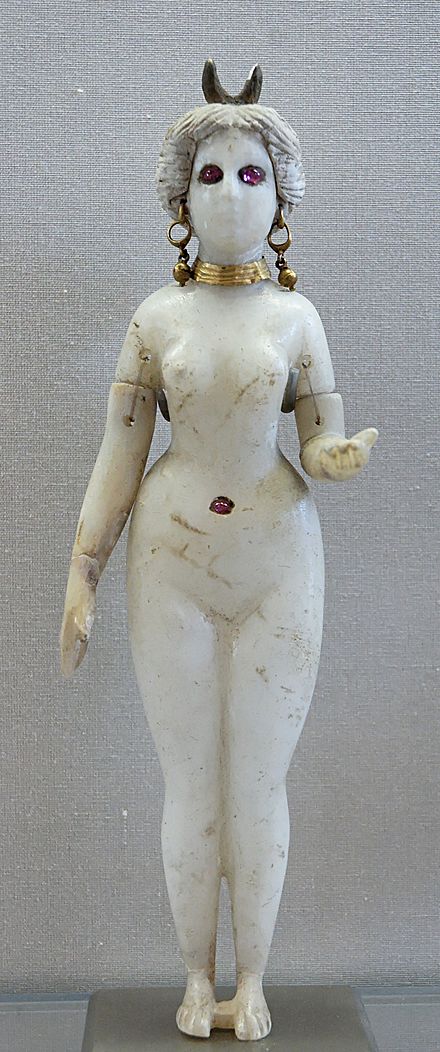
King Ahab’s queen and primary wife is Jezebel (Izevel in Hebrew), daughter of the Phoenician King Etba-al of Tyre. It is a good political alliance; but both books of Kings revile Jezebel because of her zeal for her native religion. As soon as Ahab marries Jezebel, according to 1 Kings, he builds a temple to Ba-al and bows down to that god. He also erects a cultic post for the goddess Ashtart.

Phoenician Ashtart
Phoenician Ashtart

Jezebel not only persuades her husband to worship her gods, but also tries to stamp out worship of the God of Israel by “exterminating the prophets of God” (1 Kings 18:4).

Furthermore, she uses her personal wealth to maintain 450 prophets of Ba-al (god of fertility, war, and weather) and 400 prophets of Ashtart (goddess of fertility, war, and seafaring).

Meanwhile Elijah, the most powerful prophet of the God of Israel, comes to King Ahab at his capital city, Samaria, and says:

As God lives, the god of Israel on whom I stand in attendance, there will be no dew or rain these years except by the word of my mouth. (1 Kings 17:1)

After three years, the famine in Samaria is severe. Jezebel’s weather god, Ba-al, does nothing.  So King Ahab institutes a search for Elijah.

Elijah orders King Ahab to summon “all Israel”, the 450 prophets of Ba-al, and the 400 prophets of Ashtart to Mount Carmel for a contest. The first book of Kings does not mention the prophets of Ashtart again, but the prophets of Ba-al and the Israelite witnesses show up on Mount Carmel, where there are two altars: one for Ba-al and one for the God of Israel. Against impressive odds, the God of Israel wins the contest. (See my post Pinchas & 1 Kings: The Sound of God.) The people of Israel fall on their faces and declare their allegiance to God, and under Elijah’s orders they kill all the prophets of Ba-al.

Then it finally rains.

Jezebel and Ahab
Jezebel and Ahab, by Charles Horne, 1909

Jezebel is not present at Mount Carmel, but Ahab comes home and tells her about the contest and that Elijah killed all the prophets of Ba-al by the sword.

Then Jezebel sent a messenger to Elijah saying: Thus may the gods do and more if by this time tomorrow I have not made your life like the life of one of them. And he was afraid, and he got up and went to [save] his life… (1 Kings 19:2-3)

He reaches Beer-sheva in the kingdom of Judah, then walks for a day into the wilderness and lies down to die. Although he won the contest on Mount Carmel and moved the Israelites to kill 450 Ba-al worshippers, a zealot’s job is never done. His victory seems empty as long as Queen Jezebel, his zealous opponent, is still in power, still supporting the religion of Ba-al and Ashtart, and still determined to kill every one of God’s prophets.

God sends an angel to urge Elijah to eat and keep walking.  He ends up on Mount Chorev (also called Mount Sinai) where God asks him:

Why are you here, Elijah? And he said: I was very kina for God, the God of Armies, because the Israelites had abandoned Your covenant and pulled down Your altars and killed Your prophets by the sword. And only I was left, and they tried to take my life. (1 Kings 19:9-10)

He declares he is a zealot for God, and admits that he has failed to exterminate Jezebel’s religion. God responds with a demonstration.

Elijahs Cave

And hey! God was passing by, and a big and strong wind was tearing off mountains of rocks in front of God; but God was not in the wind. And after the wind, an earthquake; but God was not in the earthquake. And after the earthquake, fire; but God was not in the fire. And after the fire, a faint sound of quietness. And when Elijah heard, he wrapped his face with his robe, and he went out and stood at the entrance of the cave; and hey!—a  voice [came] to him, and it said: Why are you here, Elijah? (1 Kings 19:11-13)

And Elijah gives the same reply, word for word. He did not pick up on God’s hint that true service to the divine lies in quietness. So God, instead of rewarding him, tells him he must anoint a young man named Elisha to be a prophet in his place.


In the book of Numbers, Pinchas’s zeal, kina, leads him to kill the Ba-al worshiper Cozbi and her Israelite assistant Zimri. God declares that this murder stopped God’s own kina from killing all the Israelites in a plague, and makes Pinchas a priest. In next week’s Torah portion, Mattot, Pinchas is the priest who goes with the raiding party to kill all the inhabitants of Pe-or. One zealot wins hands-down; the other zealot dies.

In the first book of Kings, Elijah’s kina leads him to stage a contest between gods and kill 450 Ba-al worshipers on the losing side. God cooperates by sending the dramatic manifestation of fire that Elijah requests on Mount Carmel. But Elijah’s real opponent is the zealot Jezebel, who remains in power.

When two zealots oppose one another, one of them must quit or die.  God’s demonstration at Mount Chorev implies that Elijah must quit being a zealot, take a quieter approach to religion, and perhaps spend the rest of his life in hiding. But Elijah despairs because he cannot imagine living without fighting for his cause. And God appoints another prophet.

Did the good guys win? No; Jezebel is just as zealous and just as willing to murder for the sake of religion as Elijah is. But God as portrayed in the first book of Kings is now wiser and more mature than the God character in the book of Numbers. This God still wants exclusive worship, but recognizes that kina, the passion of the zealot, is not the best approach.

Our world today is full of zealots. It is easy to revile a zealot willing to kill for the sake of a religion or another cause—when that zealot is not on your side.  May we all learn to recognize uncompromising zeal in people we agree with, and even in ourselves.  May we all learn to restrain ourselves, and listen to the faint sound of quietness.


Haftarat Beha-alotkha—Zechariah: Not by Might

Every week of the year has its own Torah portion (a reading from the first five books of the Bible) and its own haftarah (an accompanying reading from the books of the prophets). This week the Torah portion is Beha-alotkha (Numbers 8:1-12:16) and the haftarah is Zechariah 2:14-4:7.

Zechariah by Michelangelo

“Not by might, nor by power, but by My spirit, saith the LORD of hosts.” (Zechariah 4:6—King James translation)

This line from the haftarah in the book of Zechariah is famous in both Jewish and Christian circles. But what does it actually mean?

Zechariah was probably born in Babylon.  The upper classes of the kingdom of Judah, including Zechariah’s grandfather Iddo, were deported to Babylon after King Nebuchadnezzar’s army razed Jerusalem in 586 B.C.E.

Only 46 years later, the Persian king Cyrus marched into Babylon and quickly seized the whole Neo-Babylonian Empire.  Cyrus declared an empire-wide policy of religious tolerance, and authorized the exiles from Judah to return to Jerusalem and build another temple to their own god.

map Persian and Babylonian EmpiresAccording to the book of Ezra, the first large group of Judahites to return to Jerusalem was led by Zerubavel, a grandson of Judah’s next-to-last king, Yehoyakhin. This group included Zechariah, grandson of the priest Iddo.

The famous line in the book of Zechariah is preceded by a vision:

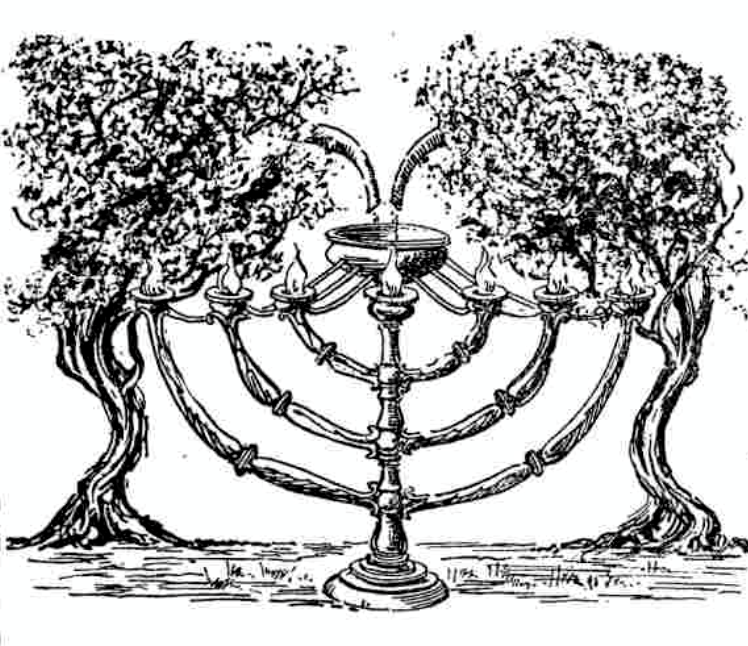
And the angel who was speaking to me returned, and it roused me as a man is roused from sleep. And it said to me: What do you see?  And I said: I see—hey!—a lampstand of gold, and a bowl above its head. And seven lamps are on it, seven, and seven pipes to the lamps …And two olive trees are over it, one on the right of the bowl and one on its left. (Zechariah 4:1-3)

A gold lampstand with seven lamps is the menorah described in the book of Exodus, mentioned at the start of this week’s Torah portion, and reproduced for Solomon’s Temple in Jerusalem.  The rest of Zechariah’s vision is more mysterious, so he asks the angel: What are these? (Zechariah 4:4)

Instead of explaining the vision, the angel replies:

This is the word of God to Zerubavel, saying: Not by chayil and not by koach, but rather by My ruach, said the God of Tzevaot. (Zechariah 4:6)

chayil (חַיִל) = troop, small army, or military escort; courage in the face of a military threat; wealth; ability. (King James translation: “might”.)

This word refers to a military force about 100 times out of about 230 times it appears in the Hebrew Bible.

koach (כֹּחַ) = power, physical strength, energy, physical force. (King James translation: “power”.)

When the subject is God, koach = power to transform. When the subject is human, koach = physical strength or energy.

ruach (רוּחַ) = wind; life-breath; prophetic inspiration; insight; mood.  (King James translation: “spirit”.)

Winds, life-breath, human prophetic inspiration, and exceptional human insight are all caused by God in the Hebrew Bible. Human moods can either arise naturally or be sent by God.

tzevaot (צְבָאוֹת) = large armies: hosts of stars or angels (metaphorically, as God’s heavenly army).  (King James translation: “hosts”.)

*

What does God’s message to Zerubavel, the leader of the Judahites returning from Babylon, have to do with Zechariah’s vision of the menorah and the two olive trees?

The ex-exiles laid the foundations for the Second Temple during their second year in Jerusalem. Then some of their neighbors who had stayed in the area during the Babylonian exile came to Zerubavel and said:

Let us build with you, since like you we worship your God, and we have slaughtered animals for Him since the days of Eisar-Haddon, King of Assyria, who brought us here. (Ezra 4:2)

Zerubavel rejected them, and the local people retaliated by threatening the newcomers, bribing Persian ministers to oppose the building project, and sending a damning letter to the next king after Cyrus. Their plan worked, according to the book of Ezra; construction of the temple was halted for 17 years.

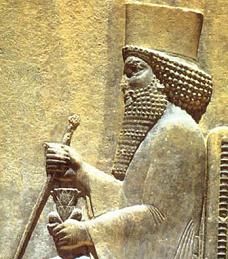
King Darius I
King Darius I

In 522 B.C.E. Darius I took the throne of the Persian Empire. King Darius simplified the administration of the empire by dividing it into provinces and appointing a native of high rank to rule each district. By 520 B.C.E. he had appointed Zerubavel as governor of Yehud Medinata, a province including the core of the old kingdom of Judah.

And in 520 B.C.E. Zechariah began prophesying.

After the angel gives Zechariah the message for Zerubavel, it explains:

The hands of Zerubavel laid the foundation of this house, and his hands shall bring it to an end. Then you shall know that God of Tzevaot sent me to you. (Zechariah 4:9)

Then Zechariah asks the angel to interpret the two olive trees in his vision, the ones with pipes pouring olive oil above the menorah.

Artist's sketch of Zechariah's vision
Artist’s sketch
of Zechariah’s vision

And it said: These are the two sons of the olive oil, the ones who stand with the lord of all the earth. (Zechariah 4:14)

“Son of the olive oil” is an idiom in Biblical Hebrew for “anointed”. Traditionally, a new king or high priest was consecrated by being anointed with olive oil. In Zechariah’s vision, Governor Zerubavel and High Priest Yehoshua are the two consecrated leaders who serve God, the lord of all the earth.

Zechariah does not ask the angel for further clarification about that particular vision, but we can infer that it foretells a time when Zerubavel and Yehoshua relight the old religion by ensuring there is a new menorah in a new temple.

This message from God (as well as a prophesy by Zechariah’s fellow prophet Haggai, according to the book of Ezra) apparently encouraged Governor Zerubavel to resume construction of the temple.

This time the local population did not protest; neither troops (chayil) nor physical force (koach) were necessary.

The Second Temple was completed in only four years and dedicated in 516 B.C.E.—perhaps because God filled the master craftsmen with ruach, the same exceptional insight God granted Betzaleil, the master craftsman of the first sanctuary, in the book of Exodus.

*

As a message to Zerubavel, the line from this week’s haftarah is best translated as:

(You shall build the temple) not by troops (chayil) and not by physical force (koach), but rather by My divine insight (ruach), said the God of Armies (Tzevaot). (Zechariah 4:6)

Can we rescue the famous line and apply it today?

The “temple” we need now is not a building where priests sacrifice animals; it is a world-wide devotion to peaceful cooperation in order to save human lives and our planet.  Like Governor Zerubavel, we all need to shun the use of troops or any other kind of physical force—between nations and between individuals.  And when our neighbors come and say “Let us build with you,” we need to work out safe ways for everyone to contribute.

So may we all be filled with the chayil of ability, the koach of energy, and the ruach of inspiration to light our own menorah for a new way of life on earth.

Haftarat Naso—Judges: Restraining the Abstainer

Every week of the year has its own Torah portion (a reading from the first five books of the Bible) and its own haftarah (an accompanying reading from the books of the prophets). This week the Torah portion is Naso (Numbers 4:21-7:89) and the haftarah is Judges13:2-13:25.

Every religion has members who go beyond what is required of the whole community. In ancient Israel, there were priests, prophets, and nezirim.

drunk woman

And I raised up some of your sons for prophets

And some of your young men for nezirim.

Is there nothing in this, Children of Israel?

—declares God.

But you made the nezirim drink wine

And you ordered the prophets not to prophesy!  (Amos 2:11-12)

nezirim (נְזִרִים) = “nazirites”: men and women who are dedicated and separated from the rest of the community as holy because they abstain from grooming their hair and drinking alcohol. Nezirim is the plural of nazir (נָזִיר), from the root verb נזר = separate, dedicate, restrain, abstain.

Samson, whose story begins in this week’s haftarah, is a nazir from the womb to the grave, but he fails to make his life holy. Perhaps that is why this week’s Torah portion lays out strict rules and term limits for living as a nazir.

Although the book of Numbers/Bemidbar is set at an earlier time in history than Samson’s story in the book of Judges, modern scholars agree that Judges was written long before the Torah portion Naso in Numbers.  Judges is a collection of old stories of heroes from the 11th century B.C.E. and earlier, stories which were probably compiled and rewritten in the 8th century B.C.E. Large parts of the book of Numbers, however, including the instructions for the nazir, were written after the Babylonian exile of the 6th century B.C.E., when priests were writing religious instructions for the time of the second temple.

Samson’s story begins in this week’s haftarah when an angel appears to the wife of a Danite named Manoach and announces that she will give birth to a nazir.

A messenger of God appeared to the woman, and he said to her: Hey, please! You are childless and you have not given birth, but you shall conceive and give birth to a son. So now guard yourself, please, and don’t you drink wine or alcohol, and don’t you eat anything ritually impure.  Because you are about to conceive, and you will give birth to a son, and a razor will not go upon his head, because the boy will be a nazir of God from the womb.  And he will begin to rescue Israel from the hand of the Philistines. (Judges 13:3-5)

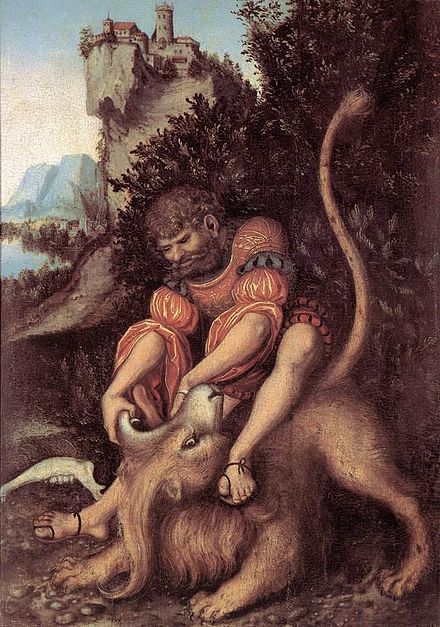
Samson's Fight with the Lion, by Lucas Cranach the Elder, 1525
Samson’s Fight with the Lion, by Lucas Cranach the Elder, 1525

Samson’s first act (after the haftarah’s opening scene) is to ask his parents to marry him to a Philistine woman he finds attractive. They protest feebly that he should marry one of his own people, but they follow him to the Philistine village of Timnah to arrange the marriage. Samson discovers his superhuman strength on the way, when “a strong spirit of God came over him” and he rips apart a lion with his bare hands. (Judges 14:6)  For the wedding a year later, Samson hosts a seven-day drinking-party where he makes a wager and ends up killing 30 strangers in order to pay his gambling debt with their clothing.

As Samson’s adventures continue, the only thing he abstains from is cutting his hair.  His main interests are sex, and inventing spectacular ways of killing people.  He only prays to God at the end of his life, when Delilah has shaved his head and her co-conspirators have blinded and imprisoned him.  Then Samson asks God to return his super-human strength so he can bring down the temple of Dagon and all the Philistines in it—not for the sake of Israel or God, but for his own personal vengeance.

Samson does succeed in killing thousands of Philistines, but he is hardly the holy man that Manoach and his wife expected when the angel said their son would be a nazir.

The book of Numbers makes it clear that a nazir along the lines of Samson is unacceptable. For one thing, this week’s Torah portion says nobody is allowed to be a nazir from birth; only an adult man or woman can vow to live as a nazir, and the person making the vow sets a finite period of time for his or her dedication.  The instructions begin:

If a man or a woman vows the extraordinary vow of a nazir, lehazir for God… (Numbers/Bemidbar 6:2)

lehazir (לְהַזִּיר) = to restrain oneself, to abstain.  (From the root נזר.)

After describing what a nazir must abstain from, the Torah portion continues:

And this is the teaching of the nazir: On the day completing the days of nizro, he shall be brought to the entrance of the Tent of Meeting. (Numbers/Bemidbar 6:13)

nizro (נִזְרוֹ) = his life as a nazir, the term of his vow dedicating him to separateness; his crown. (Also from the root נזר.).

At the Tent of Meeting the nazir makes offerings, shaves his or her head, and returns to ordinary life.  Thus all nezirim consciously dedicate themselves to restraint for a fixed period of time for the sake of God.

Their restraint consists of three kinds of abstention. The first category is alcohol and all grape products.

wine and grapes

From wine and other alcohol yazir; nor shall he drink wine vinegar or vinegar from other alcohol, nor any grape juice; nor shall he eat grapes, wet or dried.  All the days of nizro he must not eat anything that is made from grapevines, from seeds to skin.  (Numbers/Bemidbar 6:3-4)

yazir (יַזִּיר) = he will abstain.  (Also from the root נזר.)

Abstaining from alcohol would not only improve the nazir’s ability to focus on being holy to God, but would also emphasis the nazir’s separation from the rest of society.

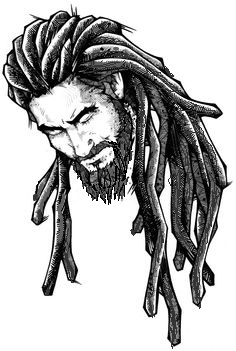
nazir hair

The second thing nezirim must abstain from is cutting, binding, or even combing their hair.

All the days of the vow of nizro, no razor will pass over his head; until the fulfillment of the days that yazir, his big, unbound, bristling hair will be holy to God.  (Numbers 6:5)

In the Bible, the only other people who let their hair grow untrimmed and unbound are mourners. Mourners are expected to disregard the social norms while grief commands all of their attention. Nezirim must let their hair grow wild while God commands all of their attention.  (See my post Naso: Distanced by Hair.)

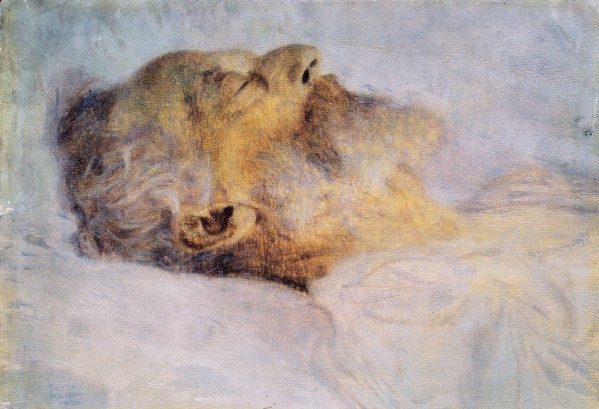
Old Man on his Deathbed, by Gustav Klimt

The third thing a nazir must avoid is contact with the dead. (See my post Emor: The God of Life.)

All the days of hazayro to God, he must not come upon a dead body. For his father or his mother, for his brother or his sister, he will not make himself ritually impure for them in their death, because the neizer of his god is on his head. All the days of nizro he is holy to God. (Numbers 6:6-8)

haziro (הַזִּירוֹ) = his time as a nazir(Also from the root נזר.)

neizer (נֵזֶר) = consecration; crown.  (Also from the root נזר.)

In the book of Numbers ordinary people who touch or come near a dead body are ritually impure for seven days; then a ritual sprinkling restores them to purity and they rejoin the religious community. But for a nazir, the rules are as strict as for the high priest, who must avoid all corpses, even those of his own parents. If a nazir touches or comes close to any corpse, the term of his or her vow ends prematurely. Then after seven days, the would-be nazir must shave his or her head, make offerings, and start all over again. Once again, nezerim must pay attention—and, perhaps, emulate the high priest.

According to these rules, parents cannot say an angel told them their child would be a lifelong nazir, or treat him as especially privileged.  No nezirim can expect God to give them superpowers from time to time.  Staying sober, they have no excuse for wild behavior like Samson’s at the end of his drinking-party.

And since nezirim must avoid being near dead bodies, they cannot kill people.  Although all of the people Samson killed were Philistines, none of them were actual soldiers engaged in war against Israelites. Impulsive murder was no longer acceptable by the time of the second temple.

*

I have known individuals who were overwhelmed by spiritual impulses that cannot be integrated into normal life in modern western society. We have roles for spiritual leaders and teachers, but few outlets for people who would have been prophets or nezirim in ancient Israel.

When prophets in the Bible are overcome by the spirit of God they can at least speak, turning the divine message into human language.  But nezirim have no words.  When Samson feels the divine spirit, he is filled with physical strength that he uses for killing.

In the book of Numbers, nezirim can still be identified by big, unbound, bristling hair, but they are also required to follow extra rules.  Perhaps these rules and abstentions satisfy the spiritual impulse of the nezirim enough so that when the spirit of God comes over them, they can rejoice in their self-discipline—as well as in their neizer, their visible crown of consecration.

I wonder if an equivalent discipline would work today to provide an outlet for those with the spirit of a nazir?


Haftarat Kedoshim—Amos: Chosen People

Every week of the year has its own Torah portion (a reading from the first five books of the Bible) and its own haftarah (an accompanying reading from the books of the prophets). This week the Torah portion is Kedoshim (Leviticus 19:1-20:27) and the haftarah according to some traditions is Amos 9:7-15.

Because God chose to rescue the Israelites from slavery in Egypt, the Israelites owe God their fealty and obedience. This idea appears throughout the Hebrew Bible and Jewish liturgy, including this week’s Torah portion, Kedoshim (“Holy”):

I myself am God, your god, who brought you out from the land of Egypt. And you must observe all my decrees and all my laws and do them; I am God. (Leviticus/Vayikra 19:36)

And you shall be holy to me, because I, God, am holy, and I separated you from the other peoples to be mine. (Leviticus 20:26)

Other peoples have their own gods. But the god that chose the Israelites as its own people is superior to all those other gods, according to the early books of the Torah.  The miracles God made in Egypt prove it.

The book of Deuteronomy, which was probably written in the mid-seventh century B.C.E., offers the Bible’s first definite statement of monotheism, the belief that there is only one god in the whole universe.

God is “the gods” in the heavens above and on the earth below; there is no other. (Deuteronomy/Devarim 4:39)

In this book the Israelites become the chosen people of the one and only god.

For you are a sacred people for God, your god, and God chose you to be Its am segulah out of all the peoples that are on the face of the earth. (Deuteronomy 14:2)

am segulah (עַם סְגֻלָּה) = a people (am) of personal possession (segulah); personally chosen people.

Yet a hundred years earlier, the prophet Amos hinted at monotheism with his claim that the same God is in charge of all the nations on earth. Amos was the first prophet to declare that God punishes every country that does wrong, not just the two kingdoms of the Israelites.

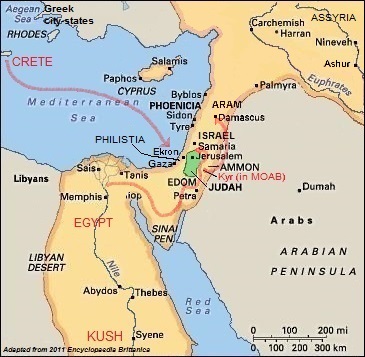
The book of Amos begins with dire prophecies of the downfall of every small country in the region: Aram and its capital, Damascus; the four city-states of the Philistines, from Gaza to Ekron; the Phoenician city-state of Tyre; the kingdoms of Edom, Ammon, and Moab; the southern Israelite kingdom of Judah; and the northern Israelite kingdom of Israel.

Amos says God will decree their destruction because of their various misdeeds. He does not mention the rising Assyrian Empire, which had already begun conquering or subjugating the small states to its west. But then, most biblical prophets assumed that God used foreign armies to punish people.  (See my post Haftarah for Bo—Jeremiah: The Ruler of All Armies.)

In the last chapter, this week’s haftarah, Amos questions the whole idea that God and the Israelites have a special relationship.

map Amos ch9 v7-8

“Aren’t you like the Kushiyim to me, children of Israel?” 

—declares God.

“Didn’t I bring Israel up from the land of Egypt,

“And the Philistines from Crete,

“And Aram from Kyr?

Hey! The eyes of my master, God

Are on the sinful kingdom.

“And I will wipe it off from the face of the earth.

“However, I will certainly not wipe out the house of Jacob”

—declares God. (Amos 9:7-8)

Kushiyim (כֻשִׁיִּים) = Kushites, black-skinned people, people from Kush (a region identified with Sudan and Ethiopia). Elsewhere the Bible treats Kushites like other foreigners from distant lands, countries with which Israel and Judah had no quarrel.   

So what if God brought the Israelites out of Egypt? God also brought other peoples to new lands. In the book of Amos, God does not play favorites.  In fact, Amos predicts that God is about to wipe out the northern kingdom of Israel—though some Israelites (a.k.a. the house of Jacob) will survive, and someday their descendants will return.

(The Assyrians did capture the capital of Israel, Samaria, in 720 B.C.E., and deported much of its population. Some northern Israelites fled south to the kingdom of Judah, which also considered itself part of the house of Jacob. Judah survived as a semi-independent vassal state of Assyria until the empire was conquered by the Babylonians around 610 B.C.E.)

It is tempting to read this week’s haftarah as an early statement of universalism: “Everyone is special, everyone is chosen in a different way.” At least Amos, unlike many other books in the Hebrew Bible, avoids triumphalism: “Only we are special, only we are chosen.” But I suspect Amos’s real point is: “Who do you think you are?  You’re not so special!”

Nevertheless, the book of Amos is a good antidote to the common late biblical view that there is only one god, and God singled out the Israelites to be Its personal possession.


Today, nobody follows the religion of the ancient Israelites, with its animal sacrifices and its laws about the sub-human status of slaves, women, children, and innocent bystanders in war. The Jewish religion has become much more ethical than the Israelite religion portrayed in the Torah.

Yet many people today, Jews and non-Jews, believe that their own religion is the only right one, the only true religion—and therefore they and their co-religionists are God’s chosen people.

I pray that we all receive the divine inspiration Amos received, and realize that God is not like a biased parent or teacher, singling out one child for extra benefits. God rescues lots of people and brings them to new lands. In God’s eyes, Israelites are the same as Kushiyim.

None of us are chosen ahead of time. We must make our own choices to become holy people.


Haftarat Acharey Mot—Ezekiel: Abomination

Every week of the year has its own Torah portion (a reading from the first five books of the Bible) and its own haftarah (an accompanying reading from the books of the prophets). This week the Torah portion is Acharey Mot (Leviticus 16:1-18:30) and the most common haftarah is Ezekiel 22:1-19.

The Torah frowns on some actions because they are ra (רַע) = bad or immoral; some because they are tamei (טָמֵא) = not pure for religious purposes; and some because they are to-eivah (תּוֹעֵבָה) = abominable, disgusting, offensive. This week’s Torah portion and haftarah reveal two different views of what should be to-eivah to the god of Israel.disgust 1

The authors of both Leviticus and Ezekiel knew that societies in the ancient Near East had different opinions on what was abominable. The first two books of the Bible, Genesis/Bereishit and Exodus/Shemot, use the word to-eivah only to describe what the Egyptians abhor: eating at the same table with Canaanites (Genesis 43:32), and the slaughter of sheep (Genesis 26:34, Exodus 8:22).

This week’s portion in Leviticus/Vayikra declares that some of the practices that Canaanites permit are off-limits to Israelites.

You must keep My decrees and My rules, and you must not do any of these to-eivot, [neither] the native-born nor the resident alien among you. Because the men who were on the land before you did all these to-eivot, and they made the land tamei. (Leviticus/Vayikra 18:26-27)

to-eivot (תּוֹעֵוֹת) = plural of to-eivah.

The passage leading up to this statement lists 17 acts that are both tamei and to-eivot for Israelite men: twelve kinds of sex involving relatives, sex with a menstruating woman, sex with your comrade’s wife, giving your child to the god Molekh, sex with another male, and sex with a beast.

Two of these acts are labelled tamei within the list, perhaps to emphasize that they cause religion impurity: sex with a comrade’s wife and sex with a beast. Another act is specifically labeled to-eivah:

And you must not lie down with a male as in lying down with a woman; it is to-eivah. (Leviticus 18:22)

The book of Leviticus might have emphasized that this homosexual act was to-eivah for the ancient Israelites because it was accepted as normal among other peoples in the region, including the Hittites, Assyrians, Babylonians, and Philistines. These societies had laws against specific deeds such as father-son incest and homosexual rape, but treated sex between consenting males (and even boys) as a normal part of life.

But for the priests who wrote Leviticus, all sex between males was as abominable as raping your mother or giving your child to the foreign god Molekh.

The prophet Ezekiel was a priest deported to Babylon when Jerusalem fell, and he shared some of the opinions of the priests who wrote the book of Leviticus. But he took a broader view of what was to-eivah to the god of Israel. The haftarah from the book of Ezekiel denounces the residents of Jerusalem for recklessly committing deeds that are to-eivah. God asks Ezekiel:

And you, son of humankind, will you judge, will you judge the city of bloodshed and inform her of all her to-eivot? (Ezekiel 22:2)

Then God tells Ezekiel what to say. The first eight  to-eivot God says the citizens of Jerusalem have committed are: making idols, belittling their own parents, practicing extortion on resident aliens, oppressing widows and orphans, despising God’s holy things, profaning the sabbath, speaking slander, and eating sacrifices on mountaintops (where there were altars to other gods).

Next God mentions a few of the sex acts men are also forbidden to do in this week’s Torah portion: sex with their fathers’ wives, with menstruating women, with their comrades’ wives, with their daughters-in-law, and with their own sisters. Neither sex with other males nor sex with beasts is mentioned in this haftarah.

In the haftarah it is sex with another man’s wife that is explicitly labeled to-eivah.

And a man does a to-eivah with the wife of his comrade, and another man makes his daughter-in-law outrageously tamei, and another man rapes his sister, his father’s daughter. (Ezekiel 22:11)

The list is wrapped up with three more non-sexual to-eivot: taking bribes, charging extra interest, and damaging friends through extortion.

Ezekiel’s point may be that we should feel the same knee-jerk, visceral disgust that we feel in the face of incest and rape when we see our fellow citizens worship other gods or injure people through extortion, slander, and perversion of justice.

Can we change our gut reactions? Yes, over time. When I had my first period it seemed like an abomination, but eventually I accepted menstruation as a mere nuisance. On the other hand, when I was very young it did not bother me at all to trade my little sister a penny for a dime. After a few years I developed enough empathy so that the idea of deliberately cheating anyone seemed repulsive.

The Bible is right that we must pay attention and choose what is truly to-eivah to our god. But we can do better than the priests who wrote Leviticus. Modern commentators suggest that the incest rules in that book were designed to protect girls and women from the men living in the same household compound. Today we take the idea of protection farther by considering all acts of rape and all sex with children as to-eivah.

On the other hand, more and more of us smile when we see two men fall in love and make a home together. Today many people are more kind and fair than the Israelite authorities were 2,500 years ago.

Yet alas, too many individuals today still deserve Ezekiel’s denunciations in this week’s haftarah. Human beings cannot all have perfect empathy. But what if we all had a gut reaction to slander, bribery, and extortion, finding these deeds to-eivot? How would the world change?

Pesach: The Matzah of Misery

“This is the bread of affliction,” we intone during the Passover/Pesach ritual, holding up a piece of matzah. Many Jews feel that just eating this dry unleavened cracker is an affliction—especially if they eat it for the prescribed eight days and eschew real bread, or anything else made with yeast or other leavening.

matzah001At a traditional Passover seder, we hold up the matzah and say in Aramaic: Ha lachma anya di akhalu avhatana be-ara demitzrayim!  which means: “The bread of misery that our ancestors ate in the land of Egypt!” This phrase is based on one of the Torah portions we read during the week of Passover, Deuteronomy /Devarim 14:22-16:17.

You must not eat with [the meat from the animal sacrifice] anything leavened. Seven days you shall eat with it matzot, the bread of oni, because in haste you went out from the land of Egypt. Thus you shall remember the day of your going out from the land of Egypt all the days of your life. (Deuteronomy/Devarim 16:3)

matzot (מַצּוֹת) = plural of matzah (מַצָּה) = unleavened flatbread made of flour and water only, quickly mixed and baked before any sourdough in the air can act on it.

oni (עֳנִי or עֹנִי) = misery, suffering, humiliation, plight, deprivation. (This noun comes from one of the four root verbs spelled ענה, this one meaning “to stoop down in humiliation, humility, or subjection”.)

The noun oni appears 37 times in the Hebrew Bible, although the passage above is the only one mentioning “bread of oni”. Individuals in the Bible experience oni, misery, because they are unloved, infertile, abused, or deprived of their due. The poor live in a state of oni because they are victimized by a selfish upper class. The Israelites live in oni because they have been conquered by enemy armies—or because they are abused slaves, as in the Passover story.

Kneading bowl in the Egyptian royal bakery
Kneading bowl in Egypt

Why is matzah the bread of oni? The book of Exodus claims that the enslaved Hebrews had to hurry out of Egypt before the dough in their kneading-bowls had time to rise. I find this unconvincing. (See my post Pesach: Being Unleavened, Part 2.)

I think the oni, the misery, came first, and the matzah symbolizes it. Matzah, made out of flour and water paste with nothing interesting added, not even sourdough, serves to remind us of the tedious life of slaves making bricks for Pharaoh.

Matzah, the “bread of oni”, can also remind us of times in the Bible when people live in misery and God sees their oni, stops ignoring them, and acts to improve their situation. I counted 13 occurrences of this motif, as well as additional occasions when God acts after hearing people cry out in their oni.

For example, God tells Moses at the burning bush:

I certainly see the oni of my people who are in Egypt, and I have paid attention to their cry for help in the face of their being hard-pressed, for I know their anguish. … And I have said I will lift them out from the oni of Egypt, to the land of the Canaanites…to a land flowing with milk and honey. (Exodus 3:7, 3:17)

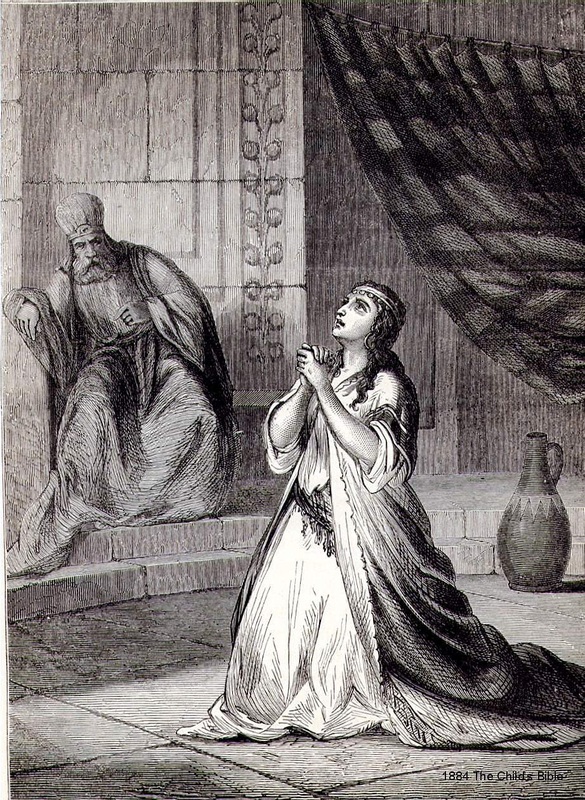
Channah in the Child's Bible 1884
Channah in the Child’s Bible 1884

Sometimes people draw God’s attention to their own oni, hoping that God will then notice it, stop ignoring them, and act. For example, Channah suffers because she is infertile and verbally abused by her husband’s other wife, who has many children.

And she vowed a vow, and she said: God of Armies, if you will really look at the oni of your female-servant, and you remember me and do not ignore me, and you give your female-servant a male child, then I will give him to God for all the days of his life… (1 Samuel 1:11)

The psalms also include pleas to God to notice the singer’s misery and act. For example,

See my oni and my misfortune

And lift off all my wrongdoing. (Psalm 25:18)

May I sing out and may I rejoice in your kindness

Because you see my oni and you know the distress of my soul. (Psalm 31:8)

See my oni and save me

Because your teaching I have not ignored. (Psalm 119:153)

matzah001

Maybe Jews began holding up matzah during the Passover ritual not just to remind themselves of times of deprivation, but also to draw God’s attention to their own oni. To make sure God gets the point, we call the matzah the “bread of oni”. If God sees our misery, pays attention to it, then maybe God will stop ignoring us and do something to improve our lives—the way God freed the slaves in Egypt.

What is your oni this year? What misery is enslaving you? Is it something that you can fix?  Or something that will lift by itself?

Or is it something that you can only be freed from by a divine intervention? If so, what would a true divine intervention be?


Haftarat Tazria—2 Kings: A Religious Conversion

Every week of the year has its own Torah portion (a reading from the first five books of the Bible) and its own haftarah (an accompanying reading from the books of the prophets). This week the Torah portion is Tazria (Leviticus 12:1-13:59) and the haftarah is 2 Kings 4:42-5:19.

What inspires someone to convert to a religion?

For Na-aman, an Aramaean general from Damascus who converts to the religion of Israel in this week’s haftarah, the quick answer is that he decides to convert after an Israelite prophet heals him. But the full story runs deeper.

soldier 2

Na-aman, the commander of the army of the king of Aram, was a great man [who stood] before his lord with a high rank, because God had given victory to Aram, and the man was a powerful warrior—[and] a man with skin disease. (2 Kings 5:1)

His skin disease is tzara-at , which is a serious ritual impurity in this week’s Torah portion, Tazria; someone who has it must live outside the camp, wear torn clothes, and cover his upper lip—even though the disease is not contagious. The rules in Aram may have been more lenient, but we can assume the disfiguring disease carried some social stigma.

And a raiding party of Aram had gone out and captured from the land of Israel a young na-arah, and she [stood] before the wife of Na-aman. And she said to her lady: If only my lord [stood] before the prophet who is in Samaria! Then he would remove his skin disease. (2 Kings 5:2-3)

na-arah (נַעֲרָה) = slave-woman; any girl or young woman during the stage after puberty but before her first pregnancy.

The slave-girl is the one who knows what Na-aman needs to do to get rid of his disfiguring skin disease. She tells her mistress, who tells her husband, who then tells his master, the king of Aram.

And he came and told his lord, saying: This and this she said, the na-arah who is from the land of Israel. (2 Kings 5:4)

The king of Aram writes a letter for Na-aman to take to the king of Israel, perhaps to guarantee his safe passage through a foreign country. Eventually Na-aman and his servants arrive at the house of the prophet Elisha.

Jordan River
Jordan River

So Na-aman came with his horses and his chariots, and he stood at the door of the house of Elisha. Then Elisha sent a messenger out to him, to say to him: You must bathe seven times in the Jordan, and it will make your flesh restored and ritually-pure. But Na-aman became angry, and he walked away, and he said: Hey, I said to myself that he would surely go out and stand and invoke the name of God, his god, and wave his hand toward the place, and that would exterminate the skin disease.  Aren’t the Amnah and the Parpar, the rivers of Damascus, better than all the waters of Israel? Wouldn’t I become pure if I bathed in them? Then he turned around and walked away hotly. (2 Kings 5:9-12)

Na-aman can respect a miracle-working prophet. But he expects the prophet to grant him the dignity of a personal cure, not a message by proxy. He also disdains the message because he believes his own country of Aram is superior to Israel. (See my post Tazria & 2 Kings; A Sign of Arrogance.)

On the other hand, he is willing to listen to advice from servants, including the Israelite girl who told him about Elisha in the first place. This time the grown men traveling with Na-aman as servants advise him.

The Cleansing of Naaman, woodcut from Biblia Sacra Germanaica
The Cleansing of Naaman,
woodcut from Biblia Sacra Germanaica

But his servants came near and spoke to him, and they said: My father, if the prophet spoke to you about doing a great deed, isn’t it true that you would do it? Then how much more so when he said to you: Bathe and be pure. So he went down and he dipped in the Jordan seven times, as the man of God had spoken. And his flesh was restored, like the flesh of a na-ar, and he was ritually-pure. Then he returned to the man of God, he and all his troop, and he came and stood before him. He said: Here, please, I know that there are no gods on all the earth except in Israel. (2 Kings 5:13-15)

na-ar (נַעַר) = male slave; any boy or unmarried young man. (The male equivalent of na-arah.)

The Talmud considers Na-aman’s statement a declaration of religious conversion. Before Na-aman makes this declaration, he is compared to a boy or a slave, put on the same footing as his Israelite na-arah. Only from that position can he actually meet the prophet and “stand before” him, as earlier in the story subordinates stood before their masters. And only now does Na-aman know that the god of Israel is the only god on earth.

What gives him this knowledge or belief? I think it is not just the miraculous healing he experiences, but the fact that he receives healing only by setting aside his identity as an important Aramaean general and becoming an obedient “boy”.

And Na-aman said: Will it not be given, please, to your servant, enough soil to burden a pair of mules?—because your servant will never again make a rising-offering or an animal sacrifice to other gods, only to God. (2 Kings 5:17)

The only way Na-aman knows how to worship a god is to make offerings in the land of that god. Since he must return to Damascus to serve his king, he asks permission to take some of the dirt of Israel back with him. Elisha says Go in peace.


My own conversion to Judaism 30 years ago was mostly—but not entirely—different from Na-aman’s conversion. I was brought up as an atheist, but during my twenties I felt restless and dissatisfied. As a philosophy major in college, I had reasoned my way to the conclusion that the standard definition of God was contradictory and therefore described an impossibility. Yet every once in a while I was surprised by a flash of intuition that the universe was one and alive.  It was a sudden gut feeling, not a rational idea.  I felt an increasing need for something like religion, for some other connection with the ineffable. Thus my longing for a religion came not from my head, but from my guts.

In western religions and culture, the body is often considered inferior to the mind. We assume that the mind makes a decision and the body carries it out, like a servant or a beast of labor.

But sometimes the body speaks first. The great general Na-aman’s own body develops a skin disease. Then the least of his servants, the captive Israelite girl, tells him who to go to for a cure. And he follows her advice.

When he arrives in the foreign land of Israel, he is instructed first by the prophet’s servant, then by his own servants. If he had not obeyed them and bathed in the Jordan, Na-aman would have gone home unhealed and unconverted.

If I had not listened to my gut feelings, even though I viewed them as inferior to my rational mind, I would have remained a dissatisfied atheist with a dry life. Instead I began reading about various religions and their attitudes toward life in this world. And I fell in love with Judaism, which seemed to share my irrational, gut conviction that nothing is more important than doing the right thing, regardless of any possible future reward.

It was a good match. I converted 30 years ago, and I am still a passionate Jew.

Part of my conversion was to immerse myself underwater in a mikveh—rather like Na-aman’s seven immersions in the Jordan River. Then I affirmed my inner knowledge that all divinity is one by reading the Shema out loud before three witnesses. This was not so different from Na-aman telling Elisha: Here, please, I know that there are no gods on all the earth except in Israel.

I was not brought up to slaughter and burn animals for God, thank God. But perhaps whenever I pray with other Jews, I am symbolically worshiping God on the soil of our religion. And even as my mind occupies itself with translating the Hebrew prayers into meanings I can accept, my body-servant, my heart and gut, rise in exaltation.


Haftarot for Vayikra & Tzav—Isaiah & Jeremiah: Useless Gods

Every week of the year has its own Torah portion (a reading from the first five books of the Bible) and its own haftarah (an accompanying reading from the books of the prophets). Last week the Torah portion was Vayikra (Leviticus 1.1-5:26) and the haftarah was Isaiah 43:21-44:23. This week the Torah portion is Tzav (Leviticus 6:1-8:36) and the haftarah is Jeremiah 7:21-8:3 and 9:22-23.

The first two Torah portions in the book of Leviticus/Vayikra consist entirely of instructions for making offerings on the altar: what each type of offering is for, what kind of animal or grain should be brought, and how the priests should process them. In Leviticus, this is the primary way to worship God, so the instruction manual is important.

The two accompanying haftarah readings both declare that offerings on God’s altar are meaningless when people are also making and worshiping idols.

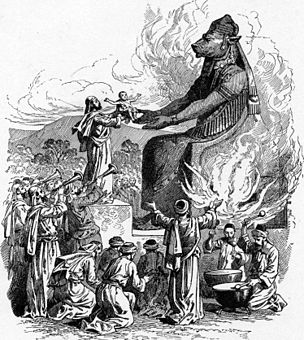
The children of Judah have done what is bad in My eyes, declares God. They have set their abominable idols in the House with My name on it, defiling it. And they have built shrines of the Tofet in the valley of Ben-Hinnom, for burning their sons and their daughters in the fire, which I did not command and which did not arise in my mind. (Jeremiah 7:30-31)

Tofet in "Bible Pictures", 1897
Tofet in “Bible Pictures”, 1897

Jeremiah decries the placement of statues of other gods right in God’s temple (“house”) in Jerusalem, as well as the practice of Tofet-worship in the valley below.  The haftarah from Isaiah points out that a craftsman might burn part of a log to burn for heat and cooking, and carve another part of the log into a statue to which he bows down and prays.

Yotzeir of an idol—

All of them are emptiness;

And what they crave

Cannot be useful.  (Isaiah 44:9)

yotzeir (יֹצֵר) = shaping, forming, fashioning.

Other gods and the statues that represent them are empty, useless. God is the yotzeir of real humans; but a human is a yotzeir of false gods.

Jeremiah agrees that worshiping other gods is useless. In a prophecy that follows this week’s haftarah, Jeremiah says:

And the towns of Judah and inhabitants of Jerusalem will go to the gods for whom they sent up offerings in smoke, and call for help. But they [these gods] will certainly not rescue them at the time of their adversity. (Jeremiah 11:12)

The haftarah in Isaiah goes a step further, and declares other gods simply do not exist.

Thus said God, king of Israel

And its redeemer, God of Armies:

I am first and I am last

And except for Me there are no gods. (Isaiah 44:6)

The haftarot in Jeremiah and Isaiah agree that God punished the people of Judah for making and worshipping other so-called gods by sending in the Babylonian army to conquer the land and destroy Jerusalem and its temple. (See my post Haftarah for Bo—Jeremiah: The Ruler of All Armies.)

Does that leave any hope for the future? Jeremiah, who witnessed the siege of Jerusalem in 589-587 B.C.E., predicts only more disaster.

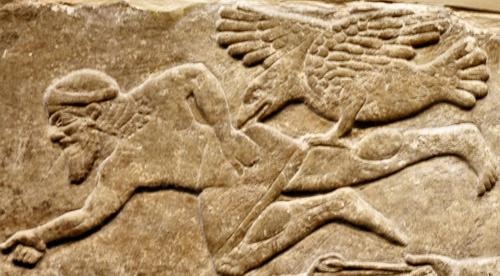
Vulture on Assyrian relief carving in Kalhu

And the carcasses of these people will be food for the birds of the sky and for beasts of the earth, and there will be no tomorrow. (Jeremiah 7:33)

And death will be preferable over life for all the remainder of those remaining from this wicked family, in all the places where I will push them… (Jeremiah 8:3)

But chapters 40-66 of the book of Isaiah were written at least 50 years later, after the Babylonian empire had been replaced by the Persians. Although the Jews did not get an independent kingdom again, the new Persian emperors granted them religious freedom and let those who wished go back to Jerusalem and build a second temple for their god.

The haftarah from Isaiah interprets this Persian policy as God’s intervention. After criticizing the Israelites for their idolatry, the haftarah says:

I have wiped away like a mist your rebellion

And like a cloud your transgressions.

Return to Me, for I have reclaimed You. (Isaiah 44:22)

How can they return? What should they do that is more important than making offerings at a rebuilt altar?

This week’s haftarah from Jeremiah says they should follow God’s directions for the right way to behave in the world.

Heed My voice, and I will be your god and you will be My people; but you must walk on the entire path that I command you, so that it will go well for you. (Jeremiah 7:23)

Last week’s haftarah from Isaiah says they should praise God to the rest of the world.

This people yatzarti for Myself:

My praise they should report! (Isaiah 43:21)

yatzarti (יָזַרְתִּי) = I formed, I shaped, I fashioned. (From the same verb as yotzeir above.)

Instead of forming statues of empty, useless gods, the people should report what the real God is.

But the Israelites of Judah turned deaf (according to Jeremiah) and mute (according to Isaiah) where God was concerned.

*

We still make idols for ourselves, 2,600 years later, and we still worship “gods” that are ultimately useless. Some people pursue power as if it were the source of life—until their careers or families crash and they discover they live in a spiritual exile. Others dedicate themselves to accumulating or spending money—until a disaster reveals how they devoted so much time and energy to something so transient. We do not need an anthropomorphic god to send an army against us; serving the false gods we create carries its own intrinsic punishment, preventing us from leading full and meaningful lives.

A Jeremiah can point out that the wrong path leads to a bitter death. Sometimes this is the slap in the face we need to wake up.

But an Isaiah can give us hope for a second chance, however late in life. If we return to God—if we return of a life of appreciating reality (one form of praising God), appreciating one another, remembering we are only human, and rejoicing when we come home to our better selves—then the divine spirit will wipe away our former false worship like a mist, like a cloud. We can change, and true meaning can return to our lives.