Haftarat Shoftim—Isaiah: A New Name

Every week of the year has its own Torah portion (a reading from the first five books of the Bible) and its own haftarah (an accompanying reading from the books of the prophets). This week the Torah portion is Shoftim (Deuteronomy 16:18-21:9) and the haftarah is Isaiah 51:12-52:12).
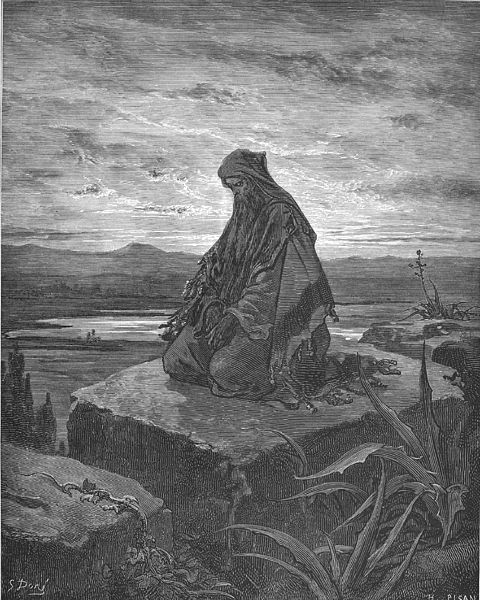
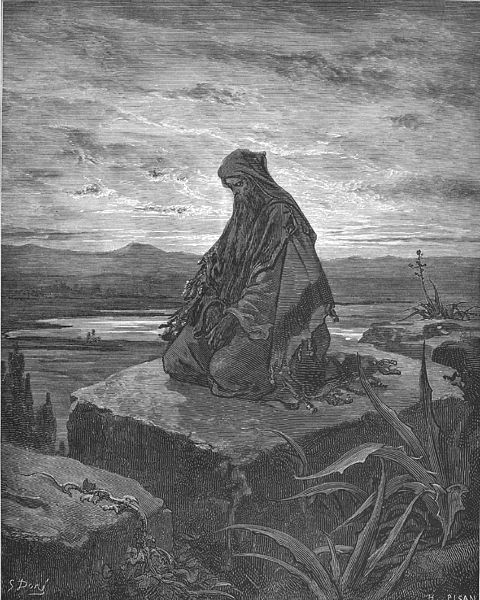
Isaiah, by Gustave Dore, 1866

The second “book” of Isaiah (written in the sixth century B.C.E. around the end of the Babylonian exile, two centuries after the first half of Isaiah) opens:

            Nachamu, nachamu My people!” (Isaiah 40:1)

nachamu (נַחֲמוּ) = Comfort them! (From the same root as nicham (נִחָם) = having a change of heart; regretting, or being comforted.)

This week’s haftarah from second Isaiah begins:

             I, I am He who menacheim you. (Isaiah 51:12)

menacheim (מְנַחֵם) = is comforting.

At this point, many of the exiles in Babylon have given up on their old god and abandoned all hope of returning to Jerusalem. So second Isaiah repeatedly tries to reassure them and change their hearts; he or she uses a form of the root verb nicham eleven times.

In the Jewish calendar, this is the time of year when we, too, need comfort leading to a change of heart. So for the seven weeks between Tisha B’Av (the day of mourning for the fall of the temple in Jerusalem) and Rosh Hashanah (the celebration of the new year) we read seven haftarot of “consolation”, all from second Isaiah.

This year I notice that each of these seven haftarot not only urges the exiles to stick to their own religion and prepare to return to Jerusalem; it also coaxes them to consider different views of God.

The first week—

—in Haftarah for Ve-etchannan—Isaiah: Who Is Calling? we learned that once God desires to communicate comfort, the transmission of instructions to human prophets goes through divine “voices”, aspects of a God Who contains a variety ideas and purposes. When we feel persecuted, it may comfort us to remember that God is not single-mindedly out to get us, but is looking at a bigger picture.

The second week—

—in Haftarah for Eikev—Isaiah: Abandonment or Yearning? second Isaiah encourages the reluctant Jews in Babylon to think of Jerusalem as a mother missing her children, and of God as a rejected father. Instead of being told that God has compassion on us, we feel compassion for an anthropomorphic God. Feeling compassion for someone else can cause a change of heart in someone who is sunk in despair.

The third week—

—in Haftarah Re-eih—Isaiah: Song of the Abuser, we took a new look at what God would be like if God really were anthropomorphic. Like a slap in the face, this realization could radically change someone’s theological attitude.

The fourth week, this week—

—God not only declares Itself the one who comforts the exiled Israelites, but also announces a new divine name.

In Biblical Hebrew, as in English, “name” can also mean “reputation”. In this week’s haftarah, God mentions two earlier occasions when Israelites, the people God promised to protect, were nevertheless enslaved: when they were sojourning in Egypt, and when Assyria conquered the northern kingdom of Israel/Samaria. Both occasions gave God a bad reputation—a bad name. And the Torah portrays a God who is very concerned about “his” reputation. For example, when God threatens to kill all the Israelites for worshiping a golden calf, Moses talks God out of it by asking:

What would the Egyptians say? “He was bad; He brought them out to kill them in the mountains and to remove them from the face of the earth.” (Exodus/Shemot 32:12)

Now, God says, the Babylonians are the oppressors. They captured Jerusalem, razed God’s temple, deported all the leading families of Judah, and still refuse to let them leave Babylon.

            Their oppressors mock them—declares God—

            And constantly, all day, shemi is reviled. (Isaiah 52:5)

shemi (שְׁמִי) = my name.

The Babylonians are giving the God of Israel a bad name.

            Therefore My people shall know shemi,

            Therefore, on that day;

            Because I myself am the one, hamedabeir. Here I am! (Isaiah 52:5-6)

hamedabeir (הַמְדַבֵּר) = the one who is speaking, the one who speaks, the speaker. (From the root verb diber (דִּבֶּר) = speak)

Since God’s old name has been reviled, God promises that the Israelites will know God by a new name. Then God identifies Itself not merely as the speaker of this verse, but as “the one, The Speaker”, adding extra emphasis with “Here I am!”

The concept of God as Hamedabeir appears elsewhere in the Bible. In the first chapter of the book of Genesis/Bereishit (a chapter that modern scholars suspect was written during the Babylonian exile), God speaks the world into being. Whatever God says, happens.

Second Isaiah not only refers to God as the creator of everything, but emphasizes that what God speaks into being is permanent.

            Grass withers, flowers fall

            But the davar of our God stands forever! (Isaiah 40:8)

davar  (דָּבָר) = word, speech, thing, event. (Also from the root verb diber (דִּבֶּר) = speak.)

What is the davar of God regarding the exiles in Babylon? In this week’s haftarah second Isaiah says:

            Be untroubled! Sing out together

            Ruins of Jerusalem!

            For God nicham His people;

            He will redeem Jerusalem. (Isaiah 52:9)

nicham (ִנִחַם) = had a change of heart about; comforted.

God let the Babylonians punish the Israelites because they were unjust and because they worshiped other gods. But now God has had a change of heart and wants to end the punishment and rescue the Israelites from Babylon. Since God’s name was reviled, some of the exiles do not believe God has the power to carry out this desire. So God names Itself Hamedabeir and then declares:

            Thus it is: My davar that issues from My mouth

            Does not return to me empty-handed,

            But performs my pleasure

            And succeeds in what I send it to do.

            For in celebration you shall leave,

            And in security you shall be led. (Isaiah 55:11-12)

The speech of Hamedabeir achieves exactly what God wants it to. In this case, God wants the Israelites in Babylon to return joyfully and safely to Jerusalem. If the exiles believe this information, their hearts will change and they will be filled with new hope.

*

It is easy to give up on God when life looks bleak, and you blame an anthropomorphic god for making it that way. No wonder many Israelite exiles in the sixth century B.C.E. adopted the Babylonian religion. No wonder many people today adopt the religion of atheism.

But there is an alternative: redefine God. Discover a name for God that changes your view of reality, and therefore changes your heart.

Thinking of God as Hamedabeir, The Speaker, takes me in a different direction from second Isaiah. Not being a physicist, I take it on faith that one reality consists of the movement of sub-atomic particles. But another reality is the world we perceive directly with our senses, the world of the davar—the thing and the event. We human beings cannot help dividing our world into things and events. We are also designed to label everything we experience. What we cannot name does not clearly exist for us. In our own way, we too are speakers.

What if God is the ur-speech that creates things out of the dance of sub-atomic particles—for us and creatures like us?

What if God, The Speaker, is the source of meaning? Maybe God is what speaks to all human beings, a transcendent inner voice which we seldom hear. When we do hear The Speaker say something new, we often misinterpret it. Yet sometimes inspiration shines through.

I am comforted by the idea of a Speaker who makes meaning, even if I do not understand it.


Haftarat Re-eih—Isaiah: Song of the Abuser

Every week of the year has its own Torah portion (a reading from the first five books of the Bible) and its own haftarah (an accompanying reading from the books of the prophets). This week the Torah portion is Re-eih (Deuteronomy 11:26-16:17) and the haftarah is Isaiah 54:11-55:5).

Hosea was the first prophet to compare the covenant between God and the Israelites to a marriage contract. Preaching in the 8th century B.C.E., Hosea calls the northern kingdom of Israel a prostitute who takes other lovers, i.e. worships other gods, until her own God decides to take action.

            And I will bring her to account

            Over the days of the Baals

            When she turned offerings into smoke for them

            And she adorned herself with her rings and ornaments

            And she went after her lovers

                         —and Me, she forgot… (Hosea 2:15)

wedding cropped

The books of first and second Isaiah, Jeremiah, and Ezekiel all employ Hosea’s metaphor of Israel (or the southern kingdom of Judah, or the city of Jerusalem) as God’s cherished wife who abandons her husband and commits adultery. In this week’s haftarah from second Isaiah (written circa 540-500 B.C.E., two centuries after the first half of the book of Isaiah), Jerusalem is once again compared to a wife, with God as her husband. But this time the story is different.

The haftarah begins with God promising to give Jerusalem jewelry.

             Wretched, stormy, she has not been comforted.

            Hey! I am setting down turquoise building-stones,

            And foundations of sapphires.

            And I will make her skylights of agate

            And her gates of fire-stone,

            And her whole enclosure of jewels. (Isaiah 54:11-12)

What interests me is the reason why God intends to shower Jerusalem with jewelry. Shortly before the opening of this week’s haftarah, second Isaiah declares:

            As a wife azuvah and troubled in spirit

            God has called to you:

            “Can one reject the wife of one’s youth?”

                        —said your God. (Isaiah 54:6)

azuvah (עֲזוּבָה) = forsaken, abandoned, left behind.

This prophetic passage never calls Jerusalem unfaithful, or at fault in any way as a wife. But it answers God’s rhetorical question by making it clear that God did, in fact, reject Jerusalem.

             For a little while azavtikh,

            But with a great rachamim I will gather you in.

            In a burst of anger I hid my face from you a while,

            But with everlasting loyalty

            Richamtikh

                           —said your redeemer, God. (Isaiah 54:7-8)

azavtikh (עֲזַבתִּיךְ) = I forsook you, I abandoned you.

rachamim (רַחֲמִים) = compassion, feeling of love, mercy.

richamtikh (רִחַמְתִּיךְ) = I will feel compassion and/or love for you.

In other words, God abandoned Jerusalem and opened the door for the Babylonian army to destroy her (see my post Haftarah for Devarim—Isaiah: False Worship). According to the book of Jeremiah, God did it because Jerusalem was unfaithful and worshiped other gods. But now, in second Isaiah, God has recovered from this particular fit of temper, and is carried away with a different emotion, a compassionate love for “his” wife.

An abusive husband who beats his wife to discharge his anger, and then feels a desire to reclaim her, usually promises her that he will never do it again. In this poetic passage, God continues:

             [Like] the waters of Noah this is to me!

            I swore that the waters of Noah would not cross

            Over the earth again.

            Thus I swear

            Against becoming angry over you and against rebuking you!

            For the mountains may give way

            And the hills may totter,

            But My loyalty to you shall never give way

            And the covenant of My peace shall never change!

                        —said merachameich, God. (Isaiah 54:9-10)

merachameich (מְרַחֲמֵךְ) = your compassionate one, your one full of loving feelings.

After promising his wife he will never beat her again, what does the standard abusive husband do next? Give her jewelry, of course.

And so we step into this week’s haftarah, in which Jerusalem is wretched—in the sense of being miserable, and “stormy”—full conflicting feelings. And “she has not been comforted”—God’s declaration of everlasting love and promise never to hurt her again is not enough for her to forgive God and take “him” back.

So God promises to give Jerusalem turquoises and sapphires, agates and fire-stones, and jewels all around.

Perhaps even a lavish gift of jewelry is not enough for the battered wife this time, because God goes on in this haftarah to promise Jerusalem children who will all live in peace, and her own personal safety from oppression and ruin. God even goes so far as to say:

            Hey! Certainly no one will attack

            Without My consent.

            Whoever hurts you

             Will fall because of you. (Isaiah 54:15)

I wonder if the poet of second Isaiah was aware of the irony?

What does this thinly-disguised allegory of God as the abusive husband and Jerusalem as the battered wife mean?

In the patriarchal culture reflected in the Hebrew Bible, wives were not allowed to divorce their husbands. An actual battered wife had no recourse until Talmudic times. But members of one religion could convert to another.

Second Isaiah addresses the families that the Babylonian army deported from Jerusalem several decades before, when they razed the city. (See my post Haftarah for Eikev—Isaiah: Abandonment or Yearning?)

Now the exiles are living comfortably enough in Babylon, and they hesitate to trust their old god, who let the Babylonian army destroy Jerusalem in the first place.

Yes, the Persian king Cyrus is rapidly taking over the Babylonian empire, and Cyrus has a policy of letting native populations return to their old homes and worship their old gods. But the exiles from Jerusalem are reluctant to go. Like a battered wife, they feel safer in the foreign city of Babylon than they do at home. They are tempted to abandon God for good and assimilate.

Second Isaiah was wise enough to recognize and acknowledge the deepest fear of these exiles who assumed that God was anthropomorphic, and God’s relationship with the Israelites was like a marriage. The exiles knew that the people of Jerusalem were guilty of adultery with other gods. But I bet that subconsciously they also suspected that the husband, God, had an anger management problem and had abused Jerusalem beyond bearing.

A later passage even states that the Israelites would not have strayed if only God had kept “his” temper:

             You attacked one who would gladly be righteous

            And remember You in Your ways.

            But You, You became angry, and so we offended. (Isaiah 64:4)

Throughout the Bible, the old, anthropomorphic God gets carried away by “his” temper. This God is also portrayed as one of many gods, each in charge of its own country or ethnic group, though the God of Israel is the most powerful. This the God who acts like an abusive husband to the Israelites.

Second Isaiah switches back and forth between the old, anthropomorphic God and a new idea of God as vast, remote, and singular. In this new concept, there is only one god, who creates and runs the entire universe.

Shortly after the end of this week’s haftarah, the poet reminds us that God is not really like a human being after all:

            My thoughts are not your thoughts,

            And your ways are not my ways

                        —declares God. (Isaiah 55:8)

Elsewhere, second Isaiah insists there are no other gods, as in this bold theological statement:

             I am God and there is no other.

            The shaper of light and creator of darkness,

            The maker of peace and the creator of evil:

            I, God, do all of these. (Isaiah 45:6-7)

Today the concept of God in second Isaiah is still at odds with the popular notion of an anthropomorphic God. While the exiles in Babylon may have feared that their God was temperamental and abusive—a characterization supported by numerous Biblical passages—many religious people today believe in an anthropomorphic God who loves each individual the way a parent loves a child. Then they have to explain why their parental God kills so many young and innocent children.

I think the Jews in Babylon were more realistic about what an anthropomorphic god means. And I think second Isaiah was inspired with a far more interesting idea of what God is.

Haftarat Eikev—Isaiah: Abandonment or Yearning?

Every week of the year has its own Torah portion (a reading from the first five books of the Bible) and its own haftarah (an accompanying reading from the books of the prophets). This week the Torah portion is Eikev (Deuteronomy 7:12-11:25) and the haftarah is Isaiah 49:14-51:3).

When the Babylonians burned down Jerusalem and its temple in 586 B.C.E., they also deported the last of its leading families to Babylon. They were not allowed not leave until the Persian Empire swallowed the Babylonian Empire 47 years later, and the Persian king Cyrus declared freedom of movement and freedom of religion.

Psalm 137, like this week’s haftarah from second Isaiah, is about the Babylonian Exile:

Babylon
Babylon

            How can we sing a song of God

            On foreign soil?

            If I forget you, Jerusalem

            May I forget my right hand. (Psalm 137:4-5)

In Jewish history, which spans millennia, 47 years may not seem long.  But for individuals it was a long time to remember their old home and their old god—especially if they were born in Babylon, and had only their elders’ memories to go by.

            “Why did I come and there was nobody,

            [Why] did I call and there was no answer?” (Isaiah 50:2)

Usually when someone in the Hebrew Bible cries “Why have you forsaken me?” it is an Israelite addressing God. But in this week’s haftarah, God cries out, feeling forsaken by the Israelites who have adjusted to life in Babylon.

In the second book of Isaiah, God is preparing to end the rule of the Babylonian empire, rescue the Israelite exiles, and return them to Jerusalem and their own land. (See my post: Haftarah for Va-etchannan—Isaiah: Who Is Calling?) But God’s plans are useless unless the Israelites trust their God and want to go home.

map of Babylon

Imagine you were kidnapped and taken to a strange city. Your life there was comfortable, but you were not free to leave. Would you accept your new reality, adopt the customs and religion of the city, and make it your home?

This must have been the strategy of the Israelites that the Assyrian armies deported from Samaria, the capital of the northern kingdom of Israel, in 729-724 B.C.E.—because the Bible never mentions them again. They either died or assimilated.

Or would you cling to your memories and your old religion, hoping that someday you would escape and go home?

This is the strategy that the second book of Isaiah advocates for the Israelites living in Babylon.

Reading between the lines, I imagine some Israelites moved past their trauma, married Babylonians, and settled down for good. I imagine others were stuck with post-traumatic stress disorder, trying hard not to remember their old lives or God or Jerusalem. And I imagine some stubborn individuals clinging to the belief that their God was alive and well, and would someday rescue them and return them to their motherland.

But how could the believers convince their fellow Israelites to take heart and wait for God?

This week’s haftarah tries a new approach: Stop thinking about yourselves, and remember the parents you left behind: your homeland, which is like a mother, and your God, who is like a father. How do they feel?

The haftarah begins with the land—called Zion for one of the hills in Jerusalem—crying that God has forsaken her, too.

And Zion says:

            God has abandoned me,

            And my lord has forgotten me! (Isaiah 49:14)

So far, Zion and God sound like lovers. But this is not another example of the prophetic poetry claiming that the people of Israel are straying after other gods like a wife who is unfaithful to her husband.  In this haftarah, the innocent land is Zion, and the people are Zion’s children. Zion lies in ruins after the war, empty and desolate because her destroyers (the Babylonians) stole all her children.

God reassures Zion by telling her:

            Hey! I will lift up My hand to nations

            And raise My banner to peoples,

            And they shall bring your sons on their bosoms

            And carry your daughters on their shoulders. (Isaiah 49:22)

In this poem God will arrange for foreigners (like King Cyrus) to return Zion’s children to Jerusalem. The poet or poets who wrote second Isaiah probably hoped that if discouraged exiles thought of Jerusalem as a mother missing her children and longing to have them back, their hearts might soften, and they might want to return to her.

Then, second Isaiah says, they would hear God ask:

           Why did I come and there was nobody,

            [Why] did I call and there was no answer?

            Is my hand short, too short for redemption?

            And is there no power in me to save? (Isaiah 50:2)

What if the “children of Zion” only thought their god, their father, had been defeated when the Babylonian army destroyed Jerusalem? What if God had actually planned the exile to punish them, as Jeremiah kept prophesying during the siege? Now that the punishment was over, did God miss the people of Judah?

What if their father, their god, really was powerful enough to rescue them and take them home to Zion? (See my post: Haftarat Va-etchanan–Isaiah: Faith in the Creator.)

If both parents, God and Zion, are yearning for them, then the Israelites in Babylon might start yearning for God and Zion again.

*

Decree by Cyrus
Decree by Cyrus allowing captives in Babylon to return to their native lands

It worked. After King Cyrus issued his decree, bands of Israelites from Babylon began returning to Jerusalem, a thousand or so at a time. Under Ezra and Nehemiah they built a new, larger temple for God. The former kingdom of Judah became a Persian province administered by Jews, and the expanded, monotheistic version of their religion, founded by second Isaiah, survived.

Today, two and a half millennia later, yearning for Jerusalem is built into Jewish daily liturgy. At the end of the Passover seder in the spring and Yom Kippur services in the autumn we even sing out: “Next year in Jerusalem!”

Almost half of the Jews in the world today live in the United States. We are free to emigrate to the nation of Israel, as long as we meet Israel’s requirements. Only a few do so. Are religious American Jews still exiles?

Or has God become both the mother and the father we yearn for, while Jerusalem is now a pilgrimage site?

Haftarat Va-etchannan—Isaiah: Who Is Calling?

Every week of the year has its own Torah portion (a reading from the first five books of the Bible) and its own haftarah (an accompanying reading from the books of the prophets). This week the Torah portion is Va-Etchannan (Deuteronomy 3:23-7:11) and the haftarah is Isaiah 40:1-26.

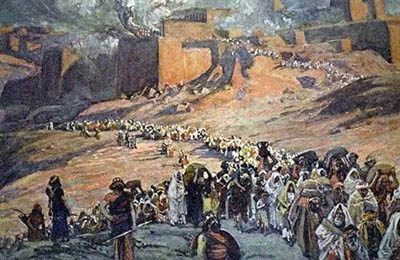
Deportation from Jerusalem

Nebuchadnezzar conquered Judah, destroyed Jerusalem, razed its temple, and deported all its leading citizens to Babylonia in 597-596 B.C.E. Then each family in exile faced a decision.

Should they give up on their own religion, their own identity, and assimilate? Or should they have faith that their god had the power and the desire to eventually return them to their own land?

           Nachamu, nachamu My people!

            Says your god. (Isaiah 40:1)

nachamu (נַחַמוּ) = Comfort! Reassure! (This imperative verb has the plural suffix u (וּ), meaning the speaker—God—is urging more than one person—or divine being—to reassure God’s people.)

This call for reassurance (and enlightenment) opens this week’s haftarah and what is really the second book of Isaiah.

(Isaiah 1-39, considered the first book of Isaiah, is set in the 8th century B.C.E., and warns that God will send an army against the people of Jerusalem if they do not reform. (See my post last week, Haftarah for Devarim—Isaiah: False Worship.) The rest of Isaiah, chapters 40-66, is set in the 6th century B.C.E., near the end of the Babylonian exile and shortly before the Persian emperor Cyrus II took Babylon in 539 B.C.E. , This second book of Isaiah shares a new vision of God: that God is both the protector of the Israelites and the only god in the universe, powerful beyond imagining.)

The haftarah at the beginning of the second book of Isaiah promises that God has forgiven the exiles in Babylonia and will soon gather them home.

God continues:

            Speak (dabru) to the heart of Jerusalem

            And call out (kire-u) to her

            That she has worked off her debt,

            That her wrongdoing has been accepted,

            That she has received from the hand of God

            Double the amount of all her sins. (Isaiah 40:2)

The Hebrew words for both “Speak!” and “Call out!” above also have the plural suffix u (וּ). But who is God addressing? As the poem continues, it seems that God is giving orders to two disembodied voices.

Isaiah 40 3

           A kol is calling out:

           Clear (panu) in the wilderness

           A path for God!

           Level (yasheru) in the desert

           A highway for our god! (Isaiah 40:3)

kol (קוֹל) = voice; sound; speech.

            And the glory of God shall be revealed

            And all flesh shall see (ra-u) it together… (Isaiah 40:5)

Again, the verbs are in the plural, with the suffix u (וּ). The kol is not addressing a work crew; it seems to be urging multiple persons to open the minds of the Jerusalemites in Babylon, so they can experience God.

           …A[nother] kol says: Call out! (kera!)

           And he says: What shall I call out? (Isaiah 40:6)

The second kol uses the singular form, commanding one unidentified male person to call out. But “he” seems to be depressed about the transience of human life, and eight lines later, the kol recruits a second person:

            Climb up (aliy) on a high mountain,

            Mevaseret of Zion!

            Lift up (harimiy) your voice with strength,

            Mevaseret of Jerusalem!

            Lift up (harimiy), do not be afraid (tiyra-iy)!

            Say (imriy) to the cities of Judah:

            Here is your god! (Isaiah 40:9)

mevaseret (מְבַשֶֹּרֶת) = herald, bringer of news. (Mevaseret is the feminine form of mevaseir (מְבַשֵֹּר) = a (male) herald.)

The voice addresses the mevaseret using imperative verbs with a singular feminine suffix, iy (יִ), telling her to speak so as to lift the spirits and hopes of the Jewish exiles.

As Sheryl Noson-Blank points out in The Women’s Haftarah Commentary, early commentators could not imagine the mevaseret as a woman; Targum Yonatan (~50 B.C.E.) translated mevaseret into Aramaic as plural male prophets, while David Kimchi (1160-1235 C.E.) decided the mevaseret was the land of Zion herself.

The second book of Isaiah never tells us the identity of the man or the woman recruited by the kol. Maybe they are the prophet-poets who wrote the book. Or maybe they represent all inspired men and women among the exiles in Babylon.

Nor does the book clarify what the two voices are. The first statement, that the people of Jerusalem have been sufficiently punished and should now be reassured that God will redeem them, is definitely attributed to God.

But how will God’s order be achieved? The first kol says all impediments to beholding God must be cleared away. The second kol says the news must be called out by heralds, man and woman.

What are these voices that interpret God’s original thought?

*

Some commentators view the voices as members of a divine council. In other religions of the ancient Near East, the gods assembled under the chairmanship of the chief god to discuss earthly affairs. The Hebrew Bible also mentions a divine council or assembly, whose members are variously described as:

           elohim (אֱלֺֹהִים) = gods; a god with various aspects; God.

           beney ha-elohim (בְּנֵי־הָאֱלֹהִים) = offspring of the gods; offspring of God.

           kedoshim (ֹקְדֹשִׁים) = holy ones, holy places.

           ruchot (רוּחוֹת) = spirits, winds, motivating forces.

In Psalm 82 the members of God’s assembly are called simply elohim, gods.

           God takes a stand in the assembly of El,

           Among elohim he pronounces judgment. (Psalm 82:1)

El is the high god in Canaanite mythology, equated with the God of Israel in this psalm.  God/El criticizes the elohim in God’s assembly for ignorantly favoring the wicked rather than the poor in their judgments, and decrees that henceforth these lesser gods will die like human beings.

Psalm 89 calls the members of the divine assembly beney elohim (“offspring of gods” or “offspring of God”) and kedoshim (“holy ones”), but they still appear to be lesser gods:

           Because who in the sky can measure up to God,

           Can compare to God, among beney elohim?

           El is greatly dreaded in the council of kedoshim

           And held in awe above everyone around Him. (Psalm 89:7-8)

In the book of Genesis, beney ha-elohim (offspring of “the gods” or God) resemble the gods in Greek myths.

The beney ha-elohim saw that the daughters of humankind were good, and they took wives for themselves from all that they chose. …when the beney ha-elohim came into the daughters of humankind, they bore children to them, heroes that were famous forever. (Genesis 6:2, 6:4)

Many scholars consider this fragment a piece of an ancient Canaanite text that was included in Genesis as a result of clumsy editing. However, the book of Job also refers to beney ha-elohim in its first two chapters.

One day the beney ha-elohim came to stand before God, and even the satan came among them. (Job 1:6)

satan (שָׂטָן) = accuser, adversary, one who feels animosity.

The satan persuades God to test Job to find out if he serves God only because he is fortunate, and God commissions this particular “offspring of the gods” to kill Job’s children and destroy his wealth. The heavenly council meets again, and the satan persuades God to commission him to afflict Job with diseases. Then most of the book is a long discussion of the problem of how God can be omnipotent and good, yet permit evil in the world.

Is the divine council of beney ha-elohim, including God’s satan, merely an engaging way of setting up the problem by using a Canaanite mythological theme? Or do the beney ha-elohim represent different aspects of the mind of God, like the different and sometimes conflicting inclinations in each human mind?

In the first book of Kings, the prophet Mikhayehu describes his vision of a divine council whose members appear to include stars, which are often called “the army of the heavens” in the Bible.

I saw God sitting on His throne, and all the army of the heavens was standing in attendance on Him to His right and to His left. And God said: “Who will fool Ahab so he will go up and fall at Ramot of Gilad?” And this one said thus, and this one said thus. Then the ruach went and stood before God and said: “I, I will fool him.” And God said to him: “How?”  And he said: “I will go and be a ruach of falsehood in the mouth of all his prophets.” (1 Kings 22:19-22)

ruach (רוּחַ) = spirit, wind, or motivating psychological force (singular of ruchot).

One or more ruchot are also at the council meeting, advising God. Just as God commissions the satan to carry out his suggestion about testing Job, in the first book of Kings God commissions the ruach to carry out his suggestion for bringing down Ahab. Elsewhere in the Bible, God sends a ruach elohim (a spirit of God) or a ruach hakodesh (a holy spirit) to individuals to overwhelm them with a mood or inspire them to become prophets. Here, the ruach that volunteers to makes Ahab’s prophets speak falsehoods is an aspect of God.

*

Back to this week’s haftarah in second Isaiah. I think the “voices” that respond to God’s initial order to nachamu, nachamu the people of Israel are like a divine council—but it is a council consisting of different aspects of one God. As God considers how to reassure the exiled Israelites, ideas arise, each with its own kol or voice.

The unnamed man and the mevaseret hear these divine voices inside their own heads, and they must respond.

Perhaps their response is the second book of Isaiah.

Haftarat Devarim—Isaiah: False Worship

Every week of the year has its own Torah portion (a reading from the first five books of the Bible) and its own haftarah (an accompanying reading from the books of the prophets). This week the Torah portion is Devarim (Deuteronomy 1:1-3:22) and the haftarah is Isaiah 1:1-27.

Jerusalem, the strong walled city in the hills, the capital of Judah and the site of the temple of the God of Israel, fell to the Babylonian army in 587 B.C.E. On Tisha B’Av, the tenth of the month of Av, Jews remember the razing of the temple by chanting the book of Lamentations/Eykhah, which begins:

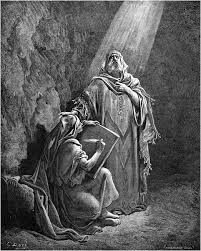
Jeremiah and his scribe Baruch by Gustave Dore
Jeremiah and his scribe Baruch
by Gustave Dore

     Eykhah!

     The city sits alone,

     Once great with people.

     She has become like a widow,

     Once great among the nations.

     A princess among the provinces,

     She has become a slave. (Lamentations 1:1)

Eykhah (אֵיכָה) = Oh, how? Alas! How could it be? (See my post Devarim: Oh, How?)

The prophet Jeremiah had been warning the people of Jerusalem to stop worshiping other gods and acting immorally (as well as warning the kings of Jerusalem to submit to the Babylonians before it was too late). But they all ignored him. So the God of Israel, the “god of armies”, according to Jeremiah, let the Babylonians destroy the city that was supposed to be the place where God’s enlightenment came into the world.

The book of Jeremiah calls Jerusalem (and by extension the Israelites) God’s bride, who made a covenant like a marriage with God—and then strayed after other gods and became a prostitute. In Lamentations, she has become a widow, utterly bereft of God.

This week’s haftarah is always read on the Saturday morning before Tisha B’Av, and it also includes the despairing cry, Eykhah!

Isaiah by Gustave Dore
Isaiah
by Gustave Dore

  Eykhah! She has become a prostitute,

     The [once] faithful city

     Filled with justice.

     Tzedek used to linger in her,

     But now—murderers. (Isaiah 1:21)

 Tzedek (צֶדֶק) = virtue, rightness, righteousness justice, good deeds.

 The haftarah, which refers to events in 701 B.C.E., also reminds us that according to the book of Isaiah, God gave the people of Judah and Jerusalem more than a century of opportunities to change their ways before finally the temple was razed.

What misdeeds does Isaiah urge the people to stop doing?

This haftarah is not about worshiping false gods, but about worshiping God falsely—by following the ritual forms without obeying God’s commandments about just behavior toward fellow human beings.

     Why do you give me so many slaughter-sacrifices?
—God says.

First temple altar     I am sated with rising-offerings of rams

     And the fat of meat-cattle

     And the blood of bulls.

     And lambs and he-goats

     I do not want

     When you come to appear before Me.

     Who asks for that from your hand?

     Do not go on trampling My courts

     Bringing oblations!

     Incense is repugnant to Me.

     New moon and sabbath

     Reading to an assembly—

     I cannot endure

     Misdeeds and ritual celebrations! (Isaiah 1:11-13)

Isaiah is especially critical of the government in Jerusalem.

     Your officials are obstinate

     And comrades of thieves,

     Every one a lover of bribes

     And a pursuer of payments.

     They do not judge the case of the orphan,

     Nor does the lawsuit of the widow come to them. (Isaiah 1:23)

Nevertheless, God offers the people a chance to reform and be saved from future wars.

     Go, please, and be set right

     —says God.

Flour Background

     [Even] if your faults are like crimson dye,

     They shall become white like the snow.

     If they are red as scarlet fabric,

     They shall become like fleece.

     If you do good and you pay attention,

     The goodness of the land you shall eat.

     But if you refuse and you are obstinate,

     You will be devoured by the sword… (Isaiah 1:18-20)

The haftarah concludes:

     Zion can be redeemed through justice,

     And those who turn back, through tzedek. (Isaiah 1:27)

*

Like Job, we know that being good is not always rewarded in this world. When we see God as an anthropomorphic judge meting out rewards and punishments, God seems to look away from saints as well as sinners.

Yet the human race as a whole could be redeemed through justice and virtue. If we all dedicated ourselves to following treaties and international laws, to being honest and fair, and to helping the needy, war would disappear.

On an individual level, at least good behavior leads to a clear conscience and the trust of others, and those result in a happier life than the lives of the murderers, thieves, bribe-takers, and heart-hardeners who ruled Jerusalem in Isaiah’s time.

And a happier life than the priests in this week’s haftarah, who spread their hands to bless he congregation even though they, too, are guilty.

     And when you spread out your palms

     I lift My eyes away from you;

     Even if you make abundant prayers

     I will not be listening;

     Your hands are filled with bloodshed. (Isaiah 1:15)

So go ahead and pray, attend services, follow rituals to approach God. But remember Isaiah’s words, and also keep your hands clean.

Haftarat Matot—Jeremiah: Doomed to a Calling

Every week of the year has its own Torah portion (a reading from the first five books of the Bible) and its own haftarah (an accompanying reading from the books of the prophets). This week the Torah portion is Mattot (Numbers 30:2-32:42) and the haftarah is Jeremiah 1:1-2:3.

Jeremiah discovers his calling in this week’s haftarah:

The word of God happened to me, saying:

     Before I enclosed you in the womb, I knew you.

     And before you went out from the womb, I consecrated you;

     A navi to the nations I appointed you. (Jeremiah 1:4-5)

navi (נָבְיא) = prophet. (Plural = neviyim (נְבִיאִים).)

There are two kinds of neviyim in the Bible: those who have ecstatic experiences of the divine but do not speak for God; and those who serve as mouthpieces or translators for God, giving God’s messages to other people. Jeremiah is the second kind of navi, like thirteen prophets who came before him: Moses, Bilam, Samuel, Natan, Elijah, Elisha, Jonah, Joel, Amos, Hosea, the first Isaiah, Micah, and Nahum.

Jeremiah is an adolescent when he hears God tell him he is a navi.

And I said:

     Ahahh! My master, God!

     Hey! I do not know how to speak,

     Because I am a youth. (Jeremiah 1:6)

Ahahh (אֲהָהּ) = a cry of alarm, like “oh no!” or “alas!”

Jeremiah does not want the job

Moses tried to get out of being God’s prophet by claiming his speech and his tongue were heavy. Jeremiah protests that he would be a poor speaker because he is too young.

Perhaps he is wise for his age and knows that speaking out effectively against what others are doing requires the kind of insight one gains from life experience. Of course, knowing that at a young age would actually make him more qualified!

More importantly, God consecrated Jeremiah as a navi before he was born. The language in these poetic verses reflects an observation that we explain today through genetics: human beings are born with genes for certain talents and dispositions, which change from potential to actual in the right environment. Skills can be developed through education and practice, but you can become a stellar dancer only if you were born with certain physical traits, a stellar mathematician only if you were born with certain mental traits, a stellar prophet only if you were born with—what?

My guess is that a competent navi must be born with both the kind of intelligence needed by translators and eloquent speakers, and an unusual spiritual sensitivity.  Jeremiah must have had a way with words as a child, and he must have experienced glimpses or echoes of a reality behind our mundane reality.

People enjoy using their talents. So why is Jeremiah horrified at news that he must serve as a navi?

The haftarah opens by stating that Jeremiah began prophesying in the 13th year of the reign of Josiah, king of Judah, which scholars date to the 620’s B.C.E. Two neviyim are already active in Jerusalem at that time: Zephaniah (who has his own book) and Huldah (who is mentioned only when she utters a prophecy for King Josiah five years after Jeremiah’s call, in 2 Kings 22).

King Josiah began his reign at the age of eight. While he was growing up, Zephaniah was predicting a day of reckoning when God would wipe out Jerusalem, Judah, and most of the world for injustice and idol worship, while giving refuge to a small number of survivors.

When Jeremiah is called to prophesy, Josiah is 21 and has not yet begun his campaign of wiping out the images, shrines, and priests of other gods. The kingdom of Judah is still full of polytheists worshipping Baal, Ashtoret, Molekh, Khemosh, Milkom, and various astral deities. Furthermore, the political situation in the region is shifting. The Assyrian Empire, which had earlier swallowed up the northern kingdom of Israel and made Judah its vassal state, is weakening. Wars are brewing between powers bigger than the little state of Judah. It would be all too easy for a sensitive person to imagine God using foreign armies to punish and destroy the Israelites.

Jeremiah probably expects that the speeches he must make as a navi will be at least as grim and unwelcome as Zephaniah’s. If Jeremiah hopes that at least his private life will continue as before, that hope probably dies when he hears God’s response to his attempt to excuse himself on the grounds of youth.

prophet 1

And God said to me:

     Do not say “I am a youth”

     Because anywhere I send you, you will go,

     And anything I command you, you will speak.

     Do not be afraid in front of them,

     Because I will be with you to rescue you –declares God. (Jeremiah 1:7-8)

Theoretically Jeremiah could refuse the call, but God already knows Jeremiah will obey—and that he will need rescuing from “them”, some people who have not yet been named.

In case Jeremiah did not get the hint, later in this haftarah God says:

     And they will attack you

     But they will not vanquish you

     Because I will be with you—declares God—to rescue you. (Jeremiah 1:19)

How reassuring!

prophet 2

Jeremiah rants against dishonesty, injustice, and the worship of other gods until King Josiah is killed in 609 B.C.E. During the reigns of the next four kings of Judah, Nebuchadnezzar of Babylon vanquishes the old Assyrian empire and his army conquers Judah, putting Jerusalem under siege in 589 B.C.E.

Jeremiah blames idol-worship for the Babylonian attack, and advises each successive king of Judah (Yeho-achaz, Yehoyakim, Yehoyakin, and Tzidkiyahu) to surrender and make Judah a vassal of the new Babylonian empire. He knows it is the only way to save lives and preserve Jerusalem and its temple.

Despite all of Jeremiah’s prophesies, the people do not repent, and none of the kings submit to Babylon.  The Jerusalem faction that opposes surrender flogs, imprisons, and attempts to murder Jeremiah, so he will stop interfering with their power over the king.

prophet 3

When the Babylonians finally do raze Jerusalem and its temple, and kill or take captive most of its leading citizens, all Jeremiah can do is save the lives of a few people who helped him. He spends the rest of his own life in exile in Egypt, prophesying about other countries whose kings do not listen to him.

Maybe Jeremiah glimpses his own future when God first calls him to serve as a navi. That future would make anyone cry Ahahh!


When I was young, I was one of many Americans who believed that if you discovered your true calling and did it, you would be successful and happy. The 1970’s and 80’s were the era of “Do your own thing” and “Follow your bliss”.

Gradually I realized that even when you pursue work you have a talent for and are passionate about, the world does not always rearrange itself to give you a clear path.

Some individuals are lucky; I believe my father was born to be an engineer, and he had a profitable and satisfying career in that field. Some are unlucky, and pursue what speaks to their innermost heart only to end up broke and miserable. In some countries, those who pursue the work of a prophet speaking out against the government end up imprisoned (like Jeremiah) or killed (a fate he narrowly escaped).

And some people never try to pursue their calling, either because what they were born to do is something society expects from them anyway, or because they run away from the first intimation that they might have a calling.

What if you realized, with deep inner clarity, that you were called to devote your life to work that would lead to frustration and failure like Jeremiah’s?

Pinchas & 1 Kings: Zealots

Every week of the year has its own Torah portion (a reading from the first five books of the Bible) and its own haftarah (an accompanying reading from the books of the prophets). This week the Torah portion is Pinchas (Numbers 25:10-30:1) and the haftarah is 1 Kings 18:46-19:20.

My god is better than your god.

Holding this opinion (even when your “god” is atheism) is human nature. The trouble begins when someone with religious zeal (great energy and enthusiasm) becomes a zealot (fanatical and uncompromising). When two zealots oppose one another, no compromise is possible; one of them must quit or die.

This week both the Torah portion and the haftarah include a clash between a zealot for the God of Israel and a zealot for the gods of another religion.

Pinchas

Pinchas Impales Zimri & Cozbi, by J.C. Weigel
Pinchas (Phineas),
by J.C. Weigel

The Torah portion, Pinchas, opens with God’s declaration:

Pinchas, son of Elazar son of Aaron the High Priest, turned back My hot wrath from the Israelites through his kina beside My kina in their midst so I did not finish off the Israelites through My kina. Therefore say: Here I am, giving him my covenant of peace. And it will be for him and for his seed after him a covenant of priesthood forever… (Numbers/Bemidbar 25:11-13)

kina (קְנְאָ) = zeal, fervor, passion, jealousy.

God has afflicted the Israelites with a plague because many of them started worshiping the local god, Ba-al of Pe-or. While the Israelites are weeping, an Israelite man brings a local woman into a chamber of a tent (possibly God’s Tent of Meeting). Pinchas follows them in and impales them—and God’s plague stops. The Torah uses the same word, kubah (קֻבָּה) for both the tent chamber and the woman’s inner “chamber” where Pinchas’s spear skewers them both. (See my post Balak: Wide Open.)

This week’s Torah portion names the impaled couple: Zimri, a leader in the tribe of Shimon, and Cozbi, the daughter of a Midianite chieftain of Moab.

Why would either of these people walk in front of Moses and engage in sex right in or next God’s Tent of Meeting—in the middle of a plague?  Tikva Frymer-Kensky suggests in Reading the Women of the Bible that Cozbi is a priestess, a role often given to the daughter of a king, and that Zimri brings her over to conduct a religious sexual ritual to end the plague.

Frymer-Kensky imagines Cozbi might even perform her ritual in the name of the God of Israel. But I imagine Cozbi as so zealous for Ba-al that she wants to save her new neighbors, the Israelites, from their plague-inflicting god by bringing in some positive energy from Ba-al. She does not ask for permission to practice her religion in the Israelite’s holy place; she just does it, in an act of passionate conviction.

In this clash between two zealots, Pinchas wins and Cozbi dies. God (the God character in the Torah) admits to being carried away by zeal, as well, and rewards Pinchas for stopping God from destroying the Israelites.

Elijah

The haftarah from the first book of Kings tells a different story about two zealots: the battle between the queen of Israel and Israel’s foremost prophet.

Ba-al Preparing Thunder and Lightning
Ba-al Preparing
Thunder and Lightning

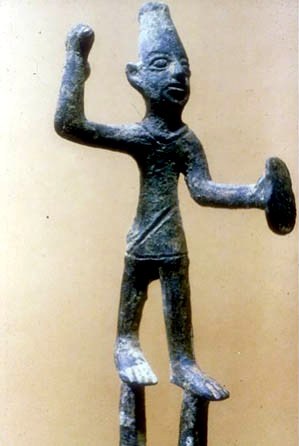
King Ahab’s queen and primary wife is Jezebel (Izevel in Hebrew), daughter of the Phoenician King Etba-al of Tyre. It is a good political alliance; but both books of Kings revile Jezebel because of her zeal for her native religion. As soon as Ahab marries Jezebel, according to 1 Kings, he builds a temple to Ba-al and bows down to that god. He also erects a cultic post for the goddess Ashtart.

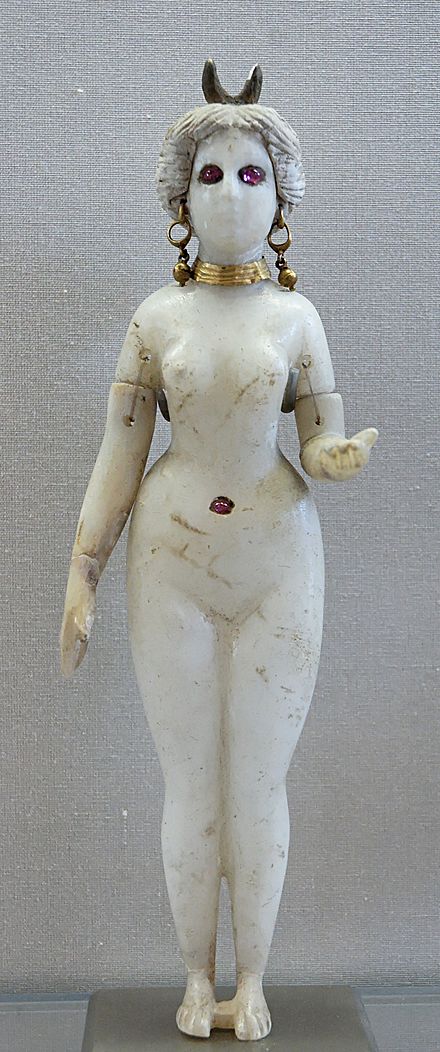
Phoenician Ashtart
Phoenician Ashtart

Jezebel not only persuades her husband to worship her gods, but also tries to stamp out worship of the God of Israel by “exterminating the prophets of God” (1 Kings 18:4).

Furthermore, she uses her personal wealth to maintain 450 prophets of Ba-al (god of fertility, war, and weather) and 400 prophets of Ashtart (goddess of fertility, war, and seafaring).

Meanwhile Elijah, the most powerful prophet of the God of Israel, comes to King Ahab at his capital city, Samaria, and says:

As God lives, the god of Israel on whom I stand in attendance, there will be no dew or rain these years except by the word of my mouth. (1 Kings 17:1)

After three years, the famine in Samaria is severe. Jezebel’s weather god, Ba-al, does nothing.  So King Ahab institutes a search for Elijah.

Elijah orders King Ahab to summon “all Israel”, the 450 prophets of Ba-al, and the 400 prophets of Ashtart to Mount Carmel for a contest. The first book of Kings does not mention the prophets of Ashtart again, but the prophets of Ba-al and the Israelite witnesses show up on Mount Carmel, where there are two altars: one for Ba-al and one for the God of Israel. Against impressive odds, the God of Israel wins the contest. (See my post Pinchas & 1 Kings: The Sound of God.) The people of Israel fall on their faces and declare their allegiance to God, and under Elijah’s orders they kill all the prophets of Ba-al.

Then it finally rains.

Jezebel and Ahab
Jezebel and Ahab, by Charles Horne, 1909

Jezebel is not present at Mount Carmel, but Ahab comes home and tells her about the contest and that Elijah killed all the prophets of Ba-al by the sword.

Then Jezebel sent a messenger to Elijah saying: Thus may the gods do and more if by this time tomorrow I have not made your life like the life of one of them. And he was afraid, and he got up and went to [save] his life… (1 Kings 19:2-3)

He reaches Beer-sheva in the kingdom of Judah, then walks for a day into the wilderness and lies down to die. Although he won the contest on Mount Carmel and moved the Israelites to kill 450 Ba-al worshippers, a zealot’s job is never done. His victory seems empty as long as Queen Jezebel, his zealous opponent, is still in power, still supporting the religion of Ba-al and Ashtart, and still determined to kill every one of God’s prophets.

God sends an angel to urge Elijah to eat and keep walking.  He ends up on Mount Chorev (also called Mount Sinai) where God asks him:

Why are you here, Elijah? And he said: I was very kina for God, the God of Armies, because the Israelites had abandoned Your covenant and pulled down Your altars and killed Your prophets by the sword. And only I was left, and they tried to take my life. (1 Kings 19:9-10)

He declares he is a zealot for God, and admits that he has failed to exterminate Jezebel’s religion. God responds with a demonstration.

Elijahs Cave

And hey! God was passing by, and a big and strong wind was tearing off mountains of rocks in front of God; but God was not in the wind. And after the wind, an earthquake; but God was not in the earthquake. And after the earthquake, fire; but God was not in the fire. And after the fire, a faint sound of quietness. And when Elijah heard, he wrapped his face with his robe, and he went out and stood at the entrance of the cave; and hey!—a  voice [came] to him, and it said: Why are you here, Elijah? (1 Kings 19:11-13)

And Elijah gives the same reply, word for word. He did not pick up on God’s hint that true service to the divine lies in quietness. So God, instead of rewarding him, tells him he must anoint a young man named Elisha to be a prophet in his place.


In the book of Numbers, Pinchas’s zeal, kina, leads him to kill the Ba-al worshiper Cozbi and her Israelite assistant Zimri. God declares that this murder stopped God’s own kina from killing all the Israelites in a plague, and makes Pinchas a priest. In next week’s Torah portion, Mattot, Pinchas is the priest who goes with the raiding party to kill all the inhabitants of Pe-or. One zealot wins hands-down; the other zealot dies.

In the first book of Kings, Elijah’s kina leads him to stage a contest between gods and kill 450 Ba-al worshipers on the losing side. God cooperates by sending the dramatic manifestation of fire that Elijah requests on Mount Carmel. But Elijah’s real opponent is the zealot Jezebel, who remains in power.

When two zealots oppose one another, one of them must quit or die.  God’s demonstration at Mount Chorev implies that Elijah must quit being a zealot, take a quieter approach to religion, and perhaps spend the rest of his life in hiding. But Elijah despairs because he cannot imagine living without fighting for his cause. And God appoints another prophet.

Did the good guys win? No; Jezebel is just as zealous and just as willing to murder for the sake of religion as Elijah is. But God as portrayed in the first book of Kings is now wiser and more mature than the God character in the book of Numbers. This God still wants exclusive worship, but recognizes that kina, the passion of the zealot, is not the best approach.

Our world today is full of zealots. It is easy to revile a zealot willing to kill for the sake of a religion or another cause—when that zealot is not on your side.  May we all learn to recognize uncompromising zeal in people we agree with, and even in ourselves.  May we all learn to restrain ourselves, and listen to the faint sound of quietness.


Haftarat Balak—Micah: Bribing the Divine

Every week of the year has its own Torah portion (a reading from the first five books of the Bible) and its own haftarah (an accompanying reading from the books of the prophets). This week the Torah portion is Balak (Numbers 22:2-25:9) and the haftarah is Micah 5:6-6:8. Last week the haftarah was Judges 11:1-33.

What does God want from us?

temple altar 2

            With what shall I come before God?

            (With what) shall I soothe God on High?

            Shall I come before Him with olot?

            With calves a year old?

            Would God be pleased with thousands of rams?

            With ten thousand streams of oil?

            Should I give my firstborn for my rebellion,

            The fruit of my loins for the guilt of my soul? (Micah 6:6-7)

olot (עוֹלוֹת) = plural of  olah (עוֹלָה) = rising-offering. In an olah an entire slaughtered animal offering is burned up into smoke. (From the root alah (עלה) = go up.)

In this week’s haftarah, the prophet Micah mocks Israelites who try to buy God’s favor by making impressive offerings on the altar. Everyone has a price, these people think, even God. I can get God to forgive my moral shortcomings if I pay the right price.


In last week’s haftarah, Yiftach (“Jephthah” in English), the new chieftain of Gilad, tries to win God’s favor for his upcoming battle with the Ammonites. (See last week’s post, Haftarah for Chukkat: Judges—A Peculiar Vow.) He has no idea what kind of gift God would like; God does not speak to him.  But he knows what kind of gifts other people donate to their gods.  His fellow Israelites serve God by slaughtering livestock and burning them on God’s altar. An even bigger offering, for the people in that region, is to sacrifice one’s own child—preferably one’s firstborn son—to a god.

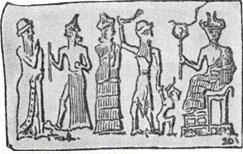
Babylonian cylinder seal illustrating child sacrifice

(Abraham almost does this in Genesis chapter 22; the king of Moab does it in 2 Kings 3:27: the Israelites sacrifice their children to Molech in Jeremiah 7:31: and Psalm 106:38 claims that the Israelites “shed innocent blood, the blood of their sons and their daughters, whom they slaughtered for the idols of Canaan”.)

Yet elsewhere, the Bible makes it clear that human sacrifice is completely unacceptable to the god of Israel. Yiftach’s messages to the king of Ammon show that he is well versed in the history of the Israelite conquests east of the Jordan River, as related in the book of Numbers. (See my post: Chukat & Ecclesiastes: Accounting for Cheshbon.)

But in the original story of Yiftach and his daughter, does Yiftach know about the ban against human sacrifice?

He has only one child, his young adolescent daughter. And he has just been given his father’s position as chieftain of Gilad. The best thing a man can hope for, in his culture, is to pass on his position and his property to descendants. Yet everything depends on winning the war with Ammon.

So Yiftach does not choose between sacrificing an animal or a human; he lets God (or fate) decide.

And Yiftach vowed a vow to God, and he said: “If You definitely give the Ammonites into my hand, then it will be that the one that goes out from my door of my house to meet me at my safe return from the Ammonites will be for God, and I will make him go up as an olah.” (Judges/Shoftim 11:30-31)

Maybe Yiftach hopes a bull or a ram will trot out of his house when he comes home. Or maybe he expects a male slave to open the door.

Yiftach wins the war, and his troops capture twenty towns from the Ammonites.

daughter of Yiftach 3b

And Yiftach came … to his house, and hey!—his daughter was going out to meet him, with tambourines and with dancing.  And she was an only child; he had no other son or daughter. As he saw her, he tore his clothes [in grief] and he said: Ah! My daughter, I have certainly been knocked down to my knees! (Judges 11:34-35)

Women in the Bible often sing and dance with tambourines when their military heroes come home in triumph.  They do it for Saul and David in the first book of Samuel. Yiftach’s wife is absent from the story, so his adolescent daughter takes on the job.

Yiftach might conclude that God arranged for his daughter to come out because God wants his daughter to go up in smoke.

Some commentators, from the Talmud and the Midrash Rabbah on Leviticus (5th-7th century C.E.) to Rashi (Rabbi Shlomo Yitzchaki, 11th century C.E.) to Robert Alter (2013), conclude that Yiftach actually does sacrifice and burn his daughter on the altar.

Another line of commentary, from Resh Lakish in the Midrash Rabbah on Ecclesiastes (6th-8th  century C.E.) to Abraham Ibn Ezra (12th century C.E.) to Jonathan Magonet (2015), argues that Yiftach does expect a human being to come out the door, but he does not intend to make a human sacrifice. Instead, he plans to dedicate the person to God by paying the priests of Gilad in silver, which they can then use to buy sacrificial animals for a big olah. This is an approved procedure in the book of Leviticus/Vayikra (probably written in the 6th century B.C.E., about the same time that the stories in the book of Judges were collected and edited).

Anyone who shall make a wonderful vow of the value of humans to God, the assessment shall be: for a male 20 to 60 years old, 50 shekels of silver…if five to 20 years old, the assessment shall be …ten shekels for a female… (Leviticus/Vayikra 27:2-3)

Yiftach does not vow to give God “the value of a human”, but he does vow that the human concerned “will be for God”—and also that he will (according to this theory) turn that person into a symbolic olah by paying the priests the correct amount of silver.

Yet if Yiftach expects to give God the assessed value of the first person who comes out of his house, then why is he upset when his daughter dances out? The assessed value of an adolescent girl is lower than the value of an adult male slave; he can save some money!

But Yiftach tears his clothes in grief. That means that either Yiftach does intend to slaughter a human being—his own daughter—on the altar; or a piece of the story is missing.

I suspect that the redactor who assembled the book of Judges omitted something—because the rest of the story of Yiftach’s daughter is about celibacy, not death.

She calmly tells her father that he must carry out his vow, and asks him to delay it for two months.

daughter of Yiftach 4

“Let this thing be done for me: I shall go down on the hills and I shall weep over my betulim, I and my (female) companions.”  And he said: “Go.”  And he sent her off for two months, her and her companions, and she wept for her betulim on the hills. And at the end of two months she returned to her father and he carried out his vow that he had vowed. And she, she had never known a man. And it became a custom in Israel: for all of her days, the daughters of Israel went to sing for the daughter of Yiftach the Giladite, four days in the year. (Judges 11:37-40)

betulim (בְּתוּלִים) = virginity; celibacy; evidence (of blood on a sheet) of being either virginal or not pregnant.

A period of two months has no special significance elsewhere in the Bible, but it is the right length of time for a woman to wait to make sure she has a menstrual period and is not pregnant.

I think Yiftach’s daughter is reminding him of another alternative to human sacrifice.

According to the Torah, an Israelite woman can achieve a higher level of holiness only by becoming a nazir for a period of time and abstaining from alcohol and grape products, hair care, and being near a dead body.  This would not count as a substitute for an olah.  But in neighboring Mesopotamia a woman could serve a goddess in several other ways: as a temple sex worker, as a high priestess who had sex only with a god, or as a nun who lived communally in a special part of the temple complex.

Neither a priestess nor a nun was allowed to have children.

Israelites in the Bible frequently worship other gods in addition to the God of Israel, and at times they confuse their god with another local god. Perhaps Yiftach’s daughter and her companions weep ritually at one or more hilltop shrines (bamot) dedicated to other gods. Then, once she has proof that she is not pregnant, her father gives her to God—to some god, anyway, a god that will accept her as a priestess or a nun.

That would explain why, after Yiftach has carried out his vow, women of Israel are able to go and “sing for the daughter of Yiftach the Giladite, four days in the year”—for the rest of her life.

Yiftach still grieves, because now he will have no grandchildren.  And his daughter laments for at least two months because now she will never “know” a man or have a child. But by borrowing from another religion, she finds a way to make herself a gift to God by living, not dying.


Later in the Bible, prophets from Isaiah to Malachi point out that although animal offerings in the temple are fine if performed in the right spirit—and to the right god—what God really wants is for people to behave ethically toward one another.  The prophet Micah says it best in this week’s haftarah, after he has mocked Israelites who try to buy God’s favor with sacrifices.

He told you, humankind, what is good

And what God is seeking from you:

Only to do justice,

And love kindness,

And walk modestly with your God. (Micah 6:-8)

If only Yiftach knew that was what God wanted! Then he could have vowed: “If You definitely give the Ammonites into my hand, then, as chief of Gilad, I will do justice and pursue kindness and be humble.”

If only we all dedicate ourselves to being just, kind, and humble, it will be a gift to the whole world.

Haftarat Chukat—Judges: A Peculiar Vow

Every week of the year has its own Torah portion (a reading from the first five books of the Bible) and its own haftarah (an accompanying reading from the books of the prophets). This week the Torah portion is Chukkat (Numbers 19:1-22:1) and the haftarah is Judges 11:1-33.
Yiftach by Guillaume Rouille
Yiftach
by Guillaume Rouille

Why would a man who is clear-headed, cool, and careful with words suddenly make a vow that threatens his only child?

The haftarah from Judges introduces Yiftach as a man who is an outcast through no fault of his own.

Yiftach of Gilad was a capable warrior, and he was the son of a prostitute, and he was begotten by Gilad. Then the wife of Gilad bore him sons, and the sons of his wife grew up and they drove out Yiftach. They said to him: “You shall not inherit in our father’s household, because you are the son of another woman.” So Yiftach fled from his brothers, and he settled in the land of Tov, and men without means gathered around Yiftach and went out with him. (Judges 11:1-3)

Yiftach (יִפְתָּח) = he opened.  “Jephthah” in English translations.

Grassland in Gilad (now in west Jordan)
Grassland in west Gilad
(now in Jordan)

Gilad (גִּלְעָד) = “Gilead”, the region east of the Jordan River, settled by the tribes of Reuven, Gad, and Menashe in the book of Numbers/Bemidbar because it was good for cattle. Yiftach’s father is probably called “Gilad” because he is the chief or de facto king of the region; the Bible often refers to a king by the name of his country.

The oldest son of a chief does not automatically become the next chief, but all of a man’s sons are entitled to a share of his property.  As a capable warrior, Yiftach could attack his half-brothers when they refuse to share with him. But he is too sensible to take this risk. Instead he accepts that he has been deprived of both his home and any of his father’s herds, and he flees to a remote part of east Gilad.

There he leads a band of landless men who “go out”—probably to raid villages for spoils, a common occupation in the ancient Near East.

Later, the Ammonites to the south attack the Giladites and capture some of their towns.  Since Gilad has no war leader, a delegation of elders travels to Tov and asks Yiftach to take the job.  He refuses on the grounds that he was disinherited and driven away. So the elders make him a better offer.

“You shall go with us and you shall battle against the Ammonites and you shall become our chief, for all the inhabitants of Gilad.” (Judges 11:8)

Yiftach, clever and careful, rephrases their offer to mean that he will be the permanent chief of Gilad, even after the Ammonites are defeated:

“If you are bringing me back to battle against the Ammonites, and God gives them up to me, it is I who will be your chief.” (Judges 11:9)

The elders agree, but as an extra precaution Yiftach repeats his words in front of God at the nearest high place, the mitzpah or lookout post of Gilad.

We can assume he brings his raiders with him and recruits and trains more soldiers.  But his next recorded move is to send a message to the king of the Ammonites:

Gilad at the end of the book of Numbers
Gilad (Menasheh, Gad, and Reuben) at the end of the book of Numbers

“What is between me and you, that you come to me to make war on my land?” (Judges 11:12)

Yiftach addresses the Ammonite ruler as one king to another, as if it were a personal quarrel.  The king of the Ammonites replies that the Israelites took his ancestral land, between the Arnon and Yabok rivers east of the Jordan, when they came up from Egypt centuries ago.  Yiftach replies by explaining that Amorites captured that land before the Israelites arrived, so the Ammonites have no legitimate grudge against the Israelites of Gilad.  This time, the Ammonite king sends no return message.

Up to this point Yiftach has acted cautiously and reasonably. Then something happens to him.

And a ruach of God came over Yiftach.  And he passed through the Gilad and Menasheh, and he passed the lookout of Gilad, and from the lookout of Gilad he passed ahead to the Ammonites. (Judges 11:29)

ruach (רוּחַ) when immediately followed by a name of God = prophetic inspiration or ecstasy; charisma; mood, motivating force, prevailing attitude.

The book of Judges tells of two war leaders before Yiftach who were overcome by a ruach of God: Othniel and Gideon, both of whom were motivated to go to war.  After the story of Yiftach, whenever Samson is overcome by the ruach of God he has a burst of superhuman strength and commits an impulsive act of violence. In the first book of Samuel, King Saul is overcome both by a ruach of prophetic ecstasy and by a ruach that plunges him into foul and suspicious moods—and both kinds of ruach come from God.

What kind of ruach of God comes over Yiftach? The first effect of the divine ruach is that he gathers his troops and goes to fight the Ammonites. But the ruach may have a second effect; immediately after the sentence quoted above, the haftarah continues:

And Yiftach vowed a vow to God, and he said: “If You definitely give the Ammonites into my hand, then it will be the one that goes out from my door of my house to meet me at my safe return from the Ammonites—[that one] will belong to God, veha-alitehu [as] an olah.” (Judges 11:30-31)

veha-alitehu (וְהאעֲלִיתְהוּ) = and I will make him/it go up. (From the root verb alah (עלה) = go up. The –hu ending can mean either a male human or an animal.)

olah (עֹלָה) = rising-offering. (Also from the root alah (עלה) = go up.) In an olah an entire slaughtered animal offering is burned up into smoke.

Camel in Egyptian petroglyph

This is not the vow of someone who is thinking clearly. After all, he does not know who or what will come out the door of his house.  The Midrash Rabbah for Leviticus/Vayikra imagines God wondering if Yiftach would offer up a non-kosher animal unsuitable for altar sacrifice, such as a camel, donkey, or dog, if it happened to come out the door first.

Yiftach, who is so well-versed in Israelite history, would know that human beings are also unacceptable as offerings on God’s altar. Yet his vow implies that not only will he give God ownership of the person or animal that comes out of his house, but that he will do so by burning up the man or animal in an olah offering.

Perhaps Yiftach is still under the influence of the ruach of God, and not thinking clearly.


I found three other if-then vows in the Bible, and all three are more practical about the object of the vow. Jacob vows that if God keeps him safe until he returns to his father’s house, then he will give a tithe of all his property to God (Genesis 29:20-22).

Hannah vows that if God gives her a son, she will give him to God as a lifelong servant—as a nazir, priest, and/or prophet. (1 Samuel 1:11)

In this week’s Torah portion, the Israelites …vowed a vow to God and said: If You definitely give this people into my hand, then I will devote their towns to utter destruction for God. (Numbers/Bemidbar 21:2)

In each case, God fulfills the request, and the person who makes the vow gives what he or she promised to God.  God also fulfills the request in this week’s haftarah:

And Yiftach passed over to the Ammonites to fight against them, and God gave them into his hand. …twenty towns … a very great blow. And the Ammonites were subdued before the Israelites. (Judges 11:32-33)

So when Yiftach gets home, he must fulfill his unconsidered vow.

daughter of Yiftach 3b

This is where the haftarah ends, but the story continues in the book of Judges:

And Yiftach came to the lookout post, to his house, and hey!—his daughter was going out to meet him, with tambourines and with dancing.  And she was an only child; he had no other son or daughter. (Judges 11:34)

Yiftach’s response shows that he has recovered from the ruach of God that gave him battle fever and led to his muddled vow.

As he saw her, he tore his clothes [in mourning] and he said: Ah! My daughter, I have certainly been knocked down to my knees! And you, you have become okherai. And I, I opened up my mouth to God, and I am not able to turn back. (Judges 11:35)

okherai (עֹכְרָי) = one who cuts me off from social life, one who makes trouble for me.

When Yiftach’s father died, his brothers cut off from his old life and subjected him to troubles.  Now he blames his daughter for doing it again. He also blames himself for making the vow in the first place.


I know some people today who seek ecstatic experiences, who want to be overcome by the ruach of God.  And I know people who are driven by a mission they consider sacred, one that has taken over their lives and muddled their thinking, as if they had been overcome by a ruach of God.

As for myself, I would rather keep my head clear and think before I speak.  I would rather be like Yiftach before the ruach hit him.

What about you?


Next week’s post will explore how Yiftach fulfills his vow, what actually happens to Yiftach’s daughter, and how this story informs next week’s haftarah from the book of Micah.)

Haftarat Korach—1 Samuel: The Man Who Would Not Be King

Every week of the year has its own Torah portion (a reading from the first five books of the Bible) and its own haftarah (an accompanying reading from the books of the prophets). This week the Torah portion is Korach (Numbers 16:1-18:32) and the haftarah is 1 Samuel 11:14-12:22.

The prophet Samuel feels insulted when the independent tribes of Israel ask him to appoint a king. God is the true ruler of the twelve tribes, he says. Samuel both interecedes with God, and serves as a circuit judge, deciding case law for the people.  What more do they need?

prophet 3

All the elders of Israel assembled themselves and came to Samuel at the Ramah. And they said to him: Hey! You have grown old and your sons have not walked in your ways. So now set up for us a king to judge us, like all the nations. (1 Samuel 8:4-5)

Samuel warns them that kings impoverish and enslave their subjects, and do not listen when their people cry out to them.

But the people refused to listen to the voice of Samuel, and they said: No! Because with a king over us, we, even we, will be like all the nations.  And our king will judge our disputes, and he will go out before us and fight our wars. (1 Samuel 8:19-20)

In other words, what the tribes are really looking for is not a judge, but a permanent war leader. They are tired of being picked on by the neighboring Philistines, Amorites, and Ammonites; they want to do their own conquering and nation-building.

Samuel tells God, and God promises to send a king to Samuel.  In this week’s haftarah he tells the assembled Israelites:

And now, here is the king who you have chosen, who she-eltem, and here—God has placed over you a king. (1 Samuel 12:13)

she-eltem (שְׁאֶלְתֶּם) = you asked for.  From the root verb sha-al (שָׁאַל) = ask.

The name of the first king of Israel is Saul, or in Hebrew, Shaul (שָׁאוּל) = asked.

How does Saul, a Benjaminite whose only outstanding trait is his height, come to be king?  The first book of Samuel gives us three different stories.

Donkey

In the first story, Saul is looking for his father’s lost donkeys.  He and his servant wander far from their home in Giveah.

They were just coming to the land of Tzuf when Saul said to his boy who was with him: Hey, let’s go turn back, or my father will stop worrying about the donkeys and worry about us. (1 Samuel 9:5)

tzuf (צוּף) = (noun) honeycomb dripping with honey; (verb) flooded, flowed over.

The servant talks Saul into entering the nearest town and paying the local seer to tell them where the donkeys are. The town is Ramah, and the seer is Samuel, who drags Saul to the hilltop shrine for a feast.

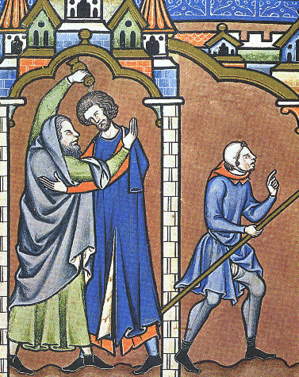
Samuel Anointing Saul

In the morning Samuel pours oil on Saul’s head and tells him God is anointing him king. On his way home Saul falls in with a band of ecstatic prophets and speaks in ecstasy.  But when he returns to his father’s house he tells nobody about his anointment.

In the land of Tzuf everything is overflowing: the food at the feast, the oil of anointment, and the ecstatic spirit of God.

In the second story,

Samuel summoned the people to God at the mitzpah. (1 Samuel 10:17)

mitzpah (מִצְפָּה) = watchtower, lookout post.

When all the important Israelite men have arrived, Samuel casts lots before God three times to find out who the king will be.  The lottery chooses first the tribe of Benjamin, then out of that tribe the clan of Matar, then out of that clan Saul. But nobody can find Saul.

Then God said: Hey!  He has hidden himself in the baggage!  So they ran and took him from there, and he stood himself up among the people, and he was head and shoulders taller than all the people.  And Samuel said to all the people: Do you see the one whom God chose?  For there is none like him among all the people! (1 Samuel 10:22-24)

Saul’s strategy of hiding does not work; even if the people cannot see him from the mitzpah, God can.  Saul is proclaimed king despite himself.

This week’s haftarah gives us a third and more serious installation of Saul as king.

And Samuel said to the people: Come and let us go to the gilgal, and we will renew the kingship there. So they all the people went to the gilgal and they made Saul king there before God, at the gilgal. And they slaughtered their wholeness-offering before God there, and Saul and all the men of Israel with him rejoiced there very much. (1 Samuel 11:14-15)

gilgal (גִּלְגָּל) = (probably) a stone circle. Related to the words gal (גַּל) = heap of stones, goleil (גֹּלֵל) = rolling, galgal (גַּלְגַּל) = wheel, and gulgolet (גֻּלְגֹּלֶת) = skull, head, headcount.

There is more than one gilgal mentioned in the Bible, but the most important one is probably the gilgal next to the city-state of Jericho. It is already standing when Joshua leads the Israelites into Canaan, and its circle of stones was probably used by an earlier religion. Joshua uses it as a sacred site for circumcising all the Israelite men and celebrating the first Passover in Canaan.  Then it becomes his headquarters for most of the book of Joshua.

The gilgal near the ruins of Jericho later becomes one of the four stops on Samuel’s circuit as a judge (along with the mitzpah, Beit-El, and Ramah in Tzuph).  Then it is the place where Saul is installed as king, and finally the site of King Saul’s main altar.

Why does it take two false starts, in the land of Tzuf and at the mitzpah, before Saul accepts his kingship at the gilgal?

When the redactor of the books of Samuel recorded three extant stories about Saul’s appointment, he put them in the most telling order.  First Saul is blessed with kingship as a gift of tzuf, an overflowing bounty of both oil and an ecstatic experience—but these are gifts he does not want, so he pretends he never received them. Next Saul is chosen by lot at a mitzpah, a lookout post—where he does not want to be seen.  He manages to hide even from everyone except God, even though he is a head taller than the other men.

Finally Samuel summons the reluctant king to the gilgal, the ancient circle of stones where Joshua made his headquarters. Here Saul succumbs to history and takes his place in the line of rulers of the Israelites, after Moses and Joshua.

Some people seize opportunities to become leaders, pushing forward eagerly in their conviction or ambition.  Others are like Saul, shy of fame and happy to lead ordinary lives.  But the first book of Samuel shows that when you are called, denial is useless.  Eventually you will have to answer God and take your place in the middle of the circle.

In your own life, do you step into a new responsibility even when it may not be your calling?  Or do you resist the call to take on an important job that you don’t really want?