Balak: Carnal Appetites

As the Israelites approach the northeast border of Canaan, after serving their 40 years in the wilderness, they find out that God is on their side.  When the  king of Cheshbon attacks them, they conquer all of his and his brother’s land.
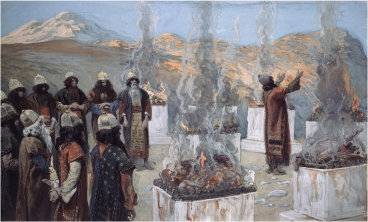
Bilam Prophecies,
by James Tissot

Then in the first part of this week’s Torah portion, Balak, God blesses the Israelites through a prophet other than Moses. Balak, king of Moab, hires the prophet Bilam to curse them, but every time Bilam opens his mouth, God makes him speak prophecies of blessing instead. (See my post Balak: Anxiety.)

You might expect the Israelites to rejoice, look forward to their next conquest, and serve God wholeheartedly. But human beings are not always reasonable.

Israel settled among the acacias, and the people began liznot with the daughters of Moab. (Numbers/Bemidbar 25:1)

 liznot (לִזְנוֹת)= to engage in illicit sex, infidelity, or cult prostitution.

Traditional commentary assumes it is the men of Israel who are screwing up. Commentators differ over whether they are having sex with non-Israelite women, or because they are participating in what scholars call “cult prostitution”: ritual sex between a man and a Mesopotamian priestess in order to influence a god to make the land fertile.

At any rate, exotic sex is the first attraction offered by the women of Moab. The second attraction is meat.

They invited the people to sacrificial-slaughter-feasts for their gods, and the people ate, and they bowed down to their gods. (Numbers 25:2)

The Israelites already had their own sacrificial-slaughter-feasts, laid out in the book of Leviticus/Vayikra. Why would they be attracted to something they could get at home? Maybe the Moabites provided the sacrificial animals, so the Israelites got meat for free. Maybe it was exciting to make an offering to a different god, following slightly different customs.

The new generation of Israelites appears to be no more mature than the old one. They are still easily distracted, easily seduced by novelty. They fail to learn from the past or prepare for the future. They cannot resist a good party, and all they can pay attention to is free sex and free food, the more exotic the better. The only problem is that partying with the Moabite women means being unfaithful to their own god.

And Israel yoked itself to the ba-al of Pe-or, and God became angry against Israel. (Numbers 25:3)

ba-al (בַּעַל)=a local god; an owner or master.

When God becomes angry (literally, “hot-nosed”) against Israel, a plague usually follows. Moses spends a lot of time in the book of Numbers/Bemidbar doing things to change God’s mood, so God will stop the latest plague. In this scene, the Torah does not tell us when the plague begins, only when it ends. But as soon as God gets angry, God tells Moses what to do.

Impalements in Assyrian relief, Tiglath Pileser II

Then God said to Moses: Take all the leaders of the people and hoka them for God, in front of  the sun; and it will turn My anger back from Israel. (Numbers 25:4)

hoka (הוֹקַע) = display a dislocation. (Another form of the verb is yaka, which the Torah uses to describe both what Jacob’s wrestling partner does to his hip, and a  disjointed, alienated feeling.) Translations of the verb hoka in this verse include “hang”, “impale”, and “hang up their bodies”.

God’s instruction to Moses is not easy to interpret. Does “all the leaders of the people”  mean every chieftain (since the leaders are supposed to stop bad behavior instead of looking the other way)?  Or does it mean every ringleader who is encouraging others to worship the god of Pe-or? The Midrash Rabbah, written in Talmudic times, offers both interpretations.

What is Moses supposed to do to these leaders? Rashi (11th-century Rabbi Shlomo Yitzchaki) wrote that the leaders were to be stoned, the usual punishment for idolaters, and then their corpses hoka, hung up on display. Later commentators speculated that God was requesting an unusual punishment such as impaling. Since the Torah consistently prescribes the death penalty for any Israelite who worships another god, one of these interpretations is probably correct.

Yet I am attracted to the idea that God is asking Moses to expose how dislocated the leaders are from the main body of their community, how alienated they are from the true path.

Here is my interpretive translation of Numbers 25:4:

Then God said to Moses: Take all the leaders of the [unfaithful] people and expose their dislocation and alienation from God, in front of the sun; and that will turn back the plague Israel has brought upon itself.

Traditional commentary is divided over whether Moses ever carried out God’s instructions. The plague stops when Aaron’s grandson Pinchas spears a leader of the tribe of Shimon and a Moabite (or Midianite) princess as they are fornicating in Israel’s sacred Tent of Meeting.  (See my blog post Balak: Being Open.) This double impalement is so shocking, that the Israelites wake up to their reality and abandon the god of Pe-or.

 As I read the book of Numbers, I often feel exasperated with the Israelite men for being so immature and short-sighted. Why can’t they accept that they have no choice but to continue the journey that began when they left Egypt? Why can’t they be grateful for the food, teaching, and protection that God is giving them (as long as they behave themselves), and work on becoming better and holier people?

I used to feel the same way about “party animals” back when I was in college. I thought I was more mature because I had better things to do with my time. Now, I wonder if I am really any better. I need to lose weight, yet I could not resist eating several bowls of ice cream today. The difference between me and the Israelites who worshiped Ba-al Pe-or is that my ice cream did not violate my religion. It was even kosher! And eating ice cream is much more virtuous than having sex with strangers or bowing down to somebody else’s god. Nevertheless, you could argue that when I ate all those calories, I failed to honor God by failing to honor my body, which is a gift from God.

It is part of human nature to be seduced by things that are unreasonable. May we all be thankful for those moments of shock that wake us up.
Chukkat: Passing Through

Kings are often synonymous with their countries in the Bible. For example, in this week’s Torah portion, Chukkat (“Decree”), the king of Edom is simply called “Edom”, and when he refuses to give the Israelite permission to pass through his country, he says: “You shall not pass through me.” (Numbers/Bemidbar 20:18)

We all have rules about other people entering our personal space. Whether our personal space is an inch or an arm’s-length away from our bodies, we only want people we are intimate with to enter that zone. When anyone else, however benign, comes too close, it feels like an invasion.

In the Torah, the king of Edom acts as though his personal space covers his entire country. After all, he is Edom. He gives no reason for refusing permission for the Israelites to pass through him, and there is no obvious political reason. Although the Israelites have  601,730 fighting men, they are planning to conquer Canaan, not Edom.

Moses sent messengers from Kadeish to the king of Edom: Thus says your brother Israel: “You know all the hardships that have found us. Our forefathers went down to Egypt, and we dwelled in Egypt many years, and the Egyptians were bad to us and to our forefathers. And we cried out for help to God, and God listened to our voice, and sent a messenger and brought us out from Egypt. And hey! We are in Kadeish, a town at the edge of your territory. Please let us pass through your land. We will not pass through a field nor a vineyard, nor will we drink water from a well. On the king’s road we will go; we will not turn aside to the right or the left, until we have passed through beyond your territory.” (Numbers 20:14-17)

Kadeish = making holy.

Edom = a large Semitic kingdom south of the Dead Sea, including the mountain range of Seir; a variant of the word adom = red.

According to Genesis/BereishitEdom was Esau’s nickname, and became the name of the country he founded. Esau was the brother of Jacob, who became known as Israel. When Moses calls Edom and Israel brothers, he reminds the king that the Israelites are not only fellow Semites, but family. Edom should treat Israel like a brother, feeling empathy for its abuse at the hands of Egypt, and recognizing that God is on the Israelites’ side. By sending his message from Kadeish, rather than any other town on the border, Moses might even be hinting that Israel and Edom are both holy.

His request could hardly be more polite and humble. He does not want to disturb Edom; his goal is to get the Israelites into Canaan, the land God promised them.

The first time the Israelites reached the border of Canaan, 38 years before, they refused to cross it, because they did not trust God to help them take the land.  (See my blog post Shelach-Lekha: Too Late.) God sentenced them to spend a total of 40 years in the wilderness, while the mistrustful generation died off. In this week’s Torah portion, the people have served their time, and the 120-year-old Moses takes responsibility for getting the next generation to Canaan, even though he knows he will die before they cross over.

This time, God does not tell Moses where the Israelites should cross. Nor does Moses ask God. On his own, Moses decides to avoid the southern border and lead his people around the eastern shore of the Dead Sea, so they can enter Canaan from the northeast, across the Jordan River. The first part of this route crosses the kingdom of Edom, which lies south of the Dead Sea.

But Edom said to him: You shall not pass through me, lest I go out with the sword to oppose you. (Numbers 20:18)

Then the children of Israel said to him: We will go up on the high path, and if we drink your water, I myself or my livestock, then I will give their price. Only nothing will happen. On foot I will pass through it. (Numbers 20:19)

The change from plural to singular in Moses’s second request implies that he identifies with the children of Israel in the way a king identifies with his country. Moses gives up on the convenient road through the farmland of Edom, and asks permission to take the high path over the Seir mountains. Perhaps he thinks the king would find this road less threatening because it does not pass near the Edom’s capitol.  Moses also gives the king of Edom a financial incentive by offering to pay for water. But Edom still feels as if his personal space is threatened.

And he said: “You shall not pass through! And Edom went out to oppose him, with a serious fighting-people and a strong hand. And Edom refused to let Israel pass through his territory, and Israel turned away from him.” (Numbers 20:20-21)

Moses accepts that the king of Edom does not consider the children of Israel close enough relatives to welcome them into his personal space. Instead of fighting about it, he makes his disgruntled people march over a much longer route. They circle all the way around Edom, going south almost as far as the Gulf of Aqaba, before finally heading north again toward the Jordan River and Canaan.


When do you let someone “pass through” your personal space, coming uncomfortably close before leaving again? When do you insist on passing through someone else’s personal space?

These questions are easy in some settings, such as a medical office, or an elevator in which all the passengers come from the same culture. It can be harder to decide whether to let someone in through your front door. And I often find myself puzzled by the question of whether to hug someone when we say hello or goodbye. I watch my friends and acquaintances to see if they are stepping forward with their hands rising, or keeping their distance.  To be polite, I need to match them—and they need to match me.

I feel invaded when I get a greeting-hug from a stranger, or an acquaintance I don’t like.  I don’t want to let them pass through my personal space. Unfortunately, a few of the people I want to keep at arm’s length are my relatives, and American culture assumes that relatives are intimate.

I can empathize with the king of Edom refusing passage to Israel, even though the Israelites and Edomites have the same great-great-great-great-great-great-great-great-great-great-grandfather. To Edom, these people from Egypt are strangers.

And I admire Moses for respecting the king of Edom, and turning away after the king rejects his second polite request. Civilized life requires good boundaries for everyone.

Yet the Israelites are on their way to Canaan, which they conquer by the sword in the book of Joshua. If the old generation had trusted God and crossed the southern border of Canaan when God told them to, 38 years before, would God have arranged for the Canaanites to surrender without bloodshed?  Maybe when the Israelites try again, they have to invade Canaan with battles and sieges because they no longer have God’s full support. Yet they do not give up on the land God promised them, 40 years before. After all, if 601,730 of them are men over 20, the whole population must number at least two million. Two million people need a land. And God promised their parents the land of Canaan.

So in the book of Joshua, the Israelites cross into the personal space of the Canaanite peoples, and insist on staying. Their desperation for a homeland leads to war.

In a just world, every family would have its own home, and every people would have its own country, uncontested. In a just world, every border would be clear, and it would be easy for people to respect each other’s boundaries. But we do not live in a just world. God is not fixing the world for us, so our responsibility is to fix the world for each other. I know I can have only a small effect on the world, but it does make a difference if I treat other humans with respect.

May we all learn to respect boundaries, to compromise without giving up our journey, and to seek peace, like Moses.

Shelach-Lekha: Too Late

The Israelites are on the verge of entering Canaan at the opening of this week’s Torah portion, Shelach-Lekha (“Send for yourself”). They are in Kadesh-Barnea, an oasis in the wilderness of Paran that is close to a hilly ridge on the border of Canaan. The tribes are camped in marching formation, and all the men over 20, who will fight any upcoming battles, have been counted. The portable sanctuary (mishkan) is completed, and God’s cloud hovers over the inner sanctum, where the ark of the covenant rests.

The only problem is that the people keep complaining, and God keeps dealing with it by killing the worst complainers. Nevertheless, God has led the survivors all the way to the border of Canaan. This week’s portion begins with God giving Moses permission to send scouts for himself into Canaan.

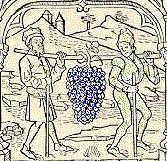
Scouts with grapes from Canaan

Sending in scouts is standard military procedure before a conquest. When Moses’s twelve scouts return, they all agree that Canaan is good land, full of milk, honey, and fruit. (They bring back a gigantic bunch of grapes as evidence.) Two of them, Caleb and Joshua, predict that the Israelites will go up and conquer the land, with God’s help. But the other ten scouts say that the inhabitants of Canaan are giants, too strong for the Israelites to conquer. Then the “entire assembly” of Israel wails:

If only we had died in the land of Egypt, or if only we had died in this wilderness! Why is God bringing us to this land to fall by the sword? Our wives and our little ones will be taken captive. Isn’t it better for us to return to Egypt? Let’s appoint a leader and return to Egypt! (Numbers/Bemidbar 14:3-4)

God (according to this story) is infuriated by the people’s rejection, and assumes that they doubt God has the power to make their conquest successful.

I think that what the Israelites actually doubt is God’s commitment to them. And they have a point. Once again, Moses has to persuade God not to simply annihilate everybody on the spot. God compromises by decreeing that the Israelites must wander in the wilderness for another 40 years, until everyone over 20 has died—except for Caleb and Joshua, who in reward for their faithfulness will live long enough to enter Canaan. God sensibly decides to presume that those under 20 are innocent, so they can enter the land as adults at the end of the 40 years.

Ironically, God is giving the Israelites what they said they wanted, when they despaired of conquering Canaan and wailed: If only we had died in this wilderness!  But when Moses gives them the news, they are not pleased.

Moses spoke these words to all the children of Israel, and the people cursed themselves very much. They got up early in the morning and they went up to the top of the hill, saying: Here we are! And we will go up to the place that God said, because we were wrong! (Numbers/Bemidbar 14:39-40)

But Moses said: Why are you going beyond the word of God? That will not succeed! Do not go up, because God is not in your midst, and you will be defeated in the face of your enemies. For the Amalekite and the Canaanite are there in front of you, and you will fall by the sword; since you turned away from following God, then God will not be with you.  (Numbers 14:41-43)

Yet they stormed up to the top of the hill. But the ark of the covenant of God, and Moses, did not budge from the middle of the camp. Then the Amalekite and the Canaanite, who were staying on that hill, came south and beat and battered them until the chormah. (Numbers 14:44-45)

chormah (חָרְמָה) = a possible place-name; the verb charam (חָרַם)= destroy utterly, dedicate to utter destruction for the sake of God + the suffix ah = toward

I feel sorry for the men who admit they were wrong, and try to correct their mistake, only to be utterly destroyed for the sake of God. I am also impressed by their sheer stupidity. How can they fail to see that they will fail?

These men know they did something wrong, or God would not have sentenced them to die in the wilderness.  The men assume their misdeed was simply refusing to climb the ridge into the land of Canaan. It does not occur to them that a more serious misdeed was refusing to obey God, or that the worst of all was deciding to abandon God and return to Egypt.

Moses points out that rushing up the ridge without God’s permission will never succeed, because they turned away from following God. But the men do not listen to Moses, even though he has spoken for God ever since he and God freed them from slavery in Egypt. Neither do they do not attach any meaning to the fact that Moses and the ark remain in the camp with the women and children (and, presumably, the subset of men who did not try to storm the ridge). Ignoring all evidence, the men who rush up the ridge actually believe that by doing what God ordered in the first place, they can change God’s mind and win a reprieve from being sentenced to die in the wilderness.

They are only human. I bet all human beings, at some point in their lives, realize that they have made a terrible mistake, and try to fix it by turning back the clock and doing it right this time. The problem is that we cannot turn back time. There are no second chances.

Once the Israelite men reject God and God’s plan for entering Canaan, they cannot change themselves back into innocent followers of God. Saying we were wrong is a good beginning of an apology, although they also need to acknowledge their rejection of God, and repent. That is the best they could do. Then they would merit whatever fate God deemed appropriate for people who had been unfaithful, but now were reforming. They could not have started conquering Canaan as if nothing had happened, but perhaps God would have softened their sentence.

Similarly, someone who has lied or cheated on a spouse cannot return to the original situation and do it over again, getting it right this time. Once you have betrayed someone’s trust, the best you can do is to apologize and repent. And even if the betrayed spouse forgives the betrayer, the marriage will not be the same. The same principle applies to a betrayal between friends, or between a parent and child.

There are no second chances; the story of the men who rush up the hill after it is too late only illustrates how our world works. Nevertheless, we can do better than that band of Israelites, if we are willing to study our own mistakes and misdeeds. With humility and deep reflection, we can change our approach to life, and make better choices when we encounter challenges in the future.

May we receive the strength to do this had inner work. May we receive the grace to accept where we are now, even if we wish we had never left Egypt. And may we receive the insight to make better and better choices.

Beha-alotkha: Backward Nuns

For thousands of years, scribes have been writing the first five books of the Hebrew Bible onto parchment Torah scrolls, without changing a letter—not even to correct a spelling mistake. Besides carefully preserving ancient errors, scribes reproduce letters that are traditionally written larger or smaller than the surrounding text. And in this week’s Torah portion, Beha-alotkha (“When you bring up”), scribes faithfully recreate two inverted or upside-down nuns.

Capture nuns

The symbol on the left above is the Hebrew letter nun. When a nun is part of a word, it sounds like our letter “N”. Before Arabic numerals were invented, Hebrew (like Latin) used letters to stand for numbers, the letter nun stood for 50.

The symbol on the right above is an inverted nun, which is not really a letter at all. An inverted nun (as well as an upside-down nun) is a symbol written next to a piece of text to indicate that the text is out of place. The ancient Greeks used an inverted sigma for the same purpose.

Out of the 22 Hebrew letters, why did the ancient scribes pick a nun to reverse? Nobody knows, but the question opens the way to mystical speculations, which I hope to explore in the future. My question this week is why they picked only one passage in the Torah scroll to mark with inverted nuns. Modern scholars have pointed out many bits of poetry in the Torah that appear be quotes from a longer poem or song. But this week’s Torah portion,  Beha-alotkha,  is the only one accompanied by inverted nuns.  And the only other inverted nuns in the Hebrew Bible appear in Psalm 107, where these symbols follow seven of the verses.

The Babylonian Talmud (in Shabbat 115b-116a) mentions the inverted nuns in Beha-alotkha, and states that the verses between the two inverted nuns were moved from another place in the Torah text. Most commentary after the Talmud also identifies the displaced passage in Beha-alotkha as the two verses in between the inverted nuns. But in Psalm 107, each verse being pointed out is  followed by an inverted nun. Does this mean that the first scribe to draw inverted nuns in our Torah portion also intended his symbols to follow the verses being pointed out? I wonder if the original scribe was even pointing out the pair of verses before the first inverted nun, then the pair of verses before the second inverted nun. All four verses seem out of place to me, both because of the language they use and because they are wedged for no obvious reason between a conversation Moses has with an in-law, and a series of complaints by the Israelites.

Here is my translation:

They headed out from the mountain of God for a journey of three days, and the ark of the covenant of God was heading out in front of them for a journey of three days, to scout out a resting-place for them. And the cloud of God was above them by day, when they were heading out from the camp. (Numbers/Bemidbar 10:33-34)

׆

It happened that when the ark headed out, Moses said: Kumah God, and your enemies will scatter, and those who oppose you will flee from your presence. (Numbers 10:35)

And when it came to rest, he said: Shuvah, God, the multitude of thousands of Israel. (Numbers 10:36)

׆

Kumah = Rise up! Stand up! Uphold! (The masculine imperative is kum, and the feminine imperative is kumi. Kumah is a variant that occurs for the first time here.)

Shuvah = Return! Turn back! Turn toward! (The masculine imperative is shuv, and the feminine imperative is shuvi. Shuvah is a variant that occurs for the first time here.)

In the Talmud (Shabbat 116a), Rav Ashi suggests that the two verses between the inverted  nuns were moved forward from Numbers 1:52-2:34, the passage describing the marching positions of the tribes of Israel during their wilderness journeys. But when I read that passage, I do not see any obvious place for our two verses. Other ancient commentaries propose that the verses were pulled from a lost prophecy by Eldad and Meidad, who break into prophesy in Numbers 11:26; or that the two verses stand as a separate book of the Torah.

What I notice is that  the verses translated above are the only place in the five books of the Torah scroll where the words kumah and shuvah are used instead of the usual imperative verbs kum and shuv. Neither of these variants appears again until the later books in the Hebrew Bible, after the book of Joshua. There the variant  kumah appears 14 times. Three of these times, starting with the book of Judges, a man or group of men are being told to get up. The other 11 times, (nine of them in Psalms), someone is asking God to rise up—just as in Numbers 10:35 above.

Similarly, the variant shuvah appears once in Numbers 10:36, then does not show up again until the book of Isaiah. The imperative shuvah occurs three times in books of the prophets, when God is asking Israel to return; and four times in Psalms, when the psalmist is asking God to return—just as in Numbers 10:36. So judging by the language, Numbers 10:35-36 belongs to the literary tradition of Psalms, not to any writing in the first five books of the Bible.

Furthermore, in all other descriptions of the Israelites moving from camp to camp in the wilderness, the ark is carried by Levites in the middle of the marching formation, and the cloud of God leads the way in front. But in Numbers 10:33-34, translated above, the ark leads the way, and the cloud hovers above the Israelites. This makes me suspect that these two verses before the first inverted nun were also moved from a later piece of writing.

In the book of Joshua, priests carry the ark in front of the Israelites, leading them across the Jordan. Then they carry the ark around the walls of Jericho, leading the troops. In both books of Samuel, the ark is carried into battle, and except for one occasion when it was captured by Philistines, God’s presence defeated Israel’s enemies. No cloud is mentioned in Joshua, Samuel I, or Samuel II. The entreaty in Numbers 10:35, “Rise up, God, and Your enemies will scatter!” would fit right into this period between the start of the Israelites’ conquest of Canaan and Solomon’s erection of the temple in Jerusalem.

Nobody knows why the verses accompanied by inverted nuns were moved to this week’s Torah portion. The Talmud tractate Shabbat cites Rabbi Shimon ben Gamaliel’s explanation that the displaced passage provides a break between two transgressions of the Israelites, but I find this unconvincing. Elsewhere the Torah either stacks up series of transgressions without compunction, or finds other ways to insert a more cheerful passage.

However, I have noticed that when the people remember events from the distant past—their own pasts, or stories they heard or read a long time ago—they often make factual errors by transplanting something recent into the earlier time. For example, we might remember a teenager in the 1970’s saying a fellow teenager was “hot”, even though that particular word did not become slang for “sexy” until much later. Similarly, Numbers 10:35-36 uses the words kumah and shuvah even though they did not become alternatives to kum and shuv until later in the Bible.

Besides mis-remembering minor facts, we also re-interpret our pasts to fit the paradigms of our present lives.

For the Israelites in the wilderness, God’s pillar of cloud was critically important. It led them out of Egypt and all the way to Mount Sinai. But for the Israelites living in Canaan and fighting  with their neighbors, the pillar of cloud was history. They no longer needed God to guide them through the wilderness; what they needed was for God to be on their side in battle. The best symbol they had of God’s presence was the ark; until Solomon built a permanent temple, they carried the ark with them into battle. These later Israelites might well re-interpret their past to fit their current paradigm, and imagine Moses sending the ark ahead of the people, and calling on God for help by saying: Rise up, God, and Your enemies will scatter, and those who oppose You will flee from Your presence.

I keep re-interpreting my own past too. As a teenager I thought in terms of escape—from my parents’ house and from nearly all social situations. I believed I was a misfit and I did not hope to change myself, only to escape to a better environment—preferably a “promised land” where I would not be expected to date or marry or have children. To my surprise, I ended up doing all three. For the next 30 years, my life revolved around marriage and motherhood, and I lived in a state of perpetual responsibility. I was drawn to Judaism partly because of its emphasis on ethical behavior, which now seemed vitally important to me. I judged my own past in terms of my current moral standards, and I felt guilty about each time I had left my sister or a friend in the lurch because I was running away from a situation I could not handle. Eventually I realized I was projecting my current concerns onto my past. Perhaps I was thinking like the ancient Israelite editor who imagined Moses sending the ark ahead and calling “Kumah!“.

Since I turned 50—the age represented by a regular, non-inverted nun—I have been working through another stage of life, redefining what is important to me, becoming a leader in a Jewish congregation, and learning several new kinds of courage.  I am still a misfit in general society, but what matters is who I am in my own circle. Now I focus on revealing more of myself, and doing my own work. Now when I remember my adult life before age 50, I regret that I had neither the personality nor the prescience to take time for religious education. And when I remember my adolescence now, I think of the moments when I touched the divine—at least according to my present interpretation of  those moments.  These days, I pray for God to guide me, and nobody answers; there is no pillar of cloud. Yet I know I am guided. Life seems more mysterious to me now, and my whole past before age 50 seems distant and amazing. I know I am transplanting my present sense of mystery into my memories of the past. If I wrote an autobiography from my current point of view, I would have to put inverted nuns all over the manuscript.

How wonderful it is to change and re-evaluate life and re-interpret our memories! May we all recognize our revisions of the past, and learn from each new stage in our lives.

Omer: Kabbalah of the Defective

In the cycle of Torah readings, this week we study the first Torah portion of the book of Numbers/Bemidbar. For my thoughts on that portion, read my earlier posts at: Three Posts on Bemidbar.

In the cycle of counting the 49 days of the omer, we begin the seventh and final week on Tuesday night. This is also the final week of my series of posts on the omer service, the prayers before and after the count. Next week, I’ll return to the Torah again, with a new post on the Torah portion Naso (“Lift”).

עמר

omer

The closing prayer of the omer service starts out:

Master of the universe, You commanded us through your servant Moses to count the counting of the omer, in order to purify us from our klipot and from our impurities …

klipot = outer coverings (including shells, rinds, tree barks)

The word klipot in the first sentence of this prayer plunges us into Lurianic Kabbalah. In the 1570’s Rabbi Isaac Luria taught what became a core myth of Kabbalah: the mystical account of the Shevirat HaKelim (Shattering of the Vessels). The first part of the myth comes from Luria’s teacher, Rabbi Moshe Cordovero:

Before time, before space, there is nothing but the Ein Sof (“Without End”, or God). The Ein Sof is continually making a tzimtzum (contraction) to make space for the physical universe. In order to create the universe in this space, the Ein Sof emanates the ten sefirot. (Sefirot is the plural of  the noun sefirah, which comes from the same root as sofeir = counting and  sefer=book. The ten sefirot in Kabbalah are categories of God’s creative power, or forces ruling the universe and the human soul.) The sefirot channel the overpowering shefa (flow of divine energy) and step down the power to levels that the created universe can tolerate.

Luria continued the story this way:

Each of the ten sefirot was channeled through its own kli (vessel) which contained its divine “light” (a metaphor for the divine flow of energy). The three upper sefirot (keter=crown, chokhma=wisdom, and binah=insight) were able to contain the divine “light”.  The next six  sefirot shattered into klipot, shells, shards of the original vessels. The bottom sefirah, malkhut (kingship and God’s presence in our world) cracked and became a leaky container for its divine ‘light’.

Some of the ‘light’ that was in the broken vessels stuck to the klipot and brought them to life. Everything in our world (according to Luria) contains both klipot and divine “light”. The  klipot are the source of evil, because they conceal the divine “sparks” inside them. But God created the universe with the Shattering of the Vessels on purpose. Human beings can redeem the whole universe by releasing the “sparks”, so all the divine “light” will again be one. We can release the sparks and contribute to the reunification of God by performing mitzvot: God’s commandments, both those written in the Torah and those discerned later by holy rabbis.

One way to raise the sparks is to do the mitzvot that help our fellow human beings. But for Lurianic Kabbalists, it is just as important to carry out instructions in the Torah that appear to have lost their practical application–such as counting the omer. These acts also help to redeem the universe, according to Luria, especially if they are done with that intention. Lurianic prayers have been added to many parts of Jewish liturgy, but the omer service is entirely based on Kabbalah (except for quoting the original instruction from Leviticus/Vayikra).  The seven weeks of the omer count are linked with the seven lower sefirot, the divine forces that need to be repaired. The service opens with that statement that we count the omer “for the sake of the unification of the Holy One” (see my first post on the omer service, Counting 49 ). And it closes with the prayer that begins: Master of the universe, You commanded us through Your servant Moses to count the counting of the omer, in order to purify us from our klipot and from our impurities …

The prayer continues …as You have written in Your Torah, and then quotes Leviticus/Vayikra 23:15-16, which merely mandates the 49-day count, and has nothing to do with purifying anybody. After that, the prayer returns to a Lurianic point of view:

So that they will be purified, the nafshot of Your people Israel, from their contamination. Therefore may it be the will of Your presence, God, our god and god of our fathers, that from the merit of the counting of the omer that I have counted today, whatever defect I have caused in the sefirah _______ of _______ be straightened out. And may I be purified and may I be made holy with the holiness of Above, and through this, may there flow an abundant flow [of divine energy] in all the worlds. And may it straighten out our nafshot, our ruchot, and our nishmot, from every sediment and defect, to purify us and to make us holy with Your holiness, the Most High. Amen, Selah.

nafshot = plural of nefesh, the level of soul that animates the body and its actions (according to Kabbalah)

ruchot = plural of ruach, the level of soul that is seized by emotion or moved by the spirit of God (according to Kabbalah)

nishmot = plural of neshama, the level of soul with the most divine “light” that is still uniquely individual (according to Kabbalah)

The two blanks in that prayer are filled in with a different pair of sefirot on each of the 49 days of the count.  First comes the sefirah of the day, then the sefirah of the week. For example, Monday night began the seventh day of the sixth week. Out of the seven lower sefirot, the seventh is Malkhut  and the sixth is Yesod, so the count was Malkhut of Yesod. Only the seven lower sefirot are used, because they are the ones damaged by the Shattering of the Vessels.

I translated the names of the seven lower sefirot in my earlier omer post on Psalm 67. This final week of the omer count is the week of Malkhut, and the last day, the day before the festival of Shavuot, will be Malkhut of Malkhut. Malkhut means “kingdom”, and in the Kabbalistic scheme it is the last sefirah to receive the flow of divine “light” or energy or creative power. If God is the king, then God’s kingdom is our world, our universe. Thanks to the sefirah of Malkhut, our world is infused with a non-shattering amount of divinity. We can tolerate the reduced divine energy, and sometimes we can sense the indwelling presence of God, the Shekhinah.

When we finish the omer count with Malkhut of Malkhut, we reach the most physical of the physical, and God is still there. That’s when we are ready to receive the revelation at Sinai, which we celebrate on Shavuot, the 50th day.

It’s a lovely symbolic system. But when I say the words of the opening and closing prayers of the omer service, I can’t throw my whole heart into them. I can see that something is seriously broken in our world, and I can see that every time an individual human does a mitzvah that is good deed, an act of kindness, it helps to repair the breakage. But I do not believe that counting the omer has any effect on the nature of God and reality. At best, the practice might help to turn you into the kind of person who is always thinking about God and about repairing what is broken.

Ah, but I would like to be that kind of person. Maybe that is why I am counting the omer again this year, and saying the traditional Kabbalistic prayers before and after the count.

Omer: Breaking Through

This week in the annual cycle of Torah portions, we study Behar/Bechukotai, the last two portions in the book of Leviticus/Vayikra. For some of my thoughts about Behar, click Three on Behar. You can also read my post on Bechukotai.

This week in the Kabbalistic counting of the omer, the 49 days between Passover and Shavuot, we are counting through seven permutations of the sefirah Yesod (“foundation”). In next week’s post I’ll write about the closing prayer in the omer service, with its amazing attitude toward the sefirot (the plural of sefirah). Today, I’ll just repeat that the word  sefirah comes from the same root as sofeir = counting, and the ten sefirot in Kabbalah are categories of God’s creative power, or forces ruling the universe and the human soul. The seven weeks of the omer count are linked with the seven lower sefirot, the divine forces we can experience directly.

But before the closing prayer of the traditional omer service, we read or sing a mysterious poem, Ana Bekho-ach.

עמר

omer

In my last few posts about counting the omer, I said that Ana Bekho-ach was written by Rabbi Nechunya ben HaKanah, a Kabbalist who lived in the first century C.E. But as I did more research on the poem, I learned that it was merely attributed to Rabbi Nechunya, just as The  Zohar, a major multi-volume work of Kabbalah, was attributed to 2nd-century Rabbi Shimon Bar Yochai but actually written by 13th-century Rabbi Moshe de Leon. Until modern times, Kabbalists seemed to feel that texts carried more authority if they were attributed to respected rabbis from Talmudic times and before.

Alas, we still do not know who wrote the poem Ana Bekho-ach, though scholars speculate it was written as liturgy in Palestine in the Middle Ages. Neither do we know whether the anonymous author intended any of the Kabbalistic meanings that have been attached to the poem. Ana Bekho-ach might have been a psalm of supplication, written by a poet who simply enjoyed the challenge of writing in the form of seven lines, each line containing exactly six Hebrew words (making a total of 42 words). But in Lurianic Kabbalah, the number 42 is, if possible, even more exciting than the number 7.

Kabbalah took a new turn in the 16th centery through the disciples of Isaac (Yitzchak ben Shlomo) Luria, who taught in Sfat. Lurianic Kabbalah focuses on repairing the breach between God and creation, raising the divine sparks in our world to join the ultimate divine light. The first prayer in the traditional omer service sets the intention of using this service, both its prayers and its counting, to unify God Itself with the shekhinah, the divine presence in our world. (For more on this, see my post Counting 49.) The closing prayer of the omer  service also frames counting the omer in terms of the repair and unification of the divine. How can we help with this transformation, besides praying for it? Luria taught that one path toward unification is meditation on various permutations of the names of God.

The Talmud mentions a secret 42-letter name of God (Kiddushin 71a). So how could a Kabbalist resist reading mystical meanings into the poem Ana Bekho-ach, which has not only seven lines that might reflect the seven lower sefirot, but also a total of 42 words, which might correspond to the 42-letter name of God? The idea that a secret 42-letter name of God is expressed by the initial letters of the 42 words of Ana Bekho-ach is so irresistable, that after we read or sing this poem in the omer service, we whisper the same sentence that we whisper after the Shema prayer, which names God. An English translation of this whispered sentence is: Blessed is the name of the glory of Its kingdom forever and ever.

Most English translations of Ana Bekho-ach go beyond the literal level to bring out a poetic meaning that expresses the insights of the translator. Poetry is notoriously difficult to translate! Here is my attempt at the most literal translation I can manage using English vocabulary and grammar, with no effort to use six words per line or to capture an insight. (I’ll get to the insight later.)

1. Please, with the great strength of Your right [hand], may You break tzerurah.

     tzerurah = what is bound, tied up (from the same root as words for bundle, narrow straits, and distress).

2. Accept the singing-out of Your people; protect us, purify us, Nora (Awesome One).

3. Please, Gibor (Strong Champion), guard those who seek union with You, like the pupil of an eye.

4. Bless them, purify them, be compassionate to them; continually gemol then with Your tzedakah.

     gemol = wean, reward, ripen. The Hebrew Bible views weaning as a celebration of the child’s new maturity. Perhaps giving a child solid food was seen as a reward.

     tzedakah = righteousness,  justice that goes beyond the letter of the law.

5. Chasin (Mighty One) , with Your abundant goodness, guide Your congregation.

6. Yachid (Only One) who is gei-eh, turn Your face toward Your people, those who remember Your holiness.

     gei-eh = proud, haughty, aware of high status

7. Accept our call for help and listen to our outcry, Yodei-a Ta-alumot (Knower of Secrets).

One peculiarity of this poem is that it uses none of the usual names for God. Instead, it refers to several aspects of the divine: Awesome One, Strong Champion, Mighty One, Only One, and Knower of Secrets.

Whatever mystical meaning it may or may not hold, the poem Ana Beko-ach is certainly a supplication for God to pay attention to us and help us. What kind of help are we pleading for? It depends on the interpretation. Here is mine:

—I think that in line #1, we implore God to break whatever constricts us, so we can go free. Sometimes our constrictions, either external or internal, are too strong for us to break through by our own willpower, so we pray for help. This verse addresses God only as “You”; we will take help from any aspect of God, we are so desperate.

—In line #2, we address God as “Awesome One”. We want to be noticed, transformed, and protected, not by a parental figure, but by  the incomprehensible wonder of whatever it is we call God. Or maybe we simply long to be touched by the intangible and ineffable, even if it seems logically impossible.

—In line #3, we beg God to be our bodyguard, and maybe our soul-guard. We pray that God will be our “Champion” and treat us “like the pupil of an eye”. The pupil is an especially precious spot, which anyone would take great care to protect; it is the window of the eye, where light and sight come in. If we are talking about God’s (metaphorical) pupil, we want God to cherish “seeing” us. If we are talking about the pupil of the one who seeks union with God, we long to be enlightened and “see” the divine.

—In line #4, we pray first for gifts that require the grace of God: blessing, and a soul-cleansing purification. Knowing our own faults, we pray for God to view us with compassion. Then the prayer moves up a notch. Although we depend on God for life itself, we do not have to remain infants in every respect. We pray for God to wean us, through thoughtful justice, so we will grow up and find our own sustenance in the world God created. As in line #1, God is addressed simply as “You”, so we are praying for gifts of blessing and maturity from any aspect of God—including God’s creation.

—In line #5, we address God as “Mighty One”, and ask God to use the divine power gently, for goodness and guidance. When we pray fervently to an unknowable god, it is natural to become afraid of the overwhelming power we imagine. Being fallible humans, we long for the things that are good from our perspective, and for guidance in a life full of unknowns.

—In line #6, we beg God to turn toward us, because God seems haughty and aloof. I know I find it hard to maintain a feeling of intimacy with God for more than a moment, since God does not speak to me in audible words, or touch me with tangible hands. God does seem aloof to me, even when I am remembering the divine. The verse also echoes the Hebrew Bible, where God turns Its face toward the people It favors. Do we address God as “Only One” because we only need God’s favor? Or because there is only God in all the universe, and we want to repair the apparent breach between us and the divine? Or because there are no other gods, and we pathetically limited humans are God’s best option for communicating with any being?

—In line #7, we again pray for God to pay attention to us and help us. This time we address God as “Knower of Secrets”, using a word for “secrets” that comes from the same root as the word olam = world, universe, eternity. As the “Knower of Secrets”, God knows all possible worlds, while we only know this world, the world our senses report to us. Yet some sixth sense, perhaps reaching us from the “right brain”, intimates that there are other worlds we do not know. I think it is this sixth sense that leads us to grope for a notion of God. Without it, we would have no religious impulse, no need to pray, no way to ask something beyond ourselves to help us.

The poem Ana Bekoa-ach does not need to contain a mystical 42-letter name of God. It is already all about our longing for union with God. It already implores God to listen to us, and answer us. It already begs God to intervene in our lives, in order to improve our souls, in order to free us so that we can come closer to God.

Omer: Psalm 67 and Lag BeOmer

(If you want my insights on this week’s Torah portion, Emor, click here: Emor posts. If you are counting the omer, or interested in the upcoming holiday of Lag BeOmer, read on.)

עמר

omer

Out of all 150 psalms, why is Psalm 67 the one in the service for counting the omer? The quick answer is that once you remove the first verse (For the conductor, with stringed instruments, a praising song) the song itself  has 7 verses and 49 words in Hebrew. And counting the omer is all about the numbers 7 and 49.

We count the omer (a measure of barley) for 49 days between the holy days of Pesach and Shavuot.  The Torah established the count to mark when to bring grain offerings to the priests. After the second temple in Jerusalem fell in 70 C.E., the omer count has gradually become a spiritual exercise to prepare for celebrating the revelation at Sinai on Shavuot, and for a future transformation of human consciousness.

I explored the first four steps of the omer service in my last two blog posts. Step #5 is Psalm 67, which was written while the Temple was standing, long before any Kabbalah was recorded. The last three steps of the omer-counting procedure of Kabbalah, which is still used in orthodox prayer-books today, are:

#5.  Psalm 67, a 7-verse song with 49 Hebrew words.

#6.  Ana Bekhoach, a 7-line poem written by a Kabbalist in the first century C.E.

#7.  Closing prayer framing the count in terms of Kabbalah, including the 7 lower sefirot. (Sefirot is the plural of sefirah, a word from the same root as sofeir = counting. Sefirot are categories of creative power, or forces ruling the universe and the human soul.) In the middle of this closing prayer, you fill in the blank with the  the sefirah of the day and the sefirah of the week. Over the course of seven days a week for seven weeks, you get 49 different pairings.

According to the Maharshal (16th-century Rabbi Shlomo Luria) the seven verses of Psalm 67  represent the seven lamps of the menorah in the priests’ court of the early sanctuary and the later temple. One tradition in Kabbalah is to write the seven verses of Psalm 67 so they look like the seven branches of the menorah, each branch blossoming into a lamp.

Psalm 67 also corresponds to the seven lower sefirot, which we use in step #7 of the omer-counting service. In my translation below, instead of numbering the verses, I will count them by sefirah. I wish I could also translate  Psalm 67 so that it has 49 words in English, but I’ll go for accuracy instead.

Chessed (=love, kindness): May God grace us and bless us; may It brighten Its face with us. —Selah (a musical instruction)

Gevurah (=strength, discipline): To make known on the earth Your path; among all the nations Your power to rescue.

Tiferet (=beauty, harmony): The peoples will thank You, God; the peoples will thank You, all of them.

Netzach (=long-lasting success): People will be glad, and they will sing out for joy; because You judge peoples on the level, and You comfort people on the earth. —Selah.

Hod (=splendor, majesty): The peoples will thank You, God; the peoples will thank You, all of them.

Yesod (=foundation): Earth gives her harvest; God, our god, blesses us.

Malkhut (=kingship): God will continue to bless us, and all the ends of the earth will be in awe of God.

One standard interpretation of Psalm 67 is that it prays for God to bless the Israelites (later known as Jews), so we can then teach other people about God. The psalm anticipates then then the other peoples will convert and receiove our God’s blessing; and finally all people, to the ends of the earth, will be full of grateful and awe for God. This may well have been the intent of the songwriter, but once a work is published, people are free to discover new meanings in it. And how could a Kabbalist counting the omer resist overlaying the framework of the seven lower sefirot on the seven verses of the psalm?

Does the overlay fit the verses? The first verse prays for God to treat us lovingly, and perhaps for us to return love to God; this is indeed a prayer for Chessed. Traditional commentary adds that the verse asks God to enlighten our minds, so we will have the intellectual ability and knowledge to teach others about God’s way or path in the second verse. Understanding and following God’s path certainly requires mental gevurah, the discipline of focus and attention. In my own experience, teaching also requires focus and attention. Thus the second verse calls for gevurah.

The line “The peoples will thank you, God; the peoples will thank you, all of them” appears twice in Psalm 67, first as tiferet, then as hod. Perhaps the first refrain points out the beautiful harmony of all the peoples, all the nations, united in thanking God. The second refrain points out the splendor of the one being thanked, God the creator.

In between, the netzach verse says people will sing with joy because God is both an honest judge and a comforter—an interesting pair of roles. I have noticed that children desperately want fairness, and need consolation when life does not go their way. Adults recognize that the universe cannot be that straightforward; sometimes people are hurt for no apparent reason. Yet we pray that at least we can achieve something important and long-lasting. We pray for fairness and comfort; but knowing the universe is not fair from our limited perspective, we also pray for netzach. Here, I think the sefirah adds an alternative to the verse, instead of restating it.

I think the netzach verse is a fervent plea, a supplication. Yet the hod verse, a refrain of the line about thanking God, expresses gratitude as if God has already granted our plea. Maybe once we experience the splendor and majesty of God, we can be grateful for any justice, comfort, and success we receive personally as the larger divine plan unfolds. The hod verse may also thank God for what all people receive in the following verse, yesod:  “Earth gives her harvest; God, our god, blesses us.”

When we notice all the gifts of nature, from the food we gather to the air we breathe, then we realize that God is always blessing us by maintaining the yesod, the foundation of our physical lives. In the final verse, the first phrase, “God will continue to bless us’, reflects the sefirah of malkhut both because it views God as the king of our world, ruling and protecting it, and because Kabbalah associates malkhut with the shekhinah, the feminine presence of God dwelling on earth. When all human beings experience the shekhinah, then, in the final phrase of Psalm 67, “all the ends of the earth will be in awe of God”.

At least these are correspondences I see between the seven lower sefirot and the seven verses of Psalm 67. You may see others. Psalm 67 does not appear to be a perfect fit for the  sefirot, but a more advanced Kabbalist may perceive meanings I cannot imagine.

As for me, Psalm 67 speaks to me as a prayer for grace and blessing and knowledge of how to follow a divine path; and as a prediction that someday all human beings will realize they do not run the world, or even their own lives, and all humans will be grateful and awed just to be alive, just for this universe to exist. That is a psalm I can sing or recite with a full heart.

עמר

In one way, the high point of the 49 days of counting the omer is the 50th day, the festival of Shavuot, when we celebrate two gifts from God: our first fruits, and the revelation at Sinai. But among the omer-counting days, the high point is Lag Be-Omer, the day that begins this year at sunset on Sunday, April 28. Lag is not an actual word. The Hebrew letter lamed, pronounced like an “l”, also stands for 30, and the letter gimmel, pronounced like a hard “g”, stands for 3. Add 30+3, and you have the number of the day of Lag Be-Omer, when the sefirot count reaches hod of hod.

The Hebrew Bible uses the word hod when people are dazzled by splendor and magnificence. It refers to God’s hod 12 times, to the hod of a king 7 times, to the hod of a horse twice (horses impressed the Israelites), and once each to the hod of Moses, Daniel, the son in Proverbs, and an exceptional olive tree in Hosea. How can we imagine the hod of hod, the splendor of splendor?

Start by being dazzled—maybe by a flaming, sparking, snapping bonfire on Lag Be-Omer, or maybe by watching water rush over stones as sunlight makes a dazzling pattern of white stars and the water-rock music makes more layers of sound than you can count. Then try to imagine a whole universe of constant change and splendor, all interconnected. This is the universe we are blessed to live in. If only we could remember it more often!

The peoples will thank you, God; the peoples will thank you, all of them.

Omer: Working on a Holy Place

(This is the second post in a series about counting the omer. If you are looking for inspiration about this week’s double Torah portion, you can check out my previous blog posts on Acharei Mot and Kedoshim.)

עמר

omer

Last week I wrote about the Jewish tradition of counting the omer—counting each of the 49 days between Passover/Pesach and the festival of Shavuot. (See my post “Omer: Counting 49”.) Most non-orthodox Jews who count the omer today simply read or recite two sentences (labeled as #2 and #3 below): a blessing for counting the omer, and the evening’s count—the number of days and weeks since the first day of Passover. But that way they miss all the juicy parts of the ritual.

In fact, the prayer service for counting the omer is full of Kabbalistic practices and symbolic meanings. I’ll repeat the orthodox order of the omer-counting service from last week’s post:

#1.  Opening prayer: a) the intention of the omer prayer service, b) Leviticus 23:15-16, and c) a blessing from Psalm 90.

#2.  Blessing for counting the omer.

#3.  Statement of which day it is in the count.

#4.  A one-sentence prayer about restoring the service of hamikdash = the holy place (usually translated as “the Temple”).

#5.  Psalm 67, which has 49 words.

#6.  Ana Bekhoach, a 7-line poem of supplication written by Rabbi Nechunya ben HaKanah, a Kabbalist who lived in the first century C.E.

#7.  Closing prayer framing the count in terms of Kabbalah, including the 7 lower sefirot. (Sefirot is the plural of sefirah, a word from the same root as sofeir = counting. Sefirot are categories of creative power, or forces ruling the universe and the human soul.) In the middle of this closing prayer, you fill in the blank with the  the sefirah of the day and the sefirah of the week. Over the course of seven days a week for seven weeks, you get 49 different pairings.

Last week, I wrote about the first sentence, a breathtaking declaration from Kabbalah that this omer prayer service is for the sake of changing reality and uniting God. I also wrote about the quote from Leviticus in the middle of the first prayer, which tells us to bring the priests an omer-measure of barley on the second day of Pesach/Passover (day one of the omer count), count 49 days, then bring a new grain offering (wheat bread) on day 50.

The first prayer of the omer service concludes with a three-line sentence from Psalm 90:

May the no-am of the lord our God be upon us,

And the work of our hands konenah upon us,

And the work of our hands, konenah it. (Psalm 90:17)

no-am = pleasantness, delight, sweetness

konenah = establish, firmly found, build to endure

This is a good blessing to recite before any serious undertaking—and medieval Kabbalists considered counting the omer a serious undertaking. The blessing carries additional meaning within the context of Psalm 90. The theme of that psalm is that although God is permanent, humans are ephemeral. What can we hope for, when our lives are so fleeting? The answer lies the psalm’s conclusion, translated above. We pray that we will enjoy whatever gifts we receive from God, and that the works we create will endure for generations after us.

The “work of our hands” includes everything we make, in every field of endeavor. (For example, this blog is one of the works of my hands.) The word konenah is commonly used in the Torah for solid buildings, edifices that will stand for a long time. Malbim (the 19th-century rabbi Meir Leibush ben Yehiel Michael Wisser) wrote that doing  mitzvot (ethical and religious behaviors required in the Torah) also counts as the work of our hands. The habit of doing mitzvot adds depth to a human’s personality, he said, so establishing that practice counts as establishing a solid edifice.

Other traditional commentators have written that Psalm 90 is speaking about the “work of our hands” in making the portable sanctuary in the Torah, and building the temple in Jerusalem.  We pray at the end of Psalm 90 for God to confirm the holiness of the Temple we built, and strengthen it so it will last.

Both the first and the second temples in Jerusalem lasted for centuries. But when the second temple fell to the Romans in 70 C.E., Jews were left with only the temple mount and the remains of the western wall. Since then, we have built synagogues and study houses all over the world, and have turned our own homes into places of prayer. I believe these are all holy places, and the “work of our hands”, our intentional creative actions, make them holy. But does a house of prayer or study count as a “house of the mikdash” ?

That phrase appears in step #4 of the omer service. Step #1 is the opening prayer, which ends with the blessing for the work of our hands from Psalm 90. Step #2 is the blessing for counting the omer: Blessed are you, God, our god, king of the universe, who has made us holy with Its commandments, and commanded us regarding the counting of the omer. Step #3 is the actual count of the day. Then comes step #4:

May the Compassionate One return for us the service of the house of the mikdash to its place, in a hurry, in our days. Amen, Selah.

mikdash = holy place, abode of holiness, sanctuary, holy precinct

In this prayer after the omer count, “the house of the mikdash” is usually translated as “the Temple”. Even during the first century C.E., the century after the fall of the second temple, praying for a third temple and the restoration of the service of priests was a political statement. Some sects thought the priests had wielded too much power, and these Jews did not want a return to the old status quo.

Today, I am one of many Jews who feels an aversion to praying for God to restore the service of the Temple. I certainly do not want the mosque that currently crowns the temple mount to be torn down and replaced with a Jewish building. I do not want a return to a hereditary priesthood running things. And I do not want a return to worship through slaughtering animals as offerings; I believe it is far better to serve God through prayers and good deeds, as we have been doing for the last two thousand years.

So some evenings when I am counting the omer, I skip this prayer. Other evenings, I recite it in Hebrew, but my inner English translation is different:

May the One of compassion return us to service in the places where holiness dwells, now, every day. Amen, Selah.

God may be everywhere, but we only notice the divine at certain times and in certain places. The Hebrew Bible asks people to pay attention to the divine on Shabbat and festival days, and at the Temple where God dwelled. Now, I believe, the divine dwells wherever humans recognize holiness. Sometimes the holiness of a place strikes us suddenly. More often, we make an effort to create a holy space, by arranging what we see and hear there, and then going there to pray and to engage in rituals. Thus holy places are the work of our hands—in Moses’ time, in Temple times, and to the present day.

May the delight of our God be upon us,

And make the work of our hands an enduring foundation for us,

And the work of our hands, may it endure.

.

Omer: Counting 49

I have been counting the omer every evening for two weeks now, and we have five more weeks to go. The omer count begins on the second day of Passover and goes on for 49 days. On the 50th day, we celebrate the holy day of Shavuot (“Weeks”).

Barley sheaf

In the Torah, the priest waves a sheaf of barley each day for 49 days. But after the fall of the second temple in Jerusalem in 70 C.E., the omer-counting became a prayer service, and acquired new  meanings. This is the first of several posts I am writing about the fascinating prayers from Kabbalah that come  before and after the daily count in orthodox Jewish prayers.

But first, what does “counting the omer” mean?

The Hebrew word omer first appears in the book of Exodus/Shemot (in the Torah portion  Beshallach), as a measure for manna; one omer of manna feeds one person for one day.

The word omer does not show up again until Leviticus/Vayikra, in the Torah portion Emor. The Torah sets the time for the Festival of Matzah, i.e. Passover, then gives instructions for the next day:

…then you shall bring an omer of the first of your harvest to the priest. And he will wave the omer before God so you will be acceptable; [starting] from the day after the rest-day the priest will wave them. (Leviticus/Vayikra 23:10-11)

And you shall count for yourselves, from the day after the rest-day, from the day you bring an omer of the waving, seven tamim weeks. Until the day after the rest-day of the seventh [week] you shall count [to] the 50th day; then you shall bring close a new grain-offering to God. (Leviticus 23:15-16)

omer (עֺמֶר) = a measure for barley.  

tamim (תָּמִים) = whole, entire, intact, unblemished, blameless, sincere.

When the word tamim refers to a sacrificial animal, it means blemish-free. When it describes a human being, it can mean either that the person’s body is unblemished, or that the person is innocent, blameless, honest. So I think the text in the Torah itself invites us not merely to count the days for seven weeks, but to make the days count—by checking for blemishes in our souls.

The culmination of the 49 days of counting is Shavuot, the 50th day. Until the fall of the second temple, Shavuot was a harvest festival. People brought their “new grain-offering” of two loaves of wheat bread to the temple, along with the first fruits from seven kinds of plants (wheat, barley, grapes, figs, pomegranates, olives, and dates).

After the fall of the temple, the rabbis soon found a new meaning for Shavuot, deciding that it marked the anniversary of receiving the Torah at Mount Sinai. So for the last 2,000 years, the 49-day count has been linked with preparing, day by day, to be worthy of receiving the divine revelation of Sinai.

Naturally, rabbis over the millennia have enriched counting the omer with other prayers that have a count of  7 or 49. The orthodox omer-counting procedure as it stands today follows this order:

#1.  Opening prayer: a) a sentence declaring the intention of the omer prayer service, b) Leviticus 23:15-16 (translated above), and c) a blessing from Psalm 90.

#2.  Blessing for counting the omer.

#3.  Statement of which day it is in the count.

#4.  A one-sentence prayer about restoring the service of hamikdash = the holy place (usually translated as “the Temple”).

#5.  Psalm 67, which has 49 words.

#6.  Ana Bekhoach, a 7-line poem of supplication written by Rabbi Nechunya ben HaKanah, a Kabbalist who lived in the first century C.E.

#7.  Closing prayer framing the count in terms of Kabbalah, including the 7 lower sefirot. (Sefirot is the plural of sefirah, a word from the same root as sofeir = counting. Sefirot area categories of creative power, or forces ruling the universe and the human soul.) In the middle of this closing prayer, you fill in the blank with the  the sefirah of the day and the sefirah of the week. Over the course of seven weeks, you get 49 different pairings.

Most non-orthodox Jews who count the omer today simply read or recite two sentences, labeled as #2 and #3 above. That way they get it done quickly—and miss all the juicy parts. Some people, especially in Jewish Renewal, go on to consider the essence of #7, and try to find a personal meaning in the pair of sefirot for the day. There are many books and blogs about what each of the 49 sefirot pairs might mean.

My posts will look instead at the often overlooked prayers in the omer-counting procedure: numbers 1, 4, 5, 6, and 7 in the list above.  This week, let’s zoom in on just the first prayer in number 1:

For the sake of the unification of the Holy One, blessed is He, and His shekhinah, in fear and love to unify the name Yud Heh with Vav Heh, in complete unity, in the name of all Israel.

shekhinah (שְׁכִננָה) = the indwelling presence of God in our universe (literally, the feminine form of “dweller”)

This opening prayer sets the intention of the rest of the omer-counting prayer service. We are not just counting the days; we are doing spiritual work that helps to change the nature of reality.

This introduction was written (in Aramaic) by the disciples of Rabbi Isaac Luria. Luria taught from 1569 to 1572 in Sfat, a town full of Kabbalists about 80 miles north of Jerusalem. In those three years before his death, he founded a major branch of Kabbalah. One of the core Lurianic ideas is that in order to create our universe, God first withdrew a measure of divine “light” to make space, then created ten sefirot, ten forces of creative power, which Luria saw as vessels for the divine light. The first three vessels, the three upper sefirot, could contain the light  poured into them. But the next six vessels shattered. The tenth and the lowest sefirah, Malkhut, cracked.

After the “shattering of the vessels”, the rest of the creation of the universe proceeded differently from God’s original plan, and included evil as well as good. Yet everything in our universe contains a spark of divine light. And human beings have the ability, through good deeds and prayers, to “raise the sparks” and repair the universe. Therefore the Lurianic Kabbalists preceded many prayers with the sentence above, to remind the person praying that the purpose of the prayer service is to unify God Itself with the shekhinah, the divine presence in our world. According to Kabbalah, the shekhinah is in the sefirah of Malkhut, the lowest one, the one closest to our daily physical life on earth. So uniting the Holy One with the shekhinah is also uniting the upper three sefirot with the lower seven  sefirot, and it also uniting the first two letters of God’s most holy Name, yud and heh, with the last two letters of the Name, vav and heh.

Every evening, during the 49 days of counting the omer, when I recite that intention to unify God with my prayers, I feel hollow with awe inside. What nerve! How could anything I do affect God, reality, the nature of being? And anyway, I’m not much of a mystic compared with most of my Jewish Renewal friends. I find the images of Kabbalah powerful, and they feel significant; but my rational mind does not believe any of this stuff.

And yet … if I pray for the sake of the unification of the Creating and the creation…if I pray for the sake of making whole the holiness I glimpse in the world…then maybe this little ritual of counting the omer  has a deeper meaning than I think. Maybe everything I do, everything each of us does, has a deeper meaning than we think.

Shemini: Mourning in Silence

The death of someone close to you, even after a long illness, is hard to accept.  A sudden death is like an earthquake.  But what if the sudden death came neither from an accident nor from a gun, but from a blast of divine fire?

That is how Aaron’s two older sons die in this week’s Torah portion, Shemini (“Eighth”).  Aaron and his four sons undergo an eight-day sanctification and ordination, along with the altar of the newly-assembled mikdash (“holy place”).  At the conclusion of the ritual, a miraculous fire rushes out from the Holy of Holies and consumes everything on the altar.  All the Israelites shout with joy and prostrate themselves. The five newly-ordained priests no doubt rejoice as well in this manifestation of God’s glory.

The Dead Bodies Carried Away, by James Tissot, ca. 1900

Then Aaron’s older sons, Nadav and Avihu, grab their incense-burners and bring “alien fire” to God.  (See my post Shemini: Prayer and Glory.) Another miraculous fire rushes out from the Holy of Holies and consumes them. But their bodies remain sufficiently intact for their cousins to drag them out of the sanctuary by their tunics.

Then Moses said to Aaron:  It is what God spoke, saying: Bikrovai, I will be proven holy; and in the presence of all the people I will be glorified. And Aaron, vayidom. (Leviticus/Vayikra 10:3)

bikrovai (בִּקְרֺבַי) = through those near me.

vayidom (וַיִּדֺּם) = he was silent; he was motionless; he waited. (Another verb from the same root, דּמם , means “was silenced”.)

Moses seems to be quoting God, but when did God say that?

According to Rashi1 Moses elaborated: “Aaron, my brother, I knew that this House would be sanctified by those who are cherished by God, and I thought it would be either through me or through you. Now I see that these [Nadav and Avihu] are greater than I and you.”

In this reading, Moses is assuring his brother Aaron that God did not kill his sons because they were unworthy; God killed his sons because they were so wonderful. This reminds me of when I was in first grade, and a Catholic friend of mine solemnly told me that the happiest day of her life would be when her husband died—because she knew he would go straight to heaven, and she knew she would be unselfish enough to rejoice.  (I thought my friend was crazy.)

But the religion in the Torah has no concept of an afterlife, except for vague references to an underworld called Sheol where nothing happens.  Whatever Moses intends, he is not saying that God has suddenly rewarded Nadav and Avihu for their virtue by transporting their souls to heaven.

Most Jewish commentators agree that God is punishing rather than rewarding Nadav and Avihu. After all, the two men brought “alien fire” into the new Tent of Meeting without authorization, so they were guilty of at least careless over-enthusiasm, and at worst egotism and disdain for their elders.  But did they deserve death for their mistake?

Naphtali Herz Weisel2 wrote that while humans tend to be lenient with the people they love the most, God does the opposite.  God overlooks a minor infraction committed by an ordinary person, but severely punishes even a tiny error by a leader who was divinely chosen.

The implication is that God’s killing of Nadav and Avihu for making a small mistake proves that the two new priests were extraordinarily holy and close to God. This is how Moses tries to console Aaron.  And Aaron responds to this attempt with silence.

Some commentary says that Aaron was silent because he accepted Moses’ explanation.  Indeed, I can imagine that if you were afraid your children had died committing a crime, it might be some comfort to know that they had only made a minor error in judgment.

Other commentary brings in other possible meanings of vayidom.  Isaac Abravanel3 wrote that Aaron was not consoled; he wailed at first, then became silent and motionless as his heart turned to stone.  Modern commentators add that Aaron was in shock; we might say his soul was silenced.

And Aaron’s silence continues.  In the Torah, the acceptable response to the death of a family member is to wail, tear your clothing, and untie your hair.  You are supposed to show your grief in public.  But before Aaron, or his two younger sons, Elazar and Itamar, can begin to dishevel themselves, Moses stops them.

Moses said to Aaron, and to his sons Elazar and Itamar:  Don’t let the hair hang loose on your heads, and don’t tear your clothes; then you will not die, nor will God become furious at the whole community.  But your brothers, all the house of Israel, will bewail the burning that God burned.  And do not go out of the opening of the Tent of Meeting, lest you die, for the oil of anointing of God is upon you.  And they did as Moses spoke.  (Leviticus 10:5-7)

Everyone in the whole camp of Israel is expected to mourn for Nadav and Avihu—except for the three surviving priests, the three men closest to them. Later in the book of Leviticus, in chapter 21, a high priest is forbidden to grow his hair long, tear his garments, or come near any dead body.  The other priests may engage in mourning practices, but only for their closest family members (including sons and brothers), and only when they are not on duty. This exception does not apply, however, to the newly anointed Elazar and Itamar.  Since they are not allowed to leave the opening of the Tent of Meeting, they are like high priests, unable to go off-duty.

Other ancient religions in the region had priests who specialized in serving and summoning the dead.  But for the priests of the Israelites, any contact with the dead was a contamination, making them unable to do their jobs until they had been purified.  True, their jobs included a great deal of contact with dead animals, not to mention diagnoses of skin diseases.  Nevertheless, it was important for priests to inspire the people to become “holy”, to worship God with joy as well as devotion.  In order to do this, priests were expected to look joyful and devout as they served God, no matter what they felt inside.

20th-century rabbi Elie Munk went further, and wrote that the priests had to maintain a joyful state of mind in order to give blessings to the people.  They could not let themselves mourn on either the outside or the inside.4

Today we would call that going into denial.  Yet it remains true that there are times when we must all rise to the occasion, pretending to be more serene than we feel inside, in order to do some important job—maybe to take care of someone else in need.  The danger lies in always being “on”—never leaving the opening of the tent of meeting.

May we all be blessed with both the strength to rise above our feelings at times, in order to serve others, and the strength to remove ourselves from service at times, in order to do the mourning we need for our own souls.


  1. 11th-century Rabbi Shlomo Yitchaki.
  2. 18th-century rabbi Naphtali Herz Weisel, translated in Nehama Leibowitz, New Studies in Vayikra, Vol. 1, World Zionist Organization, Jerusalem,1993, p. 131.
  3. 15th century philosopher Isaac ben Judah Abravanel.
  4. Elie Munk, The Call of the Torah: Vayikra, Mesorah Publications, Brooklyn, N.Y.,1992, p. 89-90.