Haftarat Shelach-Lekha—Joshua: The Defector

Every week of the year has its own Torah portion (a reading from the first five books of the Bible) and its own haftarah (an accompanying reading from the books of the prophets). This week the Torah portion is Shelach-Lekha (Numbers 13:1-15:41) and the haftarah is Joshua 2:1-2:24.

Spies scout out land that the Israelites will conquer in both the Torah portion and the haftarah reading this week. The twelve spies whom Moses sends in the book of Numbers do not speak to anyone in Canaan, and ten of them say the natives are fearsome giants who the Israelites could never defeat.  The results of this report are disastrous.  (See my post Shelach-Lekha: Too Late.)
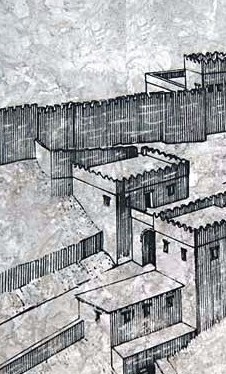
City gate at Megiddo
City gate (at Megiddo)

When God lets the next generation of Israelites enter Canaan (after 40 years in the wilderness) their new leader, Joshua, sends two spies across the Jordan River into the nearest town, the walled city of Jericho. These spies view the Canaanites of Jericho as ordinary human beings.  They go through the city gate during the day, when strangers are allowed in for trading, and converse with at least one of the natives.

And Joshua son of Nun secretly sent two men, spies, from Shittim, saying: Go see the land and Jericho.  So they went, and they came into the house of a woman, a zonah, and her name was Rachav, and they lay down there.  (Joshua 2:1)

zonah (זוֹנָה) = prostitute. From the verb zanah (זָנַָה) = have illicit intercourse, practice prostitution for profit or for a Canaanite religion, be faithless to a husband or to God.

rachav (רָחָב) = broad, wide. (The proper name Rachav appears as Rahab in many English translations.)

In the ancient Near East the custom was for strangers to wait in the town plaza (or rachov (רָחֹב) = open place) until someone offered them shelter (as in Judges 19:15-20).  Joshua’s spies would not want to be that conspicuous, so they go into the prostitute’s house instead.

The story gets off to a racy start, with the men “coming into” and “lying down” in her house, and the sexual humor continues with more double meanings as the tale unfolds.

Someone observes the two men entering Rachav’s house, recognizes them as Israelites from the vast camp across the Jordan, and reports it to the king of Jericho.

And the king of Jericho sent to Rachav, saying: Bring out the men, the ones who came into your house, because they came to scout out the land!  (Joshua 2:3)

At this point, a loyal citizen of Jericho would produce the two spies.  But Rachav seizes the opportunity to switch her loyalty.

Rachav Helping the Two Spies, by F.R. Pickersgill, 1897
Rachav Helping the Two Spies, by F.R. Pickersgill, 1897

And the woman took the two men and she hid them. Then she said: Indeed, the men came to me, but I did not know where they were from.  And the gate was going to close at dark, and the men went out.  I do not know where the men went. Chase after them quickly, because you can overtake them!” But she had taken them up to the roof, and she had hidden them among the flax stalks, the ones stacked for her on the roof.  (Joshua 2:4-6)

After the king’s men are gone, Rachav follows up on her defection by climbing up to her roof and speaking to the two Israelite spies. She begins:

“I know that God has given you the land, because terror of you fell over us…” (Joshua 2:9)

Everyone in Jericho heard how the God of Israel dammed the Reed Sea for the Israelites when they left Egypt, she says, and how the Israelites recently destroyed the Amorite kingdoms of Sichon and Og.

“And we listened, and it made our heart melt, and the will to live could not rise again in any man facing you. Because God, your god, is god in the heavens above and over the land below.”  (Joshua 2:11)

In Biblical Hebrew, a “melting” heart means a heart weakening from fear. Here Rachav declares her faith in the God of Israel over the local god or gods of Jericho.  Next, she asks the two spies to help her and her family defect to the Israelites.

“And now swear, please, to me, by the God, because I acted chessed with you, and so you should act chessed with my father’s household.” (Joshua 2:12)

chessed (חֶסֶד) = loyally, faithfully, in solidarity, in kindness.

They agree on a deal: Rachav will not tell on the two spies, and she will leave a red cord hanging from her window, so they can identify her house when the Israelites attack.  Then the Israelites will rescue everyone inside her house from the destruction of Jericho.

Ruins of a casemate wall: a double wall with living quarters inside
Ruins of a casemate (double) city wall. Larger casemates had living quarters inside.

And she let them down by the rope through the window, for her house was in the city wall, the casemate wall, and she was living in the casemate wall.  (Joshua 2:15)


Most commentary, from the Tamud on, views Rachav’s defection as a sincere conversion to the God of Israel. Tikva Frymer-Kensky, in her brilliant analysis in Reading the Women of the Bible (2002), interpreted Rachav’s statements “I know that God has given to you the land” and “God, your god, is god in the heavens above and over the land below” as a formal declaration of her faith in the God of Israel and conversion to Israel’s religion.

Some modern commentators also interpret Rachav’s chessed as kindness to the spies.  Tikva Frymer-Kensky translated chessed as “benevolently”.  Although Rachav may have been moved by kindness, like the stereotypical hooker with the heart of gold, she uses her initial act of hiding the spies as a bargaining chip: in exchange for her loyalty to them, they must swear loyalty to her.


Why does a person defect to another religion and/or to another country?  What motivates someone to abandon a lifelong allegiance and commit to a new loyalty—becoming a traitor or apostate to their former people?

Some defectors do switch sides because of a passionate conviction in a matter of principle.  If Rachav is one of these, maybe she is so impressed by the story of the parting of the Reed Sea that she becomes convinced that the god of Israel is the highest god in the world, and decides she must become an Israelite even if it means betraying her people.

On the other hand, some people defect, or emigrate, because their lives have become too difficult in the old religion or the old country. The economy has tanked and they can no longer make a living; the sub-group they belong to is suffering from discrimination; or war has come to their country and they fear for their lives.  Unlike their compatriots who blindly continue to serve their old allegiances, these defectors use intelligence and courage to seize an opportunity for radical change—in the hope that the group they are joining will provide them with a better life.

I think Rachav is this second kind of defector.

As a zonah, a prostitute, she occupies a marginal role in the society of Jericho, symbolized by her living quarters in the wall marking the edge of the city.

The word zonah comes from the verb zanah, which means both practicing prostitution and being faithless to a god.  She is willing to be faithless to her old god, and commit herself to a new one, if it seems like the best solution.

Her name, Rachav, is related to the word rachov = open place, town plaza, where strangers wait hoping someone will offer them shelter for the night. Rachav shelters the spies overnight, then asks them for shelter from the coming destruction of Jericho.

Her belief that the Israelites and their god will destroy Jericho is rational. There are hundreds of thousands of Israelites, and they have a record of success: their God made a miracle for them at the Reed Sea, and they vanquished the kingdoms ruled by Sichon and Og on the east side of the Jordan. And even if Jericho’s double wall withstood an onslaught of Israelites, her town would lose in a siege.

Desperate to save herself and her family from death, Rachav courageously seizes the opportunity to switch sides by helping the Israelite spies, converting on the spot to their religion, and making them swear to rescue everyone in her house when the city falls.  She is an opportunist for a good cause—saving the lives of her whole family.  She is a rational defector.

And she succeeds.

And Joshua let her live, Rachav the zonah and her father’s household and everyone who was hers, and she [her clan] dwell in the midst of Israel to this day…  (Joshua 6:25)

May we all have the courage to seize the moment and abandon old allegiances when we must do so for a greater good.  And may we honor all people who courageously escape with their families from war, and commit to a new country.

Haftarat Beha-alotkha—Zechariah: Not by Might

Every week of the year has its own Torah portion (a reading from the first five books of the Bible) and its own haftarah (an accompanying reading from the books of the prophets). This week the Torah portion is Beha-alotkha (Numbers 8:1-12:16) and the haftarah is Zechariah 2:14-4:7.

Zechariah by Michelangelo

“Not by might, nor by power, but by My spirit, saith the LORD of hosts.” (Zechariah 4:6—King James translation)

This line from the haftarah in the book of Zechariah is famous in both Jewish and Christian circles. But what does it actually mean?

Zechariah was probably born in Babylon.  The upper classes of the kingdom of Judah, including Zechariah’s grandfather Iddo, were deported to Babylon after King Nebuchadnezzar’s army razed Jerusalem in 586 B.C.E.

Only 46 years later, the Persian king Cyrus marched into Babylon and quickly seized the whole Neo-Babylonian Empire.  Cyrus declared an empire-wide policy of religious tolerance, and authorized the exiles from Judah to return to Jerusalem and build another temple to their own god.

map Persian and Babylonian EmpiresAccording to the book of Ezra, the first large group of Judahites to return to Jerusalem was led by Zerubavel, a grandson of Judah’s next-to-last king, Yehoyakhin. This group included Zechariah, grandson of the priest Iddo.

The famous line in the book of Zechariah is preceded by a vision:

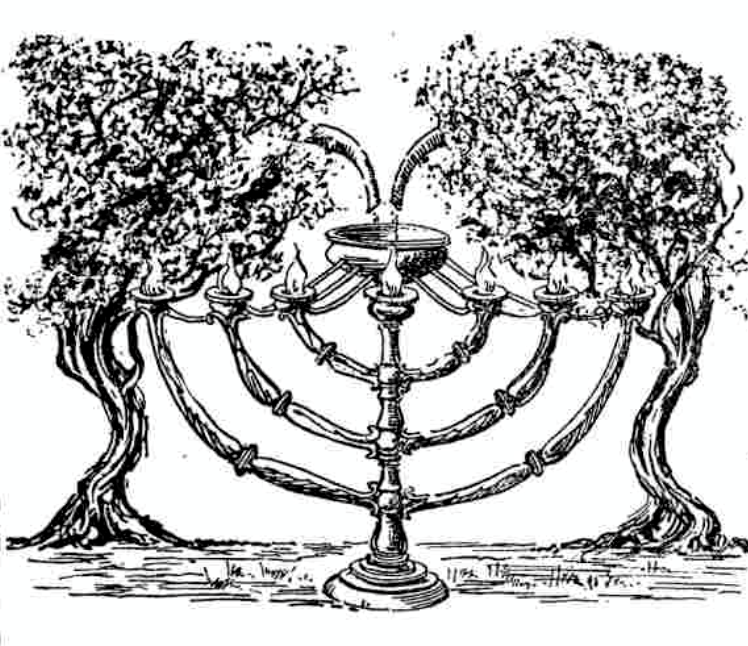
And the angel who was speaking to me returned, and it roused me as a man is roused from sleep. And it said to me: What do you see?  And I said: I see—hey!—a lampstand of gold, and a bowl above its head. And seven lamps are on it, seven, and seven pipes to the lamps …And two olive trees are over it, one on the right of the bowl and one on its left. (Zechariah 4:1-3)

A gold lampstand with seven lamps is the menorah described in the book of Exodus, mentioned at the start of this week’s Torah portion, and reproduced for Solomon’s Temple in Jerusalem.  The rest of Zechariah’s vision is more mysterious, so he asks the angel: What are these? (Zechariah 4:4)

Instead of explaining the vision, the angel replies:

This is the word of God to Zerubavel, saying: Not by chayil and not by koach, but rather by My ruach, said the God of Tzevaot. (Zechariah 4:6)

chayil (חַיִל) = troop, small army, or military escort; courage in the face of a military threat; wealth; ability. (King James translation: “might”.)

This word refers to a military force about 100 times out of about 230 times it appears in the Hebrew Bible.

koach (כֹּחַ) = power, physical strength, energy, physical force. (King James translation: “power”.)

When the subject is God, koach = power to transform. When the subject is human, koach = physical strength or energy.

ruach (רוּחַ) = wind; life-breath; prophetic inspiration; insight; mood.  (King James translation: “spirit”.)

Winds, life-breath, human prophetic inspiration, and exceptional human insight are all caused by God in the Hebrew Bible. Human moods can either arise naturally or be sent by God.

tzevaot (צְבָאוֹת) = large armies: hosts of stars or angels (metaphorically, as God’s heavenly army).  (King James translation: “hosts”.)

*

What does God’s message to Zerubavel, the leader of the Judahites returning from Babylon, have to do with Zechariah’s vision of the menorah and the two olive trees?

The ex-exiles laid the foundations for the Second Temple during their second year in Jerusalem. Then some of their neighbors who had stayed in the area during the Babylonian exile came to Zerubavel and said:

Let us build with you, since like you we worship your God, and we have slaughtered animals for Him since the days of Eisar-Haddon, King of Assyria, who brought us here. (Ezra 4:2)

Zerubavel rejected them, and the local people retaliated by threatening the newcomers, bribing Persian ministers to oppose the building project, and sending a damning letter to the next king after Cyrus. Their plan worked, according to the book of Ezra; construction of the temple was halted for 17 years.

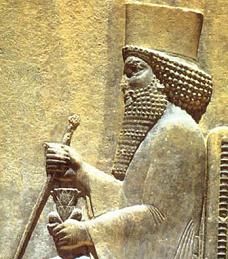
King Darius I
King Darius I

In 522 B.C.E. Darius I took the throne of the Persian Empire. King Darius simplified the administration of the empire by dividing it into provinces and appointing a native of high rank to rule each district. By 520 B.C.E. he had appointed Zerubavel as governor of Yehud Medinata, a province including the core of the old kingdom of Judah.

And in 520 B.C.E. Zechariah began prophesying.

After the angel gives Zechariah the message for Zerubavel, it explains:

The hands of Zerubavel laid the foundation of this house, and his hands shall bring it to an end. Then you shall know that God of Tzevaot sent me to you. (Zechariah 4:9)

Then Zechariah asks the angel to interpret the two olive trees in his vision, the ones with pipes pouring olive oil above the menorah.

Artist's sketch of Zechariah's vision
Artist’s sketch
of Zechariah’s vision

And it said: These are the two sons of the olive oil, the ones who stand with the lord of all the earth. (Zechariah 4:14)

“Son of the olive oil” is an idiom in Biblical Hebrew for “anointed”. Traditionally, a new king or high priest was consecrated by being anointed with olive oil. In Zechariah’s vision, Governor Zerubavel and High Priest Yehoshua are the two consecrated leaders who serve God, the lord of all the earth.

Zechariah does not ask the angel for further clarification about that particular vision, but we can infer that it foretells a time when Zerubavel and Yehoshua relight the old religion by ensuring there is a new menorah in a new temple.

This message from God (as well as a prophesy by Zechariah’s fellow prophet Haggai, according to the book of Ezra) apparently encouraged Governor Zerubavel to resume construction of the temple.

This time the local population did not protest; neither troops (chayil) nor physical force (koach) were necessary.

The Second Temple was completed in only four years and dedicated in 516 B.C.E.—perhaps because God filled the master craftsmen with ruach, the same exceptional insight God granted Betzaleil, the master craftsman of the first sanctuary, in the book of Exodus.

*

As a message to Zerubavel, the line from this week’s haftarah is best translated as:

(You shall build the temple) not by troops (chayil) and not by physical force (koach), but rather by My divine insight (ruach), said the God of Armies (Tzevaot). (Zechariah 4:6)

Can we rescue the famous line and apply it today?

The “temple” we need now is not a building where priests sacrifice animals; it is a world-wide devotion to peaceful cooperation in order to save human lives and our planet.  Like Governor Zerubavel, we all need to shun the use of troops or any other kind of physical force—between nations and between individuals.  And when our neighbors come and say “Let us build with you,” we need to work out safe ways for everyone to contribute.

So may we all be filled with the chayil of ability, the koach of energy, and the ruach of inspiration to light our own menorah for a new way of life on earth.

Haftarat Naso—Judges: Restraining the Abstainer

Every week of the year has its own Torah portion (a reading from the first five books of the Bible) and its own haftarah (an accompanying reading from the books of the prophets). This week the Torah portion is Naso (Numbers 4:21-7:89) and the haftarah is Judges13:2-13:25.

Every religion has members who go beyond what is required of the whole community. In ancient Israel, there were priests, prophets, and nezirim.

drunk woman

And I raised up some of your sons for prophets

And some of your young men for nezirim.

Is there nothing in this, Children of Israel?

—declares God.

But you made the nezirim drink wine

And you ordered the prophets not to prophesy!  (Amos 2:11-12)

nezirim (נְזִרִים) = “nazirites”: men and women who are dedicated and separated from the rest of the community as holy because they abstain from grooming their hair and drinking alcohol. Nezirim is the plural of nazir (נָזִיר), from the root verb נזר = separate, dedicate, restrain, abstain.

Samson, whose story begins in this week’s haftarah, is a nazir from the womb to the grave, but he fails to make his life holy. Perhaps that is why this week’s Torah portion lays out strict rules and term limits for living as a nazir.

Although the book of Numbers/Bemidbar is set at an earlier time in history than Samson’s story in the book of Judges, modern scholars agree that Judges was written long before the Torah portion Naso in Numbers.  Judges is a collection of old stories of heroes from the 11th century B.C.E. and earlier, stories which were probably compiled and rewritten in the 8th century B.C.E. Large parts of the book of Numbers, however, including the instructions for the nazir, were written after the Babylonian exile of the 6th century B.C.E., when priests were writing religious instructions for the time of the second temple.

Samson’s story begins in this week’s haftarah when an angel appears to the wife of a Danite named Manoach and announces that she will give birth to a nazir.

A messenger of God appeared to the woman, and he said to her: Hey, please! You are childless and you have not given birth, but you shall conceive and give birth to a son. So now guard yourself, please, and don’t you drink wine or alcohol, and don’t you eat anything ritually impure.  Because you are about to conceive, and you will give birth to a son, and a razor will not go upon his head, because the boy will be a nazir of God from the womb.  And he will begin to rescue Israel from the hand of the Philistines. (Judges 13:3-5)

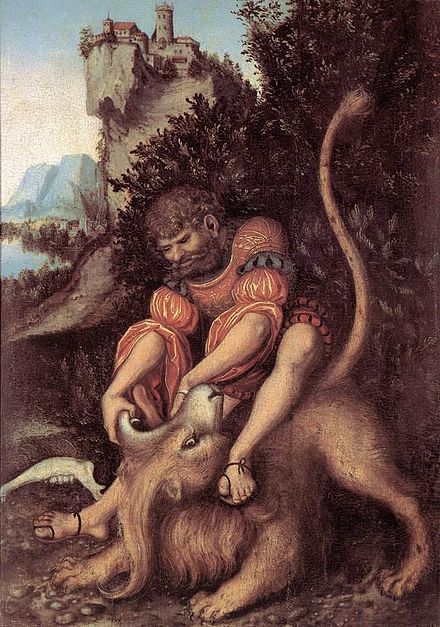
Samson's Fight with the Lion, by Lucas Cranach the Elder, 1525
Samson’s Fight with the Lion, by Lucas Cranach the Elder, 1525

Samson’s first act (after the haftarah’s opening scene) is to ask his parents to marry him to a Philistine woman he finds attractive. They protest feebly that he should marry one of his own people, but they follow him to the Philistine village of Timnah to arrange the marriage. Samson discovers his superhuman strength on the way, when “a strong spirit of God came over him” and he rips apart a lion with his bare hands. (Judges 14:6)  For the wedding a year later, Samson hosts a seven-day drinking-party where he makes a wager and ends up killing 30 strangers in order to pay his gambling debt with their clothing.

As Samson’s adventures continue, the only thing he abstains from is cutting his hair.  His main interests are sex, and inventing spectacular ways of killing people.  He only prays to God at the end of his life, when Delilah has shaved his head and her co-conspirators have blinded and imprisoned him.  Then Samson asks God to return his super-human strength so he can bring down the temple of Dagon and all the Philistines in it—not for the sake of Israel or God, but for his own personal vengeance.

Samson does succeed in killing thousands of Philistines, but he is hardly the holy man that Manoach and his wife expected when the angel said their son would be a nazir.

The book of Numbers makes it clear that a nazir along the lines of Samson is unacceptable. For one thing, this week’s Torah portion says nobody is allowed to be a nazir from birth; only an adult man or woman can vow to live as a nazir, and the person making the vow sets a finite period of time for his or her dedication.  The instructions begin:

If a man or a woman vows the extraordinary vow of a nazir, lehazir for God… (Numbers/Bemidbar 6:2)

lehazir (לְהַזִּיר) = to restrain oneself, to abstain.  (From the root נזר.)

After describing what a nazir must abstain from, the Torah portion continues:

And this is the teaching of the nazir: On the day completing the days of nizro, he shall be brought to the entrance of the Tent of Meeting. (Numbers/Bemidbar 6:13)

nizro (נִזְרוֹ) = his life as a nazir, the term of his vow dedicating him to separateness; his crown. (Also from the root נזר.).

At the Tent of Meeting the nazir makes offerings, shaves his or her head, and returns to ordinary life.  Thus all nezirim consciously dedicate themselves to restraint for a fixed period of time for the sake of God.

Their restraint consists of three kinds of abstention. The first category is alcohol and all grape products.

wine and grapes

From wine and other alcohol yazir; nor shall he drink wine vinegar or vinegar from other alcohol, nor any grape juice; nor shall he eat grapes, wet or dried.  All the days of nizro he must not eat anything that is made from grapevines, from seeds to skin.  (Numbers/Bemidbar 6:3-4)

yazir (יַזִּיר) = he will abstain.  (Also from the root נזר.)

Abstaining from alcohol would not only improve the nazir’s ability to focus on being holy to God, but would also emphasis the nazir’s separation from the rest of society.

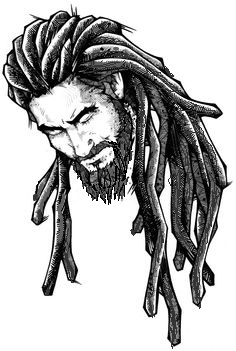
nazir hair

The second thing nezirim must abstain from is cutting, binding, or even combing their hair.

All the days of the vow of nizro, no razor will pass over his head; until the fulfillment of the days that yazir, his big, unbound, bristling hair will be holy to God.  (Numbers 6:5)

In the Bible, the only other people who let their hair grow untrimmed and unbound are mourners. Mourners are expected to disregard the social norms while grief commands all of their attention. Nezirim must let their hair grow wild while God commands all of their attention.  (See my post Naso: Distanced by Hair.)

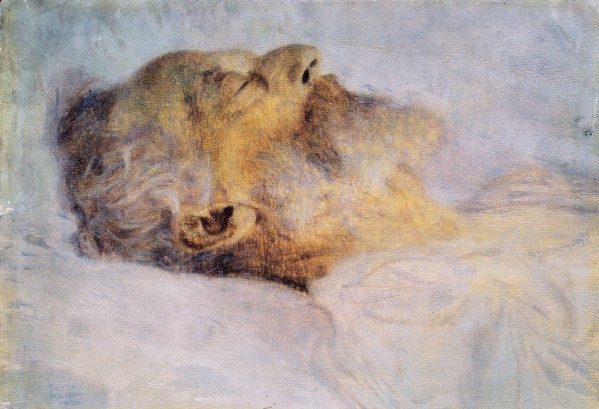
Old Man on his Deathbed, by Gustav Klimt

The third thing a nazir must avoid is contact with the dead. (See my post Emor: The God of Life.)

All the days of hazayro to God, he must not come upon a dead body. For his father or his mother, for his brother or his sister, he will not make himself ritually impure for them in their death, because the neizer of his god is on his head. All the days of nizro he is holy to God. (Numbers 6:6-8)

haziro (הַזִּירוֹ) = his time as a nazir(Also from the root נזר.)

neizer (נֵזֶר) = consecration; crown.  (Also from the root נזר.)

In the book of Numbers ordinary people who touch or come near a dead body are ritually impure for seven days; then a ritual sprinkling restores them to purity and they rejoin the religious community. But for a nazir, the rules are as strict as for the high priest, who must avoid all corpses, even those of his own parents. If a nazir touches or comes close to any corpse, the term of his or her vow ends prematurely. Then after seven days, the would-be nazir must shave his or her head, make offerings, and start all over again. Once again, nezerim must pay attention—and, perhaps, emulate the high priest.

According to these rules, parents cannot say an angel told them their child would be a lifelong nazir, or treat him as especially privileged.  No nezirim can expect God to give them superpowers from time to time.  Staying sober, they have no excuse for wild behavior like Samson’s at the end of his drinking-party.

And since nezirim must avoid being near dead bodies, they cannot kill people.  Although all of the people Samson killed were Philistines, none of them were actual soldiers engaged in war against Israelites. Impulsive murder was no longer acceptable by the time of the second temple.

*

I have known individuals who were overwhelmed by spiritual impulses that cannot be integrated into normal life in modern western society. We have roles for spiritual leaders and teachers, but few outlets for people who would have been prophets or nezirim in ancient Israel.

When prophets in the Bible are overcome by the spirit of God they can at least speak, turning the divine message into human language.  But nezirim have no words.  When Samson feels the divine spirit, he is filled with physical strength that he uses for killing.

In the book of Numbers, nezirim can still be identified by big, unbound, bristling hair, but they are also required to follow extra rules.  Perhaps these rules and abstentions satisfy the spiritual impulse of the nezirim enough so that when the spirit of God comes over them, they can rejoice in their self-discipline—as well as in their neizer, their visible crown of consecration.

I wonder if an equivalent discipline would work today to provide an outlet for those with the spirit of a nazir?


Haftarat Bemidbar—Hosea: Speaking in Wilderness

Every week of the year has its own Torah portion (a reading from the first five books of the Bible) and its own haftarah (an accompanying reading from the books of the prophets). This week the Torah portion (Numbers 1:1-4:20) has the same name as the book it begins, Bemidbar. The haftarah is Hosea 2:1-22.

The Hebrew name of each of the first five books of the Bible is the first significant word in the first sentence of the book. This week Jews begin studying the book called “Numbers” in English, which begins:

Mount Sinai: one possible location

God vayedabeir to Moses bemidbar of Sinai, in the Tent of Meeting, on the first [day] of the second month, in the second year of their exodus from the land of Egypt. (Numbers/Bemidbar 1:1)

vayedabeir (וַיְדַבֵּר) = (and) he/it spoke.

bemidbar (בְּמִדְבָּר) = be- (בְּ) = in a + midbar (מִדְבָּר) = wilderness; uncultivated and/or uninhabited land.

Although bemidbar by itself means “in a wilderness”, when it is followed by a definite place-name, such as “Sinai”, a better translation is “in the wilderness of Sinai”. A common custom today is to call the book of Numbers Bamidbar (בַּמִדְבָּר), the word for “in the wilderness’ if it is not immediately followed by a place-name. But some commentators, myself included, prefer to take the name Bemidbar directly from the text.

A more important question is whether midbar comes from the same root as vayedabeir. The modern scholarly consensus is that there are at least two root words with the letters דבר, one that has to do with driving away or going behind, and one that has to do with speech, words, and things. Midbar comes from the first root, and could be translated as “back-country”. Vayedabeir comes from the second root, and is a form of the verb dibeir =speak.

But that does not stop a poetic prophet from using the word midbar both to indicate wilderness and to allude to a medabeir (מְדַבֵּר) = “one who speaks, speaker”.

Hosea’s prophesies were composed in the northern kingdom of Israel in the 8th century B.C.E.. Like the later prophets, Hosea keeps warning the people of Israel to stop being unfaithful to God by worshiping other gods. Hosea compares Israel to a woman who abandons her first husband and prostitutes herself with other men. In this week’s haftarah, Hosea passes on God’s warning that Israel must stop soliciting.

drawing by Rembrandt

Or else I will strip her naked,

Bare as the day of her birth,

And I will make her like the midbar

And render her like a waterless land,

And I will let her die of thirst. (Hosea 2:5)

God is threatening not merely to humiliate Israel like a women stripped naked in public, but also to turn the cultivated and inhabited land of Israel into the worst kind of wilderness: an empty desert. This is the midbar that the children of Israel feared when they crossed the wilderness with Moses, and panicked three times when there was no water: twice in the book of Exodus/Shemot, and once in the book of Numbers/Bemidbar:

There was no water for the community, and they congregated against Moses and against Aaron…and they said…Why did you bring the congregation of God to this midbar to die here, us and our livestock? (Numbers 20:2-4)

Their complaint was false on at least three counts: it was God who led the people into the wilderness; God led them from Mount Sinai straight to the border of their promised land, but they refused to cross, so it was their fault that God made them stay in the wilderness for 40 years; and finally, they had no reason to believe that God, who provided water and food throughout their wilderness journey, would fail to do so again.

Apparently the inhabitants of Israel in Hosea’s time were just as full of false beliefs. In this week’s haftarah, Israel (the unfaithful wife) says her other gods (her illicit lovers) gave her vines and fig trees; she does not recognize her crops as a gift from her own God.

God promises to turn Israel into a midbar to punish her. But then God will take her back.

Indeed, here I am, seducing her.

And I will lead her through the midbar,

Vedibarti to her heart. (Hosea 2:16)

vedibarti (וְדִבַּרְתִּי) = and I will speak. (From the same root as dibeir.)

Moses at the Burning Bush by Rembrandt
Moses at the Burning Bush
by Rembrandt

Now we see the midbar in a different light, as the place where God speaks to the Israelites. God first spoke to Moses out of the burning bush in the midbar of Sinai.

And Moses…led the flock to the back of the midbar, and he came to the mountain of the God… (Exodus/Shemot 3:1)

There God commissioned Moses to serve as God’s prophet in Egypt. After the Israelite slaves were freed, God’s pillar of cloud and fire led them back to the midbar of Sinai.

They journeyed from Refidim and they entered Midbar Sinai and they camped bamidbar, and Israel camped there in front of the mountain. And Moses went up to God… (Exodus 19:2-3)

The Israelites stayed in the midbar of Sinai for two years, while God spoke the Ten Commandments, made a covenant, and gave Moses instructions for the sanctuary and the duties of priests and the various holiday observances. That was the midbar where God was a medabeir, one who speaks.

The book of Hosea says that after God has punished Israel for being unfaithful and the land is reduced to a midbar, God will speak to Israel again—but this time, instead of repeating the rules and instructions for the religion, God will “speak to her heart”, “seducing” her to return to God.

vineyard 1

The haftarah continues:

And I will give her vineyards from there,

And the valley of disturbance for a doorway of hope.

And she will answer there as in the days of her youth,

As the day she came up from the land of Egypt. (Hosea 2:17)

God will speak to Israel’s heart, and Israel will answer as in the days when the Israelites lived in the wilderness. The wild land will grow vineyards, and the wild heart will grow hope.

*

The midbar is the place of insecurity, where no wells are dug and no crops planted. But the midbar is also the place where people can hear the medabeir: God speaking.

Does God speak in your heart when you are well-clothed, well-fed, and secure? Or is that when you attribute your good fortune to other gods, such as your own cleverness or hard work?

Are you more likely to hear God speaking in your heart when you are in a place of insecurity?

Haftarat Bechukotai—Jeremiah: Trust Me

Every week of the year has its own Torah portion (a reading from the first five books of the Bible) and its own haftarah (an accompanying reading from the books of the prophets). This week the Torah portion is Bechukkotai (Leviticus 26:3-27:34) and the haftarah is Jeremiah 16:19-17:14.

The God depicted in the Torah has sudden fits of anger and smites large groups of people, the innocent along with the guilty. No wonder so many people in the books of Exodus and Numbers do not trust this god to lead them safely to a new land! Yet the prophets from Moses on insist that trusting God—and following God’s rules—will be rewarded.

build houses and plant vineyards 2

For example, this week’s Torah portion, Bechukkotai  (“By My decrees”) opens with this divine promise:

If you go by My decrees, and My commands you observe, and you do them … Then [your] threshing will overtake [your] grape harvest, and [your] grape harvest will overtake your sowing, and you will eat your bread to satiation, and you will rest labetach in your land. (Leviticus/Vayikra 26:3, 5)

labetach (לָבֶטַח) = in security, with a feeling of safety. (From the root verb batach (בּטח) = trust, rely on, feel safe.)

The next verse shows that the feeling of safety will be justified:

And I will put peace in the land, and you will life down and nothing will frighten you, and I will keep bad beasts from the land, and a sword will not cross your land. (Leviticus 26:6)

This promise is never fulfilled in the Bible. Many of its books point out that the Israelites keep veering off the right path, disobeying the rules and worshiping other gods. It is their fault, not God’s, that they are never safe in their land.

In this model, God judges the people as a group; an individual, however virtuous, suffers the fate of his whole city or country. Similarly, in the book of Jeremiah God sends the Babylonians to conquer Judah and its capital, Jerusalem, because its people are acting immorally and worshiping other gods.

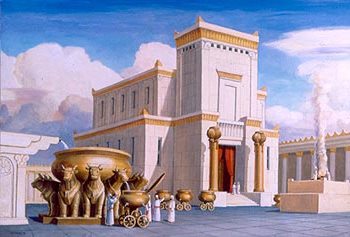
First Temple-2

Some Jerusalemites think God will keep them safe because they have an impressive Temple stocked with priests. But the prophet Jeremiah warns:

Do not tivtechu in yourselves, in words of deception, saying: The temple of God, the temple of God, the temple of God is these [buildings]. (Jeremiah 7:4)

tivtechu (תִּבְטְחוּ) = you trust.  (Also from the root batach.)

The king of Judah and his officials think they can rely (batach) on fortifications, or stored-up wealth, or a rescue by the Egyptian army, or the words of prophets who contradict Jeremiah.

This week’s haftarah includes a poem on the futility of relying on other human beings, and the rewards of relying only on God.

Thus said God:

Cursed is the man yivtach in humankind

And makes flesh his strength;

He turns away his mind from God.

He is like a bare tree in the desert valley…

Blessed is the man yivtach in God;

And God is mivtacho.

Fruit (peaches)

He is like a tree planted by water:

By a stream it sends forth its roots,

And it does not notice when summer heat comes,

And its leaves are luxuriant;

In a year without rain it does not worry,

And it does not stop making fruit. (Jeremiah 17:5-8)

yivtach (יְבְטַח) = who trusts, who relies on, who feels safe. (Also from the root batach.)

mivtacho (מִבְטַחוֹ) = what he trusts. (Also from the root batach.)

This poem (like psalms 8, 31, 52, and 56) takes a personal view of trusting God, and promises that individuals who rely on God are rewarded with long and fruitful lives—perhaps even if most of their people reject God. Since the word batach covers feelings as well as deeds, Jeremiah is promising a reward for individuals who have the right feelings about God. (See my earlier post, Bechukkotai & Jeremiah: The Inner Reward.)

Later in the book of Jeremiah we get an example of an individual who has the batach feeling about God. Just before the Babylonian army breaches the walls of Jerusalem, God tells Jeremiah to give a message to a Kushite servant of the king called Eved-Melekh, “servant of the king”.

bitachon

Go and say to Eved-Melekh the Kushi: Thus said God of Armies, the god of Israel: … I will certainly save you, and you will not fall by the sword, and you will keep your life—because batachta in me, declares God. (Jeremiah 39:16, 18)

Kushi (כּוּשִׁי) = Kushite; a dark-skinned person from Kush, the land south of Egypt (now Ethiopia), or a descendant of a Kishite.

batachta (בָּטַחְתָּ) = you trusted, you felt safe.

In what way did the Kushi trust in God?

The year before, four officials of the king’s court in Jerusalem heard Jeremiah tell the people that God is giving the city to the Babylonian army, and whoever stays will die, but whoever defects to the Babylonians will live.

And the officials said to the king: Let this man be killed, please, because he is weakening the hands [morale] of the remaining soldiers in the city, and the hands of all the people, by speaking this way…And King Zedekiah said: Hey, he is in your hands, because the king can do nothing to oppose you. (Jeremiah 38:4-5)

The king feels as though he has to act as if he trusts his officials; he does not dare oppose them, even though he knows Jeremiah is a true prophet of God.

Then they took Jeremiah and they threw him down into the pit of Malkiyahu, son of the king, which was in the court of the guard, and they sent Jeremiah to his death. But Eved-Melekh the Kushi, a eunuch in the palace of the king, heard that they had put Jeremiah into the pit. And the king was sitting in the Gate of Benjamin. So Eved-Melekh went out from the palace of the king, and to spoke to the king, saying: My lord the king, these men have done evil in all they did to Jeremiah the prophet! They threw him down into the pit, and he will die below from starvation…

Jeremiah and Kushi and pit

The Kushi, a palace eunuch, might hesitate to speak against four powerful court officials. He might also hesitate to interrupt the king when he is dispensing justice in the city gate. But Eved-Melekh pleads for Jeremiah’s life without worrying about his own fate. And King Zedekiah seems relieved to have someone interrupt him and speak on Jeremiah’s behalf.

Then the king commanded Eved-Melekh the Kushi, saying: Take from here three men and raise Jeremiah the prophet from the pit before he dies. (Jeremiah 39:10)

Eved-Melekh saves Jeremiah’s life, and the prophet returns to the regular prison, where he gets bread and water until the Babylonian soldiers destroy Jerusalem about a year later. Then the Babylonians free Jeremiah and send him to another town in Judah. The four court officials do not take revenge on the Kushi eunuch, and we can assume that when the Babylonian general decides which Jerusalemites will die, which will be deported to Babylon, and which will be moved to another town in Judah, the Kushi is among those whose life is spared.

Eved-Melekh’s feeling of trust in God lets him do the right thing and rescue God’s prophet at the risk of his own life. This palace servant is especially remarkable because he is an immigrant from another country—who nevertheless serves the God of Israel better than Judah’s native officials and king do.

The Torah portion in Leviticus says that when all the people follow God’s rules, then God will reward them with real security, and as a result they will feel safe (labetach) in their land. But not even Moses can get all the people to follow God’s rules.

The haftarah from Jeremiah says that when individuals feel safe (yivtach) with God, then they are motivated to do good deeds, and as a result God rewards them with life and fruitfulness.

The book of Jeremiah does not say whether the eunuch Kushi becomes fruitful in some way other than having children. But God does reward him with life.

In my own life, I admit, I rarely feel safe enough to speak out in threatening situations or to oppose the plans of the powerful. But when I actually do, I feel filled with a spirit that I did not know I had, perhaps a divine spirit. And that grounded elation is its own reward, as I move forward with new courage and good deeds, fruitful and alive.

Haftarat Behar—Jeremiah: The Redeemer

Every week of the year has its own Torah portion (a reading from the first five books of the Bible) and its own haftarah (an accompanying reading from the books of the prophets). This week the Torah portion is Behar (Leviticus 25:1-26:2) and the haftarah is Jeremiah 32:6-27.

Prophets during the period of the kingdoms of Israel (931-722 B.C.E.) and Judah (931-586 B.C.E.) had more than one way to deliver God’s messages. They could preach to either the king or the people, in either poetry or prose. They could do performance art, acting out a message with props. Or they could do an apparently ordinary action that carried a symbolic meaning about God and country.

Jeremiah’s ordinary deed in this week’s haftarah, purchasing a field in his hometown from his cousin, carries a double meaning.

The grounds for the purchase are laid out in this week’s Torah portion, Behar:

Beggar, by Rembrandt van Rijn

If your kinsman becomes poor and must sell part of his property, then his nearest go-eil shall come and ga-al what his kinsman is selling. (Leviticus/Vayikra 25:25)

go-eil (גֹּאֵל) = redeemer; deliverer.

ga-al (גָּאַל) = redeem; prevent purchase by an outsider, buy back from an outsider, deliver from the hands of an enemy.

In other words, land must be kept within the extended family if possible. (And if not, God’s law requires that every 50 years will be a yoveil or jubilee and all lands will return to the descendants of their original owners.)

If someone needs to sell land, the nearest kinsman has the first right to buy it. If no kinsmen step forward to buy the land, and it is sold outside the clan, then when a kinsman has the means he is expected to step forward and buy it back. He does not have to return the land to the original seller (at least not until the next yoveil year); the important point is to keep the land in the family.

These laws about land ownership would have seemed moot while Jerusalem was under siege by the Babylonian army in 588-586 B.C.E. From all the accounts in the Bible, it became increasingly obvious that the Babylonians would win, and King Nebuchadnezzar would annex the whole kingdom of Judah to his own empire. Then his administration would decide who owned the land; the old property rights of the Israelites in Judah would be irrelevant.

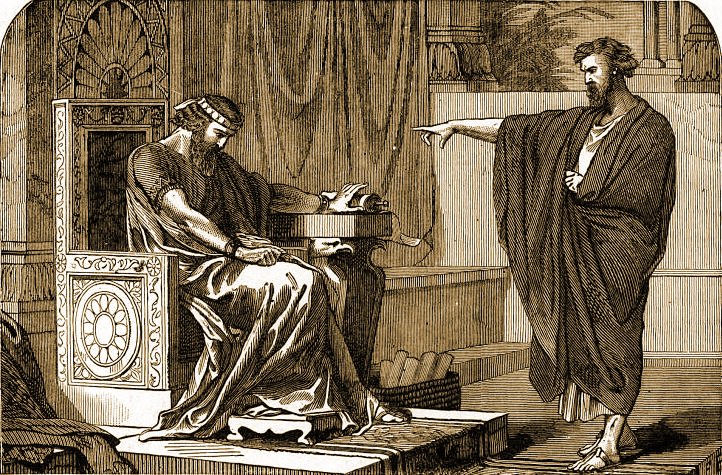
Jeremiah speaks to King Zedekiah, 1897 illustration

Jeremiah spends most of the siege in prison in Jerusalem. The prophet keeps saying that rebelling against Babylon is futile, and the king of Judah should surrender before the city falls to Nebuchadnezzar’s troops. This is not a popular message with either King Zedekiah of Judah or his officials, especially since Jeremiah speaks in God’s name. Since Jeremiah is the son of Hilkiah, the late High Priest, people are likely to believe him. So the prophet is thrown in prison at least three times in the book of Jeremiah.

While Jeremiah is in prison at the beginning of this week’s haftarah, God tells him:

Hey! Chanameil, son of your uncle Shulam, will come to you saying: Buy yourself my field that is in Anatot, because yours is the duty of the ge-ulah to buy it. (Jeremiah 32:7)

ge-ulah (גְּאֻלָּה) = right of redemption; responsibility to redeem. (From the same root as ga-al.)

And Chanameil, the son of my uncle, came to me, as God had spoken, to the court of the guards. And he said to me: Buy, please, my field that is in Anatot, which is in the land of Benjamin, because the right of possession is yours and the ge-ulah is yours. Then I knew it was indeed the word of God. And I bought the field away from Chanameil, the son of my uncle, that was in Anatot. And I weighed out for him the silver, seven shekels and ten in silver. And I wrote a document, and I sealed it and I designated witnesses… (Jeremiah 32:8-10)

Jeremiah describes all the details of the transaction, showing that it was done according to the letter of the law. Then he tells his scribe:

“Thus said God of Armies, the god of Israel: Take these documents with this document of purchase, the sealed one and this uncovered one, and put them in a jar of pottery so that they will last a long time. For thus said God of Armies, the god of Israel: They will buy houses and fields and vineyards in this land again.” (Jeremiah 32:14-15)

Preserving the documents of sale in a pottery jar indicates that after a long time, the Israelites will return and own their land again.

Next Jeremiah asks why God told him to redeem land in Judah when the kingdom was about to fall to the Babylonians anyway.

And the word of God happened to Jeremiah, saying: “Hey! I am God, the god of all flesh. Is anything too wondrous for me?” (Jeremiah 32:26-27)

Jerusalem, 587 B.C.E.
Fall of Jerusalem in
587 B.C.E.

God then declares that Jerusalem will be burned to the ground as part of God’s plan to use the Babylonians to punish the Israelites for their idolatry. But eventually God will bring the Israelites back to their land. In other words, God will be the go-eil for the Israelites.

Thus Jeremiah’s purchase of his cousin’s land prefigures God’s redemption of the Israelites.

At first I wondered if Jeremiah’s cousin Chanameil was merely acting out of divine inspiration to set up the symbolic story by asking Jeremiah to be his go-eil. But then I read another episode in the book of Jeremiah, a few chapters later, when the Babylonian (Kasdim) army temporarily lifts the siege.

And it happened that the Kasdim removed the front-line troops around Jerusalem on account of the [advancing] front-line troops of Pharaoh. And Jeremiah was going out of Jerusalem to go to the territory of Benjamin to apportion land there among the people. And he was at the gate of Benjamin, and there the commander of the guard …arrested Jeremiah the prophet, saying: “You are defecting to the Kasdim!” (Jeremiah 37:11-13)

Jeremiah winds up in prison again. But it is striking that his first idea, when the siege is temporarily lifted, is to walk back to his hometown, Anatot in the territory of Benjamin, and make sure the sale of his cousin’s land was carried out according to the documents he prepared.

I suspect Chanameil really was poor, and needed the price of his land in silver to survive. By selling the land to his first cousin Jeremiah, he could use the silver and still continue to farm the land—as best he could during the siege of Jerusalem a few miles to the north.

When there is a break in the siege, Jeremiah tries to go south to check up on his cousin and make sure no outsider has kicked his cousin off the land that he is now, technically, farming for Jeremiah. Even though he knows that the Babylonians will soon return, Jeremiah acts in the spirit, not just the letter, of the law in the Torah portion Behar. He is his cousin’s go-eil, and as long as possible he will strive to redeem him.

Jeremiah knows his world is falling apart. He knows the siege will resume in a few months, Jerusalem will burn to the ground, and the whole kingdom of Judah will fall to its enemies. Yet he risks his own limited freedom in an attempt to make sure his cousin is all right—knowing that both he and his cousin are likely to be killed or deported later that year.

The sale of the land in Anatot is a symbolic act God uses to tell people that although they are doomed, there is hope for the next generation. And the sale is a practical step Jeremiah takes to help someone in the present.

Whether the doom we see advancing on the world is war or global warming, may we all be like Jeremiah and remember that each individual and each day counts. Stage your symbolic protests for the sake of the big picture.  But be responsible and kind to another human, right here, right now.

Haftarat Emor—Ezekiel: No Sweat

Every week of the year has its own Torah portion (a reading from the first five books of the Bible) and its own haftarah (an accompanying reading from the books of the prophets). This week the Torah portion is Emor (Leviticus 21:1-24:23) and the haftarah is Ezekiel 44:15-31.

Gold gleaming, censers swinging, men chanting, priests in elaborate robes and headgear … When I saw a special Catholic mass on television, I assumed that the officiants dressed up to impress the congregation with the beauty and holiness of their ritual.

priest ordinary garmentsI used to assume the same thing about priests in ancient Jerusalem when they performed rituals in the outer courtyard of the temple, in front of all the people. These outdoor rituals included butchering animals and burning the pieces on the altar; I pity whoever had to do the priests’ laundry. Nevertheless, their costumes seemed designed to impress the congregation, from the turbans on their heads down to the hems of their long elaborately woven robes.

And for the sons of Aaron you shall make tunics and you shall make sashes for them, and turbans you shall make for them, for magnificence and beauty. (Exodus/Shemot 28:40)

The priests had to look dazzling, I figured, in order to inspire the people into a worshipful state of mind.

This week’s haftarah turned my head around.

The book of Ezekiel records the visions and prophecies of a priest who was deported to Babylon in 593 B.C.E., when King Nebuchadnezzar’s army besieged Jerusalem. While Ezekiel was in Babylon, the temple in Jerusalem was razed. Ezekiel encouraged his fellow Israelite exiles by prophesying a future temple in Jerusalem, bigger and better.

In this temple, he said, only the descendants of Tzadok, King Solomon’s high priest, would be priests. (See Haftarah for Emor: Tzadok the Priest.) They would follow strict rules of purity in their marriages, their behavior, and their dress.

When they come inside the gates of the penimit court, they must dress in garments of linen; they shall not dress themselves in wool for their attendance inside the gates of the penimit court and its house. (Ezekiel 44:17)

penimit (ַפְּנִימִית) = inner (part of a temple or palace). (From the noun panim = face, faces, surface, expression, disposition. The inner court was where one encountered the disposition of God or of a monarch.)

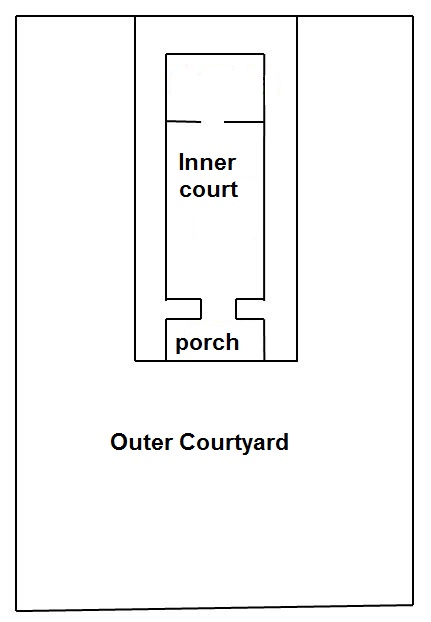
temple 2Throughout the ancient Near East, a temple consisted of an unroofed outer courtyard for public worship, and a roofed inner court where priests served their god through other rituals.

And when they go out to the outer court, to the outer court to the people, they must take off their garments that are on them and set them aside in the holy rooms, and they must dress in other garments, and not make the people holy with their garments. (Ezekiel 44:19)

According to Ezekiel, the holiest priestly garments must be worn in the penimit court, which only priests may enter. Thus only other priests—and God—could see them in their sacred vestments performing the rituals of the oil lamps, the bread table(s), and the incense altar.

Since the inner court is such a holy place, the garments worn there are also holy. The priests have to change into other garments before they go out into the public courtyard in order to prevent cross-contamination.

Commentators differ on the direction of the contamination. Rashi (Rabbi Shlomo Yitzchaki, 1040-1105 C.E.) wrote that ordinary garments are not ritually pure, and therefore would contaminate any holy garments they touched.  But according to Radak (Rabbi David Kimchi, 1160-1235 C.E.), Ezekiel was concerned that the holiness of the priests would rub off on the unqualified.

Turbans of high priest (L), regular priest (R)

The holy linen garments include headgear and underpants as well as a long tunic and sash.

Turbans of linen will be on their heads and breeches of linen will be on their hips; lo yacheggeru in sweat. (Ezekiel 44:18)

lo yacheggeru (לֹא יַחְגְּרוּ) = they shall not gird themselves, they shall not wrap a belt or sash around their waists.

Girding happens most often in the Bible when men gird on swords or other weapons. A close second is girding oneself with sackcloth as a sign of mourning or repentance; in this case, a man wraps a broad sash of coarse goat hair around his naked midsection. In other references, men gird their loins in order to shorten the skirts of their tunics so they can run or march without encumbrance.

In this week’s haftarah, a priest’s linen sash girds his long linen tunic simply because men wore sashes. In the outer courtyard, a priest’s sash might help to hold his tunic away from spattering blood, or he might shorten his skirts with it to facilitate moving the ashes off the altar. But in the penimit court, the sash is strictly for beauty and propriety.

So are the linen breeches. Linen is cooler than wool; a man wearing linen is less likely to sweat. Today, sweat stains are considered unattractive and inappropriate on formal wear; copious perspiration is associated with either hard labor or excessive nervousness.

The Hebrew Bible refers to sweat only twice: in the sentence from Ezekiel above, and once in the book of Genesis when God sentences Adam to his new life outside Eden, and declares:

By the sweat of your brow you shall eat bread… (Genesis/Bereishit 3:19)

Here, sweat is a metaphor for hard labor in the fields. But the work of the priests hidden inside the inner court is stately and spiritual. For this holy service, they need refined and holy clothing—not for the sake of onlookers, but for the sake of their own state of mind.

According to Ezekiel, the priests in the penimit court will be in an altered state. They will wear special clothes that are never worn anywhere else. They will not sweat. And they will not put on a show for the general public.

A second Israelite temple was built in Jerusalem, with construction beginning in 516 B.C.E. It did not follow Ezekiel’s plans, though it still separated the inner and outer courts. It was staffed by priests from the Levite tribe, but they were not all Tzadokites. They wore linen tunics, sashes, turbans, and breeches, though their sashes and the hems of their long tunics were embroidered with colored yarn that might have been wool.

There is no record of whether the priests of the second temple sweated inside the inner court.

After Romans destroyed the second temple in 70 C.E., priests could no longer perform the sacred rituals. But a new form of serving God was already developing. For the last two millennia, Jews have emphasized worshiping God through good deeds and the prayers of every individual. In that sense, we have become a kingdom of priests (and priestesses), as God predicted to Moses in Exodus/Shemot 19:6.

What can we do today to make our prayers and our good deeds like magnificent and beautiful garments we wear without sweating, in a pure and priestly state of mind?

Haftarat Kedoshim—Amos: Chosen People

Every week of the year has its own Torah portion (a reading from the first five books of the Bible) and its own haftarah (an accompanying reading from the books of the prophets). This week the Torah portion is Kedoshim (Leviticus 19:1-20:27) and the haftarah according to some traditions is Amos 9:7-15.

Because God chose to rescue the Israelites from slavery in Egypt, the Israelites owe God their fealty and obedience. This idea appears throughout the Hebrew Bible and Jewish liturgy, including this week’s Torah portion, Kedoshim (“Holy”):

I myself am God, your god, who brought you out from the land of Egypt. And you must observe all my decrees and all my laws and do them; I am God. (Leviticus/Vayikra 19:36)

And you shall be holy to me, because I, God, am holy, and I separated you from the other peoples to be mine. (Leviticus 20:26)

Other peoples have their own gods. But the god that chose the Israelites as its own people is superior to all those other gods, according to the early books of the Torah.  The miracles God made in Egypt prove it.

The book of Deuteronomy, which was probably written in the mid-seventh century B.C.E., offers the Bible’s first definite statement of monotheism, the belief that there is only one god in the whole universe.

God is “the gods” in the heavens above and on the earth below; there is no other. (Deuteronomy/Devarim 4:39)

In this book the Israelites become the chosen people of the one and only god.

For you are a sacred people for God, your god, and God chose you to be Its am segulah out of all the peoples that are on the face of the earth. (Deuteronomy 14:2)

am segulah (עַם סְגֻלָּה) = a people (am) of personal possession (segulah); personally chosen people.

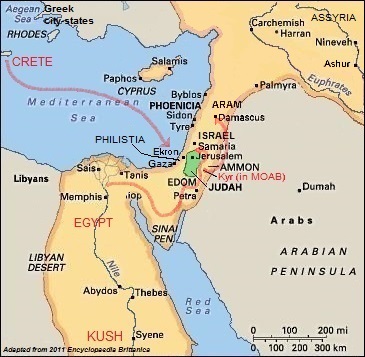
Yet a hundred years earlier, the prophet Amos hinted at monotheism with his claim that the same God is in charge of all the nations on earth. Amos was the first prophet to declare that God punishes every country that does wrong, not just the two kingdoms of the Israelites.

The book of Amos begins with dire prophecies of the downfall of every small country in the region: Aram and its capital, Damascus; the four city-states of the Philistines, from Gaza to Ekron; the Phoenician city-state of Tyre; the kingdoms of Edom, Ammon, and Moab; the southern Israelite kingdom of Judah; and the northern Israelite kingdom of Israel.

Amos says God will decree their destruction because of their various misdeeds. He does not mention the rising Assyrian Empire, which had already begun conquering or subjugating the small states to its west. But then, most biblical prophets assumed that God used foreign armies to punish people.  (See my post Haftarah for Bo—Jeremiah: The Ruler of All Armies.)

In the last chapter, this week’s haftarah, Amos questions the whole idea that God and the Israelites have a special relationship.

map Amos ch9 v7-8

“Aren’t you like the Kushiyim to me, children of Israel?” 

—declares God.

“Didn’t I bring Israel up from the land of Egypt,

“And the Philistines from Crete,

“And Aram from Kyr?

Hey! The eyes of my master, God

Are on the sinful kingdom.

“And I will wipe it off from the face of the earth.

“However, I will certainly not wipe out the house of Jacob”

—declares God. (Amos 9:7-8)

Kushiyim (כֻשִׁיִּים) = Kushites, black-skinned people, people from Kush (a region identified with Sudan and Ethiopia). Elsewhere the Bible treats Kushites like other foreigners from distant lands, countries with which Israel and Judah had no quarrel.   

So what if God brought the Israelites out of Egypt? God also brought other peoples to new lands. In the book of Amos, God does not play favorites.  In fact, Amos predicts that God is about to wipe out the northern kingdom of Israel—though some Israelites (a.k.a. the house of Jacob) will survive, and someday their descendants will return.

(The Assyrians did capture the capital of Israel, Samaria, in 720 B.C.E., and deported much of its population. Some northern Israelites fled south to the kingdom of Judah, which also considered itself part of the house of Jacob. Judah survived as a semi-independent vassal state of Assyria until the empire was conquered by the Babylonians around 610 B.C.E.)

It is tempting to read this week’s haftarah as an early statement of universalism: “Everyone is special, everyone is chosen in a different way.” At least Amos, unlike many other books in the Hebrew Bible, avoids triumphalism: “Only we are special, only we are chosen.” But I suspect Amos’s real point is: “Who do you think you are?  You’re not so special!”

Nevertheless, the book of Amos is a good antidote to the common late biblical view that there is only one god, and God singled out the Israelites to be Its personal possession.


Today, nobody follows the religion of the ancient Israelites, with its animal sacrifices and its laws about the sub-human status of slaves, women, children, and innocent bystanders in war. The Jewish religion has become much more ethical than the Israelite religion portrayed in the Torah.

Yet many people today, Jews and non-Jews, believe that their own religion is the only right one, the only true religion—and therefore they and their co-religionists are God’s chosen people.

I pray that we all receive the divine inspiration Amos received, and realize that God is not like a biased parent or teacher, singling out one child for extra benefits. God rescues lots of people and brings them to new lands. In God’s eyes, Israelites are the same as Kushiyim.

None of us are chosen ahead of time. We must make our own choices to become holy people.


Haftarat Acharey Mot—Ezekiel: Abomination

Every week of the year has its own Torah portion (a reading from the first five books of the Bible) and its own haftarah (an accompanying reading from the books of the prophets). This week the Torah portion is Acharey Mot (Leviticus 16:1-18:30) and the most common haftarah is Ezekiel 22:1-19.

The Torah frowns on some actions because they are ra (רַע) = bad or immoral; some because they are tamei (טָמֵא) = not pure for religious purposes; and some because they are to-eivah (תּוֹעֵבָה) = abominable, disgusting, offensive. This week’s Torah portion and haftarah reveal two different views of what should be to-eivah to the god of Israel.disgust 1

The authors of both Leviticus and Ezekiel knew that societies in the ancient Near East had different opinions on what was abominable. The first two books of the Bible, Genesis/Bereishit and Exodus/Shemot, use the word to-eivah only to describe what the Egyptians abhor: eating at the same table with Canaanites (Genesis 43:32), and the slaughter of sheep (Genesis 26:34, Exodus 8:22).

This week’s portion in Leviticus/Vayikra declares that some of the practices that Canaanites permit are off-limits to Israelites.

You must keep My decrees and My rules, and you must not do any of these to-eivot, [neither] the native-born nor the resident alien among you. Because the men who were on the land before you did all these to-eivot, and they made the land tamei. (Leviticus/Vayikra 18:26-27)

to-eivot (תּוֹעֵוֹת) = plural of to-eivah.

The passage leading up to this statement lists 17 acts that are both tamei and to-eivot for Israelite men: twelve kinds of sex involving relatives, sex with a menstruating woman, sex with your comrade’s wife, giving your child to the god Molekh, sex with another male, and sex with a beast.

Two of these acts are labelled tamei within the list, perhaps to emphasize that they cause religion impurity: sex with a comrade’s wife and sex with a beast. Another act is specifically labeled to-eivah:

And you must not lie down with a male as in lying down with a woman; it is to-eivah. (Leviticus 18:22)

The book of Leviticus might have emphasized that this homosexual act was to-eivah for the ancient Israelites because it was accepted as normal among other peoples in the region, including the Hittites, Assyrians, Babylonians, and Philistines. These societies had laws against specific deeds such as father-son incest and homosexual rape, but treated sex between consenting males (and even boys) as a normal part of life.

But for the priests who wrote Leviticus, all sex between males was as abominable as raping your mother or giving your child to the foreign god Molekh.

The prophet Ezekiel was a priest deported to Babylon when Jerusalem fell, and he shared some of the opinions of the priests who wrote the book of Leviticus. But he took a broader view of what was to-eivah to the god of Israel. The haftarah from the book of Ezekiel denounces the residents of Jerusalem for recklessly committing deeds that are to-eivah. God asks Ezekiel:

And you, son of humankind, will you judge, will you judge the city of bloodshed and inform her of all her to-eivot? (Ezekiel 22:2)

Then God tells Ezekiel what to say. The first eight  to-eivot God says the citizens of Jerusalem have committed are: making idols, belittling their own parents, practicing extortion on resident aliens, oppressing widows and orphans, despising God’s holy things, profaning the sabbath, speaking slander, and eating sacrifices on mountaintops (where there were altars to other gods).

Next God mentions a few of the sex acts men are also forbidden to do in this week’s Torah portion: sex with their fathers’ wives, with menstruating women, with their comrades’ wives, with their daughters-in-law, and with their own sisters. Neither sex with other males nor sex with beasts is mentioned in this haftarah.

In the haftarah it is sex with another man’s wife that is explicitly labeled to-eivah.

And a man does a to-eivah with the wife of his comrade, and another man makes his daughter-in-law outrageously tamei, and another man rapes his sister, his father’s daughter. (Ezekiel 22:11)

The list is wrapped up with three more non-sexual to-eivot: taking bribes, charging extra interest, and damaging friends through extortion.

Ezekiel’s point may be that we should feel the same knee-jerk, visceral disgust that we feel in the face of incest and rape when we see our fellow citizens worship other gods or injure people through extortion, slander, and perversion of justice.

Can we change our gut reactions? Yes, over time. When I had my first period it seemed like an abomination, but eventually I accepted menstruation as a mere nuisance. On the other hand, when I was very young it did not bother me at all to trade my little sister a penny for a dime. After a few years I developed enough empathy so that the idea of deliberately cheating anyone seemed repulsive.

The Bible is right that we must pay attention and choose what is truly to-eivah to our god. But we can do better than the priests who wrote Leviticus. Modern commentators suggest that the incest rules in that book were designed to protect girls and women from the men living in the same household compound. Today we take the idea of protection farther by considering all acts of rape and all sex with children as to-eivah.

On the other hand, more and more of us smile when we see two men fall in love and make a home together. Today many people are more kind and fair than the Israelite authorities were 2,500 years ago.

Yet alas, too many individuals today still deserve Ezekiel’s denunciations in this week’s haftarah. Human beings cannot all have perfect empathy. But what if we all had a gut reaction to slander, bribery, and extortion, finding these deeds to-eivot? How would the world change?

Pesach: Isaiah and the Peaceable Kingdom

(Note: I will be traveling during the week of Passover, so I’m publishing my post for April 24-30 ahead of time. This year, the eight days of Passover end on April 30, 2016.)

For the eighth day of Passover/Pesach, the special Torah reading is Deuteronomy 14:22-16:17, which includes directions for observing Passover “so that you will remember the day of your exodus from the land of Egypt all the days of your life”. (See last week’s post, Pesach: The Matzah of Misery.)

The haftarah (the accompanying reading from the Prophets) is Isaiah 10:32-12:6. It mentions Egypt only in Isaiah’s prediction that God will return the Israelites from the far-flung places where they were deported by Assyrian Empire.

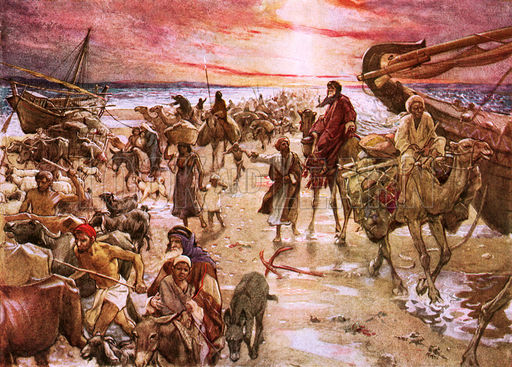
Crossing the Red Sea, by William Hole
Crossing the Red Sea,
by William Hole

God will dry up the tongue of the sea of Egypt, and will wave a hand over the River [Euphrates] with the might of God’s ruach and break it into seven wadis so it can be walked over dry-shod. And it will become a highway for the remainder of God’s people who remained from Assyria, like [the highway] for Israel on the day it went up from the land of Egypt. (Isaiah 11:15-16)

ruach (רוּחַ) = wind (when blowing over water); spirit (when sweeping into a human being).

But the return of the exiled Israelites is only part of Isaiah’s grand vision in this week’s haftarah.

The prophet has been urging King Achaz of Judah to avoid taking sides in the revolt of Aram and the northern kingdom of Israel against the empire of Assyria, which had conquered the two  states during the 8th century B.C.E. Isaiah tells the king of Judah that Aram, Israel, and even Assyria will all disappear in only a few years. God has a three-part plan. First God will eliminate the vast empire of Assyria; then a great and righteous king will arise in Judah; and finally people everywhere will unite in worshiping Judah’s God.

In the ancient Near East, people believed major change came from the top down: from god to king to the people. A great king was required for a civilization to be transformed. So Isaiah prophesies:

A shoot will go out from the stump of Jesse

And a crown from its root will bear fruit.

And a ruach of God will rest upon him,

A ruach of wisdom and insight,

A ruach of counsel and courage,

A ruach of knowledge and awe of God. (Isaiah 11:1-2)

God will inspire a human king, a descendant of King David’s father Jesse, to establish a moral government. Then, Isaiah prophesies, human nature itself will change.

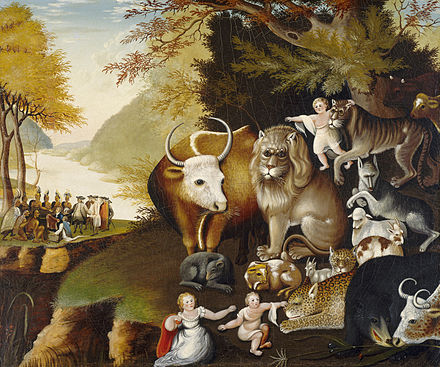
The Peaceable Kingdom by Edward Hicks, 1826 version (William Penn's peace treaty in background)
The Peaceable Kingdom by Edward Hicks, 1826 version
(William Penn’s peace treaty in background)

A wolf will dwell with a young ram,

And a leopard will lie down with a goat kid,

And a calf and a young lion will pasture together,

And a little boy will be leading them.

And a heifer and a she-bear will graze

And they will let their young ones lie down together.

And a lion, like an ox, will eat straw.

A baby will play over a viper’s hole,

And a toddler will put his hand over a snake’s lair. (Isaiah 11:6-8)

In other words, there will be no predators; all animals will be peaceful and non-violent. Judah and the other small countries in the hills of Canaan are like lambs, kids, calves, babies.  But in the future, the wolves, leopards, lions, and bears of great empires will no longer prey on them.

Not only will all peoples live together in peace, but they will all be morally upright and search out the same god.

They will do no evil nor destruction

On all My holy mountain

Because the land will be as filled with seekers of God

As the water covering the sea.

On that day the root of Jesse will be standing

As a banner for peoples.

Nations will come to him with inquiries,

And his haven will be honored.  (Isaiah 11: 9-10)

Isaiah claims that this great king from “the root of Jesse” will arise in just a few years—i.e. right after the reign of King Achaz. Achaz’s son Hezekiah was indeed one of the religious kings praised by the Bible. But after Hezekiah’s reign (~716-697 B.C.E.), people noticed that the rest of Isaiah’s prophecy was no closer to coming true; the empires of Assyria and Egypt continued to squabble over ownership of the lands between them until the Neo-Babylonian Empire became the new top predator.

We are still waiting for world peace. Christianity developed the theory that Isaiah’s righteous king was Jesus, who would return someday to straighten out the world. According to traditional Judaism, we are still waiting for the messiah—or at least for a messianic era without predators or prey.

According to the Torah, the Israelites in Egypt waited 400 years for an opportunity to escape and become a free people, serving only their god.

We have already waited over 2,400 years for Isaiah’s vision to come true. Maybe it’s time to stop praying to an all-powerful God who lives outside the world. Maybe it’s even time to stop waiting for a Moses, a king, a messiah. We need to take action ourselves.

Imagine one individual after another dedicating him-or-her-self to respecting everyone and preying on no one; to avoiding violence; and to seeking the divine in everyone and everything.

May all human beings become filled with the ruach of Isaiah’s inspiration.