Researching and writing this blog is one of my greatest pleasures. But sightseeing in Europe outshines even that, and I have the good fortune to spend the next month in France and Italy. I am not even bringing my laptop!
To read about the Torah portion of the week, or the themes of the upcoming Jewish holy days, you can click on these links to some blog posts I wrote after our 2019 trip to Europe:
A slew of curses that will result if the people do not obey God appear in this week’s Torah portion, Ki Tavo (Deuteronomy 26:1-29:8). This section begins:
But it will be, if you do not heed the voice of God, your God, by observing and doing all [God’s] commands and decrees which I command you today, then all these curses will come upon you and overtake you. (Deuteronomy 28:15)
The first curses in this section of the Torah portion use general language, such as:
Cursed will you be in your comings, and cursed will you be in your goings. (Deuteronomy 28:19)
But then the Torah moves to curses about specific areas of life, including the curse of failure in whatever you try to accomplish.
God will send against you the malediction, the vexation, and the reproach, against every undertaking of your hand that you do, until you are annihilated and you perish quickly because of your evil deeds when you abandoned me. (Deuteronomy 28:20)
This sentence ends in the first person, with God reacting personally to being disobeyed, feeling abandoned.
But it opens in the third person, stating that God will reproach the disobedient Israelites by thwarting every effort they make to thrive. 19th-century rabbi Hirsch explained: “Consequent to the sin, inner serenity disappears and is replaced by inner disquiet, and by a constant feeling of reproach, self-reproach, the consciousness that one deserves God’s censure. … Inner disquiet and a constant mood of self-reproach will prevent the success of your labors.”1
This is an apt psychological explanation for why some people cannot bring their undertakings to completion. But what about the threat of being annihilated and perishing quickly? Many people live with guilt and self-reproach for decades, depressed but not annihilated.
Next the Torah describes how the disobedient Israelites will be cursed by diseases, drought, and defeat in battle—all potentially deadly. Then we return to the failure of people’s enterprises.
The Scream, by Edvard Munch, 1893
And God will strike you with shiga-on and with blindness and with confusion of mind. And you will grope around at midday the way the blind grope around in their [own] darkness, and your ways will not prosper; and indeed you will be exploited and robbed all the time, and there will be no rescuer. (Deuteronomy 28:28-29)
Since blindness is listed between insanity and confusion, it probably means the inability to foresee or understand anything, rather than a literal lack of vision.
Hirsch explained: “You will not have a clear perception of things and of the circumstances; hence, nothing that you do will achieve the desired end. Others, first and foremost the neighboring nations, will take advantage of your perplexity so as to rob you of your rights.”2
Three milestones
Rape of the Sabines, by Pablo Picasso,1962
The portion Ki Tavo then lists three deeds that require a major investment of a man’s time and money in order to reap a deeply satisfying reward. For all three, the disobedient Israelites will never get the reward.
A woman you will betroth, and another man will use her for sex. A house you will build, and you will not live in it. A vineyard you will plant, and you will not use it. (Deuteronomy 28:30)
Arranging a marriage in the Torah included negotiations with the woman’s family and the payment of a bride-price; the reward was not only a sex partner, but a companion, a worker, and a mother of one’s children. Building a house was also a big enterprise with a long-term reward. And grape vines, like fruit trees, had to be cultivated for three years without a harvest; only in the fourth year could they be picked for food, wine, and profitable trade.
The Torah portion Shoftim, earlier in Deuteronomy, treats the same three things as milestones in a man’s life. Officials who are recruiting troops are supposed to say:
“Who is the man that has built a new house and has not dedicated it? Let him go and return to his house, lest he die in the battle, and another man dedicate it. And who is the man that has planted a vineyard and has not used it? Let him go and return to his house, lest he die in the battle, and another man harvest it. And who is the man that has betrothed a woman and has not taken her [in marriage]? Let him go and return to his house, lest he die in the battle, and another man take her.” (Deuteronomy 20:5-7)3
No man wants to die before marrying, moving into his own house, and harvesting from his own grapevines (or fruit trees). If the Israelites are behaving well, following God’s directions, men can be excused from military service in order to enjoy reaching these milestones. Other men can go off to invade towns outside Israel’s borders, and God will give them success in battle.4
But if Israelites are behaving badly, flouting God’s directions, then they will be invaded by outsiders who seize their fiancées, their houses, and their vineyards.
Last week’s Torah portion, Ki Teitzei, expands on one of these military exemptions:
When a man takes a new wife, he must not go out with the troops, and he must not cross over to them for any matter. He will be exempt for his household one year and give joy to his wife whom he has taken. (Deuteronomy 24:5)
We can imagine the recruits crossing the town square to stand on one side, while the men who are staying home remain on the other side. This verse also informs us that the exemption from military service lasts for a year, and that a man must “give joy” to his new wife.
A wife in ancient Israel was not just a baby-making, bread-kneading, thread-spinning machine. She was supposed to be able to enjoy sex with her husband, and to be content with her new life in his household.
The Talmud adds that the exemptions for a new house and a newly mature vineyard also last for a full year.
“Since the wife needs twelve months, also all of them need twelve months.” (Talmud Yerushalmi, Sotah 8:8:2)5
“Those who are exempt for these reasons do not even provide water and food to the soldiers, and they do not repair the roads.” (Talmud Bavli, Sotah 43a)5
Thwarted by enemies
But when the Israelites disobey God, no one will get a year off for settling into a new marriage, a new house, or a new addition to their livelihood. Instead, God will let outsiders invade Israel and win. This week’s Torah portion continues:
Your ox will be slaughtered in front of your eyes, and you will not eat from it. Your donkey will be stolen in front of you, and it will not return to you. Your flock will be given to your enemies, and there will be no rescuer for you. Your sons and your daughters will be given to another people, and your eyes will be seeing and longing over them every day, but there will be no strength in your hand. The fruit of your land, and everything you toiled for, will be consumed by a people you do not know, and you will only be exploited and crushed all the time. (Deuteronomy 28:31-33)
The laws laid down by God through Moses mandate returning stray animals to their owners,6 provide redemption for children sold as slaves, and even make the sale of land temporary.7 But invaders from other countries would disregard the local laws, and act only for their own benefit. Ironically, God will let the invaders succeed because the Israelites have been disregarding laws and acting only for their own benefit!
The curses that result from invasion by enemies are communal punishments, occurring when the people as a whole disobey God’s laws. Ethical and law-abiding individuals or families do not get special treatment when enemies invade.
Insanity
And you will be meshugafrom the sight that you see with your eyes. (Deuteronomy 28:34)
The Sleep of Reason Produces Monsters, by Francisco de Goya, circa 1797
meshuga (מְשֻׁגָּ֑ע) = insane, crazy, raving. (Also from the root verb shaga, שָׁגַע, otherwise used only in the hitpael form: hishtaga-a, הִשְׁתַּגַּעַ = behaved like an insane person, or mishtaga-a, מִשְׁתַּגַּעַ = was behaving like an insane person.)
Ha-Emek Davar, a collection of 12th and 13th-century commentary, explained: “You will be amazed that you have become like this. That a few bandits have done so much damage, and your strength cannot save you, even though really it should have been strong enough against them. From this you will become insane and go out of your minds.”8
If the conquerors were merely a group of bandits, the Israelites might be driven mad by an inability to understand why they had not been able to defeat them. Only a few Israelites would attribute their unlikely failure to defend their land to a divine curse. If the conquerors were a large army, more Israelites might realize that God was no longer on their side, and remember that they needed God’s help. Either way, the Israelites could only explain their defeat if they acknowledged that they had done wrong and disobeyed their God.
It is human nature to cling to the belief that you are right and righteous, and to resist admitting that your actions have been unethical.
In a world-view with a God who administers rewards and punishments for collective behavior, the only responses to the total frustration of our plans and dreams are to admit our own bad behavior, to blame only the people around us, or to plunge into the mental blindness of believing that everything you are suffering is all for the best.
Without a God-centered world-view, there is a fourth option: to believe that tragedies sometimes happen when no one is at fault. This belief is easy to maintain when inexplicable tragedies are happening to people you don’t know. But it could lead to a mental breakdown when tragedies happen to you.
No wonder we feel cursed when undertakings we have nurtured for years are suddenly annihilated. Admitting collective guilt, blaming others, believing it’s all for the best, shrugging it off as bad luck, and going a little crazy are all possible responses. If, God forbid, it happened to you, what would your response be?
Samson Raphael Hirsch, The Hirsch Chumash: Sefer Devarim, translated from German by Daniel Haberman, Feldheim Publishers, Jerusalem, 2009, p. 667.
In ancient Israel, a bride who is not divorced or widowed1 was supposed be a virgin at her wedding. What if the groom accused her the next morning of not being a virgin? Or what if an unmarried virgin was raped?
This week’s Torah portion, Ki Teitzei (Deuteronomy/Devarim 21:10-25:19), provides rules for dealing with these situations.
A spiteful groom
If a man takes a wife and comes into her, and then he hates her, and he places a charge of wantonness on her, speaking out against her [giving her] a bad name, and says: “This woman I married, I approached her and I did not find betulim in her!”— (Deuteronomy 22:13-14)
betulim (בְּתוּלִים) = virginity.
In this example, the man claims publicly that his new bride did not bleed when he had intercourse with her on their wedding night; therefore she must have wantonly lost her virginity to someone else after they were betrothed but before the wedding night. A woman was considered betrothed once the marriage contract was written and the bride-price was paid to her father. After that, if she had sex with anyone else it counted as adultery.
If the husband’s accusation is accepted as true, the bride is guilty of a capital offense, and the bride’s parents are shamed, since she was supposed to be under their control while she was living under their roof.
Then the father of the na-arah, and her mother, take and bring out the betulim of the young woman to the elders of the town at its gate. (Deuteronomy 22:15)
Na-arah (נַעֲרָהorנַעֲרָ) = a female human during the years between puberty and marriage. (Na-arah overlaps, but is not the same as “teenage girl”; girls in ancient Israel were often married in their early teens.)
What do her parents bring out to the elders? Commentators from the Talmud (5th century C.E.) to Rabbi Samson Raphael Hirsch (19th century) declared that the groom would bring witnesses to the town gate to support his claim that the bride was not a virgin. Her parents would “take and bring” witnesses who would disprove the testimony of the groom’s witnesses. After all, the previous Torah portion, Shoftim, states that an accusation must be corroborated by at least two witnesses before a death sentence can be decreed.2
But how could witnesses observe either the consummation of the marriage, or any previous illicit sex act? Both acts would be done in private. Furthermore, the example in this week’s Torah portion refers to a different form of evidence. The bride’s father says to the elders in the gate:
Deuteronomy 22:17, King James Bible illustration
“But these are the betulim of my daughter!” And he will spread out the simlah before the elders of the town. (Deuteronomy 22:17)
simlah (שִׂמְלָה) = garment, wrapper, cloth.
It seems obvious that the bride’s father takes the nightgown or sheet that was stained with blood when the bride’s hymen broke, and brings it from the groom’s bedroom out to the town gate as evidence. Yet Hirsch claimed:
“The witnesses called by the girl’s father confront the witnesses cited by the man, and then the whole matter ius spread out for all to see, like a new garment without folds of creases.”3
It was hard for commentators to abandon a traditional explanation, especially one that reinforced a favorite rabbinic principle like the requirement for two witnesses. Modern commentators have advanced the straightforward explanation that the bride’s father must exhibit the blood stain.4
After seeing the evidence, the portion Ki Teitzei continues, the elders judging the case must decree three penalties for the slandering husband. The first is physical punishment.
Then the elders of that town will take the man and discipline him. (Deuteronomy 22:18)
Although Deuteronomy does not specify the type of discipline, the Talmud says the man is flogged.5
The second penalty for slandering the bride is monetary.
And they will fine him a hundred of silver, and they will give it to the father of the na-arah, because he gave a bad name to a betulah of Israel— (Deuteronomy 22:19)
betulah (בְּתוּלָה) = female virgin. (From the same root as betulim.)
The portion Ki Teizei mentions later that a disappointed husband could get rid of his wife at any time by writing a bill of divorce.6 But since the husband who hates his new bride does not do this, a divorce probably required a payment even when Deuteronomy was written, sometime during the 7th to 5th centuries B.C.E. (From Talmudic times to the present, a marriage document (ketubah) includes the statement that in the event of a divorce, the husband will give the wife a large sum of money.)
The slandering husband probably hoped to get rid of his bride for free. The requirement that he pay a large fine frustrates his purpose, and deters future slandering husbands. According to Hirsch, the fine also rewards the bride’s father, since:
“…the daughter’s chastity, manifested by her innocence, is first and foremost the merit of the father, the merit of the home that understood how to inculcate and instill in his daughter the pearl of Jewish national wealth, the Jewish chastity of woman.”7
Hirsch’s commentary demonstrates more than two thousand years after Deuteronomy was written, 19th-century European men still assumed not only that virginity was crucial in a daughter (but not in a son), and that the father was responsible for the behavior of his wife and daughters, whom he had to train so they would not do something foolish.
The third penalty prohibits the slandering man from ever divorcing his wife.
—and she will remain his wife; he is not able to send her away all his days. (Deuteronomy 22:19)
This certainly punishes the husband, who must live with a woman he hates for the rest of his life. But what about the wife, who faces a lifetime under the roof of a man who hates her? The writers of Deuteronomy considered this clause a protection for her, since she would at least have a home and the social status of a wife—the highest status available to a woman at that time, better than being an unmarried extra in her father’s house, a concubine, a slave, or a prostitute.
But if this thing was true—betulim was not found for the na-arah —then they will bring the na-arah to the entrance of her father’s house, and the men of the town will stone her with stones, and she will die. For she did a disgraceful thing in Israel, to be a harlot in her father’s house. And you will burn out the evil from your midst! (Deuteronomy 22:21)
No allowance is made for an accidental hymen breakage; the bride is deemed guilty. The husband who hates her is free of any penalty, the young woman is killed painfully, her parents are publicly shamed, and the whole kingdom of Israel is disgraced. Hirsch explained:
“The immorality of the young wife incriminates the upbringing she received in her parents’ home, and disgraces the entire nation … The enormity of this offense and depravity lies in the fact that a girl, still in the legal custody of her parents, still living under her parents’ supervision, committed knowingly an act of adultery!”8
A virgin who is not betrothed
What if a young woman loses her virginity before her father has betrothed her to anyone? The portion Ki Teitzei also considers this situation.
If a man finds a na-arahbetulah who is not betrothed, and he seizes her and lies down with her, and they are found, then the man who lay with her will give to the father of the a na-arahfifty of silver, and she will be his as a wife. And since he overpowered her, he is not allowed to send her away, all his days. (Deuteronomy 22:28-29)
If there is no betrothal, there is no adultery, and there is no death penalty for either party. But a single adolescent girl is still someone’s property: she belongs to her father. (If her father is deceased, she belongs to the male relative who is her guardian.) The man who deflowers her is damaging another man’s property. In ancient Israel, a daughter was an investment which a father could cash in by marrying her off, thereby acquiring both a bride-price and an alliance with the groom’s family. A non-virgin had a lower market value.
Rape of Sabine Woman, Giovanni Bologna, late 16th century
Since the man seizes the virgin and overpowers her; it is a rape.9 The rapist’s payment counts as marriage, and she is never allowed to return to her father’s house, because the man is never allowed to divorce her. Whereas the penalty for raping a betrothed virgin is death, the penalty for raping an unbetrothed virgin is a bride-price and marriage. The young woman who was raped must live with her rapist until he dies, just like the young woman whose husband slandered her. Her father does not have the option of rejecting the rapist as his son-in-law. As in the first example in the portion Ki Teitzei, the woman at least has a home and the social status of wife. For the writers of Deuteronomy, that was enough.
The laws about virginity in this week’s Torah portion are rooted in the same two principles: that it is evil for a female to have sex with anyone except her eventual husband, and that women are controlled by their men—first their fathers, then their husbands. These two assumptions are not found in all cultures, but they have been the norm in western civilization through the 19th century, and continue to be the norm in many Muslim countries.
An anthropological explanation I have often encountered is that a man objected to raising another man’s child as his own, unless he had already chosen to adopt the child. Therefore he did not want to marry a woman who was already pregnant, and he did not want his wife to commit adultery. And therefore men, who made the rules, decided that brides must be virgins and adultery is a sin.
I do not find this argument convincing. The examples in Ki Teitzei do not say anything about children. And today, after five decades of very reliable birth control methods, virginity before marriage and adultery after marriage are still hot topics.
(Virginity until the wedding remains a goal for fundamentalist Christians and orthodox Jews, but not for the majority of Americans. There are more experiments with non-monogamous and open marriages today, but monogamy without adultery remains the goal for the majority. The biggest change is that in 21st century America, husbands as well as wives are expected to limit their sex to one another, and gay and lesbian couples face the same decisions regarding sexual fidelity.)
If the strict laws in the bible regarding female chastity (virginity before the wedding night and sexual fidelity after) were not the result of concerns about fatherhood, then what motivated them? I suspect it was a question of purity. An emission of semen was ritually impure, and required a period of cleansing before one could enter the sacred space of the temple or sanctuary courtyard. The same applied to menstrual blood and other icky discharges from the body.10
Ritual impurity easily became associated with moral impurity. And as long as men dominated a society, there was a double standard, and the rules for a female to count as morally good were stricter than the rules for a male.
During my lifetime, the rights and responsibilities of men and women have become more and more equal. I consider this an unqualified moral good. But the work is not finished. I hope that someday the double standard will completely disappear, and no one will say “Boys will be boys!” again; and that despite testosterone surges, everyone will master self-control and follow the same rules about both keeping marriage vows and respecting the rights of others.
A woman could remarry after being divorced or widowed; the only caveat was that she could not marry the high priest, who was only allowed to marry a virgin (see Leviticus 21:13-14).
The rules for insiders have been different from the rules for outsiders since human history began. The difference is obvious in this week’s Torah portion, Shoftim (Deuteronomy 16:18-21:9).
Rules about insiders
A judge in Deuteronomy, by Paul Hardy, ca. 1900
The portion Shoftim includes several rules for justice among fellow Israelites: judges must be unbiased, two witnesses are required for any sentence, accidental manslaughter must not be punished with death, and a disputed case should be referred to a higher court.1
The Torah portion also includes rules for assembling troops to initiate a battle, providing a humane alternative to the draft. Every man who has just built a new house, planted a new vineyard, or become engaged to a woman—or who is fearful—is excused from joining the troops.2
But the rules for attacking a town are not so humane—at least not to the outsiders being attacked. This week’s Torah portion considers two categories of towns of outsiders. The first category covers “far-away” towns: any town outside the national border that God decreed for Israel. The second category includes any remaining towns of native Canaanites within the land that God promised to the Israelites.
Rules about far-away towns that surrender
The Torah assumes that, like everyone else in the Ancient Near East, Israelites will raid towns outside their own borders to bring home booty, and sometimes kings of Israel will assemble larger armies and try to conquer a neighboring kingdom in order to skim off its resources. The portion Shoftim moderates this “normal” behavior somewhat by distinguishing between towns that surrender immediately, and towns that fight back.
If you approach a town to wage battle against it, then you must call out to it [terms] for peace. And it will be, if it answers you with peace, and opens [its gates] to you, then all the people that are found in it will become yours for mas, and they will serve you. (Deuteronomy 20:10-11)
mas (מַס) = compulsory labor (corvée labor) imposed on a subjugated people.
The Israelites were subjected to mas in Egypt.3 Now Moses passes on the rule that if the Israelites threaten a town and it surrenders, the Israelites (insiders) will subject the town’s whole population (outsiders) to the same kind of oppression. But although the citizens of a town that immediately surrenders are treated like slaves, they are not killed or driven off their land.
Rules about far-away towns that fight back
Israelite solider, artist unknown
But if it does not make peace with you, and it does battle with you, then you may besiege it. And [when] God, your God, gives it into your hand, then you must strike down all its males with the edge of a sword. Only the women and the little children and the animals and everything that is in the town—all its spoils—you may plunder for yourself. And you may consume the spoils of your enemies, which God, your God, gives you. (Deuteronomy 20:12-13)
The town’s men are called enemies here, even though the Israelites start the hostilities. The women and children are part of the spoils, since in that culture they were the property of the men. Female captives, who were useful for sex as well as labor, and their children, who could be trained to be good slaves when they got older, were taken away from their homes and brought to Israel as permanent slaves.4
Rules about natives of Canaan
Next we learn that the rules about far-away towns do not apply to towns in the land of Canaan.
Thus you will do to all the towns that are very far away from you, that are not the towns of these nations [in Canaan]. Only in the towns of these peoples that God, your God, is giving to you as a possession, you must not leave alive anything that breathes, because hachareim!—You must hecharim them … as God, your God, commanded you. (Deuteronomy 20:14-16)
hachareim(הַחֲרֵם), hecherim (הֶחֱרִים) = prohibit for human use and dedicate to destruction for God.
Why are the Israelites obligated to exterminate the entire native population of Canaan? The reason for genocide is religious:
So that they do not teach you to do according to all their to-avot that they do for their gods, and then you wrong God, your God. (Deuteronomy 20:18)
to-avot (תּוֹעֲבֺת) = abominations, acts that are acceptable in one culture but taboo in another.
When the Israelites arrived at the Jordan River in the book of Numbers, many of them engaged in sex with the native women and worshiped their god, Ba-al Peor.5 Judging by the rest of the Hebrew Bible, Israelites could hardly resist the temptation to worship other gods.
Rules about fruit trees
The next verse applies to any walled town that Israelites are besieging, whether in Canaan or far away.
by Winslow Homer, 19th century
When you besiege a town for many days, to battle against it to capture it, you must not destroy its trees by swinging an axe against them. For you will eat from them, so you must not cut them down. For is a tree of the field a human being, to come in front of you in the siege? (Deuteronomy 20:19)
Why must the Israelites refrain from chopping down fruit trees?
One answer is for you will eat from them. Even if the fruit is not in season while the Israelites are conducting the siege, if they succeed in taking the town, they will appreciate the local source of fruit. Trampled fields can be sown for a crop the next year, but fruit trees take a long time to grow.
A 13th-century commentary, probably considering the case of a far-away town, added: “Since the object of the siege is not to kill all its inhabitants, but to make them subservient to you, depriving them of their fruit bearing trees would be neither in your interest and certainly not in their interest.” (Chizkuni)6
Why would besiegers want to cut down a town’s orchards anyway? One answer is in the next verse:
Only trees which you know are not trees for eating, those you may destroy and cut down, and build siege-works against the town that is doing battle with you, until it falls. (Deuteronomy 20:19)
A 14th-century commentator explained: “You are free to cut down such a tree without restriction whether in order to build platforms to shoot arrows from, or for whatever reasons, such as to build a fire at night to keep warm.” (Tur HaArokh)7
The Talmud generalizes the prohibition against cutting down fruit trees in a siege to ban any wasteful destruction, including tearing fabric when you are not in mourning (Kiddushin 32a), or scattering your money in anger (Shabbat 105b).8
For is a tree of the field a human being, to come in front of you in the siege?
No. In this week’s Torah portion, trees are treated pragmatically, in terms of their value to the humans who are insiders, the Israelite besiegers. Fruit-bearing trees must be unharmed in order to provide food for both the conquerors and the survivors of the town who will be subjugated. Other trees are more useful for building siege-works or burning as fuel.
Humans in far-away towns are treated with the same pragmatism as trees. If the town under attack fights back (and the Israelites win), then all its men and older boys must be killed to prevent future attempts at revenge, but the rest of the residents are useful as slaves. Humans in far-away town that surrenders are useful as a compulsory work force.
But humans who are natives of Canaan are treated with less respect than trees; they must all be chopped down and not used. The policy is wasteful, but it prevents the Israelites from being tempted to adopt any Canaanite religions.
Furthermore, although individual Israelites accused of crimes are protected by laws that require fair judges and witnesses, there is no justice for individuals who are outsiders because they live in Canaanite towns or “far-away” towns.
The text of chapters 12-26 in Deuteronomy was written in the 7th century B.C.E., then reframed as the central section of Moses’ series of speeches to the Israelites at the Jordan River. I am writing this blog post in the year 2024 C.E., more than 26 centuries later.
Are we more humane to outsiders now? Western intellectuals condemn genocide by conquering settlers who view the natives of a land view as outsiders, “not like us”. Subcultures in many countries disapprove of initiating a war for any reason.
Yet in this year of 2024, the Russian government continues to attack Ukraine, ignoring the rights of Ukrainians to democratic self-rule and to life itself. The governments of other nations, such as Myanmar, attack minority groups of citizens who happen to be outsiders because of ethnicity and religion, forcing them to leave their homes and land. Modern Israel uses other methods to force members of an Arab minority to leave their homes and land—including, ironically and poignantly, destroying their olive trees.
This week’s Torah portion says: “Justice, justice you must pursue!”9 But when will people pursue justice for insiders and outsiders alike?
Deuteronomy 16:18-20, 17:6 and 19:15-19, 19:1-7, and 17:8-12. See my post: Shoftim: To Do Justice.
Leviticus 25:39-54 decrees that when poverty forces native Israelites to sell themselves as slaves, their owners must treat them like hired workers, release them if a relative pays a fair amount to redeem them, and free them in the yoveil (jubilee) year without payment. But foreign slaves and their children can be kept in slavery indefinitely, and passed on to the owners’ heirs.
Go to Jerusalem! That’s where God wants to be worshiped!
From Jerusalem, by John Singer Sargeant, 1906
This message is repeated insistently in both this week’s Torah portion, Re-eih (Deuteronomy 11:26-16:17) and in the haftarah reading, the “Third Haftarah of Consolation” from Second Isaiah1 (Isaiah 54:11-55:5).
Moses is addressing the Israelites who have spent forty years in the wilderness after leaving Egypt, and are finally about to cross the river and conquer Canaan. He promises in this week’s Torah portion that God will grant them security on their new homeland. Then, he says, they must all travel three times a year to one place, “the place that God will choose”, to worship God with burnt offerings and gifts to the priesthood. Although Deuteronomy does not say where that place will be, the writers of even the first draft of that book in the 7th century B.C.E. knew the exact location: the temple in Jerusalem.
The poet called Second Isaiah is addressing the Israelites who were deported to Babylon in the 6th century B.C.E. He promises in this week’s haftarah reading that God will grant them security on their old homeland. Then, he says, they must rebuild the temple in Jerusalem and worship God there.
Deuteronomy: The place that God will choose
The Hebrew Bible is full of commands to worship only the God of Israel and no other gods or idols. This week’s Torah portion adds that the places where other gods were once worshiped are forbidden as worship sites, and even the names of those places must be changed.
You must definitely demolish all the places where the nations that you will dispossess served their gods: on high mountains and on hills and under any verdant tree. And you must tear down their altars, and you must smash their standing-stones, and ashereyhem you must burn in fire, and you must chop up the carved idols of their gods; and you must eradicate their name from that place. (Deuteronomy 12:2-3)
ashereyhem (אֲשֵׁרֵיהֶם) = their trees or wooden poles used as idols for the goddess Asherah.
Then Moses says, ambiguously:
You must not do likewise for God, your God. (Deuteronomy 12:4)
The Talmudic rabbis in the 5th century C.E. said this means the Israelites must not eradicate God’s name, i.e. erase the name of God from any writings. Rashi (Rabbi Shlomoh Yitzchaki) in the 11th century wrote that this verse also meant you must not burn offerings to God at any place you choose, but only at the place God chooses.
This restriction on the place of worship will begin after the Israelites have conquered Canaan and are secure in their new land.
And you will cross the Jordan and you will settle down in the land that God, your God, is giving you as a possession, and [God] will give you rest from all your enemies all around, and you will settle down in security. Then it will be to the place that God, your God, chooses to have [God’s] name dwell that you will bring everything that I command you: your rising-offerings and your slaughter-offerings, your tithes and the contributions of your hands, and all the choice vow-offerings that you vow to God. (Deuteronomy 12:10-11)
Moses Pleading with Israel, Providence Lithograph Co., 1907
It would be unreasonable to expect people to leave their farms for trips to Jerusalem and back if they had to worry about enemy raids, so Moses reassures the people that God will grant them safety. The last chapter of the portion Re-eih describes the three annual festivals when the people must bring these things to “the place that God will choose”.
Three times in the year all your males must appear in front of God, your God, at the place that [God] will choose: at the festival of matzah, and the festival of Shavuot, and the festival of Sukkot. And they must not appear in front of God empty-handed. (Deuteronomy 16:16)
Worship at the place (the temple in Jerusalem) is obligatory. But Moses also makes the festivals in Jerusalem sound, well, festive.
And you will rejoice before God, your God—you and your sons and your daughters and your male slaves and your female slaves—and the Levite who is within your gates, since he has no portion of land among you. Watch yourself, lest you bring up [the smoke of] your rising-offerings in [just] any place that you see! (Deuteronomy 12:12-13)
The rejoicing includes feasting; the donors of most types of sacrifices get a portion of the roasted meat to share. The portion Re-eih continues the Torah’s concern with making sure everyone eats well, including slaves and the religious officials (Levites) who have no land of their own to farm. But it also emphasizes the importance of bringing offerings to “the place that God will choose”: Jerusalem, the center of government and religion for the kingdom of Judah.
Isaiah: the place that God already chose
This week’s haftarah is an excerpt from a longer section of Second Isaiah tin which God addresses Jerusalem personified as a woman. The address begins:
Awake, awake, dress yourself in your strength, Zion!
	Clothe yourself in your splendor, Jerusalem, holy city! (Isaiah 52:1)
This week’s haftarah reading picks up with God’s poetic description of Jerusalem as a desolate woman.
Wretched, storm-tossed one, not consoled! (Isaiah 54:11)
Jerusalem is miserable because the Babylonian army tore down her city walls and her temple, and deported her “children” (citizens) to Babylon. But God promises Jerusalem that she will be rebuilt—not with stones, but with gems.
And all your children will be God’s disciples,
	And they will have abundant well-being. (Isaiah 54:13)
The reason why God let the Babylonians take Jerusalem in 587 B.C.E., according to the Isaiah, Jeremiah, and Ezekiel, was that its citizens were flagrantly violating God’s rules, both by worshiping other gods and by oppressing the poor. Here Second Isaiah prophesies that when the exiles (Jerusalem’s “children”) return, they will behave quite differently; they will be dedicated to learning God’s laws. Therefore, instead of sending in an enemy army, God will grant the Israelites of Jerusalem peace and prosperity.
Through tzedakah you will be established.
	You will be distant from oppression,
So that you will not be afraid,
	Because ruin will not come near you. (Isaiah 54:14)
Righteous people are “distant from oppression” because they do not commit it—regardless of whether others are oppressing them or not. Will their righteousness make them unafraid? Or is it God’s promise to keep ruin away that will give them courage?
The late Rabbi Steinsalz explained that the verse means:
“…you will be rebuilt on a foundation of honesty and justice. Distance yourself from exploitation, for you need not fear. Sometimes, one acts dishonestly out of fear. Since you will live in tranquility, you will be capable of distancing yourselves from such behavior.”2
In the next verse, God says that the people will be secure because God will make sure the only force that has any power over them is God itself.
Hey, definitely nothing will attack unless it is from me;
	Whoever would attack would fall over you. (Isaiah 54:15)
… This is the portion of God’s servants,
	And their tzedek is through me, declares God. (Isaiah 54:17)
tzedek (צֶדֶק) = what is right, what is just; vindication. (From the same root as tzedakah.)
“And their tzedek is through me” could mean that doing the right thing always involves serving God. Or it could mean that God will inspire them to do the right thing. The haftarah goes on to urge the Israelites to choose the nourishment of God’s covenant over the material advantages of staying in Babylon. (See my post: Haftarat Re-eih—Isaiah: Drink Up.) Second Isaiah knows the exiles will choose to travel to Jerusalem and renew the covenant only if they are no longer afraid of either human enemies, or their own God.
Both the Torah portion and the haftarah urge the people to stick to worshiping only their own God. Both also say they must worship God in the place God chose: Jerusalem.
Why is Jerusalem so important? Since God created the whole world, why can’t the Israelites worship God anywhere?
In the Hebrew Bible the Israelites are constantly tempted to worship the gods of other places. Insisting on worship in Jerusalem, where God’s temple was located for many centuries, is one way of reinforcing the worship of only one god.
In the books of Ezra and Nehemiah, at least two parties of Israelites do move from Babylon back to the ruins of Jerusalem, rebuild the city walls, and build a second temple for God, which lasted from around 500 B.C.E. until the Roman destruction of the temple in 70 C.E.3
Since then, for almost two millennia, Jews have worshiped God in every place they lived, all over the world—through prayers rather than animal sacrifices. Yet in our liturgy we still hope to return to Jerusalem personally, not just as a people. Actually moving there (“making aliyah”, ascent) is considered especially virtuous, but visiting is also good.
Kotel (Western Wall), Jerusalem, photo by M.C.
I finally visited Jerusalem myself in early 2020 (and left sooner than I had planned because of the Covid pandemic). Twice I stood at the Western Wall (Kotel)4 and prayed, grateful that at least there is a section of the wall designated for women now.
I have friends who felt the presence of God when they stood at the Wall. But I did not, despite my excitement over actually being there. The only times I have felt God’s presence have been when I was singing prayers with my congregation, or whispering prayers as I walked alone in the forest.
The writers of Deuteronomy and Second Isaiah probably took the best approach to bring people at that time (around the 6th century B.C.E.) closer to God and tzedek. But please don’t give me that old time religion.
The first 39 chapters of Isaiah record the prophecies of Isaiah (Yesheyahu) son of Amotz, who lived in the 8th and 7th centuries B.C.E. Second Isaiah (also called Deutero-Isaiah) was appended to the original book, and records the poetry of an unknown prophet who prophesied in the 6th century B.C.E. after the Persians had conquered the Babylonians and give the exiles in Babylon permission to return to their homelands.
Rabbi Adin Even-Israel Steinsaltz, The Steinsaltz Nevi-im, Koren Publishers, Jerusalem, 2016, quoted in www.sefaria.org.
Herod saved key elements from the second temple when he rebuilt it on a grander scale in the first century B.C.E.
The Western Wall, formerly called the Wailing Wall, is the only structure left from Herod’s temple. It was a high, thick foundation wall around the Temple Mount which was then backfilled and topped with a large stone platform. The temple and its associated buildings and stairs were erected on that platform.
Darkness is bad; light is good. Darkness means ignorance, light means understanding.
First Day of Creation, Nuremburg Chronicle, 1493
These pairings are common in biblical Hebrew and in English today—probably because humans function better when we can see clearly. The book of Genesis begins with darkness.
And God said“Let light be!” and light was. And God saw the light, that it was good, and God separated the light from the darkness. (Genesis 1:3-4)
Both meanings of darkness versus light appear in this week’s haftarah reading, Isaiah 49:14-51:3, which accompanies the Torah portion Eikev in Deuteronomy. Jews call this week’s reading the “Second Haftarah of Consolation”—consolation after the annual fast of Tisha Be-Av, which commemorates the destruction of Jerusalem’s temple by the Babylonians in 587 B.C.E. (See my post two weeks ago: Isaiah & Lamentations: Any Hope?)
Babylonian King Nebuchadnezzar II deported most of the leading citizens of Judah and its capital, Jerusalem, to Babylon. About fifty years later, in 539 B.C.E., the Persians conquered Babylon and gave all the exiles there permission to return to their homelands. Many of the Judahites did not want to return; they were comfortable in Babylon, and Persian rule was benign.
The prophet of Second Isaiah1 does not challenge the biblical assumption that God punishes disobedient populations of Israelites by letting their enemies win wars. But his main message is that God’s punishment is now over, and if only they return to Jerusalem and rebuild its temple, God will reward them.
In this week’s haftarah, the prophet imagines God puzzling over why so many Israelites in Babylon have not returned.2 God asks:
"Why, when I came, was nobody there?
          I called, and nobody answered!
Is my hand really too short to redeem?
          And is there no power in it to rescue?” (Isaiah 50:2)
God can make darkness
Second Isaiah reminds his audience that God has plenty of power, enough to dry up the sea, and adds that God said:
“I clothe the skies in kadrut,
          And turn their coverings into sackcloth!" (Isaiah 50:3)
kadrut (קַדְרוּת) = darkness (in most English translations; but this word is a hapax legomenon, appearing only here in the Hebrew Bible, so the translation cannot be cross-checked. The more common words for darkness are choshekh and chasheikhah).
The skies are normally covered with diaphanous clouds, but God can turn them into sackcloth, the crude black fabric worn for mourning in the Hebrew Bible. One 12th-century commentator explained: “Some understand it to refer to an eclipse of the sun, when the sky becomes obscure in the middle of the day, and appears as if covered with sackcloth, which is usually black.” (Ibn Ezra)3
A 17th-century explanation is: “The Holy One said: I have done even more in Egypt. I clothed the skies in black. That is to say, I caused three days of darkness in Egypt.” (Tze-enah Ure-enah)4
Either way God, who created light and saw that it was good, also has the power to afflict whole populations with miraculous darkness, which is bad.
People walk in darkness
The prophet of Second Isaiah points out that he keeps on patiently communicating what God tells him, and ignores the people who yank his beard and spit on him. Then he asks them to trust God despite the lack of visible evidence—a metaphorical darkness.
Who among you is in awe of God,
	Paying attention to the voice of [God’s] servant?
Though he walks in chasheikhim,
And there is no radiance for him,
Yivtach in the name of God,
	And lean on his God. (Isaiah 50:10)
chasheikhim (חֲשֵׁכִים) = darknesses. (Plural of chasheikhah, חֲשֵׁכָה = darkness, a variant of the common Hebrew noun for darkness, choshekh, חֺשֶׁךְ.)
yivtach (יִבְטַח) = he will trust, he trusts, let him trust.
Commentators have interpreted this verse two different ways. One interpretation is that the prophet asks a rhetorical question, recognizing that nobody in Babylon is paying attention to him. The prophet trust in the name of God and leans on his God even though he “walks in darknesses”—in other words, bad things happen to him while he is prophesying.5
The other interpretation is that the prophet’s question is genuine, and he goes on to address anyone who actually is paying attention to him and does revere (but does not quite trust) God. Second Isaiah recognizes that such a person “walks in darknesses” of ignorance and misunderstanding, and begs him to have faith that God will reward him for returning to Jerusalem. Those who subscribe to this interpretation of the verse translate yivtach as “Let him trust”.
False enlightenment
In the next verse, Second Isaiah warns the exiles against inventing their own enlightenment.
But hey, all of you igniters of fire,
	Clasping burning arrows!
Walk by the flame of your fire,
	By the burning arrows you lit!
This comes from my hand to you:
	In a place of grief you will lie down. (Isaiah 50:11)
What kind of fire are these Judahites igniting? Rashi wrote that the fire is God’s wrath, and that my hand in the fifth line refers to God’s hand, which will punish them.6
Other commentators have identified the fire in this verse as the manufactured light of false understanding, and my hand as the prophet’s hand warning the exiles that they will come to grief if they persist in their false beliefs . For example, 21st century commentator Robert Alter wrote:
“The poet now turns around the imagery of the light 180 degrees. Instead of the radiance God provides that liberates from darkness, there are those who prefer the light generated by their own fire. Whether this is simply arrogant self-reliance or the false light of fabricated gods is not clear. But this is a destructive source of light, its burning rather than its illumination salient in the language of these lines.” (Alter)7
I believe that this verse is from the prophet’s point of view. He address the exiles who are in the dark about God’s plans, and invent their own version of reality, believing they are enlightened when they choose to stay and assimilate in Babylon. But ignoring God’s prophet and following your own opinion is as dangerous as hugging burning arrows. The false light of their self-ignited fires will only lead to grief.
Ibn Ezra wrote that the last line, In a place of grief you will lie down, means: “You shall die in sorrow.”8
Tze-enah Ure-enah says it means: “You will all be burned with wrath from the Holy One. This is to say, the fire from His nose [and therefore] … You will lie in mourning; you will lie in every sickness. You will have no strength against your enemies.”9
In the 21st century, Rabbi Steinsaltz wrote that Second Isaiah is saying: “You, however, mistakenly consider yourselves enlightened. … Guard your flimsy light as best you can and follow it. … you will lie in suffering, without peace, consumed by worry and doubt. The light you produced will fade, and you will be left in the dark.”10
Walking in darkness is not easy. How do you pick your direction? How do you find the light switch, get to the place of enlightenment, or arrive at a good future?
I confess I am like the exiles from Judah whom Second Isaiah keeps pleading with. I may be in awe of God, but I do not trust God to do anything for me personally, because I cannot view God as a person. I do not trust any prophet who claims God-given authority, either. Instead, I try to use verifiable facts and my own reason to create my own illumination so I can choose my own way through life. Am I actually clasping burning arrows?
I doubt it. As I reflect back on my seventy years of life, I can see where I stumbled in the darkness of ignorance. I subjected myself to the most danger and grief when I was young and naïve, and trusted other people’s opinions too much. But I survived, and made better decisions, and grew. And now my life is good, sometimes even radiant.
Back in the 6th century B.C.E., some of the exiles in Babylon did return and rebuild Jerusalem and its temple under the leadership of Ezra and Nehemiah, who have their own books in the bible. Others stayed in Babylonia under the Persians, and became a thriving community with many rabbis and scholars. By 500 C.E. there were two versions of the Talmudic collection of Jewish laws, legends, and arguments: the Jerusalem Talmud and the Babylonian Talmud.
Maybe there is more than one path to enlightenment.
“Second Isaiah” (or Deutero-Isaiah) starts with chapter 40 of the book of Isaiah. The first 39 chapters of the book report the prophecies of Isaiah (Yeshayahu) son of Amotz in the 8th and 7th centuries B.C.E. in Judah. A later scribe appended the poetry of one or more unknown prophets living among the Judahites in Babylon in the 6th century B.C.E. For convenience, I refer to that narrator in Second Isaiah as “he”.
The first definite statement of monotheism—that there are no other gods—appears in this week’s Torah portion, Va-etchanan (3:23-7:11), in the book of Deuteronomy (Devarim).
Our god is better than your god
Although the Hebrew Bible repeatedly forbids Israelites from worshiping any other gods, the texts of Genesis and Exodus assume that other, lesser gods exist.1 On the sixth day of creation, God says:
“Let us make humankind in our image, like our likeness.” (Genesis 1:26)
Neither kings nor God use the royal “we” in the Hebrew Bible. God uses the first person plural only four times in the entire canon.2 In Isaiah 6:8, God’s “we” includes the serafim, six-winged angels hovering in attendance on God. But the first three times, all in Genesis, God’s first person plural can only be addressing lesser gods who assist God in acts of creation. The second time, after the two humans have eaten fruit from the Tree of the Knowledge of Good and Evil, God says:
“Humankind is becoming like one of us, knowing good and evil! And now, lest it stretch out its hand and take also from the Tree of Life and eat and live forever—!” (Genesis 3:22)
And the third time, after humans build the tower of Babel, God says:
The Confusion of Tongues, by Gustave Dore, 19th century
“Come, let us go down there and let us make their language fail, so that a man cannot understand the language of his neighbor.” (Genesis 11:6-7)
The book of Exodus also assumes the existence of other gods. For example, God tells Moses and Aaron:
“I will pass over the land of Egypt on that night, and I will strike down every first-born in the land of Egypt, from human to beast; and against all ha-elohim of Egypt I will execute judgments. I am Y-H-V-H.” (Exodus 12:12)
ha-elohim (הָאֱלֺהִים) = the gods; God.
How could God punish the gods of Egypt if they do not exist?
After Moses and the Israelites have crossed the Red Sea, they sing to God:
“Who is like you ba-eilim, Y-H-V-H?
Who is like you, majestic among the holy,
Awesome of praises, doer of wonders?” (Exodus 15:11)
ba-eilim (בָּאֵלִם) = among the gods. B- (בּ) = among, in, through + -a- (ָ) = the + eilim (אְלִם) = gods. (Unlike elohim, eilim is never used to refer to the God of Israel.)
Here the God of Israel, addressed by God’s sacred personal name, Y-H-V-H, is compared with multiple other, less awesome gods. This verse (“Mi khamokha”) is chanted or sung at every evening and morning Jewish service to this day. Some prayerbooks translate the first line as “Who is like you among the mighty?”—perhaps so that people who cannot read the Hebrew will not ask embarrassing questions!
Our god is the only god
Providence Lithograph Co., 1907
The book of Deuteronomy was expanded and reframed as Moses’ final speech to the Israelites in the 5th century B.C.E. after the Persians had conquered Babylon and given the exiled Israelites permission to return to Jerusalem. Second Isaiah, which also includes clear statements of monotheism, was written during the same period.3
The first monotheistic declaration in the Torah appears in this week’s Torah portion, Va-etchanan. Moses reminds the Israelites that their God created the universe, made miracles to rescue them from Egypt, and spoke to them out of the fire on Mount Sinai. He concludes:
You yourself have been shown in order to know that Y-H-V-H is ha-elohim; eyn od milvado. (Deuteronomy4:35)
ha-elohim (הָאֱלֺהִים) = the gods; God. Elohim (אֱלֹהִים) is the plural of eloha((אֱלוֹהַּ = a god (in early Hebrew), and literally means “gods”. But elohimcan also mean “God”—perhaps because the God of Israel had the powers of all the gods that other people worship.
eyn od (אֵין עוֹד) = there is no other, there is nothing else. (Eyn (אֵין) = there is no, there is not, none, nothing. Od (עוֹד) = other, else.)
milvado (מִלְּבַדּוֹ) = alone, by itself.
Technically, the Israelites whom Moses is addressing are not the ones who saw the miracles in Egypt and heard God’s voice from the fire 40 years before, when all but two4 of Moses’ present audience were either children or not yet born. Yet Moses speaks as if everyone in front of him was an eye-witness.
He elaborates on God’s deeds on behalf of the Israelites, then reiterates:
And you know today, and you must [continually] put back into to your consciousness, that Y-H-V-H is ha-elohim, in the heavens above and on the earth below; eyn od.(Deuteronomy 4:39)
But does this generation of Israelites really know that their God is the only god? After they pitched camp by the Jordan in the book of Numbers, many Israelite men joined the local women in ritual animal sacrifices to their god, Baal Peor.5
And the people ate and they bowed down to their elohim. And Israel attached itself to Baal Peor, and Y-H-V-H’s nose burned against Israel. (Numbers 25:3)
The God of Israel calls for impalements, but also sends a plague that kills 24,000 people. Moses mentions this recent episode in this week’s Torah portion:
“Your eyes saw what Y-H-V-H did regarding Baal Peor: that Y-H-V-H, your Elohim, wiped out every man from your midst who went after Baal Peor. But you who stuck to Y-H-V-H, your Elohim, all of you are alive today.” (Deuteronomy 4:3-4) Perhaps the surviving Israelites do know that there is only one god, Y-H-V-H. Or perhaps they think Baal Peor is a real god, but they know their own God is “a jealous god”6, so they avoid worshiping any other gods.
Hear this: God is one
Mezuzah
Later in the portion Va-etchanan, Moses pronounces what has become a key Jewish prayer, recited twice a day since the first century C.E., and written on the scroll inside the mezuzah attached to a Jew’s doorpost.
Shema, Israel! Y-H-V-H is Eloheinu; Y-H-V-H is echad. (Deuteronomy 6:4)
Eloheinu(אֱלֺהֵנוּ) = our elohim: our gods, our God.
echad (אֶחָד) = one as the first of a series, one as singular, unique.
This verse certainly says that Y-H-V-H is the God of the Israelites. But is it also a statement of monotheism?
Some modern commentators have held that echad here merely means “first”, or, as Daniel Zucker expressed it, “the top god”.7 If Moses’ declaration appeared in the book of Exodus, I might agree. But since it is in the later book of Deuteronomy, in the same Torah portion that says of God eyn od (there is no other), I favor a different kind of “one”.
The word echad could also mean “unique”, i.e. that God is the only one of its kind. In the 14th century, Rabbeinu Bachya explained: “He is unique in the universe, there is no other God deserving the title. He has no partners, is not an amalgamation of different powers working in tandem.”8
18th century rabbi Chayim ben Moshe ibn Attar put it more bluntly: “Furthermore, we express our conviction that He is indeed the only God, there is no other independent power in the universe.”9
Whatever the Shema meant when Deuteronomy was rewritten in the 5th century B.C.E., Jews have long considered it a declaration of monotheism. During the First Crusade, in 1096 C.E., Christians massacred Jews in the Rhine valley as well as Muslims in the “Holy Land”. Some Jews killed themselves before the Christians reached them.
“Over and over, their rallying cry at death is the single verse of the Sh’ma. Like their Sefardic counterparts, and medieval Muslims, Ashkenazi Jews understood the Christian concept of the divine Trinity as a case of polytheism; thus their insistence on God’s unity is a vehement repudiation of Christian doctrine.” (Susan Einbinder)10
In this week’s Torah portion, Moses tells the next generation of Israelites that they know there is only one God because 40 years ago they saw God’s miracles in Egypt and heard God’s voice in the fire on Mount Sinai. Only God could make those things happen. So according to Moses, they had direct evidence that the God of Israel is the only god; there is no other.
Moses does not mention that he is speaking to the next generation of Israelites, who were either children or not even born at the time. They have to go by what their parents told them, or by what Moses is telling them now.
Anyone who reads the book of Deuteronomy is in the same position. Why should we believe that there is one and only one god?
Some people believe it because their parents or teachers told them. And some believe it because it says so in the Torah. Others have their own mystical experiences, which they interpret as manifestations of a single, universal god. And some people believe it because they find one of the philosophical arguments for the existence of one God sufficiently compelling.
But many people are atheists, unable to believe God is real according to any of the usual definitions of God. When I examine the standard medieval theologian’s definition of God as an omnipotent, omniscient, omni-benevolent, and personal being, I always conclude that such a god is impossible. According to that definition of God, I am an atheist.
I have been fumbling toward my own definition of what I mean by “God” for decades, and I might never reach it. Although some scholars claim that the name Y-H-V-H comes from an older god-name and has nothing to do with the various conjugations of the Hebrew verb “to be” or “to become” (which are made up of those four letters in Hebrew), something about God as becoming speaks to me. But I cannot turn it into a tidy definition.
Yet I can recite the Shema with conviction. I am a Jew, and Y-H-V-H is our God, and God is one.
The books of Leviticus and Numbers warn the Israelites against worshiping other gods without saying whether other gods exist.
The portion Va-etchanan also promises that God is compassionate and will ultimately rescue the Israelites (Deuteronomy 4:29-31), which is a constant refrain in Second Isaiah.
Caleb and Joshua, the two out of ten scouts who trusted God to help them conquer Canaan. See my post: Shelakh-Lekha: Mutual Distrust.
You must not have other elohim in front of me … You must not bow down to them and you must not serve them, because I, Y-H-V-H, your Elohim, am a jealous god … (Deuteronomy 5:9 and Exodus 20:3-5)
The annual fast day of Tisha Be-Av (the ninth of the summer month of Av) is the day of mourning for the Babylonian destruction of Solomon’s temple in Jerusalem in 587 B.C.E.—and the Roman destruction of the second temple in 70 C.E..
The Flight of the Prisoners (as Jerusalem burns), by James Tissot, 1896
Tisha Be-Av falls during the week after Jews read the first Torah portion in Deuteronomy and the third “haftarah of admonition”, Isaiah 1:1-27. And the day has its own reading: the book of Lamentations, which describes the ruin of Jerusalem and its people after the Babylonian conquest.
Both the haftarah and Lamentations personify Jerusalem as a woman whom God has destroyed for her misdeeds. Yet both readings offer the hope that God might revive the city, if her people reform.
Isaiah
The haftarah from Isaiah, like Lamentations, uses the word eykhah to express a stunned realization of how degenerate Jerusalem has become.
Eykhah she has become a prostitute,
          The [once] faithful city,
          Filled with justice.
The righteous used to linger in her,
          But now—murderers!  (Isaiah 1:21)
Isaiah asked “Oh, how can it be she has become a prostitute?” in the 8th century B.C.E., when the Assyrian army had burned the towns around Jerusalem and was attempting to take the city. The prophet Isaiah asked why God was letting it happen, and answered that although the people of Judah were observing the forms of worship in the temple, they were ignoring God’s commands regarding justice.
Your sarim are rebels
          And companions of thieves,
All of them loving a bribe
	  And chasing after gifts.
They do not judge an orphan
	  And the case of a widow does not come to them. (Isaiah 1:23)
sarim (שָׂרִ’ם) = officials, leaders.
All the men in charge of justice are corrupt, selling themselves like prostitutes; they also refuse to hear cases that would benefit the poor. This makes them rebels against God, who had commanded:
You must not pervert justice for your impoverished in their legal cases. … You must not take a bribe, because the bribe blinds the clear-sighted and overturns the words of those who are in the right. (Exodus 23:6-8)
Naturally God is enraged. But now God is punishing the sarim of Jerusalem by punishing the whole city and its kingdom, Judah.
Therefore, thus says the lord, God of Armies, the mighty one of Israel:
“Ah! I will console myself about my adversaries,
	  And I will take vengeance on my enemies.” (Isaiah 1:24)
Rabbi Steinsaltz explained: “Once I have punished them I will be able to relax, as it were. These sinners are considered God’s adversaries and enemies.”1
Can anything be done so that God will send the Assyrian army away?
“Cease to do evil!
	  Learn to do good!
Advance the oppressed!
	  Judge the orphan!
          Plead for the widow!
Go, please, and let us reason together,” said God.
“If your misdeeds are like crimson,
	  They can become white like snow.
 If they are red like scarlet dye,
	  They can become like fleece.” (Isaiah 1:16-18)
If the officials in Jerusalem change their ways, God will rescue the whole kingdom. But if they do not, “The sword will devour you.” (Isaiah 1:20)
Speaking through the prophet Isaiah, God adds that the punishment is part of the long-term plan for improvement.
“And I will turn my hand against you [Jerusalem]
	  And smelt your dross away as if with lye,
	  And remove all your slag.
And I will restore judges to you like those at her beginning,
	  And counsellors to you like those she had first.
After that you will be called the town of the righteous,
          The city of the faithful.
Zion will be redeemed through lawful judgements,
	  And those who return to her, through righteousness.” (Isaiah 1:24-1:27)
Isaiah does not say how God will achieve this metaphorical smelting, but his prophecy does promise that the king’s judges and counsellors will be replaced by virtuous men who are faithful to God’s laws for human justice.
Lamentations
If there were any reforms in Jerusalem when the Assyrians ended the siege and retreated, they did not last. When Babylonian army besieged Jerusalem in 589-587 B.C.E., the prophet Jeremiah claimed that God was letting the enemy win because the people of Judah practiced injustice and worshiped other gods. (See last week’s post on the second haftarah of admonition: Haftarat Masey—Jeremiah: Israel’s Divorce.)
The belief that disaster is caused by disobedience to God is also the foundation of the book of Lamentations (called Eykhah in Hebrew), five long acrostic poems of mourning. The first poem (or chapter) mourns the starvation and degradation caused by the Babylonian siege and destruction of Jerusalem. It begins:
Eykhah the city sits alone?
          Once teeming with people,
She has become like a widow.
          Once great among the nations,
A princess among the provinces,
          She has become a slave. (Lamentations 1:1)
The poet explains that Jerusalem is deserted now, most of her people dead or in exile, and the remainder dying of starvation or disease.
Her adversaries are on top,
	  Her enemies are at ease,
Because God has afflicted her
	  On account of her many transgressions. (Lamentations 1:5)
The poet alludes to the biblical assumption that when bad things happen to the Israelites, it means God is punishing them for doing something wrong. The assumption pops up again a few verses later:
Jerusalem is certainly guilty,
	  Therefore she has become like filth. (Lamentations 1:8)
And Jerusalem herself says:
"God is in the right,
          For I have disobeyed him." (Lamentations 1:18)
But the first poem never says how Jerusalem transgressed. The second poem blames Judah’s false prophets for God’s punishment, without saying what the people did wrong.
[What] your prophets foresaw for you
	  Was false and foolish.
They did not expose your iniquity
	  In order to turn back your backsliding. (Lamentations 2:14)
The third chapter of Lamentations says that God only afflicts people who have sinned, and hints that the sin is injustice.
To pervert justice for the strong man,
	  In front of the face of the Most High,
To subvert a human being in his legal case,
	  My lord [God] would not consider. (Lamentations 3:34-36)
The poet urges us to recognize our unjust deeds, repent, and reform.
Why does a living human being, a strong man,
	  Complain about [the punishment for] his own guilt?
Let us investigate our ways, and search,
	  And return to God. (Lamentations 3:39-40)
Earlier in this chapter the poet said that an individual man who has stopped his wrongdoing should wait humbly and patiently for God to rescue him from his suffering.
Let him put his mouth in the dust;
	  Perhaps there is hope.
Let him offer his cheek to be struck;
	  Let him be surfeited with scorn.
For my lord [God]
          Does not reject forever,
For though he causes grief, then he has compassion,
	  According to the abundance of his steadfast kindness. (Lamentations 3:29-32)
But what if the people of a whole city, a whole country, keep on suffering because of the wrongs done by their leaders? The patient endurance of one person will not help.
The fifth poem of Lamentations suggests that God needs a reminder to end the collective punishment, and the people need a reminder that God is waiting for them to reform. The book concludes with a prayer to God that is repeated weekly in Jewish liturgy:
Why have you continued to forget us,
	  Have you forsaken us for the length of [our] days?
Return us to you, God,
	  And we will return!
Renew our days as of old! (Lamentations 5:20-21)
How can human beings return to a God who has abandoned them? The poet begs God to take the initiative.
If God is omnipotent and just, why do innocent people suffer so much? The prophet Isaiah offers a partial answer to that question: a whole people must suffer for the crimes of their leaders because justice can only be collective, not personal. All the people of Judah suffer because of the crimes of Jerusalem’s officials and judges. The book of Lamentations also blames human injustice for the suffering God afflicts through enemies, but does not distinguish between individuals and whole populations.
Both the haftarah from Isaiah and the book of Lamentations record the despair of the survivors, who see no evidence that God will ever rescue them. Isaiah responds that God will rectify the situation by making sure good leaders are installed. The book of Lamentations insists that if the survivors wait patiently, God may be compassionate—and then prays that God will remind the people that they can return and reform.
Today countless innocent people still suffer and die because of the crimes of a small minority: those who are powerful, politically or economically, but not ethical. Would it help us to wait and pray for God to install new leaders, or to remind us of what we ought to do?
Is there another way we can turn our countries and our world around?
The covenant between the Israelites and their God is like a marriage, according to four prophets in the Hebrew Bible: Hosea, Jeremiah, Ezekiel, and second Isaiah. They refer to God as the husband, and “Israel” as the bride. Israel loves her husband at first, in this analogy, but then abandons him by committing adultery with other men (worshiping other gods).
Hosea: The harlot
This analogy first appears in the book of Hosea, written in the 8th century B.C.E. as the Neo-Assyrian Empire was attacking the northern kingdom of Israel. Hosea calls the northern kingdom the “mother” of the Israelites, and declares that she has cheated on her legitimate “husband”, God. As God’s mouthpiece, Hosea urges the people of Israel:
"Bring a case against your mother, a case!
          For she is not my wife,
          And I am not her husband.
She must clear away the whoredom from her face,
          And the sign of adultery from between her breasts.
If not, I will strip her down to her nakedness
          And display her as on the day she was born.
And I will turn her into a wilderness,
          And make her like a waterless land,
          And let her die of thirst." (Hosea 2:4-5)
After the Assyrians wiped out the kingdom of Israel, the Hebrew Bible used the term “Israel” to refer to the people of the southern kingdom of Judah. The next prophet to employ the marriage analogy was Jeremiah. Like Hosea, Jeremiah explained that God let enemies attack because the Israelites persistently disobeyed God’s rules—both by cheating and oppressing the poor, and by worshiping other gods.
Jeremiah: The devoted bride
This week’s haftarah reading is Jeremiah 2:4-28, which Jews read on the same Shabbat as the final Torah portion in the book of Numbers, Masey. This is the second of three “haftarot of admonition” before Tisha Be-Av, the day of mourning for the Babylonian destruction of the temple in Jerusalem in 587 B.C.E. and subsequent tragic events.
Jeremiah introduces the marriage analogy just before this week’s haftarah begins.
And the word of God happened to me, saying: “Go and proclaim in the ears of Jerusalem, saying: Thus said God:
I recalled for you the devotion of your youth,
          The love of your betrothals,
Your following after me in the wilderness,
          In a land not sown.
Israel was holy to God …” (Jeremiah 2:1-3)
Leaving home to follow a new husband to a new land is not easy, even if the bride’s home is a place of servitude, like Egypt. Yet Israel, the prophet says, was a devoted bride and followed God into an uninhabited wilderness—“without provisions for the way, since you believed in me,” Rashi adds.1
Jeremiah does not mention how short this honeymoon period is in the book of Exodus. The Israelites rejoiced when they followed God’s pillar of cloud and fire out of Egypt, and again after they crossed the Reed Sea. But every time they ran short of food or water they panicked, not trusting God to provide for them. And when Moses left them at the foot of Mount Sinai for forty days, they made and worshiped a golden calf, violating God’s commands requiring exclusive worship.
Jeremiah: The wandering wife
The golden calf is only the first of many episodes in the Hebrew Bible in which Israel is unfaithful to God. In this week’s haftarah Jeremiah transmits God’s complaint that Israel, who once “followed after” God, has been “following after” other gods.
Thus said God:
“What wrong did your fathers find in me
         That they wandered away from me?
And they followed after the hevel,
          And they trusted in hevel!” (Jeremiah 2:5)
hevel (הֶבֶל) = (literally) a puff of air; (figuratively) emptiness, a mere nothing, something transitory that quickly vanishes.2 Why did the Israelites abandon their own God, who is a real, for hevel? The book of Jeremiah brings up the exodus again to underline this folly.
“And they did not say: Where is God,
          Who brought us up from the land of Egypt,
Who led us through the wilderness,
          Through a land of desert and pit,
Through a land of parched earth and death’s shadow,
          Through a land no man had crossed,
          And no human had dwelled in?
And I brought you to a land of vineyards,
          To eat its fruit and its goodness!
But you came and made my land tamei,
          And my inheritance anathema. (Jeremiah 2:6-7)
tamei(טָָמֵא) = unfit for serving God; contaminated, defiled. (“Unclean” in older translations.)
This passage reminds the people of Judah that in the foundational myth of the exodus, God rescued them from Egypt and “gave” them (let them conquer) a fruitful land. But instead of being grateful, the Israelites are contaminating the land. Serving other gods in addition to the God of Israel contaminates the land God gave them because, unlike other gods in the Ancient Near East, their God is a jealous God.3 Their covenant with God is as exclusive as a woman’s marriage to a man. (A man in the Hebrew Bible could take more than one wife or concubine or female slave; but a woman was only allowed to have sex with her husband or owner.)
Jeremiah: The persistent harlot
Even after King Josiah has eliminated the worship of other gods in Jerusalem’s temple and some scattered shrines,4 the people still go to the traditional hilltops and big trees where the Canaanite god Baal and goddess Asherah were always worshiped.
“… For on every high hill and under every luxuriant tree
          You recline as a harlot.
I planted you as a choice vine,
	  A wholly true seed.
Then how could you turn against me,
	  Disloyally turning into a foreign vine?” (Jeremiah 2:20-21)


The Israelites of Judah pretend they are obedient to God, but they cannot scrub off the stain of their crime (Jeremiah 2:22). So God exclaims:
“How can you say: “I am not tamei,
          I did not follow after the Baalim”?
Look at your path in the ga!
          Realize what you have done! (Jeremiah 2:23)
Molekh, from Dei Alten Die Alten Judischen Heiligthumer, 1711
ga (גַּיא) or gey(גֶּיא) = valley.
Jeremiah is referring to Gey Ben Hinnom, the valley just south of Jerusalem where people sacrificed children to the god Molekh. He mentions this crime again in Jeremiah 7:31–32 and 32:35,5 which indicates that Josiah’s destruction of the shrine for Molekh had no lasting effect, and Molekh worship resumed under the next few kings of Judah.
After comparing Israel to a wayward female camel and a wild ass in heat, Jeremiah passes on these divine words to the Israelites:
“Then you say: It’s hopeless!
          No, because I love zarim,
          And I must follow after them.” (Jeremiah 2:25)
zarim (זָרִים) = strangers, foreigners, unlawful or forbidden things (in this case, foreign and forbidden gods).
Perhaps the Israelites find foreign gods irresistible because they can be worshiped in the form of idols—sculptures made of stone, wood, or metal (like the golden calf). An invisible god is harder to relate to. The haftarah concludes:
“They said to wood: You are my father!
	And to stone: You gave birth to me!
For they turned the back of their necks to me
	And not their faces.
But in their time of disaster, they say:
	Arise and save us!
And where are those gods that you made for yourself?
        Let them arise with your salvation in your time of disaster!
For the number of your towns
	Has become the number of your gods, Judah!” (Jeremiah 2:27-28)
The disaster is coming. In the east the new Babylonian empire is expanding, conquering any small kingdoms that do not pay tribute. When King Zedekiah of Judah revolts instead, the Babylonian army conquers Judah, besieges Jerusalem, and destroys the city and its temple in 587 B.C.E.. Jeremiah goes into exile, still prophesying.
Jeremiah could have put all the blame for the destruction of Jerusalem on the king’s foreign policy. Instead he argues that God let an enemy empire destroy God’s own temple because the Israelites were flagrantly unfaithful to God. Israel’s unfaithfulness amounted to a divorce.
When you believe in an omnipotent God, and God fails to protect your people from disaster, the easiest explanation is that your people did the wrong thing and alienated God. Even some Jews who survived the Holocaust assumed that God let it happen because the Jews were insufficiently religious.
This solution to the “problem of evil” is unsatisfying, because it makes God seem unjust and spiteful. Hosea, Jeremiah, and Ezekiel all portray God as a jealous husband who, in effect, murders his wife. Only in second Isaiah is God willing to forgive Israel and take her back.
Rashi (11th-century rabbi Shlomoh Yitzchaki), translation in www.sefaria.org.
Hevelis also the name of Cain’s brother in Genesis 4:2-11, and the refrain in Ecclesiastes.
One of God’s primary rules is that the Israelites must shun all other gods. In the “Ten Commandments” God declares:
You must not have other gods … For I, Y-H-V-H, your God, am akanna god.” (Exodus 20:3-5)
kanna (קַנָּא) = jealous; zealous. (Adjective from the root kana.)
“That is, the gods of other peoples generally have no problem with sharing their people’s devotions with other deities—polytheism is the ‘default setting’ of the ancient Near East. But that is not the case with Me, God says—I am unusually touchy in this matter, I am a jealous God.” (James Kugel)1
A jealous God
The anthropomorphic God character in the Torah not only demands exclusive worship, but becomes enraged when Israelites even nod at another god in passing. At the end of last week’s portion, Balak, many Israelite men do more than that.
And Israel strayed at the acacias, and the people began to be unfaithful [to God] with the women of Moab. They invited the people to the sacrificial slaughters of their god, and the people ate and bowed down to their god. And Israel attached itself to Baal Peor, and Y-H-V-H’s nose burned against Israel. (Numbers 25:1-3)
A hot nose is an idiom for anger in the Torah. Whenever God’s nose burns hot enough, people are afflicted with a contagious plague.
This time, the God character’s jealous rage causes a plague even God cannot stop without human intervention. Only a human act of appeasement will halt God’s zeal for destruction and restore “him” to self-control. (See my post: Balak & Pinchas: How to Stop a Plague, Part 1.) At least God retains enough sanity to recognize this, and therefore tells Moses:
Impalements, Assyrian relief, Tiglath Pileser II
“Take all the chiefs of the people and impale them for Y-H-V-H in full sunlight. Then the heat of Y-H-V-H’s nose will turn away from Israel.” (Numbers 25:4)
The God character in the Torah prefers collective punishment. But Moses prefers selective punishment restricted to the actual perpetrators.2 So he orders every judge to execute the men under his supervision who worshipped Baal Peor.3
Before the sentence can be carried out, an even more flagrant act of forbidden worship occurs. The son of an Israelite chieftain brings a Moabite woman (in fact the daughter of a Midianite chieftain) into the courtyard of God’s sacred sanctuary and right up to the entrance of the Tent of Meeting, in front of Moses and Israelites who have gathered there to weep over the plague. The couple enter an enclosed chamber—either in an enclosure inside the Tent of Meeting itself, or in a small tent at its entrance—and engage in sexual intercourse. Since they choose this sacred space for their deed, it is not merely a physical coupling, but a religious ritual—in the religion of the Midianite woman. (See my post: Balak: Wide Open.)
A zealous Levite
The high priest’s grandson catches them in the act.
The Zeal of Pinchas, Alba Bible, 1430
And Pinchas, son of Elazar, son of Aaron the High Priest, saw; and he rose from among the gathering and he took a spear in his hand. And he came after the Israelite man into the enclosure and he pierced both of them, the Israelite man and the woman in her enclosure. Then the plague against the Israelites halted. And the dead from the plague were twenty-four thousand. (Numbers 25:7-9)
As a Levite, it is Pinchas’s job to prevent any unauthorized persons from approaching, touching, or entering God’s Tent of Meeting.4 None of the other Levites seem to be doing their job, so Pinchas jumps up. As a devout servant of God, Pinchas is determined to eliminate anyone who blatantly insults God or flouts God’s law. Being a zealot, he stops at nothing, and finds a double murder perfectly justified under the circumstances.
Peace for a zealot
This week’s Torah portion, Pinchas (Numbers/Bemidbar 25:10-30:1), begins right after the plague stops.
And Y-H-V-H spoke to Moses, saying: “Pinchas, son of Elazar, son of Aaron the High Priest, made my rage over the Israelites abate through kano for kinati in their midst. Then I did not exterminate them in kinati.” (Numbers 25:10-11)
kano (קַנְאוֹ) = his zeal, his jealousy. (From the root verb kana, קָנָא = be zealous, be jealous.)
kinati (קִנַּתִי) = my zeal, my jealousy. (Also from the root kana. )
This remark tells us that God was inflamed with jealousy, and started wiping out Israelites with zeal. When Pinchas acted out of his own zeal, God calmed down and did not kill all the Israelites.
Next God tells Moses:
“Therefore say: Here I am, giving him my covenant of peace.” (Numbers 25:12)
A “covenant of peace” sounds like a peace treaty, but God and Pinchas were not enemies. Some commentators have interpreted this phrase as God’s guarantee to protect Pinchas from vengeance by the dead man’s relatives. Rashi wrote that God acted “just like a man who shows gratitude and friendliness to one who has done him a kindness.”5
But in the next verse, God equates the “covenant of peace” with a “covenant of everlasting priesthood”.
“And it will be for him, and for his descendants after him, a covenant of everlasting priesthood, inasmuch as kinei for his God and he atoned for the Israelites.” (Numbers 25:13)
kinei (קִנֵּא) = he is/was zealous, he is/was jealous. (Perfect tense of the verb kana.)
Many Jewish commentators have explained that since a priest is not permitted contact with a corpse, Pinchas could not have killed the fornicating couple if he were already a priest. Now God grants him priesthood—and now he must be a man of peace, never killing again.
But Chayim ben Moshe ibn Attar6 wrote that “and he atoned for the Israelites” means Pinchas’s action made peace between them and God. And Sforno wrote: “Seeing that he did what he did in full view of his peers so that they would obtain expiation … he proved himself fit to become a priest, whose primary function it is to secure expiation for the sins of their Jewish brethren. As a priest he could continue in the role he had first adopted on this occasion.”7
Clearly God approves of Pinchas’s quick killing of the copulating couple. But now that God is in control again and the plague has been halted, God no longer needs Pinchas to be the kind of zealot who kills people for God’s sake. So God makes him a priest.
Zeal is an extreme enthusaism that not only feels good, but provides the energy to get a hard job done. Sometimes zeal is necessary to make change happen. But unchecked zeal can cause collateral damage.
In the Torah portions Balak and Pinchas, God’s plague seems necessary to get the Israelite men to stop worshiping an alien god. But then God is like a zealot who has gone out of control and cannot stop. Only Pinchas’s quick double killing halts the divine plague.
Pinchas’s zeal is different from God’s. He feels no personal jealousy, or even anger. Nevertheless, if Pinchas continued a career as a zealot, he would present a new danger to the Israelites. So God quashes his excess zeal by making him a priest.
When two zealots are on the same side of an issue, they can egg each another on until they have both gone too far. But it is also possible that one zealot will be more rational and restrain the other. While God is out of control in this week’s Torah portion, Pinchas is merely sitting at his post, guarding the Tent of Meeting from intruders. When the Israelite man and Midianite woman invade God’s sacred spot with a sexual ritual, Pinchas’s decisive action makes the God character blink and regain rational control.
Pinchas’s zeal makes him a violent killer for a moment, but if he had not acted zealously, God’s plague would have killed thousands more. Sometimes zeal is beneficial; other times it does more harm than good.
May we all find zeal when we need it, and may we notice if our righteous anger has burned too long. And may we find ways to help our zealous friends pause for time to find perspective.
James Kugel, The God of Old, The Free Press, New York, 2003, p. 73.
See Numbers 16:20-22.
Numbers 25:5.
Numbers 1:51-53, 3:38.
Rashi is the acronym for 11th-century Rabbi Shlomoh Yitzchaki. Translation in www.sefaria.org.
The 18th-century rabbi who wrote the commentary Or HaChayim.
16th-century Rabbi Ovadiah Sforno, translation in www.sefaria.org.

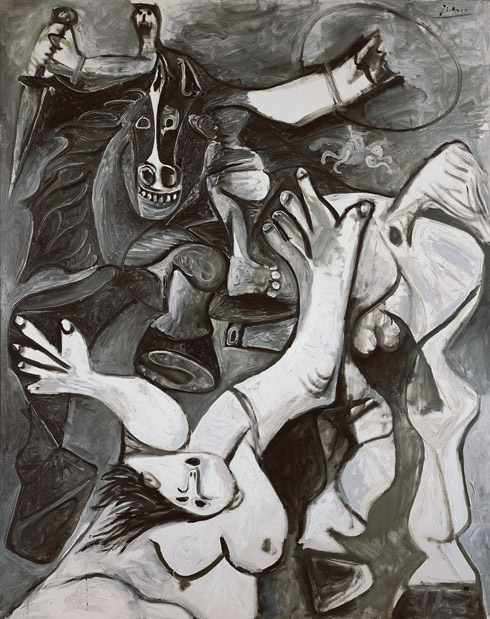



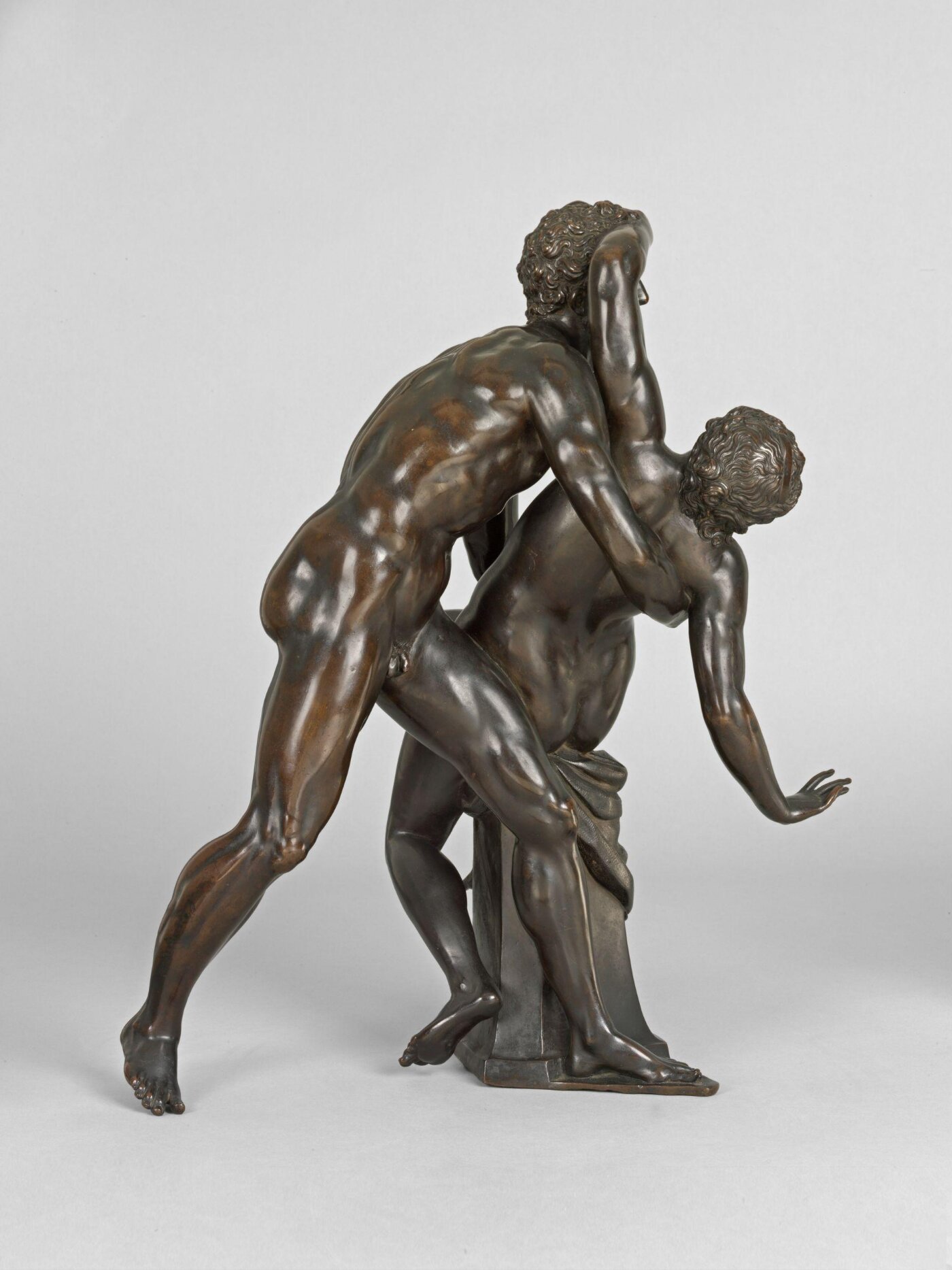
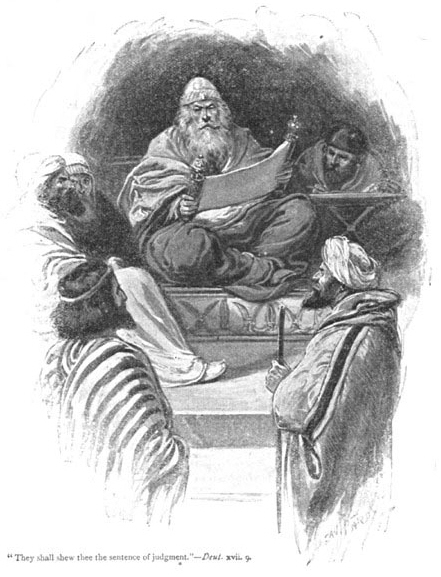
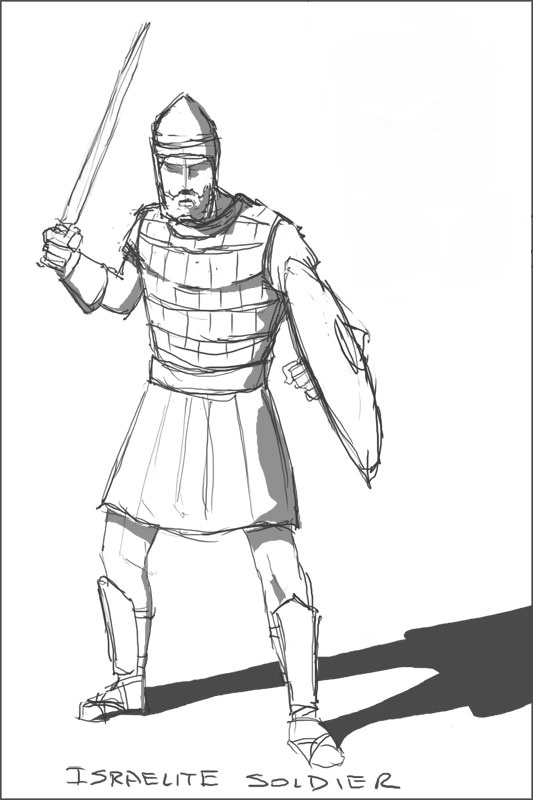

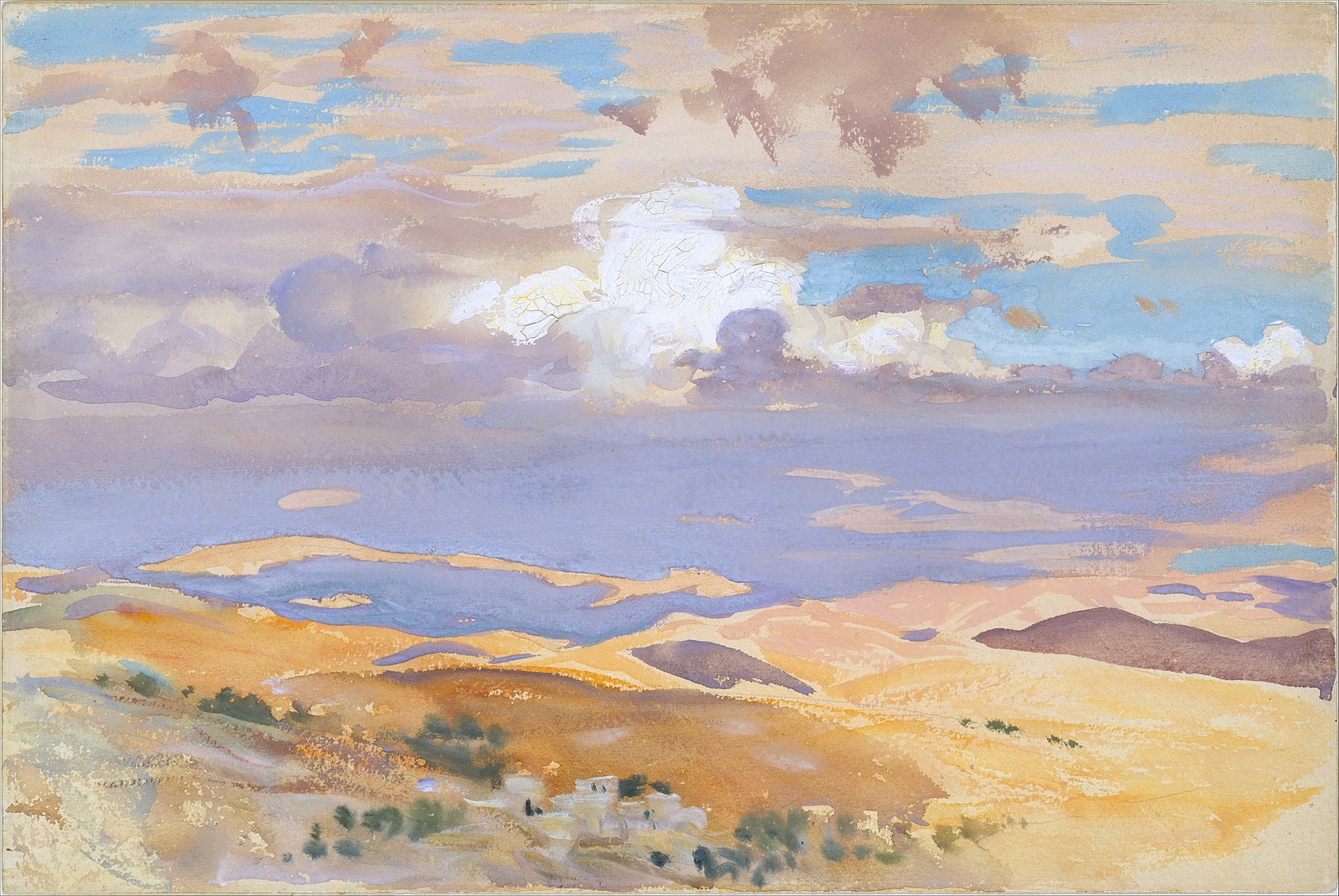

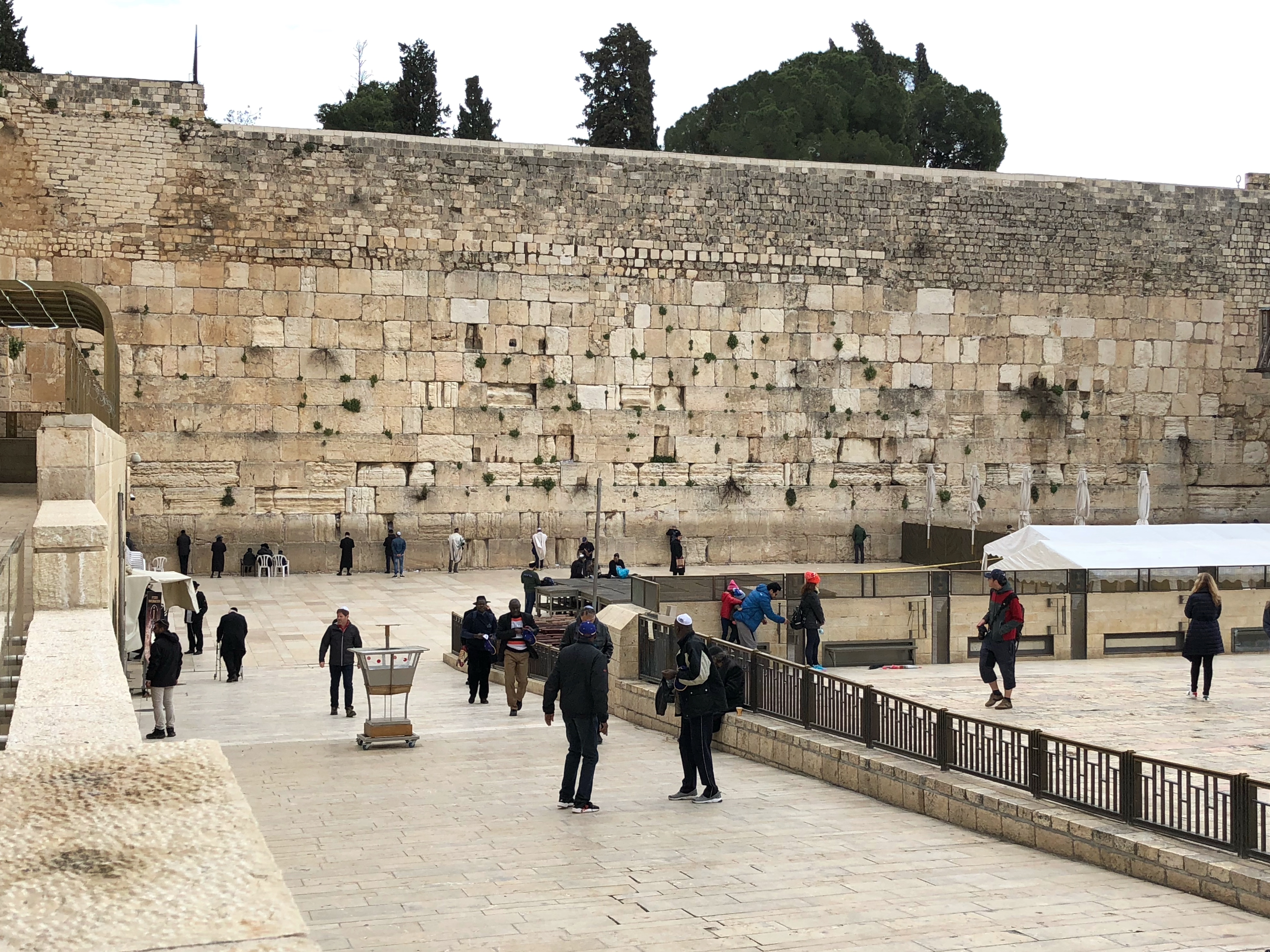



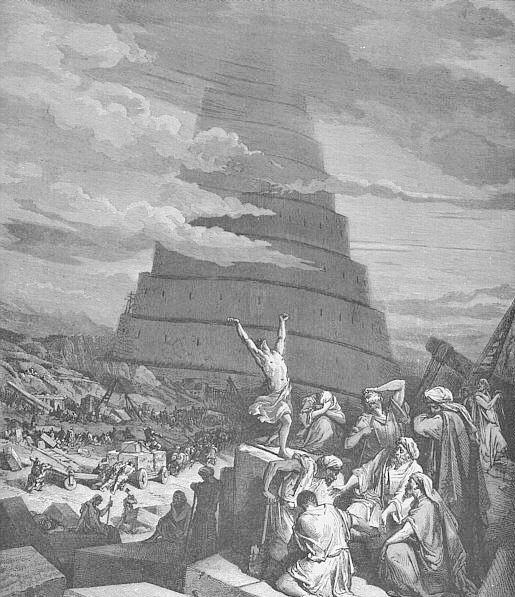





 Questioning Torah