Nevertheless, there should not be among you evyon; because God will truly bless you in the land that God, your god, is giving to you to possess as a hereditary holding—but only if you truly pay attention to the voice of God, your god, to be careful to do this entire commandment that I Myself command you today. (Deuteronomy/Devarim 15:4-5)
Beggar, by Rembrandt van Rijn
evyon(אֶבְיוֹן) = paupers, needy, destitute, those with no means to make a living.
This week’s Torah portion, Re-eih (“See!”) claims that the land of Canaan is fertile enough so that none of its residents need be paupers—as long as the Israelites share their wealth according to God’s instructions.
The portion gives directions for several ways to reduce poverty. First, Re-eih calls for landowners to tithe for six years out of a seven-year cycle. The tithe—a tenth of the landowner’s produce—is designated for several different purposes. A third of the annual tithe (or perhaps the whole tithe every three years) is given to the poor in the landowner’s town, specifically to landless resident aliens, orphans, and widows.
In the seventh year of the cycle, all farmland lies fallow, and whatever food grows naturally is available to everyone. This week’s Torah portion also calls for the release of debts in the seventh year.
At the end of seven years you shall make a shmittah. And this is the matter of the shmittah: everyone who has handed out a loan shamot the loan to his fellow. He shall not press his fellow or his brother, for a shmittah has been proclaimed for the sake of God. (Deuteronomy 15:1-2)
shmittah(שְׁמִטָּה) = release; remission of debt.
shamot (שָׁמפּט) = releases.
In other words, borrowers who are simply too poor to repay their debts on time are freed from the obligation. They are no longer dunned by their creditors or burdened by guilt.
The Torah warns people to continue to make loans to the poor, even if it is getting close to the end of the seventh year. It assumes that we feel a natural sympathy for paupers, but sometimes check that feeling with second thoughts.
When there is among you an evyon from one of your brothers within one of your gates in your land that God, your god, is giving to you, you shall not harden your heart and you shall not shut your hand to your brother the evyon. Rather, you shall truly open your hand to him, and you shall truly lend him what he lacks, so that it shall not be lacking for him. (Deuteronomy 15:7-8)
At this point, the Torah has progressed from the artificial mechanisms of tithing and the release of debt every seven years to simply giving the poor in your town what they need whenever they need it.
A token donation is not enough. “…you shall truly lend him what he lacks” had been interpreted to mean not only food, but also anything from a kind word to the tools, training, and starter loan to take up a trade.
The passage in this week’s Torah portion concludes:
Because the evyon will not cease from the midst of the land, therefore I myself command you, saying: Truly open your hand to your brother, to your oni, and to your evyon in your land! (Deuteronomy 15:11)
oni(עָנִי) = the poor, the wretched, the unfortunate, the humble.
This week’s Torah portion first says “there should not be among you evyon”, then later acknowledges that since not everyone is generous enough, “the evyon will not cease from the midst of the land”.
Today we still have evyon, paupers who are unable to earn a living and depend entirely on charity, and oni, people who have become poor because of bad luck. If the products of our planet were distributed evenly, everyone would have enough food and shelter. But the governments of the world still are not generous enough. And individuals with means still are not generous enough.
How often have you had an impulse to give to an unfortunate person, and then hardened your heart by deciding that this person did not deserve your money?
How often have you passed a beggar without opening your hand—either because you were saving those dollars for a latte, or because the beggar looked, smelled, or behaved like someone who might be unpleasant or dangerous?
I am cultivating a practice of opening my hand and giving a dollar to every beggar I pass, regardless of the judgments that pop up in my mind. I also donate a dollar to the county food share program every time I buy groceries at the store that handles donations. I pay dues to my congregation, which provides the space for many people (including me) to serve as the equivalent of Levites. I pay taxes, of which a small percentage goes to programs that help the poor.
Yet I pass up countless other opportunities to donate to charities and good causes. (Even as I was writing this, a canvasser knocked on my door and I did not answer.) I do not have the time, I tell myself, I do not have the money. And how can I tell whether responding to this particular appeal would do any real good?
This week’s Torah portion says to make loans and gifts to the poor within your gates, the ones whom you encounter in your own life. That sounds reasonable, since you are more likely to know “what they truly lack”.
Yet I wonder what I should give to the people I know who are too handicapped to earn a living and who are not supported by their families. I do not have enough emotional strength to act as their friend or substitute family member, which is “what they truly lack”. So I settle for giving a token—a cookie, a ride, a smile—until the person becomes too difficult and demanding. Then I harden my heart and close my hand.
I would rather pay extra taxes for social programs.
A passage in the book of Proverbs that describes the virtues the eshet chayil or “woman of valor” includes this couplet:
Her palm spreads open to the poor
And her hands stretch out to the evyon. (Proverbs 31:20)
I am not a “woman of valor”. I am not strong enough to open my hands to all the evyon within my gates. I do not understand how to be an eshet chayil.
If you have suggestions, please reply to this post!
“Man does not live by bread alone” is an old-fashioned aphorism in English, indicating that human beings also have essential spiritual needs. Christian English-speakers trace it to Matthew 4:4, where Jesus quotes it to Satan. But the original source is in this week’s Torah portion, Eikev (“on the heels of”), when Moses warns the Israelites that when they take over Canaan, they must remember what they learned in the wilderness.
And you shall remember the entire way that God, your god, made you walk these 40 years in the wilderness in order to anotekha, to test you, to know what was in your heart: Would you observe [God’s] commandments or not? So [God] anotekha and let you go hungry and fed you the manna, which you did not know and your fathers did not know, in order to let you know—that not by bread alone does the human live; rather, the human lives on everything that comes out of the mouth of God. (Deuteronomy/Devarim 8:2-3)
anotekha (עַנֹּתְךָ) = humble(d) you, humiliate(d) you, impoverish you, deprive(d) you of all independence.
This is a new reason for keeping the Israelites in the wilderness for 40 years. In the book of Numbers/Bemidbar, the wilderness time was prolonged from two years to forty when the people first reached the southern border of Canaan and refused to cross it. (See my post on the story of the scouts: Shelach-Lekha: Mutual Distrust.)
God decided then that the people would spend an additional 38 extra years in the wilderness, until the generation that refused to cross into the “promised land” had died out. Now, in Deuteronomy, Moses reveals another reason for the extra 38 years: so that the new generation would be tested.
Testing: Shabbat
Back in the book of Exodus/Shemot, the people journeyed for a month and a half after leaving Egypt without running out of food. Then halfway between the oasis of Eylim and Mount Sinai they complained of a famine.
This seems like an odd complaint for people who are traveling with large herds of milk-producing animals. Did their cows, ewes, and nannies all dry up at once? Was there an unrecorded rule that they could not slaughter any of their livestock for food until after God gave them the rules for animal offerings? God must have done something to the Israelites’ walking food supply, since this week’s Torah portion says “God let you go hungry and fed you the manna”.
Manna, Maciejowski Bible, circa 1250 C.E.
In Exodus,
God said to Moses: Here I am, raining down for you bread from the heavens. And the people shall go out and gather up the day’s worth on its day, so that I can test them: Will they go by my teaching or not? (Exodus/Shemot 16:4)
Manna began appearing on the ground every sunrise, looking like tiny white seeds. Unlike any other food the Israelites had known, manna melted in the sun, and rotted when people tried to keep it overnight in their tents. They could cook and eat only one day’s portion for each person—except on the sixth day of the week. On that day only, they were able to cook or bake a double portion of manna, and follow God’s commandment to rest on the seventh day, Shabbat.
The first phase of the test was whether people would go out to gather manna on Shabbat. Some people did, hoping to hoard their extra one-day portion of cooked or baked manna. But the ground was bare on Shabbat, and they had to eat the manna they had saved. They could never get ahead.
Testing: Dependence
The manna continued the rest of the time the Israelites lived in the wilderness, but the test changed. If the first phase was to train people to observe Shabbat, the second phase focused on the people’s dependence on a food that they were powerless over.
In this week’s Torah portion, Moses says twice that God anotekha: humbled you or humiliated you. Moses is addressing the adult children of slaves, who were never as independent as the free and wealthy. But at least the slaves had procured their own food. Now all the adults were as dependent on manna as an infant is on its mother’s milk.
From one point of view (particularly among men used to ruling their own households) this was a form of humiliation. From another point of view, it was a reminder of humankind’s dependence on God’s gifts. The manna tested which point of view each person would take—so they would know what was in their heart.
God humbled—or humiliated—the Israelites by making them dependent on manna, Moses says, …in order to let you know that not by bread alone does ha-adam live; rather, on everything that comes out of the mouth of God ha-adam lives. (Deuteronomy 8:3)
In context, this statement means:
1) Humans cannot live on what we make for ourselves (such as bread); we can live only because of everything God gives us (which may include the grains, rains, and brains required to make bread—or may include some other food).
2) Humans depend on God not only for food, but also for everything else God calls into being to sustain us. In the book of Genesis, this “everything” includes companionship (It is not good for the human to be alone (Genesis 2:18), language (and whatever the human called each living creature, that was its name (Genesis 2:19), and the ability to learn from tests.
For 40 years in the wilderness, God trained the Israelites to accept their utter dependence on God for everything in life. At the same time, God insisted that the Israelites follow all the rules Moses put into words, and punished the most egregious violations with death.
This training seems designed to make people passive and submissive. Yet when the Israelites finally did cross the Jordan and conquer Canaan, they would need to act independently, first in war and then in agriculture and commerce. Why wasn’t God training these children of slaves to take initiative and manage their own physical needs?
I would answer that all the rebellions against God and Moses indicate that the people were neither passive nor submissive by nature. Left to their own devices, they would act, not just wait for something to happen. In fact, when they were left to their own devices while Moses spent 40 days on Mount Sinai, they took the initiative and made the Golden Calf.
The lessons the Israelites really needed, both in the wilderness and in Canaan, were that no matter what they did on their own, their very lives depended on God (or nature); and that the only route to a good life was obeying God’s rules. They had to be trained to accept whatever God gave them, so that they could love and fear (or be in awe of) their god.
We face the same test today. As adults, most of us want to take care of ourselves and avoid being dependent on other people. We may not have spent 40 years in a wilderness, but when we were children, our dependence frustrated us, and we learned that humans we depended on could suddenly be absent when we needed them.
Yet we also know that we cannot do everything on our own; we are not gods. We will always be at least partly dependent on other people. We will always be dependent on “nature”, which we can alter somewhat for better or worse, but cannot create in the first place. And even though we can often improve our lives by taking the right actions, there will always be surprises: both bad and good things will happen that we have no control over. In a sense, we are always at the mercy of God.
Not by bread alone does a human live; rather, a human lives on everything that comes from God.
The choice we can make in our hearts is whether to feel humble or humiliated; to feel grateful for what we are given, or resentful over what we are deprived of.
After I converted to Judaism 29 years ago, I discovered that I could use prayer in order to cultivate humbleness and gratitude. Life is better that way! May each one of us find a practice that will help us to accept every test and every portion of manna that comes our way.
The most important sentence in Jewish liturgy appears in this week’s Torah portion, Va-etchannan (“and I pleaded”). Jews recite it daily in both morning and evening prayers. We are called to say this sentence before we die, so some of us say it at any time of danger, or at bedtime (just in case). Personally, I feel better if I recite this sentence when I am sitting in an airplane that is just taking off.
Jacob Wrestling with an Angel by Gustave Dore, detail
Yisrael (יִשְׂרָאֵל) = Israel, which was the additional name given to Jacob after he wrestles with the unnamed being at the ford, and also the name of Jacob’s descendants (the twelve tribes) and those adopted into the people Israel. Many personal names in the Bible begin or end in el(אֵל) = god. An “is” or “of” is implied between the el and the other part of the name. Yisra (יִשְׂרָא) = he struggles with, he persists with (from the root verb sarah = contended, strove); or upright (from the root verb yashar = was upright, level, straight ahead).
(See below for translations of Adonai, eloheynu, and echad.)
The first two words, Shema Yisrael, tell a certain group of people to pay attention to what comes next. In Deuteronomy/Devarim, Moses uses the phrase to introduce a fundamental message about God, but it serves the same function as “Hear ye, citizens of Fredonia”, or “Attention, all passengers for Flight 613”.
The only question is which people are being addressed. Within the book of Deuteronomy, Moses is addressing all the descendants of Jacob, i.e. Israel (including descendants of the non-Israelites who also followed Moses out of Egypt and became part of the people) who arrived at the Jordan River.
By the first century C.E., the Shema was a central part of morning and evening prayers. But only in the past half-century have some Jews have expanded the idea of Yisrael to include everyone who persists in struggling with God.
That means everyone who questions and wrestles with the concept of God, and everyone who strives to follow divine direction, should pay attention to the message: Adonai eloheynu Adonai echad.
Adonai = my lord, my master. The Hebrew for Adonai does not appear in the actual Hebrew text of the Shema. Instead, the Torah gives the four-letter personal name of God. In Jewish tradition over the last two millennia, the four-letter name must be treated with the utmost respect; it is never pronounced, and it is spelled out only in prayer-books and the Bible. (It may be a unique four-letter form of the Hebrew verb for “to be” or “to happen”.) When Jewish liturgy is spoken or the Bible is read out loud, a common substitute for the four-letter name is Adonai.
eloheynu (אֱלֹהֵינוּ) = our elohim. Elohim (אֱלֹהִים) = god; gods. (The Hebrew words eloheynu and elohim are in the plural form, but are usually used to refer to the single god of Israel. Three times in the Bible the Philistines say eloheynu in reference to their own god, Dagon.)
echad (אֶחָד) = one; first; single, only, unique; once; the same kind of; united, indivisible.
What does the imperative message Adonai eloheynu Adonai echad mean?
Most Biblical scholars date the book of Deuteronomy to the 7th century B.C.E., and identify it with the holy book “discovered’ in the temple during the 641-609 B.C.E. reign of King Josiah of Judah, and used to lend authority to Josiah’s agenda: expanding Judah to include part of the former northern kingdom of Israel, and eliminating the worship of any other gods in his kingdom. Although Deuteronomy recapitulates much of the history and law in the books of Exodus through Numbers, there are a number of differences. Most (though not all) of the differences support the theory that Deuteronomy was written just before or during King Josiah’s reign.
An English translation for the Shema in the context of King Josiah’s reforms could be: Listen up, residents of Judah and survivors of the kingdom of Israel! Adonai is our god, only Adonai!
The idea that the primary message of the Shema is to exclude the worship of other gods continues in some English translations. Many modern works use the “JPS” translation:
Hear, O Israel! The Lord is our God, the Lord alone. (Jewish Publication Society, 1962)
But this is not the only possible meaning of Adonai echad. Even a book written in the 7th century B.C.E. might also declare that God is one-of-a-kind, the only god in the universe.
The book of Amos, written in the 8th century B.C.E., not only credits Adonai with the creation of the universe, but also quotes God as saying:
Like the children of Kushi-im, aren’t you mine, children of Israel? —declares Adonai.
Didn’t I bring up Israel from the land of Egypt,
And the Philistines from Kaftor, and Aram from Kyr? (Amos 9:7)
In other words, although the Kushites, Philistines, and Aramites believe they have their own separate gods, there is actually only one God for them all.
detail by John Constable
Many modern Jewish and Christian translations of the Shema into English treat Adonaiechad as a statement of monotheism. For example:
Listen, Israel, God is our Lord, God is One. (Rabbi Aryeh Kaplan, 1981)
Listen, Israel! The Lord our God is the only true God! (American Bible Society, 1995)
Yet there is a third way to interpret Adonai echad. The word echad is also used in Biblical Hebrew to mean united or indivisible.
A key concept in Kabbalah, presented in the earliest known book on the subject, Sefer Yetzirah (written sometime between 200 B.C.E. and 200 C.E.) is that the universe was (and continues to be) created through ten sefirot (divine powers or qualities). Later Kabbalist writings changed the sefirot to forces such as compassion or discipline. The various traditions of Kabbalah all emphasize that God is one and indivisible. The sefirot only appear to be separate powers; really they are aspects of the One.
This idea of the unity of everything is part of an unusual translation of the Shema by Rabbi Zalman Schachter-Shalomi (1924-2014):
Listen you Yisrael person, Yah who is, is our God, Yah who is, is One, Unique, All there is. (quoted in Rabbi David Zaslow, Ivdu Et Hashem B’Simcha, 1997)
When I pray, in Hebrew or English, I want to know what the words mean—not just what the traditional meanings are, but what the words can say to my own heart. Sometimes the personal meaning of a prayer changes over the years for me, as I change.
Here is my own interpretation of the Shema, this summer of 2015:
Pay attention, you who persist in struggling with the idea of God:Being is our god, and Being is all there is.
“Enough already!” The God-character makes a remark like that three times in the first two Torah portions of Moses’ book-length speech, the book of Deuteronomy/Devarim (“Words”).
Cloud over the portable sanctuary
When the Israelites finish all their preparations and leave Mount Sinai in the book of Numbers/Bemidbar, God does not need to say anything; the Israelites simply follow the divine cloud:
And it was in the second year, in the second month, on the 20th of the month, the cloud was lifted from over the sanctuary of the testimony, and the Children of Israel pulled out from the wilderness of Sinai for their journey. And the cloud rested in the wilderness of Paran. (Numbers 10:11-12)
But here is how Moses describes the departure in the first Torah portion of Deuteronomy:
God, our god, spoke to us at Choreiv [Sinai], saying: “Rav-lakhem sitting still at this mountain! Face about, pull out, and come to the highlands of the Emori and…the land of the Canaanite…” (Deuteronomy/Devarim 1:6-7)
rav (רַב) = abundant, plenty, huge, many, much, too much.
lakhem (לָכֶם) = for you, to you, belonging to you. (“You” is plural in lakhem. The singular is lakh.)
Rav-lakhem(רַב־לָכֶם) = Too much for you! You have too much! (Or in Yiddish-inflected English, “Enough already!”)
Not only is God giving verbal orders, instead of merely using the pre-arranged signal of the lifting cloud; God also sounds impatient and a little crabby. God protests that the people have spent “too much” time “sitting still at this mountain”.
I can see why the Israelites might want to linger at the foot of Mount Sinai. After the tragic episode of the Golden Calf, Moses talks God into giving the people another chance, and they spend a year at Sinai living on manna and fabricating all the components of the portable sanctuary for God. The food is sufficient, the work is pleasant, and no one bothers them, neither human nor divine. Naturally they are reluctant to change their comfortable way of life.
And naturally God, whose grand plan requires the conquest of Canaan, gets impatient with them and says, “Rav lakhem! Too long for you!”
The people march north, but fear paralyzes them at the border of Canaan and they refuse to cross. (See my post Shelach-Lekha: Sticking Point.) God makes them wait in the wilderness for 38 more years, until most of the old generation has died, and then lets them try again by a different route.
God snaps Rav lakhem! a second time in the portion Devarim when the Israelites set out from Kadeish-Barnea to make their second attempt to enter the “promised land”.
Detour of Israelites
In both Numbers and Deuteronomy, the second time that the Israelites head toward Canaan they go east first, hoping to pass through the kingdom of Edom and then continue north along the shore of the Dead Sea opposite Canaan, finally crossing over at the Jordan River. But the king of Edom refused to let the people go through his country.
According to Numbers, Moses simply leads the Israelites south, so they can circle around Edom. Two things happen on the way: At Mount Hor, Aaron dies and the people pause to mourn him for the traditional 30 days; and at a sea of reeds (different from the one between Egypt and Mount Sinai) they complain about the manna, so God lets poisonous snakes bite them. (See my post Chukkat: Facing the Snake). As soon as they reach the wilderness east of Edom, they head north.
The story sounds different when Moses tells it in Deuteronomy. In this version, the people head off toward the sea of reeds south of Edom, but then they wander around the skirts of Mount Seir in Edom until God scolds them.
And we turned and we pulled out toward the wilderness on the way to the sea of reeds, as God had spoken to me, and we circled around the mountain of Seir many days. Then God said to me, saying: “Rav-lakhem, circling around this mountain! Face about, northward!” (Deuteronomy 2:1-3)
Once again God gets impatient with the Israelites for delaying. In the book of Numbers, there is nothing safe or pleasant about the snake-infested wilderness around hostile kingdom of Edom. The people are not lingering because they are comfortable where they are. Of course, they also complain. And if they linger, the only possible reason is to recover from snake-bite.
Perhaps this time, God’s Rav-lakhem means “Too much complaining from you, as you circle around this mountain!”
In next week’s Torah portion, Va-Etchannan (“And I pleaded”), God uses the phrase with a singular “you” to snap at Moses.
But God was cross with me because of you, and would not listen to me. And God said to me: “Rav-lakh! Do not speak to Me again about this matter!” (Deuteronomy 3:26)
In the book of Numbers, God declares the Moses will not enter Canaan because he says the wrong thing to the people at the Waters of Merivah. Moses does not protest God’s ruling.
But in Deuteronomy, Moses blames the people for God’s anger at him, and says he begged God to let him cross over the Jordan after all. God said Rav-lakh! because Moses tried to reopen a subject that should have been settled.
Both God and Moses seem irascible in the passage from Deuteronomy. I think God’s exclamation could be translated: “You’ve said too much already!”
Why is God more impatient in Deuteronomy than in Numbers?
Traditional commentary generally ignores the differences in language between Deuteronomy and Numbers. It addresses the small but telling differences in content by explaining that in Deuteronomy, Moses selects the key events the new generation needs to know before they enter Canaan, and relates them in the way the people need to hear them.
Modern scholars point out a number of differences between the language of the two books, and conclude that they were written in different centuries. (For example, Richard Elliott Friedman dates much of Numbers to the P source in the 6th century B.C.E., after the fall of the first temple. He dates Deuteronomy to the reign of King Josiah a century earlier, circa 640-610. According to this dating, God snaps Rav lakhem! and Rav lakh! in the earlier account. In the later account, God is silent.)
*
Sometimes we do need to imagine a God who reacts like an exasperated human being, a God like the one in the first two portions of Deuteronomy. When we feel safe and comfortable where we are, the way Moses portrays the Israelites at Mount Sinai, we are likely to ignore a signal such as God’s rising cloud. We need to hear a challenging voice saying Rav lakhem! to get us unstuck, so we will take on the next challenge.
When we get so caught up in our complaints that we forget the goal we are heading toward, like the Israelites in snake country south of Edom, we need to hear an inner voice saying Rav lakhem! to jolt our awareness back to the hidden treasure we need to find.
And when we keep trying to change what cannot be changed, the way Moses begs God to reconsider and let him go to Canaan, we need to hear an inner voice saying Rav lakh! to shut us up, so we can concentrate on making the most of the life that we do have.
The impatient God in the first two Torah portions of Deuteronomy can still serve a purpose!
Moabites and Midianites are two distinct peoples in most of the Bible. Yet they appear to be interchangeable in a story about sex and revenge that runs through three Torah portions in the book of Numbers/Bemidbar: the portions Balak (last week), Pinchas (this week), and Mattot (next week).
The conflation between Moabites and Midianites begins after the Israelites have marched through the wilderness east of Moab and then conquered two Amorite kingdoms to its north. The Israelites camp on the east bank of the Jordan River, in their first newly captured territory–which is now described as a former part of Moab.
And the Israelites journeyed [back], then encamped on the plains of Moab, across the Jordan from Jericho. (Numbers/Bemidbar 22:1)
Balak, the king of Moab, is afraid they will go south and attack his country next.
And [the king of] Mo-av said to the elders of Midyan: Now the congregation will nibble away all our surroundings, as an ox nibbles away the grass of the field. (Numbers22:4)
1. Midian in Genesis, Exodus, and 1 Kings. 2. Midian in Numbers and Judges.
Mo-av(מוֹאָב), Moab in English = a kingdom east of the Dead Sea; the people of this kingdom. (The actual etymology is unknown. Genesis/Bereishit 19:36-37 claims the Moabites are descended from incest between Lot and one of his daughters, and implies that the daughter named her son Mo-av to mean “from father”. The actual Hebrew for “from father” would be mei-av מֵאָב.) The Moabite language was a Hebrew dialect, and appears on a circa 840 B.C.E. stele about a war between Israel and a Moabite king named Mesha.
Midyan (מִדְיָן),Midian in English = a territory occupied by the people of Midian, whose geographic location differs in various parts of the Bible. (Possibly from the Hebrew dayan (דַּיָּן) = judge. Midyan might mean “from a judge”, “from judgement”, or “from a legal case”.) References to a people called Madyan or Madiam appear in later Greek and Arabic writings, and Ptolemy wrote of a region of Arabia called Modiana (see #1 on map), but archeology has not yet proven the existence of a country of Midian. The Midianites may have been a nomadic people without a fixed territory.
When King Balak sends a delegation to the prophet Bilam to ask him to curse the Israelites, it consists of “the elders of Moab and the elders of Midian“. (Numbers 22:7).
When Bilam arrives at the mountaintop overlooking the Israelite camp, King Balak is there with “all the nobles of Moab”(Numbers 23:6, 23:17) but apparently no Midianites.
After Bilam fails to curse the Israelites and goes home, a brief story in the portion Balak describes how some young women invite the Israelites to participate in ritual feasts to their gods, and many Israelites end up bowing down to the local god, Baal Peor. (See my post Balak: False Friends?) At first, these women are identified as Moabites.
And Israel settled among the acacias, and the people began to be unfaithful with the daughters of Moab. (Numbers 25:1)
Pinchas Impales Zimri and Kozbi, by J.C. Weigel
Next, an Israelite man brings a foreign woman into the Tent of Meeting itself for sex. Aaron’s grandson Pinchas saves the day by quickly spearing the two of them. The woman is identified as a Midianite, and in the next Torah portion, Pinchas, we find out she is a woman of rank.
And the name of the Midianite woman who was struck down was Kozbi, daughter of Tzur, the head of the people of a paternal household from Midian. And God spoke to Moses, saying: “Be hostile toward the Midianites, and strike them down. Because they were hostile to you through their deceit, when they deceived you about the matter of Peor…” (Numbers 25:15-18)
Suddenly the Moabite women who invited the Israelites to feasts for their gods are being called Midianites!
In the next Torah portion, Matot (“Tribes”), God reminds Moses to attack the Midianites, but does not mention the Moabites.
And they arrayed against Midian, as God had commanded Moses, and they killed every male. And the kings of Midian they killed …five kings of Midian, and Bilam son of Beor, they killed by the sword. But the children of Israel took captive the women of Midian and their little ones… (Numbers 31:7-9)
And Moses said to them: “You let every female live! Hey, they were the ones who, by the word of Bilam, led the Israelites to apostasy against God in the matter of Peor, so there was a plague in the assembly of God. So now, kill every male among the little ones and every woman who has known a man by lying with a male, kill!” (Numbers 31:15-17)
Here Moses declares that it was Midianite women who seduced Israelites into worshiping Baal Peor. The Moabite women are no longer mentioned.
When we look at the storyline over three Torah portions, the enemies of the Israelites seem to change from a coalition of Moabite and Midianite leaders, to Moabite men, to Moabite women, to Midianite women, to Midianites in general. How can we explain the shift from Moabites to Midianites?
As usual when it comes to inconsistencies in the scripture, the commentary falls into three camps: the apologists, the scientists, and the psychologists. (A fourth camp of commentary is the mystics, who focus on individual phrases and words, and ignore inconsistencies in storylines.)
The Apologists
The apologists take the Torah as literal history, and find clever ways to explain apparent inconsistencies.
The Talmud considers Midian and Moab two separate nations that became allies against the Israelites. Thus men from both nations hire Bilam to curse the Israelites, and make their daughters seduce the Israelite men (in order to cause the God of Israel to abandon the Israelites and leave them vulnerable).
In one Talmud story, God tells Moses to spare Moab and attack only Midian because God wants to preserve the land of Moab for the birth of Ruth, the virtuous ancestor of King David. (Talmud Bavli, Bava Kama 38a-b.) Another tractate of the Talmud (Sotah 43a) says that the attack on Midian is actually vengeance for the episode in the book of Genesis when a band of Midianites buys Joseph from his brothers and sells him into slavery in Egypt.
Rashi (11th century rabbi Shlomo Yitzchaki) wrote that the king of Moab consults the Midianites because he knows Moses spent a period of his life in Midian, and he wants to learn more about the leader of the Israelites. The elders of Midian choose to not only advise the king of Moab, but join forces with him in the campaign to seduce the Israelite men. According to Rashi, God orders Moses to attack only the Midianites because the Moab acted solely out of fear for their own nation, “but the Midianites became enraged over a quarrel which was not their own”.
Some 20th century commentary explains the conflation between Moabites and Midianites by concluding that Midian was not a separate kingdom, but a confederation of nomadic tribes. (This explains why the first Midianites Moses meets lived near Mount Sinai, while the Midianites in the book of Numbers live in or near Moab, several hundred miles away.) According to this theory, King Balak recruits local Midianite elders in order to involve all the people living in Moab, and the two ethnic groups work together to weaken the Israelites.
This theory explains God’s order to kill the Midianites, but does not explain why God fails to order the death of Moabites who are not Midiainites.
The Scientists
The commentators I call “the scientists” use linguistic and archeological evidence to assign various parts of the biblical text to authors from different periods and with different agendas. Inconsistencies in a Torah story occur when two different sources are awkwardly combined by a redactor.
The “documentary hypothesis” about when various pieces of the Bible were written has been revised a number of times since it first became popular in the 19th century, but linguistic scholars have agreed that passages in the first five books of the Bible come from at least four original documents (and probably additional fragments), and were stitched together and edited by at least one redactor.
Richard Elliott Friedman’s The Bible with Sources Revealed (2003) proposes that the stories in the Torah portions Balak, Pinchas, and Mattot came from three different sources which were compiled and edited by a final redactor (perhaps the priest called Ezra the Scribe).
The two references to Midian (…to the elders of Midian…in Numbers 22:4; … and the elders of Midian … in Numbers 22:7) were inserted into the Bilam story by the final redactor who compiled and edited the five books of the Torah in the 5th century B.C.E. This redactor (possibly Ezra) inserted the elders of Midian into the Bilam story in order to harmonize it with the later story of seduction by Midianite women.
According to Friedman, the bulk of the Torah portion Balak was written by the “E” source in the northern kingdom of Israel. The northern kingdom was often in conflict with Moab across the Jordan River, and at one point conquered the whole country, only to be defeated by a new king of Moab named Mesha. The “E” source considered Moab an enemy.
Friedman credits the redactor of J/E with writing the story of the Moabite women seducing the Israelites into worshiping Baal Peor. The J/E redactor combined the “E” scripture from the northern kingdom of Israel with the “J” scripture from the southern kingdom of Judah, and added a few other stories—including the story of the Moabite women, according to Friedman.
The “P” source, which Friedman assigns to the Aaronide priests at the time of King Hezekiah of Judah, wrote the next story, in which a man from the tribe of Shimon and the daughter of a Midianite king go into the Tent of Meeting to copulate, and are speared in the act by Aaron’s grandson Pinchas. God then makes a covenant with Pinchas, and tells Moses to attack the Midianites.
Friedman notes that the “P” source was responding to a conflict at the time between priests who claimed descent from Aaron, and a clan of Levites called “Mushi” who may have been descendants of the two sons of Moses and his Midianite wife, Tzipporah. The first book of Chronicles, written between 500 and 350 B.C.E., says their descendants were the Levites in charge of the treasury. This story by “P” praises Aaron’s grandson, while denigrating Midianites.
In the next Torah portion, Mattot, the “P” source records the story of the Israelite’s war on the five kings of Midian, and has Moses blame the Midianite women for causing Israelite men to worship Baal Peor.
The approach used by Friedman and other scientific commentators certainly explains why this part of the book of Numbers keeps adding or replacing Moabites with Midianites. But it does not address the psychological insights of the stories when they are read as if they are episodes in a novel or mythic epic.
The Psychologists
The commentators I call “the psychologists” read the Bible as it stands, viewing it as a collection of mythic tales rolled into one grand epic, and mine it for insights about human nature.
One of the first psychological commentaries appears in a 5th century C.E. story in the Midrash Rabbah for Numbers. Referring to the Torah story about an Israelite man bringing a Midianite princess into the Tent of Meeting for sex, the Midrash says: “He seized her by her plait and brought her to Moses. He said to him: ‘O son of Amram! Is this woman permitted or forbidden?’ He answered him: ‘She is forbidden to you.’ Said Zimri to him: ‘Yet the woman whom you married was a Midianitess!’ Thereupon Moses felt powerless and the law slipped from his mind. All Israel wailed aloud; for it says, they were weeping (25:6). What were they weeping for? Because they became powerless at that moment.”
Jethro (Yitro) and Moses, by James Tissot, ca. 1900
As a psychological commentator myself, I would point out that until the Israelites reach the Jordan north of Moab, all their contacts with Midianites have been positive. Moses himself is sheltered by a Midianite priest, Yitro, when he is fleeing a murder charge in Egypt. Yitro becomes his beloved mentor and father-in-law. The Torah does not say Moses loves his wife, Yitro’s daughter Tzipporah, but she is the mother of his two sons, and she does rescue him from death on the way back to Egypt.
When Moses is leading the Israelites from Egypt toward Mount Sinai, his Midianite family arrives at the camp, and Moses greets his father-in-law with joy and honor. Yitro calls the god of Israel the greatest of all gods, makes an animal offering to God, and gives Moses good advice about the administration of the camp. (Exodus 18:5-27)
Moses and the Israelites do not encounter Midianites again until 40 years later, about 500 miles to the northeast, and in the book of Numbers. These Midianites are hostile instead of benevolent, determined to ruin the Israelites by alienating them from their god.
Does Moses feel betrayed by the people he married into? Does he feel powerless, as the Midrash Rabbah claims, when his own affiliation with Midian seems to contradict his orders to destroy Midian?
Does it break his heart to see Midianite women, kin to his own wife, seducing Israelite men away from God? Does it break his heart to transmit God’s orders to kill all the Midianites near Moab, including the captive women?
Does he turn against his own Midianite wife and sons then?
Or does he reassure himself, and perhaps others, that the Midianite tribes in Moab are different from the Midianite tribes near Mount Sinai; that there are good Midianites and bad Midianites, and it is right to marry the good ones, and kill the bad ones?
If Moses distinguishes between good Midianite tribes and bad Midianite tribes, does it occur to him that within a tribe there might be good and bad individuals? That wholesale slaughter, although the usual procedure in war, is actually unjust because a number of innocent people die with the guilty?
Judging by Moses’ long speech to the Israelites in the book of Deuteronomy (which scientific commentators attribute to sources written after 640 B.C.E.), Moses and the Torah continue to condemn tribes and nations wholesale, without regard for individual members.
Just as Moses judges all Midianites in the five northern tribes as evil because of the actions of a few of their members, human beings throughout history have made judgements about undifferentiated groups. It is so much easier than discriminating among individuals. From Biblical times to the present day, some people have judged all Jews as bad.
Today, I catch myself ranting against Republicans, as if every person who voted Republican in the last election were responsible for the particular propaganda efforts and political actions that I deplore. A psychological look at the story of Moses and the Midianites near Moab reminds me that I need to be careful not to slander the innocent with the guilty.
Note: This blog completes the book of Numbers for this year (2015 in the modern calendar, 5775 in the Hebrew calendar). My next blog post will be in two weeks, when we open the book of Deuteronomy.
Friendliness from foreigners is a new experience for the Israelites, after 40 years in a wilderness where the only new people they encountered were armed and hostile.
Detour of Israelites
In this week’s Torah portion, Balak, the Israelites are camped on the northern border of Moab, overlooking the Jordan River. They have already skirted Moab, then conquered the Amorite country to its north. They are poised to cross the Jordan into Canaan, but Balak, the king of Moab, does not know that. He panics at the sight of thousands of Israelites on his border, and hires the Mesopotamian prophet Bilam to curse them. (See my earlier post, Balak: A Question of Anxiety.) Bilam’s blessings and curses always come true—because he can only declare the words God puts into his mouth. But God makes Bilam give only good prophecies about Israel.
Immediately after this, the Israelites prove themselves unworthy of the honor.
Israel settled among the acacias, and the people began liznot with the daughters of Moab. They invited the people lezivchey to their gods, and the people ate and bowed down to their gods. (Numbers/Bemidbar 25:1-2)
liznot (לִזְנוֹת) = to be unfaithful (to God or to a husband); to prostitute oneself.
lezivchey (לְזִבְחֵי) = to slaughter an animal on an altar, as a sacrifice to a god.
The Israelites already know what it means to slaughter animals on an altar, give selected portions to God, and eat the rest themselves; they do the same thing for their own god when they make wholeness offerings (shelamim). They are also accustomed to bowing down to their own god. Now they are performing the same kinds of worship to the gods of Moab.
What makes the dinner invitations of the young women of Moab so irresistible?
One frequently quoted midrash (commentary that adds backstories not in the bible) invents a mass seduction scene in which the Moabites set up booths in a marketplace.
“They crafted curtains for them and seated harlots in them, and in their hands were all types of precious vessels. An elderly woman would sit outside and watch over the young woman, who was inside the shop. When an Israelite would pass to purchase an object in the market, the elderly woman would say to him: ‘Young man, do you not want linen garments from Beit She’an?’ She would show him and say: ‘Go inside and you will see fine objects.’ The elderly woman would say for more, and the young woman for less. From that point on, the young woman would say: ‘You are like a member of the household, choose for yourself.’ There was a bottle of wine with her, and the wine of gentiles had not yet been prohibited. A young woman would come out adorned and perfumed and seduce him. She would say to him: ‘Why is it that we love you and you hate us? Take this vessel for yourself at no cost. Is it not that “we are all the children of one man” (Genesis 42:11), the sons of Teraḥ, father of Abraham? You do not wish to eat from our slaughter and from our cooking? We have calves and roosters; slaughter in accordance with your mitzva and eat.’ Immediately, she would give him wine to drink and Satan was inflamed within him, and he strayed after her, as it is stated: “Harlotry, wine and new wine capture the heart” (Hosea 4:11).” (Bamidbar Rabbah)1
But I think this elaborate scenario is unnecessary. All the Israelites need is the novel experience of a friendly invitation to dinner.
Unfriendly foreigners
The last friendly foreigners the Israelites encountered were Moses’ own Midianite family, who came to visit him in the wilderness at Refidim, on the way to Mount Sinai, nearly 40 years before. The next time Israelites see other people is two years later, when the twelve scouts go into Canaan and see “giants”. Their report leads the Israelites waiting at Kadesh in Paran to despair and decide to go back to Egypt—and this leads to God’s decree that the people must stay in the wilderness for a total of 40 years before they have another chance to enter Canaan.
The next morning, some of the men charge over the hill into Canaan anyway, and the Amalekites trounce them. So the Israelites spend another 38 years in the wilderness, mostly in isolation at Kadesh. Then, instead of crossing the border into Amalek country again, they circle east and north, so they can enter Canaan by crossing the Jordan River.
Here are the foreigners the Israelites encounter during that journey:
* The troops of Edom, who meet them at the border to make sure the Israelites take the long away around, without entering their land.
* The king of Arad and his troops, who attack them and take captives. (The Israelites retaliate, with God’s help, and destroy Arad’s towns.)
* The troops of Sichon, king of the Amorites, who respond to the Israelites’ request for safe passage through their country by attacking them. (The Israelites conquer and occupy Sichon’s country.)
* King Og and his troops, who meet the Israelite men in battle when the Israelites go up the road to Bashan for no obvious reason. (See my post Devarim & Shelach-Lekha: A Giant Detour.)
No wonder the Israelites associate other peoples with war, and consider outsiders bad news.
Friendly foreigners
The Israelites camp in the Amorite land they have conquered, among the acacias near the Jordan, just north of the Moab border. Then suddenly some Moabite women invite them over for a feast in honor of their gods.
Perhaps some of the men are interested in sex with exotic foreign women. And perhaps all the Israelites are touched by an unprecedented gesture of friendliness. It would be easy for them to forget that by participating in the animal sacrifice and bowing down to the Moabite god, they are being unfaithful to their own God.
Impalements: Judeans impaled by Assyrian army, Lachisch, 7th century BCE
Israel yoked itself to the ba-al of Peor, and God became hot with anger against Israel. So God said to Moses: Take all the heads of the people and impale them for God in front of the sun; then God’s blazing anger will turn back from against Israel. But Moses said to the judges of Israel: Each man, kill the men yoked to the ba-al of Peor. (Numbers 25:3-5)
ba-al (בַּעַל) = a local god; master, owner. (In Canaan, ba-al could also mean the main god of weather and war.)
How easy it is for some of the Israelites to slide from attending rituals for foreign gods to worshipping one of those gods! Moses later orders the Israelites to kill the Midianite women from Moab, saying:
Hey! They are the ones who led the Children of Israel, by the word of Bilam, to betray God over the matter of Peor! (Numbers 31:16)
Thus he shifts the blame for the Israelites’ unfaithfulness to their God onto the foreign women, and even onto Bilam (who merely goes home unpaid after blessing the Israelites in this week’s Torah portion).
Are outsiders really bad news? Should we avoid attending a different religion’s services? Should we suspect and reject friendly overtures from people who are not part of our own community?
No. I believe that once again, a Torah story can inspire us to exercise more maturity than the characters in it. Friendship between people of different religions can benefit both the individuals and the world. What we need to do is examine our own standards for behavior, and then stick to them (politely), while still meeting new people with a peaceful and friendly attitude.
The first time the Israelites in the wilderness complain about food, they are traveling toward Mount Sinai with all their cows, sheep, and goats. Neither meat nor milk is taboo, yet they say:
If only we had died by God’s hand in the land of Egypt, when we sat by the pots of meat, when we ate our fill of bread! For you have brought us to this wilderness to kill this whole congregation by famine! (Exodus/Shemot, 16:3)
God responds by providing manna every morning. But when they leave Mount Sinai about a year later, the people complain about the manna:
Who will feed usmeat? We remember the fish that we ate in Egypt for free, the cucumbers and the melons and the leeks and the onions and the garlic. But now our nefashotare drying up; there is nothing except the manna before our eyes! (Numbers 11:4-5)
nefashot (נְפָשׁוֹת) = plural of nefesh (נֶפֶשׁ) = throat, appetite; what animates the body; individual life.
The people are not hungry, merely fed up with their restricted diet. This time, God sends in a huge flock of quail that falls two cubits deep on the ground, and many people die “with the meat still between their teeth”.
This is the generation that refuses to enter Canaan, even after their scouts bring back appetizing fruits. They just want to go back to Egypt. God decrees that they must stay in the wilderness for 40 years.
Detour of Israelites
In this week’s Torah portion, Chukkat (“Decree”), most of that generation has died, and the next generation is on its way to Canaan. Yet when they have to take a long detour around the kingdom of Edom, they complain.
They pulled out from Mount Hor by way of a sea of reeds, to go around the land of Edom, and on the way the nefesh of the people became katzar. And the people spoke against God and against Moses: Why bring us up from Egypt to die in the wilderness? For there is no food and there is no water, and our nefesh is katzah with the unappetizing food. (Numbers/Bemidbar 21:4-5)
katzar (קָצַר) = was short, was shortened. When used with nefesh, katzar is an idiom meaning “impatient”.
katzah (קָזָה) = at an end, at its limit. When used with nefesh, katzah is an idiom meaning “fed up”.
They sound just like their fathers—but with an important difference.
When the earlier generation gets obsessive about food, they want to go back to Egypt. The second generation complains about the manna only when they have to take a long detour on their way to the “promised land”. They are impatient to reach Canaan and start eating normal food in the land God that wants them to occupy and farm.
Instead of killing them with quail, God responds by letting the snakes in the wilderness bite them.
Then God let loose the burning nechashim against the people. and they bit the people, and many of the people of Israel died. And the people came to Moses and they said: We are at fault, because we spoke against God and you. Pray to God, and he will remove the nachash from upon us! And Moses prayed on behalf of the people. (Numbers 21:6-7)
nechashim (נְחָשִׁים) = plural of nachash(נָחָשׁ) = snake. (This word is related to the verb nachash (נָחַשׁ) = did divination, read omens.)
The new generation of Israelites has learned that Moses is their intermediary with God. More mature than their fathers, they apologize, and ask Moses to mediate for them.
*
Why does God respond with snakes? The Torah has already associated the snake (which literally travels on its belly) with food cravings and journeys. In the story of the Garden of Eden, the snake encourages the woman to eat fruit from the Tree of Knowledge of Good and Bad. God decrees that the snake will go on its belly and eat dust. (Genesis/Bereishit 3:1-14) Jacob prophesies that the tribe of Dan will be “a snake upon the road”. (Genesis 49:17)
So snake bites are an appropriate punishment—but maybe God’s intent is not punishment. Maybe God is starting to prepare the people for life in Canaan, where they will be independent, and cannot expect any more divine miracles—such as the miraculous (if monotonous) food, and the miraculous removal of snakes from their path.
Naturally, the people ask Moses to ask God to remove the snakes again. Instead, God offers a cure for snake bite.
Nechash nichoshet
God said to Moses: Make yourself a saraf and put it on a pole, and all of the bitten will see it and live. So Moses made a nechash nichoshet and he put it on the pole, and if a nachash bit someone, then he would look at the nechash nichoshet and live. (21:8-9)
saraf (שָׂרָף) = a burning creature. (From the verb saraf (שָׂרַף) = burn in a fire. In the book of Isaiah, a saraf is a creature with six wings who lives in the visionary space around God’s throne. In the books of Numbers and Deuteronomy, a saraf seems to be a venomous snake.)
nechash nichoshet (נְחַשׁ נִחֹשֶׁת) = a snake of a copper alloy (brass or bronze); a divination of copper.
Why would looking at a copper snake on a pole cure someone of snake bite?
Many commentators argue that since Moses made the snake at God’s command, looking at it reminds snake-bite victims of God and induces a prayerful attitude.
According to 19th-century rabbi Samson Rafael Hirsch, the copper snake is a reminder of God’s power to protect people from danger even when they are unaware of it—like the Israelites before God let loose the snakes in their path.
*
I believe looking at the copper snake means looking at the cause of your problem. It is all too easy for humans to avoid thinking about painful issues. If snakes start biting you, it does not help to complain, or to ignore it, or to consider it an omen for mystical divination. The best approach is to look for reasons.
The Israelites looked and saw that they had just complained about God’s manna. They realized God had kept the snakes away for 40 years, and they knew enough to apologize and ask Moses for help. They received a cure for snake bite.
Alternatively, they might have concluded that the burning snakes lived only along the detour around Edom, and looked forward to heading north again, out of snake country and toward the land God promised them. Either way, they would remember their purpose in life, and view the snake bites as a temporary set-back.
Is something biting you? Do you feel as though you were burned? Then look at the symbolic snake and figure out the causes of your distress. Is it a problem you contributed to with an unwise choice? Is it something you had to go through at the time, but you can avoid in the future? Is it something that cannot be cured, but that you can accept with grace as you focus on your real purpose in life?
Two rebellions against authority are interwoven in this week’s Torah portion, Korach. Korach and 250 Levites demand the status and perquisites of the priests, Aaron and his sons. Meanwhile Datan and Aviram, chieftains in the tribe of Reuben, claim that Moses has mismanaged the leadership of the Israelites and they should take over.
And Moses summoned Datan and Aviram, sons of Eliav. But they said: “No, we will not come up! Is it so little that you brought us up from a land flowing with milk and honey to cause our death in the wilderness, that you also lord it over us?” (Numbers/Bemidbar 16:12-13)
They do not mention that God decreed they must spend 40 years in the wilderness because all the men of Israel except Moses, Aaron, Caleb, and Joshua refused to cross the border into Canaan. (See last week’s post, Shelach-Lekha: Mutual Distrust.)
After both sets of rebels have complained about the leadership of Aaron and Moses, God threatens to annihilate the whole community. But Moses and Aaron prostrate themselves and address God, saying:
“God, God of the breath of all flesh! Is it one man is guilty, and you are furious with the whole community?” (Numbers 16:22)
Then God decides to annihilate the three ringleaders of the rebellion, but spare everyone who stands back from them.
Then Moses got up and went to Datan and Aviram, and the elders of Israel went after him. And he spoke to the assembly, saying: “Please move away from the tents of these wicked men, and do not touch anything that is theirs, lest you are swept away with their offense!” So they went up away from around the dwelling-place of Korach, Datan, and Aviram. But Datan and Aviram went out and were standing at the entrance of their tents, and their wives and their children and their little ones. (Numbers16:25-27)
Datan and Aviram can hear Moses’ warning, so they have an opportunity to send their own families out of harm’s way, but they do not. And in the patriarchal society of the ancient Israelites, it is rare for women or children to act on their own.
Do the two rebels believe that God will not “sweep them away” for their offense? After more than two years of miracles demonstrating cooperation between God and Moses, do they think God will let them—and their families—live?
If so, Moses is determined to prove once and for all that he is only serving God, not grabbing power on his own initiative.
The Death of Korach, Datan, and Abiram, by Gustave Dore
And Moses said: Through this you will know that God sent me to do all these deeds, that they did not [come] from my own mind. If these die like every human dies, and if the fate of every human is their fate, God did not send me. But if Hashem creates a [new] creation, and the ground opens up her mouth and swallows them and all that is theirs, and they go down alive to Sheol, then you will know that these men did not respect God. (Numbers 16:28-30)
Sheol (שְׁאוֹל) = the underworld of the dead; a lightless, silent place where the spirits of the dead lie in graves—as their bodies lie in graves closer to the surface of the earth. (The etymology of Sheol is uncertain, but the word may come from the root verb sha-al, שׁאל = inquired, asked for, asked about.)
In the Hebrew Bible, all the dead “go down” to Sheol—after they die. The “new creation” Moses promises is that Datan, Aviram, and “all that is theirs” will go down to Sheol while they are still alive.
And it happened, as he finished speaking all these words: the ground that was underneath them split. And the earth opened her mouth, and she swallowed them and their households … And they went down, they and all that was theirs, alive to Sheol, and the earth covered over them, and they were carried off from the midst of the congregation. And all Israel that was around them fled at their noise, for they said: Lest the earth swallow us! (Numbers 16:31-34)
It sounds as if the families of Datan and Aviram go down screaming.
What happens to them after the earth swallows them? The Torah is silent. But the other 61 references to Sheol in the Bible make it clear that no one lives there. It is the abode of all the dead, and only the dead. When the two families in this week’s Torah portion are buried alive, they suffocate and die. Their corpses remain deep underground, and the spirits that had animated their bodies “sleep” forever in Sheol.
The Bible has no concept of an immortal soul that reunites with God after death. Later Jewish writings use the Hebrew word neshamah for such a soul, but in the Bible neshamah means only “breath” or “breathing person”. What goes to Sheol in the Bible, particularly in the Psalms, is the nefesh.
What man alive will never see death, will save his nefesh from the grip of Sheol? (Psalm 89:49)
nefesh (נֶפֶשׁ) = the “soul” that animates the body; throat, appetite, personality, individual, an individual’s life.
A nefesh in Sheol retains the identity of the formerly living person, but it does not speak, experience feelings, or do anything except perhaps sleep. Unlike the Egyptian ka, which can eat, drink, and be waited on in the tomb after death, the Israelite nefesh simply lies or sleeps in Sheol. The best a man can hope for in Biblical eschatology is to die peacefully, so he can lie among his ancestors.
Jews did not develop any theory of an afterlife until the second century B.C.E. The book of Daniel, written around 165 B.C.E., never mentions Sheol, but it does predict the bodily resurrection of the dead at the end of the world as we know it. The idea that an individual’s soul survives the death of the body and has its own experiences crept into Jewish writings in the first century C.E. In the Talmud this independent, conscious soul might be punished for misdeeds after death in a hellish place called Gehenna.
But neither hell nor conscious souls exist in the book of Numbers. Datan and Aviram know they are risking immediate death without a conscious afterlife. And they know they are risking the same oblivion for their wives, children, and infants, who will receive no heavenly reward after death.
The last thing that they experience is the terror of being swallowed by the earth. They go down alive to Sheol, and then their corpses, as well as their personalities, lie there inert, forever.
Datan and Aviram are stupid to dispute Moses’ leadership and his status as God’s favorite servant. But I think their real crime is ignoring the next generation, including their own children. By modern standards, these two men are so self-absorbed they view their wives and children as mere possessions, part of “all that is theirs”—as if these human beings who depend on them are already inanimate, silent, dead.
How many of us today are so caught up in the drama of our own lives that we ignore everyone else? That we find no comfort in the thought that our children, our students, the next generation, might lead good lives after we have died?
May we all learn to live as if there is no afterlife, as if our deeds in this world really matter, and as if the life of every other human being really matters.
Moses reaches the end of his rope in last week’s Torah portion, Beha-alotkha, and protests to God:
Child in a Tantrum, by Rembrandt van Rijn
Did I myself become pregnant with all this people, or did I myself give birth to them, that you say to me: Carry them in your bosom, like the omein carries the one who suckles, to the land that You swore to their forefathers? …I am not able to carry all this people by myself alone, because they are too heavy for me! If at must do thus to me, please kill me altogether, if I have found favor in Your eyes, and don’t let me see my badness! (Numbers/Bemidbar 11:12-15)
omein(אֹמֵן) = guardian, substitute parent. (The feminine form, omenet(אֹמֶנֶת) means a wet nurse or nanny. Moses views himself as both omein and omenet. See my post Beha-alotkha & Shemot: Moses as Wet-Nurse.)
at (אַתְּ) = you, feminine form. (The masculine form of “you” is atah, אַתָּה.)
I think Moses calls God “you” in the feminine form here in an allusion to God’s responsibility for the people. If Moses is like an omenet for the Israelites, so is God.
Another exasperated parent
In this week’s Torah portion, Shelach-Lekha (“Send for yourself”), the God character reaches the end of his (or her) rope.
God said to Moses: How long will this people spurn me, and how long lo ya-aminume, despite all the signs that I have performed in their midst? (Numbers 14:11)
lo ya-aminu = will they not trust. Lo(לֹא)= not. Ya-aminu(יַאֲמִינוּ)= they will believe, be convinced by, put trust in, have faith in, rely upon.
Ya-aminucomes from the same root verb, aman(אמן), as the nouns omein and omenet. An omein and an omenet must be reliable so that their young charges can believe and trust them.
Both Moses and God are reliable parental substitutes during the Israelites’ journey from Egypt to Mount Sinai. Whenever something bad happens—the Egyptian army catching up with them at the Reed Sea, or a shortage of water or food—the people panic, afraid that their god has abandoned them. Each time, Moses speaks to God, and God takes care of the problem.
Exasperating children
One breach of trust is recorded in the book of Exodus/Shemot: the episode of the Golden Calf. Moses and God take turns becoming enraged; Moses has 3,000 calf-worshiping men killed by the sword, and God strikes down many of the survivors. Moses has to talk God out of annihilating the Israelites altogether.
After that, the remaining Israelites spend a quiet year eating God’s manna and fabricating the tent sanctuary and its holy objects. God issues rules with dire penalties, but does not kill any more people—until the book of Numbers/Bemidbar, after they leave Mount Sinai.
In this week’s Torah portion, the people reach the wilderness of Paran on the border of Canaan. Moses sends twelve men to scout out the land, and they return 40 days later with a gigantic grape cluster as well as pomegranates and figs. Ten of the scouts report that the human inhabitants of Canaan are also gigantic, and say:
We are not able to go up against that population, because it is stronger than we! …and all the people that we saw in its midst were men of unusual size …and we were in our own eyes like grasshoppers, and so we were in their eyes. (13:31-33)
The ten pessimistic scouts assume the Israelites would have to conquer Canaan by their own efforts, without any help from God. The rest of the Israelite men—except for Moses, Aaron, and the other two scouts, Caleb and Joshua—make the same assumption. The people weep all night, complaining:
If only we had died in the land of Egypt, or in this wilderness, if only we had died! And why is God bringing us to this land to fall by the sword? And our young children will be the [enemy’s] plunder. Wouldn’t it be better for us to return to Egypt?—So they said, each man to his brother: Let us pick a leader and return to Egypt! (Numbers 14:2-4)
The next morning everyone assembles. Caleb and Joshua say:
If God is pleased with us, then [God] will bring us to this land and give it to us, a land that flows with milk and honey. However, do not rebel against God! And you, do not be afraid of the people of the land, because … God is with us! (14:8-9)
Lack of trust
The trouble with this argument is that it begins: “If God is pleased with us”. The people have every reason to think God is not pleased with them. After all, since they left Mount Sinai they have complained twice, and both times God flew into a rage and killed many of them. Now they have just spent the night complaining about God’s plan to send them into Canaan.
Perhaps because they feel doomed anyway, the people vent their frustration on Caleb and Joshua, threatening to stone them.
Then the glory of God appeared in the Tent of Meeting to all the Children of Israel. God said to Moses: How long will this people spurn Me, and how long lo ya-aminuMe, despite all the signs that I have performed in their midst? (14:10-11)
Apparently the God character in this story thinks that the Israelites doubt his ability to give them a miraculous victory in Canaan. In fact, the people never doubt God’s power, only God’s love. They doubt God’s commitment to protecting them.
And they are right. In a private conversation with Moses, God once again declares he will wipe out the Israelites and start over:
I will strike with a pestilence, and I will dispossess them, and I will make you a greater and more powerful nation than they! (Numbers 14:12)
Moses once again talks him out of it. God still kills the ten scouts who spoke against entering Canaan immediately. And God swears that only Caleb, Joshua, and the Israelites who are currently under age 20 will enter Canaan and get a share of the land. Everyone else will die in the wilderness—gradually, over the next 38 years. The people must now spend 40 years in the wilderness before they can enter Canaan. (This total includes the two years that have already passed since the people left Egypt.)
The next morning, some of the men confess they were wrong, and try to get back into God’s good graces by launching an assault across the border of Canaan. But God has made up his mind; he lets the Canaanites defeat them.
It is possible to argue that God does care about the Israelites—if you grant that:
1) God has so little respect for the people that “he” administers corporeal punishment without attempting to explain himself, and
2) God considers the Israelites a single entity, rather than a group of individuals.
This is not the kind of omein that medieval theologians pictured when they decided that God must be omniscient, omnipotent, omnipresent, omnibenevolent, and personal. Nor is it the kind of deity that anyone today would want to trust or believe in.
God said to Moses: How long will this people spurn me, and how long lo ya-aminume, despite all the signs that I have performed in their midst? (14:11)
I think the answer that this god deserves is: “As long as it takes for You to become as wise, just, and kind as the best human being.”
Needless to say, I do not believe in the existence of the anthropomorphic God in the first five books of the Torah, the one who has vast magical powers but very limited understanding.
But what was life like for the people who took this part of the Bible literally, and not only believed the God character in this story existed, but thought of him as a father-figure (omein), and strove to trust him?
What is life like for the people who still do so today?
When God spoke out of the burning bush and assigned him to lead the Israelites out of Egypt, Moses tried to get out of it. He objected:
Moses at the Burning Bush by Rembrandt van Rijn
Hey! Lo ya-aminu me, and they will not listen to my voice, for they will say: Your god, God, did not appear. (Exodus 4:1)
Lo ya-aminu = They will not believe, they will not trust. Lo (לֹא) = not. Ya-aminu (יַאֲמִינוּ) = They will believe, be convinced by, put trust in, have faith in. (From the root aman, אמן, which is also the root of amen (אָמֵן) = a solemn statement of confirmation or acceptance. See last week’s post, Naso: Ordeal of Trust for the first use of “Amen” in the Torah.)
God gave Moses three miraculous signs to convince the Israelites that he really did speak for God. But Moses still tried to turn down the job. Finally God compromised by giving Moses a partner: his older brother Aaron, who had stayed in Egypt when Moses fled to Midian many decades before.
The arrangement was that God would speak to Moses, Moses would speak to Aaron, and Aaron would deal directly with the people. Moses accepted this arrangement—maybe because he had run out of excuses.
Moses and Aaron are still together in this week’s Torah portion, Beha-alotkha (“when you bring up”), in the book of Numbers/Bemidbar. But their roles have changed. The big change came while the Israelites were camped at Mount Sinai, halfway between Egypt and the “promised land’ of Canaan. When they first arrived at Mount Sinai, the people trusted God. Sure, they had panicked a few times when there was a shortage of water or food, but each time Moses talked to God and God fixed the problem. So when they reached Mount Sinai, the people said:
Everything that God speaks we will do! And God said to Moses: Hey! I myself will come to you in the thickness of the cloud, in order that the people will listen when I speak with you, and also ya-aminu in you forever. (Exodus 19:9)
Alas, while Moses is secluded inside God’s cloud on top of Mount Sinai for 40 days, the people feel abandoned and lose faith that Moses will return to them. They ask Aaron to make a god to lead them, now that Moses has disappeared.
Gold calf, Temple of Baalat in Byblos
If Aaron were trustworthy as Moses’ co-leader, he would have reminded them that God explicitly forbade them to make gold or silver idols. He might have redirected them toward making an acceptable offering to God. Instead, Aaron made the Golden Calf, and the Israelites had a wild party.
When Moses returned and questioned him about it, Aaron lied about his own role—
So I said to them: Who has gold? They took it off themselves and they gave it to me, and I threw it away into the fire, and out came this calf (Exodus 32:24)
—and slandered the Israelites—
You yourself know the people, that they are bad. (Exodus 32:22)
The Midrash Rabbah on the Song of Songs, a collection of commentary from the 8th century C.E., said that the two breasts of the woman in the song symbolize Moses and Aaron, who were full of the milk of Torah. But Aaron fails as a wet-nurse when he fails to set appropriate limits for the “children” of Israel, and instead gives them their golden calf—and then denies his own responsibility for their downfall.
God and Moses between them kill thousands of the guilty, but they let Aaron live. Later they make him the high priest: the chief technician in charge of conducting rituals, looking impressive, handling holy objects, and diagnosing skin diseases. But Moses is left as the people’s sole boss and spiritual leader.
He does his best to keep them encouraged and in line, but in this week’s Torah portion Moses finally cracks.
The people appear to be in good shape at the beginning of the book of Numbers. They are marching from Mount Sinai to the border of Canaan in battle formation, with their portable sanctuary and all its holy objects in the middle, so they know God is with them. They have water to drink and manna to eat.
Then suddenly they are overcome with craving.
They weep and say:
Who will feed us basar? We remember the fish that we ate in Egypt for free, the cucumbers and the melons and the leeks and the onions and the garlic. But now nafsheinu are drying up; there is nothing except the manna before our eyes. (Numbers/Bemidbar 11:4-6)
basar (בָּשָׂר) = human flesh (skin and/or muscle); animal meat.
They are not actually hungry. They are disgusted with God’s manna and, according to many commentators who point out the double meaning of basar, with God’s laws restricting sex partners. Perhaps they are fed up with the whole religion. Or perhaps they have had their fill of spiritual experiences, long lists of rules, and the goal of taking over Canaan. They get cranky. They want a break for immediate physical pleasure.
Moses heard the people weeping in their family groups, each one at the entrance of its tent, and God’s anger flared very hot; and in the eyes of Moses it was bad. And Moses said to God: Why do You do bad to your servant, and why have I not found favor in your eyes, that you put the burden of all this people on me? Did I myself become pregnant with all this people, or did I myself give birth to them, that you say to me: Carry them in your bosom, like the omein carries the one who suckles, to the land that You swore to their forefathers? (Numbers 11:10-12)
omein (אֹמֵן) = guardian, substitute parent. (Literally, the reliable one, the dependable one; from the same root as ya-aminu and amen.)
Elsewhere in the Bible, an omein is a man in charge of bringing up a child; each of King Ahab’s underage children has an omein in the second book of Kings, and Mordecai is Esther’s omein in the book of Esther. The female form of this word, omenet, means wet-nurse or nanny. Moses imagines himself not just as a parent to the Israelites, but as their wet-nurse, too.
Moses continues:
I am not able to carry all this people by myself alone, because they are too heavy for me! If thus You must do to me, please kill me altogether, if I have found favor in Your eyes, and don’t let me see my badness! (Numbers 11:14-15)
Moses has a hard enough time serving as the people’s sole spiritual leader and teaching them God’s directives. Being a nanny for thousands of ex-slaves is too much for him. If only they acted like mature adults, restraining their impulses and deferring immediate pleasure for the sake of higher goals! Instead, the people are like small children—as immature as if they are still nursing. (Children in ancient Israel nursed until they were about four years old.)
Moses cannot bear to be a single mother. He tells God he would rather die than continue to be their omein.
God tries to solve the problem by giving 70 elders some of Moses’ spirit of prophecy, so they can all help him. But in the rest of the book of Numbers, the elders prove insufficient to control the childish impulses of the Israelites. Either the elders are not mentioned, or in the case of Korach’s rebellion, they are part of the group that revolts and complains to Moses.
Child in a Tantrum, by Rembrandt van Rijn
Have you ever been responsible for a small child who loses control and throws a tantrum? Rational explanations go right over their heads; all they can think about is the physical gratification they want right now, the comfort that their parent or babysitting is denying them. Back when that child was my son, I had to fight hard to stay calm until I could calm him down.
Small children are totally dependent on their caregivers. If they are to grow up into independent adults, rather than slaves, their omein or omenet must be totally dependable—emunah.
Yet all humans are imperfect, unable to rise successfully to every single challenge. I was not a perfect mother, but I did not give up, and now I am proud of my adult son.
Moses does not give up either, even though he did not give birth to the Israelites, nor ask for the job of being their nanny. When God lashes out at the people, Moses talks God out of God’s temper tantrum, and keeps everyone on the road to the future.
May everyone who is given responsibility for others find the fortitude to carry on. May we all be more like Moses than Aaron.
In next week’s Torah portion, the Israelite spies return from Canaan and ten out of twelve report that the land is full of fearsome giants. Look for my next blog post about how the people weep and refuse to go—because this time they do not ya-aminu God.





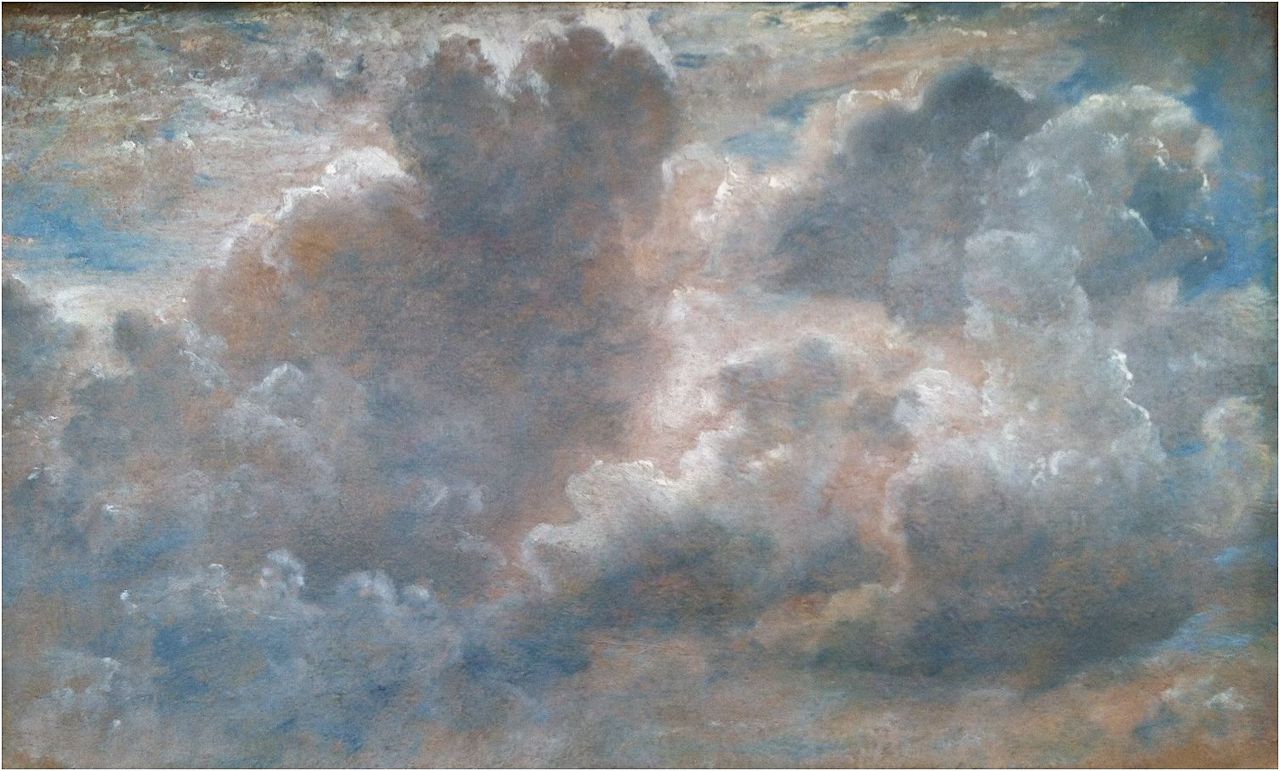



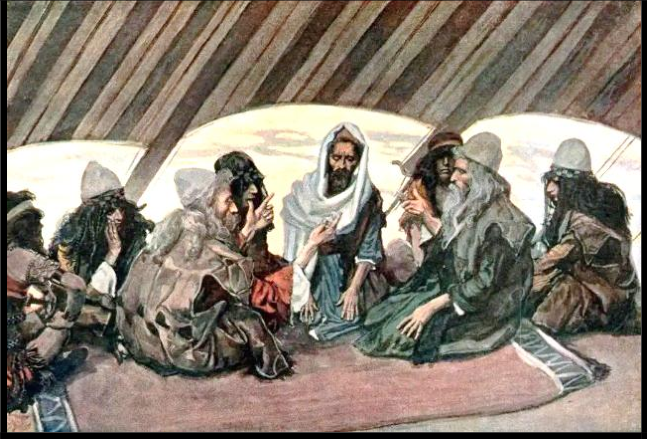

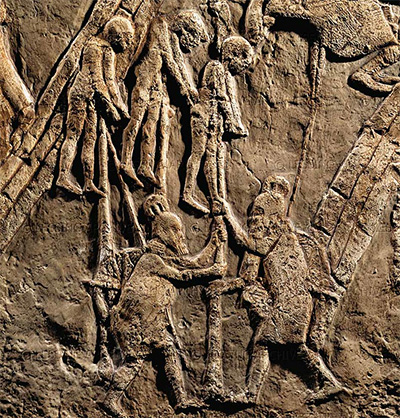

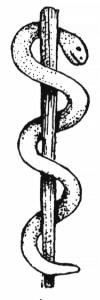
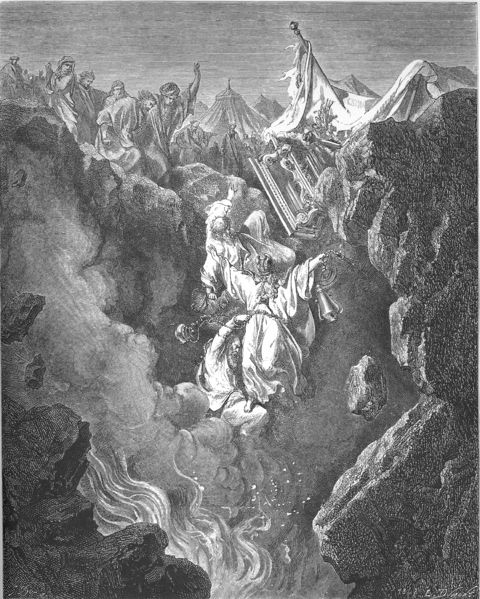


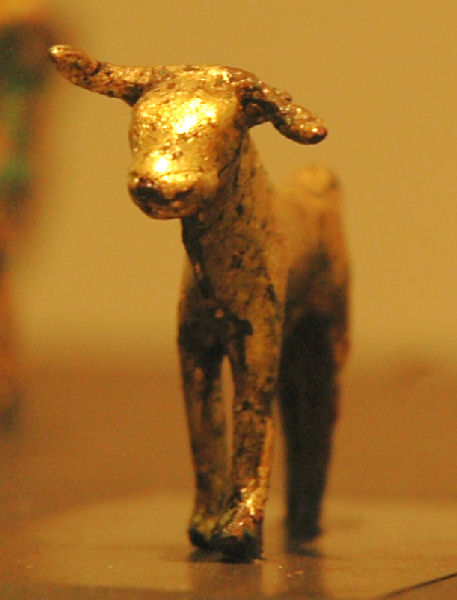
 Questioning Torah