Chukat: Death and the Red Cow, Part 1

This is the chukah of the teaching that God has commanded, saying: “Speak to the Israelites, and they shall bring to you a cow [that is] perfectly red, that has no blemish, that has not had a yoke upon her.”  (Numbers 19:2)

chukah (חֻקַּה) = decree, edict, prescription, obligation.  (Also chok, חֺק.)

This week’s Torah portion, Chukat (“chukah of”), opens by prescribing a unique ritual for those who have touched a human corpse, uncovered a grave, or been under the same roof as a corpse.  The essential ingredient for this ritual is ash saved from burning a perfect red cow that has never been yoked.  (See next week’s post, Chukat: Death and the Red Cow, Part 2, for the details about how, where, and with what the cow is slaughtered and burned.)

The red cow’s ash is mixed into water whenever it is needed to decontaminate someone who has been exposed to a dead human body.

One who touches a corpse of any human being shall be tamei for seven days.  He must decontaminate himself on the third day and the seventh day; [then] he shall be tahor.  If he does not decontaminate himself on the third day and the seventh day, he shall not become tahor. (Numbers 19:11-12)

tamei (טָמֵא) = ritually impure, in an unfit state for approaching God; not pure, contaminated.

tahor (טָהוֹר) = ritually pure, in the correct state for approaching God; pure, clean, uncontaminated.

Until tamei people have become tahor, they are prohibited from entering the courtyard around the sanctuary, and thus excluded from the religious life of the community.1

People who are tamei because they touched something else tamei, or had a genital discharge,  can become tahor by washing in water and/or waiting until evening.  A longer waiting period is required for a woman tamei because of childbirth, and an extra ritual is required for a person who has recovered from a skin disease.2  But people who are tamei because of a human corpse can only become tahor through the unique ritual described in the Torah portion Chukkat.

And they shall take for the tamei [person] some ash from the burning of the compensation-offering, and [a man] shall place it in living water in a vessel.  (Numbers 19:17)

A small amount of ash saved from the burning of the red cow is mixed into “living water”—water collected from a naturally flowing source rather than a well or cistern—and sprinkled on the tamei person. The same ritual is required whether someone stumbles upon an old unknown grave, or sits by the bedside of a dying family member.

Why is the mixture of red cow ash and living water the antidote to touching or being under the same roof as a human corpse?

An inexplicable decree

By the 12th century C.E., some rabbis were citing the ritual of the red cow as a prime example of a God-given law that humans cannot understand rationally, but must merely accept.3

“Rabbi Yosei son of Rabbi Chanina said: ‘The Holy One, blessed be He, said to Moses: To you I am revealing the reason for the cow, but for others it is a chukah…’” (Numbers Rabbah 19:6)

Allegory

Gold calf from Byblos

Other rabbis, including Rashi and Bachya ben Asher4, explained the chukah of the red cow with a parable:  Just as a mother cleans up after her son makes a mess, the red cow corrects the sin of the golden calf.  Moses burned the golden calf, ground it into powder, added water, and made the Israelites drink it5—in order to purify them after they had defiled themselves by worshiping an idol, according to Rashi.  Similarly, the red cow is burned down to ash, water is added, and Israelites are sprinkled with it—in order to be purified after they have become defiled by proximity to a human corpse.

Rashi added that the cow must be red because sin is described as red.6  Its perfection is “an allusion to the Israelites, who were perfect, but became blemished. Let this come and atone for them so that they regain their perfection.”  The absence of a yoke reminds us that the Israelites cast off the yoke of Heaven.  The priest supervising the burning of the red cow is Elazar, not Aaron, because Aaron made the golden calf.

Psychology

On a psychological level, the ritual of the red cow’s ash might carry another meaning.

What happens when you watch a human being die?  I remember my father’s death at age 87, in the nursing facility where he went after the hospital could do no more for him.  One day he no longer spoke, no longer opened his eyes—but when I held his hand and talked to him, he smiled.  The next morning he did not respond, and his breath rasped.  When I came back that afternoon, there was no breath.  His body looked the same, and when I touched his face it was still warm.  But my father was gone.

I had to go through all the business that must be done when someone dies.  I spoke calmly with my stepmother, my sister, my husband, and the employees at the nursing facility, exchanging information and making practical plans.  I returned to the motel and ate and recited prayers and slept and woke up and went through another day.  And all the time I was conscious of myself as a single point in a dim and vast universe.  I was in an altered state.

I did not feel more distant from God; if anything, I was more in awe of the divine mystery.  But I did feel distant from ordinary human company.  I finally understood the Jewish custom of “sitting shiva”, not leaving the house for seven days after a close family member dies.  I wished I could seclude myself.  When I got home and I was finally able to go to a service and say kaddish for my father, I slipped out quietly afterward because I could not bear to enter a room full of chattering friends eager to express their sympathy.  I was unfit to join my community in the courtyard.  Gradually I became tahor again, through the passage of time.

According to the Torah, we must not stay in the altered state of immediate knowledge of death.  To become whole and tahor human beings, we must integrate life and death.

In next week’s post, Chukat: Death and the Red Cow, Part 2, I will consider how other details in the red cow ritual describe how human consciousness can change as we focus on life, then on death, and finally on integrating the two states of mind.

  1. Numbers 19:13.
  2. Leviticus 12:1-5 addresses becoming tahor after childbirth. Leviticus 14:1-7 describes the ritual for a human to become tahor after recovery from the skin disease tzara-at.
  3. Also see Numbers Rabbah 19:8; Maimonides (12th-century rabbi Moshe ben Maimon), Mishneh Torah, Trespass 8; Rabbi Bachya ben Asher, Torah Commentary, first published in 1492; and Rabbi Elie Munk, The Call of the Torah: Bamidbar, translated by E.S. Maser, Mesorah Publications, 1993, p. 220-222.
  4. Rashi is the acronym for the French 11th-century rabbi Shlomoh Yitzchaki. Rabbi Bachya ben Asher wrote circa 1300 C.E. in Spain.
  5. Exodus 32:20.
  6. If your sins are like crimson, they can turn white as snow … (Isaiah 1:18)


Korach: Who Is Holy?

The Israelites set off from Mount Sinai in formation, ready to march into Canaan.1 Yet when their “promised land” is just over the next ridge, the men become so terrified by reports of giants that they refuse to cross the border.2  Fed up with Moses’ insistence on obeying God, they say: “Let’s pick a leader and go back to Egypt!”  (Numbers 14:4)

The people do not doubt that Moses is God’s chosen prophet and leader.  The problem is that they no longer believe God will help them take the land.3

The reverse is true in this week’s Torah portion, Korach.  Korach and his 250 rebels want to continue serving God, but they reject Moses and Aaron as leaders.4

They gathered against Moses and against Aaron, and they said to them: “Too much is yours!  Because all the assembly, all of them, are kedoshim, and God is in their midst.  So why do you elevate yourselves above the congregation of God?”  (Numbers 16:3)

kedoshim (קְדֺשִׁים) = holy (plural), consecrated; segregated for religious use only; personally dedicated to obeying God’s moral and religious rules.  (Singular: kadosh, קָדוֹשׁ.  From the root verb kadash, קָדַשׁ = be holy, be reserved for sacred rather than common use.)

After checking with God by falling on his face,5 Moses tells Korach and the Levites:

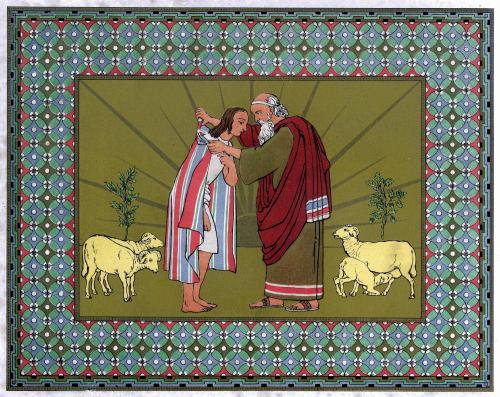
from a 1907 Bible card

“In the morning God will make known who is his and who is kadosh and who he brings close to himself; [God] will choose who he brings close to himself.  Do this:  Korach and all [your] assembly, take for yourselves fire-pans, and place embers in them and put incense on them in front of God tomorrow.  And it will be the man whom God will choose, he is the kadosh one.  You have plenty, sons of Levi!” (Numbers 16:5-7)

Is Korach’s opening speech true?  Are all the Israelites holy?  Did Moses and Aaron elevate themselves?

Are all the Israelites holy?

In the strict sense of the word kadosh, it is impossible for everyone in a community to be holy, just as it is impossible for every bowl or basin to be consecrated.  The copper basin a priest uses to catch and splash the blood from an animal sacrifice is kadosh because it is reserved for religious rituals.  A copper basin used to make dinner is not kadosh.

Similarly, not all members of a community can spend most of their time as religious functionaries.  The community cannot survive unless most of its people are shepherds, farmers, craftsmen, millers, bakers, weavers, etc.  Only a minority of the Israelites can be segregated and reserved for protecting and transporting the sanctuary (the job of the Levites) and conducting religious rituals (the job of the priests).

Yet elsewhere in the Torah, God says:

“And now, if you really listen to my voice and you keep my covenant, then you will be my treasured possession among all the peoples.  For all the earth is mine; but you, you will be to me a kingdom of priests and a kadosh nation …” (Exodus/Shemot 19:5-6)

“You shall be kedoshim because I am kadosh …”  (Leviticus/Vayikra 19:2)

While God may be distinguishing the possible holiness of the Israelites from the ordinariness of the other peoples of the world, it is more likely that God uses the word kadosh in these statements to mean “virtuous and obedient to God”.  The statement in Exodus is followed by the revelation and the “Ten Commandments”.  The statement in Leviticus is immediately followed by 17 principles for moral and religious behavior, from respecting your parents to loving your neighbor as yourself.

God did not say that the people were already holy in the sense of being good to other people and obedient to God.  God asked them to work on becoming holy in that way.

But Korach says everyone in the assembly of Israel is kadosh.  Even if he uses the word kadosh to mean “virtuous and obedient to God”, he is wrong.  Throughout the Israelites’ wandering in the wilderness they rebel and complain about God and God’s arrangements, and periodically someone violates one of God’s rules.  They are still a long way from being a holy nation.

When Korach alludes to God’s phrase “a kingdom of priests and a holy nation”, he is really more interested in the “kingdom of priests” part.  In fact, he and the 250 other rebellious Levites are more interested in priesthood for themselves than in universal priesthood.6

Moses hears this subtext.  After announcing the incense-pan test,

Korach’s Fate, by Jean Fouquet

Moses said to Korach: “Listen, please, sons of Levi.  Is it too little for you that the God of Israel separated you, out of all the assembly of Israel, to bring close to him, to serve the service of the sanctuary of God and to stand before the assembly to minister to them?  [God] brought you close, and all your brother Levites with you; now do you seek the priesthood too?”  (Numbers 16:8-10)

Korach does not reply.  But he and his 250 Levites return the next morning with their fire-pans and incense, hoping to pass the test.  They are consumed by divine fire.

Did Moses and Aaron elevate themselves?

The rebel Levites resent their positions as assistants to the priests, doing less glamorous jobs.6  Korach argues that leadership should be shared, either by all Israelites or at least by all Levites.

Yet God chose Moses to transmit God’s commands and instructions—probably because Moses did not want to elevate himself.  When God was recruiting him at the burning bush, Moses kept finding excuses to get out of the job.7

Aaron did not elevate himself, either.  God picked him to assist his brother Moses in negotiations with the pharaoh of Egypt.8  Then when God gave instructions for the sanctuary and its rituals, God told Moses to consecrate Aaron and his sons as the priests.9

Who should lead?

Who are the proper leaders, civil and religious, for a large community?  The Torah answers that the top leaders should be chosen by God, or descended from those chosen by God.

God chooses Moses, and then Joshua, to govern the Israelites.  After a period with no central authority, God tells the prophet Samuel to anoint Saul as king, and then to replace him with David.  The descendants of King David rule Judah for centuries.

God chooses Aaron and his sons as the community’s priests.  Later God declares a covenant with Pinchas, one of Aaron’s grandsons, making him and all his descendants priests.10  Yet the first book of Samuel acknowledges that sometimes the sons of a good priest are worthless.11

Today, we had better not count on God to appoint our leaders.  Those who claim divine appointment probably suffer from inflated egos and skewed thinking.  There are no definitive miracles to prove God’s choices today, and those who deduce God’s will from omens and mysterious coincidences are like idol-worshippers in the Torah.12

So when we have a chance to vote for leaders in government, or to choose our own religious leaders, who should we pick?

One answer is to find out who is kadosh in the sense of being virtuous (acting for the benefit of others) and obedient to God (to the still, small inner voice of God, not to the rules of a particular religious sect).  We can judge potential leaders by their actions, not by genealogy or by claims of greatness.

And whatever jobs we end up with, we are all called upon to become kinder, more honest, more respectful, more insightful, and more aware of the divine in everything.  In other words, more holy.


  1. Numbers 10:11-28. See my post Bemidbar & Naso: Four Directions of Service.
  2. Numbers 13:25-33. See last week’s post, Shelach-Lekha: Caleb Waiting.
  3. See my post Shelach-Lekha: Mutual Distrust.
  4. The Torah portion interweaves two stories of rebellion: one featuring Korach and 250 fellow Levites, and one featuring chieftains from the tribe of Reuven. Modern critical scholarship assigns the two stories to different sources, combined awkwardly by a later redactor.  The Levite rebellion is usually identified as a P text, while the Reuvenite rebellion is attributed to the J source.  The story of their rebellion and punishment appears in Numbers 16:12-14 and 16:25-34.  See my post Korach: Buried Alive.
  5. See my post Korach: Face Down.
  6. Korach is a Levite in the Kehat clan (Numbers 16:1), which transports the most holy objects in the sanctuary (Numbers 4:15). Moses and Aaron are also descendants of Kehat (Exodus 6:18-21), and are Korach’s first cousins.  The Torah does not specify the clans of the other 250 Levite rebels, but all the Levites are relatives of the priests, Aaron and his sons, and all of them have duties regarding the sanctuary.
  7. Exodus 3:1-4:17.
  8. Exodus 4:14-16, 4:27.
  9. Exodus 28:1, Exodus 28:36-38, Leviticus 8:1-36.
  10. Numbers 25:11-13.
  11. Numbers 16:23-35.
  12. Deuteronomy 18:9-10.

Shelach Lekha: Caleb, Waiting

You say you’re bored, hanging around in the wilderness for forty years before God finally lets us move into the promised land?

When I was your age, I was angry at the men who got us stuck here.

We’d finally marched right up to the border of Canaan.  The land of our ancestors was just over the ridge—and we’d never seen it.  Moses announced that God said:  “Send men for yourself, and let them scout out the land of Canaan, which I am giving to the Children of Israel.  Send one man from each ancestral tribe, each one a leader.” (Numbers/Bemidbar 13:2)

Canaan Dog

Then he started naming the scouts.  I couldn’t believe it when Moses said:  “For the tribe of Judah, Kaleiv son of Yefuneh.”  (Numbers 13:6)

kaleiv (כָּלֵב) = dog; a proper name (Caleb in English).

Was I really a leader?  Me, the dog?

My father named me Kaleiv.  And in case you’re thinking about a shepherd’s best friend, let me tell you, we Israelites never used dogs that way.  Or at all.  For us, a dog was a scavenger in the streets, or worse; not fit to enter a decent person’s house.1

My father used to beat me.  So did our Egyptian owner.  When I was old enough, I ran away for good.  I was a real kaleiv then, a scavenger in the streets of the city of Ramses.

I found a cellar under a half-built warehouse to sleep in.  One night a bunch of slaves met there and talked about the latest plague.  They didn’t notice me curled up in the far corner.  They thought all the plagues were caused by their own god, the God of Israel.  And they used other names for this god, names I’d heard from my father.  He used to drone on about how things used to be a few hundred years ago, back when our people were free.  Useless talk, I’d always thought.

But this time when I heard the names of our God, I came out of my dark corner.  I was desperate.  They saw me and they froze.  I told them my genealogy, so they’d know I was a Hebrew too, from the tribe of Judah.  Then I asked if I could join them.  My voice shook.  But they actually welcomed me.

One of them became my friend:  Joshua.  He told me everything he knew about God and Moses and Aaron.  We both decided to pledge our service to God and follow Moses out of Egypt.

When we found out that God was about to send the final plague, the Death of the Firstborn, Joshua brought me home.  His father painted the door frame with lamb’s blood, and the angel of death skipped past us.2  In the morning I left Egypt with them.  Along with thousands of other Hebrew slaves, and some folks who just wanted to follow us and our God.

Even with the pillar of cloud and fire to guide us,3 our first week of traveling was a mess.  We were all right when we were walking.  But once we stopped for the night—imagine thousands of ex-slaves, waiting to be told what to do.  Joshua helped; he was a good organizer.  And I did what I could to help Joshua.

Moses noticed.  He made Joshua his battle general and personal attendant.  When he picked the twelve scouts to check out Canaan, he named Joshua for the tribe of Efrayim, some popular young men for the other tribes, and for Judah—me.  Kaleiv.  The dog.

I was going on a dangerous adventure for God and Israel!  What I liked about our God was that you never knew what would happen next.

Turns out it wasn’t so dangerous.  We were on foot, with no swords, so nobody stopped us.  Once we got north of the desert, we just strolled along, munching on fruit.  Sometimes we had to scramble off the road to make way for a troop of soldiers: tall men, with swords and shiny armor around their necks.  I said we were like grasshoppers compared to them, and everybody laughed.  I wondered where the soldiers and the people living in the cities would go after we moved in.

On the way back, I picked some huge pomegranates and figs and grapes.  I figured the sight of them would perk up the folks who were always complaining about manna.

When we walked into camp, everybody cheered.  Then they all gathered in front of the Tent of Meeting to hear our report.  The first few scouts to speak didn’t sound very enthusiastic.  And Joshua was in a difficult position, being Moses’ favorite.  So I got brave and said: “We should definitely go up and take possession, because we can definitely conquer it!”  (Numbers 13:30)

But the other scouts said: “We won’t be able to go up against those people, because they’re stronger than us!”  (Numbers 3:31)

I wanted to say that it didn’t matter how strong they were, because God was on our side.  But I couldn’t get a word in.  The other scouts were babbling that all the Canaanites were giants.  Even worse, they said: “We looked like grasshoppers to ourselves, and so we must have looked to them!”  (Numbers 3:33)

My own joke, and nobody was laughing this time.  All the people started milling around, screaming and sobbing.  Even Moses couldn’t call the assembly back to order.

In the morning the men came to Moses and said: “If only we’d died in the land of Egypt!  Or if only we’d died in this wilderness!  Why is God bringing us to this land to fall by the sword?  Our wives and our children will be carried off!  Wouldn’t it be better to go back to Egypt?”  And they said to each other: “Let’s pick a leader and go back to Egypt.”  (Numbers 14:2-4)

Moses and Aaron fell on their faces, but it didn’t do any good. Then I heard a loud rip.  Joshua was tearing his robe like he was in mourning.  So I did too, even though it was my only clothing.  Somehow that made the men quiet down.  I glanced at Joshua.  He nodded at me.  So I said: “If God is pleased with us, then He will bring us into this land and give it to us—a land that is flowing with milk and honey.  Just don’t rebel against God!”  (Numbers 14:8-9)

And Joshua added: “God is with us!  Don’t be afraid of them.”  (Numbers 14:9)

They didn’t believe us.  They picked up stones to throw at us.  But then the glory of God burst out like fire all around the Tent of Meeting, and everybody ran.  Except Moses, who walked right through the fire and went inside to talk to God.

I waited with my fists clenched.  Why did people have to be such idiots?

When Moses finally came out, he said God had forgiven the people.  But we all had to stay in the wilderness for 40 years, while the men who rebelled died one by one.  No man who was over age 20 would live to enter the promised land, except Joshua and me.4

Forty years.  It took me one year just to get over being angry about it.  Why did I have to wait, just because other Israelites didn’t trust God?

Joshua told me God was being kind.  The men were so upset they actually wanted to die in the wilderness.  And instead of striking them dead then and there, God let each one live to the age of 60, mostly here in the oasis of Kadeish-Barnea, a particularly comfortable spot of wilderness.5  I didn’t think a bunch of cowards deserved such kindness.

Then it occurred to me that we were all brave when we left Egypt.  A slave at least has food, a place to sleep, a familiar routine.  But we chose to leave everything we knew, and head toward a land we couldn’t imagine, following God—even though we’d only seen God’s harsh side.  We risked everything that day, changed our whole lives.

Maybe one big change was all some folks could manage.

For me, change was easier; staying in the same place was hard.  But that was my job now, to wait here with everybody else.  So I decided to change myself.  I learned how to live quietly.  How to cheer up folks who are getting old and regretful.  How to teach you young folks.  How to stir dates into my manna porridge.  How to make friends with a woman.  I got married, and we had a daughter,6 so I have even more to appreciate.

And you know what?  Sometimes I’m bored, too.  But I’ve been counting the years.  It’s almost time to go.  And I’m not a young dog anymore.  At the end of a long walk, I’m worn out and limping.  How can I help conquer Canaan when I’m in my sixties?

Now I’m the one who’s afraid.  I wish I could just keep living in this oasis with my friends and family.  But I have to change again.  If I didn’t, I’d let down God.

I don’t know what will happen in the promised land.  But I know I want to walk in smiling.


  1. See Robert Alter, The Five Books of Moses, W.Norton & Co., New York, 2004, p. 373, footnote on Exodus 11:7.
  2. Exodus 12:21-23.
  3. Exodus 13:20-22.
  4. Numbers 14:28-35.
  5. Kadeish-Barnea was an oasis about 50 miles southwest of Beersheva, close to the southern border of Canaan. The people encamp there two years after the exodus from Egypt, and the scouts depart from there (Deuteronomy 32:32:8).  “The place becomes the Israelites’ chief base for the next thirty-eight years, until the time of conquest.” (W. Gunther Plaut, The Torah: A Modern Commentary, Union of American Hebrew Congregations, New York, 1981, p. 1109, footnote on 13:26.)  In the 7th century B.C.E. the Kingdom of Judah built a fort at the oasis, then on a major trade route.  (Israel Finkelstein and Neil Asher Silberman, The Bible Unearthed, Simon & Schuster, Inc., New York, 2001, p. 268.)
  6. Caleb marries off and gives land near Hebron to his daughter Akhsah in Joshua 15:13-19.

Beha-alotkha & Ezra: Retirement Age

This is what regards the Levites:  From the age of 25 years and above, each will enter the battalion of service for the Tent of Meeting.  And from the age of 50 years, yashuv from the battalion of service, and he shall not serve any more.  He shall attend to his brother in the Tent of Meeting, keeping his watch, but he shall not do service.  Thus you shall do for the Levites regarding their duties.  (Numbers/Bemidbar 8:24-26)

yashuv (יָשׁוּב) = he shall return, turn back, turn away, withdraw.

It sounds like a mandatory retirement age.  And retirement at 50 would be a golden dream to all the people today who must continue to toil at jobs that sap their energy instead of nourishing them.  Do the Levites really get this blessing?

*

This week’s Torah portion, Beha-alotkha, includes the consecration of the Levites as servants of God’s sanctuary, the Tent of Meeting.1  (The first priests, Aaron and his sons, are consecrated in the book of Leviticus/Vayikra.2 ) Leviticus also provides lengthy job descriptions for priests, who perform all the rituals of offerings at the altar, tend the most sacred holy objects, and judge various issues about ritual purity.

While the priests perform the highest-ranking work in the religious life of the ancient Israelites, many other duties are necessary to maintain either a traveling sanctuary (in Exodus through Joshua) or a permanent temple (from 1 Kings on).  The first two Torah portions in Numbers begin assigning these duties to the three clans of Levites.  (See last week’s post, Bemidbar & Naso: Four Directions of Service.)

For each leg of the Israelites’ journey from Mount Sinai to the Jordan River, the Tent of Meeting must be disassembled, carried to the next campsite, and reassembled.  Only the priests can prepare the holiest items for travel; they wrap the ark, the lampstand, the bread table, the incense altar, and the altar for offerings in multiple coverings before turning them over to the Levites of the Kehat clan for porterage.

Tent of Meeting and its courtyard

The other two clans of Levites, Geirshon and Merari, disassemble, carry, and reassemble the tent roof, the cloth walls of both tent and courtyard, and the frameworks they are stretched over.  All of these jobs are critical, and an error may result in death.  (See my post Shemini & 2 Samuel: Separating Holiness.)  They are also jobs that require physical strength and skill.

I believe the tasks of dismantling, carrying, and erecting the pieces of the santucary are restricted to Levites old enough to be mindful, but young enough to do the labor without faltering.  Levites must retire from these duties before old age compromises their physical abilities.  So the men who do this work must be between the ages of 25 and 50—at least in the portion Beha-alotkha.

The first two portions of the book of Numbers give a different starting age for the Levites.  God requests a census of each of the three clans of Levites,

From the age of 30 years and above, up to the age of 50 years, all those who come into the battalion to do labor in the Tent of Meeting.  (Numbers 4:3, 4:23, 4:30)

According to Rashi, the strength to carry heavy objects is not fully developed until age 30.  After age 50, a man’s strength begins to diminish again.  The Talmud3 explains the different starting ages by claiming the Levites began learning these duties at age 25, and began actually performing them at 30.  I suspect the discrepancy is due to different opinions about the age at which young men can be trusted to carry out a long process with unflagging mindfulness of the sanctity of every movement.

*

The Levites age 50 and above still perform some duties, those that all Levites do while the Israelites are encamped and the sanctuary is in place.  What are these jobs?

The only ones mentioned in the first five books of the Torah are guarding the sanctuary to prevent any unauthorized persons from entering;4 and helping to collect tithes from the rest of the community, tithes used to support the priests, the Levites, and the poor.5

Other Levitical duties are not mentioned until books of Ezra and Nehemiah, which describe the building of the second temple in Jerusalem.

Supervising the building of a temple can apparently be done well by a wider range of Levites.  The book of Ezra says that when the exiled Israelites returned to Jerusalem from Babylon, their leaders appointed the Levites from age 20 years and above to supervise the labor of [building] the House of God.  (Ezra 3:8)

Both books list the job titles, ancestry, and numbers of men who serve at the new temple.  Priests are listed first, then Levites, then singers, then gatekeepers, then temple servants.6  Although the singers and gatekeepers are listed separately from “Levites”, the traditional interpretation is that these two groups were subdivisions of Levites.

One piece of evidence is the celebration over the completion the foundation of the second temple in the book of Ezra.

(woodcut, 1860)

…and the priests were stationed in their vestments with their trumpets, and the Levites, descendants of Asaf, with cymbals to praise God … And they [the Levites] answered with haleil and with thanks to God: “because [God]is good, because [God’s] kindness is everlasting(Ezra 3:10-11).

haleil (הַלֵּל) = songs of praise.

The same words “because [God] is good, because [God’s] kindness is everlasting” appear in Psalms 106, 118 and 136.  As far as we know, all the Psalms were sung at temple rituals, accompanied by instruments—and the musicians were Levites.

For us, as for the Levites, retirement is not ceasing to work; it is withdrawing from a job that has become difficult, and turning to work that benefits body and soul.  Yes, many retirees spend more and more time taking care of their aging and cranky bodies.  But we can also take some time to help others from a place of wisdom, and to do the work that nourishes our souls.

No doubt some of the Levites serving in the second temple got bored with locking and unlocking gates, or dreaded singing under a certain conductor, and wished they could retire at 50 like the Levites in the book of Numbers.  Lighter work is not always soul-nourishing work.

Levite singers, by James Tissot

Nevertheless, the duties of the Levites can inform our own retirements, when we finally shuv—withdraw, turn away, return from—the jobs we had to do to make a living.  In the workforce (equivalent to the “battalion” in this week’s Torah portion), we have to keep disassembling and reassembling our knowledge base, our skills, our resumes, as we meet the demands imposed by our employers or the larger society with live in.

Retired, we can exercise more of our own judgement about what to let in through our personal gates, and what to keep out.  And we can lift our own spirits toward the spirit of the divine by singing to God.

  1. Numbers 8:8-22.
  2. Leviticus 8:1-9:24.
  3. Talmud Bavli, Chullin.
  4. Numbers 18:2-6.
  5. Numbers 18:20-24; Nehemiah 12:44.
  6. Ezra 2:40-41 and 2:70; Nehemiah 7:43-45, 10:29, and 11:15-22.

Bemidbar & Naso: Four Directions of Service

East, south, west, and north.  The book of Numbers/Bemidbar (“In the wilderness of”) begins by organizing the Israelites before they set off from Mount Sinai.  The first Torah portion, also called Bemidbar, lays out where each tribe camps and what order the tribes march in when they travel.

The Israelites camp in two concentric rings around the portable sanctuary called the Tent of Meeting.  The outer ring is for the twelve tribes, excluding the Levites and counting Efrayim and Menasheh (named after Joseph’s sons) as two separate tribes. This outer ring is divided into four quadrants, with three tribes camping in each cardinal direction.  (See my post Bemidbar: Tribes in Four Directions.)

Next God says that the Levite men will be responsible for the sanctuary, and camp in a protective inner circle around it.1

When the Israelites break camp and set out, the three tribes camping to the east march first, then the three tribes to the south, then the Levites in the middle (carrying the disassembled pieces of the sanctuary), followed by the three tribes to the west, and finally the three tribes to the north.2

These camping and marching orders have little to do with where the tribes eventually settle in the “promised land”.  But the allocation of the Levites in the four quadrants of the inner ring may be related to double meanings of the Hebrew words for east, south, west, and north.

East

The eastern part of the inner ring is where the leaders of the people as a whole camp with their families:  the prophet Moses and the priests Aaron, Elazar, and Itamar.

Those camping in front of the sanctuary keidmah, in front of the Tent of Meeting mizrachah, [shall be] Moses and Aaron and his sons, watching over the duties of the holy place, as a duty to the Israelites.  (Numbers/Bemidbar 3:38)

keidmah (קֵדְמָה) = to the east.  From the root verb kadam (קָדַם) = came toward, went first, confronted, preceded.  Kedem, קֶדֶם = east, front, origin, ancient time.

mizrachah (מִזרָחָה) = to the east.  Mizrach, מִזְּרָח = east, sunrise.  (From the root verb zarach (זָרַח) = shone forth.)

(Entrance curtains shown in red)

The east is where the sun rises and God’s world began; it represents birth and the past.  The garden of Eden is in kedem, the east or the ancient past.3  The entrances into the holy courtyard, into the Tent of Meeting, and into the back chamber called the Holy of Holies, are all in their eastern walls, implying that the presence of God faces east.  Moses and the priests camp just outside the courtyard gate.  They must serve as the doorway between God and the people, passing on God’s words to the people and the people’s worship to God.

When the Israelites travel, everything in the sanctuary must be packed up and carried, from the gate of the courtyard to the ark in the Holy of Holies.  The priests do the most dangerous packing.

Aaron and his sons shall come in at the breaking of camp and take down the screening curtain and cover the ark of the testimony with it.  (Numbers 4:5)

The ark is the most sacred object; God speaks from the empty space above it.  It stands in the back chamber of the tent, the Holy of Holies.  No one may enter that small room except Moses and the high priest, and the high priest may enter only on Yom Kippur.  (See my post Acharey Mot & Shemini: So He Will Not Die.)  So how can all three priests go in and cover the ark?  Perhaps when they take down the curtain separating that inner chamber from the rest of the Tent of Meeting, the Holy of Holies ceases to exist.

The priests must cover the ark with three layers of wrappings, so no one can see it.  The priests must also cover the lampstand, the gold incense altar, the bread table, and the copper altar for animal and grain offerings, as well as all their utensils.4  (See my post Bemidbar: Covering the Sacred.)

Only after the sacred objects are wrapped in multiple layers and the priests have inserted their carrying-poles can the Levites come and carry them away.

South

The other three quadrants of the inner ring of the camp are assigned to the Levites, who are divided into three clans.  Each clan is descended from one of the original Levi’s three sons: Kehat, Geirshon, and Merari.  (Moses and Aaron are also grandsons of Kehat,5 but by this time they are not counted among the Levites.)

The families of the sons of Kehat shall camp along the side of the sanctuary teymanah.  (Numbers/Bemidbar 3:29)

teymanah (תֵּימָנָה) = to the south.  (From yamin = right hand, the hand of favor and power.)

When one faces east, the south is on one’s right.  The Kehatites serve as the right hand of the priests, trusted to carry the most sacred things.

And their duties [shall be] the ark and the table and the lampstand and the altars and the holy utensils that they keep in them, and the curtain [at the tent entrance], and all their service.  (Numbers 3:31)

Aaron and his sons shall finish covering the holy objects and all the holy utensils at the breaking of camp.  And after this the sons of Kehat shall come to carry them away; and they must not touch the holy items or they will die.  These are the burdens of the sons of Kehat regarding the Tent of Meeting.  (Numbers 4:15)

And they shall not enter to see the holy as it is swallowed up [by the coverings], or they will die.  (Numbers 4:20)

The items kept inside the Tent of Meeting are too dangerous for the Kehatites to touch or even see.  They can only lift them by their carrying poles after the priests have wrapped each one in cloth and leather.

West

The families of the Geirshonites shall camp behind the sanctuary, yamah. (Numbers 3:23)

yamah (יָמָּה) = to the west; toward the (Mediterranean) sea.  (Yam, יָם = sea.)

The west wall of the Tent of Meeting is the back, behind the ark in the Holy of Holies, at the opposite end from the entrance.  West is the direction of both the sea and the setting sun.  It represents the future, including death.  The Geirshonites camp behind the sanctuary, in the west, to protect it from any encroachment in the rear.

In this week’s Torah portion, Naso (“Lift”), the Geirshonites are assigned the duty of dismantling, carrying, and reassembling the fabric of the Tent of Meeting:  its roof coverings, its cloth walls, and the cloth walls of the open courtyard around it.

This is the service of the duties of the Geirshonites …  They shall carry the tent-cloths of [the walls of] the sanctuary and the roof-covering of the Tent of Meeting, and the leather covering that is above and over it, and the curtain at the entrance of the Tent of Meeting; and the fabric-walls of the courtyard and the curtain at the gate of the courtyard that surrounds the sanctuary and the altar; and their cords, and all their equipment …  (Numbers 4:24-26)

North

… Merari … along the side of the sanctuary tzafonah they shall camp.  (Numbers 3:35)

tzafonah צָפֺנָה)) = toward the north.  From tzafan, צָפַן = hid, stored up, treasured.

The sons of Merari … this is their duty of carrying, for all their service in the Tent of Meeting:  the planks of the sanctuary and its cross-pieces and its posts and its sockets; and the posts of the courtyard all around, and their sockets and their pegs and their cords, including all of their tools for all of their duty; and you shall assign, by name, the tools for their duty and their burden.  (Numbers 4:31-32)

In other words, the Merarites disassemble, carry, and reassemble the framework of the Tent of Meeting and of the courtyard wall.

Four Duties for Leaders

East

Out of all those who camp in the inner ring around the sanctuary, the priests have the most perilous duty; they must touch the holiest objects in order to wrap them for transport.  They are also responsible for what the Levites do.  Their place is in the east, toward the ancient time, the origin of humankind.

Today, if we take on religious leadership, we need to remember that some people look up to us, and look to us for guidance.  Whatever we model, as well as teach, will have a deep effect on other human beings.  This is indeed a perilous duty.

South

The Kohatites have the next most dangerous job, carrying the holy objects without touching or seeing them directly.  Their place is in the south, at the right hand of the priests.

Today, when we choose to follow a religious leader and serve at their right hand, we receive the gift of extra learning, and the honor of reflected greatness.  But we are also responsible for carrying and passing on the leader’s teachings in a way that continues their good work—and does not degenerate into the idol-worship of mere appearances.

West

The Geirshonites are responsible for roofs and walls.  Their place is to the west, toward the sea.

If we put up a psychological roof, how long can we operate in the mundane world without worrying about any inscrutable mysteries, anything that might be called God?  When will a change in our lives force us to break camp and take down the roof?

What if we put up an inner wall against something we do not want to face?  Like the wall of water that let the Israelites cross the Reed Sea and then crashed down on the Egyptian army, our psychological wall might crumble and drown us in reality.

If we hope to serve our communities, or the divine spirit inside us, we must be able to take down our own roofs and walls when we need to.

North

The Merarites are responsible for the supporting framework of the sanctuary.  Their place is to the north, the place of hidden treasure.

Knowledge and insight are among the treasures that are often hidden from us.  We cannot even fully know ourselves.  The only way to receive a hidden insight is to dismantle the structure of our beliefs, carry the pieces to a new place, wherever the divine pillar of cloud touches down.  Then we can erect a new framework of theories and supporting beliefs.


Sometimes we can follow leaders who have been able to reframe their lives.  Sometimes we must become those leaders.

 Whenever we have to rebuild our lives, we are called to do the work of the priests and Levites in all four directions.  First, like the Merarites, we must erect a new framework, a new set of ideas about life that will support us and allow us to uncover more hidden insights.  Next, like the Geirshonites, we must hang walls and drape roofs, separating our interior space from the exterior world—while recognizing that the barriers are fluid.  Then, like the Kehatites, we set down our most sacred convictions in their proper places, so they are no longer burdens.  And finally, like the priests, we unwrap what is holy, revealing the golden treasures of our souls just enough so we can influence the world for the good.

(An earlier version of this essay was published in July 2011.)


  1. The Levite men officially replace the first-born males of each tribe as the men who are dedicated to God in Numbers 3:40-45.
  2. Numbers 2:1-31.
  3. Genesis 2:8.
  4. Numbers 4:7-14.
  5. Exodus 6:16-26.
  6. According to Canaanite literature, Mount Tzafon north of Ugarit (in present-day Syria) was where the god Baal built his palace.  Psalm 48:3 equates Mt. Tzafon with Mt. Zion.


Ruth: The Use of Power

After seven weeks of counting measures of barley, as prescribed in the Torah, Jews get to celebrated the holy day of Shavuot (“Weeks”).  (See my post Omer: Counting 49.)  The special reading for this weekend is the book of Ruth, a story that includes two Shavuot themes: the barley harvest, and embracing a covenant with the God of Israel.

Ruth Gleaning, by R.F. Babcock, 19th century

Ruth is a native of Moab, a young widow who chooses to leave her land and follow her widowed and impoverished mother-in-law Naomi to a potentially bleak future in the Israelite town of Beit Lechem.  Ruth commits herself to Naomi, her god, and her people.  After they arrive, she gleans barley in fields belonging to Boaz, a wealthy and devout Israelite.

Both Ruth and Boaz are admirable for their kindness.  Ruth goes beyond her duty by committing herself to Naomi and doing whatever it takes to support her mother-in-law.

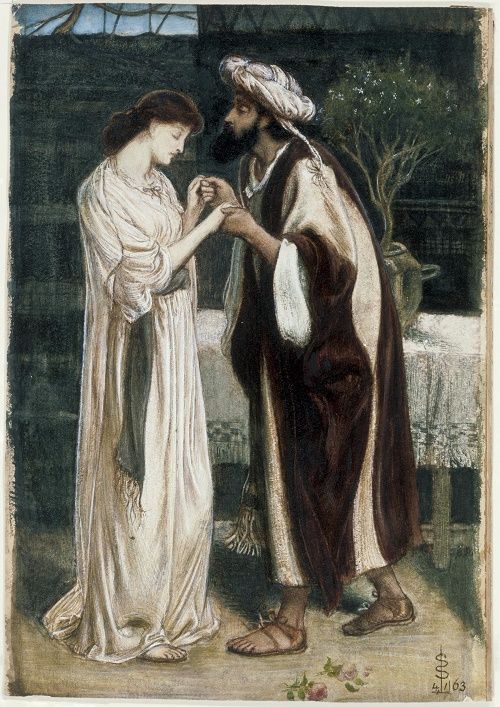
from Ruth and Boaz, by E.C.F. Holbein, 1830

When Boaz first sees Ruth gleaning in one of his fields, he praises her, asks God to bless her, gives her lunch, orders his men not to touch her, and tells them to leave extra stalks of barley in the rows for her.  Eventually Boaz goes beyond his duty by marrying Ruth and taking both women into his household.

The book praises Boaz and Ruth not only for their kindness and loyalty to family members whom they have no legal obligation to help, but also for the ways they use power.

And Naomi had a kinsman through her husband, an ish gibor chayil from the family of Elimelekh, and his name was Boaz.  (Ruth 2:1)

ish (אִישׁ) = man.

gibor (גִּבּוֹר) = champion, hero in battle, respected man in a community.  (From the root verb gavar,גָּבַר = excelled, accomplished, prevailed.)

chayil (חַיִל) = power.  By itself, the noun chayil = army or wealth—the two main kinds of power in the Ancient Near East.  When the word is immediately preceded by a noun indicating a human individual (such as ish or gibor), chayil serves as an adjective meaning powerful, leading in battle, influential due to wealth or social standing, or highly capable.

Boaz is introduced as an ish gibor chayil, a respected and powerful man.  As the story unfolds we learn that his power comes from his wealth and his standing in the town of Beit Lechem.  He is one of the elders who sits at the town gate to judge cases.  His opinions are respected, and in the legal case the book of Ruth describes, the other elders follow Boaz’s lead.1

Not all wealthy men use their power to do good.  The prophets Isaiah and Amos rail against the wealthy who supply themselves with luxuries while oppressing the poor.2  But Boaz uses his power to ensure justice in his town, good behavior among his workers, and provisions for two impoverished widows, Ruth and Naomi.

Although Boaz goes out of his way to be kind to them during the harvest, it does not occur to him to make any arrangement for them after the harvest is over.  So Naomi tells Ruth when Boaz will hold a harvest celebration for his men on the threshing-floor, and instructs her to bathe, anoint herself, dress up, and hide nearby until all the men have eaten, drunk, and dozed off.  Then she must uncover Boaz’s “feet” and lie down next to him.3  Naomi concludes:

“And he will tell you what you should do.”  (Ruth 3:4)

Both women understand the risk; Boaz might use his position to marry her, or he might take advantage of his position to use her and cast her aside.  Ruth answers:

Everything that you say to me, I will do.”  (Ruth 3:5)

On the threshing floor, artist unknown

She follows Naomi’s instructions, and then goes beyond them when Boaz wakes up.

In the middle of the night, the man gave a start, and felt around.  And hey!  A woman was lying at his feet!  He said: “Who are you?”  And she said: “I am Ruth, your maidservant.  And you shall spread the wing [of your robe] over your maidservant, because you are a redeeming kinsman.”  (Ruth 3:8-9)

Ruth practically orders Boaz to spread his wing over her, and tells him he should be her redeemer.  Technically the redeemer of a childless widow is her late husband’s brother.  He is required to redeem the widow from poverty by marrying her, giving her a son, and taking care of her late husband’s land until her son is old enough to inherit it.4  But both of Naomi’s sons are dead, as well as the rest of the men in their immediate family.  Boaz is only a distant relative, not even the closest one on the family tree.

Nevertheless, he feels honored that Ruth is telling him to marry her.

And he said: “Blessed are you to God, my daughter!  Your latest chesed is better than the first—[your] not going after the young men, whether poor or rich.  And now, my daughter, you must not be afraid.  Everything that you say to me, I will do it, because all [the elders] at the gate of my people know that you are an eishet chayil.”  (Ruth 3:10-11).

chesed (חֶסֶד) = loyalty to family obligations; kindness.

eishet (אֵשֶׁת) = woman of.  (From the noun ishah,  אִֺשָּה= woman, wife.)

Boaz is an ish chayil, powerful because of his social standing in Beit Lechem.  Now he declares that the elders of the town consider Ruth, an impoverished foreigner, an eishet chayil.  Clearly her power does not come from either wealth or military prowess.  But she is a highly capable worker, and she has earned a sterling reputation because of her steadfast chesed to Naomi.  Boaz respects her so much that he promises “Everything that you say to me, I will do.”

That is exactly what Ruth said to Naomi.  The sentence also echoes the words of the Israelites at Mount Sinai, when Moses reads the scroll of the covenant out loud to the people, and they reply: “Everything that God has spoken, we will do.”5  All three replies commit the speakers to complete trust and devotion.  Ruth is devoted to Naomi, Boaz becomes devoted to Ruth, and the Israelites declare their devotion to God.

The phrase eishet chayil appears only three times in the Hebrew Bible.  The other two occurrences are in the book of Proverbs.

An eishet-chayil is a crown for her husband,

            But one who acts shamefully is like rottenness in his bones.  (Proverbs 12:4)

The book of Proverbs ends with a long encomium to the eishet-chayil, beginning with:

An eishet-chayil who can find?

            Far beyond rubies is her value.

Her husband trusts her in his heart,

            And lacks no profit.  (Proverbs 31:10-11)

The poem then describes how an eishet-chayil works long hours spinning and weaving, collecting food and feeding her whole household, acquiring land and planting vineyards.  Her arms are strong.

Her palm she spreads out to the poor,

            And her hand she extends to the needy.  (Proverbs 31:20)

Like Boaz, an eishet chayil uses the wealth she increases through her own work to give to the poor.

Her mouth opens with wisdom,

          And teachings of chesed are on her tongue.  (Proverb 31:26)

By calling Ruth an eishet-chayil, Boaz explains why he will do everything she says.  Like the eishet-chayil in Proverbs, Ruth uses the power of her example and influence to counsel wisdom and kindness.

The poem about the eishet-chayil concludes:

Extol her for the fruit of her hand,

            And her deeds will praise her at the gates.  (Proverbs 31:31)

The ideal eishet-chayil, like Ruth, is praised for her deeds by the elders at the gate.

*

Both Boaz and Ruth are instinctively kind and loyal, full of chesed.  Both have personal power, chayil; Boaz because of his wealth and social standing, Ruth because of her good example.  Even Naomi has moments when she uses the power of her influence to do good.  She provides for one daughter-in-law by persuading her to return to her parents in Moab, and provides for Ruth by arranging a marriage from behind the scenes, following her hunch about Boaz despite the risks.

The book of Ruth begins with the deaths of three men whose widows lose everything, but it has  an extraordinarily happy ending: the women of Beit Lechem visit Boaz’s house, where he is happily supporting his pleasant old relative Naomi; his young, capable, kind, and loyal wife Ruth; and their newborn son, who will carry their dreams into the future.6

Sometimes people who have power to influence our lives are not so virtuous.  Sometimes, despite our good intentions, we fail to help those around us.  But the book of Ruth demonstrates that power can be dedicated to good deeds and kindness.

May each of us notice acts of kindness with gratitude, and practice using our own power to be kind to others.

  1. Ruth 4:1-13.
  2. g. Isaiah 1:16-17, 1:23-24, 10:1-3, 58:5-7; Amos 8:4-6.
  3. In the Torah, regalayim (רַגְלַיִם = pair of feet) is sometimes a euphemism for male genitals (e.g. 2 Kings 18:27, Isaiah 7:20), and legalot ervah (לְגאלּוֹת עֶרוָה = to uncover nakedness) is a euphemism for sexual intercourse (e.g. Leviticus 18:6-18).
  4. See Genesis 38:8-11 and Deuteronomy 25:5-10 for the laws of levirate marriage/yibum.
  5. Exodus 24:7.
  6. Oveid, the son of Ruth and Boaz, is the grandfather of King David. (Ruth 4:21)

Behar, Psalm 100, and Psalm 123: Master and Slave

Who owns you?

This week’s Torah portion, Behar (“On a mountain”), sets limits on ownership of both humans and land.  God owns all the farmland.  The people are tenants with long-term leases, but God mandates that they must let the land rest every seventh year,1 and every fiftieth year (the jubilee/yoveil) any land that was purchased returns to the family that originally owned it.2  (See my post Behar: Owning Land.)

The same goes for human beings.  God owns all the Israelites.  If some of them become so impoverished they have nothing left to sell but themselves or their children, they can join another household as servants.  But they will not be permanent, inheritable slaves, like the foreign slaves Israelites own.3  Their extended families can buy them back from their Israelite masters at any time, and if they are still serving their masters when the jubilee year comes, they and their children are freed from service anyway—and can return to the land they once sold.4  (See my post Behar: Slave Owners.)  God explains:

Because they are my avadim, who I brought out from the land of Egypt, they may not be sold as an aved.  (Leviticus/Vayikra 25:42)

avadim (עֲבָדִים) = slaves, servants, subordinates.  (Singular:  eved, עֶבֶד or aved, עָבֱד.)

In this context, the Israelites are slaves of God, and can only become temporary servants or subordinates of human beings.  Even Israelites who sell themselves to resident aliens can be redeemed by their kinsmen, and must go free along with their children in a jubilee year.5

The master-slave relationship between God and the Israelites is a mutual obligation.  The Israelites are supposed to serve God by obeying all of God’s rules and commandments, which number in the hundreds.  God has absolute power over “their” lives, as well as over “their” land.  But just as the human owner of slaves is supposed to provide them with food, clothing, lodging, and all their other needs, God is supposed to take care of the Israelites.6

How did God acquire the Israelites as slaves?  In this week’s Torah portion, God says:

“Because the children of Israel are [already] avadim; they are my avadim that I brought out from the land of Egypt.  I am God, your God!”  (Leviticus 25:55)

In the book of Exodus, after God has rescued the Israelites from slavery in Egypt and led them as far as Mount Sinai, God tells Moses to tell the people:

“And now, if you really listen to my voice and you observe my covenant, then you will be my treasured possession out of all the peoples.  For all the earth is mine, but you shall be my kingdom of priests and a holy nation.”  (Exodus/Shemot 19:5-6)

After Moses has passed this on,

They answered, all the people as one, and they said: “Everything that God says, we will do!”  (Exodus 19:8)

Thus they wholeheartedly accept their new master.7

*

The relationship between God and God’s slaves is not always peaceful.  The book of Numbers/Bemidbar in particular, which we begin next week in the annual cycle of Torah reading, reports many incidents in which thousands of Israelites refuse to do what God asks, and God kills them.

The psalms offer contrasting opinions of what it is like to be God’s slave.  (Since the two psalms below compare God to a human master, my translations use the pronoun “he” and “his”.)

Psalm 100

A chant for thanksgiving:

            Call out homage to God, all the earth!

                        Ivdu God with joy!

                        Come before him with a shout of joy!

            Know that God is God;

                        He made us and we are his,

                        His people and the flock he is tending.

            Enter his gates with thanks,

                        His courtyards with praise.

                        Thank him!  Bless his name!

            For God is good.

                        His loving-kindness is forever,

                        And his faithfulness goes on from generation to generation.

ivdu (עִבְדוּ) = Serve!  (An imperative verb from the same root as avadim.)

Psalm 123

A song for ascending [stairs].

            To you I lift my eyes,

                        Dweller in the heavens.

            Hey, as the eyes of avadim are on the hand of their masters,

                        As the eyes of a female-slave are on the hand of her mistress,

            So our eyes are on God, our God,

                        Until he favors us.

            Be gracious to us, God!

                        For we have had too much contempt.

            Our soul has had too much ridicule from the complacent;

                        It is moaning over contempt from the arrogant.           

When life is going well, we rejoice in serving a God that is kind and faithful to us.  When life is going badly, we look for God anxiously and beg for succor.

Both of these psalms imply an external god who owns us.  But on another level, they can speak to an inner psychological truth: we do not fully own ourselves.

In today’s world, some people are still slaves to other human beings.  And even those of us who are relatively independent have only limited freedom to make our own decisions.  Most of our behavior is determined by our history, habits, complexes, and abilities.  Usually our conscious minds merely notice what we have already done—and instantly generate reasons for our unconscious decisions, to keep up the illusion that we are our own masters.  Only occasionally does a new bit of information stop us in our tracks, so that we take the time to think out a new response to life.  Only occasionally are we truly free.

Is God the mysterious force that determines the physical and mental operating systems for all creatures, like a master commanding his slaves?  If so, we can praise God when things happen that we consider good, and wait with trembling for the next move in God’s plan when things happen that we consider bad.  And we can consciously develop a habit of noticing and praising the good that comes our way—the food our master gives us, the beauty of a view, the companions assigned to us, the times when our required behavior is pleasant.

Or is God what we encounter in our moments of freedom?  If so, we can cultivate a habit of watching for other moments when we might seize the chance to do something new, and of welcoming the sudden uncertainty when we pause, trembling, and open ourselves to inspiration.

  1. Leviticus 25:5.
  2. Leviticus 25:13-17, 25:23-24.
  3. Leviticus 25:35, 25:39, 25:44-46.
  4. Leviticus 25:40-41.
  5. Leviticus 25:47-54.
  6. “…just as they belong to Him in that He can confiscate and apportion their land, so, too, do they belong to Him in the sense that He is responsible for looking after their wellbeing and welfare for all time.” (Rabbi Adin Even-Israel Steinsaltz, Talks on the Parasha, Maggid Books, Koren Publishers, Jerusalem, 2015, p. 267)
  7. Ibid., p. 268.

Emor: Blasphemy

The scene at the end of this week’s Torah portion, Emor (“Say”) raises two questions:

  • Should someone with a non-Israelite father be treated differently than someone with two Israelite parents?
  • What should be done in a case of blasphemy?

Discrimination

Medieval manuscript detail on Lev. 24:10

The son of an Israelite woman and an Egyptian man went out among the children of Israel; and the son of the Israelite woman and an Israelite man quarreled concerning the camp.  (Leviticus/Vayikra 24:10)

The opening line above does not specify the subject of the quarrel.  The Hebrew could also be translated as “in the camp”, leaving the subject completely open.  But one traditional suggestion is that man with the Egyptian father resents being forbidden to pitch his tent inside the Israelite camp.1

And God spoke to Moses and to Aaron, saying: “Each man shall camp according to his banner with the signs for the house of his fathers.  Facing all around the Tent of Meeting they shall camp.”  (Numbers/Bemidbar 2:1-2)

Each tribe, and each clan within the tribe, is assigned its own camping area.    Since an Egyptian father does not belong to any Israelite tribe, his son would not be allowed to camp with his Israelite mother’s family in the area allotted to the tribe of Dan.

… the name of his mother was Shelomit daughter of Divri of the tribe of Dan.  (Leviticus 24:11)

The Torah does not say where the erev rav (the “mixed multitude” or “riff-raff” who left Egypt with the Israelites) camp, but it must be somewhere outside the ring of Israelite tribes, and therefore outside the camp proper.  “Outside the camp” is also where people with the skin disease tza-arat live2, and where dead bodies are taken.3

The fight or scuffle at the beginning of the scene probably began with the “Israelite man” insulting Shelomit’s son, denigrating him as a half-Egyptian who has to live outside the camp.

Blasphemy

The son of the Israelite woman vayikov the sheim, vayekaleil.  And they brought him to Moses.  And the sheim of his mother was Shelomit …  (Leviticus 24:11)

vayikov (וַיִּקֺּב) = pierced; cursed. (A form of the verb nakav, נָקַב = pierced, tunneled; designated; cursed.)

sheim (שֵׁם) = name; reputation. (When no person is specified, the sheim means the name of God.)

vayekaleil (וַיְקַלֵּל) = and he pronounced a curse, and he denigrated.  (From the root verb kalal, קַלַּל = belittled, denigrated, cursed.)

The Hebrew verb nakav is used literally for piercing, boring, and tunneling;4 and metaphorically for designating or cursing a human being.5  Only in the story about Shelomit’s son is this verb applied to the name of God .  And in the Hebrew Bible, a name nThe young man is putting a hole through God’s name(“The name” without a modifier means the name and/or reputation of God.)  When Shelomit’s son is scuffling with the “Israelite” man, he metaphorically makes a hole through God’s reputation.  This is blasphemy.

Honoring God is an essential commandment in the bible, and lowering God’s reputation would harm the whole community by encouraging idolatry.

Shelomit’s son then denigrates or curses (vayekaleil) someone or something.  The Torah omits the object of his curse; it could be either God or the Israelite fighting with him.  If he denigrates or curses God, he is committing blasphemy a second time—but the penalty is the same no matter how many times he does it in one utterance.

If he had vilified his opponent, “the Israelite man”, without using the name of God, there would be no penalty.  In the Torah one must never curse or denigrate God, a chieftain of a tribe, or one’s own parents.6  Everyone else is fair game, as long as God’s name is not invoked.  But Shelomit’s son makes the mistake of including the name of God in his curse.

The Blasphemer Stoned,
from Figures de la Bible, 1728

This week’s Torah portion continues:

And they put him in custody, to get themselves a clarification from the mouth of God.  God spoke to Moses, saying: “Remove the mekaleil to outside of the camp.  Everyone who heard shall lean their hands on his head, and then the entire assembly shall stone him.”  (Leviticus 24:12-14)  

mekaleil (הַמְקַלֵּל) = the blasphemer, the one who pronounced a curse, the one who denigrated.  (Also from the root verb kalal.)

Before Shelomit’s son denigrates God, he lives outside the camp, where corpses are buried.  Now that he has committed blasphemy, he is killed outside the camp.

No Discrimination Regarding Blasphemers

And you shall speak to the children of Israel, saying: “Anyone who yekaleil his God shall bear his guilt.  One who puts a hole through the name of God shall definitely be put to death.  The whole community shall definitely stone him, foreigner or native-born alike; if he puts a hole through the name, he shall be put to death.”  (Leviticus/ Vayikra 24:15-16)

yekaleil (יְקַלֵּל) = he pronounces a curse, he denigrates.  (From the root kalal.)

This final ruling comes down against discrimination on the basis of parentage.  As in thirteen other passages in the Torah, a foreigner who joins the Israelites must follow the same laws and receive the same justice as native-born citizens, and vice versa.  (See my post Mishpatim: The Immigrant.)  However, other parts of the Torah discriminate against foreigners and children of foreigners.7  The ancient Israelites were divided on this issue, just as Americans are today.

The Torah’s view of blasphemy, however, is harsher than that in modern Western countries.

The Blasphemer, by William Blake, ca. 1800

The ancient Israelites in the Torah are insecure about their survival as a people, a country, and a religion.  Those three things are easy to separate today, but in the ancient Near East they were inseparable.  By attacking the religion, blasphemy attacked the whole social structure.  So the God-character in this week’s Torah portion tells Moses to get rid of the problem by killing the blasphemer.  This is a quick and definitive solution for people who are full of fear, worried either that God will not help them to win their own kingdom in Canaan, or that their religion, and therefore of their whole society, will disintegrate.


To me, both denigrating God and using a name of God in curses are part of normal life.  When I was a teenager, the only “God” I knew about was the beard-in-the-sky variation, and I often declared God non-existent.  When I swore, I preferred phrases using the word “god” over crude words for sex or defecation.

Now I know that denigrating someone else’s concept of God is a bad idea, since it belittles the person who believes that concept.  But swearing using the word “god” is so widespread in Western society that it is usually an expression of frustration, not serious blasphemy.8 Serious blasphemy is cursing the god you do believe in, or misusing a name of God that is sacred to you.

Within a community of fundamentalists, a young man might, like Shelomit’s son, commit serious blasphemy out of rage against the unfairness of his own people.  Or someone might utter serious blasphemy as a howl of anguish over a concept of God that can no longer be borne.  These blasphemers need sympathetic listeners, and sometimes advocates.  Punishment is no solution.

After all, at some point in our lives (often in childhood or adolescence), we are all like Shelomit’s son, stuck in a group that excludes us.  Yet most of us find ways to live peacefully in the larger world.

I pray that someday no one will be too frightened of disintegration to tolerate blasphemy.  I pray that more and more people will develop the security and kindness to feel compassion for those who cry out in rage or anguish, and try to help them instead of punishing them.


  1. Vayikra Rabbah 32:3 and Torat Kohanim 24:235 are cited by Rashi (11th-century rabbi Shlomoh Yitzchaki) and 19th-century rabbi Raphael Samson Hirsch in their explanations that Shelomit’s son petitions Moses to camp with the tribe of Dan, and when Moses rejects his petition, the man goes out through the Israelite camp in a state of anger.  His anger makes him ready to pick a fight with the next person who discriminates against him, and also ready to utter curses.
  2. Leviticus 13:45-46.
  3. Leviticus 10:4-5.
  4. 2 Kings 12:10 and 18:21; Isaiah 36:6; Habakkuk 3:14; Haggai 1:6; and Job 40:24 and 40:26.
  5. Genesis 30:28; Numbers 1:17, 23:8, 23:25; Isaiah 62:2; Amos, 6:1; Proverbs 11:26, 24:24; 1 Chronicles 12:31, 16:41; and 2 Chronicles 28:15, 31:19. The book of Job also mentions cursing a particular day (3:8) and someone’s door (5:3).
  6. Exodus 20:7, Exodus 21:17, and Exodus 22:27.
  7. For example, Deuteronomy 7:1-4 and 23:4-7 are directly discriminatory. The list of campsites in Numbers 2:2 neglects to provide a camping area around the sanctuary for converts who left Egypt with the Israelites.
  8. This was probably true even in 11th-century France, when Rashi (Rabbi Shlomoh Yitzchaki) wrote that in Leviticus 24:16 “he put a hole through the name” means the death penalty applies only to one who pronounces the four-letter sacred name of God, not to someone who curses using another name for God.

Acharey Mot & Shemini: So He Will Not Die

How can anyone enter the Holy of Holies and come out alive?

God spoke to Moses after the death of two of the sons of Aaron, when they drew close in front of God and they died.  And God said to Moses: “Speak to Aaron, your brother, so he shall not come at [just] any time into the holy place inside the curtain, to the front of the atonement-cover that is on the ark—so he will not die, because I appear in an anan over the atonement-cover.  (Leviticus/Vayikra 16:2)

anan (עָנָן) cloud (of water vapor, smoke, or anything that hangs in the air and limits vision.  Anan comes from the same root as onein, עוֹנֵן = made appear, conjured up.)

by James Tissot

Aaron’s two older sons, Nadav and Avihu, bring unauthorized incense “close in front of God” earlier in the book of Leviticus/Vayikra.  (See my post Shemini: Fire Meets Fire.)  Their souls are consumed by a divine fire.1  Only in this week’s Torah portion, Acharey Mot (“After the death”), does the Torah indicate how “close in front of God” is too close.

A curtain separates the Tent of Meeting, a portable sanctuary for God, into two rooms.  All the priests walk in and out of the larger front chamber, as they tend the incense altar, the bread table, and the menorah.  The smaller back chamber is the Holy of Holies where the ark stands.  The solid gold lid of the ark is called the atonement-cover or kaporet (כַּפֺּרֶת).  According to the Torah, God speaks to Moses from the empty space above the lid.2

Tent of Meeting. (Red lines are curtains.)

Do Nadav and Avihu go too far by bringing their unauthorized incense into the front chamber of the tent?  Or did they go farther and transgress by entering the Holy of Holies?  The commentary is divided, but the beginning of Acharey Mot implies that they walk all the way into the Holy of Holies.3

Then God says that even Aaron, the high priest, will die if he enters the back chamber at the wrong time.  When is the right time?  The ensuing instructions designate one day a year when the high priest will enter the Holy of Holies as part of a long ritual to make atonement with God.4  Identified here as “the tenth day of the seventh month”, this day came to be known as Yom Kippur.

On that day the high priest steps inside the Holy of Holies twice, and both times he sprinkles blood on the atonement-cover of the ark.  The first time the blood comes from a bull he has slaughtered to make atonement for himself and his own household.5

The second time the blood comes from a goat he has slaughtered as an atonement offering for the people.6  (It is one of two goats chosen by lot; the other goat is sent out into the wilderness to Azazel.  See my post Metzora & Acharey Mot: Doubles.)

But before the high priest sprinkles blood the first time, he must make a cloud of incense inside the Holy of Holies.

He shall take a pan-full of glowing charcoal embers from the side of the altar facing God, and two handfuls of finely-ground, fragrant incense, and he shall bring them through the curtain.  And he shall place the incense on the fire, in front of God.  And the anan of the incense shall conceal the atonement-cover that is over the Reminder [inside the ark], so he will not die.  Then he shall take some blood of the bull and sprinkle it with his finger over the surface of the atonement-cover… (Leviticus 16:12-14)

Apparently when Aaron first enters the Holy of Holies, no cloud covers the lid of the ark.  He has to generate a cloud from incense, on the spot.7  According to the Talmud, in the Holy of Holies inside the temple in Jerusalem the smoke from the high priest’s incense “rose straight up like a palm tree”.  Then it spread out over the ceiling and down the walls until it filled the whole room.8

The chamber remains thick with smoke when the high priest returns with the goat’s blood.  The Talmud says the smell of the incense on Yom Kippur spread out so far from the temple in Jerusalem that it made the goats in Jericho sneeze.9  (I imagine the goat led out into the wilderness for Azazel was also sneezing as it went.)

The phrase “so he will not die” is linked with an anan both at the beginning of the Torah portion and in the instructions for filling the Holy of Holies with smoke.

… so that he shall not come at [just] any time into the holy place inside the curtain, to the front of the atonement-cover … so he will not die, because I appear in an anan over the atonement-cover.

Leviticus 16:2

 And he shall place the incense on the fire, in front of God.  And the anan of the incense shall conceal the atonement-cover … so he will not die.

 Leviticus 16:13

In verse 16:2, God appears in an anan over the ark.  In verse 16:13, Aaron must generate an anan to conceal the ark.  In verse 16:2, this sight of God in an anan seems to be fatal.  In verse 16:13, a prolonged view of the ark cover seems to be fatal.

One cloud or two?

Are there two clouds, one conjured up by God and the other made by the high priest?  Classic commentary is divided on the question.10  If there is only one cloud, the anan of incense, then what would Aaron see when he first walks into the Holy of Holies?  This week’s Torah portion implies that he would see the lid of the ark and empty air above it.  Since he would remain alive long enough to fill the room with incense, the sight of the atonement-cover would be fatal only when he sprinkles blood on it.

We can assume God is in residence, to witness the atonement ritual.  The book of Exodus/Shemot tells us that no human being can see God’s “face” and live.11  Even Moses would not see God’s face when God spoke to him from above the lid of the ark.  So God’s presence above the ark must be either invisible, or clouded by God’s own anan.

From Egypt to Mount Sinai, and again from Mount Sinai to the Jordan River, God provides a pillar of cloud (by day) and fire (by night) to guide the Israelites and their fellow-travelers.12  At Mount Sinai, only Moses can enter the cloud of smoke at fire on the mountaintop, where he goes to converse with God before the tent-sanctuary is built.

But when Moses finishes assembling the sanctuary,

…the anan covered the Tent of Meeting, and the glory of God filled the dwelling-place.  Moses was not able to enter the Tent of Meeting because the anan settled on it and the kavod of God filled the dwelling-place.  (Exodus/Shemot 40:34-35)

kavod (כָּווֹד) = splendor, magnificence, weightiness.  (When kavod refers to God, it is usually translated as “glory” or “presence”.)

from
Collectie Nederland

Everyone can see the cloud on top of the tent roof, just as everyone can see the pillar of cloud and fire during the Israelites’ journeys.  But even Moses cannot enter the Tent of Meeting when it is filled with the kavod of God—looked, to human eyes, like either cloud or fire.

The cloud above the tent remains until God gives the signal to strike camp and journey on by lifting the cloud and restoring the guiding pillar of cloud and fire.  The kavod inside the tent shrinks or disappears at some point while the tent is still pitched at Mount Sinai, before Moses takes Aaron inside in the portion Shemini.

And Moses and Aaron came into the Tent of Meeting and they went out and they blessed the people.  Then the kavod of God appeared to all the people.  And fire went out from in front of God …  (Leviticus 9:23-24)

The fire consumes the offerings on the altar.  Then Aaron’s sons Nadav and Avihu go into the tent with their unauthorized incense, and the fire appears again and consumes them.  Yet after that, Aaron’s cousins safely enter the Tent of Meeting and carry out the two bodies.  And from then on, the priests move freely in and out of the front chamber of the tent.  Only the back chamber, the Holy of Holies, remains dangerous—probably because God might appear at any time in an anan of kavod over the ark.

If only the sight of God’s appearance in an anan is fatal, it follows that Aaron can enter the Holy of Holies safely on Yom Kippur because that is the day God will refrain from appearing in an ananat least until the room is so full of incense smoke that the high priest could not see God’s anan.

Therefore when Aaron first steps into the Holy of Holies there is no anan inside.  God is either invisible or not yet in residence.  Aaron makes a cloud of incense in order to hide the atonement-cover of the ark, so he can sprinkle blood on it without dying.  When the incense has filled the room, either God remains an invisible presence (as when God speaks to Moses in that spot), or God appears in a small anan of kavod over the ark, which Aaron cannot see through the smoke.

Inevitable Fog

I can understand why God’s kavod appears as cloud and fire.  We are finite creatures; when we try to understand the infinite, our minds cannot penetrate the mystery, and we find ourselves in a mental fog, glimpsing only transient flickers of enlightenment.  When we try to turn our experiences of God into concrete words or images, we lose their essence.

Perhaps if human beings look straight at the anan of God’s kavod for more than a moment, our minds snap.13  Our bodies remain whole, like those of Nadav and Avihu, but we lose our personal selves or souls, and what remains cannot function in the world.  This is the kind of death Aaron must avoid by entering the Holy of Holies under only two conditions:

  • when God has signaled that it is time to strike camp and move on; then Aaron and his two surviving sons take down the curtain and cover the ark with it.14
  • on Yom Kippur, the one day a year God has designated for the ritual of atonement.

The rest of the time, Aaron must stay out, so he will not accidentally see God appear in an anan.

While the incense altar in the front chamber of the Tent of Meeting is used for other purposes, the high priest creates an anan of incense inside the Holy of Holies only on Yom Kippur, the day of atonement.  This is the day when we ask God for forgiveness for everything we have done wrong over the past year.  When we ask for that level of divine, inner forgiveness, it is not enough to know that God appears in a cloud.  We need to know that we cannot see ourselves clearly, either: neither our motivations nor how our actions look to others.  Like God, our own souls are manifest only in a cloud.

Yet as we grope through the fog of life, we can still try to become better people and try to serve God, whatever “God” might mean to each of us.

Even if we generate so much smoke our goats sneeze.


  1. The fire consumes them in Leviticus 10:1-2. Aaron’s cousins carry the bodies of Nadav and Avihu out of the camp, holding them by their tunics, in Leviticus 10:4-5.  Therefore the divine fire took their lives without incinerating their bodies or even burning their clothes.
  2. Exodus 25:22, Numbers 7:89.
  3. Since the divine fire passes through their tunics without charring them, it could also pass through both the inner curtain and the curtained doorway to the courtyard without damaging either curtain.
  4. Leviticus 16:29-34.
  5. Leviticus 16:6, 16:14.
  6. Leviticus 16:15.
  7. It seems clear to me that Aaron walks into the chamber carrying a pan of embers, two handfuls of ground incense (probably in a bag), and a bowl of bull’s blood (Leviticus 16:11-12). Once inside, he shall place the incense on the fire, in front of God, and the smoke conceals the atonement-cover (Leviticus 16:14).  This was also the opinion of the Pharisees during the time of the second temple in Jerusalem.  The Sadducees insisted the incense had to be smoking before the high priest entered the Holy of Holies.  They also tied a rope around the high priest’s ankle so someone could pull him out if he did die inside the Holy of Holies.
  8. Talmud Bavli, Yoma 53a.
  9. Talmud Bavli, Yoma 39b.
  10. Rashi and Maimonides wrote that Leviticus 16:2 refers to God’s cloud of kavod, so there were two clouds. Nachmanides and the Talmud Yerushalmi tractate Yoma  say that Leviticus 16:2 refers to the high priest’s cloud of incense.
  11. Exodus 33:18-23. Face (panim, פָּנִים) and kavod are used as synonyms in this passage.
  12. Exodus 13:21-22, Leviticus 40:36-37.
  13. The Talmud Bavli, Chagigah 14b, tells the story of four rabbis who entered pardes, paradise. Ben Azai looked at the divine kavod and died, Ben Zoma looked and went mad, and Elisha ben Abuyah (a.k.a. Acher) became an apostate.  Only Akiva, the greatest rabbi of that era, returned whole.
  14. When the Israelites break camp, Aaron and his two surviving sons take down the curtain in front of the Holy of Holies and cover the ark with it. Touching the uncovered ark would be fatal to the Levites who will carry it to the next campsite, but the priests are safe while they cover it. (Numbers 4:5-6, 4:15.)

Metzora: Ear, Thumb, Toe

Ew, icky, gross, disgusting!  These words express is our unfiltered, untrained reactions to such things as slimy substances, corpses, and some visible diseases.

Tamei! says the book of Leviticus/Vayikra.

And the tzarua who has a mark, his clothes shall be torn and his hair shall be neglected and he shall wrap something over his lip, and he shall call out: Tamei!

tzarua (צָרוּעַ) = one stricken with the skin disease tzara-at (צָרָעַת). Also called a metzora (מְצֺרָע), from the same root.

tamei (טָמֵא) = ritually impure.

Anyone who is ritually impure, tamei, because of contact with genital discharges, dead bodies, or the skin disease tzara-at is forbidden to enter the courtyard around the sanctuary until the proper ritual purifies them.  Perhaps the writers of these passages1 imagined God was so anthropomorphic “he” would feel disgusted by these things, too.  Or perhaps the proper frame of mind for standing in front of God was to be free of any feelings of disgust—which would also explain why physically blemished priests could not serve at the altar.2

Metzora outside the city wall, by James Tissot

Tzara-at is not contagious,3 yet those afflicted with it are quarantined, forbidden even to live within their own community’s tent circle or town wall.4

This week’s Torah portion, Metzora (“someone with tzara-at”), prescribes how to make people who have healed from tzara-at ritually pure again, so they can rejoin the community for both worship and daily life.

First a priest must go outside the camp to inspect the metzora and confirm that their skin has really healed.  The writers of the Hebrew Bible assumed that any serious disease is a divine punishment for doing something wrong, and healing means that God had ended the punishment.  Many plagues are attributed to disobeying one of God’s commands.  Tzara-at, however, appears to be a divine punishment for demeaning other people through slander, denigration, or deception.5

If the skin disease is gone, the priest conducts a ritual with two wild birds.  (See my post Metzora & Acharey Mot: Doubles.)  Then, after washing and shaving their entire body, the metzora comes into the sanctuary courtyard with offerings to God.  The first offering is for their own purification and atonement.

The priest shall take one of the young rams and bring it near for an ashamThen the priest shall take some of the blood of the asham, and the priest shall put it on the rim of the right ear of the one being purified, and on the thumb of his right hand, and on the thumb of his right foot.  (Leviticus 14:12, 14:14) 

asham (אָשָׁם) = guilt-offering, to atone for an intentional misdeed.  (This is another indication that the Torah views bad behavior as the cause of tzara-at.)

In the whole Hebrew Bible, blood is daubed on the ear, thumb, and big toe for only two reasons: to purify an ex-metzora, or to ordain a priest.  Earlier in Leviticus we read:

Then [Moses] brought near the second ram, the ram of the ordination, and Aaron and his sons laid their hands on the head of the ram.  And Moses slaughtered it, and he took some of its blood and put it on the rim of Aaron’s right ear, the thumb of his right hand, and the thumb of his right foot.  Then he brought near the sons of Aaron, and Moses put some of the blood on the rim of their right ears, on the thumb of their right hands, and on the thumb of their right feet.  (Leviticus 8:22-24)

Both a new priest and a newly healed metzora are daubed with ram’s blood from head to toe, on the right side, the active side.

Oil is involved in both rituals as well, though the order of application is different.  When Moses ordains the first priests, he sprinkles anointing oil (which contains aromatic spices) on the altar before the blood-daubing.6  A priest sprinkles some of the ex-metzora’s offering of plain olive oil on the altar after the blood daubing.7

In both cases, after sprinkling oil on the altar, the officiant pours oil on someone’s head.  Moses pours anointing oil on Aaron’s head.8  The procedure for an ex-metzora is more elaborate:

And some of the rest of the oil that is on his palm the priest shall put on the rim of the right ear of the one being purified and on the thumb of his right hand and on the thumb of his right foot, over the blood of the asham.  Then the remainder of the oil that is on the palm of the priest he shall put on the head of the one being purified.  Thus the priest shall make atonement for him before God.  (Leviticus 14:17-18) 

Why are the procedures for purification after a skin disease and ordination of a priest so similar?  One answer is that both the metzora and the priest take a step up in their ability to serve God.  The metzora becomes able to enter the space in front of the sanctuary where the altar is.  The priest becomes able to enter the inner sanctuary.

Community members who are temporarily barred from the sanctuary courtyard because of other ritual impurities do not go through the same blood-daubing and oil-pouring ritual—perhaps because they have done nothing wrong.  They might become ritually impure because of sex, or childbirth, or the death of a family member.  The passage of time and a less elaborate cleansing ritual are sufficient.

Perhaps someone who has recovered from tzara-at gets the full priestly treatment because the disease was thought to be the result of denigrating another person.  If one is accustomed to malicious gossip, or deception, or arrogant speech, it takes care and attention not to fall back into one’s old habits.  A powerful ritual can help motivate reformed persons to watch themselves continuously.

Priests in the Torah are also required to pay constant attention to their behavior.  Any slip on their part leads to improper worship by the whole community.  So they begin their tenure with a powerful ritual to remind them of their awesome responsibility.

Purity in any area requires careful attention.  Today, those with medical conditions requiring the complete elimination of certain foods, as well as Jews who are strict about keeping kosher, must read labels and ask embarrassing questions about meals served away from home.

And in our world of divisiveness and suffering, we all need to aim at purity in our own ethical behavior.  Like the metzora, we must guard ourselves against harmful speech.  Like the priest, we must be careful and thoughtful about what we teach, what we do, and the examples we set.

May the spirit of the divine help us all to pay attention.

  1. Modern scholars agree that all the instructions on protocol regarding the altar and sanctuary in Leviticus were written by the “P” source, i.e. one or more priests experienced in the rituals.
  2. See my post Emor: Flawed Worship.
  3. The detailed description of tzara-at in the Torah portion Metzora does not match any known contagious disease. The bible does not consider it contagious, either; while Naaman had tzara-at, he led an army, and the king of Aram often leaned on his arm for support (2 Kings 5:18).
  4. Those with tzara-at are excluded from the tent camp in Leviticus 13:46 and Numbers 12:14-16. They must stay outside the town wall in 2 Kings 7:3-10.
  5. Tzara-at is a punishment for harmful speech according to Numbers 12:-15; Talmud Bavli, Arachin 16a; Maimonides (Rambam) in “Mishnah” Nega’im 12:5; and Shlomoh ben Yitzchak (Rashi) in his commentary on Leviticus. The Torah implies that God strikes Naaman the Aramean with tzara-at because of his pride (2 Kings 5:9-14), which might have led to denigrating others.  And King Azariah gets lifelong tzara-at because of his failure to remove other gods’ shrines, which leads to Israelite apostasy (2 Kings 15:5).
  6. Leviticus 8:11.
  7. Leviticus 14:16 and 14:27.
  8. Exodus 29:7 and Leviticus 8:12.