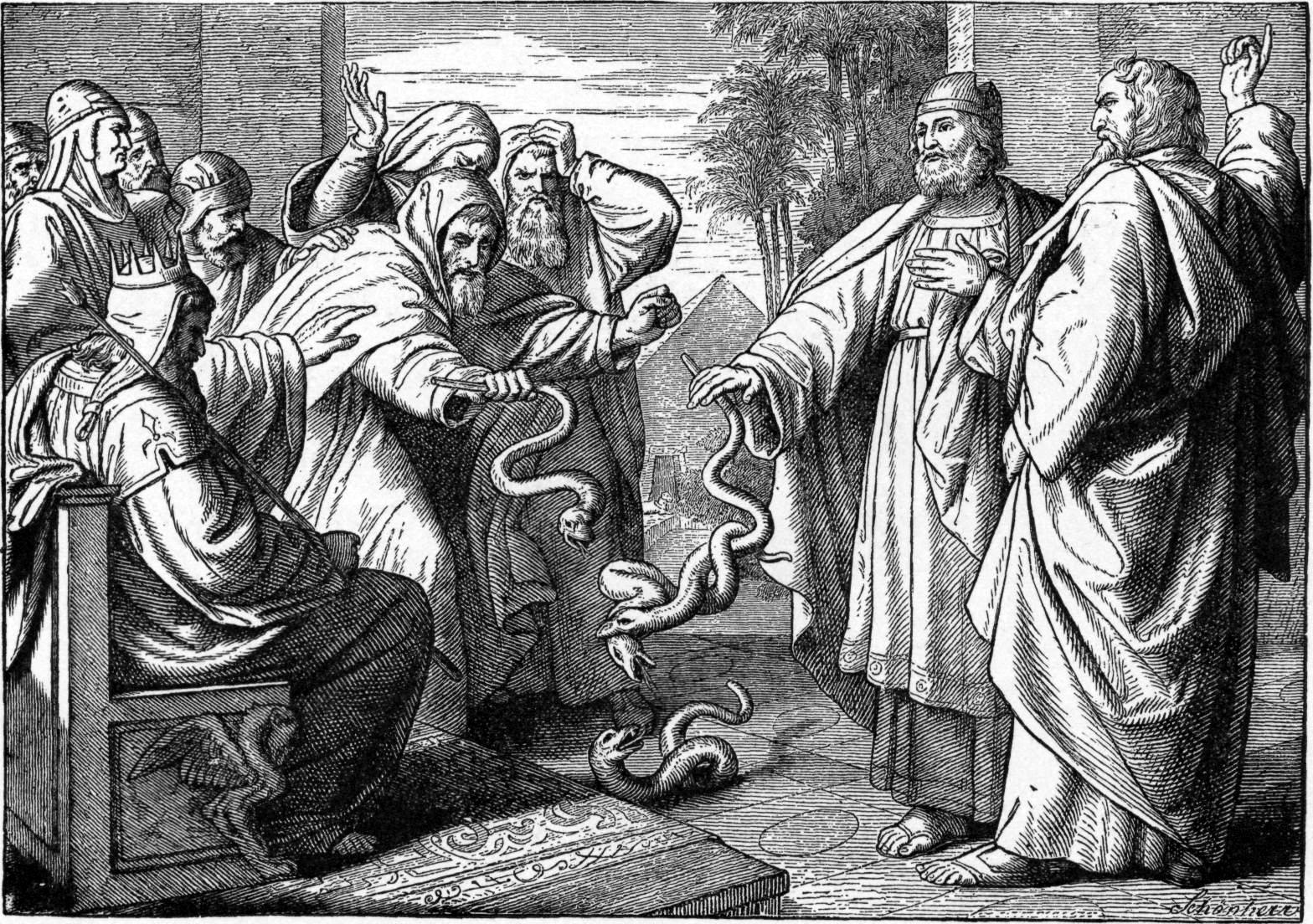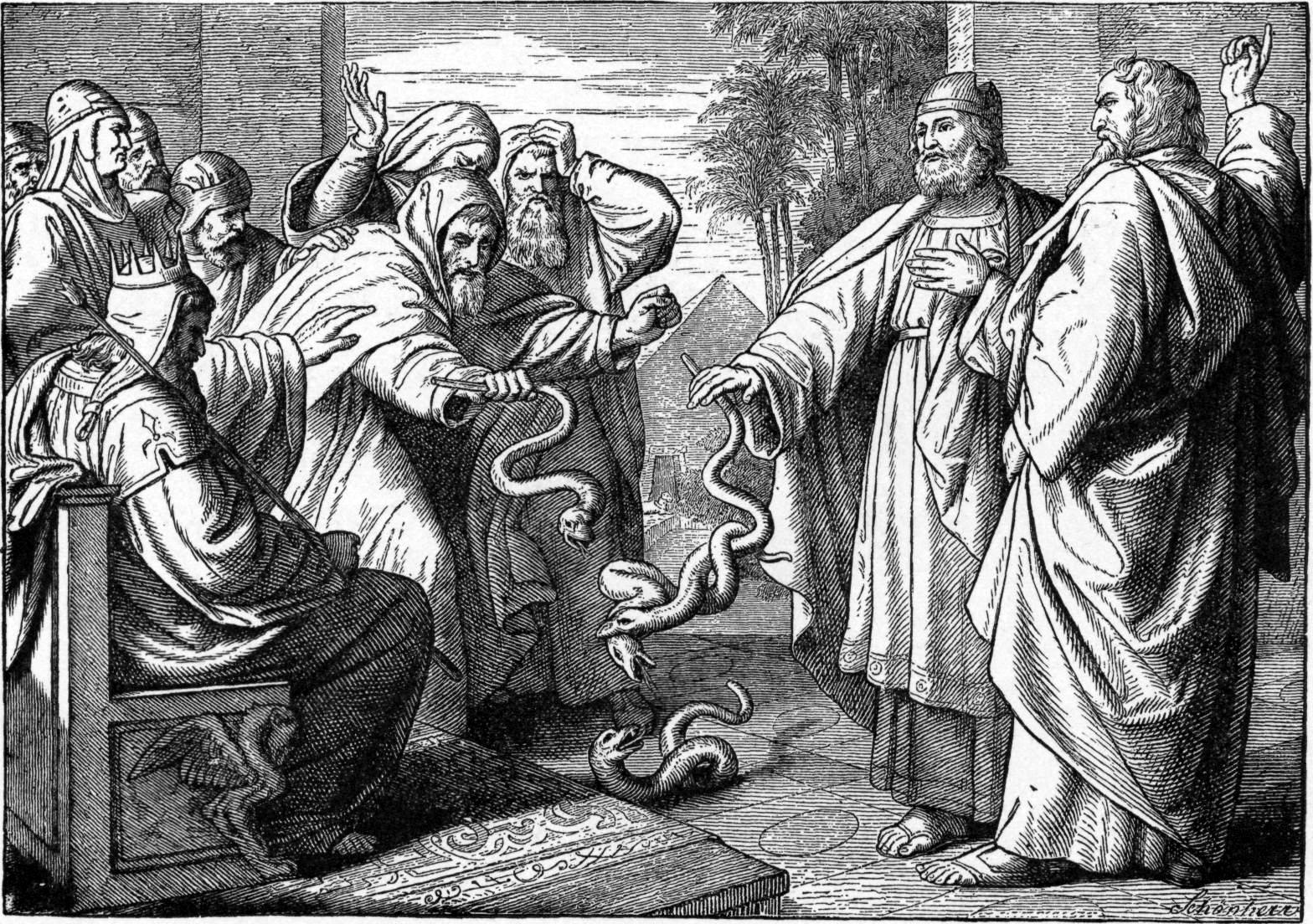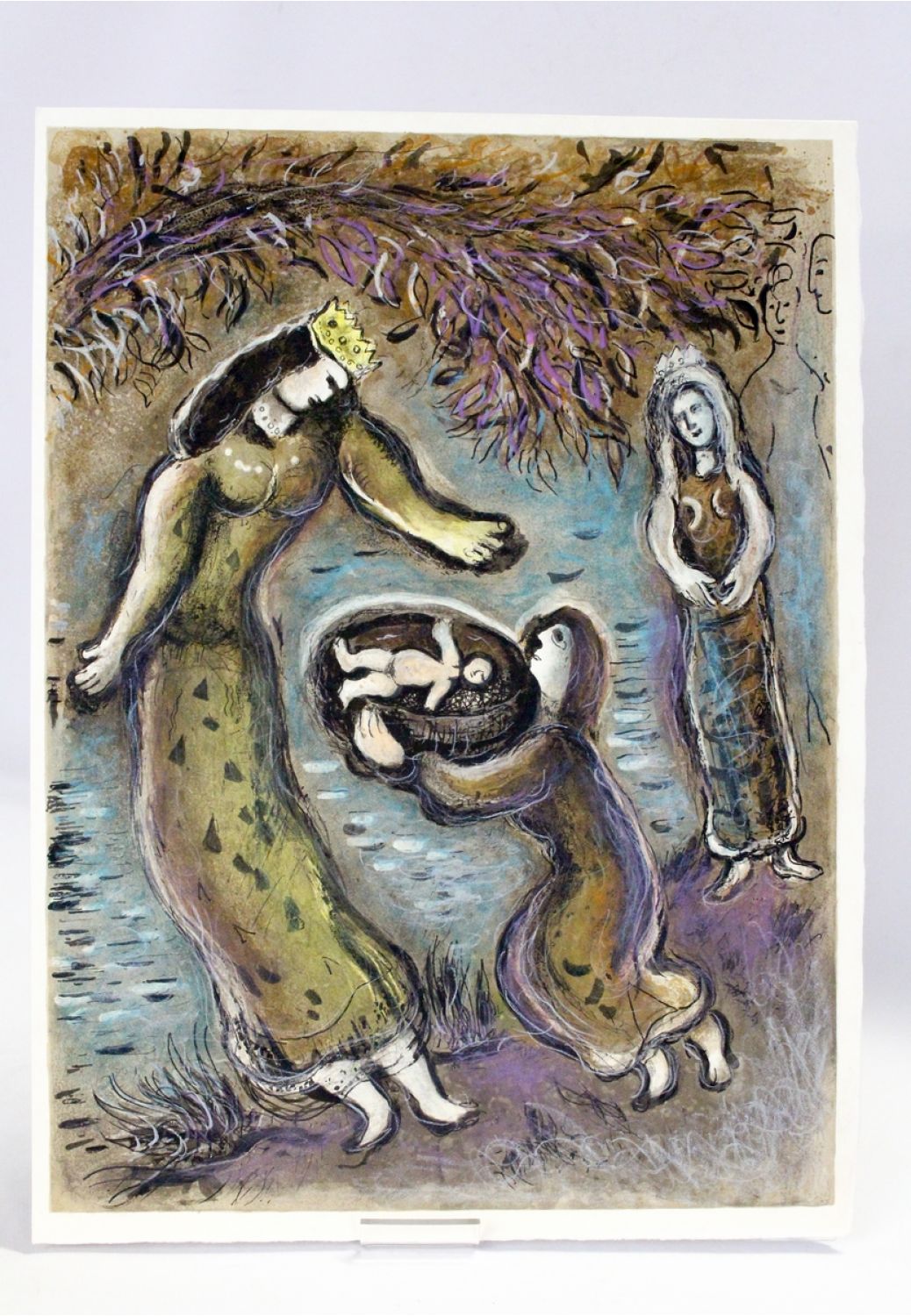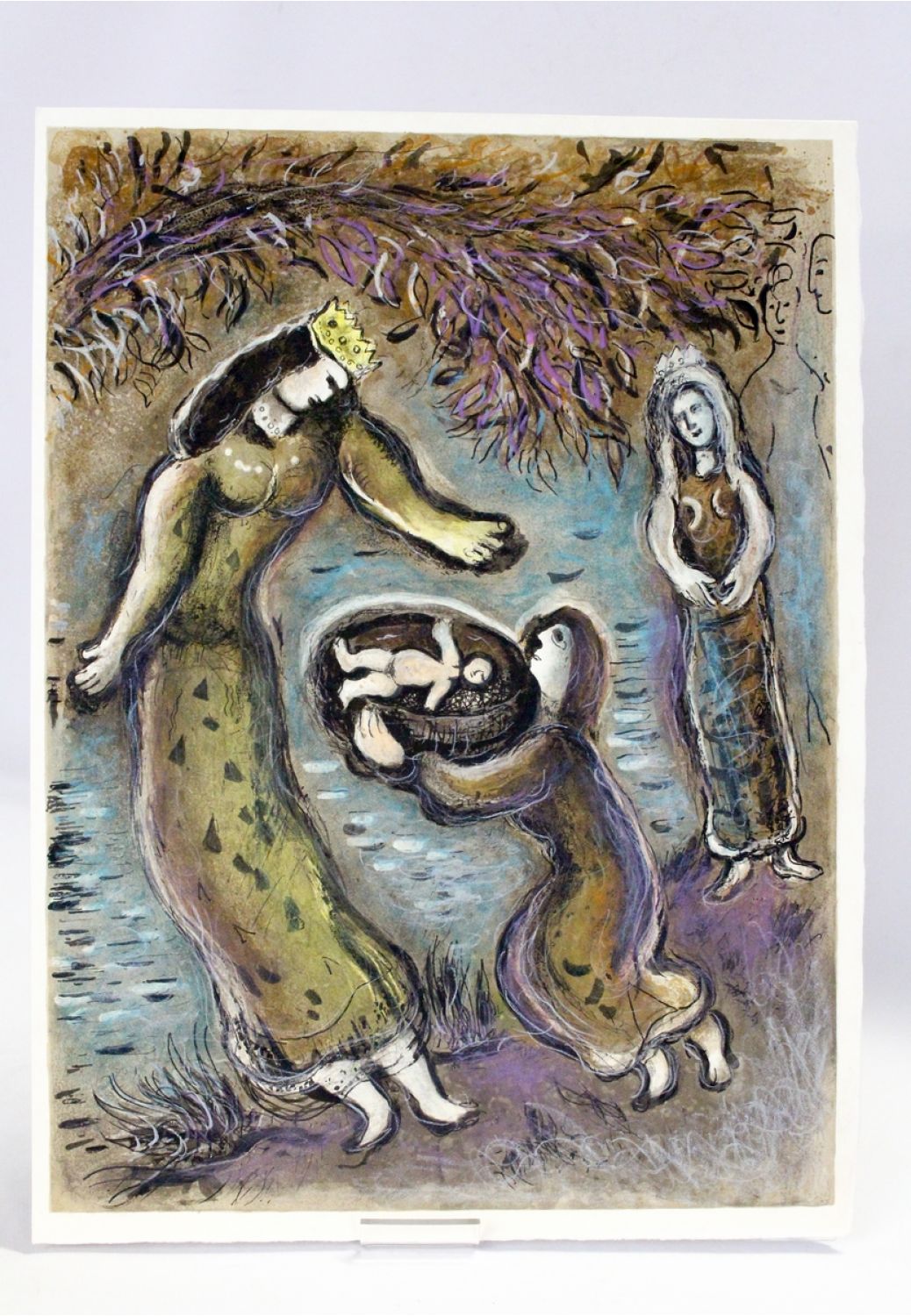
Ki Tavo: A Perishing Aramean

Still life by Caravaggio, 1605

Do we own land, prosper in business, or put food on the table entirely because of our own efforts?  The book of Deuteronomy/Devarim says no.  Moses tells the Israelites that they will conquer Canaan only with God’s help.  (See my post Re-eih: Ownership.)  Then they will acquire cities, houses, and farms that other people built.  (See my post Eikev, Va-etchannan, & Noach: Who Built It?)  After that they will build more houses, and all their enterprises will prosper, making their wealth increase.  Moses predicts they will then forget God, and think:

“My ability and the power of my hand made me this wealth.”  Then you must remember God, your God, who gives you the ability to make wealth …”  (Deuteronomy 8:11, 17-18)

Furthermore, the Israelites must not confuse taking possession of land, or inheriting it from their fathers, with actual ownership.1

Hey!  The heavens and the heavens of the heavens, the land and everything in it, belongs to God, your God.  (Deuteronomy 10:14)


In this week’s Torah portion, Ki Tavo (“When you come”), Moses prescribes an annual ritual to thank God for the land we pretend we own, and for the harvest we pretend comes exclusively from our own labors.

Bible card by Providence Lithograph Co., ca. 1900

You shall take some of the first of every fruit of the earth that you bring in from your land that God, your god, is giving to you.  And you shall place them in a basket and go to the place that God, your God, will choose to let [God’s] name dwell.  (Deuteronomy/Devarim 26:2)

The place that “God will choose” is Jerusalem.2  The head of each household brings the basket to the temple. and affirms that the land on which his family grew the fruits is a gift from God.

And you shall come to whoever is the priest in those days, and you shall say to him: “I declare today to God, your God, that I came to the land that God swore to our forefathers to give to us.”  (Deuteronomy 26:3)

The priest sets the basket in front of the altar.

And you shall respond, and you shall say in front of God, your God: “Arami oveid avi.  And he went down to Egypt and he sojourned there with few men, but he became there a nation great and powerful and populous.”  (Deuteronomy 26:5-6)

Arami (אֲרַמִּי) = a male Aramean, a man from the country of Aram (roughly corresponding to present-day Syria and northern Iraq).

oveid (אֺבֵד) = wandering lost; being ruined; perishing.  (Oveid is the kal participle of the verb avad, אָבַד, and implies that the subject is lost, ruined, or perishing.)3

avi (אָבִי) = my father, my forefather.

Who is the Arami?  The book of Genesis/Bereishit tells us that Abraham lives in the Aramean city of Charan (also called Paddan-Aram) before God tells him to go to Canaan.  Later in Genesis, Abraham’s grandson Jacob flees to Charan and lives there with his uncle Lavan for 20 years before returning to Canaan.  So we have three candidates for the Aramean in this declaration: Abraham, Lavan, or Jacob.  And only two of those, Abraham and his grandson Jacob, qualify as a forefather of the Israelites.

Rashi4 identified the Arami as Lavan and the avi as Jacob.  His interpretation, “Lavan sought to uproot everyone [all Jews] as he chased after Jacob,” requires translating Arami oveid avi as “An Aramean was ruining my forefather.”  But oveid cannot mean “ruining”, only “being ruined”.(see 3)  Furthermore, Biblical Hebrew grammar allows for an implied verb “to be” anywhere in the phrase Arami oveid avi, but not for the Arami to be the subject doing something to avi as a direct object.5  So Arami and avi must be the same person.

Rashbam6 recognized this, and identified the person as Abraham.  He associated oveid with wandering when one is exiled from one’s own land, and rephrased Arami oveid avi as “My father Abraham, an Arami was he, oveid and exiled from the land of Aram.”  Then he cited Genesis 12:1, where God tells Abraham: “Go forth from your land and from your relatives and from your father’s house to the land that I will show you.”  If Aram is Abraham’s own land, Rashbam must have reasoned, then in Canaan he is an exile.

Calling Abraham an exile seems like a stretch to me.  Abraham hears God and decides to leave.  He brings along his wife, his nephew, the people who work for them, and the wealth he has accumulated in livestock and goods.  It sounds like a comfortable emigration.

Rashbam’s explanation also fails to account for the sentence immediately following Arami oveid avi in Deuteronomy 12:5 above.  Abraham and his household do visit Egypt, but the same group returns to Canaan after a very short sojourn there.  They may pick up a few Egyptian slaves, but Abraham’s returning household is far from being “a nation great and powerful and populous”.

That leaves Abraham’s grandson Jacob as the Arami who is the speaker’s forefather.  Jacob, a.k.a. “Israel”, moves to Egypt to join his son Joseph and brings along 66 of his descendants, not counting the wives of the adult men.7  These “children of Israel” stay in Egypt for 430 years.8  When they leave in the book of Exodus, there are “about 600,000 men on foot” along with their families and fellow travelers9—enough to count as a nation in the Ancient Near East.  The sentence following Arami oveid avi fits only Jacob.

If Jacob is the Aramean and “my forefather”, why is he called oveid?  The translation of oveid that best describes Jacob’s life at the time he emigrates to Egypt is “perishing”, since he and his extended family are suffering through a second year of famine in Canaan.  Therefore, Arami oveid avi should be translated: “A perishing Aramean was my forefather”.

A man bringing his first fruits to the temple does identify himself as an Israelite with these three words, but it would be simpler to say “Jacob is my forefather” or “Israel is my forefather”.  The clause Arami oveid avi acknowledges two other things: that his ancestors had not always lived in Canaan/Judah, and that at a critical time they were perishing in a famine.  Remembering these things, the farmer is more likely to feel grateful that God gave the Israelites land, and that the God who makes famines has provided him with agricultural abundance.


The recitation and ritual actions continue in this week’s Torah portion without mentioning that they are part of Shavuot, one of the three annual pilgrimages to Jerusalem dictated in the Torah.  In Exodus 34:22 Shavuot is described as a celebration the first fruits of the wheat harvest, and in Numbers 28:26 Shavuot is identified as the “Day of First Fruits” (Yom Habikkurim).

But the recitation beginning Arami oveid avi has also become part of Passover/PesachIn 220 C.E., when Judah HaNasi recorded the Mishnah (the core of the Talmud), the farmer’s declaration before the priest was already included in the seder (the Passover service at home around the table).10  It still is.

Arami oveid avi is a humbling opening line.  If God could let Jacob, one of God’s favorite people, come close to perishing of hunger, any of us might be ruined.  And every human being will eventually perish from this earth.

Yes, while we are alive we must cultivate our crops.  Our own efforts are necessary, but not sufficient, for prosperity; other necessary factors are out of our hands.  The good life is a fragile and temporary blessing.

May we notice the first fruit of every blessing in our lives, and express our gratitude.

(An earlier version of this essay was published in September 2011.)


  1. The real owner of the land is also revealed in Leviticus 25:23, when God declares: “But the land must not be sold to forfeit reacquisition, because the land is Mind; for you are resident aliens with Me.” (See my post Behar: Owning Land.)
  2. Modern critical scholars agree that the earliest form of book of Deuteronomy was written no earlier than the 7th century B.C.E., after the northern kingdom of Israel had been wiped out by the Assyrians, and the only remaining Israelite kingdom was Judah, with its capital and temple at Jerusalem.
  3. The piel participle, me-abeid (מְאַבֵּד = giving up as lost, ruining, letting perish) implies that the subject is abandoning, ruining, or destroying someone else.)
  4. Rashi is the acronym for 11th-century rabbi Shlomoh Yitzchaki.
  5. In Biblical Hebrew, if avi were a definite direct object instead of a subject, it would be preceded by the word et (אֶת).
  6. Rashbam is the acronym for Rashi’s grandson, the 12th-century rabbi Shmuel ben Meir.
  7. Genesis 46:26.
  8. Exodus 12:40. (In Genesis 15:13 God predicts it will be 400 years.)
  9. Exodus 1:7, 12:37-38.
  10. Talmud Bavli, Pesachim 116a, Mishnah.

Ki Teitzei: Virtues of a Parapet

When you build a new house, then you shall make a ma-akeh for your roof; then you will not put blood-guilt on your house if the faller falls from it.  (Deuteronomy/Devarim 22:8)

ma-akeh (מַעֲקֶה) = parapet: a low wall along the edge of a roof or another structure.

This verse appears in a compilation of practical laws in this week’s Torah portion, Ki Teitzei (“When you go out”).  At the most literal level, it simply requires a parapet around a roof as a safety precaution to prevent anyone from falling.  If the faller were being injured or killed the owner of the house would be liable, bearing the “blood-guilt”.

Roofs from Egypt to Babylon (as well as in other parts of the world with dry climates and mild winters) were usually flat and built to bear weight, so people could walk, sit, sleep, and work on them.  In the Ancient Near East, builders ran wooden beams or whole logs from wall to wall.  They covered the beams with framed straw or reed mats, then topped the roof with several layers of clay compacted with stone rollers.  Sometimes they added latticed rooftop structures to provide shade for people using the roof.  A parapet around the edge made the top layer more durable, as well as improving safety.

The Hebrew Bible mentions using rooftops for private conversations,1 for sleeping,2 for storage,3 and for making sacrifices at altars for other gods.4  The Talmud also mentions keeping small lambs or goat kids on one’s roof.5

Safety

A roof without a parapet is unsafe not only because a person might fall off, but also because something might fall, or get pushed, from the roof onto a person below.  When an unsavory king in the book of Judges, Avimelekh of Shechem, captures the town of Teiveitz, its residents flee to the tower in the middle of their town.

And they shut themselves inside and they went up onto the roof of the tower.  And Avimelekh came up to the tower… to set it on fire.  Then a woman sent down an upper millstone onto the head of Avimelekh, and it cracked his skull.  (Judges 9:51-53)

The Talmud (Bava Kamma 15b) extends the requirement for a parapet around a roof to all other hazards in a house, such as keeping a vicious dog or setting up an unstable ladder.  If the owner does not remove the hazard, he is liable for damages and a court can even excommunicate him.

Even if the owner is the only person who lives in the house, he must still make it safe for the benefit of guests and future residents.6

Privacy

A sufficiently high parapet also provides privacy.  According to the Talmud (Bava Batra 2b) if the roof of one house adjoins the courtyard of another house, the owner of the first house must build a parapet four cubits high,7 so he cannot look into the neighbor’s courtyard when he is using his roof.  A similar ruling is that a wall separating the courtyards of two adjacent houses should be four cubits high, so neighbors cannot see into each other’s courtyards  (Bava Batra 5a).

Even if houses are not adjacent, a higher parapet may be needed for privacy.  If two houses are on opposite sides of a public road (Bava Batra 6a), both owners are likely to build a parapet high enough to prevent anyone on the road below from seeing them; but each owner must also build one side of his front parapet high enough to block the view from the opposite roof.  Then both families will have privacy (and share the expense equally).

A story in the bible illustrates another situation in which a high parapet would have provided privacy.

Bathsheba, by Jean-Leon Gerome, 1889

It was evening time, and David rose from his bed and walked around on the roof of the king’s house.  And he saw a woman bathing, from up on the roof, and the woman was very good in appearance.  (2 Samuel 11:2)

For the sake of privacy, Bathsheba would have been bathing either on her own lower roof, or in the enclosed courtyard of her own house.  But King David’s view was not blocked by a high enough parapet.  Enamored of her naked beauty, he found out who she was and sent for her, assuming that since  her husband Uriah was away at war, he would never know.  When Bathsheba became pregnant, King David had Uriah sent home from the front, but he refused to sleep with his wife until the war was over.  So David arranged for the death of the innocent man.  None of this would have happened if King David’s parapet had been four cubits high.

Metaphor for pride

The original injunction in this week’s Torah portion has also been interpreted allegorically, with the rooftop standing for pride.  Philo of Alexandria wrote in the first century C.E. that when people give themselves credit for intellectual and social advancement, instead of crediting God, they are likely to fall from their high positions and be destroyed.

For the most grievous of all falls is for a man to stumble and fall from the honour due to God; crowning himself rather than God, and committing domestic murder. For he who does not duly honour the living God kills his own soul …8 

A Poet’s Fall, 1760

The Hassidic commentator Dov Baer Friedman interpreted Deuteronomy 22:8 by applying the metaphor of pride before a fall9 to a Torah scholar’s pride in coming up with a new interpretation:

This refers to one offering a new interpretation of Torah.  “Make a railing for your upper storey.”  If the verse were referring to a literal house, it would have said: “for its upper storey.”  As it is, the upper storey is on you, referring to the swelling of your pride at this new teaching.  Do not let your head get turned by pride!  Even though this is a bit of Torah that no ear has ever heard, it comes not from you, but from God. “Should somebody fall from it.”  You are all set for such a fall.10


Building a Mental Parapet

Safety: We can be dangerous to ourselves when we get so carried away by our emotions that we act without thinking it through. Burning with anger, we hurl words, or worse, at the enemy we think is below. Overcome by sexual attraction, we throw ourselves at another person, and fall off. Thick with bitterness, we trudge ahead without looking where we are going.

The ensuing disasters could all be avoided if we built a strong mental parapet: a habit of stopping until our passion fades enough so we can rationally consider consequences and alternatives.

Privacy:  We can also find an inner meaning of the Talmud’s extension of the law in Ki Teitzei to cover privacy. Besides physical privacy, humans need privacy in our mental lives.  We can share personal information, random thoughts, and emotional reactions with a trusted partner who knows us well.  But sharing these things with neighbors, friends, or strangers can cause them to feel uncomfortable, to make false assumptions about us, or to feel burdened by our apparent neediness.  It can even give false friends information they can use against us or against people we know.

We can build a mental parapet, a habit of pausing before sharing something that might be out of bounds, so that we do not reveal the wrong things–whether in response to an inappropriate question, or in a gush of good will or exhibitionism.

Pride: As both Philo of Alexandria and Dov Baer Friedman wrote, we can fall into the self-delusion of pride over any personal achievement. If giving God credit for our deeds does not work for us, we can build a mental parapet out of reminders that all our successes depend on the deeds of other human beings, on the family and society we inherit, and on the genes that we are born with.

Those of us who actually live in buildings with flat, inhabitable roofs still need parapets to prevent people and things from falling off.  But we all need parapets when it comes to the contents of our own minds.

  1. Examples of using a roof for private conversations: Joshua 2:6, 1 Samuel 9:25-26.
  2. Examples of using a roof for sleeping: Joshua 2:6, 2 Samuel 11:2.
  3. A roof is used for storing flax in Joshua 2:6.
  4. Examples of using a roof for altars to worship other gods: 2 Kings 23:12, Jeremiah 19:13 and 32:29, Zephanaiah 1:5.
  5. Talmud Bavli, Bava Batra 6b.
  6. 19th-century rabbi Samson Raphael Hirsch, The Hirsch Chumash: Sefer Devarim, translated by Daniel Haberman, Feldheim Publishers, Jerusalem, 2009, p. 513.
  7. A cubit is the length of a forearm from elbow to fingertips. Four cubits would be over 6 feet, or almost 2 meters.  (Bava Batra 2b also provides rules for window and courtyard partition placements to prevent a neighbor from being able to look inside the house next door.)
  8. Philo of Alexandria, The Works of Philo, trans. by C.D. Yonge, “XXXIX, On Husbandry, 171”.
  9. Proverbs 16:18.
  10. Dov Baer Friedman of Miedzyrzec, Or Torah (1804), translated by Arthur Green in Arthur Green, Speaking Torah, vol. 2, Jewish Lights Publishing, Woodstock, Vermont, 2013, p. 124.

Shoftim: To Do Justice

Tzedek, tzedek you must pursue. (Deuteronomy/Devarim 16:20)

tzedek (צֶדֶק) = right behavior; ethical standards; justice.

The pursuit of justice and/or ethical behavior is an obligation incumbent upon all of us.  But in this week’s Torah portion, Shoftim (“Judges”), the pursuit of tzedek is an instruction to judges.  The portion begins:

Shoftim and officers you shall appoint in all your gates [of towns] that God is giving to you according to your tribes; veshaftu the people [with] rulings of tzedek.  (Deuteronomy 16:18)

shoftim (שֺׁפְטִים) = judges; those who decide cases; those who deliver justice.

veshaftu (וְשָׁפְטוּ) = and they shall judge, make settlements among, deliver justice to.

Samson, also a judge

The shoftim in this week’s portion are not the kind of shoftim we see in the book of Judges/Shoftim.  There, most shoftim were chieftains or war leaders during a time of frequent conflicts among small states.  They deliver justice to the people by leading an army that frees them from their latest conquerors.  Afterward they usually serve as chieftains who are also judges.1

City gate at Megiddo

The shoftim in this week’s Torah portion also differ from the town elders who serve as judges in biblical passages referring to the time before Israel and Judah had kings. During that period, an individual with a claim to press, or two household heads seeking arbitration, would go to the town gate or the village threshing floor at daybreak and call ten of the settlement’s elders (respected male heads of households) to come over and adjudicate.2  A decision required the consensus of all ten men.3

Although the book of Deuteronomy is set on the bank of the Jordan at the end of Moses’ life, it was written for the citizens of the kingdom of Judah, and refers to their legal system.4  The shoftim in this week’s portion are appointed judges, not the first ten respected elders to pass by.

These appointed shoftim must judge the people with “rulings of tzedek” as follows:

You may not skew a ruling; you may not recognize a face; and you may not take a bribe, since a bribe blinds the eyes of the wise and distorts the words of the tzaddikimTzedek, tzedek you must pursue, so you may live and take possession of the land that God, your God, is giving to you.  (Deuteronomy 16:19-20)

tzaddikim (צַדִּיקִם) = the innocent; the righteous, the ethically good, the just.  (From the same root as tzedek.)

To “recognize a face” means to show favoritism, not just in the decision but also in how the parties are treated during the hearing.5

Why would pursuing justice enable the Israelites to live and conquer more and more of the land of Canaan?  Deuteronomy predicts that they will only win battle victories with God’s help.  (See my post Re-eih: Ownership.)  Therefore it pays to do what God wants.

Moses frequently restates what God wants from the Israelites, which includes just decisions about legal claims.  It also includes avoiding the worship of other deities (the first of the Ten Commandments).  If local appointed judges hear that someone has been worshiping other gods, they must investigate thoroughly.  If the rumor proves true,

Stoning, from Piola Domenico, 17th century

Then you shall bring out to your gates that man or that woman who did the wicked thing, and stone them with stones so they will die.  On the word of two or three witnesses they shall definitely be executed, [but] they shall not be put to death on the word of one.  (Deuteronomy 17:5-6)

At least two eye-witnesses must agree that they saw the accused bow down to, or otherwise serve, an alien god before the judges can declare the accused guilty.  One or zero witnesses are insufficient for a guilty verdict, no matter what the circumstantial evidence.6

The Torah portion Shoftim also addresses what local judges should do when it is hard to connect a legal case with the appropriate law or ruling.

If a matter of law is too difficult for you, … then you shall get up and go up to the place God, your God, chooses.  And you shall come to the priests of the Levites, or to the judge who is [serving] at that time, and you shall inquire; and he shall tell you the matter of the law.  (Deuteronomy 17:8-9)

The next few verses say that the local judges must carry out the ruling from Jerusalem (the place God chooses) exactly as instructed.  This passage parallels the scene in Exodus/Shemot where Yitro tells his son-in-law Moses to appoint judges to settle minor disputes, and ask them to bring the major cases to him.7  Yitro explains that the major cases should go to Moses not because he is the central authority, but because God talks to him and gives him the laws.  Perhaps difficult cases must be referred to the priests and judges in Jerusalem not because they are the central authority, but because they are more experienced in interpreting God’s laws.

*

Just as “Tzedek, tzedek you must pursue” should be a goal for every human being in some sphere of life, we can take to heart other instructions to the shoftim in this week’s portion.  How do you judge the actions of another person?

Do you act like the chieftains and war leaders in the book of Judges, convinced that your own cause is just and therefore you have the right to dictate to everyone else?  Or do you act like the elders in the gate, taking action against someone only if your sense of what is right matches the opinions of other respected people in your community?

Do you “recognize a face” or show favoritism, making excuses for someone you like while judging someone you dislike harshly?  Do you feel obligated to refrain from correcting someone who has given you a gift, such as a job or status?

If one person tells you about the terrible thing a third person did, do you believe it?  Or do you wait until two eye-witnesses confirm it?  Do you draw conclusions about someone from circumstantial evidence?

If you cannot make up your mind about whether another person is guilty of wrongdoing, or whether you need to do anything about it, to whom do you take the case?  Who can you trust?

It is not so easy to pursue justice.

  1. Judges 2:16-19. Specific war-leaders whom the book of Judges cites as shoftim administering justice are Otniel (3:9), Jepthah/Yiftach (12:7), and Samson/Shimshon. (15:20, 16:31).  The shoftim named in Judges who appear to be chieftains who also judge cases are Tola (10:1-2), Ya-ir (10:3), Ivtzan (12:8-9), Eilon (12:11), and Avdon (12:13-14).  One woman, Devorah, takes a dual role.  She is introduced as “a prophetess, a woman of Lapidot, [who] administered justice in Israel at that time … and Israelites went up to her for rulings” (Judges 4:4-5), but then she calls for war and accompanies a general into battle.
  2. Ruth 4:1-11, Proverbs 31:23, and Lamentations 5:14. Also see Victor H. Matthews & Don C. Benjamin, Social World of Ancient Israel 1250-587 BCE, Hendrickson Publishers, Peabody, MA, 1993, pp. 122-124.  Deuteronomy 25:7 calls for the elders at the gate to rule on the case of a new husband who accuses his bride of not being a virgin; perhaps the older system of town elders survived, modified by later laws and rulings imposed by the kingdom’s priests and other higher-ranking judges (see Deuteronomy 17:8-13).
  3. Matthews & Benjamin, p. 124.
  4. Most modern critical scholars date the composition of Deuteronomy chapters 12-25 to the reign of King Josiah of Judah in the 7th century B.C.E., with some editing later.
  5. Rashi (11th-century rabbi Shlomoh Yitzchaki) on Deuteronomy 16:19.
  6. Talmud Bavli, Sanhedrin 37b.
  7. Exodus 18:22.

Re-eih: Ownership

Mine!  I own this land, these people, this enterprise!

Human beings instinctively claim things as their own—and justify their ownership.  Sometimes the reasons why we own things are ethical.  (She gave her painting to me.  I bought this house from the previous owner.)  But sometimes our justifications boil down to “Because I’m better” or “Because God gave it to us”.

Moses Speaks to the People by the Jordan,
Great Bible (St. Jerome Version), 1405-1415

Why did Israelites own a significant part of Canaan (later called Palestine) from the 10th to 6th centuries BCE?  The Hebrew Bible repeats again and again that God gave the land of Canaan to the Israelites.  This “gift” is the premise behind Moses’ instructions in this week’s Torah portion, Re-eih (“See!”).

For you will be crossing the Jordan to enter and lareshet of the land that God, your God, is giving to you, vireshtem of it and you will settle in it.  Then take care to carry out all the decrees and the laws that I am placing before you this day.  (Deuteronomy/Devarim 11:31-32)

lareshet (לָרֶשֶׁת) = to take possession.  (A form of the verb yarash, יָרַשׁ = took possession, inherited, dispossessed.)

vireshtem (וִירְשׁתֶּם) = and you will take possession.  (Another form of the verb yarash.)

How will God give possession of Canaan to the Israelites?  And why?

How

When Moses gets his marching orders at the burning bush, God tells him:

I have come down to bring them [the Israelites] out from the hand of Egypt and to bring them up from that land to a good and spacious land, to a land flowing with milk and honey, to the place of the Canaanites and the Hittites and the Emorites and the Perizzites and the Hivites and the Jebusites.  (Exodus/Shemot 3:8)

The land of Canaan is already occupied by six nations.1  How will God transfer their land to hundreds of thousands of Israelites?

It turns out that the inhabitants of Canaan do not give, sell, or trade land to the newcomers.2  They do not conveniently decide to move elsewhere.  Instead, they are willing to fight to keep the land they planted, and the houses and cities they and their ancestors built.

In the book of Exodus/Shemot, God promises to “erase” or “drive out” the native inhabitants.3  But in the book of Numbers/Bemidbar it becomes clear that the Israelites must do the driving out.  They get a head start on military conquest before they cross the Jordan.  At God’s urging, the Israelites fight and win battles against three nations on the east side of the river: Cheshbon (the city and its territory), Bashan, and the Midianites north of Moab.  The Israelite men burn towns, kill all the men, and seize all the land.4

When the tribes of Reuven and Gad ask Moses if they can have this newly captured land instead of future allotments in Canaan, Moses agrees on the condition that their fighting men enter Canaan with the rest of the Israelites, and participate in every battle there until Canaan has been conquered.5  Everyone knows, now, that the Israelites will take Canaan through war.

The book of Deuteronomy assumes that God will give the Israelites the land of Canaan by ensuring them victory in battle—and that the Israelites will be the aggressors.  In last week’s Torah portion, Eikev, Moses reminds his people:

Listen, Israel!  You are crossing the Jordan this day lareshet nations greater and stronger [than you].  And you shall realize this day that God, your God … will subdue them before you, vehorashtam, and you shall exterminate them quickly, as God has spoken to you.  (Deuteronomy 9:1-3)

vehorashtam (וְהוֹרַשְׁתָּם) = and you shall dispossess them.  (A form of the verb yarash.)

Why

Moses continues:

Not because of your righteousness or because of the uprightness of your heart shall you come lareshet their land.  God, your God, shall be morisham in front of you because these nations are wicked, and in order to carry out the word that God swore to your forefathers, to Abraham, Isaac, and Jacob.  (Deuteronomy/Devarim 9:5) 

morisham (מוֹרִשָׁם) = taking possession of them, dispossessing them, driving them out.  (Another  form of yarash.)

You are not so perfect that you deserve to own Canaan, Moses tells the Israelites.  God will help you to conquer it only because God made a promise to your ancestors, and because the present inhabitants of Canaan are even worse than you are.

The promise

In the book of Genesis/Bereishit, Abraham, Isaac, and Jacob all hear God promise that their descendants will someday own the land of Canaan.6  The sixth time God makes this promise, it is part of a covenant: Abraham and his male descendants will be circumcised and follow God; God will give them the land of Canaan and look after them.

“And I will give to you, and to your seed after you, land from your sojourning: all the land of Canaan, as a holding forever.  And I will be their God.”  (Genesis/Bereishit 17:8)

The wickedness

Offering to Molech,
Bible Pictures, 1897

The nations of  Canaan are “wicked” because they engage in practices the God of Israel despises, according to the book of Leviticus/Vayikra.  These practices include sexual unions forbidden in Leviticus, and child sacrifice to Molech.7

In this week’s Torah portion, God tells the Israelites not only to exterminate all the inhabitants of Canaan, but also to destroy their shrines and religious objects.8

These are the decrees and the laws that you must take care to carry out in the land that God, the God of your forefathers, gave to you lerishtah all the days that you live on the earth.  You must utterly destroy all the places where the nations that you are yoreshim worshiped their gods, on the high mountains and on the hills and under every luxuriant tree.  And you shall tear down their altars, and shatter their standing-stones, and burn their goddess-posts in the fire, and break into pieces the statues of their gods; and you shall eliminate their name from that place.  (Deuteronomy 12:1-3)

lerishtah (לְרִשְׁתָּה) = to possess it.  (A form of the verb yarash.)

yoreshim (יֺרְשִׁם) = taking possession of.  (Another form of the verb yarash.)

Ethnic cleansing is not enough, Moses says.  Even after the inhabitants of Canaan have been eliminated, some Israelites might still be tempted to adopt their religious practices.

When God, your God, cuts down the nations where you come lareshet them from before you, veyarashta them and you have settled in their land, guard yourselves lest you become ensnared [in] following them, after they have been exterminated from before you; and lest you inquire about their gods, saying: “How did these nations serve their gods?  Then I will do this too, even I.”  You must not do thus for God, your God, because everything abhorrent to God, [everything] that he hates, they do for their gods.  For they even burn their sons and daughters in the fire for their gods!  (Deuteronomuy 12:29-31)

veyarashta (וְיָרַשְׁתָּ) = and you dispossess.  (Yes, another form of yarash.)

This is the other justification in the Torah for taking over Canaan and eliminating its natives.  The inhabitants of Canaan, like the Israelites, worshipped their gods primarily through burning animal offerings on altars.  But other religious practices of the six groups of Canaanites were so awful that they did not deserve to own the land.  They did not even deserve to live.


The Torah speaks with many voices.  When the context is the period when Israelites own the land, the Torah urges them to treat the foreigners living among them with love and justice.9  But when the context is the period before the Israelites own the land, the Torah urges them to exterminate the foreigners who do own it.

Although modern scholars disagree on when each of the first five books of the bible was first written down, they agree that all five were written down no earlier than the 10th century BCE, when Israelites ruled one or two kingdoms in eastern Canaan.10  Perhaps those who wrote down the old stories noticed the conflict between the injunctions to treat resident aliens with fairness, and tales of the brutal conquest of non-Israelite natives.  How could they justify the aggression of their ancestors?

The solution of those early scribes was to explain that God took Canaan away from its previous inhabitants and gave it to the Israelites.  The conquest by the Israelite army merely carried out God’s will.

Today some groups still believe in a divine right to own land and the people living on it.  When there are rival claims to territory, people of different religions point to their sacred books and their ancient histories rather than working toward an ethical solution for sharing the land.

Today some individuals still believe that might makes right, and the fact that they succeeded in acquiring control over a business or a branch of government means God is on their side.

I pray that someday everyone in the world is blessed with humility.


  1. The same six peoples are mentioned as inhabiting Canaan in Exodus 23:23, 33:2, and 34:11.
  2. Abraham buys one field with a burial site in Canaan (Genesis 23:3-16), and Jacob buys a parcel of land where he is camping (Genesis 33:19), but there are no other purchases of land in Canaan in the biblical record until after the Israelites have occupied a large part of Canaan.
  3. God promises “and I will erase them” (וְהִכְחַדְתִּיו) in Exodus 23:23. God plans to drive the natives out of Canaan in Exodus 23:27-30 (through psychological means), 33:1-3, and 34:11 (as well as in Leviticus 18:24-25 and 20:23).
  4. Numbers 21:21-25, 21:33-35, 31:1-18.
  5. Numbers 32:6-27. See my post Mattot: From Confrontation to Understanding.
  6. The God character makes this promise to Abraham in Genesis 12:7, 13:15, 15:7, 15:18, and 17:8; to Isaac in Genesis 26:3; and to Jacob in Genesis 28:13-14 and 35:12.
  7. Leviticus 18:3-30.
  8. This instruction also appears in Numbers 33:52-53.
  9. Geirim (גֵּרִים) = resident aliens (in biblical Hebrew).  Geirim are included in God’s covenant in Deuteronomy 29:9-11 and 31:12, Joshua 8:33-35, and Ezekiel 47:21-23.  The same laws and rights apply to citizens and geirim in Exodus 12:19, 12:48-49, and 20:10; Leviticus 16:29, 17:8-15, 18:26, 20:2, 22:18, 24:16, and 24:22; Numbers 9:14, 15:14-16, 15:26, 15:29-30, 19:10, and 35:15; Deuteronomy 1:16, 5:14, 16:14, 24:14, and 26:11-13; Joshua 20:9; and Ezekiel 14:7.  The Israelites are warned not to oppress geirim in Exodus 22:20 and 23:9; Leviticus 19:33-34; and Ezekiel 22:7 and 22:29.  The Torah orders the Israelites to love geirim or treat them like brothers in Leviticus 19:33-34 and Deuteronomy 10:18-19 and 24:14.
  10. The united kingdom of Israel ascribed to kings David and Solomon in the bible dates to the mid-900’s BCE. Its existence has not yet been confirmed by archaeologists.  Hoever, there is evidence supporting the biblical claim that there were two Israelite kingdoms from the 920’s to the 720’s BCE: the northern kingdom of Israel/Samaria and the southern kingdom of Judah.

Eikev, Va-etchannan, & Noach: Who Built It?

Five Kings of Midian Slain by Israel, 1728

The Israelites are camped on the east bank of the Jordan River, ready and willing to cross over and do to the native populations of Canaan what they have already done to the Amorites and Midianites east of the Jordan: burn all their towns, kill all their men, and take over all their land—with God’s explicit approval and assistance.1

I will explore the evolution of and biblical justifications for this ethnic cleansing in next week’s post, Re-eih: Ownership.  This week, let’s look at how Moses says the Israelites should act after their conquest.

In last week’s Torah portion, Va-etchannan, Moses warns the Israelites not to feel entitled after they have taken everything the Canaanites own.

And it will happen when God, your God, brings you into the land that was sworn to your forefathers … cities great and good that lo vanita, and houses filled with everything good that you did not fill, stone-hewn cisterns that you did not hew out of stone, vineyards and olive groves that you did not plant.  And you will eat and you will be satisfied.  Guard yourself, lest you forget God who brought you out from the land of Egypt, from the house of slavery.  (Deuteronomy/Devarim 6:10-12)

lo vanita you did not build.  lo (לֺא) = not + banita (בָּנִיתָ) = you built.  (A form of the verb banah, בָּנָה = built, constructed, fortified, rebuilt; built up a family.)

Once the Israelites own everything the previous inhabitants built and planted, they will have an easy head start in their new life.  But Moses does not tell the Israelites to be grateful for the labor of generations of Canaanites.  He only warns them not to forget that everything they own is a gift from God.

This week’s Torah portion, Eikev, takes the idea of God’s gift farther.

Guard yourself lest you forget God, your God, and fail to guard [God’s] commandments and laws and decrees, which I, myself, am commanding you this day—lest you eat and you are satisfied, and tivneh good houses, and you dwell in them; and your herds and flocks increase, and silver and gold increases for you, and everything that is yours increases; and then your heart is arrogant and you forget God, your God, who brought you out from the land of Egypt, from the house of slavery.  (Deuteronomy 8:11-14)

tivneh (תִּבְנֶה) = you build, fortify, build up.   (Another form of the verb banah.)

Here Moses points out that even if the Israelites do build their own houses and bring in their own livestock, wealth in the land they have conquered is not guaranteed.  What you build yourself, as well as what you take from someone else, is a gift from God.

In general, the Hebrew Bible uses the verb “create” (bara, בָּרָא) for what God does, and “build” (banah, בָּנָה) for what humans do, using materials God created.2  People in the bible build many things just to improve their lives, including houses, towns, walls, and livestock pens.  But sometimes humans build for the sake of their own self-importance, and sometimes they build to honor God.


Building a name

After the story of Noah and the flood, the humans on earth figure out how to make bricks and mortar them with bitumen.

Tower of Babel, by Pieter Bruegel the Elder, c. 1563

And they said: “Come, nivneh for ourselves a city and a tower [with] its head in the heavens, and we will make for ourselves a name, lest we scatter over the face of all the earth.”  And God went down to look at the city and the tower than the descendants of the human banu.  (Genesis 11:4-5)

nivneh (נִבִנֶה) = let us build.

banu (בָּנוּ) = they built.

Noah’s descendants start to build a single city for the whole human population, with a tower that intrudes on God’s realm, the heavens.  They want to make a “name” or reputation for themselves.  (Since there are no other humans, perhaps that want a reputation among creatures in the heavens.)  God takes them seriously, believing that humankind is indeed capable of doing too much.  So God decides to scatter them—just what the city-builders fear most—so that they will develop different languages and become mutually incomprehensible.

And [God] scattered them from there over the face of all the earth, and they left off libanot the city.  Therefore it was called by the name Bavel, because there God confused the lips of the whole earth … (Genesis 11:8)

libanot (לִבְנֺת) = building.

Bavel (בָּבֶל) = Babylon.3

City gate at Megiddo

Building a city can be problematic in the Torah.  The building of the city and tower of Bavel is portrayed as an exercise in arrogance.  In Egypt, the Israelites are forced to build two brick storage-cities for Pharaoh, Pitom and Rameses.4  Later, King Solomon embarks on building projects in the cities of Jerusalem, Megiddo, Chatzor, and Gazer, all using the forced labor of the remaining natives of Canaan.5  Building a city, palace, or fortress means that the some human beings are likely to lord it over others.

In the Torah portion Va-etchannan, Moses warns the Israelites not to feel self-important when they are living in cities and towns that the natives had already built.  After all, they could not kill or drive away those natives without God’s help.

In the Torah portion Eikev, Moses reminds the Israelites not to let their prosperity in their “promised land” make them arrogant, and not to forget that God brought them out of slavery in Egypt.


Building for God

Living in cities built by other people leads to egotism.  But other kinds of building are for the sake of God.

First Temple reconstruction in Bible Museum, Amsterdam

Noah builds the ark at God’s command, but after the flood has receded he builds an altar for animal sacrifices to God on his own initiative. 6  It is the first of many altars men build to worship God.  In the book of Exodus, all the Israelites, men and women, cooperate to build the portable tent-sanctuary for God.  In the first book of Kings, King Solomon enslaves native Canaanites to build his own palace and several fortresses, but he uses the same forced labor to build the first temple for God in Jerusalem.

The bible praises those who build altars and sanctuaries for God, just as it criticizes those who forget their debt to God when they build or take over cities.  But what about the overlords’ dependence on people they defeated and enslaved?  The bible considers only the Israelite point of view.  No gratitude for the labor of non-Israelites is required.

I pray that all of us today may recognize that nobody becomes wealthy without help.  Nobody builds something without the raw materials this world provides, and nobody builds something without the present or past work of other human beings.

As Moses reminds us, may we be grateful to what is not human (whether we call it God or nature) for everything we have, even the air we breathe.  And as Moses fails to remind us, may we also be grateful for the labor of other human beings—even if we consider them Canaanites.

  1. Numbers 21:21-25, 21:33-35, and 31:1-12.
  2. One exception is when God uses the side of the human protype, adam, to “build” a female counterpart (Genesis 2:22), although in Genesis 1:27 and 5:2 God “creates” female and male humans.  Psalms 69, 78, and 102 refer poetically to God as the builder of Tzion or the cities of Judah.  Another exception is when Joshua tells the Josephites to “create” farmland for themselves by clear-cutting forests in the hill-country (Joshua 17:15-18), although they will only be using materials God created, i.e. trees, fire, and dirt.
  3. The name Bavel comes from the Babylonian god Beil, but the Torah might also be alluding to the sound of foreign languages the Israelites encountered during their enforced exile in Babylonia in the 6th century BCE.
  4. Exodus 1:11.
  5. 1 Kings 9:15-20.
  6. Although both Cain and Abel make offerings to God, the first altar mentioned in the Torah is built by Noah after the flood (Genesis 8:20).

Va-etchanan: Fire, Not Idols

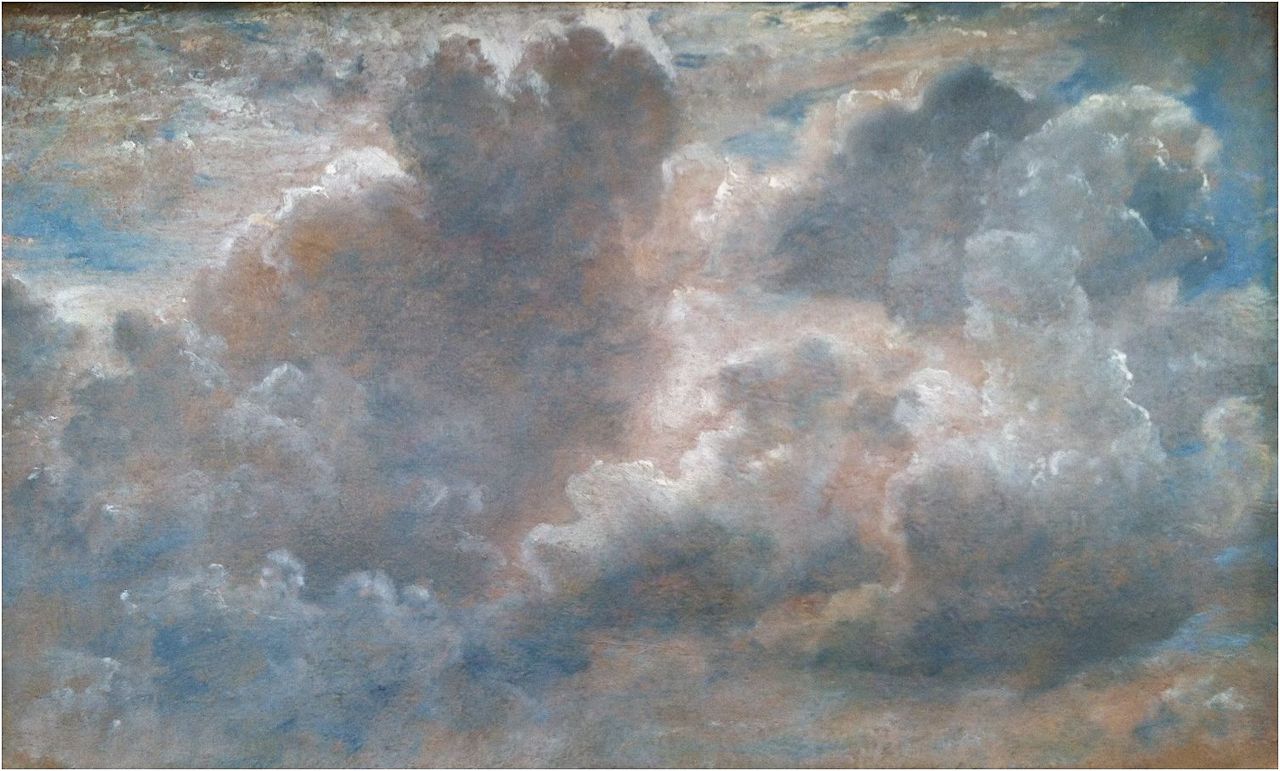
A disembodied voice.  A fire.  A cloud.  These are the ways God manifests most often in the Hebrew Bible.  When Moses recounts the revelation at Mount Sinai (also called Mount Choreiv) in this week’s Torah portion, Va-etchannan (“And I pleaded”), what he remembers best after 39 years is the fire.

Vesuvius in Eruption, by J.M.W. Turner, 1817

And you drew near, and you stood under the mountain, and the mountain was blazing with the eish up to the heart of the heavens—darkness, cloud, and thick fog.  Then God spoke to you from the middle of the eish.  You were hearing a sound of words, but you were seeing no shape, nothing but a voice.  And [God] told you [God’s] covenant that [God] commanded you to do, the Ten Words.  And [God] inscribed them on two stone tablets.  (Deuteronomy/Devarim 4:11-13)

eish (אֵשׁ) = fire.

So you must guard yourselves carefully, since you did not see any shape on the day God spoke to you on Choreiv from the middle of the eish, lest you [cause] ruin and you make yourselves a carved image, a shape of any idol … (Deuteronomy 4:15)

Moses continues warning the Israelites never to make any idols.  He reminds the Israelites of both the second commandment and the tragedy of the Golden Calf,1 but he also drives home his point that God appears to them as fire and has no shape—and therefore cannot be represented by any idol.

Fear of fire

The account of the revelation at Mount Sinai in the book of Exodus/Shemot mentions fire only once.2  But in this week’s Torah portion, Moses describes God manifesting in fire fourteen times.3

Furthermore, he describes the fire in terms that inspire fear.  God’s manifestation as fire could kill people.

Because God, your god, is an eish okhelah …  (Deuteronomy 4:23)

okhelah (אֺכְלָה) = that devours, that consumes, that eats.  (From the verb akhal, אָכַל = ate up.) 

After recounting the Ten Words, Moses describes the fearful reaction of the Israelites.

And it was, when you heard the voice from the middle of the darkness, and the mountain was blazing with the eish, and you approached me, all your heads of tribes and your elders, and you said: “Here, God, our God, let us see [God’s] glory and greatness, and we heard [God’s] voice from the middle of the eish this day.  We have seen that God can speak with humankind and [the human] can survive.  But now, why should we die?  Because this great eish, tokheleinu if we listen any more to the voice of God, our God, and we will die.  Because who of all flesh has heard the voice of the living God speaking from the middle of the eish, as we did, and lived on? You go close and listen …  Then you, you speak to us everything that God, our God, speaks to you.  And we will listen and we will do it.   (Deuteronomy 5:20-24)

tokheleinu (תֺאכְלֵנוּ) = it will devour us, consume us, eat us up.  (Also from the verb akhal.)

Here Moses reminds the Israelites that as children, they heard God’s disembodied voice from the middle of the darkness, and they saw the volcanic presence of God in fire, cloud, gloom, and more fire.  Even their parents were too frightened to stay near the voice and the fire, so they commissioned Moses to listen to God’s rules for them and report back.

He was the go-between for their parents 39 years before. Now he is passing on God’s words to the new generation.4

Fire and cloud

When God manifests as fire in the Torah, it is not a natural fire. Often the time of day determines whether people see the manifestation as cloud or fire.  God leads the Israelites through the wilderness with an intangible pillar that looks like cloud by day and fire by night, so they can always see it.5  From Mount Sinai on, whenever God wants the Israelites to remain encamped, God stations the cloud by day and fire by night above the Tent of Meeting.6

The Tabernacle in the Camp, Collectie Nederland

And on the day the sanctuary was erected, the cloud covered the sanctuary, the Tent of the Reminder, and in the evening it was over the sanctuary like the appearance of eish until morning.  Thus it was always: the cloud covered it, and the appearance of eish at night.  (Numbers 19:15-16)

A divine manifestation can even look like fire to one person, and cloud to another.  Moses climbs to the top of the mountain to spend 40 days and 40 nights learning God’s rules.

And the glory of God settled on Mount Sinai, and the cloud covered it six days.  Then [God] called to Moses on the seventh day from the middle of the cloud.  But the glory of God appeared as an eish of okhelet on top of the mountain to the eyes of the Israelites.  (Exodus 24:16-17)  

okhelet (אֺכֶלֶת) = devouring, consumption, demolition.  (Also from the verb akhal.)

Is God’s manifestation a cloud that conceals, or a fire that devours?  It depends on the beholder.  Moses thought he was walking into fog to hear God’s words.  But the people below concluded he had walked into fire and died, so they made the Golden Calf.  (See my post Ki Tissa: Making an Idol out of Fear.)

The manifestation of fire, or something that looks like fire, is also scaled up or down according to God’s motives.  When God first speaks to Moses, God wants to know whether Moses is good at paying attention to details.  So God manifests as a small fire inside a thorn bush, easy to miss in the glaring sun.

Moses at the Burning Bush
by Rembrandt

He looked, and hey! The bush was aflame with the eish, yet the bush was not ukal.  (Exodus 3:2)

ukal (אֻכָּל) = devoured, consumed, eaten up.  (Also from the verb akhal.)

On the other hand, when the Israelites finish making God’s portable sanctuary, the Tent of Meeting, and the new priests lay out the first sacrifice to inaugurate the altar, God makes a more impressive display.

And eish went forth from in front of God, vatokhal the rising-offering and the fat on the altar.  And all the people saw, and they shouted and fell on their faces.  (Leviticus/Vayikra 9:24)

vatokhal (וַתֺּאכַל) = and it devoured, consumed, ate up.  (Yes, another form of the verb akhal.)

How could an idol of a golden calf compare with the sight of a fire rushing out of the sanctuary and devouring the butchered animals on the altar?


Like fire, God has no definite boundaries, is constantly changing, and is impossible to grasp.

Idols, on the other hand, are man-made inanimate objects—solid, tangible, and immobile, the opposite of fire and fog.  Other religions in the Ancient Near East viewed idols as forms that gods would temporarily inhabit, rather than as gods themselves.  But Moses warns the Israelites against using idols for any religious purpose.

Fire is an unnerving metaphor for God’s manifestation in our world.  Yet I have met people who yearn for God’s unmediated presence.  They are ready to be devoured.  I am more cautious, or perhaps more ego-centered, than that.  A momentary experience of divine unity and purpose is plenty for me.  And I do not expect to be devoured.

I suspect that only our “right brains”, our irrational, intuitive minds, can be touched by an experience of God.  Most of the time, our “left brains”, our rational egos, are built-in mediators that protect us from being consumed by divine fire.

In other words, we have our own inner Moses to translate for us and keep us sane—although we always lose something in translation.

May we all learn that we cannot express the mystery at the heart of existence through tidy, concrete statements and creeds—any more than we can lure God into inhabiting idols.

(An earlier version of this essay was published in July 2010.)


  1. The Ten Words, first recorded in Exodus 20:1-14, are repeated in Deuteronomy 5:6-18. The second commandment begins: You may not make for yourself a carved image, any shape of what is in the heavens above or what is on the earth below, or in the waters below on the earth … (Deuteronomy 5:8).  The Torah first tells the story of the Golden Calf in Exodus 32:1-35, and Moses retells it in Deuteronomy 9:8-21.
  2. Exodus 19:18.
  3. Deuteronomy 4:11, 4:12, 4:15, 4:23, 4:33, 4:36 (twice), 5:4, 5:5, 5:19, 5:20, 5:21, 5:22, 5:23.
  4. Moses’ speech in Deuteronomy has both some omissions (for example, see my post Devarim: In God We Trust?) and some repetitions, such as the insistent recurrence of God’s fire in this week’s portion.
  5. The pillar of cloud by day and fire by night is first mentioned in Exodus 13:21-22.
  6. First mentioned in Exodus 40:38.


Devarim: In God We Trust?

Jordan River

Why does Moses die on the wrong side of the Jordan River, where he can see but not enter God’s “promised land”?

The Torah offers two conflicting reasons—and a hidden clue.

Moses blames the fathers of the Israelites he is addressing in this week’s Torah portion, Devarim (“Words”—the first portion in the book of Deuteronomy/Devarim).  He retells the story of the scouts who toured Canaan in the book of Numbers/Bemidbar, 38 years before.  When ten out of the twelve returning scouts reported that the land was full of giants and well-fortified cities, the frightened Israelites refused to cross the border.1

Who told them to trust God?

Someone argued with them.  In the book of Numbers, Moses and Aaron fell on their faces but said nothing.  It was Caleb and Joshua, the two scouts who gave the minority report in favor of crossing the border, who reminded the people that God would fight for them.2  (See my post Shelach-Lekha: Too Late.)  But in this week’s Torah portion, Moses claims he was the one who argued with the Israelites.

And I said to you: “You should not be terrified of them, and you should not be overawed by them.  God, your God who walks before you, [God] will fight for you, like everything that [God] did for you in Egypt, before your eyes, and in the wilderness …  Yet in this matter you have no ma-aminim in God, your God.” (Deuteronomy/Devarim 1:29-32)

ma-aminim (מַאֲמִינִים) = relying upon, trusting, having faith; reliance upon, trust, faith.  (A participle from the same root as ne-eman (נֶאֱמַן) = trustworthy, reliable; and amen (אָמֵן).)

Moses might be excused for misremembering who told the Israelites they should trust God to help them.  He is, after all, 120 years old.3  The difference between the two stories of the scouts can also be explained by the theory that Numbers and Deuteronomy were written by different authors, in different centuries.4

The result is the same in both accounts: despite hearing someone argue that they can rely on God to help them, the Israelites refuse to cross the border.  Then God decides the people must wait until 40 years after their exodus from Egypt before they get another chance to enter Canaan.  By that time, God says, all the men over 20 (i.e. the generation that refused to enter Canaan) will be dead—except for the two optimistic scouts, Caleb and Joshua.

But what about Moses and Aaron?  In the original story of the scouts, while Caleb and Joshua tell the people to trust God, they fall on their faces, waiting to hear God’s orders.  Surely they do not deserve the same fate as the rebellious Israelites.  And God’s first reaction implies that Moses will be spared.

And God said to Moses: “How long will this community treat me disrespectfully, and how long lo ya-aminu in me, despite all the signs that I have made in their midst?  I will strike them dead with the pestilence and disown them, and I will make you into a nation greater and mightier than they!”  (Numbers 14:11-12)

lo ya-aminu (יַאֲמִינוּ) = will they not have faith?   lo = not + ya-aminu = they will have faith in,  trust, rely upon.  (Also from the same root as ne-eman and amen.)

At this point, God wants Moses to populate Canaan.  Moses talks God out of killing everyone but him, and God settles on the 40-year plan.

Both Numbers and Deuteronomy note that the first time the Israelites approach the border of Canaan, from Kadeish-Barnea to the south, there is a lack of faith or trust.  The men who refuse to cross do not believe God is ne-eman (reliable); when God gives an order, they do not say amen.

In both Numbers and Deuteronomy, God decrees that Moses and Aaron will also die without entering Canaan.  But the two books give different reasons for this decree.

Numbers: The talk at the rock

Moses Striking the Rock,
by James Tissot

The people set off from Kadeish-Barnea after Miriam’s death, and the first place they camp has no water.  God tells Moses and Aaron to take their staff and speak to the rock, and it will yield water.  They assemble the Israelites in front of the rock.  Then Moses says:

“Listen up, mutineers!  Shall we bring forth water for you from this rock?” (Numbers 20:10)

Moses makes it sound as if he and Aaron can get water from rock with no help from God.  Then he hits the rock with the staff, instead of speaking to it.  And water gushes out.  Aaron stands by, doing nothing to correct his brother Moses.  (See my post Chukkat: The Price of Silence.)

But God said to Moses and to Aaron: “Because lo he-emantam on me, [you were not] treating me as holy in the eyes of the Israelites, therefore you shall not lead this congregation into the land that I have given them.”  (Numbers 20:12)

lo he-emantam (הֶאֱמַנְתֶּם) = you did not rely.   lo = not + he-emantam = you had faith, trusted, relied upon.  (Also from the same root as ne-eman and amen.)

The Israelites continue traveling east through the wilderness, and God says:

Let Aaron be gathered to his people, since he may not enter the land that I have given to the Israelites, because you [plural] mutinied against my word concerning the water… (Numbers 20:24)

Aaron dies on top of Mt. Hor, and his son Elazar takes over as high priest.5  Moses continues to lead the Israelites all the way to the Jordan River, but he knows he, too, will die without crossing it.

Deuteronomy: The blame is the same

The book of Deuteronomy mentions the episode of the water-bearing rock only near the end, when God tells Moses to climb Mount Nevo, where he will die, just as Aaron died on Mount Hor—

—because you both betrayed me in the midst of the Israelites at the water of Meribat-Kadeish in the wilderness of Tzin, because you did not treat me as holy in the midst of the Israelites.  (Deuteronomy 32:51)

But in this week’s portion, Moses tells a different story.  He says God decreed that Caleb, Joshua, and everyone who was a child at the time would live to enter Canaan, but “these men of this bad generation” would die before the 40 years were up (Deuteronomy 1:35-39).

Also God felt angry against me on your account, saying: “Even you shall not enter there!”  (Deuteronomy 1:37)

When Moses says “on your account” he does not distinguish between the new generation of Israelites listening to his speech and the old, bad generation.  His book-length speech in Deuteronomy does not mention that the new generation did anything to offend God; but in Numbers, when the Israelites first camp on the east bank of the Jordan, they worship the local god, Ba-al Peor.  (See my post Balak: Carnal Appetites.)  Instead of reaffirming their reliance on God, the new adults act as if God is not enough for them.  Like their fathers, they fail when it comes to ma-aminim in God.

Moses implies that their failure to rely on God is the reason why God will not let him cross into Canaan before he dies.  Ramban6 wrote that Moses wanted to demonstrate that the whole community is responsible for and suffers from any lack of faith in God.  As the leader of all the Israelites, Moses had the most responsibility.

*

This week’s Torah portion, Devarim, implies that God decreed Moses’ death on the east bank of the Jordan because Moses had failed to instill enough ma-aminim in the Israelites by the time they reached the southern border of Canaan.

In the book of Numbers, God decreed Moses’ death on the east bank because he failed to instill enough ma-aminim in the Israelites when he neglected to give God credit for the water gushing from the rock.

The timing is different in these two explanations of God’s decree, but the underlying cause is the same.  And the Torah gives us the clue by repeatedly using the same verb when someone fails to rely on God.

At the burning bush, God chose Moses because no one else could serve as God’s prophet before Pharaoh and also hold the Israelites together no matter how long it took to get them to Canaan.  For more than 40 years, Moses devoted his whole strength to the nearly impossible job of transforming a huge and motley collection of ex-slaves and camp followers into a single people dedicated to a new religion.  When Moses addresses the survivors in Deuteronomy, they are finally unified, optimistic, and ready to cross into their promised land.7

But can they keep their faith in God?  Can they trust God, who over the years delivered punishments as well as miraculous rescues?  Can they rely upon their God, and no other?

Can any of us?

(An earlier version of this essay was published in July 2010.)

  1. Numbers 13:1-14:4. At that time the Israelites are camped on the southern border of Canaan, near Kadeish-Barnea.
  2. Numbers 14:5-10.
  3. Though when Moses does die at the end of Deuteronomy, the Torah says “…his eye had not clouded and his vigor had not waned.” (Deuteronomy 34:7)
  4. Modern scholars examine differences in vocabulary, syntax, and style to assign parts of the Torah to different (unknown) authors writing in different eras. Although they disagree about many details, most agree that the first 11 chapters of Deuteronomy were written during the reign of King Josiah of Judah in the 7th century B.C.E.  The story of the scouts in the book of Numbers appears to be a composite of several texts written during different centuries.
  5. Numbers 20:22-29. Aaron is older than his 120-year-old brother Moses, but the Torah insists that he dies in the wilderness because of disobedience, not old age.
  6. 13th-century Rabbi Moshe ben Nachman, also called Nachmanides as well as the acronym RaMBaN.
  7. The Israelites cross the Jordan River, the northeastern border of Canaan, in Joshua 3:1-17.

Matot: From Confrontation to Understanding

The Israelites conquer land east of the Jordan River before they even entered Canaan.  They ask permission to use the king’s road through the land of Cheshbon, and when King Sichon refuses and sends his troops, the Israelites win the battle and take all his land.  After that, for no reason given in the Torah, the Israelites march north and conquer Bashan, ruled by King Og.  Only then do they finally turned around and camp on the east bank of the Jordan, across from the land of Canaan.1

After exterminating the local population there (see my post Matot: Killing the Innocent) most of the Israelites are ready to cross the river and take over Canaan.  But the men of the tribes of Gad and Reuven have a different idea.

Stage One: Confrontation and ignorance

They come to the authorities—Moses, the new high priest Elazar, and the chieftains of the other tribes—and declare:

“The land that God struck down before the community of Israel is livestock land, and your servants have livestock.”  And they said: “If we find favor in your eyes, give this land to your servants as property; don’t ta-avireinu the Jordan!”  (Numbers/Bemidbar 32:4-5)

ta-avireinu (תַּעֲוִרֵנוּ) = you make us cross, you let us cross.  (A form of the verb avar, עָבַר = cross, pass through, go past.)

At this stage, the men of Gad and Reuven are saying “Don’t make us cross the Jordan!”  They are only thinking about their livestock, their livelihood.  They have come up with only one supporting argument for their request:  that God gave the Israelites the land east of the Jordan River by letting the Israelites win battles.  The implication, they hope, is that the lands formerly ruled by Sichon and Og might also count as God’s “promised land”.  After all, God once promised “I will set your borders from the Sea of Reeds to the Sea of the Philistines, and from the wilderness to the Euphrates River” (Exodus 23:31).2  That would include and extend beyond the territories the livestock men want.3

But in the book of Numbers, Moses consistently treats the Jordan River as the northeastern border of God’s promised land of milk and honey.  So he assumes that the Gaddites and Reuvenites are starting yet another rebellion against God’s plan.

And Moses said to the Gaddites and to the Reuvenites: “Will your brothers go to war while you stay here?  And why will you inhibit the hearts of the Israelites from avor into the land that God gives you?  That is what your fathers did when I sent them from Kadeish-Barnea to look at the land.”  (Numbers 32:6-8)

avor (עֲבֺר) = crossing.  (Also a form of avar.)

Moses then brings up the catastrophe in the portion Shelach-Lekha, when the ten out of twelve spies returning to Kadeish-Barnea from their tour of Canaan reported that the land was too well-fortified, and its inhabitants were as gigantic as its fruit.  Frightened,  the people refused to cross the southern border of Canaan, and God declared they must wait 40 years in the wilderness, while the old generation died off, before they got another chance.4  Now the 40 years are complete.

What if the tribes of Gad and Reuven do stay behind when it is time to cross the river?  The rest of the Israelites might assume that conquering Canaan would be harder than they thought. 5   If the Israelites became too afraid to cross, Moses figures, God would become enraged and punish them again.  This idea disturbs Moses so much that he accuses the men of Gad and Reuven:

“And hey!—you rose up, replacing your fathers, you brood of sinful men—to sweep God’s anger again toward Israel!”  (Numbers 32:14)

Moses calls the men of Gad and Reuven sinful because they are obstructing God’s grand plan.6

At this stage, Moses and the men of Gad and Reuben appear to be on opposite sides.  Will the two tribes rebel against Moses?  Or will they submit and go live in Canaan with the rest of the Israelites?

Stage Two: Discovering the reasons

Reuben and Gad ask for Land, by Arthur Boyd Houghton

What Moses overlooks is that the Gadites and Reubenites are politely asking to settle on the east bank, using the phrases “if we find favor in your eyes” and “your servants”.  The men of the two tribes could have secretly plotted to make their move right after Moses’ death and before his successor, Joshua, began the river crossing.  Instead, they ask Moses’ permission ahead of time, in front of the high priest and the chiefs of all the tribes.

I believe this shows that they want to stay in good standing with the whole community of Israel, even though they do put their own livelihoods first.  It may even indicate that they respect God, and therefore respect the leadership God has established.  They simply did not realize that the other tribes would react badly if they stayed behind instead of crossing the Jordan.

Instead of stalking off or hardening their position, the men of Gad and Reuven respond to Moses’ accusation by reformulating their request to include the new information they gleaned from Moses’ first response.

Then they stepped up to him and they said: “We will build stone pens for our livestock and towns for our dependents.  Then we ourselves will go armed, hurrying in front of the Israelites until we bring them to their place.  And our dependents7 will stay in the towns fortified against the dwellers of the land.  We will not return to our houses until each Israelite has taken possession of his permanent possession.”  (Numbers 32:16-18)

At this point Moses could respond that their offer is not good enough.  The Gaddites and Reuvenites already seem to care more about their livestock than about God.  Moses suspects that choosing to live on the other side of the river from Canaan is further evidence of their disinterest in God.

However, he decides to accept their revised offer—as long as two key elements are added: God and the community.8  First Moses emphasizes that God will witness the battles to come.

And Moses said to them: “If you do this thing, if you bear arms in front of God to go to war; and everyone who is armed avar the Jordan in front of God, until [God] has dispossessed [God’s] enemies from in front of [God]; and the land has been subjugated in front of God; and afterward you return.  Then you will be cleared with God and with Israel, and this land will be your property in front of God.”  (Numbers 32:20-22)

avar (עָבַר) = he crosses.

Next Moses reminds the men of Gad and Reuven that if they do not carry out their promise in full, God will punish them.

“But if you do not do this, hey!—you sin against God.  Know that your sin will catch up with you!  So build for yourselves cities for your dependents, and stone pens for your livestock. And then what has gone out from your mouth, you must do.”  (Numbers 32:23-24)

Having noticed that the Gaddites and Reuvenites thought of their livestock first, Moses is careful to put the cities for their dependents first, and the pens for their livestock second.9

Stage Three: Acknowledgement

Crossing the Jordan,
by Gustave Dore

And the Gaddites and the Reuvenites said to Moses: “Your servants will do as my lord commands.  Our dependents, our women, our livestock, and all our animals will be there in the towns of Gilead.  And your servants, everyone who is armed for war, ya-avru to go to war in front of God, as my lord has spoken.”  (Numbers 3:25-27)

ya-avru (יַעַבְרוּ) = they will cross.  (Another form of the verb avar.)

The men of Gad and Reuven are still polite—and still interested in their livestock.  But they have listened carefully to Moses, and they correct their proposal accordingly.  They put the people before the animals when they mention securing settlements in Gilead.

They also include Moses’ phrase “in front of God” when they mention crossing the Jordan and fighting in the vanguard of the Israelites.  Thus they acknowledge Moses’ concern that they might not be placing enough value on human relations or on God’s presence.

Moses accepts their reformulation, and gives them provisional permission.  Since God has decreed that Moses will die on the east side of the Jordan, Moses gives instructions to his successor Joshua, to the high priest Elazar, and to the chieftains of the other tribes.

Moses said to them: “If all the armed Gaddites and Reuvenites ya-avru the Jordan with you to make war lifnei God, and the land is subjugated lifnei you, then you shall give them the land of Gilead as [their] property.  But if the armed men do not ya-avru with you, then they shall take property in the land of Canaan.”  (Numbers 32:29-30)

Given Moses’ mistrust of the motivations of the Gaddites and Reuvenites, he naturally makes the assignment of the land east of the Jordan conditional on their promise to send their armed men across the Jordan and fight in the vanguard until they have conquered enough territory so all the Israelites have their property.

But Moses’ instructions end with a surprise.  If the Gaddites and Reuvenites break their promise, their punishment shall be—that they take property in Canaan instead of Gilead!  Settling on conquered land outside Canaan is optional, a favor to be allowed or denied.  But Moses views settling on conquered land inside Canaan is the right of every Israelite, regardless of their character.  By stating this the contingency plan, Moses is acknowledging that the men of Gad and Reuven are still part of the community of Israel.

The Gaddites and Reuvenites humbly reply:

“Whatever God has spoken concerning your servants, thus we will do.”  (Numbers 32:31)


Did the men of Gad and Reuven agree to all of Moses’ terms, using his language, simply so they could acquire the lands they wanted for their livestock?

Or did they realize during the negotiations that they had been acting as if livelihood and land were the only vital things, when other things were actually more important?  Did they learn to appreciate their own families, the larger Israelite community, and even the Holy One?

May we all listen carefully, when we speak with people who seem to be on the other side of an issue.  And whether we reach an agreement or not, may we all learn about the other concerns in the hearts of our “opponents”, and acknowledge them.


  1. Numbers 21:31-22:1, in the Torah portion Chukkat. See my post Devarim & Shelach-Lekha: A Giant Detour.
  2. The land in God’s promise to Abraham also has the Euphrates River as its eastern border: On that day God cut a covenant with Avram, saying: To your descendants I give this land, from the river of Egypt to the great river, the river Euphrates.  (Genesis 15:18)
  3. The two Amorite kingdoms of Cheshbon and Bashan become the area called Gilead in the bible, and are part of the kingdom of Jordan today.
  4. Numbers 13:21-14:35.
  5. Rashi (11-th century Rabbi Shlomoh Yitzchaki) explains that Moses believes the other Israelites will be inhibited from crossing the Jordan because they think the men of Gad and Reuven are afraid to cross.
  6. Chatta (חַטָּא) = fallible, likely to sin (by disobeying God), sinful, guilty. (From the root verb chata, חָטָא = miss the mark, offend, be guilty.)
  7. The word I translate in this post as “dependents” is taf (טָף), which usually means either small children, or all non-marchers (i.e. all members of a tribe who cannot walk far). Sometimes the Torah uses the word taf to mean children and the elderly; other times taf includes women as well.
  8. Isaac ben Moses Arama, a 15th-century rabbi, wrote in Sefer Akedat Yitschak that Moses noticed the men of Gad and Reuven were only considering economics, not the spiritual value of living in the “promised land”, so he angrily reminded them four times of God’s share in the land by saying “in front of God”.
  9. Rashi wrote that the men of Gad and Reuven cared more about their property than about their children, since they put their livestock first, and Moses corrected the order.

Pinchas: Aromatherapy

The God-character in the Torah often lashes out in fits of rage.  Sometimes this anthropomorphic “God” kills offensive individuals, and sometimes “He” wipes out hundreds or thousands of people, the innocent with the guilty.

from Treasures of the Bible, Northrop, 1894

Moses succeeds in talking God down into relative calmness after the Israelites worship the golden calf in the book of Exodus/Shemot,1 and twice more in the book of Numbers/Bemidbar.2  But the smell of aromatic smoke is an even more effective way to soothe the God-character.

This week’s Torah portion, Pinchas, ends with a schedule of offerings to be burned on the altar.  God begins the list by telling Moses:

“Command the Israelites, and you shall say to them: You must pay attention to my offerings, my food—to my fire-offering of my reyach nichoach—to offer [it] to me at its appointed time.”  (Numbers 28:1-2)

reyach (רֵיחַ) = scent, odor, fragrance, aroma.  (From the same root as ruach,  רוּחַ= wind, spirit, mood.)

nichoach (נִחֺחַ) = soothing, calming.  (From the root verb nuach, נוּחַ = rest, settle down in peace and quiet.)

reyach nichoach (רֵיחַ נִחֺחַ) = soothing scent.

The phrase reyach nichoach appears ten more times in the schedule of animal and grain offerings that follows.3  Although the God-character no doubt appreciates the sacrifice of potential human food and the pouring of libations, the scent of the smoke is a key element.

The First Soothing Smoke

The smoke from burned offerings first reaches God as a reyach nichoach in Genesis/Bereishit, after the God-character has become so upset by the violence and corruption of humans (and perhaps other carnivores) that He decides to destroy all life on earth.4  God makes an exception only for the obedient Noah and the other occupants of his ark.

After the flood recedes, God tells Noah to empty out the ark.  Then Noah finally does something on his own initiative, building an altar and burning up some extra animals he brought along as an offering to God—perhaps in imitation of Abel, whose animal offering God turned toward.5  (See my post Noach: The Soother.)

And God smelled the reyach nichoach, and God said in His heart:  I will never again draw back to doom the earth on account of the human, for the impulse of the human heart is bad in its youth … (Genesis/Bereishit, 8:21)

The clouds of smoke probably remind God of Abel’s grateful sacrifice of sheep, before humankind turned bad.  Reassured, God concludes that at least some adults want to serve Him.

The phrase reyach nichoach appears again three times in the book of Exodus,6 seventeen times in Leviticus, and eighteen times in Numbers, always in descriptions of animal and grain offerings to God.

Korach

The God-character’s temper flares again in the next Torah portion, Korach, which begins with two simultaneous coups against Moses and Aaron. 

God deals with the Reuvenite leaders by making the earth swallow them and their families, and with Korach’s 250 Levites by burning them up in a conflagration.  The next day the remaining Israelites complain about all the deaths, and God tells Moses:

“Take yourselves out from the midst of this community, and I will consume them in an instant!”  (Numbers/Bemidbar 17:10)

Once again, God wants to annihilate the entire Israelite people—and presumably start over again with only Moses and Aaron and their families.  This time Moses tells Aaron to stop the plague by taking his incense pan out into the community.

Aaron took it, as Moses had spoken, and he ran into the middle of the congregation, and hey!—the pestilence had already started among the people!  He put on the incense and he made atonement over the people.  And he stood between the dead and the living, and the pestilence was stopped.  (Numbers 17:12-13)

The God-character has already killed 14,700 people when Aaron’s incense checks His rage.

At the end of the portion Korach, God instructs the Israelites to offer the firstborn of every cow, ewe, and nanny goat at the altar, “… and you shall burn-into-smoke their fat as a fire-offering for reyach nichoach for God.”  (Numbers 18:17)

Pinchas

At the end of last week’s Torah portion, Balak, the Israelites join the local Moabite Midianites in worshiping their god Baal-Peor.  When a Reuvenite man brings a Midianite princess (possibly a priestess of Baal-Peor) right into God’s tent-sanctuary to copulate, the God-character’s fury boils over.  Aaron’s grandson Pinchas dashes into the tent chamber and stabs a spear through the copulating couple.7

And the pestilence was stopped from over the Israelites.  And the deaths in the pestilence were 24,000.  (Numbers 25:8-9)

The God-character rewards Pinchas, but remains angry in this week’s Torah portion, Pinchas. God orders Moses to attack and kill all the Midianites who worship Baal-Peor—an order carried out in next week’s portion, Mattot.8  After addressing several other matters, God remembers the soothing scent of smoke in Numbers 28:1-2 (above).

Maybe the God-character finally realizes He has a quick temper and an anger management problem.  If the Israelites soothed Him with a reyach nichoach at regular intervals, He might stay calmer.

God requests two daily offerings, plus additional offerings every seventh day (Shabbat), every new moon, and on six special occasions during the year (now called PesachShavuot, Rosh Hashanah, Yom Kippur, Sukkot, and Shemini Atzeret).  The daily offerings and the additional offerings on the new moon, Pesach, Shavuot, Rosh Hashanah, Yom Kippur, and Shemini Atzeret are all labeled as either “a reyach nichoach, a fire-offering for God” or “a fire-offering of reyach nichoach for God”.

Smoke and the gods

Why does the God-character in the Torah calm down when He smells the smoke of an animal, grain, or incense offering?

The book of Ezekiel provides a clue.  Three times in Ezekiel, God complains that Israelites at home and in exile are flocking to foreign altars and giving mere idols a reyach nichoach.9

Moabite altars in “Bilam”
by James Tissot

Burning animals at altars for local gods was standard religious practice in ancient Canaan and Mesopotamia.  The epic of Gilgamesh includes a story in which Utnapishtim, the Mesopotamian equivalent of Noah, emerges from his boat after the flood and offers a sacrifice to the gods.  When he lights a fire of myrtle, cane, and cedar wood, the odor reaches the nostrils of the gods and gives them pleasure.10

Since many humans enjoy aromatic smoke from incense or from a barbecue, it is natural to assume an anthropomorphic god enjoys it, too.  Just as an angry king about to punish someone might be appeased by a delightful gift, an angry anthropomorphic god might be appeased by a gift of fragrant smoke.  Since the God of Israel and the gods of Canaanites and Mesopotamians were envisioned as living in the sky, smoke was one of the few gifts that would be sure to reach them.


Have we discarded the idea of an anthropomorphic god today?  Not entirely.  Both atheists and theists often think of God as a super-human being living in a “heaven” coexistent with our world.  Atheists prove that this super-being cannot exist, while most religious people explain that an anthropomorphic god is either one manifestation of the real God, or a helpful image in our own minds, not to be confused with the real God.

There are still some fundamentalists who believe in the angry, punishing God portrayed so often in the Hebrew Bible and inherited by Christianity and Islam.  The rest of us tend to view God as either loving (a helpful anthropomorphic image), or without emotion (because God is not really a super-human).

Yet we sometimes find ourselves disturbed by our own irrational anger, and the impulsive actions we commit as a result.  We do not want to be made in the image of the angry, temperamental God-character.  What can we do to become calmer human beings?

Smoking is not the best answer.  But making regular offerings to God could be.  Jews no longer burn animals on an altar to soothe God’s temper, thank God!  But we are asked to pray at the appointed times listed in Pinchas: daily, weekly, monthly, and on annual holy days.  I have found that when I pray thoughtfully, searching out inner meanings of some words and adding my own heartfelt longings, my prayer soothes my own spirit and lifts my soul closer to God.

May everyone who needs the blessing of calmness find a good way to receive it.


  1. Moses talks God out of annihilating the Israelites and starting over again with only Moses’ descendants in Exodus 32:9-14 and 32:25-35. See my post Ki Tissa: Fighting or Singing?  God may be testing Moses to see whether he will argue for the Israelites; but on the other hand, God does kill an untold number of them with a plague, even after the Levites have slain 3,000 guilty people.
  2. In Numbers 14:11-35 (Shelach-Lekha) God threatens to wipe out all the Israelites because they do not trust God to help them conquer Canaan and refuse to cross the border. Moses talks God down, and God makes them wait 40 years instead.  God’s next threat to annihilate all the Israelites is in Korach, reviewed above.
  3. Numbers 28:2, 6, 8, 13, 24, 27 and 29:2, 6, 8, 13, 36.
  4. Genesis 6:11-13, 6:17.
  5. Genesis 4:3-5.
  6. Exodus 29:18, 29:25, and 29:41.
  7. See my posts Balak & Pinchas: How to Stop a Plague, Part 1 and Balak: Carnal Appetites.
  8. See my post Mattot: Killing the Innocent.
  9. Ezekiel 6:13, 16:19, 20:28. In Ezekiel 20:41, God says that when all Israelites restrict themselves to serving their own God on the holy mountain of Israel, then God will accept the people themselves as a reyach nichoach.
  10. Gilgamesh tablet 11, part 4.

Chukat: Death and the Red Cow, Part 2

Life-blood.  Dead ash.  Living water.  These three elements are necessary for the ritual that brings someone back into the community after encountering a human corpse.  (See Chukat: Death and the Red Cow, Part 1.)

Deathbed, by Gustav Klimt

The one who touches any dead human being shall be tamei [for] seven days.  (Numbers/Bemidbar 19:11)

If a human being dies in a tent, everyone who comes into the tent and everyone who is [already] in the tent shall be tamei [for] seven days.  (Numbers 19:14)

tamei (טָמֵא) = contaminated, ritually impure, in an unfit state for approaching God, not tahor.

tahor (טָהוֹר) = uncontaminated, ritually pure, in the correct state for approaching God, not tamei.

Anyone who is tamei is forbidden to enter the courtyard around the sanctuary, where the Israelites make offerings to God.  For a minor cause of tumah (טֻמְאָה, the state of being tamei), such as a seminal emission, one need only wash and wait until sunset to become tahor again.1  But if the tumah is due to exposure to a dead human body, the tamei person must be sprinkled with a specific mixture of ash and water on the third and seventh days after the exposure.

Then he shall clean his clothing and wash in water, and he shall be tahor at sunset.  (Numbers 19:19)

At that point he or she can rejoin the community in worship.2  Meanwhile, the man who does the sprinkling becomes tamei by that very act.

And the one who sprinkles … he shall clean his clothing … and whoever touches the water … shall be tamei until sunset.  (Numbers 19:21)

What is this liquid that makes the tamei tahor and the tahor tamei?

From blood to ash to water

The process for making the ash that goes into the sprinkling water begins with the color of blood:

“Speak to the Israelites, and they shall bring to you a cow [that is] perfectly adumah, that has no blemish, that has not had a yoke upon her.”  (Numbers 19:2)

adumah (אֲדֻמָּה) = red-brown, blood-colored.  (feminine of adom, אַדֺם.  From the same root as dam, דָּם = blood; adam,אָדָם  = humankind; and adamah,אֲדָמָה  = earth, dirt, ground.)

The blood of an animal slaughtered at the altar is sacred, reserved for splashing on the altar or inside the sanctuary.  But the blood of any other animal still belongs to God, because blood is its  life.  “The blood of any flesh you shall not eat, because the life of all flesh is its blood.”  (Leviticus 17:14)3  Thus the blood-red cow is the color of life.

And you shall give her [the cow] to Elazar the priest, and he shall take her outside the camp and [a man] shall slaughter her in front of him.  And Elazar the priest shall take some of her blood with his finger and flick some of her blood toward the front of the Tent of Meeting seven times.  (Numbers 19:3-4)

We do not know the original purpose of flicking the blood toward the tent-sanctuary.  At the very least, the gesture emphasizes the connection between life and God.

Then [the man] shall burn the cow before his eyes; he shall burn her hide and her flesh and her blood over her intestinal contents.  And the priest shall take cedar wood and oregano and crimson yarn, and throw them down on the burning cow.  (Numbers 19:3-6)

The rest of the cow’s blood is burned along with the whole cow, the reddish wood of an evergreen tree, some yarn dyed bright red with shield-louse eggs—and oregano.

The oregano (a tall Syrian variety, origanum maru, traditionally but inaccurately translated as “hyssop”) is an aromatic herb used elsewhere in the Torah for ritual splashing and sprinkling with blood.4  All three of the items tossed on the burning cow are associated with blood, and therefore with life.

And a tahor man shall gather the afar of the cow and save them outside the camp in a tahor place.  (Numbers 19:9)

afar (עָפָר) = ash, dust.

Afar is a symbol of both birth and death.  God shapes the first human out of afar from the adamah (dust from the earth) and breathes life into it.5  Later, God tells Adam:

Afar you are, and to afar you will return.  (Genesis 3:19)

Thus the ash from the red cow signifies the border between life and non-existence, the border crossed by both birth and death.

When a person has become tamei by touching or being under the same roof as a dead human body, some of the ash from the ritual burning of a red cow is stirred into a vessel of “living water” or “water of life” (מַיִם חַיִּים): water from a naturally flowing source.6  This mixture is  sprinkled on the tamei person.

Thus the antidote for exposure to death follows a progression from the life-blood of the red cow (enhanced by other items evoking blood), to the ash of its death, to the living water.

From tahor to tamei to tahor

Humans who make or use the ash of the red cow also go through a three-stage progression in the Torah portion Chukkat.  They must be tahor to begin their work.  They become tamei during the work, and then return to a tahor state.

After the red cow has burned down to ash,

Then the priest shall clean his clothing and wash his flesh in water, and afterward he may come into the camp; but the priest will be tamei until sunset.  And the one burning her shall clean his clothing in water and wash his flesh in water, and he shall be tamei until sunset.  And a tahor man shall gather the ash of the cow and save it outside the camp in a tahor place …  And the gatherer of the ash of the cow shall clean his clothing, and he shall be tamei until sunset. (Numbers 19:7-8)

All three men must wash and wait until sunset before they are tahor again.

The Torah warns priests to be meticulous about avoiding tumah as much as possible, even if it means staying away from their own family members who die.7  After all, they must serve God both in the courtyard and inside the sanctuary, and all tamei persons are prohibited from entering the area.

Nevertheless, at least one, and possibly three, priests8 must become tamei until sunset on the day they burn the red cow—so that those who come close to the dead can become tahor again.

Similarly, the man who sprinkles the mixture of the ash and living water makes someone exposed to a dead human tahor again, but he becomes tamei just by touching the mixture.9

Chukkat hints that people who are exposed to the dead become tamei, unfit for communal worship, because they are in an altered state of consciousness.  (See Death and the Red Cow, Part 1, for my own experience.)  Perhaps sprinkling them with the mixture of ash and living water helps them to integrate their experiences of death and life.  After seven days, including two sprinklings, they might reach a tahor state of mind.

Then why does everyone involved in the creation or application of the red cow’s ash become tamei?   I suspect the ash is so spiritually powerful (or that what it represents is so psychologically powerful) that exposure to it causes a lesser version of the altered state of consciousness in someone exposed to a human corpse.  The ash-makers and the sprinkler need not be sprinkled or wait for seven days themselves, but they must still do some ritual washing and take the rest of the day off before they are once more in the correct frame of mind to engage in the ordinary religious life of the Israelites.

*

Today when we are in an altered state because we have witnessed death, we have a few mourning rituals to help us.  But although Jewish tradition calls for “sitting shiva” at home for seven days after the burial, we have nothing as dramatic as the ritual with the ashes of the red cow to snap us back into a state in which we are psychologically ready to participate in life with our community.  We can only wait for the shadow of death to slowly pass by.

May we be patient with ourselves, and with others, while we wait.

  1. Leviticus 15:16-18.
  2. Contamination through touch, and washing to eliminate the contamination, remind modern readers of the germ theory of disease, which was first proposed in the 16th century C.E. and generally accepted by the end of the 19th The ancient Israelites, however, were only concerned about an abstract state of fitness for worshiping God.  They considered physical diseases either mysteries, or punishments inflicted by God, which could be avoided only through prayer, not through quarantine or washing.
  3. Later in the Torah, the people are given permission to slaughter and eat kosher livestock in their villages if God’s altar is too far away. Moses urges the Israelites: “Only be strong, so as not to eat the blood, because the blood is the life…”  (Deuteronomy 12:23)
  4. The Israelites use this oregano (eizov, אֵזוֹב) to paint blood on the doorposts and lintels of their houses in Exodus 12:22, so the plague of the death of the firstborn would pass over them. Priests sprinkle blood using oregano branches in Leviticus 14:1-7 and 14:49-52 in order to convert both people and houses stricken with the disease of tzara-at from tamei to tahor.
  5. Genesis 2:7.
  6. Numbers 19:17. “Living water” includes water from a spring, a river, or a well; it excludes salt water or water from a cistern.
  7. Leviticus 21:1-4, 21:11.
  8. Leviticus 22:1-9.
  9. Numbers 19:21, translated above.