Haftarat Toledot—Malakhi: For the Sake of Integrity

Malakhi is the last book of the Prophets, written shortly after the second temple in Jerusalem was built (circa 516 BCE) and priests were once again burning offerings at the altar. But the priests were derelict in their duties, according to this week’s haftarah1 reading, Malakhi 1:1-2:7.

The book opens with God claiming credit for turning the kingdom of Edom into ruins, and warning that God can make Judea2 and its capital, Jerusalem, just as desolate. Why would God want to do that? Because the priests in Jerusalem are holding God’s “name” (i.e. reputation) in contempt.

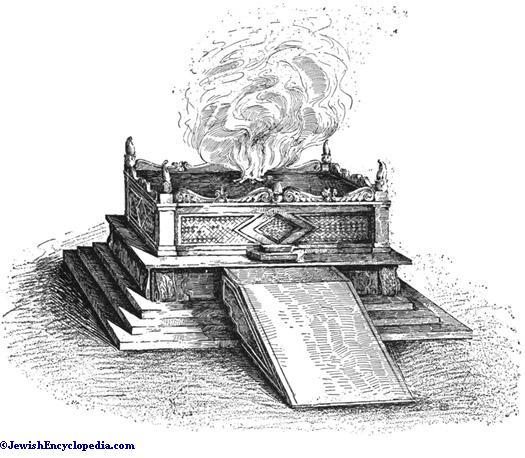
Altar from Treasures of the Bible,
Northrup, 1894

And you say: “In what way have we held your name in contempt?” By bringing defiled food to my altar. And you say: “In what way have we defiled you?” By thinking God’s table can be despised.  (Malakhi 1:6-7)

The altar is poetically called God’s table, as if God were eating the meat, even though the Hebrew Bible goes no farther than imagining that God enjoys the smell of the smoke from the altar.3

First God accuses the priests of offering animals that are defiled because they are blind, lame, or diseased. These offerings are strictly prohibited in the book of Leviticus, which orders:

Anything that has a blemish in it, you must not offer, since it will not be accepted for you. (Leviticus 22:20)4

The book of Malakhi emphasizes that God will not accept blemished offerings.

And if you offer the blind as a slaughter-sacrifice, it is not bad? And if you offer the lame or the diseased, it is not bad? Offer it, if you please, to your governor! Will he be pleased with you, or lift your face [acknowledge you favorably]? (Malakhi 1:8)

Burning defective animals on the altar is useless, God says. It would be better to shut the doors of the temple and let the fire on the altar go out.

I take no pleasure in you, said the God of Hosts, and I will accept no gift from your hands. (Malakhi 1:9)

Even the countries around Judea honor God more than the priests in Jerusalem.

My name is great among the nations, said the God of Hosts. But you profane it … And you say: “Hey, what a bother!” … And you bring the stolen, the lame, and the sick.  (Malakhi 1:11-13)

Here God adds another category of gifts that only defile God’s altar: stolen animals. But then the book of Malakhi returns to the argument that a ruler does not want flawed animals:

A curse on the deceitful one who has [an unblemished] male in his flock, but he vows and slaughters some ruined one to my lord! Because I am a great king, said the God of Hosts, and my name is held in awe among the nations. (Malakhi 1:14)

Next comes a warning that God will curse the priests.

If you do not take heed and you do not set it in your heart to give honor to my name, said the God of Hosts, then I will send a curse upon you, and I will curse your blessings … (Malakhi 2:2)

These blessings, according to Rashi,5 include the grain, wine, and oil the priests receive from the people. The late Rabbi Adin Steinsaltz added that the it might mean “the blessings for which you pray, or the blessings with which you bless the people, the priestly benediction”.6 If the blessings that the priests pronounce backfired, then the people would despise the priests.

The High Priest, by James Tissot, ca. 1900

This week’s haftarah ends:

For the lips of a priest guard knowledge, and instruction is sought from his mouth; for he is a malakh of the God of Hosts. (Malakhi 2:7)

malakh (מַלְאַךְ) = messenger.

A malakh of God almost always turns out to be a divine being, or angel, as a manifestation of God. This verse is one of the rare exceptions. Rashi pointed out that both a divine malakh and a priest serve God and enter a holy place where God dwells.


There has been no temple in Jerusalem for almost two thousand years, and the distant descendants of priests have only minor roles in Jewish services. So why should we care whether the priests in the time of Malakhi were negligent? Does anything in this haftarah apply to us?

I think the underlying problem in the book of Malakhi is that the priests are two-faced. They maintain the appearance honoring God and doing their work reverently, when in reality they cut corners out of laziness (“Hey, what a bother!”—Malakhi 1:13). They even turn a blind eye to theft. Yet part of their job is to instruct the people about God’s laws!

The book of Malakhi gives an obvious example of this kind of deception. But it is easy to cheat when you are the boss, when you are responsible for work that affects others but does not mean much to you personally. If people who lead religious services today carefully follow the rules and rituals, and do whatever they can to make the services inspiring, then they are acting with integrity regarding their job—even if they are atheists. But if they ignore the rules, rush or plod through the services, and do a shoddy job, they are acting without integrity—whether they believe in God or not.

May we act with integrity in all the positions where we have authority, striving to do the job right, without cheating.


  1. Every week in the year is assigned a Torah portion (a reading from the first five books of the bible), and a haftarah (a reading from the Prophets).
  2. Malakhi was written after the Persian Empire had swallowed the Babylonian Empire, and Cyrus the Great had proclaimed that ethnic groups could rebuild their shrines and exercise limited self-governance in their provinces. The biblical books of Ezra and Nehemiah describe how those two leaders brought Israelites who had been held captive in Babylon back to the province of Judea, and rebuilt Jerusalem and its temple.
  3. See my post: Pinchas: Aromatherapy.
  4. See my post: Emor: Flawed Worship.
  5. Rashi is the acronym of 11th-century Rabbi Shlomoh Yitzhaki, whose commentary is still universally cited.
  6. Rabbi Adin Steinsaltz, Introductions to Tanakh: Malachi.
Pesach: Who Is Elijah?

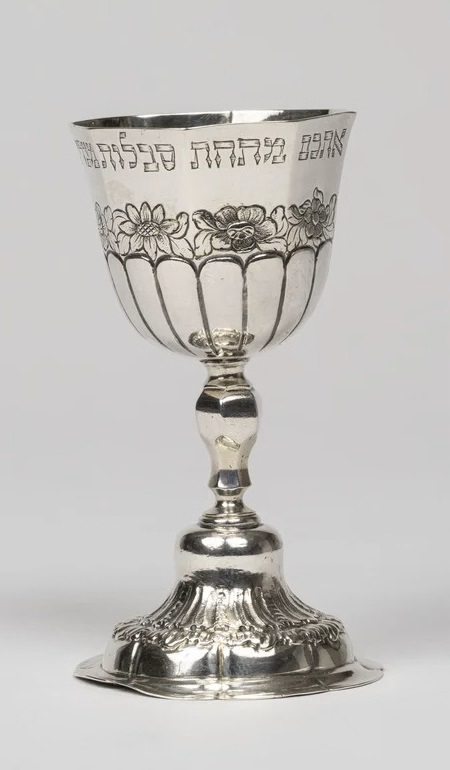
Passover cup by Johann Jakob
Runnecke, 18th century,
Jewish Museum

During this week of Passover (Pesach, פֳּסַח), Jews have been gathered around tables to celebrate liberation. Our ceremony (seder, סֵדֶר) has fourteen steps, punctuated by four cups of wine. When we pour the fourth cup of wine for each person at the table, we also pour wine into a cup that has been standing untouched the whole evening: the cup of Elijah.

Then we stand up, and someone opens the door to invite Elijah inside to join us. (This is the second time we open the door during the seder; before the meal, we open it to invite “all who are hungry” to come in and eat with us.)

While we wait for Elijah, we read a short passage. The traditional reading, from the centuries when almost every non-Jew was an enemy, consists of three biblical quotations asking for God’s wrath to destroy the enemies of Jews:

Pour out your wrath on the nations that do not recognize you, and on kingdoms that do not proclaim your name; because they ate up Jacob and made his abode a desolation. (Psalm 79:6-7) Pour out on them your curse and let your rage engulf them. (Psalm 69:25) Pursue in rage, and annihilate them from under the heavens of God. (Lamentations 3:66)

The connection between this reading and Elijah is tenuous. However, Elijah is portrayed in a few stories from the first book of Kings as a wrathful zealot bent on destroying the worshipers of other gods.

Many modern seders replace this reading with something less dire that refers to biblical stories in which Elijah orders kings around, or rescues the unfortunate, or becomes an angel instead of dying.

After that, we sing a song with these words1 before we close the door:

Eliyahu, hanavi                                   (Elijah the prophet)
Eliyahu, haTishbi (Elijah the Tishbite)
Eliyahu, Eliyahu, Eliyahu haGiladi (Elijah the Giladite)
Bimheirah veyameinu (Quickly, in our days)
Yavo eleinu (May he come to us)
Im moshiach ben David (With the anointed one, descendant of David)

Moshiach (מָשִׁיחַ) is “messiah” in English. The Christian story is that the messiah arrived over 2,000 years ago as Jesus. The Jewish story is that the messiah (or the messianic age) will not arrive until the whole world has become a place of peace, justice, kindness, and wisdom. So naturally Jews hope Moshiach will come during our lifetimes.

But why do we also call for Elijah to come to us? It depends on which characteristic of the prophet—or angel—we consider.

Elijah the wrathful zealot

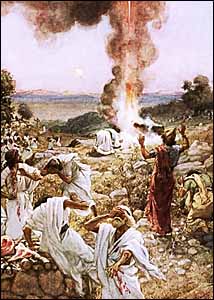
Elijah first appears in the Hebrew Bible after Ahab has become the king of the northern kingdom of Israel. Ahab marries the Phoenician princess Jezebel, and erects an altar for Baal and a pole for Asherah in his capital city, Samaria. The prophet Elijah is driven by his desire to eliminate the worship of other gods in the kingdom of Israel. First he declares a long drought, presumably so the Israelites will be realize their own God, Y-H-V-H, has the power to destroy them. After three years of drought, he stages a dramatic contest between Y-H-V-H and Baal at Mount Carmel.

Elijah’s Sacrifice on Mt. Carmel,
by William Brassey Hole

When Elijah’s God wins, the Israelites prostrate themselves and shout:

“Y-H-V-H, he is the only god! Y-H-V-H, he is the only god!” Then Elijah said to them: “Seize the prophets of Baal! Don’t let any of them escape!” And they seized them, and Elijah took them down to the Wadi Kishon and slaughtered them there. (1 Kings 19:39-40)

Then God brings rain. (See my blog post: Haftarat Ki Tissa—1 Kings: Ecstatic versus Rational Prophets.)

Elijah’s zeal for God shows up again in a story about King Ahab’s successor, his son Achaziyahu. The new king falls out a window, and sends messengers to ask a god in Ekron whether he will recover. Elijah intercepts the messengers and tells them King Achaziyahu will die because he sought out a foreign god instead of asking a prophet of Y-H-V-H. The king sends fifty soldiers to arrest Elijah, and their captain climbs the hill where the prophet is sitting and orders him to come down. Elijah replies:

“If I am a man of God, fire will come down from the heavens and consume you and your fifty!” (2 Kings 1:10)

Obligingly, God incinerates the soldiers with fire from heaven. The king sends another fifty men, with the same result. The third time, the captain begs Elijah to please spare him and his men. No fire appears, and Elijah follows the captain to the palace, where he tells the king that he will not rise from his bed, but will die for his disloyalty to God. Achaziyahu dies.2

Elijah the insolent

Another approach to Elijah’s part of the Passover seder is to emphasize his refusal to submit to authority.

When Elijah first shows up in the bible, he is identified by his clan (Tishbi) and region (Gilead), as in the Passover song. Then, with no transition, he speaks abruptly to King Ahab.

Then Elijah the Tishbite, an inhabitant of Gilead, said to Ahab: “As Y-H-V-H lives, the God of Israel whom I wait on—there will be no dew nor rain these years unless my mouth pronounces it!” (1 Kings 17:1)

Whenever Elijah speaks to a king, he uses none of the customary courtesies. He never refers to himself as the king’s servant, nor says please, nor uses any honorifics. He does not respect human authority. (He also appears to be arrogant in his assumption that when he says a miracle will happen, God will follow through. But God always does. And when God gives him an order, Elijah always obeys.)

After three years of drought, God tells him:

“Go, appear to Ahab, and I will give rain to the face of the earth.” (1 Kings 18:1)

When he meets King Ahab outside the city of Samaria, Elijah criticizes him for following other gods, then gives him orders:

“And now, assemble all of Israel at Mount Carmel for me, along with the 450 prophets of Baal and the 400 prophets of Asherah who eat from Jezebel’s table.” (1 Kings 18:19)

King Ahab obeys.

Elijah the compassionate

The prophet Elijah is high-handed with kings, soldiers, and the prophets of other gods. But he is thoughtful when it comes to the unfortunate. Some seders tell the story of how he saved a poor widow and her son.

After Elijah announces the long drought, God tells him where to hide from the agents of King Ahab and Queen Jezebel. His second hiding place is the house of a widow and her son in a village near Phoenicia. When Elijah arrives, the widow tells him she has only enough flour and oil to bake a couple of biscuits3 before she and her son starve to death. Elijah tells her to make a small biscuit for him first, and promises that God will make a miracle so her jar never runs out of flour and her jug never runs out of oil until it rains again.4 The widow obeys the prophet, God makes the miracle, and Elijah lives in the room on the widow’s rooftop.

Then her son gets sick. When the boy stops breathing, Elijah carries him upstairs and lays him on his own bed.

Elijah Raises the Widow’s Son, by James Tissot, circa 1900

Then he stretched himself out over the boy three times, and he called out to Y-H-V-H and said: “Y-H-V-H, my God, please bring back the life inside this boy!” (1 Kings 17:21)

The boy revives.

In a later story, Elijah is compassionate even when he is in despair, believing that he has failed in his mission to convert the whole kingdom of Israel to worshiping only Y-H-V-H. He heads south into the Negev, hoping to die there instead of at the hand of Queen Jezebel.5 On the way he thoughtfully leaves his servant in the town of Beersheba, so the man will not die in the desert with him.6

Elijah the angel

The final biblical story about Elijah describes his non-death. His disciple Elisha knows it is Elijah’s last day on earth, and sticks close to his master, even though Elijah asks him to stay behind three times. When they reach the Jordan River, Elijah rolls up his mantle (cloak) and slaps the water with it. The river divides and the two men walk across the riverbed.

Elijah Carried Away into Heaven by a Chariot of Fire,
by James Tissot, circa 1900

And they kept on walking and talking. And hey! A chariot of fire and horses of fire! And they separated the two of them. And Elijah went up in a whirlwind to the heavens. (2 Kings 2:11)

Elisha watches, then picks up Elijah’s mantle.

According to later Jewish writings, Elijah becomes an angel (i.e. a supernatural messenger or emissary of God) after God’s whirlwind carries him up to the heavens. This concept first appears in the book of Malachi. In the third chapter God, addressing the Israelites, says:

“Here I am, sending my malakh; and he will clear the way before me, and suddenly the lord that you are seeking will come to the temple. And the malakh of the covenant that you desire, hey! He is coming!” (Malachi 3:1)

malakh (מַלְאַךְ) = messenger, emissary. When God sends a malakh, it is often translated into English as “angel”.

The text postpones identifying this malakh. The next verse warns that the arrival of God’s emissary is not all good news.

“But who can endure the day he comes? And who can stand when he appears? For he is like the fire of a smelter and the lye of a fuller.” (Malachi 3:2)

The book of Malachi ends with God announcing:

“Behold, I am sending you Elijah the prophet before the great and awesome day of Y-H-V-H comes. And he will turn the hearts of fathers toward sons, and the hearts of sons toward fathers, lest I come and I strike the land with complete destruction.” (Malachi 3:23-24)

Now we know the malakh or angel is Elijah, centuries after he ascended to the heavens. The “day of Y-H-V-H” is a day of final judgment anticipated in some later books of the Hebrew Bible and in the Talmud. After that “day”, those whom God has found acceptable will live in “the world to come”, in which the Moshiach reigns.

But first, Elijah will do what he can to improve people’s hearts so they can enter the world of the Moshiach.

The tradition that Elijah is still among us as a malakh continued from the Talmud to 19th-century Chassidic tales, in which Elijah appears disguised as an ordinary human being. He either rewards a good person or makes a man realize he has behaved badly and only later does the person realize it was Elijah.

This Elijah no longer despairs of reforming people, but enlightens them one at a time.


Which Elijah do you want to invite into your house—or into the world today? The zealot who wipes out people who are irredeemable? The insolent prophet who demonstrates that authority figures have less power than they think? The compassionate man who goes out of his way to save the lives of the unfortunate? Or the divine emissary who improves the world slowly, one person at a time, until Moshiach comes?


  1. Jews also sing this song during the ritual of Havdalah marking the end of Shabbat and the start of a new week.
  2. 2 Kings 1:2-17.
  3. The Hebrew word is translate here as “biscuit” is ugah, עֻגָה = a round, flat wheat cake baked on hot stones or ashes.
  4. 1 Kings 17:13-14.
  5. Jezebel sends a messenger to tell Elijah that she is going to kill him (1 Kings 19:1-2).
  6. 1 Kings 19:3.

Haftarat Toledot—Malachi: Respectfully Yours

Every week of the year has its own Torah portion (a reading from the first five books of the Bible) and its own haftarah (an accompanying reading from the books of the prophets). This week’s Torah portion is Toledot (Genesis 25:19-28:9), and the haftarah is Malachi 1:1-2:7.
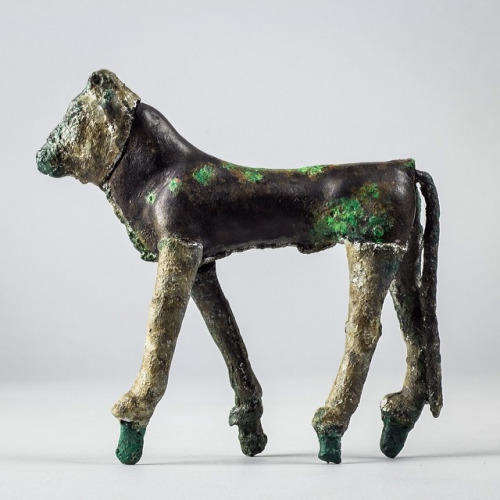
calf-ashkleon-silver

Do religious rituals and observances matter? How important is it to get the details right?

The three faults that draw the most condemnation from the prophets in the Hebrew Bible are:

1) worshiping other gods,

2) behaving unethically toward other people, and

3) failing to follow the rules of rituals

—in that order, if one judges by the number of words devoted to each.

When the prophets criticize the Israelites for their sacrifices at the temple, they usually condemn them for going through the ritual motions while continuing to act unjustly toward the poor, orphans, and widows.

But when the prophets criticize the temple priests, they denounce them for not teaching the Israelites about God (Jeremiah 2:8), for not separating the holy from the unholy and the pure from the impure (Ezekiel 22:26 and Zephaniah 3:4), for charging fees to make religious rulings (Micah 3:11), for promoting sexual sins (Hosea 6:9), and, in this week’s haftarah, for accepting defective animals as offerings for the altar.

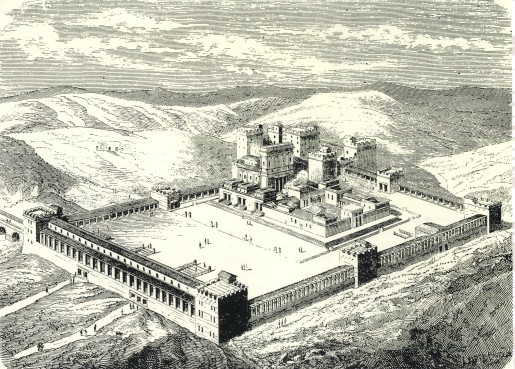
Second Temple, Jerusalem
Second Temple, Jerusalem

The last prophet in the Hebrew Bible is Malachi, whom most scholars date to the 5th century B.C.E., when the homeland of the Israelites has become a province in the Persian Empire, and Ezra and Nehemiah have rebuilt Jerusalem and its temple.

A pronouncement: the word of God to Israel, by the hand of Malakhi. (Malachi 1:1)

Malakhi (מַלְאָכִי) = Malachi (usual English spelling); My malakh.

malakh (מַלְאָךְ) = messenger, either human or divine.

God’s messenger delivers God’s complaint against the priests of the second temple.

“A son should honor a father, and a slave his master; but if I am a father, where is My honor? And if I am a master, where is My reverence?” says the God of [Heavenly] Armies to you, the priests who are bozeh of My sheim. And you say: “How are we bozeh of Your sheim?” (Malachi 1:6)

bozeh (בּוֹזֶה) = being in contempt, slighting, disrespecting, demeaning, finding insignificant.

sheim (שֵׁם) = name, reputation.

God answers:

“Presenting on My altar degraded food, then you ask: How are we degrading you? When you say: The table of God is nibezeh. Then if you present a blind [animal] for a slaughter-sacrifice, there is nothing wrong, and if it is lame or sick, there is nothing wrong!” (Malachi 1:7-8)

nibezeh (נִבְזֶה) = insignificant, contemptible, not worthy of respect. (From the same root verb as bozeh.)

Temple altar
Temple altar

The animals are given by the people, but the priests must decide whether each animal is acceptable to burn on the altar that serves as God’s “table”. Malachi astutely diagnoses the problem with flawed offerings: although the end-product of smoke is the same, priests who accept defective animals as gifts for God are showing contempt for God’s reputation. By doing so, they teach the people that they can give God any old leftovers; they need not honor God the way they would honor a parent or a master by serving a beautifully presented dinner.

The haftarah contrasts this negligent attitude with the respect and reverence that Israelite priests used to show for their God.

A torah of emet was in his mouth

And no wickedness was found on his lips;

In peace and on level ground he walked with Me

And he turned many away from wrongdoing. (Malachi 2:6)

torah (תּוֹרַה) = instruction, direction; the sum of God’s law; a book containing God’s laws. (From the same root as yoreh (יוֹרֶה) = he will teach; and moreh (מוֹרֶה) = teacher.)

emet (אֱמֶת) =  reliability, trustworthiness, truth; reliable, trustworthy, true.

A good priest teaches the people what to do, both ritually and ethically. The priest’s actions are consistent with his teachings; he is honest, what we call being “on the level” even in English. Therefore his instructions are emet.

kohen-ordinary-garments

Because the lips of a priest preserve knowledge

And they seek torah from his mouth;

Because he is a malakh of the God of [Heavenly] Armies.

But you turned away from the path;

You made many stumble through the torah;

You wiped out the covenant of the Levites, said the God of Armies. (Malachi 2:7-8)

Just as the author of the book Malachi is a malakh, a messenger from God, every priest must be a responsible malakh.

The Talmud extends this requirement to everyone who teaches about God. Rabbi Yochanan says: “If the rabbi is like a messenger of the God of Armies, they should seek the law at his mouth; but if he is not, they should not seek the law at his mouth.” (Babylonian Talmud, Mo-ed Katan 17a)

Back to our original question: Do rituals matter? And how important is it to get the details right?

For the priests at the second temple in the 5th century B.C.E., it was essential. They had to carry out the letter of the law concerning animal sacrifices, particularly the requirements for unblemished animals, in order for the people to see that they took God seriously.

After the fall of the second temple in 70 C.E., Judaism’s new teachers, the rabbis cited in the Talmud, focused on interpreting and extrapolating the laws in the Bible that did not require offerings at a temple. The examples they set in their personal lives were also scrutinized. If you wanted your rulings to be respected about the shape of lamps permissible on Shabbat or which slaves a master is obligated to feed, you had to follow all the rules yourself.

Today many rabbis and other teachers of the Torah, as well as many teachers of other religions, are primarily concerned with ethical behavior toward fellow human beings. The Hebrew Bible addresses ethics, but provides proof texts for contradictory opinions. For example, in one passage Moses commands genocide (see my post Mattot: Killing the Innocent).  In another, God tells Moses to tell the people: You shall not wrong a stranger, and you shall not oppress him, for you were strangers in the land of Egypt. (ExodusShemot 22:20)

In the face of conflicting passages, a modern Torah interpreter is responsible for finding the deepest truth and teaching it. Rabbi David Frankel wrote: “Thus, what makes Torah “true” is the sincerity and integrity with which one pursues the process of searching and interpreting.”

I am continually away of the shortcomings in my own behavior when I teach the Torah in a class, in a service, or in this blog. Not only is my idea of keeping kosher too idiosyncratic for most observant Jews, but I catch myself falling short of my own standards for kindness and justice. Are my words emet? Probably not. I can only pray that my sincere attempts to wrestle with the text and reach through to the divine spirit behind it will somehow lead to an occasional flicker of inspiration.  I may not walk with God on level ground, but I am grateful for this journey.