Malakhi is the last book of the Prophets, written shortly after the second temple in Jerusalem was built (circa 516 BCE) and priests were once again burning offerings at the altar. But the priests were derelict in their duties, according to this week’s haftarah1 reading, Malakhi 1:1-2:7.
The book opens with God claiming credit for turning the kingdom of Edom into ruins, and warning that God can make Judea2 and its capital, Jerusalem, just as desolate. Why would God want to do that? Because the priests in Jerusalem are holding God’s “name” (i.e. reputation) in contempt.
Altar from Treasures of the Bible, Northrup, 1894
And you say: “In what way have we held your name in contempt?” By bringing defiled food to my altar. And you say: “In what way have we defiled you?” By thinking God’s table can be despised. (Malakhi 1:6-7)
The altar is poetically called God’s table, as if God were eating the meat, even though the Hebrew Bible goes no farther than imagining that God enjoys the smell of the smoke from the altar.3
First God accuses the priests of offering animals that are defiled because they are blind, lame, or diseased. These offerings are strictly prohibited in the book of Leviticus, which orders:
Anything that has a blemish in it, you must not offer, since it will not be accepted for you. (Leviticus 22:20)4
The book of Malakhi emphasizes that God will not accept blemished offerings.
And if you offer the blind as a slaughter-sacrifice, it is not bad? And if you offer the lame or the diseased, it is not bad? Offer it, if you please, to your governor! Will he be pleased with you, or lift your face [acknowledge you favorably]? (Malakhi 1:8)
Burning defective animals on the altar is useless, God says. It would be better to shut the doors of the temple and let the fire on the altar go out.
I take no pleasure in you, said the God of Hosts, and I will accept no gift from your hands. (Malakhi 1:9)
Even the countries around Judea honor God more than the priests in Jerusalem.
My name is great among the nations, said the God of Hosts. But you profane it … And you say: “Hey, what a bother!” … And you bring the stolen, the lame, and the sick. (Malakhi 1:11-13)
Here God adds another category of gifts that only defile God’s altar: stolen animals. But then the book of Malakhi returns to the argument that a ruler does not want flawed animals:
A curse on the deceitful one who has [an unblemished] male in his flock, but he vows and slaughters some ruined one to my lord! Because I am a great king, said the God of Hosts, and my name is held in awe among the nations. (Malakhi 1:14)
Next comes a warning that God will curse the priests.
If you do not take heed and you do not set it in your heart to give honor to my name, said the God of Hosts, then I will send a curse upon you, and I will curse your blessings … (Malakhi 2:2)
These blessings, according to Rashi,5 include the grain, wine, and oil the priests receive from the people. The late Rabbi Adin Steinsaltz added that the it might mean “the blessings for which you pray, or the blessings with which you bless the people, the priestly benediction”.6 If the blessings that the priests pronounce backfired, then the people would despise the priests.
The High Priest, by James Tissot, ca. 1900
This week’s haftarah ends:
For the lips of a priest guard knowledge, and instruction is sought from his mouth; for he is a malakh of the God of Hosts. (Malakhi 2:7)
malakh (מַלְאַךְ) = messenger.
A malakh of God almost always turns out to be a divine being, or angel, as a manifestation of God. This verse is one of the rare exceptions. Rashi pointed out that both a divine malakh and a priest serve God and enter a holy place where God dwells.
There has been no temple in Jerusalem for almost two thousand years, and the distant descendants of priests have only minor roles in Jewish services. So why should we care whether the priests in the time of Malakhi were negligent? Does anything in this haftarah apply to us?
I think the underlying problem in the book of Malakhi is that the priests are two-faced. They maintain the appearance honoring God and doing their work reverently, when in reality they cut corners out of laziness (“Hey, what a bother!”—Malakhi 1:13). They even turn a blind eye to theft. Yet part of their job is to instruct the people about God’s laws!
The book of Malakhi gives an obvious example of this kind of deception. But it is easy to cheat when you are the boss, when you are responsible for work that affects others but does not mean much to you personally. If people who lead religious services today carefully follow the rules and rituals, and do whatever they can to make the services inspiring, then they are acting with integrity regarding their job—even if they are atheists. But if they ignore the rules, rush or plod through the services, and do a shoddy job, they are acting without integrity—whether they believe in God or not.
May we act with integrity in all the positions where we have authority, striving to do the job right, without cheating.
Every week in the year is assigned a Torah portion (a reading from the first five books of the bible), and a haftarah (a reading from the Prophets).
Malakhi was written after the Persian Empire had swallowed the Babylonian Empire, and Cyrus the Great had proclaimed that ethnic groups could rebuild their shrines and exercise limited self-governance in their provinces. The biblical books of Ezra and Nehemiah describe how those two leaders brought Israelites who had been held captive in Babylon back to the province of Judea, and rebuilt Jerusalem and its temple.
Jacob introduces a new name for God in this week’s Torah portion, Vayeitzei (Genesis 28:10-32:3):
“If it were not that the elohim of my father—the Elohim of Abraham and the Pachad of Isaac—is with me, you would have sent me off empty-handed!” (Genesis 31:42)
elohim (אֱלֹהִים) = gods, god, God.
pachad (פַּחַד) = trembling; terror, dread. (From the verb pachad,פָּחַד = tremble uncontrollably, shudder, be terrified; dread.)
Everyone in the book of Genesis uses the common noun elohim to refer to gods in general. Descendants of Terach, both Abraham’s line in Canaan and Nachor’s line in Aram, also use the proper name Y-H-V-H for the god who becomes known later as the God of Israel.1Y-H-V-Hhas other names and titles, but only Jacob calls God the Pachadof his father.
Jacob’s awe
Jacob’s Dream, by William Blake, 1800
In last week’s Torah portion, Toledot, Jacob cheats his older brother Esau twice, and Esau vows to kill him. He flees to his uncle Lavan’s house in Aram, a northern Mesopotamian territory far from Canaan. On the way, Jacob has his first direct experience of God: a dream featuring a stairway between the earth and the heavens, and God standing over him.
Then Jacob woke up from his sleep, and he said: “Surely there is Y-H-V-H in this place, and I, I did not know!” Vayiyra, and he said: “How awesome is this place!” (Genesis 28:16)
vayiyra (וַיִּירָא) = and he was afraid, and he was awed. (A form of the verb yarei, יָרֵא = fear, be afraid, be awed, revere.
Jacob feels awed and frightened by his numinous experience. Maybe he has goosebumps. But he is not overcome by the uncontrollable trembling associated with pachad, terror. When he gets up, he erects a stone, pours oil on it, and vows that if God protects him until he returns to his father’s house, he will worship God and give God a tenth of his possessions.
Isaac’s terror
Jacob’s practical bargaining is a far cry from his father Isaac’s relationship to God. As a young adult, Isaac voluntarily let his father tie him up on an altar as a burnt offering to God. Abraham almost cut his throat before God intervened.2 According to some classic Jewish commentators, Isaac experienced pachad then, and carried the trauma for the rest of his life.3 When Isaac is old and blind, Jacob impersonates his brother Esau in order to steal Isaac’s blessing in the name of God. When Esau arrives and confirms what Jacob did, Isaac is seized by another kind of fearful trembling, charad.4
Perhaps Jacob thinks of Isaac’s overwhelming relationship to God in terms of trembling.
Jacob’s wages
Jacob arrives safely at his uncle’s house in this week’s Torah portion, and promptly falls in love with Lavan’s younger daughter, Rachel. Having arrived without any gifts to use as a bride-price,5 Jacob works as a shepherd for Lavan for seven years. But on the wedding day, Lavan substitutes his older daughter, Leah. Jacob still wants Rachel, and Lavan tells Jacob he has to work another seven years for her.6
After Jacob completes fourteen years of service for his two wives, he continues to work for his uncle and father-in-law, this time in exchange for the black sheep and the spotted and brindled goats in Lavan’s flocks. Lavan promptly sends them all to a distant pasture before they can be counted.7 But over the next six years Jacob uses breeding techniques to build up his own flocks of black sheep and brindled goats.
… so the feeble ones were Lavan’s and the [sturdy] striped ones were Jacob’s. And the man spread out very much, and he owned large flocks, female slaves and male slaves, and camels and donkeys. (Genesis 30:42-43)
After Jacob has accumulated this wealth, he notices that Lavan and Lavan’s sons act as if they have a grudge against him.
Then Y-H-V-H said to Jacob: “Return to the land of your fathers and your clan, and I will be with you.” (Genesis 31:3)
Jacob talks it over with his wives, who agree it is time to leave their father in order to ensure their own children’s inheritance. While Lavan and his sons are away at a sheep-shearing, Jacob leaves town with his whole household (his two wives, two concubines, twelve children, and many slaves) and all his flocks and other possessions. He does not know that his wife Rachel secretly brings along the small idols from her father’s house.8 They cross the Euphrates River and continue west, heading for Canaan.
Final confrontation
Lavan and his sons are not amused. They pursue Jacob’s party for seven days, and catch up with them in the hill country.
And Lavan said to Jacob: “What have you done when you deceived me and you carried off my daughters like captives of the sword? … There is power in my hand to do harm to you all! But last night the elohim of your father spoke to me, saying: Guard yourself, lest you speak with Jacob for good or bad. And now, you are surely going because you surely longed for your father’s house. [But] why did you steal my elohim?” (Genesis 31:29-30)
Elohimis an elastic word in the Hebrew Bible. When Lavan remembers his dream, he refers to the elohimof Jacob’s father (and also of Lavan’s father), whose name is Y-H-V-H. But also when he remembers that his household idols are missing, he accuses Jacob of stealing his elohim. Lavan does not limit himself to a single god.
Jacob chooses not to respond to Lavan’s allegation that he carried off Leah and Rachel like captives. Instead he makes his own accusation.
And Jacob answered, and said to Lavan: “Because yareiti, because I thought: Lest you take your daughters from me by force!” (Genesis 31:31)
yareiti (יָרֵאתִי) = I was afraid. (Another form of the verb yarei.)
Jacob’s use of the verb yarei does not imply that he was pusillanimous, only that he recognized a danger. He was afraid, not terrified.
Then Jacob challenges Lavan to look through the camp and see if he can find his household idols. Lavan searches the tents belonging to Jacob, his two wives, and his two concubines without finding them. (Rachel has hidden them in a camel cushion and is sitting on them. She tells her father she cannot get up because it is her menstrual period.)8
After that, Jacob feels entitled to castigate Lavan. He points out that he did hard, honest work for for twenty years, while Lavan tricked him more than once regarding his wages. He claims that he had to leave while Lavan was away, because:
“If it were not that the elohim of my father—the Elohim of Abraham and the Pachad of Isaac—was with me, you would have sent me off empty-handed! But Elohim saw my plight and the labor of my hands, and gave judgement last night.” (Genesis 31:42)
The judgement, according to Jacob, is God’s warning to Lavan the previous night that he must not say (or do) anything bad to his nephew and son-in-law. If God had not intervened in Lavan’s dream, Lavan would have taken everything Jacob had earned.
The two men agree that the Elohim in Lavan’s dream is the god they both acknowledge, Y-H-V-H. But Jacob includes another name for God: the Pachad of Isaac.
Jacob is not the kind of person who says the first thing that pops into his mind. I suggest that Jacob thought of “the pachad of Isaac”, then decided to say the words out loud in order to warn Lavan that his father’s God is a god of terror. The aspect of Y-H-V-H that causes terror and dread is on Jacob’s side.
Lavan cannot resist one last protest:
“The daughters are my daughters, and the children are my children, and the flocks are my flocks, and everything that you see, it is mine!” (Genesis 31:43)
But then he gives up and proposes that he and Jacob make a formal peace treaty. Jacob raises a memorial stone and builds a cairn (a heap of stones) to mark the boundary between them. Lavan says:
The Heap of Witness, Holman Bible, 1890
“A witness is this cairn, and a witness is the standing-stone, that I will not cross over past this cairn to you, and that you will not cross over past this cairn or this standing-stone to me, [to do anything] bad. The elohim of Abraham and the elohim of Nachor, may he judge between us—the elohim of their father.” (Genesis 31:52-53)
When Lavan swears by the elohimof Abraham (Jacob’s grandfather) and Nachor (his own grandfather) and their mutual great-grandfather, Terach, he knows he is swearing by Y-H-V-H, the god that Jacob also recognizes. Lavan phrases his oath to emphasize his kinship with Jacob. It is a reassurance: We have the same god.
And Jacob swore by the pachad of his father, Isaac. (Genesis 31:53)
Perhaps, as Robert Alter wrote, “he himself does not presume to go back as far as Abraham, but in the God of his father Isaac he senses something numinous, awesome, frightening.”9
Or perhaps Jacob is fed up with his uncle and father-in-law, and wants a clean break—as long as he gets to keep all of his own family and property. He does not care about his kinship with Lavan. Swearing by the pachadof Isaac emphasizes the dreadful power of the god who helped him and judged in his favor. It is a warning: My god is more dangerous!
Divine terror
The next time the word pachad appears is in the book of Exodus, in an ancient poem about how Egyptians were defeated at sea by the power of Y-H-V-H. The poem declares that all the nations in the region are aghast and tremble with fear of the God of Israel.
Horror and pachad fall upon them! (Exodus 15:16)
Pachad next appears in the book of Deuteronomy, when God promises the Israelites:
“This day I begin putting pachad of you and yirah of you over the faces of all the peoples under the heavens, so that they will pay attention to a rumor of you, and they will shake and they will weaken before you.” (Deuteronomy 2:25)
Later in Deuteronomy, Moses warns the Israelites that if they fail to obey God’s rules, God will inflict horrors upon them.
“And your life will hang in the balance, and you will be pachad night and day, and you will not [be able to] rely upon living. In the morning you will say ‘Who will make it evening?’ and in the evening you will say ‘Who will make it morning?’ because of the pachad of your heart that you will be pachad, and the vision of your eyes that you will see.” (Deuteronomy 28:66-67)
So God is the pachad of Isaac, who obeyed and nearly died; the pachad that Jacob uses to threaten Lavan; the pachad of the enemies and rivals of the Israelites; and the pachad of anyone who dares to disobey God.
I have felt a touch of yirah of the divine, though not quite at the goosebump level. I have never experienced pachad, the shuddering terror. I hope I never do. When I pray, I try to cultivate awe, but not dread.
Yet I know what is going to happen to Jacob in next week’s Torah portion. He will wrestle with a mysterious being, and walk away limping on his hip. He ran away from Esau and he ran away from Lavan, but he cannot run away from God.
I pray that everyone who is overwhelmed by terror is able to walk away—perhaps traumatized, like Isaac, or limping, like Jacob—but able to go on living.
In Genesius 24:50-51, Nachor’s son Betuel and grandson Lavan spontaneously use the name Y-H-V-H.
Genesis 22:1-14.
Cf. Ibn Ezra, Ramban, Rabbeinu Bachya.
Genesis 27:33. Charad(חָרַד) = tremble with fear.
Even though Isaac is rich, Jacob runs off without any silver, animals, or trade goods to use as a bride-price. See my post Vayeitzei: Guilty Conscience.
(This week’s Torah portion is Vayeishev (Genesis 37:1-40:23), the beginning of Joseph’s story. But before I write about Jacob’s favorite son, I have more to say about Jacob, a.k.a. Israel, and whom he wrestles with—both face to face and alone—in last week’s portion, Vayishlach (Genesis 32:4-36:43).)
Jacob spends the first sixty years of his life wrestling—with his brother, with his uncle, with God, and with himself—always maneuvering to steal the privileges that he is, or feels, unentitled to.
Wrestling over a birthright
Twins wrestle in Rebecca’s womb at the beginning of the Torah portion Toledot (Genesis 25:19-28:10). Esau is born first, so in the world of the ancient Israelites he is entitled to inherit twice as much of their father Isaac’s wealth as his brother. He is also slated to become the head of the extended family and to serve as its priest.
And after that his brother came out and his hand was hanging on to Esau’s akeiv, so they called his name Ya-akov. And Isaac was sixty years old when they were born. (Genesis 25:26)
akeiv (עָקֵב) = heel.
Ya-akov (ֺיַעֲקֺב) = “Jacob” in English. (From ya-ekov, יַעְקֺב = he grasps by the heel, he cheats; from the same root as akeiv.)
The Birth of Esau and Jacob, by Master of Jean de Mandeville, Bible Historiale, 1360’s
Even at birth, Jacob did not want to be left behind. Judging by his later attempts to cheat Esau out of his firstborn rights, this detail about his birth might even mean that Jacob was trying to pull Esau back so he could come out first.
Jacob gets his foolish brother to agree to swap his rights for a bowl of lentil stew.1 But there are no witnesses to that transaction, so he is still insecure. When their blind father, Isaac, summons Esau to receive a deathbed blessing, Jacob follows instructions from their mother, Rebecca, to impersonate Esau and appropriate the blessing.2 Then he flees to his uncle’s house in Charan so Esau will not murder him.
Wrestling with an uncle and a guilty conscience
Jacob spends twenty years in Charan in the Torah portion Vayeitzei (Genesis 28:10-32:3), wrestling verbally with his uncle Lavan, who also becomes his employer and father-in-law. Jacob’s first goal is to marry Lavan’s younger daughter, Rachel, but he arrives without any goods he can offer as a bride-price, and instead of bargaining with Lavan he generously offers to work for him as a shepherd for seven years. I believe Jacob handicaps himself because he feels guilty about impersonating Esau and lying to his father. (See my post Vayishlach: Message Failure.)
Lavan turns out to be no more honorable than Jacob was when he stole Esau’s blessing. In a surprise move, he switches brides on Jacob’s first wedding day, then gets him to agree to serve another seven years of unpaid labor so he can marry the daughter he wanted in the first place.3 Jacob’s guilt still prevents him from trying to make a better bargain.
But after fourteen years of service, Jacob wins the next round of bargaining by claiming the black sheep and spotted goats as his wages henceforth. Lavan agrees, then tries to cheat him by removing all the animals of that description from the flock ahead of time. But Jacob breeds more of them, and in six years he is richer than his uncle.4 Lavan and his kinsmen simmer with resentment.
Once again Jacob has to flee, this time heading back to Canaan with his large household and his flocks. His route skirts the land of Edom, where Esau has become the chieftain. In the Torah portion Vayishlach, he sends a propitiating message to his twin brother, and his messengers return with the news that Esau is coming to meet him with 400 men. Hastily Jacob assigns some of flocks to his servants to bring to Esau as gifts. Then he transports his whole family and the rest of his servants and flocks across the Yabok River, and returns to the other side alone.5
Wrestling the wrestler
Jacob Wrestling with an Angel, by James J.J. Tissot, ca. 1900
And Jacob was left alone, and a man wrestled with him until the dawn rose. (Genesis 32:25)
At night this “man” apparently looks and feels like a human being, and even injures Jacob’s hip.6 But at dawn it becomes apparent that the wrestler is not human.
Then he [the “man”]said: “Let me go, because the dawn is rising.” And he [Jacob] said: “I will not let you go unless you bless me.” (Genesis 32:27)
Desperate to protect himself and his family from Esau, Jacob has already sent his brother lavish gifts, and reminded God of their deal twenty years before.7 Now he tries to extract a blessing from the mysterious wrestler. What he gets is a second name.
And he [the “man”] said: “It will no longer be said [that] Ya-akov is your name, but instead Yisrael, because sarita with gods and with men and you have hung on.” (Genesis 32:29)
Yisrael (יִשְׂרָאֵל) = “Israel” in English. (Possibly yisar,יִשַׂר = he strives with, contends with (a form of the verb sarah,שׂרָה = strive; contend) + Eil, אֵל = God, a god; therefore: he strives with God. On the other hand, a subject usually follows a verb in Biblical Hebrew, so Yisrael could mean “God strives” or “God contends”.)
sarita (שָׂרִיתָ) = you have striven with, contended with. (Another form of the verb sarah.)
The wrestler knows that Jacob has already striven with humans; he was born hanging onto his brother’s heel, and he maneuvered against Esau in Canaan, and Lavan in Charan. Now he has striven with a being that might be God, or at least one of God’s messengers.
And Jacob inquired and said: “Please tell me your name.” But he [the “man”] said: “Why do you ask for my name?!” And he blessed him there. (Genesis 32:30)
Perhaps the mysterious wrestler says “Why do you ask for my name?” because God’s angelic messengers have no names.8
Blessings are usually spelled out verbally in the book of Genesis,9 like prophecies and promises. But the statement that someone blessed someone else may follow or precede the actual blessing; the text does not bother about the exact chronological order. In this case, the unnamed messenger’s blessing is: “It will no longer be said [that] Ya-akov is your name, but instead Yisrael”.
So Jacob called the name of the place Peniyeil, “Because I have seen God panim to panim yet my life was saved.” (Genesis 32:31)
Peniyeil (פְּנִיאֵל) = Face of God (penei,פְּמֵי= face of + Eil).
panim (פָּנִים) = face, faces.
Jacob is now convinced that he wrestled until dawn with a manifestation of God.
But it also makes sense to say that Jacob wrestled with himself, as one aspect (or face, or camp10) of his psyche strove against another. Among the many commentators who have reached this conclusion are Shmuel Klitsner, who wrote that Jacob’s conscious mind wrestles with his unconscious;11 Jonathan Sacks, who wrote that the person he wants to be wrestles with the person he really is;12 and David Kasher, who wrote that his instinct to use guile in order to achieve control wrestles with his underdeveloped faith in God.13
Perhaps the question “Why do you ask for my name?” arises because one side of Jacob already knows he is wrestling with himself.
Ya-akov and Yisrael meet face to face at dawn. Neither side wins the wrestling match. The stalemate at dawn could be a triumphant integration. But it does not last. After Jacob/Israel settles at Shekhem in the land of Canaan, his sons begin taking control over the family away from him.
For the rest of his life, he alternates between complaining about being cheated by his sons, and calmly doing what he must while leaving outcome to God.
It is hard to walk your own path in life instead of trying to get what someone else has. And it is hard to find peace and clarity when you have a pair of camps facing one another inside you.
I spent the first sixty years of my own life wrestling with myself. On one side, I want to do all the right things for other people; on the other side, I want to succeed at my calling. Age has refined my ethics and softened my desire for public success. I am still a pair of camps confronting one another. But now when I face my other self, I smile in recognition.
Why is there so much inbreeding in the book of Genesis/Bereishit? After the first two Torah portions, most of the major characters are descended from Abraham’s father, Terach, through multiple lines. The branches of their family tree keep growing together again.
Noach
The Torah does not say how many wives Terach has, but it does name four of his children at the end of the Torah portion Noach. He has three sons: Avram (whom God renames Abraham), Nachor, and Haran.1 He also has a daughter named Sarai (whom God renames Sarah).2 While they are all living in the southern Mesopotamian city of Ur, Avram and Nachor marry their own relatives.
Avram and Nachor took wives for themselves. The name of Avram’s wife was Sarai, and the name of Nachor’s wife was Milkah, the daughter of Haran … (Genesis 11:29)
In other words, Avram marries his half-sister, Terach’s daughter, and Nachor marries his niece, Terach’s granddaughter.
Terach leaves Ur and heads toward Canaan with some of his family members. Halfway there they stop and settle in the town of Charan, where Terach dies.3
Thanks to archeology, we know that Charan was an actual city where the main road north from Ur met the main road that went southwest to Canaan. Both Charan and Ur were dedicated to the moon-god Nannar. The residents of those two cities worshiped many other gods as well, in temples stocked with idols. They also kept terafim, figurines of lesser gods, to protect their households.
Terach would probably acknowledge Nannar, but his primary god might be a different deity. In last week’s Torah portion, Chayei Sarah, both Betueil (son of Nachor and Milkah) and Betueil’s son Lavan use the same four-letter name of God that Avram uses (commonly represented in Roman letters as Y-H-W-H).4 Later in Genesis, Lavan says “Y-H-W-H” has blessed him, and he makes a vow in the name of “the god of Nachor”.5 But he is not a monotheist; he also owns terafim.6
Lekh-Lekha and Vayeira
Does Terach hear the voice of God, Y-H-W-H? The Torah is silent.7 But it is conceivable that he starts traveling toward Canaan because he hears the same voice in Ur that his son Avram hears in Charan:
“Go for yourself, away from your land and from your relatives and from your father’s house, to the land that I will show you.” (Genesis 12:1)
For Avram, that land turns out to be Canaan.
Avram hears God’s voice many more times in the portions Lekh-Lekha and Vayeira. On five occasions God promises him that his descendants will inherit the land of Canaan.8 God informs him that first those descendants will be enslaved in another land for 400 years.9 God demands circumcision for every male in his household and all of his future descendants, alters the names of Avram and Sarai, and promises that Sarai (now Sarah) will have a son at age 90.10 Avram (now Abraham) talks God into agreeing not to wipe out Sodom and Gomorrah if there are even ten innocent people living there.11 When Sarah demands that Abraham cast out his first son, Ishmael, along with Ishmael’s mother, God tells him to do what Sarah says.12
Sarah Hears and Laughs, by James J.J. Tissot
Terach’s daughter Sarah also hears God’s voice. When three men who turn out to be angels visit in the Torah portion Vayeira, she overhears one of them say that she will have a child the following year. Sarah, who is 89, laughs silently. Then she hears God asking Abraham: “Why did Sarah laugh?”
And Sarah lied, saying: “I did not laugh,” because she was afraid. But [God] said: “No, for you did laugh.” (Genesis 18:15)
Abraham and Sarah do have a son. Isaac is probably 26 when his father hears God order him to sacrifice that son on an altar. God calls him off at the last minute, and Abraham goes home alone.13 Then he gets news from Charan: Nachor and Milkah (Abraham’s brother and niece) had a son named Betueil, and Betueil now has a daughter named Rebecca.14
Chayei Sarah
Abraham arranges a marriage for Isaac fourteen years later, in the Torah portion Chayei Sarah. He insists that Isaac must marry one of his relatives back in the Aramaean town of Charan. He adds the condition that the bride must be willing to move to Canaan, because he wants Isaac to stay in Canaan.
Why does he reject the idea of simply getting Isaac a Canaanite wife?
In last week’s post I proposed that Abraham worries Isaac might stray in his religion, after the trauma of being bound as a sacrifice to his father’s god. (See Chayei Sarah: Arranged Marriage.) Since his extended family in Charan worships Y-H-W-H (among others)15, a wife from that branch of the family would not tempt Isaac away from serving the God of Abraham.
But there is another possible reason for marrying Isaac to one of his relatives. Perhaps Abraham believes his covenant with God can be best continued through the generations if as many of his descendants as possible can hear God’s voice. For that, more inbreeding might help.
Rebecca may be exactly the young woman Abraham has in mind as a bride for Isaac. After all, she is descended from Terach through both Nachor and Milkah. She agrees to go to Canaan, and marries Isaac.
Toledot
In Toledot, this week’s Torah portion, Rebecca is alarmed by her pregnancy; it feels as though a wrestling match is taking place in her womb.
And she went to inquire of God. And God said to her: “Two nations are in your womb, and two peoples will branch off from your belly. One people will be mightier than the other, and the older will serve the younger.” (Genesis 25:22-23)
The text does not say where Rebecca goes to inquire of God; some commentary suggests that she consults an oracle. But the text does say that God speaks directly to her, and it uses the name Y-H-V-H. The voice of God is correct; Rebecca has twins, Esau and Jacob, who eventually found two peoples in the Torah: the Edomites and the Israelites.
Rebecca’s husband Isaac, who is descended from Terach through both Abraham and Sarah, also hears God’s voice.
And God appeared to him that night and said: “I am the god of Abraham, your father. Don’t be afraid, because I am with you, and I will bless you and increase your descendants for the sake of my servant Abraham.” (Genesis 26:24)
Jacob proves more intelligent and more patient than his twin brother Esau.17 The Torah does not say whether his parents realize that Jacob is the better candidate to carry on the covenant with God. Isaac fumbles his delivery of the blessing of Abraham, Esau is enraged at the result, and Rebecca tells Jacob to flee to her brother Lavan’s house in Charan. Then she tells Isaac that she is disgusted with the Hittite women Esau married, and she could not bear it if Jacob also married one of the local women.
Isaac calls in Jacob. Rebecca has not told him where to send Jacob for a bride, but Isaac decides to continue Abraham’s family breeding program.
And he said to him: “Do not take a wife from the daughters of Canaan! Rise, go to Padan Aram, to the house of Betueil, your mother’s father, and take yourself a wife from there, from the daughters of Lavan, your mother’s brother.” (Genesis 28:1-2)
Thus he orders Jacob to marry one of his first cousins, who also carries more than the usual share of Terach’s blood (or genes).
Vayeitzei
Jacob’s ladder, German 14th century
As soon as Jacob leaves home he, too, hears the voice of God. In next week’s Torah portion, Vayeitzei, he dreams of God’s angelic messengers ascending and descending between heaven and earth, and then sees God standing over him. God confirms that the blessing of descendants who will inherit Canaan has gone from Abraham to Isaac to Jacob.
And [God] said: “I am God [Y-H-V-H], the God of your father Abraham and the God of Isaac. The land which you are lying on I will give to you and to your descendants.” (Genesis 28:13).
Jacob marries both of Lavan’s daughters, and their eight sons (plus Jacob’s four sons with Lavan’s daughters’ servants) become the ancestors of the twelve tribes of Israel.
Being able to hear God is not a unique trait of Terach’s descendants. Before the Flood, God converses with Adam and Eve, Cain, and Noah. After the flood, God speaks twice to Hagar the Egyptian and once to Avimelekh of Gerar.18 But most of God’s words in the Genesis are addressed to Abraham, Sarah, Isaac, Rebecca, and Jacob, all inbred descendants of Terach.19
There is no record in the Torah of God speaking to any of Jacob’s children. Perhaps a few of them would be able to hear God’s voice, but God chooses to be “with” them without words. It may be enough for God that all the inbreeding among Terach’s descendants results in the genesis of the Israelite people. The next time God speaks in the Torah is in the book of Exodus when God needs a prophet to bring the Israelites from Egypt to Canaan, and chooses Moses.20
In the Torah, God is one of the characters, and converses with some of the human characters. Is this only a literary device to make the stories juicier? Or does it also reflect some deeper truth?
When individuals today claim to have heard God’s voice, how can we tell whether they have heard an external power of the universe, or a hidden part of their own minds?
Is there a difference?
Genesis 11:26-27.
Genesis 20:12 (unless Abraham is lying).
Genesis 11:31.
Genesis 24:50-51.
Genesis 30:27 and 31:51-53.
Genesis 31:19.
In a 5th century C.E. story attributed to Rabbi Chiya, Terach made idols for a living, and Abraham mocks them (Bereishit Rabbah, 38:13). This fable enhanced Abraham’s reputation with a Jewish audience, but the Hebrew Bible itself never mentions idols in connection with Terach.
Genesis 12:7, 13:14-17, 15:1-7, 15:17-21, 17:1-8.
Genesis 15:13-16.
Genesis 17:9-22.
Genesis 18:20-33.
Genesis 21:9-13.
Genesis 22:1-2, 22:11-19.
Genesis 22:20-23.
Joshua 24:2.
Genesis 25:27-28.
See Genesis 25:29-34, in which Esau can only think about eating, but Jacob cooks stew ahead of time and is prepared to bargain for Esau’s birthright.
Hagar hears God in Genesis 16:7-13 and 21:17-18. Avimelekh hears God in a dream in Genesis 20:3-7.
Lavan, Rebecca’s brother, also hears God in a dream (Genesis 31:24).
The geir who resides among you shall be like the native-born among you, and you must love him like yourself, since you were geirim in the land of Egypt. (Leviticus/Vayikra 19:34)
We must love our neighbors like ourselves not only when they are from our own people, but also when they are immigrants, strangers from another land; God says so in last week’s Torah portion, Kedoshim.1
Native-born citizens are sometimes prejudiced against immigrants, in the Torah as well as in the world today. This week’s Torah portion, Emor (“Say”), ends with the case of a blasphemer. The writer of this section mentions that the blasphemer is an outsider, the child of an intermarriage.
The son of an Israelite woman and an Egyptian man went out among the Israelites, and the son of the Israelite woman and an Israelite man quarreled in the camp. (Leviticus 24:10)2
For the rest of the story multiethnic man is called “the son of the Israelite woman”, reminding the reader that his father is not an Israelite and implying that he therefore has a lower status. The other man is called simply “the Israelite”.
And the son of the Israelite woman blasphemed, and he treated the name of God with contempt. And they brought him to Moses … (Leviticus 24:11)
Moses waits for God to tell him the penalty, and God says the blasphemer should be stoned:
The Blasphemer Stoned, from Figures de la Bible, 1728
“And speak to the Israelites, saying: Anyone who treats his God with contempt must carry his guilt. And whoever blasphemes against the name of God must certainly be put to death. The whole assembly must definitely stone him, whether geir or native-born; for his blaspheming the name, he must be put to death. (Leviticus 24:15-16)
Despite the writer’s bias against the blasphemer’s mixed parentage, God clarifies that the death penalty applies to anyone who desecrates God’s name, immigrant or native. God generalizes:
“One law must be for all of you, whether geir or native-born, because I, God, am your God.” (Leviticus 24:22)
*
As I draft the conclusion of my book on moral psychology in Genesis, I am noticing how the book of Genesis addresses intermarriage. Abraham makes his steward swear:
“… that you will not take a wife for my son from the daughters of the Canaanites among whom I am living. Instead, you must go to my land and my homeland, and [there] you will take a wife for my son, for Isaac.” (Genesis 24:3-4)
He is probably discriminating against the Canaanites because of their religion. The Arameans in Abraham’s hometown of Charan may well worship more than one god, but at least they recognize a god with the same four-letter personal name as Abraham’s God.3
Isaac and Rebekah, by Simeon Solomon, 1863
Abraham’s steward brings a bride back from Charan: Rebecca, Abraham’s grandniece; and Abraham’s son Isaac marries her.
Isaac and Rebecca want brides from Charan for their sons, too, but their firstborn son, Esau, disappoints them.
And Esau was forty years old, and he took as a wife Yehudit, daughter of Beiri the Hittite, and Basmat, daughter of Eylon the Hittite. And they made the spirits of Isaac and Rebecca bitter. (Genesis 26:34)
After the tension between Esau and his brother Jacob has escalated until Esau is contemplating fratricide, Rebecca tells Isaac:
“I am disgusted with my life because of the Hittite women. If Jacob takes a wife from the Hittite women like these, why should I go on living?” (Genesis 27.46)
Isaac gets the hint. He summons Jacob and says:
“You must not take a wife from the daughters of Canaan. Get up, go to Padan of Aram4 to the house of Betu-eil, your mother’s father, and take yourself a wife from there, from the daughters of Lavan, your mother’s brother.” (Genesis 28:1-2)
Jacob leaves at once for Charan, fleeing from his angry brother Esau. He marries both of Lavan’s daughters, and he takes their maidservants (who presumably share the family’s religion) as concubines. Yet he shows no concern over the religious affiliations of the women that his own twelve sons marry.
Jacob Blessing the Sons of Joseph, by Rembrandt
On his deathbed Jacob adopts two of his many grandsons so they will inherit equal shares with his sons. These two are Menasheh and Efrayim, the children of Jacob’s son Joseph and Joseph’s Egyptian wife, Asnat. Menasheh and Efrayim, like the blasphemer in the Torah portion Emor, are half Israelite and half Egyptian. But like God, Jacob does not discriminate against them. He is not even concerned that their mother will alienate them from his and Joseph’s religion, though Asnat is the daughter of an Egyptian priest of On! 5
In fact, Jacob concludes the adoption ritual by declaring:
“Through you Israel will give blessings, saying: My God place you like Efrayim and Menasheh.” (Genesis 48:20)
This sentence is commonly interpreted as referring to the amity between the two brothers, and later their eponymous tribes, despite the placement of Efrayim (the younger brother) as the dominant one—both in Jacob’s adoption ritual and in the politics of the tribes of the Kingdom of Israel. But it could also mean that both sons and both tribes were a blessing for the Israelites, despite their mixed Israelite and Egyptian heritage.
May we all judge people by their deeds rather than their origins. And may we all recognize the blessings that come to us from immigrants and from the children of multiethnic couples.
—
You must not take vengeance nor bear a grudge against the children of your people; you must love your neighbor like yourself. (Leviticus 19:18)
For more on the possible cause of the quarrel, see my post Emor: Blasphemy.
Genesis 24:50-51.
“Paddan of Aram” is a name for the region of Mesopotamia that includes Charan.
Solomon reading from the Torah, North French 13th c.
King Solomon orders a living baby cut in half in the haftarah that accompanies this week’s Torah reading, Mikeitz. It is his first act as a judge after God has granted him discernment between good and bad.
Two prostitutes who live in the same house come to him for judgment because they gave birth at about the same time, but one baby died in the night, and they do not agree on which of them is the mother of the living baby. (See my post Haftarat Mikeitz–1 Kings: No Half Measures.)
Since there are no witnesses, King Solomon declares the baby will be cut in half and each claimant will get half a baby. Then one woman begs him to save the baby’s life and give it to her adversary, while the other woman says dividing the baby is fair. Solomon then awards the living baby (unharmed) to the woman who wants to save the baby’s life, and says she is the mother.
Whether she was the birth mother or not, she is the one who deserves to be a parent–because she who would rather save a child’s life than insist on her own legal rights .
This week, as I continue to compose my book on moral psychology in Genesis, I am writing about the blatant favoritism of the parents in the Torah portion Toledot. In one scene, Rebecca disguises and instructs her favorite son, Jacob, so he can steal the blessing that Isaac wants to give his favorite son, Esau (Genesis 27:1-29).
The masquerade leads to one problem after another, and Jacob ends up fleeing to another country because Esau wants to kill him. Neither Rebecca nor Isaac is as callous as the second prostitute in King Solomon’s case. Rebecca never suggests anything that would physically harm Esau, and she chooses to lose her favorite son, Jacob, for an indefinite period of time in order to save his life. Isaac, after blessing the “wrong” son, pronounces two more blessings, a blessing for Esau and a parting blessing for Isaac.
But both parents fail to ameliorate the psychological damage they did long ago by neglecting one son and lavishing attention on the other. As the rest of Jacob’s life unfolds in the book of Genesis, he continues to feel unentitled, and to believe (like his mother) that he can only get what he wants through manipulation and deceit.
I think this is what the Torah means when it says God “visits the sins of the parents upon the children” (Exodus 34:7). The punishment is built in; we are all handicapped to some extent because of our parents’ shortcomings.
Yet I believe that if we can examine our own histories, and work on discerning between good and bad like King Solomon, we can think of alternative choices for the future, and make life better for ourselves and our children and everyone around us. May we all make it happen.
When I looked through my previous posts on this week’s Torah portion, Toledot, the one that grabbed my attention was Toledot & Vayeitzei & Vayishlach: Goat Versus Snake. (Click on the title to read an updated version of my 2012 essay.)
In the story of Esau and Jacob, the contrast between the twins is described in language related to the goat and the snake. Esau is hairy as a goat, and goatish about sex. He becomes the chieftain of “the land of the goat”.
Does the description of Esau also allude to the most famous goat scene in the Torah, the instructions in Leviticus 16:5-30 for the Yom Kippur ritual with two goats? One goat, chosen by lot, is sacrificed to God. The high priest confesses the sins of the whole community on the head of the other goat, and it is sent out into the wilderness to Azazel, a mysterious goat-demon. The Ramban and the Zohar claimed that Azazel represented the heathenism of Esau.1
Jacob, Esau’s twin brother, is smooth and hairless like a snake. He is also clever and a heel-grabber, like the snake in the Garden of Eden.
We have been seeing a lot of symbolic animals in paintings and sculptures during our travels in Europe. The most common is the lion, the ubiquitous symbol of royal or religious power. There are also beasts that stand for powerful families or cities. For example, in Florence we saw dolphins carved in relief on many buildings because dolphins stood for the Pazzi family. Other heraldic animals I have noticed include ravens, eagles, stags, wolves, bulls, boars, bees, dragons, and griffins.
The most widespread subject matter for art in the middle ages and the Renaissance was Catholic. So we have seen a lot of sheep, as well as the beasts associated with certain saints, such as Jerome’s lion, George’s dragon, and John’s snake-in-a-chalice.
“Original Sin” by Paolo Uccello, 1430’s. (Photo by M.C.)
The two most popular subjects from the “Old Testament” have been the near-sacrifice of Isaac (considered a prefiguration of Jesus’ self-sacrifice) and the story of the Garden of Eden (which Catholics interpreted in terms of “original sin”, a concept important to their idea of redemption through Jesus).
The snake in the Garden of Eden appears with a human head in this weathered fresco on the wall of the Santa Maria Novella refectory in Florence, Italy:
Satyr in “Bacchus” by Michelangelo, 1496-97
As far as I know, goats did not appear in symbolic Christian art. But Italian Renaissance artists did borrow themes from the ancient Romans and Greeks. One of their favorites was the story of Leda seduced by Jupiter in the form of a swan. They also revived the image of the satyr, a hybrid goat-man representing impulsive sex and drunken orgies. Michelangelo included a satyr in one of his lesser sculptures, now in the Bargello in Florence. The Greek satyr is a separate tradition from the story of Esau, but both feature sex, impulsive decisions, and an allusion to goats.
*
This repost covers two Torah portions—Toledot this week and Vayeitzei next week. I am staying up late tonight in Barcelona so I can post it. Tomorrow we get up early for a day trip to Girona, and then we are off to Granada, with its famous Moorish palace, the Alhambra. Will we see any goats or snakes there? I will let you know.
—
“Ramban” is the acronym of 13th-century Rabbi Moses ben Nachman, a mystical Torah commentator from Girona, Spain. The Zohar is a kabbalistic work written by Moses de Leon in 13th-century Spain. (See http://www.jewishencyclopedia.com/articles/2203-azazel.)
And Isaac stayed in Gerar. And the men of the place asked about his wife, and he said: “She is my sister,” because he was afraid to say “my wife”—“lest the men of the place kill me on account of Rebecca, since she is good-looking.” (Genesis 26:6-7)
Isaac’s father, Abraham, pulls the wife-sister trick twice, once in Egypt and once in Gerar. (See The Wife-Sister Trick, Part 1 and Part 2.) Now Isaac moves to Gerar and starts the process a third time in this week’s Torah portion, Toledot (“Lineages”).
The Torah tells us he is afraid; he believes that people in Gerar are so immoral they would kill a man in order to marry his wife—perhaps because he heard the story from his father. (The assumption is that marrying an already-married woman is so sinful, not even foreigners would do it. Murder is the lesser sin.)
Abraham’s feelings about passing off his wife as his sister are omitted; we do not even know if he believes he would be killed, or if he sees it as a way to get rich. At least Abraham has a reason for moving to Egypt.
A famine happened in the land, and Abraham went down to Egypt lagur there, because the famine was heavy on the land. (Genesis 12:10)
lagur (לָגוּר) = to live as a resident alien, to sojourn.1
In the second tale, Abraham goes to Gerar for no apparent reason—except maybe to get richer.
And Abraham pulled out from there to the land of the Negev, and he settled between Kadeish and Shur, vayagar in Gerar. And Abraham said of Sarah, his wife: “She is my sister.” And Avimelekh, king of Gerar sent and took Sarah. (Genesis 20:1-2)
vayagar (וַיַּגָר) = and he lived as a resident alien, and he sojourned. (Another form of the verb lagur.)
After the king of Gerar discovers the ruse, he showers gifts on Abraham and Sarah in order to induce Abraham to pray for him and compensate Sarah for any loss of honor.
In the third iteration of the wife-sister tale, Isaac faces another famine, and goes to Gerar even though he believes the men of Gerar are exceptionally lusty and murderous.
Then a famine happened in the land, apart from the first famine that happened in the days of Abraham. And Isaac went to Avimelekh, King of the Philistines, to Gerar. And God appeared to him and said: “Do not go down to Egypt. Stay in the land that I say to you. Gur in this land and I will be with you and I will bless you, for I will give all these lands to you and your descendants, and I will establish the oath that I swore to Abraham, your father.” (Genesis 26:1-3)
gur (גּוּר) = Live as a resident alien! Sojourn! (Another form of the verb lagur.)
What is “the land that I say to you”? Canaan is the land God “shows” Abraham.2 But perhaps Isaac interprets God’s words as an order to stay in Gerar.
When Isaac tries Abraham’s wife-sister trick with the second Avimelekh3 of Gerar, the reader or listener expects the same outcome: the king will marry Rebecca, God will afflict the king and his household with a disease, and he will discover that the cause of the affliction is the sin of marrying an already-married woman. Then the king will restore Rebecca to Isaac, along with some movable property as compensation, and they will return to Canaan richer than when they left.
But this time it does not happen. The new king of Gerar merely watches and waits. After a while Isaac gets tired of treating Rebecca like a sister.
Abimelech Spies Isaac Fondling Rebecca, by Bernard Salomon, 1558
And it happened because the days were long for him. Then Avimelekh, the king of the Philistines, looked out the window, and he saw—hey! Isaac was fooling around with Rebecca, his wife. And Avimelekh summoned Isaac and said: “So hey! She is your wife! Then why did you say: ‘She is my sister?”
And Isaac said to him: “Because I said (to myself): ‘Lest I die on account of her.’”
And Avimelekh said: “What is this you have done to us? Is it a small thing that one of the people might have lain down with your wife? Then you would have brought guilt upon us!” (Genesis 26:8-10)
Even though Rebecca is beautiful, not a single man in Gerar has attempted to bed her or marry her. The only moral transgression that occurs is Isaac’s deception about their relationship.
Then Avimelekh commanded all the people, saying: “Anyone who touches this man or his wife will certainly be put to death.” And Isaac sowed that land, and he obtained that year a hundredfold. And God blessed him. And the man became great, and he grew constantly greater until he became very great. (Genesis 26:11-13)
This king does not need to shower Isaac with gifts. God makes Isaac rich.
Traditional commentators take the wife-sister tales as literal history, and also assume that Abraham and Sarah are more virtuous than any of the kings. They do not question Abraham’s claims that the men of both Egypt and Gerar routinely seize beautiful female immigrants and kill their husbands if they happen to be married.
But when Isaac tries the wife-sister trick and nothing happens, their attempts to prove that the foreign king and his men are immoral prove feeble. Nineteenth-century rabbi Samson Raphael Hirsch wrote: “Isaac’s concern was not unfounded; for as soon as the true relation between Rebecca and Isaac became known, Avimelech found it necessary to protect them by a decree of the death penalty for any assault.”4
However, Avimelekh might issue the order, “Anyone who touches this man or his wife will certainly be put to death” simply in order to reassure the fearful Isaac, not because there is any real danger. If Rebecca were at risk for sexual assault, why would so much time pass without any man making the attempt?
Early commentary interprets Avimelekh’s question “Is it a small thing that one of the people might have lain down with your wife?” as proof that the king was at least planning to lie with Rebecca. Rashi interpreted the phrase achad ha-am (אַחַד הָעָם), “one of the people” as “the most prominent of the people, meaning the king”.5 And 16th-century rabbi Ovadiah Sforno claimed Avimelekh means he can bed Rebecca whenever he wants because the king “is singular among his people”.6
But although these commentators strained to paint the second Avimelekh in a bad light, the most they could say was that the king thinks about having sex with Rebecca, but does not do it.
Abimelech Sees Isaac and Rebecca, by Daniele Squaglia, 1649
Meanwhile, they find Isaac and Rebecca’s behavior scandalous. Rashi, following Bereishit Rabbah, wrote that when Avimelekh saw Isaac and Rebecca “fooling around”, they were actually engaging in marital relations.7 They were doing it during the day where they could be seen; married couples are supposed to do it at night and in private.
Thus the efforts of traditional commentators to exculpate the patriarchs and matriarchs of Israel, and paint foreign kings and their male subjects as immoral, break down when it comes to the third wife-sister tale. The king of Gerar and his men think about sex, but do not do anything wrong. Isaac and Rebecca, on the other hand, are guilty of unseemly behavior in public.
Explanation B: Instilling Xenophobia
Modern scholars view the three wife-sister tales as three iterations of an ancient folk tale, casting first Abraham and then Isaac as the trickster husband. But why did the people who wrote and edited most of Genesis during the 8th and 9th centuries B.C.E. choose to include these tales in the first place? Perhaps they would encourage readers to believe that the descendants of the patriarchs belong in Canaan, and that foreigners are dangerous.8 (See The Wife-Sister Trick, Part 2)
Alan Segal argued that the first wife-sister tale reinforces other warnings in the Hebrew Bible against dealing with Egyptians; the second tale “stresses God’s promise to live in the Canaanite land in which the patriarchs wander; the third shows that Hebrews were also invited to live on land controlled by the Philistines, both with their flocks and to raise crops.”9
Isaac does gur for some years in Gerar, which this Torah portion refers to as Philistine territory.10 There he copies his father by pretending his wife is his sister, and by redigging his father’s wells.11
Yet the second Avimelekh actually does not invite Isaac to stay. Isaac apparently takes Avimelekh’s command to his people not to touch him or Rebecca as a free pass to engage in any lawful activity in Gerar. The next sentence says he plants seeds and harvests an excellent crop. The Torah does not say who, if anyone, owns the land Isaac farms, but it does say he uses wells that his father’s servants had dug during Abraham’s sojourn in Gerar. As Isaac becomes richer, the native Philistines become envious, and they plug the wells with dirt.12
And Avimelekh said to Isaac: “Go away from us, because you have become much more mighty than we are.” (Genesis 26:16)
This is the opposite of an invitation to stay. Only after Isaac has moved to Beer-sheva does Avimelekh come over with his councilor and his army chief to make peace. They say politely:
Abimelech Visits Isaac, by Wenceslas Hollar
“We see clearly that God is with you, and we say: Let there be, please, an obligation by oath between our sides, between us and you, and let us cut a covenant with you: that you will do no harm to us, as we have not touched you, and we did only good to you and sent you away in peace. Now may you be blessed of God!” (Genesis 26:28-29)
Thus the third wife-sister tale implies that the Israelite kingdoms can co-exist peacefully with Philistine states, not that Israelites have a right to use Philistine land. The peace treaty, rather than instilling xenophobia, demonstrates that Israelites can get along with at least some outsiders.
Explanation C: Exploring Morality in a Trickster Tale
If the Torah is presenting three versions of a trickster tale as an entertaining way to teach a moral lesson, then the third wife-sister iteration must be the climax, the one with a turn that makes us think.
The new turn in the tale is that after the patriarch passes off his wife as his sister, nobody tries to get her into bed. Every man of Gerar, including the king, is circumspect and sexually virtuous. (I can imagine the second Avimelekh remembering what happened to his father, and being especially careful to avoid strange women.)
The funniest part of this version is when Isaac and Rebecca are fooling around right under the king of Gerar’s window, and the king pops his head out, looking outraged. Then he questions Isaac, just as the previous two kings questioned Abraham. But he does not need to pay them anything, since he did nothing wrong, and God has not afflicted him.
All three kings in the three wife-sister tales respect the moral law that one must not poach a married man’s wife. There is no indication that any of them resort to murder to fix their domestic affairs. And when they find out they were deceived, none of them take revenge. They ask the trickster to leave the country, but let him take his wife and his new riches with him.
The king in the bible who actually does kill a man in order to marry his wife is not a foreign king at all, but the second king of Israel, David.
David Sees Bathsheba, by Jean-Leon Gerome, 1889
While King David’s men are off fighting the Philistines, David looks down from his rooftop and sees “a very good-looking woman” bathing. He finds out she is Bathsheba, another man’s wife, but he has her brought to his bed anyway. After he has impregnated her, he tries to get her husband to spend a night with her, but he fails. So David has her husband killed, and then marries her.13
Is it a coincidence that King David actually commits the moral crimes that Abraham and Isaac claim the kings of Egypt and Gerar would consider committing? Or is the book of Genesis making an implicit criticism of Israel’s legendary king?
The wife-sister tale in Toledot demonstrates that a foreign king, even a king of Israel’s enemies the Philistines, can be more virtuous than an Israelite king.
It is not enough to say:
And you must love the geir, since you were geirim in the land of Egypt. (Deuteronomy/Devarim 10:19)
geir (גֵר) = foreigner, resident alien, sojourner. Plural geirim(גֵרִים). (From the same root as lagur.)
We should not only love foreigner and immigrants, but also remember that some of them are better than we are.
—
All three patriarchs in the Torah are sojourners: temporary resident aliens, staying in countries where they are not citizens. After Abraham leaves Charan, his homeland in Mesopotamia, the bible describes him as “sojourning” in Egypt (Genesis 12:10), Gerar (20:1), Beersheba (21:34), and Hebron (35:27). Isaac lives most of his life in Beer-sheva and Beer-lachai-roi, but he “sojourns” in Gerar (26:3) and Hebron (35:27). Jacob grows up in Beer-sheva, then sojourns with his uncle Lavan in Charan during his prime (32:5), and in Egypt during his old age (47:4).
Genesis 12:1, 12:5-7.
Avimelekh can be translated as “My Father King”: avi (אֲבִי) = my father + melekh (מֶלֶךְ) = king. Avimelekh may be a title, like “Pharaoh”, and the second Avimelekh of Gerar may be the first one’s son and successor.
Samson Raphael Hirsch, The Hirsch Chumash: Sefer Bereshis, English translation by Daniel Haberman, Feldheim Publishers, Jerusalem, 2002, p. 566.
“Rashi” is the acronym for 11-century rabbi Shlomoh Yitzchaki.
Ovadiah Sforno, Sforno: Commentary on the Torah, translation and notes by Rabbi Raphael Pelcovitz, Artscroll Mesorah Series, 1993, p. 136.
Bereishit Rabbah, also called Genesis Rabbah, is a collection of commentary on the book of Genesis by rabbis from the Talmudic period of about 300-500 C.E. “Fooling around” is one translation of metzacheik (מְצַחֵק) = amusing oneself, fooling around, playing around with; from the root tzachak (צָחַק) = laughed, which is also the root of the name Isaac(יִצְחָק) = he laughs, he will laugh.
Alan F. Segal, Sinning in the Hebrew Bible, Columbia University Press, New York, 2012, chapter one.
Segal, p. 33.
Scholars agree that the reference to Philistines (Plishtim) is an anachronism, since these people did not cross the Mediterranean and settle between the Negev and the sea until circa 1200 B.C.E., much later than the putative time of the three patriarchs. The Torah may use “Plishtim” here to indicate the geography, or remind the reader of one of Israel’s old enemies. The term “Canaan” in the Torah refers to a region that always includes the west bank of the Jordan and the Negev desert, but only sometimes includes the Philistine states as well.
Abraham has a low opinion of two kings in the book of Genesis/Bereishit: the Pharaoh of Egypt, and Avimelekh of Gerar. Yet he emigrates to both their countries with his wife Sarah: to Egypt in the Torah portion Lekh-lekha and to Gerar in Vayeira.
Both times, Abraham says Sarah is so beautiful that if men knew they were husband and wife, he would be killed and the king would marry his widow. So he asks Sarah to pretend to be his unmarried sister; that way, he figures, he will survive when the king takes her. And as her nearest male relative, he might even receive gifts.
“Say, please, you are my sister, so that yitav for me for your sake, and my soul will live on account of you.” (Genesis 12:13)
yitav (יִיטַב) = it goes well, it becomes better.
Both times, the king does take Sarah as one of his wives. Then the hoax is revealed. The horrified king releases her and sends off Abraham and Sarah with gifts to buy their silence. The couple journeys on, richer than before.
Last week’s post, The Wife-Sister Trick, Part 1, reviewed “Explanation A”: traditional commentary’s attempt to take the wife-sister stories as literal history while also rescuing the reputations of Sarah and Abraham. Here are two other explanations of what each iteration of the tale “really” means.
Explanation B: Instilling Xenophobia
Modern commentator Alan Segal posits that in the 8th and 9th centuries B.C.E., when most of Genesis was written,1 the editor(s) of Genesis cast Abraham and Isaac as the tricksters in an existing folk tale. Then they added details to promote the view that the descendants of the patriarchs belong in Canaan and should have no dealings with outsiders.2
Pharaoh
In the portion Lekh-Lekha Abraham hears God tell him to leave his hometown, Charan, and move to a new land that God would show him.3 He and his household, including his childless wife (called Sarai at this point) journey south through Canaan. But there is a famine, so they continue south to live as resident aliens in Egypt.4 (See last week’s post, The Wife-Sister Trick, Part 1.) There Abraham passes off his wife as his sister.
And [Pharaoh] heytiv for Abraham because of her, and he acquired a flock and a herd and male donkeys and male slaves and female slaves and female donkeys and camels. (Genesis 12:16)
heytiv (הֵיטִיב) = he made it good, he made things go well. (From the same root as yitav.)
Abraham and Sarah’s return to Canaan with additional movable property prefigures the liberation from Egypt in Exodus. Near the end of Genesis, their grandson Jacob and his descendants, the Israelites, migrate to Egypt.5 In the book of Exodus, God liberates the Israelites from Egypt and leads them back toward Canaan, enriched by “gifts” from the Egyptians. Later prophets warn the kings of Judah not to ally with Egypt.
The Torah makes it clear that God wants the Israelites, Abraham’s descendants, to live in Canaan. The first iteration of the wife-sister tale reinforces this idea, and also prejudices Israelites against making treaties with Egypt.
Avimelekh
According to Segal, the second iteration of the wife-sister tale adds the information that the God of Israel also speaks to non-Israelites—at least when it is necessary to promote the welfare of the people of Israel. 6
Then God came to Avimelekh in a dream at night and said to him: “Hey, you are dead, on account of the woman that you took, for she isa wedded wife!” (Genesis 20:3)
Avimelekh protests that he was an innocent dupe, and God takes credit for preventing Avimelekh from touching Sarah. (See The Wife-Sister Trick, Part 1.) Then God tells the king what to do.
“And now, restore the wife to the man, because he is a prophet, and he can pray for you, and then you shall live.” (Genesis 20:7)
In the morning Avimelekh asks Abraham why he told such a terrible lie.
And Abraham said: “Because I said [to myself] only: there is no fear of God in this place, and they will kill me over the matter of my wife.” (Genesis 20:11)
Abraham receives Sarah from King Abimelech, by Nicholaes Berchem, ca. 1665
Abraham appears to believe that any foreign country with a foreign religion must be lawless and immoral. After Abraham has insulted him, Avimelekh collects himself and bribes the man with lavish gifts.
Then Abraham prayed to God, and God healed Avimelekh and his wife and his slave-women, and they bore children.” (Genesis 20:17)
This version of the wife-sister tale repeats the lesson that outsiders are immoral, and also shows that God is in charge everywhere and promotes the welfare of divinely favored people.
I often find that a scholarly analysis of a passage in Torah provides valuable information about the details, but misses the meaning of the bigger story. In this case Segal shows how the biblical editor(s) used the wife-sister trickster tale for political persuasion. But why not find a less sordid story for this purpose? Why does the Torah use the wife-sister tale in the first place?
Explanation C: Exploring Morality in a Trickster Tale
A reader or listener without an agenda, someone who does not require Abraham and Sarah to be saintly or the kings of foreign countries to villainous, might well consider the wife-sister stories humorous tales that raise questions about morality.
Pharaoh
In the first iteration of the tale, Abraham is traveling from Beit-El toward the Negev when he notices there is a famine in Canaan. He takes his household all the way to the border of Egypt, a journey of about 200 miles (320 km), before he tells Sarah:
“Hey, please! I know that you are a woman of beautiful appearance. And it will happen that the Egyptians will see you and they will say: ‘This is his wife!” And they will kill me, but they will let you live. Say, please, you are my sister …” (Genesis 12:11-13)
After traveling toward Egypt for weeks, does Abraham suddenly remember how immoral Egyptians are? Or does he get a brilliant idea for leaving Egypt with a lot more wealth, if his scam comes off? I know which alternative I would believe if I were Sarah.
And the officials of Pharaoh saw Sarah, and they praised her to Pharaoh, and the woman was taken to the House of Pharaoh. (Genesis 12:15)
Pharaoh Takes Sarah (at 65!), from Treasures of the Bible, H.D. Northrop
Out of all the beautiful women the border guards detain, 65-year-old7 Sarah is the one who gets referred to Pharaoh. Abraham receives a generous bride-price, just as he had hoped. Twentieth-century commentator Pamela Tamarkin Reis wrote, “To the ancient reader, I am convinced, this shady deal was funny. Pharaoh, more fool he, is paying all those livestock and servants for a woman who is not even a virgin. And no spring chicken into the bargain.”8
Then God afflicts Pharaoh with some unmentionable disease.
And God afflicted Pharaoh with great afflictions, and his household, over the matter of Sarah, the wife of Abraham. And Pharaoh summoned Abraham and said: “What is this you have done to me? Why didn’t you tell me she is your wife?” (Genesis 12:17-18)
The Torah never says whether Pharaoh’s disease prevents him from bedding Sarah, but he does discover the truth about Sarah, perhaps because the disease makes him impotent and he wants to know why. Pharaoh has Sarah and Abraham escorted out of the country—but they get to keep the bride-price, perhaps because Pharaoh wants to avoid publicity.
Caravan of Abraham, by James Tissot, ca. 1900
So Abraham went up from Egypt, he and his wife and everyone that was his, and Lot with him, to the Negev. And Abraham was very heavy with livestock and with silver and with gold. (Genesis 13:1-2)
Pharaoh is the dupe in this story, but he is innocent of any deliberate wrongdoing.
Sarah is passive; the Torah does not report anything she says in Egypt. The custom among Abraham and Sarah’s people is to give a prospective bride the chance to consent or refuse the prospective groom.9 But the Torah does not say Sarah protested against being taken to Pharaoh—and the Torah never depicts her as shy. Perhaps she is more interested in getting rich than in avoiding polyandry.
Abraham is the chief trickster in this tale. He lies to the Egyptians at the border, to Pharaoh, and perhaps to Sarah. He destroys his wife’s honor by putting her in a position where she, too, appears to be a liar, and where she stays in Pharaoh’s harem long enough for her chastity to be questioned. Yet despite his moral failings, Abraham goes unpunished. He leaves Egypt in safety and with riches. Cleverness, not virtue, is rewarded.
Avimelekh
In the second wife/sister story there is no famine in Canaan, no practical reason for Abraham and Sarah to leave their campsite in the Negev.10 God has recently told them both that in a year Sarah (who has been childless her whole life) will have a son.11
Abraham should be focusing on giving his aged wife the baby God promised, but instead he decides to repeat the wife-sister trick, this time in the relatively nearby city-state of Gerar. His supposed fear that the men of Gerar would kill him over Sarah is more ridiculous the second time, since Sarah is now 89.
And Avimelekh, king of Gerar, sent and took Sarah. (Genesis 20:2)
I can imagine Abraham cheerfully waving goodbye, not caring whether God prevents Avimelekh from bedding her, or uses the arrangement to get Sarah pregnant. Either way, once the king discovers the truth about Sarah he will have to buy they off to avoid public shame.
This time God tells the king in a dream that he will die because Sarah is already married. Avimelekh protests his innocence. God is not impressed, and tells him to restore Sarah to Abraham—because Abraham is a prophet who can pray for the king’s life.
When Avimelekh summons Abraham in the morning, his first words are:
“What have you done to us? And what is my sin against you, that you brought [this] upon me and my kingdom? [You committed] a great sin, doing what should not be done against me!” (Genesis 20:9)
Avimelekh’s outburst is justified; he did not act against Abraham, but Abraham tricked him into marrying an already married woman. Abraham insults the king by explaining his poor opinion of the morals of Gerar, and adds feebly that Sarah really is his half-sister as well as his wife.
Prophet Abraham
But Avimelekh does not blow up. He remembers that he needs Abraham to pray for him, so he gives the man a flock, a herd, slaves, and permission to settle wherever he likes in the land of Gerar. He gives Sarah a thousand silver pieces as hush money.
At that point in the story we finally learn what God has been doing to Avimelekh.
Then Abraham prayed to God, and God healed Avimelekh and his wife and his slave-women, and they bore children. For God had closed up every womb in the House of Avimelekh over the matter of Sarah, the wife of Abraham. (Genesis 20:18)
In other words, God afflicted the king and his household with impotence. Once again the duped king cannot even enjoy his wedding night with Abraham’s “sister”.
In this second iteration of the wife-sister tale, God forces an innocent and protesting Avimelekh to bribe Abraham in exchange for the prayer of a so-called prophet. This demonstrates favoritism rather than justice on the part of the God-character.
Sarah is silent again. And Abraham? He has no excuse for his behavior. If he were really worried about being murdered in Gerar, he could simply stay home. Instead he swindles Abimelekh because he can get away with it and make a profit. No sense of honor or consideration for his wife stops him. Abraham does not care about the king of Gerar, who is, after all, a foreigner. But he prays for him anyway, once he has received enough gifts.
*
The first two wife-sister tales in the Torah were undoubtedly derived from an ancient folk tale. Folk tales love reversals. In this story, the poor man tricks a rich man into giving him wealth. The king expects to marry a beautiful virgin and discovers he has taken an old married woman.
Another common feature of folk tales is that men never learn. Abraham manages to escape Egypt with his wife and Pharaoh’s gifts. Then 25 years later, when God has promised Sarah a miraculous birth, Abraham casually goes to Gerar and tries the same trick. It never occurs to him that when Sarah’s son is born, someone might wonder whether he is really the father.
Yet the kings in both iterations of this tale try to do the right thing. When they discover they have been duped, they resolve the situation with generosity rather than death sentences. Everyone benefits from the righteous behavior of Pharaoh and Avimelekh.
God heals both kings after they have returned Sarah to Abraham, with gifts. But God does even more for Abraham, the trickster with the shady morals. He dies happy after a long and healthy life.12
Does this mean God does not care about human morality?
The third time a patriarch claims that his wife is his sister, the story takes a different turn. See next week’s post, The Wife-Sister Trick, Part 3.
—
Scholars who subscribe to the Documentary Hypothesis consider the wife-sister passages as either J or E, both sources dating from 922-722 B.C.E., the period when the Israelites had two small kingdoms, Samaria (a.k.a. Israel) in the north and Judah in the south. (Scholars who view the sources as more fragmentary do not dispute this dating.) The kings of Samaria and Judah vacillated between paying tribute to Assyria and allying with Egypt, but biblical books from Exodus through Zephaniah opposed cooperation with world powers, the worship of other gods, and intermarriage with other peoples.
Alan F. Segal, Sinning in the Hebrew Bible, Columbia University Press, New York, 2012, chapter one.
Charan had became an important Assyrian city by the time this passage was written.
Genesis 12:10.
The first three Torah portions of the Joseph story: Genesis chapters 37-47.
Also God warns Lavan in a dream that he must not do anything bad to Jacob (Genesis 31:22-24) and God tells Bilam in a dream that he cannot curse the Israelites because God has blessed them. When Bilam attempts to curse them anyway, God puts blessings in his mouth (Numbers 22:7-12 and 23).
Sarai and Avram leave Charan when Avram is 75 (Genesis 12:4). Avram is ten years older than Sarai (Genesis 17:17).
Pamela Tamarkin Reis, Reading the Lines, Hendrickson Publishers, 2002, p. 45.
Genesis 24:58-59.
Genesis 20:1.
Genesis 18:10-14.
At age 175. And Avraham breathed his last, and he died at a good old age, old and satisfied. (Genesis 25:7-8)
Note: Any ads below provide revenue to WordPress, not to me.
A man and his beautiful wife immigrate to a foreign kingdom. The man assumes that if the local king knew they were married, he would be killed and the king would marry his widow. So he asks his wife to pretend to be his unmarried sister. He knows the king will still take her, but as her nearest male relative, the man might live—and receive the customary bride-price.
Sarah is seized (artist unknown)
The beautiful woman does become one of the king’s wives (or concubines). Then the hoax is revealed. The horrified king releases her and sends off the man and his wife with gifts to buy their silence, and their god’s favor. The couple journeys on, richer than when the story began.
A version of this sordid tale appears two and a half times in the book of Genesis/Bereishit. The first time, in the portion Lekh Lekha (“Go for yourself”), the husband is Abraham and the king is the Pharaoh of Egypt.
And Pharaoh summoned Abraham and said: “What is this you have done to me? Why didn’t you tell me that she is your wife? Why did you say ‘She is my sister’, va-ekach her for my wife?” (Genesis/Bereishit 12:18-19)
va-ekach (וָאֶקַּח) = and I took; and I married.
In this week’s portion, Vayeira (“And he appeared”), Abraham and Sarah do it again with Avimelekh, King of Gerar.
And Abraham said of Sarah, his wife: “She is my sister”. And Avimelekh, the king of Gerar, sent vayikach Sarah. (Genesis 20:2) … Avimelekh summoned Abraham and said: “What have you done to us?” (Genesis 20:9)
vayikach (וַיִּקַּח) = and he took; and he married.
In a later portion, Toledot (“Lineages”), Abraham’s son Isaac passes off his wife Rebecca as his sister. This time the tale is cut short because the king (also called Avimelekh)1 never takes her as a wife. The aborted version begins the same way as the first two iterations, but it reverses the lessons of the Abraham tales.
In this series about the wife-sister tales, my first two posts will present different explanations of the first two wife-sister tales, in which the trickster is Abraham. The third post will show how Isaac’s attempt to use the wife-sister lie challenges the conclusions of all three interpretations.
Explanation A: Exculpating the patriarchs
Early commentary such as Bereishit Rabbah2 takes the wife-sister stories as literal history, and assumes that Abraham and Sarah are more virtuous than Pharaoh or Avimelekh. It does not question Abraham’s claims that the men of both Egypt and Gerar routinely seize beautiful female immigrants, and kill their husbands if they are married.
And it happened, as he [Abraham] was close to entering Egypt, he said to Sarah, his wife: “Hey, please! I know that you are a woman of beautiful appearance. And it will happen that the Egyptians will see you and they will say: ‘This is his wife!” And they will kill me, but they will let you live.” (Genesis/12:11-12)
Abraham implies that the Egyptian border guards routinely detain beautiful women of all ages (Sarah is at least 65)4 and then kill their husbands if they are married. With these orders, the guards would have to murder a lot of foreign men. But perhaps the idea is not so preposterous, given that in 2018 American guards on the border of Mexico jailed the children of would-be immigrants separately from their parents, without making any provision for reuniting the families. Foreigners have been fair game in many cultures.
Babylon Marriage Market, by Edward Long, 1875, detail
The first part of Abraham’s claim, that beautiful immigrants will be seized, turns out to be true in both episodes.
And it happened, that Abraham came to Egypt and the Egyptians saw that the woman was very beautiful. The officials of Pharaoh saw her, and they praised her to Pharaoh, vatukach ha-ishah to the House of Pharaoh. (Genesis 12:14-15)
vatukach ha-ishah (וַתֻּקַּח הָאִשָּׁה) = and the woman was taken; and the wife was taken.
And Abraham said of Sarah, his wife: “She is my sister”. And Avimelekh, the king of Gerar, sent vayikach Sarah. (Genesis 20:2)
For both stories, the early commentary only needed to explain:
why Sarah is so beautiful,
why she is never molested by a king, and
why Abraham’s behavior is excusable.
Pharaoh
from Bisson, La Fiancee, 1895
Although Sarah is in her sixties when Pharaoh takes her, early commentary maintains that she is extraordinarily beautiful. Talmud Bavli, Megillah 15a, lists Sarah as one of the four most beautiful women in the world.5 According to Bereshit Rabbah 40, the whole land of Egypt was illuminated by her beauty.
The Torah does not say whether Pharaoh has sexual intercourse with Sarah. But early commentators wrote that both times when Abraham passes her off as his sister, God protects her from being molested by afflicting the king with a disease that prevents intercourse.
And God afflicted Pharaoh and his household with great afflictions over the matter of Sarah, the wife of Abraham. And Pharaoh summoned Abraham and said: “What is this you have done to me? Why didn’t you tell me that she is your wife?” (Genesis 12:17-18)
The Torah does not describe the nature of the affliction. Bereishit Rabbah 41 suggested lupus or another disease that affects the skin. Rashi6 wrote that this affliction made intercourse harmful to Pharaoh. Whatever God’s affliction is, according to classic commentary it prevents Pharaoh from molesting his new wife, and alerts him that things are not what they seem. Then Sarah tells him the truth, and he is outraged that he was tricked into marrying another man’s wife. He sends Abraham and Sarah out of the country, and lets them take all their new wealth with them.7
Abraham and Sarah Before Pharaoh, by Comnenian, Byzantine
Pre-modern commentators differ when it comes to the question of Abraham’s virtue. The Zohar says that Abraham sees the divine presence is with Sarah, and an angel confirms it, so he knows she will be safe.8 But Ramban wrote: “Know that our father Abraham inadvertently committed a great sin by placing his virtuous wife in a compromising situation because of his fear of being killed. He should have trusted in God.”9
Even if Abraham is not guilty of putting his wife in peril, what about his deception? Some commentators view Abraham’s lie as his only alternative, given the nastiness of the Pharaoh and the famine in Canaan.
Avimelekh
The second version of the wife-sister tale appears in the Torah portion Vayeira, after God has promised Abraham and Sarah they will have a child at last. They settle in the Negev Desert, but travel west to Gerar to live there as resident aliens for a while. Once again Abraham calls Sarah his sister. The king of Gerar, Avimelekh, “takes” her.
At this point in the Torah, Sarah is 89 years old.10 So classic commentary needs to explain why Sarah is still beautiful enough to tempt a king. Before Abraham takes her to Gerar, three angels announce that in a year she will have a son. (See my earlier post, Vayeira: Laughter, Part 1.) In Talmud Bavli, Bava Metzia 87a, Rav Hisda explains that after the annunciation, Sarah’s worn and wrinkled skin is rejuvenated, and her beauty returns.
Sarah and Abimelech, by Marc Chagall
In this iteration of the wife-sister tale, God speaks to the king in a dream after he has married Sarah. God informs him that Sarah is another man’s wife, and declares that Avimelekh and his people must die for this sinful marriage.
But Avimelekh had not come close to her. And he said: “My Lord, will you slay even innocent people? Did not he himself [Avraham] say: ‘She is my sister’? And she even said: ‘He is my brother’! With a pure heart and with clean palms I did this.”
And God said to him in the dream: “Even I myself knew that you did this with a pure heart, so I restrained you from sinning against me, even I myself. Therefore I did not let you touch her.” (Genesis 20:4-6)
How does God restrain Avimelekh from having intercourse with Sarah? Through “a closing up of orifices” according to Bereishit Rabbah. Rashi wrote that God closes the orifices of Avimelekh and his household, including their ears and noses as well as genital and urinary openings.
The rabbis of Bereishit Rabbah overlooked Avimelekh’s protest that his intention were good, and give God all the credit for the king’s restraint. “R. Aibuil said: It is like the case of a warrior who was riding his horse at full speed, when seeing a child lying in the path, he reined in the horse, so that the child was not hurt. Whom do all praise, the horse or the rider? Surely the rider!”11
And Avimelekh summon Abraham and said to him: “What did you do to us? And what is my sin against you, that you brought [this] upon me and my kingdom? [You committed] a great sin, doing what should not be done against me!” (Genesis 20:9)
Abraham explains his poor opinion of the morals of Gerar, and adds that Sarah really is his half-sister as well as his wife. Avimelekh then gives Abraham a flock, a herd, and slaves, and permission to settle wherever he likes in the land of Gerar. He gives Sarah a thousand silver pieces as hush money.
Then Abraham prayed to God, and God healed Avimelekh and his wife and his slave-women, and they gave birth. For God had shut every womb in the house of Avimelekh on account of the matter of Sarah, the wife of Abraham. (Genesis 20:18)
This is the verse that Bereishit Rabbah and Rashi interpreted as meaning that God had “closed up every orifice”. Other commentators, including Ramban and 18th century Rabbi Chayim ben Moshe ibn Attar, wrote that the men’s genitals were also closed, and this proved that Avimelkh could not be the biological father of Sarah’s son Isaac.
Is Abraham’s behavior excusable in this case? The idea that Abraham knew God would protect Sarah still applies in the story of Avimlekh, but why does he take Sarah to Gerar in the first place, when they could just continue grazing their livestock in the Negev? The classic commentary has no answer.
*
Traditional commentators assumed the first two wife-sister stories relate what actually happened to Abraham and Sarah. They talked up Sarah’s beauty to explain why she was brought straight to the king both times, and they worried about and how Sarah and Abraham retained their virtue. But they offered no insights on why these stories are included in the Torah; traditional commentary views the tales as part of history.
When one considers the Torah as an ancient composite crafted by one or more religious editors, the questions that traditional commentary answered are not the important ones. What is the purpose of including the sordid story at all? And why does the patriarch Abraham tell lies and sell his wife to a foreign king—twice? What kind of sacred book is this, anyway?
These questions illustrate the frequent problems that arise when one both takes the bible literally and believes that the designated heroes are good, and the designated villains are bad. Some people feel a psychological need to have faith in a religion that contains contradictions, so the classic explanations serve them well.
What about the rest of us? Next week’s post will examine two other explanations, one from the viewpoint of a modern scholar and one from the viewpoint of a modern storyteller.
Avimelekh can be translated as “My Father King”; avi (אֲבִי) = my father + melekh (מֶלֶךְ) = king. Avimelekh may be a title, like “Pharaoh”, and the second Avimelekh may be the first one’s successor.
Bereishit Rabbah, also called Genesis Rabbah, is a collection of commentary on the book of Genesis by rabbis from the Talmudic period of about 300-500 C.E.
2 Samuel 11:1-17.
Sarai and Avram leave Charan when Avram is 75 (Genesis 12:4). Avram is ten years older than Sarai (Genesis 17:17).
The other three beautiful women in Megillah 15a are Rahab, Abigail, and Esther.
11th-century C.E. Rabbi Shlomoh Yitzchaki.
Genesis 12:20.
Moses de Leon, 13th century Spain, Zohar 1:181b, 3:52a.
Ramban (13th-century Rabbi Moses ben Nachman, a.k.a. Nachmanides), translated in Etz Hayim, ed. David L. Lieber, Jewish Publication Society, 2001, p. 73.
In Genesis 17:15-17 and 18:10 Abraham learns that Sarah will give birth at age 90. An alternative to early commentators’ claim that Sarah miraculously regains the beauty of youth is a theory that the border officials single her out for a different reason. Twentieth-century commentator Savina Teubal (Sarah the Priestess, Swallow Press Reprint edition, 1984) suggests that Sarai was the priestess of a god or goddess in Charan, and her marriages with Pharaoh and Avimelekh were examples of hieros gamos, an ancient ritual in which a high priestess and a king had intercourse in order to enact the coupling of the gods who made the land fertile. Teubal did not explain why a king would employ a priestess from a foreign land for this ritual, instead of using the priestess of one of his own country’s gods.
Bereishit Rabbah, translation by H. Freedman, Soncino Press, London, 1939.


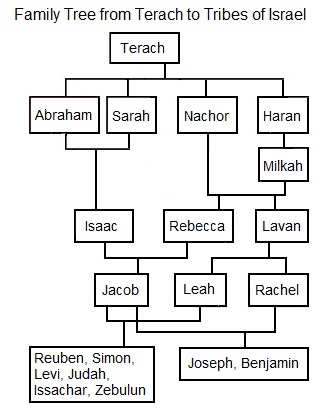
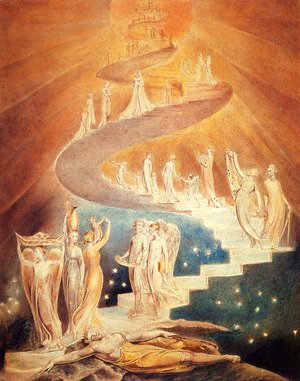
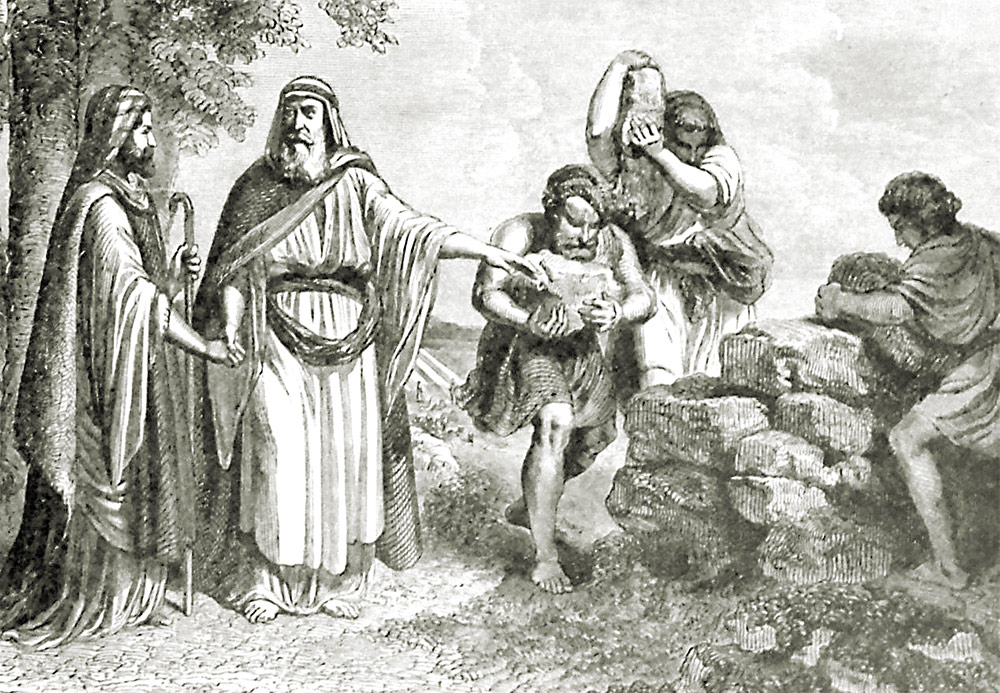


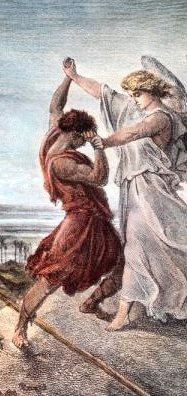


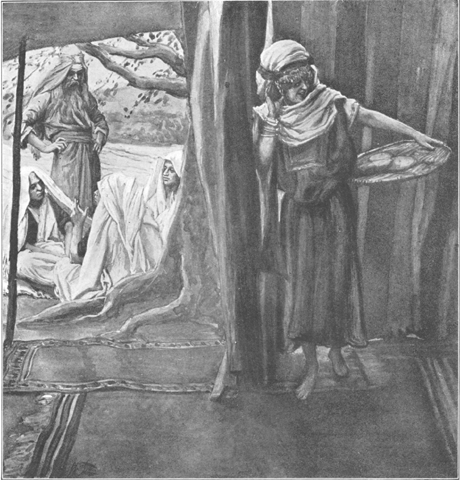


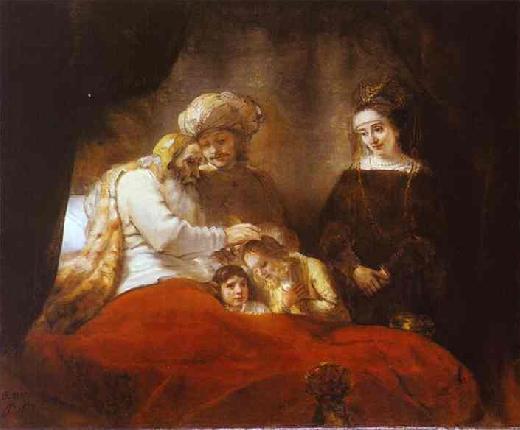

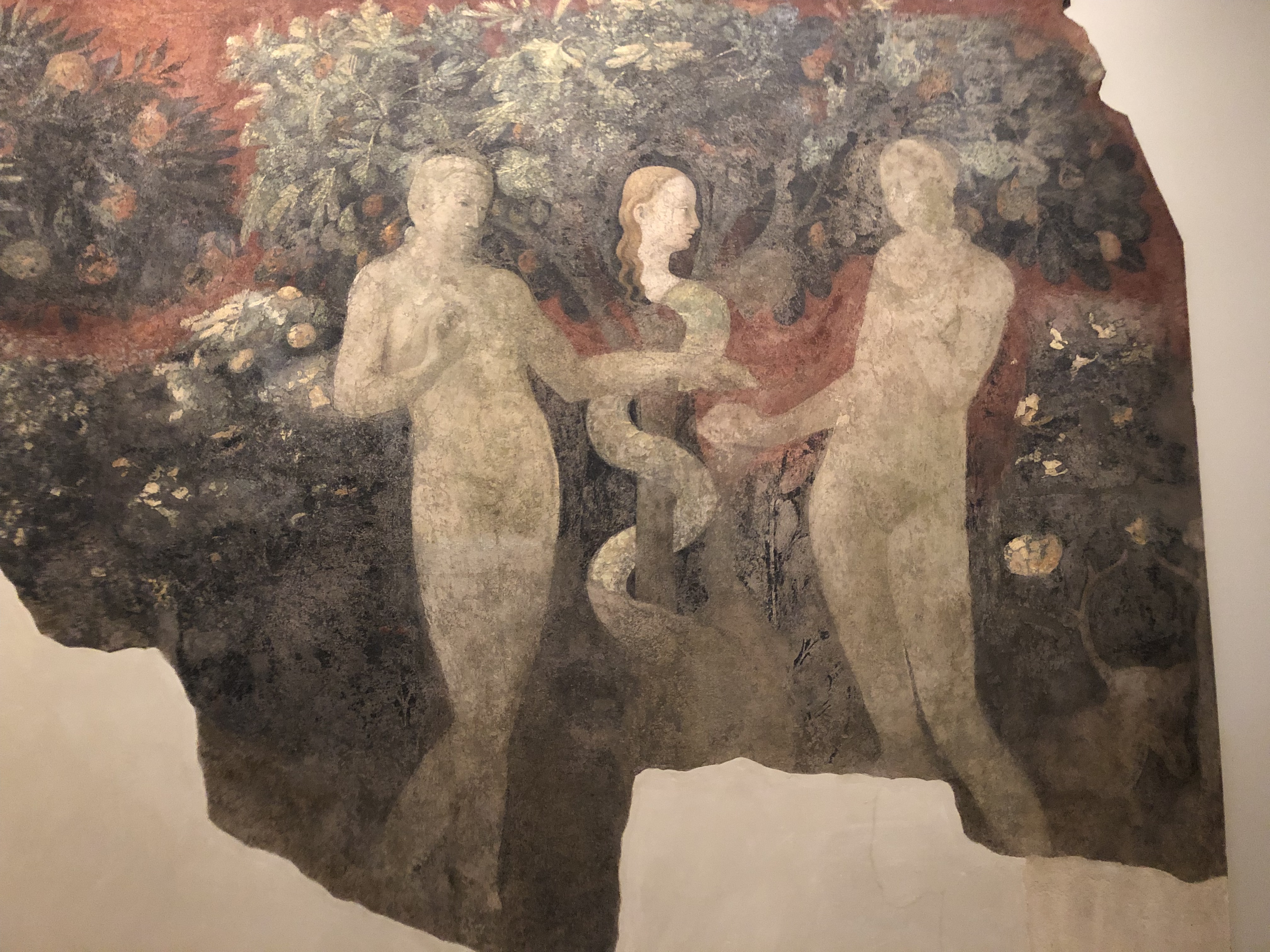

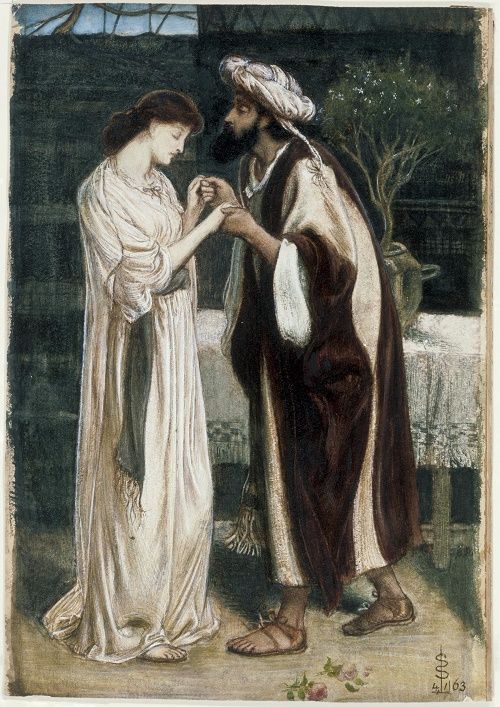

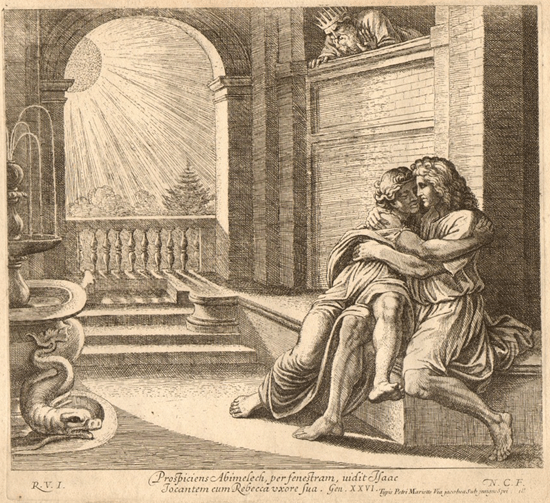
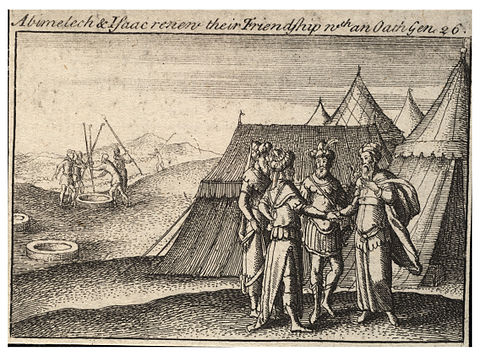

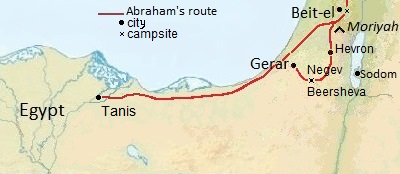
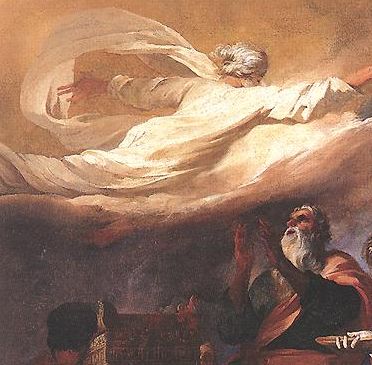


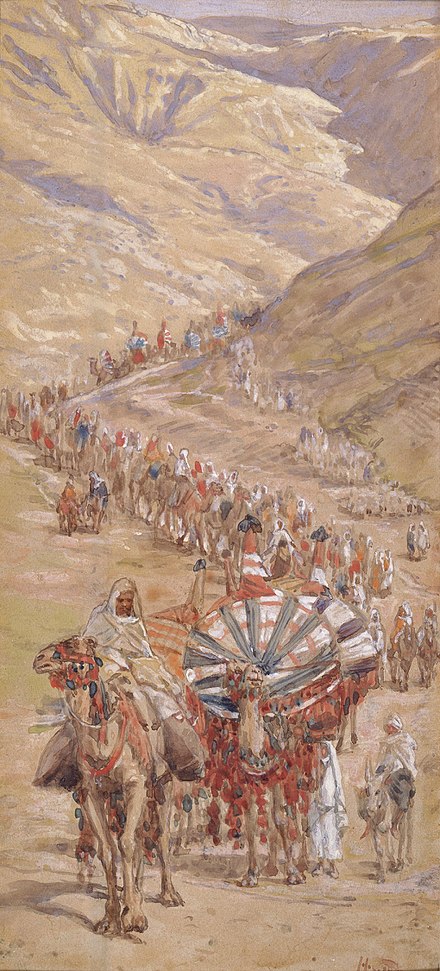


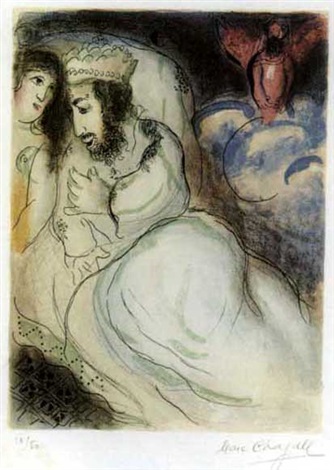
 Questioning Torah