Korach: Early and Late Bloomers

When people do the wrong thing in the Torah, God gets angry and kills a lot of them. This happens over and over again in the books of Exodus and Numbers. We see the same pattern today when parents (standing in for God) overreact to children’s mistakes and lash out at them. And it happens when individuals do something they regret and then cut themselves down.

Does this approach lead to reform and improvement? Rarely. Does the Torah offer a better approach?

In this week’s Torah portion, Korach (“bald”), a Levite named Korach, his 250 followers, and two leaders from the tribe of Reuben, all rebel at once. Their common goal is to depose the leader Moses and high priest Aaron, and take over their jobs. The God-character in the Torah takes this rebellion personally, since God chose Moses and Aaron.  Rebelling against their God-given authority is tantamount to rebelling against God.

First God responds the usual way, with overkill. The ground opens and swallows not only the two Reubenites and Korach, but also everyone in their families who did not run away. Fire pours out from God’s sanctuary and kills Korach’s 250 followers who wanted to be priests. The next day, the Israelites blame Moses and Aaron for all the deaths, and God sends with a plague that kills 14,700 more people. (See my earlier post, Korach: Saying No, Saying Yes.)

At this point, everyone even slightly involved in the attempted coup has suffered one of three kinds of horrible deaths.  The surviving Israelites become meek and passive for a while, but fear rarely motivates inner change. Later in the book of Numbers/Bemidbar, a number of Israelite men disobey God again, by worshiping Ba-al Pe-or.

However, the Torah portion Korach also provides a counter-example. After all the killing, the God character responds to the attempted coup with a more positive teaching.

God tells Moses to take a staff  from the chieftain of each of the twelve tribes of Israel.

You shall carve each man’s name upon his matteh. And you shall carve the name of Aaron upon the matteh of Levi, because there is one matteh for the head of each forefather’s house. Then lay them in the Tent of Meeting before ha-eidut, where I meet with you. And it will happen that the man whom I choose, his matteh will blossom. (Numbers/Bemidbar 17:16-20)

matteh (מַטֶּה) (plural mattot) = staff, branch, tribe.

ha-eidut (הָעֵדוּת) = the “testimony” of God inside the ark. (Either the stone tablets God inscribed on Mount Sinai, or a parchment scroll on which Moses wrote down the first part of the Torah, or both.)

The ark with the testimony of God resides inside the Holy of Holies, the innermost chamber of the Tent of Meeting. God manifests in the empty space above the ark—as a voice for Moses, and as the source of the fiery glory that the Israelites see emanating from the sanctuary tent. Any miracles happening in the Holy of Holies would be a direct expression of God’s will.

The next day, when Moses came into the Tent of the Testimony, hey!—the matteh of Aaron, for the house of Levi, had blossomed. It brought forth blossoms, and it sprouted sprouts, and it ripened shekeidim. Then Moses brought out all the mattot from in front of God, to all the Children of Israel. And they saw, and each man took his staff. (Numbers 17:22-24)

shekeidim (שְׁקֵדִים) = almonds. (The root verb, shakad, means vigilant, alert, attentive.)

Almond Tree
Almond Tree

Now there is no question that God chooses Aaron as the high priest, and the tribe of Levi to conduct the religious service at the sanctuary.

The almond flowers and fruits also carry extra symbolism. The gold menorah (lampstand) inside the sanctuary is designed so that its seven branches and various decorative elements look an almond tree, complete with flowers and drupes (fruits containing almonds in their pits). (See my earlier post, Terumah: Waking Up.)  Lamps are symbols of enlightenment. Almond trees are the first to bloom, are called attentive and alert. Thus the tribe of Levi, and especially Aaron and his fellow priests, will be the first and the most vigilant servants of God.

What the other tribal leaders do not notice at the time is that their tribes have also been consecrated for service. The matteh that is both Aaron’s staff and the tribe of Levi becomes an early-blooming tree.  The implication is that the other eleven staffs/tribes could bloom later. They, too, have spent the night in the Holy of Holies, in front of the ark.  They, too, are confirmed as important to God. And when the 40 years in the wilderness end, and the Israelites cross the Jordan into Canaan, every tribe does its job and obeys God’s orders—as transmitted by Joshua, from the tribe of Efrayim.

Alas, in this week’s Torah portion the Israelites overlook the positive symbolism of the twelve staffs. Right after viewing the staffs, they wail: We perish, we are lost, all of us are lost. Everyone who comes close, who comes close to the sanctuary of God dies. Will we ever be done with perishing? (Numbers 17:27-28)

Maybe they are too traumatized by all of God’s death sentences to notice a gentler message. But we can be more alert. What if parents who feel frustrated by their children’s mistakes consider them late bloomers?  Instead of cutting them down, these parents might correct the children firmly but gently, and take care to nourish them until they finally bud.

What if when we get upset at our own mistakes, we remind ourselves that we are late bloomers? It is frustrating to be a bare branch—or staff—when we want to be full of flowers and fruit. But as long as we are alive and growing, we can learn better behavior. And we can learn to serve the divine with our own souls, in our own way.

May all late-bloomers be so blessed.
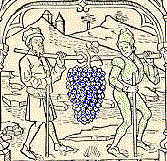
Shelach-Lekha: Fear and Kindness

The Israelites march to the southern border of Canaan in this week’s Torah portion, Shelach-Lekha (“Send for yourself”). Then Moses sends twelve men to scout out the land God promised them. The scouts return after forty days, carrying pomegranates, figs, and a gigantic cluster of grapes.  Ten of the scouts report to Moses and the whole assembly of Israel, saying:

We came into the land where you sent us, and indeed it is flowing with milk and honey, and this is its fruit. But it is all for nothing, for the dwellers in the land are strong, and the cities are fortified and very big, and also we saw the offspring of the Anak there. (Numbers/Bemidbar 13:27-28)

They list other hostile peoples living in the land of Canaan, reinforcing their hint that it does not matter how fertile the land is, since the Israelites have no hope of conquering its inhabitants.  Then one scout, Caleb, objects.

Caleb hushed the people toward Moses, and he said: “We must certainly go up and we must certainly take possession of it, because we are certainly able to do it!”  But the men who had gone up with him said: “We will not be able to go up against those people, because they are stronger mimenu.” (Numbers 13:30-31)

mimenu (מִמֶּנּוּ) = than us; than him, than it.

In the Talmud (Sotah 35a), Rabbi Hanina bar Papa interprets mimenu as meaning “than Him”, than God—“as if even the master of the house cannot remove his furniture from it!”  Other commentators interpret mimenu as “than us”, and conclude that the ten scouts did not believe God would simply remove the inhabitants from the land before the Israelites walked in. Instead, they assumed they would have to fight for every farm and city, and they despaired.

Whether the scouts give up on God or give up on the people, their next move is to exaggerate the dangers of Canaan, emphasizing that …all the people that we saw inside it were men of unusual size. (Numbers 13:32)

The Israelites despair along with the ten scouts, and sob all night.

A frightened rebellion

Then the Israelites rebel against Moses, Aaron, and God’s master plan.

And all the Children of Israel grumbled against Moses and Aaron, and the whole assembly said to them: If only we had died in the land of Egypt, or in this wilderness! If only we had died! Why is God bringing us to this land to fall by the sword? Our wives and our little children will become booty. Is it not better for us to turn back toward Egypt? (Numbers 14:2-3)

If they actually returned to Egypt, they would be punished as runaway slaves and their wives and children would be treated just like booty.  But the men do not think of this, and they decide to pick a new leader and head back. Moses and Aaron fall on their faces—but this time no divine inspiration comes. (See my earlier post, Korach: Falling on Your Face.) The crowd stops only because the two dissenting scouts, Caleb and Joshua, rip their clothing—an action that is normally performed as a sign of mourning. Now that they have the Israelites’ attention, they explain why the people should go up into Canaan:

The land that we passed through to scout out, it is very, very good land. If God favors us, then [God] will bring us into this land and give it to us, a land that flows with milk and honey. However, do not rebel against God! And do not be afraid of the people of the land, for they are our food, and the shade of protection has left them. God is with us; do not be afraid of them! (Numbers 14:7-9)

The people are not convinced.  They are about to stone Caleb and Joshua, when the glory of God appears at the Tent of Meeting and stops them. I suspect the message that they are supposed to trust God makes them so uncomfortable they cannot bear to think about it, so they want to kill the messengers instead.

A kind punishment

As in the golden calf episode in Exodus, God threatens to wipe out all the Israelites and start over again with Moses. And once again Moses persuades God to let go of anger and forgive the people, concluding:

“Pardon, please, the transgression of this people according to the greatness of your loyal kindness, as you have forgiven this people from Egypt until now.” And God said: “I pardon, as you have spoken. However, as I live and as the glory of God fills the whole earth, indeed all the men who have seen my glory and my signs that I performed in Egypt and in the wilderness, and tested me many times and did not listen to my voice–they will not see the land that I vowed to their fathers! Everyone who has scroned me will not see it!” (Numbers 14:19-23).

Only Caleb, Joshua, and the Israelites who are currently under age 20 will enter Canaan and get a share of the land. Everyone else, God declares, will die in the wilderness—gradually, over a period of 40 years.

It sounds like a spiteful punishment; God gives them what they said they wanted, death in the wilderness.  But I believe this apparent punishment is actually a great kindness.  The adults among the Children of Israel mustered the courage to leave Egypt in the first place, and to face an unknown future following the mysterious and obviously dangerous God who inflicted the ten plagues on Egypt. But someone who can act with great courage in desperate situations, such as worsening slavery, does not necessarily have the willpower to take risks when life is pretty good.

At the time the Israelites refuse to enter Canaan, they are camped in the oasis of Kadeish-Barnea, where there is enough vegetation for them and their livestock to live indefinitely, even without manna. They are not required to do any unusual labor, only to follow a set of reasonable laws and easy rituals. Why not just stay there for the rest of their lives?

The answer is that God is urging them to do something further. For Caleb and Joshua, and for Moses and his brother and sister, this urging is stronger than natural inertia and fear of the unknown.  But for others, the need for security and comfort is stronger.

So God kindly lets the Israelites stay at the oasis in the wilderness, living out their lives until each one dies at age 60. God recognizes that it is too much for most of the people to summon the willpower for another big act of courage.

Each of us today faces similar turning points in our lives. Sometimes we find ourselves trapped in a desperate situation, and it still takes a lot of inner strength to escape to a new life, but finally we do it. Other times life is pretty good, but something inside keeps urging us to make a change, to step out and take a risk that frightens us. Do we do it?

Whether we pick up the challenge or not depends on how fragile or strong our souls are. In this week’s Torah portion, God says:

But my servant Caleb, because there is a different ruach with him, and he followed me fully, I shall bring him into the land… (Numbers 14:24)

ruach (רוּחַ) = wind, spirit, mood, state of mind, driving impulse, motivation, temperament.

Perhaps when we hesitate between sticking with a pretty good life and taking a chance on the inner urge for change, all we can do is pray for wisdom and the right ruach.

May God, and life, be kind both to those who do not have the ruach to change, and to those who do.

Beha-alotkha & Beshalach: Stomach versus Soul

When we doubt the meaning of our lives, mere food cannot address the problem. Yet many people divert anxiety about their futures into craving for food—both today and in the Torah.

When the Israelites and their fellow-travelers leave Egypt, they take all their herds and flocks with them. They are never forbidden to use their livestock for milk or meat, so they are in no danger of starving. Yet a month and a half after they leave Egypt, they complain about food.

The entire assembly of the Children of Israel grumbled against Moses and against Aaron in the wilderness.  The Children of Israel said to them: “If only we had died by God’s hand in the land of Egypt, when we sat beside a pot of meat, when we ate bread until [we were] sated; for you brought us out to this wilderness to put to death this whole congregation by famine!” (Exodus/Shemot 16:2-3, in the Torah portion Beshalach)

How could dying in Egypt with a full stomach be better than journeying with God’s protection? These are the people who chose to follow Moses and his god out of Egypt, who sang and danced after God rescued them from the Egyptian army at the Reed Sea. How could they feel so discouraged in the second month of their trek across the wilderness?

God diagnoses the problem, and solves it—temporarily—with manna.

Then God said to Moses: Here I am, raining down food from the heavens… (Exodus 16:4)

Manna satisfies the people for a while—not because they need additional food, I think, but because it reminds them daily that God loves them like a parent. They are already following the divine pillar of cloud and fire across the wilderness. Now they know that they are not wandering aimlessly; serving God gives them a purpose in life.

The Israelites forget their purpose and fail to serve God whenever they are idle or afraid during their sojourn at Mount Sinai. But they are in good spirits when they march away from the mountain in this week’s Torah portion, Beha-alotkha (“When you raise up”) in the book of Numbers/Bemidbar. They head toward their promised land supplied not only with the manna God provides, and the livestock they brought up from Egypt, but also with a splendid portable sanctuary and its numinous objects, as well as a set of God-given rules and principles to live by.

Alas, after only three days of marching they lapse into complaining again. The Torah does not tell us the content of their complaint at Taverah. It merely says God hears and reacts with anger, consuming the edge of the camp with fire. Then the people switch from complaining to sobbing.

And the riff-raff that was in its midst felt strong cravings, and they sobbed, and the Children of Israel also [sobbed], and they said: Who will feed us meat? We remember the fish that we ate in Egypt for free, and the cucumbers and watermelons and leeks and onions and garlic. And now our nefesh is dried up; there is nothing except the manna for our eyes. (Numbers/Bemidbar 11:4-6)

nefesh (נֶפֶשׁ) = appetite, throat, animating soul, life

Why, when they are on the verge of getting their own land, do the people yearn for the food in Egypt again? Psalm 78 answers:

They tested God in their hearts by asking for food for their nefesh. (Psalm 78:18)

To me, this shows that the people are not complaining about dry throats, but about dry lives. They have not lost their appetite for food, but they have lost their appetite for being God’s people.

For the survivors of the Golden calf incident, life at Mount Sinai was both pleasant and meaningful. They had the pleasure of serving God by making donations, but their donations were the treasures they took from their Egyptian neighbors, rather than anything personal. They also had the pleasure of serving God by skilled creative work, as they made the sanctuary and its holy objects.

Now, as they march north, the people are approaching the border of Canaan. They know their next service to God will be taking over a land inhabited by other people. As we learn in next week’s Torah portion, Shelach, very few Israelites believe that God will single-handedly drive out the inhabitants and leave them empty cities and farms. Instead they are anticipating war, which means many hardships and deaths.

Now the thought of serving God fills them with anxiety instead of purpose. So, as the psalm says, they sob for Egyptian food to (unconsciously) test whether God will nourish their souls.

God correctly interprets the sobbing as indicating a lack of faith, rather than a desire for tasty food. But instead of reassuring the people that their lives will be filled with meaning, God takes a punitive approach, and tells Moses:

To the people you shall say: Consecrate yourselves for tomorrow; then you will eat meat … Not for one day will you eat, nor for a couple of days, nor for five days, nor for ten days, nor for twenty days. Until a month of days, until it comes out of your nostrils and you are nauseated because of it! For you rejected God, who is in your midst … saying: Why did we leave Egypt for this? (Numbers 11:18-20)

I confess I am like the Israelites in this week’s Torah portion. My life is full of meaning and purpose right now, while my material needs are met and I spend my days drawing insights and inspirations from the Torah, and sharing my life with people I love. Yet there are empty times in my day, when I need to rest or alleviate chronic pain. At those times, anxiety about the future haunts me. What if my sense of purpose is not strong enough to carry my through old age, when I must face hardships and the deaths of people I love?

My first impulse, as these times, is to comfort myself by eating something tasty. Yet I know that if I eat too much, I will make myself sick in the long run. I would rather keep faith that God is with me, and my life will continue to be worthwhile no matter what happens.  But how can I do that?

The only solution I know is to refocus and cultivate gratitude for the good life I have now. Do you have another solution to the anxiety of the Israelite? Please comment!

Bechukkotai & Jeremiah: The Inner Reward

If you follow all the rules, you will be rewarded; if you do not, you will be punished.

This makes sense when the boss is human. But this week’s Torah portion, Bechukkotai (“by my decrees”), claims that the same formula applies when the boss is God.

If you go by my decrees and observe my commands and do them, I will give you rains in their season, and the earth will give its produce, and the trees of the field will give their fruit. (Leviticus/Vayikra 26:3-4)

The Torah lists other rewards that God promises, including abundant food, peace and security, victory over enemies, and fertility.

But if you do not heed me and you do not do all these commands, and if you reject my decrees and if your nafshot gag on my laws, so that you are not doing all my commands, voiding my covenant, then I on my part will do this to you: I will appoint panic over you, the consumptive sickness and the fever, using up the eyes and wearing out the nefesh. And you will sow seed in vain, and your enemies will eat it. (Leviticus 26:14-16)

nefesh (נֶפֶשׁ), plural nafshot  = throat, appetite, embodied soul.

God adds many other punishments for rejecting the rules, including fear, wild beasts, attacking armies, pestilence, famine, and cannibalism. Cities will be ruined, and the Israelites will be scattered in exile.

The problem with this promise of material rewards for following God’s rules, and physical punishments for rejecting God’s rules, is that the world does not work that way. Bad things do happen to good people, as the book of Job points out.

The haftarah reading from the Prophets that always accompanies the Torah portion Bechukkotai takes the reward and punishment formula to a different level. Most scholars agree that this reading from the book of Jeremiah (16:19-17:14) is a collection of seven separate poems. The third poem, Jeremiah 17:5-8, does not talk about obeying God’s decrees and laws; instead, it considers a person’s inner feelings about God.

Thus says God:

Cursed is the man who yivtach in humankind,

And makes flesh his strength,

And whose leiv turns away from God.

He is like a bare tree in the desert

That does not notice any good coming.

He dwells in a stone-field in the wilderness,

A salt-plain that is not inhabited. (Jeremiah/Yermiyahu 17:5-6)

yivtach (יִבְטַח) = trusts, feels safe, is confident.

leiv (לֵב) = heart; inner self, the seat of thoughts and feelings; attention, inclination.

Here, the curse falls on those whose thoughts and feelings reject God. They become bitter atheists, trusting only human power. Their punishment is that they become depressed and unable to see anything good; their souls become undernourished, deficient in the water of life; and they feel abandoned.

The blessing comes to those who maintain their attachment to God.

Blessed is the man who yivtach in God;

God will happen from his trust. (Jeremiah 17:7)

Perhaps Jeremiah is saying that God happens to people when they trust in God. The poem goes on to describe the man who trusts in God:

He is like a tree planted beside water

That sends out its roots beside a stream,

And does not notice any heat coming.

Upon it are fresh green leaves,

And in a year of drought it is not worried;

It does not stop bearing fruit. (Jeremiah 17:8)

Those who depend on God rather than humans for their sense of security are rewarded, Jeremiah says. They do not worry about anything bad approaching, because their souls are nourished by a water of life that never runs out. Therefore, their efforts and projects continue to bear fruit.

Jeremiah’s poem can be read as stating a psychological truth: trusting in God nourishes your heart and mind; abandoning all hope of God leads to sterile depression. Even if following God’s rules in your actions in the world does not necessarily bring a worldly reward, there are still rewards and punishments for your attitude toward God—and they are internal.

Is Jeremiah’s claim true for us today?

My first impulse is to say no. I know some happy atheists who believe that humans are basically good, despite the evil some people do, and that there is hope for a better world. They find satisfaction in the company of other human beings, and they do good work to improve the world.

I also know some religious people who claim that they trust God and know that God will make everything will work out for the best—but they say it either with the glazed smile of self-hypnosis, or with an edge of desperation.

On the other hand, now that I am 60 years old, I am beginning to taste the pleasures of acceptance. I no longer speculate on whether humans are destroying the world; I no longer assume the people I love will still be with me in my old age. Neither do I place my trust in the anthropomorphic God described in the Torah, since I cannot believe in a god who makes plans and decisions like a human being.

But I think that sometimes God happens to me. I see or hear something beautiful, and my heart lifts, and I am filled with joy and gratitude—and a sense of security, if not trust, in being part of the big picture. In a year of trouble I still worry—but not as much as I used to.  Perhaps I finally have a few roots in the stream of the divine.

May God happen to everyone who needs it.  And may all our souls be nourished, so we can continue to produce fruit.


Behar: Choosing a God

Feeling a sense of the numinous from time to time is human nature. So is the impulse to acknowledge and reach out to the ineffable. For thousands of years, many human beings have channeled this impulse into worship of one or more gods.

The Hebrew Bible does not have a separate word corresponding to the English word “worship”. But it does have words for prayer (tefillah); bowing down or prostrating oneself (hishtachavot); service (avodah—often meaning the tasks of priests); and bringing offerings to a god (hakriv korban). Prayer and prostration usually happen on the impulse of the moment in the Torah.  Priestly service and bringing offerings, on the other hand, are rituals for which the book of Leviticus/Vayikra gives detailed rules.

What matters most is which god one is addressing. The Torah repeatedly warms its readers to restrict themselves to only one god out of the many available in the ancient Middle East. This week’s Torah portion, Behar (“on the mountain”) ends with these instructions:

You must not make for yourselves eliylim, or a pesel; and a matzeivah you must not erect for yourselves; and a maskit stone you must not place in your land for prostrations upon it; because I, God, am your elohim. (Leviticus/Vayikra 26:1)

eliylim (אֱלִילִם) = pseudo-gods (often used to refer to gods in other religions)

pesel (פֶּסֶל) = carved image; idol of cut stone or wood (from the verb pasal = carve)

matzeivah (מַצֵּבָה) = standing-stone

maskit (מַשׂכּית) = paving-stone with a design on it, set into the floor of a shrine

elohim (אֱלֹהִים) = gods (plural of eloha = god); God

What strikes me about this warning is that after the general reference to pseudo-gods, we get three examples of idols associated with stone. In contrast, the God of the four-letter name (approximated in English by Y-H-V-H) is associated with a day of rest and a holy place in the next verse:

Shabbetotai you must guard, and mikdashi you must hold in awe; I am God. (Leviticus 26:2)

shabbetotai (שַׁבְּתֹתַי) = my sabbaths

mikdashi (מִקְדָּשִׁי) = my holy place

Shabbat, the sabbath, is a holy time: one day a week when the people must refrain from labor and honor God. A mikdash is a holy place. A shrine with a pesel, matzeivah, or maskit stone might be a mikdash for another god. But this week’s Torah portion quotes the god of Israel as saying mikdashi, MY mikdash. Throughout the book of Leviticus, God’s mikdash is the portable sanctuary Moses assembles in the book of Exodus; God becomes present above the ark in the sanctuary’s innermost chamber. Later in the Bible, the holy place where God becomes present is the temple in Jerusalem. Since the fall of the second temple, some Jews have continued to view Jerusalem as God’s holy place, while others have said the holy place is any spot where God becomes present to a human being—as long as it is the correct god.

Both the pseudo-gods and the God of Israel require human actions before they can be worshipped. Humans carve the pseudo-gods out of stones. Humans set aside times and places as holy to the God of the four-letter name.

Like many religious seekers today, I like the more abstract idea of how to approach God. Thinking about time and space dazzles me; looking at a stone sculpture only stimulates my aesthetic sense. But in Biblical times, the sanctuary or the temple was full of tangible objects and decorations made of metals, wood, and thread. Gold flashed, rich colors glowed. And the second temple was built of stone.

A visit to the temple meant not only a feast for the eyes, but an overwhelming experience for the other senses. The Levites chanted psalms and played musical instruments. Priests burned aromatic incense. When you brought any animal offering, you laid your hands on the beast’s hairy head. When you brought a wholeness-offering, a priest burned selected portions into smoke for God, and ate his own portion, but the donor and his guests ate the rest of the meat and bread.

When we make God too abstract, we approach the divine with only one part of ourselves, the rational function of our minds. But our minds are much bigger than that. Reading a prayer silently makes me think about the meaning of words; singing a prayer lifts my spirit. Thinking about time and space dazzles my intellect; looking at a blossoming tree or a smiling face moves my heart with a feeling of the divine.

So I have to reinterpret the phrase:  I, God (the four-letter Y-H-V-H name), am your elohim. Most translations use “the LORD”, a variation of “Y-H-V-H”, or Hashem (“the Name”) for the first god-word, and “God” (always capitalized) for elohim. Yet elohim is a plural, and the Torah occasionally uses the word to refer to multiple gods worshipped by other peoples.

When I come to that phrase, in prayers or in this passage from the portion Behar, I think: I, God, am all gods to you.

In other words, do not get stranded in abstract theories, however dazzling to the intellect. And do not get stuck at the level of a stone carving. Let the stone, or the singing of psalms, or the taste of bread move your heart. Use your head to recognize that the divine is also more than an exalted feeling. And then acknowledge that these things are all part of the holy One.

Emor: Challah with a Hole

When you invite a god to be with you, you want to be a good host. Being a good host for human guests always includes offering them food and drink. So the ancient peoples of the Middle East offered their gods bread and cake.

In his book Leviticus, 20th-century scholar Jacob Milgrom noted: “In Egypt the offerings are placed on the outer altar, but only the fresh bread and cakes are brought into the sanctuary and laid on mats (together with incense) before the god’s table … Ritual bread laying was an early custom in Mesopotamia, appearing in a Sumerian inscription of Urukagina of Lagash (c. 2340 BCE). Babylonians laid sweet unleavened bread before various deities, in twelves or multiples of twelve.”

The book of Exodus/Shemot describes the three holy containers in the inner sanctum of the Israelites’ sanctuary: the gold lampstand (menorah) for making light, the gold incense altar for making fragrant smoke, and the small gold-plated table for displaying bread. The display itself is only described in the book of Leviticus/Vayikra, in this week’s Torah portion, Emor (“say”). It begins:

You shall take fine flour, and you shall bake it into twelve challot; a challah shall be two tenths [of an eyfah in size]. And you shall put them in two rows, six in each row, upon the ritually-pure table in front of God. (Leviticus/Vayikra 24:5-6)

challah (חַלָּה), plural challot = loaf or cake made of finely-ground wheat flour, leavened or unleavened, probably  pierced with one or more holes (from the root verb chalal (חָלַל) = pierced through).

Half of the 14 references to challah in the Hebrew Bible specify that the challah shall be unleavened (matzah); in these cases, part of the challah is destined to be burned up on the altar, where leavening is banned. However, when the challah is destined to be eaten by people, it can be sourdough. (A thanksgiving offering, according to Leviticus 7:13, requires both unleavened challah to burn on the altar and leavened challah for people to eat.)

Other cultures in the ancient Middle East laid out bread in front of statues of their gods, and replaced the bread every day. The Israelites are forbidden to make a statue of their god, but the bread table stands in front of the innermost room of the tent, where God’s presence manifests over the ark. The bread is replaced only once a week. The twelve loaves are strictly symbolic; nobody pretends that God eats them. In fact, the Torah orders the priests to eat the week-old challot after the fresh loaves are laid out.

And you shall place as an addition to each row clear frankincense, and it shall become a memorial-portion for the bread, a fire-offering to God. Sabbath day after sabbath day it shall be arranged in rows in front of God, perpetually, as a covenant from the children of Israel forever. And it shall be for Aaron and for his sons; and he shall eat it in a holy place, because it is most holy for him, out of the fire-offerings of God; [this is] a decree forever. (Leviticus 24:7-9)

Unlike the unleavened challot people bring as offerings, the challot on the display table are never burned on the altar. Every seven days the priests set out fresh-baked challot and two new bowls of frankincense. They burn the previous week’s frankincense, so God can enjoy the fragrance (see my post Pinchas: Aromatherapy). Then the priests eat the stale bread.

This week’s Torah portion is the only place in the Hebrew Bible that calls the bread on the sanctuary table challah. Elsewhere it is simply “bread in rows” or “the bread of panim”, the bread that faces God. (See my post Terumah: Bread of Faces.) The twelve challot represent the twelve tribes of Israel, all lined up in front of God.

One might imagine each challah as a fluffy braided loaf, since that is what the challah that Jews eat on Shabbat today looks like. But the root of the word challah is challal, which means “pierced through”. The Torah uses the verb challal most often for fatal wounds, but the word also applies to window-openings in walls and to certain loaves or cakes.  Thus the challot in the Israelite sanctuary and temples might have looked like large bagels.

(Talmudic rabbis, considering the small size of the table—2 cubits by 1 cubit, about 4 square feet—speculated that each challah must have been shaped like a lidless rectangular box, so that one row would stack neatly on top of the other with no gaps. But since we do not know how much flour is in two-tenths of an eyfah, nor how dense the bread was, the table might just as well have held two rows of six bagel-shaped challot, one in front of the other.)

Does the shape matter? I think so. Bread begins as grain that grows as a gift from God or nature. But then humans add a lot of labor to transform that grain into bread. When we display our own creative work to God, are we showing off or expressing gratitude? A continuous loaf with no holes is full of itself; it leaves no empty spaces for God to fill. But a loaf with a hole in the middle says: “The center of my life is for You to fill with Your inspiration. I am building my life around that holy hole.”

That is what I want to say to the divine presence inside me.


Kedoshim: Hard to Love

Some people are hard to love.

The word “love” in English and the word ahavah (אַהֲבָה) in Biblical Hebrew have the same wide scope, including all four of the types of love distinguished in Classical Greek: agapé (selfless devotion to the welfare of another), eros (sensual desire for and attachment to another person, or enthusiastic attachment to a pleasurable activity), philio (mutual affection and harmony between friends), and storgé (fondness for familiar people, animals, and places).

This week’s Torah portion, Kedoshim (“Holiness”), commands the agapé type of love, devotion to the welfare of another—even when warm feelings do not arise naturally, and the only reward is knowing you are doing the right thing.

You shall not hate your brother in your heart; you must definitely reprove your fellow person, so you shall not carry guilt because of him. You shall not take revenge and you shall not hold a grudge against the members of your people; ve-ahavta lerei-akah kamokha; I am God. (Leviticus/Vayikra 19:17-18)

ve-ahavta (וְאָהַבְתָּ) = and you shall love, and you shall be loving.

lerei-akha (לְרֵעֲךָ) = to your colleague, to your fellow.

kamokha (כָּמוֹךָ) = like you, like yourself, as yourself.

The phrase ve-ahavta lerei-akha kamokha is often translated as “and you shall love your fellow as yourself”. The problem with this translation is that the word rei-akha has the prefix le-, which is the preposition “to”.  So a more literal translation is: And you shall be as loving to your fellow as you are to yourself.

In other words, you are not required to feel love for your fellow humans, only to act loving toward them. If the fellow in question is someone you are in love with (eros), or a friend (philio), or a  familiar person you have grown fond of (storgé), then it is usually easy to act loving toward them.  But what about someone you are not fond of, someone who has wronged you?

This week’s Torah portion calls for agapé (devotion to the welfare of another) for those who have wronged us.  We are forbidden to take revenge, and we we forbidden to hold a grudge.  We may not feel love for them, but we must act as if we did, and at least banish any feeling of hatred.

We must reprove them for what they did, and then, even if they neither apologize nor make amends, we must let go of our anger. On top of that, we must devote ourselves to their welfare as we do to our own welfare.

Does this mean I have to spend just as much time and energy on improving the lot of my antagonists as I do on improving my own lot? Oy, vey! My time and my energy are limited, and I do not want to stint on doing good things for myself, my  family, and my friends so I can give equal time to people who I barely know and people who are not good to me. Anyway, why should I do anything good at all for someone who wronged me? Isn’t it enough to do no harm?

Maybe “And you shall be as loving to your fellow as you are to yourself” does not mean “And you shall be loving to your fellow [exactly as much as you are loving to] yourself”. It could also be translated: “And you shall be loving to your fellow, [who is] like yourself”. The classic commentary reminds us that we, too, are fallible, and we, too, make moral mistakes. If we can nevertheless be loving to ourselves, we can be loving to our fellows the same way.

Yet sometimes this argument is not enough. Sometimes you feel too upset about the other to be loving.  Sometimes you feel too ashamed to be loving to yourself. Then what? The book of Genesis/Bereishit says we are all created in the image of God. Jewish kabbalah says we all contain divine sparks; we are all part of God. 19th-century Rabbi Samson Raphael Hirsch wrote that since human beings are part of God and God wants us to perfect ourselves, it is our duty to devote care both to our own welfare and to the welfare of everyone else. This is how we can fulfill our duty to be loving toward God.

I would revise this argument to say that all human beings are moral agents for God. When we act lovingly, promoting what is good for every person, we are improving God (or the divine spirit, or holiness) as we improve the world. When we act hatefully, toward ourselves or toward anyone else, we are undermining God as we undermine the world. I know that “doing the right thing” myself will not help everyone I encounter, but I believe it will at least contribute to an overall improvement in the world. So I practice acting with kindness and respect for everyone, whether I feel like it or not. And the longer I do it, the more I feel like it.

So may it be for all of us.

Passover: Children of Four Worlds

This week we pause in the yearly cycle of Torah readings to celebrate Passover/Pesach. The Passover ritual celebrates the exodus from Egypt—but not only by telling the story. The seder (“order” or agenda) that has evolved over that last 2,000 years has 13 sections of ritual plus dinner, punctuated by blessing four cups of wine.

To keep track of it all, Jews have a haggadah (“the telling”—plural haggadot), a book to work through during the long evening of ritual. But the old joke applies that wherever you have two Jews you have three opinions, so we keep writing new haggadot, retaining the basic elements but explaining them in new ways.

Some haggadot associate the four cups of wine with the four “worlds” of kabbalah, so that as we bless each cup we ascend one stage closer to God.

The first and lowest world is Assiyah (עֲשִׂיָה) = action. (From the verb asah, עָשָׂה = make, do.) Assiyah is the physical world we operate in. Its symbol is earth.

The second world is Yetzirah (יְצִירָה) = formation. (From the verb yatzar, יָצַר = form, shape.) Yetzirah includes intuitions, dreams, myth, and metaphor. Although the word yetzirah does not mean emotion, it is often associated with emotion because it is non-rational. Its symbol is water.

The third world is Beriah (בְּרִיאָה) = creation. (From the verb bara, בָּרָא= create.) Beriah includes inventing and designing in the stage of abstract ideas. Its symbol is air.

The fourth and highest world is Atzilut (אֲצִילוּת) = emanation. (Probably from the preposition eitzel, אֵצֶל= beside, next to.) The world of Atzilut is undifferentiated divine spirit, at a level we can barely imagine. Its symbol is fire.

Human beings operate in the world of assiyah, and approach awareness of God by rising up through yetzirah and beriah toward atzilut. This is the order in which we drink the four cups of wine on Passover. The fourth cup, representing atzilut, comes at the end of the evening, when we are exhausted and uninhibited.

During the first part of the seder (covered by the first two ritual cups of wine) we build up to the story of the exodus with songs and stories based on the number four, including “the four questions” about why this night is different from all other nights, and the description of four types of children (traditionally “the four sons”).

The four children are based on four passages in the Torah which tell parents what to say when their children express curiosity about Passover:

When your son will ask you in the future, saying: What are the rules and the decrees and the laws that God, our god, commanded you? Then you shall say to your son: We were slaves to Pharaoh in Egypt, and God brought us out from Egypt with a strong hand. (Deuteronomy/Devarim 6:20-21)

A traditional haggadah labels this son “the wise son” because he wants to know all the rules.

And it will happen that your son says to you: What is this service to you? Then you shall say: It is an animal-offering to God, because He pasach over the houses of the children of Israel in Egypt, by dealing a blow to Egypt but rescuing our houses. (Exodus/Shemot 12:26)

pasach (פָּסַח) = limped, skipped. (One possible meaning of the word Pesach is “skip over”.)

Tradition labels this son “the wicked son” on the grounds that he seems uninterested in what Passover might mean to himself.

And it will happen that your son asks you, in the future, saying: What is this? Then you shall say to him: With a strong hand God brought us out from Egypt, from the house of slavery. (Exodus 13:14)

Tradition labels this son “the simple son” because his question is elementary.

The Torah has no fourth question from a son about Passover, so the early rabbis found a fourth question implied in the following verse:

And you shall tell your son that day, saying: Because God did this for me when I went out from Egypt. (Exodus 13:8)

Tradition labels this son “the son who does not know how to ask”.

In an earlier post, I suggested that the four sons could correspond to the four sons of Aaron in the Torah. (See Shemini: Four Sons.)

But we can also look at these four children in terms of the four worlds of kabbalah. Here is the “Four Children” section in the haggadah I wrote this year:

Children of the Four Worlds

 Assiyah:  One kind of child (the so-called “simple son”) asks:  “Mah zot?  What is that?”  This is the child of Assiyah, the world of doing.  Assiyah people are most interested in practical action, the physical senses, and tangible things.

Yetzirah:  Another child (the so-called “wicked son”) asks:  “What does this ritual mean to you?”  This is the child of Yetzirah,the world of intuition, dreams, and metaphors.  Yetzirah people are most interested in personal symbolic meanings. They are introspective and find more truth in the arts than in the sciences.

Beriah:  A third child (the so-called “wise son”) asks:  “What is the meaning of the statutes, laws, and rules which our God has commanded?”  This is the child of Beriah, the world of the intellect.  Beriah people love abstract thinking.

Atzilut:  The fourth kind of child (the so-called “son who does not know how to ask”) is silent.  This is the child of Atzilut, the world of divine emanation, where all forms are aspects of God.  Atzilut people seek a life of mystery, ecstasy, and divine union.

Though every human has a particular strength, all four of these worlds are aspects of being fully human. We fail if we reject one of the worlds and try to exclude it from our lives.

Pause for a few moments and consider silently:  Am I spending too much of my energy in one of the worlds—Assiyah, Yetzirah, Beriah, or Atzilut?  Am I stuck in that world, that approach to life, as if it were an Egypt? Do I need to liberate myself so I can receive the blessings of a different world?


Haftarat Metzora—2 Kings: Insiders and Outsiders

Last week’s haftarah (the reading from the Prophets that accompanies the week’s Torah portion) tells the story of Na-aman, an Aramean general whose skin disease, tzara-at, disappears when he gives up his arrogance to follow the advice of the prophet Elisha. (See my post Tazria & 2 Kings: A Sign of Arrogance.)

Although Aram and Israel are at peace when Na-aman comes to Elisha for a cure, hostilities resume later in the second book of Kings. Eventually an Aramean army besieges Samaria, the capital of the northern kingdom of Israel. Trapped inside the city walls, the Israelites begin to run out of food. The price of food skyrockets, and two women eat a child.

circa 900 BCE

Meanwhile, four men with tzara-at are living in exile outside the city walls. The Torah says that tzara-at, unlike all other skin diseases, is an affliction caused by the touch of God. The afflicted must live alone, outside the camp or town, until God removes the disease and a priest declares them ritually pure.

God may also afflict houses with tzara-at, according to this week’s Torah portion, Metzora (“Someone with tzara-at”). No one may live in a house with tzara-at in the walls.

Why does God touch people and houses with tzara-at? The book of Leviticus/Vayikra does not say, but in the Babylonian Talmud (Arachin 16a), the rabbis say tzara-at is caused by slander, and then list six other causes: bloodshed, swearing falsely, incest, arrogance, robbery, and envy. All of these bad deeds or bad attitudes not only sin against God, but also poison one’s relationships with other people. No wonder the Torah requires a metzora to stay away from the community.

In this week’s haftarah, the four men with tzara-at who live just outside the besieged city of Samaria are also starving. They come to the city gate, but they receive neither food nor a check-up from a priest to see whether they have healed and can come back inside. The haftarah picks up the story as they consider their options.

Four men were metzora-im at the entrance of the gate, and each one said to his neighbor: Why are we sitting here until we die? If we say “Let’s come into the city”, and the famine is in the city, then we will die there. But if we sit here, then we will die. So now, let’s go and surrender ourselves to the camp of Aram. If they let us live, we live; and if they put us to death, then we die. (2 Kings 7:3-4)

metzora-im (מְצֹרָעִים) = the plural of metzora  (מְצֹרָע) = someone afflicted with tzara-at.

In other words, the four men decide to defect to the Arameans on the chance that they will survive. Although most commentary criticizes the metzora-im for their disloyalty to Israel, I think they are far more ethical and less disloyal than the two Samarian women inside the city who resort to cannibalism. After all, the men do not even consider killing any Israelites in order to eat them.

So they got up in the twilight to come to the Aramaean camp. They came up to the edge of the Aramaean camp, and hey! Nobody was there! (2 Kings 7:5)

God had made the Aramean soldiers hear the sounds of an approaching army, complete with chariots and horses. Assuming that the king of Israel had hired mercenary forces, the Arameans had fled for their lives, leaving behind their horses, donkeys, and tents.

The four would-be defectors enter a tent, eat and drink their fill, then take the silver, gold, and clothing and hide it. After they have looted a second tent, it occurs to all four of them that they could rescue the starving Israelites in the city.

Then they said, each one to his neighbor: We are not doing right. Today is a day of good news, and we are delaying it. If we delay until the light of morning, we will be found guilty. So now, let’s go, and we will come to the house of the king and tell it. (2 Kings 7:9)

The men have two motivations for reporting that the enemy has fled: because it is the right thing to do, and because they do not want to be found guilty if they delay until someone on the city wall can see that the Aramean camp is deserted.

The gatekeepers of the city do not let in the metzora-im. Nevertheless, they shout out the good news, and the gatekeepers pass it on to the king’s house inside. Then the city of Samaria empties as everyone rushes through the gate to loot the deserted Aramean camp.

There is no indication of what the four men did that led God to punish them with tzara-at in the first place. By the time they appear in the haftarah, they seem fairly decent; they do not consider either using violence against anyone to get food, or taking revenge against the city that excluded them. Nor do they exhibit any of the seven causes of tzara-at listed in the Talmud, unless their looting of abandoned Aramean tents counts as robbery, a word used to mean taking forcible possession.

But what about the cannibalism that occurs inside the city just before the haftarah begins? One Samarian woman complains to the king of Israel:

That woman said to me: Give your son and we will eat him today; and my son we will eat tomorrow. And we cooked my son and we ate him. Then I said to her the next day: Give your son and we will eat him. But she hid her son! (2 Kings 6:28-29)

These two women commit five of the seven anti-social deeds on the list:

Slander: The actual idiom in the Talmud is lashon hara = the evil tongue. The woman who complains to the king is guilty of lashon hara because she points out the other woman and defames her.

Bloodshed: Obviously both women are guilty of murder.

Swearing falsely: The first woman complains that the second woman made a false vow when she promised they would eat her son the next day.

Incest: The actual idiom in the Talmud is “exposing the nakedness”. Although incest does not technically occur in the story, the first woman does expose her son’s vulnerability and violate his body.

Arrogance: Both women assume their lives are more valuable than the child’s life.

I would argue that the women inside the city deserve tzara-at more than the men outside the walls. When everyone rushes out of the city to loot the Aramean camp, it is echoes the requirement in the Torah portion Metzora that a house with tzara-at must be emptied and abandoned until its walls become pure again.

I know that I, like most human beings, feel as if some people are too awful to tolerate, and I want to exclude them from my community or my in-group—at least until they show signs of overcoming their anti-social traits. No doubt sometimes my diagnosis is correct. But I must remember that sometimes my in-group might be more at fault than the person I want to exclude. The affliction might be inside my own walls.

May we all keep the gates of our souls open to new developments, and close our gates only when we really are besieged.

Tazria & 2 Kings: A Sign of Arrogance

There is no leprosy in the Torah. The disease that used to be translated as “leprosy”, tzara-at, is not Hansen’s Disease, but a skin condition characterized by irregular patches of dead-white skin that look lower than the healthy skin around them. This week’s Torah portion, Tazria, gives the priests detailed instructions on identifying tzara-at, because they must declare anyone who exhibits the disease tamei, ritually impure.

Most reasons for being tamei, such as sex, menstruation, contact with a dead body, or having recently given birth (see my post:Tazria: Babies Versus Religion), merely exclude the person from entering the sanctuary courtyard to worship God–until the period of being tamei is over. But people who are impure because of tzara-at are excluded not just from the place of worship, but from the whole community.

Vitiligo, one candidate for tzara-at

And the one who is tzarua, who has the nega: his clothes shall be torn and his hair shall hang loose, and he shall cover his lips and he shall call out ‘Tamei! Tamei!’ As long as touch [of the disease] is on him, he shall be tamei. He is tamei, so he shall dwell alone; his dwelling shall be outside of the camp. (Leviticus/Vayikra 13:45-46)

tzarua (צָרַוּע) = suffering from the skin disease tzara-at.

nega (נֶגַע) =  an affliction caused by the touch of God.

tamei (טָמֵא) = ritually impure; unclean, defiled, contaminated.

The passage above might sound like a quarantine to prevent contagion, but no other diseases are quarantined in the Torah. Unlike all other skin diseases, tzara-at is classified as a nega; God touched (naga) the person with the affliction. The one who is tzarua remains tamei until God removes the affliction and the skin becomes healthy.

Why does God touch people with tzara-at? The book of Leviticus does not say, but in the Babylonian Talmud (Arachin 16a), the rabbis list seven causes: slander, bloodshed, swearing falsely, incest, arrogance, robbery, and envy. Since all of these bad deeds or attitudes poison or violate relationships with other people, it makes sense that the Torah requires someone with tzara-at to live alone, outside the camp of the community.

Arrogance might seem like the least of the seven causes, yet it prevents you from empathizing with or even respecting others, and therefore alienates other people. I believe the haftarah reading that goes with this week’s Torah portion addresses the role of arrogance in the disease of tzara-at.

An arrogant Aramaean

The haftarah is a story from the second book of Kings about an Aramean general named Na-aman who has tzara-at. One of his household slaves mentions the miraculous cures of the Israelite prophet Elisha, and Na-aman arranges a letter of introduction. He travels to Elisha’s house with a supply of silver, gold, and clothing as payment for a cure.

So Na-aman came with his horses and his chariots, and he stood at the door of the house of Elisha. Then Elisha sent a messenger out to him, to say to him: You must bathe seven times in the Jordan, and it will make your flesh restored and ritually-pure. (2 Kings 5:9-10)

Na-aman (נַעֲמָן) =pleasant one, nice person, mensch.

Na-aman has already proved himself humble in some ways: despite his high rank, he takes advice from a slave, and he goes to a foreign country to see Elisha instead of ordering the prophet to come to him. Elisha tests Na-aman’s pride by sending a servant to give him instructions instead of coming to meet him in person, and by prescribing a cure that is simple and possibly demeaning. At first, Na-aman does not pass the test.

But Na-aman became angry, and he walked away, and he said: Hey, I said to myself that he would surely go out and stand and invoke the name of God, his god, and wave his hand toward the place, and that would exterminate the tzara-at.  Aren’t the Amnah and the Parpar, the rivers of Damascus, better than all the waters of Israel? Wouldn’t I become pure if I bathed in them? Then he turned around and walked away hotly. (2 Kings 5:11-12)

Na-aman can respect a miracle-working prophet. But he expects the prophet to grant him the dignity of a personal cure, not a message by proxy. He also disdains the message because he believes his own country of Aram is superior to Israel.

Then his servants came near and spoke to him, and they said: My father, if the prophet spoke to you about doing a great deed, isn’t it true that you would do it? Then how much more so when he said to you: Bathe and be pure. So he went down and he dipped in the Jordan seven times, as the man of God had spoken. And his flesh was restored, like the flesh of a little boy, and he was ritually-pure. (2 Kings 5:13-14)

The Cleansing of Naaman, Biblia Sacra Germanica, 1466

Na-aman must swallow his pride in order to take advice from his subordinates, and bathe in an inferior river. When he becomes humble about both his status and the status of his country, he is cured.

Then he returned to the man of God, he and all his troop, and he came and stood before him. He said: Here, please, I know that there are no gods on all the earth except in Israel. So now please take a gift of blessing from your servant. (2 Kings 5:15)

This time, Na-aman gets to stand in front of Elisha, and the prophet speaks to him in person. But when Na-aman offers his gift of silver, gold, and clothing, Elisha refuses it. I think Na-aman is impressed by Elisha’s humble attitude about cures that come from God.

He also recognizes that the god of Elisha and Israel is greater than Rimmon, the god of Aram. So he decides to convert, and worship only the god of Israel, the land he formerly disdained. Na-aman asks for some dirt to take home and use to make an altar for the god of Israel. Yet he does not plan to proudly isolate himself from his own community; he begs forgiveness in advance for continuing to support his king’s arm when his king goes into the temple of Rimmon.


Today there is no tzara-at, but the human failing of arrogance still abounds. May we all become humble enough to realize when we are acting arrogantly, and to apologize and change our ways. May we all learn to becomes mensches and nice guys, as Na-aman did.