Haftarat Mikeitz—1 Kings: No Half Measures

Every week of the year has its own Torah portion (a reading from the first five books of the Bible) and its own haftarah (an accompanying reading from the books of the prophets). This week’s Torah portion is Mikeitz (Genesis 41:1-44:17), and the haftarah is 1 Kings 3:15-4:1.
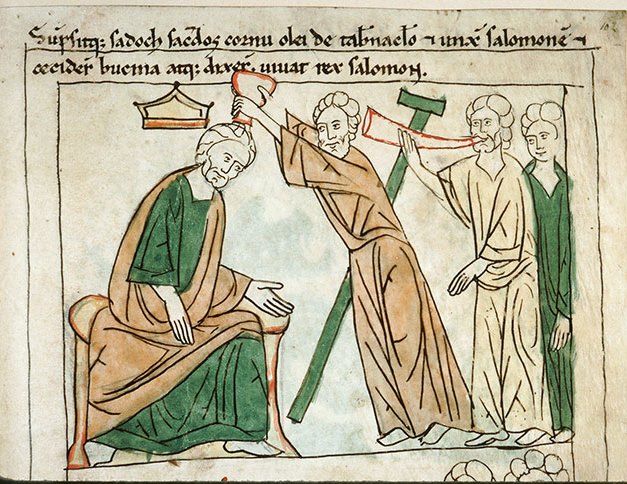
Anointment of King Solomon

Solomon, the young new king of Israel, has a dream just before this week’s haftarah reading. God offers him not three wishes, but one wish:

At Gibeon God appeared to Solomon in a dream in the night, and God said: “Ask, what shall I give you?”  (1 Kings 3:5)

Solomon, being already somewhat wise, does not ask for wealth. long life, or the defeat of his enemies (as God notices with approval). After mentioning his own inexperience as a leader, the new king says:

May You give Your servant an understanding mind to judge Your people, lehavin between good and bad.  For who is able to judge this impressive multitude of Your people?  (1 Kings 3:9)

lehavin (לְהָבִין) = to be able to discern, to gain insight.  (From the same root as binah, בִּינָה = insight.)

God responds:  Hey! I have done as you spoke. Hey! I gave you a mind [which is] wise and navon…  (1 Kings 3:12)

navon (נָווֹן) = perceptive, discerning.  (Also from the same root as binah.)

In the Garden of Eden, God tells Adam not to eat from the Tree of the Knowledge of Good and Bad. (See my post Giving Directions.) The primeval humans eat the fruit anyway, giving humankind knowledge that some actions are good and some are bad.  In the dream at Gibeon, God grants Solomon’s wish for the ability to discern which actions and motivations are good and which are bad.

The young king wakes up from his dream and returns to Jerusalem at the opening of this week’s haftarah.  He makes sacrifices at the altar and holds a banquet.

It was then that two prostitute women came to the king and stood before him.  (1 Kings 3:16)

Solomon wanted understanding and binah in order to be a good judge for the whole multitude of Israel. His first case is a dispute between two of its most despised members: prostitutes. Normally a local elder would judge this case; a king would only serve as a court of appeals or as the judge for affairs of state.  Either the two prostitutes have already gone to a local judge, who was unable to decide on a ruling, or they simply barge in on the new king’s party and he decides to hear them out instead of throwing them out.

The two prostitutes are never named in this story. I will quote only their dialogue as they present their case, identifying each speaker as Woman #1 or Woman #2.
by Andrea Mantegna
by Andrea Mantegna

Woman #1:  Please, my lord, I and this woman [#2] are living in one house, and I gave birth with her in the house.  And it happened that on the third day after my giving birth, this woman [#2] also gave birth.  And we were together; there was no stranger with us in the house except me. The two of us were in the house.  (1 Kings 3:17-3:18)

So far, Woman #1 has explained that there were no witnesses to the event she is about to describe. But a discerning listener—and Solomon is now discerning—would notice that unlike other Israelite women, the two prostitutes do not live with any family members. They live alone in a shared house. Clients (including the unknown fathers of their infants) may come and go, but they have only one another for companionship and help.

Woman #1:  Then the son of this woman [#2] died at night, when she lay down on him. And she got up in the middle of the night and took my son from my side, while your servant [#1] slept. And she [#2] laid him in her bosom.  And her son, the dead one, she laid in my bosom. When I got up in the morning to nurse my son, hey! He was dead! Va-etbonein him in the morning, and hey! He was not my son to whom I had given birth!  (1 Kings 3:19-21)

va-etbonein (וָאֶתְבּוֹנֵן) = and I looked closely at, and I paid attention to, and I was perceptive about. (From the root binah, like the words lehavin and navon in Solomon’s dream.)

Woman #2:  No, for my son is the living one and your son is the dead one!  Yet this one [#1] is saying: “No, for your son is the dead one and my son is the living one.”  (1 Kings 3:22)

While Woman #1 tells a complete story, Woman #2 merely contradicts her on the key question: Who is the mother of the living infant?  Like Woman #1, she refers to her housemate and companion only as “this one” or “this woman”. The trauma of the dead baby has alienated the two women; they are no longer friends. Now they are desperate competitors for the living baby (and eventually, if all goes well, a grown son to support them in old age).
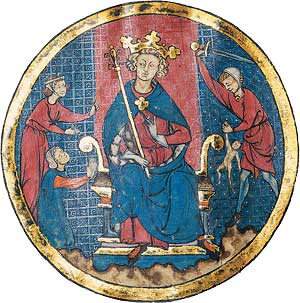
Judgment of Solomon 14th century
The Judgment of Solomon
14th century

King Solomon summarizes the dispute, then calls for his sword. His servants bring it between the king and the two women. This dramatic visual aid makes his words more believable when he says:

Cut the living boy in two, and give half to one and half to the other.  (1 Kings 3:24-25)

In a fairy tale, that is what the evil monster would say, prompting the two women to unite against him. But this is a wisdom tale about an insightful judge.

The Bible does not dictate what a judge should do if two people claim ownership of the same object, and there are no witnesses or other evidence. But the Mishnah (written around 200 C.E.) in the Talmud discusses the problem using the example of a valuable garment two people are holding onto as they speak to a judge:

Talmud Readers by Adolf Berman
Talmud Readers
by Adolf Berman

One of them says “I found it’ and the other says “I found it’. One of them says “it is all mine’ and the other says “It is all mine”. Then one shall swear that his share in it is not less than half, and the other shall swear that his share in it is not less than half, and it shall then be divided between them.  (Talmud Bavli, Bava Metzia 2a, Soncino translation)

The Mishnah it is a record of “oral law”, i.e. previously unwritten legal precedents thought to date back to the time of Moses. So the above rule may have been in use since the books of Kings were written in 6th century B.C.E., about seven centuries before the Mishnah was written.

The haftarah does not say whether both women are holding onto the baby while they stand before the king. Nevertheless, the precedent of the ruling about the disputed garment would give King Solomon an excuse for uttering the same ruling about a disputed baby .

Both women believe he means it, and are shocked into revealing more about themselves.
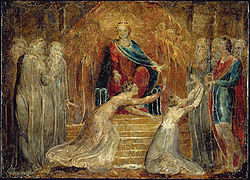
The Judgment of Solomon by William Blake
The Judgment of Solomon
by William Blake

And the woman whose son was living said to the king—because her compassion was stirred up over her son—she said: “Please, my lord, give the living boy to her, or you will certainly kill him!” But the other one was saying: “Let him be neither mine nor hers.  Cut him!” (1 Kings 3:26)

Which woman begs the king to give the living baby to her adversary—Woman #1 or Woman #2? Which woman is so fixated on winning the dispute over ownership that she no longer cares about the child? The text is not clear, though perhaps the first woman to present her case (Woman #1) is also the first woman to speak after Solomon’s shocking order.

And the king responded, and he said: “Give her the living boy, and certainly do not kill him. She is his mother!  And all Israel heard the judgment that the king had judged, and they were in awe in face of the king, because they saw that the wisdom of God was within him to do justice.  (1 Kings 3:27-28)

The bottom line is that only a woman who wants a baby to live is fit to be its mother. Anyone who would rather let a child die than lose a dispute is an unfit parent, even if she reacts that way only in a moment of temporary insanity. King Solomon proves that he can go beyond legal considerations and rule according to his God-given binah between good and bad.

I believe the compassionate mother is Woman #1, the one who told a coherent story about what happened. She is the one who saidva-etbonein him in the morning: she paid attention to the infant, looking at him with discernment. She implied that if she had recognized the dead baby as her own, she would have accepted her loss; she knows that infants are not interchangeable.

Woman #2 speaks only to insist that she owns the living baby, without offering any explanation. I can imagine her making the midnight substitution in order to get the advantage for herself, without even considering whether her action is ethical. When Woman #1 demands her own child back, Woman #2 is reduced to saying: No, it’s mine!

If Woman #2 is also the woman who says “Cut him!” she lacks not only compassion, but also the ability to discern between good and bad.

Nobody is good all of the time. Waking up next to a dead baby might fill any woman with grief and horror. With no one to comfort her, and breasts full of milk, Woman #2 might have switched the babies in the middle of the night without thinking it through. But when Woman #1 discovered the substitution in the morning, a woman with a heart would have apologized and handed over the living baby.  Who knows, perhaps then the two lonely prostitutes could have made peace and raised the boy together.

When one of the two women insisted on lying, peace and friendship became impossible. The innocent woman could not bear, and would not dare, to continue living in the same house with a predatory liar. Yet she has no family or friends to help her get away and protect her and her son. She goes all the way to the king, who turns out to have the binah to see the truth.


Unfortunately, compassion and truth do not always triumph in our world. Those who have little power can still be victimized by people who cannot discern what is good and what is bad—people who are impaired either by their genes or their upbringing, and do not understand the moral imperative of being human.

I pray that every powerless victim may either escape or find a wise judge.  And I pray that everyone who is called upon to judge may be granted binah—and compassion.
Haftarat Vayeishev—Amos: No Prophecy Allowed

Every week of the year has its own Torah portion (a reading from the first five books of the Bible) and its own haftarah (an accompanying reading from the books of the prophets). This week’s Torah portion is Vayeishev (Genesis 37:1-40:23), and the haftarah is Amos 2:6-3:8.
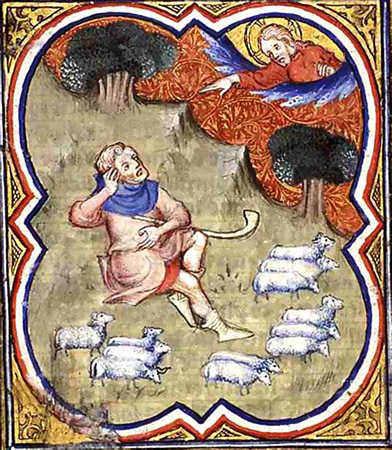
The Call of Amos, Petrus Comestor’s ‘Bible Historiale’, France, 1372

The doom of other countries is easier to read about than the doom of your own. So the book of Amos opens with God’s proclamations against the kingdom of Israel’s neighbors Aram, Philistia, Phoenicia, Edom, Ammon, Moab, and Judah. In each prophecy, Amos mentions a wicked deed the state committed, followed by the war-related punishment that God will bring down upon it.

I can imagine Amos’s audience in the kingdom of Israel nodding at the well-deserved punishments predicted for other countries, many of which their own king, Jereboam II, attacked in the mid-eighth century B.C.E.

Collective guilt

Then Amos’s introductory formula for the next prophecy names Israel. This week’s haftarah begins:

            Thus said God:

            Because of three revolts of Israel,

                        And because of four, I will not accept it:

            Because of selling the innocent for silver,

                        And the needy for the sake of a pair of sandals. (Amos 2:6)

The first revolt (or transgression) against God in Amos’s polemic against the Israelites is selling people into slavery merely out of greed. In the Bible parents are allowed to sell themselves or their children—but only to fellow Israelites, and only in order to pay off debts.1 Selling someone to an outsider, or for any reason other than debt, is unacceptable.

In this week’s Torah portion, Joseph’s brothers sell him as a slave to a caravan bound for Egypt, for 20 pieces of silver. Their only reason is that they hate him. Later they suffer for this bad deed.

The book of Amos goes on to list four other revolts against God by Israelites:

           Mauling the head of the powerless in the dust of the ground,

                      They stretch the path of the needy.

           A man and his father go to the [same] na-arah

                      For the sake of profaning My holy name.

           And on garments taken as security [for debts]

                      They stretch out beside every altar.

           And wine from fines they charged

                      They drink in the house of their god(s). (Amos 2:7-2:8)

na-arah (נַעֲרָה) = girl; a young woman old enough to marry who has not yet had a child; a female slave or servant.

Drinking in Ancient Greece

The Israelites who revolt against God are the ones who victimize the innocent, the needy, the powerless, servants, and debtors. They disregard God’s instructions about the poor in order to accumulate silver and live in selfish luxury, indulging in dubious sex and lolling about drinking beside religious altars.  Either they are worshiping alien gods at these altars, or they are using a shrine built for making libations and animal sacrifices to God as if it were a private drinking hall.

The wealthier Israelites ignore God despite everything God has done for them: bringing them up from Egypt (where the Israelites were the slaves), guiding them through the wilderness, and destroying their Amorite (i.e. Canaanite) enemies.

The role of prophets

Furthermore, Amos says:

I raised up some of your children for neviyim,

                        And some of your youths for nezirim.

            Is this also nothing, children of Israel?

                       —declares God. (Amos 2:11)

neviyim (נְבִיאִים) = prophets (singular= navi, נָבִיא). From the root verb niba (נִבָּא) = behave like a prophet, either by having ecstatic experiences of the divine, or by serving as a mouthpiece and translator for God.

nezirim (נְזִרִים) = nazirites; men and women who dedicate themselves to a period of sanctity during which they abstain from grooming their hair and from drinking wine and other alcohol. (See my post Haftarat Naso—Judges: Restraining the Abstainer.)

The neviyim transmit God’s messages to the people. The nezirim set an example of inner strength, even in their youth, by holding themselves to a more difficult standard for the sake of sanctity. God’s rhetorical question—Is this also nothing?—is designed to make the listeners agree that neviyim and nezirim are assets to the community.

drunk-woman

But the Israelites have rejected these human assets, making the nezirim break their vows and forbidding the neviyim to speak for God.

           But you made the nezirim drink wine,

           And you ordered the neviyim, saying: Lo tinavu (Amos 2:12)

Lo tinavu (לֹא תִּנָּבְאוּ) = You shall not prophesy!  Lo (לֹאּ) = not; tinavu is a form of the verb niba (נִבָּא).

Naturally the immoral, disobedient Israelites do not want anyone reminding them of their own wickedness.

Since the Israelites have rejected God’s gifts, God threatens to make Israel’s army unnaturally slow and weak. The obvious, though unstated, conclusion is that if an enemy army attacks, the kingdom will be unable to defend itself.

Amos continues God’s prophecy with a list of rhetorical questions, including:

            If misfortune happens in a town,

                        Did not God make it? (Amos 3:6)

This expresses the common Biblical belief that God controls everything that happens to human beings. Individuals are responsible for their own behavior, but nothing else; when bad things happen to them it is always a punishment from God for misbehaving. (The Hebrew Bible questions this ancient belief only in the book of Job.) Similarly, the people of a community or country are responsible for their collective behavior; so if a whole country is vanquished, the reason is not that the enemy has superior military might, technology, or strategy, but rather that God is using the enemy’s army to punish people who have done wrong.

By sending a prophet, God gives a country a chance to reform; and if the country does reform, the divine punishment is canceled. In the book of Jonah, once the reluctant prophet finally prophesies in Nineveh, the people repent and the city is saved.

Amos pauses in his list of rhetorical questions to remind his audience:

            Indeed, my lord God does not do a thing

            Unless He has revealed His confidential plan to His servants, the neviyim. (Amos 3:7)

Then Amos finishes his list:

            A lion has roared;

                        Who will not be afraid?

            My lord God has spoken;

                        Who will not prophesy? (Amos 3:8)

God’s voice is as frightening as a lion’s roar. When God speaks to the prophet, he cannot help but obey God by transmitting the message. Amos may be implying that God’s word, spoken by a true prophet, should be just as frightening. Then the Israelites could not help but repent and reform.

Yet the wealthy and powerful of Israel are so resistant to change that they order the neviyim (including Amos, presumably) to keep their mouths shut and go away.2 They would rather continue doing wrong and stay in denial than admit their wrongdoing and change their ways in time to avoid the conquest and destruction of their country.


Today, when we face the degradation of the whole world due to climate change, including a high toll on human life, few people consider it a punishment from God.  Why blame an anthropomorphic deity, when it is so easy so see how human actions are causing our collective suffering?

Nevertheless, it is hard to change our actions. Many people today offer information about what is happening, and call for reducing air pollution and preparing for rising waters. Some individuals are responding by using less gasoline to travel—and no doubt when Amos prophesied, a few individuals responded by treating the poor and their own families with more justice, and their religion with more respect.

Yet when a whole kingdom, or the whole world, is threatened, the disaster can only be avoided or ameliorated by commitment and action on the part of the leaders at the top. In the book of Jonah, Nineveh would not have repented if its king had not put on sackcloth and issued his decree. In the book of Amos, King Jereboam II never reforms, and neither do his people. By 720 B.C.E. the Assyrian army had captured Israel and its capital, Samaria.

May a divine spirit open all of our ears and hearts today, and may all the leaders and influential people of the world become more like the repentant king of Nineveh than like the leaders of Israel in the time of Amos.


1See my post  Haftarat Vayeira—2 Kings: Dance of Pride. Even when someone acquired a slave as a payment of debt, the debtor’s kinsman was obligated to buy back his relative as soon as he could afford it, and after six years a master had to liberate an Israelite slave even without financial recompense.  In fact, the Torah says: And when you send him out emancipated from you, do not send him out with nothing. You must certainly provide him [with goods] from your flock or from your threshing-floor or from your wine-vat, which are blessings that God has given you. (Deuteronomy/Devarim 15:13-14)

2 An example is given later in the book: Amatzyah, the priest of Bethel, sent to Jereboam, the king of Israel, saying: “Amos conspires against you in the midst of the house of Israel. The land cannot endure everything he speaks!” (Amos 7:10) … And Amatzyah said to Amos: “Seer, go with your spirit to the land of Judah, and eat your bread there, and prophesy there! But do not ever prophesy again at Bethel, because it is a sanctuary for the king and a royal palace.” (Amos 7:12-13)

Haftarot Vayeitzei & Vayishlach—Hosea: A Heart Upside Down

Every week of the year has its own Torah portion (a reading from the first five books of the Bible) and its own haftarah (an accompanying reading from the books of the prophets). This week’s Torah portion is Vayeitzei (Genesis 28:10-32:3), and the haftarah is Hosea 12:13-14:10. Next week’s Torah portion is Vayishlach (Genesis 32:4-36:43) and the haftarah is Hosea 11:7-12:12. 1

Together, the passages from Hosea show us a God whose “heart has turned upside down”.

A punishment from God!  That’s how the Bible describes almost every plague or military defeat the Israelites suffer, from the time they leave Mt. Sinai to the fall of their first temple in Jerusalem.  God gets a hot nose (the biblical idiom for anger) when the Israelites fail to live up to their covenant with God—by not trusting God to provide for them, by worshiping other gods, or by neglecting God’s ritual and ethical laws.  Then God yells at them through a prophet, and lashes out with a deadly punishment.

Yet in the second half of Isaiah, God says the Israelites have suffered enough, and forgives them.   And in the haftarot for this week and next week, two contiguous sections the book of Hosea, God is torn between vicious anger and tender-hearted love.

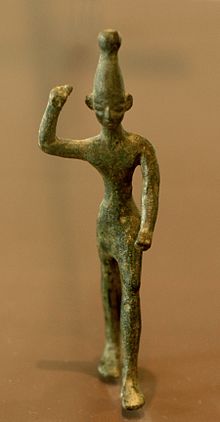
Baal in bronze, from Ugarit

The double passage begins with God saying:

            My people are stuck in meshuvah from me.

            Upward they are summoned—

            They do not rise at all. (Hosea 11:7)

meshuvah (מְשׁוּבָה) = backsliding, defection (to other gods), disloyalty.

The people of the northern kingdom of Israel (which Hosea also calls Efrayim, after the tribe of its first king, Jeroboam) remain trapped in their habit of worshiping Baal, even though prophets such as Hosea call for reform.  When any of the people of Israel or Judah persist in worshiping idols, God usually becomes enraged and threatens destruction.  But this time, God says:

           How can I give you up, Efrayim?

            [How] can I hand you over, Israel?

            How can I put you in the position of Admah?

            [How] can I treat you like Tzevoyim?

            My heart nehapakh.

            It is altogether anxious, and I have had a change of heart. (Hosea 11:8)

nehapakh (נֶהְפַּךְ) = has turned upside down, turned around, been overturned.

Admah and Tzevoyim were villages that God annihilated along with their neighbors, Sodom and Gomorrah, during Abraham’s lifetime.  Presumably these villages shared the immorality of Sodom and Gomorrah.  Yet although the northern kingdom of Israel is engaging in the Baal-worship of its neighboring kingdoms, the thought of annihilating Israel turns God’s anger into anxiety.

            I will not act on the anger of My nose.

            I will not turn to destroy Efrayim.

            Because I am a god, and not a man;

            The holy one in your midst.

            And I will not come with agitation.  (Hosea 11:7-9)

The book of Hosea implies that only a human man would reject his unfaithful wife in anger.  A god, unlike a man, is able to master emotional reactions.  The God of Israel chooses the path of love instead—at least for a few more verses.  Then God remembers:

            Efrayim encircled Me with false denials,

            And the house of Israel with deceit…  (Hosea 12:1)

            It cut a covenant with Assyria;

            Then it brought oil as tribute to Egypt.  (Hosea 12:2)

The book of Hosea, like the book of Jeremiah, urges the Israelites not to become vassal states of other empires, but to remain independent and trust God to protect them.  The government of the northern kingdom is deceiving itself by pretending that an alliance with a foreign empire does not affect its service to God, but only leads to wealth and power.  Israel, personified as Efrayim, says:

from Croesus by Nicholas Knupfer
from “Croesus” by Nicholas Knupfer

            How rich I have become!

            I have found power for myself.

            [In] all my labor they cannot find crooked activity

            That is a sin.  (Hosea 12:9)

Efrayim knows his shady dealings are crooked, but tells himself that he is good as long as he does not break the letter of the law.  However, God knows better.

            And now they add sin to sin

            And they make for themselves molten images…

            They speak to them!

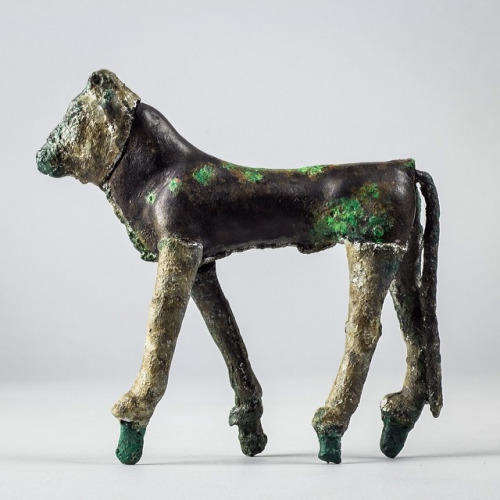
            Sacrificers of humans, they kiss calves!  (Hosea 13:2)

God’s nose gets hot again, and God speaks of punishing the Israelites in various terrible ways, concluding:

            By the sword they shall fall;

            Their infants shall be smashed on rocks,

            And their pregnant women shall be ripped open!  (Hosea 14:1)

Then Hosea advises the Israelites to pray for forgiveness and promise never to worship idols again. (See my post Haftarot for Rosh Hashanah and Shabbat Shuvah.) Their words are enough to turn God’s heart upside down once again.  God says:

            I will heal their meshuvah.

            I will love them nedavah.

            For my hot nose has turned away from them.  (Hosea 14:5)

nedavah (נְדָבָה) = voluntarily, freely, as a gift, spontaneously.

A prayer and a promise are enough to change God from an angry punisher into a loving and forgiving healer.  God’s love is not even contingent on the Israelites fulfilling their promise.

God predicts that the Israelites will be cured of their meshuvah, their habit of disloyalty and defection, in response to God’s freely given love.

            Efrayim [shall say]:  “What are idols to me now?”

            I Myself shall respond and I shall look at him with regard. (Hosea 14:9)


Parents and teachers are familiar with the conundrum God faces in these haftarot. After you have told children what they are doing wrong, and what they should do instead, do you wait for them to change their behavior before you reward them?  Or do you shower them with love first, hoping that they will then change in response to your trust in them?

I suspect the right answer is different for each child.  And once in a while, when a child is testing you, you need to show that your temper has limits, and mete out an appropriate level of punishment.

In most of the Bible, God is not a wonderful parent or teacher.  The anthropomorphic God has a hair-trigger temper, and “His” punishments include early and painful death for thousands of innocent people.  But Hosea holds up a different model when he suggests that a god has more self-control than a man.  The God of Israel need not act like a man who cannot overcome his anger against an unfaithful wife, Hosea says.  God can stay calm and heal humans of their slavish devotion to idols and emperors—through love.

Today many adult humans try to meet the higher standards that Hosea set for God, behaving with self-control, good judgment, and love.  It is not easy, since we seem to be made in the image of the old anthropomorphic God, full of both anger and love.

Underneath those feelings, can we come close to a more holy God?  I believe we can, if we spend enough time reflecting and turning our hearts upside down, as well as recognizing our self-deceit and denial and pushing through to deeper truths.

            You, you must return to your own god!         

            You must observe kindness and just judgments,

            And eagerly wait for your god, constantly! (Hosea 12:7)


1 There is an alternate tradition of reading the book of Obadiah for next week’s haftarah, but Obadiah merely predicts the triumph of the people of Jacob (Israel) and the complete downfall of the people of Esau (Edom), without offering any reasons or any characterizations of God, Jacob, or Esau.

Hosea 11:7-12:12, on the other hand, mentions Jacob wrestling with the mysterious being, a key feature of the Torah portion Vayishlach, as well as considering divine and human psychology.


Haftarat Toledot—Malachi: Respectfully Yours

Every week of the year has its own Torah portion (a reading from the first five books of the Bible) and its own haftarah (an accompanying reading from the books of the prophets). This week’s Torah portion is Toledot (Genesis 25:19-28:9), and the haftarah is Malachi 1:1-2:7.
calf-ashkleon-silver

Do religious rituals and observances matter? How important is it to get the details right?

The three faults that draw the most condemnation from the prophets in the Hebrew Bible are:

1) worshiping other gods,

2) behaving unethically toward other people, and

3) failing to follow the rules of rituals

—in that order, if one judges by the number of words devoted to each.

When the prophets criticize the Israelites for their sacrifices at the temple, they usually condemn them for going through the ritual motions while continuing to act unjustly toward the poor, orphans, and widows.

But when the prophets criticize the temple priests, they denounce them for not teaching the Israelites about God (Jeremiah 2:8), for not separating the holy from the unholy and the pure from the impure (Ezekiel 22:26 and Zephaniah 3:4), for charging fees to make religious rulings (Micah 3:11), for promoting sexual sins (Hosea 6:9), and, in this week’s haftarah, for accepting defective animals as offerings for the altar.

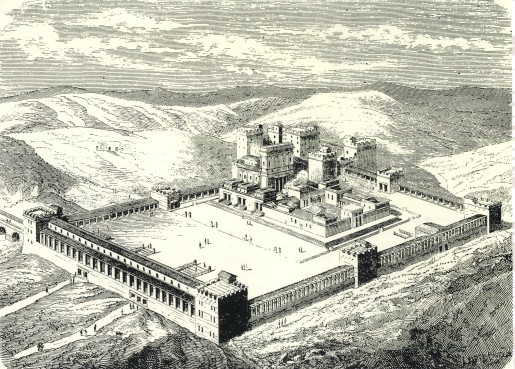
Second Temple, Jerusalem
Second Temple, Jerusalem

The last prophet in the Hebrew Bible is Malachi, whom most scholars date to the 5th century B.C.E., when the homeland of the Israelites has become a province in the Persian Empire, and Ezra and Nehemiah have rebuilt Jerusalem and its temple.

A pronouncement: the word of God to Israel, by the hand of Malakhi. (Malachi 1:1)

Malakhi (מַלְאָכִי) = Malachi (usual English spelling); My malakh.

malakh (מַלְאָךְ) = messenger, either human or divine.

God’s messenger delivers God’s complaint against the priests of the second temple.

“A son should honor a father, and a slave his master; but if I am a father, where is My honor? And if I am a master, where is My reverence?” says the God of [Heavenly] Armies to you, the priests who are bozeh of My sheim. And you say: “How are we bozeh of Your sheim?” (Malachi 1:6)

bozeh (בּוֹזֶה) = being in contempt, slighting, disrespecting, demeaning, finding insignificant.

sheim (שֵׁם) = name, reputation.

God answers:

“Presenting on My altar degraded food, then you ask: How are we degrading you? When you say: The table of God is nibezeh. Then if you present a blind [animal] for a slaughter-sacrifice, there is nothing wrong, and if it is lame or sick, there is nothing wrong!” (Malachi 1:7-8)

nibezeh (נִבְזֶה) = insignificant, contemptible, not worthy of respect. (From the same root verb as bozeh.)

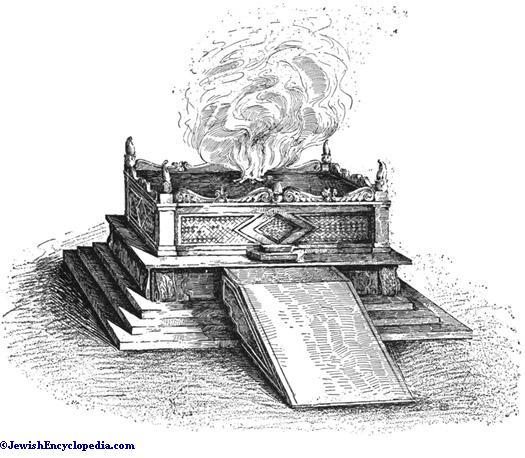
Temple altar
Temple altar

The animals are given by the people, but the priests must decide whether each animal is acceptable to burn on the altar that serves as God’s “table”. Malachi astutely diagnoses the problem with flawed offerings: although the end-product of smoke is the same, priests who accept defective animals as gifts for God are showing contempt for God’s reputation. By doing so, they teach the people that they can give God any old leftovers; they need not honor God the way they would honor a parent or a master by serving a beautifully presented dinner.

The haftarah contrasts this negligent attitude with the respect and reverence that Israelite priests used to show for their God.

A torah of emet was in his mouth

And no wickedness was found on his lips;

In peace and on level ground he walked with Me

And he turned many away from wrongdoing. (Malachi 2:6)

torah (תּוֹרַה) = instruction, direction; the sum of God’s law; a book containing God’s laws. (From the same root as yoreh (יוֹרֶה) = he will teach; and moreh (מוֹרֶה) = teacher.)

emet (אֱמֶת) =  reliability, trustworthiness, truth; reliable, trustworthy, true.

A good priest teaches the people what to do, both ritually and ethically. The priest’s actions are consistent with his teachings; he is honest, what we call being “on the level” even in English. Therefore his instructions are emet.

kohen-ordinary-garments

Because the lips of a priest preserve knowledge

And they seek torah from his mouth;

Because he is a malakh of the God of [Heavenly] Armies.

But you turned away from the path;

You made many stumble through the torah;

You wiped out the covenant of the Levites, said the God of Armies. (Malachi 2:7-8)

Just as the author of the book Malachi is a malakh, a messenger from God, every priest must be a responsible malakh.

The Talmud extends this requirement to everyone who teaches about God. Rabbi Yochanan says: “If the rabbi is like a messenger of the God of Armies, they should seek the law at his mouth; but if he is not, they should not seek the law at his mouth.” (Babylonian Talmud, Mo-ed Katan 17a)

Back to our original question: Do rituals matter? And how important is it to get the details right?

For the priests at the second temple in the 5th century B.C.E., it was essential. They had to carry out the letter of the law concerning animal sacrifices, particularly the requirements for unblemished animals, in order for the people to see that they took God seriously.

After the fall of the second temple in 70 C.E., Judaism’s new teachers, the rabbis cited in the Talmud, focused on interpreting and extrapolating the laws in the Bible that did not require offerings at a temple. The examples they set in their personal lives were also scrutinized. If you wanted your rulings to be respected about the shape of lamps permissible on Shabbat or which slaves a master is obligated to feed, you had to follow all the rules yourself.

Today many rabbis and other teachers of the Torah, as well as many teachers of other religions, are primarily concerned with ethical behavior toward fellow human beings. The Hebrew Bible addresses ethics, but provides proof texts for contradictory opinions. For example, in one passage Moses commands genocide (see my post Mattot: Killing the Innocent).  In another, God tells Moses to tell the people: You shall not wrong a stranger, and you shall not oppress him, for you were strangers in the land of Egypt. (ExodusShemot 22:20)

In the face of conflicting passages, a modern Torah interpreter is responsible for finding the deepest truth and teaching it. Rabbi David Frankel wrote: “Thus, what makes Torah “true” is the sincerity and integrity with which one pursues the process of searching and interpreting.”

I am continually away of the shortcomings in my own behavior when I teach the Torah in a class, in a service, or in this blog. Not only is my idea of keeping kosher too idiosyncratic for most observant Jews, but I catch myself falling short of my own standards for kindness and justice. Are my words emet? Probably not. I can only pray that my sincere attempts to wrestle with the text and reach through to the divine spirit behind it will somehow lead to an occasional flicker of inspiration.  I may not walk with God on level ground, but I am grateful for this journey.

Haftarat Vayeira–2 Kings: Dance of Pride

Every week of the year has its own Torah portion (a reading from the first five books of the Bible) and its own haftarah (an accompanying reading from the books of the prophets). This week’s Torah portion is Vayeira (Genesis 18:1-22:21), and the haftarah is 2 Kings 4:1-37.

Elisha is not only a prophet, but a miracle-worker. He and his mentor, Elijah, are the only characters in the Hebrew Bible who create supernatural wonders on their own initiative—yet with God’s approval.

This week’s haftarah relates two of Elisha’s miracles. First the widow of one of Elisha’s disciples begs him for help. She is in debt to a creditor who is coming to take her two sons as slaves. Elisha speaks to her simply and directly, saying:

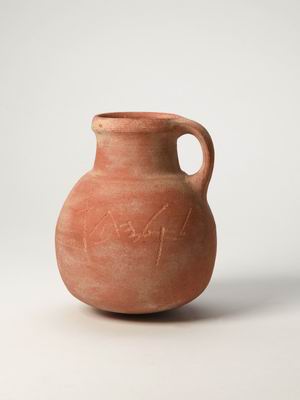
Jug from 9th-century Israel

What can I do for you? Tell me what you have in the house. (2 Kings 4:2)

He has no problem arranging a miracle for the poor and desperate woman, turning her single small jar of oil into so much oil that when she sells it she can pay off her whole debt, with money left over. Magnanimity comes easily to Elisha.

In the next story, the woman who approaches Elisha is wealthy and content. Instead of asking for help, she is determined to help Elisha. He becomes the recipient of someone’s magnanimity.

It happened one day [that] Elisha passed by Shuneim, and there was a gedolah woman, vatachazek him to eat a meal. Then it happened whenever he passed by, he turned aside there to eat a meal. And she said to her husband: “Hey, please! I know that the one who passes by regularly is a holy man of God. Let us make, please, an upper room with a wall, and let us put there a bed for him, and a table and a chair and a lampstand, and it will happen whenever he comes to us, he will turn aside there”. And it happened one day [that] he came there and he turned aside to the upper room …(2 Kings 4:8-11)

gedolah (גְדוֹלָה) = great, important, big.

vatachazek (וַתַּחֲזֶק) = and she took hold of, and she prevailed over, and she seized.

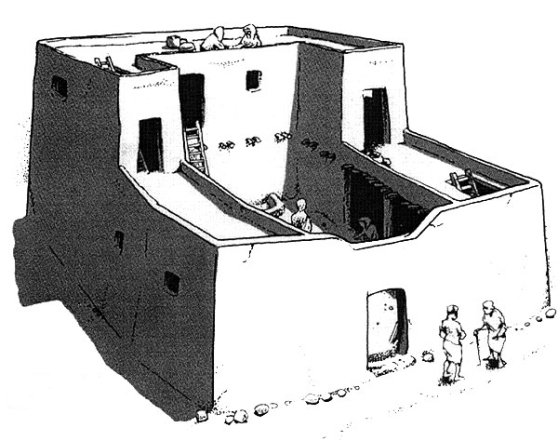
The woman of Shuneim is probably gedolah, important in her town, because she and her husband are wealthy enough to build a walled chamber on top of their roof as a guest room. She may also be called gedolah because she is unusually forceful for a woman in the ancient kingdom of Judah. She does not politely ask Elisha if he would like to come to her house for a meal; she makes him do it, either by refusing to take no for an answer or by actually grabbing him.

But feeding Elisha is not enough for her. So she politely tells her husband she wants to build and furnish a guest room for him. Her husband’s reply is not recorded, but judging by the rest of the story, he never stands in her way. In the next sentence, Elisha’s guest room is complete.

What is the woman of Shuneim’s motivation for this extreme hospitality? One clue is that she calls Elisha a “man of god”, an ish elohim. Maybe she is religious, and sees taking care of a man of God as a way to contribute to the cause of glorifying the God of Israel.

House in ancient Israel

And it happened one day [that] he came there and he turned aside to the upper room, and he lay down there. And he said to Geichazi, his manservant: “Call that woman of Shuneim.” And he called her, and she stood before him. (2 Kings 4:11-12)

Elisha is already famous in the kingdoms of both Judah and Israel. Now he has his own servant. He sends Geichazi to summon her, instead of going downstairs himself.  He does not refer to his hostess by name (and we never learn it). When she climbs up the ladder to his room, he is reclining on the bed as if he were a king.

Putting on even more airs, Elisha does not speak to her directly, but only through his servant.

And he [Elisha] said to him: “Say, please, to her: Hey! You have troubled yourself with all this trouble for us. What is there to do for you? To speak for you to the king? Or to the commander of the army?” (2 Kings 4:13)

There is no indication that the woman needs anything from the king or the army commander. I believe Elisha is showing off, letting her know that he has influence with these exalted persons.

The woman is unimpressed. She merely replies:

I am dwelling among my own people. (2 Kings 4:13)

She does not need Elisha’s influence because she is already well-known and respected in Shuneim.  She then goes back downstairs, making it clear that she does not want any favors from the “man of God”.

And he [Elisha] said: “Then what to do for her?” And Geichazi said: “Actually, she has no son, and her husband is old.” Then he [Elisha] said: “Call her”. And he called her, and she stood in the doorway. (2 Kings 4:14-15)

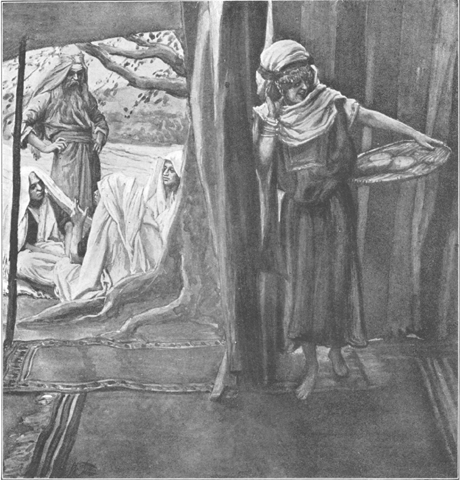
Sarah Hears and Laughs, by James Tissot

Geichazi assumes that the woman’s husband is too old to have successful intercourse with her. This story is a good match for the Torah portion Vayeira because in Vayeira, Sarah stands in the doorway of the tent and laughs silently when she hears a guest tell her 99-year-old husband, Abraham, that the following year she will have a son.

The guest, who is actually divine, hears Sarah’s thoughts and tells Abraham:

Is anything too extraordinary for God? Lamo-eid hazeh I will return to you, ka-eit chayyah, and Sarah will have a son. (Genesis 18:14)

lamo-eid hazeh (לַמּוֹעֵד הַזֶּה) = at this appointed time.

ka-eit chayyah (כָּעֵת חַיָּה) = in the same season of life. (An idiom for “at the same time next year”.)

Elisha borrows language from the Torah portion to announce his own miracle, and finally addresses the woman instead of confining his remarks to his servant.

And he said: “Lamo-eid hazeh, ka-eit chayyah, you will be embracing a son.” Then she said: “No, my lord, Man of the God. Don’t you lie to your maidservant.” (2 Kings 4:16)

Through the language of this annunciation, Elisha is comparing himself with Abraham’s guest, an angel who turns into the voice of God. I suspect that the woman of Shuneim rejects his message because she knows Elisha is only a man of God, not an angel. She puts him in his place.

She may not even want a son. Most women in Biblical times needed a son to support them in old age, since they rarely had property of their own. But as commentator Tikva Frymer Kensky pointed out, the woman of Shuneim appears to be independent, and may even own the land her husband farms for her.

Nevertheless, she has a son the following year. When the boy is old enough to follow his father around outside, but still young enough to fit on his mother’s lap, he suddenly has a pain in his head. His father does not take it seriously, and merely tells a servant to carry him back to his mother.

And he sat on her knees until noon. Then he died. And she took him up and laid him on the bed of the man of God, and she closed [the door] behind him, and she left. (2 Kings 4:20-21)

Elisha and the Shunamite Woman (artist unknown)

The woman realizes that now she does need a favor from Elisha, and she has a right to demand it. When she reaches him on Mount Carmel, she brushes off Elisha’s servant Geichazi.

And she came up to the man of God on the mountain, vatachazek his feet… (2 Kings 4:27)

Once again the woman seizes Elisha, but this time instead of making him accept a favor from her, she requests one from him.

Geichazi tries to pull her away, but Elisha tells his servant:

“Leave her alone, because her soul is bitter, and God has hidden it from me and has not told me [about it].”

Then she said: “Did I ask for a son from my lord? Did I not say: Don’t you be careless with me?” (2 Kings 4:27-28)

Elisha's Servant Geichazi, engraving by Bernhard Rode
Elisha’s Servant Geichazi, by Bernhard Rode

That is enough of a clue for Elisha. He realizes her son has died, and he gives his staff to Geichazi with orders to place it on the boy’s face. But the woman knows that will not work.  She insists on taking Elisha to her house in person. He still does not speak to her directly, but he follows her. When they arrive, the boy is still laid out dead on Elisha’s bed.

Elisha’s pride has taken two blows; first God did not tell him anything was wrong, and then his idea for a miraculous revivification did not work. His benefactress knew more than he did.

Elisha Raising the Son of the Shunemmite, by Frederic Leighton

All he can do now is imitate one of his mentor Elijah’s successful miracles, and hope it works for him, too. He goes into the guest room, shuts the door on Geichazi and the woman, and prays to God. Then he climbs up and lies down on the boy, mouth to mouth and hands to hands. (Too much time has elapsed for mouth-to-mouth resuscitation; Elisha is attempting to send some of his own life-spirit into the child.)

After he does this a second time, the boy sneezes and opens his eyes. Elisha calls Geichazi and says: “Call that woman of Shuneim.”  It sounds as if Elisha is resuming his proud distance from his benefactress.  But when she arrives, he speaks to her, saying: “Pick up your son.” (2 Kings 4:36)

And she came and she fell at his feet and she bowed low to the ground and she picked up her son and she left. (2 Kings 4:37)

Although she bows to him, it is only his due as a man of God who has brought a dead child to life. She retains her dignity by rising and carrying her son away.

Does Elisha give up some of his prickly pride about receiving help from the woman of Shuneim? The story ends here, but later the second book of Kings reports:

And Elisha spoke to the woman whose son he had revived, saying: “Get up and go, you and your household, and sojourn wherever you will sojourn, because God has called for a seven-year famine, and even now it comes to the land.”  And the woman got up and did as the man of God spoke… (2 Kings 8:1-2)

God is speaking to Elisha, and Elisha is speaking to the woman of Shuneim, treating her with consideration, even if she did once force him to accept favors from her.

*

Maybe I see this haftarah as a story of prickly male pride because I was born in the 1950’s and I’ve seen that dynamic again and again—though less often in this 21st century. On the other hand, I sometimes find it difficult to accept help myself, because I, too, want to appear competent and in control, not weak and needy.

This week’s haftarah demonstrates that there are times when even the great woman of Shuneim, or Elisha the man of God, needs help. In order for we humans to do our work best, we need three things: the strength to ask for help when we need it, the strength to accept help whether we need it or not, and the compassion to give help when we can.

Haftarat Lekh-Lekha—Isaiah: Seeing the Invisible

Every week of the year has its own Torah portion (a reading from the first five books of the Bible) and its own haftarah (an accompanying reading from the books of the prophets). This week’s Torah portion is Lekh-Lekha (Genesis 12:1-17:27), and the haftarah is Isaiah 40:27-41:16.

What do you do when you once had a relationship with God, but now God seems to be absent?

The question is painful on this anniversary of Kristallnacht.  It is especially painful for those who believe in God as a benevolent parent or guardian, an external force looking after them and ensuring that, ultimately, good people will be rewarded, innocent people will have a chance, and everything will turn out for the best.

Siloam Tunnel under Jerusalem

Then something happens: Job is afflicted, Jerusalem is razed, the Nazis torture and kill millions of innocents, girls are raped, the day’s news threatens future darkness.  And it no longer makes sense to trust in a benevolent external God.

What do you do when God seems absent?

Many psalms address this question, and so does the second half of the book of Isaiah, written about 50 years after the Babylonian army razed Jerusalem and deported its population.  The prophet we know only as “second Isaiah” tried to persuade the Israelites that their God was still alive and strong, and would soon rescue them. This week’s haftarah from second Isaiah opens:

            Why do you say, Jacob,

            And why do you assert, Israel:

            “My path is hidden from God,

            My claim slips away from my God.” (Isaiah 40:27)

The Israelites believe that God cannot see what is happening to them, and that their covenant with the God of Israel has slipped away.  They feel invisible to God.  Second Isaiah responds:

            Do you not know?

            Surely you have heard?

            God is the god of all time,

            Creator of the ends of the earth.

            Never yiyaf and never will It grow weary.

            No one can fathom the depth of Its tevunah. (Isaiah 40: 28)

yiyaf (יִהעַף) = will he/It become faint, will tire out.

tevunah (תְּבוּנָּה) = insight, intelligence, discernment, skill.

The prophet counters that the God of Israel is the god of all time and all space, whose powers never flag and who has infinite insight. Therefore the Israelites cannot be invisible to God.

Babylonian Gods of the Dead, bronze
Babylonian gods of the dead, bronze

They feel invisible to God only because God is invisible to them.  Living in Babylon, they see no evidence of their God. The city is full of statues, reliefs, and paintings of other gods, but not the God of Israel. Their own god let the Babylonians raze the temple in Jerusalem, and let them languish in exile for decades.  Has God run out of power?

Second Isaiah says not only that God never grows faint or weary, but adds that God is:

            Notein laya-eif koach,

            And [giver] of abundant energy to those without vigor. (Isaiah 40:29)

Notein (נוֹתֵן) = Giver, giving.

laya-eif (לַיָּעֵף) = to the faint, to the tired. (From the same root as yiyaf.)

koach (כֹּחַ) = strength, endurance, power, ability to carry on.

Notein laya-eif koach = Giver of strength to the faint and tired.

Thus the prophet counters that not only is God powerful, but God is the one who gives strength and energy to human beings fainting with weariness.

Once again, second Isaiah declares that reality is the reverse of what the Israelites think.  God is not worn out; they are.

*

When I read the first line of Isaiah 40:29 in Hebrew, I recognized it from the Jewish morning blessings.  Our tradition upon arising is to bless God in gratitude for a list of blessings that come from God to us, including sight when we open our eyes, clothing, the ability to walk, and so on.

Out of the 16 morning blessings in the Ashkenazi Jewish tradition, 12 are dictated by the Babylonian Talmud tractate Berachot (“Blessings”). One of the blessings that is not from the Talmud is:

Blessed are You, God, our God, Ruler of everything, hanotein laya-eif koach.

hanotein (הַנּוֹתֵן) = the one who gives, the giver.

I often pronounce this blessing with extra enthusiasm, since I have chronically low energy, yet I am determined to make the most of my life.

Although some of second Isaiah’s exhortations no longer apply today, many of us still feel invisible to whatever runs the universe, as if “My path is hidden from God”.  Many of us still feel as if we’re drowning in a sea of exhaustion. And many of us still feel doomed by the agendas of other people, or by the results (such as global warming) of past human actions.

Second Isaiah says that our God is powerful  and always with us.  I conclude that our task is to learn how to sense God within, and draw inner strength from that sense. We can fathom the depth of our own insight. Then we might discover a core of divine strength within — and maybe even enough prophetic intuition to see our own paths.

May every one of us discover our own inner God, and draw strength from that connection to rise above our inevitable wounds and dedicate ourselves to kindness and patience.  And as we keep learning more about ourselves, may we keep learning more about other people — checking our assumptions, questioning hearsay, opening our minds to understand people who may seem like enemies until we get to know them.  May God strengthen us inside so we can cooperate to make life on this fragile earth as good as is possible now for all of us.


Haftarat Noach—Isaiah: From Raging Flood to Free Drinks

Every week of the year has its own Torah portion (a reading from the first five books of the Bible) and its own haftarah (an accompanying reading from the books of the prophets). However, this week the haftarah is almost a duplicate.  This week’s Torah portion is Noach (Genesis 6:9-11:32), and the haftarah is Isaiah 54:1-55:5—which includes all of haftarah for the Torah portion Re’eih, eight weeks ago.

After the flood subsides in this week’s Torah portion, God swears:

Never again to curse the earth on account of the human, since the yeitzer of the heart of the human is bad from its youth; and never again to destroy all life, as I have done.  (Genesis/Bereishit 8:21)

from a landscape by Peter Paul Rubens, ~1630
from a landscape by Peter Paul Rubens, ca. 1630

yeitzer (יֵצֶר) = what is shaped or formed; by extension, an impulse or a tendency. (From the root yatzar, יָצַר = shaped, formed.)

Perhaps God senses that It overreacted, wiping out not just the entire human race, but all land-based animals (except for those on Noah’s ark). God might have tried to educate humankind, or at least to issue a detailed warning and then exercise selective punishment against chronic transgressors. God warns Noah about the flood 100 years ahead of time, so God might even have given Noah instructions for acting as a teacher and prophet. But in the Torah, God only instructs Noah about how to build and fill the ark, and then releases the flood. The divine rage at human evil is unabated. (See my post: Noach: Spoiled.)

The first chapter of this week’s haftarah compares God’s covenant with the Israelites to a marriage, and God, the husband, says:

           In a flood of rage I hid My face a while from you

           But with unending loyal kindness I had compassion on you,

           —said  your redeemer, God.

           Like the days of Noah this is to me:

           As I swore that the waters of Noah would not pass over the earth again,

           So I swear against becoming angry at you and against rebuking you! (Isaiah 54:8-9)

Many a battered wife has heard a promise like that, as I pointed out when I discussed this haftarah eight weeks ago. (See my post Haftarah for Re-eih—Isaiah: Song of the Abuser.)

But after God has finished promising that “he” will never, ever throw the Israelites out of the house again, or bring over foreign bullies to attack them, the haftarah abruptly takes a different turn.

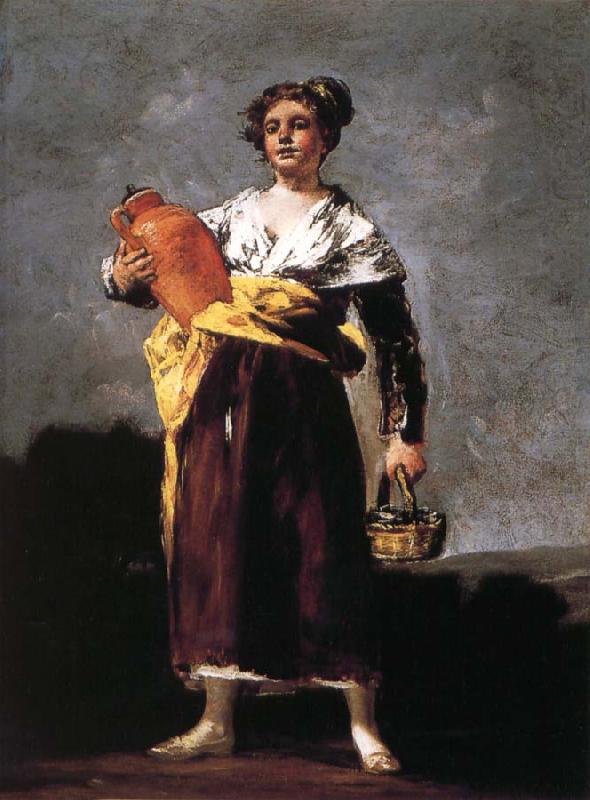
Water Carrier, by Francisco Goya ~1810
Water Carrier, by
Francisco Goya ca. 1810

           Hoy! Everyone who is tzamei! Come for water!

            And if you have no silver, come, buy and eat!

            And come, with no silver and with nothing to barter, buy wine and milk! (Isaiah 55:1)

Hoy! (הוֹי) = Oy! My goodness! Alas! Oh! Oh, no! Oh, dear!

tzamei (צָמֵא) = thirsty.

Instead of a raging flood, God offers drinking water. Then God promises food, wine, and milk, all free of charge. What is this poetic largesse?

Second Isaiah is addressing the exiled Israelite families that were deported to Babylon in 597-586 B.C.E. when King Nebuchadnezzar conquered Judah and Jerusalem. Apparently these exiles were familiar with a passage from the book of Amos (circa 760 B.C.E.):

Hey!  Days are coming—declares God—when I will send a famine into the land: not a famine for bread nor a tzama for water, but for hearing the words of God.  And they shall wander from sea to sea, and from north to east they shall roam, seeking the word of God, but they shall not find it. (Amos 8:11-12)

tzama (צָמָא) = thirst.  (From the same root as tzamei.)

Amos prophesied the end of the northern Israelite kingdom of Samaria (which fell to the Assyrian Empire in 722 B.C.E.), and promised a distant future when God would reinstate the Israelites in their own lands.  Until then, he warned, people who were hungry and thirsty for the word of God would be unable to find it.

The “word of God” means either directives from God—the rules of the religion—or teaching (in Hebrew, torah, תּוֹרָה) by and about God. When the Babylonian Talmud was assembled around 500 C.E., there was already a tradition comparing torah with water. Ta’anit 7a and Bava Kama 82a in the Talmud even cite Isaiah 55:1 as proof that “water” means torah.

Second Isaiah declares that Amos’s distant future has arrived. After all, when King Cyrus of Persia conquered Babylon in 539 B.C.E., the Israelites became free to return to their old homelands and rebuild the temple in Jerusalem. Now people who were hungry and thirsty for the word of God can find it.

The haftarah picks up where Amos left off and gives further information about the word of God: it is free, and it will sustain the soul. Just as water is essential for the human body to live, the word of God is essential for the human soul to live.

by Mary Cassat, 1908

Furthermore, according to second Isaiah, one can even get milk and wine for free.

Milk appears in the Bible as the nourishment humans receive without hard labor. Mothers nurse their infants, and the land that God promises to give the Israelites is repeatedly described as a “land flowing with milk and honey”. The luxury of milk is given out of parental love: a mother’s tenderness or God’s compassion.

            Wine makes the heart glad. (Psalm 104:15)

Although the Bible denounces excessive drinking, it calls for wine in sacraments as a sign of joy. Wine first appears in the Torah when Abraham returns victorious from a regional battle. Malki-tzedek (“King of Righteousness”) of Jerusalem brings him bread and wine and blesses him in the name of God. Later the Torah requires that people bring libation offerings of wine to the altar along with their offerings of animals and grain.

Since the word of God is compared to water, milk, and wine, Joanne Yocheved Heligman wrote in The Women’s Haftarah Commentary, focusing on “spiritual goals” will nurture us with a balance of physical sustenance (water), love (milk), and spiritual joy (wine).

I would add that spiritual work is sustaining, like water, when it involves reading, studying, and interpreting words. It is nurturing, like milk, when it involves praying and behaving ethically toward other people. And it brings joy, like wine, when we have emotional and mystical experiences—although we must avoid becoming drunk on religious experiences and spending too much time away from the practical world.

When we feel empty and long for something we might call God, are we longing for water, milk, or wine?  The Psalms identify the longing for God’s presence with thirst for water.

           Like a deer who longs for streams of water,

                 So my soul longs for You, God;

           My soul is  tzamei  for God, for the god of life.

                 When can I come in? (Psalm 42:2)

May we all discover where to find free water, and all the other nourishment we long for.

Haftarat Bereishit—Isaiah: A Reason to Exist

Every week of the year has its own Torah portion (a reading from the first five books of the Bible) and its own haftarah (an accompanying reading from the books of the prophets). This week we read the very first Torah portion, Bereishit (Genesis 1:1-6:8) and the haftarah is Isaiah 42:5-43:10.

In the beginning are the gods, or one god. The god(s) make the sky and the earth.  Later, the god(s) invent human beings.

That order of creation appears in most of the myths of the ancient Near East, from the Sumerians of circa 3000 B.C.E. to the Israelites of circa 530 B.C.E. But the reason why human beings were created changes.

Creation of the Human in Enuma Elish

The Sumerian creation myth was retold in Mesopotamia for thousands of years, with different names for the gods. The most complete expression of this myth that archaeologists have found so far is several copies of the Enuma Elish, a seven-tablet book in Akkadian cuneiform dating to about 1100 B.C.E.

Tiamat pursued by Marduk

The story begins when the two primordial gods mixed their waters together”, and the female, Tiamat, gives birth to more gods.  The gods multiply, and two factions fight against each other.  The hero-god (Marduk, in the copy from Babylon) kills Tiamat, the leader of the other faction, and creates the world out of parts of her body. Then he has a clever idea: the gods won’t have to work to get their own meals if they create humans to serve them.  The gods bind Tiamat’s favorite consort, Kingu, and an older god, Ea, makes humankind out of Kingu’s blood.

            From his blood he created mankind,

            On whom he imposed the service of the gods, and set the gods free.  (Enuma Elish, Tablet 6, lines 33-34)

Tablet Seven of Enuma Elish specifies the work the humans will do for the gods: providing lavish food offerings, taking care of their shrines, burning incense for them, and retelling their heroic stories.

Creation of the Human in Genesis 2

The first Torah portion in the Bible offers two creation myths.  It opens with an account organized into seven days, which was probably written sometime between the 9th and 6th centuries B.C.E. during the time of the first temple in Jerusalem. This account is immediately followed by a story that was probably written down earlier, in the 10th century B.C.E.

The second story begins:

On the day of God’s making the earth and the heavens, no bushes of the field existed yet on the earth, and no greens of the field had sprouted yet, because God had not made it rain upon the earth, and there was no adam to work the ground.  But fresh water ascended from the earth and watered all the surface of the ground. God vayitzer the adam out of dirt from the ground, and blew into its nostrils the breath of life, and the adam became an animated animal. (Genesis/Bereishit 2:4-7)

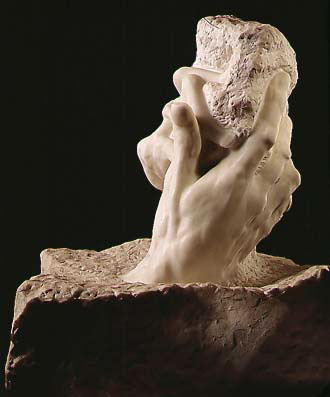
Hand of God, by Auguste Rodin
Hand of God,
by Auguste Rodin

adam (אָדָם) = human, humankind.

vayitzer (וַיִּיצֶר) = then he/it shaped, formed. (From the root yatzar (יָצַר) = shaped, formed, fashioned.)

In this creation myth there is only one god, and no sex. God makes the earth and the sky, but the writer does not care how. The important thing is that the earth consists of bare, moist dirt.  This is God’s raw material for making humankind, along with God’s own breath. One can imagine God as a human artist shaping a figure as if modeling clay, then blowing into its nostrils and bringing it to life.

And God took the adam and put it in the garden of Eden, to tend it and to watch over it. (Genesis 2:15)

God runs a few experiments, telling the adam not to eat from the tree of knowledge, inviting it to name animals, splitting it into male and female humans, and providing a talking snake.  Eventually God sends the two humans back into the world, which now contains rain, plants, and animals as well as dirt.

God does not create the adam to serve as a slave. Instead, the adam must watch the garden—while God is watching the adam.

Creation of the Human in Genesis 1

The redactors of the Bible placed the creation myth written during the time of the first temple at the very beginning of the book, before the earlier story about God making the adam out of dirt and breath. This story starts:

In a beginning, God created the heavens and the earth. (Genesis 1:1)

In this account, God is a spirit and a voice that speaks things into being. No raw materials are necessary. The account is divided into seven days, and God does not create humans until the sixth day, right after the other mammals.

Sixth Day of Creation, Nuremberg Chronicle, 1493
Sixth Day of Creation,
Nuremberg Chronicle, 1493

And God created the adam in Its image, in the image of God It created it; male and female It created them. And God blessed them, and God said to them: “Be fruitful and multiply and fill the earth and subjugate it! And rule over fish of the sea and birds of the skies and all animals that crawl over the earth.” (Genesis 1:26-27)

Today it is obvious that we have gone overboard in subjugating the earth and its animals. But in the Torah, before God assigns humankind that job, God says the human is made in God’s image. Perhaps humans are God’s proxies, assigned to handle the administration of the earth in place of God.

Creation of the Human in Second Isaiah

The second half of the book of Isaiah was written around 550-510 B.C.E., when King Cyrus of Persia finished conquering the Babylonian Empire. The prophet encourages the Israelite families that were deported to Babylon by Nebuchadnezzar’s conquering army to take advantage of King Cyrus’s policy of letting subjugated populations return to their former lands and rebuild temples for their own gods.

The exiles needed a lot of encouragement. Many of them doubted that the god of a nation that no longer existed would have the power to help them.  This week’s haftarah declares that God still has a purpose for the Israelites and will indeed redeem them.  Second Isaiah alludes to both of the creation stories in Genesis, reminding the Israelites that their god is the ultimate god, the creator of the world and all humankind, before he or she turns in a new direction.

            Thus said the god, God—

                        Creator of the heavens, stretching them out,

                        Spreader of the earth and her products,

                        Giver of breath to the people upon it,

                        And spirit to those who walk on it—   

by Waithamai
by Waithamai

           “I am God.  I summoned you with right conduct,

            And I held you firmly by your hand,

           Ve-etzarekha, and I gave you

            A covenant of a people, a light of nations.

           To open the eyes of the blind…” (Isaiah 42:5-7)

ve-etzarekha (וְאֶצָּרְךָ) = and I shaped you.  (From the root yatzar.)

Here God giving breath and spirit to all humanity, then “shapes” the children of Israel, using the same verb, yatzar, as when God shaped the adam our of dirt in Genesis 2. Second Isaiah implies that God yatzar the children of Israel in order to receive a covenant. Next the old covenant between God and the Israelites acquires a new purpose: in addition to obeying all of God’s rules, the people must now enlighten other nations.

What are the people of other nations (as well as many exiled Israelites) not seeing?

According to the haftarah, the Israelites must spread the word that God’s prophecies always come true, and the God of Israel is the only real god.

           You are My witnesses,

                        declares God,

            And My servant whom I have chosen. (Isaiah 43:10)

*

In all four creation stories from the ancient Near East, gods create the world and then add human beings.  In Enuma Elish, the purpose of humankind is to work for the gods.

In the oldest creation story in Genesis, the purpose of humankind seems to be to increase knowledge: human knowledge of the garden and of good and bad, and divine knowledge of human nature.

In the opening creation story in Genesis, the purpose of humankind is to rule over the earth and its other animals.

In second Isaiah, the purpose of the Israelites is to enlighten other peoples, ultimately leading them to convert to worshiping the God of Israel as the only real god.

Today the theory of evolution provides a logical explanation of why human beings exist, and many people consider our mental complexity an accidental side-effect of the process. In this line of thinking, humankind seems to have no purpose; the best we can do is follow Sartre and invent our own individual reasons for being.

But modern science cannot explain everything; there is room for a new concept of God, and even for the idea of a collective purpose.  What if there is a purpose for humankind in general?  What might it be?

Haftarat Simchat Torah—Joshua: Strong and Resolute

The standard cycle of Torah readings ends with Moses’ death in the last Torah portion in Deuteronomy/Devarim, Vezot Habrakhah. On the holy day of Simchat Torah, most Jewish congregations read this last portion in a Torah scroll, then roll the scroll all the way back and read the beginning of Genesis/Bereishit. The accompanying haftarah (reading from the Prophets) is Joshua 1:1-18.

Have you ever tried to turn over a new leaf, and found that without a systematic process you soon slide back to your old ways?

One process for changing your life can be found in the Jewish holy days from Rosh Hashanah to Simchat Torah. I realized this year that these days are a recipe for a 23-day period of transformation.

Blowing the Shofar, from Minhagim, 1707
Blowing the Shofar,
from Minhagim, 1707

1) On the two days of Rosh Hashanah (“Head of the Year”), we declare the beginning of a new year. And we wake up when we hear the blast of the shofar, a loud wind instrument made out of a ram’s horn.

2) On Yom Kippur (“Day of Atonement”), having apologized to the people we have wronged and forgiven those who wronged us, we go on to confess our errors to God and forgive ourselves.

3) During the seven days of Sukkot (“Huts”), we eat, sleep, and study (as much as the weather permits) in temporary shelters whose roofs of branches let in some rain and starlight.  The new lives we are creating for ourselves are like these sukkot: fragile, not secure—but open to nature, to other people, and to the presence of the divine.

Hoshana Rabbah, by Bernard Picart c. 1733
Hoshana Rabbah,
by Bernard Picart c. 1733

4) On the seventh day, Hoshana Rabbah (“Great Supplication”), we circle the sanctuary seven times while beating willow branches on the floor to symbolically disperse the last traces of the previous year’s misdeeds.

5) On Shemini Atzeret (“Eighth Gathering”), we pray for rain so that the new seeds we have planted will grow during the winter.

6) On Simchat Torah (“Rejoicing in Torah”), we read the end of the Torah scroll (the last portion in Deuteronomy/Devarim, called Vezot Habrakhah, “And this is the blessing”). Then we roll it back to the beginning and read about the creation of the world in Genesis/Bereishit. In this way we acknowledge the blessings of the old year, close the book on our past mistakes, and launch into creating our new life.

The haftarah for Simchat Torah is the beginning of the book of Joshua, right after Moses has died. Everything must change now. Joshua, who has spent 40 years as Moses’ attendant, must quickly become the de facto king of the Israelites. The Israelites, who have spent 40 years wandering in the wilderness, complaining about the food, learning the rules of their new religion from Moses, and listening to the old folks’ stories about being slaves in Egypt, must now become first a conquering army, then a people who farm, trade, and live in towns—in the unfamiliar land of Canaan.

Moses Appoints Joshua, by Henry Northrop, 1894
Moses Appoints Joshua,
by Henry Northrop, 1894

Both Joshua and the Israelites are unprepared for their new lives.

Moses anticipates this toward the end of Deuteronomy. He legitimizes Joshua as his successor by laying hands on him, and God confirms it with a pillar of cloud. Then Moses tells the Israelites:

Chizku and imetzu! Do not be afraid and do not feel dread in front of them [the Canaanites], because God, your God, is going with you Itself. It will not let go of you and It will not forsake you. (Deuteronomy/Devarim 31:6)

chizku (חִזְקוּ) = (plural) Hold strong! Hold on! Be fortified! Be stalwart! Be strong!

imetzu (אִמְצוּ) = (plural) Be resolute! Be firm! Be strong!

Then Moses called Joshua and said to him, in the sight of all Israel: Chazak and ematz, because you yourself shall bring this people to the land that God swore to their fathers to give to them, and you yourself shall apportion it among them. (Deuteronomy 31:7)

chazak (חֲזָק) = (singular of chizku) Hold strong! (etc.)

ematz (אֱמָץ) = (singular of imetzu) Be resolute! (etc.)

After Moses dies, Joshua may have felt like running run away, but he accepts his new life. The book of Joshua begins with God speaking to Joshua.

It happened after the death of Moses, the servant of God; God spoke to Joshua, son of Nun, Moses’ attendant, saying: My servant Moses is dead. So now get up and cross this Jordan, you and all this people, into the land that I am giving to them, to the children of Israel. (Joshua 1:1-2)

Joshua says nothing, but I imagine him feeling fearful and doomed. He served as a general once, 40 years ago, when Amalek attacked the Israelites; but the untrained ex-slaves won the battle only when Moses raised his hands toward heaven. Joshua has never led a war of conquest or administered a country. When he was one of the scouts Moses sent to report on the land of Canaan, he could not even persuade anyone that the land was worth entering. How can he persuade the Israelites to cross the Jordan and enter it now? And how can he turn himself into a conqueror, judge, and administrator?

God tells him:

No one shall be able to stand against you, all the days of your life. As I was with Moses, I will be with you. I will not let go of you and I will not forsake you. (Joshua 1:5)

I expect it would help to know that God was on your side.  When I embark on a new phase of my life, it helps to know that I am doing the right thing. But that knowledge by itself is not enough to make me step forward.

God continues:

Chazak and ematz, because you shall apportion among this people the land that I swore to their fathers to give to them. Only chazak and ematz very much to guard and do according to all the teaching that My servant Moses commanded to you. Do not deviate from it to the right or to the left, so that you shall act with insight everywhere you go. … Did I not command you: chazak and ematz? You shall not be afraid and you shall not be dismayed, because God, your God, will be with you wherever you go.  (Joshua 1:6-7, 9)

Joshua proceeds to become the leader he never was before. He makes decisions based on the teachings of Moses, he conquers large parts of Canaan (with the help of two divine miracles), and he divides up the land among the tribes of Israel.

Chazak and ematz, he probably reminds himself; hold strong and be resolute! The Bible uses this particular pairing of words only at four times of major change: when Joshua replaces Moses as the leader of the Israelites (in Deuteronomy and Joshua), when Joshua encourages his officers to continue the conquest of Canaan (in Joshua), when Solomon replaces David as the king of Israel (in the first book of Chronicles), and when King Hezekiah encourages his people to defend Jerusalem against the Assyrians (in the second book of Chronicles).

In all four transitions, the people who were told to be resolute felt nervous and insecure. And all four times they succeeded in their new roles.

*

It takes a lot to turn over a new leaf, to embark on a new direction in your life. From the Jewish holy days at this time of year we learn to wake up, face what we did wrong, make amends, and let go; to live for a while in the insecure space of transition as we stay open to guidance and pray for growth; to acknowledge the blessings in our old lives before we begin creating our new lives; and, in this week’s haftarah, to proceed with an attitude that will keep us going on our new path. We must trust that we are doing God’s will or the right thing, and we must be determined to keep going regardless of anything frightening or discouraging along the way.

Chazak and ematz; hold strong and be resolute. Keep going.

Haftarot for Yom Kippur and Ha-azinu—Isaiah, Jonah, & 2 Samuel: Atonement

In this season of Jewish holy days, we once again have three haftarot (readings from the Prophets) in one week.  On Yom Kippur we read Isaiah 57:14-58:14 and the whole book of Jonah.  Then on Saturday we read 2 Samuel 22:1-51, the haftarah for Ha-azinu, the second to last Torah portion in Deuteronomy.

The English word “atone” was first used in the 16th century as a contraction of “at one”. Atonement is the process of making amends for wrongdoing in order to restore unity—especially unity with God.

In Biblical Hebrew, the word for atonement is kippurim (כִּפֻּרִים). It comes from the verb kipper (כִּפֶּר), which means cover, appease, make amends, reconcile.

goat-for-azazelThe first Torah reading on Yom Kippur (the Day of Atonement) is a selection from the Torah portion Acharey Mot in the book of Leviticus/Vayikra. The portion describes an annual ritual of atonement in which the high priest places lots on two goats. He sacrifices one goat to reunite the sanctuary with God, and places the sins of the Israelites on the head of the other goat before sending it off into the wilderness. (See my post Metzorah & Acharey Mot: Doubles.)

Today on Yom Kippur, Jews read this Torah portion about the ancient technology for atonement, but we also confess misdeeds, beg for forgiveness, and pray for atonement with the divine.

All three haftarot this week assume that God rewards the righteous and punishes the wicked—but if those who have been wicked repent and make amends, God welcomes them back.

First Haftarah on Yom Kippur: Isaiah 57:14-58:14

In this passage from second Isaiah, God promises to revive and heal the humble, but:

There is no shalom, said my God, for the wicked. (Isaiah 57:21)

shalom (שָׁלוֹם) = peace, safety, ease, well-being.

I believe this is true even without an all-seeing god who directly interferes in the lives of individuals. Everyone who acts immorally eventually suffers because most of the humans around them come to distrust and reject them.

People who have a moral sense and know they are doing wrong also suffer from nagging uneasiness. They can distract themselves and/or go into denial, but peaceful well-being is not an option for them. They cannot become “at one” with the still, small voice within themselves.

The haftarah from Isaiah goes on to say that fasting and bowing, sackcloth and ashes—the 6th-century B.C.E. formula for Yom Kippur—are useless for atonement unless one also frees the oppressed, feeds the hungry, shelters the poor, clothes the naked, and refrains from violence and evil speech. The way to be heard by God is to do good for your fellow human beings.

            That is when you will call and God will answer;

            You will cry for help and [God] will say: Here I am. (Isaiah 58:9)

Good deeds create atonement.

Second Haftarah on Yom Kippur: Jonah

Jonah Preaching in Nineveh, by Jakob Steinhardt, 1923
Jonah Preaching in Nineveh,
by Jakob Steinhardt, 1923

When the prophet Jonah finally submits to doing the mission God gave him, he walks into Nineveh, the capitol of the Assyria, oppressor of the Israelites, and calls out:

“Another forty days, and Nineveh shall be overthrown!” And the men of Nineveh believed in God, and they proclaimed a fast and they put on sackcloth, from the great to the small. And the word was told to the king of Nineveh, and he rose from his throne and he took off his robe and he put on sackcloth and he sat on the ashes. (Jonah 3:5-6)

The king issues a proclamation that all the human residents, and even the livestock, must fast, wear sackcloth, cry out to God, and repent of doing violence.

And God saw what they did, that they turned away from the evil path; and God had a change of heart about the bad thing [God] spoke about doing to them, and [God] did not do it. (Jonah 3:10)

God forgives the whole Assyrian capitol city of Nineveh even before its people do any good deeds.  It is enough for them to admit their bad behavior and sincerely intend to reform.

Repentance creates atonement.

Third Haftarah: Reading from 2 Samuel for Saturday

The haftarah for the Torah portion Ha-azinu is read on either the Saturday before Yom Kippur or the Saturday afterward, depending on that year’s Hebrew calendar.  This year it comes after Yom Kippur.

This haftarah is a psalm attributed to King David, looking back on his life. (The long poem reappears with only a few minor word changes as Psalm 18.) Most commentary praises David for attributing all his narrow escapes and military successes to God rather than to his own cleverness.

Yet after praising and thanking God for rescuing him from his enemies, David explains:

            He rescues me ki He is pleased with me.

            God treats me according to my righteousness,

            According to the cleanness of my hands He requites me.

            Ki I have kept the ways of God,

            And I have not done evil before my God.

            Ki all His laws are in front of me

            And from His decrees I do not swerve.

            And I am without blame or blemish for Him,

            And I have kept myself from wrongdoing. (2 Samuel 22:20-24)

ki (כִּי) = because, when, if.

How can David describe himself as a paragon? Earlier in the second book of Samuel, he clearly violates two of the Ten Commandments:

You shall not murder.  You shall not commit adultery. (Exodus/Shemot 20:13)

Bathsheba with a letter from King David, by Rembrandt
Bathsheba, by Rembrandt

Earlier in the second book of Samuel, David sees a beautiful woman bathing, and finds out that she is Bathsheba, the wife of Uriah the Hittite, who is one of David’s soldiers. Nevertheless, he summons her to his palace and lies down with her.

When she informs the king that she is pregnant, he sends a message to the battlefront for Uriah to come back to Jerusalem. King David urges Uriah to go home and spend the night with his wife.  But Uriah insists on sleeping with the king’s officers, so David cannot claim he got his own wife pregnant.

David sends Uriah back to the front with a letter for his general, Joab, instructing him to place Uriah in the most dangerous part of the battlefield, then fall back so Uriah will be killed.  General Joab carries out the king’s orders.

As soon as Bathsheba has finished the mourning period for Uriah, King David takes her as his eighth wife. But he has already committed both adultery and murder. The prophet Nathan tells David a parable illustrating why his actions were despicable, and informs him that God said:

Why then did you hold the word of God in contempt, doing what is evil in My eyes? (2 Samuel 12:9)

God then states the consequences: “the sword will not swerve from your household”, and someone from David’s household will lie with the king’s women.

And David said to Nathan: “I did wrong before God.”  Then Nathan said to David: “God will even let your wrongdoing pass; you will not die.  Nevertheless …the son, the one [about to be] born to you, he will die.” (2 Samuel 12:13-14)

So how can David say, in this Saturday’s haftarah: “I have not done evil before my God” and “From His decrees I do not swerve”?

Maybe David is living in a narcissist’s fantasy world, guilty of grandiosity and denial. Yet he did admit wrongdoing when Nathan pointed it out to him. Maybe David believed that God only rescues people who are perfectly good, so David painted himself that way.

But I think David knows he did wrong in the eyes of God when he took Uriah’s wife and had Uriah killed. His confession saved his own life, but he was thoroughly punished.  Bathsheba’s first son sickened and died soon after birth. Later, one of David’s older sons, Absalom, killed his half-brother Amnon, overthrew his father, and lay with his father’s concubines. In the ensuing war between father and son, Absalom was killed despite David’s orders to spare his life.

By the time King David writes the psalm comprising this Saturday’s haftarah, he probably considers that God had punished him enough for his heinous crimes, and his slate has been wiped clean. Since those terrible times, his behavior has been righteous.

When David says:

            He rescues me ki He is pleased with me. (2 Samuel 22:20)

he might mean that God rescues him when God is pleased with him, not because. And when David writes:

God treats me according to my righteousness,

            According to the cleanness of my hands He requites me. (2 Samuel 22:21)

he might mean that when he is righteous and keeps his hands clean, God rewards him, but when he fails to do the right things, God makes him suffer. He knows that God’s response varies according to his behavior, and that he was not always such a paragon. Realizing this, David says,

            I became without blame or blemish for Him,

            And I kept myself from wrongdoing. (2 Samuel 22: 24)

According to this reading, David’s message is that a human being can change. We suffer when we do evil, but we still have the ability to keep ourselves from doing wrong again.  We can still become good and righteous, without blame or blemish.

The two haftarot we read on Yom Kippur show that both good deeds and repentance create atonement with God. The haftarah for Ha-azinu this Saturday shows that even a murderer can repent and change himself into a righteous human being.  The conscientious effort to return to the right path and stay on it creates atonement.

May we all be blessed with the ability to return to oneness with God, and may we all be inscribed and sealed for a good year.