
These are the histories of Yitzchak, son of Avraham. Avraham begot Yitzchak. And Yitzchak was 40 years old when … (Genesis 25:19-20)
So begins this week’s Torah portion, Toledot (Genesis/Bereishit 25:19-28:9).
At age 40, Yitzchak (“Isaac” in English) has not yet recovered from his father’s attempt to kill him. Back in the Torah portion Vayeira, Avraham heard God order him to slaughter his son Yitzchak on an altar and burn him as an offering. Avraham obeyed, and Yitzchak cooperated, until at the last minute God called it off. (See my post Vayeira: Return to Silence.) Father and son burned a ram on the altar instead, then went their separate ways. Only Avraham returned to the family camp at Beersheba.
But since God promised Avraham descendants through Yitzchak, Avraham wanted Yitzchak to get married. Moreover, he wanted Yitzchak to marry a woman from his own extended family in Aram, not a Canaanite. (See my post Chayei Sarah: Priorities.) So (probably because he knows Yitzchak is no longer speaking to him) Avraham sends his steward to Aram to fetch a bride and bring her to Beir-Lechai-Roi, where Yitzchak is living in last week’s Torah portion, Chayei Sarah.
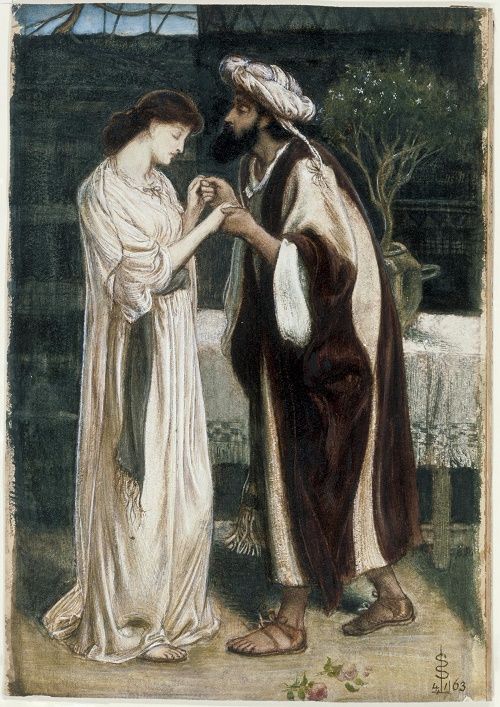
Yitzchak is surprised when Avraham’s steward arrives with a young lady and introduces her as Rivkah, (“Rebecca” in English), Yitzchak’s first cousin once removed. And Yitzchak falls in love with her at first sight. (See my post Chayei Sarah: Arranged Marriage.)
This week’s portion, Toledot, continues:
And Yitzchak was 40 years old when he took Rivkah, daughter of Betueil the Aramean from Padan Aram, sister of Lavan the Aramean, for himself as a wife. (Genesis 25:20)
For nineteen years after their marriage, Yitzchak and Rivkah have no children.
And Yitzchak prayed to God in front of his wife, because she was barren. And God granted his prayer; and his wife, Rivkah, conceived. (Genesis 25:21)
Now Yitzchak is nearly 60 years old, and Rivkah is close to 40.
If Rivkah is happy that she is finally pregnant, her happiness does not last. She is carrying twins.
And the children crushed against one another inside her. And she said: “If it is thus, for what zeh anokhi?” And she went to inquire of God. (Genesis 25:22)
zeh anokhi (זֶּה אָנֺכִי) = am I this? Am I this way? (zeh, זֶּה = this, this way, such + anokhi, אָנֺכִי = I.)
Rivkah might have been thinking “If it’s like this, why me?”
Crushing
Why are the two fetuses crushing one another?
Traditional commentaries view their actions in the womb as indicators of what they will be like when they grow up. The firstborn is named Eisav (“Esau” in English), and right after him Yaakov (“Jacob”) is born. This week’s portion says:
And the boys grew up, and Eisav became a man who knows hunting, a man of the open field; but Yaakov was a quiet man who stayed among the tents. (Genesis 25:27)
And we soon learn that Yaakov is the one who will father all the tribes of Israel.
So one popular line of midrash1 was that whenever Rivkah passed a pagan temple, Eisav struggled to be born, and whenever she passed by a synagogue or Torah study hall, Yaakov struggled to be born. This midrash assumes that Eisav worshiped different gods from his father Yitzchak—but Eisav’s personal religion is never mentioned in the Torah. It also assumes that there were Jewish synagogues and study halls when the book of Genesis was written, when in fact these institutions were developed about five centuries later.
An alternative explanation is that Eisav tries to kill Yaakov while the twins are in utero.2 The Torah portion Toledot does report that Eisav says he will kill his brother as soon as their father dies—but that is only after Yaakov has cheated him twice.3 Could a fetus know what his twin will do decades after their birth?
Tur HaArokh came up with a more amusing answer: “According to the plain meaning of the text, seeing that Esau developed a lot of body hair whereas Yaakov was smooth skinned, Esau’s hair kept rubbing Yaakov’s skin, resulting in violent movement inside her womb, Yaakov trying to escape being scratched.”4
This week’s Torah portion does say:And the first one emerged ruddy, as if he had a hairy cloak all over himself; and they called his name Eisav. (Genesis 25:25)
Asking why
Why does Rivkah say: “If it is thus, why am I this way?”
According to Bereishit Rabbah and Ibn Ezra, Rivkah is asking other women whether what she is experiencing is normal.5 Later commentators speculated that if they tell her it is normal, she might prefer death to that kind of suffering.6 In that case, Rivkah’s cryptic question might mean: “If it’s this bad, why do I even exist?”
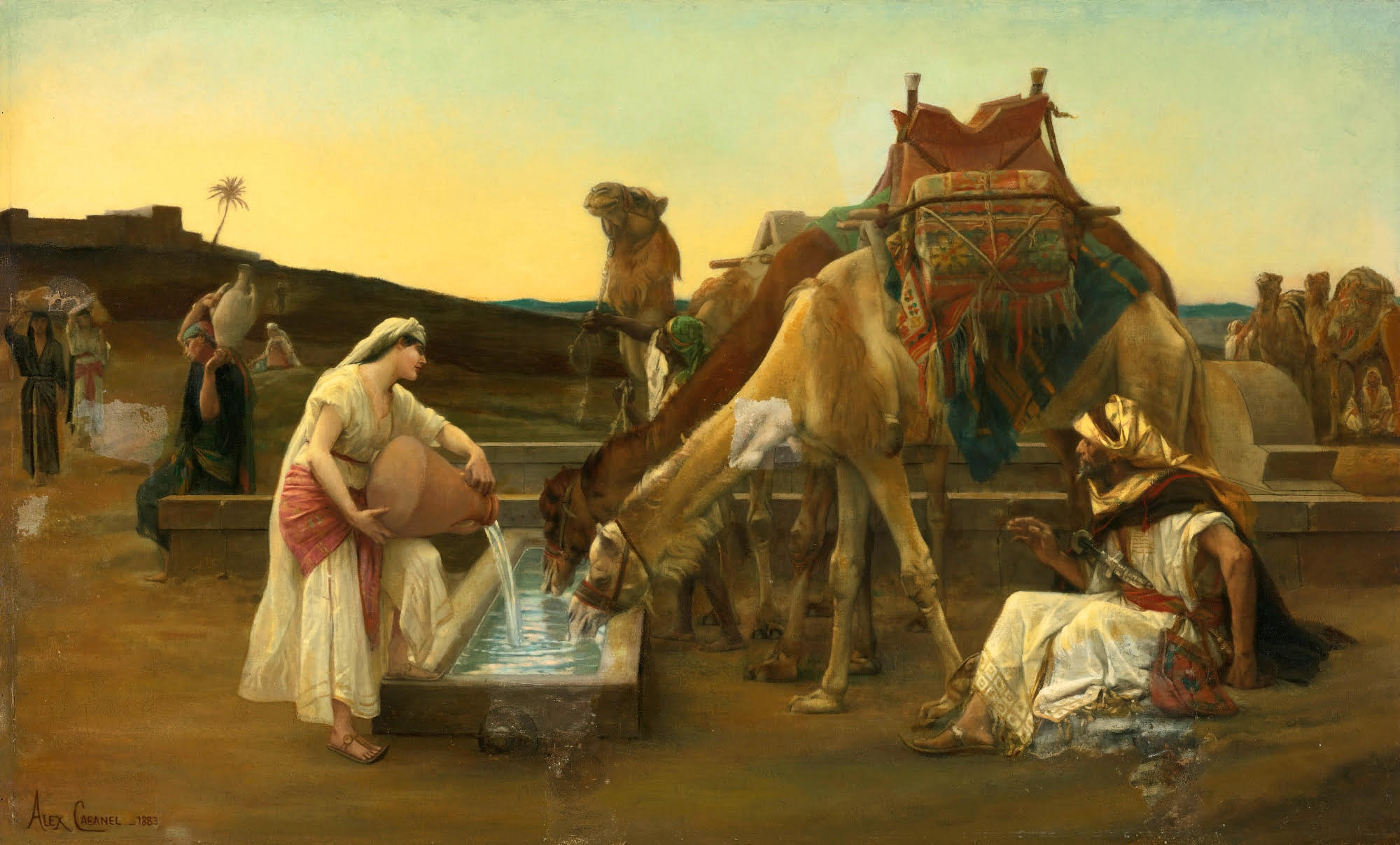
Yet in the previous Torah portion, young Rivkah is kind, cheerful, and athletic. When she sees a stranger (Avraham’ steward) at the well in her Aramean town, she immediately offers him water, then runs back down to the well many times, lugging enough water for all his camels to drink.7 Could twenty years of childless marriage to an affectionate and mild-mannered man like Yitzchak make her too depressed to endure a painful pregnancy?
Perhaps the other women tell Rivkah that what she is experiencing is not normal. In that case, she might be afraid of a disastrous delivery. According to Sforno, Rivkah thought: “It is a fact that these fetuses already are at each other’s throats! I have reason to be afraid that one of them will die, so that I endanger myself by giving birth to them, causing one of them to be stillborn … why did my husband insist that I become the mother of his children?”8
Or according to Ibn Attar, she is afraid she will have a miscarriage, and asks: “What good was my becoming pregnant if this pregnancy will not be completed successfully?”9 I can imagine Rivkah reflecting that she had a good life before Yitzhak’s prayer caused God to intervene, but now, even if she survives the ordeal of this unusual pregnancy, the outcome looks bad. She thinks: “If it is thus, why am I even pregnant?”
Inquiring of God
Before Rivkah became pregnant, Yitchak “prayed to God, in front of his wife”. Some commentators have claimed that after she feels the crushing in her womb, Rivkah also prays to God.
Yet the next verse says “and she went to inquire of God”. If she were addressing God directly in a prayer, why would need to go anywhere? Perhaps she goes to visit a prophet or seer.
One tradition in the midrash is that she went to Sheim,10 who is her great-great-great-great-great-great-great-great-great-grandfather, and is still alive and running a Torah academy! Other classic commentators wrote that she consulted an unnamed prophet in the area—but not Avraham, even though her husband’s ancient father was still alive.
Nor does Rivkah ask her husband, Yitzchak, to inquire of God, even though Yitzchak’s prayer for her pregnancy was effective. Another possibility is that Rivkah goes to a recognized holy place to pray for enlightenment from God. When their marriage was consummated, they lived near Beir-Lachai-Roi, “Well of the Living One Who Sees Me”, where Hagar encountered God when she was pregnant with Yitzchak’s half-brother.11 As a nomadic shepherd, Yitzchak would probably have a regular annual circuit of places to pasture his flocks. There is no indication of where they are living when Rivkah is pregnant, but they may well be near Beir-Lachai-Roi again. And Rivkah might go to Hagar’s well hoping that God would speak to her there.
Answer to an inquiry
And God said to her: “Two nations are in your belly. And two peoples from your body will become separated; [one] people will be bolder and stronger than [the other] people, and [the elder] will serve the younger!” When the days were completed for her giving birth, then hey! Twins were in her belly! (Genesis 25:23-24)
Rivkah receives no guarantee that she will survive giving birth, but at least now she knows that she is indeed carrying twins, and that both infants will survive and live to procreate themselves. Later, when Eisav and Yaakov are adults, she remembers God’s words, and takes steps to make sure that Yaakov, who is born second (and who is her favorite son anyway), receives the blessing that God gave Avraham. (See my post Toledot: To Bless Someone.)
She was a woman of action back at the well in her hometown in Aram, when she filled and refilled a water trough so a stranger’s camels could drink. And she is a woman of action in Toledot when Yitzchak is ready to give a blessing to one of his two sons.
What good is my life?
Nevertheless, she uses the language of despair a second time in this week’s Torah portion.
As an adult, Eisav is an impulsive man who gives his physical needs first priority. When he comes home famished from a hunting expedition, he agrees to sell his rights as the firstborn to Yaakov in exchange for a bowl of stew.12 When Eisav is 40 years old, he marries two Hittite women from Canaan.
And they were a bitterness of spirit for Yitzchak and for Rivkah. (Genesis 26:35)
After Yaakov follows his mother’s instructions and impersonates Eisav in order to receive Yitzchak’s blessing, Eisav threatens to kill his brother. Rivkah hears, and tells Yaakov to flee to her brother back in Aram.
Then Rivkah said to Yitzhak: “I loathe my life in the face of those Hittite women. If Yaakov should take a wife from the Hittite women—like these, from the women of the land—what is my life for?” (Genesis 27:46)
In other words, “Why am I alive?” or “Why should I live?” or “What good is my life?”
Her dramatic statement about loathing her life is a ploy. Rivkah does not want to tell her husband that his favorite son, Eisav, is planning to commit fratricide. She knows that her husband is as unhappy about Eisav’s wives as she is.13 So she uses the idea of Yaakov marrying a Canaanite in order to get Yitzchak to send Yaakov away.
Her ploy works. Yitzchak even agrees that it would be better for Yaakov to marry a relative from Aram.
Then Yitzhak called for Yaakov, and blessed him, and gave him an order, saying to him: “You must not take a wife from the women of Canaan. Get up and go to Paddan-Aram, to the house of Betuel, your mother’s father, and take a wife for yourself from there, from the daughters of Lavan, your mother’s brother.” (Genesis 18:1-2)
Thanks to Rivkah’s manufactured cry of despair, Yaakov heads off at once for Aram, with yet another blessing from his father.
Rivkah asks two existential questions: “If it is thus, what am I this way for?” and “What is my life for?”
Many of us reach a moment when we wonder: Is there a reason behind everything I’m going through? What does it all mean? What is the purpose of my life?
Rivkah offers two approaches to answering these questions. When she wondered why she has been afflicted with such a difficult pregnancy, she went to inquire of God.
If inquiring of God means asking an authority figure—someone who claims to be a prophet, or someone on a book jacket, in a pulpit, or on television—I would consider that a bad idea. Someone else’s idea of the meaning of life might bring you temporary comfort; but it cannot answer a plea from your own unique soul. For that, it would be better to seek God on your own. It might help to go to a place you consider holy. And keep asking the question until the answer comes to you.
When Rivkah asked Yitzchak the rhetorical question “What is my life for?” (or “What good is my life?”) she was only driving home her point that life would be awful if Yaakov, too, married a Canaanite. But it can also be helpful to ask: “What is the purpose of my life? What is it good for?” Never mind what someone else thinks the purpose of your life ought to be. What is the best way for you, with your individual abilities and personality, to spend your life?
Even though circumstances constrict you, you can make some choices that will add meaning and purpose to your life. But first you have to ask the questions.
- Midrash is a method of exegesis in which the author adds details to the story in the Torah. This midrash on Genesis 25:20 appears in Bereishit Rabbah (300-500 CE), Rashi (11th century), Midrash Aggadah (1020–1220 CE), Tze-ena Ure-ena (17th century), and Kli Yakar (17th century), among others.
- Midrash Tanchuma, 500-800 CE.
- Genesis 27:36, 27:41.
- 14th-century rabbi Yaakov ben Asher, Tur HaArokh, c.1280– 1340 CE, translation in www.sefaria.org.
- 300-500 CE midrash Bereishit Rabbah; 12th-century rabbi Avraham ibn Ezra.
- E.g. Chizkuni, 13th entury; Ramban (acronym of 13th-century rabbi Moshe ben Nachman).
- Genesis 24:17-20.
- 16th-century rabbi Ovadiah Sforno, translation in www.sefaria.org.
- 18th-century rabbi Chayim ibn Attar, Or HaChayim, translation in www.sefaria.org.
- Sheim one of the sons of Noach (“Noah”).
- Genesis 16:7-15.
- Genesis 25:29-34.
- Most of the midrash says that Eisav’s wives are openly worshiping idols of other gods, instead of worshiping the God of Yitzchak and Rivkah.


