
The Israelites are camped at the oasis of Kadeish-Barnea in this week’s Torah portion, Shelach-Lekha (Numbers/Bemidbar 13:1-15:41). Just over the ridge is the region called Canaan. If they go any farther north, they will have to begin the conquest of the land.
Sending out scouts is standard military procedure before an invasion. This week’s Torah portion opens:
Then God spoke to Moshe, saying: “Send men for yourself, and have them scout out the land of Canaan, which I myself am giving to the Israelites. One man from each tribe of their fathers you will send, every one a leader among them.” Numbers 13:1-2)
Moshe (“Moses” in English) picks a scout from each of the twelve non-Levite tribes—the tribes whose men will be going to battle while the Levite men guard God’s Tent of Meeting. He instructs them to check out the people, the towns, and the fertility of the land, and concludes by asking them to bring back some fruit. The twelve scouts go north through the Negev Desert and into the hill country around Hebron, and return forty days later.

And they gave an account to him, and they said: “We came to the land to which you sent us, and indeed, it is flowing with milk and honey, and this is its fruit.” (Numbers 13:27)
They exhibit a gigantic bunch of grapes, as well as pomegranates and figs.1 Then ten of the twelve scouts deliver bad news.
“However, the people who dwell in the land are strong, and the towns are fortified, very big! And also we saw there the descendants of Anak! … We are not able to go up against the population, because it is stronger than we! … and all the people that we saw in its midst are men of size, and we saw giants there! The Anakites are from the giants. We were like grasshoppers in our own eyes, and thus were we in their eyes!” (Numbers 13:28, 31-33)
Rebellion
That night the Israelites weep and moan:
“If only we had died in the land of Egypt, or in this wilderness! If only we had died! Why is God bringing us to this land, to fall by the sword? Our wives and our little ones will become booty! Wouldn’t it be better for us to return to Egypt?” And they said, each man to his brother: “Let us appoint a head, and we will return to Egypt!” (Numbers 14:2-4)
Moshe and Aharon (“Aaron” in English) fall on their faces, a submissive gesture; they are pleading either for God to rescue them or for the Israelite mob to remember them. (See my post Korach: Face Down.) Two of the scouts, Kaleiv (“Caleb” in English) and Yehoshua (“Joshua” in English) tear their clothing, a gesture of mourning. Then the two scouts announce:
“If God is pleased with us, then [God] will bring us to this land and give it to us, a land that flows with milk and honey. However, do not rebel against God! And don’t you fear the people of the land, because … God is with us!” (Numbers 14:8-9)
But the Israelites threaten to stone Kaleiv and Yehoshua. Then everyone sees God appear as a cloud over the Tent of Meeting.
And God said to Moshe: “How long will this people spurn me? How long will they not trust in me, despite all the signs that I have made among them? I will strike with pestilence and dispossess them, and I will make you a nation greater and more populous than they!” (Numbers 14:11-12)
Lack of trust
“God is with us!” Kaleiv said, but the Israelites do not believe it. It is true that they do not trust God. Rabbi Chayim ibn Attar wrote: “The people did not even have faith in God after all the miracles He had performed on their behalf.”2 But I think that the Israelites do not doubt God’s power to make their conquest successful.
Kaleiv and Yehoshua prefaced their claim that God would give them Canaan with the clause “If God is pleased with us”. Often during the journey from Egypt to the southern border of Canaan, God was not pleased with the Israelites, and twice God sent plagues to wipe out large numbers of them.3
What the Israelites actually doubt is God’s commitment to them.
Moshe persuades God to refrain from simply annihilating everybody on the spot, as he done when the Israelites were worshiping the golden calf. Then God compromises by decreeing that the Israelites must wander in the wilderness for 40 years, until all the men over 20 have died—except for Kaleiv and Yehoshua, who in reward for their faithfulness will live long enough to enter Canaan. Men under 20 are presumed innocent, so they can enter the land as adults at the end of the 40 years.
The new order from God is:
“Tomorrow, turn and set out into the wilderness by the Reed Sea road.” (Numbers 14:25)
Ironically, God is giving the Israelites what they said they wanted the night before, when they wailed: “If only we had died in … this wilderness!” Now they will indeed die in the wilderness, mostly by natural causes. However, God kills the ten scouts who gave a bad report about Canaan immediately.
Nevertheless, when Moshe tells the people that they must stay in the wilderness for 40 years, they are not pleased.
Attempted reversal
Moshe spoke these words to all the Israelites, and the people mourned very much. They got up early in the morning and they went up to the top of the ridge, saying: “Here we are! And we will go up to the place that God said, because we did wrong!” (Numbers 14:39-40)
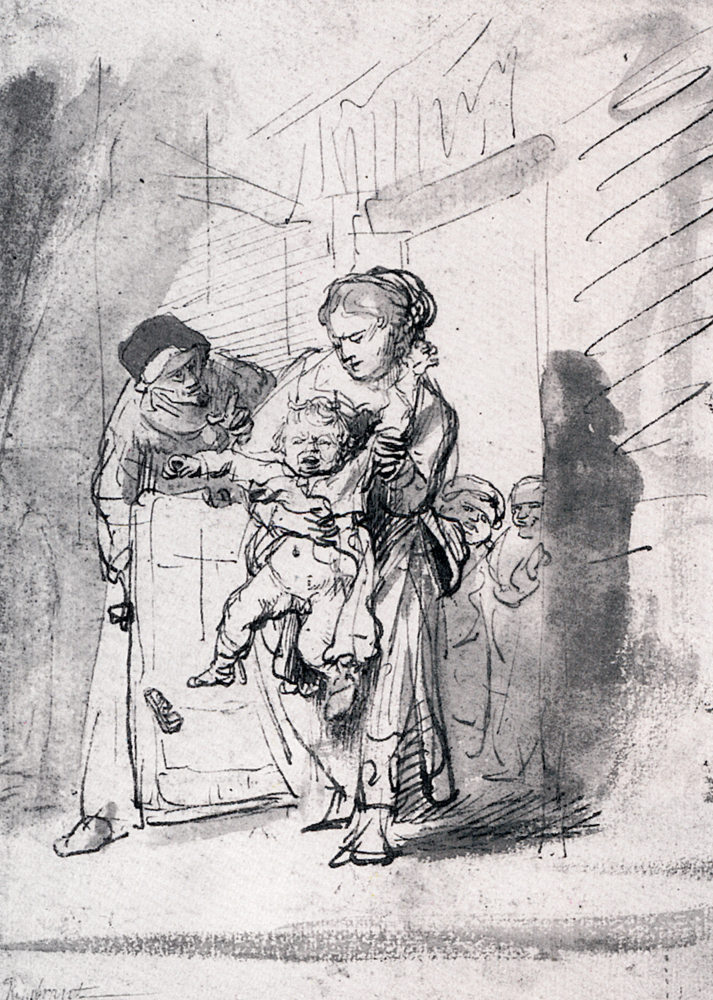
The Israelite men are like small children who scream and cry every time they are told to do something they do not want to do—and then when they find out there will be a serious punishment for disobeying, they beg to reverse time and erase their misbehavior. If only they had known that this was the consequence, they would never have done it!
But sometimes actions have consequences that cannot be erased. In this week’s Torah portion, the Israelite men have demonstrated that they are not the kind of people who can be trusted to follow orders from a legitimate superior—in this case, God. Therefore they are not the kind of people who can serve as troops in the conquest of a country.
And Moshe said: “Why are you going beyond the word of God? That will not succeed! Do not go up, because God is not in your midst, and you will be defeated in the face of your enemies! For the Amalekite and the Canaanite are there in front of you, and you will fall by the sword; since you turned away from following God, then God will not be with you.” (Numbers 14:41-43)
Like small children, the Israelite men do not really listen to Moshe. Before they rejected God’s project of conquering Canaan, Kaleiv (“Caleb”) reminded them “God is with us!” Now that God has decreed a different fate for them, Moshe says: “Do not go up, because God is not in your midst!” God is no longer with them.
As Abraham ibn Ezra wrote, “The violation of God’s command cannot prosper.”4
When the Israelites agreed “Let us appoint a head, and we will return to Egypt!” they violated God’s long-standing directive: to follow Moshe to Canaan and take over that land. All of God’s miracles that freed them from Egypt and brought them to the border of Canaan would be wasted if they slunk back to Egypt now. So God decreed that the conquest of Canaan would be achieved by the next generation. Now, when the people decide to march into Canaan after all, they are violating God’s new command to turn away from the border and heard into the wilderness.
But they were heedless and went up toward the top of the ridge. But the ark of the covenant of God, and Moses, did not budge from the middle of the camp. Then the Amalekite and the Canaanite, who were staying on that ridge, came south and beat and battered them up to the chormah. (Numbers 14:44-45)
chormah (חָרְמָה) = a place-name from the verb charam (חָרַם)= destroy utterly.
Not all the Israelite men are destroyed; many survive to die during the years of waiting in the wilderness. According to Steinsaltz, “They were routed in battle and retreated in humiliation.”5 But even the survivors may have felt destroyed psychologically.
I feel sorry for the men who admit they were wrong, and try to correct their mistake, only to be destroyed. Do they live in the emotional whirlwind of two-year-olds? Or are they merely stupid? How can they fail to realize that they will fail?
These men do know that they did something wrong, or God would not have sentenced them to die in the wilderness. They assume their misdeed was simply refusing to cross the ridge into the land of Canaan. It does not occur to them that deciding to abandon God and return to Egypt was a far more serious crime.
And the men do not listen to Moshe, even though he has spoken for God ever since he and God freed them from slavery in Egypt. Neither do they do not attach any meaning to the fact that Moshe and the ark remain in the camp with the women and children. Ignoring all evidence, the men who rush up the ridge actually believe that by doing what God ordered in the first place, they can change God’s mind and win a reprieve from spending the rest of their lives in the wilderness.
They are only human. I bet all human beings, at some point in their lives, realize that they have made a terrible mistake, and try to fix it by turning back the clock and doing it right this time. The problem is that we cannot turn back time. There are no second chances.
Similarly, someone who has lied or cheated on a spouse cannot turn back time and do it over again, getting it right this time. Once you have betrayed someone’s trust, the best you can do is to apologize and try to make amends. And even if the betrayed spouse forgives the betrayer, the marriage is not the same. A betrayal between friends, or between a parent and child, cannot be erased either, though a new relationship may be possible.
There are no second chances. But with humility and deep reflection, we can change our approach to life, and make better choices in the future.
And if we are lucky, we will see the next generation succeed where we failed.
- Numbers 13:23.
- Chayim ibn Attar, Or HaChayim, 18th century, translation in www.sefaria.org.
- After the golden calf in Exodus 32:35; and after complaining about the manna in Numbers 11:4-35.
- Rabbi Abraham ibn Ezra, 12th century C.E., translation in www.sefaria.org.
- Rabbi Adin Even-Israel Steinsaltz, The Steinsaltz Chumash, in www.sefaria.org.


That’s really nice to read where you have empathy for the people who made the mistake(s).