
Death is not holy.
The main way that the Israelites worship God in the Hebrew Bible is by burning kosher animals on the altar, so the smoke rises to the heavens. These animals become holy as soon as they are dedicated to God.1 Once they are slaughtered, priests are responsible for splashing their blood on the altar, butchering them, and laying out the pieces over the fire. The death of cattle, goats, and sheep is part of the process of worship.
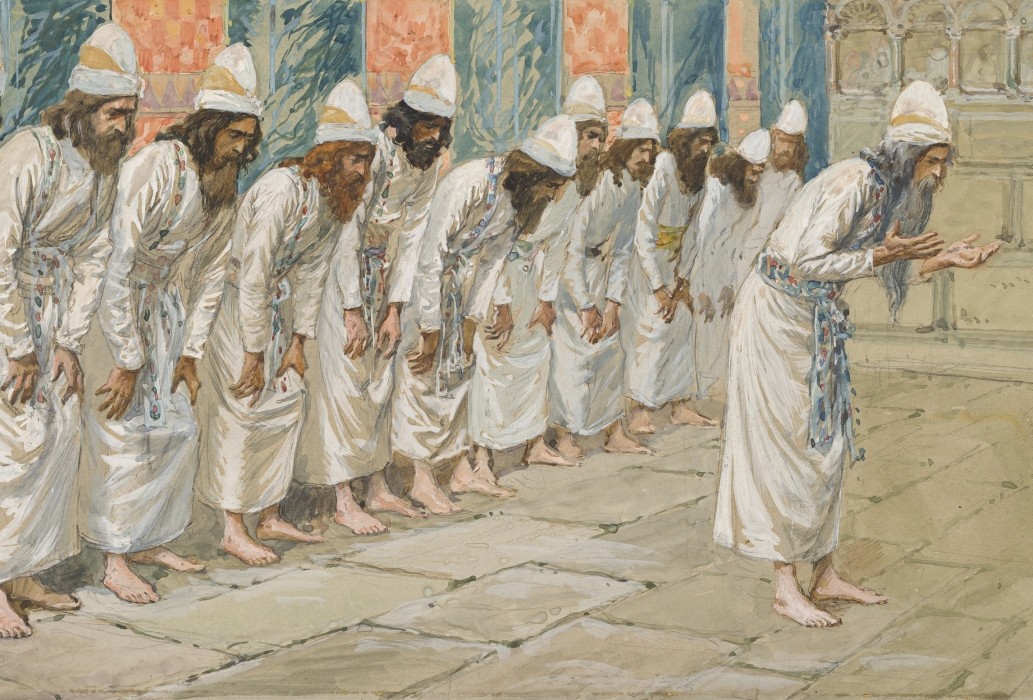
But the death of a human being is different. Anyone who touches a dead human body, or enters a tent or house containing a corpse, must complete seven days of purification before they are allowed to enter precincts of God’s sanctuary or temple. (See my post Chukat: Death and the Red Cow, Part 1.) Worship of the God of Israel must remain completely separate from the experience of death of a human being.
And since priests in the ancient Israelite system are the intermediaries between God and the rest of the people, the rules are more stringent for them.
When priests are exposed to death
This week’s Torah portion, Emor (Leviticus/Vayikra 21:1-24:23) begins with this instruction from God regarding the priests, the descendants of Aharon (“Aaron” in English):
For a dead person among his people, he [a priest] must not make himself tamei.” (Leviticus 21:1)
tamei (טָמֵא) = impure, contaminated, defiled—in a way that makes one unfit to approach God.
The nearest relatives of someone who has died are supposed to participate in the burial. So although priests must avoid dead bodies as much as possible, there are exceptions.
—except for his near kin, the one close to him: for his mother, or for his father, or for his son, or for his daughter, or for his brother; or for his virgin sister, the one close to him who has never belonged to a man, for her he may make himself tamei. (Leviticus 21:2-3)
Apparently in a male-centered culture a man is closer to a married brother than to a married sister.
What about his wife? Hirsch wrote that his wife becomes his near kin when they are married, and she does not need to be listed separately.2 Other commentators find the priest’s wife in the next verse:
He must not make himself tamei, a baal among his people, to profane himself. (Leviticus 21:4)
baal (בַּעַל) =husband, owner, master, god.
Ramban interpreted baal here as a prominent man among the Israelites, and argued that any prominent man, including a priest, should not demean himself by becoming defiled by a dead body.3
Others interpret baal here as a husband. One classic opinion was that the verse applies to a hereditary priest who was disqualified from priestly duties because he married a divorcée or another category of woman whom priests are forbidden to marry. Since he no longer serves in the sanctuary, he does not need to be ritually pure at all times. But according to Rashi, this priest is still not allowed to profane himself by attending his wife’s burial, as long as there are other people who can bury her.4
I prefer Rashbam’s simpler explanation of the verse: priests are forbidden from acting like the husbands of the rest of the Israelites, who bury their wives. “No husband among the tribe of the priests is to defile himself ritually, as he would thereby desecrate his status as a priest.”5
How close the husband and wife are emotionally does not matter when it comes to laws of purity.
A practical explanation of the rules minimizing the contact between priests and corpses is that God’s sanctuary or temple must always be staffed with enough priests to serve the public by making offerings and by ruling on religious questions. Since a priest, like anyone else, must be separated from the center of religious life for seven days after being near a dead person, those seven-day leaves of absence must be limited.
The Baal haTurim wrote: “As a result of our verses here, priests who do not take part in funerals do not do so because they consider themselves superior, but because the Torah forced them to act in what to some might appear in the wrong light. They maintain a state of purity for God’s sake, so as always to be on “call,” if the occasion should arise.”6
Holy they must be to their God, and they must not profane the name of their God; since they bring near the fire-offerings of God, they bring near the food of their God, then they must be holy! (Leviticus 21:6)
The Torah also considers it more important for priests to honor God than to honor family members who have died. Sforno noted: “… the prime purpose of burying and eulogizing the dead is to render honor to them. This conflicts with the honor the priests have to accord to God on an ongoing basis.”7
When priests mourn
This week’s Torah portion also reminds priests not to disfigure themselves in grief over the dead, a common custom for men in the Ancient Near East.
They must not make a bald spot on their head, and the edge of their beard they must not shave off, and on their skin they must not carve a carving. (Leviticus 21:5)
Other Israelites are forbidden to shave their eyebrows for the dead,8 but priests are forbidden to shave any part of their head. Like other Israelites, priests are also forbidden to mourn by shaving the edges of their beards or cutting their skin.9 The Torah mentions these alterations to the body because in neighboring countries men expressed the depth of their mourning by yanking out their hair and gashing their skin.10
Hirsch’s explanation is: “Upon the loss of a loved one, the survivor indicates that his own body, too, has lost its value.”11
A lack of respect for one’s body would not be a problem in an ascetic religion that values only the ineffable soul. But Judaism has always praised and blessed physical health and comfort as gifts from God. Failing to respect the living human body, according to many commentators, means failing to respect the God of Life.12
The high priest
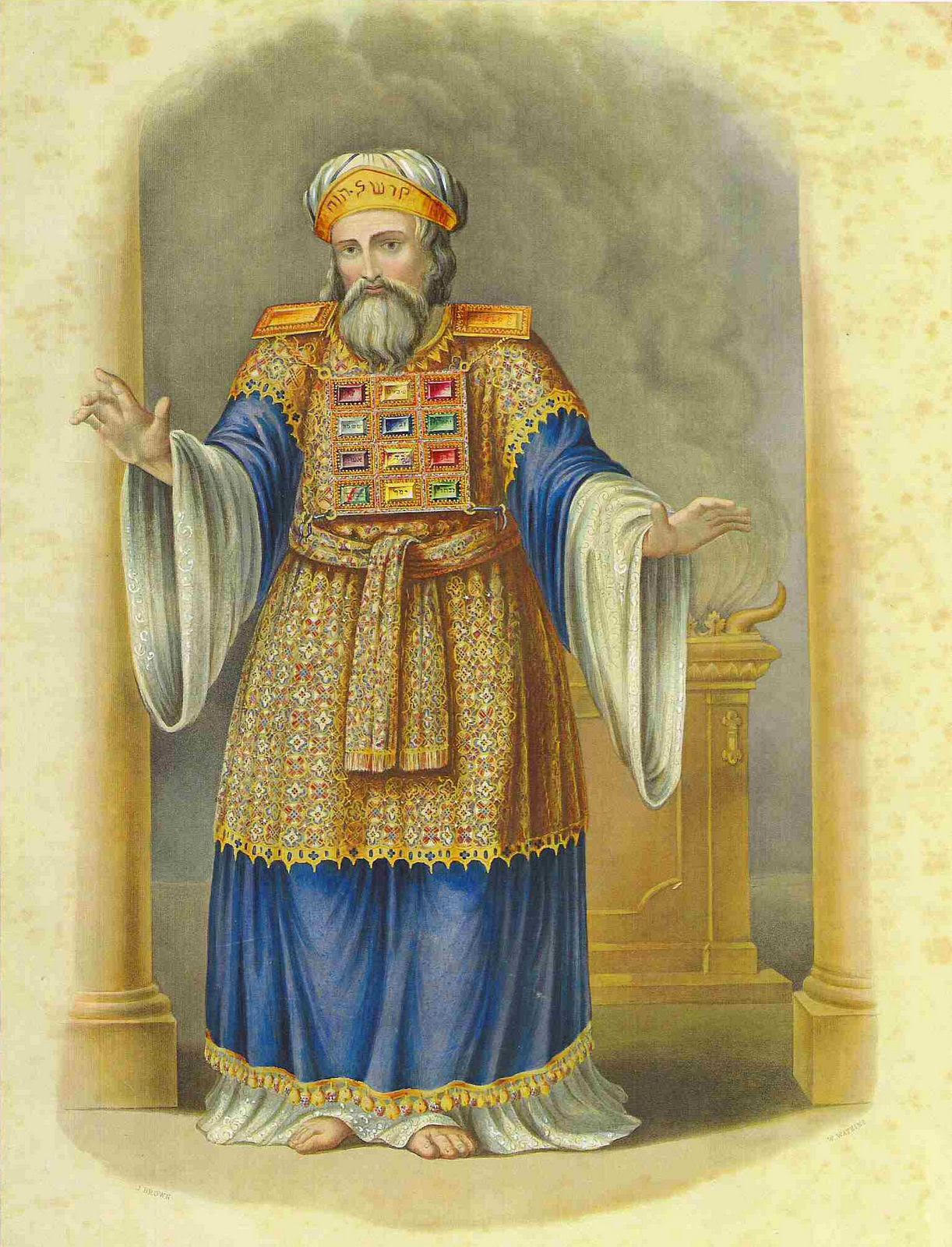
The rules in the Torah portion Emor are even stricter for the high priest than for his subordinate priests.
And the priest who is greater than his brothers, upon whose head has been poured the oil of anointing, and whose hand has been consecrated to dress in the garments: he must not neglect [the hair on] his head, and he must not tear his garments.” (Leviticus 21:10)
To this day, Jewish mourning customs include tearing a garment (or at least a symbolic strip of cloth pinned to the chest) at the funeral, and avoiding shaving or trimming one’s hair for the first 30 days after the death. This week’s Torah portion forbids a high priest from doing even that much to mourn a family member. Since his head was anointed with oil to make him the high priest, he must continue to keep his hair trimmed. And since he wears special vestments, he must keep them intact.
“And he must not enter [a place] with any dead person; [even] for his father or for his mother he must not make himself tamei.” (Leviticus 21:11)
The other priests are allowed to go into the tent or room where the dead body of a parent, a child, or a sibling lay, even though it would contaminate them for seven days. The high priest may not do so. Furthermore, he must not leave the precincts of the tent-sanctuary or temple for the burial.
“And he must not leave the, and he must not profane the Holy Place of his God; because the crown of the anointing oil of his God is upon him. I am God!” (Leviticus 21:12)
Ramban explained: “Instead, the honor of the Sanctuary and its Service is to be greater to him than his honor of and love for the dead.”13
And Sforno added: “People would conclude that giving honor to the dead is more important than to remain within the sphere of God’s immediate presence, something he enjoys as the exceptional privilege of being exposed to on an ongoing basis.”14
Although the Torah requires all of the priests to serve as public symbols of holiness, the high priest is the ultimate symbol. He even wears a unique gold medallion on his forehead engraved with the words “Holy to God”.15 He may grieve in his heart for someone who has died, but he must not show any sign of grieving in public—like Aharon, the first high priest, when his two oldest sons are killed by God’s fire inside the tent-sanctuary.
And Moshe said to Aharon: “It is what God spoke: Through those near to me I will be proven holy, and in front of all the people I will be honored.” And Aharon was silent. (Leviticus 10:3)
Moshe sends two of Aharon’s cousins, who were not consecrated as priests, into the tent to carry out the bodies.
The honor that the priests, especially the high priest, give to God sets the benchmark for all the Israelites.
As a symbol of God, a priest must always stand for life, life in the body, in this world. In Judaism, this life is God’s great gift to us.
Of course, life and death must co-exist in this world; you cannot have one without the other. But we can choose which aspect of reality to focus on and appreciate. When I meet people whose personal religion revolves around an afterlife, I wonder if they are fully appreciating this life, in this world. I find that the more attention I pay to everything that is alive, right now, the more I appreciate life, the more I rejoice in creation, and the more I want to sing praises.
Psalm 114, using the term “Yah” (יָהּ) for God, says:
The dead cannot praise Yah,
nor any who go down into silence.
But we will bless Yah,
From now until forever. Praise Yah! (Psalm 114:17-18)
In Hebrew, “Praise Yah!” is Hallelu-Yah (הַלְלוּ־יָהּ).
- Leviticus 27:9.
- 19th-century rabbi Samson Raphael Hirsch, The Hirsch Chumash: Sefer Vayikra, Part 2, translated by Daniel Haberman, Feldheim Publishers, Jerusalem, 2000, p. 700-701.
- Ramban is the acronym of 13th-century rabbi Moshe ben Nachman, a.k.a. Nachmanides.
- Rashi is the acronym of 11th-century rabbi Shlomoh Yitzchaki.
- Rashbam (acronym of 12th-century rabbi Shmuel ben Meir), translation in www.sefaria.org.
- Rabbi Jacob ben Asher (c. 1269 – c. 1343), a.k.a. the Baal haTurim, Tur HaArokh, translation in www.sefaria.org.
- 16th-century rabbi Ovadiah Sforno, translation in www.sefaria.org.
- Deuteronomy 14:1. See my post Re-eih: Eyebrows for the Dead.
- Leviticus 19:27-28.
- Cutting or piercing the skin was also part of tattooing, practiced in Mesopotamia to mark the ownership of slaves.
- Hirsch, p. 703.
- The epithet “God of Life” first appears in Deuteronomy 5:23, and is found often in the books of the Prophets.
- Ramban, ibid.
- Sforno, ibid.
- See my post Tetzaveh: Flower on the Forehead.


