Moses reminds the Israelites at the beginning of this week’s Torah portion, Nitzavim (“taking a stand”), that everyone standing on the bank of the Jordan River made a covenant with God. They will take over the land of Canaan, with God’s help, but eventually they will forsake the covenant, and God will drive them out again
When all these things have come upon you, the blessing and the curse that I placed before you, vahasheivta to your heart among all the nations where God, your god, has driven you. (Deuteronomy/Devarim 30:1)
vahasheivta (וַהֲשֵׁבתָ) = then you will return, revert, recall.(Vahasheivta is a form of the verb shuv (שׁוּב) = return, turn around, turn back, restore.)
Assyrian soldier drives prisoners into exile
Why does Moses make such a long-term prediction? Most modern scholars date this section of Deuteronomy to the Babylonian exile, circa 598-520 B.C.E. At that time, Jews had already experienced two exiles from their land. Assyria conquered the northern kingdom of Israel (Samaria) in 740 B.C.E. and deported many Samarians to distant parts of the Assyrian Empire. Then Babylonia conquered both Assyria and the southern kingdom of Israel (Judah), and conducted its own deportations from 605 to 588 B.C.E.
Thus “all these things” includes multiple conquests and deportations of Jews. Jews living (and writing) during the Babylonian exile assumed that their all-powerful god had arranged the curses of subjugation and exile because too many Jews had abandoned their religion. Their own people’s misbehavior had triggered a a divine centrifugal force pulling them away from their center.
In this week’s Torah portion, Moses predicts that after 150 years of deportations and exile, a centripetal force would pull them back in to the land of Israel and the presence of God.
Moses lays out five steps to a complete return. In these steps, the people and God take turns moving toward a reunion.
1) The first step, “vahasheivta to your heart among all the nations where God, your god, has driven you,” is returning to your own heart (the seat of consciousness in Biblical Hebrew) while you still live in a foreign land. In the next verse Moses explains:
Veshavta ad God, your god; and you will listen to [God’s] voice, you and your children, just as I command you today, with all your heart and with all your soul. (Deuteronomy 30:2)
Veshavta (וְשַׁבְתָּ) = And you will return (also a form of shuv).
ad (עַד) = up to, as far as.
The people must reject the gods of the nations where they are living, and cultivate awareness of their own God by listening for the divine voice and paying full attention to it. They must go as far toward God as they can under the circumstances of their exile.
Ezra and exiles return to Jerusalem (woodcut by Schnorr von Carolsfeld)
2) Moses predicts that after they have turned their hearts back to God, God will take the second step and return the people to their former land.
God, your god, veshav your fortune and have compassion on you, veshav and gather you from among all the peoples where God, your god, has scattered you. Even if you strayed to the end of the heavens, from there God, your god, will gather you, and from there [God] will take you back. And God, your god, will bring you to the land that your forefathers possessed, and you will possess it, and [God] will do you good and make you more numerous than your forefathers. (Deuteronomy 30:3-5)
veshav (וְשָׁב) = will then restore, will then return (also a form of shuv).
3) Once God has returned them to the land of Israel, the third step is for the Jews to love God. Loving God is not easy, in this week’s Torah portion; God will have to help humans to do it.
And God, your god, will circumcise your heart, and the heart of your descendants, to love God, your god, with all your heart and with all your soul, so that you will live. (Deuteronomy 30:6)
“So that you will live” means “so that you will thrive”—perhaps materially, or perhaps spiritually.
4) The fourth step, Moses says, is up to the people:
And you, tashuv, and you will listen to the voice of God, and you will do all [God’s] commandments that I commanded you today. (Deuteronomy 30:8)
tashuv (תָשׁוּב) = you will return (also a form of the root verb shuv).
Once God returns the exiled Jews to their land, Moses predicts, they will become able to obey all God’s rules, as well as listening to God’s voice. Presumably, the people could have obeyed God’s ethical rules and family laws wherever they lived. But in order to obey the agricultural laws, and in order to conduct religious worship through the system of sacrifices at the altar, they had to live in and around Jerusalem.
5) The fifth step of return is up to God again:
And God, your god, will add to all the deeds of your hand: in the fruit of your womb and in the fruit of your livestock and in the fruit of your soil, for good, because God yashuv to rejoice over you for good as [God] rejoiced over your forefathers—because you will listen to the voice of God, your god, to observe [God’s] commandments and decrees, the ones written in the book of this teaching—because tashuv to God, your god, with all your heart and with all your soul. (Deuteronomy 30:9)
yashuv (יָשׁוּב) = he/it will return.
Just as in the first step of return the exiled Jews, called “you”, will bring their hearts back to God, in the final step God will bring Its heart back to the people. The result of God’s rejoicing over the people will be abundant life for the humans, their animals, and their crops.
After this fifth step, both the Jews and God would have made a complete return to one another, in both attitude and practical action. It sounds like the complete restoration of a marriage after the couple has been estranged and separated.
What if “you” in this week’s Torah portion meant anyone seeking a return from exile, a return to the center, a centripetal path? The center you return to need not be a particular spot on the globe; it could be a spiritual place.
In the annual cycle of Torah readings, the portion Nitzavim falls either one or two weeks before Yom Kippur, the day Jews dedicate to repentance, forgiveness, teshuvah, and atonement.
teshuvah(תְּשׁוּבָה) = reply, return. (Yes, it also comes from the root shuv.)
In the Torah and in the time of the first and second temples in Jerusalem, the method used to atone and reach teshuvah with God involved animal sacrifices and sprinkling blood in the Holy of Holies. (See my post Metzora & Acharey Mot: Doubles.) For the last two millennia, the teshuvah of Jews on Yom Kippur has been a matter of prayer, fasting, inner examination, and listening for God with all our heart and all our soul.
Although Yom Kippur is the official day of teshuvah for Jews, anyone might return, any day, to the inner divine spark—and open the way for the divine spark to return to us.
May all people who seek forgiveness, atonement, and reunion find a centripetal path to the holy center.
*
I wish all of my Jewish readers Shanah Tovah—a good new year—beginning this Sunday evening. I will be on my own centripetal path from Rosh Hashanah (the beginning of the year) through Yom Kippur (the day of atonement), Sukkot, and Simchat Torah, the night when Jews gather to roll the Torah scroll back to the beginning and read the opening of the book of Genesis/Bereishit. After Simchat Torah (October 5 in 2105) I will dive into the book of Genesis again myself, even as my husband and I move to a new town. How could I resist writing another post on the beginning of creation?
You shall not slaughter for God, your god, an ox or a lamb or kid that has a defect in it, any bad thing, because it is toeivah to God, your god. (Deuteronomy/Devarim 17:1)
to-eivah(תּוֹעֵבָה) = repugnant, causing visceral disgust; taboo; an abomination, a foreign perversion, a custom in one culture that is prohibited in another culture.
This is only the first of five times the word to-eivah appears in this week’s Torah portion, Shoftim (“Judges”). This emotionally loaded word appears as a noun or adjective 117 times in the Hebrew Bible, and its verb form (תעב) appears 23 times. An object or action can be to-eivah to a class of human beings, or to God. The first three times the word to-eivah appears in the Bible, it describes what disgusts Egyptians.
To-eivah to Egyptians
The book of Genesis/Bereishit says that Egyptians find eating at the same table with Hebrews to-eivah (Genesis 43:32). We do not know whether Egyptians considered the manners or the diet of the Hebrews abominable.
Next Joseph tells his brothers that shepherds are to-eivah to Egyptians (Genesis 46:34), meaning that Egyptians shun that occupation. Then in the book of Exodus/Shemot, Moses tells the Pharaoh that the Hebrews must travel some distance to make sacrifices to God because their animal offerings are to-eivah to Egyptians (Exodus 8:22).
To-eivah to God
The first thing considered to-eivah to God, rather than to a group of humans, is in the book of Leviticus:
With a male you shall not lie down as one lies down with a woman; it is to-eivah. (Leviticus/Vayikra 18:22)
This infamous line (misused by fundamentalists to claim that all homosexuality is an “abomination”) occurs in the middle of a list of sexual prohibitions God tells Moses to issue to the Israelites. Since God is the speaker in this verse, the implication is that God considers that particular type of intercourse (whatever it might actually be)1 to be to-eivah.
Attributing visceral disgust to God is an anthropomorphization. God, unlike Egyptians or other humans, has no viscera. But the Hebrew Bible often ascribes human emotions to God, including anger and disgust.
The God of Israel finds five more kinds of sexual pairings to-eivah in the book of Leviticus. The Torah assumes they are practiced by Canaanites, and forbids them to Israelites.2
Nothing is labeled to-eivah in the book of Numbers, but Moses uses that word sixteen times in Deuteronomy–six of them in this week’s Torah portion. The first verse in the portion Shoftim to use that word specifies that offering an animal with a defect is to-eivah to God.3
Immediately after warning that God is revolted by offerings with physical defects, this week’s Torah portion says that for Israelites to worship other gods is to-eivah.
And hey, [if] it is truly established the thing was done, this to-eivah, in Israel, then you must bring out that man or that woman who did the evil thing to your gates. And you must stone the man or the woman with stones so they die. (Deuteronomy 17:4-5)
To-eivah magic
To-eivah deeds in this week’s Torah portion include not only offering defective animals and worshiping other gods, but also practicing magic:
When you come into the land that God, your god, is giving to you, you must not learn to do as the to-avot of those nations. There must not be found among you one who makes his son or his daughter pass through the fire, a caster of cast lots, a cloud-reader, or a snake-diviner, or a sorcerer, or one who casts spells with a familiar, or a woman who inquires of the dead, or a man who consults ghosts, or a medium for the dead. Because everyone who does these things is to-avot, and on account of these to-eivot, God, your god, is dispossessing them [the Canaanite nations] before you. (Deuteronomy 18:9-12)
To-avot, to-eivot (תּוֹעֵבֹת, תּוֹעֲוֹת) = plurals of to-eivah.
To-eivah temptation
The word to-eivah appears one more time in this week’s Torah portion. Moses tells the Israelites that when they conquer any Canaanite town in the land designated for Israel, they must kill all the inhabitants, men, women, and children.
Only from the towns of these people, [the towns] that God, your God, is giving to you as a possession, you must not let any soul live … so that they will not teach you to do like any of their to-avot that they do for their gods; then you would do wrong for God, your god. (Deuteronomy 20:16,18)
Here Moses appears to assume that since the Israelites are so easily tempted, they are not responsible for their own actions. He orders them to murder all of the potential tempters, as if genocide were a mere peccadillo compared to conversion to a different religion.
Which comes first, visceral disgust or the decision to commit genocide?
The most famous example of modern genocide is the Nazi round-up and slaughter of Jews and members of smaller minorities, including homosexual men, Gypsies, Jehovah’s Witnesses, and blacks.
When Hitler came to power, Germany was suffering from a long economic depression. Hitler wanted to make Germany great again. His government intensified pre-existing prejudices, and used the perception of minorities as “inferior races” or abominations as an excuse to confiscate Jewish wealth, which funded 3-5% of the national budget and perhaps a third of the German war effort.
Required identification
Then the Nazi government doomed Jewish men, women, and children, as well as members of smaller minorities, to slavery and death in concentration camps.
Increasing visceral disgust for Jews enabled the government to improve the German economy, and treating the Jews as to-eivah led to and justified genocide.
In the book of Deuteronomy, Moses wants to inspire the Israelites to conquer Canaan and secure it as an Israelite land, without any future assimilation or retaliation. The most certain way to accomplish this would be to murder every Canaanite in every captured village or town.
Is the purpose of the proposed genocide to ensure Israelite ownership of the land? Or to eliminate religious freedom and enforce the worship of one God? Either way, labeling the Canaanites as to-eivah justifies Moses’ call for genocide.
When we feel repugnance, our impulse is to get rid of whatever is disgusting us. Personally, I find okra disgusting. I believe that no moral issue is involved if someone gives me a bowl of gumbo with okra and I quietly dispose of it.
But what if we find a class of human beings disgusting and believe that they are even to-eivah to God? Can we just get rid of them? No. Genocide is never justified.
Moses underestimates the need for human responsibility in this week’s Torah portion. He should be preaching that we are responsible for our own religious worship—and that we must avoid doing abominable deeds in the name of God.
Modern commentary is divided over whether the Torah is calling any homosexual act to-eivah, or whether the Torah is telling men not to ask other men to be submissive, as women were required to be in that era.
The most important sentence in Jewish liturgy appears in this week’s Torah portion, Va-etchannan (“and I pleaded”). Jews recite it daily in both morning and evening prayers. We are called to say this sentence before we die, so some of us say it at any time of danger, or at bedtime (just in case). Personally, I feel better if I recite this sentence when I am sitting in an airplane that is just taking off.
Jacob Wrestling with an Angel by Gustave Dore, detail
Yisrael (יִשְׂרָאֵל) = Israel, which was the additional name given to Jacob after he wrestles with the unnamed being at the ford, and also the name of Jacob’s descendants (the twelve tribes) and those adopted into the people Israel. Many personal names in the Bible begin or end in el(אֵל) = god. An “is” or “of” is implied between the el and the other part of the name. Yisra (יִשְׂרָא) = he struggles with, he persists with (from the root verb sarah = contended, strove); or upright (from the root verb yashar = was upright, level, straight ahead).
(See below for translations of Adonai, eloheynu, and echad.)
The first two words, Shema Yisrael, tell a certain group of people to pay attention to what comes next. In Deuteronomy/Devarim, Moses uses the phrase to introduce a fundamental message about God, but it serves the same function as “Hear ye, citizens of Fredonia”, or “Attention, all passengers for Flight 613”.
The only question is which people are being addressed. Within the book of Deuteronomy, Moses is addressing all the descendants of Jacob, i.e. Israel (including descendants of the non-Israelites who also followed Moses out of Egypt and became part of the people) who arrived at the Jordan River.
By the first century C.E., the Shema was a central part of morning and evening prayers. But only in the past half-century have some Jews have expanded the idea of Yisrael to include everyone who persists in struggling with God.
That means everyone who questions and wrestles with the concept of God, and everyone who strives to follow divine direction, should pay attention to the message: Adonai eloheynu Adonai echad.
Adonai = my lord, my master. The Hebrew for Adonai does not appear in the actual Hebrew text of the Shema. Instead, the Torah gives the four-letter personal name of God. In Jewish tradition over the last two millennia, the four-letter name must be treated with the utmost respect; it is never pronounced, and it is spelled out only in prayer-books and the Bible. (It may be a unique four-letter form of the Hebrew verb for “to be” or “to happen”.) When Jewish liturgy is spoken or the Bible is read out loud, a common substitute for the four-letter name is Adonai.
eloheynu (אֱלֹהֵינוּ) = our elohim. Elohim (אֱלֹהִים) = god; gods. (The Hebrew words eloheynu and elohim are in the plural form, but are usually used to refer to the single god of Israel. Three times in the Bible the Philistines say eloheynu in reference to their own god, Dagon.)
echad (אֶחָד) = one; first; single, only, unique; once; the same kind of; united, indivisible.
What does the imperative message Adonai eloheynu Adonai echad mean?
Most Biblical scholars date the book of Deuteronomy to the 7th century B.C.E., and identify it with the holy book “discovered’ in the temple during the 641-609 B.C.E. reign of King Josiah of Judah, and used to lend authority to Josiah’s agenda: expanding Judah to include part of the former northern kingdom of Israel, and eliminating the worship of any other gods in his kingdom. Although Deuteronomy recapitulates much of the history and law in the books of Exodus through Numbers, there are a number of differences. Most (though not all) of the differences support the theory that Deuteronomy was written just before or during King Josiah’s reign.
An English translation for the Shema in the context of King Josiah’s reforms could be: Listen up, residents of Judah and survivors of the kingdom of Israel! Adonai is our god, only Adonai!
The idea that the primary message of the Shema is to exclude the worship of other gods continues in some English translations. Many modern works use the “JPS” translation:
Hear, O Israel! The Lord is our God, the Lord alone. (Jewish Publication Society, 1962)
But this is not the only possible meaning of Adonai echad. Even a book written in the 7th century B.C.E. might also declare that God is one-of-a-kind, the only god in the universe.
The book of Amos, written in the 8th century B.C.E., not only credits Adonai with the creation of the universe, but also quotes God as saying:
Like the children of Kushi-im, aren’t you mine, children of Israel? —declares Adonai.
Didn’t I bring up Israel from the land of Egypt,
And the Philistines from Kaftor, and Aram from Kyr? (Amos 9:7)
In other words, although the Kushites, Philistines, and Aramites believe they have their own separate gods, there is actually only one God for them all.
detail by John Constable
Many modern Jewish and Christian translations of the Shema into English treat Adonaiechad as a statement of monotheism. For example:
Listen, Israel, God is our Lord, God is One. (Rabbi Aryeh Kaplan, 1981)
Listen, Israel! The Lord our God is the only true God! (American Bible Society, 1995)
Yet there is a third way to interpret Adonai echad. The word echad is also used in Biblical Hebrew to mean united or indivisible.
A key concept in Kabbalah, presented in the earliest known book on the subject, Sefer Yetzirah (written sometime between 200 B.C.E. and 200 C.E.) is that the universe was (and continues to be) created through ten sefirot (divine powers or qualities). Later Kabbalist writings changed the sefirot to forces such as compassion or discipline. The various traditions of Kabbalah all emphasize that God is one and indivisible. The sefirot only appear to be separate powers; really they are aspects of the One.
This idea of the unity of everything is part of an unusual translation of the Shema by Rabbi Zalman Schachter-Shalomi (1924-2014):
Listen you Yisrael person, Yah who is, is our God, Yah who is, is One, Unique, All there is. (quoted in Rabbi David Zaslow, Ivdu Et Hashem B’Simcha, 1997)
When I pray, in Hebrew or English, I want to know what the words mean—not just what the traditional meanings are, but what the words can say to my own heart. Sometimes the personal meaning of a prayer changes over the years for me, as I change.
Here is my own interpretation of the Shema, this summer of 2015:
Pay attention, you who persist in struggling with the idea of God:Being is our god, and Being is all there is.
“Enough already!” The God-character makes a remark like that three times in the first two Torah portions of Moses’ book-length speech, the book of Deuteronomy/Devarim (“Words”).
Cloud over the portable sanctuary
When the Israelites finish all their preparations and leave Mount Sinai in the book of Numbers/Bemidbar, God does not need to say anything; the Israelites simply follow the divine cloud:
And it was in the second year, in the second month, on the 20th of the month, the cloud was lifted from over the sanctuary of the testimony, and the Children of Israel pulled out from the wilderness of Sinai for their journey. And the cloud rested in the wilderness of Paran. (Numbers 10:11-12)
But here is how Moses describes the departure in the first Torah portion of Deuteronomy:
God, our god, spoke to us at Choreiv [Sinai], saying: “Rav-lakhem sitting still at this mountain! Face about, pull out, and come to the highlands of the Emori and…the land of the Canaanite…” (Deuteronomy/Devarim 1:6-7)
rav (רַב) = abundant, plenty, huge, many, much, too much.
lakhem (לָכֶם) = for you, to you, belonging to you. (“You” is plural in lakhem. The singular is lakh.)
Rav-lakhem(רַב־לָכֶם) = Too much for you! You have too much! (Or in Yiddish-inflected English, “Enough already!”)
Not only is God giving verbal orders, instead of merely using the pre-arranged signal of the lifting cloud; God also sounds impatient and a little crabby. God protests that the people have spent “too much” time “sitting still at this mountain”.
I can see why the Israelites might want to linger at the foot of Mount Sinai. After the tragic episode of the Golden Calf, Moses talks God into giving the people another chance, and they spend a year at Sinai living on manna and fabricating all the components of the portable sanctuary for God. The food is sufficient, the work is pleasant, and no one bothers them, neither human nor divine. Naturally they are reluctant to change their comfortable way of life.
And naturally God, whose grand plan requires the conquest of Canaan, gets impatient with them and says, “Rav lakhem! Too long for you!”
The people march north, but fear paralyzes them at the border of Canaan and they refuse to cross. (See my post Shelach-Lekha: Sticking Point.) God makes them wait in the wilderness for 38 more years, until most of the old generation has died, and then lets them try again by a different route.
God snaps Rav lakhem! a second time in the portion Devarim when the Israelites set out from Kadeish-Barnea to make their second attempt to enter the “promised land”.
Detour of Israelites
In both Numbers and Deuteronomy, the second time that the Israelites head toward Canaan they go east first, hoping to pass through the kingdom of Edom and then continue north along the shore of the Dead Sea opposite Canaan, finally crossing over at the Jordan River. But the king of Edom refused to let the people go through his country.
According to Numbers, Moses simply leads the Israelites south, so they can circle around Edom. Two things happen on the way: At Mount Hor, Aaron dies and the people pause to mourn him for the traditional 30 days; and at a sea of reeds (different from the one between Egypt and Mount Sinai) they complain about the manna, so God lets poisonous snakes bite them. (See my post Chukkat: Facing the Snake). As soon as they reach the wilderness east of Edom, they head north.
The story sounds different when Moses tells it in Deuteronomy. In this version, the people head off toward the sea of reeds south of Edom, but then they wander around the skirts of Mount Seir in Edom until God scolds them.
And we turned and we pulled out toward the wilderness on the way to the sea of reeds, as God had spoken to me, and we circled around the mountain of Seir many days. Then God said to me, saying: “Rav-lakhem, circling around this mountain! Face about, northward!” (Deuteronomy 2:1-3)
Once again God gets impatient with the Israelites for delaying. In the book of Numbers, there is nothing safe or pleasant about the snake-infested wilderness around hostile kingdom of Edom. The people are not lingering because they are comfortable where they are. Of course, they also complain. And if they linger, the only possible reason is to recover from snake-bite.
Perhaps this time, God’s Rav-lakhem means “Too much complaining from you, as you circle around this mountain!”
In next week’s Torah portion, Va-Etchannan (“And I pleaded”), God uses the phrase with a singular “you” to snap at Moses.
But God was cross with me because of you, and would not listen to me. And God said to me: “Rav-lakh! Do not speak to Me again about this matter!” (Deuteronomy 3:26)
In the book of Numbers, God declares the Moses will not enter Canaan because he says the wrong thing to the people at the Waters of Merivah. Moses does not protest God’s ruling.
But in Deuteronomy, Moses blames the people for God’s anger at him, and says he begged God to let him cross over the Jordan after all. God said Rav-lakh! because Moses tried to reopen a subject that should have been settled.
Both God and Moses seem irascible in the passage from Deuteronomy. I think God’s exclamation could be translated: “You’ve said too much already!”
Why is God more impatient in Deuteronomy than in Numbers?
Traditional commentary generally ignores the differences in language between Deuteronomy and Numbers. It addresses the small but telling differences in content by explaining that in Deuteronomy, Moses selects the key events the new generation needs to know before they enter Canaan, and relates them in the way the people need to hear them.
Modern scholars point out a number of differences between the language of the two books, and conclude that they were written in different centuries. (For example, Richard Elliott Friedman dates much of Numbers to the P source in the 6th century B.C.E., after the fall of the first temple. He dates Deuteronomy to the reign of King Josiah a century earlier, circa 640-610. According to this dating, God snaps Rav lakhem! and Rav lakh! in the earlier account. In the later account, God is silent.)
*
Sometimes we do need to imagine a God who reacts like an exasperated human being, a God like the one in the first two portions of Deuteronomy. When we feel safe and comfortable where we are, the way Moses portrays the Israelites at Mount Sinai, we are likely to ignore a signal such as God’s rising cloud. We need to hear a challenging voice saying Rav lakhem! to get us unstuck, so we will take on the next challenge.
When we get so caught up in our complaints that we forget the goal we are heading toward, like the Israelites in snake country south of Edom, we need to hear an inner voice saying Rav lakhem! to jolt our awareness back to the hidden treasure we need to find.
And when we keep trying to change what cannot be changed, the way Moses begs God to reconsider and let him go to Canaan, we need to hear an inner voice saying Rav lakh! to shut us up, so we can concentrate on making the most of the life that we do have.
The impatient God in the first two Torah portions of Deuteronomy can still serve a purpose!
Moabites and Midianites are two distinct peoples in most of the Bible. Yet they appear to be interchangeable in a story about sex and revenge that runs through three Torah portions in the book of Numbers/Bemidbar: the portions Balak (last week), Pinchas (this week), and Mattot (next week).
The conflation between Moabites and Midianites begins after the Israelites have marched through the wilderness east of Moab and then conquered two Amorite kingdoms to its north. The Israelites camp on the east bank of the Jordan River, in their first newly captured territory–which is now described as a former part of Moab.
And the Israelites journeyed [back], then encamped on the plains of Moab, across the Jordan from Jericho. (Numbers/Bemidbar 22:1)
Balak, the king of Moab, is afraid they will go south and attack his country next.
And [the king of] Mo-av said to the elders of Midyan: Now the congregation will nibble away all our surroundings, as an ox nibbles away the grass of the field. (Numbers22:4)
1. Midian in Genesis, Exodus, and 1 Kings. 2. Midian in Numbers and Judges.
Mo-av(מוֹאָב), Moab in English = a kingdom east of the Dead Sea; the people of this kingdom. (The actual etymology is unknown. Genesis/Bereishit 19:36-37 claims the Moabites are descended from incest between Lot and one of his daughters, and implies that the daughter named her son Mo-av to mean “from father”. The actual Hebrew for “from father” would be mei-av מֵאָב.) The Moabite language was a Hebrew dialect, and appears on a circa 840 B.C.E. stele about a war between Israel and a Moabite king named Mesha.
Midyan (מִדְיָן),Midian in English = a territory occupied by the people of Midian, whose geographic location differs in various parts of the Bible. (Possibly from the Hebrew dayan (דַּיָּן) = judge. Midyan might mean “from a judge”, “from judgement”, or “from a legal case”.) References to a people called Madyan or Madiam appear in later Greek and Arabic writings, and Ptolemy wrote of a region of Arabia called Modiana (see #1 on map), but archeology has not yet proven the existence of a country of Midian. The Midianites may have been a nomadic people without a fixed territory.
When King Balak sends a delegation to the prophet Bilam to ask him to curse the Israelites, it consists of “the elders of Moab and the elders of Midian“. (Numbers 22:7).
When Bilam arrives at the mountaintop overlooking the Israelite camp, King Balak is there with “all the nobles of Moab”(Numbers 23:6, 23:17) but apparently no Midianites.
After Bilam fails to curse the Israelites and goes home, a brief story in the portion Balak describes how some young women invite the Israelites to participate in ritual feasts to their gods, and many Israelites end up bowing down to the local god, Baal Peor. (See my post Balak: False Friends?) At first, these women are identified as Moabites.
And Israel settled among the acacias, and the people began to be unfaithful with the daughters of Moab. (Numbers 25:1)
Pinchas Impales Zimri and Kozbi, by J.C. Weigel
Next, an Israelite man brings a foreign woman into the Tent of Meeting itself for sex. Aaron’s grandson Pinchas saves the day by quickly spearing the two of them. The woman is identified as a Midianite, and in the next Torah portion, Pinchas, we find out she is a woman of rank.
And the name of the Midianite woman who was struck down was Kozbi, daughter of Tzur, the head of the people of a paternal household from Midian. And God spoke to Moses, saying: “Be hostile toward the Midianites, and strike them down. Because they were hostile to you through their deceit, when they deceived you about the matter of Peor…” (Numbers 25:15-18)
Suddenly the Moabite women who invited the Israelites to feasts for their gods are being called Midianites!
In the next Torah portion, Matot (“Tribes”), God reminds Moses to attack the Midianites, but does not mention the Moabites.
And they arrayed against Midian, as God had commanded Moses, and they killed every male. And the kings of Midian they killed …five kings of Midian, and Bilam son of Beor, they killed by the sword. But the children of Israel took captive the women of Midian and their little ones… (Numbers 31:7-9)
And Moses said to them: “You let every female live! Hey, they were the ones who, by the word of Bilam, led the Israelites to apostasy against God in the matter of Peor, so there was a plague in the assembly of God. So now, kill every male among the little ones and every woman who has known a man by lying with a male, kill!” (Numbers 31:15-17)
Here Moses declares that it was Midianite women who seduced Israelites into worshiping Baal Peor. The Moabite women are no longer mentioned.
When we look at the storyline over three Torah portions, the enemies of the Israelites seem to change from a coalition of Moabite and Midianite leaders, to Moabite men, to Moabite women, to Midianite women, to Midianites in general. How can we explain the shift from Moabites to Midianites?
As usual when it comes to inconsistencies in the scripture, the commentary falls into three camps: the apologists, the scientists, and the psychologists. (A fourth camp of commentary is the mystics, who focus on individual phrases and words, and ignore inconsistencies in storylines.)
The Apologists
The apologists take the Torah as literal history, and find clever ways to explain apparent inconsistencies.
The Talmud considers Midian and Moab two separate nations that became allies against the Israelites. Thus men from both nations hire Bilam to curse the Israelites, and make their daughters seduce the Israelite men (in order to cause the God of Israel to abandon the Israelites and leave them vulnerable).
In one Talmud story, God tells Moses to spare Moab and attack only Midian because God wants to preserve the land of Moab for the birth of Ruth, the virtuous ancestor of King David. (Talmud Bavli, Bava Kama 38a-b.) Another tractate of the Talmud (Sotah 43a) says that the attack on Midian is actually vengeance for the episode in the book of Genesis when a band of Midianites buys Joseph from his brothers and sells him into slavery in Egypt.
Rashi (11th century rabbi Shlomo Yitzchaki) wrote that the king of Moab consults the Midianites because he knows Moses spent a period of his life in Midian, and he wants to learn more about the leader of the Israelites. The elders of Midian choose to not only advise the king of Moab, but join forces with him in the campaign to seduce the Israelite men. According to Rashi, God orders Moses to attack only the Midianites because the Moab acted solely out of fear for their own nation, “but the Midianites became enraged over a quarrel which was not their own”.
Some 20th century commentary explains the conflation between Moabites and Midianites by concluding that Midian was not a separate kingdom, but a confederation of nomadic tribes. (This explains why the first Midianites Moses meets lived near Mount Sinai, while the Midianites in the book of Numbers live in or near Moab, several hundred miles away.) According to this theory, King Balak recruits local Midianite elders in order to involve all the people living in Moab, and the two ethnic groups work together to weaken the Israelites.
This theory explains God’s order to kill the Midianites, but does not explain why God fails to order the death of Moabites who are not Midiainites.
The Scientists
The commentators I call “the scientists” use linguistic and archeological evidence to assign various parts of the biblical text to authors from different periods and with different agendas. Inconsistencies in a Torah story occur when two different sources are awkwardly combined by a redactor.
The “documentary hypothesis” about when various pieces of the Bible were written has been revised a number of times since it first became popular in the 19th century, but linguistic scholars have agreed that passages in the first five books of the Bible come from at least four original documents (and probably additional fragments), and were stitched together and edited by at least one redactor.
Richard Elliott Friedman’s The Bible with Sources Revealed (2003) proposes that the stories in the Torah portions Balak, Pinchas, and Mattot came from three different sources which were compiled and edited by a final redactor (perhaps the priest called Ezra the Scribe).
The two references to Midian (…to the elders of Midian…in Numbers 22:4; … and the elders of Midian … in Numbers 22:7) were inserted into the Bilam story by the final redactor who compiled and edited the five books of the Torah in the 5th century B.C.E. This redactor (possibly Ezra) inserted the elders of Midian into the Bilam story in order to harmonize it with the later story of seduction by Midianite women.
According to Friedman, the bulk of the Torah portion Balak was written by the “E” source in the northern kingdom of Israel. The northern kingdom was often in conflict with Moab across the Jordan River, and at one point conquered the whole country, only to be defeated by a new king of Moab named Mesha. The “E” source considered Moab an enemy.
Friedman credits the redactor of J/E with writing the story of the Moabite women seducing the Israelites into worshiping Baal Peor. The J/E redactor combined the “E” scripture from the northern kingdom of Israel with the “J” scripture from the southern kingdom of Judah, and added a few other stories—including the story of the Moabite women, according to Friedman.
The “P” source, which Friedman assigns to the Aaronide priests at the time of King Hezekiah of Judah, wrote the next story, in which a man from the tribe of Shimon and the daughter of a Midianite king go into the Tent of Meeting to copulate, and are speared in the act by Aaron’s grandson Pinchas. God then makes a covenant with Pinchas, and tells Moses to attack the Midianites.
Friedman notes that the “P” source was responding to a conflict at the time between priests who claimed descent from Aaron, and a clan of Levites called “Mushi” who may have been descendants of the two sons of Moses and his Midianite wife, Tzipporah. The first book of Chronicles, written between 500 and 350 B.C.E., says their descendants were the Levites in charge of the treasury. This story by “P” praises Aaron’s grandson, while denigrating Midianites.
In the next Torah portion, Mattot, the “P” source records the story of the Israelite’s war on the five kings of Midian, and has Moses blame the Midianite women for causing Israelite men to worship Baal Peor.
The approach used by Friedman and other scientific commentators certainly explains why this part of the book of Numbers keeps adding or replacing Moabites with Midianites. But it does not address the psychological insights of the stories when they are read as if they are episodes in a novel or mythic epic.
The Psychologists
The commentators I call “the psychologists” read the Bible as it stands, viewing it as a collection of mythic tales rolled into one grand epic, and mine it for insights about human nature.
One of the first psychological commentaries appears in a 5th century C.E. story in the Midrash Rabbah for Numbers. Referring to the Torah story about an Israelite man bringing a Midianite princess into the Tent of Meeting for sex, the Midrash says: “He seized her by her plait and brought her to Moses. He said to him: ‘O son of Amram! Is this woman permitted or forbidden?’ He answered him: ‘She is forbidden to you.’ Said Zimri to him: ‘Yet the woman whom you married was a Midianitess!’ Thereupon Moses felt powerless and the law slipped from his mind. All Israel wailed aloud; for it says, they were weeping (25:6). What were they weeping for? Because they became powerless at that moment.”
Jethro (Yitro) and Moses, by James Tissot, ca. 1900
As a psychological commentator myself, I would point out that until the Israelites reach the Jordan north of Moab, all their contacts with Midianites have been positive. Moses himself is sheltered by a Midianite priest, Yitro, when he is fleeing a murder charge in Egypt. Yitro becomes his beloved mentor and father-in-law. The Torah does not say Moses loves his wife, Yitro’s daughter Tzipporah, but she is the mother of his two sons, and she does rescue him from death on the way back to Egypt.
When Moses is leading the Israelites from Egypt toward Mount Sinai, his Midianite family arrives at the camp, and Moses greets his father-in-law with joy and honor. Yitro calls the god of Israel the greatest of all gods, makes an animal offering to God, and gives Moses good advice about the administration of the camp. (Exodus 18:5-27)
Moses and the Israelites do not encounter Midianites again until 40 years later, about 500 miles to the northeast, and in the book of Numbers. These Midianites are hostile instead of benevolent, determined to ruin the Israelites by alienating them from their god.
Does Moses feel betrayed by the people he married into? Does he feel powerless, as the Midrash Rabbah claims, when his own affiliation with Midian seems to contradict his orders to destroy Midian?
Does it break his heart to see Midianite women, kin to his own wife, seducing Israelite men away from God? Does it break his heart to transmit God’s orders to kill all the Midianites near Moab, including the captive women?
Does he turn against his own Midianite wife and sons then?
Or does he reassure himself, and perhaps others, that the Midianite tribes in Moab are different from the Midianite tribes near Mount Sinai; that there are good Midianites and bad Midianites, and it is right to marry the good ones, and kill the bad ones?
If Moses distinguishes between good Midianite tribes and bad Midianite tribes, does it occur to him that within a tribe there might be good and bad individuals? That wholesale slaughter, although the usual procedure in war, is actually unjust because a number of innocent people die with the guilty?
Judging by Moses’ long speech to the Israelites in the book of Deuteronomy (which scientific commentators attribute to sources written after 640 B.C.E.), Moses and the Torah continue to condemn tribes and nations wholesale, without regard for individual members.
Just as Moses judges all Midianites in the five northern tribes as evil because of the actions of a few of their members, human beings throughout history have made judgements about undifferentiated groups. It is so much easier than discriminating among individuals. From Biblical times to the present day, some people have judged all Jews as bad.
Today, I catch myself ranting against Republicans, as if every person who voted Republican in the last election were responsible for the particular propaganda efforts and political actions that I deplore. A psychological look at the story of Moses and the Midianites near Moab reminds me that I need to be careful not to slander the innocent with the guilty.
Note: This blog completes the book of Numbers for this year (2015 in the modern calendar, 5775 in the Hebrew calendar). My next blog post will be in two weeks, when we open the book of Deuteronomy.
Moses reaches the end of his rope in last week’s Torah portion, Beha-alotkha, and protests to God:
Child in a Tantrum, by Rembrandt van Rijn
Did I myself become pregnant with all this people, or did I myself give birth to them, that you say to me: Carry them in your bosom, like the omein carries the one who suckles, to the land that You swore to their forefathers? …I am not able to carry all this people by myself alone, because they are too heavy for me! If at must do thus to me, please kill me altogether, if I have found favor in Your eyes, and don’t let me see my badness! (Numbers/Bemidbar 11:12-15)
omein(אֹמֵן) = guardian, substitute parent. (The feminine form, omenet(אֹמֶנֶת) means a wet nurse or nanny. Moses views himself as both omein and omenet. See my post Beha-alotkha & Shemot: Moses as Wet-Nurse.)
at (אַתְּ) = you, feminine form. (The masculine form of “you” is atah, אַתָּה.)
I think Moses calls God “you” in the feminine form here in an allusion to God’s responsibility for the people. If Moses is like an omenet for the Israelites, so is God.
Another exasperated parent
In this week’s Torah portion, Shelach-Lekha (“Send for yourself”), the God character reaches the end of his (or her) rope.
God said to Moses: How long will this people spurn me, and how long lo ya-aminume, despite all the signs that I have performed in their midst? (Numbers 14:11)
lo ya-aminu = will they not trust. Lo(לֹא)= not. Ya-aminu(יַאֲמִינוּ)= they will believe, be convinced by, put trust in, have faith in, rely upon.
Ya-aminucomes from the same root verb, aman(אמן), as the nouns omein and omenet. An omein and an omenet must be reliable so that their young charges can believe and trust them.
Both Moses and God are reliable parental substitutes during the Israelites’ journey from Egypt to Mount Sinai. Whenever something bad happens—the Egyptian army catching up with them at the Reed Sea, or a shortage of water or food—the people panic, afraid that their god has abandoned them. Each time, Moses speaks to God, and God takes care of the problem.
Exasperating children
One breach of trust is recorded in the book of Exodus/Shemot: the episode of the Golden Calf. Moses and God take turns becoming enraged; Moses has 3,000 calf-worshiping men killed by the sword, and God strikes down many of the survivors. Moses has to talk God out of annihilating the Israelites altogether.
After that, the remaining Israelites spend a quiet year eating God’s manna and fabricating the tent sanctuary and its holy objects. God issues rules with dire penalties, but does not kill any more people—until the book of Numbers/Bemidbar, after they leave Mount Sinai.
In this week’s Torah portion, the people reach the wilderness of Paran on the border of Canaan. Moses sends twelve men to scout out the land, and they return 40 days later with a gigantic grape cluster as well as pomegranates and figs. Ten of the scouts report that the human inhabitants of Canaan are also gigantic, and say:
We are not able to go up against that population, because it is stronger than we! …and all the people that we saw in its midst were men of unusual size …and we were in our own eyes like grasshoppers, and so we were in their eyes. (13:31-33)
The ten pessimistic scouts assume the Israelites would have to conquer Canaan by their own efforts, without any help from God. The rest of the Israelite men—except for Moses, Aaron, and the other two scouts, Caleb and Joshua—make the same assumption. The people weep all night, complaining:
If only we had died in the land of Egypt, or in this wilderness, if only we had died! And why is God bringing us to this land to fall by the sword? And our young children will be the [enemy’s] plunder. Wouldn’t it be better for us to return to Egypt?—So they said, each man to his brother: Let us pick a leader and return to Egypt! (Numbers 14:2-4)
The next morning everyone assembles. Caleb and Joshua say:
If God is pleased with us, then [God] will bring us to this land and give it to us, a land that flows with milk and honey. However, do not rebel against God! And you, do not be afraid of the people of the land, because … God is with us! (14:8-9)
Lack of trust
The trouble with this argument is that it begins: “If God is pleased with us”. The people have every reason to think God is not pleased with them. After all, since they left Mount Sinai they have complained twice, and both times God flew into a rage and killed many of them. Now they have just spent the night complaining about God’s plan to send them into Canaan.
Perhaps because they feel doomed anyway, the people vent their frustration on Caleb and Joshua, threatening to stone them.
Then the glory of God appeared in the Tent of Meeting to all the Children of Israel. God said to Moses: How long will this people spurn Me, and how long lo ya-aminuMe, despite all the signs that I have performed in their midst? (14:10-11)
Apparently the God character in this story thinks that the Israelites doubt his ability to give them a miraculous victory in Canaan. In fact, the people never doubt God’s power, only God’s love. They doubt God’s commitment to protecting them.
And they are right. In a private conversation with Moses, God once again declares he will wipe out the Israelites and start over:
I will strike with a pestilence, and I will dispossess them, and I will make you a greater and more powerful nation than they! (Numbers 14:12)
Moses once again talks him out of it. God still kills the ten scouts who spoke against entering Canaan immediately. And God swears that only Caleb, Joshua, and the Israelites who are currently under age 20 will enter Canaan and get a share of the land. Everyone else will die in the wilderness—gradually, over the next 38 years. The people must now spend 40 years in the wilderness before they can enter Canaan. (This total includes the two years that have already passed since the people left Egypt.)
The next morning, some of the men confess they were wrong, and try to get back into God’s good graces by launching an assault across the border of Canaan. But God has made up his mind; he lets the Canaanites defeat them.
It is possible to argue that God does care about the Israelites—if you grant that:
1) God has so little respect for the people that “he” administers corporeal punishment without attempting to explain himself, and
2) God considers the Israelites a single entity, rather than a group of individuals.
This is not the kind of omein that medieval theologians pictured when they decided that God must be omniscient, omnipotent, omnipresent, omnibenevolent, and personal. Nor is it the kind of deity that anyone today would want to trust or believe in.
God said to Moses: How long will this people spurn me, and how long lo ya-aminume, despite all the signs that I have performed in their midst? (14:11)
I think the answer that this god deserves is: “As long as it takes for You to become as wise, just, and kind as the best human being.”
Needless to say, I do not believe in the existence of the anthropomorphic God in the first five books of the Torah, the one who has vast magical powers but very limited understanding.
But what was life like for the people who took this part of the Bible literally, and not only believed the God character in this story existed, but thought of him as a father-figure (omein), and strove to trust him?
What is life like for the people who still do so today?
Men are worth more than women. It says so in the Torah—or does it?
A list of the equivalent value in silver of each of eight classes of people appears in Bechukkotai (“by My decrees”), the last portion in the book of Leviticus/Vayikra:
When someone designates a vow by erekekha of persons for God— (Leviticus/Vayikra 27:2)
erekekha (עֶרְכְּךֳ) = the equivalent value, assessment.
—then the erekekha of the male of age 20 years up to age 60 years, erekekha will be 50 shekels of silver according to the shekel-weight of the Holy Place. And if she is a female, erekekha will be 30 shekels. (Leviticus 27:3-4)
And if from age 5 years up to age 20 years, erekekha will be for the male 20 shekels, and for the female 10 shekels. (Leviticus 27:5)
And if from the age of a month up to age 5 years, erekekha will be for the male 5 shekels of silver, and erekekha for the female 3 shekels of silver. (Leviticus 27:6)
And if from age 60 years and above, if male, erekekha will be 15 shekels, and for the female, 10 shekels. (Leviticus 27:7)
In this list of equivalent values, males are assigned a higher erekekha than females, and adults between the ages of 20 and 60 are assigned a higher erekekha than children or seniors. Individual differences between people within each of the eight classes of persons are disregarded.
Pledging donations to God
Leviticus includes a number of mandatory gifts to the sanctuary or the priests who serve there. All Israelite households are required to give:
* tithes of produce or other acquired wealth.
* the firstborn of their livestock and a portion of their first fruits.
* the prescribed animal and grain offerings for relieving guilt and thanking God for good fortune.
* the prescribed offerings for being readmitted into the community after a period of ritual impurity.
The tithes and the first farm products are like annual taxes or membership dues. For the ancient Israelites, there was no separation of temple and state; every citizen was also a member of the religious community and had to help support the religious rituals at the temple. Individuals had to make additional payments to support the rituals for specified situations in their own lives.
I daresay most Israelites were glad to be part of a system that connected them with their God through concrete actions. And sometimes one of them had a religious impulse, and felt moved to pledge an extra donation.
Ancient Israelites could not do this by simply writing a check. In fact, even coins were not invented until the sixth century B.C.E. (A shekel was a measure of weight in silver, rather than a coin.) So the Torah portion Bechukkotai considers four other things that could be donated: a field, a house, part or all of an edible animal, and the erekekha of a person.
The Talmud tractate Arakhin, written during the first few centuries C.E. by rabbis analyzing this passage in the Torah, states that either a man or a woman could make this vow. A person often dedicated his or her own erekekha to the temple in Jerusalem. But someone could also vow to donate the erekekha of any person belonging to him or her at the time—i.e. someone the vower owned and could legally sell. In that era, people could sell their slaves or their own underage sons and daughters.
When someone made the vow, a priest would collect a token pledge. Then sometime later, the vower would come to the temple and fulfill his or her vow by paying the erekekha in silver.
Pledging the value of a person
Wouldn’t it be simpler to vow to give a certain weight of silver to the sanctuary? Why bring a person into the equation?
One theory is that the system of erekekha was developed to replace the custom of giving human beings to God, either by sacrificing them at the altar or by dedicating them to service at a temple.
Human sacrifice was widespread in the ancient Near East, and is mentioned several times in the Bible. In the book of Judges, an Israelite general named Yiftach (Jephthah in English) vows that if God lets him vanquish the enemy and return safely, he will give God whatever comes out the door of his house by making it a burnt offering. His daughter comes out the door. She is sacrificed.
“Samuel Dedicated by Hannah” by Frank W.W. Topham
In the first book of Samuel, Hannah vows that if God lets her have a son, she will give him to God for “all the days of his life”. Once her son, Samuel, is weaned, she brings him to the temple in Shiloh to serve as an assistant to the high priest.
The book of Leviticus, on the other hand, describes the practices of the priests during the time of the first temple in Jerusalem, centuries after the period described in Judges and Samuel. Human sacrifice has been banned, and the priests and Levites who serve at the temple in Jerusalem inherit their positions.
But perhaps some people still made vows that if God would do something extraordinary for them, then they would do something extraordinary for God. And perhaps some people simply wanted to be consecrated to the temple, even though they could not be priests or Levites.
One way to achieve this was to replace the donation of a human being with the donation of the human being’s erekekha in silver.
The time lag between the vow and the delivery of the erekekha is not explained in either the Bible or the Talmud. Perhaps some people felt moved to make an unusual vow before they had saved up enough silver to fulfill it.
Or perhaps the time lag was important because between the time of the vow and the time the silver was delivered, the person whose erekekha was vowed was considered consecrated—marked out as having a holy purpose.
Imagine what it would be like to fulfill a vow that made you consecrated to God for a period of time. Unlike a monk or nun (or a nazirite in ancient Israel—see my blog post Naso: Distanced by Hair), you would continue with your usual life. But the meaning of your life would be different.
Imagine what it would be like to fulfill a vow that made your servant or your young child consecrated to God for a period of time.
Value by age and gender
The erekekha of a person is not his or her market value. The eight classifications according to age and gender do bear some relation to a person’s ability to perform work; generally speaking, adults between the ages of 20 and 60 can do more work than the very old or the very young, and men can do more literal heavy lifting than women. But the market value of an individual sold as a slave varied according to the person’s physical and mental condition. (Talmud Bavli, Arakhin 2a) The eight assessments for a person’s erekekha disregard any individual strengths or weaknesses.
The assignment of values according to age and gender probably reflects the prejudices of society in the ancient Near East, which was dominated by men who were heads of households. Yet Judith Antonelli, in her book In the Image of God: A Feminist Commentary on the Torah, argues that the lower erekekha for women indicates that the ancient Israelites respected women more than their neighbors did. “…the lower prices for women reflect the Torah’s prohibition of sexual slavery. Where female slaves are officially used for sex as well as for labor—that is, kept in harems as concubines—they are in greater demand than male slaves and thus command a higher price.”
In other words, even slave women had value as persons, not merely as sex objects.
So the amount of each erekekha reflected the realities of an agricultural society in which brawn mattered, free men dominated, and children were possessions. But vowing to pay the erekekha of a woman, child, or old person, meant respecting that person’s value. By consecrating him or her to God for the period of your vow, you were assigning a high value to your slave or your child.
And when you consecrated yourself to God by vowing to pay your own erekekha, you were assigning a high value to your own life.
Today our systems of religious worship are very different. But I wonder if we could devise a new way to consecrate our own life, or the life of someone in our family, for a period of time until we achieve a goal. It would change the way we treated ourselves or the other person. And everyone, of any age and gender, might be worth more.
Say to the kohanim, the sons of Aaron, say to them: For the death of someone among his people he shall not become ritually impure; only for the blood-relations closest to him… (Leviticus/Vayikra 21:1-2)
Thus this week’s Torah portion, Emor (“Say”), opens with instructions from God to the priests on avoiding ritual impurity as much as possible in their personal lives, including who they mourn for and who they marry. The haftarah (the weekly reading from the prophets) comes from the book of Ezekiel, and also warns that a priest must not marry a divorced women, enter a house where there is a corpse, or engage in mourning practices for anyone except his immediate blood relatives.
The Prophet Ezekiel by Gustave Dore
The details of the two warnings differ, but the general themes are the same, and support the idea that a priest must devote himself completely, body and soul, to the ritual service for God. (All priests were male.) According to both the book of Leviticus/Vayikra and the book of Ezekiel (Yechezkeil), that includes avoiding certain negative conditions as much as possible—physical conditions such as contact with a corpse, and psychological conditions such as the states of mind that arise in mourning, or in dealing with a wife who was divorced by her previous husband.
In the entire Hebrew Bible, priesthood is hereditary. And even today, men whose last name is “Cohen” share a genetic marker. The right genealogy was enough to qualify a man for service as a priest in both the portable sanctuary of Leviticus and the temple of Ezekiel. But both books insist that the priests must also observe certain rules of behavior in order to be “holy” and serve God properly.
The book of Ezekiel was written either by, or about, a man named Ezekiel who was exiled to Babylon, along with other Judahite officials, priests, and craftsmen, after the Babylonians captured Jerusalem and destroyed the first temple in 586 B.C.E. Ezekiel lived in a community of exiles on the Kedar Canal outside the city of Babylon, where he had a series of visions and became a prophet. The haftarah begins in the middle of one of Ezekiel’s visions, shortly after a divine guide has given Ezekiel the measurements for rebuilding the temple in Jerusalem.
And the priests of the Levites [who are] the children of Tzadok, who kept custody of My sanctuary while the children of Israel were straying away from Me, only they shall come close to Me to minister to Me, and they shall stand before Me to offer Me fat and blood—declares my lord, God. Only they shall come into My sanctuary, and only they shall come close to My table to minister to Me, and they shall keep My custody. (Ezekiel 44:15-16)
Tzadok (צָדוֹק) = Righteous one. From the same root as tzedek(צֶדֶק) = what is morally right or just.
In the book of Leviticus, all the descendants of Aaron (a man from the tribe of Levi who was the brother of Moses and the first high priest) qualify as priests who can perform the rituals involving incense and animal and grain offerings. Men in the tribe of Levi who are not descended from Aaron are classified as Levites, who assist the priests by transporting the (carefully wrapped) holy objects, and by guarding the portable sanctuary while it is erected. (Singing Levites are not mentioned until the first book of Chronicles.)
Ezekiel says that only the descendants of Tzadok will be priests when the temple in Jerusalem is rebuilt. Tzadok is a tenth or eleventh-generation descendant of Aaron through Aaron’s son Eleazar. He first appears in the second book of Samuel, where King David appoints him as one of two priests in Jerusalem, along with Evyatar. In the first book of Kings, after many adventures, King Solomon fires Evyatar and makes Tzadok the only high priest.
And the king placed Benayahu son of Yehoyada over the army instead of him [Yoav], and Tzadok ha-kohein the king placed instead of Evyatar. (I Kings 2:35)
ha-kohein (הַכֹּהֵן) = the priest; the high priest.
Aaron has numerous descendants; two of his four sons die childless in Leviticus, but the survivors, Eleazar and Itamar, father large dynasties. Why should the priesthood be limited to Tzadok’s branch of the family tree?
A later chapter in the book of Ezekiel explains:
…the holy contribution [of land] for the kohanim: on the north 25,000 [cubits] and on the west 10,000 and on the east 10,000 and on the south 25,000, and the holy place of God will be in its center. The holy place will be for the kohanim [descended] from Tzadok, who kept My custody, who did not stray continually [like] the Children of Israel or like the Levites. (Ezekiel 48:10-11)
Ezekiel implies that during the last years of the first temple in Jerusalem, there were two factions of priests. The Tzadokites stuck to the rules for serving God, but the other priests, as well as the Levites and the non-clergy, kept straying. A vision in chapter 8 of Ezekiel shows some priests as well as some Israelites worshipping other gods right on the temple grounds.
Scholars speculate that Ezekiel himself was a descendant of Tzadok, because his visions and prophecies focus on rebuilding the temple in Jerusalem and reinstating the traditional priestly rituals. Nothing else is important to him; the presence of God must once again have a home in Jerusalem.
In order to make God’s contact point on earth secure, the Tzadokites must be the only legitimate priests—not because of their lineage, but because they remained true to God and continued the ritual service of the God of Israel. And part of that service, in both the haftarah in Ezekiel and the Torah portion Emor, is maintaining a state of mind compatible with ritual purity.
Despite Ezekiel’s prophecy, non-Tzadokite priests were allowed to serve in the second temple once it was built in 538 B.C.E. But Tzadokites were the high priests of the second temple from the founding priest Ezra until 153 B.C.E., when the Romans appointed Jonathan Maccabaeus as both king and high priest of Judah.
During the past two millennia, since the fall of the second temple in 70 C.E., almost all Jews have abandoned the idea of reinstating temple worship. Unlike Ezekiel, we do not believe that God needs one particular spot to bring the divine presence to earth.
Priestly blessing: birkat kohanim
We have also abandoned the idea of hereditary priesthood, except for a few minor customs. (Cohens get to do special blessings at services, and are supposed to stay out of cemeteries.) Instead of ritually pure technical experts who make temple offerings, we now want spiritual leaders such as rabbis to help us improve our inner selves and our prayers. Many Jews retain some practices having to do with ritual purity, such as keeping kosher. But holiness is now about divine inspiration and ethical behavior.
We can still aspire to be “a kingdom of priests” and priestesses, as Moses predicts in Exodus/Shemot 19:6. We can even aspire to be Tzadok the priest. But today, that means being tzaddikim, people who are righteous and ethical, like Tzadok—“Righteous One”.
by Melissa Carpenter, maggidah (first posted 2015, revised 2020)
For 40 days at the top of Mount Sinai, Moses listens to God’s instructions on making a sanctuary and preparing priests for the new religion. After all that time, the Israelites at the foot of Mount Sinai give up and decide Moses is never coming back in this week’s Torah portion, Ki Tisa (“When you bring up”).
And the people saw that Moses took too long to come down from the mountain, and the people gathered against Aaron, and they said to him: “Get up! Make for us elohim that will go in front of us, because this man Moses who brought us up from the land of Egypt, we don’t know what happened to him!” (Exodus/Shemot 32:1)
elohim (אֱלוֹהִים) = gods (the plural of eloha, אֱלוֹהַּ.); a god; God.
Moses is gone, and God’s pillar of cloud and fire, which led them from Egypt to Mount Sinai, has disappeared. Who or what can lead them through the wilderness now? When the Israelites ask Aaron to make them elohim, they are asking for an idol, an image of a god that carries some divine power or magic.
Gold calf from Temple of Baalat, Byblos
Aaron said to them: “Pull off the gold rings that are in the ears of your wives, your sons, and your daughters, and bring them to me.” And all the people pulled off the gold rings in their ears, and they brought them to Aaron. He took [the gold] from their hand, and he shaped it in the mold, and he made it a calf of cast metal … (Exodus 32:2-4)
Maybe Aaron forgot that in the Ten Commandments God had ordered: “You shall not make yourself a sculpted image or any likeness of what is in the heavens above or on the earth below or in the water beneath the earth. You shall not bow down to them nor serve them … (Exodus 20:4-5)
The people at the foot of Mount Sinai immediately identify the gold calf Aaron makes with the god who made miracles in Egypt and led them out of slavery with a pillar of cloud and fire.
… and they said: “This is your elohim, Israel, who brought you up from the land of Egypt!” And Aaron saw, and he built an altar in front of it; and Aaron called out, and said: “A festival for God tomorrow!” (Exodus 32:4-5)
Aaron uses God’s four-letter proper name, so at least he is not encouraging the people to worship any other god. But he continues to behave as if God does not mind being worshiped through an idol. The next day people bring offerings to burn in front of the golden calf and eat the remainder of the meat in a celebratory feast—the standard way to serve a god at that time.
By the end of this week’s Torah portion, the golden calf has been destroyed and its worshipers killed (though Aaron is excused). But later in the Bible, King Jereboam calls for two gold calves.
The united kingdom of David and Solomon falls apart in the first book of Kings/Melachim when Solomon’s son Reheboam overworks and overtaxes the people. Jereboam leads the revolt and secession of the north, and becomes the first ruler of the northern kingdom of Israel. Jerusalem remains the capital of the southern part of the land, the kingdom of Judah.
King Jereboam consolidates his reign by means of two golden calves.
And the king took counsel and he made two gold calves, and he said to them: “Going up to Jerusalem is too much for you. Here are your gods, Israel, that brought you up from the land of Egypt.” And he placed one in Beit El and the other he gave to Dan. (1 Kings 12:28-29)
The temples at Beit El (a central location) and Dan (far to the north) become the new centers of worship for the northern kingdom. Although the ten northern tribes worship the God of Israel, the Bible denounces King Jereboam’s action.
And this thing was wrong. But the people went into the presence of even the one in Dan. (1 Kings 12:30)
Moses and Joshua Bowing before the Ark, by James Tissot, c. 1900
Yet this does not mean all sculptures are bad. The temple in Jerusalem has its own sculpted images: the two gold-plated keruvim, hybrid winged creatures erected on either side of the ark by King Solomon, in imitation of the two keruvim that God tells Moses to hammer out of the gold lid of the ark in Exodus 25:18-20.1
Why would God find the keruvim acceptable, but not the golden calves?
A location, not a throne
Baal Hadad on bull throne, stele from Arslan Tash
Modern commentator Robert Alter wrote that the Golden Calf was not intended to be inhabited by a deity, but rather to serve as the throne for a god—just as Canaanite deities were often shown sitting or standing on a bull or calf.2
The ark with its keruvim is not a throne. Later in the Bible, God acquires the title “Who Sits Above the Keruvim”.3 But the book of Exodus makes it clear that God manifests as a voice coming from the empty space between the keruvim.4 When God is enthroned above keruvim in the book of Ezekiel, the glory of God is hovering above the four-faced creatures next to the wheels with eyes in the prophet’s vision—quite different from the two keruvim framing the lid of the ark.
Imaginary, not actual
A sculpture of a calf falls into the category of “a sculpted image or any likeness of what is in the heavens above or on the earth below” which God forbids in the Ten Commandments. But the keruvim do not represent any known animal on earth. Are they acceptable because they are mythical? Or did the people in the Ancient Near East consider this hybrid guardian figures representations of angels in the heavens?
Commanded, not volunteered
In his book Kuzari, 12th-century commentator Judah Halevi argued that images were psychologically necessary for people in that era. Until they reached Mount Sinai, the Israelites followed a visible pillar of cloud and fire. After the pillar disappeared, they waited for Moses to come down from Mount Sinai with some other visible item. Only after they concluded Moses would never return did they make an unauthorized image.5
The difference between the keruvim and the Golden Calf, according to Halevi and subsequent commentary by Ibn Ezra and Abarbanel, is that God ordered the keruvim. God does not want people to use any items for worship that God has not authorized.
Heard, not seen
I think the underlying reason why golden calves are idols but keruvim are acceptable is while a number of people hear God’s voice in the Torah, nobody sees God’s form. God’s glory (kavod, כָּבוֹד) appears as cloud or fire, not a physical creature.6 Even the pillar of cloud and fire that leads the people through the wilderness is called God’s messenger. In this week’s Torah portion, Ki Tissa, God tells Moses:
You will not be able to see My face, because humankind may not see Me and live. (Exodus 33:20)
Only God’s creations can be seen, not God. But God’s voice is heard by all the people in the revelation at Mount Sinai. And throughout the Bible, God speaks to individual human beings.
The people in the Torah portion Ki Tissa err in expecting God to manifest as a visible shape, sitting astride the golden calf or standing on its back. They want the reassurance of something they can see. But God only manifests as a voice; God wants people to listen for divine direction.
In the Torah, God does not manifest on the solid and visible Golden Calf; God speaks from an invisible empty space between and above the keruvim.
Maybe God still speaks to us from out of nowhere—if we make empty spaces in our lives, and listen.
The first time the Torah refers to singing, it is something that does not happen. In the book of Genesis/Bereishit, Jacob works as an indentured servant for his uncle and father-in-law, Lavan, for twenty years. Then while Lavan is out of town, Jacob flees with his own wives, children, servants, herds, and flocks. Lavan catches up with Jacob on the road and says:
Why did you hide and run away? And you robbed me and you did not tell me—and I would have sent you off with gladness, and with shirim, with tambourine, and with lyre. (Genesis 31:27)
Although I think Lavan is lying, this first reference to song does tell us that musical celebrations of departure were customary in ancient Aram.
“Moses Crossing the Red Sea”, Dura Europas Synagogue, 245 C.E.
The first singing that does happen in the Torah is in this week’s portion, Beshalach (“When he sent out”). God splits the Reed Sea, the Israelites cross over on the damp sea-bottom, the Egyptian army pursues them, and the wheels of their chariots get stuck in the mud. As soon as all the Israelites and their fellow-travelers are safe on the other side, God makes the waters return and drown all the Egyptians. The Israelites see the dead bodies of the soldiers on the shore, and start to sing.
This is when Moses yashir, along with the children of Israel, this shirah to Y-H-V-H; and they said, saying:
Ashirah to Y-H-V-H, for He rises up in triumph;
horse and its rider He threw into the sea! (Exodus/Shemot 15:1)
yashir (יָשִׁיר) = he sings.
ashirah (אָשִׁירָה) = I sing, I will sing, let me sing.
(I am using “He” to translate the pronoun prefixes and suffixes in the “Song of the Sea’, since later lines in this hymn picture God as a “man of war”, i.e., warrior. For the name of God indicated by Y-H-V-H, see my blog post: Va-eira: The Right Name.)
The hymn continues:
My strength is the melody of Yah, it is my salvation;
this is my god, and I extol Him;
the god of my father, and I exalt Him. (Exodus 15:2)
God is man of war; Y-H-V-H is His name. (Exodus 15:3)
Yah (יָהּ) = a name for God, possibly an abbreviation of Y-H-V-H.
Since God has single-handedly defeated and killed the enemy, the Israelites sing a hymn celebrating God as the ultimate warrior.
(The Song of the Sea continues for 16 more verses, using a more archaic Hebrew than the text surrounding it. Modern scholars agree that whoever compiled and wrote down the first version of the book of Exodus, some time after 900 B.C.E., inserted a much older hymn here and attributed it to Moses.)
At the end of the “Song of the Sea”, the women sing and dance.
And Miriam the prophetess, the sister of Aaron, took the tambourine in her hand, and all the women went out after her, with tambourines and with circle-dances. And Miriam ta-an to them:
Shiru to Y-H-V-H, for He rises up in triumph;
horse and its rider He threw into the sea! (Exodus 15:20-21)
ta-an (תַּעַן) = she sang call-and-response; she answered, she responded (from the root anah, ענה).
Shiru (שִׁירוּ) = Sing!
Miriam appears to be leading singing, dancing, and percussion at the same time!
The next time the Torah reports singing is in the book of Numbers/Bemidbar, when it inserts a short archaic song in honor of a well of water into a list of places the Israelites traveled through.
This is when Israel yashir this shirah:
Rise up, well! Enu for it!
The well that captains dug,
That donors of the people excavated,
With a scepter, with their walking stick. (Numbers 21:17-18)
Enu (עֱנוּ) = let us sing call-and-response (also from the root anah, ענה).
The only other reference to singing in the first five books of the Hebrew Bible precedes a long hymn inserted into the book of Deuteronomy/Devarim. To introduce this song, God tells Moses:
And now, write for yourselves this shirah, and teach it to the children of Israel; put it in their mouths, so that this shirah will be a witness for me against the children of Israel. (Deuteronomy 31:19)
Although the hymn inserted at this point does praise God, it also criticizes the people for backsliding, and warns them about God’s vengeance. The overall message is that the Israelites do not appreciate everything God has done for them, and they had better behave, or else. The purpose of the song, according to the Torah, is to make this message easy to remember.
King David is the first professional musician named in the Bible. In the second book of Samuel, he composes and sings not only another hymn praising God, but also the first two dirges in the Bible, one for Saul and Jonathan, and one for Avner. Both dirges are introduced by a new verb, va-yekonein (וַיְקֹנֵן) = and he sung a lamentation.
Besides songs of celebration and lamentation, the Bible contains many references to hymns addressed to God; and all 150 psalms are the lyrics of hymns. There are psalms of praise and of thanksgiving. The majority of the psalms plead with God: to reward those who worship God and do good, and punish the wicked; to rescue God’s followers from poverty or enemies; to grant us long life and to kill our enemies; to teach us how to do good; and—a plea that moves me today—to stop being silent and remote, to answer and prove that our God exists.
“The Concert Singer”, by Thomas Eakins, 1892
I remember that when I was I small child, I sang spontaneously whenever happiness came over me, making up melodies and nonsense words as I went along. When I was in elementary school, I learned a variety of songs, and sang both to entertain myself, and to have fun with other people. I was singing when it was the custom, and when I wanted to celebrate—like the singers in the first part of the Hebrew Bible.
I admit that as a young teenager, I sang “Ding, dong, the witch is dead” when I was consumed with frustration over someone who seemed to be my enemy. I did not know that many psalms also begged God to kill the singer’s enemies.
After that, I learned that when I was feeling down, singing sad songs lifted my spirits. I had discovered the equivalent of the Biblical dirge. When I needed to vent my romantic frustrations and thwarted physical desires, singing certain popular songs gave my feelings an outlet.
When I was over 30, and searching for God, none of the popular songs I once loved met my needs. Then I stumbled upon a Jewish Renewal congregation, P’nai Or of Portland, that supplied me with all the songs I wanted. Finally, I could sing to express the yearning of my soul for both a good direction in life and a connection with the divine. And many of those songs and chants come from the book of psalms.
Recently, I was singing a chant by Rabbi Shefa Gold using two lines that appear in the Song of the Sea in today’s Torah portion, and are so evocative the Torah repeats them in Isaiah and Psalms:
Ozi ve-zimrat Yah, vayehi li liyshuah (עָזִּי וְזִמְרָת יָהּ וַיְהִי לִי לִישׁוּעָה). Or in English:
My strength and the melody of Yah, it is my salvation. (Exodus 15:2, Isaiah 12:3, Psalm 118:14)
At this stage of my life, what saves my spirit is my own strength (which is a divine gift), combined with the ability to sing my own songs (both literally and figuratively) in praise of Yah, of the divine as I know it.
May we all be blessed with such music in our lives.
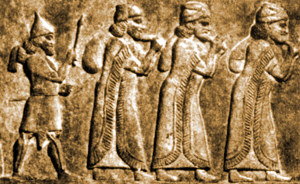
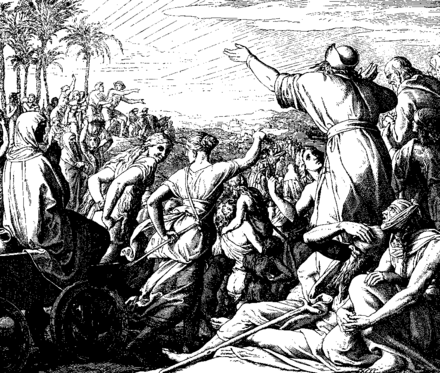


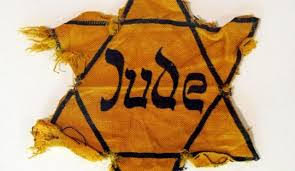

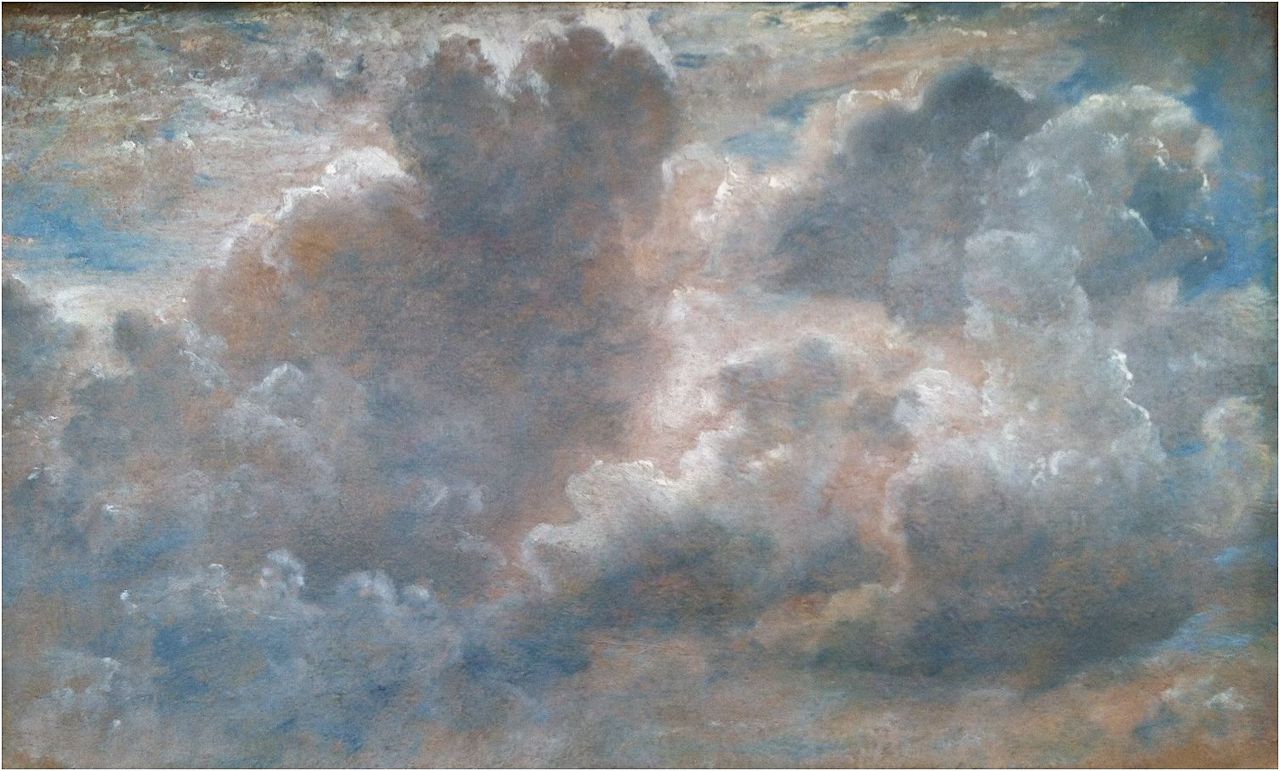



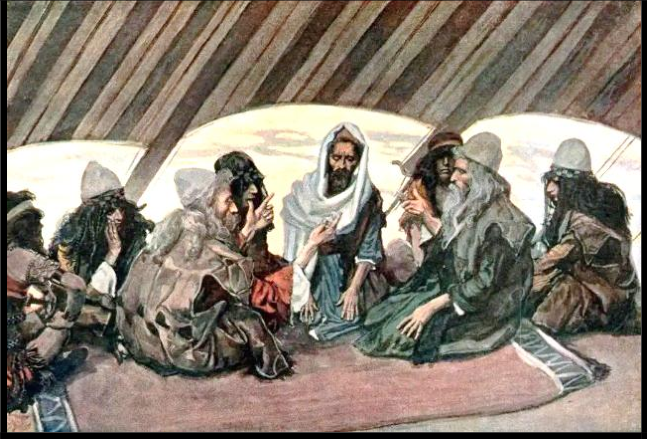


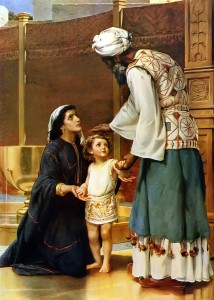
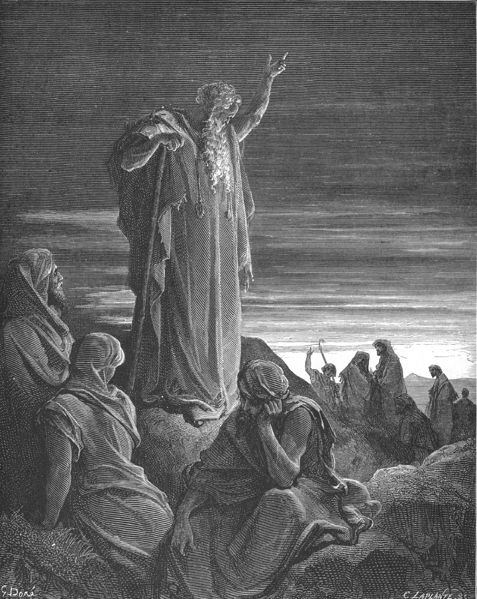

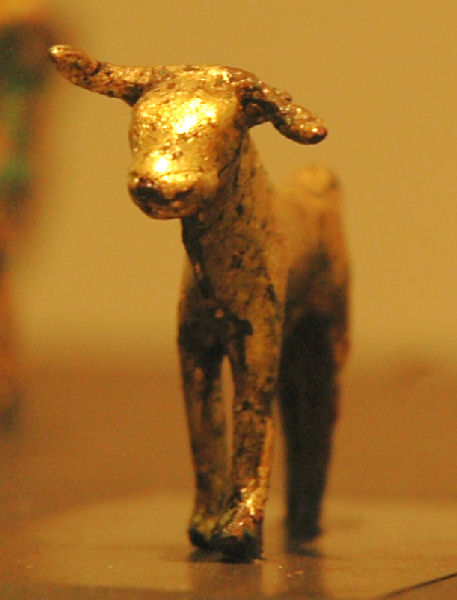

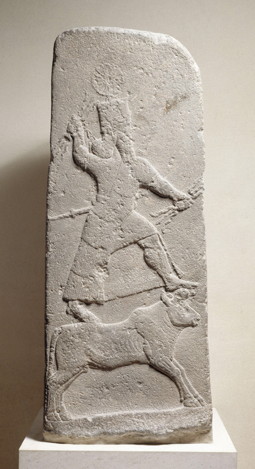
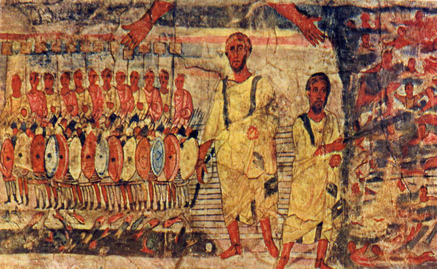
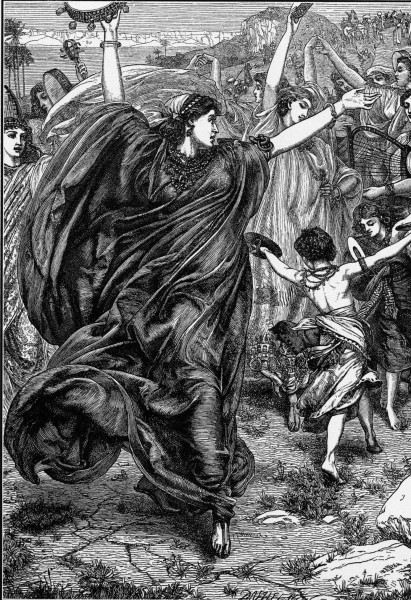

 Questioning Torah