Psalm 139 & Nitzavim: Omnipresent

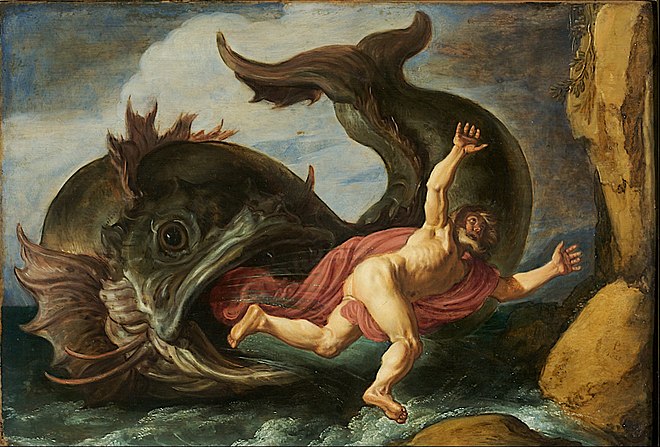
Jonah and the Whale, by Pieter Lastman, 1621

The prophet Yonah (“Jonah” in English) rebels against God’s order to deliver a prophecy in Nineveh, and flees from God by taking a ship all the way to the distant land of Tarshish. He tries to travel from Israel to the ends of the earth in order to avoid the presence of God.

The prophet who wrote the second half of Isaiah, however, prophecies that ships from Tarshish will bring riches to Jerusalem. This prophet exults in the idea that foreigners will travel from the ends of the earth in order to come close to the presence of God. (For both stories, see last week’s post, Hafarat Ki Tavo—2 Isaiah: Tarshish.)

The ends of the earth come up again, even more poetically, in the Torah portion Nitzavim (Deuteronomy/Devarim, 29:9-30:20), the first of this week’s double portion. Moses says that when the Israelites are unfaithful to their God, then God will cause them to be conquered and deported to other lands. But when their minds and hearts return to God—

Then God, your God, will return your captives and take you back in love, and collect you from all the peoples where God, your God, has scattered you. If you are banished to the ends of the heavens, from there God, your God, will collect you, and from there will take you. And God, your God, will bring you to the land that your forefathers possessed, and you will possess it; and [God] will do you good and multiply you more than your forefathers. (Deuteronomy 30:3-5)

Here “the ends of the heavens” is a poetic way of saying “farther than the ends of the earth”—even farther than Tarshish.

Yet God’s dwelling-place is the portable sanctuary the Israelites build in the book of Exodus, then the temple in Jerusalem.1 How can God find us at the ends of the earth? Psalm 139 teaches that escaping God’s guidance—or God’s demands—is impossible because God knows every mind and is present everywhere.

Omniscient: Psalm 139:1-4

The God character in the book of Genesis hears about events on earth, but sometimes needs a closer look to find out what humans are actually doing and thinking. In the story of the Tower of Babel,

God came down to look at the city and the tower that the humans had built. (Genesis 11:5) 

When God is considering destroying Sodom and Gomorrah, God says:

“I will go down and I will see; if they have done according to the outcry that has come to me, annihilation! And if not, I will know.” (Genesis 18: 21)

But in the later psalms, God is less anthropomorphic. The first four verses of Psalm 139 express the concept that God is omniscient, at least when it comes to human minds.

God, you have examined me, and you know me.
You know my sitting down and my standing up.
You discern my purpose from afar.
You sift through my way of life and my lying down,
And you are familiar with all my paths.
For there is no word on my tongue
Hey, God you know it completely. (Psalm 139:1-4)

Unlike God, another human being can observe you sitting, standing, lying down, and talking, but cannot discern your thoughts. Someone who knows you well can guess at your thoughts by considering your words, your body language, and your past deeds, but it is only a guess.

For God, it is not guesswork. According to Hirsch, God can reliably predict what we will think:  “Even before the thought has actually taken form within me, You [God] can already see it by inference from Your previous knowledge of all my personality and the interaction of all my character traits.”2

Or maybe God is a mind-reader, and knows our thoughts and intentions directly, even before we become conscious of them.3

Continuous: Psalm 139:5-6

Next, the psalm says that only God exists at all times. Humans keep going only as long as God is pushing them through time.

You confine me between achor and kedem,
And you set your palm upon me.  (Psalm 139:5)

achor (אָחוֹר) = back, behind (in time or space); west; future. (In Hebrew the future is what we cannot see because it is behind our backs.)

kedem (קֶדֶם) = in front (in time or space); east; past. (In Hebrew the past is what we can see right in front of us, because it has already happened.)

A human can remember the past and anticipate the future, but can only live in the present. Hirsch wrote: “Mine is only that infinitely brief span of the ‘present’ which is hardly long enough for me to be able to declare that I ‘am’. … it is only through You that I ‘am’.”4

Without God’s palm, a human being could not make it into the next moment.

Incomprehensible knowledge for me!
Too high! I am not capable of it.  (Psalm 139:6)

After declaring that God knows our innermost thoughts even before we do, and that we continue living only through God’s support, the psalmist brings in the concept of omnipresence.

Omnipresent: Psalm 139:7-12

Where could I go away from ruchekha?
And where could I flee from paneykha?  (Psalm 139:7)

ruchekha (רוּחֶךָ) ֹ= your wind, your air, your spirit, your disposition.

paneykha (פָּנֶיךָ) = your face, your front, your surface, your presence.

On one hand, God surrounds us like air. On the other hand, as Hirsch wrote, the spirit of God keeps on nudging us and moving us around.5

The word paneykha also has a double meaning: God’s presence is everywhere, and God’s “face” sees us everywhere.6

If I ascend to the heavens, you are there;
If I make my bed in Sheol, there too.  (Psalm 139:8)

The Hebrew Bible often speaks of God as living in the sky (the heavens) and manipulating the weather. This verse of Psalm 139 introduces the idea that God is also present in the underworld, where people “sleep” when they die.

I take wing at dawn;
I come to rest at the end of the sea.
Even there your hand guides me
And your right hand holds onto me. (Psalm 139:9-10)

Alter explained: “The speaker imagines taking wind with the dawn as it appears in the east, then soaring with the sun on its westward path to the limits of the imagined world …”7

The “end of the sea” describes Tarshish even better than “the end of the earth”. No matter how far we travel, the psalmist says, God either guides us or grabs us.

It is also useless to try to hide in the dark from God.

If I say: “Surely darkness will screen me,
And night will be light for me,
Even darkness is not dark for you,
And night is as light as day;
Darkness and light are the same. (Psalm 139:11-12)

Inside: Psalm 139:13

The next verse hints at why God is always present for every person.

Because you created khilyotai;
You wove me together in my mother’s womb. (Psalm 139:13)

khilyoitai (כִלְיֺתָי) = my kidneys; my conscience.8

Hiding from God is like hiding from yourself. You can only hide from your own conscience temporarily.

When Psalm 139 ends, the psalmist has decided to embrace God’s intimate knowledge, constant presence, and guidance.

Search me, God, and know my mind;
Examine me and know my thoughts.
And see if I have a hurtful path;
And guide me on a path for all time.  (Psalm 139:23-24)

Some religious people and some atheists believe that God is either the irrational and punitive being that we see sometimes in the Hebrew Bible, and/or the author of the policy that “sinners” will burn forever in hell that we see sometimes in Christianity. That version of God strikes me as an immoral villain whom I would not want to be omniscient, omnipresent, or guided by.

Other people believe that God is benevolent, either the fair and merciful being we also see in the Hebrew and Christian bibles, and/or an omnipotent being who makes everything work out for the best in the (not too long) long run. This is a more reassuring version of an omniscient, omnipresent God who guides us (although we run into theological problems if we also claim God is omnipotent).

There are other versions of what God is. Some that say God is not “a being” at all, but rather the ground of being, or the source of creation. Others say that “God” is not even a noun, but rather a verb, an adjective, or an adverb. In Kabbalah, God is ein sof (אֵין סוֹף), “without end”. The Tanya explains: “No thought grasps you [God] at all.”9

The impossibility of defining God also appears in Psalm 139:6: “Incomprehensible knowledge for me! Too high! I am not capable of it.”

But even if we can have no general concept of God, we can think about a single aspect of God. What if we experience God as an inner guide who is omniscient and omnipresent? Then “God” is another way of referring to our own consciences. We cannot flee from this God because we cannot flee from our inner selves. But if we only listen, our conscience guides us.

In the Jewish calendar, we are approaching the High Holy Days, Rosh Hashanah and Yom Kippur, days dedicated to asking God’s pardon for our individual and collective misdeeds of the past year. Jews are called upon to apologize to other people and make amends for any ways that we have hurt them before Rosh Hashanah. Then during the High Holy Days, we apologize to God, and rededicate ourselves to following God’s guidance—which might be the same as the guidance of our consciences. This year, may we all return to God, or to our inner guide—not just on holy days, but in each present moment.


  1. See my post Haftarat Ki Tavo—Isaiah: A Place for Feet.
  2. 19th-century Rabbi Samson Rasphael Hirsch, The Hirsch Tehillim, translation by Gertrude Hirschler, Feldheim Publishers, Jerusalem, 2014, p. 1104.
  3. This idea appears in Tehillim: The Book of Psalms with an Interlinear Translation, ed. by Rabbi Menachem Davis, Artscroll Series, Schottenstein Edition, 2001, p. 388; and also in Rabbi Adin Even-Israel Steinsaltz, The Steinsaltz Ketuvim, Koren Publishers, 2019, in www.sefaria.org.
  4. Hirsch, p. 1106.
  5. Ibid., p. 1107.
  6. Ibid.
  7. Robert Alter, The Book of Psalms, W.W. Norton & Co., New York, 2007, p. 480.
  8. See my post Vayikra & Jeremiah: Kidneys
  9. Rabbi Schneur Zalman of Liadi (1745–1812), The Tanya, Chapter 4. 
Va-eira & Bo; Psalm 78 & Psalm 105: Responding to Miracles

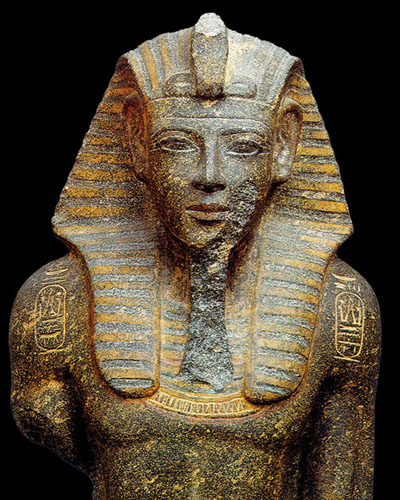
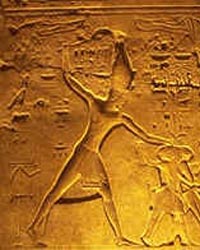
Pharaoh Merneptah subjugating Semites

(One of a series of posts comparing ideas in the book of Exodus/Shemot with related ideas in the book of Psalms.)

It takes two Torah portions (Va-eira this week and Bo next week) to describe the miraculous “plagues” that force the Pharaoh to let the enslaved Israelites walk out of Egypt. Two psalms, Psalm 78 and Psalm 105, offer briefer versions of the story. And the festival of Passover/Pesach tells the story of how God rescued the Israelites from Egypt in such detail that the seder (“order”;  ritual retelling of the story) can last half the night.

In the Torah portion Va-eira, God lays out the plan to Moses:

Therefore say to the children of Israel: “I am God, and I will bring you out from under the burden of Egypt, and I will rescue you from enslavement, and I will redeem you with an outstretched arm and with great acts of judgement. And I will take you to be My people, and I will be your god. And you will yada that I am God, your god, who is taking you out from under the burden of Egypt. (Exodus/Shemot 6:6-7)

yada (יָדַע) = know, realize, recognize, become acquainted, come to understand through direct experience. (Yada is the root verb. The Hebrew here uses the form viyda-etem (וִידַעְתֶּם) = and you will yada.)

Why does God inflict “great acts of judgement” on Egypt? The first reason given in this week’s Torah portion is so that the Israelites will yada God.

Pharaoh Mernptah, son of Ramses II
Pharaoh Merneptah, son of Ramses II

The second reason is so that the Pharaoh and the Egyptians will yada God, or at least recognize God’s existence and power:

And Egypt, they will yada that I am God when I stretch out my hand against Egypt and I bring out the children of Israel from their midst. (Exodus 7:5)

(The Hebrew in this verse uses form veyade-u (וְיָדְעוּ) = and they will yada.)

How many plagues does it take before both the Israelites and the Egyptians yada God?  Anyone who has participated in a Passover seder, spilling a drop of wine for each plague, knows the answer is ten. And in the book of Exodus/Shemot God does indeed inflict ten miracles on Egypt—the first seven in Va-eira (And I appeared), and the last three in Bo (Come).

However, the ten plagues are described in two different voices. Any close reader of  Va-eira and Bo, even in translation, notices points where the narrative suddenly stops and restarts, rephrasing a bit of the story that has already been told. Scholars examining the language itself have discovered that two stories of the plagues are woven together (but not seamlessly).

Both strands have something to say about the plagues of blood, frogs, and death of the firstborn. The other seven plagues are described by one strand or the other, not both. Maybe each of the two original stories had fewer than ten plagues. Or maybe the redactor(s) who combined the two stories decided to give both descriptions of three plagues, but chose only their favorite descriptions for the other seven.

Psalms 78 and 105 report fewer than ten plagues, and the order is different than in Exodus.

plagues-table

What accounts for these differences? We cannot identify any of these accounts as the original story. At least one strand in the composite story in Exodus was probably written in the 8th century B.C.E. Psalm 78 may have been written as early as the 10th century B.C.E., soon after the first Israelite temple was built in Jerusalem. Psalm 105 could have been written any time after that, maybe before the book of Exodus, maybe as late as the period of the second temple. Probably the story of God’s miracles in Egypt was familiar to all the authors before they began to write down their own versions.

The two psalms and the composite in Exodus borrow language from each other, not only using the same words for the plagues, but sharing pieces of description. For example, Exodus describes the plague of blood this way:

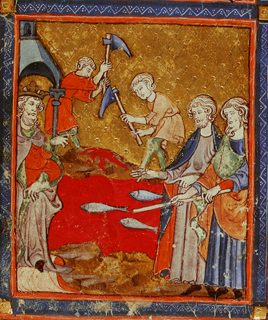
Plague of Blood, Golden Haggadah, c. 1320 Spain

…and he raised the staff and he struck the water that was in the Nile before the eyes of Pharaoh and his courtiers, and all the waters of the Nile turned into blood. And the fish that were in the Nile died. And the Nile stank and the Egyptians were not able to drink water from the Nile, and there was blood throughout the land of Egypt. (Exodus 7:20-21)

Psalm 78 focuses on the lack of drinking water:

And [God] turned into blood the Nile and its streams;

            They could not drink. (Psalm 78:34)

Psalm 105 focuses on the loss of an important food:

           [God] turned their waters into blood

                        And it made their fish die. (Psalm 105:39)

Whether the story is expanded in the book of Exodus, or contracted in a psalm, it is always offered as a decisive example of God’s miracles on behalf of the Israelites.

In the book of Exodus, the purpose of the plagues is to get both the Israelites and the Egyptians to yada God. But the Torah portion Bo also gives instructions several times for the earliest Passover rituals, which were conducted about 3,000 years ago. The purpose of these rituals is to remember the story of the exodus.

This day shall be for you for remembrance, and you shall celebrate it as a festival for God, through [all] your generations. It is a decree forever: you shall celebrate it. (Exodus 12:14)

While Exodus only calls for remembering the story of God’s miracles in Egypt, Psalms 78 and 105 tell the story in order to motivate the Israelites of Judah to action.

Psalms 78 hopes that if the Israelites remember the miracles God did for them, then they will stop backsliding, trust God, and obey God’s rules.

           What we have listened to, and we yada,

                      and our ancestors recounted to us,

           should not be concealed from their descendants,

                      to the last generation recounting

           praises of God and Its strength

                      and Its wonders that It did. (Psalm 78:3-4)

(The Hebrew in verse 3 uses form vaneida-eim (וַנֵּדָעֵם) = and we will yada.)

Why must God’s miracles be recounted to every generation?

           Then they will place their kesel in God,

                      and they will not forget the deeds of God,

                      and they will comply with Its commandments. (Psalm 78:7)

kesel (כֶּסֶל) = conviction, certitude, unwavering belief regardless of other evidence or arguments; folly, stupidity.

The section of Psalm 78 that tells about the miracles God inflicted on Egypt (78:42-51) is not designed to mention every single plague, but rather to bring the story to life in ten short verses. Psalm 78 leaves out the kinim, the shechin, and the darkness, but it adds a few details that are not in Exodus:

Plague of Hail, Haggadah by Judah Pinchas, 1747 Germany

—that the action happened at Tzoan, a specific place in the Nile Delta. (78:43)

—that the arov, the mixed hordes of vermin, ate the flesh of the Egyptians. (78:45)

—that when God sent hail, Egyptian flocks were hit by lightning. (78:48)

—that the hail killed grapevines and fig trees (important crops in Canaan, but not in Egypt). (78:47)

These additional details would make the story more vivid in the listener’s imagination.

Psalm 105 is less concerned than Psalm 78 about lack of faith and commitment among the people of Judah. I believe its purpose is to whip up enthusiasm for God and the religion among the worshipers at the temple.

           Thank God, call out Its name,

                      hodiyu among the peoples Its deeds!

           Sing to [God], make music to It,

                      consider all Its wonders!

           Revel in the name of Its holiness!

                      Let the heart of those who seek God rejoice! (Psalm 105:1-3)

hodiyu (הוֹדִיעוּ) = make known, inform, announce. (A different form of the root verb yada.)

Rylands Haggadah, 14th century Spain. Left: livestock pestilence. Right: Shechin.

Psalm 105 then tells the story of the people who became Jews, starting with God’s covenant with Abraham and ending with the Israelites’ conquest of part of Canaan. When it describes the plagues, it omits both livestock pestilence and shechin, perhaps because the thought of rashes and boils would depress the congregation.  Or, according to 19th-century rabbi Samson Raphael Hirsch, because diseases do not seem supernatural enough to count as miracles. But Psalm 105 uses some of same vivid details as Psalm 78.

*

Do the stories of God’s miracles in Egypt achieve their purpose?

Direct experience of miracles works in Exodus; both the Israelites and the Egyptians yada—know, realize, and recognize—a powerful god acting on behalf of the Israelites. The instruction to perform a ritual to remember what happened also worked; we have been celebrating Passover for about 3,000 years.

Does the account in Psalm 78 work, leading people to kesel, an unshakeable belief in God, and to a determination to obey God’s rules? I think it would depend on the listener. Some people believe any account that is vivid (like Psalm 78’s selection of details) and comes from an accepted source (such as the temple priests, or a particular news station, or a friend’s e-mail). Other people are skeptics by nature; they examine a story to see if it is logical and how it fits with personal experience and other information. This type of person would probably need direct experience, yada, to achieve kesel and commit themselves to obeying all the rules of the religion.

What about Psalm 105? I believe that an account of past miracles can inspire both kinds of people, especially when it is poetry set to uplifting music. Even natural skeptics can get caught up in singing joyful praise, and leave the temple (or synagogue) with a better attitude toward their God and their religion. And natural believers might be moved to proselytize, following the instruction hodiyu—make known, announce!

The singing of the psalms continued as part of both Jewish and Christian prayer after the fall of the second temple in Jerusalem in 70 C.E. It continues today. But Jewish liturgy concentrates on other psalms. It quotes only one verse from Psalm 78 and fifteen from Psalm 105, none of which are verses addressing the plagues in Egypt.

However, serious-minded Jews study the story of the plagues in the Torah portions Va-eira and Bo every winter, when we reach this time in the cycle of Torah readings. And in the spring many more Jews celebrate Passover, a festival of dramatic rituals, prayers, songs, and stories about how God freed the Israelites from slavery in Egypt.

The haggadah (“the telling”), the book that provides the texts and ritual instructions, includes many quotes from our two Torah portions in Exodus. Psalms 78 and 105 are not traditionally included. In a modern American haggadah, the song “Go Down Moses” usually is.

from an Iraqi haggadah, printed in Vienna 1930

Out of all the stories of God’s miracles in Egypt, I would say Passover is by far the most effective at getting Jews to remember the claim that God created miracles to rescue our people from Egypt. The ritual itself has changed and grown over the millennia, so it can speak to new generations. Even Jews who grew up in families that managed to conduct a boring seder  every year cannot help but remember the symbolic foods, the song that the youngest child must sing, the exodus story, spilling a drop of wine for each of the ten plagues, and hunting for the hidden piece of matzah.

Thus Passover still serves the purpose given in the book of Exodus: remembering the story. Whether we can go further and yada God (as in Exodus), or commit ourselves to kesel (as in Psalm 78), or be moved to joy and a desire to recommend the religion (as in Psalm 105) depends on the individual.

Personally, I have a skeptical nature, and I actively try to avoid kesel—while remaining committed to studying Torah and being a Jew in a liberal sense. But I remember the exodus story every winter when I study it in the Torah, as well as every spring when I participate in Passover. I do not yada the God of the ancient Israelites, but I do yada something I cannot describe that I call God. And when I sing psalms that have uplifting words and melodies, I am indeed moved to joy. I would recommend that to anyone!