Are foreigners neighbors or enemies? Should you befriend them or kill them? This week’s Torah portion, Eikev (“on the heels of”), appears to promote both points of view.
Love the stranger
And you must love the geir, for you were geirim in the land of Egypt. (Deuteronomy/Devarim 10:19)
geir (גֵּר), plural geirim (גֵּרִים) = immigrant, resident alien. (Not any “stranger”; only a foreigner who has settled down in another country.)
The command to be good to the immigrant appears many times in the Torah.1 In this week’s iteration, Moses warns his people not to act like the Egyptians, who mistreated the multiplying family of Jacob (a.k.a. Israel) when they were resident aliens in Pharaoh’s kingdom.2 He anticipates that after the Israelites have conquered Canaan and settled down, there will be individual immigrants who should be treated with the same fairness and compassion as anyone else in the land.
Kill the stranger
But this ethical rule does not apply to the Canaanites already living in the land the Israelites are about to conquer. In last week’s Torah portion, Va-etchanan, Moses says:

You must dedicate them to destruction. You must not cut a treaty with them, and you must not show them mercy. You must not give them your daughters, nor give their daughters to your sons … because they would turn your children away from [God], and they would serve other gods … Instead … you must tear down their altars and smash their standing stones and cut down their goddess posts and burn their images in fire. (Deuteronomy 7:2-5)
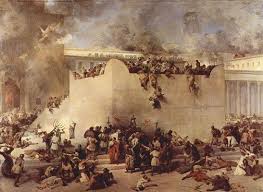
In the portion Eikev, Moses repeats the call for genocide of the Canaanites.
And you must eat up all the peoples that God, your God, is giving to you. You must not look at them with compassion. And you must not serve their gods, because it would be a trap for you. (Deuteronomy 7:16)
Why?
Why does the God-character tell the Israelites to be kind to new immigrants, but to exterminate the existing population of Canaan?
If the Israelites had succeeded in conquering all of Canaan and killing its whole population, the injunction in Eikev could be viewed as a post-genocide justification: “We had to wipe them out because God told us to”. But the book of Judges, which opens with an account of territories that the Israelite tribes partially conquered, reports that the original Canaanites continued to live in their midst.3
Therefore the exhortation to exterminate all the Canaanites serves a different purpose: to emphasize that nothing is more important for the Israelites than sticking to their own religion. This agenda appears in the passages above from both Va-etchanan and Eikev.
The God-character portrayed in the books of Exodus, Numbers, Deuteronomy, Joshua, and 1 Samuel explicitly approves of genocide when the perpetrators are Israelites, and the victims worship a different god and occupy land that God has designated for the Israelites.4 No exceptions are made for infants or atheists.
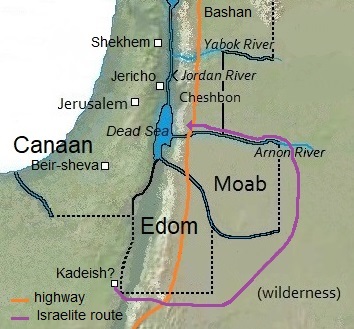
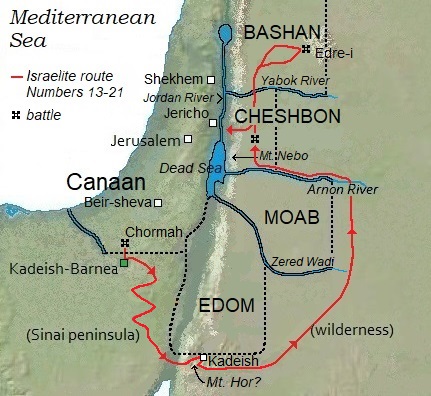
In the book of Numbers, the land designated for Israelites includes not only Canaan, but also the region on the east bank of the Jordan River. God helps the Israelites conquer the kingdoms of Cheshbon and Bashan, where two and a half of the twelve tribes will live.
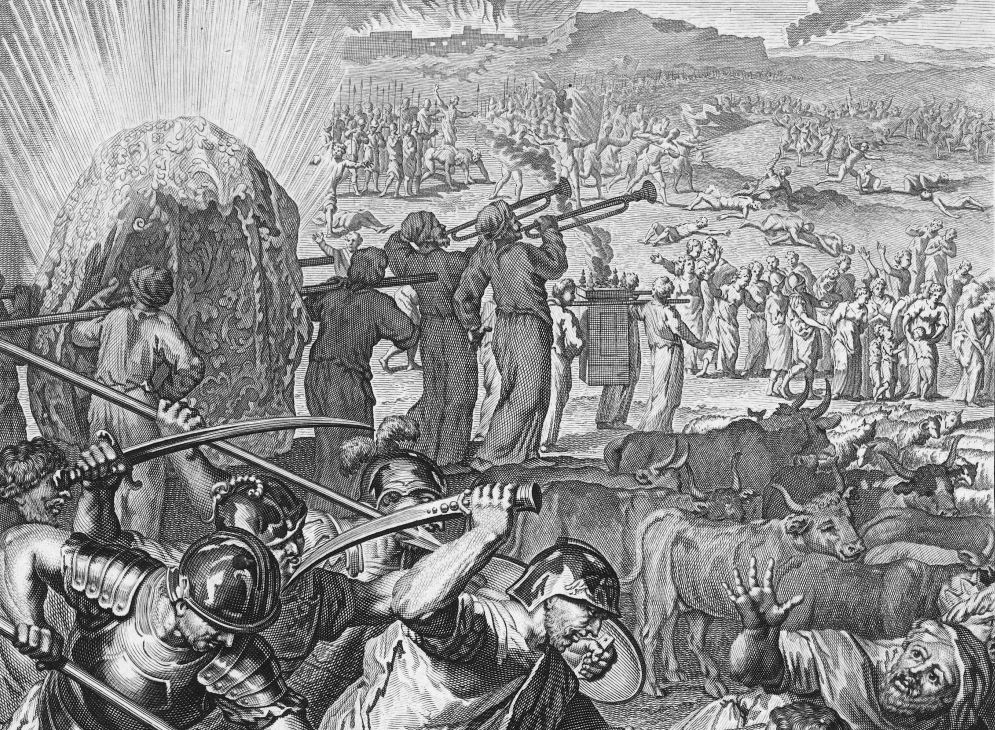
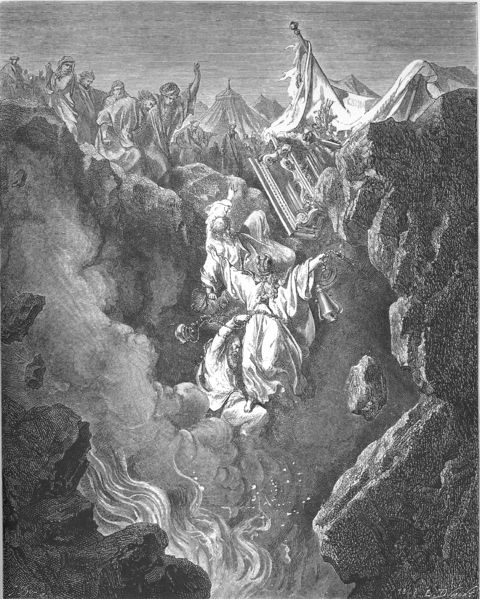
While they are camping at Peor, preparing to cross the Jordan, the Israelites accept invitations from the Midianites there to worship the god of Peor (Baal-Peor). The God-character is enraged with jealousy, and (after wiping out 24,000 Israelites with a plague), orders the surviving men of Israel to kill all the Midianites around Peor: men, women, and male children.5
In next week’s Torah portion, Shoftim, Moses says that when the Israelites go to war to conquer a town outside the lands God has given them, they must first invite the town to surrender peacefully. If the town accepts this offer, all its residents can continue to live there, as long as they provide labor for Israelites projects.6 However,
In the towns of those peoples that God, your God, is giving to you as a permanent possession, you must not let a soul live. … so that they will not teach you to do all the taboo things that they do for their gods … (Deuteronomy 20:16, 20:18)
Thus the real issue is whether foreigners will help or hamper the Israelites in serving their God.
The Torah promotes friendly assimilation of new immigrants because they can be required to observe some basic Israelite religious practices. The Torah rules that geirim must refrain from eating leavened bread during the week of Passover,7 refrain from working on the sabbath or Yom Kippur,8 refrain from eating an animal’s blood,9 obey the Israelite sexual prohibitions,10 refrain from giving children to the god Molekh,11 refrain using God’s name in an insult or curse,12 follow the laws of purity after exposure to a human corpse,13 and listen to a reading of the Torah every seven years.14
Immigrants who obey all these rules are not likely to worship other gods openly, or entice Israelites to join them in worship.
Israelite immigrants
But what will the Israelites do when they are the immigrants, a large population settling Canaan by force? Since they do not wipe out the indigenous peoples, will they start worshiping the local gods the way they did in Peor?
The answer in the book of Judges is a resounding yes.
The Israelites did what was bad in the eyes of God, and they served the be-alim. And they abandoned God, the God of their forefathers, the one who brought them out of the land of Egypt. And they went after other gods from among the gods of the peoples who were all around them, and they bowed down to them, and [thus] they offended God. (Judges 2:11-12)
be-alim (בְּעָלִים) = plural of baal (בַּעַל) = owner; a male Canaanite god.
Canaanite religions seemed to be so enticing that they were hard to resist.15
A different solution
From an ethical point of view, sharing the land of Canaan with its indigenous inhabitants is far better than committing genocide. Why don’t Moses and the God-character in the Torah find a more ethical way to keep the Israelites from worshiping other gods?
Persuading the Israelites that no other gods exist is not the answer. Moses tried this earlier in the book of Deuteronomy, saying:
You yourselves have seen for the knowledge that God is the God; there is no other than he alone. (Deuteronomy 4:35)
But the people are not psychologically ready for monotheism. Threats do not work either. The portion Eikev includes two of many statements in the Torah that God will kill the Israelites if they worship other gods:
And it will be if you actually forget God, your God, and you go after other gods and serve them and bow down to them, I call witness against you this day that you will truly perish. (Deuteronomy 8:19)
Guard yourselves lest your heart deceives you and you desert and serve other gods and bow down to them. Then God’s anger will heat up against you and shut the heavens, and there will be no rain and the earth will not give its produce, and you will quickly perish from upon the good land that God is giving to you. (Deuteronomy 11:16-17)
Perhaps at this stage, the Israelites need dazzling visual displays to reinforce their commitment to their religion. The Canaanites have glittering gold and silver idols. The Israelites have a single invisible god who only occasionally manifests as a miraculous fire.
The book of Judges points out that the sight of miracles made all the difference.
And the people served God all the days of Joshua and all the days of the elders who came after Joshua, who had seen all the great deeds of God that [God] did for Israel. (Judges 2:7)

If the Israelites cannot yet stick to their own God without miracles, an occasional miracle might help to keep the religion going until the people become able to adopt a more sophisticated idea of God. An example is when Elijah when Elijah sets up two altars, one for God and one for Baal, and asks the people of the northern kingdom of Israel to make their choice. God sends down fire to consume the offerings, and the Israelites respond by attacking the priests of Baal.16
A miracle in every generation might have kept the Israelites away from Canaanite religion. At least it would be a better solution than genocide.
Even today many people cannot relate to an invisible, abstract god. Some people still use icons and other shiny objects to support their religious resolve. Others still need miracles, and gladly interpret apparent coincidences as the hand of God. If these religious practices strengthen their commitment to ethical behavior, then they are well worth it.
But a god that sanctions murder is not worth worshiping. Killing the infidel is a practice that has continued somewhere in the world to this day. May it cease in our own time.
- See my blog post Mishpatim: The Immigrant, including the footnotes.
- Moses also makes this point in Exodus 23:9.
- Judges 1:21-33.
- Divine commands for genocide of seven Canaanite peoples include Exodus 23:28-33, Deuteronomy 7:1-5, 7:16, 7:24, 20:16-18; and Joshua 8:2, 10:40. The God-character commands genocide of the Amalekites in 1 Samuel 15:2-3.
- See my posts on “How to Stop a Plague”, Part 1, Part 2, and Part 3.
- Deuteronomy 20:10-11.
- Exodus 12:19.
- Exodus 20:10, 23:12; Leviticus 16:29; Deuteronomy 5:14.
- Leviticus 17:10-13.
- Leviticus 18:26.
- Leviticus 20:3.
- Leviticus 24:16.
- Numbers 19:10.
- Deuteronomy 31:12.
- Even in the 6th century B.C.E. people were worshiping “the Queen of Heaven” (Jeremiah 7:18)
- 1 Kings 18:20-40.