Why can’t I give the orders instead of Moses? Why can’t I be the high priest instead of Aaron?
This week’s Torah portion, Korach (Numbers 16:1-18:32) patches together two tales of rebellion. In one tale, two chiefs from the tribe of Reuben rebel against Moses’ leadership, backed by 250 respected Israelite men. (See my post Korach: Buried Alive.) In the other tale Korach, a Levite who is a first cousin of Moses, Aaron, and Miriam, rebels against Aaron and his sons, backed by 250 Levites.
And they congregated against Moses and against Aaron, and they said: “Too much is yours! Because the whole community, all of them, are kedoshim, and God is in their midst. So why do you elevate yourselves above the congregation of God?” (Numbers 16:3)
kedoshim (קְדֺשִׁים) = plural of kadosh (קָדוֹשׁ) = holy, consecrated, reserved for religious use, dedicated to God.

Moses falls on his face, prostrating himself to God. (See my post Korach; Face Down.)
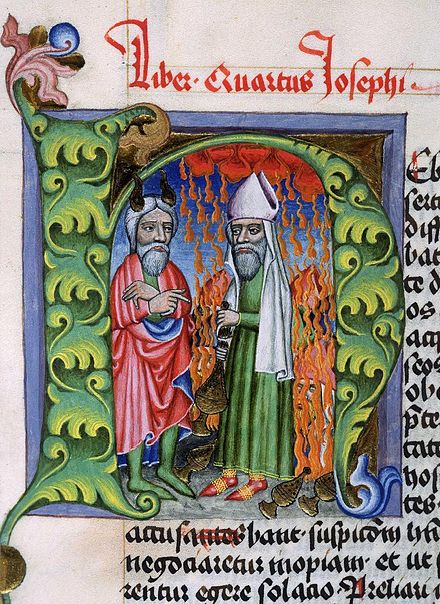
Then he spoke to Korach and to all his company, saying: “In the morning God will make known who is His1 and who is kadosh and whom He brings close to Himself; He will choose whom He brings close to Himself. Do this: Take for yourselves fire-pans, Korach and all his company, and place eish in them and put incense on them in front of God tomorrow. And it will be the man whom God chooses, he is the kadosh one. Too much is yours, sons of Levi!” (Numbers 16:5-7)
eish (אֵשׁ) = fire, glowing embers.
In other words, God alone will decide which man is holy—set apart and dedicated to God. And it sounds as though God will choose only one.
Next Moses exposes the real motivation for Korach’s rebellion: not to give all Israelites equal status and opportunity, but only to elevate the Levites to the status and role of the priests. He says:
“Is it too little for you that the God of Israel has set you apart from the community of Israel to bring you close to [God] in the service of the sanctuary of God, and to stand before the community to minister to them? For [God] has brought you close, and all your kinsmen, the Levites, with you; yet you seek the priesthood too!” (Numbers 16:9-10)
After an inserted scene from the tale of the Reubenite rebellion, Moses rephrases his instructions to the Levites, specifying that his brother Aaron, the high priest, will also participate in the holiness contest.
And Moses said to Korach: “You and all your company, be in front of God tomorrow, you and they and Aaron. And each man, take his fire-pan. And you all will place incense on them, and bring them close in front of God, each man his fire-pan: the 250 and you and Aaron.” (Numbers 16:16-17)
By setting the contest for the next morning, Moses is giving the Levites time to have second thoughts and decide to stay home.2
A precedent and a warning
A wise Levite would indeed have stayed in his tent that morning. For one thing, Moses indicated that God would choose only one of the 252 men as the holy one. Furthermore, when Aaron and his four sons were first consecrated as priests, back at Mount Sinai, the two older sons overreached in the matter of bringing incense to God, and were killed by God’s fire.

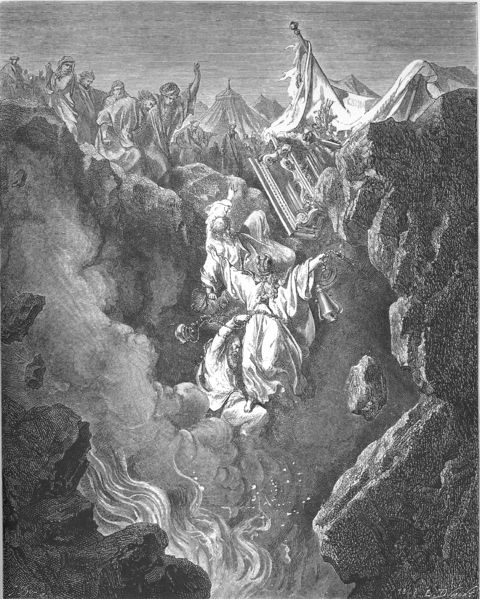
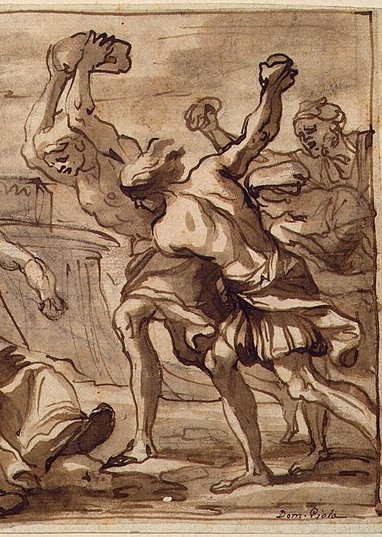
And Aaron’s sons, Nadav and Avihu, each took his fire-pan and placed eish in it, and put incense on it; and they brought it close in front of God, an unauthorized eish that God had not commanded. And eish came forth from in front of God and it consumed them and they died in front of God. (Leviticus 10:1-2)
Both Aaron’s sons and the 250 Levites put incense on eish (glowing embers) and bring the aromatic smoke close to God. In both cases, God kills them with eish (divine fire).
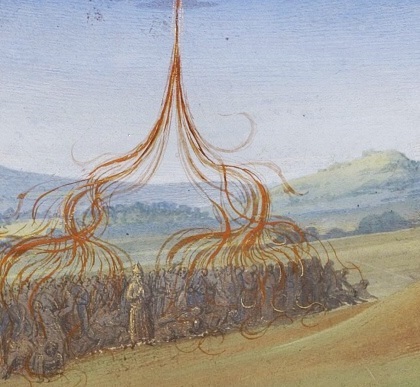
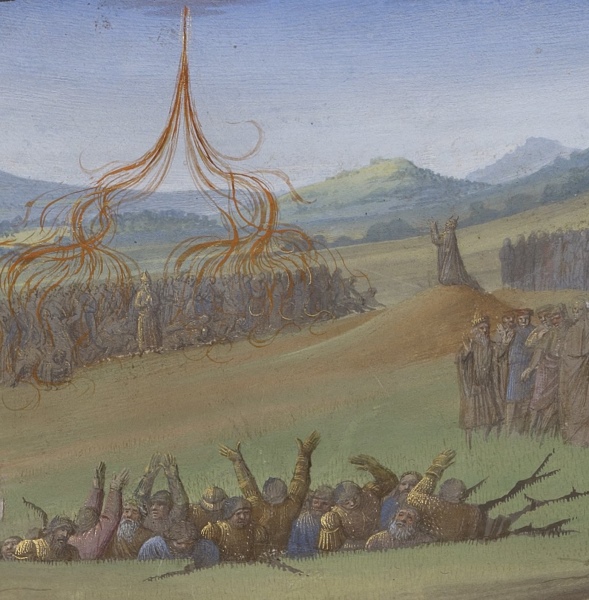
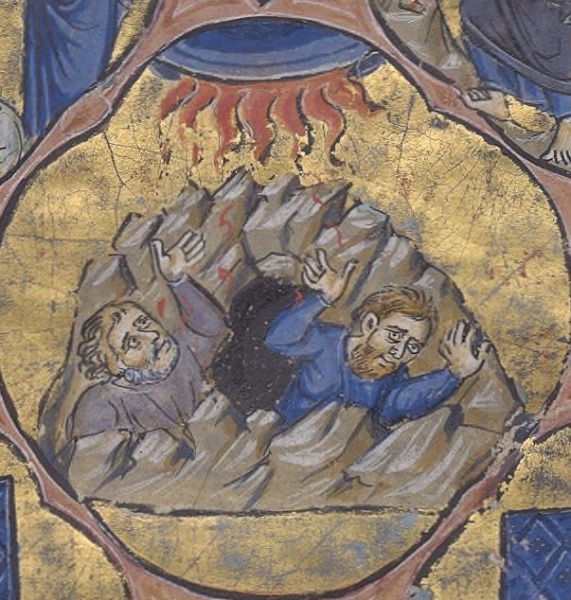
Yet they all 250 Levites show up for the incense test. We do not learn what happens to them until after an exciting interruption from the tale about the rebellion of the Reubenites, in which God makes the ground open and swallow them up along with their households—and, inexplicably, Korach, who belongs with the 250 Levites burning incense. (See my post Korach: Quelling Rebellion, Part 1.)
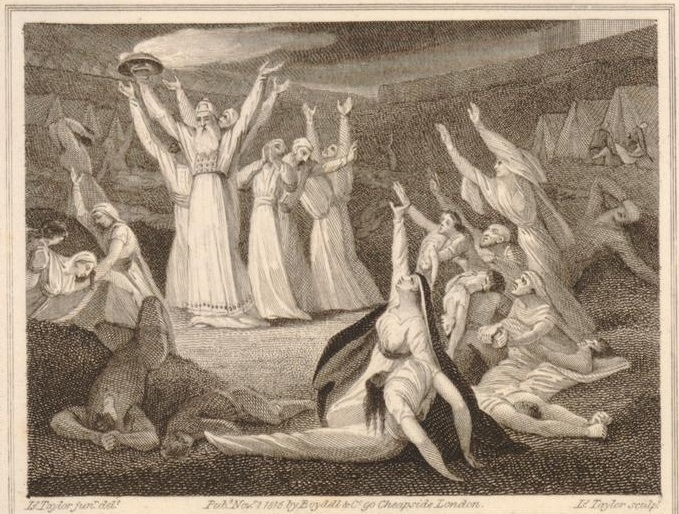
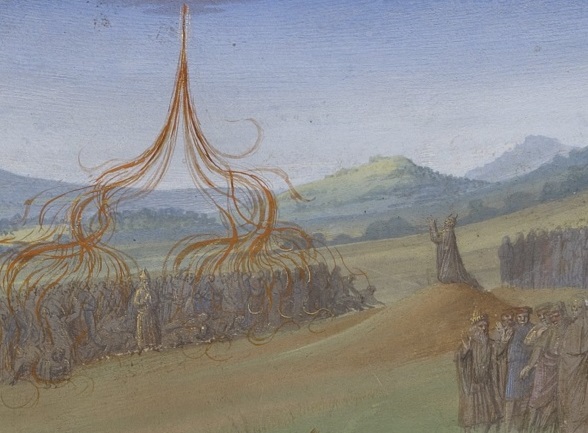
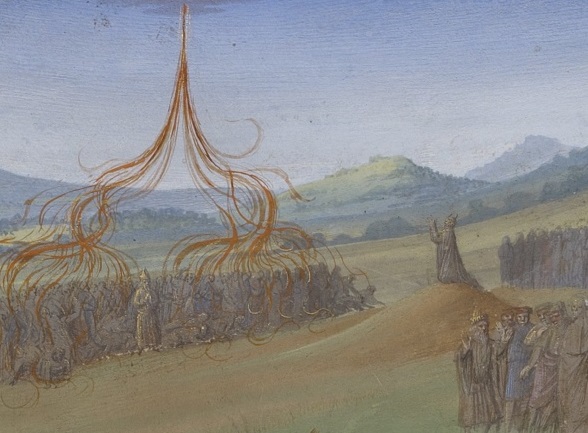
Then eish went forth from God, and it consumed the 250 men bringing close the incense. (Numbers 16:35)
Where do they bring the incense?
In both passages, the overweening incense-bearers bring their smoking pans in front of God. And we know that when God is in residence in the sanctuary tent, God speaks to Moses from the empty space above the ark in the Holy of Holies, the back chamber;3 and that on Yom Kippur the high priest must generate enough smoking incense so he cannot see God appear above the ark.4 Both Moses and Aaron are authorized to enter the Holy of Holies at times, but nobody else is.
How close to the ark do the 250 Levites get before divine fire consumes them?
The portion Shemini in the book of Leviticus says that after Nadav and Avihu die, Moses calls in two of Aaron’s Levite cousins (Mishaeil and Elthzafan, not Korach) and orders them:
“Come close, carry your kinsmen away from the front of hakodesh, to outside the camp.” (Leviticus 10:4)
hakodesh (הַקֺּדֶשׁ) = the holy place. (From the same root as kadosh.)
Then Moses warns Aaron and his two younger sons not to leave the entrance of the tent-sanctuary while everyone else is mourning the deaths of Nadav and Avihu.5 This implies that all five priests were in the entrance when Nadav and Avihu went farther inside with their incense.
Aaron’s instructions for entering the Holy Holies on Yom Kippur specify that he should fill his fire-pan with embers from the altar outside the sanctuary tent, and then bring it along with two handfuls of ground incense behind the curtain separating the Holy of Holies from the main room of the sanctuary.6 So Aaron is inside the Holy of Holies when he puts the incense on the embers and the resulting cloud of smoke screens the ark from view.7

What about Aaron, Korach, and the 250 Levites in the Torah portion Korach in Numbers? Aaron, as the high priest, has the duty of burning incense every morning and evening on the gold incense altar in the main room of the tent-sanctuary, in front of the curtain separating the Holy of Holies.8 According to the Talmud, a priest in the temple in Jerusalem carried embers in a fire-pan from the outside altar to the gold incense altar inside the sanctuary, while another brought in a spoonful of incense.9
Levites guard the outside of the sanctuary, assist the priests at the altar, and transport the holy objects from inside the sanctuary after the priests have wrapped them, but they are not allowed to enter the sanctuary while it is set up. Korach and the 250 Levites want the right to go inside the sanctuary, as if they were priests—and to burn incense as if they were equal to the high priest, Aaron.
But it seems impractical for 250 Levites to take turns entering the main room of the tent-sanctuary with their smoking incense pans. Perhaps they file past the screened entrance of the tent.
Holy pans, not so holy Levites
Only Aaron survives the incense test; God kills the 250 Levites. Aaron is the one whom God chooses as kadosh enough to be a priest.
Then God spoke to Moses, saying: “Say to Elazar, son of Aaron the Priest, that he must lift up the fire-pans from the burned remains … The fire-pans of those guilty ones who [lost] their lives, and make them flattened metal to plate the altar, because they were brought close in front of God, vayikdashu. And they will be a reminder for the Israelites.” (Numbers 17:1-3)
vayikdashu (וַיִּקְדָּשׁוּ) = and they have become holy. (From the same root as kadash.)
These copper fire-pans were not holy before, since they had never been used for a regular part of the priestly service. (One wonders where the Levites found 250 copper fire-pans in the first place. Were they used to light campfires in front of families’ tents?) Perhaps God now declares that the fire-pans holy now just so that they can be used to plate the outer altar, and serve as a warning to anyone in the future who is jealous of the priests.
Or perhaps, even though God rejected the holiness claim of the Levite men, their desire to bring the smell of incense to God is enough to make the fire-pans themselves holy.
Why are all 250 Levites in this tale willing to die in order to bring incense to God?
Perhaps Korach convinced them that Moses and Aaron, not God, were responsible for assigning the priesthood to Aaron and his sons, and God would not act against them if they brought incense to God. Korach probably drafted the rebels’ opening claim that everyone in the community was equally holy. He might also have reminded the Levites that at Mount Sinai God said the Israelites would become “a kingdom of priests and a kadosh nation”10—while not mentioning God’s condition that this would happen only if the people obeyed God. If they were all holy, all priests, then God would welcome incense from all of them!
Or perhaps they were consumed with desire to come even closer to God, which might have been the motivation for Nadav and Avihu to bring incense into the sanctuary. (See my post Shemini: Fire Meets Fire.) They wanted it so much, they were willing to die for it.
Or perhaps it was peer pressure. Korach would have said whatever it took to get the Levites to show up in the morning and make an impressive display of support for his position. And it is human nature to be embarrassed to back out when everyone else is going ahead.
If the fiery deaths of Nadav and Avihu are not enough, let the fiery deaths of the 250 Levites be a lesson for all of us. The next time an eloquent power-hungry person tries to fool us, the next time we are consumed with irrational desire, the next time everyone else is doing something that seems like a bad idea—may each of us have the strength to admit we were wrong and choose common sense.
- Hebrew is a gendered language and usually uses the third person singular masculine pronoun for God. I try to avoid this in my English translations, but I retained those pronouns in my translation here for clarity.
- Rabbi Jonathan Sacks, Covenant & Conversation, “Korach: Not Taking It Personally”, reprinted on www.sefaria.org, probably based on Bamidbar Rabbah 18:8.
- Exodus 25:22.
- Leviticus 16:2, 16:12-13. See my post Acharey Mot & Shemini: So He Will Not Die.
- Leviticus 10:7.
- Leviticus 16:12.
- Leviticus 16: 13. See my post: Acharey Mot & Shemini: So He Will Not Die.
- Exodus 30:6-8.
- Talmud Bavli, Tamid 33a.
- Leviticus 19:5-6.











 Questioning Torah