Shemot to Bo: Moses Finds his Voice

(This is my sixth post in a series about the interactions between Moses and God on Mount Sinai, and how their relationship evolves. If you would like to read one of my posts about this week’s Torah portion, Terumah, you might try: Terumah: Insecurity.)


Moses hears God speak to him for the first time out of the fire in the thornbush on Mount Sinai. (See my post: Shemot: A Close Look at the Burning Bush.) God has already decided to use devastating miracles to liberate the Israelites in Egypt, but needs a human agent to persuade the Israelites to leave for Canaan and the pharaoh to let the Israelites go.

For this job, God picks an Israelite by birth who was raised by Egyptian royalty, and is now herding sheep in Midian. Moses’ assets are that he is curious and open to new ideas, he empathizes with the underdog, he is humble, and he is sufficiently awed to hide his face when he hears a divine voice speaking out of the fire. (See my post: Shemot: Empathy, Fear, and Humility.)

But he does not want to go. He knows he is not an adept speaker. (See my post: Shemot: Not a Man of Words.) And he longs to continue his safe and peaceful life in Midian. So he tries five times to excuse himself from the mission. (See my post: Shemot: Names and Miracles.)

In this first conversation on Mount Sinai, Moses sounds like an anxious child, and God sounds like a patient parent. It takes God a long time to reassure Moses enough so he will cooperate with God’s plan. Finally God promises that Moses’ brother Aaron will be his spokesman in Egypt, and Moses stops trying to get out of the job. (See my post: Shemot: Moses Gives Up.) After a brief stop at his father-in-law’s camp, he heads back to Egypt.

A year or two passes before Moses meets God on Mount Sinai again. During that time, God continues to give Moses instructions, and occasionally Moses asks God a question. These conversations are silent, inside Moses’ mind.

Does Moses change during this period in Egypt? Does his relationship with God change?

Shemot: Moses wins and loses the people’s trust

Aaron meets Moses on the road as he heads across the Sinai Peninsula toward Egypt.

And Moses told Aaron all the words with which [God] had sent him, and all the signs [God] had instructed him in. Then Moses and Aaron went, and they gathered all the elders of the Israelites. And Aaron spoke all the words that God had spoken to Moses, and he did the signs before the eyes of the people. And the people trusted … (Exodus 4:28-31)

The text does not say whether the Israelites trust Moses, whom they do not know, or only Aaron, one of their own elders. Either way, they believe they are hearing the words of their own god.

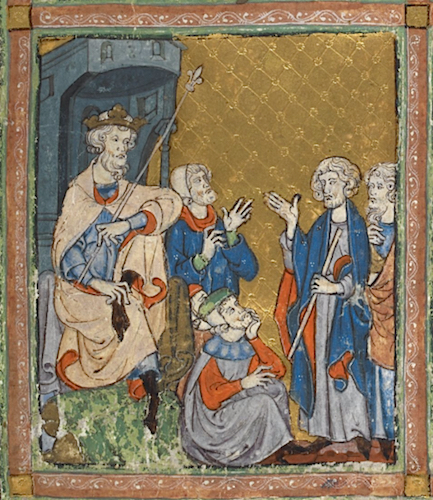
Moses and Aaron Come Before Pharaoh, Golden Haggadah, 14th century

And afterward Moses and Aaron came and said to Pharaoh: “Thus says Y-H-V-H, the god of Israel: ‘Let my people go, and they will observe a festival for me in the wilderness!’” (Exodus 5:1)

The text does not say which brother is doing the actual speaking. The pharaoh says no, and Moses and Aaron clarify their request:

“Please let us go a distance of three days into the wilderness, and we will make slaughter-offerings to Y-H-V-H, our God …” (Exodus 5:3)

Instead, the pharaoh increases the workload of the Israelites, and they turn against Moses and Aaron.1

Then Moses returned to Y-H-V-H and said: “My lord, why have you done harm to this people? Why did you send me? Since I came to Pharaoh to speak in your name, he has done harm to this people. And you certainly have not rescued your people!” (Exodus 5:22-23)

Until now, Moses has only responded after God spoke to him. This is the first time Moses initiates a conversation with God.2

On Mount Sinai, God warned Moses that the pharaoh would not let the Israelites go until after God had inflicted some devastating miracles on Egypt.3 Has Moses forgotten? Or is he making a different point with his questions?

Eleventh-century rabbi Chananel viewed Moses’ question “Why have you done harm to this people?” as an enquiry about the problem of evil. “This is not to be understood as a complaint or insolence, but simply as a question. Moses wanted to know the use of the [divine] attribute which decrees sometimes afflictions on the just, and all kinds of advantages for the wicked …”4

In the 14th century Rabbeinu Bachya saw Moses’ first question as an acknowledgement that God does do harm to people God favors. “The Torah wanted to inform us that improvements or deteriorations in the fate of the Jewish nation are the result of God’s doing, not of someone else’s doing. By his very question, Moses wanted to make it clear that he understood this. After all, evil does originate with God, though in a more indirect manner than good.”5

Their explanations are theologically interesting, but Moses has not engaged in such abstract thinking yet in the storyline of Exodus, and his second question, “Why did you send me?”, shows he is taking the situation personally. Other commentators have offered a more likely explanation: that Moses thought God would move quickly once he has spoken to the pharaoh, and life would improve for the Israelites until the final miracle freed them altogether. Therefore he asks why God sent him before the divine deliverance was at hand.6

According to 16th-century rabbi Ovadiah Sforno, Moses’ second question means: “Why did You make me the one to be the immediate cause of [their suffering]?”7

Moses’ questions to God remind me of a child complaining, “It’s not fair!” To his credit, Moses points out that the unfairness to the Israelites (why have you done bad to this people?), as well as unfairness to himself (why did you send me?).

According 19th-century rabbi S.R. Hirsch, Moses is telling God: “You caused this new calamity. You did not just remain aloof when it happened; rather, You provoked it through my mission.” Then Hirsch explains: “His mission has been a complete failure. … Moshe, too, is doubting himself; indeed, who, if not Moshe, would now not have heightened misgivings about his own capability, would now not ask himself whether he had mishandled his mission?”8

He also goes so far as to accuse God by saying: “and you certainly have not rescued your people!”. It is human nature to assign the blame to someone else when you suspect you are partly responsible for a disaster.

Moses may feel as insecure as ever about speaking to other human beings, but he is much bolder now when he speaks to God. He treats God the way an adolescent might treat a reliable parent at a moment of crisis.

And God’s response is mild enough:

“Now you will see what I will do to Pharaoh.” (Exodus 6:1)

Va-eira: Moses trusts Godand himself

When God tells Moses to go speak to the pharaoh again, Moses replies:

“Here, the Israelites don’t listen to me. How will Pharaoh listen to me? And I have foreskin-covered lips!” Then God spoke Moses and to Aaron, and commanded them … (Exodus 6:12-13)

Moses may trust God to listen to him patiently, but he still does not trust himself to be a convincing speaker. He uses the biblical metaphor of the foreskin to indicate that his power to speak well is blocked.9

Perhaps God thinks that Moses’ ears are also foreskin-covered, since God switches back to addressing Moses and Aaron at the same time.

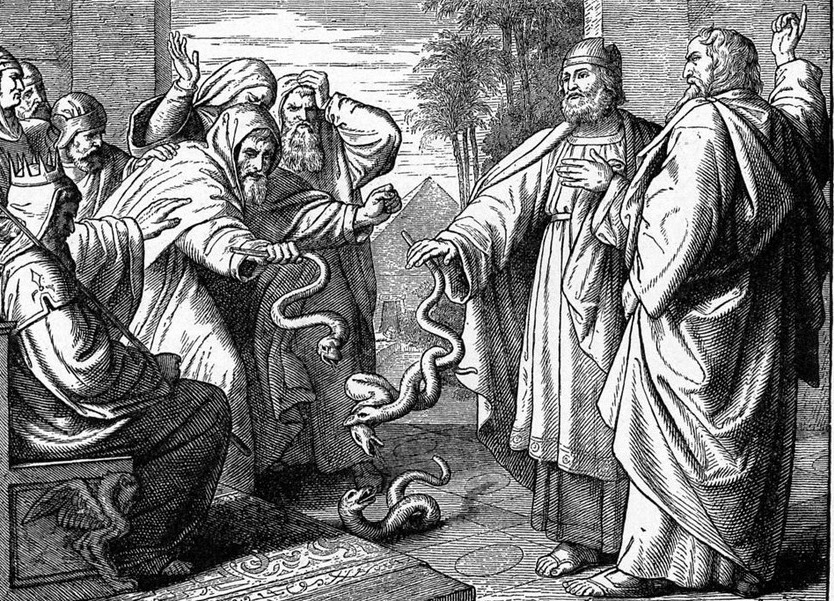
Aaron’s Rod Changed into a Serpent, by Julius Schnorr von Carolsfeld, Charles Foster Bible,1860

They obey God and return to the pharaoh to demonstrate the miraculous sign God gave Moses on Mount Sinai, in which his staff turned into a snake. This time Aaron is holding the staff.10

Then God dictates what Moses must say to the pharaoh the next morning at the Nile, and assigns Aaron to wield the staff to initiate the miracle of the water turning to blood.11 The miracles continue, with Moses repeating God’s words to the pharaoh, and Aaron making the gestures. Clearly Moses can speak upper-class Egyptian correctly. But if he is an insecure introvert, as I proposed in my post Shemot: Not a Man of Words, he needs to know ahead of time what to say, and God tells him.

Then Moses begins adding a few words of his own. After the miracle (or plague) of frogs, the pharaoh tells Moses and Aaron that if they beg God to remove the frogs, he will let the Israelites go make their offerings to God. Moses asks the pharaoh to choose the time for the divine frog extermination, “so that you will know there is none like Y-H-V-H, our God.” (Exodus 8:5-6)

He trusts God to back him up by killing the frogs on the day the pharaoh designates—and God does.

After the fourth plague (arov (עָרֺב) = swarms, mixtures of insects), the pharaoh tells Moses and Aaron that he will let the people make their offerings to God as long as they stay inside Egypt. Apparently on his own initiative, Moses replies:

“It would not be right to do thus, since we will slaughter for Y-H-V-H, our God, what is taboo for Egyptians. If we slaughtered what is taboo for Egyptians in front of their eyes, then wouldn’t they stone us? Let us go on a journey of three days into the wilderness …” (Exodus 8:22-23)

The pharaoh agrees this time, and Moses agrees to ask God to remove the swarms. But he adds:

“Only let Pharaoh not trifle with us again, by not letting the people go to make slaughter-offerings to Y-H-V-H!” (Exodus 8:25)

If Moses is an introvert, then he has probably spent days mulling over what he might say to the pharaoh in various situations. When one of those situations arises, he does not need to wait for either God or Aaron; he can simply deliver one of the replies he practiced. (This is how I have managed to speak up in difficult social situations despite my introversion.)

Moses is also getting used to being listened to. His trust in himself, as well as in God, is increasing.

Bo: Moses transcends himself

After the penultimate plague, three days of utter darkness for all the Egyptians, the pharaoh tells Moses that all the Israelites may go into the wilderness, even the women and children, as long as their livestock stays behind. Moses is now accustomed to the pharaoh bargaining in bad faith, and he has his answer ready.

And Moses said: “You, too, must give into our hand slaughter-offerings and burnt offerings, and we will make them for Y-H-V-H, our God. And also our own livestock will go with us; not a hoof will remain behind.  Because we will take from them to serve Y-H-V-H, our God, and we ourselves will not know what we will serve God [with] until we arrive there.” (Exodus 10:25-26)

The 18th-century commentary Or Hachayim noted: “At any rate, this answer of Moses to Pharaoh was obviously one that Moses invented and is not to be regarded as an instruction given to him by God.”10

The pharaoh loses his temper, possibly because Moses’ answer is obviously an excuse.

Then Pharaoh said to him: “Go away from me! Watch out against seeing my face again, because the moment you see my face you will die!” And Moses said: “You spoke the truth! I will not see your face again!” (Exodus 10:28-29)

Perhaps Moses forgets that God has saved one final plague to inflict upon Egypt. According to many commentators, God hurries to instruct Moses about it before he stalks  out of the pharaoh’s audience chamber.11

Moses then follows God’s new instructions by announcing that at midnight every Egyptian firstborn male, from the pharaoh’s oldest son to the firstborn of cattle, will die. Then he adds something God did not tell him to say.

“And then all these courtiers of yours will come down to me and prostrate themselves to me, saying: ‘Go! You and all the people who follow you!’ And after that I will go.” And he walked away from Pharaoh bahari af. (Exodus 11:8)

bahari af (בָּחֳרִי־אָף) = with the hot nose (an idiom for “in anger”).

Moses’ final words to the pharaoh do not sound like something an introvert rehearsed ahead of time. Carried away by his anger in the moment, Moses says the first thing that comes into his head.

It was standard procedure to prostrate oneself before a king in order to receive permission to speak; Moses and Aaron would have done it at every audience with the pharaoh. Now Moses says that the pharaoh’s courtiers will come to him and prostrate themselves, as if he were a king.12

Pharaoh and his Dead Son, by James Tissot, ca. 1900

It does not happen exactly the way Moses’ inflamed imagination pictures it. At midnight, when the firstborn Egyptians are dying and people are wailing in every Egyptian house, the pharaoh himself summons Moses and Aaron and commands the Israelites to leave Egypt and take their flocks and herds with them.

They march out of Egypt with everything they own, as well as some gold, silver, and clothing “borrowed” from Egyptians. They leave behind a country devastated by God’s ten miraculous plagues, a country in which everyone from pharaoh to commoner acknowledges that the God of Israel is the most powerful god.

The first stage of Moses’ mission, and God’s, has succeeded.

To be continued …


  1. Exodus 5:21.
  2. Rabbi Adin Even-Israel Steinsaltz, The Steinsaltz Tanakh, Koren Publishers, Jerusalem, 2019, quoted in www.sefaria.org.
  3. Exodus 3:19-20.
  4. Rabbeinu Chananel (Rabbi Chananel ben Chushiel), as quoted in other commentaries, translation in www.sefaria.org.
  5. Rabbeinu Bachya (Rabbi Bachya ben Asher, 1255–1340), translation in www.sefaria.org
  6. E.g. Rabbi Abraham ibn Ezra (12th century), Ramban (13th-century rabbi Moses ben Nachman), Chizkuni (a 13th-century compilation), Or Hachayim (by 18th-century Rabbi Chayim ben Moshe ibn Attar).
  7. Rabbi Ovadiah Sforno, translation in www.sefaria.org.
  8. Exodus 7:9-10.
  9. Leviticus 26:41 says that God will welcome the Israelites back “if their foreskin-covered heart humbles itself”. Jeremiah 6:10 says that the ears of the Judahites are “foreskin-covered, and they cannot listen”.
  10. Exodus 7:14-20.
  11. Or HaChayim, by Rabbi Chayim ben Moshe ibn Attar, translation in www.sefaria.org.
  12. E.g. Or HaChayim, ibid.
  13. Or HaChayim, ibid.

Bo: Plague of Darkness

The days are short and dark now, for those of us who live north of 45o in the northern hemisphere. But even at night we do not experience true darkness. A single lamp, a single flame, generates a lot of light.

Pitch darkness, the complete absence of light, means blindness at first, then death. Without light, no plants can live, and no living thing can survive. No wonder the first thing God creates in the book of Genesis is light.

And no wonder darkness is such a frightening plague in this week’s Torah portion, Bo (Exodus 10:1-13:16).

The darkness plague

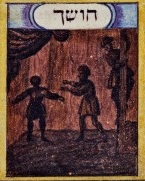
Plague of Darkness, Haggadah by Judah Pinhas, 1747

Pharaoh does not let the Israelites leave Egypt until God has afflicted the land with ten miraculous disasters or plagues. The ninth plague is darkness.

Darkness is the only plague that does not bring death or disease to any living thing. Yet three days of utter darkness alarm Pharaoh and all the Egyptians more than anything but the tenth and final plague: death of the firstborn children.

And God said to Moses: “Stretch out your hand toward the heavens, and choshekh will be over the land of Egypt, a choshekh one can touch.” And Moses stretched out his hand toward the heavens, and there was a dark choshekh in all the land of Egypt for three days. No one could see his brother, and no one could get up from his spot for three days. But for all the Israelites, light was in their settlements. (Exodus 10:21-23)

choshekh (חֺשֶׁךְ) = darkness. (Like the word “darkness” in English, the word choshekh is used not only for the absence of physical light, but also for the absence of enlightenment or goodness.)

What is a darkness one can touch?

Medieval commentators wrote that the darkness was thick—a thing with its own palpable substance. Ibn Ezra wrote: “The Egyptians will feel the darkness with their hands.”1 Ramban described the darkness as “a very thick cloud that came down from heaven … which would extinguish every light, just as in all deep caverns.”2

And Rabbeinu Bachya explained: “The darkness was not a kind of solar eclipse. On the contrary, the sun operated completely normally during all these days. In fact, the whole universe operated normally; the palpable darkness was as if each individual Egyptian had been imprisoned all by himself in a black box. … Once this stage had been reached, God intensified this darkness to the extent that it was felt physically, preventing people from being able to move without ‘bumping’ into darkness at every move they tried to make.”3

Faced with this kind of darkness, the Egyptians stopped moving. No one got up for three days. People in the same room might speak to each other, but they could not help each other. So each one suffered alone; “no one could see his brother” (Exodus 10:23). If the plague had continued for a few additional days, all the Egyptians would have died of thirst by darkness.

19th-century rabbi Hirsch pointed out: “This plague was the most sweeping, in that it shackled the whole person, cutting him off from all fellowship and from all possessions, so that he could move neither his hands nor his feet to obtain the necessities of life.”4

As usual, Pharaoh asks Moses to beg his God to end the plague.

Then Pharaoh summoned Moses … (Exodus 10:24)

How does he summon anyone, when neither he nor any of his servants can get up from his spot”? Perhaps the person who wrote down that verse did not think through the implications of the miraculous darkness. Or perhaps Moses has not left the palace courtyard since raising his hand to summon the darkness, and he can hear Pharaoh calling to him. Being an Israelite, Moses could still see and move, so he walks over to where Pharaoh sits. And he finds out whether Pharaoh is at last willing to let the Israelites go.

Darkness as metaphor

The Hebrew word choshekh, like the English word “darkness”, is used as a metaphor for gloominess, death, ignorance, or evil.

Since darkness means the absence of visible light, it also means ignorance, the absence of enlightenment.

Inform us of what we can say to [God]!
    We cannot lay a case before him from a position of choshekh. (Job 37:19)

And in both Biblical Hebrew and English, light is associated with goodness, while darkness is associated with evil.

They forsake the paths of the upright
    To go in the ways of choshekh. (Proverbs 2:13)

Pharaoh’s darkness

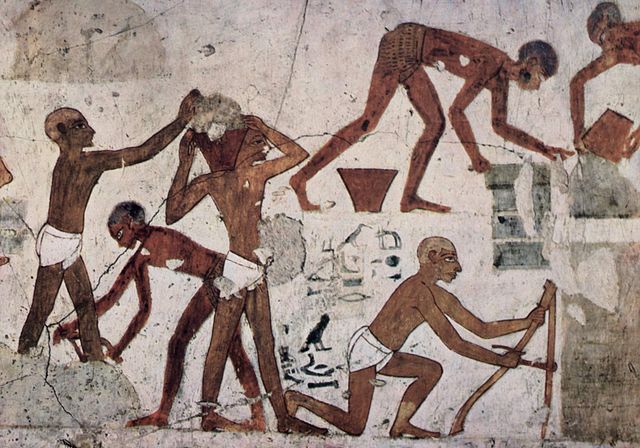
When Pharaoh’s father was on the throne (in Exodus 1:8-2:22), he conscripted all the Israelite men to do corvée labor on royal building projects.5 Corvée labor was common in the Ancient Near East, as common as governments conscripting their citizens into military service in modern times. But in the book of Exodus, the Israelites’ term of service never ends, under either the first pharaoh or his successor. Then God gets involved.

Making Bricks, tomb of Vizier Rekmire, 1459 BCE

And the Israelites groaned under the servitude and they cried out. And their plea for rescue from the servitude went up to God. And God listened to their moaning … (Exodus 2:23-24)

The solution God devises is to send Moses to act as a prophet, and the plagues to force the new pharaoh to recognize the power of God and let the Israelites leave Egypt.

With each plague, Moses asks Pharaoh to let the Israelites go for at three-day walk into the wilderness to worship their God. Each time, Pharaoh refuses to give them even a few days off. They might as well be slaves.

If being in the dark is being unenlightened, blind to reality, Pharaoh always lives in darkness. He believes he can mistreat the Israelites without any personal consequences. He believes that their God, who keeps afflicting Egypt with disastrous miracles, cannot really destroy him or his kingdom.

Earlier in this week’s Torah portion, after Moses warns the court about the eighth plague, locust swarms, Pharaoh’s courtiers urge their king to give up.

And Pharaoh’s courtiers said to him: “How long will this be a trap for us? Let the men go so they can serve Y-H-V-H, their god! Don’t you realize yet that Egypt is lost?” (Exodus 10:7) 

But Pharaoh still tries to bargain. He asks Moses which Israelites would go to worship Y-H-V-H, and Moses replies:

“With our young and with our old we will go, with our sons and with our daughters we will go, with our flocks and with our herds we will go, because it is our festival for God.” (Exodus 10:9)

Pharoah insists that he will let only the men go, so he and Moses are at an impasse again, and God sends the plague of darkness.

If darkness is a metaphor for evil, Pharaoh fits the bill. Not only does he refuse to give the Israelites even a few days off from work, he also increases their workload so it is impossible for them to meet their quotas.8 This gives his overseers a reason to whip them at any time.

Moses warns Pharaoh about each plague, but Pharaoh refuses, again and again, to let the Israelites go. This harms the native Egyptians, who suffer from thirst, vermin, agricultural collapse, and multiple diseases.

During the plague of darkness, Pharaoh summons Moses and says:

“Go, serve Y-H-V-H! Only your flocks and your herds must be left behind. Even your little ones may go with you!” (Exodus 10:24)

Pharaoh is still bargaining, but he has made a concession. Although he knows the Israelites will not come back, he is now willing to give up his free labor force—as long as they leave their livestock behind. Of course, he knows that the animals are the Israelites’ wealth and means of livelihood. And he probably doubts that they will get very far through the desert without at least the milk from their cattle, sheep, and goats.

But Pharaoh may also be considering the welfare of the native Egyptians for the first time. All of their livestock died during the fifth plague, cattle disease.5 The eighth plague, locust swarms, consumed the last green leaves in Egypt,6 so the Israelite livestock have nothing to eat (except for any hay the Egyptians might have stockpiled inside barns). But at least the Egyptians could eat the Israelites’ animals. The meat would keep them alive for a while, until Pharaoh came up with another plan.

Moses, however, refuses to make any concession to Pharaoh. He replies:

“You, even you, must place slaughter offerings and rising offerings in our hands, and we will make them for Y-H-V-H, our God. And also our property must go with us; not a hoof can remain behind …” (Exodus 10:25-26)

Then God steps in—or perhaps what steps in is Pharaoh’s pride and the power of habit.

Then Y-H-V-H strengthened Pharaoh’s mind, and he did not consent to let them go. (Exodus 10:27)

Three days of blindness and immobility are not enough to make Pharaoh completely change his mind. With the help of a little mind-hardening from God, Pharaoh holds out until his own firstborn son dies in the tenth plague, the one that God has planned all along as the finale.7

Does Pharaoh deserve the death of his firstborn son? Yes, the classic commentary answered, because Pharaoh is evil. (His son, and the other Egyptian firstborn and their parents, may be innocent. But the tales in the Torah focus on individual characters, using the reset of the people as background.)

Metaphorically speaking, Pharaoh always sits in darkness. No wonder he qualifies his permission to let the Israelites go, even after the life-threatening plague of darkness. No wonder God can easily harden his attitude so he refuses to let the Israelites take their livestock with them.

Darkness itself blinds and paralyzes him, but Pharaoh does not change his attitude. After all, he has lived in darkness his whole life.


One of the participants in a class I am teaching on Exodus pointed out that if you state a position once and get negative feedback, it is not too hard to change your mind. But if you stick with your unpopular opinion, it gets harder to change every time it is questioned. You find yourself fiercely defending your position to others—and refusing to reexamine it yourself.

Pharaoh’s mind keeps hardening because he is human. God’s assistance in hardening it is the human nature we are endowed with.

May we all pay attention to what we are doing, and seek enlightenment lest we slip into utter darkness.


  1. Abraham Ibn Ezra, 12th century, translation in www.sefaria.org.
  2. Ramban (Rabbi Moshe Nachman), 13th century, translation in www.sefaria.org.
  3. Rabbeinu Bachya ben Asher ibn Chalavah, 1255-1340, translation in www.sefaria.org.
  4. Rabbi Shimshon Rafael Hirsch, 19th century, The Hirsch Chumash: Sefer Shemot, translated by Daniel Haberman, Feldheim Publishers, Jerusalem, p. 144.
  5. The pharaoh in Exodus 1:8-2:22 also attempted to reduce the population of Israelites in Egypt by commanding the murder of male Israelite infants.
  6. Exodus 10:15.
  7. See God’s speech to Moses in Exodus 4:21-22.
  8. Exodus 1:8-22.

Pesach: Four Questions

Question: Why do Jews celebrate Passover?

Answer: To teach children the story of the exodus from Egypt.

This answer is in both the Torah and the Talmud, along with the need for adults to recall the story of liberation in an unforgettable way.

Two rituals in Exodus

Passover/Pesach begins this Wednesday at sunset. Jews around the world will gather at dinner tables and perform an elaborate ritual that is quite different from the two observances required in the book of Exodus.

In the book of Exodus, God orders the Israelites to gather in their houses for dinner on the 14th of the month of Nisan, which begins at sunset. That night, God will afflict Egypt with the last of the ten plagues: death of the firstborn. Each Israelite household must slaughter a year-old male lamb or goat; smaller households should combine and share one.

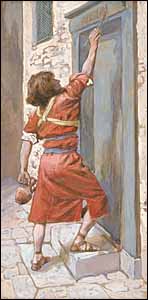
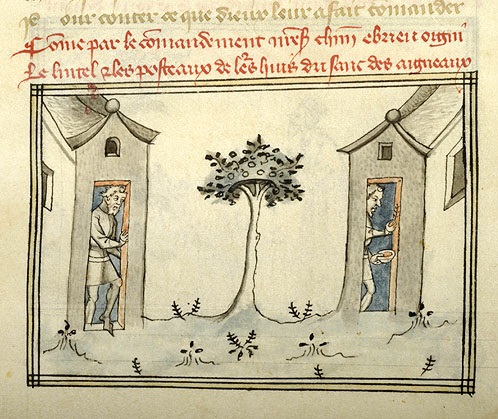
Painting the Blood, History Bible, Paris, c. 1390

And they must take some of the blood, and they must put it on the two doorposts and on the lintel of the houses where they will be. And they must eat the meat on this night, roasted in fire, and matzot on bitter herbs they must eat. You must not eat it raw, or cooked by boiling in water, but rather roasted in fire, its head on its lower legs and on its entrails. And you must not leave any for yourselves until morning; and [any] leavings from it in the morning you must burn in the fire. And thus you must eat it: your hips girded, your sandals on, and your staffs in your hand. And you must eat it in haste. It is a pesach for God. (Exodus/Shemot 12:7-11)

matzot (מַצּוֹת) = plural of matzah (מַצָּה) = unleavened bread; dry flatbread baked quickly to avoid sourdough action.

pesach (פֶּסַח) = “Passover” offering. (From the verb pasach, פָּסַח = hop (in 1 Kings 18:21); protect (in Isaiah 31:5); skip over, spare (in Exodus 12:23).)

Presumably the Israelites were enacting this ritual on the first night of Passover when Exodus was written down.  As God’s instructions continue, the ritual about daubing blood and eating a whole lamb standing up is followed by seven days of eating matzot:

Seven days you must eat matzot; indeed, on the first day you must remove the leaven that is in your houses, since any soul eating leaven must be cut off from Israel from the first day through the seventh day. (Exodus 12:14-15)

Pilgrimage festivals ceased after the destruction of the Second Temple in Jerusalem in 70 C.E. But the seven days without leaven is still a widespread Jewish observance during the week of Passover.

The Seder Table, Ukrainian print from Lubok, 19th century

However, painting your door frame with blood, eating a whole lamb including the head and entrails, and/or eating standing up with a staff in hand are rare today. Instead, on the evening of Nissan 14 (and sometimes on subsequent evenings during the week of Passover), Jews sit around the dinner table going through a Haggadah (הַגָּדָה = telling), a guide to saying blessings, singing songs, telling traditional stories, doing show-and-tell rituals, and eating ritual foods (as well as dinner). The event is called a seder (סֵדֶר= order, arrangement) because all these ritual acts are done in a prescribed order.

The reason for doing this is not only to remind ourselves of the story about God bringing us out of slavery in Egypt, but to teach it to our children.

Children in the Torah

The section of the Haggadah called “The Four Sons” or “The Four Children” paraphrases questions and answers in the Torah, imagining a different type of child corresponding to each answer.1 Three of the four biblical instructions on what to tell children are given in Exodus on the eve of the final plague and the liberation from Egypt:

When a child asks why we paint blood on our doorframes every year on Nissan 14, say:

“It is a pesach slaughter-sacrifice for God, who pasach over the houses of the Israelites in Egypt when [God] afflicted the Egyptians, but saved our households.” (Exodus 12:26)

When everyone has to eat matzot instead of leavened bread for a week, say:

“On account of what God did for me, when I went out of Egypt.” (Exodus 13:8)

When a firstborn son is ransomed in a ritual at the beginning of Passover, say:

“With a strong hand God brought us out from Egypt, from the house of slavery …” (Exodus 13:14)

The first of the Four Children in the Haggadah is based on the book of Deuteronomy, when Moses posits a son who asks about all the rules God has given. What Moses (unlike the Haggadah)2 tells you to answer begins:

“We were slaves to Pharaoh in Egypt, and God brought us out …” (Deuteronomy 6:20)

But the biblical questions and answers are not enough. Before the Four Children section, the Haggadah makes sure children are engaged with a section called “The Four Questions”.

The Four Questions in the Talmud

Most of the traditional Haggadah3 is described in the Babylonian Talmud tractate Pesachim, including the Four Questions, which appear in the older part of the tractate, the mishnah.4  The mishnah dates to the early third century C.E. and records what the Israelites in Babylonia were already practicing; therefore the Four Questions, like the Four Sons, has been an important part of the Passover ritual for about 2,000 years.

And for about 2,000 years, the purpose of the Four Questions has been to make the children at the seder pay attention.

Asking the Four Questions, German Haggadah c. 1460

All four questions are amplifications of the basic question:

Why is this night different from all other nights?

But the content of the four amplifications has changed somewhat since Talmudic times.

The original Four Questions (or amplifications) in the Talmud are:

On all other nights, we eat leavened bread or matzah, but on this night only matzah.

On all other nights, we eat other vegetables, but on this night only bitter herbs.

On all other nights, we eat meat roasted, stewed, or boiled, but on this night only roasted.

On all other nights we dip [vegetables] once, but on this night we dip twice.

The mishnah continues: And according to the son’s understanding, his father instructs him.”5 (Perhaps this remark inspired the creation of the section traditionally called “The Four Sons”.)

By the 10th century C.E., the question about how the meat is cooked had been dropped from the list, and replaced with a different question:

            On all other nights we eat sitting up or reclining, but on this night only reclining.

Reclining instead of sitting up was already a requirement by the time the mishnah of Pesachim was written.6 The Talmudic rabbis cited in the gemara (the part of a Talmud tractate written during the 3rd through 5th centuries C.E. as commentary on the mishnah) argued about the technicalities of reclining. They agreed that:

Lying on one’s back is not called reclining. Reclining to the right is not called reclining, as free men do not recline in this manner. People prefer to recline on their left and use their right hand to eat, whereas they find it more difficult to eat the other way. (Pesachim 108a)

After some argument, they also agreed that reclining was necessary not only while eating matzah, but also while drinking each of the four cups of wine, since only free and independent people got to recline while drinking—the opposite of “We were slaves” in the retelling of Exodus. But nobody had to recline while eating the bitter herbs.

When the requirement about reclining replaced the method of cooking meat in the Four Questions, the order of the questions also changed.6 During the last 1,000 years, the most common order has been:

Why is this night different from all other nights?

  1. … but on this night we dip them twice.
  2. … but on this night only matzah.
  3. … but on this night only bitter herbs.
  4. … but on this night only reclining.

Today, after we pour the second cup of wine and come to the page in the Haggadah with the Four Questions, all the questions are sung by the youngest person at the table who can manage it. Some children relish the job; others complain. But someone has to do it.

And if even his wife is not capable of asking or if he has no wife, he asks himself. And even if two Torah scholars who know the halakhot of Passover are sitting together and there is no one else present to pose the questions, they ask each other. (Pesachim 116a)

The Talmud offers additional ways to prompt children to ask about the unusual things they see in the dining room. Following Rabbi Akiva, Pesachim recommends giving the children roasted grains and nuts, “so that they will not sleep and also so they will ask the four questions at night.” (Pesachim 109a)

Another technique was to grab the matzot and wolf them down, “so that, due to the hasty consumption of the meal, they will not sleep and they will inquire into the meaning of this unusual practice.” (Pesachim 109a)

One prompt in the Talmud is to actually remove the dinner table from the room before the main meal!

Why does one remove the table? The school of Rabbi Yannai says: So that the children will notice that something is unusual and they will ask: Why is this night different from all other nights? The Gemara relates: Abaye was sitting before Rabba when he was still a child. He saw that they were removing the table from before him, and he said to those removing it: We have not yet eaten, and you are taking the table away from us? Rabba said to him: You have exempted us from reciting the questions of: Why is this night different [ma nishtana], as you have already asked what is special about the seder night. (Pesachim 115b)

Another rabbi quoted in Pesachim, Rab Shimi bar Ashi, explained:

Matza must be placed before each and every participant at the seder. Each participant in a seder would recline on a couch at his own personal table. Likewise, bitter herbs must be placed before each and every participant, and ḥaroset must be placed before each and every participant. And during the seder, before the meal, one shall remove the table only from before the one reciting the Haggadah. The other tables, which correspond to the seder plates used nowadays, are left in their place. (Pesachim 115b)


I have never been to a Passover seder in which each person reclines on a couch at a separate table, as at an ancient Greek symposium. And since we are all sitting at one big table (leaning to the left uncomfortably at the appropriate times), I have never seen the table removed.

But I have witnessed other devices to keep children—and even adults—awake and asking questions. If you were leading a seder, what would you do?


  1. See my post Pesach: Changing Four Sons.
  2. The reply to the first son (or child) in the Haggadah is to summarize only the rabbinic rulings (halakhah) about Passover, up to the ban on eating anything after the afikomen, the final piece of matzah.
  3. Modern Jews have added new ritual elements to the seder, and therefore new pages of text and songs in the Haggadah, while retaining all the important elements of the traditional Haggadah that is still used by more orthodox Jews.
  4. Pesachim 116a. (All translations from tractate Pesachim in this post are from The William Davidson Talmud on www.sefaria.org.) The mishnah in each tractate of the Talmud is the oral law collected by Yehudah HaNasi at the beginning of the third century CE.  Later rabbinic commentary on the mishnah, the gemara, was added over the next few centuries.
  5. Pesachim 116a.
  6. Pesachim 108a. The question about reclining is added to the Four Questions in the writings of both Saadiah Gaon  (10th-century rabbi Saadiah ben Yosef Gaon) and Rambam (12th-century philosopher Moshe ben Maimon, a.k.a. Maimonides).
  7. This is the order of the four questions according to Saadiah Gaon, Rambam, and the first extant printed haggadah (Soncino, 1485).

Bo & Beshalach: Winds

A plague of locusts descended on Egypt in last week’s Torah portion, Bo (Exodus 10:1-13:16). A swarm of Egyptian charioteers pursues the Israelites in this week’s Torah portion, Beshalach (Exodus 13:17-17:16). Both the locusts and the charioteers are frightening in their numbers and  destructiveness—and the God character controls both hordes with winds, to spectacular effect.

Locust winds

The eighth of the ten plagues the God character creates in Egypt is a plague of locusts that eat all the vegetation remaining after the previous plagues.

And Moses held out his staff over the land of Egypt, and God guided a ruach kadim through the land all that day and all the night. And in the morning the ruach hakadim carried in the locust swarms. And the locusts went up over the whole land of Egypt and settled down very heavily throughout the territory of Egypt. There were no locust swarms just like it before, and there will be none after. (Exodus 10:13-14)

ruach (רוּחַ) = wind; spirit, disposition, mood.

ruach kadim (רוּחַ קָדִים), ruach hakadim (רוּחַ הַקָּדִים) = wind from the east; dry east wind.

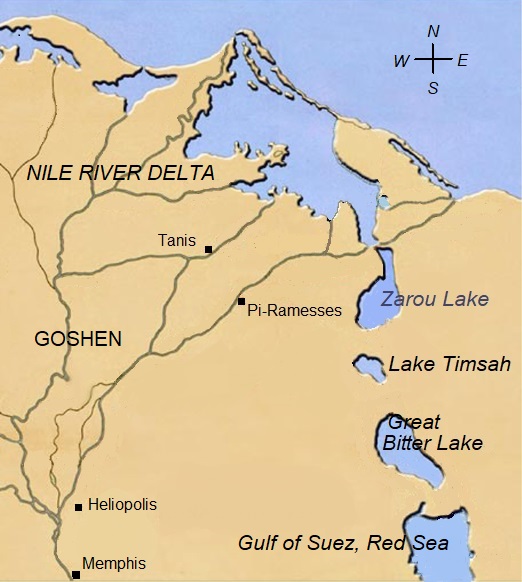
Actual desert locusts in northern Africa and southwestern Asia (Schistocera gregaria) breed in areas where there has been sufficient rainfall (to moisten the ground for egg-laying) and vegetation (for the larvae to eat). The breeding grounds in the early spring, when the locust plague in Exodus occurs (see map above) are different from the breeding grounds in summer. Adult locusts congregate into swarms when there is enough vegetation. They can fly short distances, but for long distances they take advantage of winds, catching a ride only on warm, relatively humid winds. Locust swarms from winter and spring breeding grounds around the Red Sea would need to catch a warm wind from the south to southeast to reach Egypt to the north.1

So why does the Torah say the wind that carries the locusts into Egypt is a ruach kadim, a dry east wind? One theory is that the Israelite wrote down this story was thinking in terms of winds in Canaan or Judah. When a wind brings disaster there, it is a dry wind from the eastern desert.

The God character ends the plague of locusts by changing the direction of the wind.

And God turned around a very strong ruach yam, and it lifted the locusts and blew them toward the Yam Suf. Not one locust remained in all the territory of Egypt. (Exodus 10:19)

yam (יָם) = sea, Mediterranean Sea; west.

ruach yam (רוּחַ יָם) = wind from the sea; wind from the west.

suf (סוּף) = reed, reeds, water plants.

Yam Suf (יָם סוּף) = Sea of Reeds; Red Sea.

If the God character reverses the wind from the southeast, it becomes a wind from the northwest. A strong wind coming down from the Mediterranean northwest of Egypt would indeed blow locust swarms in Egypt back toward the Red Sea or the Sea of Reeds.

The important point in the book of Exodus is that God controls the locust plague, bringing the devouring swarms into Egypt with one wind, and removing them with another.

The Hebrew Bible also uses the word for wind, ruach, to refer to someone’s mental spirit, ranging from calm wisdom  to insane jealousy or rage. And in the land of Canaan, dry desert winds were dangerous because they stripped crops, dried up ponds, and made people sick. Moist winds from the Mediterranean left dew in the morning that helped keep plants alive during the summer.

So a ruach kadim could be someone’s bad attitude or a dangerous mood—which plagues any people nearby like a swarm of locusts. A ruach yam could represent someone’s pleasant and kindly spirit, which gives others comfort and relief.

Chariot winds

Pharaoh lets the Israelites leave Egypt after God’s final plague, the death of the firstborn.2 On the second day of their exodus from Egypt, just when they thought they were free, the God character makes Pharaoh change his mind. God tells Moses:

“I will strengthen Pharaoh’s heart, and he will chase after them. Then I will be honored by Pharaoh and by all his forces, and the Egyptians will know that I am God.” (Exodus 14:5)

The God character in this part of Exodus cannot resist staging one more dramatic miracle to drive the point home that the God of Israel is more powerful than any other.3

And the Egyptians chased after them and caught up with them [when they were] encamped on the yam, all of Pharaoh’s chariot horses and riders and his army … (Exodus 14:9)

The Israelites panic when they see charioteers approaching, but God halts the action for the night.  The supernatural pillar of cloud and fire that has led the Israelites to the shore of the Sea of Reeds circles around their camp and stands between them and the Egyptians, so they cannot get any closer.4

Then Moses held out his hand over the yam, and God made the yam go with a strong  ruach kadim all night, and [God] made the yam dry up, and the waters split. Then the Israelites came through the middle of the yam on dry ground (Exodus 14:21-22)

When a strong east wind blows into Egypt or Israel, the air is so dry that ponds can evaporate and shallow lakes can shrink in an afternoon. Blowing sand increases the effect. Was the biblical Yam Suf shallow enough so a strong east wind could expose part of its bed–enough for people and livestock to walk across on the mud?

Yes, if two or more of the lakes between the Sinai peninsula and Egypt proper were connected during Egypt’s Nineteenth Dynasty, as some scholars claim. No, if it was the Gulf of Suez on the Red Sea, as other scholars believe.

If Yam Suf refers to the Red Sea, the water would be too deep for an east wind to dry out a path across it. But the narrative gives two different accounts of the depth of the yam before God parted it. First it describes an east wind drying up the sea. Then the narrator says:

Then the Israelites came through the middle of the yam on dry ground, and the waters were a wall for them on their right and on their left. (Exodus 14:22)

Many of us picture walls of water rising almost vertically from the dry sea bed, as in this illustration:

The Waters Are Divided, by James J.J. Tissot, 1896-1902

An east wind drying up part of a shallow lake does not make walls of water. But after the Egyptian army has drowned, the Israelites on the other side rejoice by singing an ancient song or poem. (We know Exodus 15:1-18 dates to a much earlier time than the narrative because the Hebrew is older.) In this poem, the wind comes not from the east, but from God’s nose. And instead of exposed mud at the bottom of a shallow sea, the deep waters congeal or freeze solid.

And by a ruach from your nostrils the waters piled up;

            The watercourses stood up like a dam.

            The deeps congealed in the heart of the yam. (Exodus 15:8)

Nevertheless, whoever wrote the narrative that precedes this poem knew about harsh, dry east winds, and therefore could easily imagine walking across dry ground in the middle of a sea.

If the “Sea of Reeds” is a shallow salt lake, the miracle would lie in the inability of the Egyptians to follow the Israelites an hour or two later.

This week’s Torah portion says that the Egyptian charioteers followed the Israelites as far as the middle of the sea—on dry ground that was probably still muddy—and then were drowned by the sudden return of the water.

Then God made the wheels of their chariots fall off, and they moved laboriously. And the Egyptians said: “Let me flee from before Israel, because God is fighting for them against Egypt!” Then God said to Moses: “Hold out your hand over the yam, and the waters will come back over the Egyptians, over their chariots and over their riders!” And Moses held out his hand over the yam, and the yam came back to its normal position. And the Egyptians were fleeing from meeting it, but God shook the Egyptians off (their chariots) in the middle of the yam. The waters returned and covered the chariots and the riders and all Pharaoh’s soldiers coming in after them into the yam; not one of them remained. (Exodus 14:25-28)

The Egyptians Are Destroyed, by James J.J. Tissot, 1896-1902

The narrative does not say how God made the waters return to their normal level so quickly. But the poem that follows it says:

You blew with your ruach; the yam covered them;

            They sank like lead in the majestic waters. (Exodus 15:10)

The ancient poem tells us the wind from God’s nostrils opens a path through the sea and closes it again. The later narrative says God summons an east wind to expose the sea bed, and then makes the waters return through some unknown means.

Either way, the Yam Suf opens or closes according to God’s whim. And the word ruach can mean mood or spirit as well as wind. In the Torah portion Beshalach, the God character rescues the Israelites and drowns the Egyptians in a spirit of pride and determination to demonstrate superior power.


In the story of the plague of locusts, the God character dooms all the innocent people who stay in Egypt to a year of famine. In the story of crossing the Sea of Reeds, God dooms the army unit that pursues the Israelites to instant death.

But the God character’s objectives are achieved. The Israelites are free to march on to Canaan, and both the Egyptians and the Israelites know God is supreme.

And Israel saw the great power that God used against Egypt, and the people feared God and had faith in God and in [God’s] servant Moses. (Exodus 14:31)

Imagine you were an anthropological god and you wanted to rescue a downtrodden ethnic group from one country, motivate it to travel to another country, and make it the ruling class there. Could you formulate a proposal that killed fewer innocent people than the divine plan in Exodus?


  1. World Meteorological Organization, “Weather and Desert Locusts”, https://library.wmo.int/doc_num.php?explnum_id=3213#:~:text. In the book of Exodus, the last four plagues take place in the early spring.
  2. Exodus 12:29-32.
  3. See my post: Va-eira: Pride and Ethics.
  4. See my post: Beshalach: Pillar of Cloud and Fire.

Bo: Eyes and Swarms

Ten “plagues”, or devastating miracles, destroy the land of Egypt bit by bit in the book of Exodus, until the pharaoh finally acknowledges the God character’s superior power and gives the Israelites unconditional permission to leave. Last week’s Torah portion, Va-eira (Exodus 6:2-9:35), ends with the seventh plague: hail. (See my post: Va-eira: Hail That Failed.)

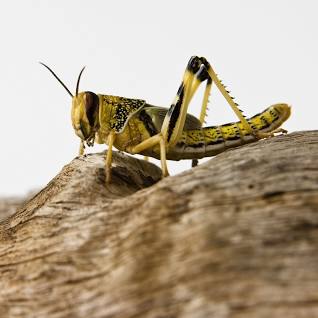
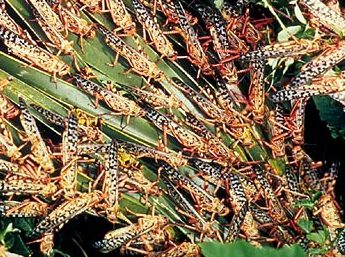
Desert locust: Schistocera gregaria

The eighth plague, locusts,1 opens this week’s Torah portion, Bo (Exodus 10:1-13:16). First Moses and Aaron tell Pharaoh:

“Thus says Y-H-V-H, the god of the Hebrews: How long do you refuse to humble yourself before me? Release my people so they will serve me! Because if you refuse to release my people, here I am, bringing arbeh in your territory tomorrow!” (Exodus/Shemot 10:3-4)

arbeh (אַרְבֶּה) = locust swarm(s); the desert locust Schistocera gregaria.

Then they deliver a practical threat and two frightening images. The practical threat is that the plague of locusts will devour every green thing in Egypt left after the hail, leaving the human population without food.2

Before and after the practical threat, Moses and Aaron transmit God’s frightening images.

Eyes, up and down

The first image conjures blindness, like the plague of darkness that will follow the locust plague.

“And it [the locust  swarm] will conceal the ayin of the land, and nobody will be able to see the land …” (Exodus 10:5)

ayin (עַיִן) = eye; view; spring or fountain.

After Pharaoh refuses to let the Israelites leave, the locust plague does exactly that.

And it concealed the ayin of the whole land, and it darkened the land and ate up all the green plants of the land and all the produce of the trees that the hail had left. Then nothing remained, nothing green remained on the trees or in the plants of the field, in the whole land of Egypt. (Exodus 10:15)

What does the word ayin mean in this story? The Hebrew Bible frequently uses ayin (most often in its duplex form, eynayim, עֵינַיִם = pair of eyes) to mean “view” or “sight”. Therefore many classic commentators assumed the Torah meant that the view of the land was blocked by the hordes of locusts. After all, the first reference to “the ayin of the land” is immediately followed by “nobody will be able to see the land”. If the locust swarms blanket every surface when they land, it would be as impossible to see through them as it is to see through the total darkness the Egyptians experience in the ninth plague.

On the other hand, the phrase “the ayin of the land” occurs only three times in the Hebrew Bible: twice in this week’s Torah portion (see above), and once in Numbers 22:5 (see below). According to contemporary commentator Gary Rendsburg, the rarity of this phrase means it is probably an adaptation of a common Egyptian phrase, “the eye of Ra”, which referred to either the sun (since Ra was the sun god) or the land of Egypt (which belonged to Ra). He wrote that Onkelos, who translated the Hebrew Bible into Aramaic in the second century C.E., inserted the word for “sun” in both phrases: “… ‘the eye of the sun of the land’ in 10:5 and … ‘the eye of the sun of the whole land’ in 10:15.”  Rendsburg suggested that Israelite readers would understand that the plague of locusts caused “the worst possible chain of events for the Egyptian nation, the disappearance of their omnipresent sun-god Ra”.3

Then what about the phrase “it darkened the land” in the second reference to “the ayin of the land”? When a locust swarm is in the air, it would not only block anyone underneath it from seeing the sun above, but also cast a broad shadow. According to Chizkuni,4 the shade cast by the swarm darkens the earth below.

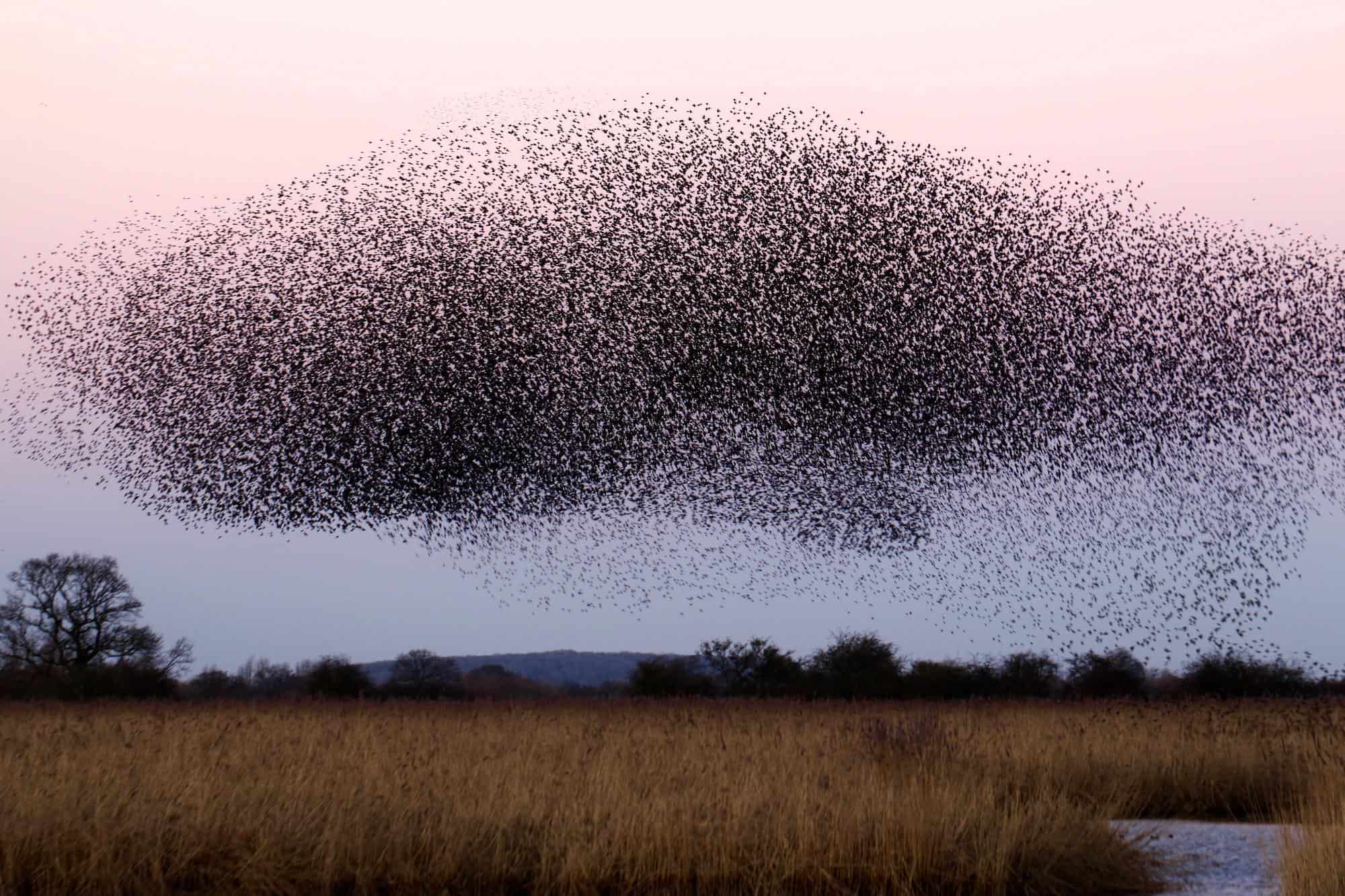
Locust swarm, photo by James Wainscoat

However, the context of the only other biblical appearance of the phrase “the ayin of the land” refers to a swarm or horde on the ground. In the book of Numbers/Bemidbar. Balak, the king of Moab, is alarmed because Moses has led a horde of Israelites north from Egypt, and they are encamped on the border of his country. This king says to his advisors:

“Now the throng will lick bare everything around us like an ox licks bare the grass of the field!” (Numbers 22:4)

This is the behavior of locusts on the ground eating up the vegetation, not of locusts on the wing blocking the sun. King Balak then sends a message to the prophet-sorcerer Bilam, saying:

“Here are people [who] left Egypt, and hey! They conceal the ayin of the land, and they are living next to me! So now please come and put a curse on this people, because they are too strong for me …” (Numbers 22:5-6)

In other words, Balak sees the Israelites covering the ground like a giant swarm of locusts; and like locusts they are powerful because of sheer numbers.

Swarms: inside and out

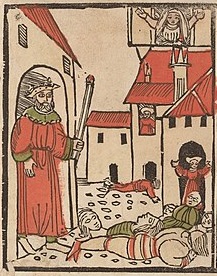
Plague of Locusts, Nuremberg Chronicle, 1493

After the practical warning that the coming locust swarms will consume Egypt’s entire food supply, Moses and Aaron transmit a second frightening image to Pharaoh—one that conjures an gruesomely intimate invasion.

“And they will fill your houses, and the houses of all your courtiers, and the houses of all Egyptians …” (Exodus 10:6) 

It is not the first such invasion in the contest between the God character and Pharaoh. Before the second plague, frogs, God orders Moses to tell Pharaoh:

“And the Nile will swarm with frogs, and they will go up and come into your palace and your bedroom and climb into your bed, and go up into your courtiers’ houses and your people’s, and into your ovens and your kneading bowls.” (Exodus 7:28)

The fourth plague is arov, עָרֹב = swarms of insects (traditional translation), mixed vermin (translation based on the fact that the root ערב means “mixture”). Again God says:

“… and the arov will fill the houses of the Egyptians, and even the ground they stand on.” (Exodus 8:17)

Swarms of unpleasant animals are bad enough outside. Being unable to escape them even inside your own personal space is a horrifying invasion.


The plague of locusts both signals the coming plague of darkness, and echoes the earlier plagues of frogs and swarms of vermin. It also completes the destruction of Egypt, by eliminating the last sources of food. After Moses and Aaron warn Pharaoh about the locust plague,

Pharaoh’s courtiers said to him: “How long will this one be a snare for us? Release the men so they will serve Y-H-V-H, their god! Don’t you know yet that Egypt is lost?” (Exodus 10:7)

Locusts feeding, photo by Compton Tucker, NASA

Pharaoh is so invested in his power struggle with God and Moses that he is past the point of caring whether his country is lost. But his courtiers have a different motivation. The first seven plagues have already ensured the economic downfall of Egypt; the loss of more crops will only mean that landowners lose more wealth as they feed their people during the coming famine. They have nothing to prove about who has more power. Some of Pharaoh’s courtiers have already acknowledged God’s power by bringing in their field slaves and livestock before the seventh plague, hail.5

So why do Pharaoh’s courtiers beg him to let the Israelites go? Probably because they cannot bear the thought of one more plague, especially a plague that will blot out their sight of the sun and the ground, and will once again invade even their bedrooms.


Over the past twenty years I have had problems I could deal with, and two persistent troubles that drove me crazy because I felt constantly under attack from well-meaning people who could not understand me and would not leave me alone. I was plagued by their incessant arguments and their refusals to accommodate me. These plagues darkened my life so I despaired of seeing sunlight. They invaded my home because I had to keep returning their phone calls. All I wanted was to be free of them.

I cut myself loose from one plague by resigning from my position. At the time, it seemed as hard for me to give up on that part of my life as it was for Pharaoh to give up and let the Israelites go. I waited out the other plague until my unwitting tormenter died. In that case, I was more like Pharaoh’s courtiers, whose power was limited.

Now that I am free, I hope that if I see another plague coming, I will be able to cut my losses right away. But I also pray that I will have empathy for others who suffer from unrelenting troubles. It is painfully hard to make a major change to improve your life, especially when you can see no illumination, and you have no safe place of refuge.


  1. When a wind brings multiple swarms of desert locusts into the same large region, it is still called a “plague” of locusts. (World Meteorological Organization, “Weather and Desert Locusts”, https://library.wmo.int/doc_num.php?explnum_id=3213#:~:text)
  2. Exodus 10:5.
  3. Gary Rendsburg, “YHWH’s War Against the Egyptian Sun-God Ra”, https://www.thetorah.com/article/yhwhs-war-against-the-egyptian-sun-god-ra.
  4. Chizkuni is a compilation of Torah commentary and insights written by 13th-century Rabbi Hezekiah ben Manoah.
  5. Exodus 9:13-26. See my post: Va-eira: Hail That Failed.

Va-eira: Hail That Failed

Is it ethical to harm or even kill innocent people? The liberal answer is no. Someone with more traditional morality might answer: no … unless you need to do it for the sake of your own people, whose welfare comes first.

In terms of either answer, the God of Israel and the pharaoh of Egypt are unethical in this week’s Torah portion, Va-eira (Exodus 6:2-9:35).

The God character wants the Israelites to walk out of Egypt and serve God as the new rulers of the land of Canaan. The pharaoh character wants the Israelites to stay in Egypt as forced labor making bricks and building cities for him. The God character also wants to be acknowledged as the most powerful force in the world, while the pharaoh wants to keep every iota of power he already has.1

Following God’s instructions, Moses repeatedly offers Pharaoh what sounds like a compromise: that Pharaoh give the Israelites a three-day vacation to hold a festival for their God in the wilderness.2 (Meanwhile Moses informs the Israelites that the real goal is a new life in a different country.) Pharaoh refuses, and the God character responds by devastating Egypt with a series of “plagues”: miraculous disasters. The plagues devastate the country and harm or kill human beings, including both the Israelite immigrants God has adopted, and Pharaoh’s native Egyptians.

The Ten Plagues, Erlangen Haggadah, by Judah Pinchas, 1747

Before the seventh plague, hail, God tells Moses to pass on this information to Pharaoh:

“For by now shalachti my hand, and you, you and your people, would be wiped off the earth by bubonic plague. However, on account of this I have let you stand: to show you my power, so that my name will be made known over all the earth.” (Exodus 9:15-16)

shalachti (שָׁלַחְתִּי) = I could have sent forth, I could have released. (A kal form of the verb shalach, שָׁלַח = sent, let go. Throughout this week’s Torah portion, forms of the verb shalach are used both when God releases a plague, and when Moses and Pharaoh talk about releasing, or not releasing, the Israelites.)

In other words, God is refraining from simply killing every native Egyptian. The purpose of sending one plague after another is to spread the word about God’s awesome power, and to eventually make Pharaoh so terrified that he gives in and lets the Israelites go out into the wilderness.

Pharaoh’s strategy is to keep refusing to give the Israelites permission to go. He assumes they would never leave Egypt without his permission, probably because then his army would kill them.3

Plague of Death of the Firstborn, Erlangen Haggadah, by Judah Pinchas, 1747

So much is at stake that neither of the God character nor the pharaoh is willing to stop them. Only after the tenth plague, the death of the firstborn, does Pharaoh concede defeat.

Yet these entrenched enemies soften their positions briefly in this week’s Torah portion, in the story of the seventh plague: hail.

Ethics of a god

The first three plagues in the book of Exodus/Shemot afflict everyone in Egypt indiscriminately. When God turns the Nile into blood, the Israelites as well as the native Egyptians are affected by the shortage of both drinking water and fish.4 The second plague, frogs, and the third, lice, also affect everyone in Egypt without exception.

Then the God-character seems to notice that his demonstrations of power are causing suffering to the people he plans to rescue. Before the fourth plague, swarms of mixed vermin, God declares that all the Egyptians will be affected, but the region occupied by Israelites, Goshen, will be vermin-free.5

The Israelites also get a divine exemption from the fifth plague, cattle disease; the ninth plague, darkness; and the tenth, death of the firstborn. (Through the oversight of either the narrator or the God character, no exception is mentioned for the sixth plague, boils, nor for the eighth plague, locusts.)

The seventh plague, hail, is a unique case. No hail falls on Goshen, where the Israelites live. But this time God gives some of the Egyptians a chance to reduce their losses ahead of time. God tells Moses to tell Pharaoh and his court:

“Here I will be, about this time tomorrow, raining down a very heavy hail, the like of which has never been in Egypt from the day it was founded until now. So now, shelach your livestock and everything in the field that is yours! Every human and beast that is found in the field and has not been gathered into [its] house, the hail will descend upon them and they will die.” (Exodus 9:18-19)

shelach (שְׁלַח) = Send! Send in! (Another kal form of shalach.)

Perhaps God is testing Pharaoh to see whether he rejects everything God says, not just the demand to give the Israelites a three-day leave of absence. Pharaoh is stubborn and does not issue any orders about his own livestock or field slaves.

Plague of Hail, Erlangen Haggadah, by Judah Pinchas, 1747

But everyone in the audience hall hears God’s advice regarding the coming hailstorm, and some of Pharaoh’s courtiers act on it.

Whoever feared the word of God among the servants of Pharaoh had his slaves and his beasts flee into the houses. But whoever did not pay attention to the word of God left his slaves and his beasts in the field. (Exodus 9:20-21)

The hail still destroys the barley and flax crops and shatters trees throughout all of Egypt—except Goshen, where the Israelites live.6 This means a loss for even the God-fearing landowners, since all Egyptians now face a future shortage of food (barley and fruit) and clothing (linen from flax). The hail also kills or injures the slaves of the Egyptian landowners who ignored God’s warning and left them out in their fields along with the livestock.

The God character must notice that some of Pharaoh’s courtiers now believe in the power of the God of Israel. This is progress on God’s agenda of becoming known as the supreme deity. An ethical and intelligent deity would now devise a way to exempt every Egyptian who fears the God of Israel from the suffering and death that will be caused by the last three plagues.

But God’s lenience preceding the seventh plague does not last. The three plagues in next week’s Torah portion, Bo, affect all Egyptians without exception. The tenth and final plague kills the firstborn son of everyone in Egypt who does not paint blood on the doorframe of their house—and God does not tell anyone but the Israelites about this sign.

And it was the middle of the night, and God struck down all the first-born in the land of Egypt, from the first-born of Pharaoh who sits on his throne to the first-born of the captive who was in the dungeon, to all the first-born of the livestock. (Exodus 12:29)

For the plague of hail, God experimented with mitigating the damage to Egyptians who feared God. But the final and most horrible plague punishes all Egyptians, even those who are eager to let the Israelites leave.

Ethics of a king

During the first six plagues, Pharaoh makes two false promises to let the Israelites go, but breaks them as soon as the plagues are removed.7 He does not express any guilt over the devastation to his country and its people.

But he appears to have a change of heart during the seventh plague, hail.

Then Pharaoh summoned Moses and Aaron and said to them: “I am guilty this time. God is the righteous one and I and my people are the wicked ones. Plead to God that there will be no more of God’s thunder and hail, va-ashalchah you, and you will not continue to stay.” (Exodus 9:27-28)

va-ashalchah (וַאֲשַׁלְּחָה) = and I will send away, let go, set free. (A piel form of the verb shalach.)

Plague of Hail, Golden Haggadah, Spanish, ca. 1320

Only here and during the eighth plague, locusts, does Pharaoh say he is guilty. When the hail is pummeling the land, he qualifies his confession in two telling ways. He classifies his people as well as himself as “wicked” even though so far, only Pharaoh and his taskmasters have harmed the Israelites. And he says he is guilty “this time”, ignoring the previous six times he refused to release the Israelites.

Does Pharaoh really believe he acted unethically? Or is he just saying so in the hope that a little groveling will help to get the plague of hail removed?

After all, Moses has not been frank with Pharaoh. So far he has kept repeating God’s request that the pharaoh give the Israelites three days off to worship their God in the wilderness. Pharaoh, by adding “and you will not continue to stay”, hints for the first time that he suspects the truth: if the Israelites got a three-day head start, they would not return to Egypt. Both Moses and Pharaoh hide their true agendas.

This week’s Torah portion ends:

And Pharaoh saw that the rain and the hail and the thunder had ended. Then he added to his guilt, and his heart was unmoved,8 his and his courtiers’. And Pharaoh’s heart hardened, and he did not shilach the Israelites, as Hashem had spoken through Moses. (Exodus 9:34-35)

shilach (שִׁלַּח) = let loose, let go, sent away. (Another piel form of the verb shalach.)

It is the narrator who says Pharaoh “added to his guilt” by being hard-hearted and refusing to let the Israelites go. Pharaoh himself is no longer talking about guilt. He has returned to his stubborn refusal to recognize that he cannot win against God. And Pharaoh’s courtiers stand with him this time.

By now Pharaoh knows that every time he refuses to release the Israelites another plague strikes Egypt. Perhaps during the hail he realizes that he, too, bears some responsibility and guilt for the damage the plagues have done. But then he returns to making  his own status as Egypt’s absolute ruler his top priority. He does not free the Israelites until the plague of the firstborn kills his own son and heir.


Both God and Pharaoh soften briefly during the story of the plague of hail. The God character enables the Egyptian landowners who take God seriously to protect some of their property. Pharaoh entertains the idea that he is wrong to prioritize his pride and his free labor over the health and safety of his own Egyptian citizens. Yet this softening quickly vanishes without leading to a moral improvement in either character.

It is easy to keep on angling to get what you want, regardless of the consequences for anyone else. I have acted that way myself, until I realized the damage I was doing and repented.

But some individuals are too narcissistic to feel compassion and repent. Occasionally a narcissist says or does something that appears to be kind and compassionate but, as I know from personal experience, this temporary kindness may be only a ploy to win favor. When push comes to shove, narcissists will harden again, because nothing is more important than their own agendas.

The book of Exodus paints the characters of both God and Pharaoh as narcissistic. Nevertheless, people still enjoy a story about a battle between two superpowers, regardless of the collateral damage in human lives.

But in our own lives, may we remember to look and see whether we are harming others as we pursue our own agendas. And may we protect ourselves, and others, from narcissists who cannot see the harm they do.

And may we not confuse God with the narcissistic God character in the book of Exodus.


  1. See my post Bo: Pride and Ethics.
  2. Exodus 5:1-3, 7:16, 8:21-24, 10:9-11, 10:24-26.
  3. Pharaoh and his charioteers do pursue the Israelites in Exodus 14:6-10 after Pharaoh changes his mind about letting them go.
  4. Exodus 7:20-24.
  5. Exodus 8:17-8:18.
  6. Exodus 9:16, 9:25, 9:31.
  7. Pharaoh promises to let the Israelites go during the plague of frogs in Exodus 8:4 and backs out in Exodus 8:11. He promises during the plague of vermin in Exodus 8:21 and 8:24 and backs out in Exodus 8:28.
  8. The Hebrew reads: vayakhebeid libo (וַיַּכְבֵּד לִבּוֹ) = and his heart was heavy. In English, the idiom “heavy heart” means sadness. But in Biblical Hebrew, a “heavy heart” is unmoved or immovable.

Pesach, Metzora, & Chukat: Blood and Oregano

Jews will gather around tables all over the world this Friday evening for the Passover seder, a ritual and story about God liberating the Israelites from Egypt. One highlight is when we chant the names of the ten plagues God inflicted on Egypt. After the name of each plague, we use one finger to remove a drop from the second of our four ceremonial cups of wine.1

Death of the Firstborn, Spanish Haggadah c. 1490

The tenth and final plague is makat bechorot, death of the firstborn; God takes the life of every firstborn in every family in Egypt—except for the Israelites who mark their doors so that God skips, or passes over, them.

Before the final plague, God tells Moses that each Israelite family must slaughter a lamb or goat kid on the fourteenth day of the month.

“Then they shall take some of the blood and put it on the two doorposts and on the lintel, on the houses in which they will eat it. And they shall eat the meat that night, roasted in fire, and unleavened flatbread; on bitter herbs they shall eat it.” (Exodus/Shemot 12:7-8)

After describing how the Israelites should eat standing up with their loins girded, ready to leave, God says:“… It is a Pesach for God.” (Exodus 12:11)

Pesach (פֶּסַח) = the sacrifice mandated in Exodus 12; the annual spring pilgrimage festival in the Torah; the annual observance of Passover. (From the root verb pasach, פָּסַח = limp, skip.)

“And the blood will be a sign on the houses where you are, and I will see the blood ufasachti over you, and you will not be afflicted with destruction when I strike in the land of Egypt.” (Exodus 12:13)

ufasachti (וּפָסַחְתִּי) = and I will skip over you. (A form of the verb pasach.)

The animal blood both signals an escape from death and brings the recipient close to God—in these instructions and in two other rituals in the Torah in which the blood of  slaughtered animal is applied with branches of oregano.

1) Bo in Exodus (Pesach)

Moses adds oregano when he transmits God’s instructions to the Israelites.

Preparing for the Plague of the Firstborn, History Bible, Paris, c. 1390

“Then you shall take a bundle of eizov and you shall dip it into the blood that is in the basin, and touch some of the blood that is in the basin to the lintel and to the two doorposts. And you must not let anyone go out from the door of his house until morning. Upasach, God, to strike dead the Egyptians, and [God] will see the blood on the lintel and on the two doorposts, upasach, God, the door and not let the destruction enter your houses to strike dead [your firstborn].  (Exodus 12:21-23)

eizov (אֵזֺב) = Syrian oregano, an aromatic perennial herb. (Traditionally translated as “hyssop”, although true hyssop does not grow in the Middle East.) Eizov grows in stony ground to a height of 3-4 feet; its stems are the longest in the oregano branch of the mint family.

upasach (וּפָסַח) = and he will pass over, skip over. (Another form of the verb pasach.)

In the above passage, the first upasach means that God will pass over Egypt, and the second upasach means that God will skip over the houses whose doorframes are painted with blood.

An omniscient god would already know which houses to skip. Either the God-character in this story is not omniscient, or God includes the blood painting for its emotional impact.

Up to this point in the book of Exodus, the Israelite slaves find it hard to believe that God is on their side. But when they discover that God has killed every firstborn in every house except theirs, they are (temporarily) reassured that God is indeed rescuing them, and they march out of Egypt into freedom “with a high hand”.2

Why does Moses specify that the Israelites should use a bunch of eizov to paint the blood? The only herbs God mentioned to him were generic bitter herbs, to be eaten with the roast lamb or goat. Oregano is savory, but not bitter. Perhaps Moses is afraid that the Israelites will find it eerie to paint with blood, and he hopes to comfort them with the good smell of oregano.

2) Metzora in Leviticus

Last week’s Torah portion, Metzora, describes four steps of purification for someone who has recovered from the skin disease tzara-at. Although this disease does not seem to be contagious, the white and scaly patches of skin are a reminder of death. If the tzara-at clears up, ritual purification is necessary so that the healed person can return to the community and to God’s sanctuary. (See my post Metzora: Time to Learn, Part 2.)

Two Birds, by Simon Fokke, 18th century

The first step is a ritual requiring two wild birds.

And the priest shall slaughter one bird in an earthenware vessel [held] over living water. The live bird he shall take, along with the cedar wood and the crimson dye and the eizov, and he shall dip them and the live bird into the blood of the bird [that was] slaughtered over living water. Then he shall sprinkle it on the one being purified from tzara-at seven times and purify him. And he shall send the live bird out over the open field. (Leviticus 14:5-6)

The ancient Israelites identified blood with the life-force (nefesh, נֶפֶשׁ) in a person or animal.3 Here the priest kills one bird and catches its lifeblood in a bowl held over fresh water, which is called “living water” in the bible. The priest dips the other bird into the blood of life and sets it free. The healed person who is watching knows deep down that God has rescued them and given them new life.

The cedar and crimson dye (made from shield-louse eggs) have no apparent purpose except to emphasize the red color of the blood.

The eizov is used to sprinkle blood on the person being purified. A bunch of branches covered with soft leaves can be used to paint blood on something, and also be shaken to sprinkle blood on someone. And shaking a bunch of eizov branches would release the good smell of oregano, a reminder that life will be savory again.

3) Chukat in Numbers

A purification ritual in the book of Numbers/Bemidbar uses blood and eizov to make a transition for someone who has been exposed to a human death, so that the person can return to the right state for worshiping God with the community.

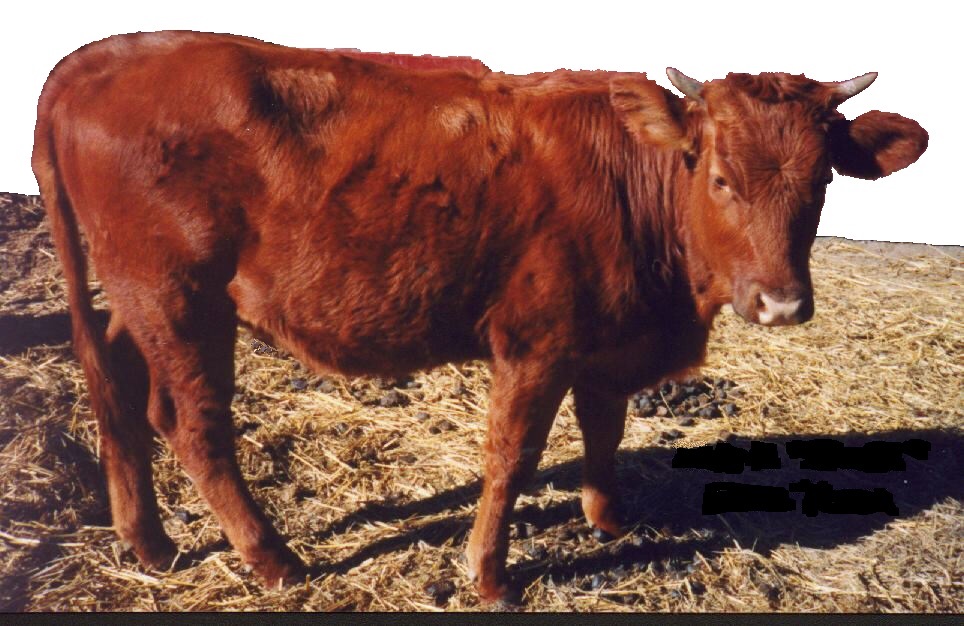
First a perfect, unblemished red cow that has never carried a yoke is slaughtered outside the camp as a chatat (חַטָּאת), an offering to compensate for an inadvertent sin or lapse. Usually someone offers a chatat after realizing they have made an error in observance that separates them from God. The chatat in this Torah portion is unique because the offering is slaughtered and burned ahead of time, so that future people who find they have become separated from the divine through exposure to human death can make a virtual chatat.

Then Elazar the high priest shall take some of her [the cow’s] blood with his finger, and he shall flick some of the blood seven times in the direction of the front of the Tent of Meeting. (Numbers/Bemidbar 19:4)

This connects the cow’s life with God’s holy place. Next, Elazar watches while someone burns the entire cow, even its blood and dung.

And the priest shall take cedar wood and eizov and crimson dye, and throw them into the middle of the burning cow. (Numbers 19:6)

The ashes of the red cow in Chukat are gathered and stored in a ritually pure place, to be used to purify the following:

1) Anyone who is inside a tent where a human dies, and anyone who enters the tent for the next seven days (Numbers 19:14).

2) Anyone who touches a human corpse (even on a battlefield), or who touches a human bone, or who touches a grave (Numbers 19:16).

Eizov (Syrian oregano)

Then some of the ashes of the burning of the chatat will be taken and mixed with living water in a vessel. Then a ritually pure man shall take eizov and dip it in the water, and he shall sprinkle it over the tent and on all the vessels and on the souls who were there; or on the one who touched the bones, or the killed person, or the person who died [of natural causes], or the grave. And the ritually pure one shall sprinkle it on the third day and on the seventh day. Vechito on the seventh day. And he shall clean his clothes and he shall wash in water, and he will be ritually pure in the evening. (Numbers 19:17-19)

vechito (וְחִטּאוֹ) = and he will become free of his lapse. (From the same root as chatat.)

Anyone exposed to death who does not go through this process is excluded or “cut off” from the community. If they were not excluded, “the holy place of God would become impure”. (Numbers 19: 20)

*

Today we have no ritual to free us from the feeling of alienation that accompanies contact with death; there has been no ash from a pure red cow for two thousand years. Neither do we have a ritual to reintegrate with the community when we recover from a disfiguring condition that isolates us as tzara-at once did.

And today very few Jews in the world observe Passover by slaughtering a lamb and painting its blood on their doorframes with bunches of giant oregano—even during the current plague of Covid. The long ritual seder developed over the past millennium and a half focuses on freedom from slavery, not on fear that God will kill us.

Nevertheless, this Passover I am going to put a sprig of oregano on my seder plate, next to the bitter herbs. Even during times when we are crushed by the bitterness of physical or psychological slavery, life has savory moments.

  1. The custom of removing drops of wine is first mentioned in a Pesach sermon written by Rabbi Eleazer of Worms (1176–1238). The idea that we do it in sympathy for the Egyptians is based on Proverbs 24:17 and first appeared in commentary by Rabbi Yirmiyahu Löw (1812-1874).
  2. Numbers 33:3.
  3. Leviticus 17:14, Deuteronomy 12:23.

Bo: Pride and Ethics

Haggadah by Judah Pinḥas, Germany, 1747

Pharaoh wants the Israelites to stay in Egypt and serve him as corvée laborers making bricks and building cities. God wants the Israelites to walk out of Egypt, take over Canaan, and serve “him”.  In an effort to terrorize Pharaoh into letting the Israelites go, God afflicts Egypt with ten “plagues” or miraculous disasters: blood, frogs, lice, mixed vermin, cattle pestilence, boils, hail, locusts, utter darkness, and death of the firtborn.

The God-character reveals another divine agenda in last week’s Torah portion, Va-eira, just before the plague of hail.

Shalach my people so they can serve me! Because this time I myself sholeiach all my scourges into your heart and against your courtiers and against your people, so that you will see that there is none like me on all the earth. Indeed, by now shalachti my hand and struck you and your people with the pestilence, and you would have been effaced from the earth. However, for the sake of this I have let you stand: so that I can show you my power and make my name known throughout the earth.” (Exodus 9:14-16)

shalach (שַׁלַּח) = Send! Send forth! Send out! Let go! Release!

sholeiach (שֺׁלֵחַ) = am sending, am sending forth, am sending out, am letting go, am releasing.

shalachti (שָׁלַחְתִּי) = I sent, I could have sent, I could have stretched out, I could have released.

(Throughout the story of the ten plagues, forms of the verb shalach are used both when God releases a plague, and when anyone talks about Pharaoh releasing the Israelites.)

Before sending the hail, the God-character reveals that “his” other goal is to prove to the whole world that “he” is the most powerful god. Being recognized as the most powerful seems more important to the God depicted in the book of Exodus than any moral considerations.1

The ethical problem with the God-character’s actions is that the plagues afflict not only Pharaoh, but also the native Egyptians. Why should ordinary Egyptians suffer? Pharaoh is the one who keeps refusing to let the Israelites go; his people have no say in the matter.

Some commentators have claimed that all the Egyptian people are on Pharaoh’s side, so they deserve to be punished. But there is nothing in the text of the Torah to indicate this. Pharaoh issues a general order for “all his people” to throw male Israelite infants into the Nile in last week’s Torah portion, Shemot.2 But the Torah never reports an Egyptian actually doing so. The only Egyptians who act against Israelites in the book of Exodus are:

  • Pharaoh, who issues commands calling for their oppression and death.
  • Egyptian taskmasters supervising the corvée labor, who oppress and beat the Israelites.3
  • Pharaoh’s armed regiment of charioteers, who pursue them after they leave Egypt.4

Yet the other native Egyptians also suffer from God’s ten plagues. Is their suffering unavoidable collateral damage in the war between Pharaoh and God? Or does God choose miracles that harm the most people on purpose, in order to make a more dramatic display of power?

*

Plague of the Firstborn, Spanish haggadah c. 1490

The tenth and final plague, described in this week’s Torah portion, Bo, is death of the firstborn.

And it was the middle of the night, and God struck down all the first-born in the land of Egypt, from the first-born of Pharaoh who sits on his throne to the first-born of the captive who was in the dungeon, to all the first-born of the livestock. (Exodus 12:29)

Only the Israelites receive God’s instructions to paint blood on their door frames and stay inside overnight to avoid the death of any of their first-born.5

Is this extreme unethical measure necessary in order to make Pharaoh submit? Or does the God-character kill every first-born in every Egyptian family merely in order to make a more dramatic display of power?

A necessary evil

The mass murder does appear to achieve the liberation of hundreds of thousands of oppressed Israelites.

And Pharaoh got up in the night, he and all his courtiers and all the Egyptians. And there was a great wailing outcry in Egypt, because there was no house without someone dead. And he summoned Moses and Aaron in the night and he said: “Arise, go out from among my people, you and also the Israelites, and go serve God, as you spoke! Take even your flocks and your herds, as you spoke, and go! And may you also bless me.” (Exodus 12:30-32)

Only after the death of the first-born does Pharaoh capitulate and tell the Israelites to go with everything Moses asked for. He even lowers himself by asking for a blessing, acknowledging that he cannot prosper again without God’s help.

Pharaoh loses his own first-born son, a blow that would shatter the hardest heart. But the wailing all over his capital city would reinforce his new despair. He may suspect that if he does not let the Israelites go now, the Egyptian people will revolt against him. The authority conferred upon him by the gods of Egypt no longer holds when the God of Israel is obviously more powerful.

A dramatic display

On the other hand, after three of the plagues (boils, locusts, and darkness) the Torah says that God hardens Pharaoh’s heart.6 What does this mean?

Pharaoh hardens his own heart after the plague of frogs, and continues to harden it four more times.7 He is in the habit of hardening his heart, and once we get into a habit, it can seem as if an outside force makes us keep doing it again and again. But in the text of Exodus, there is an outside force, and it is God. Before the plagues begin, the God-character tells Moses:

“And I myself will harden the heart of Pharaoh, and I will multiply my signs and my omens in the land of Egypt.” (Exodus 7:3)

The God-character follows up on this promise by deliberately hardening Pharaoh’s heart three times when Pharaoh is softening and might give in. The God-character does not want Pharaoh to let the Israelites go before “he” is ready. And the God-character is only ready after “he” has a chance to commit the tenth and most emotionally devastating plague: the death of the firstborn.

Apparently the God-character is so fixated on the goal of demonstrating power that the full ten-step dramatic display, from blood to death, is worth postponing the liberation of the Israelites. Demonstrating power is also far more important to this God-character than minimizing the suffering of innocent Egyptians.


Red Sea in Golden Haggadah, c. 1320, Spain

After the final plague, the Israelites march into the wilderness, but Pharaoh changes his mind about letting them go. The God-character hardens Pharaoh’s heart one last time in next week’s Torah portion, Beshallach, and Pharaoh commands his charioteers to pursue the Israelites. This gives the God-character a chance to create another memorable miracle: the splitting of the Reed Sea, and the return of the waters in time to drown the Egyptian chariot regiment.8

And Israel saw the great power that God wielded against Egypt, and the people were awed by God, and they had faith in God and in [God’s] servant Moses. (Exodus 14:31)

This miracle impresses both the Egyptians and the Israelites with God’s power. The fact that it also avoids killing any innocent bystanders is probably incidental in the book of Exodus.

Although Exodus is based on older oral traditions, modern scholars estimate that it was written down in the 6th and 5th centuries B.C.E. About a thousand years later, the rabbis of the Talmud imagined a different sort of God responding to the death of the Egyptian soldiers.

At that time the ministering angels wanted to recite a song before the Holy One, Blessed be He. The Holy One, Blessed be He, said to them: “My creatures are drowning in the sea, and you are reciting a song before me?” (Talmud Bavli, Sanhedrin 39b and Megillah 10b)

As the ethics of the Israelites advanced, so did the ethics of their God.


  1. See Jerome M. Segal’s treatment of this theme in his book Joseph’s Bones: Understanding the Struggle Between God and Mankind in the Bible, Riverhead Books, Penguin Group, New York, 2007.
  2. Exodus 1:22.
  3. Exodus 1:13-14 reports unspecified ruthless oppression by the taskmasters; Exodus 2:11 and 5:15-16 report beatings.
  4. Pharaoh and his charioteers pursue the Israelites after Pharaoh changes his mind about letting them go in Exodus 14:6-10. The disciplined Egyptian charioteers advance at the Reed Sea in order to kill some Israelites and capture the rest, but God intervenes with a miracle.
  5. Exodus 12:6-7, 12:21-23.
  6. Exodus 9:12, 10:20, 10:27.
  7. Exodus 8:11, 8:15, 8:28, 9:7, 9:34.
  8. Exodus 14:5-30.

Vayishlach: Dark Night

Plague of Darkness,
Haggadah by Judah
Pinchas, 1747

The penultimate plague in Egypt, just before the Death of the Firstborn results in the liberation of the Israelite slaves, is darkness.

For three days there is complete, impenetrable darkness, darkness so thick that it can be felt.  “No one could see his brother, and no one could get up from under it, for three days.”  (Exodus 10:23)

This is not only a physical darkness, but a psychological one.  Click here to read my blog post on the subject: Bo: Impenetrable Darkness.

The Egyptians in this week’s Torah portion, Bo, are immobilized by darkness–by their inability to recognize other human beings as their brothers.

Today I have been writing about Jacob’s wrestling match in the dark night before he sees his brother Esau face to face for the first time in 20 years.  Jacob wronged Esau by making him swap his firstborn rights for a bowl of lentil stew, and by tricking their father into giving him Esau’s blessing.  Like other characters in the book of Genesis/Bereishit, Jacob gave the wrong answer to Cain’s question, “Am I my brother’s protector?”

Guilt drives Jacob’s behavior for 20 years.  Now he is about to return home to Canaan, and he wants to make amends.  But how can he face Esau?

What will it take for Jacob to forgive himself?  Will he ever emerge from his inner darkness?

By the time I finish writing my book on moral psychology in Genesis, I will have some answers.

Bo: To Serve Somebody

Well, it may be the devil or it may be the Lord
But you’re gonna have to serve somebody.  (Bob Dylan)

The pharaoh of Egypt is an absolute ruler in the book of Exodus/Shemot.  His word is law, and everyone in the country must serve him almost as if he were a god.  There is no conflict between serving the pharaoh and serving Egyptian gods.  But the God of Israel is a “jealous” god, who requires exclusive service.1  One cannot serve both God and Pharaoh.

When Moses and Aaron first speak to the pharaoh, they only request a leave of absence for the Israelites so they can make a three-day journey into the wilderness to offer animal sacrifices to God, Y-H-V-H.2  The implication is that then they will return to the corvée labor the pharaoh has imposed on them.  But the ruler of Egypt refuses, sensing that there is a deeper issue.

And Pharaoh said: “Who is Y-H-V-H that I should listen to his voice [saying] to send out Israel?  I do not know Y-H-V-H, and neither will I send out Israel.”  (Exodus/Shemot 5:2)

He increases the workload of the Israelites instead.  A demonstration miracle turning a staff into a snake does not change his mind.3  Following God’s order, Moses now warns the pharaoh about the first “plague” or miraculous disaster, which will turn the Nile into blood, and tells him that God said:

“Send out my people so yavduni in the wilderness!”  (Exodus 6:16)4

yavduni (יַבְדֻנִי) = they will serve me.  (A form of the root verb avad, עָבַד = work for someone, serve as a slave, employee, or attendant.)

Plague of Frogs, Golden Hagaddah,  1320-1330 CE

The pharaoh does not change his mind.  After the second plague, frogs, the pharaoh says he will let the Israelites go, then hardens his heart and refuses as soon as God has ended the disaster.  After the fourth plague, mixed vermin, the pharaoh offers to let the Israelites sacrifice to their god inside the land of Egypt, but Moses insists on the three-day journey into the wilderness.5  Again, the pharaoh agrees at first, but then refuses as soon as God removes the vermin.

During the seventh plague, hail, the pharaoh actually admits to Moses and Aaron that he is morally inferior to their god, Y-H-W-H:

“I am guilty this time.  Y-H-W-H is the righteous one, and I and my people are the wicked ones.  Pray to Y-H-W-H and enough from being thunder and hail, and I will send you out, and you will not continue to stand [against me].”  (Exodus 9:28)

Moses agrees to do so, though he adds:

“But you and your avadim, I know that you still do not fear Y-H-V-H, God.”  (Exodus 9:30)

avadim (עַבָדִים) = servants, courtiers, slaves.  (Plural of the noun eved, עֶבֶד, from the root verb avad.)

Moses is right; once the hail and thunder have ceased, the pharaoh hardens his heart again and refuses to let the Israelites go.

This week’s Torah portion, Bo (“Come!”) begins when Moses announces the eighth plague, locusts.

And Moses came, and Aaron, to the pharaoh, and they said to him: “Thus says Y-H-V-H, the god of the Hebrews: How long will you refuse to humble yourself before me?  Send out my people, so yavduni!”

In effect, Moses and Aaron admit that the contest is about who is superior, God or the pharaoh.

And the avadim of the pharaoh said to him: “How long will this be a stumbling block for us?  Send out the people and ya-avdu Y-H-V-H, their god!  Don’t you know yet that Egypt is destroyed?”  (Exodus 10:7)

ya-avdu (יַעַבדוּ) = they will serve.  (Another form of the verb avad.)

The pharaoh calls back Moses and Aaron and says:

“Go, ivdu Y-H-V-H, your god!  Who and who are going?”

ivdu (עִבְדוּ) = serve!  (An imperative of the verb avad.)

Plague of Darkness, Spanish, 1490 CE

Moses says all the people will go, including the children and even the flocks and herds.  The pharaoh replies that only the men may go.  So the plague proceeds.  After every green plant in Egypt has been consumed by the locust swarms, the pharaoh admits his guilt.  Yet his heart is unmoved when Moses describes the ninth plague, darkness, in which blindness strikes everyone in Egypt except the Israelites.

After three days of darkness the pharaoh offers to let even the children go, as long as the Israelites leave their livestock behind.  Moses refuses, saying they need their flocks and herds to serve God.

“Because we will take from them la-avod Y-H-V-H, our god, and we will not know with what na-avod Y-H-V-H until we arrive there.”  (Exodus 10:26)

la-avod (לַעֲבֹד) = to serve.

na-avod (נַעֲבֹד) = we will serve.

Moses knows that God intends to take the Israelites out of Egypt and give them a new land.  Is he making up an excuse so that when the people leave for good they can take their animals with them?  Does the pharaoh ask them to leave their livestock behind because that it just what he suspects?  The pharaoh threatens to kill Moses if he ever sees his face again.

Then Moses gets angry, and tells the pharaoh about the tenth and final plague, the death of the firstborn.5  When it comes, the pharaoh and all the Egyptians practically push the Israelites out of the country.  But the pharaoh, accustomed to hardening his heart, changes his mind after they have left.  He sends an army to capture them.

Plague of the Firstborn, Spanish, 1490 CE

In next week’s Torah portion, Beshalach, the Israelites believe they are trapped between the Egyptian army and the Reed Sea.

And they said to Moses: “Is it because there are no graves in Egypt that you take us to die in the wilderness?  What is this you have done to us by bringing us out of Egypt?  Isn’t this the thing that we spoke to you [about] in Egypt, saying: Leave us, vena-avdah the Egyptians, because it is better for us avod the Egyptians than dying in the wilderness!”  (Exodus 14:11-12)

vena-avdah (וְנַעֲבְדָה) = and we will serve.

avod (עֲבֹד) = serving.

The Israelites would rather serve the reality they know, however grim, than serve the invisible source of the ten miraculous disasters.  God is an intangible idea that they are unable to trust.

*

I do not blame them.  Human beings are naturally suspicious of change and skeptical about new ideas.  We might experiment in small ways, but laying one’s life on the line is heroic and unusual—unless the boss orders it and everyone else is doing it, as in a war.  Given a choice between certain slavery and risking death, many of us would choose slavery and hope that things would improve in the future even if we take no action.

Yet when we read a story like the one in the book of Exodus, most of us root for the Israelites to stop serving the pharaoh and throw in their lot with God.  After all, serving God does not usually mean dying.  Only once in a while.

You’re gonna have to serve somebody.  What if the choice is between going along with an immoral status quo or rebelling against it?  What do you choose?

  1. This jealousy appears even in the Ten Commandments, Exodus 20:2-6.
  2. See my post Beshallach & Shemot: Knowing the Name on the sacred four-letter name of God, which I transliterate here as Y-H-V-H.
  3. Exodus 7:8-13.
  4. See my post Va-eira & Shemot: Request for Wilderness.
  5. Exodus 8:21-28.
  6. Exodus chapter 11.