
In this week’s Torah portion, Behar (Leviticus 25:1-26:2), God declares:
“… the Israelites are my servants; they are my servants whom I brought out of the land of Egypt. I am Y-H-V-H, your elohim!” (Leviticus 25:55)
elohim (אֱלֹהִים) = gods (plural of eloha = god); the God of Israel.
How are the Israelites supposed to serve God?
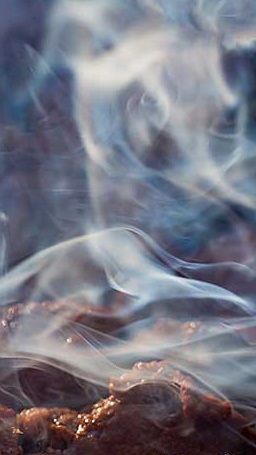
Serving a god, in the Ancient Near East, meant tending to the god’s supposed needs, especially bringing the god food. The book of Leviticus describes how the Israelites bring animals and grain products as offerings to the God of Israel, and priests burn them so that God can enjoy the smell of the smoke. (See my post Tzav & Jeremiah: Smoke vs. Altruism.)
Furthermore, the Torah is packed with God’s commands; Maimonides1 found 613 of them, dealing with both religious and social life.
Yet right after God claims all Israelites as God’s servants, the portion Behar concludes with one verse on how not to worship, and one verse on how to worship God. And these two verses say nothing about making offerings at the altar or obeying commands.
How not to worship
“You must not make for yourselves eliylim, or a pesel; and a matzeivah you must not erect for yourselves; and a maskit stone you must not place in your land for prostrations upon it; because I, Y-H-V-H, am your elohim.” (Leviticus 26:1)
eliylim (אֱלִילִם) = pseudo-gods, worthless gods, idols.
pesel (פֶּסֶל) = carved image; idol of cut stone or wood (from the verb pasal = carve).
matzeivah (מַצֵּבָה) = standing stone, stele.
maskit (מַשׂכּית) = image carved into a paving-stone or a wall; decoration, real or imagined.
What is God saying? Here are three possibilities:
- Don’t worship pseudo-gods or their idols.
- Don’t worship God through any physical images.
- Don’t worship God by bowing down or prostrating yourself.
Don’t worship pseudo-gods
Classic medieval commentators, including Rashi,2 interpreted this verse as forbidding the worship of other gods. They pointed to the passage preceding God’s statement that all Israelites are God’s servants, which covers the manumission of Israelites sold as slaves to resident aliens. These Israelites might be tempted to worship their masters’ idols, or to work on Shabbat (the sabbath).
In the 16th century, Rabbi Ovadiah Sforno reinterpreted the passage as addressing the Israelites in exile in Babylon. Just because God had let King Nebuchadnezzar conquer Jerusalem and deport them to Babylon did not mean that their God had rejected them, and they were now free to worship other gods. Sforno cited God’s words in the next Torah portion, Bechukotai:3
“And also even then, when they are in the land of their enemies, I will not reject them, and I will not cast them away to finish them off, to break my covenant with them. For I am Y-H-V-H, their God!” (Leviticus 26:44)
Don’t worship God through physical images
A later opinion4 is that the verse in Behar is a command not to worship the God of Israel in the same ways that other peoples worshiped their gods.
When people worship eliylim in the Hebrew Bible, they bow down to them,5 or consult them for an oracle.6 They also bow down to a pesel, which is forbidden in the “Ten Commandments”:
“You must not make for yourself a pesel, or any likeness of what is in the heavens above, or what is on the earth below, or what is in the waters beneath the earth. You must not bow down to them, and you must not serve them; because I, Y-H-V-H your elohim, am a jealous god …” (Exodus 20:4-5 and Deuteronomy 5:8-9)
Bowing down is a gesture indicating humility in front of a superior—a king or a god.7 In addition to the many biblical references to bowing down to a pesel, the book of Habakkuk mocks people who expect a pesel to give instructions,8 and second Isaiah mocks people who pray to a pesel for rescue.9
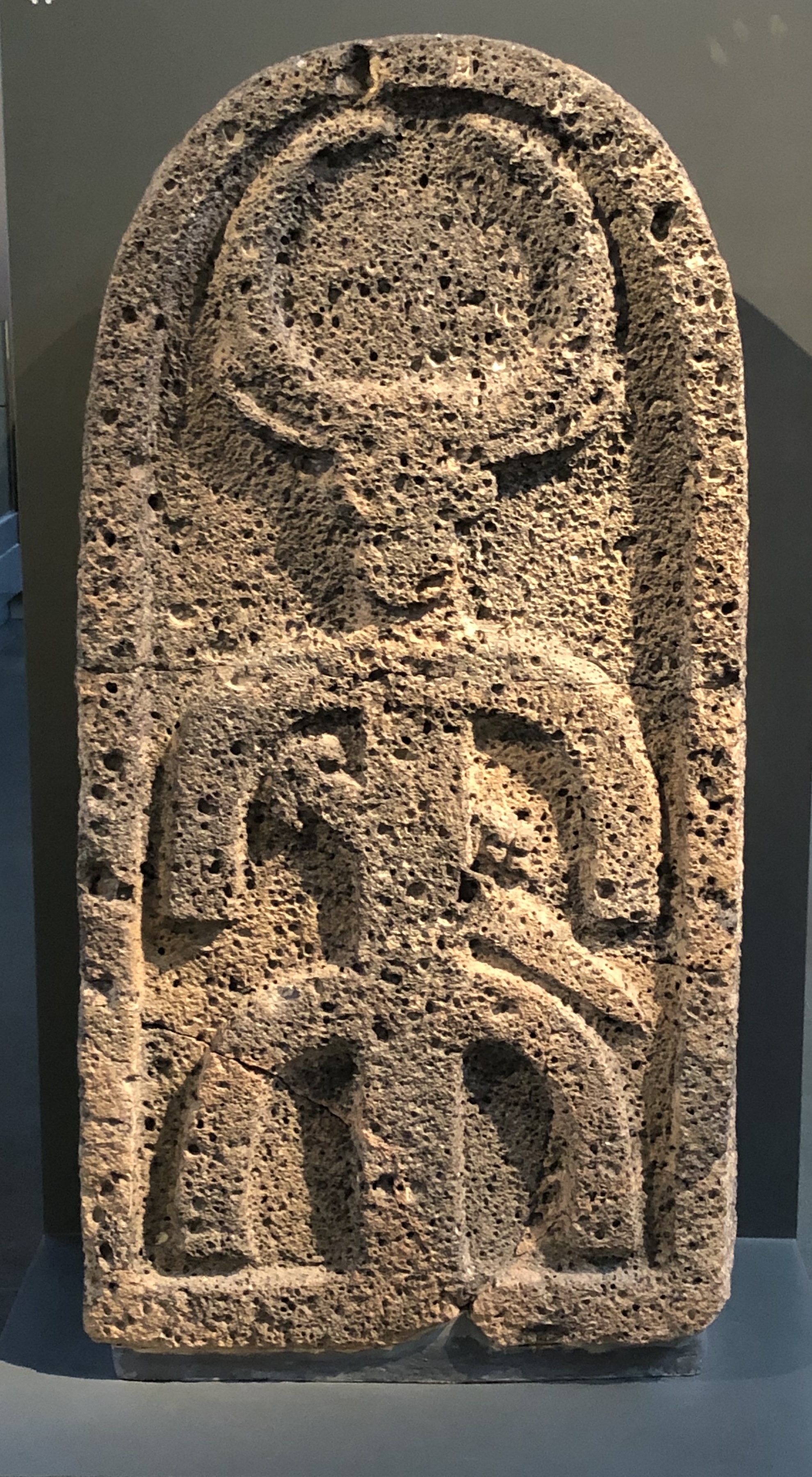
A standing stone, called a matzeivah, can be erected to mark an important boundary,10 or a significant event.11 But when Yaakov (“Jacob” in English) wakes up from his dream of angels going up and down and God standing over him, he not only sets up a matzeivah, but ritually pours oil on top of it and vows that if God protects him until he returns,
“… Y-H-V-H will be my elohim, and this stone that I have set up as a matzeivah will be a house of Elohim, and from everything that you give me, I will set aside a tenth for you.” (Genesis 28:21-22)
On Yaakov’s return trip 20 years later he stops at the same spot. Perhaps the matzeivah has fallen down (or perhaps a redactor inserted a second story about a standing stone at Bethel), because Yaakov sets up another one.
And Yaakov erected a matzeivah at the place where he was spoken to, a matzeivah of stone, and he poured a libation on it and he poured oil on it. (Genesis 35:14)
Later in the Torah, priests pour libations at the altar as part of their service to God.
Bowing down to a standing stone is a common form of Canaanite worship in Exodus through Jeremiah, so the Israelites are repeatedly urged to smash every Canaanite matzeivah.
The word maskit appearsonly six times in the Hebrew Bible, and half of those occurrences are unrelated to gods or idols. In Ezekiel 8:12 the walls of the chambers of the former temple in Jerusalem are carved with maskit depicting creeping things and detestable beasts. Only Leviticus 26:1 and Numbers 33:52 include maskit in theirlists of Canaanite objects of worship that must be destroyed, and only the verse in Leviticus, in the portion Behar, specifies that a maskit stone is used for prostrations.
Don’t worship God by bowing
The principle way to worship all of these items, eliylim, pesel, matzeivah, or maskit, is to bow down to it, sometimes to the point of full prostration. The God of Israel definitely prohibits bowing to idols. Bowing down in homage to God is not forbidden, and characters in the Torah do prostrate themselves to God—sometimes on the impulse of the moment,12 and sometimes as part of a ritual.13
Ritual prostration to God, pointing in the general direction of Jerusalem, remains in some Jewish services today: the Tachanun part of some weekday services (at traditional synagogues) and, most notably, the Grand Aleinu on Yom Kippur.
Yet worshiping God (as opposed to pseudo-gods) by bowing down or prostrating oneself is not mentioned in this week’s Torah portion.
How to worship
Instead the portion Behar ends with God’s command:
“My sabbaths you must observe, and my holy place you must hold in awe. I am Y-H-V-H!” (Leviticus 26:2)
The implication is that bowing down is not the most important means of worship. The best way to worship God is to observe Shabbat, and to show reverence toward God’s sanctuary.
Observing Shabbat means refraining from work on the seventh day of every week—and letting your family, your slaves, and your animals rest from labor that day as well.14 The underlying idea is that then one can focus on gratitude to God. According to Zornberg, “Unplugged from one’s usual productive activities, one is left in a kind of vacuum. It is this state that is to be ‘for God.’”15
Therefore, work that counts as serving God is still done on Shabbat: priests used to offer extra animals at the altar that day,16 and today those who conduct the Torah service on Shabbat must carry out their (hopefully joyful) responsibilities.
What does holding God’s holy place in awe mean?
Steinsaltz wrote that when the temple in Jerusalem stood, “The obligation to revere the Temple includes the scrupulous observance of the sacrificial rituals and the preservation of the Temple’s ritual purity.”17 Thus the requirement to hold God’s holy place in awe might include worship through turning offerings into smoke, after all.
And Hirsch wrote: “… we can pay Him homage by paying homage to His Law. Only by prostrating ourselves before His Torah do we prostrate ourselves before Him. For this reason, the only place fit for prostration is His holy place, the Sanctuary that was established for His Torah. … Even in ruins, this place remains consecrated ground …”19
However, although the book of Leviticus was written after the 6th-century B.C.E. destruction of the first temple in Jerusalem, the events it describes take place at Mount Sinai immediately after the Israelites have finished making a portable tent and its furnishings for God to dwell in. In Leviticus through Deuteronomy, God’s holy place is not a temple; it is the tent-sanctuary in the center of the Israelite camp, wherever it may be.
According to Sforno, God’s holy place that we are to hold in awe “could be the tent sanctuary, or the temple—or a synagogue or Torah study hall”.19
After all, according to Rabbi Hananiah ben Teradion in Pirkei Avot, “… if two sit together and there are words of Torah [spoken] between them, then the Shekhinah [God’s presence] abides among them.”20
Experiencing a sense of the numinous is part of human nature. So is the impulse to acknowledge and reach out to something ineffable. For thousands of years, many human beings have channeled this impulse into worship of one or more gods.
The Hebrew Bible does not have a separate word corresponding to the English word “worship”. But it does have words for bowing down or prostrating oneself (hishtachavot), service (avodah), and prayer (tefilah).
The Torah forbids us to bow down to an idol. But it does let us use beautiful objects to anchor our worship. The ancient Israelites may have scorned the carved stone images of the Canaanites, but the entrance of God’s portable tent-sanctuary had a cloth screen embroidered with rich blue, purple, and red yarn, and posts overlaid with gold.21 The first and second temples in Jerusalem were even more ornamental.
A visit to the temple meant not only a feast for the eyes, but an overwhelming experience for the other senses. The Levites chanted psalms and played musical instruments. Priests burned aromatic incense. When you brought an animal offering, you laid your hands on the beast’s warm, hairy head. When you brought a wholeness-offering, some of the roasted meat was returned for your party to feast on.
When we make our religion too abstract, we approach the divine with only one part of ourselves, the rational function of our minds. But our minds are much bigger than that. Reading a prayer silently makes me think about the meaning of words; singing a prayer lifts my spirit. Thinking about time and space impresses my intellect; looking at a blossoming tree or a smiling face moves my heart with a feeling of the divine.
In other words, do not get stranded in abstract theories about what God is. But also do not get stuck at the level of a stone carving, or picture of a bearded man in the sky. Let the rituals, the songs, and the stories of your religion move your heart. And acknowledge that all these things are part of the Holy.
- 12th century rabbi Moshe ben Maimon, known as Maimonides or Rambam, Sefer HaMitzvot. Subsequent lists of God’s commands (mitzvot) are based on his work.
- Rashi is the acronym of 11th-century Rabbi Shlomoh Yitzchaki, whose commentary has been a reference point for Jewish exegesis over the past millennium.
- The Hebrew calendar is lunar. In years with 12 months (including this year of 5786), there are some weeks when two consecutive Torah portions are read. When there is a year with 13 months to adjust the lunar calendar to the solar cycle, each Torah portion is read on a separate week.
- E.g. 19th-century Rabbi Samson Raphael Hirsch, The Hirsch Chumash: Sefer Vayikra, Part 2, Feldheim Publishers, Jerusalem, 2000, p. 934-5; and 21st-century Rabbi Adin Even-Israel Steinsaltz, The Steinsaltz Tanakh, Koren Publishers, 2019.
- Isaiah 2:8, 2:20.
- Isaiah 19:3.
- C.f. prostration before a king in Genesis 27:29, 2 Samuel 9:6, and I Kings 1:31.
- Habakkuk 2:18.
- Isaiah 44:17.
- Genesis 41:44-53.
- Genesis 35:20, Exodus 24:4-7.
- E.g. Exodus 34:8, Leviticus 9:24.
- E.g. Deuteronomy 26:10, Nehemiah 8:6.
- Exodus 20:8-10 and Deuteronomy 5:14 (in the “Ten Commandments”).
- Avivah Gottlieb Zornberg, The Hidden Order of Intimacy: Reflections on the Book of Leviticus, Schocken Books, New York, 2022, p. 232.
- E.g. Numbers 28:9-10.
- Steinsaltz, ibid., in www.sefaria.org.
- Hirsch, ibid., translation by Daniel Haberman, p. 937.
- 16th-century rabbi Ovadiah Sforno, translation in www.sefaria.org.
- Pirkei Avot 3:2, circa 200 C.E., translation by Joshua Kulp in www.sefaria.org.
- Exodus 26:36-37.

 Questioning Torah
Thanks for this understanding of how to connect with the Source- all levels are available body, heart, mind, and spirit. Sending warm greetings to you and Will, Shabbat Shalom
Thank you.
Can you believe it, I didn’t even realize that I was covering the four worlds? But you’re right, beautiful sensory input (body) moves the heart, and supplements the intellect (mind) to connect one’s spirit with the Spirit. Wow!
shavuah tov to you and Steve, Melissa