A new year in the Jewish calendar, 5787, begins this Friday evening with two days of Rosh Hashanah prayer services—and the blowing of the shofar.
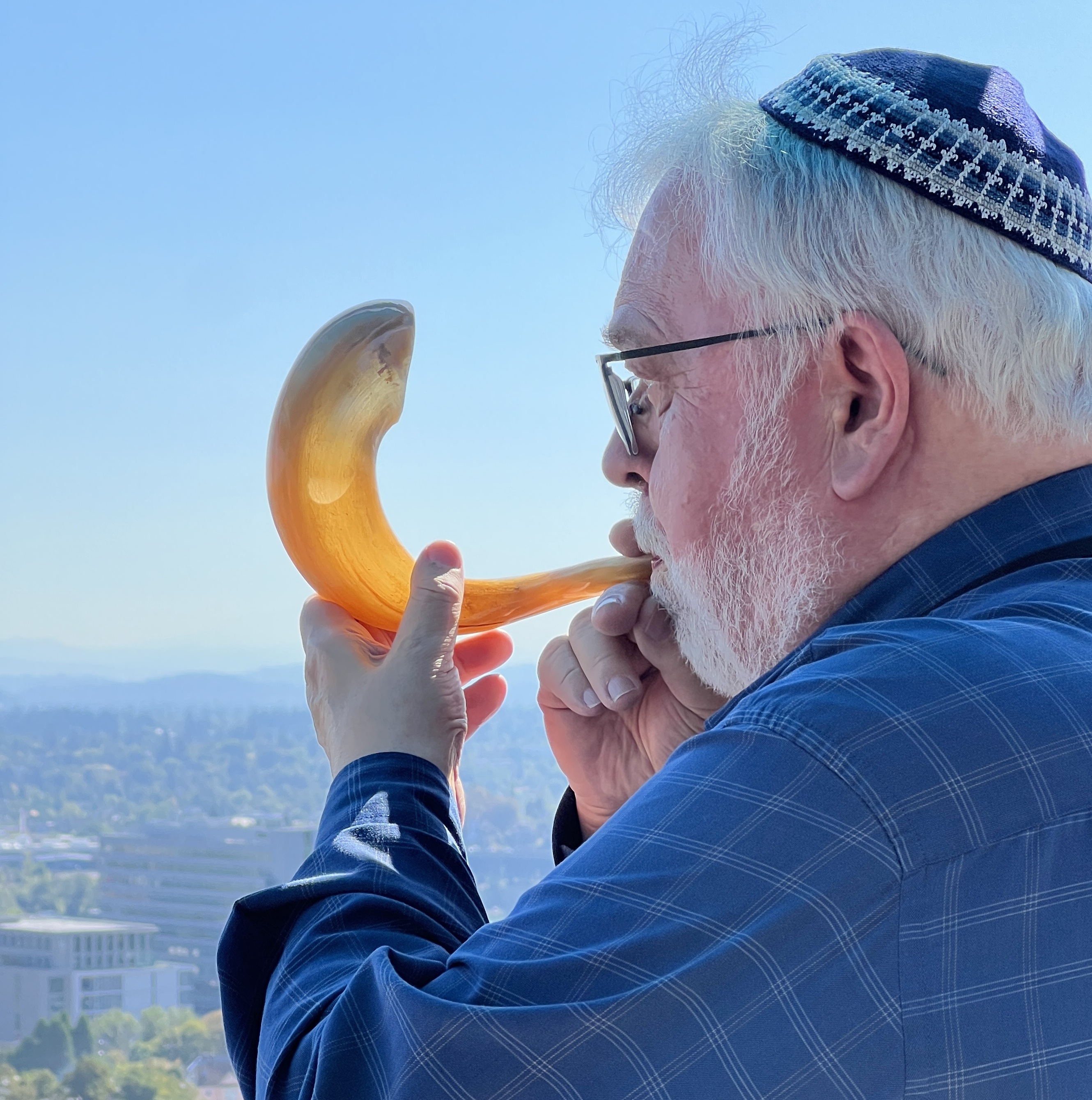
shofar (שֺׁפָר, שׁוֹפָר) = A ram or goat horn with the tip cut off and modified slightly so that it can be blown like a natural trumpet, buzzing one’s lips against the mouthpiece. (Plural: shofarot, שׁוֹפָרוֹת.)
Here is what a shofar blast sounds like:
https://audio.com/stephen-1836267568609607/audio/shofar-sound
Every shofar has a different pitch, depending on the size and shape of the animal’s horn. An experienced shofar blower can get two different notes. But unlike a natural trumpet, a shofar is never played with other instruments.
The first time anyone hears a horn blowing in the Hebrew Bible is at God’s revelation on Mount Sinai.
And it happened on the third day, in the morning; and there was thunder, and lightning flashes, and a heavy cloud on the mountain, a very strong sound of a shofar. And all the people that were in the camp trembled. (Exodus 19:16)
The sound of a shofar is also part of a divine manifestation in the book of Zechariah.1 But elsewhere in the bible, human beings blow the shofar. In the book of Joshua, shofar blowing makes the walls of Jericho fall down.2 King David has the shofar blown when he brings the ark into his new capital in Jerusalem.3 The shofar is often blown as a signal in battle,4 to rally troops,5 to sound a general alarm6, and to inaugurate a king7. The sound of the shofar means that something important is about to happen, and everyone should pay attention!
In four verses, the Hebrew Bible calls for shofar blowing to announce a holy day. One of these occasions only happens every fiftieth year, on Yom Kippur. Then the book of Leviticus prescribes shofar blasts to announce the year of Yoveil (“Jubilee” in English), when all Hebrew slaves are freed and all farmlands are returned to the families that originally owned them.8 The shofar is also blown to announce the more ancient festival days observed every new moon and every full moon.9
And two biblical verses call for blowing the shofar on the first day of the month of Tishrei. But neither verse says why the first day of Tishrei is holy.
Tishrei 1 in Leviticus
In the seventh month, on [day] one of the month, will be [like] a Shabbat-observance for you, a zikheron by a blast, a holy convocation. Any servile work you must not do. You must
bring a fire-offering to God. (Leviticus 23:24-25)
zikheron (זִכְרוֹן) = reminder, memorial, remembrance.
Sometimes the first day of the month of Tishrei is called Yom HaZikheron (“Day of the Reminder”), but the bible never says what the day is a reminder of. The text continues with the next holy day in the calendar:
However, on the tenth of this seventh month, it is Yom HaKipurim. A holy convocation will be for you, and you must afflict your throats [fast], and you must bring a fire-offering to God. And you must not do any work at all this day, because it is Yom HaKipurim, lekhapeir for you in the presence of God, your God. (Leviticus 23:27-28)
Yom HaKipurim (יוֹם הַכִּפֻּרִים) = Day of the Atonements (now called “Yom Kippur”). (From the root verb kapar, כָּפַר = atone, reconcile; cover over.)
lekhapeir (לְכַפֵּר) = to make atonement, to make a reconciliation; to cover over. (Also from the root verb kapar.)
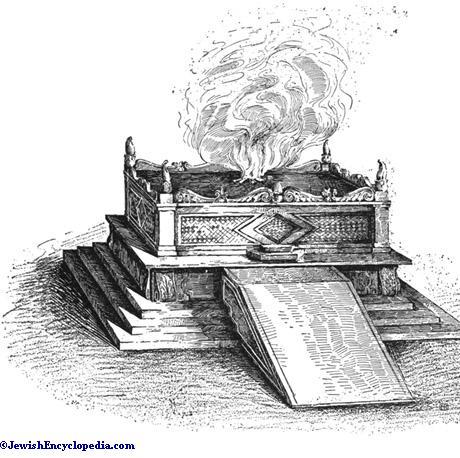
Since the first day of the month of Tishrei is Yom HaZikheron (“Day of the Reminder”), perhaps it is a reminder that Yom Kippur is only ten days away. Blowing the shofar might remind people to prepare for Yom Kippur. But holding a holy convocation with extra offerings at the altar implies something more.
Tishrei 1 in Numbers
No zikheron (reminder) is mentioned when the first of Tishrei comes up in a list of holy days in the book of Numbers.
And in the seventh month, on [day] one of the month, a holy convocation will be for you. You must not do any servile work. A day of a blast it will be for you. (Numbers 29:1)
Here, the text continues with the usual itemization of additional offerings at the altar for a particular holy day—in this case, one bull, one ram, seven lambs, and flour mixed with oil,
And one hairy goat, a guilt offering, lekhapeir for you. (Numbers 29:5)
This is not the goat chosen by lot in the ancient Yom Kippur ritual, but just an animal used in a general guilt offering. Still, the verse does introduce the idea of atonement for guilt.
Rosh Hashanah
What instrument is supposed to be blown to make the blasts on the first day the month of Tishrei? Neither of these Torah passages says. The ancient Israelites blew blasts on both a shofar and a metal trumpet. After the fall of the second temple in 70 CE, the rabbis decided that the shofar was blown on the first day of Tishrei.
They also (in a divided opinion) decided that the first of Tishrei was the first day of the year: Rosh Hashanah (“Head of the Year”), even though it was the seventh month after Nissan, the rabbis’ other candidate for the beginning of the year. (A whole tractate of the Babylonian Talmud is devoted to Rosh Hashanah.)
And why is the first day of the year a holy convocation, holy enough to suspend most kinds of work for the day? The Talmud says that it is because ten days later we observe Yom Kippur, the annual day to return to God and to pray for God to forgive our misdeeds of the past year.
So the shofar blowing on Rosh Hashanah announces the next holy day, sounds a general alarm that we need to wake up and turn back to God, and annually inaugurates God as the king of all living beings.10 (The liturgy of Rosh Hashanah and Yom Kippur is full of references to God as king.)
Services with shofar blasts
Rosh Hashanah begins with an evening service, continues the next day with a long series of prayer services and a late afternoon Tashlikh ritual, then goes on for a second long day of services.
The morning services are similar to Shabbat morning services, but they have Rosh Hashanah additions to the liturgy, and especially juicy Torah and hafatarah readings.11 Then there is a short Shofar service before the Musaf (“Additional”) service. Both the Shofar Service and the Musaf service include shofar blasts (unless the day is Saturday, since the Talmud ruled that the shofar should not be blown on Shabbat).12
In the Musaf service, three special sections are embedded in the repetition of the Amidah (“Standing prayer”). These sections are titled Malkhuyot (“kingships”), Zikhronot (“reminders”), and Shofarot (“shofars”). Each section begins with biblical verses applying its theme to God, followed by shofar blasts, followed by singing.
According to the Talmud, Rabbi Akiva said that God said: “And recite before Me on Rosh Hashanah verses that mention Kingships, Remembrances, and Shofarot: Kingships so that you will crown Me as King over you; Remembrances so that your remembrance will rise before Me for good; and with what will the remembrance rise? It will rise with the shofar.”13
Malkhuyot
Rosh Hashanah services add many references to God as king, since this is the season of divine judgement. The Malkhuyot section of the Musaf service includes this exultant verse from the ancient Song of the Sea in the book of Exodus: God will reign forever and ever! (Exodus 15:18) Every year, we symbolically coronate God as our king once again, with blasts of the shofar.
Zikhronot
The sound of the shofar may startle us into remembering God, but on Rosh Hashanah we ask God to remember us and let us live another year. So the Zikhronot section includes the story of the binding of Yitzchak (“Isaac”) and God’s substitution of a ram for the sacrifice, and a prayer that the ram’s horn (shofar) will remind God of this act of mercy.
Shofarot
In the Shofarot section, we tell the story of how God manifested to the people at Mount Sinai with the sound of the shofar.
On Rosh Hashanah, someone blows the shofar, and everyone hears the sound of the blasts. Some of the liturgy imagines God hearing us blow the shofar, then being moved by our allegiance, remembering the old love for us, and returning to us as a father and king.
When we human beings hear the shofar, we wake up, straighten up, and remember God. We, too, work on teshuvah, which means “returning”. In traditional language, we need to return to God. In modern language, we need to return to the good soul inside us, to whom we really want to be.
It is easy to drift away from God, or from the good. What will sound the alarm to bring you back?
- Zechariah 9:14.
- Joshua 6:4-5, 6:8-20.
- 2 Samuel 6:15.
- Judges 7:18-22; 2 Samuel 2:28, 18:16, 20:22; Jeremiah 42:14; Nehemiah 4:14.
- Judges 3:27, 6:34; 1 Samuel 13:3-4; 2 Samuel 20:1.
- Jeremiah 4:5, 4:19, 6:1; Ezekiel 33:3-6; Joel 2:1, 2:15; Amos 3:6.
- 1 Kings 1:34, 1:39; 2 Kings 9:13; Psalms 47:6, 98:6.
- Leviticus 25:9.
- Psalm 81:4.
- Babylonian Talmud, Rosh Hashanah 16a, 34a.
- Genesis 21:1-21 and 1 Samuel 1:1-2:10 on the first day; Genesis 22:1-19 and Jeremiah 31:1-20 on the second day.
- Talmud Bavli, Rosh Hashanah 29b.
- Rosh Hashanah 16a.