Bo: Impenetrable Darkness

by Melissa Carpenter, maggidah

Blood.  Frogs.  Lice.  Insect swarms (“wild beasts” in earlier translations).  Pestilence.  Boils.  Hail.  Locusts.  Darkness.  Death of the Firstborn.

These are the ten “plagues”—miraculous calamities—that God inflicts on Egypt before the Pharaoh lets the Israelites go.  Jews recite the ten plagues every spring during Passover/Pesach, the holiday commemorating the exodus from Egypt. We also read about the last three plagues in this week’s portion, Bo (“Come”).

Most of the plagues inflict pain on humans, kill livestock, and destroy crops. The last plague kills humans. But the ninth plague, darkness, seems harmless at first glance.

Seder Haggadah shel Pesach: Plague of Darkness

God said to Moses:  Stretch out your hand against the skies, and it will become choshekh over the land of Egypt, and the choshekh will be felt.  And Moses stretched out his hand against the skies, and it became choshekh of afeilah throughout all the land of Egypt, for three days.  No one could see his brother, and no one could get up from under it, for three days.  But for all the Children of Israel, there was light in their dwellings. (Exodus/Shemot 10:21-23)

choshekh (חֹשֶׁךְ) = dark, darkness.

afeilah (אֲפֵלָה) = cut off from any light, complete darkness, impenetrable darkness.

The three days of total darkness terrorize the Egyptians so much that Pharaoh makes his best offer yet to Moses: the Israelites could go with their women and children, leaving merely their livestock behind. (Moses rejects this offer, so that God can produce the final plague and Pharaoh’s complete capitulation.)

What is so terrible about this darkness?  If it were merely three days of blindness, the Egyptians might be able to wait it out.  They would have to feel their way around, but they could still talk with each other. They could cooperate to make sure everyone got food and water.  They could comfort each other.

But the plague of darkness is not physical blindness; it is psychological darkness.

This darkness can be felt.  The Midrash Rabbah (a collection of commentary from Talmudic times) explains that the darkness has “substance”.1  Maybe when the Egyptians grope around to find things they cannot see, all they feel is “darkness”. 19th-century rabbi Samson Raphael Hirsch wrote that groping means uncertainty, and in the impenetrable darkness of afeilah, everything seems uncertain and doubtful.2

In this condition, stray thoughts that a person would normally dismiss in an instant become obsessions.  What if there is no god?  Does that person wish I were dead?  What if I don’t really love them?  Is my whole life meaningless? What if I am insane? A person living in spiritual darkness keeps groping for true answers, but feels only darkness.

The Torah adds: “No one could see his brother”.  This is the darkness of extreme egotism, exemplified by the Pharaoh.  As the plagues roll through Egypt, Pharaoh’s advisors and the Egyptian people protest that it would be better to give Moses and his god what they want than to put the land through more plagues.  Pharaoh ignores them because he cares only about himself and his own pride; he does not recognize anyone as a “brother” human being.

Thus he is cut off not only from affection, but also from any possibility of enlightenment; he is incapable of learning from others.  Similarly, the afeilah cuts off the Egyptians from any possibility of light.

At first, Pharaoh hardens his own heart.  Over time, it becomes a habit from which only a divine intervention could shake him loose. But God keeps his heart hardened, so Pharaoh does not change. In the plague of darkness, all the Egyptians experience Pharaoh’s immobility.  The Torah says “and no one could get up from under” the darkness.  The Midrash Rabbah explains that anyone who was sitting could not stand, anyone standing could not sit, and anyone lying down could not rise up.3  Like the Pharaoh, the Egyptians cannot change their positions—or their beliefs.

Imagine experiencing a “dark night of the soul” or spiritual crisis so impenetrable that you cannot distract yourself by looking at anything; you cannot trust anything you feel; you cannot care about anyone else, or believe anyone cares about you; and you cannot get a new idea, or see life from a different perspective.

The plague of darkness terrifies the Egyptians because for three days, they experience what it is like to be the Pharaoh.  Maybe it terrifies the Pharaoh himself because at the end of the three days, when the darkness lifts, he sees a glimmer of what his own soul is like.  But it is only a glimmer; his habit of hardening his heart is too strong for actual enlightenment.

As I write this, my eyes are filling with tears for some people I know who appear to be living in a psychological darkness, unconsciously isolating themselves from others because they can neither trust nor respect them, and immobilizing themselves because they cannot change their perspective.

stars in blackAnd I know that any of us can fall into a temporary state of darkness.  I pray that whenever healthy uncertainty turns into doubting everything, we find the power to stop our obsessive groping.  I pray that whenever we fall into the trap of justifying our own behavior instead of noticing and appreciating what others are doing, we realize that we are isolating ourselves, and make an effort to see our brothers and sisters.  And I pray that whenever we are so depressed that change seems impossible, we follow any glimmer of light that gives us a view from a different perspective.

May every human being escape from the plague of darkness.

  1. Shemot Rabbah 14:1, Soncino translation.
  2. Samson Raphael Hirsch, p. 144-145.
  3. Shemot Rabbah 14:3, Soncino translation.
Re-eih: Recipe for Joy

Sometimes joy comes unexpectedly. But sometimes we plan to rejoice on a particular occasion, acting with joy and thus inducing a feeling of joy. This week’s Torah portion, Re-eih (“See!”), says that three times a year, everyone should rejoice.

Universal joy is required during the three annual pilgrimage festivals, Pesach, Shavuot, and Sukkot.  Although the Torah gives instructions for these three festivals in the earlier books of the Torah, this portion in the book of Deuteronomy/Devarim is the first one that mandates a pilgrimage to the central sanctuary even for Pesach.

Three times in the year all your males shall appear in the presence of God, your god, in the place that [God] will choose: on the festival of the matzot and on the festival of the shavuot and on the festival of the sukkot (Deuteronomy/Devarim 16:16) 

matzot (מַצּוֹת) = unleavened bread. (This spring festival is part of Pesach or Passover.)

shavuot (שָׁבֻעוֹת) = weeks. (This summer festival occurs after counting seven weeks of the barley harvest, and includes bringing the first fruits and loaves of leavened bread to the priests at the sanctuary.)

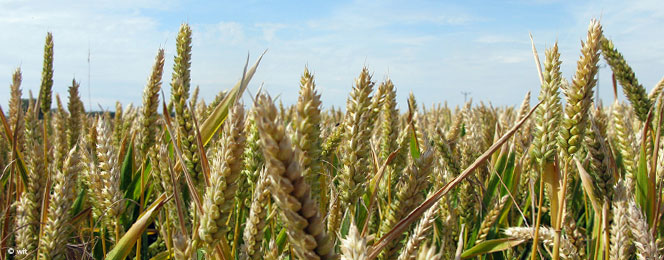
Barley
Barley

sukkot (סֻכּוֹת) = huts, temporary shelters. (In Exodus this autumn festival is called the festival of the asif, “ingathering”, and pilgrims donate products from their threshing-floors and wine-presses. Leviticus adds the rituals of dwelling in temporary huts for seven days.)

…and they shall not appear in front of God empty-handed; each man [shall give] according to the giving-capacity of his hand, according to the blessing that God, your god, has given to you. (Deuteronomy/Devarim 16:16-17)

Only Israelite men are required to make the three pilgrimages to the central sanctuary (which was in Shiloh for about 370 years, and Jerusalem for about 1,000 years).  But this week’s portion also encourages women, children, and slaves to go, while recognizing that the journey may not be possible for pregnant or nursing women. Each head of a household must bring the second tithe (a donation for the priests and the temple administration), and a sacrificial animal for God. But the donations must be in proportion to the family’s wealth, so nobody’s joy is dampened by having to give more than they can afford.

Pilgrimage for Sukkot

In the Torah’s previous instructions regarding the three festivals, rejoicing is mentioned only once, when Leviticus 23:40 says to take branches from four species of trees and rejoice for the seven days of Sukkot.

But in this week’s Torah portion, rejoicing is called for three times, once in the instructions for Shavuot and twice in the instructions for Sukkot.

(Although this Torah portion does not specifically mention rejoicing during Pesach, later passages in Ezra and Chronicles 2 mention rejoicing in Jerusalem during this festival.)

The requirement for rejoicing in the portion Re-eih includes the Levite, stranger, orphan, and widow, who were not mentioned in any of the earlier instructions on the three festivals. During Shavuot, the Torah portion says:

Rejoice in the presence of God, your god—you and your son and your daughter and your man-servant and your woman-servant, and the Levite who is within your gates, and the foreigner and the orphan and the widow … (Deuteronomy 16:11)

And during Sukkot:

Rejoice in your festival, you and your son and your daughter and your man-servant and your woman-servant, and the Levite and the foreigner and the orphan and the widow who are within your gates. Seven days you shall celebrate a festival for God, your god, in the place that [God] will choose, because God, your god, will have blessed you in all that comes to you and in all the doings of your hands, and there will be for you only joy. (16:14-15)

Feeling joy might be easy for the landowner who brings his offerings to the sanctuary, since he gives in proportion to his means, and he is celebrating that God blessed his agricultural endeavors with success.

But when the Torah addresses this landowner, it informs him that his family and his servants or slaves must also feel joy during the festivals. Furthermore, the Torah gives examples of four classes of people who are unlikely to own land or other independent means in a society built around inheritance through the male line: the Levites, whose pasture land is restricted and depend on donations; foreigners, who can lease but not inherit estates; orphans who have no fathers to provide for them; and widows, who are dependent on the mercy of relatives unless they have wealthy sons.  The Torah says that all of the disadvantaged people who live in the landowner’s town or village must also rejoice during the three festivals. Their joy becomes the landowner’s responsibility.

What can he do for them? According to the commentary of 19th-century rabbi Samson Raphael Hirsch, he must arrange for those who cannot travel to rejoice at home.  Everyone who can travel must come with him to the central sanctuary, to experience the joy of celebrating in the national community, whose people are dedicated to one god, and to one another.

Hirsch added that these festivals are also times that God appointed to meet the people at God’s sanctuary. The awareness of God’s presence, he wrote, brings the purest joy.

In the 11th century, Rashi (Rabbi Shlomo Yitzchaki) wrote that the phrase I translate above as “there will be for you only joy” means that if you bring everyone to God’s chosen place for a festival, God promises you will be happy.

I have observed this effect in my own life. Occasionally happiness lifts me when I am alone; more often it comes when I am with my beloved. But when I am singing with my congregation at services, my heart almost always rises. The only times this communal singing does not bring me joy are when someone in the group looks angry or miserable.

The unhappy people are like the poor foreigners in the Torah, alienated from the community where they live. Sometimes these “foreigners” cannot come to the place where God is; they are unable to travel spiritually. Then those of us who have greater means, like the landowners in the Torah, must make arrangements to help them rejoice in the spiritual state where they are.

Other times, the unhappy “foreigners” are able to travel, if we carry them with us. The Torah tells us not to neglect them, but to bring them to God’s place to celebrate with us.

Then “there will be only joy”. Complete joy happens only when everybody contributes, and nobody gets left out.

Passover: Children of Four Worlds

This week we pause in the yearly cycle of Torah readings to celebrate Passover/Pesach. The Passover ritual celebrates the exodus from Egypt—but not only by telling the story. The seder (“order” or agenda) that has evolved over that last 2,000 years has 13 sections of ritual plus dinner, punctuated by blessing four cups of wine.

To keep track of it all, Jews have a haggadah (“the telling”—plural haggadot), a book to work through during the long evening of ritual. But the old joke applies that wherever you have two Jews you have three opinions, so we keep writing new haggadot, retaining the basic elements but explaining them in new ways.

Some haggadot associate the four cups of wine with the four “worlds” of kabbalah, so that as we bless each cup we ascend one stage closer to God.

The first and lowest world is Assiyah (עֲשִׂיָה) = action. (From the verb asah, עָשָׂה = make, do.) Assiyah is the physical world we operate in. Its symbol is earth.

The second world is Yetzirah (יְצִירָה) = formation. (From the verb yatzar, יָצַר = form, shape.) Yetzirah includes intuitions, dreams, myth, and metaphor. Although the word yetzirah does not mean emotion, it is often associated with emotion because it is non-rational. Its symbol is water.

The third world is Beriah (בְּרִיאָה) = creation. (From the verb bara, בָּרָא= create.) Beriah includes inventing and designing in the stage of abstract ideas. Its symbol is air.

The fourth and highest world is Atzilut (אֲצִילוּת) = emanation. (Probably from the preposition eitzel, אֵצֶל= beside, next to.) The world of Atzilut is undifferentiated divine spirit, at a level we can barely imagine. Its symbol is fire.

Human beings operate in the world of assiyah, and approach awareness of God by rising up through yetzirah and beriah toward atzilut. This is the order in which we drink the four cups of wine on Passover. The fourth cup, representing atzilut, comes at the end of the evening, when we are exhausted and uninhibited.

During the first part of the seder (covered by the first two ritual cups of wine) we build up to the story of the exodus with songs and stories based on the number four, including “the four questions” about why this night is different from all other nights, and the description of four types of children (traditionally “the four sons”).

The four children are based on four passages in the Torah which tell parents what to say when their children express curiosity about Passover:

When your son will ask you in the future, saying: What are the rules and the decrees and the laws that God, our god, commanded you? Then you shall say to your son: We were slaves to Pharaoh in Egypt, and God brought us out from Egypt with a strong hand. (Deuteronomy/Devarim 6:20-21)

A traditional haggadah labels this son “the wise son” because he wants to know all the rules.

And it will happen that your son says to you: What is this service to you? Then you shall say: It is an animal-offering to God, because He pasach over the houses of the children of Israel in Egypt, by dealing a blow to Egypt but rescuing our houses. (Exodus/Shemot 12:26)

pasach (פָּסַח) = limped, skipped. (One possible meaning of the word Pesach is “skip over”.)

Tradition labels this son “the wicked son” on the grounds that he seems uninterested in what Passover might mean to himself.

And it will happen that your son asks you, in the future, saying: What is this? Then you shall say to him: With a strong hand God brought us out from Egypt, from the house of slavery. (Exodus 13:14)

Tradition labels this son “the simple son” because his question is elementary.

The Torah has no fourth question from a son about Passover, so the early rabbis found a fourth question implied in the following verse:

And you shall tell your son that day, saying: Because God did this for me when I went out from Egypt. (Exodus 13:8)

Tradition labels this son “the son who does not know how to ask”.

In an earlier post, I suggested that the four sons could correspond to the four sons of Aaron in the Torah. (See Shemini: Four Sons.)

But we can also look at these four children in terms of the four worlds of kabbalah. Here is the “Four Children” section in the haggadah I wrote this year:

Children of the Four Worlds

 Assiyah:  One kind of child (the so-called “simple son”) asks:  “Mah zot?  What is that?”  This is the child of Assiyah, the world of doing.  Assiyah people are most interested in practical action, the physical senses, and tangible things.

Yetzirah:  Another child (the so-called “wicked son”) asks:  “What does this ritual mean to you?”  This is the child of Yetzirah,the world of intuition, dreams, and metaphors.  Yetzirah people are most interested in personal symbolic meanings. They are introspective and find more truth in the arts than in the sciences.

Beriah:  A third child (the so-called “wise son”) asks:  “What is the meaning of the statutes, laws, and rules which our God has commanded?”  This is the child of Beriah, the world of the intellect.  Beriah people love abstract thinking.

Atzilut:  The fourth kind of child (the so-called “son who does not know how to ask”) is silent.  This is the child of Atzilut, the world of divine emanation, where all forms are aspects of God.  Atzilut people seek a life of mystery, ecstasy, and divine union.

Though every human has a particular strength, all four of these worlds are aspects of being fully human. We fail if we reject one of the worlds and try to exclude it from our lives.

Pause for a few moments and consider silently:  Am I spending too much of my energy in one of the worlds—Assiyah, Yetzirah, Beriah, or Atzilut?  Am I stuck in that world, that approach to life, as if it were an Egypt? Do I need to liberate myself so I can receive the blessings of a different world?


Vayikra: Sour, Sweet, and Salt

Humans tend to bring gifts to their gods. They have done it all over the world, from the beginning of history. In the Torah, the first human to offer a gift to God is Cain, the oldest son of Adam and Eve … and God rejects his offering. Religions help people to avoid the fear of being rejected by their gods by spelling out what gifts are and are not acceptable.

The first part of the book of Leviticus/Vayikra (And It Called) is devoted to instructions about offerings for the altar. What kinds of animal and grain offerings will be acceptable to God? The first Torah portion begins by considering animals for burned offerings.

If one brings an olah from the herd, he shall bring an unblemished male; he shall bring it to the opening of the Tent of  Meeting, liretzono before God. And he shall lean his hand upon the head of the olah, and it will be nirtzah for him, to atone for him. (Leviticus/Vayikra 1:3-4)

olah = an offering that is completely burned, so its smoke will rise to the heavens

liretzono = to be accepted for him

nirtzah = favorably received, acceptable, counted as good (from the same root as liretzonoרצה)

After an initial review of animal offerings, the Torah gives particulars about the minchah offering: a gift of homage to God, made from grain. (See my blog post “Vayikra: Gifts to the Giver”.) Embedded in the minchah instructions is a ban on any leavening or sweetener in a burned offering:

Every homage that you bring to God you shall make without chameitz; for you shall not bring any sourdough or any devash into an offering by fire to God. (Leviticus 2:11)

chameitz = leavened bread, fermented food

devash = syrup, bee honey, fruit nectar

Leavened loaves of bread can only be brought to the sanctuary for the priests and their families to eat; they must not be burned on the altar. Fruit syrup or jam can only be brought at the annual festival of first fruits, Shavuot, and the fruit preserves were also eaten by the priests.

Why are leavened bread and syrup are banned from burned offerings?  Philo of Alexandria, who lived 2,000 years ago, began a long line of Jewish commentatary comparing bread rising to a human puffing up with self-importance—the opposite of the humility needed to pay homage to God. Another view stresses the instruction in the book of Exodus/Shemot to eat unleavened matzah on Passover/Pesach in order to remember that the Israelites did not have time to let their dough leaven before escaping Egypt. Since matzah is “the bread of our affliction”, the Israelites presumably did not have time to watch bread rise during their years of slavery, either. According to 19th-century rabbi Samson Raphel Hirsch, leavened bread therefore represents political independence, which the Israelites achieved not by their own efforts, but only by following God’s Torah. Fruit syrup represents ownership of land where dates and other fruit trees grow naturally—another gift from God. Hirsch argued that an acceptable offering to God could only be something that the Israelites had acquired by their own efforts. (Presumably the Israelites put a lot of their own labor into making flour and tending their animals.)

I am not persuaded by either Philo or Hirsch. I suspect that the key lies in the way the ancient Israelites viewed leavening. For modern Americans, leavened bread is sweet and yeasty, and sourdough bread is an interesting variation. But the ancient Israelites had only sourdough leavening, and their word for leavened bread, chameitz, comes from the same root as the word for vinegar, chometz. In Biblical Hebrew, when something leavens or ferments itself, yitchameitz, it turns sour and sharp, whether it is flour becoming sourdough bread or grape juice becoming vinegar.

An offering that is going to straight up to God in smoke should not be sour. If we give ourselves to God in a sour mood, our offering will not be accepted.

Nor should an offering sent straight to God be sweetened, as if the donor wanted to make it more palatable to God. If we try to sweet-talk our way into God’s favor, or to adopt a sweetness that we do not feel inside, our offering will not be accepted.

After banning leaven and syrup in burned offerings, the Torah says that all offerings to God must be salted:

Every offering of your homage you shall salt with salt; you may not omit the melach of the brit of your God from your homage. You shall put melach on every offering of yours. (Leviticus/Vayikra 2:13)

melach = salt

brit = covenant, pact, alliance

Why is salt required for acceptance? Salt was not a rare commodity in Canaan; the Israelites used to quarry rock salt near the Dead Sea, which the Hebrew Bible calls the Sea of Salt. The salt quarries between that sea and the city of Sodom may be the “Valley of Salt”, the site of at least two battles in the Hebrew Bible. When God annahilates Sodom and Gomorrah in the book of Genesis/Bereishit, Lot’s wife looks back at Sodom and becomes a pillar of salt (one of many strange salt formations left by the evaporation of the Dead Sea). In Deuteronomy/Devarim Moses warns that when the Israelites worship idols in the future, God will destroy their land, and visitors will compare its barrenness to burning with sulfur and salt.

Yet the proper care of a newborn infant included bathing it in water and rubbing it with salt, according to the book of Ezekiel/Yechezkeil; and the prophet Elisha “heals” a contaminated spring with a dish of salt in 2 Kings/Melakhim. Salt is both a preservative and a condiment for food. Thus the Hebrew Bible associates salt with both death and life.

This week’s Torah portion refers to salt as a form of covenant. A covenant of salt also shows up in the book of Numbers/Bemidbar. After disposing of Korach’s threat to the rights of priests, God tells the high priest Aaron:

All holy upraised offerings that the children of Israel raise up to God, I give to you and to your sons and to your daughters with you, as a decree forever; it will be a brit melach forever; it is before God for you and your offspring with you. (Numbers/Bemidbar 18:19)

And in the second book of Chronicles, Aviyah, king of Judah, says:

Listen to me, Yaravam and all Israel! Don’t you know that God, the god of Israel, gave kingship to David over Israel forever, to him and to his sons, a brit melach? (2 Chronicles/2 Divrei Hayamim 13:4-5)

Salt apparently makes a covenant especially unbreakable and long-lasting. Many commentators attribute this to the fact that salt was the main preservative used by the Israelites. But salt was also their universal seasoning, set on the table for every meal. Eating a man’s salt was an idiom for being either his friend or his dependent. So a covenant of salt might imply not only durability, but also dependence or even friendship.

Now that we reach out to God by praying instead of by burning animals and matzah, we can apply the ideas in Leviticus about leaven, syrup, and salt in a more subtle way. All too often, when we stand before other people, we have to paste on a sweet smile. But when we stand before God, we need to abandon any false sweetness, as well as the pride and the sourness implied by leavening. And we need to be serious about life and death, offering our whole selves, and acknowledging that we all eat our salt at God’s table.

Bo: The Dog in the Night

To me, dogs are pets. Most dogs have appealing personalities, and the love between dog and human is real. I rarely cry, but I cried when our dog died.

Canaan dog

In the Torah, dogs are bad news. The ancient Israelites did not domesticate dogs until late in the First Temple period, even though their neighbors had long been training dogs for hunting, herding, and guarding. So most of the 24 references to dogs in the Hebrew Bible view them as disgusting feral scavengers. Calling a man a dog (or worse, a dead dog) means that he is the lowest of the low.

The first appearance of the Hebrew word for dog, kelev, is in this week’s Torah portion, Bo (“Come”).

Moses said: Thus said God: In the middle of the night, I Myself will go out in the midst of Egypt. And every firstborn in the land of Egypt will die, from the firstborn of Pharaoh sitting on his throne, to the firstborn of the slave-woman who is behind the millstones, and every firstborn beast. Then there will be loud wailing in all the land of Egypt, the like of which has never happened, and the like of which will not happen again. But as for all the children of Israel, not a dog yecheratz its tongue against man or beast; in order that you shall know that God makes a distinction between Egypt and Israel. (Exodus/Shemot 11:4-7)

yecheratz = will cut, will sharpen, will use a sharp instrument, will decide

On the night of the tenth plague, the death of the firstborn, not a dog will use its tongue as a sharp instrument against the Israelites. In other words, while God is killing Egyptians, not even a dog will snarl or bark to threaten the Israelites.

The verses translated above include two contrasts between the highest and the lowest. First, God says all the firstborn of Egypt will die, from the firstborn of Pharaoh sitting on his throne, to the firstborn of the slave-woman who is behind the millstones. The phrase “slave-woman behind the millstones” is a translation of a phrase that an Egyptian document uses to indicate someone of the lowest possible social class. In other words, God will make no exceptions; everyone belonging to Egypt will suffer, regardless of social position, and regardless of guilt or innocence.

Next, the Torah says that everyone belonging to Israel will be safe from all threats: from the highest power possible–God Itself–to the lowest danger–dogs. In the middle of the night, while God is killing the Egyptian firstborn, and the Israelites are eating their Passover lamb, roaming dogs  will not bite any Israelite humans or beasts. They will not even bark.

This reminds me of the dog that did not bark in the night in “Silver Blaze”, a Sherlock Holmes story by Arthur Conan Doyle. Inspector Gregory asks Holmes, “Is there any other point to which you would wish to draw my attention?”

“To the curious incident of the dog in the night-time.”

“The dog did nothing in the night-time.”

“That was the curious incident.”

Sherlock Holmes has deduced that the guard-dog was silent in the middle of the night because the intruder was not a stranger, but the dog’s owner.

The passage in Exodus/Shemot contrasts the loud wailing of the Egyptians with the silence of the dogs. Dogs get agitated when their owners start screaming and wailing, and they respond by whimpering and barking. The dogs who will not growl or bark during the night of the death of the firstborn clearly do not have Egyptian owners. The Israelites who wrote down the Torah thought of dogs as ownerless wanderers, so the silent dogs do not belong to the children of Israel, either. Whose dogs are they?

And it was at midnight when God struck every firstborn in the land of Egypt, from the firstborn of Pharaoh sitting on this throne, to the firstborn of the captive in the dungeon, and every firstborn beast. (Exodus 12:29)

God goes from house to house in Egypt that night, skipping over only the houses of the Israelites. But the dogs roaming in the streets are silent, like the dog in “Silver Blaze”–because they recognize their owner.

I want to be like a dog. I don’t want to be the lowest of the low. But I do want to recognize my owner.

I have often wondered why the scout in the book of Numbers/Bamidbar who argues that the Israelites should go ahead and enter Canaan, and trust God to give them the land, is named Caleb, Kaleiv in Hebrew. His name comes from the same root as kelev, “dog”. Yet Caleb’s actions are all virtuous, not base and low, the way most dogs in the Torah behave. Perhaps Caleb is named after the dogs in Egypt—because he, too, recognized God.

Shemini: Aaron’s Four Sons

Four sons.  We have completed the week of Passover/Pesach, with its ritual commemorating the exodus from Egypt.  For at least 1,500 years this ritual has included a description of the “four sons”—four kinds of children the parent must teach about the exodus.

Now I am preparing to go to Ashland, Oregon, for a weekend learning from Rabbi Zalman Schacter-Shalomi, and I will be telling a new Torah monologue inspired by the Torah portion of the week, Shemini (“Eighth”).  In this portion, Aaron and his four sons emerge from seven days of seclusion after Moses anointed them as priests, and  engage in the final ritual inauguration of  the mishkan, the dwelling-place for God.  Only two of Aaron’s four sons survive the day.

The four sons in the Passover reading are based on four places in the Torah where a father tells his son the reason for performing the Passover ritual.  Three of these answers are preceded by a question by a hypothetical son (Deuteronomy 6:20, Exodus 12:26, and Exodus 13:14).  The fourth place, Exodus 13:8, merely implies it is the answer to a child’s question.  The rabbis of the first several centuries C.E. took these lines out of context in order to describe four kinds of children:

the “wise son” who wants to know all the rules;

the “wicked son” who thinks Passsover has nothing to do with him;

the “simple son” who merely asks “What is this?”;

and the son who does not even know how to ask.

In the Torah, all four answers are variations on “Because God freed us from slavery in Egypt”.  The answers in the Torah are clearly addressed to the descendants of the Israelites in general, while the elaborations in the Passover ritual refer to four general types of children.  I have never seen a haggadah (a book telling the Passover ritual from start to finish) that connects the “four sons” with Aaron’s four sons.  But next year, I hope to write one.

Two years ago I analyzed what happened to Aaron’s two older sons, Nadav and Avihu, in my blog “Shemini: Strange Fire”.  As I wrote my new Torah monologue the past week, I became interested in the psychology of the two younger sons, the survivors who were not consumed by the fire from God:  Elazar and Itamar.

In birth order, the sons of the high priest Aaron and his wife, Elisheva, are:

Nadav = Willing Donor

Avihu = He Is My Father

Elazar = God Helps

Itamar = Island of Date Palms

Although the Torah gives reasons for the names of many of the people in its stories, it is silent about these four.  Here is what I imagine:

Elisheva had a dream when each of her four sons was born in Egypt. She saw her firstborn walking toward God’s throne, bringing God a glorious gift.  So she named him Nadav, “Willing Donor”.  And Nadav lived up to his name.  Whenever he learned another way to worship the Holy One, he threw his whole soul into it.  When the men asked his father, Aaron, to make an idol for them to worship, Nadav said, “No, don’t do it!  Our god only appears in fire, or in a pillar of cloud.  You can’t drag that holiness down into mere metal!” Later, when holy fire poured forth from God and consumed the animals on the new altar before the mishkan (the new, authorized dwelling-place for God), Nadav picked up his fire-pan in an ecstasy of desire to give his soul to the true god, the god of fire.  And his soul was consumed.

When her second son was born, Elisheva dreamed he was toddling after Aaron, mimicking his father’s walk.  So she named him Avihu, “He is My Father”.  And Avihu lived up to his name.  From his first step, he was always imitating Daddy.  When the men asked Aaron for an idol, Avihu said, “Yes, do it!  Our god is so great, He can appear anywhere, even in an idol.”  And when Aaron made the Golden Calf, Avihu built the fire to melt the gold.  Later, Avihu watched his father pick up an incense-pan and follow Moses into the inner sanctuary of the new mishkan.  Both men came out and blessed the people, and then a river of holy fire poured over the altar.  Avihu took his own pan and walked toward the Holy of Holies.  And the fire from God consumed his soul.

When her third son was born, Elisheva saw a shepherd’s staff moving all by itself, pointing out hazards along the road.  And she saw her baby following the staff carefully, and walking in safety.  So she named him Elazar, “God Helps”.  And Elazar lived up to his name.  He took his job as a Levite, and then as a priest, very seriously, and he never acted without checking to get the details right.  When the men asked Aaron for an idol, Elazar said, “No, don’t do anything without Moses’ approval.  And if we have to spend the rest of our lives waiting for Moses to come back down the mountain, so be it.”  Later, when holy fire poured over the new altar, Elazar reached for his fire-pan, wanting to give something, anything, to the all-powerful God.  But he drew his hand back, because Moses had not commanded it.  And he lived to become the high priest after Aaron died.

When her fourth son was born, Elisheva was exhausted.  She didn’t dream about anybody.  She just had a vision of an island covered with palm trees, date palms.  So she named the baby Itamar, “Island of Dates”.  And little Itamar turned out to be a sweet and loving boy. When the men asked Aaron for an idol, Itamar said nothing, because he did not understand enough about God—and because he was so much younger, he was not used to being listened to.  Later, when holy fire poured over the new altar, Itamar could not even remember where he had left his fire-pan, and he felt no impulse to bring incense to God.  He just wanted to survive the awesome spectacle, and learn his new priestly duties, and make his own life in whatever free time was left to him.

The Torah monologue I’ll tell in Ashland is from the viewpoint of Itamar.  But maybe next year I will write another Torah monologue, from the viewpoint of Elisheva.

And next year, God willing, I will write a haggadah for Passover in which the four sons of Aaron and Elisheva are the four sons of  Passover.  But I won’t list them by birth order.  Elazar will be the “wise son”, the one who wants to learn all the rules, so he will make no mistakes in his service to God.

Nadav. as I imagine him, is like the “wicked son”, the one who thinks the religion of his fathers has nothing to do with him.  He not really wicked, since he willingly gives himself to God.  But he does not listen to his father Aaron or his uncle Moses; he brings his own “strange fire” to God.

Avihu, in my book, is the “simple son”, awed by all the ceremony.  All gods are exciting to him, and he is just as willing to worship the Golden Calf as his father was to make it.  When Aaron repents and commits to the god of Moses, so does Avihu.  But without real understanding, he flings himself into the impulse of the moment.

Itamar, Aaron’s youngest son, is like the son who does not know how to ask.  He does not understand the new family business of priesthood, but he is willing to learn it.  He does not understand the impulse to give everything to God, but he understands the desire to give to other human beings.

I have to admit I am more like Nadav than Elazar, making up my own mind regardless of what my my predecessors taught.  So I had better be careful when I play with fire. At least I am not impulsive, the way I see Avihu.  Most of all, I can identify with Itamar, the novice who does not even know what to ask, and who tries to serve both God and his own life and loved ones.

Which son do you resemble?