What does “redeem” mean?
A pledge is “redeemed” when a promissory note or token is exchanged for money or real property. Next week’s Torah portion, Bechukotai, explains the rules for redeeming an animal or a person that has been pledged to God by delivering its equivalent to the priests. (See my post Bechukotai: Gender, Age, and Personal Value.)
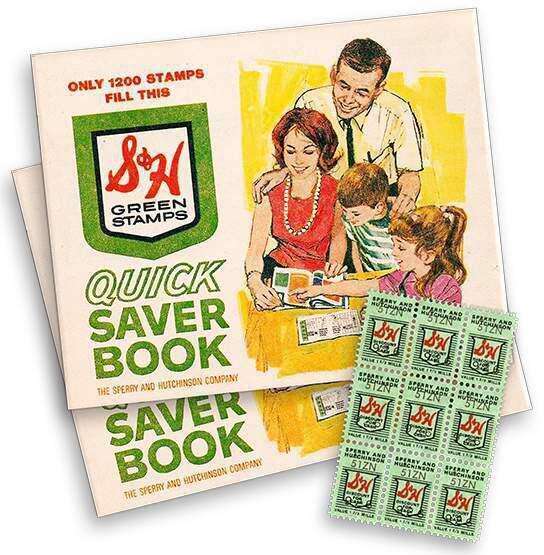
I first learned the word “redeem” when I helped my mother redeem trading stamps issued by grocery stores (a pledge to their customers) for a place setting or an electric mixer.
But the primary meaning of “to redeem” is to restore someone or something to its original or rightful state. In the Hebrew Bible, property that has been sold can be repurchased by its original owner. A human being trapped in a bad situation, such as slavery, can be ransomed or otherwise rescued and freed. Today we also say that if you damage your reputation, you can redeem yourself with good deeds.
Restoration to one’s rightful state may also be the source of a widespread Christian concept of redemption: that the death of Jesus redeemed humans, or a subset of humans, from original sin (which is not a Jewish interpretation of the Garden of Eden story) and from death in some way. Christian doctrine might be claiming that Jesus’ sacrifice redeemed humanity by making it possible for people to return to their original, pre-Edenic state.
Obviously the Christian variant of redemption as restoration is absent from the Hebrew Bible. But a recurring theme is that God redeemed Israelite (or Judahite) people from bondage in Egypt and exile in Babylon, restoring them to their rightful condition of freedom.
This week’s Torah portion, Behar (Leviticus 25:1-26:2), declares that human beings can redeem individual people and their ancestral farmlands—and are obligated to do so, in order to restore the order God decreed. The Israelite people should, by rights, serve only God, not any slave-owner. And if poverty forces someone to sell the family farm, the land should return to the family.
“The land must not be sold in perpetuity. Because the land is mine; for you are resident aliens with me. So concerning all land you hold, you must provide ge-ulah for the land.” (Leviticus 25:23-24)
ge-ulah (גְֱאֻלֱָה) = redemption. (From the root verb ga-al, גָּאַל = redeem, ransom, rescue.)
At any time, a man or his kinsman can redeem a plot of land by paying the current owner a fair price.
If your kinsman becomes poor and sells some of his holding, his nearest go-eil must come to him and ga-al what his kinsman sold. And if a man who has no go-eil, but whose hand grows great [who prospers] and he finds enough for his ge-ulah, then he calculates the years of his sale and he refunds the remainder to the man to whom he sold it, and he returns to his holding. And if he cannot find in his hand enough to refund it, then what he sold will be in the hand of the purchaser until the year of the yoveil; then it will be released in the yoveil and return to [the original owner’s] holding. (Leviticus 25:25-28)
go-eil (גֺּאֵל) = redeemer.
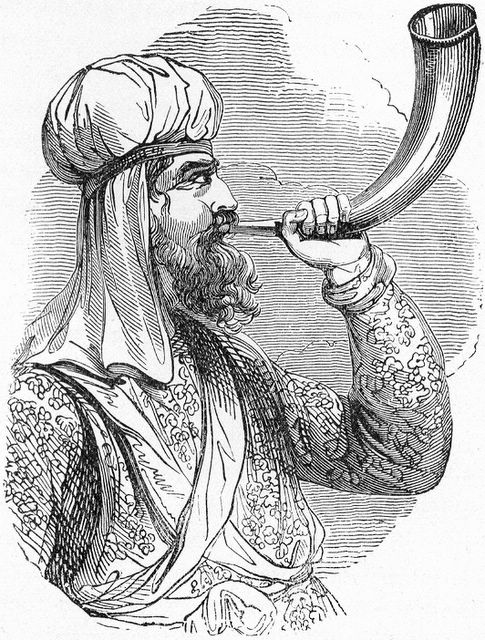
yoveil (יוֹבֵל) = ram; year of the ram’s horn; year of summoning home; “jubilee” in many English translations. (Every fiftieth year is a yoveil.)
In other words, farmland is leased, rather than truly sold. Eventually it returns to the family that originally received it when God was assigning lands in Canaan.1
One way or another, any plot of farmland that is sold must return to the original family. This is not the case for all real estate; if a man sells a house in a walled town, it may only be redeemed during the first year after the sale. Then it cannot be reclaimed, even in the yoveil—unless it belonged to a Levite. Levites do not own farmland, so their houses count as their holdings, and can be redeemed in any of the usual ways.2

The Torah portion Behar recognizes that sometimes the head of a household (always male) must sell some of his farmland because of poverty. If he falls deeper into debt, he must sell himself as a slave.
This week’s Torah portion permits Israelites to own the slaves they capture in war or buy from the families of resident aliens in perpetuity—that is, for the rest of the slaves’ lives. They can even bequeath these slaves, and any children the slaves have, to their heirs.
But if the example is reversed and an Israelite sells himself as a slave to a resident alien, he can be redeemed through the same methods that Israelite land can be redeemed. At any time, one of his kinsmen can redeem him, or he can redeem himself, by paying his owner the correct price.
And he will calculate with his purchaser from the year he sold himself to the year of the yoveil, and the silver from his sale will be [divided] according to the number of years. The time period [the slave] was with [the owner] will be like the time period of a hired laborer. (Leviticus 25:50)
In other words, the purchaser paid a lump sum for all the years the slave would be working for him, up to the yoveil, when he would automatically go free. The years the slave has already worked are subtracted from the purchase price, and the go-eil refunds the owner for the years when the slave will not be working after all.
Like a wage laborer [hired] year by year he must be … And if he is not ga-al in these [ways], then he will leave in the year of the yoveil, he and his children with him. Because the Israelites are servants to me, my servants whom I brought out from the land of Egypt! (Leviticus 25:53-55)
Just as God is the owner of all land and leases certain plots to certain families, who may sublet their land to others for money, God is the owner of all people and leases them their lives, which they may sublet to others for money. But if they are not redeemed sooner, all sub-leases are erased in the yoveil year.
You must make every fiftieth year holy, and you must proclaim emancipation in the land for all its residents. A yoveil it will be for you, and you must return each man to his holding, and you must return each man to his family. (Leviticus 25:10)
Every Israelite who was once a farm owner regains that identity. And every single Israelite is once again free.
This week’s Torah portion asks us to imagine nationwide redemption every 50 years. What would it be like if your father sold the family land, and then 50 years later it was suddenly given to you? What would it be like to grow old as a slave, and then suddenly go free? Would your previous identity be restored?
The idea of the family farm remains important in many countries today, including the United States. A farm that has been passed down through generations is a source of pride. In some cultures, selling the farm is a source of shame. But there are no modern laws to reverse a sale of farmland.
When a house in town changes hands, today as well as in this week’s Torah portion, the sale is viewed as merely a real estate transaction. I remember the house I lived in as a child over 50 years ago. I loved the lady-slippers under the pine trees that screened our front yard from the street. I planted my own patch of the garden, and I caught salamanders in the swampy woods in back. I have memories of every room inside the house, as personal as the bite-marks I made on the windowsills when I was teething.
The last time I went back east and drove past that house, I saw that someone had cleared all the trees in front, turned the garden into lawn, and built two additions that changed the appearance of the whole house. The woods in back was the only thing that still looked like my childhood.
What if that house were returned to my family, additions and all, in the next yoveil year? It would not really be my old house. And I would not want to move back to New England now that I have built a life in Oregon.
What about redemption as emancipation from servitude? Slavery was common not only in biblical times, but well into the 19th century C.E. Next month on June 19, the United States will celebrate the federal holiday of Juneteenth, which began in 1865 as a celebration of the emancipation of black slaves. They called that day the Jubilee, the English word for yoveil.
Today outright slavery is rare. But modern Western nations do have a yoveil year for freedom from meaningless labor; it is called a “retirement age”. Some people postpone retirement, either because they earn money through work that is personally meaningful, or because the funds they paid into government and private retirement accounts are too skimpy to live on. But for the rest of us retirement age means freedom. Finally we can dedicate our time to feeding our souls, not just our bellies.
Imagine reclaiming the God-given parts of your soul that you had to neglect for so many years. Imagine releasing a spouse, a parent, or an adult child from your expectations, enabling them to redeem their own souls.
And according to this week’s Torah portion, you may not have to wait until old age. If you have the means, the courage, and the mental resources, you can redeem yourself at any time. Or a close relative, such as a spouse, may help you to do it. There are more paths to redemption than we think.
- The divine assignment of land by family begins when Joshua leads the conquest of Canaan; see Joshua 11:23 and 13:8 through 17:18.
- Leviticus 25:29-33.











 Questioning Torah