Haftarat Eikev—Isaiah: Trust in the Darkness

Darkness is bad; light is good. Darkness means ignorance, light means understanding.
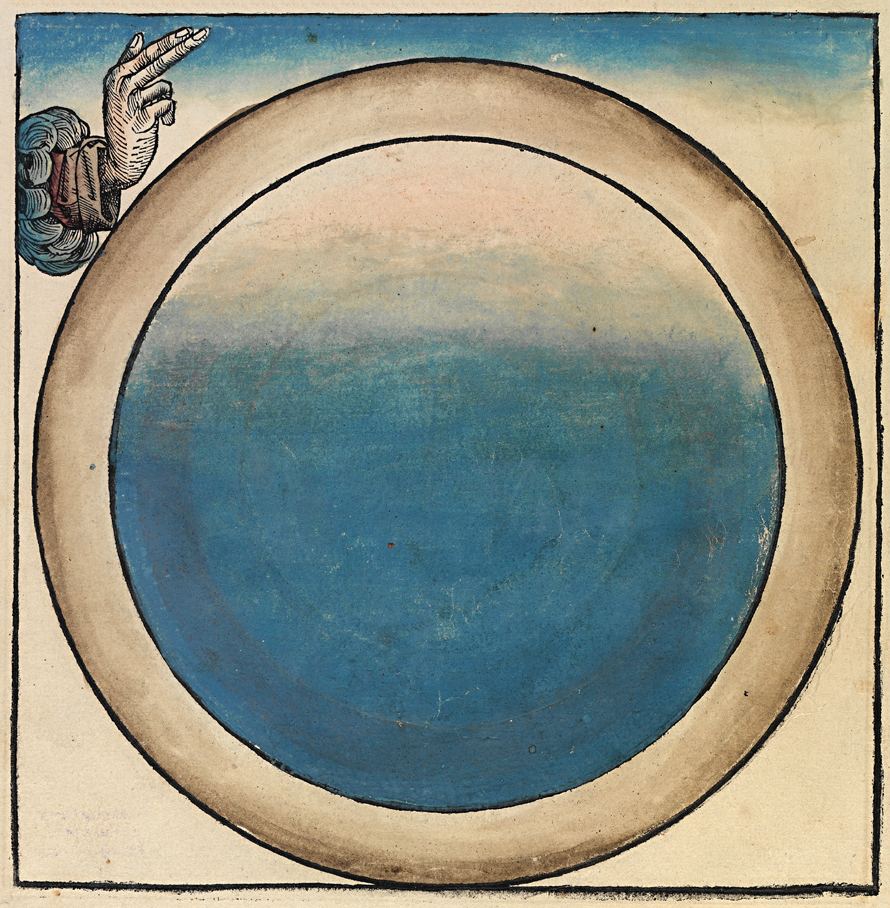
First Day of Creation, Nuremburg Chronicle, 1493

These pairings are common in biblical Hebrew and in English today—probably because humans function better when we can see clearly. The book of Genesis begins with darkness.

And God said “Let light be!” and light was. And God saw the light, that it was good, and God separated the light from the darkness. (Genesis 1:3-4)

Both meanings of darkness versus light appear in this week’s haftarah reading, Isaiah 49:14-51:3, which accompanies the Torah portion Eikev in Deuteronomy. Jews call this week’s reading the “Second Haftarah of Consolation”—consolation after the annual fast of Tisha Be-Av, which commemorates the destruction of Jerusalem’s temple by the Babylonians in 587 B.C.E. (See my post two weeks ago: Isaiah & Lamentations: Any Hope?)

Babylonian King Nebuchadnezzar II deported most of the leading citizens of Judah and its capital, Jerusalem, to Babylon. About fifty years later, in 539 B.C.E., the Persians conquered Babylon and gave all the exiles there permission to return to their homelands. Many of the Judahites did not want to return; they were comfortable in Babylon, and Persian rule was benign.

The prophet of Second Isaiah1 does not challenge the biblical assumption that God punishes disobedient populations of Israelites by letting their enemies win wars. But his main message is that God’s punishment is now over, and if only they return to Jerusalem and rebuild its temple, God will reward them.

In this week’s haftarah, the prophet imagines God puzzling over why so many Israelites in Babylon have not returned.2 God asks:

"Why, when I came, was nobody there?
I called, and nobody answered!
Is my hand really too short to redeem?
And is there no power in it to rescue?” (Isaiah 50:2)

God can make darkness

Second Isaiah reminds his audience that God has plenty of power, enough to dry up the sea, and adds that God said:

“I clothe the skies in kadrut,
And turn their coverings into sackcloth!" (Isaiah 50:3)

kadrut (קַדְרוּת) = darkness (in most English translations; but this word is a hapax legomenon, appearing only here in the Hebrew Bible, so the translation cannot be cross-checked. The more common words for darkness are choshekh and chasheikhah).

The skies are normally covered with diaphanous clouds, but God can turn them into sackcloth, the crude black fabric worn for mourning in the Hebrew Bible. One 12th-century commentator explained: “Some understand it to refer to an eclipse of the sun, when the sky becomes obscure in the middle of the day, and appears as if covered with sackcloth, which is usually black.” (Ibn Ezra)3

A 17th-century explanation is: “The Holy One said: I have done even more in Egypt. I clothed the skies in black. That is to say, I caused three days of darkness in Egypt.” (Tze-enah Ure-enah)4

Either way God, who created light and saw that it was good, also has the power to afflict whole populations with miraculous darkness, which is bad.

People walk in darkness

The prophet of Second Isaiah points out that he keeps on patiently communicating what God tells him, and ignores the people who yank his beard and spit on him. Then he asks them to trust God despite the lack of visible evidence—a metaphorical darkness.

Who among you is in awe of God,
Paying attention to the voice of [God’s] servant?
Though he walks in chasheikhim,
And there is no radiance for him,
Yivtach in the name of God,
And lean on his God. (Isaiah 50:10)

chasheikhim (חֲשֵׁכִים) = darknesses. (Plural of chasheikhah, חֲשֵׁכָה = darkness, a variant of the common Hebrew noun for darkness, choshekh, חֺשֶׁךְ.)

yivtach (יִבְטַח) = he will trust, he trusts, let him trust.

Commentators have interpreted this verse two different ways. One interpretation is that the prophet asks a rhetorical question, recognizing that nobody in Babylon is paying attention to him. The prophet trust in the name of God and leans on his God even though he “walks in darknesses”—in other words, bad things happen to him while he is prophesying.5

The other interpretation is that the prophet’s question is genuine, and he goes on to address anyone who actually is paying attention to him and does revere (but does not quite trust) God. Second Isaiah recognizes that such a person “walks in darknesses” of ignorance and misunderstanding, and begs him to have faith that God will reward him for returning to Jerusalem. Those who subscribe to this interpretation of the verse translate yivtach as “Let him trust”.

False enlightenment

In the next verse, Second Isaiah warns the exiles against inventing their own enlightenment.

But hey, all of you igniters of fire,
Clasping burning arrows!
Walk by the flame of your fire,
By the burning arrows you lit!
This comes from my hand to you:
In a place of grief you will lie down. (Isaiah 50:11)

What kind of fire are these Judahites igniting? Rashi wrote that the fire is God’s wrath, and that my hand in the fifth line refers to God’s hand, which will punish them.6

Other commentators have identified the fire in this verse as the manufactured light of false understanding, and my hand as the prophet’s hand warning the exiles that they will come to grief if they persist in their false beliefs . For example, 21st century commentator Robert Alter wrote:

“The poet now turns around the imagery of the light 180 degrees. Instead of the radiance God provides that liberates from darkness, there are those who prefer the light generated by their own fire. Whether this is simply arrogant self-reliance or the false light of fabricated gods is not clear. But this is a destructive source of light, its burning rather than its illumination salient in the language of these lines.” (Alter)7

I believe that this verse is from the prophet’s point of view. He address the exiles who are in the dark about God’s plans, and invent their own version of reality, believing they are enlightened when they choose to stay and assimilate in Babylon. But ignoring God’s prophet and following your own opinion is as dangerous as hugging burning arrows. The false light of their self-ignited fires will only lead to grief.

Ibn Ezra wrote that the last line, In a place of grief you will lie down, means: “You shall die in sorrow.”8

Tze-enah Ure-enah says it means: “You will all be burned with wrath from the Holy One. This is to say, the fire from His nose [and therefore] … You will lie in mourning; you will lie in every sickness. You will have no strength against your enemies.”9

In the 21st century, Rabbi Steinsaltz wrote that Second Isaiah is saying: “You, however, mistakenly consider yourselves enlightened. … Guard your flimsy light as best you can and follow it. … you will lie in suffering, without peace, consumed by worry and doubt. The light you produced will fade, and you will be left in the dark.”10


Walking in darkness is not easy. How do you pick your direction? How do you find the light switch, get to the place of enlightenment, or arrive at a good future?

I confess I am like the exiles from Judah whom Second Isaiah keeps pleading with. I may be in awe of God, but I do not trust God to do anything for me personally, because I cannot view God as a person. I do not trust any prophet who claims God-given authority, either. Instead, I try to use verifiable facts and my own reason to create my own illumination so I can choose my own way through life. Am I actually clasping burning arrows?

I doubt it. As I reflect back on my seventy years of life, I can see where I stumbled in the darkness of ignorance. I subjected myself to the most danger and grief when I was young and naïve, and trusted other people’s opinions too much. But I survived, and made better decisions, and grew. And now my life is good, sometimes even radiant.

Back in the 6th century B.C.E., some of the exiles in Babylon did return and rebuild Jerusalem and its temple under the leadership of Ezra and Nehemiah, who have their own books in the bible. Others stayed in Babylonia under the Persians, and became a thriving community with many rabbis and scholars. By 500 C.E. there were two versions of the Talmudic collection of Jewish laws, legends, and arguments: the Jerusalem Talmud and the Babylonian Talmud.

Maybe there is more than one path to enlightenment.


  1. “Second Isaiah” (or Deutero-Isaiah) starts with chapter 40 of the book of Isaiah. The first 39 chapters of the book report the prophecies of Isaiah (Yeshayahu) son of Amotz in the 8th and 7th centuries B.C.E. in Judah. A later scribe appended the poetry of one or more unknown prophets living among the Judahites in Babylon in the 6th century B.C.E. For convenience, I refer to that narrator in Second Isaiah as “he”.
  2. See my post: Hafatarat Eikev—Isaiah: Homesick or Scared?
  3. Rabbi Abraham ben Meir ibn Ezra, translation in www.sefaria.org.
  4. Tze-enah Ure-enah, compiled by Rabbi Jacob ben Isaac Ashkenazi, translation from Yiddish in www.sefaria.org.
  5. This is the view of Ibn Ezra (see footnote 3).
  6. Rashi is the acronym of 11th-century Rabbi Shlomoh Yitzchaki, consulted by all subsequent Jewish commentators.
  7. Robert Alter, The Hebrew Bible, Volume 2: Prophets, WE.W. Norton & Co., New York, 2019, p. 793.
  8. Ibid. ibn Ezra, my footnote 2.
  9. Ibid. Tze-enah Ure-enah, my footnote 3.
  10. Rabbi Adin Even-Israel Steinsaltz, The Steinsaltz Nevi-im, Koren Publishers, Jerusalem, 2016, quoted in www.sefaria.org.
Haftarat Eikev—Isaiah: Homesick or Scared

My lord God opened my ears,
And I, I did not rebel;
I did not shrink back.
I gave my back to floggers,
And my cheeks to [beard-] pullers.
I did not hide my face
From shaming and spittle. (Isaiah 50:5-6)
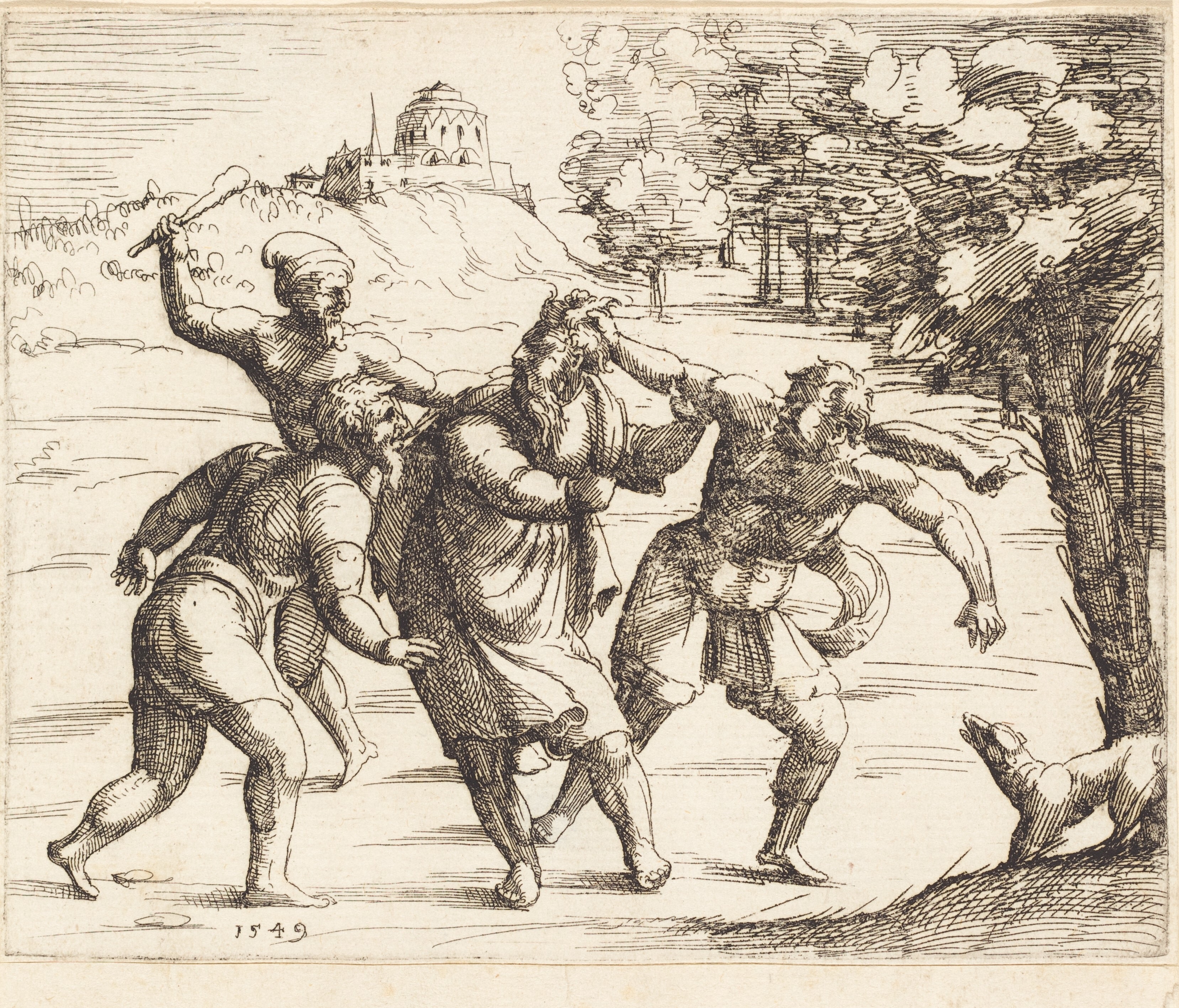
Isaiah Accepts Mockery Because of His Faith, by Augustin Hirschvogel, 1549

Many prophets in the Hebrew Bible report being abused because people do not want to hear their message—usually that if they don’t stop worshiping idols and cheating the poor, God will punish them. The unnamed prophet known as “second Isaiah” has a different message, but it, too, is unpopular.

This prophet probably wrote Isaiah chapters 40-66 after the Persian emperor Cyrus took Babylonia in 539 B.C.E., which was about 47 years after the Babylonians burned down Jerusalem and finished deporting the survivors to their own capital. Cyrus instituted a policy allowing his new subjects to return to their homelands, rebuild their temples, and engage in local self-rule. Some of the exiles from Jerusalem did return, under the leadership of Ezra and Nehemiah. But many more remained in Babylon, where life was not bad under the Persians.

Second Isaiah tries to persuade all the exiles to return—especially in the passages known as the seven “Haftarot of Consolation”, which Jews read at Shabbat services between Tisha Be-Av (the annual day of mourning for the Babylonian destruction of Jerusalem and its temple in in 586 B.C.E.) and Rosh Hashanah (the Jewish new year).

This week’s haftarah, Isaiah 49:14-51:3, is the second “Haftarah of Consolation”. Second Isaiah offers two different reasons why the people from Judah should abandon their new lives in Babylon and return to Jerusalem—and then he reports that his audience is abusing him.

First reason to return: Homesickness

At the beginning of the second Haftarah of Consolation, second Isaiah personifies “Zion”: the name of a hill in Jerusalem that is often used poetically to refer to the whole city, or even all of Judah. He depicts Zion as the mother of the Judahites in Babylon, forlorn because she has lost her children. She is also forlorn because she thinks she has lost her God. Zion says:

"God has forsaken me,
My lord shekheichani!" (Isaiah 49:14)

shekheichani (שְׁכֵחָנִי) = has wiped out all memory of me. (A piel form of the verb shakhach, שָׁכַח = forget.)

God replies to Zion:

"Does a woman tishkach the baby she bore,
Lose compassion for the child of her womb?
Even if tishkachnah,
I myself, lo eshkacheikh.
Hey, I have engraved you on my own palms.
Your walls are always in front of me.
Your children hasten.
Those who ravaged and ruined you will leave." (Isaiah 49:15-19)

tishkach (תִשְׁכַּח) = she forgets. (A kal form of shakhach.)

tishkachnah (תִשְׁכָּחְנָה) = she would forget her. (A kal form of shakhach.)

lo eshkacheikh (לֺא אֶשְׁכָּחֵךְ) = I would not forget you. (lo = not + a kal form of shakhach.)

When Zion’s children arrive, God says, she will be crowded with settlers. Furthermore, her children will be tended and returned by the kings of foreign nations—an allusion to the rulers of the new Persian empire.

"And they will bring your sons in their bosoms,
And your daughters they will carry on their shoulders.
Kings will be your babysitters,
And their princesses will be your wet-nurses." (Isaiah 49:22-23)

Picturing the land of Zion as a mother longing for her missing children might soften the hearts of the exiles living in Babylon. (See my post: Haftarat Eikev—Isaiah: Abandonment or Yearning?) If they believe their country misses them, they might discover they miss their country. And homesickness can be a strong motivator.

Then second Isaiah’s focus shifts to the estrangement between Zion and God.

Second reason to return: Safety in obedience

Addressing the Judahite expatriates, the children of Zion, second Isaiah reports:

Thus said God:
"Where is the divorce document of your mother, whom I sent away?
And to which of my creditors did I sell you?
Hey, you were sold because of your sins,
And your mother was sent away because of your revolts." (Isaiah 50:1)

Several prophets compare the relationship between God and the Israelites to a marriage in which the wife (Israel) cheats on her husband (God). They imagine God divorcing Israel by sending her out of the house, then welcoming her back later.1 Sometimes the unfaithful wife stands for the Israelites; sometimes the Israelites are called the children of the unfaithful wife.

In second Isaiah’s iteration of this analogy, being “sent away” expresses both the metaphorical divorce and the actual relocation of the Israelites from Judah to Babylon.

Many prophets in the Hebrew Bible predict that if the Israelites persist in worshiping other gods and/or being unethical to the poor, God will punish them by granting foreign armies victory in battle. Here, second Isaiah reports that God carried out that punishment—and then some. After the Babylonian army devasted Judah, God divorced Israel and sold her into slavery.

There is no divorce document, and God has no creditors to pay off by selling a family member as a slave. God simply reacted to the sins and revolts of the Judahites, which were so bad they deserved two more punishments after military defeat: exile and slavery under the Babylonians.

But now things have changed; the Persians have taken over the empire, and the people deported from Judah are no longer slaves. The punishment has ended, and God wants them back. God asks:

"Why, when I came, was nobody there?
I called, and nobody answered!" (Isaiah 50:2)

If second Isaiah had stopped there, perhaps the Judahite expatriates would have wondered if their God loved them after all. After all, children who are punished need to believe that Daddy still loves them.

Instead, the prophet returns to the theory in the first Haftarah of Consolation that the Israelites are reluctant to return to Jerusalem because they doubt God is powerful enough to rescue them and restore Jerusalem. (See my post: Haftarat Va-etchanan—Isaiah: Faith in the Creator.) God demands:

"Is my hand really too short to redeem?
          And is there no power in it to rescue?
Hey, when I rebuke, I dry up the sea!
          I turn rivers into desert!
The fish stink where there is no water,
          And they are dead of thirst.
I clothe the skies in black,
          And turn their robes to sackcloth!" (Isaiah 50:2-3)

Uh-oh. The ancient Israelites enjoyed images of God destroying their enemies in various gory ways, judging by other poetry in the Hebrew Bible.3 But images of God drying up rivers and turning the sky into black sackcloth are not so thrilling. What kind of God destroys nature? Is it the same kind of God who destroyed God’s own people in Jerusalem?

According to second Isaiah and Jeremiah, it was all God’s punishment: that the common people starved to death during the two-year siege; that the Babylonians burned down the temple, the palace, and every house in Jerusalem; that the remaining residents (those who had not died of starvation or been deported to Babylon during previous siege) were killed or marched off into exile, leaving only the poorest to work as field hands; and that the Judahites in Babylon were treated like slaves.2 Did they really deserve all that? Or was it a divine overreaction?

Even if God does want them back now, how could they be sure God would not destroy them again?

Children whose father had starved them, destroyed all their belongings, and sold them as slaves, might console themselves with the belief that the punishment was all their own fault, and their father really loved them underneath. Psychologically, it is easier for the powerless to blame themselves than to blame the ruler of their universe. But if a different adult liberated those children and took them into a benign household, the way the Persians did to the Judahites in Babylon, the children might arrive at a different opinion.

Then they would not want to go back God’s house. It would be safer to stay in Babylon under the Persians.

Back to the first reason: Homesickness

Right after second Isaiah delivers God’s disturbing rant about power, he switches to the aside in which he declares he is true to God’s message even though the Judahite expatriates are flogging and spitting on him. It does not occur to the prophet that their abuse might be a reaction to being urged to return to a God of desertification and mourning. Instead he tells them to fear and trust God in the darkness, instead of trying to see by kindling their own lights.4

The  haftarah ends with a positive image, one that returns to the draw of homesickness and the personification of the land of Zion as a woman feeling forsaken by her children.

For God has comforted Zion,
Comforted all her ruins.
And [God] has made her wilderness like Eden,
And her desert like the garden of God.
Thanksgiving and the sound of singing! (Isaiah 51:3)

However God treated the people of Jerusalem, God cannot forget the city. So God uses God’s vast power not for destruction, but to turn the wasteland into a garden. And, the prophet’s listeners would remember, Zion cannot forget her missing children. When Jerusalem is like the Garden of Eden, those who return to her will be glad and thankful.

Going home to Jerusalem sounds better now.


  1. Hosea 2, Jeremiah 3:1-10, and Ezekiel 16.
  2. According to 2 Kings 25:1-21.
  3. And by God’s promise to Zion in this haftarah: “I myself will contend with your contender/And I myself will rescue your children./And I will make your oppressors eat their own flesh/And like grape juice their own blood will make them drunk.” (Isaiah 49:25-26)
  4. Isaiah 50:10-11. 

Eikev: For Your Own Good

What does God really want from us?

Moses offers an answer in this week’s Torah portion, Eikev:

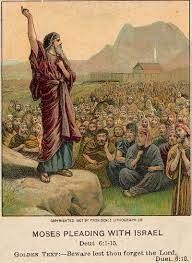
Bible card by Providence Lithograph Co., 1907

And now, Israel, what does God, your God, ask from you?  Nothing but to fear God, your God; to walk in all [God’s] paths; and to love [God]; and to serve God, your God, with all levavekha and with all nafshekha, to keep the commands and decrees of God that I am commanding you today for your own good. (Deuteronomy/Devarim 10:12-13)

levavekha (לְבָבְךָ) = your (singular) heart; your thoughts and feelings; your consciousness, your mind. (Leivav, לֵבָב = heart, thoughts and feelings, seat of consciousness + ־ךָ second person singular suffix.)

nafshekha (נַפְשֶׁךָ) = your (singular) throat; your appetite; the soul that animates your body; your life force. (Nefesh, נֶפֶשׁ = throat, appetite, animating soul, body, life force + ־ךָ second person singular suffix.)

Moses begins by addressing “Israel”, the whole people. But he continues by addressing each individual, using the singular suffix for “you” and “your”—just as in in last week’s Torah portion, Va-etchanan, when he says Shema Yisrael! (“Listen, Israel!”) and continues with “And you shall love God, your God, with all levavekha and all nafshekha …”1

Today we might translate the phrase “with all  levavekha and all nafshekha as “with all your mind and all your body”—your entire being.

In this week’s Torah portion, Moses says God wants more than love. God wants your fear as well. And every aspect of your consciousness should be directed toward fear and love for God.

Furthermore, what goes on in your mind is not enough. You must also to do all the correct actions in the world: to walk in all [God’s] paths, … to serve God, your God, with all  levavekha and with all nafshekha[and] to keep the commands and decrees of God.

Both your mental reactions and your physical actions must become so habitual that you instinctively react in a God-oriented way no matter what happens.

Better start now! It’s for your own good!

Fear and Love

Should you fear God because God has the power to punish you, even kill you? The writers of Deuteronomy2 would probably have answered: Yes, if nothing else motivates you to follow the rules. But for centuries commentators have offered two other interpretations:

  • After you have grown up, you should not fear God’s punishment, but rather share God’s fear that you will harm your own soul by doing evil.3 If you fear what God fears, you will act for your own good—since the good of your soul is more valuable than any other pleasure or benefit.
  • The Hebrew word leyirah (לְיִרְאָה) means “to fear”, but it also means “to revere” or “to be in awe of”. The best attitude is not fear of punishment, according to 14th-century Rabbi Nisim of Gerona, but “fear of the exalted”: trembling awe at the vast majesty of God. The Talmud called it “fear of heaven”, and said: “Everything is in the hands of Heaven, except the fear of Heaven.”4

21st-century rabbi David Kasher wrote: “And at the moment that this sensation of wonder strikes us, we suddenly feel a great love for everything around us, and love for the God that has allowed us to stand in the midst of it. Where once we stood in awe, we come to fall in love. … Our capacity for wonder is something we have the power to turn on or off. It is no mere instinct. It is a choice—an attitude we adopt; an orientation we cultivate.” 5

Walking, serving, and keeping

Thus the Torah urges you to choose to open your mind to awe. Then both humility and gratitude naturally follow. Gratitude is the kind of love that inspires you to give back to the person, community, or God you are grateful to.  If you are grateful to God, you want to give back to God. But how? Moses’ answer is:

  • to walk in all God’s paths. According to Or HaChayim6, this means atoning for a string of violations of God’s rules by obeying as many commandments as possible. Alternatively, it could simply mean leading a life devoted to doing God-approved deeds.
  • to serve God. At the temple in Jerusalem, Levites served priests, and priests served God as their occupation. But all the Israelites are called upon to serve God in certain ways: by burning the appropriate sacrificial offerings in temple times, by obeying God’s orders, or by promoting God’s agenda for a more ethical and compassionate society.
  • to keep the commands and decrees of God. The simple meaning of this phrase is to obey each of the 613 rules that Moses passed down7 whenever the appropriate situation for one of them arises. But not everyone is expected to memorize them all. Before the destruction of the second temple in Jerusalem in 70 C.E., people could ask priests for clarification of the rules. Since that time, people have asked rabbis for rulings on religious laws.

Each of these three categories of actions can mean either following the letter of the law, or going beyond the rules to lead a virtuous life in general.

For your own good

Why are the fear, the love, and the actions demanded by God “for your own good”?

If you define God as the omnipotent ruler of the universe, the obvious answer is that if you do what God wants you will be rewarded (perhaps with good health, rescue from an enemy, or a color TV). If you disobey God you will be punished.

We get more rewards and fewer punishments when we go along with human authorities. When we do what the boss wants, we get what we want from the boss. So it is natural to think that the same must be true for going along with a divine authority.

The book of Deuteronomy does depict God as the omnipotent ruler of the universe—more so than the previous four books of the Torah, which imply the existence of other, inferior gods. In the next verse after “for your own good” Moses says:

Hey, the heavens and the heavens of the heavens belong to God, your God; the earth and everything that is on it!  (Deuteronomy 10:14)

This statement could be taken as a threat: since everything belongs to God, you had better obey the big boss or else. Or you can look at the bright side, like Rashi, who wrote that for your own good means “that you should receive a reward for doing so.”8

Moses’ next sentence in the portion Eikev says that God is loving as well as omnipotent.

Nevertheless, God was attached to your ancestors, loving them, and [God] chose their descendants after them out of all the peoples, as it is to this day. (Deuteronomy 10:15)

Most modern Jews would hasten to add that God loves other peoples as well, and also chose them to lead holy and ethical lives. But this verse in the portion Eikev also indicates that God loves humans who are far from perfect. In the Hebrew Bible, the ancestors of the Israelites are identified as Abraham, Isaac, and Jacob. (Their wives are added to later liturgy.) The book of Genesis describes these three patriarchs as acting out of jealousy and spite as well as out of kindness and respect.

If God loves these flawed characters, then God must sometimes deviate from the strict justice of reward and punishment, and forgive transgressors.

While some people can only be induced to behave properly if they are afraid of punishment or eager for a reward, other people find comfort in the belief that God is like a loving parent, and that the purpose of God’s rules is to encourage humans to do what will improve their own lives.

Moses concludes:

So circumcise the foreskin of levavechem and do not stiffen your necks10 any more. (Deuteronomy 10:16)

levavechem (לְבַבְכֶ֑ם) = your (plural) hearts; your thoughts and feelings; your minds. (Leivav, לֵבָב = heart/hearts, thoughts and feelings, seat/seats of consciousness + ־כֶם second person plural suffix.)

Circumcision of the foreskin is part of the covenant between the Israelites and God. What does it mean to circumcise an organ that does not have a literal foreskin?

Rashi wrote that circumcising the foreskin covering your “heart”—that is, the mind—would remove whatever blocks you from receiving God’s words. 12-century rabbi Abraham ben Meir ibn Ezra identified the figurative foreskin with physical lusts, which block you from taking the right attitude and actions.

According to rabbi Bachya ben Asher (1255-1340) the word foreskin here means any negative character trait that prevents you from developing to your full potential. For 15th-century rabbi Obadiah ben Jacob Sforno, the foreskin represents prejudices that cause errors in your thinking. And for 19th-century rabbi Samson Raphael Hirsch, circumcision of the heart means gaining mastery over your own thoughts and desires.

*

What does God want from you? To orient yourself toward God, in both your mind and your actions; to be open to awe, to feel humility and gratitude, and to dedicate your life to good deeds.

Why would you want to do this?

For me, the promise of reward and the threat of punishment are not motivating. I cannot believe in a God that deals out strict justice to every human being, since it is obvious that some innocent and virtuous people suffer and die young, while some heartless evil-doers get material rewards and long lives.

But I do try to cultivate feelings of awe, humility, and gratitude, and to be kind and do good deeds. I believe that the farther I walk in this direction, the happier I am with myself. So I am working on this approach to life—for my own good, and for the good of my fellow human beings. When I stop and realize how fortunate I am, despite my sorrows, I want to give back.

Perhaps what God wants from me is the same as what I want for myself—when I cut back the blockage in my leivav.

What does God want from you?  What do you want from God?

  1. See my post Va-etchanan: Extreme Love.
  2. The book of Deuteronomy is presented as one or more long speeches by Moses to the Israelites, delivered before he dies and they cross the Jordan into Canaan. Modern scholars date the bulk of Deuteronomy to the reign of King Josiah in the 7th century B.C.E. or later.
  3. g. Dov Baer Friedman, Or Ha-Emet (1899), quoted in Speaking Torah: Spiritual Teachings from around the Maggid’s Table, Vol. 2, ed. & translated by Arthur Green, Jewish Lights Publishing, Woodstock, VT, 2013, p. 101.
  4. Talmud Bavli attributes this saying to Rabbi Chanina in Berakhot 33b, Megillah 25a, and Niddah 16b.
  5. David Kasher, “Two Kinds of Fear: Parshat Eikev”, Parshanut, http://parshanut.com/post/176555221331/two-kinds-of-fear-parshat-eikev.
  6. 18th-century rabbi Chayim ibn Atar’s most famous book is the Torah commentary Or HaChayim.
  7. In the 12th century C.E. the Rambam, a.k.a. Moses Maimonides, identified 613 commands or mitzvot in Exodus through Deuteronomy, and Jews have stuck with that number ever since.
  8. Rashi is the acronym for 11th-century rabbi Shlomoh Yitzchaki. This translation of Rashi on Deuteronomy 10:13 is from http://www.sefaria.org.
  9. Deuteronomy 30:2.
  10. See my posts: Ki Tissa: Stiff-Necked People and Eikev: Covered Heart, Stiff Neck.


Eikev & Judges: Love or Kill the Stranger?

Are foreigners neighbors or enemies?  Should you befriend them or kill them? This week’s Torah portion, Eikev (“on the heels of”), appears to promote both points of view.

Love the stranger

And you must love the geir, for you were geirim in the land of Egypt.  (Deuteronomy/Devarim 10:19)

geir (גֵּר), plural geirim (גֵּרִים) = immigrant, resident alien.  (Not any “stranger”; only a foreigner who has settled down in another country.)

The command to be good to the immigrant appears many times in the Torah.1  In this week’s iteration, Moses warns his people not to act like the Egyptians, who mistreated the multiplying family of Jacob (a.k.a. Israel) when they were resident aliens in Pharaoh’s kingdom.2  He anticipates that after the Israelites have conquered Canaan and settled down, there will be individual immigrants who should be treated with the same fairness and compassion as anyone else in the land.

Kill the stranger

But this ethical rule does not apply to the Canaanites already living in the land the Israelites are about to conquer.  In last week’s Torah portion, Va-etchanan, Moses says:

You must dedicate them to destruction.  You must not cut a treaty with them, and you must not show them mercy.  You must not give them your daughters, nor give their daughters to your sons … because they would turn your children away from [God], and they would serve other gods … Instead … you must tear down their altars and smash their standing stones and cut down their goddess posts and burn their images in fire.  (Deuteronomy 7:2-5)

In the portion Eikev, Moses repeats the call for genocide of the Canaanites.

And you must eat up all the peoples that God, your God, is giving to you.  You must not look at them with compassion.  And you must not serve their gods, because it would be a trap for you.  (Deuteronomy 7:16)

Why?

Why does the God-character tell the Israelites to be kind to new immigrants, but to exterminate the existing population of Canaan?

If the Israelites had succeeded in conquering all of Canaan and killing its whole population, the injunction in Eikev could be viewed as a post-genocide justification: “We had to wipe them out because God told us to”.  But the book of Judges, which opens with an account of territories that the Israelite tribes partially conquered, reports that the original Canaanites continued to live in their midst.3

Therefore the exhortation to exterminate all the Canaanites serves a different purpose: to emphasize that nothing is more important for the Israelites than sticking to their own religion.  This agenda appears in the passages above from both Va-etchanan and Eikev.

The God-character portrayed in the books of Exodus, Numbers, Deuteronomy, Joshua, and 1 Samuel explicitly approves of genocide when the perpetrators are Israelites, and the victims worship a different god and occupy land that God has designated for the Israelites.4 No exceptions are made for infants or atheists.

In the book of Numbers, the land designated for Israelites includes not only Canaan, but also the region on the east bank of the Jordan River.  God helps the Israelites conquer the kingdoms of Cheshbon and Bashan, where two and a half of the twelve tribes will live.

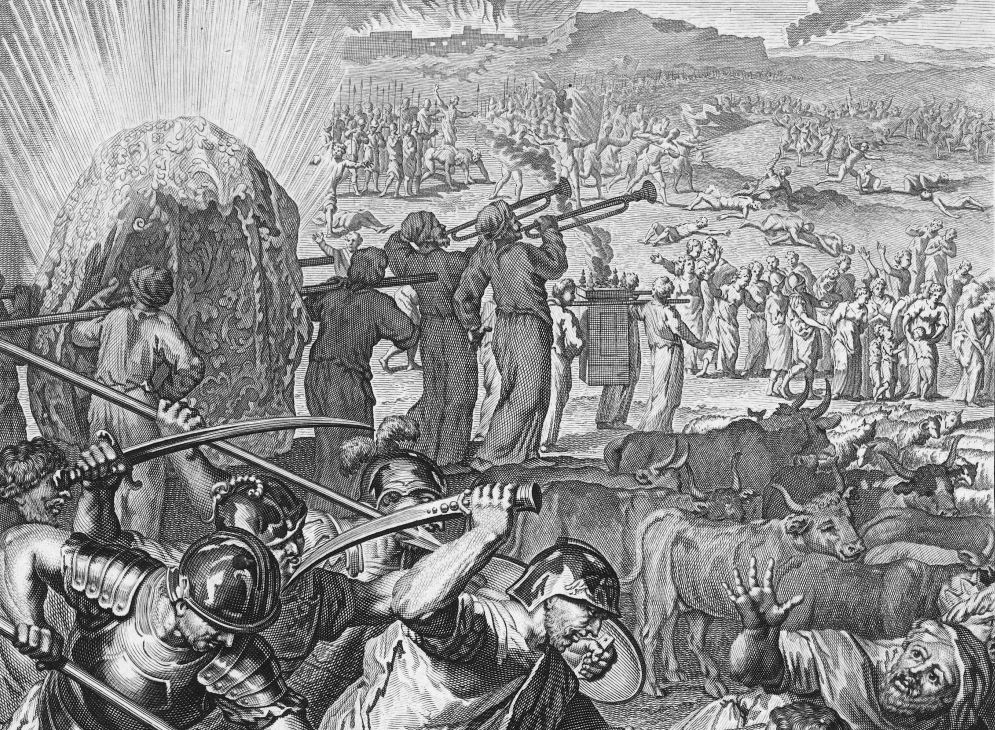
War Against the Midianites, detail, by Balthasar Bernards, ca. 1720-1728

While they are camping at Peor, preparing to cross the Jordan, the Israelites accept invitations from the Midianites there to worship the god of Peor (Baal-Peor).  The God-character is enraged with jealousy, and (after wiping out 24,000 Israelites with a plague), orders the surviving men of Israel to kill all the Midianites around Peor: men, women, and male children.5

In next week’s Torah portion, Shoftim, Moses says that when the Israelites go to war to conquer a town outside the lands God has given them, they must first invite the town to surrender peacefully.  If the town accepts this offer, all its residents can continue to live there, as long as they provide labor for Israelites projects.However,

In the towns of those peoples that God, your God, is giving to you as a permanent possession, you must not let a soul live.  … so that they will not teach you to do all the taboo things that they do for their gods … (Deuteronomy 20:16, 20:18)

Thus the real issue is whether foreigners will help or hamper the Israelites in serving their God.

The Torah promotes friendly assimilation of new immigrants because they can be required to observe some basic Israelite religious practices.  The Torah rules that geirim must refrain from eating leavened bread during the week of Passover,7 refrain from working on the sabbath or Yom Kippur,8 refrain from eating an animal’s blood,9 obey the Israelite sexual prohibitions,10 refrain from giving children to the god Molekh,11 refrain using God’s name in an insult or curse,12 follow the laws of purity after exposure to a human corpse,13 and listen to a reading of the Torah every seven years.14

Immigrants who obey all these rules are not likely to worship other gods openly, or entice Israelites to join them in worship.

Israelite immigrants

But what will the Israelites do when they are the immigrants, a large population settling Canaan by force?  Since they do not wipe out the indigenous peoples, will they start worshiping the local gods the way they did in Peor?

The answer in the book of Judges is a resounding yes.

The Israelites did what was bad in the eyes of God, and they served the be-alim.  And they abandoned God, the God of their forefathers, the one who brought them out of the land of Egypt.  And they went after other gods from among the gods of the peoples who were all around them, and they bowed down to them, and [thus] they offended God.  (Judges 2:11-12)

be-alim (בְּעָלִים) = plural of baal (בַּעַל) = owner; a male Canaanite god.

Canaanite religions seemed to be so enticing that they were hard to resist.15

A different solution

From an ethical point of view, sharing the land of Canaan with its indigenous inhabitants is far better than committing genocide.  Why don’t Moses and the God-character in the Torah find a more ethical way to keep the Israelites from worshiping other gods?

Persuading the Israelites that no other gods exist is not the answer.  Moses tried this earlier in the book of Deuteronomy, saying:

You yourselves have seen for the knowledge that God is the God; there is no other than he alone.  (Deuteronomy 4:35)

But the people are not psychologically ready for monotheism.  Threats do not work either.  The portion Eikev includes two of many statements in the Torah that God will kill the Israelites if they worship other gods:

And it will be if you actually forget God, your God, and you go after other gods and serve them and bow down to them, I call witness against you this day that you will truly perish.  (Deuteronomy 8:19)

Guard yourselves lest your heart deceives you and you desert and serve other gods and bow down to them.  Then God’s anger will heat up against you and shut the heavens, and there will be no rain and the earth will not give its produce, and you will quickly perish from upon the good land that God is giving to you.  (Deuteronomy 11:16-17)

Perhaps at this stage, the Israelites need dazzling visual displays to reinforce their commitment to their religion.  The Canaanites have glittering gold and silver idols.  The Israelites have a single invisible god who only occasionally manifests as a miraculous fire.

The book of Judges points out that the sight of miracles made all the difference.

And the people served God all the days of Joshua and all the days of the elders who came after Joshua, who had seen all the great deeds of God that [God] did for Israel.  (Judges 2:7)

Elijah and King Ahab see divine fire, Zurich Bible, 1531

If the Israelites cannot yet stick to their own God without miracles, an occasional miracle might help to keep the religion going until the people become able to adopt a more sophisticated idea of God.  An example is when Elijah when Elijah sets up two altars, one for God and one for Baal, and asks the people of the northern kingdom of Israel to make their choice.  God sends down fire to consume the offerings, and the Israelites respond by attacking the priests of Baal.16

A miracle in every generation might have kept the Israelites away from Canaanite religion.  At least it would be a better solution than genocide.

Even today many people cannot relate to an invisible, abstract god.  Some people still use icons and other shiny objects to support their religious resolve.  Others still need miracles, and gladly interpret apparent coincidences as the hand of God.  If these religious practices strengthen their commitment to ethical behavior, then they are well worth it.

But a god that sanctions murder is not worth worshiping.  Killing the infidel is a practice that has continued somewhere in the world to this day.  May it cease in our own time.


  1. See my blog post Mishpatim: The Immigrant, including the footnotes.
  2. Moses also makes this point in Exodus 23:9.
  3. Judges 1:21-33.
  4. Divine commands for genocide of seven Canaanite peoples include Exodus 23:28-33, Deuteronomy 7:1-5, 7:16, 7:24, 20:16-18; and Joshua 8:2, 10:40. The God-character commands genocide of the Amalekites in 1 Samuel 15:2-3.
  5. See my posts on “How to Stop a Plague”, Part 1, Part 2, and Part 3.
  6. Deuteronomy 20:10-11.
  7. Exodus 12:19.
  8. Exodus 20:10, 23:12; Leviticus 16:29; Deuteronomy 5:14.
  9. Leviticus 17:10-13.
  10. Leviticus 18:26.
  11. Leviticus 20:3.
  12. Leviticus 24:16.
  13. Numbers 19:10.
  14. Deuteronomy 31:12.
  15. Even in the 6th century B.C.E. people were worshiping “the Queen of Heaven” (Jeremiah 7:18)
  16. 1 Kings 18:20-40.


Eikev: Rewriting Justice

Over and over in the book of Deuteronomy/Devarim Moses promises the Israelites prosperous lives and their own nation if they obey God’s laws, death if they do not obey.  He drives home his point with reminders of what happened to them during the 40 years since they left Egypt.

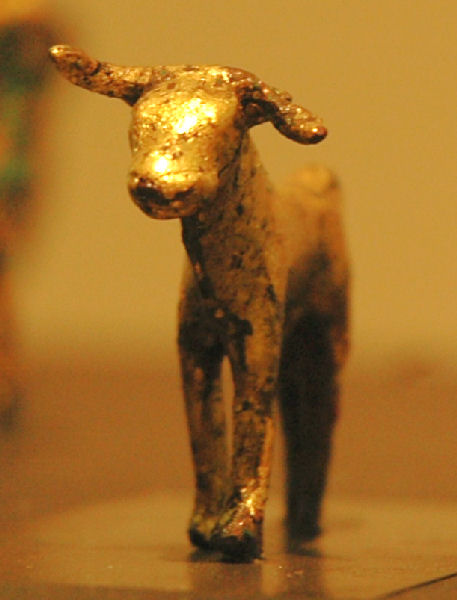
Golden calf from temple of Baalat, Byblos

Some of these recollections in Moses’ farewell speech match the stories in the books of Exodus/Shemot and Numbers/Bemidbar.  Some do not.1

Moses retells the story of the golden calf worship in this week’s Torah portion, Eikev (“on the heels of”).  In this version he claims that he prayed twice to change God’s mind about a death penalty: once for all the Israelites and once for Aaron, who made the calf.

Va-etpaleil to God, and I said: “My lord God, do not wipe out your people and your heritage that you ransomed by your greatness, that you rescued from Egypt by a strong hand!”  (Deuteronomy 9:26)

va-etpaleil (וָאֶתְפַּלֵּל) = And I prayed, and I interceded.  (This is the hitpael form of the verb palal, פָּלַל = sat in judgment; arbitrated.  The hitpael form is used only when a human begs God to change a divine judgement.)

Earlier in his rambling narrative Moses says:

For I was terrified in the face of the fury and the venom with which God became angry at you, [enough] to exterminate you.  And God listened to me that time, too.  And God felt angry enough at Aaron to exterminate him.  Va-etpaleil also on behalf of Aaron at that time.  (Deuteronomy/Devarim 9:19-20)

An obvious reason why God might be angry at Aaron appears in the book of Exodus.  When the Israelites give up waiting for Moses to come down from Mount Sinai, they tell Aaron:

“Get up, make us a god who will go before us!”  (Exodus 32:1)

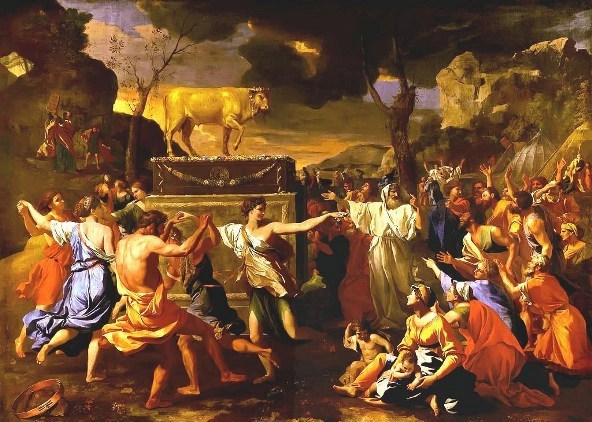
Adoration of the Golden Calf, by Nicolas Poussin,1634

Aaron obliges by collecting the people’s gold earrings, melting them down, and making a golden calf.  He even builds an altar in front of it and declares that the next day will be a festival for God—as if the God of Israel would manifest inside or above the golden calf.

Yet he, of all people, should remember God’s second commandment, which bans the manufacture or worship of images.

After Moses returns and halts the celebration by smashing the stone tablets inscribed with God’s commandments, he asks Aaron:

“What did this people do to you that you brought upon them a great sin?”  (Exodus/Shemot 32:21)

Even as he criticizes his brother for fulfilling the people’s desire for an idol, Moses gives Aaron an excuse: he must have done wrong because the people forced him to.  What did they do to him?

Aaron waffles.  He starts by saying the people are evil, then reports that all he did was ask them to remove any gold they were wearing.

“And they gave it to me and I threw it into the fire and out came this calf!”  (Exodus 32:24)

Moses ignores Aaron’s disingenuous answer.  He orders the other Levites to kill the calf-worshippers by the sword, not sparing “… his brother or his neighbor or his close kin.”  (Exodus 32:27)  They kill 3,000 men, but they do not kill their brother Levite Aaron.  Moses does nothing to punish Aaron.  Neither does God.  Both Moses and God continue with God’s plan to elevate Aaron to the position of high priest in their new religion.

Yet Aaron violated the second commandment just as much as the calf-worshipers.

          You shall not make yourself a carved idol or any likeness of what is in the heavens above or what is on the earth below or what is in the waters below the earth.  (Exodus 20:4)

Aaron molded an idol in the shape of a calf, an animal on the earth below.  (Exodus 32:4)

          You shall not bow down to them and you shall not serve them.  (Exodus 20:5)

Aaron built an altar in front of the golden calf and told the people to bring offerings.  (Exodus 32:5-6)

His guilt is clear.  Yet at the time, God ignores Aaron, while Moses asks one question and then lets the subject drop.

Ignoring Aaron’s violation is a disservice to the Israelites, to God, to Aaron, and to Moses.

The Israelites would conclude that Aaron escaped punishment only because of nepotism.  Now that they know God and Moses play favorites, they have an extra reason to conclude that conquering Canaan for them is not worthwhile.

God wants the Israelites to become his “kingdom of priests” (Exodus 19:6), but now the Israelites would view God as unjust, to be followed only out of fear rather than love.

Aaron would feel guilty the rest of his life.  He wears the high priest’s vestments, but he would know that inside he is unworthy.

Moses would be nagged by the memory of his own failure to bring his brother to justice, or even acknowledge that Aaron was guilty.

So 39 years later, Moses rewrites the conclusion of the golden calf fiasco.  Nobody else knows whether God was angry with Aaron, or whether Moses spoke to God about it.  So Moses tells the Israelites how it should have been instead of how it was.

In his speech on the bank of the Jordan, Moses declares:

And God felt anger against Aaron, enough to exterminate him.  Va-etpaleil also on behalf of Aaron at that time.  (Deuteronomy 9:20)

Moses’ prayer must have changed God’s mind, since Aaron survived and became the high priest.  And for Moses’ audience, this new story confirms that God is just, and also that God listens to prayer.


Rewriting history is rarely a virtue.  But neither is ignoring a person’s misdeeds.  As I reflect on Moses’ story in Deuteronomy, I pray that when I notice someone doing wrong, I find a safe and private way to communicate it to them.  And if I was one of the victims, and the wrongdoer apologizes and tries to remedy the situation, I pray that I will forgive them.


  1. See my post Devarim: In God We Trust?


Repost: Eikev

I am exhausted from a week of luxury on an Alaskan cruise.  The cruise reminded me that it is easy to get too much of a good thing, to go from satisfaction to satiation to surfeit.  I am proud of myself for not taking seconds when I faced an abundance of tasty food.  But I wore myself out with a surfeit of experiences.  The concerts and shows on the ship, as well as the tours and sights at each stop, were all enjoyable and even enriching.  But now that I am home again, packing and making last-minute arrangements for a more important journey, I wish I had more energy.

This week’s Torah portion, Eikev, also considers the concepts of satisfaction and surfeit.  So I brushed up my 2017 post, Eikev: No SatisfactionClick on the link to read it.

Re-eih: Ownership

Mine!  I own this land, these people, this enterprise!

Human beings instinctively claim things as their own—and justify their ownership.  Sometimes the reasons why we own things are ethical.  (She gave her painting to me.  I bought this house from the previous owner.)  But sometimes our justifications boil down to “Because I’m better” or “Because God gave it to us”.

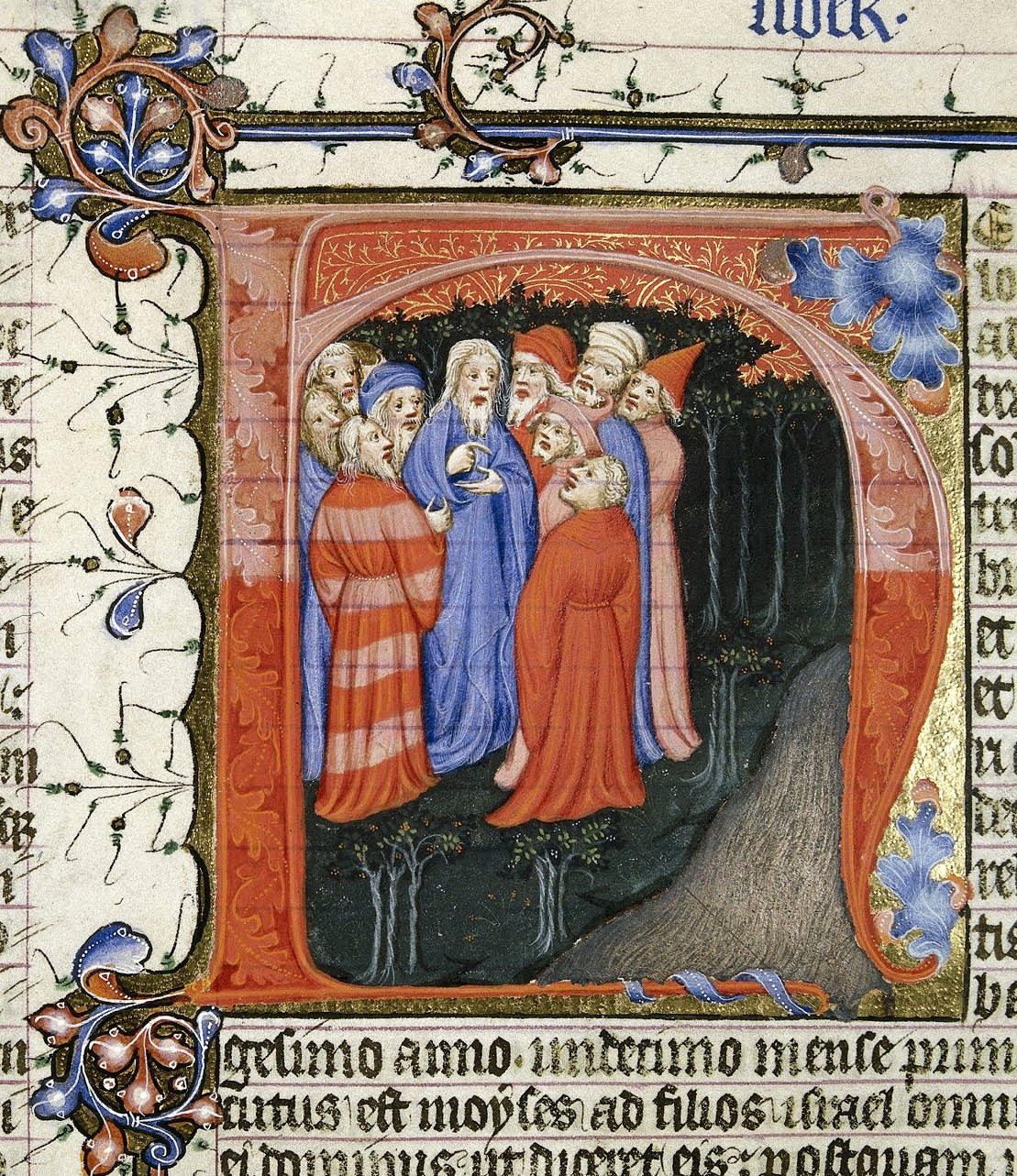
Moses Speaks to the People by the Jordan,
Great Bible (St. Jerome Version), 1405-1415

Why did Israelites own a significant part of Canaan (later called Palestine) from the 10th to 6th centuries BCE?  The Hebrew Bible repeats again and again that God gave the land of Canaan to the Israelites.  This “gift” is the premise behind Moses’ instructions in this week’s Torah portion, Re-eih (“See!”).

For you will be crossing the Jordan to enter and lareshet of the land that God, your God, is giving to you, vireshtem of it and you will settle in it.  Then take care to carry out all the decrees and the laws that I am placing before you this day.  (Deuteronomy/Devarim 11:31-32)

lareshet (לָרֶשֶׁת) = to take possession.  (A form of the verb yarash, יָרַשׁ = took possession, inherited, dispossessed.)

vireshtem (וִירְשׁתֶּם) = and you will take possession.  (Another form of the verb yarash.)

How will God give possession of Canaan to the Israelites?  And why?

How

When Moses gets his marching orders at the burning bush, God tells him:

I have come down to bring them [the Israelites] out from the hand of Egypt and to bring them up from that land to a good and spacious land, to a land flowing with milk and honey, to the place of the Canaanites and the Hittites and the Emorites and the Perizzites and the Hivites and the Jebusites.  (Exodus/Shemot 3:8)

The land of Canaan is already occupied by six nations.1  How will God transfer their land to hundreds of thousands of Israelites?

It turns out that the inhabitants of Canaan do not give, sell, or trade land to the newcomers.2  They do not conveniently decide to move elsewhere.  Instead, they are willing to fight to keep the land they planted, and the houses and cities they and their ancestors built.

In the book of Exodus/Shemot, God promises to “erase” or “drive out” the native inhabitants.3  But in the book of Numbers/Bemidbar it becomes clear that the Israelites must do the driving out.  They get a head start on military conquest before they cross the Jordan.  At God’s urging, the Israelites fight and win battles against three nations on the east side of the river: Cheshbon (the city and its territory), Bashan, and the Midianites north of Moab.  The Israelite men burn towns, kill all the men, and seize all the land.4

When the tribes of Reuven and Gad ask Moses if they can have this newly captured land instead of future allotments in Canaan, Moses agrees on the condition that their fighting men enter Canaan with the rest of the Israelites, and participate in every battle there until Canaan has been conquered.5  Everyone knows, now, that the Israelites will take Canaan through war.

The book of Deuteronomy assumes that God will give the Israelites the land of Canaan by ensuring them victory in battle—and that the Israelites will be the aggressors.  In last week’s Torah portion, Eikev, Moses reminds his people:

Listen, Israel!  You are crossing the Jordan this day lareshet nations greater and stronger [than you].  And you shall realize this day that God, your God … will subdue them before you, vehorashtam, and you shall exterminate them quickly, as God has spoken to you.  (Deuteronomy 9:1-3)

vehorashtam (וְהוֹרַשְׁתָּם) = and you shall dispossess them.  (A form of the verb yarash.)

Why

Moses continues:

Not because of your righteousness or because of the uprightness of your heart shall you come lareshet their land.  God, your God, shall be morisham in front of you because these nations are wicked, and in order to carry out the word that God swore to your forefathers, to Abraham, Isaac, and Jacob.  (Deuteronomy/Devarim 9:5) 

morisham (מוֹרִשָׁם) = taking possession of them, dispossessing them, driving them out.  (Another  form of yarash.)

You are not so perfect that you deserve to own Canaan, Moses tells the Israelites.  God will help you to conquer it only because God made a promise to your ancestors, and because the present inhabitants of Canaan are even worse than you are.

The promise

In the book of Genesis/Bereishit, Abraham, Isaac, and Jacob all hear God promise that their descendants will someday own the land of Canaan.6  The sixth time God makes this promise, it is part of a covenant: Abraham and his male descendants will be circumcised and follow God; God will give them the land of Canaan and look after them.

“And I will give to you, and to your seed after you, land from your sojourning: all the land of Canaan, as a holding forever.  And I will be their God.”  (Genesis/Bereishit 17:8)

The wickedness

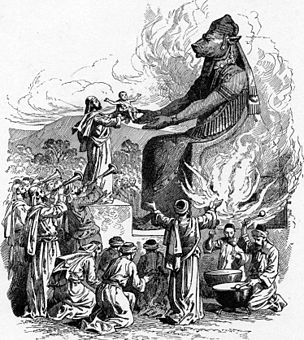
Offering to Molech,
Bible Pictures, 1897

The nations of  Canaan are “wicked” because they engage in practices the God of Israel despises, according to the book of Leviticus/Vayikra.  These practices include sexual unions forbidden in Leviticus, and child sacrifice to Molech.7

In this week’s Torah portion, God tells the Israelites not only to exterminate all the inhabitants of Canaan, but also to destroy their shrines and religious objects.8

These are the decrees and the laws that you must take care to carry out in the land that God, the God of your forefathers, gave to you lerishtah all the days that you live on the earth.  You must utterly destroy all the places where the nations that you are yoreshim worshiped their gods, on the high mountains and on the hills and under every luxuriant tree.  And you shall tear down their altars, and shatter their standing-stones, and burn their goddess-posts in the fire, and break into pieces the statues of their gods; and you shall eliminate their name from that place.  (Deuteronomy 12:1-3)

lerishtah (לְרִשְׁתָּה) = to possess it.  (A form of the verb yarash.)

yoreshim (יֺרְשִׁם) = taking possession of.  (Another form of the verb yarash.)

Ethnic cleansing is not enough, Moses says.  Even after the inhabitants of Canaan have been eliminated, some Israelites might still be tempted to adopt their religious practices.

When God, your God, cuts down the nations where you come lareshet them from before you, veyarashta them and you have settled in their land, guard yourselves lest you become ensnared [in] following them, after they have been exterminated from before you; and lest you inquire about their gods, saying: “How did these nations serve their gods?  Then I will do this too, even I.”  You must not do thus for God, your God, because everything abhorrent to God, [everything] that he hates, they do for their gods.  For they even burn their sons and daughters in the fire for their gods!  (Deuteronomuy 12:29-31)

veyarashta (וְיָרַשְׁתָּ) = and you dispossess.  (Yes, another form of yarash.)

This is the other justification in the Torah for taking over Canaan and eliminating its natives.  The inhabitants of Canaan, like the Israelites, worshipped their gods primarily through burning animal offerings on altars.  But other religious practices of the six groups of Canaanites were so awful that they did not deserve to own the land.  They did not even deserve to live.


The Torah speaks with many voices.  When the context is the period when Israelites own the land, the Torah urges them to treat the foreigners living among them with love and justice.9  But when the context is the period before the Israelites own the land, the Torah urges them to exterminate the foreigners who do own it.

Although modern scholars disagree on when each of the first five books of the bible was first written down, they agree that all five were written down no earlier than the 10th century BCE, when Israelites ruled one or two kingdoms in eastern Canaan.10  Perhaps those who wrote down the old stories noticed the conflict between the injunctions to treat resident aliens with fairness, and tales of the brutal conquest of non-Israelite natives.  How could they justify the aggression of their ancestors?

The solution of those early scribes was to explain that God took Canaan away from its previous inhabitants and gave it to the Israelites.  The conquest by the Israelite army merely carried out God’s will.

Today some groups still believe in a divine right to own land and the people living on it.  When there are rival claims to territory, people of different religions point to their sacred books and their ancient histories rather than working toward an ethical solution for sharing the land.

Today some individuals still believe that might makes right, and the fact that they succeeded in acquiring control over a business or a branch of government means God is on their side.

I pray that someday everyone in the world is blessed with humility.


  1. The same six peoples are mentioned as inhabiting Canaan in Exodus 23:23, 33:2, and 34:11.
  2. Abraham buys one field with a burial site in Canaan (Genesis 23:3-16), and Jacob buys a parcel of land where he is camping (Genesis 33:19), but there are no other purchases of land in Canaan in the biblical record until after the Israelites have occupied a large part of Canaan.
  3. God promises “and I will erase them” (וְהִכְחַדְתִּיו) in Exodus 23:23. God plans to drive the natives out of Canaan in Exodus 23:27-30 (through psychological means), 33:1-3, and 34:11 (as well as in Leviticus 18:24-25 and 20:23).
  4. Numbers 21:21-25, 21:33-35, 31:1-18.
  5. Numbers 32:6-27. See my post Mattot: From Confrontation to Understanding.
  6. The God character makes this promise to Abraham in Genesis 12:7, 13:15, 15:7, 15:18, and 17:8; to Isaac in Genesis 26:3; and to Jacob in Genesis 28:13-14 and 35:12.
  7. Leviticus 18:3-30.
  8. This instruction also appears in Numbers 33:52-53.
  9. Geirim (גֵּרִים) = resident aliens (in biblical Hebrew).  Geirim are included in God’s covenant in Deuteronomy 29:9-11 and 31:12, Joshua 8:33-35, and Ezekiel 47:21-23.  The same laws and rights apply to citizens and geirim in Exodus 12:19, 12:48-49, and 20:10; Leviticus 16:29, 17:8-15, 18:26, 20:2, 22:18, 24:16, and 24:22; Numbers 9:14, 15:14-16, 15:26, 15:29-30, 19:10, and 35:15; Deuteronomy 1:16, 5:14, 16:14, 24:14, and 26:11-13; Joshua 20:9; and Ezekiel 14:7.  The Israelites are warned not to oppress geirim in Exodus 22:20 and 23:9; Leviticus 19:33-34; and Ezekiel 22:7 and 22:29.  The Torah orders the Israelites to love geirim or treat them like brothers in Leviticus 19:33-34 and Deuteronomy 10:18-19 and 24:14.
  10. The united kingdom of Israel ascribed to kings David and Solomon in the bible dates to the mid-900’s BCE. Its existence has not yet been confirmed by archaeologists.  Hoever, there is evidence supporting the biblical claim that there were two Israelite kingdoms from the 920’s to the 720’s BCE: the northern kingdom of Israel/Samaria and the southern kingdom of Judah.

Eikev, Va-etchannan, & Noach: Who Built It?

Five Kings of Midian Slain by Israel, 1728

The Israelites are camped on the east bank of the Jordan River, ready and willing to cross over and do to the native populations of Canaan what they have already done to the Amorites and Midianites east of the Jordan: burn all their towns, kill all their men, and take over all their land—with God’s explicit approval and assistance.1

I will explore the evolution of and biblical justifications for this ethnic cleansing in next week’s post, Re-eih: Ownership.  This week, let’s look at how Moses says the Israelites should act after their conquest.

In last week’s Torah portion, Va-etchannan, Moses warns the Israelites not to feel entitled after they have taken everything the Canaanites own.

And it will happen when God, your God, brings you into the land that was sworn to your forefathers … cities great and good that lo vanita, and houses filled with everything good that you did not fill, stone-hewn cisterns that you did not hew out of stone, vineyards and olive groves that you did not plant.  And you will eat and you will be satisfied.  Guard yourself, lest you forget God who brought you out from the land of Egypt, from the house of slavery.  (Deuteronomy/Devarim 6:10-12)

lo vanita you did not build.  lo (לֺא) = not + banita (בָּנִיתָ) = you built.  (A form of the verb banah, בָּנָה = built, constructed, fortified, rebuilt; built up a family.)

Once the Israelites own everything the previous inhabitants built and planted, they will have an easy head start in their new life.  But Moses does not tell the Israelites to be grateful for the labor of generations of Canaanites.  He only warns them not to forget that everything they own is a gift from God.

This week’s Torah portion, Eikev, takes the idea of God’s gift farther.

Guard yourself lest you forget God, your God, and fail to guard [God’s] commandments and laws and decrees, which I, myself, am commanding you this day—lest you eat and you are satisfied, and tivneh good houses, and you dwell in them; and your herds and flocks increase, and silver and gold increases for you, and everything that is yours increases; and then your heart is arrogant and you forget God, your God, who brought you out from the land of Egypt, from the house of slavery.  (Deuteronomy 8:11-14)

tivneh (תִּבְנֶה) = you build, fortify, build up.   (Another form of the verb banah.)

Here Moses points out that even if the Israelites do build their own houses and bring in their own livestock, wealth in the land they have conquered is not guaranteed.  What you build yourself, as well as what you take from someone else, is a gift from God.

In general, the Hebrew Bible uses the verb “create” (bara, בָּרָא) for what God does, and “build” (banah, בָּנָה) for what humans do, using materials God created.2  People in the bible build many things just to improve their lives, including houses, towns, walls, and livestock pens.  But sometimes humans build for the sake of their own self-importance, and sometimes they build to honor God.


Building a name

After the story of Noah and the flood, the humans on earth figure out how to make bricks and mortar them with bitumen.

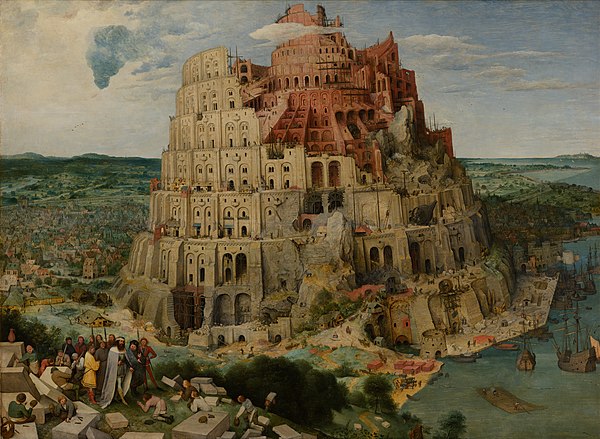
Tower of Babel, by Pieter Bruegel the Elder, c. 1563

And they said: “Come, nivneh for ourselves a city and a tower [with] its head in the heavens, and we will make for ourselves a name, lest we scatter over the face of all the earth.”  And God went down to look at the city and the tower than the descendants of the human banu.  (Genesis 11:4-5)

nivneh (נִבִנֶה) = let us build.

banu (בָּנוּ) = they built.

Noah’s descendants start to build a single city for the whole human population, with a tower that intrudes on God’s realm, the heavens.  They want to make a “name” or reputation for themselves.  (Since there are no other humans, perhaps that want a reputation among creatures in the heavens.)  God takes them seriously, believing that humankind is indeed capable of doing too much.  So God decides to scatter them—just what the city-builders fear most—so that they will develop different languages and become mutually incomprehensible.

And [God] scattered them from there over the face of all the earth, and they left off libanot the city.  Therefore it was called by the name Bavel, because there God confused the lips of the whole earth … (Genesis 11:8)

libanot (לִבְנֺת) = building.

Bavel (בָּבֶל) = Babylon.3

City gate at Megiddo

Building a city can be problematic in the Torah.  The building of the city and tower of Bavel is portrayed as an exercise in arrogance.  In Egypt, the Israelites are forced to build two brick storage-cities for Pharaoh, Pitom and Rameses.4  Later, King Solomon embarks on building projects in the cities of Jerusalem, Megiddo, Chatzor, and Gazer, all using the forced labor of the remaining natives of Canaan.5  Building a city, palace, or fortress means that the some human beings are likely to lord it over others.

In the Torah portion Va-etchannan, Moses warns the Israelites not to feel self-important when they are living in cities and towns that the natives had already built.  After all, they could not kill or drive away those natives without God’s help.

In the Torah portion Eikev, Moses reminds the Israelites not to let their prosperity in their “promised land” make them arrogant, and not to forget that God brought them out of slavery in Egypt.


Building for God

Living in cities built by other people leads to egotism.  But other kinds of building are for the sake of God.

First Temple reconstruction in Bible Museum, Amsterdam

Noah builds the ark at God’s command, but after the flood has receded he builds an altar for animal sacrifices to God on his own initiative. 6  It is the first of many altars men build to worship God.  In the book of Exodus, all the Israelites, men and women, cooperate to build the portable tent-sanctuary for God.  In the first book of Kings, King Solomon enslaves native Canaanites to build his own palace and several fortresses, but he uses the same forced labor to build the first temple for God in Jerusalem.

The bible praises those who build altars and sanctuaries for God, just as it criticizes those who forget their debt to God when they build or take over cities.  But what about the overlords’ dependence on people they defeated and enslaved?  The bible considers only the Israelite point of view.  No gratitude for the labor of non-Israelites is required.

I pray that all of us today may recognize that nobody becomes wealthy without help.  Nobody builds something without the raw materials this world provides, and nobody builds something without the present or past work of other human beings.

As Moses reminds us, may we be grateful to what is not human (whether we call it God or nature) for everything we have, even the air we breathe.  And as Moses fails to remind us, may we also be grateful for the labor of other human beings—even if we consider them Canaanites.

  1. Numbers 21:21-25, 21:33-35, and 31:1-12.
  2. One exception is when God uses the side of the human protype, adam, to “build” a female counterpart (Genesis 2:22), although in Genesis 1:27 and 5:2 God “creates” female and male humans.  Psalms 69, 78, and 102 refer poetically to God as the builder of Tzion or the cities of Judah.  Another exception is when Joshua tells the Josephites to “create” farmland for themselves by clear-cutting forests in the hill-country (Joshua 17:15-18), although they will only be using materials God created, i.e. trees, fire, and dirt.
  3. The name Bavel comes from the Babylonian god Beil, but the Torah might also be alluding to the sound of foreign languages the Israelites encountered during their enforced exile in Babylonia in the 6th century BCE.
  4. Exodus 1:11.
  5. 1 Kings 9:15-20.
  6. Although both Cain and Abel make offerings to God, the first altar mentioned in the Torah is built by Noah after the flood (Genesis 8:20).

Eikev: No Satisfaction

If you all really heed My commandments that I am commanding you all this day, to love God, your God, and to serve [God] with all your minds and with all your bodies, then I will grant rain … and you will gather in your grain and your grapes and your olive oil, and you will eat, vesavata.  (Deuteronomy/Devarim 11:13-15)

vesavata (וְשָׂבָעְתָּ) = and you will be satisfied.  (From the same root as saveia (שָׂבֵעַ) = satisfied, full, sated, surfeited.)

A literal reading of the conditional promise from this week’s Torah portion, Eikev (“On the heels of”) would be frightening.  The promise begins with “you” in the plural, implying that all the Israelites must thoroughly love and serve God, in both thought and action.   I can imagine a subsistence farmer wondering: What if I am not completely devoted to God all the time?  What if I am pious, but my neighbor is not?  Will God let us all starve in a drought?

The next verse lowers the bar somewhat by explaining that the important thing is to avoid devotion to other gods.

Guard yourselves, lest your mind deceive itself, and you turn away and you serve other gods and bow down to them. Then the anger of God will blaze against you, and [God] will shut up the heavens and it will never rain and the ground will not grant its produce, and you will quickly be lost from upon the good land that God is giving to you.  (Deuteronomy 11:16-17)

If we all serve our own God, it will rain and we will have plenty of food.  If we serve other gods, the rain will stop and we will starve.

The promise and threat from this week’s Torah portion is part of both morning and evening Jewish prayer services to this day.  (See my post Eikev: Reward and Punishment.)

The word vesavata appears two more times in this week’s Torah portion. Moses tells the Israelites that God is bringing them to a well-watered land full of wheat, barley, figs, pomegranates, olives, honey, iron, and copper—all the raw materials they could want.

And you will eat vesavata, and you shall bless God, your God, concerning the good land that [God] has given to you. (Deuteronomy 8:10)

The Talmud cites this verse as the foundation for the Jewish tradition of saying blessings both before and after meals.1  Our blessings express gratitude to God for blessing us with abundance.

But blessing God is only one requirement.  Earlier in the Torah portion Eikev Moses warns the Israelites that they must also observe all of God’s rules:

Watch out, lest you forget God, so that you do not observe [God’s] commandments and laws and decrees that I command you today; lest you eat vesavata, and you build good houses and you live in them, and your herds and your flocks increase, and your silver and gold increase, and everything you have increases—but your mind becomes haughty and you forget God, your God, who brought you out from the land of Egypt, from the house of slavery.  (Deuteronomy 8:11-14)

Here Moses warns the Israelites to remember that God is the source of their new wealth, and to respond with gratitude (blessing God) and service (following God’s rules).

*

The words vesavata and saveia in the Hebrew Bible usually refer to eating enough or too much.  But people can also be dissatisfied, satisfied, or surfeited with shame and honor,2 with bitterness and joy,3 with long life,4 and with wealth.5

All humans need enough to eat.  All humans enjoy the luxuries of wealth.  The “American dream”, like one of the dreams in ancient Israelite society, is to get richer and richer.  But the Bible points out that riches are not ultimately satisfying.

When Deuteronomy was written, perhaps around 2,650 years ago6, the Israelites were in danger of attributing their material blessings to Canaanite or Mesopotamian fertility gods.  Today, we might mistakenly attribute an abundance of food and other material goods to our technology, or to capitalism, or to some other recent human invention that we now treat as sacred.

While we serve these “gods” we may continue to eat, but we are no longer satisfied.  Our bodies become obese from a surfeit of calories, and our houses become full of luxuries, but our minds sense that something is missing.  Our souls are empty when we lack gratitude, love, and service to our own God—whether our idea of “God” means a harmonious way of life, a beauty and purpose in the universe, or the highest ethical ideal.

Have you fallen into worshiping the god of increasing wealth?  You can still save yourself.  Practice gratitude, and look for occasions to give thanks.  Instead of waiting for love to arise, act loving, and practice feeling love for those around you.  Remember to ask yourself throughout the day: Am I about to buy something I do not need?  To take advantage of someone lower in the pecking order?  Or to do something that helps people?

What kind of satisfaction do I want?

          Whoever is in awe of God has life;

          And he will stay savea;

          He will not be called up for misfortune. (Proverbs 19:23)

  1. Berachot 48b.
  2. e.g. Habakkuk 2:16.
  3. e.g. Lamentations 3:15, Psalm 16:11.
  4. e.g. Genesis 25:8.
  5. e.g. Ecclesiastes 5:9.
  6. One theory is that most of the book of Deuteronomy was written during the reign of King Josiah of Judah, 640-609 B.C.E.  One piece of evidence for this date is found in 2 Kings 22:3-13, when the high priest Chilkiyahu gives King Josiah (Yoshiyahu) a “book of law” he has “discovered” while renovating the temple in Jerusalem.  The language of Deuteronomy supports this theory.  (Two scholars who agree on the dating of Deuteronomy, though they disagree on the dating of other strands in the Torah, are Richard Elliott Friedman, The Bible with Sources Revealed, HarperCollins, San Francisco, 2003, p. 24-26; and Israel Knohl, The Divine Symphony, The Jewish Publication Society, Philadelphia, 2003, p. 155.)

Haftarat Eikev—Isaiah: Abandonment or Yearning?

Every week of the year has its own Torah portion (a reading from the first five books of the Bible) and its own haftarah (an accompanying reading from the books of the prophets). This week the Torah portion is Eikev (Deuteronomy 7:12-11:25) and the haftarah is Isaiah 49:14-51:3).

When the Babylonians burned down Jerusalem and its temple in 586 B.C.E., they also deported the last of its leading families to Babylon. They were not allowed not leave until the Persian Empire swallowed the Babylonian Empire 47 years later, and the Persian king Cyrus declared freedom of movement and freedom of religion.

Psalm 137, like this week’s haftarah from second Isaiah, is about the Babylonian Exile:

Babylon
Babylon

            How can we sing a song of God

            On foreign soil?

            If I forget you, Jerusalem

            May I forget my right hand. (Psalm 137:4-5)

In Jewish history, which spans millennia, 47 years may not seem long.  But for individuals it was a long time to remember their old home and their old god—especially if they were born in Babylon, and had only their elders’ memories to go by.

            “Why did I come and there was nobody,

            [Why] did I call and there was no answer?” (Isaiah 50:2)

Usually when someone in the Hebrew Bible cries “Why have you forsaken me?” it is an Israelite addressing God. But in this week’s haftarah, God cries out, feeling forsaken by the Israelites who have adjusted to life in Babylon.

In the second book of Isaiah, God is preparing to end the rule of the Babylonian empire, rescue the Israelite exiles, and return them to Jerusalem and their own land. (See my post: Haftarah for Va-etchannan—Isaiah: Who Is Calling?) But God’s plans are useless unless the Israelites trust their God and want to go home.

map of Babylon

Imagine you were kidnapped and taken to a strange city. Your life there was comfortable, but you were not free to leave. Would you accept your new reality, adopt the customs and religion of the city, and make it your home?

This must have been the strategy of the Israelites that the Assyrian armies deported from Samaria, the capital of the northern kingdom of Israel, in 729-724 B.C.E.—because the Bible never mentions them again. They either died or assimilated.

Or would you cling to your memories and your old religion, hoping that someday you would escape and go home?

This is the strategy that the second book of Isaiah advocates for the Israelites living in Babylon.

Reading between the lines, I imagine some Israelites moved past their trauma, married Babylonians, and settled down for good. I imagine others were stuck with post-traumatic stress disorder, trying hard not to remember their old lives or God or Jerusalem. And I imagine some stubborn individuals clinging to the belief that their God was alive and well, and would someday rescue them and return them to their motherland.

But how could the believers convince their fellow Israelites to take heart and wait for God?

This week’s haftarah tries a new approach: Stop thinking about yourselves, and remember the parents you left behind: your homeland, which is like a mother, and your God, who is like a father. How do they feel?

The haftarah begins with the land—called Zion for one of the hills in Jerusalem—crying that God has forsaken her, too.

And Zion says:

            God has abandoned me,

            And my lord has forgotten me! (Isaiah 49:14)

So far, Zion and God sound like lovers. But this is not another example of the prophetic poetry claiming that the people of Israel are straying after other gods like a wife who is unfaithful to her husband.  In this haftarah, the innocent land is Zion, and the people are Zion’s children. Zion lies in ruins after the war, empty and desolate because her destroyers (the Babylonians) stole all her children.

God reassures Zion by telling her:

            Hey! I will lift up My hand to nations

            And raise My banner to peoples,

            And they shall bring your sons on their bosoms

            And carry your daughters on their shoulders. (Isaiah 49:22)

In this poem God will arrange for foreigners (like King Cyrus) to return Zion’s children to Jerusalem. The poet or poets who wrote second Isaiah probably hoped that if discouraged exiles thought of Jerusalem as a mother missing her children and longing to have them back, their hearts might soften, and they might want to return to her.

Then, second Isaiah says, they would hear God ask:

           Why did I come and there was nobody,

            [Why] did I call and there was no answer?

            Is my hand short, too short for redemption?

            And is there no power in me to save? (Isaiah 50:2)

What if the “children of Zion” only thought their god, their father, had been defeated when the Babylonian army destroyed Jerusalem? What if God had actually planned the exile to punish them, as Jeremiah kept prophesying during the siege? Now that the punishment was over, did God miss the people of Judah?

What if their father, their god, really was powerful enough to rescue them and take them home to Zion? (See my post: Haftarat Va-etchanan–Isaiah: Faith in the Creator.)

If both parents, God and Zion, are yearning for them, then the Israelites in Babylon might start yearning for God and Zion again.

*

Decree by Cyrus
Decree by Cyrus allowing captives in Babylon to return to their native lands

It worked. After King Cyrus issued his decree, bands of Israelites from Babylon began returning to Jerusalem, a thousand or so at a time. Under Ezra and Nehemiah they built a new, larger temple for God. The former kingdom of Judah became a Persian province administered by Jews, and the expanded, monotheistic version of their religion, founded by second Isaiah, survived.

Today, two and a half millennia later, yearning for Jerusalem is built into Jewish daily liturgy. At the end of the Passover seder in the spring and Yom Kippur services in the autumn we even sing out: “Next year in Jerusalem!”

Almost half of the Jews in the world today live in the United States. We are free to emigrate to the nation of Israel, as long as we meet Israel’s requirements. Only a few do so. Are religious American Jews still exiles?

Or has God become both the mother and the father we yearn for, while Jerusalem is now a pilgrimage site?