Re-eih & Isaiah: Only in Jerusalem

Go to Jerusalem! That’s where God wants to be worshiped!

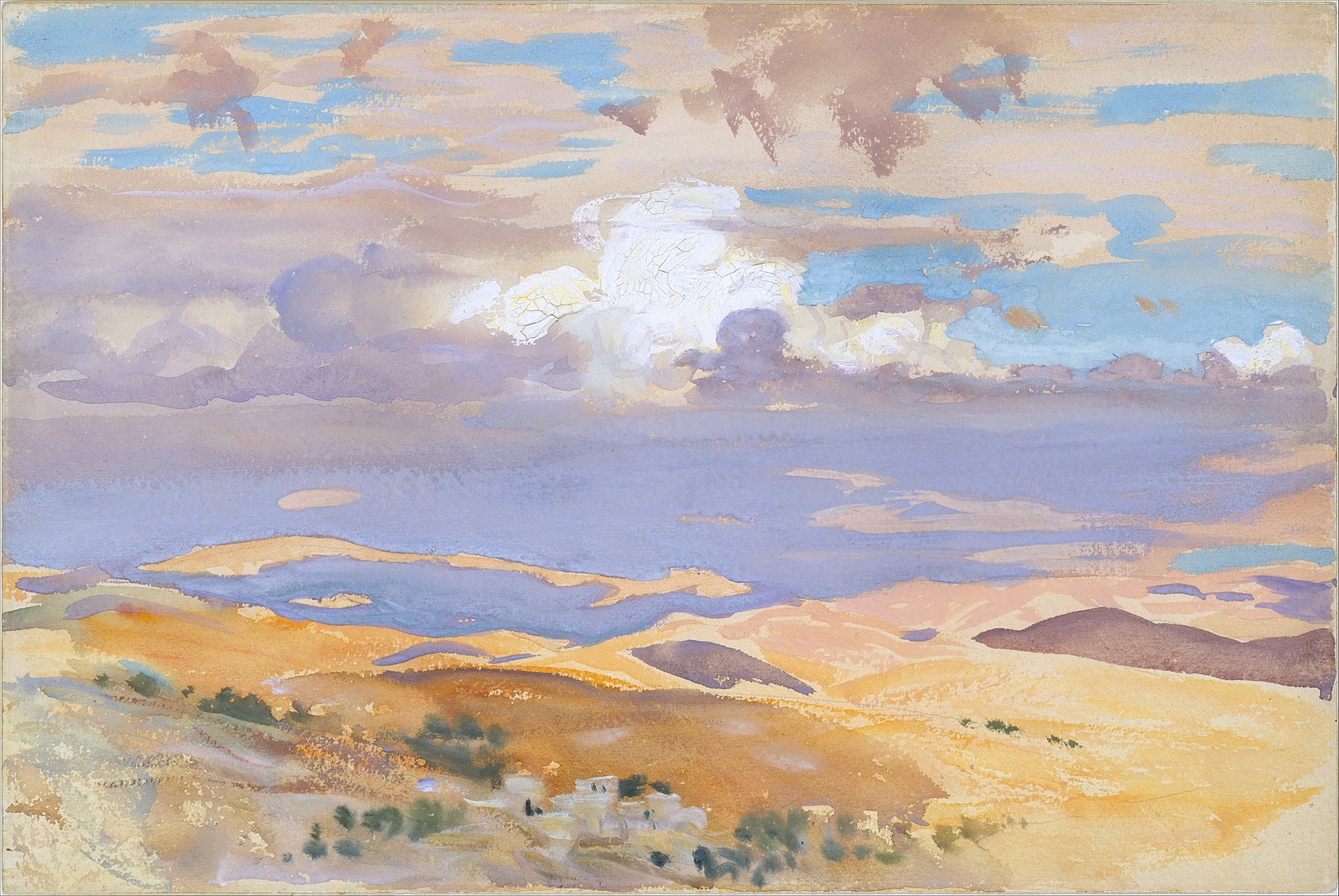
From Jerusalem, by John Singer Sargeant, 1906

This message is repeated insistently in both this week’s Torah portion, Re-eih (Deuteronomy 11:26-16:17) and in the haftarah reading, the “Third Haftarah of Consolation” from Second Isaiah1 (Isaiah 54:11-55:5).

Moses is addressing the Israelites who have spent forty years in the wilderness after leaving Egypt, and are finally about to cross the river and conquer Canaan. He promises in this week’s Torah portion that God will grant them security on their new homeland. Then, he says, they must all travel three times a year to one place, “the place that God will choose”, to worship God with burnt offerings and gifts to the priesthood. Although Deuteronomy does not say where that place will be, the writers of even the first draft of that book in the 7th century B.C.E. knew the exact location: the temple in Jerusalem.

The poet called Second Isaiah is addressing the Israelites who were deported to Babylon in the 6th century B.C.E. He promises in this week’s haftarah reading that God will grant them security on their old homeland. Then, he says, they must rebuild the temple in Jerusalem and worship God there.

Deuteronomy: The place that God will choose

The Hebrew Bible is full of commands to worship only the God of Israel and no other gods or idols. This week’s Torah portion adds that the places where other gods were once worshiped are forbidden as worship sites, and even the names of those places must be changed.

You must definitely demolish all the places where the nations that you will dispossess served their gods: on high mountains and on hills and under any verdant tree. And you must tear down their altars, and you must smash their standing-stones, and ashereyhem you must burn in fire, and you must chop up the carved idols of their gods; and you must eradicate their name from that place. (Deuteronomy 12:2-3)

ashereyhem (אֲשֵׁרֵיהֶם) = their trees or wooden poles used as idols for the goddess Asherah.

Then Moses says, ambiguously:

You must not do likewise for God, your God. (Deuteronomy 12:4)

The Talmudic rabbis in the 5th century C.E. said this means the Israelites must not eradicate God’s name, i.e. erase the name of God from any writings. Rashi (Rabbi Shlomoh Yitzchaki) in the 11th century wrote that this verse also meant you must not burn offerings to God at any place you choose, but only at the place God chooses.

This restriction on the place of worship will begin after the Israelites have conquered Canaan and are secure in their new land.

And you will cross the Jordan and you will settle down in the land that God, your God, is giving you as a possession, and [God] will give you rest from all your enemies all around, and you will settle down in security. Then it will be to the place that God, your God, chooses to have [God’s] name dwell that you will bring everything that I command you: your rising-offerings and your slaughter-offerings, your tithes and the contributions of your hands, and all the choice vow-offerings that you vow to God.  (Deuteronomy 12:10-11)

Moses Pleading with Israel, Providence Lithograph Co., 1907

It would be unreasonable to expect people to leave their farms for trips to Jerusalem and back if they had to worry about enemy raids, so Moses reassures the people that God will grant them safety. The last chapter of the portion Re-eih describes the three annual festivals when the people must bring these things to “the place that God will choose”.

Three times in the year all your males must appear in front of God, your God, at the place that [God] will choose: at the festival of matzah, and the festival of Shavuot, and the festival of Sukkot. And they must not appear in front of God empty-handed. (Deuteronomy 16:16)

Worship at the place (the temple in Jerusalem) is obligatory. But Moses also makes the festivals in Jerusalem sound, well, festive.

And you will rejoice before God, your God—you and your sons and your daughters and your male slaves and your female slaves—and the Levite who is within your gates, since he has no portion of land among you. Watch yourself, lest you bring up [the smoke of] your rising-offerings in [just] any place that you see! (Deuteronomy 12:12-13)

The rejoicing includes feasting; the donors of most types of sacrifices get a portion of the roasted meat to share. The portion Re-eih continues the Torah’s concern with making sure everyone eats well, including slaves and the religious officials (Levites) who have no land of their own to farm. But it also emphasizes the importance of bringing offerings to “the place that God will choose”: Jerusalem, the center of government and religion for the kingdom of Judah.

Isaiah: the place that God already chose

This week’s haftarah is an excerpt from a longer section of Second Isaiah tin which God addresses Jerusalem personified as a woman. The address begins:

Awake, awake, dress yourself in your strength, Zion!
Clothe yourself in your splendor, Jerusalem, holy city! (Isaiah 52:1)

This week’s haftarah reading picks up with God’s poetic description of Jerusalem as a desolate woman.

Wretched, storm-tossed one, not consoled! (Isaiah 54:11)

Jerusalem is miserable because the Babylonian army tore down her city walls and her temple, and deported her “children” (citizens) to Babylon. But God promises Jerusalem that she will be rebuilt—not with stones, but with gems.

And all your children will be God’s disciples,
And they will have abundant well-being. (Isaiah 54:13)

The reason why God let the Babylonians take Jerusalem in 587 B.C.E., according to the Isaiah, Jeremiah, and Ezekiel, was that its citizens were flagrantly violating God’s rules, both by worshiping other gods and by oppressing the poor. Here Second Isaiah prophesies that when the exiles (Jerusalem’s “children”) return, they will behave quite differently; they will be dedicated to learning God’s laws. Therefore, instead of sending in an enemy army, God will grant the Israelites of Jerusalem peace and prosperity.

Through tzedakah you will be established.
You will be distant from oppression,
So that you will not be afraid,
Because ruin will not come near you. (Isaiah 54:14)

tzedakah (צְדָקָה) = righteousness, honesty, justice.

Righteous people are “distant from oppression” because they do not commit it—regardless of whether others are oppressing them or not. Will their righteousness make them unafraid? Or is it God’s promise to keep ruin away that will give them courage?

The late Rabbi Steinsalz explained that the verse means:

“…you will be rebuilt on a foundation of honesty and justice. Distance yourself from exploitation, for you need not fear. Sometimes, one acts dishonestly out of fear. Since you will live in tranquility, you will be capable of distancing yourselves from such behavior.”2

In the next verse, God says that the people will be secure because God will make sure the only force that has any power over them is God itself.

Hey, definitely nothing will attack unless it is from me;
Whoever would attack would fall over you. (Isaiah 54:15)
… This is the portion of God’s servants,
And their tzedek is through me, declares God. (Isaiah 54:17)

tzedek (צֶדֶק) = what is right, what is just; vindication. (From the same root as tzedakah.)

“And their tzedek is through me” could mean that doing the right thing always involves serving God. Or it could mean that God will inspire them to do the right thing. The haftarah goes on to urge the Israelites to choose the nourishment of God’s covenant over the material advantages of staying in Babylon. (See my post: Haftarat Re-eih—Isaiah: Drink Up.) Second Isaiah knows the exiles will choose to travel to Jerusalem and renew the covenant only if they are no longer afraid of either human enemies, or their own God.


Both the Torah portion and the haftarah urge the people to stick to worshiping only their own God. Both also say they must worship God in the place God chose: Jerusalem.

Why is Jerusalem so important? Since God created the whole world, why can’t the Israelites worship God anywhere?

In the Hebrew Bible the Israelites are constantly tempted to worship the gods of other places. Insisting on worship in Jerusalem, where God’s temple was located for many centuries, is one way of reinforcing the worship of only one god.

In the books of Ezra and Nehemiah, at least two parties of Israelites do move from Babylon back to the ruins of Jerusalem, rebuild the city walls, and build a second temple for God, which lasted from around 500 B.C.E. until the Roman destruction of the temple in 70 C.E.3

Since then, for almost two millennia, Jews have worshiped God in every place they lived, all over the world—through prayers rather than animal sacrifices. Yet in our liturgy we still hope to return to Jerusalem personally, not just as a people. Actually moving there (“making aliyah”, ascent) is considered especially virtuous, but visiting is also good.

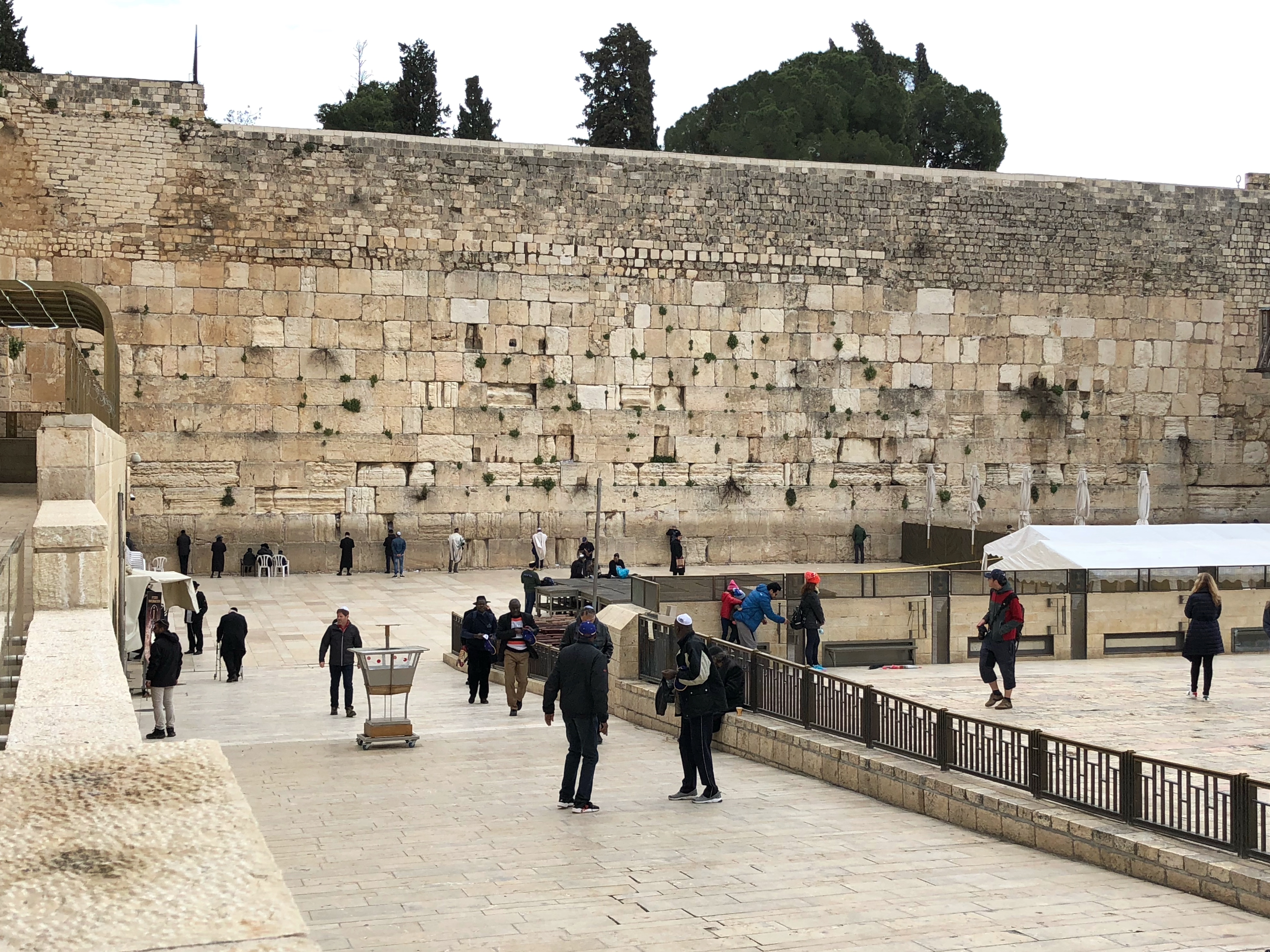
Kotel (Western Wall), Jerusalem, photo by M.C.

I finally visited Jerusalem myself in early 2020 (and left sooner than I had planned because of the Covid pandemic). Twice I stood at the Western Wall (Kotel)4 and prayed, grateful that at least there is a section of the wall designated for women now.

I have friends who felt the presence of God when they stood at the Wall. But I did not, despite my excitement over actually being there. The only times I have felt God’s presence have been when I was singing prayers with my congregation, or whispering prayers as I walked alone in the forest.

The writers of Deuteronomy and Second Isaiah probably took the best approach to bring people at that time (around the 6th century B.C.E.) closer to God and tzedek. But please don’t give me that old time religion.


  1. The first 39 chapters of Isaiah record the prophecies of Isaiah (Yesheyahu) son of Amotz, who lived in the 8th and 7th centuries B.C.E. Second Isaiah (also called Deutero-Isaiah) was appended to the original book, and records the poetry of an unknown prophet who prophesied in the 6th century B.C.E. after the Persians had conquered the Babylonians and give the exiles in Babylon permission to return to their homelands.
  2. Rabbi Adin Even-Israel Steinsaltz, The Steinsaltz Nevi-im, Koren Publishers, Jerusalem, 2016, quoted in www.sefaria.org.
  3. Herod saved key elements from the second temple when he rebuilt it on a grander scale in the first century B.C.E.
  4. The Western Wall, formerly called the Wailing Wall, is the only structure left from Herod’s temple. It was a high, thick foundation wall around the Temple Mount which was then backfilled and topped with a large stone platform. The temple and its associated buildings and stairs were erected on that platform.

Haftarat Eikev—Isaiah: Trust in the Darkness

Darkness is bad; light is good. Darkness means ignorance, light means understanding.

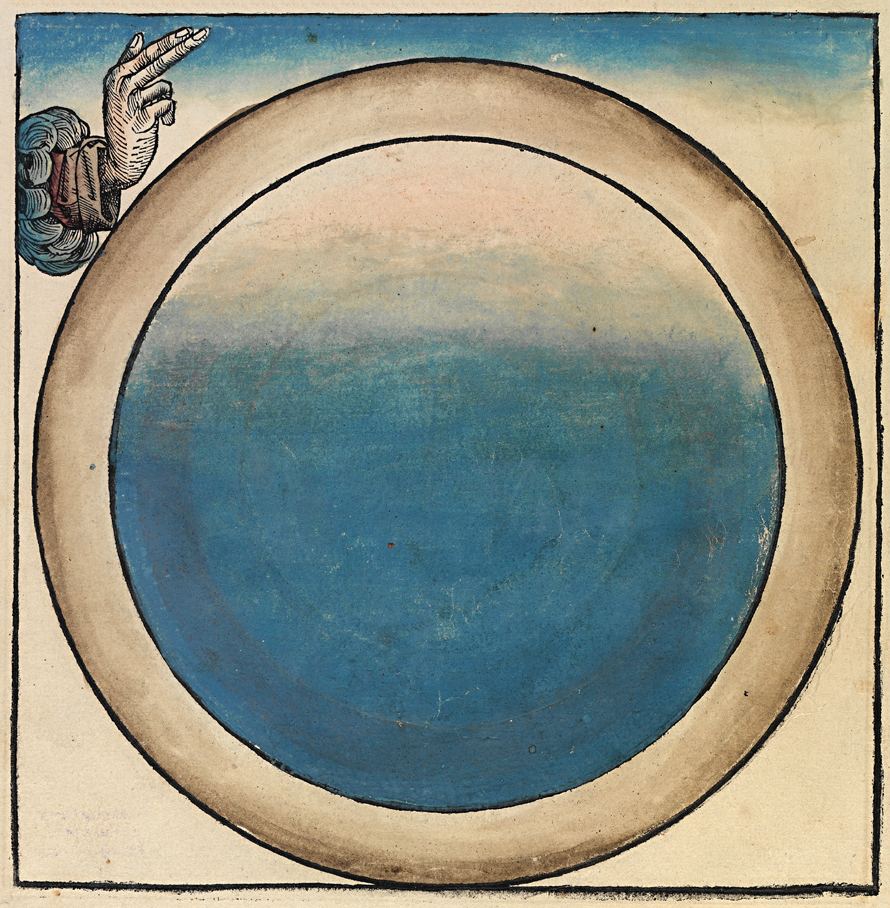
First Day of Creation, Nuremburg Chronicle, 1493

These pairings are common in biblical Hebrew and in English today—probably because humans function better when we can see clearly. The book of Genesis begins with darkness.

And God said “Let light be!” and light was. And God saw the light, that it was good, and God separated the light from the darkness. (Genesis 1:3-4)

Both meanings of darkness versus light appear in this week’s haftarah reading, Isaiah 49:14-51:3, which accompanies the Torah portion Eikev in Deuteronomy. Jews call this week’s reading the “Second Haftarah of Consolation”—consolation after the annual fast of Tisha Be-Av, which commemorates the destruction of Jerusalem’s temple by the Babylonians in 587 B.C.E. (See my post two weeks ago: Isaiah & Lamentations: Any Hope?)

Babylonian King Nebuchadnezzar II deported most of the leading citizens of Judah and its capital, Jerusalem, to Babylon. About fifty years later, in 539 B.C.E., the Persians conquered Babylon and gave all the exiles there permission to return to their homelands. Many of the Judahites did not want to return; they were comfortable in Babylon, and Persian rule was benign.

The prophet of Second Isaiah1 does not challenge the biblical assumption that God punishes disobedient populations of Israelites by letting their enemies win wars. But his main message is that God’s punishment is now over, and if only they return to Jerusalem and rebuild its temple, God will reward them.

In this week’s haftarah, the prophet imagines God puzzling over why so many Israelites in Babylon have not returned.2 God asks:

"Why, when I came, was nobody there?
I called, and nobody answered!
Is my hand really too short to redeem?
And is there no power in it to rescue?” (Isaiah 50:2)

God can make darkness

Second Isaiah reminds his audience that God has plenty of power, enough to dry up the sea, and adds that God said:

“I clothe the skies in kadrut,
And turn their coverings into sackcloth!" (Isaiah 50:3)

kadrut (קַדְרוּת) = darkness (in most English translations; but this word is a hapax legomenon, appearing only here in the Hebrew Bible, so the translation cannot be cross-checked. The more common words for darkness are choshekh and chasheikhah).

The skies are normally covered with diaphanous clouds, but God can turn them into sackcloth, the crude black fabric worn for mourning in the Hebrew Bible. One 12th-century commentator explained: “Some understand it to refer to an eclipse of the sun, when the sky becomes obscure in the middle of the day, and appears as if covered with sackcloth, which is usually black.” (Ibn Ezra)3

A 17th-century explanation is: “The Holy One said: I have done even more in Egypt. I clothed the skies in black. That is to say, I caused three days of darkness in Egypt.” (Tze-enah Ure-enah)4

Either way God, who created light and saw that it was good, also has the power to afflict whole populations with miraculous darkness, which is bad.

People walk in darkness

The prophet of Second Isaiah points out that he keeps on patiently communicating what God tells him, and ignores the people who yank his beard and spit on him. Then he asks them to trust God despite the lack of visible evidence—a metaphorical darkness.

Who among you is in awe of God,
Paying attention to the voice of [God’s] servant?
Though he walks in chasheikhim,
And there is no radiance for him,
Yivtach in the name of God,
And lean on his God. (Isaiah 50:10)

chasheikhim (חֲשֵׁכִים) = darknesses. (Plural of chasheikhah, חֲשֵׁכָה = darkness, a variant of the common Hebrew noun for darkness, choshekh, חֺשֶׁךְ.)

yivtach (יִבְטַח) = he will trust, he trusts, let him trust.

Commentators have interpreted this verse two different ways. One interpretation is that the prophet asks a rhetorical question, recognizing that nobody in Babylon is paying attention to him. The prophet trust in the name of God and leans on his God even though he “walks in darknesses”—in other words, bad things happen to him while he is prophesying.5

The other interpretation is that the prophet’s question is genuine, and he goes on to address anyone who actually is paying attention to him and does revere (but does not quite trust) God. Second Isaiah recognizes that such a person “walks in darknesses” of ignorance and misunderstanding, and begs him to have faith that God will reward him for returning to Jerusalem. Those who subscribe to this interpretation of the verse translate yivtach as “Let him trust”.

False enlightenment

In the next verse, Second Isaiah warns the exiles against inventing their own enlightenment.

But hey, all of you igniters of fire,
Clasping burning arrows!
Walk by the flame of your fire,
By the burning arrows you lit!
This comes from my hand to you:
In a place of grief you will lie down. (Isaiah 50:11)

What kind of fire are these Judahites igniting? Rashi wrote that the fire is God’s wrath, and that my hand in the fifth line refers to God’s hand, which will punish them.6

Other commentators have identified the fire in this verse as the manufactured light of false understanding, and my hand as the prophet’s hand warning the exiles that they will come to grief if they persist in their false beliefs . For example, 21st century commentator Robert Alter wrote:

“The poet now turns around the imagery of the light 180 degrees. Instead of the radiance God provides that liberates from darkness, there are those who prefer the light generated by their own fire. Whether this is simply arrogant self-reliance or the false light of fabricated gods is not clear. But this is a destructive source of light, its burning rather than its illumination salient in the language of these lines.” (Alter)7

I believe that this verse is from the prophet’s point of view. He address the exiles who are in the dark about God’s plans, and invent their own version of reality, believing they are enlightened when they choose to stay and assimilate in Babylon. But ignoring God’s prophet and following your own opinion is as dangerous as hugging burning arrows. The false light of their self-ignited fires will only lead to grief.

Ibn Ezra wrote that the last line, In a place of grief you will lie down, means: “You shall die in sorrow.”8

Tze-enah Ure-enah says it means: “You will all be burned with wrath from the Holy One. This is to say, the fire from His nose [and therefore] … You will lie in mourning; you will lie in every sickness. You will have no strength against your enemies.”9

In the 21st century, Rabbi Steinsaltz wrote that Second Isaiah is saying: “You, however, mistakenly consider yourselves enlightened. … Guard your flimsy light as best you can and follow it. … you will lie in suffering, without peace, consumed by worry and doubt. The light you produced will fade, and you will be left in the dark.”10


Walking in darkness is not easy. How do you pick your direction? How do you find the light switch, get to the place of enlightenment, or arrive at a good future?

I confess I am like the exiles from Judah whom Second Isaiah keeps pleading with. I may be in awe of God, but I do not trust God to do anything for me personally, because I cannot view God as a person. I do not trust any prophet who claims God-given authority, either. Instead, I try to use verifiable facts and my own reason to create my own illumination so I can choose my own way through life. Am I actually clasping burning arrows?

I doubt it. As I reflect back on my seventy years of life, I can see where I stumbled in the darkness of ignorance. I subjected myself to the most danger and grief when I was young and naïve, and trusted other people’s opinions too much. But I survived, and made better decisions, and grew. And now my life is good, sometimes even radiant.

Back in the 6th century B.C.E., some of the exiles in Babylon did return and rebuild Jerusalem and its temple under the leadership of Ezra and Nehemiah, who have their own books in the bible. Others stayed in Babylonia under the Persians, and became a thriving community with many rabbis and scholars. By 500 C.E. there were two versions of the Talmudic collection of Jewish laws, legends, and arguments: the Jerusalem Talmud and the Babylonian Talmud.

Maybe there is more than one path to enlightenment.


  1. “Second Isaiah” (or Deutero-Isaiah) starts with chapter 40 of the book of Isaiah. The first 39 chapters of the book report the prophecies of Isaiah (Yeshayahu) son of Amotz in the 8th and 7th centuries B.C.E. in Judah. A later scribe appended the poetry of one or more unknown prophets living among the Judahites in Babylon in the 6th century B.C.E. For convenience, I refer to that narrator in Second Isaiah as “he”.
  2. See my post: Hafatarat Eikev—Isaiah: Homesick or Scared?
  3. Rabbi Abraham ben Meir ibn Ezra, translation in www.sefaria.org.
  4. Tze-enah Ure-enah, compiled by Rabbi Jacob ben Isaac Ashkenazi, translation from Yiddish in www.sefaria.org.
  5. This is the view of Ibn Ezra (see footnote 3).
  6. Rashi is the acronym of 11th-century Rabbi Shlomoh Yitzchaki, consulted by all subsequent Jewish commentators.
  7. Robert Alter, The Hebrew Bible, Volume 2: Prophets, WE.W. Norton & Co., New York, 2019, p. 793.
  8. Ibid. ibn Ezra, my footnote 2.
  9. Ibid. Tze-enah Ure-enah, my footnote 3.
  10. Rabbi Adin Even-Israel Steinsaltz, The Steinsaltz Nevi-im, Koren Publishers, Jerusalem, 2016, quoted in www.sefaria.org.

Va-etchanan: Only One

The first definite statement of monotheism—that there are no other gods—appears in this week’s Torah portion, Va-etchanan (3:23-7:11), in the book of Deuteronomy (Devarim).

Our god is better than your god

Although the Hebrew Bible repeatedly forbids Israelites from worshiping any other gods, the texts of Genesis and Exodus assume that other, lesser gods exist.1 On the sixth day of creation, God says:

“Let us make humankind in our image, like our likeness.” (Genesis 1:26)

Neither kings nor God use the royal “we” in the Hebrew Bible. God uses the first person plural only four times in the entire canon.2 In Isaiah 6:8, God’s “we” includes the serafim, six-winged angels hovering in attendance on God. But the first three times, all in Genesis, God’s first person plural can only be addressing lesser gods who assist God in acts of creation. The second time, after the two humans have eaten fruit from the Tree of the Knowledge of Good and Evil, God says:

“Humankind is becoming like one of us, knowing good and evil!  And now, lest it stretch out its hand and take also from the Tree of Life and eat and live forever—!” (Genesis 3:22)

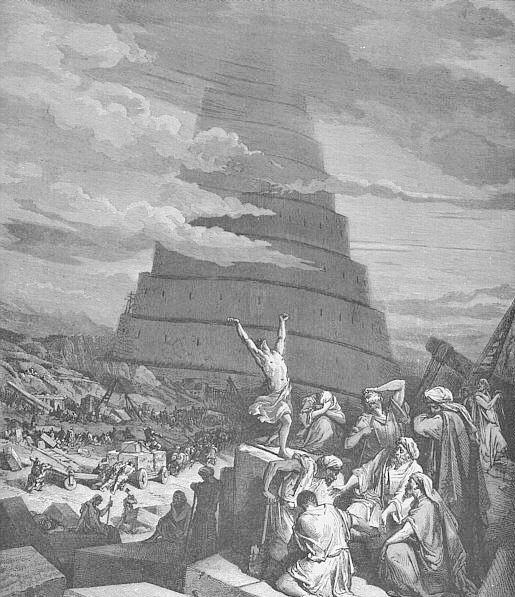
And the third time, after humans build the tower of Babel, God says:

The Confusion of Tongues,
by Gustave Dore, 19th century

“Come, let us go down there and let us make their language fail, so that a man cannot understand the language of his neighbor.” (Genesis 11:6-7)

The book of Exodus also assumes the existence of other gods. For example, God tells Moses and Aaron:

“I will pass over the land of Egypt on that night, and I will strike down every first-born in the land of Egypt, from human to beast; and against all ha-elohim of Egypt I will execute judgments. I am Y-H-V-H.” (Exodus 12:12)

ha-elohim (הָאֱלֺהִים) = the gods; God.

How could God punish the gods of Egypt if they do not exist?

After Moses and the Israelites have crossed the Red Sea, they sing to God:

“Who is like you ba-eilim, Y-H-V-H?
Who is like you, majestic among the holy,
Awesome of praises, doer of wonders?” (Exodus 15:11)

ba-eilim (בָּאֵלִם) = among the gods. B- (בּ) = among, in, through + -a- (ָ ) = the + eilim (אְלִם) = gods. (Unlike elohim, eilim is never used to refer to the God of Israel.)

Here the God of Israel, addressed by God’s sacred personal name, Y-H-V-H, is compared with multiple other, less awesome gods. This verse (“Mi khamokha”) is chanted or sung at every evening and morning Jewish service to this day. Some prayerbooks translate the first line as “Who is like you among the mighty?”—perhaps so that people who cannot read the Hebrew will not ask embarrassing questions!

Our god is the only god

Providence Lithograph Co., 1907

The book of Deuteronomy was expanded and reframed as Moses’ final speech to the Israelites in the 5th century B.C.E. after the Persians had conquered Babylon and given the exiled Israelites permission to return to Jerusalem. Second Isaiah, which also includes clear statements of monotheism, was written during the same period.3

The first monotheistic declaration in the Torah appears in this week’s Torah portion, Va-etchanan. Moses reminds the Israelites that their God created the universe, made miracles to rescue them from Egypt, and spoke to them out of the fire on Mount Sinai. He concludes:

You yourself have been shown in order to know that Y-H-V-H is ha-elohim; eyn od milvado. (Deuteronomy4:35)

ha-elohim (הָאֱלֺהִים) = the gods; God. Elohim (אֱלֹהִים) is the plural of eloha ((אֱלוֹהַּ = a god (in early Hebrew), and literally means “gods”. But elohim can also mean “God”—perhaps because the God of Israel had the powers of all the gods that other people worship.

eyn od (אֵין עוֹד) = there is no other, there is nothing else. (Eyn (אֵין) = there is no, there is not, none, nothing. Od (עוֹד) = other, else.)

milvado (מִלְּבַדּוֹ) = alone, by itself.

Technically, the Israelites whom Moses is addressing are not the ones who saw the miracles in Egypt and heard God’s voice from the fire 40 years before, when all but two4 of Moses’ present audience were either children or not yet born. Yet Moses speaks as if everyone in front of him was an eye-witness.

He elaborates on God’s deeds on behalf of the Israelites, then reiterates:

And you know today, and you must [continually] put back into to your consciousness, that Y-H-V-H is ha-elohim, in the heavens above and on the earth below; eyn od.(Deuteronomy 4:39)

But does this generation of Israelites really know that their God is the only god? After they pitched camp by the Jordan in the book of Numbers, many Israelite men joined the local women in ritual animal sacrifices to their god, Baal Peor.5

And the people ate and they bowed down to their elohim. And Israel attached itself to Baal Peor, and Y-H-V-H’s nose burned against Israel. (Numbers 25:3)

The God of Israel calls for impalements, but also sends a plague that kills 24,000 people. Moses mentions this recent episode in this week’s Torah portion:

“Your eyes saw what Y-H-V-H did regarding Baal Peor: that Y-H-V-H, your Elohim, wiped out every man from your midst who went after Baal Peor. But you who stuck to Y-H-V-H, your Elohim, all of you are alive today.” (Deuteronomy 4:3-4) Perhaps the surviving Israelites do know that there is only one god, Y-H-V-H. Or perhaps they think Baal Peor is a real god, but they know their own God is “a jealous god”6, so they avoid  worshiping any other gods.

Hear this: God is one

Mezuzah

Later in the portion Va-etchanan, Moses pronounces what has become a key Jewish prayer, recited twice a day since the first century C.E., and written on the scroll inside the mezuzah attached to a Jew’s doorpost.

Shema, Israel! Y-H-V-H is Eloheinu; Y-H-V-H is echad. (Deuteronomy 6:4)

shema (שְׁמַע) = Listen! Pay attention! Hear this!

Eloheinu (אֱלֺהֵנוּ) = our elohim: our gods, our God.

echad (אֶחָד) = one as the first of a series, one as singular, unique.

This verse certainly says that Y-H-V-H is the God of the Israelites. But is it also a statement of monotheism?

Some modern commentators have held that echad here merely means “first”, or, as Daniel Zucker expressed it, “the top god”.7 If  Moses’ declaration appeared in the book of Exodus, I might agree. But since it is in the later book of Deuteronomy, in the same Torah portion that says of God eyn od (there is no other), I favor a different kind of “one”.

The word echad could also mean “unique”, i.e. that God is the only one of its kind. In the 14th century, Rabbeinu Bachya explained: “He is unique in the universe, there is no other God deserving the title. He has no partners, is not an amalgamation of different powers working in tandem.”8

18th century rabbi Chayim ben Moshe ibn Attar put it more bluntly: “Furthermore, we express our conviction that He is indeed the only God, there is no other independent power in the universe.”9

Whatever the Shema meant when Deuteronomy was rewritten in the 5th century B.C.E., Jews have long considered it a declaration of monotheism. During the First Crusade, in 1096 C.E., Christians massacred Jews in the Rhine valley as well as Muslims in the “Holy Land”. Some Jews killed themselves before the Christians reached them.

“Over and over, their rallying cry at death is the single verse of the Sh’ma. Like their Sefardic counterparts, and medieval Muslims, Ashkenazi Jews understood the Christian concept of the divine Trinity as a case of polytheism; thus their insistence on God’s unity is a vehement repudiation of Christian doctrine.” (Susan Einbinder)10


In this week’s Torah portion, Moses tells the next generation of Israelites that they know there is only one God because 40 years ago they saw God’s miracles in Egypt and heard God’s voice in the fire on Mount Sinai. Only God could make those things happen. So according to Moses, they had direct evidence that the God of Israel is the only god; there is no other.

Moses does not mention that he is speaking to the next generation of Israelites, who were either children or not even born at the time. They have to go by what their parents told them, or by what Moses is telling them now.

Anyone who reads the book of Deuteronomy is in the same position. Why should we believe that there is one and only one god?

Some people believe it because their parents or teachers told them. And some believe it because it says so in the Torah. Others have their own mystical experiences, which they interpret as manifestations of a single, universal god. And some people believe it because they find one of the philosophical arguments for the existence of one God sufficiently compelling.

But many people are atheists, unable to believe God is real according to any of the usual definitions of God. When I examine the standard medieval theologian’s definition of God as an omnipotent, omniscient, omni-benevolent, and personal being, I always conclude that such a god is impossible. According to that definition of God, I am an atheist.

I have been fumbling toward my own definition of what I mean by “God” for decades, and I might never reach it. Although some scholars claim that the name Y-H-V-H comes from an older god-name and has nothing to do with the various conjugations of the Hebrew verb “to be” or “to become” (which are made up of those four letters in Hebrew), something about God as becoming speaks to me. But I cannot turn it into a tidy definition.

Yet I can recite the Shema with conviction. I am a Jew, and Y-H-V-H is our God, and God is one.


  1. The books of Leviticus and Numbers warn the Israelites against worshiping other gods without saying whether other gods exist.
  2. See my post: Bereishit: How Many Gods?
  3. The portion Va-etchanan also promises that God is compassionate and will ultimately rescue the Israelites (Deuteronomy 4:29-31), which is a constant refrain in Second Isaiah.
  4. Caleb and Joshua, the two out of ten scouts who trusted God to help them conquer Canaan. See my post: Shelakh-Lekha: Mutual Distrust.
  5. See my post: Pinchas & Balak: Calming Zeal.
  6. You must not have other elohim in front of me … You must not bow down to them and you must not serve them, because I, Y-H-V-H, your Elohim, am a jealous god … (Deuteronomy 5:9 and Exodus 20:3-5)
  7. Rabbi Daniel M. Zucker, “Shema Yisrael: In What Way is ‘YHWH One’?”, https://www.thetorah.com/article/shema-yisrael-in-what-way-is-yhwh-one.
  8. Rabbi Bachya ben Asher, a.k.a. Rabbeinu Bachya, translated in www.sefaria.org.
  9. Chayim ben Moshe ibn Attar, Or HaChayim, translated in www.sefaria.org.
  10. Susan L. Einbinder, My People’s Prayer Book, Vol. 1: The Sh’ma and its Blessings, Jewish Lights Publishing, Woodstock, VT, p. 90.

Isaiah & Lamentations: Any Hope?

The annual fast day of Tisha Be-Av (the ninth of the summer month of Av) is the day of mourning for the Babylonian destruction of Solomon’s temple in Jerusalem in 587 B.C.E.—and the Roman destruction of the second temple in 70 C.E..

The Flight of the Prisoners (as Jerusalem burns),
by James Tissot, 1896

Tisha Be-Av falls during the week after Jews read the first Torah portion in Deuteronomy and the third “haftarah of admonition”, Isaiah 1:1-27. And the day has its own reading: the book of Lamentations, which describes the ruin of Jerusalem and its people after the Babylonian conquest.

Both the haftarah and Lamentations personify Jerusalem as a woman whom God has destroyed for her misdeeds. Yet both readings offer the hope that God might revive the city, if her people reform.

Isaiah

The haftarah from Isaiah, like Lamentations, uses the word eykhah to express a stunned realization of how degenerate Jerusalem has become.

Eykhah she has become a prostitute,
The [once] faithful city,
Filled with justice.
The righteous used to linger in her,
But now—murderers! (Isaiah 1:21)

eykhah (אֵיכָה) = Oh, how?  Oh, where?  Oh, how can it be?  (See my post: Devarim, Isaiah, & Lamentations: Desperation.)

Isaiah asked “Oh, how can it be she has become a prostitute?” in the 8th century B.C.E., when the Assyrian army had burned the towns around Jerusalem and was attempting to take the city. The prophet Isaiah asked why God was letting it happen, and answered that although the people of Judah were observing the forms of worship in the temple, they were ignoring God’s commands regarding justice.

Your sarim are rebels 
And companions of thieves,
All of them loving a bribe
And chasing after gifts.
They do not judge an orphan
And the case of a widow does not come to them. (Isaiah 1:23)

sarim (שָׂרִ’ם) = officials, leaders.

All the men in charge of justice are corrupt, selling themselves like prostitutes; they also refuse to hear cases that would benefit the poor. This makes them rebels against God, who had commanded:

You must not pervert justice for your impoverished in their legal cases. … You must not take a bribe, because the bribe blinds the clear-sighted and overturns the words of those who are in the right. (Exodus 23:6-8)

Naturally God is enraged. But now God is punishing the sarim of Jerusalem by punishing the whole city and its kingdom, Judah.

Therefore, thus says the lord, God of Armies, the mighty one of Israel:
“Ah! I will console myself about my adversaries,
And I will take vengeance on my enemies.” (Isaiah 1:24)

Rabbi Steinsaltz explained: “Once I have punished them I will be able to relax, as it were. These sinners are considered God’s adversaries and enemies.”1

Can anything be done so that God will send the Assyrian army away?

“Cease to do evil!
Learn to do good!
Advance the oppressed!
Judge the orphan!
Plead for the widow!
Go, please, and let us reason together,” said God.
“If your misdeeds are like crimson,
They can become white like snow.
If they are red like scarlet dye,
They can become like fleece.” (Isaiah 1:16-18)

If the officials in Jerusalem change their ways, God will rescue the whole kingdom. But if they do not, “The sword will devour you.” (Isaiah 1:20)

Speaking through the prophet Isaiah, God adds that the punishment is part of the long-term plan for improvement.

“And I will turn my hand against you [Jerusalem]
And smelt your dross away as if with lye,
And remove all your slag.
And I will restore judges to you like those at her beginning,
And counsellors to you like those she had first.
After that you will be called the town of the righteous,
The city of the faithful.
Zion will be redeemed through lawful judgements,
And those who return to her, through righteousness.” (Isaiah 1:24-1:27)

Isaiah does not say how God will achieve this metaphorical smelting, but his prophecy does promise that the king’s judges and counsellors will be replaced by virtuous men who are faithful to God’s laws for human justice.

Lamentations

If there were any reforms in Jerusalem when the Assyrians ended the siege and retreated, they did not last. When Babylonian army besieged Jerusalem in 589-587 B.C.E., the prophet Jeremiah claimed that God was letting the enemy win because the people of Judah practiced injustice and worshiped other gods. (See last week’s post on the second haftarah of admonition: Haftarat Masey—Jeremiah: Israel’s Divorce.)

The belief that disaster is caused by disobedience to God is also the foundation of the book of Lamentations (called Eykhah in Hebrew), five long acrostic poems of mourning. The first poem (or chapter) mourns the starvation and degradation caused by the Babylonian siege and destruction of Jerusalem. It begins:

Eykhah the city sits alone?
Once teeming with people,
She has become like a widow.
Once great among the nations,
A princess among the provinces,
She has become a slave. (Lamentations 1:1)

The poet explains that Jerusalem is deserted now, most of her people dead or in exile, and the remainder dying of starvation or disease.

Her adversaries are on top,
Her enemies are at ease,
Because God has afflicted her
On account of her many transgressions. (Lamentations 1:5)

The poet alludes to the biblical assumption that when bad things happen to the Israelites, it means God is punishing them for doing something wrong. The assumption pops up again a few verses later:

Jerusalem is certainly guilty,
	  Therefore she has become like filth. (Lamentations 1:8)

And Jerusalem herself says:

"God is in the right,
For I have disobeyed him." (Lamentations 1:18)

But the first poem never says how Jerusalem transgressed. The second poem blames Judah’s false prophets for God’s punishment, without saying what the people did wrong.

[What] your prophets foresaw for you
Was false and foolish.
They did not expose your iniquity
In order to turn back your backsliding. (Lamentations 2:14)

The third chapter of Lamentations says that God only afflicts people who have sinned, and hints that the sin is injustice.

To pervert justice for the strong man,
In front of the face of the Most High,
To subvert a human being in his legal case,
My lord [God] would not consider. (Lamentations 3:34-36)

The poet urges us to recognize our unjust deeds, repent, and reform.

Why does a living human being, a strong man,
Complain about [the punishment for] his own guilt?
Let us investigate our ways, and search,
And return to God. (Lamentations 3:39-40)

Earlier in this chapter the poet said that an individual man who has stopped his wrongdoing should wait humbly and patiently for God to rescue him from his suffering.

Let him put his mouth in the dust;
Perhaps there is hope.
Let him offer his cheek to be struck;
Let him be surfeited with scorn.
For my lord [God]
Does not reject forever,
For though he causes grief, then he has compassion,
According to the abundance of his steadfast kindness. (Lamentations 3:29-32)

But what if the people of a whole city, a whole country, keep on suffering because of the wrongs done by their leaders? The patient endurance of one person will not help.

The fifth poem of Lamentations suggests that God needs a reminder to end the collective punishment, and the people need a reminder that God is waiting for them to reform. The book concludes with a prayer to God that is repeated weekly in Jewish liturgy:

Why have you continued to forget us,
Have you forsaken us for the length of [our] days?
Return us to you, God,
And we will return!
Renew our days as of old! (Lamentations 5:20-21)

How can human beings return to a God who has abandoned them? The poet begs God to take the initiative.


If God is omnipotent and just, why do innocent people suffer so much? The prophet Isaiah offers a partial answer to that question: a whole people must suffer for the crimes of their leaders because justice can only be collective, not personal. All the people of Judah suffer because of the crimes of Jerusalem’s officials and judges. The book of Lamentations also blames human injustice for the suffering God afflicts through enemies, but does not distinguish between individuals and whole populations.

Both the haftarah from Isaiah and the book of Lamentations record the despair of the survivors, who see no evidence that God will ever rescue them. Isaiah responds that God will rectify the situation by making sure good leaders are installed. The book of Lamentations insists that if the survivors wait patiently, God may be compassionate—and then prays that God will remind the people that they can return and reform.

Today countless innocent people still suffer and die because of the crimes of a small minority: those who are powerful, politically or economically, but not ethical. Would it help us to wait and pray for God to install new leaders, or to remind us of what we ought to do?

Is there another way we can turn our countries and our world around?


  1. Rabbi Adin Even-Israel Steinsaltz, The Steinsaltz Tanakh, Koren Publishers, Jerusalem, 2019.

Haftarat Masey—Jeremiah: Israel’s Divorce

The covenant between the Israelites and their God is like a marriage, according to four prophets in the Hebrew Bible: Hosea, Jeremiah, Ezekiel, and second Isaiah. They refer to God as the husband, and “Israel” as the bride. Israel loves her husband at first, in this analogy, but then abandons him by committing adultery with other men (worshiping other gods).

Hosea: The harlot

This analogy first appears in the book of Hosea, written in the 8th century B.C.E. as the Neo-Assyrian Empire was attacking the northern kingdom of Israel. Hosea calls the northern kingdom the “mother” of the Israelites, and declares that she has cheated on her legitimate “husband”, God. As God’s mouthpiece, Hosea urges the people of Israel:

"Bring a case against your mother, a case!
For she is not my wife,
And I am not her husband.
She must clear away the whoredom from her face,
And the sign of adultery from between her breasts.
If not, I will strip her down to her nakedness
And display her as on the day she was born.
And I will turn her into a wilderness,
And make her like a waterless land,
And let her die of thirst." (Hosea 2:4-5)
At the Rat Mort, by Toulouse-Lautrec, 1899

In other words, the Israelites must cease all worship of other gods, or else their kingdom will be destroyed. (See my post: Haftarat Bemidbar—Hosea: An Unequal Marriage.)

After the Assyrians wiped out the kingdom of Israel, the Hebrew Bible used the term “Israel” to refer to the people of the southern kingdom of Judah. The next prophet to employ the marriage analogy was Jeremiah. Like Hosea, Jeremiah explained that God let enemies attack because the Israelites persistently disobeyed God’s rules—both by cheating and oppressing the poor, and by worshiping other gods.

Jeremiah: The devoted bride

This week’s haftarah reading is Jeremiah 2:4-28, which Jews read on the same Shabbat as the final Torah portion in the book of Numbers, Masey. This is the second of three “haftarot of admonition” before Tisha Be-Av, the day of mourning for the Babylonian destruction of the temple in Jerusalem in 587 B.C.E. and subsequent tragic events.

Jeremiah introduces the marriage analogy just before this week’s haftarah begins.

And the word of God happened to me, saying: “Go and proclaim in the ears of Jerusalem, saying: Thus said God:

I recalled for you the devotion of your youth,
The love of your betrothals,
Your following after me in the wilderness,
In a land not sown.
Israel was holy to God …” (Jeremiah 2:1-3)

Leaving home to follow a new husband to a new land is not easy, even if the bride’s home is a place of servitude, like Egypt. Yet Israel, the prophet says, was a devoted bride and followed God into an uninhabited wilderness—“without provisions for the way, since you believed in me,” Rashi adds.1

Jeremiah does not mention how short this honeymoon period is in the book of Exodus. The Israelites rejoiced when they followed God’s pillar of cloud and fire out of Egypt, and again after they crossed the Reed Sea. But every time they ran short of food or water they panicked, not trusting God to provide for them. And when Moses left them at the foot of Mount Sinai for forty days, they made and worshiped a golden calf, violating God’s commands requiring exclusive worship.

Jeremiah: The wandering wife

The golden calf is only the first of many episodes in the Hebrew Bible in which Israel is unfaithful to God. In this week’s haftarah Jeremiah transmits God’s complaint that Israel, who once “followed after” God, has been “following after” other gods.

Thus said God:
“What wrong did your fathers find in me
That they wandered away from me?
And they followed after the hevel,
And they trusted in hevel!” (Jeremiah 2:5)

hevel (הֶבֶל) = (literally) a puff of air; (figuratively) emptiness, a mere nothing, something transitory that quickly vanishes.2 Why did the Israelites abandon their own God, who is a real, for hevel? The book of Jeremiah brings up the exodus again to underline this folly.

“And they did not say: Where is God,
Who brought us up from the land of Egypt,
Who led us through the wilderness,
Through a land of desert and pit,
Through a land of parched earth and death’s shadow,
Through a land no man had crossed,
And no human had dwelled in?
And I brought you to a land of vineyards,
To eat its fruit and its goodness!
But you came and made my land tamei,
And my inheritance anathema. (Jeremiah 2:6-7)

tamei (טָָמֵא) = unfit for serving God; contaminated, defiled. (“Unclean” in older translations.)

This passage reminds the people of Judah that in the foundational myth of the exodus, God rescued them from Egypt and “gave” them (let them conquer) a fruitful land. But instead of being grateful, the Israelites are contaminating the land. Serving other gods in addition to the God of Israel contaminates the land God gave them because, unlike other gods in the Ancient Near East, their God is a jealous God.3 Their covenant with God is as exclusive as a woman’s marriage to a man. (A man in the Hebrew Bible could take more than one wife or concubine or female slave; but a woman was only allowed to have sex with her husband or owner.)

Jeremiah: The persistent harlot

Even after King Josiah has eliminated the worship of other gods in Jerusalem’s temple and some scattered shrines,4 the people still go to the traditional hilltops and big trees where the Canaanite god Baal and goddess Asherah were always worshiped.

“… For on every high hill and under every luxuriant tree
You recline as a harlot.
I planted you as a choice vine,
A wholly true seed.
Then how could you turn against me,
Disloyally turning into a foreign vine?” (Jeremiah 2:20-21)


The Israelites of Judah pretend they are obedient to God, but they cannot scrub off the stain of their crime (Jeremiah 2:22). So God exclaims:
“How can you say: “I am not tamei,
I did not follow after the Baalim”?
Look at your path in the ga!
Realize what you have done! (Jeremiah 2:23)
Molekh, from Dei Alten Die Alten Judischen Heiligthumer, 1711

ga (גַּיא) or gey (גֶּיא) = valley.

Jeremiah is referring to Gey Ben Hinnom, the valley just south of Jerusalem where people sacrificed children to the god Molekh. He mentions this crime again in Jeremiah 7:31–32 and 32:35,5 which indicates that Josiah’s destruction of the shrine for Molekh had no lasting effect, and Molekh worship resumed under the next few kings of Judah.

After comparing Israel to a wayward female camel and a wild ass in heat, Jeremiah passes on these divine words to the Israelites:

“Then you say: It’s hopeless!
No, because I love zarim,
And I must follow after them.” (Jeremiah 2:25)

zarim (זָרִים) = strangers, foreigners, unlawful or forbidden things (in this case, foreign and forbidden gods).

Perhaps the Israelites find foreign gods irresistible because they can be worshiped in the form of idols—sculptures made of stone, wood, or metal (like the golden calf). An invisible god is harder to relate to. The haftarah concludes:

“They said to wood: You are my father!
And to stone: You gave birth to me!
For they turned the back of their necks to me
And not their faces.
But in their time of disaster, they say:
Arise and save us!
And where are those gods that you made for yourself?
Let them arise with your salvation in your time of disaster!
For the number of your towns
Has become the number of your gods, Judah!” (Jeremiah 2:27-28)

The disaster is coming. In the east the new Babylonian empire is expanding, conquering any small kingdoms that do not pay tribute. When King Zedekiah of Judah revolts instead, the Babylonian army conquers Judah, besieges Jerusalem, and destroys the city and its temple in 587 B.C.E.. Jeremiah goes into exile, still prophesying.


Jeremiah could have put all the blame for the destruction of Jerusalem on the king’s foreign policy. Instead he argues that God let an enemy empire destroy God’s own temple because the Israelites were flagrantly unfaithful to God. Israel’s unfaithfulness amounted to a divorce.

When you believe in an omnipotent God, and God fails to protect your people from disaster, the easiest explanation is that your people did the wrong thing and alienated God. Even some Jews who survived the Holocaust assumed that God let it happen because the Jews were insufficiently religious.

This solution to the “problem of evil” is unsatisfying, because it makes God seem unjust and spiteful. Hosea, Jeremiah, and Ezekiel all portray God as a jealous husband who, in effect, murders his wife. Only in second Isaiah is God willing to forgive Israel and take her back.


  1. Rashi (11th-century rabbi Shlomoh Yitzchaki), translation in www.sefaria.org.
  2. Hevel is also the name of Cain’s brother in Genesis 4:2-11, and the refrain in Ecclesiastes.
  3. E.g. Exodus 20:5. See last week’s post: Pinchas & Balak: Calming Zeal.
  4. 2 Kings 22:3-23:20.
  5. See my post: Acharey Mot & Kedoshim: Fire of the Molekh.

Pinchas & Balak: Calming Zeal

One of God’s primary rules is that the Israelites must shun all other gods.  In the “Ten Commandments” God declares:

You must not have other gods … For I, Y-H-V-H, your God, am a kanna god.” (Exodus 20:3-5)

kanna (קַנָּא) = jealous; zealous. (Adjective from the root kana.)

“That is, the gods of other peoples generally have no problem with sharing their people’s devotions with other deities—polytheism is the ‘default setting’ of the ancient Near East. But that is not the case with Me, God says—I am unusually touchy in this matter, I am a jealous God.” (James Kugel)1

A jealous God

The anthropomorphic God character in the Torah not only demands exclusive worship, but becomes enraged when Israelites even nod at another god in passing. At the end of last week’s portion, Balak, many Israelite men do more than that.

And Israel strayed at the acacias, and the people began to be unfaithful [to God] with the women of Moab. They invited the people to the sacrificial slaughters of their god, and the people ate and bowed down to their god. And Israel attached itself to Baal Peor, and Y-H-V-H’s nose burned against Israel. (Numbers 25:1-3)

A hot nose is an idiom for anger in the Torah. Whenever God’s nose burns hot enough, people are afflicted with a contagious plague.

This time, the God character’s jealous rage causes a plague even God cannot stop without human intervention. Only a human act of appeasement will halt God’s zeal for destruction and restore “him” to self-control. (See my post: Balak & Pinchas: How to Stop a Plague, Part 1.) At least God retains enough sanity to recognize this, and therefore tells Moses:

Impalements, Assyrian relief,
Tiglath Pileser II

“Take all the chiefs of the people and impale them for Y-H-V-H in full sunlight. Then the heat of Y-H-V-H’s nose will turn away from Israel.” (Numbers 25:4)

The God character in the Torah prefers collective punishment. But Moses prefers selective punishment restricted to the actual perpetrators.2 So he orders every judge to execute the men under his supervision who worshipped Baal Peor.3

Before the sentence can be carried out, an even more flagrant act of forbidden worship occurs. The son of an Israelite chieftain brings a Moabite woman (in fact the daughter of a Midianite chieftain) into the courtyard of God’s sacred sanctuary and right up to the entrance of the Tent of Meeting, in front of Moses and Israelites who have gathered there to weep over the plague. The couple enter an enclosed chamber—either in an enclosure inside the Tent of Meeting itself, or in a small tent at its entrance—and engage in sexual intercourse. Since they choose this sacred space for their deed, it is not merely a  physical coupling, but a religious ritual—in the religion of the Midianite woman. (See my post: Balak: Wide Open.)

A zealous Levite

The high priest’s grandson catches them in the act.

The Zeal of Pinchas, Alba Bible, 1430

And Pinchas, son of Elazar, son of Aaron the High Priest, saw; and he rose from among the gathering and he took a spear in his hand. And he came after the Israelite man into the enclosure and he pierced both of them, the Israelite man and the woman in her enclosure. Then the plague against the Israelites halted. And the dead from the plague were twenty-four thousand. (Numbers 25:7-9)

As a Levite, it is Pinchas’s job to prevent any unauthorized persons from approaching, touching, or entering God’s Tent of Meeting.4 None of the other Levites seem to be doing their job, so Pinchas jumps up. As a devout servant of God, Pinchas is determined to eliminate anyone who blatantly insults God or flouts God’s law. Being a zealot, he stops at nothing, and finds a double murder perfectly justified under the circumstances.

Peace for a zealot

This week’s Torah portion, Pinchas (Numbers/Bemidbar 25:10-30:1), begins right after the plague stops.

And Y-H-V-H spoke to Moses, saying: “Pinchas, son of Elazar, son of Aaron the High Priest, made my rage over the Israelites abate through kano for kinati in their midst. Then I did not exterminate them in kinati. (Numbers 25:10-11)

kano (קַנְאוֹ) = his zeal, his jealousy. (From the root verb kana, קָנָא = be zealous, be jealous.)

kinati (קִנַּתִי) = my zeal, my jealousy. (Also from the root kana. )

This remark tells us that God was inflamed with jealousy, and started wiping out Israelites with zeal. When Pinchas acted out of his own zeal, God calmed down and did not kill all the Israelites.

Next God tells Moses:

“Therefore say: Here I am, giving him my covenant of peace.” (Numbers 25:12)

A “covenant of peace” sounds like a peace treaty, but God and Pinchas were not enemies. Some commentators have interpreted this phrase as God’s guarantee to protect Pinchas from vengeance by the dead man’s relatives. Rashi wrote that God acted “just like a man who shows gratitude and friendliness to one who has done him a kindness.”5

But in the next verse, God equates the “covenant of peace” with a “covenant of everlasting priesthood”.

“And it will be for him, and for his descendants after him, a covenant of everlasting priesthood, inasmuch as kinei for his God and he atoned for the Israelites.” (Numbers 25:13)

kinei (קִנֵּא) = he is/was zealous, he is/was jealous. (Perfect tense of the verb kana.)

Many Jewish commentators have explained that since a priest is not permitted contact with a corpse, Pinchas could not have killed the fornicating couple if he were already a priest. Now God grants him priesthood—and now he must be a man of peace, never killing again.

But Chayim ben Moshe ibn Attar6 wrote that “and he atoned for the Israelites” means Pinchas’s action made peace between them and God. And Sforno wrote: “Seeing that he did what he did in full view of his peers so that they would obtain expiation … he proved himself fit to become a priest, whose primary function it is to secure expiation for the sins of their Jewish brethren. As a priest he could continue in the role he had first adopted on this occasion.”7

Clearly God approves of Pinchas’s quick killing of the copulating couple. But now that God is in control again and the plague has been halted, God no longer needs Pinchas to be the kind of zealot who kills people for God’s sake. So God makes him a priest.


Zeal is an extreme enthusaism that not only feels good, but provides the energy to get a hard job done. Sometimes zeal is necessary to make change happen. But unchecked zeal can cause collateral damage.

In the Torah portions Balak and Pinchas, God’s plague seems necessary to get the Israelite men to stop worshiping an alien god. But then God is like a zealot who has gone out of control and cannot stop. Only Pinchas’s quick double killing halts the divine plague.

Pinchas’s zeal is different from God’s. He feels no personal jealousy, or even anger. Nevertheless, if Pinchas continued a career as a zealot, he would present a new danger to the Israelites. So God quashes his excess zeal by making him a priest.

When two zealots are on the same side of an issue, they can egg each another on until they have both gone too far. But it is also possible that one zealot will be more rational and restrain the other. While God is out of control in this week’s Torah portion, Pinchas is merely sitting at his post, guarding the Tent of Meeting from intruders. When the Israelite man and Midianite woman invade God’s sacred spot with a sexual ritual, Pinchas’s decisive action makes the God character blink and regain rational control.

Pinchas’s zeal makes him a violent killer for a moment, but if he had not acted zealously, God’s plague would have killed thousands more. Sometimes zeal is beneficial; other times it does more harm than good.

May we all find zeal when we need it, and may we notice if our righteous anger has burned too long. And may we find ways to help our zealous friends pause for time to find perspective.


  1. James Kugel, The God of Old, The Free Press, New York, 2003, p. 73.
  2. See Numbers 16:20-22.
  3. Numbers 25:5.
  4. Numbers 1:51-53, 3:38.
  5. Rashi is the acronym for 11th-century Rabbi Shlomoh Yitzchaki. Translation in www.sefaria.org.
  6. The 18th-century rabbi who wrote the commentary Or HaChayim.
  7. 16th-century Rabbi Ovadiah Sforno, translation in www.sefaria.org.

Balak, Isaiah, & Micah: The Blessing of Water

After the humorous story of the greedy Mesopotamian prophet Bilam and his talking donkey,1 Bilam delivers a series of poetic prophecies to King Balak of Moab in this week’s Torah portion, Balak (Numbers 22:2-25:9).  Balak has promised to pay Bilam to curse the Israelites camped at his border, so he can defeat them if there is a battle. But Bilam is a true prophet, and can only utter a curse if God approves.

When Bilam arrives in Moab, he warns King Balak:

“Am I really able to speak anything at all? The speech that God puts in my mouth, only that can I speak.” (Numbers 22:38)

Bilam Prepares to Prophesy, by James Tissot, circa 1900

Then God proceeds to use Bilam as a mouthpiece for four prophecies. And every prophecy that mentions the Israelites blesses them instead of cursing them. Some of the blessings predict that the Israelites will destroy their enemies. (See my post: Balak & Micah: Divine Favor.) Others predict continued fertility and future abundance of resources.

The blessing of fertility

The dry climate of the Ancient Near East meant there was no natural surplus of food, and in the millennia before modern agricultural technology, it took intensive labor to till land, transport water, and bring in harvests. Fertile soil helped, and so did fecund livestock. But large families were also important, producing more people to do all the labor. In the book of Genesis, God commands humans three times to “Be fruitful and multiply”2.  In Deuteronomy, the blessings humans can expect if they obey God include “the fruit of your womb, and the fruit of your soil, and the fruit of your livestock”3.

Bilam’s first prophecy in this week’s Torah portion says that God has already blessed the Israelites; the evidence is that they have multiplied until they cannot be counted.

How could I curse
Where God has not cursed?
How could I denounce
Where God has not denounced?
For from the top of cliffs I can see them,
And from hills I can observe them.
Here a people dwells alone
And it does not count itself among the nations.
Who can number the dust of Jacob,
Or reckon a quarter of Israel? (Numbers 23:8-10)

The blessing of water in Balak

Water was the most critical requirement for fruitful land in the Ancient Near East, since rain was not abundant and fell mostly during winter. (Egypt was so dry that crops depended exclusively on water from the Nile.) In Deuteronomy, Moses reminds the Israelites that “God, your God, is bringing you to a good land, a land with streams of water, pools, and springs going out from valley and hill”.4 Canaan did indeed have more natural sources of water, as well as some winter rain. But water was still a limiting factor for agriculture.

In one of Bilam’s prophecies (the third out of four), he praises the Israelites with a couplet still used in today’s Jewish liturgy, then compares the Israelites’ homes to well-watered land.

Mah tovu, your tents, Jacob
Your dwellings, Israel!
Like palm-groves they stretch out
Like gardens beside a river,
Like aloes planted by God,
Like cedars beside the water.
Water drips from their branches
And their seeds have abundant water. (Numbers 24:5-7)

Mah tovu (נַה־טֺּווּ) = How good they are. (Mah = what, how + tovu = they are good. A form of the adjective tov, טוֹב = good, i.e. desirable, useful, beautiful, or virtuous.)

Bedouins in the desert, by Eugene Alexis Girardet, 19th century

The dwellings of the Israelites are good because they are desirable, like water. They are also good, according to 20th-century commentator Nehama Leibowitz, because the people living in them are virtuous.

Leibowitz cited four passages in the Hebrew Bible which use images of abundant water to indicate God’s reward for good behavior.5 Her best example is from second (or third) Isaiah:

If you remove the yoke from your midst,
Send away the pointing finger and the evil word,
And you extend yourself toward the hungry
And you satisfy the impoverished,
Then your light will shine in darkness
And your gloom will become like noon.
And God will give you rest always,
And satisfy your body in parched places,
And your bones will be strong,
And you will be like a well-watered garden,
And like a spring of water that does not disappoint,
Whose water never fails. (Isaiah 58:9-11)

The blessing of water in Micah

The haftarah reading that accompanies the Torah portion Balak is from the book of Micah. This reading begins with Micah’s prophecy for the Israelites (a.k.a. descendants of Jacob) who remain in what was once the northern kingdom of Israel before the Assyrian empire conquered it in 732-721 B.C.E. The Assyrians followed their usual strategy of deporting much of the native population to distant places, while moving other people into the newly conquered land.

Micah predicts what will happen to the small population of Israelites who are allowed to stay.

And it will be, the remnant of Jacob
In the midst of many peoples
Like dew from God,
Like gentle rain on grass,
That does not expect anything from a man,
And does not wait for human beings. (Micah 5:6)

Dew condenses regardless of what humans do, and the gentle rains of winter make grasses and grains grow without being watered by people. Micah’s implication, according to Rashi6 is that the remaining Israelites should not expect any help from other people, but God will help them. Micah goes on to predict that God will give “the remnant of Jacob” the strength of lions, the top predator in nature.7


Both fertility and water are powerful blessings in the Hebrew Bible. But human fertility is no longer a blessing today. Through overpopulation and pollution, we humans have created global climate change, making water even scarcer in dry regions while increasing flooding in the wetter parts of the world. The increase in dryness sets off larger forest fires, and the increase in extreme heat means humans, other animals, and plants need more water than before just to stay alive.

For all our advanced technology today, we cannot reverse the damage we have done; we can only hope to keep it from getting worse.

How can we keep it from getting worse? Yes, technology can help—but only if the powerful people of the world act not for their own selfish short-term profit, but for the welfare of all humankind, or indeed all life on earth. I wish the prophet in the book of Isaiah could enter the minds of all the decision-makers in corporations and governments, and persistently whisper: “extend yourself toward the hungry, and satisfy the impoverished”.

Only if the powerful decide in favor of life, rather than money or status, will we keep some remnant of “cedars beside the water”—as a metaphor, or in reality.


  1. See my post: Balak: Prophet and Donkey.
  2. Genesis 1:28, 9:1, 9:7, 35:11.
  3. Deuteronomy 28:4. 28:11, 30:9.
  4. Deuteronomy 8:7.
  5. Nehama Leibowitz, Studies in Bamidbar, trans. by Aryeh Newman, The World Zionist Organization, Jerusalem, 1980, p. 293. She cites Psalm 1:3, Jeremiah 17:8, Isaiah 58:11, and Jeremiah 31:12.
  6. Rashi is the acronym for 11th-century Rabbi Shlomoh Yitzchaki, the most cited classic Jewish commentator.
  7. See my post: Balak & Micah: Divine Favor.

Chukat: Respect versus Belligerence

When the Israelites refused to march into Canaan, God doomed them to remain in the wilderness for 40 years before they could try again.1 In this week’s Torah portion, Chukat (Numbers 19:1-22:1), the 40 years are almost over. Moses leads the next generation of Israelites toward Canaan—but he takes a different route. Instead of heading due north into the Negev Desert again, he leads the people east to the border of Edom, hoping they can then travel north on the king’s highway that runs east of the Dead Sea, then cross the Jordan River into a different part of Canaan.

King’s Highways

This route would take the Israelites through the heart of the kingdom of Edom, then through the kingdom of Moab, and finally through the Amorite kingdom of Cheshbon. After almost 40 years in the wilderness, they would walk through settled land with towns and governments.

The journey does not go the way Moses hoped. None of the first encounters between the kings and the Israelites result in cooperation. But the responses on both sides vary, depending on the degree of respect versus belligerence.

One definition of “respect” is due regard for the feelings and rights of others. The opposite of respect is contempt, the assumption that the other is not worth bothering to treat as an equal. Contempt can lead to condescension, but it can also lead to belligerence, since the contemptuous person considers the other an easy mark. 

Encounter with Edom

And Moses sent messengers from Kadeish to the king of Edom: “Thus says your brother Israel: You know all the hardship that found us: that our ancestors went down to Egypt, and we lived in Egypt a long time, and the Egyptians were bad to us and to our ancestors.”  (Numbers 20:14-15)

kadeish (קָדֵשׁ) = a place name from the adjective kadosh (קָדוֹשׁ) = holy (in the Israelite religion); a male cult prostitute (in other religions in the area).

Moses calls the people Israel the “brother” of the Edomites to remind the king that in the old Genesis story, Esau (a.k.a. Edom) and Jacob (a.k.a. Israel) are twin brothers.2 Kinship alone suggests that the Israelites and the Edomites should be allies, treating one another with friendship and respect. Moses’ message continues:

“And we cried out to God, and [God] listened to our voice and sent a messenger, and we went out from Egypt. And hey, we are at Kadeish, a town on the edge of your territory.” (Numbers 20:16)

Moses is giving the king of Edom another reason to treat the Israelites respectfully: God pays attention to them and sends a divine messenger to help them. The name of their current location, Kadeish, implies that they are still under God’s protection.

Next comes Moses’ extremely respectful initial request:

“Please let us cross your land!  We will not cross through field or vineyard, and we will not drink well water. We will go on the derekh hamelekh.  We will not spread out to the right or left until we have passed through your territory.”  (Numbers 20:17)

derekh hamelekh (דֲֶּרֶךְ הַמֶּלֶךְ) = the king’s highway. (Derekh = way, road. Hamelekh = the king.)

The “king’s highway” in the Ancient Near East was not private property, but a public thoroughfare maintained by the king for efficient travel between countries, for trade or for war. If a king had the power to prevent troops belonging to one of his enemies from crossing his kingdom on the way to somewhere else, he would so. But kings would permit an ally’s troops to use their section of the highway in order to reach a common foe.

The king’s highway that Moses wants to use in this week’s Torah portion began at the Gulf of Aqaba and ran north through Egyptian territory to the border of Edom; then on through Edom, Moab, and a disputed territory called Cheshbon in the book of Numbers. This highway continued north through Ammon to Damascus before it veered toward northern Mesopotamia. It was by far the fastest route from the eastern Sinai Peninsula to the Jordan River.

But Edom said to him: “You may not cross through me, or else I will go out with the sword to move against you.”  (Numbers 20:18)

The king’s refusal includes a threat. He is less respectful than Moses, but still gives him fair warning, treating him as a peer rather than as someone beneath contempt.

The king of Edom uses the first person singular, as if he is synonymous with his country. Moses’ reply is framed first as the response of the Israelites, but then it switches to “I” as if Moses, in turn, is synonymous with the Israelite horde, whom God has promised to turn into a nation.

And the Israelites said to him: “We will go up on the mesilah, and if we drink your water, I or my livestock, then I will pay its price. [My request is] hardly anything!  Let me cross on foot.”  (Numbers 20:19)

mesilah (מְסִלָּה) = a wide road or highway of packed earth or stone.

Now Moses is proposing to take a different road through Edom. Most commentators propose that this second route went through the mountains, avoiding well-populated areas where the passage of hundreds of thousands of foreigners might spark conflict. Moses remains respectful, and even offers to pay for water from natural streams.

But he said: “You may not cross!” And Edom went out to meet him with a heavy troop and with a strong hand.  Thus Edom refused to allow them to cross through his territory, and Israel turned away from him.  (Numbers 20:20-21)

The king of Edom does not trust the Israelites, but he does respect them enough to keep his army on his side of the border, and not provoke a battle.

The Israelites also refrain from provoking a battle, though their population includes armed men. When the episode is retold in the book of Deuteronomy, Moses says that God told him:

“Do not oppose them! Because I will not give you of their land as much as the sole of a foot can tread on; because I have given the hills of Seir to Esau as a possession.” (Deuteronomy 2:5)

Edom and Israel do not become allies, but Moses respects the God-given right of the Edomites to their land.

Encounter with Sichon

The Israelites march around the kingdom of Edom through unclaimed wilderness and travel north, avoiding the kingdom of Moab as well. They cross the Arnon River and head west toward the Jordan, camping near the border of the Amorite kingdom, a cioty-state called Cheshbon.

And Israel sent messengers to Sichon, king of the Amorites, saying: “Let me pass through your land. We will not turn aside into field or vineyard. We will not drink water from wells. On the derekh hamelekh we will go until we have crossed your territory.” (Numbers 21:22)

The main “king’s highway” headed north to Damascus, but the Israelites could take it most of the way through Sichon’s kingdom—and probably past his capital, Cheshbon—before turning west and heading for the Jordan at Jericho.

Moses is again making a polite and respectful request. But Sichon has no reason to believe the Israelite horde would pass through his own capital peacefully.

And Sichon did not give Israel [permission] to cross his territory; and Sichon gathered all his [fighting] people and went out to meet Israel in the wilderness. And he came to Yahatz3 and he battled against Israel. (Numbers 21:23)

Unlike the king of Edom, who stopped at his own border, King Sichon leads his army into the wilderness and starts a battle with the Israelites. His belligerence reflects contempt; he believes the Israelites will crumble under attack. But he pays for his disrespect.

And Israel struck with the edge of the sword, and took possession of his land from Arnon up to Yabok [River], up to Ammon—since the territory of the Ammonites was strong. And Israel took all these towns, and Israel settled in all the towns of the Amorites, in Cheshbon and in all its dependent villages. (Numbers 21:24-25)

The story then gives a possible reason for Sichon’s contempt.

For Cheshbon was the town of Sichon, who was king of the Amorites. And he had made war against the previous king of Moab, and had taken all his land from his hand as far as the Arnon. (Numbers 21:26)

A man who had defeated the king of Moab and seized the northern part of his kingdom might well feel superior to a nomadic multitude consisting of the descendants of slaves.

And Israel settled in the land of the Amorites. And Moses sent [men] to scout out Yazeir, and they captured its dependent villages and dispossessed the Amorites who were there. (Numbers 21:31-32)

Now the Israelites own the land that used to be northern Moab. At this point, they could simply march west to the Jordan River and prepare to invade Canaan, the region God had promised would become their homeland. But they do not.

Encounter with Og

They turned their faces and went up the derekh of the Bashan. And King Og of the Bashan to meet them, he and all his [fighting] people, for war at Edre-i. (Numbers 21:33)

The Israelites (or perhaps only a large force of Israelite men) march north on a subsidiary highway into a different Amorite kingdom, Bashan. Moses does not send a message to King Og of Bashan; after all, the Israelite horde does not need to cross his country to reach their destination. The Israelites simply seize an opportunity to conquer more land.

Their action shows no respect for the people of Bashan. Encouraged by their conquest of Sichon’s kingdom, the Israelites now feel superior to Amorites in general, and their contempt makes them belligerent. Perhaps the Israelites only feel respect toward the peoples who have a historic tie of kinship with them.

And the God character in this week’s Torah portion approves.

And God said to Moses: “Do not be afraid of him, because into your hand I give him and all his people and his land. And you will do to him as you did to Sichon, king of the Amorites, who sat in Cheshbon.” (Numbers 21:34)

So the Israelites defeat King Og and take over his country, too.

Having taken possession of both of the small kingdoms surrounded by Ammon on the east, Moab on the south, and Canaan to the west and north,

The Israelites traveled on and camped on the plains of Moab, across from the Jordan of Jericho. (Numbers 22:1)

They camp where they can see across the river to Canaan, a big patchwork of city-states they will eventually conquer, like Bashan, without even warning the current residents. But they spend some time first on the “plains of Moab”, so-called because that land belonged to Moab before Sichon conquered it.


In the world of the Torah, and in the world today, conquest and lack of respect for national boundaries, or for the feelings and rights of the citizens within those nations, is the norm.

When so many nations treat one another with contempt and belligerence, we cannot be surprised to encounter bullying and condescension from individuals. Will we ever learn respect?


  1. Numbers 13:30-14:45 . See my post Shelach-Lekha: Sticking Point.
  2. Moses ignores the fact that in the Genesis story (Exodus 25:24-34, 27:1-45), Esau and Jacob are rivals for the rights of the firstborn in that story, and struggle with one another from birth to old age.
  3. Yahatz is mentioned on the Mesha Stele erected in the 9th century BCE by King Mesha of Moab. The stele records that Moab won a battle against the northern Kingdom of Israel and captured the town of Yahatz, which the Israelites had built up.

Korach: Incensed

Why can’t I give the orders instead of Moses? Why can’t I be the high priest instead of Aaron?

This week’s Torah portion, Korach (Numbers 16:1-18:32) patches together two tales of rebellion. In one tale, two chiefs from the tribe of Reuben rebel against Moses’ leadership, backed by 250 respected Israelite men. (See my post Korach: Buried Alive.) In the other tale Korach, a Levite who is a first cousin of Moses, Aaron, and Miriam, rebels against Aaron and his sons, backed by 250 Levites.

And they congregated against Moses and against Aaron, and they said: “Too much is yours! Because the whole community, all of them, are kedoshim, and God is in their midst.  So why do you elevate yourselves above the congregation of God?”  (Numbers 16:3)

kedoshim (קְדֺשִׁים) = plural of kadosh (קָדוֹשׁ) = holy, consecrated, reserved for religious use, dedicated to God.

Moses falls on his face, prostrating himself to God. (See my post Korach; Face Down.)

Then he spoke to Korach and to all his company, saying: “In the morning God will make known who is His1 and who is kadosh and whom He brings close to Himself; He will choose whom He brings close to Himself. Do this: Take for yourselves fire-pans, Korach and all his company, and place eish in them and put incense on them in front of God tomorrow.  And it will be the man whom God chooses, he is the kadosh one. Too much is yours, sons of Levi!” (Numbers 16:5-7)

eish (אֵשׁ) = fire, glowing embers.

In other words, God alone will decide which man is holy—set apart and dedicated to God. And it sounds as though God will choose only one.

Next Moses exposes the real motivation for Korach’s rebellion: not to give all Israelites equal status and opportunity, but only to elevate the Levites to the status and role of the priests. He says:

“Is it too little for you that the God of Israel has set you apart from the community of Israel to bring you close to [God] in the service of the sanctuary of God, and to stand before the community to minister to them? For [God] has brought you close, and all your kinsmen, the Levites, with you; yet you seek the priesthood too!” (Numbers 16:9-10)

After an inserted scene from the tale of the Reubenite rebellion, Moses rephrases his instructions to the Levites, specifying that his brother Aaron, the high priest, will also participate in the holiness contest.

And Moses said to Korach: “You and all your company, be in front of God tomorrow, you and they and Aaron. And each man, take his fire-pan. And you all will place incense on them, and bring them close in front of God, each man his fire-pan: the 250 and you and Aaron.” (Numbers 16:16-17)

By setting the contest for the next morning, Moses is giving the Levites time to have second thoughts and decide to stay home.2

A precedent and a warning

A wise Levite would indeed have stayed in his tent that morning. For one thing, Moses indicated that God would choose only one of the 252 men as the holy one. Furthermore, when Aaron and his four sons were first consecrated as priests, back at Mount Sinai, the two older sons overreached in the matter of bringing incense to God, and were killed by God’s fire.

The Two Priests Are Destroyed, by James Tissot, circa 1900

And Aaron’s sons, Nadav and Avihu, each took his fire-pan and placed eish in it, and put incense on it; and they brought it close in front of God, an unauthorized eish that God had not commanded. And eish came forth from in front of God and it consumed them and they died in front of God. (Leviticus 10:1-2)

Both Aaron’s sons and the 250 Levites put incense on eish (glowing embers) and bring the aromatic smoke close to God. In both cases, God kills them with eish (divine fire).

Korach’s Fate, by Jean Fouquet, 15th century, detail

Yet they all 250 Levites show up for the incense test. We do not learn what happens to them until after an exciting interruption from the tale about the rebellion of the Reubenites, in which God makes the ground open and swallow them up along with their households—and, inexplicably, Korach, who belongs with the 250 Levites burning incense. (See my post Korach: Quelling Rebellion, Part 1.)

Then eish went forth from God, and it consumed the 250 men bringing close the incense. (Numbers 16:35)

Where do they bring the incense?

In both passages, the overweening incense-bearers bring their smoking pans in front of God. And we know that when God is in residence in the sanctuary tent, God speaks to Moses from the empty space above the ark in the Holy of Holies, the back chamber;3 and that on Yom Kippur the high priest must generate enough smoking incense so he cannot see God appear above the ark.4 Both Moses and Aaron are authorized to enter the Holy of Holies at times, but nobody else is.

How close to the ark do the 250 Levites get before divine fire consumes them?

The portion Shemini in the book of Leviticus says that after Nadav and Avihu die, Moses calls in two of Aaron’s Levite cousins (Mishaeil and Elthzafan, not Korach) and orders them:

“Come close, carry your kinsmen away from the front of hakodesh, to outside the camp.” (Leviticus 10:4)

hakodesh (הַקֺּדֶשׁ) = the holy place. (From the same root as kadosh.)

Then Moses warns Aaron and his two younger sons not to leave the entrance of the tent-sanctuary while everyone else is mourning the deaths of Nadav and Avihu.5 This implies that all five priests were in the entrance when Nadav and Avihu went farther inside with their incense.

Aaron’s instructions for entering the Holy Holies on Yom Kippur specify that he should fill his fire-pan with embers from the altar outside the sanctuary tent, and then bring it along with two handfuls of ground incense behind the curtain separating the Holy of Holies from the main room of the sanctuary.6 So Aaron is inside the Holy of Holies when he puts the incense on the embers and the resulting cloud of smoke screens the ark from view.7

Incense Altar, ESV Study Bible

What about Aaron, Korach, and the 250 Levites in the Torah portion Korach in Numbers? Aaron, as the high priest, has the duty of burning incense every morning and evening on the gold incense altar in the main room of the tent-sanctuary, in front of the curtain separating the Holy of Holies.8 According to the Talmud, a priest in the temple in Jerusalem carried embers in a fire-pan from the outside altar to the gold incense altar inside the sanctuary, while another brought in a spoonful of incense.9

Levites guard the outside of the sanctuary, assist the priests at the altar, and transport the holy objects from inside the sanctuary after the priests have wrapped them, but they are not allowed to enter the sanctuary while it is set up. Korach and the 250 Levites want the right to go inside the sanctuary, as if they were priests—and to burn incense as if they were equal to the high priest, Aaron.

But it seems impractical for 250 Levites to take turns entering the main room of the tent-sanctuary with their smoking incense pans. Perhaps they file past the screened entrance of the tent.

Holy pans, not so holy Levites

Only Aaron survives the incense test; God kills the 250 Levites. Aaron is the one whom God chooses as kadosh enough to be a priest.

Then God spoke to Moses, saying: “Say to Elazar, son of Aaron the Priest, that he must lift up the fire-pans from the burned remains … The fire-pans of those guilty ones who [lost] their lives, and make them flattened metal to plate the altar, because they were brought close in front of God, vayikdashu. And they will be a reminder for the Israelites.” (Numbers 17:1-3)

vayikdashu (וַיִּקְדָּשׁוּ) = and they have become holy. (From the same root as kadash.)

These copper fire-pans were not holy before, since they had never been used for a regular part of the priestly service. (One wonders where the Levites found 250 copper fire-pans in the first place. Were they used to light campfires in front of families’ tents?) Perhaps God now declares that the fire-pans holy now just so that they can be used to plate the outer altar, and serve as a warning to anyone in the future who is jealous of the priests.

Or perhaps, even though God rejected the holiness claim of the Levite men, their desire to bring the smell of incense to God is enough to make the fire-pans themselves holy.


Why are all 250 Levites in this tale willing to die in order to bring incense to God?

Perhaps Korach convinced them that Moses and Aaron, not God, were responsible for assigning the priesthood to Aaron and his sons, and God would not act against them if they brought incense to God. Korach probably drafted the rebels’ opening claim that everyone in the community was equally holy. He might also have reminded the Levites that at Mount Sinai God said the Israelites would become “a kingdom of priests and a kadosh nation”10—while not mentioning God’s condition that this would happen only if the people obeyed God. If they were all holy, all priests, then God would welcome incense from all of them!

Or perhaps they were consumed with desire to come even closer to God, which might have been the motivation for Nadav and Avihu to bring incense into the sanctuary. (See my post Shemini: Fire Meets Fire.) They wanted it so much, they were willing to die for it.

Or perhaps it was peer pressure. Korach would have said whatever it took to get the Levites to show up in the morning and make an impressive display of support for his position. And it is human nature to be embarrassed to back out when everyone else is going ahead.

If the fiery deaths of Nadav and Avihu are not enough, let the fiery deaths of the 250 Levites be a lesson for all of us. The next time an eloquent power-hungry person tries to fool us, the next time we are consumed with irrational desire, the next time everyone else is doing something that seems like a bad idea—may each of us have the strength to admit we were wrong and choose common sense.


  1. Hebrew is a gendered language and usually uses the third person singular masculine pronoun for God. I try to avoid this in my English translations, but I retained those pronouns in my translation here for clarity.
  2. Rabbi Jonathan Sacks, Covenant & Conversation, “Korach: Not Taking It Personally”, reprinted on www.sefaria.org, probably based on Bamidbar Rabbah 18:8.
  3. Exodus 25:22.
  4. Leviticus 16:2, 16:12-13. See my post Acharey Mot & Shemini: So He Will Not Die.
  5. Leviticus 10:7.
  6. Leviticus 16:12.
  7. Leviticus 16: 13. See my post: Acharey Mot & Shemini: So He Will Not Die.
  8. Exodus 30:6-8.
  9. Talmud Bavli, Tamid 33a.
  10. Leviticus 19:5-6.

Shelach-Lekha: Rest or Die!

Peasant with a Bundle of Sticks, by Julio Gonzalez, 1919-23

And when the Israelites were in the wilderness, it happened that they found a man collecting sticks on the day of the shabbat. And the ones who found him collecting sticks brought him to Moses and Aaron and the whole community. And they put him in custody, because it had not been explained what should be done to him. Then God said to Moses: “The man must definitely be put the death. The whole community must stone him with stones outside the camp.” And the whole community took him outside the camp and stoned him with stones, and he died, as God had commanded Moses. (Numbers 15:32-26)

shabbat (שַׁבָּת) = day of rest, “sabbath” in English.  (From the verb shavat, שָׁבַת = cease, stop.)

Every time I read this week’s Torah portion, Shelakh-Lekha (Numbers 13:1-15:41), this story makes me wince. True, the man is doing labor on Shabbat, and is therefore in violation of one of the “Ten Commandments”:

Remember the day of the shabbat to sanctify it. Six days you may work and you may do all your work. But the seventh day is a shabbat for God, our God; you must not do any work: you, or your son, or your daughter, your male slave or your female slave or your immigrant who is inside your gates. (Exodus 20:8-10)

But what is the penalty for working on Shabbat? Earlier in the book of Exodus, Moses explains that God is providing extra manna on the sixth day because on Shabbat there will be none. Yet some Israelites go out and look for manna to gather on Shabbat anyway. God says:

“How long will you keep refusing to observe my commands and my decrees? See that God gave you the shabbat; therefore he is giving you on the sixth day food for two days. Each man in his spot; do not go out! Each [must stay] in his place on the seventh day!” (Exodus 16:28-29)

This is like a parent saying “I told you not to do that! How long will it take before you listen to me? Don’t do it again!” The Israelites obey the next time, and nobody dies.

But in this week’s portion in Numbers, God pronounces the death sentence for someone who goes out to collect firewood on Shabbat. The punishment does not seem to fit the crime.

The rejection of Canaan

At the beginning of  this week’s Torah portion, the Israelites camp within sight of the ridge that separates the desert of Paran from Canaan. Moses follows God’s instruction to send twelve scouts north to explore the land before the people march in and take it over. He tells the scouts to report back on the population, whether their towns are walls, what the soil is like, and whether there are woodlands. He finishes by asking them to bring back some fruit.1

The Grapes of Canaan, by James Tissot, ca. 1900

The scouts return carrying pomegranates, figs, and a gigantic cluster of grapes. When they give their report, the Israelites are alarmed to hear that there are large fortified cities in Canaan.2 Then the scouts go outside their instructions and give their own opinions on whether the Israelites will be able to conquer the land God promised to give them. Caleb says yes, but ten other scouts say no. (The twelfth, Joshua, is silent at this point.) The people despair and throw a tantrum, yelling that they would rather die or go back to Egypt than take one step into Canaan. Then everyone sees the glory of God appear as cloud and fire.

And God said to Moses: “How long will this people reject me? And how long will they lack faith in me, despite all the signs that I made in their midst?” (Numbers 14:11)

This is when God decrees that the Israelites must stay in the wilderness for forty years, until the whole generation that left Egypt as adults has died—except for Caleb and Joshua, the two scouts who trusted God. (See my post Shelach-Lekha: Fear and Kindness.)

Then Moses spoke these words to all the Israelites, and the people mourned very much. And they they got up early in the morning and headed up to the top of the highland, saying: “Here we are, let us go up to [attack] the place that God said, because we were wrong.” Then Moses said: “Why are you crossing the word of God? It will not succeed! Do not go up, because God is not there in your midst.” (Numbers 14:39-43)

But the Israelites go anyway, and the Amalekites and Canaanites come down from the hills and soundly defeat them.

The Punishment for Defiance

Even when they realize they did the wrong thing, and should have entered Canaan when God wanted them to, the Israelites do not apologize and wait for God’s next instruction. Instead, they try to erase their bad behavior by staging a replay in order to trigger God into rescind the 40-year delay. And when Moses, God’s prophet, warns them that they have lost God’s support, they defy him and keep going. They are punished for their defiance.

Then the narrative is interrupted for some rules about offerings to God, including the offerings people should make if they discover they have inadvertently failed to obey anything of God’s commands. Next comes a statement about deliberately disobeying a divine command.

But the soul, native or immigrant, who acts with a high hand, it is reviling God. And that soul, nikhretah from among its people. Because it has held in contempt the word of God and broken [God’s] command, hicareit ticareit; that soul’s sin is in it. (Numbers 15:30-31)

nikhretah (נִכְרְתָה) = it is cut down, cut off, eliminated. (A form of the verb karat, כָּרַת = cut off, cut down.)

hicareit ticareit (הִכָּרֵת תִּכָּרֵת) = it must definitely be cut down, cut off, eliminated. (An infinite absolute form of the verb karat.)

The Sabbath Breaker Stoned, by James Tissot, ca. 1900

Immediately after this comes the example of the man collecting wood on Shabbat.

The implication is that the wood collector knows what day it is, and is deliberately defying the commandment not to work on Shabbat. Therefore he deserves the punishment of being karat.

But it is not clear whether he should be cut off from the community through shunning or exile, or cut down by execution. So the people place him in custody, and God tells Moses that the sentence is death by stoning.

Rest on Shabbat, or die!


I am not surprised that the Talmudic rabbis spent a lot of time figuring out what counts as the kind of work that is prohibited on Shabbat.3 They arrived at a definitive list of 39 categories of forbidden work, and ever since then rabbis have been determining whether a new activity (usually enabled by new technology) falls into one of those categories.

We do not know whether anyone was actually executed for working on Shabbat. According to source criticism, the story of the wood collector appears to be inserted by the P source, and may  express a Levitical ideal rather than a reality. But members of strictly observant Jewish communities can still be shunned for disobeying the commandment about Shabbat, and in that sense they are cut off, though not cut down.

I am more interested in the spirit than the letter of the law. Shabbat is supposed to be a day of rest, and also, since the last temple fell in 70 C.E., a day of prayer and pleasure in God’s creation. Besides attending services, reading Torah, and taking a nap, Jews are encouraged to enjoy candlelight, wine, good food, and sex with one’s spouse on Shabbat.

Among the activities the Talmud identifies as prohibited on Shabbat are writing, and doing anything agricultural. Yet what if I am inspired with new insights when I am reading prayers or Torah, and I want to take notes so I will not forget them?  Or what if weeding my garden is, for me, a peaceful and meditative break from work that fills me with appreciation for God’ creation?

What if I have no intention of defying God when I go off by myself to engage in the meditative activity of collecting sticks?


  1. Numbers 13:17-20.
  2. Numbers 13:28.
  3. The 39 categories are listed in Mishnah Shabbat, circa 200 C.E., based on the activities the Israelites did to build the sanctuary for God in Exodus 31. Talmud Yerushalmi, Yoma 8, exempted activities necessary to save a person’s life even if they would otherwise be forbidden on Shabbat.