Shoftim: Is Magic Abominable?— Part 1

Humans have always wanted to improve their odds for a good future. In biblical times, people stored extra grain in case next year’s crop was bad; today we can put part of our paycheck into savings. In biblical times, people followed religious rules so God would not smite them with disease; today we can get vaccinations.

And some people have always tried to beat the odds with occult practices, practices that others believe are either ridiculous acts or religious violations.  

This week’s Torah portion, Shoftim (Deuteronomy 16:18-21:9), includes an instruction that denounces nine occult practices, five of which were performed in order to divine the future. That passage begins:

When you enter the land that God, your god, is giving to you, you must not learn to act according to the to-avot of those nations. (Deuteronomy/Devarim 18:9)

to-avot (תּוֹעֲבֺת) = plural of to-eivah (תּוֹעֵבָה) = taboo; an abomination, a foreign perversion, a custom in one culture that is prohibited in another culture.

Biblical Hebrew uses the word to-eivah almost like the English word “taboo” (which comes from the Tongan word tabu = set apart, forbidden). Actions (or topics of conversation) that are to-eivah in the bible and taboo in English usage are prohibited because they violate social, moral, or religious norms. These violations incite strong negative emotional reactions. In the bible either God, or people belonging to a certain religious or ethnic group might react with visceral repugnance. (See my post Shoftim: Abominable.)

Moses uses the word to-eivah sixteen times in the book of Deuteronomy, as he forbids a variety of activities that violate Israelite cultural, moral, or religious norms. Half of these verses explicitly refer to worshiping Canaanite gods, including two verses in the Torah portion Shoftim.1 This week’s Torah portion also calls sacrificing a defective animal to the God of Israel to-eivah.2

Then there are two verses in the portion Shoftim that forbid the Israelites to copy the to-avot of the Canaanites in the land they are about to conquer.3 These two verses bracket a list of nine types of practitioners of abhorrent magic:

There shall not be found among you one who makes his son or his daughter go across through the fire; a koseim kesomim, a meonein, or a menacheish; a mekhasheif or a choveir chaver; or one who inquires of ov or yidoni, or one who seeks the dead. (Deuteronomy 18:10-11)

Since many of the Hebrew words are almost untranslatable, we will consider one category at a time. Part 1 this week will examine making your offspring cross the fire, then three different types of divination. Part 2 next week will examine the sorcery of a mekhasheif and a choveir, then three types of necromancy.

One who makes his son or daughter cross the fire

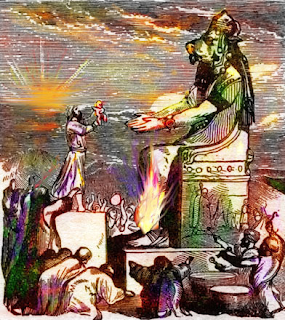
Offering to Molech, Bible Pictures by Charles Foster, 1897

The first to-eivah practice is making your son or daughter “go across through the fire”. According to the books of Leviticus, 1 Kings, Jeremiah, and 2 Chronicles, some Israelites gave their offspring to an Ammonite god called Milkom or Molekh in a ritual that included crossing through fire. This took place in the Valley of Ben-Hinom, just outside the southern wall of the city of Jerusalem.4

It is not clear whether this ritual was a dramatic initiation ceremony, an ordeal by fire that could be survived, or a form of human sacrifice. Whatever happened, making your offspring pass through the fire would be to-eivah on religious grounds, since God prohibits the worship of idols and/or other gods throughout the bible, comparing it to prostitution and finding it abominable.

A diviner: Koseim

Next Moses lists three types of people who are to-eivah because they engage in divination. The first is a:

koseim kesomim (קֺסֵם קְסָמִים) = diviner of divinations. (The root verb is kasam, קָסַם = practice divination.)

What type of divinations are kesomim? Although words from the root kasam appear 33 times in the Hebrew Bible, there is only one verse that offers any clues about how it is done. In this verse, God describes the king of Babylon wondering whether to send his army to conquer the city of Rabah in Ammon, or the city of Jerusalem in Judah. God tells the prophet Ezekiel:

For the king of Babylon stood at a fork in the road, at the starting point of the two roads, liksam kesem; he shook arrows, he inquired of figurines, he looked into a liver [the organ in an animal]. (Ezekiel 21:26)

liksam (לִקְסָם) = to divine.

kesem (קֶסֶם) = a divination (singular of kesomim).

When Moses refers to kesomim in this week’s Torah portion, the divination technique might be any of these three.

A diviner: Meonein

Meonein (מְעוֹנֵן) = diviner. The verb is onein (עוֹנֵן) = cause something to appear, conjure up a spirit, practice magic. This verb is closely related to the noun anan (עָנָן) = cloud. Did a meonein divine the future by reading clouds? Or by conjuring spirits?

The only hint in the bible is that first Isaiah denounces the Israelites for practicing magic including onenim like the Philistines”. (Isaiah 2:6)

onenim (עֺנְנִים) = making things appear. (A plural participle form of onein.)

But we do not know what sort of things the Philistines made appear, or how they did it.

A diviner: Menacheish

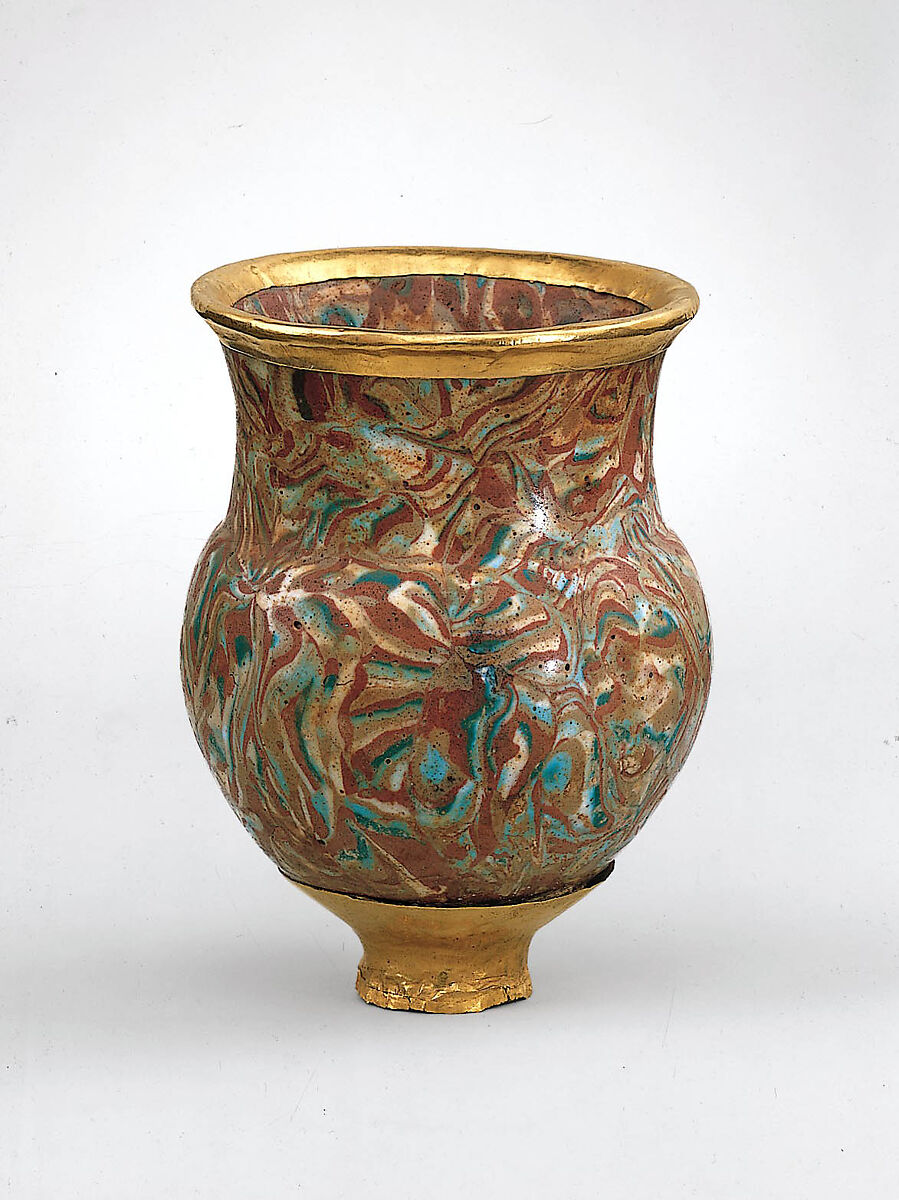
Egyptian Drinking Cup, 15th century B.C.E.

Menacheish (מְנַחֵשׁ) = diviner. The verb is nachash (נַחַשׁ) = practice divination. This verb is closely related to the noun nachash (נָחַשׁ) = snake. In ancient Greece, female diviners went into trances with the help of snake venom. We do not know if there was a similar practice in Canaan.

When Joseph is a viceroy of Egypt in the book of Genesis, he pretends to his brothers that he uses a silver goblet for divination, using the phrase nacheish yenacheish (נַחֵשׁ יְנַחֵשׁ) = “he definitely does divination”.5 This could mean that a menacheish did divination by reading the dregs in a cup—if it does not mean divination by drinking something hallucinogenic.

Not all divination is to-eivah

Although these three forms of divination are to-avot, the Hebrew Bible does not object to divination per se. Casting lots and answering yes-or-no questions using two objects in a priest’s vestments both win the bible’s wholehearted approval—when they are done under the right circumstances. For example, on Yom Kippur, the high priest is required to place lots on the heads two identical goats in the temple courtyard.

And Aaron must place goralot on the two hairy goats, one goral marked for God, and one goral for Azazeil. (Leviticus 16:8)

goralot (גֺּרָלוֹת) = plural of goral (גּוֹרָל) = a lot, something drawn from a container or tossed onto a marked surface in order to determine a decision; an allotted portion.

According to the Talmud, the two goralot used on Yom Kippur were made out of boxwood at first, then of gold.6 One was engraved with the name of God, and one with the name Azazeil. The high priest drew them out of an urn and placed one on each goat’s head. The goat that got the goral with God’s name on it was slaughtered, and its blood sprinkled in the Holy of Holies. The goat that got the goral with Azazeil on it was sent off into the wilderness after the high priest had transferred the sins of the Israelites to the “scapegoat”.7

After the Israelites conquer much of Canaan in the book of Joshua, Joshua casts lots to allocate territories to the seven tribes that have not yet claimed land, and parcels of land to the clans within each tribe.8 The word for “lot” is goral here, as well. The goralot are cast to match the tribes or clans to written descriptions of the lands.

Whether goralot were gold tokens or pebbles, what mattered was that no human being could determine the outcome of drawing or throwing lots. An outcome that many modern people would call random was, in the Hebrew Bible, a clear sign of God’s choice.

Another biblically approved method of divination was consulting the urim and tumim in the inside pocket of the high priest’s breast-piece, a key item in his elaborate vestments. These two mysterious objects are introduced in the book of Exodus, when God describes the vestments to Moses.

And you must place in the breast-piece of the rulings the urim and the tumim, and they will be over Aaron’s heart when he comes before God. (Exodus 28:29-30)

urim (אוּרִים) = an item in the pocket of the breast-piece. All we know is that is was small enough to fit, and that the word urim may—or may not—be related to the verb or (אוֹר) = become bright, illuminate.

tumim (תֻּמִּים) = an item in the pocket of the breast-piece. All we know is that is was small enough to fit, and that the word tumim may—or may not—be related to the adjective tamim (תָּמִם) = whole, complete, intact, unblemished, honest, perfect.

There are no clues in the Hebrew Bible about what the urim or the tumim look like, or how the high priest used them.

The book of Numbers says that when Joshua leads the Israelites to conquer Canaan, the high priest Elazar should consult the urim and tumim in front of God, and tell Joshua when to go out to battle and when to return.9 God will communicate through these objects.

In the first book of Samuel, King Saul tries, and fails, to get an answer from the urim about his upcoming battle against the Philistines.

And Saul saw the camp of the Philistines, and he was afraid and his heart trembled very much. Then Saul inquired of God, but God did not answer, either through dreams, or through the urim, or through prophets. (1 Samuel 28:5-6)

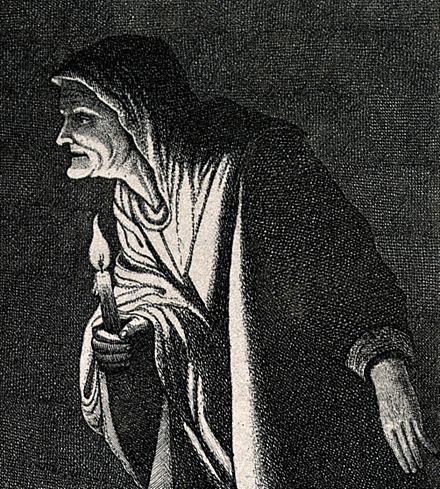
These inquiries are perfectly acceptable ways to ask God about the future. Saul’s unacceptable behavior is when he sneaks off to the “witch of Endor”, a woman who inquires of the dead, and asks her to raise the ghost of the deceased prophet Samuel. We will look into that story next week, in Shoftim: Is Magic Abominable?—Part 2, when we consider the last five kinds of magic in Moses’ list of occult practices that are to-avot.


  1. In the portion Shoftim: Deuteronomy 17:4 and 20:18. In other portions of the book: Deuteronomy 7:25, 7:26, 12:31 (including offering children in fire to other gods), 13:15, 27:15, and 32:16.
  2. Deuteronomy 17:1.
  3. Deuteronomy 18:9 (above) and Deuteronomy 18:12.
  4. Leviticus 18:21, 20:2; 1 Kings 23:10; Jeremiah 7:30-31, 32:34-35; 2 Chronicles 28:1-3, 33:5-6. See my post Acharey Mot & Kedoshim: Fire of the Molekh.
  5. Genesis 44:5 and 44:15.
  6. Talmud Yerushalmi, Yoma 3:7.
  7. Leviticus 16:5-10; . See my post Acharey Mot: Azazeil.
  8. Joshua 18:6-20:51.
  9. Numbers 27:21.

Re-eih & Isaiah: Rights of the Poor

Beggars, by Rembrandt

Let the poor glean the leftovers from your harvest. If a debtor pawns their only cloak to you, return it at night so they can sleep. That’s the way the books of Exodus and Leviticus address poverty.1

But what if scraps are not enough?

Two laws given in this week’s Torah portion, Rei-eh (Deuteronomy 11:26-16:17), treat the rights of the poor with new seriousness. This serious approach becomes impassioned in second Isaiah—not in this week’s Haftarah of Consolation (the third in the series of seven readings from Isaiah), but in the haftarah for Yom Kippur  six weeks from now.

Re-eih: Debt relief

Yet there will not be among you an evyon, because God will definitely bless you in the land that God, your God, is giving to you to hold as a possession—if only you really listen to the voice of God, your God, and take care to do all these commands that I command today. (Deuteronomy 15:4-5)

evyon (אֶבְיוֹן) = pauper, needy person, impoverished person.

What if people who suffer a run of bad luck become so poor they cannot even make payments on their debts?

A modern solution is to convict and imprison them—not just in Britain during the time of Charles Dickens, but in the United States today. When these debtors they have served their prison term, they are released—with no job, no new skills, and no money or property to make a fresh start. Unless someone helps them privately, they are likely to end up in debtor’s prison again.

The Torah portion Rei-eh has two more permanent solutions to the problem. The first is a time limit on indebtedness.

At the end of every seven years you must do shmitah. And this is the procedure of the shmitah: every owner of a loan in his hand, which he has loaned to his fellow, shamot. He must not press his fellow or his kinsman [for payment], since the shmitah of God has been proclaimed. (Deuteronomy 15:1-2)

shmitah (שְׁמִטָּה) = remission (cancellation) of debts. (From the root verb shamat, שָׁמַט = drop, let fall, release.)

shamot (שָׁמוֹט) = he must drop, let fall, release, remit.

In other words, every seventh year, the shmitah year, all debts are canceled. A business arrangement that includes repayment of a loan is written to take this seven-year pattern into account. But those who incurred debts because of poverty, and have not been able to pay off their debts in seven years, get relief.

In the books of Exodus and Leviticus, the seventh year is merely when farmland must lie fallow and rest for a year. During that year, paupers as well as the owner’s household may eat whatever food the land produces without cultivation; but no debts are remitted.2 Leviticus also provides a form of relief from poverty every fiftieth year, with a rule that families who had to sell their ancestral land get it back without payment.3 Then, with luck, they can make a living by farming their land again.

But these approaches only nibble around the edge of the problem of poverty. Deuteronomy takes a big step forward with its seven-year limit on debt.

Re-eih: Debt slavery

The second solution to chronic poverty in the portion Rei-eh concerns the institution of debt slavery.

Exodus declares that a male debt slave—a man who sold himself because he could not pay his debt any other way—must be freed after six years of service (unless the slave himself then signs up for life). But if a man sells his daughter as a slave, she is not freed unless a judge rules that her owner deprived her of food, clothing, or sex. Debt slaves of both genders are freed if their owner hits them and ruins an eye or knocks out a tooth.4

Leviticus adds that those who make loans to poor citizens may not charge interest. If impoverished borrowers cannot pay off their debts they can be taken as debt slaves, but they must be treated like employees, as well as being given room and board. However, debt slaves and their children must be freed only in the fiftieth year (if they live that long), the yoveil or “jubilee” year when all lands revert to the families of their original owners at the founding of the kingdom of Israel.5

These partial solutions are not enough, according to Deuteronomy. This week’s Torah portion imagines two scenarios in which these rules in Exodus and Leviticus do not help the poor at all.

For one thing, if the shmittah year is coming right up, lenders might refuse to make any further loans, and the poor might starve. So the portion Re-eih says:

If there is an evyon among you … you must not harden your heart and you must not draw shut your hand against your brother the evyon. Instead you must definitely open your hand to him and you must definitely pledge to him enough [to make up for] his lack that he lacks. Watch yourself, lest you have a wicked thought saying “The seventh year, the year of the shmitah, is approaching,” and you are bad to your poor, the evyon among your brothers, and do not give to him! (Deuteronomy 15:7-9)

Another problem is that if a debt slave is freed in the seventh year of service, he will be like American debtors today who finish their prison terms but have no job nor money nor property to make a fresh start. So this week’s Torah portion decrees:

When your brother is sold to you, a Hebrew man or a Hebrew woman, then he will serve you six years, and in the seventh year you must send him out free from beside you. And when you send him out free from beside you, you must not send him out empty-handed. You must definitely outfit him from your flock and from your threshing floor and from your wine-vat, your blessing which God, your God, has given you. (Deuteronomy 15:12-14)

This is an improvement over Exodus, since women must also be freed, and an improvement over Leviticus, since nobody has to be a debt slave for more than seven years. And the provision in this week’s portion of Deuteronomy also provides the freed slaves with products to sell or eat until they find employment.

Second Isaiah: Doing more

At first the desperately poor are mentioned in second Isaiah only in a promise that God will take care of them.

The poor and the evyonim

            Are seeking water, and there is none.

Their tongue is dry with thirst.

I, God will answer them.

            The God of Israeli will not forsake them.

I will open up streams on bare hills … (Isaiah 41:17-18)

evyonim (אֶבְיוֹנִים) = plural of evyon.

This week’s haftarah of Consolation, Isaiah 54:1-55:5, returns to second Isaiah’s continuing focus on motivating the Israelites in Babylon to go back to Jerusalem. But the prophet bursts into a rousing call for rescuing and embracing the poor in the haftarah for fast day of Yom Kippur.

Is the fast I prefer like this:

            A day of mortifying a human’s appetite?

Is it to bow one’s head like a reed,

            And go out in sackcloth and ashes?

Is it this you call a fast,

            A day pleasing to Y-H-V-H?

Isn’t this is the fast I prefer:

            Opening the shackles of wickedness,

            Untying the bonds of the yoke,

And sending out the downtrodden free,

            And breaking off every yoke?

Isn’t it offering your bread to the hungry,

            And bringing the homeless poor into your house?

When you see the naked, then clothe him,

            And do not ignore your own flesh!

That is when your light will break forth like the dawn …

That is when you call and Y-H-V-H will answer. (Isaiah 58:5-9)


The laws in this week’s Torah portion, Re-eih, cancel all debts at the end of seven years, free all debt slaves, and require the lender-owner to send them off with a grubstake. This is an improvement over the laws in Exodus, Leviticus, and the United States.

Then Isaiah 58 urges people to go beyond the law, and do even more to rescue the impoverished: feed them, clothe them, let them sleep in your own house! And stop treating your slaves or employees like dirt instead of human beings!

It is a tall order for private individuals, and we can only do so much. But in a modern democracy, we can also campaign and vote to help the poverty-stricken, instead of pretending that all their woes are their own fault and they deserve to die. We can reform our government and dedicate our joint resources to preventing sudden misfortune from driving people into unpayable debts, to habilitating those who resort to drugs in despair, to making sure every human being has food and health care.

The Torah portion Re-eih says:

However, there should be no evyon among you, since Y-H-V-H will certainly bless you in the land that Y-H-V-H, your God, is giving to you. (Deuteronomy 15:4)

We, too, live in a land of plenty; there should be no evyon among us.


  1. Exodus 22:24, 23:6, 23:11; Leviticus 19:10, 23:22.
  2. Exodus 23:10-11 and Leviticus 25:2-7.
  3. Leviticus 25:8-24.
  4. Exodus 21:2-11, 21:26-27.
  5. Leviticus 25:35-43.

Haftarat Eikev—Isaiah: Homesick or Scared

My lord God opened my ears,
And I, I did not rebel;
I did not shrink back.
I gave my back to floggers,
And my cheeks to [beard-] pullers.
I did not hide my face
From shaming and spittle. (Isaiah 50:5-6)
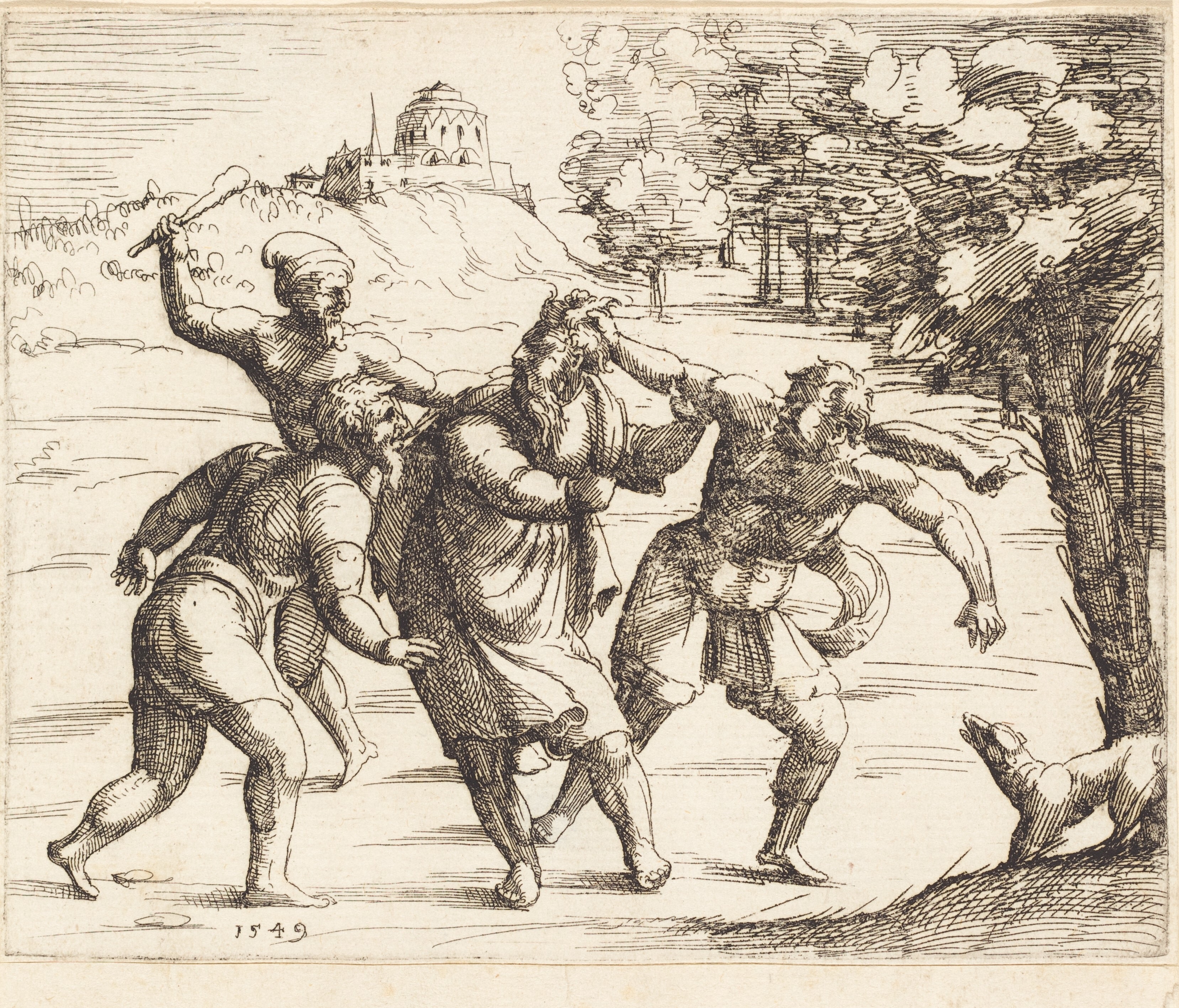
Isaiah Accepts Mockery Because of His Faith, by Augustin Hirschvogel, 1549

Many prophets in the Hebrew Bible report being abused because people do not want to hear their message—usually that if they don’t stop worshiping idols and cheating the poor, God will punish them. The unnamed prophet known as “second Isaiah” has a different message, but it, too, is unpopular.

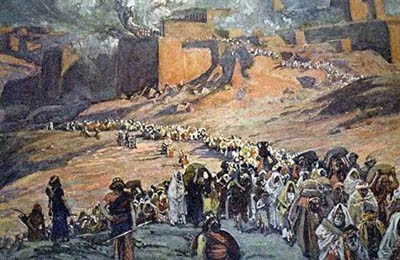
This prophet probably wrote Isaiah chapters 40-66 after the Persian emperor Cyrus took Babylonia in 539 B.C.E., which was about 47 years after the Babylonians burned down Jerusalem and finished deporting the survivors to their own capital. Cyrus instituted a policy allowing his new subjects to return to their homelands, rebuild their temples, and engage in local self-rule. Some of the exiles from Jerusalem did return, under the leadership of Ezra and Nehemiah. But many more remained in Babylon, where life was not bad under the Persians.

Second Isaiah tries to persuade all the exiles to return—especially in the passages known as the seven “Haftarot of Consolation”, which Jews read at Shabbat services between Tisha Be-Av (the annual day of mourning for the Babylonian destruction of Jerusalem and its temple in in 586 B.C.E.) and Rosh Hashanah (the Jewish new year).

This week’s haftarah, Isaiah 49:14-51:3, is the second “Haftarah of Consolation”. Second Isaiah offers two different reasons why the people from Judah should abandon their new lives in Babylon and return to Jerusalem—and then he reports that his audience is abusing him.

First reason to return: Homesickness

At the beginning of the second Haftarah of Consolation, second Isaiah personifies “Zion”: the name of a hill in Jerusalem that is often used poetically to refer to the whole city, or even all of Judah. He depicts Zion as the mother of the Judahites in Babylon, forlorn because she has lost her children. She is also forlorn because she thinks she has lost her God. Zion says:

"God has forsaken me,
My lord shekheichani!" (Isaiah 49:14)

shekheichani (שְׁכֵחָנִי) = has wiped out all memory of me. (A piel form of the verb shakhach, שָׁכַח = forget.)

God replies to Zion:

"Does a woman tishkach the baby she bore,
Lose compassion for the child of her womb?
Even if tishkachnah,
I myself, lo eshkacheikh.
Hey, I have engraved you on my own palms.
Your walls are always in front of me.
Your children hasten.
Those who ravaged and ruined you will leave." (Isaiah 49:15-19)

tishkach (תִשְׁכַּח) = she forgets. (A kal form of shakhach.)

tishkachnah (תִשְׁכָּחְנָה) = she would forget her. (A kal form of shakhach.)

lo eshkacheikh (לֺא אֶשְׁכָּחֵךְ) = I would not forget you. (lo = not + a kal form of shakhach.)

When Zion’s children arrive, God says, she will be crowded with settlers. Furthermore, her children will be tended and returned by the kings of foreign nations—an allusion to the rulers of the new Persian empire.

"And they will bring your sons in their bosoms,
And your daughters they will carry on their shoulders.
Kings will be your babysitters,
And their princesses will be your wet-nurses." (Isaiah 49:22-23)

Picturing the land of Zion as a mother longing for her missing children might soften the hearts of the exiles living in Babylon. (See my post: Haftarat Eikev—Isaiah: Abandonment or Yearning?) If they believe their country misses them, they might discover they miss their country. And homesickness can be a strong motivator.

Then second Isaiah’s focus shifts to the estrangement between Zion and God.

Second reason to return: Safety in obedience

Addressing the Judahite expatriates, the children of Zion, second Isaiah reports:

Thus said God:
"Where is the divorce document of your mother, whom I sent away?
And to which of my creditors did I sell you?
Hey, you were sold because of your sins,
And your mother was sent away because of your revolts." (Isaiah 50:1)

Several prophets compare the relationship between God and the Israelites to a marriage in which the wife (Israel) cheats on her husband (God). They imagine God divorcing Israel by sending her out of the house, then welcoming her back later.1 Sometimes the unfaithful wife stands for the Israelites; sometimes the Israelites are called the children of the unfaithful wife.

In second Isaiah’s iteration of this analogy, being “sent away” expresses both the metaphorical divorce and the actual relocation of the Israelites from Judah to Babylon.

Many prophets in the Hebrew Bible predict that if the Israelites persist in worshiping other gods and/or being unethical to the poor, God will punish them by granting foreign armies victory in battle. Here, second Isaiah reports that God carried out that punishment—and then some. After the Babylonian army devasted Judah, God divorced Israel and sold her into slavery.

There is no divorce document, and God has no creditors to pay off by selling a family member as a slave. God simply reacted to the sins and revolts of the Judahites, which were so bad they deserved two more punishments after military defeat: exile and slavery under the Babylonians.

But now things have changed; the Persians have taken over the empire, and the people deported from Judah are no longer slaves. The punishment has ended, and God wants them back. God asks:

"Why, when I came, was nobody there?
I called, and nobody answered!" (Isaiah 50:2)

If second Isaiah had stopped there, perhaps the Judahite expatriates would have wondered if their God loved them after all. After all, children who are punished need to believe that Daddy still loves them.

Instead, the prophet returns to the theory in the first Haftarah of Consolation that the Israelites are reluctant to return to Jerusalem because they doubt God is powerful enough to rescue them and restore Jerusalem. (See my post: Haftarat Va-etchanan—Isaiah: Faith in the Creator.) God demands:

"Is my hand really too short to redeem?
          And is there no power in it to rescue?
Hey, when I rebuke, I dry up the sea!
          I turn rivers into desert!
The fish stink where there is no water,
          And they are dead of thirst.
I clothe the skies in black,
          And turn their robes to sackcloth!" (Isaiah 50:2-3)

Uh-oh. The ancient Israelites enjoyed images of God destroying their enemies in various gory ways, judging by other poetry in the Hebrew Bible.3 But images of God drying up rivers and turning the sky into black sackcloth are not so thrilling. What kind of God destroys nature? Is it the same kind of God who destroyed God’s own people in Jerusalem?

According to second Isaiah and Jeremiah, it was all God’s punishment: that the common people starved to death during the two-year siege; that the Babylonians burned down the temple, the palace, and every house in Jerusalem; that the remaining residents (those who had not died of starvation or been deported to Babylon during previous siege) were killed or marched off into exile, leaving only the poorest to work as field hands; and that the Judahites in Babylon were treated like slaves.2 Did they really deserve all that? Or was it a divine overreaction?

Even if God does want them back now, how could they be sure God would not destroy them again?

Children whose father had starved them, destroyed all their belongings, and sold them as slaves, might console themselves with the belief that the punishment was all their own fault, and their father really loved them underneath. Psychologically, it is easier for the powerless to blame themselves than to blame the ruler of their universe. But if a different adult liberated those children and took them into a benign household, the way the Persians did to the Judahites in Babylon, the children might arrive at a different opinion.

Then they would not want to go back God’s house. It would be safer to stay in Babylon under the Persians.

Back to the first reason: Homesickness

Right after second Isaiah delivers God’s disturbing rant about power, he switches to the aside in which he declares he is true to God’s message even though the Judahite expatriates are flogging and spitting on him. It does not occur to the prophet that their abuse might be a reaction to being urged to return to a God of desertification and mourning. Instead he tells them to fear and trust God in the darkness, instead of trying to see by kindling their own lights.4

The  haftarah ends with a positive image, one that returns to the draw of homesickness and the personification of the land of Zion as a woman feeling forsaken by her children.

For God has comforted Zion,
Comforted all her ruins.
And [God] has made her wilderness like Eden,
And her desert like the garden of God.
Thanksgiving and the sound of singing! (Isaiah 51:3)

However God treated the people of Jerusalem, God cannot forget the city. So God uses God’s vast power not for destruction, but to turn the wasteland into a garden. And, the prophet’s listeners would remember, Zion cannot forget her missing children. When Jerusalem is like the Garden of Eden, those who return to her will be glad and thankful.

Going home to Jerusalem sounds better now.


  1. Hosea 2, Jeremiah 3:1-10, and Ezekiel 16.
  2. According to 2 Kings 25:1-21.
  3. And by God’s promise to Zion in this haftarah: “I myself will contend with your contender/And I myself will rescue your children./And I will make your oppressors eat their own flesh/And like grape juice their own blood will make them drunk.” (Isaiah 49:25-26)
  4. Isaiah 50:10-11. 

Haftarat Va-etchanan—Isaiah: Faith in the Creator

After grief, consolation. Every year, on the day of Tisha Be-Av, Jews engage in ritual mourning for the destruction of the temple in Jerusalem in 586 B.C.E. The shabbat after Tisha Be-Av, the haftarah reading from the Prophets (Isaiah 40:1-26) begins:

“Comfort, comfort my people,”

Says your God. (Isaiah 40:1)

These are the words of “second Isaiah”, the unknown prophet whose words begin with chapter 40 in the book of Isaiah.1 He (or she) offers comfort by promising that God will rescue the Israelites deported to Babylonia, return them to their own land, and make Jerusalem glorious again.2 Then second Isaiah reminds the exiles that their God is powerful enough to do the job.

The Tent-Maker

Do you not know?

            Have you not listened?

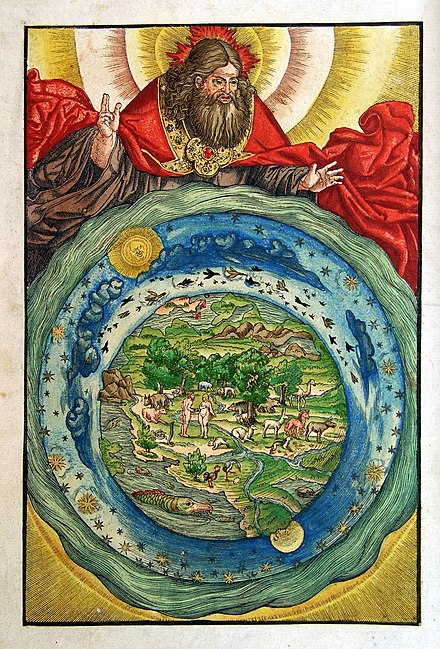
Creation, doors of The Garden of Earthly Delights, by Heironymus Bosch, 15th century

Have you not been told from the beginning?

            Have you not discerned the earth’s foundation?

[By] the one who sits enthroned above the disk of the earth,

            And its inhabitants are like grasshoppers;

The one who spreads out shamayim like gauze,

            And stretches them out like a tent to dwell in. (Isaiah 40:21-22)

shamayim (שָׁמַיִם) = heavens, skies, firmament. (Always in the plural form, indicated by the suffix -im, or perhaps in the duplex form, in which the suffix -ayim indicates a pair.)

Let us take these metaphors one line at a time.

[By] the one who sits enthroned above the disk of the earth

When God is not in the sanctuary the Israelites built for God on earth, God is often described as enthroned in the shamayim, the heavens. From a vantage point that includes most of the horizon, the earth does look like a circular disk, and the sky looks like a dome.

And its inhabitants are like grasshoppers

To someone sitting at the top of the sky, human beings down on earth would indeed look tiny. The scouts in the book of Numbers use the same word for grasshoppers, chagavim (חֲגָבִים), to describe how they thought they looked to the giant people in Canaan.3 The grasshopper simile is an exaggeration for giants, who would be no more than twice as tall as the scouts. But it is an understatement for God, who looks down from the clouds and stars.

The one who spreads out shamayim like gauze

Clouds do look like gauze. The skies cannot be made entirely out of clouds, since there are also clear days. But poetry does not have to be technically accurate.

And stretches them out like a tent to dwell in

On a cloudy day the dome of the sky might look like the inside of a gigantic tent—which is a type of home. The description of God in a tent of sky is similar to Psalm 104, which begins:

May my soul bless God!

            God, my god, you are very great.

You are clothed in majesty and splendor,

            Wrapped in light like a robe,

Spreading out shamayim like tent-fabric. (Psalm 104:1-2)

The Master Gardener

After second Isaiah shows us God enthroned high in the sky—which God created in the first place—the prophet points out that compared to God, even the most powerful human beings are less important than grasshoppers. God is:

The one who appoints princes to nothingness,

            Who makes judges of the earth tohu (Isaiah 40:24)

tohu (תֺהוּ) = unreality; emptiness; chaos, confusion; worthlessness. 

Here tohu means as insignificant as a “nothing”.

The word tohu appears 20 times in the Hebrew Bible. The most well-known appearance is in the first sentence of the first creation story in Genesis:

In a beginning, God created the shamayim and the earth, and the earth was tohu vavohu (Genesis 1:1-2)

vavohu (וָבֺהוּ) = a rhyming addition to tohu used for emphasis. (It never appears except in “tohu vavohu”, and it does not add another shade of meaning.)

Before God begins creating the world (the heavens and earth) by saying “Let light be!”, there is tohu: a confused chaos without reality. God finds the state of tohu worthless, and therefore introduces order into the world.

Although the word tohu is a synonym for “nothingness” in Isaiah 40:24: “The one who appoints princes to nothingness, Who makes judges of the earth tohu”, the prophet’s audience would also remember the word tohu in Genesis, and think of those dignitaries as confused and worthless, as well as nothing compared to God.

After saying that God makes the princes and judges of the world mere tohu, the prophet finishes verse 4:24 with a metaphor from the plant world:

Job’s Tears (millet), by Leonardo da Vinci, 15th century

Hardly are they planted,

            Hardly are they sown

Hardly have they rooted in the earth,

When [God] blows on them and they wither,

            And the gale carries them off like chaff. (Isaiah 40:24)

From God’s point of view, a century is less than a month. But when God notices that a noxious empire has sprouted on earth, God pulls it out like a weed and it vanishes, carried off in the wind like chaff.

The Shepherd

The haftarah ends by declaring that God is so powerful, God even controls the “host” in the heavens.

“Then to whom can you liken me, so I can be compared?”

            Says the Holy One.

Raise your eyes high and see:

            Who created these?

The one who is mustering tzeva-am by number,

            Who calls each by name.

Through [God’s] abundant power and might,

            Not one is missing. (Isaiah 40:25)

tzeva-am (צְבָאָם) their “host”; tzava (צָבָא) = army, host, large organized force. (The tzeva of God in the Hebrew Bible seems to be either the stars and other heavenly bodies, or a group of lesser gods under God’s command, or both.)

Surely a God powerful enough to create the stars—or subordinate gods—will have no trouble returning the exiled Israelites to Jerusalem, and making their city flourish again.

And if God keeps track of every star in the sky, so not one is missing, perhaps God also keeps track of us grasshoppers down on earth.


The purpose of second Isaiah’s exhortation in this week’s haftarah is to encourage the exiled Israelites to return to Jerusalem after the fall of the Babylonian Empire. The Persian emperor Cyrus took Babylon in 539 B.C.E., only 47 years after the fall of Jerusalem, and instituted a policy allowing deportees to return to their homelands, rebuild their temples, and engage in local self-rule.

Why would the exiles need second Isaiah’s encouragement to return to Jerusalem, in these circumstances?

One answer is that they no longer believe their God is both powerful and on their side. After all, they or their parents remember when the Babylonian Army conquered all of Judah, burned down Jerusalem and its temple, deported their leading citizens, and left the rest (except for a puppet government) to starve. And their God did not lift a finger against their enemy.

During the siege of Jerusalem, the prophet Jeremiah insisted that God was collectively punishing the Israelites because too many of them they were unethical and worshiped other gods. Probably some Israelites considered the punishment out of proportion compared to the crime.

All the prophets promised that God would rescue and reward them if they worshiped only their own God, and refrained from unethical deeds such as cheating, stealing, bribing, and oppressing the poor. But could the Israelites reform enough to satisfy God? And could they count on their neighbors and leaders to do the same?

Life in Babylonia was not that bad, especially after the reasonable Persians took over. Why risk returning to Jerusalem? Even if they believe God has the power to reward them, why depend on such a touchy God?


  1. “First Isaiah”, Isaiah son of Amotz in Isaiah chapters 1-39, lived in the 8th century B.C.E. during the Assyrian attack on Jerusalem. “Second Isaiah” lived in the 6th century B.C.E. during the Babylonian destruction of Jerusalem and the subsequent exile of its citizens in Babylonia.
  2. See my blog post: Haftarat Va-etchannan—Isaiah: How to Comfort Yourself.
  3. Numbers 13:33. See my post: Shelach Lekha: Who Is Stronger.

Haftarat Devarim—Isaiah: Unconsidered Power

How do you mourn a national disaster? Do you weep? Do you ask why it happened? Do you find someone to blame?

Next week Jews will observe Tisha Be-Av, the annual day of mourning for the destruction of Jerusalem and its temple by the Babylonian army in 586 B.C.E.1 On Tisha Be-Av we read the book of Lamentations/Eykhah, five poems that grieve over Jerusalem. The book begins:

Weeping Woman with Baskets, by Vincent van Gogh

Eykhah! She sits alone,

            The city once great with people.

She is like a widow … (Lamentations 1:1)

The cry eykhah, “Oh, how can it be?”, also appears in both readings on the shabbat before Tisha Be-Av: the Torah portion Devarim, which opens the book of Deuteronomy, and the haftarah from the Prophets, Isaiah 1:1-27. (See my post: Devarim, Isaiah, & Lamentations: Desperation.) Both the beginning of Isaiah and the book of Lamentations express desperate amazement that the city of Jerusalem could be destroyed.

How could it be? Why would it happen? Who is to blame?

Isaiah’s poetic prophecy warns the men of Judah that if they do not reform, the Assyrians who have been destroying the countryside will destroy the capital itself. In fact, the army of King Sennacherib of Assyria did besiege Jerusalem in 701 B.C.E., but withdrew without taking the city.) The book of Lamentations is set shortly after the army of King Nebuchadnezzar of Babylonia burned down Jerusalem in in 586 B.C.E. Yet for both Isaiah and Lamentations, the enemy army is only the immediate cause of the destruction. The proximate cause is that God arranged it all as a punishment because the Israelites in power persisted in disobeying God. And in this week’s haftarah, Isaiah states what kind of disobedience deserves such severe punishment.


The first message from God that Isaiah communicates compares the people of Judah to children who refuse to heed their parents.

Listen, heavens, and use [your] ears, earth,

Because God has spoken:

“I raised children, and I elevated them;

          And they? They rebel against me!

An ox knows his owner,

And a donkey the feeding-trough of his master.

Israel does not know;

My people have not hitbonan.” (Isaiah 1:2-3)

hitbonan (הִתְבּוֹנָן)= paid attention, considered, had insight. (A form of the root verb binבִּין = notice, heed, consider, understand.)

The ox is the most knowledgeable animal in these verses because it recognizes its owner. Next comes the donkey, which at least recognizes the place where its owner provides nourishment. Last come the Israelites, who do not even recognize that someone has been taking care of them. The only reason for their ignorance is that they have not bothered to pay attention.

The widely-quoted commentator Rashi imagined God thinking: “Even after I took them out of Egypt and fed them the manna and called them ‘My people, the children of Israel,’ they did not consider even as a donkey [does]!”2

In the book of Genesis, God elevates human beings above other animals by endowing us with the intelligence to consider, analyze, and understand, as well as the desire to distinguish between good and bad. Thus, like all humans, the Israelites of Judah have the God-given ability to figure out that God is their owner, sustainer, and parent. But they do not take the trouble to think about it.

Isaiah says God views this willful ignorance as rebellion, not laziness. The Judahites “heavy with iniquity” and scorn God.3 The only thing that keeps Judah from being like Sodom and Gomorrah, Isaiah reports, is that God has not completed the destruction. Although the rest of Judah has become a wasteland, Jerusalem remains intact—so far.

Next Isaiah addresses the guilty Judahites as “chieftains of Sodom” and “people of Gomorrah”, and tells them what they have been doing wrong.

“Why do I need all your slaughter-offerings?”

            Says God.

“I am sated with burnt offerings of rams

            And the fat of fattened cattle;

And the blood of bulls and lambs and goats

            I do not desire. (Isaiah 1:11)

What? Slaughter-offerings, especially burnt offerings, are essential rituals for serving God throughout the Torah, as essential as prayers are in services today. Moses is always quoting God’s orders for various animal sacrifices. Why would God suddenly tell the prophet Isaiah that they are no longer wanted?

Rashi explained that God only rejects these sacrifices if they are made by wicked people, citing Proverbs:    

 The slaughter-offering of the wicked one is abominable,

            Even more because he brings it with cunning intent. (Proverbs 21:27)

Isaiah adds that God does not even want oblations, incense, or observances for the shabbat or for holy days from these people.4  Even prayers are unacceptable:

Spreading palms: Hezekiah’s Prayer, by Rodoph Schofer, 1929

“And when you spread out your palms,

            I avert my eyes from you.

Even if you pray at length

            I am not listening.

            Your hands are full of bloodshed! (Isaiah 1:15)

In other words, God does not listen to the prayers of murderers. In the next two verses, we learn about some other crimes that God finds revolting.

Wash, cleanse yourselves!

            Take away your evil deeds from in front of my eyes.

 Stop doing evil!

            Learn to do good.

Seek just laws.

            Bring good fortune to the oppressed.

Defend the fatherless child.

            Argue the case of the widow. (Isaiah 1:16-17)

We can assume that God is not disgusted with the prayers or the small burnt offerings of the oppressed, the fatherless child, or the widow. The evildoers whom God despises are those who pervert justice and oppress the powerless. These selfish and powerful people have not considered (hitbonan) what God really wants from them. They believe they can satisfy God by going through the prescribed rituals, regardless of how they treat their fellow Judahites. They do not bother to think about right and wrong.

Isaiah informs them that no show of piety can compensate for unethical behavior. After declaring that Jerusalem has become a city of murderers, Isaiah elaborates on God’s condemnation:

Your rulers are rogues

            And companions to thieves.

All of them loving bribes

            And pursuing gifts.

They do not judge the case of the fatherless child

            Nor argue for the widow; [her cause] never reaches them.

Therefore, thus says the lord God of Armies, the Mighty One of Israel:

“Oh! I will console myself over my enemies

And I will take vengeance on my foes.

I will turn my hand against you!” (Isaiah 1:23-25)

The Assyrian army is merely God’s tool for vengeance against God’s true enemies: all the unethical rulers and powerful men of Jerusalem, who refuse to repent and reform.


We have all observed powerful people paying lip service to religion, the rule of law, or the ideals of a nation—while taking bribes, oppressing the disadvantaged, and not caring whether anyone dies in the process.

The viewpoint of the powerful Jerusalemites in Isaiah’s time was easily updated by a 21st-century Yeshiva University professor, who wrote: “They could certainly claim that they had upheld ‘traditional, conservative values.’ They could have called Isaiah a ‘socialist’ or a ‘bleeding heart liberal.’”5

If God punishes societies whose leaders pervert justice and oppress the poor, as the biblical prophets claim, then the powerful people in Jerusalem must have reformed just enough by 701 B.C.E. to inspire God to stop the Assyrian siege before Jerusalem succumbed. A hundred years later, the prophet Jeremiah preached the same warning as Isaiah, but the Babylonian siege succeeded and Jerusalem was burned down in 586 B.C.E. According to the theology of the prophets, that meant the king of Judah and his cronies did not reform.

And what about the fate of the oppressed citizens of Jerusalem is when their city is destroyed? This is not a separate subject of concern in either Isaiah or Lamentations. Punishment of the guilty matters more than rescuing innocent individuals. Perhaps Isaiah hopes that if the powerful believe that God will arrange for enemies to seize and destroy their home county, they will stop and reconsider their actions.

Yet it strains belief. The theological stand that God arranges the destruction of countries whose leading citizens are unethical is not borne out by history—unless the timeline is stretched to allow many generations of unjust leaders before the disaster hits.

For example, Frederick Douglas quoted Isaiah 1:13-17 in his 1852 speech in Rochester, New York, urging an end to American slavery—a paradigm of oppression. Europeans had owned African slaves in what is now the United States of America since the 1500’s, and slavery was not abolished nationwide until the 13th amendment in 1865. Other forms of oppression and discrimination against Americans with African ancestry have continued into the 21st century. Yet all this time, the United States has not been conquered or destroyed.

However, sometimes when the powerful have not hitbonan, the punishment of the whole population is built in. For example, the destruction of many parts of the world through global climate change has already begun, and although some might call it an “act of God”, it is happening because people with political and economic power around the world have failed to consider the environment during the pursuit of profit over the past hundred years. And as in Isaiah’s time, the powerless suffer because the powerful are unethical.

Oh, how could it be?


  1. Over time, Jews added mourning the Roman destruction of the second temple in 70 C.E. and various other disasters to the day of Tisha Be-Av (usually transliterate Tisha B’Av), the 9th of the month of Av in the Hebrew calendar.
  2. Rashi (11th century rabbi Shlomoh Yitzchaki) on Isaiah 1:3, translation in www.sefaria.org.
  3. Isaiah 1:4.
  4. Isaiah 1:13-14.
  5. Yaakov Elman, in From Within the Tent (Mitokh Ha-Ohel): The Haftarot, Yeshiva University, 2011.

Masey: Tribal Loyalty, Part 2

When a man dies with no sons, his daughters inherit his land, according to the new law God delivers in one of last week’s Torah portions, Pinchas. At the end of this week’s double portion, the men protest and win an amendment in the divine decision.

Once the Israelites have conquered Canaan, Moses says in Pinchas, a lottery will divide up all the land by tribe, clan, and household. Every male head of household will get a parcel of equal value, and his descendants will inherit that land down through the generations. (See my post: Pinchas: Tribal Loyalty, Part 1.)

The five daughters of Tzelofechad request a parcel of land in their deceased father’s name, since they have no brother to serve as the male head of household. Moses checks with God, who approves, and declares a general law:

“If a man dies and has no son, then you shall make his hereditary property pass over to his daughters.” (Numbers 27:8)

This ruling promotes women from chattels to second-class citizens who can inherit land—but only if their father dies without sons. If a daughter inherited and remained unmarried, she would have financial independence that no other women in society possessed.

by James Tissot, ca. 1900

But the male relatives of the daughters of Tzelofechad assume that all women want to marry and have sons. At the end of the book of Numbers/Bemidbar, in the Torah portion Masey (Numbers 33:1-36:13) there is a mass gathering of all the Israelites who are male heads of household. And the men of Tzelofechad’s clan—the clan of Gilad son of Makhir son of Menasheh son of Joseph—present their case to Moses.

First the men of Gilad summarize the new reality:

And they said: “God commanded my lord to give the land as hereditary property, by lottery, to the children of Israel. And my lord was commanded by God to give the hereditary property of Tzelofechad, our brother, to his daughters.” (Numbers 36:2)

But then who inherits the land from the daughters? Their sons, if they have any. But any son an Israelite woman has after marriage automatically belong to the tribe and clan of his father, not his mother. And if a woman who owns land dies without a son, but her husband is still alive, he inherits her land. Either way, the land now belongs to a different tribe, the male relatives of Tzelofechad point out.

“And if they become wives to any of the sons of the [other] tribes of the children of Israel, then their allotted hereditary property will be subtracted from the property of our fathers, and it will be added onto the property of the tribe that they will belong to. And so it will be subtracted from our allotted property!” (Numbers 36:3)

These men identify strongly with their own tribe, Menasheh, and with the Gilad branch of that tribe. Any reduction in the amount of land under the control of the Gilad clans of Menasheh seems like a personal loss to them.

To complete their case, the men point out that if land is sold outside the clan, the sale is only good until the next yoveil (“jubilee”), an event that happens every 50 years. In the yoveil year, every plot of land in the country is returned to the family of its original owners.1 But once a plot of land has been legally inherited by the son of a man from a different tribe, it will forever remain in his family line—in his tribe rather than his mother’s tribe. So they say:

“And if it is the yoveil for the children of Israel, then their hereditary property will be added onto the hereditary property of the tribe that they marry into. And the hereditary property of the tribe of their fathers will be subtracted from our tribe!” (Numbers 36:4)

Moses figures out a solution that will let daughters inherit their father’s land when he has no son or grandson to inherit, but also take care of the tribal loyalty of men. He answers Tzelofechad’s kinsmen in God’s name:

“This is the word that God commanded for the daughters of Tzelofechad, saying: They may become wives to whomever is good in their eyes; yet they shall become wives only within the clan of the tribe of their father.” (Numbers 26:6)

Then Moses makes it a general rule:

“And hereditary property must not go around for the children of Israel from tribe to tribe, because yidbeku, every man, the hereditary property of the tribe of his fathers. And every daughter coming into possession of hereditary property from the tribes of the children of Israel, she shall become a wife to someone from the clan of the tribe of her father, so that each of the sons of Israel shall possess the hereditary property of his fathers.” (Numbers 36:7-8)

yidbeku (יְִבְּחוּ)= they will/should/must cling to, stick to, be attached to. (A form of the verb davak, דָּבַק = clung to, stuck to, was attached to, fastened oneself to.)

But what if a male landowner dies without a son, and his daughter is already married to a man from another clan, or even another tribe? The Torah does not answer this question, but two medieval commentators insisted that in this case, the land would be inherited by the woman’s closest male relative, not by her son or husband.2

Nabot Stoned in Front of his Vineyard, Prague, 14th century

Inheriting land through the father’s line is so important in the Torah that the land cannot be truly sold, only leased until the yoveil year, when it returns to the original family. And the first book of Kings provides the example of Nabot, who refuses to sell his vineyard to King Ahab of Israel for any amount of silver, saying: “God forbid my giving the inheritance of my fathers to you!”3

The idea of clinging to your ancestral land is so important that Moses repeats it in this week’s Torah portion, Masey.

The hereditary property will not go around from one tribe to another tribe, because yidbeku, every man, his hereditary property in the tribes of the children of Israel. (Numbers 36:9)

Why should a man cling to tribal property?

One medieval commentator, Rabbeinu Bachya, offered a mystical explanation:

 “At that time the twelve tribes of the Israelites on terrestrial earth corresponded to their exact counterparts in the celestial spheres (Zohar Bamidbar 118). If one tribe would have sold part of its ancestral territory to another, the result would have been an imbalance of the forces representing the tribes in the celestial regions.” 4

A more down-to-earth 19th-century commentator argued that the tribes needed to stay separate at first so that each one could develop its own subculture:

“This promotes the fulfillment of the nation’s one common calling in all the diversity of the unique characteristics of each tribe, and toward this end each tribe must be allowed to develop properly in the territory of its portion. … In all subsequent times, the tribes are not prohibited by the Torah to intermingle and to intermarry.”5

But is it a good idea to develop so many subcultures? Conquering Canaan could, theoretically, be an opportunity for the tribes of Israel to unite and become truly one people.6 Nevertheless, Moses tells the Israelite men to cling to the property that they inherit from their fathers so it will remain in their own tribe and clan. Perhaps the Torah views tribal loyalty as good practice for national loyalty, rather than a threat to it. Maybe the more you cling to one group, the more you become able to cling to a larger group.

Another reason to keep inheritance in the male line might be so t6hat tribes and clans will live together in contiguous areas. But excluding any heirs from another tribe resembles enforcing racially discrete neighborhoods through redlining. If your neighborhood of Menashites were interrupted by a farm owned by Danites, you might have to—well, learn tolerance and cooperation with an extended family from a different subculture.

But it is also possible that the ruling at the end of the book of Numbers reflects the reality that many people enjoy the ease and solidarity of belonging to an established group, and they identify with their group so much that when they believe the group was cheated, they feel personally outraged. In the Torah, those groups are clans, tribes, and “peoples”. In the west today, many identify with sports teams, religious sects, political factions, and nations. And whenever our own group is diminished, we feel outraged.

And Machlah, Tirtzah, and Chaglah, and Milkah, and Noah, the daughters of Tzelafechad, became wives to the sons of their uncles. From the clans of the children of Menasheh son of Joseph they became wives, and their hereditary possession became onto the tribe of the clans of their fathers. (Numbers 36:11-12)

Instead of insisting on marrying any men to whom they felt attached, or whom they wanted to fasten themselves to, the five women limited their choices to their first cousins. In the 19th century, Hirsch responded:

“They, however, chose in consideration of the national interest, and this was reckoned to their credit.”7

Which kind of attachment is the most important? Clinging to one’s marriage partner and nuclear family? Clinging to one’s heritage and tribal loyalties? Or clinging to a more abstract ethical or national ideal?


  1. Leviticus 25:8-16. See my post: Behar: Owning Land.
  2. Commentary by Ramban (Rabbi Moses ben Nachman, 1194–1270), and Tur HaAroch (written by Rabbi Jacob ben Asher, c. 1269-1343).
  3. I Kings 21:1-4.
  4. Rabbi Bachya ben Asher, 1255-1340, translation  in http://www.sefaria.org.
  5. Samson Raphael Hirsch, The Hirsch Chumash: Sefer Bemidbar, translated by Daniel Haberman, Feldheim Publishers, p. 707.
  6. Or is such a union possible? This ideal was only partially realized when the thirteen colonies became the United States of America.
  7. Hirsch, p. 709.

Pinchas: Tribal Loyalty, Part 1

The Israelites live in tents for 40 years, from the day they leave Egypt in the book of Exodus until they conquer Canaan in the book of Joshua. Only once, during the final year of their 40 years in the wilderness, do they own the land they are camping on: the east bank of the Jordan River.

King Sichon refused to let them pass through Cheshbon in last week’s Torah portion, Chukat, and the Israelites defeated his soldiers in battle, so now they own his land.1 The conquest of Canaan, across the river, is yet to come. But this new generation of Israelites is confident about killing or subjugating enough Canaanites to take their land, following God’s instructions.

Most of these nomads will become farmers in Canaan, with their own plots of land. This week’s Torah portion, Pinchas (Numbers 25:10-30:1), includes instructions on how to divide up Canaan. First God tells Moses and Elazar (Aaron’s son, the new high priest):

“Lift heads [take a census] of the whole Israelite community who is twenty years old and above, by the household of their fathers: everyone who goes to war for Israel.” (Numbers 26:2)

Moses and Elazar take a census, of all the men aged 20 and older except for the Levites, who do not go to war and will not be landowners. Following God’s instruction, they list the lineage of each man. Then God explains:

“To these you will allocate the land as a nachalah, according to the count of names. For the numerous [tribes and clans], you will multiply their nachalot, and for the few, you will reduce their nachalot; each will be given its nachalot according to its number.” (Numbers 26:53-54)

nachalah (נַחֲלָה) = hereditary possession, usually land. (Plural nachalot, נַחֲלֺת. From the verb nachal, נָחַל = take possession of land, inherit. From the same root as nachal, נַחַל = wadi, seasonal stream, stream bed, tunnel. According to S.R. Hirsch, nachalah means “property that ‘flows down’ like a stream from ancestors to descendants”.2)

In other words, after the Israelites conquer Canaan, the land will be allocated by tribe, and within each tribe by clan, and within some clans by branch, and within each clan or branch of a clan by the male head of household—adjusted according to population, so every household gets a parcel with the same value. The initial allocations will be made by a lottery. But from that point on, each parcel of land would be passed down through the same family.

In most countries today, land can be bequeathed to anyone the owner chooses. But in the Israelite kingdoms, land was automatically inherited according to a legal formula. If the landowner (usually male) had one son, all his land went to his son. If he had more than one son, the land was divided among them, with the firstborn son getting a double portion. Any daughters he had did not inherit land, and were dependent on their husbands, brothers, or sons. A wife of a deceased landowner became dependent on her sons; and if she had no sons, she was entitled to a levirate marriage with one of her husband’s brothers for the purpose of producing a son, who would then inherit the deceased man’s land.3 Otherwise, the land would revert to her deceased husband’s closest male relative.

The book of Proverbs indicates that a woman could earn income with her own business and buy land of her own.4 But she could not choose who inherited her land after she died. And every fifty years, all purchased land reverted to the families of the original owners.5

A new request from five daughters

There seemed to be no way a woman could inherit land. Yet in the Torah portion Pinchas, right after the census of fighting men, five unmarried women boldly ask for their own nachalah in Canaan.

They came forward, the daughters of Tzelofechad, son of Cheifer son of Gilad son of Makhir son of Menasheh, of the clans of Menashe son of Joseph. And these were names of his [Tzelofechad’s] daughters: Machlah, Noah, and Chaglah, and Milkhah, and Tirtzah. (Numbers 27:1)

The lineage of their father matters, since the land that the Israelites expect to conquer will be divided by tribe, then clan, then branch, then household. Tzelofechad was a son of Cheifer in the Gilad branch of the clan of Makhir, which belonged to the tribe of Menasheh.

And they stationed themselves in front of Moses, and in front of Elazar the Priest, and in front of the chieftains and the whole community at the entrance of the Tent of Meeting, saying: “Our father died in the wilderness, and he was not in the assembly that assembled against God in the assembly of Korach, for he died of his own guilt; and he did not have any sons.” (Numbers 27:2-3)

The five women are courageous, to come up to the Tent of Meeting and stand in front of all the men in Israel to make their claim. First they establish that their father’s heir (if he has one) has the right to an allotment of land:

  1. “He died in the wilderness.” Tzelofechad was one of the old generation who had to die while the Israelites waited 40 years in the wilderness for a second chance to invade Canaan. (See last week’s post, Chukat: Sapped.) The new census taken on the east bank of the Jordan lists all the men who are still alive—counted “by the household of their fathers” (Numbers 26:1). Here the five women point out that the land in Canaan will be distributed to the heirs of the men who left Egypt in the book of Exodus—and one of those men is their father.6
  2. “And he was not in … the assembly of Korach.”  Two divine miracles killed all 250 men who rebelled against Moses and Aaron under the leadership of Korach, Datan, and Aviram. (See my post Korach: Quelling Rebellion, Part 1.) Tzelofechad’s daughters assert that their father was not in that faction—either because they think the descendants of those men do not qualify to inherit land in Canaan,7 or because they think Moses might be prejudiced against the men in that rebellion.8
  3. “He died of his own guilt.” This statement establishes that Tzelofechad never participated in any other group rebellion against God or God’s chosen leaders. He is only guilty of going along with all the Israelite men (except Caleb, Joshua, Moses, and Aaron) in refusing to cross the southern border of Canaan when they first arrive there from Mount Sinai.9

Therefore if Tzelofechad had had a son who was under 20 when the Israelites left Egypt, that son would be counted in the census now, and in the lottery for land after the conquest.

Next the five women make an argument they know will appeal to men:

“Why should the name of our father be subtracted from his family because he had no son?” (Numbers 27:4a)

Starting with Abraham in the book of Genesis, what men want the most is to have descendants who will remember their names.10

Only then do the daughters of Tzelofechad request a share of the land that will be allocated to the descendants of their grandfather Cheifer:

“Give us an achuzah among our father’s kinsmen!” (Numbers 27:4b)

achuzah (אֲחַ־ֻזָֽה) = holding, landed property. (From the root verb achaz, אַחַז = seize, hold fast.)

The five sisters do not challenge the rule of male inheritance. They ask only for the inheritable land that would have gone to their brother, if they had one. They are also careful to ask for land not for their own sake, but only in order to perpetuate their father’s name.

Their motivation

What motivates the five sisters to make their novel request to inherit land? Here are some possibilities proposed in commentary from the 3rd century C.E. to the 19th century:

  1. They love the land of Canaan like their ancestor Joseph, whose deathbed wish was to be reburied there (Rashi, 11th century).11 I believe that although these women might love the idea of the “promised land”, they cannot love the actual land; unlike Joseph, they have never been there. At most, they can see the other bank of the Jordan, which looks no different from the side where they are camped.
  2. They love their father and actually do want his name to be remembered, in the lineage of inherited land as well as in the lineage of any sons they might have someday. If they did not get Tzelafechad’s nachalah, their future sons would be listed by the names of their fathers, rather than by the name of their maternal grandfather (Hirsch, 19th century).12 
  3. They do not want to be adopted into their uncles’ households; they want to continue to run their own household, even though none of them has a son to be the titular head of their family. Although earlier commentary does not mention this possibility, it does point out that the five women are united, speaking as one (Sifrei Bemidbar, 3rd century CE).13
  4. They are proto-feminists who believe that God, unlike human men, wants to distribute good things equally (Sifrei Bemidbar, 3rd century CE).14

The divine answer

After the daughters of Tzelofechad make their argument, Moses checks with God, who replies:

“Rightly the daughters of Tzelofechad speak; you shall certainly give them an achuzah of a nachalah amidst the brothers of their father, and you shall make the nachalah of their father pass over to them. And you shall speak to the children of Israel, saying: “If a man dies and has no son, then you shall make his nachalah pass over to his daughters.” (Numbers 27:7-8)

This ruling promotes women from chattels to second-class citizens who can inherit land—but only if their father dies without sons. In the Torah, God never praises independence, but does praise compassion for the unfortunate. A woman without a father, husband, brother, or son to support her is considered unfortunate.

A side-effect of the new law is that a daughter who inherits and remains unmarried would have financial independence that no other women possess.

But the male relatives of the daughters of Tzelofechad assume that all women want to marry and have sons. In next week’s double Torah portion, they come back to Moses to protest against God’s new inheritance law. (See next week’s post: Masey: Tribal Loyalty, Part 2.)


The daughters of Tzelafechad succeed because they are united, delivering a single clear request without distractions; because they give a reason that appeals to the men’s customary way of thinking; and because they limit their request so it will not disenfranchise any sons of landowners. Their first success is in persuading Moses that it is worth checking with God. Their second success is that God’s answer grants their request—and generalizes it to all cases in which a man dies without a son.

The only men’s issue that the women do not address is tribal loyalty. In next week’s Torah portion Masey, their male cousins complain because they do not want any of the land assigned to their tribe to be inherited by a different tribe—which would happen under current law if any of the daughters of Tzelafechad married a man from another tribe. (Under the current law, a son is counted as a member of his father’s tribe and clan, not his mother’s. So if any of Tzelafechad’s daughters had a son with a man from another tribe, her land would become a nachalah of her son’s tribe, not of the tribe of Menasheh.)

The women act out of loyalty, too. But their loyalty is to their immediate family: to each other, and perhaps to their father’s memory.

When we write wills today, we determine our inheritors—who will then dispose of our property according to their own wishes after we die. There is no nachalah except for the royals and nobles in some countries.

Yet I remember growing up next door to the Pratts, who had four daughters and kept “trying” until they had a son. Their youngest daughter, who was in grade school with me, told me that her parents wanted a son “to carry on the family name”. Even when land was not an issue, the men of our parents’ generation and our own felt sad when they had no son to perpetuate their last name, and all the family history that went with it.

I wonder about the next generation.


  1. Numbers 21:21-32.
  2. 19th-century Rabbi Samson Raphael Hirsch, The Hirsch Chumash: Sefer Bemidbar, translated by Daniel Haberman, Feldheim Publishers, Jerusalem, 2007, p. 554.
  3. See Deuteronomy 25:5-10; Ruth 1:11-13, 3:9-13, 4:1-12; and my post on Genesis 38:6-26: Vayeishev & Mikeitz: Identity Crisis
  4. Proverbs 31:16 says a superlative wife not only runs a successful business out of her home, but “she sets her mind on a field and she takes it”.
  5. The yoveil or “Jubilee” year described in Leviticus 25:8-28.
  6. A point considered at length by 18th-century Rabbi Chayim ibn Attar in Or Hachayim.
  7. Talmud Bavli, Bava Batra 118b.
  8. Ramban (13th-century Rabbi Moses ben Nachman).
  9. Numbers 13:25-14:35.
  10. Genesis 15:1-6.
  11. “Just as Joseph held the Promised Land dear, as it is said, (Genesis 50:25) ‘And ye shall bring my bones up (to Palestine) from hence’, so, too, his daughters held the Land dear, as it is said, (v. 4) ‘Give us an inheritance’.” Rashi (Rabbi Shlomoh Yitzchaki) on Numbers 27:1, translation by www.sefaria.org.
  12. “As for Tzelafchad, however, the family name will come to an end already in the second generation, and the extraordinary opportunity for its perpetuation presented by the apportionment of the Land according to families and houses will be lost, and his name will cease to be remembered.” Hirsch, ibid., p. 551.
  13.  “When the daughters of Tzelofchad heard that the land was to be apportioned to the tribes and not to females, they gathered together to take counsel.” Sifrei Bamidbar 133:1, translation by www.sefaria.org.
  14. “The mercies of flesh and blood are greater for males than for females. Not so the mercies of He who spoke and brought the world into being. His mercies are for males and females (equally). His mercies are for all! As it is written (Psalms 145:9) “The L-rd is good to all, and His mercies are upon all of His creations.” Sifrei Bamidbar 133:1, translation by www.sefaria.org.

Chukat: Sapped

And the Israelites came, the whole congregation, to the wilderness of Tzin on the first new moon, and the people stayed at Kadeish, and Miriam died there and she was buried there. (Numbers/Bemidbar 20:1)

It is the first new moon of the fortieth year since the Israelites left Egypt, and almost all of the adults in that exodus have died. They spend their final year in the wilderness traveling from the desert of the northern Sinai peninsula to the Jordan River in this week’s Torah portion, Chukat (Numbers 19:1-22:1).

The men of the new generation were all under twenty when they left Egypt with their parents. They reached the southern border of Canaan about two years later (including a long layover at Mount Sinai). But then their fathers refused to cross the ridge and attack the natives.1 God decreed that the Israelites would have to spend another 38 years in the wilderness, for a total of 40 years, while everyone who had refused to cross the border died—the entire older generation, except for Caleb and Joshua. Only then would God would let them conquer the land of Canaan.

During most of the waiting period they camped in the relative comfort of the oasis of Kadeish-Barnea in the northern Sinai peninsula.2 But thirty-eight years is a long time to spend waiting, and the people got cranky and restless. So did Moses, who did not even want the job of leading the Israelites in the first place when God recruited him at the age of 80.3

Now it is finally time to head for Canaan again. But this time they must cross a different border. Instead of returning to the southern border, the nest generation of Israelites must march east to Edom, then north along the east side of the Dead Sea until they reach the Jordan River, and see Canaan on the other side.

The Israelites refused to cross from Kadeish Barnea to Chormah, then change their minds and lose the battle (Numbers 13). 37 years later they travel to the Jordan River (Numbers 19-21).

They set off across the wilderness of Tzin. But even before they reach Edom, things start to go wrong. First Miriam dies (presumably of natural causes, since at this point she is more than 130 years old). The Torah gives no details about the people’s reaction, but Miriam was a prophet and a leader in her own right, not merely the sister of Moses and Aaron, so she must have been universally mourned.

Whining about water

Next they camp in a place where there is no water. This has not happened since Exodus 17:1, when the Israelites camped at Refidim, the last stop before Mount Sinai.4  At Refidim, the older generation of Israelites demanded water from Moses, and complained:

“Why this bringing us up from Egypt [only to] to kill us and our children and our livestock with thirst?” (Exodus 17:3)

Now the younger generation makes a similar complaint.

And there was no water for the congregation; then they assembled against Moses and against Aaron. And the people quarreled with Moses, and they said: “If only we had expired when our kinsmen expired in front of God! Why have you brought God’s assembly to this wilderness to die there, we and our cattle? And why did you bring us up from Egypt to hand us over to this evil place, a place with no grain or figs or vines of pomegranates? And there is no water to drink!” (Numbers 20:2-5)

At least this generation of Israelites knows that it is God’s assembly. Yet the people complain against their human leaders, Moses and Aaron, who have no control over desert conditions. And 38 years after Refidim they still do not trust God to make sure they do not die of thirst.

At Refidim, back in the book of Exodus, God told Moses to take the staff he had used to initiate miracles in Egypt, and walk ahead to Mount Sinai with some of the Israelite elders.

“Here, I will be standing in front of you there on the rock at Chorev [Mount Sinai]. And you must strike the rock, and water will go out from it, and the people will drink.” And Moses did this before the eyes of the elders of Israel. (Exodus 17:6)

This time around, in the Torah portion Chukat, God gives Moses different instructions:

“Take the staff and assemble the community, you and your brother Aaron, and speak to the rock spur before their eyes, and it will give its water. And you will bring out water for them from the rock spur, and you will provide drink for the community and their beasts.” (Numbers 20:8)

The lack of water is real, and God calmly calls for a demonstration of divine compassion. But Moses is not listening carefully or thinking clearly—perhaps because he is still grieving for his sister. He takes the staff out of the sanctuary tent, where it has been kept “as a sign for recalcitrants”5 ever since God made it miraculously sprout and flower following the rebellions in the portion Korach. (See my post Korach: Quelling Rebellion, Part 2.)

Moses Strikes the Rock, by James Tissot, circa 1900

Then in his emotional reaction to the current rebellion, Moses forgets that the flowering staff is supposed to remind rebels that God put Aaron and Moses in charge. He also forgets God’s command to speak to the rock, instead of hitting it like last time. Without thinking, Moses yells at the rebels and hits the rock with the staff.

And Moses and Aaron assembled the assembly in front of the rock spur, and he said to them: “Listen up, recalcitrants! Must we bring out water for you from this rock spur?” Then Moses raised his hand and struck the rock spur twice with his staff. And abundant water came out, and the community and its beasts drank. (Numbers 20:10-11)

Thus God exercises compassion and gives the people water even though they did not trust God to provide for them. The whining Israelites are off the hook—for now. But Moses should have trusted and followed God’s instructions to the letter, and when he started to say the wrong thing, Aaron should have intervened.

And God said to Moses and to Aaron: “Since lo he-emantem bi, to treat me as holy in the eyes of the Israelites, therefore you will not bring this assembly to the land that I have given them.” (Numbers 20:12)

lo he-emantem bi (לֺא־הֶאֱמַנְתֶּם בִּי) = you did not exhibit trust in me; you did not rely upon me. (Lo (לֺא) = not. He-emantem (הֶאֱמַנְתֶּם) = you believed, you considered reliable, you relied upon, you put trust in, you had faith. Bi (בִּי) = in me, on me.)

Perhaps there had been a tacit understanding that Caleb and Joshua were not the only two men from the old generation who would survive to enter Canaan. After all, why would God exclude Moses and Aaron, who had been equally loyal to God’s agenda at the southern border of Canaan?

Now God explicitly dooms Moses and Aaron to die without entering Canaan, on the grounds that they disobeyed God’s orders about getting water out of this second rock in the desert. Although the most likely cause of their disobedience was the emotional exhaustion that follows the death of a close family member, God points out that nevertheless they should have relied entirely on God’s orders to them.

In the past, Moses and Aaron have sometimes had good ideas that went beyond God’s instructions. And Moses has successfully argued with God for a change in a divine decree. Perhaps the lesson this time is that when they are not able to think clearly, their job is to simply follow God’s instructions to the letter.

Moaning about manna

The next part of the journey toward Canaan does not go well, either. Moses asks the king of Edom permission to go through his land, and promises that the Israelites will stay on the king’s highway, leave the fields untouched, and refrain from using any water from the wells. But the king of Edom refuses. So the Israelites have to circle around Edom and head north through the wilderness beyond Edom, land unclaimed by any country.

Next Aaron dies, and all the Israelites stop and mourn for him for thirty days. When they continue their journey skirting the kingdom of Edom, they get short-tempered.

… and the nefesh of the people became too short on the way. And the people spoke against God and against Moses: “Why did you bring us up from Egypt to die in the wilderness? For there is no bread and there is no water, and this wretched food makes our nefesh gag!” (Numbers 21:4-5)

nefesh (נֶפֶשׁ) = throat, appetite, animating soul, life, personality, mood.

The people’s comment that there is no water seems to be an automatic reflex; there is no indication of an actual water shortage. And their complaint that there is no bread does not mean there is an actual food shortage; they still get daily rations of manna from heaven—which they now call “wretched food”.

The Israelites are not in any danger. They are simply tired of the conditions they have endured all these years while dreaming of a better life in Canaan. And now, just when they are finally heading to Canaan, they discover they have to take the long way around. They are like young children who missed their nap and, as they are being dragged along by their parents, moan: “When are we ever going to get there? I’m hungry! I’m thirsty! It’s too far!”

Except that these children have lost two of their three “parents”. Aaron’s son Elazar replaced him as high priest, but out of the original three siblings who led them out of Egypt, only Moses is left.

The Israelites have not complained about the manna for 37 years. The last time was a disaster.6 This time, Moses does not even react. He is grieving for his brother now, as well as his sister. And he may feel overwhelmed with guilt, or perhaps bitterness, because God punished him for hitting the rock. He is in no condition to make any decisions.

But God, who exercised forbearance when the people complained about the absence of water in the desert of Tzin, does not hesitate to punish them this time.

Then God sent burning-serpents against the people, and they bit the people, and many of the Israelites died. (Numbers 21: 6)

The sadder but wiser Israelites realize they blew it again. They come to Moses and say:

Moses and the Brazen Serpent, Bible card by Providence Lithograph Co.,1907

“We did wrong because we spoke against God and against you. Pray to God, and he might remove the serpent from upon us!” And Moses prayed for the benefit of the people. Then God said to Moses: “Make for yourself a burning-serpent and put it on a pole. And it will be that anyone who is bitten and sees it will live.” And Moses made a brass serpent and put it on the pole, and it happened: if a serpent bit a person and he looked at the brass serpent, he lived.  (Numbers 21:7-9)

Even in his deep depression, Moses responds when his “children”, the human beings he is shepherding through the wilderness and its hazards, admit their error and ask him for help. He prays for them, and then follows God’s instructions for saving their lives.


Even worn-out children can learn from their mistakes. And even worn-out parents with their own woes, who are too exhausted to think straight, can rush to help someone with an actual need.

May we all receive extra strength when we are sapped of energy, so we can rise to meet the most important needs for ourselves and others.


  1. Numbers 13:31-14:35.
  2. See my post Shelach Lekha: Courage and Kindness.
  3. Exodus 3:11-18.
  4. The 38 years without complaints about water (but with plenty of complaints about other things) led to a story in the midrash that a magical well of water traveled along with Miriam, and disappeared when she died. This popular legend was recorded as early as  the 2nd century C.E., in Sefer Olam Rabbah.
  5. Numbers 17:25.
  6. Numbers 11:5-34.

Haftarat Korach—1 Samuel: Is it Tohu?

If you already have a leader chosen by God, what more do you need?

This week’s Torah portion is Korach (Numbers 16:1-18:32), in which Korach and 250 other Levites demand equal power with the high priest, Aaron, on the grounds that they are just as holy. Meanwhile Datan and Aviram, chieftains of the tribe of Reuben, argue that they would be better leaders than Moses. Never mind that God picked Moses and Aaron. The rebels see the responsibilities of their two leaders as privileges, and they want the same privileges. (See my post Korach: Quelling Rebellion, Part 1.) Since God is not on board with this, they all die.

The accompanying haftarah reading is a passage from the first book of Samuel (1 Samuel 11:14-12:22) in which the Israelites get their own king. For years Samuel has served as a prophet and the chief judge for the scattered Israelites communities, and God has sent an ad-hoc general in times of war. (See my post Haftarat Korach—1 Samuel: Ultimate Power.) But when Samuel gets old, and his sons turn out to be bad judges who accept bribes, the Israelites no longer accept this arrangement. They want a king, like every other country.1

King from Hazor, 15th-13th century BCE (photo by MC)

But the people refused to listen to Samuel’s voice, and they said: “No! Because if a king is over us, then we, too, we be like all the nations. And our king, shefatanu and go out before us and fight our wars.” (1 Samuel 8:19-20)

shefatanu (שְׁפָטָנוּ) = he will make decisions for us, he will judge us, he will arbitrate for us, he will determine the law for us. (From the same root as shofeit, שֺׁפֵט = judge.)

The Israelites have mixed motives for their request for a king. On one hand, they want Samuel’s successor as the chief judge to be someone better than Samuel’s corrupt sons. On the other hand, they view the institution of kingship as a privilege that other nations have, and they lack. Although they do not mention it, the Israelites might also be afraid that the next time there is a war and they need an ad-hoc general, God might not provide one. With a human king, they would have a permanent chief judge and commander-in-chief.

Samuel Anoints Saul, by W. Werthmann, 1873

Samuel checks with God, then inaugurates the first king of Israel: a young Benjaminite named Saul whose only outstanding quality is his height. In this week’s haftarah, Samuel expresses his unhappiness about the new arrangement. Until now, he has been the only one “walking in front of” the Israelites, i.e. their only leader.

Then Samuel said to all Israel: “Hey, I have heeded your voices in everything you said to me, and I have set a king over you. And now, hey! The king will be walking in front of you. And I have grown old … And I have been walking in front of you from my youth until this day.” (1 Samuel 12:1-2)

Samuel reminds the Israelites that God is their true king. Then he cannot resist calling for a miracle before he steps aside as a judge. (He remains a prophet, with power over King Saul, until he dies many years later.) Samuel announces:

“Now station yourselves and see this great thing that God will do before your eyes. Is it not the wheat harvest? I will call to God, and [God] will send thunder and rain. Then you will realize and see that what you did was very wicked in the eyes of God, asking for a king for yourselves.” (1 Samuel 12:16-17)

The time of the wheat harvest is early summer, when it almost never rains. Furthermore, although winter and spring rains are essential, when the wheat is ripe a heavy rain would impede and reduce the harvest.

Then Samuel called to God, and God sent thunder and rain on that day, and all the people were very frightened of God and Samuel. And all the people said to Samuel: “Pray for  your servants to God, your God, so we will not die! For we have added to all our offenses the wickedness of asking for a king.” (1 Samuel 12:18-19)

Confronted with divine power, the Israelites panic. This is the effect Samuel wanted, according to the 15th-century rabbi Isaac Arama:

“The people had to be disabused of the idea … that their troubles were due to their not having a king to lead them, rather than to the fact that they had been disobedient to God. Samuel spelled out to them that a king’s success would be contingent on their being obedient to God’s laws. He added that in the event of disobedience to God by either the king or the nation, they would not only have to suffer the yoke of foreign oppression but also the yoke of their own king.”2

Then Samuel said to the people: “Do not fear. You have done all this evil; however, do not veer away from following God, but serve God with all your heart. And do not veer away toward following the tohu, which cannot do any good nor rescue you, since it is tohu. For God will not abandon [God’s] people, for the sake of [God’s] great name, since God has undertaken to make you [God’s] people.” (1 Samuel 12:21-22)

tohu (תֺהוּ) = nothing, emptiness, void; unreality; chaos; worthlessness.

The noun tohu occurs in 19 verses of the Hebrew Bible. It first appears in the second verse of the book of Genesis, where it is something that existed before God began to create the world: either a primordial undifferentiated substance,3 or a void with potential. According to 16th-century rabbi Ovadiah Sforno:

“The first raw material was something entirely new. It is described as tohu to indicate that at that point it was merely something which had potential, the potential not yet having been converted to something actual.”4

Tohu means a condition of unreality not only in Genesis 1:2, but also in Jeremiah 4:23, Job 26:7, and four verses in Isaiah.5 Elsewhere in the Hebrew Bible, tohu refers to a desolate trackless waste, either empty or chaotically ruined—the worst sort of desert.6

And four times in Isaiah the word tohu means complete worthlessness, a waste of time.7 This is probably the meaning of tohu in this week’s haftarah, when Samuel warns: “Do not veer away toward following the tohu, which cannot do any good nor rescue you, since it is tohu.” He is urging the Israelites not to disobey God, and unless otherwise specified, disobeying God usually means idol-worship—which is useless anyway. Samuel also reminds the people that they do not need idols of other gods, because God has adopted them and will not utterly abandon them. Underneath that message is the implication that the king they have requested is also tohu, a waste of time, since the Israelites were doing fine with God as their king and Samuel as their prophet and judge.


Will the king be a shofeit, a judge who enforces order, law, and justice in the land after Samuel has died? Or will the king be tohu whose majesty is an unreal fiction, a worthless leader who makes life more chaotic?

That is the question that confronts everyone facing a big change in the government, in an organization, or in personal circumstances. We all depend on the justice and mercy of other people. How can we know whom to trust, when we are not prophets and cannot get an answer from God?


  1. 1 Samuel 8:1-5.
  2. Isaac ben Moses Arama, Akeidat Yitzchak, translation by www.Sefaria.org.
  3. Radak (Rabbi David Kimchi, 1160–1235) equated the tohu in Genesis 1:2 with the water mentioned at the end of the verse: something without definite, solid dimensions.
  4. Translation by www.Sefaria.org.
  5. Isaiah 29:21, 40:17, 40:23, 41:29.
  6. Deuteronomy 32:10; Isaiah 24:10, 34:11, 45:18; Psalm 107:40; Job 6:18, 12:24.
  7. Isaiah 44:9, 45:19, 49:4, 59:4.