
(Below is the third post in my series on how Abraham speaks to God. If you want to read one of my posts on this week’s Torah portion, you might try Chayei Sarah: Arranged Marriage.)
Avraham is the first human being to argue with God in the Hebrew Bible. Near the beginning of the Torah portion Vayeira (Genesis/Bereishit 18:1-22:21), after God tells Avraham that Sodom and Gomorrah will be completely wiped out, and Avraham boldly tells God what the “judge of all the earth” ought to do instead.
But near the end of that Torah portion, God orders Avraham to slaughter his own son and heir as a burnt offering, and Avraham does not protest. He reverts to silent obedience, his approach when we first meet him in the book of Genesis. (See my post Lekh-Lekha: Conversation.) Worse, he obeys the divine order regardless of the cost, like Noach (“Noah” in English). (See my post Noach: Silent Obedience.)
The Torah says that God is testing Abraham both times.
Teaching proposal
The portion Vayeira begins with three “men”, who turn out to be divine messengers. After Avraham has offered them hospitality, he walks with them to a lookout point to see them off. Below they see the lowland near the Dead Sea, including Sodom and its satellite towns.
And God thought: “Shall I hide from Avraham what I am about to do? Avraham must certainly become a great and numerous nation, and all the nations of the earth must be blessed through him. For I have become acquainted with him so that he will command his sons and his household after him, and they will keep the way of God: to do tzedakah and mishpat …” (Genesis 18:17, 19)
tzedakah (צְדָקָה) = right behavior, ethical behavior.
mishpat (מִשְׁפָּט) = justice; law.
Whatever the divine plan is for Sodom, the God character anticipates a teaching moment. But what principle of ethics and justice does God hope to teach Avraham?
Then God said: “The outcry in Sodom and Gomorrah is great, because their abundant guilt is very heavy. Indeed I will go down, and I will see: Are they doing like the outcry coming to me? [If so,] annihilation! And if not, I will know.” (Genesis 18:20-21)
Two of the divine messengers go down to Sodom to find out, while God (perhaps still manifesting as a man) stays with Avraham at the lookout.
Avraham teaches
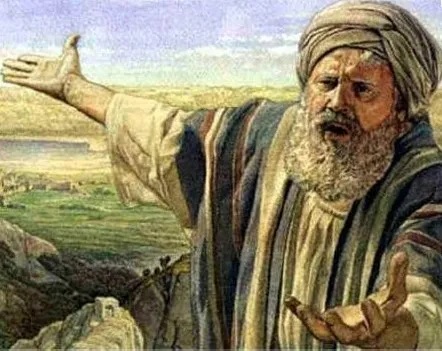
Avraham came forward and said: “Would you sweep away the tzadik with the wicked? What if there are fifty tzadikim inside the city? Would you sweep away and not pardon the place for the sake of the fifty tzadikim who are in it? Far be it from you to do this thing, to bring death to the tzadik with the wicked! Then the tzadik would be like the wicked. Far be it from you! The judge of all the earth should do justice!” (Genesis 18:23-25)
tzadik (צַדִּיק) = righteous, innocent. tzadikim (צַדִּיקִם) = people who are righteous or innocent. (Both words have the same root as tzedakah.)
This is a new thing in the world of the book of Genesis: a human being arguing with God and telling God the right thing to do.
Clearly God is “the judge of all the earth”; in the time of Noach, God judged the whole earth and drowned all the land animals, including humans, that were not on the ark. Avraham argues that since God is the ultimate judge, God should do justice. And justice requires discriminating between the innocent and the guilty, and not sentencing innocent people to death.
However, Avraham does not argue that God should pick and choose which individuals will live and which will die, instead of annihilating an entire population. Perhaps he recalls that it took a lot of advance preparation to arrange for Noach’s ark before God flooded the earth. Or perhaps Avraham has noticed that what we now call “acts of nature”, but the ancient Israelites considered acts of God, never distinguish between the innocent and the guilty.
So how can God save the innocent? Only by not annihilating a population at all! Avraham urges God to pardon everyone in the Sodom area, and refrain from annihilating the city and its towns, if there are a critical number of innocent people living there.
How many innocent people does it take?
Avraham starts with the number 50. According to Rashi,1 he is thinking of ten tzadikim for each town. (Although the portion Vayeira does not specify any settlements except Sodom and Gomorrah, in last week’s Torah portion, Lekha-Lekha, Sodom and Gomorrah are two of five towns that lose a battle at the Dead Sea.)2
And God said: “If I find in Sodom fifty tzadikim within the city, then I will pardon the whole place for their sake.” (Numbers 18:26)
The God character does not question or argue with Avraham. Either God finds Avraham’s argument enlightening, or God was testing Avraham and is pleased that his human protégé is standing up for justice.
Avraham dares to speak up again, although this time he makes a parenthetical statement of humility, saying that he is dust and ashes. He asks if God would destroy the whole city if there are 45 tzadikim, or 40, or 30, or 20. Each time God says “I will not destroy” or “I will not do it”.
Then he said: “Please don’t be angry, my lord, but I would speak one more time. Perhaps [only] ten will be found there!” And [God] said: “I will not destroy, for the sake of the ten.” And God went, as soon as [God] had finished speaking to Avraham, and Avraham returned to his place. (Genesis 18:32-33)
It is not clear whether Avraham stops at ten, or God cuts off the conversation after ten. Two reasons why Avraham might have stopped at ten tzadikim are summarized by Bachya ben Asher:
“Eight people had entered the Ark. Had there been another pair of deserving human beings at that time the deluge might have been delayed or might not have occurred at all. Furthermore, Avraham had reason to believe that there were ten righteous people in Sodom. He counted Lot and his wife, his four daughters and their respective husbands (or fiancés) as making up that quorum. [But] Seeing there were fewer than ten good people whose presence could protect their town against impending doom, God departed as soon as He had heard Avraham speak about ten good people.”3
Motivations
Avraham might be standing up for justice and ethical behavior. Or perhaps his speech is a cover for an attempt to save his nephew Lot; after all, after the battle in Lekh-Lekha, Avraham staged an armed raid to rescue Lot, along with other captives from the Sodom area.4 And later, when God does not find even ten innocent people in Sodom, God knows how to do Avraham a favor:
And it happened, when God destroyed the cities of the valley, then God kept Avraham in mind and sent out Lot from the midst of the overturning … (Genesis 19:29)
Regardless of Avraham’s motivation, he might be teaching the God character how to turn over a new leaf. According to Aggadat Bereishit:
“God said to him, ‘No, no, may it never be that they should say, “This is God’s way, to subject His creatures to cruelty.” In the generation of the Flood, and in the generation of the Dispersion [after the Tower of Babel was built], I did not restrain My wrath, but with you, may it never be. … And if you think that I have acted unfairly, teach me and I will act fairly from now on.”5
Nevertheless, God might feel that pardoning the whole population for fewer than ten innocent people is simply going too far. However, the two divine messengers whom God sent down to the city do rescue Lot and his wife and two unmarried daughters, just before God annihilates the plain of Sodom.6
On the other hand, if God is teaching Avraham, God might feel satisfied that Avraham has passed the test and stood up for the concept that it is more important to save the innocent than to punish the guilty. Perhaps God leaves after the conversation reaches ten tzadikim because Avraham has already proved himself.
Given how passionately Avraham argues for God to pardon Sodom if even ten innocent people live there, many Torah readers are surprised at Avraham’s silence about two decades later, when God tells him to slaughter his own innocent son and heir. I will discuss that development in the relationship between Avraham and God in next week’s post: Vayeira: Return to Silence.
- Rashi is the acronym for 11th-century Rabbi Shlomoh Yitzchaki.
- Genesis 14:1-12.
- Bachya ben Asher ibn Halavah,1255–1340, translated in www.sefaria.org. The Torah does not actually say how many daughters Lot has, though at least two of them must be married, since Genesis 19:14 refers to sons-in-law. Bachya assumes the two unmarried daughters living at home are engaged. We do learn that Lot’s sons-in-law are not innocent (Genesis 19:4).
- Genesis 14:12-16.
- Aggadat Bereishit 22:2, 9th-10th century midrash, translated in www.sefaria.org.
- Genesis 19:15-26.


2 thoughts on “Vayeira: Persuasion”