Mishpatim & Psalms 39 and 119: Foreigners

(One of a series of posts comparing ideas in the book of Exodus/Shemot with related ideas in the book of Psalms.)

Us and them.  Citizens and foreigners.  Friends and enemies.

Human nature always divides members of our species into two or more groups. But how we treat the “out” group depends on our ethical, religious, and political rules.

This week’s Torah portion, Mishpatim (“Laws”), is set at Mt. Sinai, long before the Israelites conquer part of Canaan and set up their own government. But it includes a series of laws written after the kingdoms of Israel and Judah were founded. One of the subjects these laws address is how to treat immigrants and conquered natives.

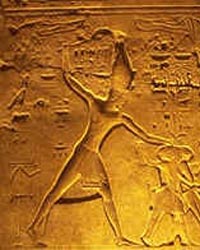
Egyptian beating a slave

A geir you shall not cheat nor oppress, since you were geirim in the land of Egypt. (Exodus/Shemot 22:20)

geir (גֵר) = foreigner, stranger, resident alien, sojourner, immigrant, non-citizen.  From the root verb gar (גָּר) = sojourned, stayed with, resided with.

geirim (גֵרִים) = Plural of geir.

(The meaning of geir shifted in Jewish writings after 100 C.E., coming to mean a proselyte or convert.)

After a few more laws, the Torah portion Mishpatim adds:

And a geir you shall not oppress, for you yourselves know the feelings of the geir, since you were geirim in the land of Egypt.  (Exodus/Shemot 23:9)

Unlike foreigners who are merely visiting another country, geirim are displaced persons who cannot call on their former clan chiefs (or national governments) for protection. They are at the mercy of the country where they now live, subject to the whims of its ruler and its wealthy citizens. Unless their new host country protects them, they are subject to deportation even when they no longer have a home to return to (like resident aliens in the United States today), or to slavery (like the Israelites in Egypt at the beginning of the book of Exodus).

This week’s Torah portion gives one example of not oppressing a geir who works for you:

Six days you shall do your doings, but on the seventh day you shall stop, so that your ox and your donkey shall rest, and the son of your slave woman and the geir shall refresh their souls.  (Exodus 23:12)
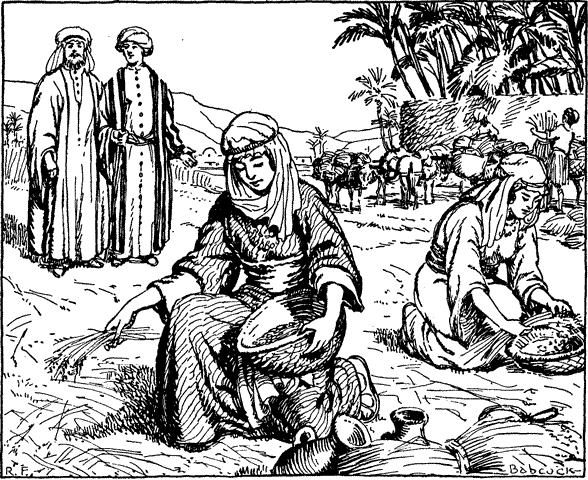
Ruth (a foreigner) Gleaning, by R.F. Babcock
Ruth (a foreigner) gleaning,
by R.F. Babcock

The Hebrew Bible includes many further injunctions to treat geirim with consideration.1  In summary, if geirim are servants of Israelites, they must get the same holiday feasts and days off as native slaves or servants.  If geirim are hired laborers, they must be paid daily, like Israelite laborers.  If geirim are not attached to an Israelite household and are impoverished, they get the same rights as impoverished citizens.  Geirim are even urged to flee to the same cities of refuge if they are unjustly accused of murder.

Since the kingdoms of Israel and Judah are theocracies, treating their geirim like citizens also means the geirim must conform at least outwardly to Israelite religious life, and suffer the same punishments for transgressions.2

However, two kinds of discrimination against geirim are sanctioned in the Torah: an Israelite may not charge interest on a loan to a kinsman, but may charge interest on a loan to a geir 3; and while an Israelite can always redeem a kinsman from slavery by paying the slave’s owner, a geir has no such right.4

Nevertheless, the Bible urges the Israelites to love the geirim living in their land.5

Mt. Gezerim left, Mt. Eival right.
Mt. Gezerim left,
Mt. Eival right.

In three books of the Bible, resident geirim are even included in the covenant with God.6  One example is when Joshua enters Canaan and enacts a ritual of covenant at Mt. Eival.

All Israel—its elders, its officials, and its judges—were standing on either side of the ark, facing the priests of the Levites, carriers of the ark of the covenant of God—the geir the same as the native.  (Joshua 8:33)

(In this case, “native” (ezrach, אֶזְרָח) means someone of Israelite ancestry, since both the Israelites and their fellow travelers are newcomers to Canaan.)

Another example is when the prophet Ezekiel predicts a new covenant with God once the Israelite deportees in Babylon move back to their old land.  In this covenant, people who were once geirim become citizens of the tribes they lived with.

You shall divide up this land for yourselves among the tribes of Israel. And you shall cast [lots] for hereditary possessions, for yourselves and for the geirim who are garim among you … And the geir will be in the tribe that gar with; there you will give him his hereditary possession—declares my Master, God.  (Ezekiel 47:21-23)

garim (גָּרִים) = sojourning, staying with, residing with as foreigners.  (From the root verb gar.)

gar (גָּר) = he sojourned, stayed with, resided with.

All these rules ensuring fairness to the geirim would not have been written unless some native Israelites were mistreating resident aliens.  The Torah correctly points out that the geirim are vulnerable outsiders, just as the Israelites were once vulnerable outsiders in Egypt.

*

Psalms 39 and 119 take the idea of the geir to the next level.  If non-citizens are vulnerable in the country where they live, then perhaps humans are vulnerable before God, whose ways are mysterious.

Psalm 39 introduces a speaker who is worried about the shortness of his life.  He alludes to a scourge from God, probably an illness.  The psalm concludes:

praying           Hear my prayer, God,

                        And listen to my cry for help!

                        Do not be silent to my tears.

            For I am a geir with You,

                        A resident alien, like all my forefathers.

            Look away from me, and I will recover,

                        Before I depart and I am not.  (Psalm 39:13-14)

Like a geir, this psalmist feels vulnerable and uncertain of God’s ultimate protection.  Instead of asking God to intervene, he begs God to ignore him so he can at least enjoy the remainder of his short life.  A geir does not dare to ask for too much.

*

Psalm 119, written during the time of the second temple, is the longest in the book of Psalms.  Its 176 verses begin with letters of the alphabet from alef to tav, the equivalent of the English A to Z.  There are eight verses for each letter, and all are variations on the theme of praying to God for help in learning and understanding God’s laws.  The verses that begin with the letter gimmel (ג) open with:

           Finish maturing (גְּמֺל) Your servant!  I will live and I will observe Your word.

            Uncover (גַּל) my eyes, and I will look upon the wonders of Your teaching.

            A geir (גֵּר) I am in the land; do not hide from me Your commands.

            My soul pines away (גָּרְסָה), longing for Your laws at all times.  (Psalm 119:17-20)

The psalmist expresses the feeling of being a vulnerable outsider who does not understand what is really going on.  Anyone who seeks to serve a God who has issued hundreds of laws yet remains inscrutable feels like a geir.  The overall theme of Psalm 119 is the longing to understand what God wants—which is like the longing of geirim to understand how things work in the strange country where they now live.                    

*

I appreciate how the Torah insists we must treat non-citizens with fairness and consideration, and reminds us that we have all been geirim at some time.  Even if we have enjoyed the rights of the innermost in-group of native citizens our whole lives, we are still geirim with God.

And even within our own social circles, we get along better if we keep working to understand what our friends are really saying, how the world really looks to them.  Ultimately, each of us is a geir with every other person, as well as with God—and perhaps even with ourselves.

1  Enjoying Shabbat and holidays:  Exodus 12:19, 12:48, 20:10, 23:12; Numbers 35:15; Deuteronomy 5:14, 16:14, 26:11-13.

Receiving wages promptly:  Deuteronomy 24:14.

Receiving assistance like the native poor:  Geirim are usually listed along with widows and fatherless children as entitled to glean produce from private fields, orchards and vineyards (Leviticus 19:10, 23:22; Deuteronomy 21:20, 24:17, 24:19, 24:20; also see Ruth ch. 2); to take home a share of the tithe for the poor (Deuteronomy 14:28-29); and to receive just redress (Deuteronomy 24:14; Jeremiah 7:6, 22:3; Zechariah 7:10; Malachi 3:5).

Using cities of refuge: Joshua 20:9.

2  Observing the native religion:  Both citizens and geirim must fast on Yom Kippur (Leviticus 16:29), bring their burnt offerings to the alter of the God of Israel (Leviticus 17:8-9, 22:18), refrain from eating blood (Leviticus 17:10, 17:13), obey Israelite laws about permitted sexual partners (Leviticus 18:26), avoid taking God’s name in vain (Leviticus 24:16), and refrain from worshiping idols (Leviticus 20:2; Numbers 15:26, 15:29, 15:30, 19:10; Ezekiel 14:7).

3  Paying interest:  Leviticus 25:35.

4  Lacking the right of redemption:  Leviticus 25:35-36.

5  Being loved: Leviticus 19:33-34; Deuteronomy 10:18-19, 24:14.

6  Being included in the covenant: Deuteronomy 29:9-11, 31:12; Joshua 8:33, 8:35; Ezekiel 47:21-23.


Yitro & Psalms 29, 82, & 97: Greater Than Other Gods

(One of a series of posts comparing ideas in the book of Exodus/Shemot with related ideas in the book of Psalms.)

The “Song of the Sea”, a psalm in last week’s Torah portion, Beshallach, includes the verse:

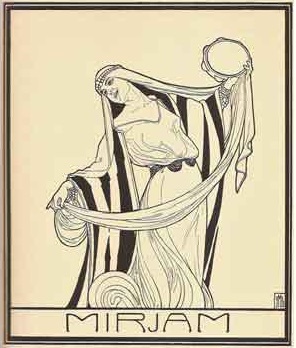
Miriam singing, by Ephraim Moshe Lilien, 1908

Who is like You among the eilim, Y-h-w-h?

Who is like You, glorious in holiness,

Awesome, praiseworthy, doing wonders! (Exodus 15:11)

Y-h-w-h (י־ה־ו־ה) = God’s personal four-letter name.  (Many English translations substitute “LORD” for this name, even though it is spelled using letters from several forms of the Hebrew verb “to be”, rather than from the Hebrew noun for “lord”.)1

eilim (אֵלִם) = plural of eil (אֵל) = a god. (In some Canaanite religions, Eil was the founding god of the pantheon.  In the Torah, Eil is another name for Y-h-w-h, but eilim always means multiple other gods.)

The Song of the Sea assumes that other gods exist, and rejoices that the God of Israel, Y-h-w-h, is more powerful than any of them.  This verse is included in the daily Jewish liturgy, morning and evening.  When Jews sing “Mi chamokha” (“Who is like You?”) we do not always remember that we are comparing our God with other gods.

Yitro and the First Commandment

In this week’s Torah portion, Yitro, the Midianite priest Yitro travels to Mount Sinai to meet his son-in-law Moses shortly after God and Moses have brought the Israelites out of Egypt.

And Yitro said: “Blessed be Y-h-w-h, Who rescued you from the hand of the Egyptians and from the hand of Pharaoh…  Now I know that Y-h-w-h is greater than all the elohim…” (Exodus/Shemot 18:11)

elohim (אֱלֺהִים) = gods, a god, God.  (Grammatically elohim is the plural of eloha, a rarely used word for a god.  The Torah uses the word elohim to refer to both multiple gods, as with eilim, and to a single god.  Sometimes elohim refers to a single foreign god2, but more often the word refers to the God of Israel, Y-h-w-h.)

Does Yitro believe in the existence of multiple gods only because he is a Midianite?  No; many passages in the Bible that were originally written before the destruction of the first temple in 587 B.C.E. share this belief.  Even the first of the “Ten Commandments” in this week’s Torah portion does not require monotheism, but only a henotheistic religion in which Y-h-w-h is the best god and the only one the people are allowed to worship:

I am Y-h-w-h, your elohim, Who brought you out from the land of Egypt, from the house of servitude.  You shall have no other elohim over and above My presence. (Exodus/Shemot 20:2-3)

(For other translations of this commandment, see my post Yitro: Not in My Face.)

The god Y-h-w-h does not say that there are no other gods, but only that the Israelites must not serve them.

A number of psalms3 are similarly henotheistic in the original Hebrew (though some translators strain to make them sound as monotheistic as later Biblical writings.)  These psalms treat other gods as real, but emphasize that they are weak and worthless compared with Y-h-w-h, the God of Israel.  Here are three examples:

Psalm 29

Psalm 29 is probably the oldest of the henotheistic psalms.  Its opening addresses the “children” or dependents of other gods:

           Assign to Y-h-w-h, children of eilim,

                        Assign to Y-h-w-h magnificence and might!

            Assign to Y-h-w-h the magnificence of [God’s] name,

                      Bow down to Y-h-w-h of holy beauty!

           The voice of Y-h-w-h is over the waters;

                      The eil of magnificence is thundering.  (Psalm 29:1-3)

“Children of eilim” might mean those dependent on other gods, i.e. their human worshipers.  Or, according to Ibn Ezra4 in his commentary on Exodus 15:11 (above), “children of eilim” refers to the stars, which were considered divine.

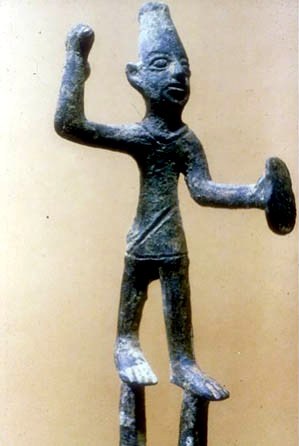
Baal preparing lightning, bronze
Baal preparing lightning

Psalm 29 goes on to describe the voice of Y-h-w-h as shattering cedars, making the mountains of Lebanon dance, kindling fire, shaking the wilderness, and startling deer into giving birth—all images related to thunderstorms and earthquakes.  Canaanite poems describe the god Baal as the weather god who speaks in thunder and makes lightning and earthquakes, but this Israelite poem says that God does all that.

In Canaanite literature the god Baal conquers the waters of chaos, builds a palace on a mountaintop, and becomes king over all the other gods except his father, Eil.

Psalm 29 gives God a palace and a throne:

          And in [God’s] palace everyone says: Magnificent!

                    Y-h-w-h sat enthroned for the flood,

          And Y-h-w-h sits enthroned as king forever.  (Exodus 29:10)

The purpose of Psalm 29 may have been to replace Baal-worship among the Israelites with the worship of Y-h-w-h, and to persuade them that all the other eilim are less powerful than Y-h-w-h.  These inferior gods acclaim and bow down to Y-h-w-h in God’s palace.

Psalm 82

In Canaanite writings from Ugarit, the father god Eil periodically convenes an assembly of the gods, each of whom has its own sphere of power.  After receiving advice from the other gods, Eil makes the major decisions about the world.5

Psalm 82 takes the idea a divine assembly in a different direction.

Elohim takes a stand in the assembly of Eil,

           Among elohim he pronounces judgment. (Psalm 82:1)

The Council of Gods, sketch by Peter Paul Rubens
The Council of Gods, sketch by Peter Paul Rubens

In the first line, “Elohim” refers to Y-h-w-h; in the second line “elohim” refers to all the assembled gods.  “Eil” in the first line might be either Y-h-w-h or the Canaanite father god.

Y-h-w-h then accuses the other gods of unjust rulings that favor the wicked and fail to rescue the poor.  But the other gods don’t get it.

            They neither know nor understand,

            They walk around in darkness;

            Causing all the foundations of the earth to totter.  (Psalm 82:5)

Without true divine justice, the whole human world is threatened.  So Y-h-w-h gets rid of the ignorant lesser gods, commenting:

           I used to say to myself: You are elohim,

                      And children of the Most High, all of you.

           Nevertheless, you will die like humans,

                      And you will fall like one of the princes.  (Psalm 82:6-7)

Psalm 82 might be an explanation of why the wicked are not always punished: inferior gods have been acting as their judges.

On the other hand, this psalm might be a story exhorting the Israelites to abandon other gods because those gods are wicked, stupid, and no longer immortal.  Only Y-h-w-h is worth worshiping, because only Y-h-w-h administers true justice and lives forever.

Psalm 97

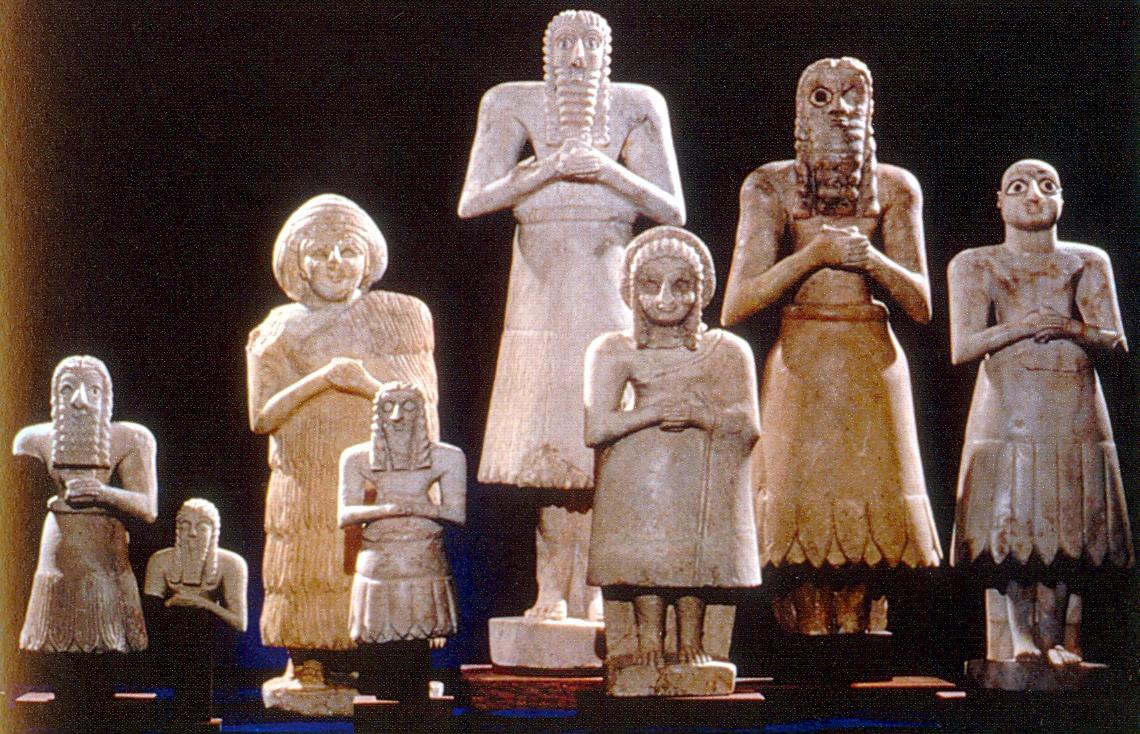
Sumerian annunaki (gods from the sky)
Sumerian annunaki (gods from the sky)

The heavens told of [God’s] true justice;

All the peoples saw [God’s] magnificence.

Every worshiper of a carved idol is shamed,

Those who boast of the elilim.

All elohim bowed down to [God]! (Psalm 97:6-7)

elilim (אֱלִילִים) = worthless gods, nonentities, not-gods, insignificant gods.

“The heavens” in verse 6 probably refers not to the sky, but to the gods (including stars) who dwell in the heavens.  Since even the other gods bow down to Y-h-w-h and acknowledge God’s justice, anyone silly enough to worship these insignificant gods should be ashamed.


It took many centuries for the Israelites to stop worshiping the old gods. People would declare their allegiance to Y-h-w-h, and then slide back into worshiping some other god, a god that “everyone” knew was especially effective at dealing with their current problem.  The Bible repeatedly shows Moses and other prophets scolding the Israelites for straying after other gods, but the scoldings must have been ineffective, since the people kept on backsliding.

It was hard for the Israelites to stick to henotheism, in which their God was supreme and the others were not worth worshiping.  How could they manage the radical idea of monotheism, which the Torah first introduced in Deuteronomy 4:35?  How long did it take, after the second Isaiah preached monotheism during the Babylonian exile, before most Israelites believed there was only one god in the universe?


1  I usually translate the four-letter name as “God”, but in this post it is important to distinguish Y-h-w-h from elohim. I insert hyphens because according to Jewish tradition, God’s personal name must not be spelled correctly in writings that are neither biblical nor liturgical. For many Jews this applies even to spelling the name with Roman letters. (The Hebrew for “lord” or “master” is adon (אָדוֹן). When Jews read out loud in religious services, we often substitute adonai  (“my lords”) for the four-letter name of God.)

2 The Bible uses “elohim” as a singular noun for the gods Baal, Baal-berit, Baal-zebub, Dagon, Kemosh, Milkom, and Nisrach; the goddesses Astarte and Ashtoret; and the golden calf.

3  Psalms 29, 82, 86, 89, 95, 96, 97, 135, and 136 all assume the existence of other gods.

4  Ibn Ezra was the 12th-century Spanish theologian Abraham ben Meir Ibn Ezra.

5  A divine assembly also appears in the book of Job and in Psalms 82 and 89.

Beshalach & Psalm 136: Miracle at Sea

(One of a series of posts comparing ideas in the book of Exodus/Shemot with related ideas in the book of Psalms.)

After the tenth plague, the pharaoh finally lets the Israelites go. Then he has another change of heart, and sends a brigade of charioteers after them. At nightfall the Egyptians catch up with the Israelites at the shore of the sea—the Red Sea in English, the Sea of Reeds (yam sufיַם סוּף) in the Hebrew Bible. Both parties camp for the night, with the Israelites trapped between the enemy and the water.

What happens next? The most familiar version of the story appears in this week’s Torah portion, Beshalach (“When he sent out”).

The Passage of the Red Sea, by William Hole,
The Passage of the Red Sea,
by William B. Hole (1846-1917)

The Prose Account

Moses stretched out his hand over the sea, and God made the sea move with a strong east wind all night. Vayasem the sea dry land, and the waters split. And the Israelites entered the middle of the sea on dry ground, and the waters were for them a wall on their right and on their left. (Exodus/Shemot 14:21-22)

vayasem (וַיָּשֶׂם) = and he/it placed, set, set up, put, put in.

Until I translated these verses, I had the impression that God simply splits the water down to the seabed, which becomes dry and firm enough for the Israelites to walk on. But the Torah says vayasem, as if there were no real bottom to the sea, so God has to install a strip of dry land.  (Many English translations say God “made” or “turned” the sea into dry ground—which has the same implication.)

In the cosmology of the ancient Israelites, beneath the land lies a subterranean ocean of water called the tehom (תְּהוֹם —singular) or tehomot (תְּהֺמֺת —plural). This deep water bubbles up through the earth in the form of springs. Under the ocean, it’s water all the way down, with no ocean floor.1

Pharoah Tutankhamen on a chariot, pursuing Nubians
Pharaoh Tutankhamen on a chariot, pursuing Nubians

And the Egyptians pursued, and all the horses of Pharoah, his chariots, and his horsemen entered after them into the middle of the sea. …And [God] made the wheels of their chariots swerve, and made them proceed laboriously. (Exodus 14:23, 25)

And Moses stretched out his hand over the sea, and the sea settled before morning into its normal flow. And the Egyptians were fleeing from it, and God na-ar the Egyptians into the middle of the sea. And the waters turned back, and they covered the chariots and the horsemen of all the army of Pharaoh, the one coming after them into the sea; not one remained. (Exodus 14:27-28)

na-ar (נָעַר) = shook out, shook off. (The form of this verb used in verse 14:27 is vayena-eir (וַיְנָעֵר). This verb appears only 12 times in the entire Hebrew Bible.)

Safe on the other side of the sea, the Israelites are awed by God’s miracle, and moved to sing along with Moses and Miriam.

The Song of the Sea

That was when Moses sang, along with the children of Israel, this song to God… (Exodus/Shemot 15:1)

The whole “Song of the Sea” that follows is a psalm written in archaic Hebrew, one of the two oldest texts in the Hebrew Bible.2 (The other is the Song of Deborah, Judge 5:1-31.) The scribe who redacted this week’s Torah portion inserted the well-known hymn without changing its archaic syntax and spellings.

The Song of the Sea does not mention God splitting the sea or the Israelites walking on dry land. Nevertheless, one early verse matches the prose account: 

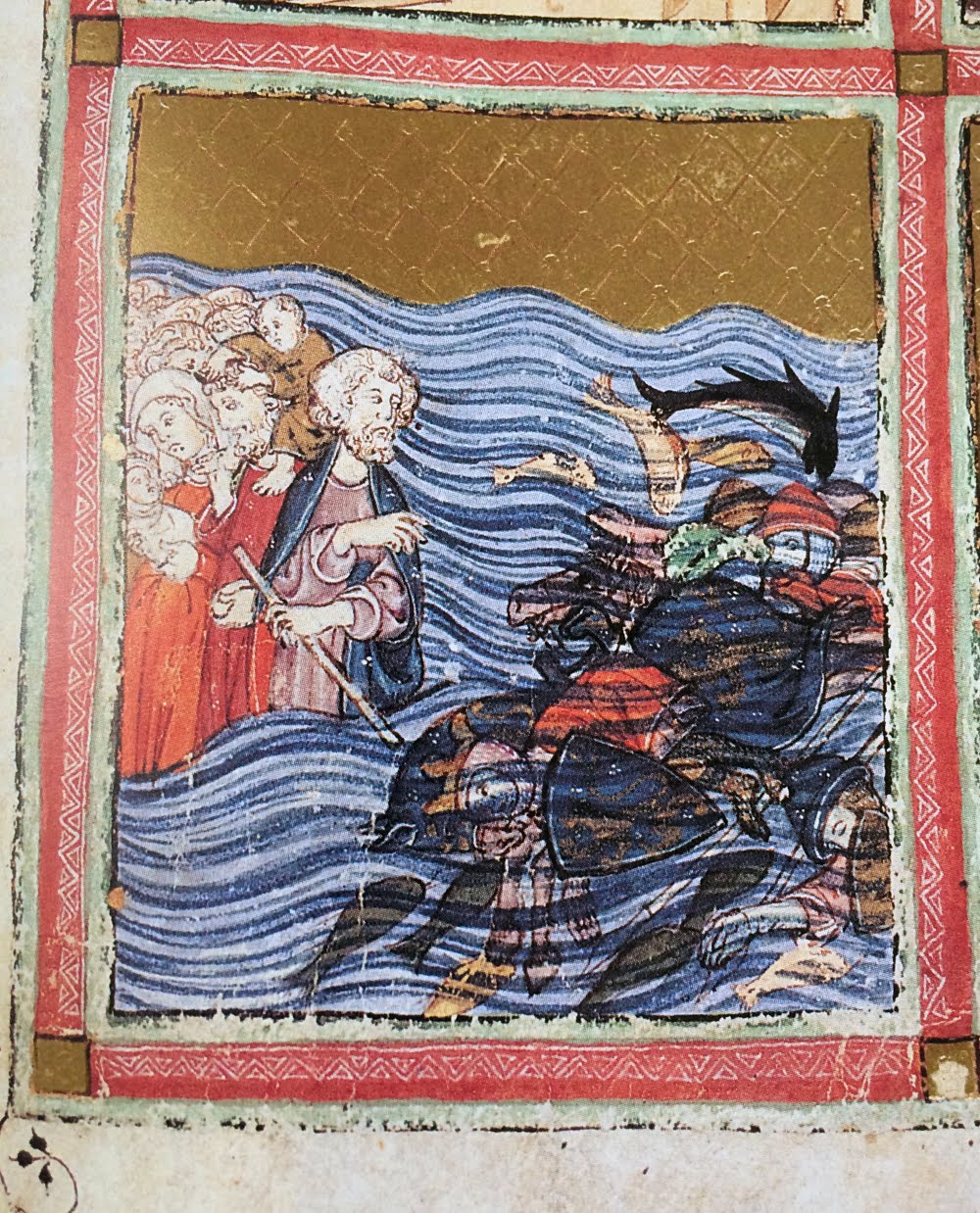
from the Golden Haggadah, c. 1320 Spain
from the Golden Haggadah,
c. 1320 Spain

         Chariots of Pharaoh and his army

                        [God] pitched into the sea,

            And the best of his captains

                        sank in the Sea of Reeds. (Exodus 15:4)

Twice the Song of the Sea says the Egyptians sank all the way down into the tehomot.

           Tehomot covered them;

           They went down into the depths like a stone. (Exodus 15:5)

           In the wind of Your nostrils the waters were dammed up.

                        They stood up like a dike [made of] waves,

                        Congealed tehomot in the heart of the sea. (Exodus 15:8)   

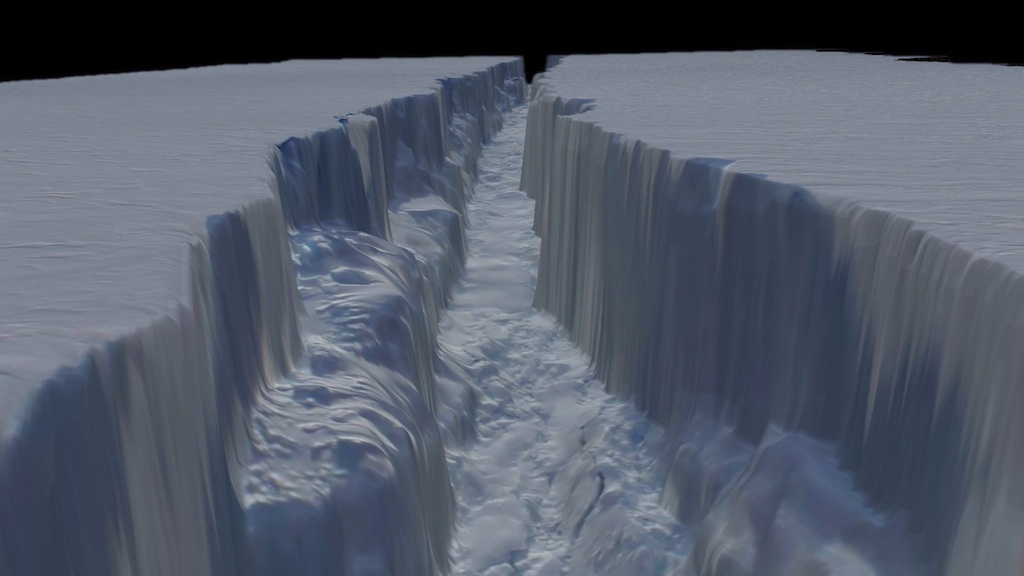
Ice canyon, Antarctica, 2011 photo by NASA
Ice canyon, Antarctica,
2011 photo by NASA

         You blew Your wind; the sea covered them.

                        They sank like lead in the mighty waters. (Exodus 15:10)

This description led 16th-century rabbi Obadiah Sforno to explain that the water at the bottom of the sea became solid, and the Israelites walked across the congealed or frozen water.

Psalm 136

The Bible includes several briefer descriptions of the crossing of the Sea of Reeds, all used as examples of God’s miracles on behalf of the Israelites. But the descriptions in Second Isaiah (51:9-10) and Psalms 77, 106, and 136 do not explain how the Israelites got across the water.

Psalm 136 does, however, refer to God as the one who split the sea, and like the prose account in Exodus it uses the rare word na-ar.

reed-sea-2

           Who cut the Reed Sea into parts,

                        Because forever is [God’s] loyal kindness.

            And let Israel pass through the middle,

                        Because forever is [God’s] loyal kindness.

            Veni-eir Pharaoh and his army into the Sea of Reeds,

                        Because forever is [God’s] loyal kindness. (Psalm 136:13-15)

veni-eir (וְנִעֵר) = And [God] shook off, shook out. (Another form of the verb na-ar נָעַר.)

We do not know which text first used the poetic image of God shaking off the Egyptians into the sea: Psalm 136, or one of the stories woven into the prose account in this week’s Torah portion. 3

If we follow the prose account, the sea divides and a miraculous strip of earth appears over the tehomot. I can picture the earth getting soggy after the Israelites have crossed, so the chariot wheels of the Egyptians get stuck in mud. Then the bridge of earth buckles and shakes off the Egyptians, chariots, and horses into the water, before God’s second wind blows the walls of water down over them.

On the other hand, if we take the Song of the Sea as the oldest, most authoritative account, and follow Sforno’s explanation that the water congeals into a frozen roadway between dikes of ice, then I can imagine the chariot wheels skidding out of control on the slippery surface. This provides an alternate explanation of the detail in the prose account that God “made the wheels of their chariots swerve, and made them proceed laboriously”. (Exodus 14:25)  Then the ice-dikes break and the sea rushes over the Egyptians.

Either of these two pictures of the crossing of the Sea of Reeds is more vivid than most readers—and illustrators—of the Bible imagine.

Unless you are an eye witness, it takes vivid imagery to feel the impact of a miracle. The various Biblical accounts of crossing the Sea of Reeds are designed to make the descendants of the Israelites experience the feeling of a last-minute rescue, and to give them confidence that God has always been on their side. So for centuries the Israelites rejoiced over the miracle at the sea.

Yet after the second temple in Jerusalem fell in 70 C.E., some Jews questioned this attitude. In the Talmud, Rabbi Yochanan says God does not “rejoice in the downfall of the wicked”. He gives the crossing of the Sea of Reeds as an example, saying: “The ministering angels wanted to chant their hymns, but the Holy One, blessed be He, said: The work of my hands is being drowned in the sea, and shall you chant hymns?” (Babylonian Talmud, Soncino translation, Megilah 10b)

I, too, feel sympathy for the Egyptian soldiers. They have no more choice about following the Pharaoh’s orders than the Israelite slaves did before Pharaoh let them go. And their orders were to round up the Israelites (shooting arrows if necessary) and bring them back for re-enslavement.

Suddenly the Egyptians find themselves in the middle of a situation they never imagined was possible.  They are chasing the Israelites across a dirt bridge over the sea, or maybe down an ice canyon. They see the ex-slaves reach the far side, but their chariot wheels are either mired in mud or skidding on ice. Then the Egyptians are shaken off the path like crumbs.  And the sea crashes down on them.

Today people still experience events they never imagined were possible. Sometimes what seems like a good miracle to one group of people is worse than a nightmare to another group.

May we all learn the humanity to refrain from singing out with joy when our opponents are dying. And may God save us all when we find ourselves trapped in a situation we never imagined was possible.

___

1 This detail supports Richard Elliott Friedman’s argument in his Commentary on the Torah (HarperCollins 2001) that although the body of water in question is called the Sea of Reeds, it is no shallow lake, but the Gulf of Suez–the western arm of the Red Sea.

2 The exodus from Egypt is set during Egypt’s 19th Dynasty, which ruled during the 13th century B.C.E. The Song of the Sea mentions the Plashet (Philistines), who did not emigrate to Canaan until about 1175 B.C.E. Thus Moses could not have known or composed the Song of the Sea, but the writer of the Song of Sea might have known the story of the exodus. According to modern scholars, the prose version of the story in Exodus is a compilation of three different stories written in Biblical Hebrew sometime after 700 B.C.E. The redactor also inserted the ancient Song of the Sea.

3 Psalm 136 cannot be reliably dated. The language is consistent with the Hebrew in the book of Exodus (excluding the archaic Song of the Sea). But it could have been written much earlier, and rewritten centuries later with updated language. Or it could even have been written during the time of the second temple, 530 B.C.E.-70 C.E.

Va-eira & Bo; Psalm 78 & Psalm 105: Responding to Miracles

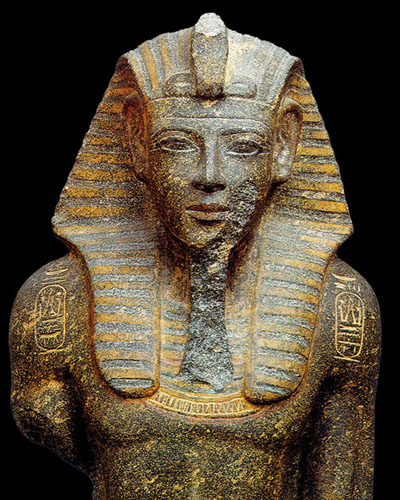
Pharaoh Merneptah subjugating Semites

(One of a series of posts comparing ideas in the book of Exodus/Shemot with related ideas in the book of Psalms.)

It takes two Torah portions (Va-eira this week and Bo next week) to describe the miraculous “plagues” that force the Pharaoh to let the enslaved Israelites walk out of Egypt. Two psalms, Psalm 78 and Psalm 105, offer briefer versions of the story. And the festival of Passover/Pesach tells the story of how God rescued the Israelites from Egypt in such detail that the seder (“order”;  ritual retelling of the story) can last half the night.

In the Torah portion Va-eira, God lays out the plan to Moses:

Therefore say to the children of Israel: “I am God, and I will bring you out from under the burden of Egypt, and I will rescue you from enslavement, and I will redeem you with an outstretched arm and with great acts of judgement. And I will take you to be My people, and I will be your god. And you will yada that I am God, your god, who is taking you out from under the burden of Egypt. (Exodus/Shemot 6:6-7)

yada (יָדַע) = know, realize, recognize, become acquainted, come to understand through direct experience. (Yada is the root verb. The Hebrew here uses the form viyda-etem (וִידַעְתֶּם) = and you will yada.)

Why does God inflict “great acts of judgement” on Egypt? The first reason given in this week’s Torah portion is so that the Israelites will yada God.

Pharaoh Mernptah, son of Ramses II
Pharaoh Merneptah, son of Ramses II

The second reason is so that the Pharaoh and the Egyptians will yada God, or at least recognize God’s existence and power:

And Egypt, they will yada that I am God when I stretch out my hand against Egypt and I bring out the children of Israel from their midst. (Exodus 7:5)

(The Hebrew in this verse uses form veyade-u (וְיָדְעוּ) = and they will yada.)

How many plagues does it take before both the Israelites and the Egyptians yada God?  Anyone who has participated in a Passover seder, spilling a drop of wine for each plague, knows the answer is ten. And in the book of Exodus/Shemot God does indeed inflict ten miracles on Egypt—the first seven in Va-eira (And I appeared), and the last three in Bo (Come).

However, the ten plagues are described in two different voices. Any close reader of  Va-eira and Bo, even in translation, notices points where the narrative suddenly stops and restarts, rephrasing a bit of the story that has already been told. Scholars examining the language itself have discovered that two stories of the plagues are woven together (but not seamlessly).

Both strands have something to say about the plagues of blood, frogs, and death of the firstborn. The other seven plagues are described by one strand or the other, not both. Maybe each of the two original stories had fewer than ten plagues. Or maybe the redactor(s) who combined the two stories decided to give both descriptions of three plagues, but chose only their favorite descriptions for the other seven.

Psalms 78 and 105 report fewer than ten plagues, and the order is different than in Exodus.

plagues-table

What accounts for these differences? We cannot identify any of these accounts as the original story. At least one strand in the composite story in Exodus was probably written in the 8th century B.C.E. Psalm 78 may have been written as early as the 10th century B.C.E., soon after the first Israelite temple was built in Jerusalem. Psalm 105 could have been written any time after that, maybe before the book of Exodus, maybe as late as the period of the second temple. Probably the story of God’s miracles in Egypt was familiar to all the authors before they began to write down their own versions.

The two psalms and the composite in Exodus borrow language from each other, not only using the same words for the plagues, but sharing pieces of description. For example, Exodus describes the plague of blood this way:

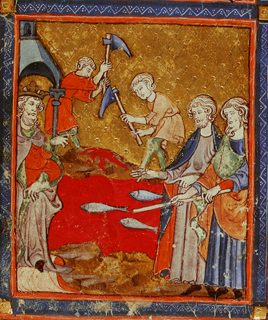
Plague of Blood, Golden Haggadah, c. 1320 Spain

…and he raised the staff and he struck the water that was in the Nile before the eyes of Pharaoh and his courtiers, and all the waters of the Nile turned into blood. And the fish that were in the Nile died. And the Nile stank and the Egyptians were not able to drink water from the Nile, and there was blood throughout the land of Egypt. (Exodus 7:20-21)

Psalm 78 focuses on the lack of drinking water:

And [God] turned into blood the Nile and its streams;

            They could not drink. (Psalm 78:34)

Psalm 105 focuses on the loss of an important food:

           [God] turned their waters into blood

                        And it made their fish die. (Psalm 105:39)

Whether the story is expanded in the book of Exodus, or contracted in a psalm, it is always offered as a decisive example of God’s miracles on behalf of the Israelites.

In the book of Exodus, the purpose of the plagues is to get both the Israelites and the Egyptians to yada God. But the Torah portion Bo also gives instructions several times for the earliest Passover rituals, which were conducted about 3,000 years ago. The purpose of these rituals is to remember the story of the exodus.

This day shall be for you for remembrance, and you shall celebrate it as a festival for God, through [all] your generations. It is a decree forever: you shall celebrate it. (Exodus 12:14)

While Exodus only calls for remembering the story of God’s miracles in Egypt, Psalms 78 and 105 tell the story in order to motivate the Israelites of Judah to action.

Psalms 78 hopes that if the Israelites remember the miracles God did for them, then they will stop backsliding, trust God, and obey God’s rules.

           What we have listened to, and we yada,

                      and our ancestors recounted to us,

           should not be concealed from their descendants,

                      to the last generation recounting

           praises of God and Its strength

                      and Its wonders that It did. (Psalm 78:3-4)

(The Hebrew in verse 3 uses form vaneida-eim (וַנֵּדָעֵם) = and we will yada.)

Why must God’s miracles be recounted to every generation?

           Then they will place their kesel in God,

                      and they will not forget the deeds of God,

                      and they will comply with Its commandments. (Psalm 78:7)

kesel (כֶּסֶל) = conviction, certitude, unwavering belief regardless of other evidence or arguments; folly, stupidity.

The section of Psalm 78 that tells about the miracles God inflicted on Egypt (78:42-51) is not designed to mention every single plague, but rather to bring the story to life in ten short verses. Psalm 78 leaves out the kinim, the shechin, and the darkness, but it adds a few details that are not in Exodus:

Plague of Hail, Haggadah by Judah Pinchas, 1747 Germany

—that the action happened at Tzoan, a specific place in the Nile Delta. (78:43)

—that the arov, the mixed hordes of vermin, ate the flesh of the Egyptians. (78:45)

—that when God sent hail, Egyptian flocks were hit by lightning. (78:48)

—that the hail killed grapevines and fig trees (important crops in Canaan, but not in Egypt). (78:47)

These additional details would make the story more vivid in the listener’s imagination.

Psalm 105 is less concerned than Psalm 78 about lack of faith and commitment among the people of Judah. I believe its purpose is to whip up enthusiasm for God and the religion among the worshipers at the temple.

           Thank God, call out Its name,

                      hodiyu among the peoples Its deeds!

           Sing to [God], make music to It,

                      consider all Its wonders!

           Revel in the name of Its holiness!

                      Let the heart of those who seek God rejoice! (Psalm 105:1-3)

hodiyu (הוֹדִיעוּ) = make known, inform, announce. (A different form of the root verb yada.)

Rylands Haggadah, 14th century Spain. Left: livestock pestilence. Right: Shechin.

Psalm 105 then tells the story of the people who became Jews, starting with God’s covenant with Abraham and ending with the Israelites’ conquest of part of Canaan. When it describes the plagues, it omits both livestock pestilence and shechin, perhaps because the thought of rashes and boils would depress the congregation.  Or, according to 19th-century rabbi Samson Raphael Hirsch, because diseases do not seem supernatural enough to count as miracles. But Psalm 105 uses some of same vivid details as Psalm 78.

*

Do the stories of God’s miracles in Egypt achieve their purpose?

Direct experience of miracles works in Exodus; both the Israelites and the Egyptians yada—know, realize, and recognize—a powerful god acting on behalf of the Israelites. The instruction to perform a ritual to remember what happened also worked; we have been celebrating Passover for about 3,000 years.

Does the account in Psalm 78 work, leading people to kesel, an unshakeable belief in God, and to a determination to obey God’s rules? I think it would depend on the listener. Some people believe any account that is vivid (like Psalm 78’s selection of details) and comes from an accepted source (such as the temple priests, or a particular news station, or a friend’s e-mail). Other people are skeptics by nature; they examine a story to see if it is logical and how it fits with personal experience and other information. This type of person would probably need direct experience, yada, to achieve kesel and commit themselves to obeying all the rules of the religion.

What about Psalm 105? I believe that an account of past miracles can inspire both kinds of people, especially when it is poetry set to uplifting music. Even natural skeptics can get caught up in singing joyful praise, and leave the temple (or synagogue) with a better attitude toward their God and their religion. And natural believers might be moved to proselytize, following the instruction hodiyu—make known, announce!

The singing of the psalms continued as part of both Jewish and Christian prayer after the fall of the second temple in Jerusalem in 70 C.E. It continues today. But Jewish liturgy concentrates on other psalms. It quotes only one verse from Psalm 78 and fifteen from Psalm 105, none of which are verses addressing the plagues in Egypt.

However, serious-minded Jews study the story of the plagues in the Torah portions Va-eira and Bo every winter, when we reach this time in the cycle of Torah readings. And in the spring many more Jews celebrate Passover, a festival of dramatic rituals, prayers, songs, and stories about how God freed the Israelites from slavery in Egypt.

The haggadah (“the telling”), the book that provides the texts and ritual instructions, includes many quotes from our two Torah portions in Exodus. Psalms 78 and 105 are not traditionally included. In a modern American haggadah, the song “Go Down Moses” usually is.

from an Iraqi haggadah, printed in Vienna 1930

Out of all the stories of God’s miracles in Egypt, I would say Passover is by far the most effective at getting Jews to remember the claim that God created miracles to rescue our people from Egypt. The ritual itself has changed and grown over the millennia, so it can speak to new generations. Even Jews who grew up in families that managed to conduct a boring seder  every year cannot help but remember the symbolic foods, the song that the youngest child must sing, the exodus story, spilling a drop of wine for each of the ten plagues, and hunting for the hidden piece of matzah.

Thus Passover still serves the purpose given in the book of Exodus: remembering the story. Whether we can go further and yada God (as in Exodus), or commit ourselves to kesel (as in Psalm 78), or be moved to joy and a desire to recommend the religion (as in Psalm 105) depends on the individual.

Personally, I have a skeptical nature, and I actively try to avoid kesel—while remaining committed to studying Torah and being a Jew in a liberal sense. But I remember the exodus story every winter when I study it in the Torah, as well as every spring when I participate in Passover. I do not yada the God of the ancient Israelites, but I do yada something I cannot describe that I call God. And when I sing psalms that have uplifting words and melodies, I am indeed moved to joy. I would recommend that to anyone!

Shemot and Psalm 137:  Cry Like a Baby

This week begins the reading of the book of Exodus/Shemot in the Jewish tradition. This year my posts on Exodus will relate each Torah portion to one of the psalms.

Too many foreigners live in the country, from the Pharaoh’s point of view in this week’s Torah portion. Unlike those who fear immigrants in our own time, the Pharaoh is not afraid that the Israelites will take jobs from native Egyptians. He is afraid that if another country makes war on Egypt, these foreigners will join Egypt’s enemies.

Pharaoh's decree, by Michiel van der Borch, 1332
Pharaoh’s decree, by Michiel van der Borch, 1332

Instead of integrating the Israelites into Egyptian society to win their loyalty, the Pharoah enslaves them, requiring that the men do forced labor. He also tries to reduce the population.

Then Pharaoh commanded his entire people, saying: “Every son that is born, you shall throw him into the Nile. But every daughter you shall keep alive”. (Exodus/Shemot 1:22)

And a man from the house of Levi went out and married a daughter of Levi. And the woman conceived and she bore a son, and she saw that he was good, and she hid him for three months. (Exodus 2:1-2)

Commentators have suggested many reasons why the baby (later named Moses) is “good”. But since his mother (later identified as Yokheved) is able to hide the baby for three months, the simple answer is that he is placid and quiet. As long as his mother is there whenever he wakes up, Moses does not cry.

Why could Yokheved no longer hide him after three months? The commentary offers different theories. I suspect that Moses happens to be three months old when Egyptian bullies start searching the houses of Israelites for baby boys to drown.

It occurs to Yokheved that the best hiding place for an Israelite baby boy is the Nile itself. She tars a floating box made of papyrus stems, and places Moses inside. Then she carries it to the pool where a woman of the royal family goes to bathe, and wedges it among the reeds so the current will not carry it away. The care with which Yokheved picks the spot shows that she hopes her baby will be discovered and adopted.

detail, Golden Haggadah, c.1420 Spain

And the daughter of Pharaoh went down to bathe in the Nile, and her maidens were walking next to the Nile. And she saw the floating box among the reeds, and she sent her slave-girl to fetch it. (Exodus 2:5)

The princess sees the box; she does not hear any crying. Moses, rocking gently inside, is probably asleep.

And she opened it and she saw the child, and hey! It was a boy, bokheh! And she felt pity for him, and she said: “This is one of the children of the Ivrim”. (Exodus 2:6)

bokheh (בֺּכֶה) = weeping, crying, sobbing, wailing. (From the root bakhah, ּבָּכָה = wept.)

Ivrim (עִבְרִים) = Hebrews; immigrants. (From the root avar, עָבַר = passed over, crossed through, emigrated.) Egyptians in the book of Exodus sometimes call the Israelites the Ivrim.

The story continues like a fairy tale, as the Pharaoh’s daughter ends up paying Moses’s own mother to nurse him, then adopts him after he is weaned. But why does Moses begin to cry when the princess opens the lid of the box? Probably the sudden sunlight wakes him—and then, instead of seeing the familiar face of his mother, he sees a stranger.

All infants cry when they are suddenly deprived of their primary caregivers, just as adults cry when someone they are deeply attached to dies. The world is strange and frightening without that familiar presence.

People may also cry when they are forced to leave their homes and live in a strange place. Yet when the Israelites and their fellow travelers follow the adult Moses out of Egypt, they “leave with a high hand” (Exodus 14:8). They rejoice rather than weep because they are choosing to leave a life of slavery and seek a new land to make their home.

On the other hand, in Psalm 137 the Israelites weep when the Babylonian army deports them from Jerusalem many centuries later, circa 586 B.C.E. They have no choice; they are forced to leave their homeland and live as foreigners in a strange place.

psalm-137-1

           By the rivers of Babylon

           There we sat down, bakhinu,

           when we remembered Tziyon. (Psalm 137:1)

bakhinu (בָּכִינוּ) = we wept, cried, sobbed, wailed. (From the same root, bakhah, as in Exodus 2:6.)

Tziyon (צִיוֹן) = Zion; a hill overlooking Jerusalem; Jerusalem itself as a religious center.

The deportees weep when they see the place where they must now live. It even looks different from their motherland.         

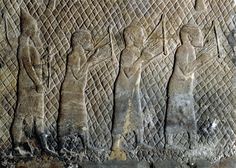
Prisoners playing lyres from Sennacherib's palace, Nineveh, circa 700 B.C.E.
Prisoners carrying lyres, palace of Sennacherib, Nineveh, c. 700 B.C.E.

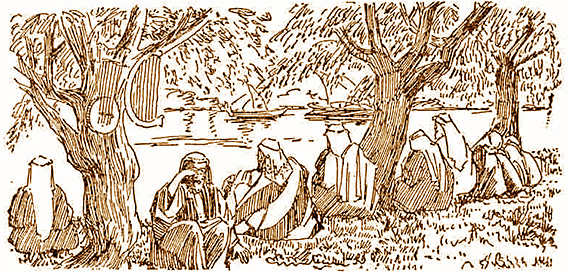
           Upon the poplars in her [Babylon’s] midst,

            Our lyres will remain hung. (137:2)

            Because there our captors asked us for words of song,

            Our oppressors for rejoicing:

            “Sing to us some song of Tziyon!” (137:3)

The Babylonian officers ask the deportees to entertain them by singing one of their quaint, provincial songs from Tziyon. If the officers merely wanted a folk song, they might have asked for a song from Jerusalem or Judah. By using the word Tziyon, the Babylonians are referring to Jerusalem as a religious center. Thus they remind the Israelites how helpless they are, even in matters of religion, now that the Babylonian army has razed the temple and deported them.

            How can we sing a song of God

           On the soil of a foreign land? (137:4)

The Israelites, and the Jews descended from them, do eventually sing sacred songs in foreign lands—including the psalms once sung in the temple. But in Psalm 137, they recoil from the idea of singing a hymn to God in order to let the Babylonians mock and humiliate them.

            If I forget you, Jerusalem,

            May my right hand forget. (137:5)

            May my tongue cling to my palate,

            If I do not remember you,

            If I do not exalt you, Jerusalem,

           Above my highest joy. (137:6)

            Remember, God, the Edomites

           On the day of Jerusalem, who said:

            “Strip it! Strip it down to the foundations!” (137:7)

According to the book of Obadiah, probably also written in the 6th century B.C.E., the men of the nearby land of Edom joined the Babylonians in sacking the city of Jerusalem (Obadiah 1:11-13).

            Babylon the despoiler,

            Fortunate are those who will retaliate for your retaliation against us! (137:8)

            Fortunate are those who will seize and smash

           Your little children on the rock! (137:9)

I picture the Israelites reacting like children, full of desperation at the loss of their mother land and religion, suddenly under the thumb of cruel and all-powerful foreigners. Toddlers in that situation might well scream with outrage and hatred at the mean strangers who have kidnapped them. It takes time to cool down, grow up, and consider the ramifications of one’s initial reaction. For a whole society, it can take centuries.

When the infant Moses cries at the sight of a stranger, it is because the stranger is not his mother, and he fears he has lost his mother forever. When the Israelite deportees cry at the sight of the rivers of Babylon, it is because Babylon is not their home, and they fear they will lose everything that means home to them: their identity, their way of life, and their religion.

They promise themselves they will never forget Jerusalem. Perhaps they recall the stories about Moses as an adult, who breaks with his royal Egyptian family to rescue the Israelite slaves.  He never forgets his mother and his own people.

May every one of us remember those we have loved and lost. May we remember our true homes—whether they are the homes we were born into (like the Israelites in Psalm 137), or the homes we adopt (like the Israelites that Moses leads out of Egypt in the book of Exodus).

Haftarat Eikev—Isaiah: Abandonment or Yearning?

Every week of the year has its own Torah portion (a reading from the first five books of the Bible) and its own haftarah (an accompanying reading from the books of the prophets). This week the Torah portion is Eikev (Deuteronomy 7:12-11:25) and the haftarah is Isaiah 49:14-51:3).

When the Babylonians burned down Jerusalem and its temple in 586 B.C.E., they also deported the last of its leading families to Babylon. They were not allowed not leave until the Persian Empire swallowed the Babylonian Empire 47 years later, and the Persian king Cyrus declared freedom of movement and freedom of religion.

Psalm 137, like this week’s haftarah from second Isaiah, is about the Babylonian Exile:

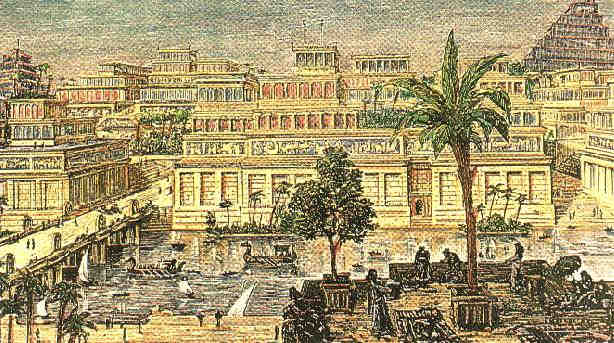
Babylon
Babylon

            How can we sing a song of God

            On foreign soil?

            If I forget you, Jerusalem

            May I forget my right hand. (Psalm 137:4-5)

In Jewish history, which spans millennia, 47 years may not seem long.  But for individuals it was a long time to remember their old home and their old god—especially if they were born in Babylon, and had only their elders’ memories to go by.

            “Why did I come and there was nobody,

            [Why] did I call and there was no answer?” (Isaiah 50:2)

Usually when someone in the Hebrew Bible cries “Why have you forsaken me?” it is an Israelite addressing God. But in this week’s haftarah, God cries out, feeling forsaken by the Israelites who have adjusted to life in Babylon.

In the second book of Isaiah, God is preparing to end the rule of the Babylonian empire, rescue the Israelite exiles, and return them to Jerusalem and their own land. (See my post: Haftarah for Va-etchannan—Isaiah: Who Is Calling?) But God’s plans are useless unless the Israelites trust their God and want to go home.

map of Babylon

Imagine you were kidnapped and taken to a strange city. Your life there was comfortable, but you were not free to leave. Would you accept your new reality, adopt the customs and religion of the city, and make it your home?

This must have been the strategy of the Israelites that the Assyrian armies deported from Samaria, the capital of the northern kingdom of Israel, in 729-724 B.C.E.—because the Bible never mentions them again. They either died or assimilated.

Or would you cling to your memories and your old religion, hoping that someday you would escape and go home?

This is the strategy that the second book of Isaiah advocates for the Israelites living in Babylon.

Reading between the lines, I imagine some Israelites moved past their trauma, married Babylonians, and settled down for good. I imagine others were stuck with post-traumatic stress disorder, trying hard not to remember their old lives or God or Jerusalem. And I imagine some stubborn individuals clinging to the belief that their God was alive and well, and would someday rescue them and return them to their motherland.

But how could the believers convince their fellow Israelites to take heart and wait for God?

This week’s haftarah tries a new approach: Stop thinking about yourselves, and remember the parents you left behind: your homeland, which is like a mother, and your God, who is like a father. How do they feel?

The haftarah begins with the land—called Zion for one of the hills in Jerusalem—crying that God has forsaken her, too.

And Zion says:

            God has abandoned me,

            And my lord has forgotten me! (Isaiah 49:14)

So far, Zion and God sound like lovers. But this is not another example of the prophetic poetry claiming that the people of Israel are straying after other gods like a wife who is unfaithful to her husband.  In this haftarah, the innocent land is Zion, and the people are Zion’s children. Zion lies in ruins after the war, empty and desolate because her destroyers (the Babylonians) stole all her children.

God reassures Zion by telling her:

            Hey! I will lift up My hand to nations

            And raise My banner to peoples,

            And they shall bring your sons on their bosoms

            And carry your daughters on their shoulders. (Isaiah 49:22)

In this poem God will arrange for foreigners (like King Cyrus) to return Zion’s children to Jerusalem. The poet or poets who wrote second Isaiah probably hoped that if discouraged exiles thought of Jerusalem as a mother missing her children and longing to have them back, their hearts might soften, and they might want to return to her.

Then, second Isaiah says, they would hear God ask:

           Why did I come and there was nobody,

            [Why] did I call and there was no answer?

            Is my hand short, too short for redemption?

            And is there no power in me to save? (Isaiah 50:2)

What if the “children of Zion” only thought their god, their father, had been defeated when the Babylonian army destroyed Jerusalem? What if God had actually planned the exile to punish them, as Jeremiah kept prophesying during the siege? Now that the punishment was over, did God miss the people of Judah?

What if their father, their god, really was powerful enough to rescue them and take them home to Zion? (See my post: Haftarat Va-etchanan–Isaiah: Faith in the Creator.)

If both parents, God and Zion, are yearning for them, then the Israelites in Babylon might start yearning for God and Zion again.

*

Decree by Cyrus
Decree by Cyrus allowing captives in Babylon to return to their native lands

It worked. After King Cyrus issued his decree, bands of Israelites from Babylon began returning to Jerusalem, a thousand or so at a time. Under Ezra and Nehemiah they built a new, larger temple for God. The former kingdom of Judah became a Persian province administered by Jews, and the expanded, monotheistic version of their religion, founded by second Isaiah, survived.

Today, two and a half millennia later, yearning for Jerusalem is built into Jewish daily liturgy. At the end of the Passover seder in the spring and Yom Kippur services in the autumn we even sing out: “Next year in Jerusalem!”

Almost half of the Jews in the world today live in the United States. We are free to emigrate to the nation of Israel, as long as we meet Israel’s requirements. Only a few do so. Are religious American Jews still exiles?

Or has God become both the mother and the father we yearn for, while Jerusalem is now a pilgrimage site?