Va-eira & Bo; Psalm 78 & Psalm 105: Responding to Miracles

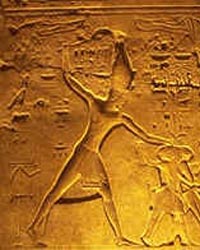
Pharaoh Merneptah subjugating Semites
(One of a series of posts comparing ideas in the book of Exodus/Shemot with related ideas in the book of Psalms.)

It takes two Torah portions (Va-eira this week and Bo next week) to describe the miraculous “plagues” that force the Pharaoh to let the enslaved Israelites walk out of Egypt. Two psalms, Psalm 78 and Psalm 105, offer briefer versions of the story. And the festival of Passover/Pesach tells the story of how God rescued the Israelites from Egypt in such detail that the seder (“order”;  ritual retelling of the story) can last half the night.

In the Torah portion Va-eira, God lays out the plan to Moses:

Therefore say to the children of Israel: “I am God, and I will bring you out from under the burden of Egypt, and I will rescue you from enslavement, and I will redeem you with an outstretched arm and with great acts of judgement. And I will take you to be My people, and I will be your god. And you will yada that I am God, your god, who is taking you out from under the burden of Egypt. (Exodus/Shemot 6:6-7)

yada (יָדַע) = know, realize, recognize, become acquainted, come to understand through direct experience. (Yada is the root verb. The Hebrew here uses the form viyda-etem (וִידַעְתֶּם) = and you will yada.)

Why does God inflict “great acts of judgement” on Egypt? The first reason given in this week’s Torah portion is so that the Israelites will yada God.
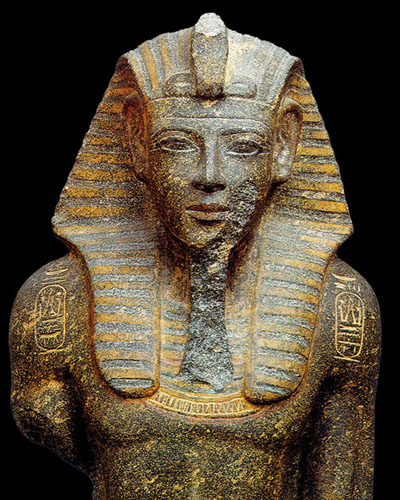
Pharaoh Mernptah, son of Ramses II
Pharaoh Merneptah, son of Ramses II

The second reason is so that the Pharaoh and the Egyptians will yada God, or at least recognize God’s existence and power:

And Egypt, they will yada that I am God when I stretch out my hand against Egypt and I bring out the children of Israel from their midst. (Exodus 7:5)

(The Hebrew in this verse uses form veyade-u (וְיָדְעוּ) = and they will yada.)

How many plagues does it take before both the Israelites and the Egyptians yada God?  Anyone who has participated in a Passover seder, spilling a drop of wine for each plague, knows the answer is ten. And in the book of Exodus/Shemot God does indeed inflict ten miracles on Egypt—the first seven in Va-eira (And I appeared), and the last three in Bo (Come).

However, the ten plagues are described in two different voices. Any close reader of  Va-eira and Bo, even in translation, notices points where the narrative suddenly stops and restarts, rephrasing a bit of the story that has already been told. Scholars examining the language itself have discovered that two stories of the plagues are woven together (but not seamlessly).

Both strands have something to say about the plagues of blood, frogs, and death of the firstborn. The other seven plagues are described by one strand or the other, not both. Maybe each of the two original stories had fewer than ten plagues. Or maybe the redactor(s) who combined the two stories decided to give both descriptions of three plagues, but chose only their favorite descriptions for the other seven.

Psalms 78 and 105 report fewer than ten plagues, and the order is different than in Exodus.

plagues-table

What accounts for these differences? We cannot identify any of these accounts as the original story. At least one strand in the composite story in Exodus was probably written in the 8th century B.C.E. Psalm 78 may have been written as early as the 10th century B.C.E., soon after the first Israelite temple was built in Jerusalem. Psalm 105 could have been written any time after that, maybe before the book of Exodus, maybe as late as the period of the second temple. Probably the story of God’s miracles in Egypt was familiar to all the authors before they began to write down their own versions.

The two psalms and the composite in Exodus borrow language from each other, not only using the same words for the plagues, but sharing pieces of description. For example, Exodus describes the plague of blood this way:
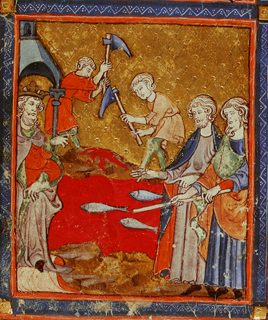
Plague of Blood, Golden Haggadah, c. 1320 Spain

…and he raised the staff and he struck the water that was in the Nile before the eyes of Pharaoh and his courtiers, and all the waters of the Nile turned into blood. And the fish that were in the Nile died. And the Nile stank and the Egyptians were not able to drink water from the Nile, and there was blood throughout the land of Egypt. (Exodus 7:20-21)

Psalm 78 focuses on the lack of drinking water:

And [God] turned into blood the Nile and its streams;

            They could not drink. (Psalm 78:34)

Psalm 105 focuses on the loss of an important food:

           [God] turned their waters into blood

                        And it made their fish die. (Psalm 105:39)

Whether the story is expanded in the book of Exodus, or contracted in a psalm, it is always offered as a decisive example of God’s miracles on behalf of the Israelites.

In the book of Exodus, the purpose of the plagues is to get both the Israelites and the Egyptians to yada God. But the Torah portion Bo also gives instructions several times for the earliest Passover rituals, which were conducted about 3,000 years ago. The purpose of these rituals is to remember the story of the exodus.

This day shall be for you for remembrance, and you shall celebrate it as a festival for God, through [all] your generations. It is a decree forever: you shall celebrate it. (Exodus 12:14)

While Exodus only calls for remembering the story of God’s miracles in Egypt, Psalms 78 and 105 tell the story in order to motivate the Israelites of Judah to action.

Psalms 78 hopes that if the Israelites remember the miracles God did for them, then they will stop backsliding, trust God, and obey God’s rules.

           What we have listened to, and we yada,

                      and our ancestors recounted to us,

           should not be concealed from their descendants,

                      to the last generation recounting

           praises of God and Its strength

                      and Its wonders that It did. (Psalm 78:3-4)

(The Hebrew in verse 3 uses form vaneida-eim (וַנֵּדָעֵם) = and we will yada.)

Why must God’s miracles be recounted to every generation?

           Then they will place their kesel in God,

                      and they will not forget the deeds of God,

                      and they will comply with Its commandments. (Psalm 78:7)

kesel (כֶּסֶל) = conviction, certitude, unwavering belief regardless of other evidence or arguments; folly, stupidity.

The section of Psalm 78 that tells about the miracles God inflicted on Egypt (78:42-51) is not designed to mention every single plague, but rather to bring the story to life in ten short verses. Psalm 78 leaves out the kinim, the shechin, and the darkness, but it adds a few details that are not in Exodus:
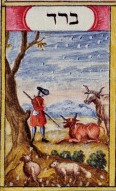
Plague of Hail, Haggadah by Judah Pinchas, 1747 Germany

—that the action happened at Tzoan, a specific place in the Nile Delta. (78:43)

—that the arov, the mixed hordes of vermin, ate the flesh of the Egyptians. (78:45)

—that when God sent hail, Egyptian flocks were hit by lightning. (78:48)

—that the hail killed grapevines and fig trees (important crops in Canaan, but not in Egypt). (78:47)

These additional details would make the story more vivid in the listener’s imagination.

Psalm 105 is less concerned than Psalm 78 about lack of faith and commitment among the people of Judah. I believe its purpose is to whip up enthusiasm for God and the religion among the worshipers at the temple.

           Thank God, call out Its name,

                      hodiyu among the peoples Its deeds!

           Sing to [God], make music to It,

                      consider all Its wonders!

           Revel in the name of Its holiness!

                      Let the heart of those who seek God rejoice! (Psalm 105:1-3)

hodiyu (הוֹדִיעוּ) = make known, inform, announce. (A different form of the root verb yada.)

Rylands Haggadah, 14th century Spain. Left: livestock pestilence. Right: Shechin.

Psalm 105 then tells the story of the people who became Jews, starting with God’s covenant with Abraham and ending with the Israelites’ conquest of part of Canaan. When it describes the plagues, it omits both livestock pestilence and shechin, perhaps because the thought of rashes and boils would depress the congregation.  Or, according to 19th-century rabbi Samson Raphael Hirsch, because diseases do not seem supernatural enough to count as miracles. But Psalm 105 uses some of same vivid details as Psalm 78.

*

Do the stories of God’s miracles in Egypt achieve their purpose?

Direct experience of miracles works in Exodus; both the Israelites and the Egyptians yada—know, realize, and recognize—a powerful god acting on behalf of the Israelites. The instruction to perform a ritual to remember what happened also worked; we have been celebrating Passover for about 3,000 years.

Does the account in Psalm 78 work, leading people to kesel, an unshakeable belief in God, and to a determination to obey God’s rules? I think it would depend on the listener. Some people believe any account that is vivid (like Psalm 78’s selection of details) and comes from an accepted source (such as the temple priests, or a particular news station, or a friend’s e-mail). Other people are skeptics by nature; they examine a story to see if it is logical and how it fits with personal experience and other information. This type of person would probably need direct experience, yada, to achieve kesel and commit themselves to obeying all the rules of the religion.

What about Psalm 105? I believe that an account of past miracles can inspire both kinds of people, especially when it is poetry set to uplifting music. Even natural skeptics can get caught up in singing joyful praise, and leave the temple (or synagogue) with a better attitude toward their God and their religion. And natural believers might be moved to proselytize, following the instruction hodiyu—make known, announce!

The singing of the psalms continued as part of both Jewish and Christian prayer after the fall of the second temple in Jerusalem in 70 C.E. It continues today. But Jewish liturgy concentrates on other psalms. It quotes only one verse from Psalm 78 and fifteen from Psalm 105, none of which are verses addressing the plagues in Egypt.

However, serious-minded Jews study the story of the plagues in the Torah portions Va-eira and Bo every winter, when we reach this time in the cycle of Torah readings. And in the spring many more Jews celebrate Passover, a festival of dramatic rituals, prayers, songs, and stories about how God freed the Israelites from slavery in Egypt.

The haggadah (“the telling”), the book that provides the texts and ritual instructions, includes many quotes from our two Torah portions in Exodus. Psalms 78 and 105 are not traditionally included. In a modern American haggadah, the song “Go Down Moses” usually is.

from an Iraqi haggadah, printed in Vienna 1930

Out of all the stories of God’s miracles in Egypt, I would say Passover is by far the most effective at getting Jews to remember the claim that God created miracles to rescue our people from Egypt. The ritual itself has changed and grown over the millennia, so it can speak to new generations. Even Jews who grew up in families that managed to conduct a boring seder  every year cannot help but remember the symbolic foods, the song that the youngest child must sing, the exodus story, spilling a drop of wine for each of the ten plagues, and hunting for the hidden piece of matzah.

Thus Passover still serves the purpose given in the book of Exodus: remembering the story. Whether we can go further and yada God (as in Exodus), or commit ourselves to kesel (as in Psalm 78), or be moved to joy and a desire to recommend the religion (as in Psalm 105) depends on the individual.

Personally, I have a skeptical nature, and I actively try to avoid kesel—while remaining committed to studying Torah and being a Jew in a liberal sense. But I remember the exodus story every winter when I study it in the Torah, as well as every spring when I participate in Passover. I do not yada the God of the ancient Israelites, but I do yada something I cannot describe that I call God. And when I sing psalms that have uplifting words and melodies, I am indeed moved to joy. I would recommend that to anyone!

Shemot and Psalm 137:  Cry Like a Baby

This week begins the reading of the book of Exodus/Shemot in the Jewish tradition. This year my posts on Exodus will relate each Torah portion to one of the psalms.

Weeping in Egypt

Too many foreigners live in Egypt, from the Pharaoh’s point of view in this week’s Torah portion. Unlike those who fear immigrants in our own time, the Pharaoh is not afraid that the Israelites will take jobs from native Egyptians. He is afraid that if another country makes war on Egypt, these foreign Hebrews will join Egypt’s enemies.

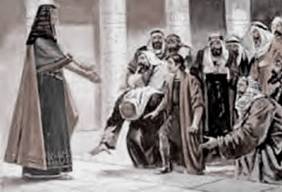
Pharaoh's decree, by Michiel van der Borch, 1332
Pharaoh’s decree, by Michiel van der Borch, 1332

Instead of integrating the Israelites into Egyptian society to win their loyalty, the Pharoah enslaves them, requiring that the men do forced labor. He also tries to reduce the population.

Then Pharaoh commanded his entire people, saying: “Every son that is born, you shall throw him into the Nile. But every daughter you shall keep alive”. (Exodus/Shemot 1:22)

And a man from the house of Levi went out and married a daughter of Levi. And the woman conceived and she bore a son, and she saw that he was good, and she hid him for three months. (Exodus 2:1-2)

Commentators have suggested many reasons why the baby (later named Moses) is “good”. But since his mother (later identified as Yokheved) is able to hide the baby for three months, the simple answer is that he is placid and quiet. As long as his mother is there whenever he wakes up, Moses does not cry.

Why could Yokheved no longer hide him after three months? The commentary offers different theories. I suspect that Moses happens to be three months old when Egyptian bullies start searching the houses of Israelites for baby boys to drown.

It occurs to Yokheved that the best hiding place for an Israelite baby boy is the Nile itself. She tars a floating box made of papyrus stems, and places Moses inside. Then she carries it to the pool where a woman of the royal family goes to bathe, and wedges it among the reeds so the current will not carry it away. The care with which Yokheved picks the spot shows that she hopes her baby will be discovered and adopted.

detail, Golden Haggadah, c.1420 Spain

And the daughter of Pharaoh went down to bathe in the Nile, and her maidens were walking next to the Nile. And she saw the floating box among the reeds, and she sent her slave-girl to fetch it. (Exodus 2:5)

The princess sees the box; she does not hear any crying. Moses, rocking gently inside, is probably asleep.

And she opened it and she saw the child, and hey! It was a boy, bokheh! And she felt pity for him, and she said: “This is one of the children of the Ivrim”. (Exodus 2:6)

bokheh (בֺּכֶה) = weeping, crying, sobbing, wailing. (From the root bakhah, ּבָּכָה = wept.)

Ivrim (עִבְרִים) = Hebrews; immigrants. (From the root avar, עָבַר = passed over, crossed through, emigrated.) Egyptians in the book of Exodus sometimes call the Israelites the Ivrim.

The story continues like a fairy tale, as the Pharaoh’s daughter ends up paying Moses’s own mother to nurse him, then adopts him after he is weaned. But why does Moses begin to cry when the princess opens the lid of the box? Probably the sudden sunlight wakes him—and then, instead of seeing the familiar face of his mother, he sees a stranger.

All infants cry when they are suddenly deprived of their primary caregivers, just as adults cry when someone they are deeply attached to dies. The world is strange and frightening without that familiar presence.

People may also cry when they are forced to leave their homes and live in a strange place. Yet when the Israelites and their fellow travelers follow the adult Moses out of Egypt, they “leave with a high hand” (Exodus 14:8). They rejoice rather than weep because they are choosing to leave a life of slavery and seek a new land to make their home.

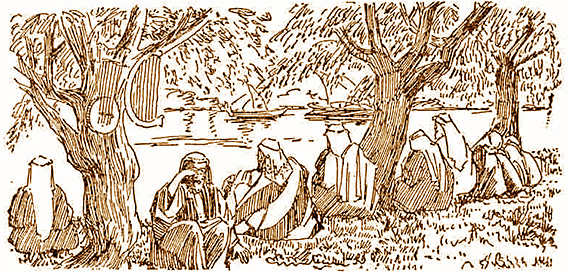
Weeping in Babylon

On the other hand, in Psalm 137 the Israelites weep when the Babylonian army deports them from Jerusalem many centuries later, circa 586 B.C.E. They have no choice; they are forced to leave their homeland and live as foreigners in a strange place.

psalm-137-1

           By the rivers of Babylon

           There we sat down, bakhinu,

           when we remembered Tziyon. (Psalm 137:1)

bakhinu (בָּכִינוּ) = we wept, cried, sobbed, wailed. (From the same root, bakhah, as in Exodus 2:6.)

Tziyon (צִיוֹן) = Zion; a hill overlooking Jerusalem; Jerusalem itself as a religious center.

The deportees weep when they see the place where they must now live. It even looks different from their motherland.         

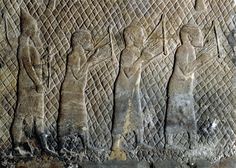
Prisoners playing lyres from Sennacherib's palace, Nineveh, circa 700 B.C.E.
Prisoners carrying lyres, palace of Sennacherib, Nineveh, c. 700 B.C.E.

           Upon the poplars in her [Babylon’s] midst,

            Our lyres will remain hung. (137:2)

            Because there our captors asked us for words of song,

            Our oppressors for rejoicing:

            “Sing to us some song of Tziyon!” (Psalm 137:3)

The Babylonian officers ask the deportees to entertain them by singing one of their quaint, provincial songs from Tziyon. If the officers merely wanted a folk song, they might have asked for a song from Jerusalem or Judah. By using the word Tziyon, the Babylonians are referring to Jerusalem as a religious center. Thus they remind the Israelites how helpless they are, even in matters of religion, now that the Babylonian army has razed the temple and deported them.

            How can we sing a song of God

           On the soil of a foreign land? (Psalm 137:4)

The Israelites, and the Jews descended from them, do eventually sing sacred songs in foreign lands—including the psalms once sung in the temple. But in Psalm 137, they recoil from the idea of singing a hymn to God in order to let the Babylonians mock and humiliate them.

            If I forget you, Jerusalem,

            May my right hand forget.

            May my tongue cling to my palate,

            If I do not remember you,

            If I do not exalt you, Jerusalem,

           Above my highest joy.

            Remember, God, the Edomites

           On the day of Jerusalem, who said:

            “Strip it! Strip it down to the foundations!” (Psalm 137:5-7)

According to the book of Obadiah, probably also written in the 6th century B.C.E., the men of the nearby land of Edom joined the Babylonians in sacking the city of Jerusalem (Obadiah 1:11-13).

            Babylon the despoiler,

            Fortunate are those who will retaliate for your retaliation against us! (137:8)

            Fortunate are those who will seize and smash

           Your little children on the rock! (Psalm 137:9)

I picture the Israelites reacting like children, full of desperation at the loss of their mother land and religion, suddenly under the thumb of cruel and all-powerful foreigners. Toddlers in that situation might well scream with outrage and hatred at the mean strangers who have kidnapped them. It takes time to cool down, grow up, and consider the ramifications of one’s initial reaction. For a whole society, it can take centuries.


When the infant Moses cries at the sight of a stranger, it is because the stranger is not his mother, and he fears he has lost his mother forever. When the Israelite deportees cry at the sight of the rivers of Babylon, it is because Babylon is not their home, and they fear they will lose everything that means home to them: their identity, their way of life, and their religion.

They promise themselves they will never forget Jerusalem. Perhaps they recall the stories about Moses as an adult, who breaks with his royal Egyptian family to rescue the Israelite slaves.  He never forgets his mother and his own people.

May every one of us remember those we have loved and lost. May we remember our true homes—whether they are the homes we were born into (like the Israelites in Psalm 137), or the homes we adopt (like the Israelites that Moses leads out of Egypt in the book of Exodus).

Haftarat Eikev—Isaiah: Abandonment or Yearning?

Every week of the year has its own Torah portion (a reading from the first five books of the Bible) and its own haftarah (an accompanying reading from the books of the prophets). This week the Torah portion is Eikev (Deuteronomy 7:12-11:25) and the haftarah is Isaiah 49:14-51:3).

When the Babylonians burned down Jerusalem and its temple in 586 B.C.E., they also deported the last of its leading families to Babylon. They were not allowed not leave until the Persian Empire swallowed the Babylonian Empire 47 years later, and the Persian king Cyrus declared freedom of movement and freedom of religion.

Psalm 137, like this week’s haftarah from second Isaiah, is about the Babylonian Exile:

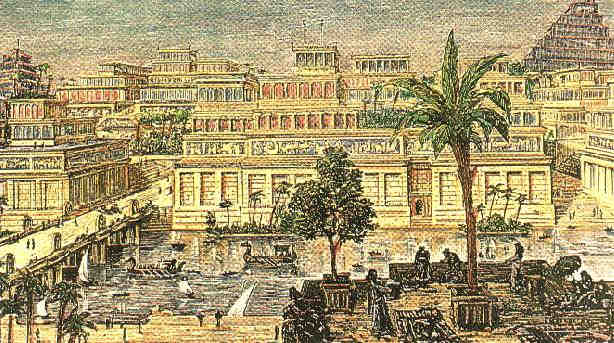
Babylon
Babylon

            How can we sing a song of God

            On foreign soil?

            If I forget you, Jerusalem

            May I forget my right hand. (Psalm 137:4-5)

In Jewish history, which spans millennia, 47 years may not seem long.  But for individuals it was a long time to remember their old home and their old god—especially if they were born in Babylon, and had only their elders’ memories to go by.

            “Why did I come and there was nobody,

            [Why] did I call and there was no answer?” (Isaiah 50:2)

Usually when someone in the Hebrew Bible cries “Why have you forsaken me?” it is an Israelite addressing God. But in this week’s haftarah, God cries out, feeling forsaken by the Israelites who have adjusted to life in Babylon.

In the second book of Isaiah, God is preparing to end the rule of the Babylonian empire, rescue the Israelite exiles, and return them to Jerusalem and their own land. (See my post: Haftarah for Va-etchannan—Isaiah: Who Is Calling?) But God’s plans are useless unless the Israelites trust their God and want to go home.

map of Babylon

Imagine you were kidnapped and taken to a strange city. Your life there was comfortable, but you were not free to leave. Would you accept your new reality, adopt the customs and religion of the city, and make it your home?

This must have been the strategy of the Israelites that the Assyrian armies deported from Samaria, the capital of the northern kingdom of Israel, in 729-724 B.C.E.—because the Bible never mentions them again. They either died or assimilated.

Or would you cling to your memories and your old religion, hoping that someday you would escape and go home?

This is the strategy that the second book of Isaiah advocates for the Israelites living in Babylon.

Reading between the lines, I imagine some Israelites moved past their trauma, married Babylonians, and settled down for good. I imagine others were stuck with post-traumatic stress disorder, trying hard not to remember their old lives or God or Jerusalem. And I imagine some stubborn individuals clinging to the belief that their God was alive and well, and would someday rescue them and return them to their motherland.

But how could the believers convince their fellow Israelites to take heart and wait for God?

This week’s haftarah tries a new approach: Stop thinking about yourselves, and remember the parents you left behind: your homeland, which is like a mother, and your God, who is like a father. How do they feel?

The haftarah begins with the land—called Zion for one of the hills in Jerusalem—crying that God has forsaken her, too.

And Zion says:

            God has abandoned me,

            And my lord has forgotten me! (Isaiah 49:14)

So far, Zion and God sound like lovers. But this is not another example of the prophetic poetry claiming that the people of Israel are straying after other gods like a wife who is unfaithful to her husband.  In this haftarah, the innocent land is Zion, and the people are Zion’s children. Zion lies in ruins after the war, empty and desolate because her destroyers (the Babylonians) stole all her children.

God reassures Zion by telling her:

            Hey! I will lift up My hand to nations

            And raise My banner to peoples,

            And they shall bring your sons on their bosoms

            And carry your daughters on their shoulders. (Isaiah 49:22)

In this poem God will arrange for foreigners (like King Cyrus) to return Zion’s children to Jerusalem. The poet or poets who wrote second Isaiah probably hoped that if discouraged exiles thought of Jerusalem as a mother missing her children and longing to have them back, their hearts might soften, and they might want to return to her.

Then, second Isaiah says, they would hear God ask:

           Why did I come and there was nobody,

            [Why] did I call and there was no answer?

            Is my hand short, too short for redemption?

            And is there no power in me to save? (Isaiah 50:2)

What if the “children of Zion” only thought their god, their father, had been defeated when the Babylonian army destroyed Jerusalem? What if God had actually planned the exile to punish them, as Jeremiah kept prophesying during the siege? Now that the punishment was over, did God miss the people of Judah?

What if their father, their god, really was powerful enough to rescue them and take them home to Zion? (See my post: Haftarat Va-etchanan–Isaiah: Faith in the Creator.)

If both parents, God and Zion, are yearning for them, then the Israelites in Babylon might start yearning for God and Zion again.

*

Decree by Cyrus
Decree by Cyrus allowing captives in Babylon to return to their native lands

It worked. After King Cyrus issued his decree, bands of Israelites from Babylon began returning to Jerusalem, a thousand or so at a time. Under Ezra and Nehemiah they built a new, larger temple for God. The former kingdom of Judah became a Persian province administered by Jews, and the expanded, monotheistic version of their religion, founded by second Isaiah, survived.

Today, two and a half millennia later, yearning for Jerusalem is built into Jewish daily liturgy. At the end of the Passover seder in the spring and Yom Kippur services in the autumn we even sing out: “Next year in Jerusalem!”

Almost half of the Jews in the world today live in the United States. We are free to emigrate to the nation of Israel, as long as we meet Israel’s requirements. Only a few do so. Are religious American Jews still exiles?

Or has God become both the mother and the father we yearn for, while Jerusalem is now a pilgrimage site?

The Fall and Rise of Joseph, Daniel, and Esther—Part 5

This is the final post in a series comparing three stories of Jews who rise from captivity to high positions in a foreign land: the story of Joseph in the book of Genesis, the book of Daniel, and the book of Esther.  After Joseph. Daniel, and Esther’s cousin Mordecai have all become viceroys of empires, all three stories continue with the themes “The hero gets revenge on the rivals who wanted him dead”, and “Thanks to the hero, the children of Israel prosper in a foreign land”.

* The hero gets revenge on the rivals who wanted him dead. *

Joseph’s revenge is the most complex and psychological. When he is seventeen, his ten jealous older brothers throw him in a pit, discuss killing him, then sell him as a slave to a caravan bound for Egypt.  Twenty-one years later, the brothers come to Egypt to buy grain during the first of what will be seven years of famine.  They bow down to the Egyptian viceroy Tzafnot-Paneiach, who wears Egyptian linens and a gold collar and speaks through an interpreter, without recognizing their little brother Joseph, all grown up and in charge of Egypt. But Joseph recognizes them.

Joseph and brothers in EgyptJoseph has absolute power; he could order his brothers’ execution and no one would question it.  Instead, he accuses them of being spies, and they explain they are ten of twelve brothers. He says he will keep one of the brothers in prison while the others bring grain back to their households in Canaan. But then they must bring back their youngest brother, Joseph’s innocent little brother Benjamin, to prove they are telling the truth.

Then they said, each to his brother: Ah, we are carryng guilt over our brother because we saw the tzarah of his soul when he pleaded with us for pity, and we did not listen. Therefore this tzarah has come upon us. (Genesis/Bereishit 42:21)

tzarah (צָּרָה) = distress.

They intuit that Joseph’s distress resulted, somehow, in their current distress—even without knowing that the Egyptian viceroy is Joseph (or that he knows Hebrew and understands their every word).

Joseph throws them all into prison for three days—an echo of when Joseph’s brothers threw him into a pit. Then he sends off nine of his brothers with sacks full of grain (and the silver they paid for the grain hidden in the sacks).  He keeps one of his nastier older brothers, Shimon, in prison, and promises to release him only when the others return with Benjamin.

They do not return until the second year of famine; it takes that long before their father, Jacob, will let his beloved son Benjamin go with them. Then Joseph gets revenge for being sold as a slave—without actually enslaving anyone.

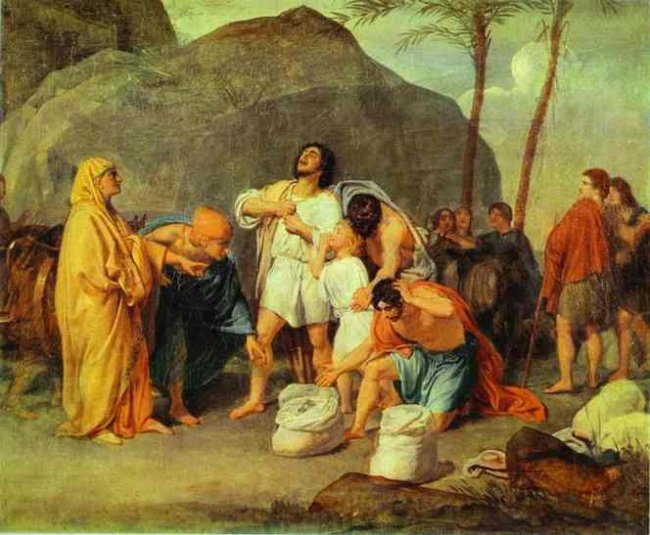
Joseph's Brothers Find the Silver Goblet in Benjamin's Sack, by Alexander Ivanov
Joseph’s Brothers Find the Silver Goblet in Benjamin’s Sack, by Alexander Ivanov

He releases Shimon and treats all eleven of his brothers to a feast. When their sacks are filled with grain, he plants a silver goblet in Benjamin’s sack. Then he sends a servant after them, who finds the goblet, claims it was stolen, and declares that Benjamin—the one innocent brother—must stay in Egypt as Joseph’s slave.

This is a test to see whether the ten older men have reformed and will no longer abandon the brother their father loves best. The test causes the brothers further psychological distress, but they do get a passing grade. First they all volunteer to be slaves along with Benjamin, and then when they are brought before Joseph, a.k.a. Tzafnot-Paneiach, Judah volunteers to replace Benjamin and become the viceroy’s slave instead. Only then does Joseph tell them his true identity.

*

Joseph arranges his own revenge on his brothers, but in the books of Daniel and Esther the revenge happens at the king’s command, in the form of a simple tit-for-tat. The bad guys get exactly the same punishment they had intended for the hero.

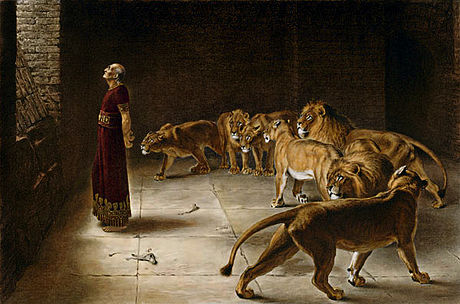
Daniel in the Lions' Den, by Briton Riviere
Daniel in the Lions’ Den, by Briton Riviere

Daniel’s rivals for the post of viceroy set him up so that he will be sealed overnight into a den of lions. (See Part 3.)  Daniel survives, thanks to a divine miracle.

Then by order of the king, those men who had slandered Daniel were brought and, together with their children and wives, were thrown into the lions’ den. They had hardly reached the bottom of the den when the lions overpowered them and crushed all their bones. (Daniel 6:25, Jewish Publication Society translation of the Aramaic)

In the book of Esther, the bad guy is Haman, whose pride is wounded because Mordecai the Jew refuses to bow to him when he is made viceroy of Persia. Haman persuades the king to issue an edict that everyone in the Persian Empire may kill all Jews on the 13th of the month of Adar. Haman also erects a tall stake so he can personally impale Mordecai when the day comes.

His plot is foiled when Queen Esther, Mordecai’s cousin, reveals that she is a Jew.

Haman Begging the Mercy of Esther, by Rembrandt

Then Charvonah, one of the eunuchs before the king, said: Also there is a wood [stake] that Haman made for Mordecai, whose good words saved the king [from an assassination plot]. It is standing at the house of Haman, 50 cubits tall.  And the king said: Impale him on it! And they impaled Haman on the wood [stake] that he had prepared for Mordecai, and the anger of the king abated. That day King Achashverosh gave to Queen Esther the property of Haman, enemy of the Jews. And Mordecai came before the king, since Esther had told what his relationship was to her. Then the king removed his signet ring, which he had taken back from Haman, and he gave it to Mordecai. (Esther 7:9-8:1)

Instead of Haman being viceroy and Mordecai being impaled, Mordecai is viceroy and Haman is impaled. The king’s edict permitting the massacre of the Jews cannot be rescinded, but Esther persuades the king to issue a counter-edict that on the same day, the 13th of Adar, the Jews of every city may assemble and fight anyone who attacks them. Between that edict and Mordecai’s new position, nobody dares to kill a Jew.

The enemies of the Jews hoped lishlot them, but the opposite happened, and the Jews shalat those who hated them. (Esther 9:1)

lishlot (לִשְׁלוֹט) = to gain power over.

shalat (שָׁלַט) = gained power over.

* Thanks to the hero, the children of Israel prosper in a foreign land. *

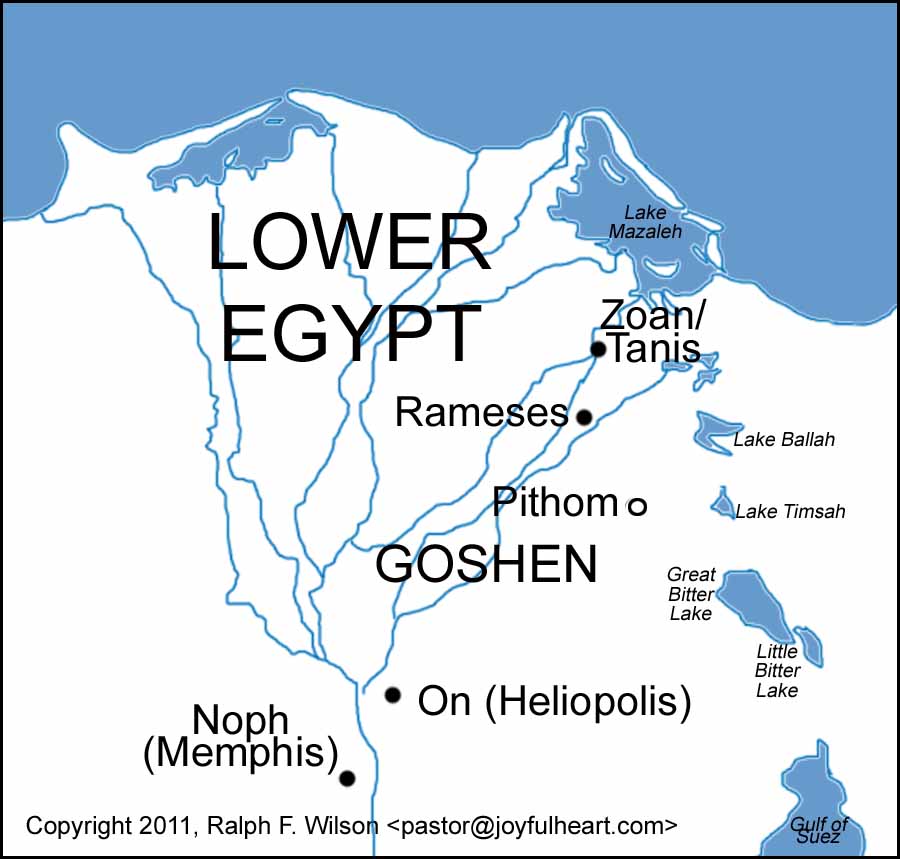
Goshen Rameses PitomJust as Joseph arranges his own non-lethal revenge, he arranges to move the children of Israel to a foreign land. After he ends his game of testing his brothers, he reveals his identity and tells them to fetch their father and their own families and move to a fertile district of Egypt called Goshen.

And I shall provide for you there, because there will be five more years of famine, so that you will not be deprived, you and your households and all that you own. (Genesis/Bereishit 45:11)

Pharaoh happily ratifies Joseph’s offer and sends wagons north to help Jacob and all his descendants move to Egypt. These original 70 children of Israel do not leave Egypt when the famine ends five years later. They stay on for four centuries, until a new dynasty rules Egypt and enslaves them to build Pharaoh’s cities. So although the children of Israel prosper during Joseph’s lifetime, eventually their lives in Egypt become intolerable, and they need God and Moses to rescue them—in the story that begins with this week’s Torah portion, Shemot (Names) in the book of Exodus.

*

The book of Daniel only implies that the Jews in the new Persian Empire benefit from Daniel’s prayers three times a day, which he continues even when his rivals trick the king into ordering that no one shall bow to a god for 30 days. Daniel emerges unscathed from the lion’s den, but when the king throws Daniel’s enemies into the den, the lions kill them at once. At this additional proof that a powerful god is on Daniel’s side,

King Darius wrote to all peoples and nations of every language that inhabit the earth, ‘May your well-being abound! I have hereby given an order that throughout my royal domain men must tremble in fear before the God of Daniel, for He is the living God who endures forever …He delivers and saves, and performs signs and wonders in heaven and on earth, for He delivered Daniel from the power of the lions.’ Thus Daniel prospered during the reign of Darius and during the reign of Cyrus the Persian. (Daniel 6:26-29)

Although the book does not specifically say that all Jews in the empire prospered along with the viceroy Daniel, the official elevation of their god implies that their position also improves. The rest of the book of Daniel consists of a series of prophetic visions Daniel experiences, with no mention of any further discrimination against the children of Israel in the Persian Empire.

*

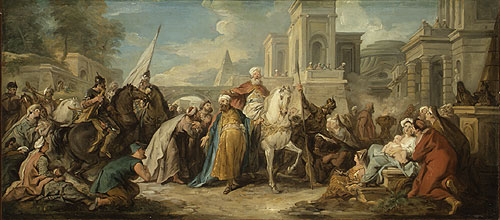
Triumph of Mordecai, by Jean Francois de Troy

In the book of Esther, the new prestige of the Jews in the Persian Empire is an inseparable part of the revenge against Haman. First the king executes Haman and makes Mordecai the viceroy in his place—giving a known Jew great power. Then the king counteracts Haman’s edict urging everyone to kill Jews on a certain date by issuing a new edict permitting the Jews to assemble and kill their enemies on that day.

Due to both Mordecai’s power and the king’s new edict, people throughout the empire show deference to the Jews among them, being careful not to offend them.

…and many of the people of the land mityahadim because the terror of the Jews fell upon them. (Esther 8:17)

mityahadim (מִתְיַהַדִים) = were pretending to be Yehudim = Jews.

The Jews kill their few remaining enemies on the official day, the 13th of Adar, which becomes the holiday of Purim.

*

The stories of Joseph, Daniel, and the Esther and Mordecai duo put a different spin on each of the seven themes they have in common, including the final theme of Jews prospering in a foreign land.

The children of Israel prosper in Egypt (for several generations, at least) because Joseph moves his extended family to he fertile district of Goshen. The Israelites secure religious freedom under the first king of the Persian Empire because Daniel proves the power of the God of Israel. And the Jews acquire more status and power later because Esther (King Achashveirosh’s chosen queen) and Mordecai (who saves Achaveirosh’s life) identify themselves as Jews, and persuade the king to reverse every action of Haman, the prime enemy of the Jews.

Together, the stories of Joseph, Daniel, and Esther demonstrate that it is possible for Jews to succeed in exile (galut), outside their former land.

What do you need to live successfully in a new place? A way to make a living and secure the physical necessities of life, according to the Joseph story in the book of Genesis. Freedom of worship, according to the book of Daniel. And the respect of the people around you, according to the book of Esther.

I pray that more and more nations in today’s world will let everyone within their borders make a living, follow their own religion, and live in peace and mutual respect.

The Fall and Rise of Joseph, Daniel, and Esther: Part 4

Joseph, Daniel, and Esther are all Israelites who attain success outside of their native land. Their stories have seven themes in common; the fifth is:

* The hero gets a foreign name. *

Actually only Joseph gets his new name and his new rank at the same time. When he is brought up from prison to interpret Pharaoh’s dreams in the Torah Portion Mikeitz (see Part 3), he is still the Hebrew slave Joseph. When he leaves Pharaoh, he is the Egyptian viceroy Tzafnat Panei-ach.

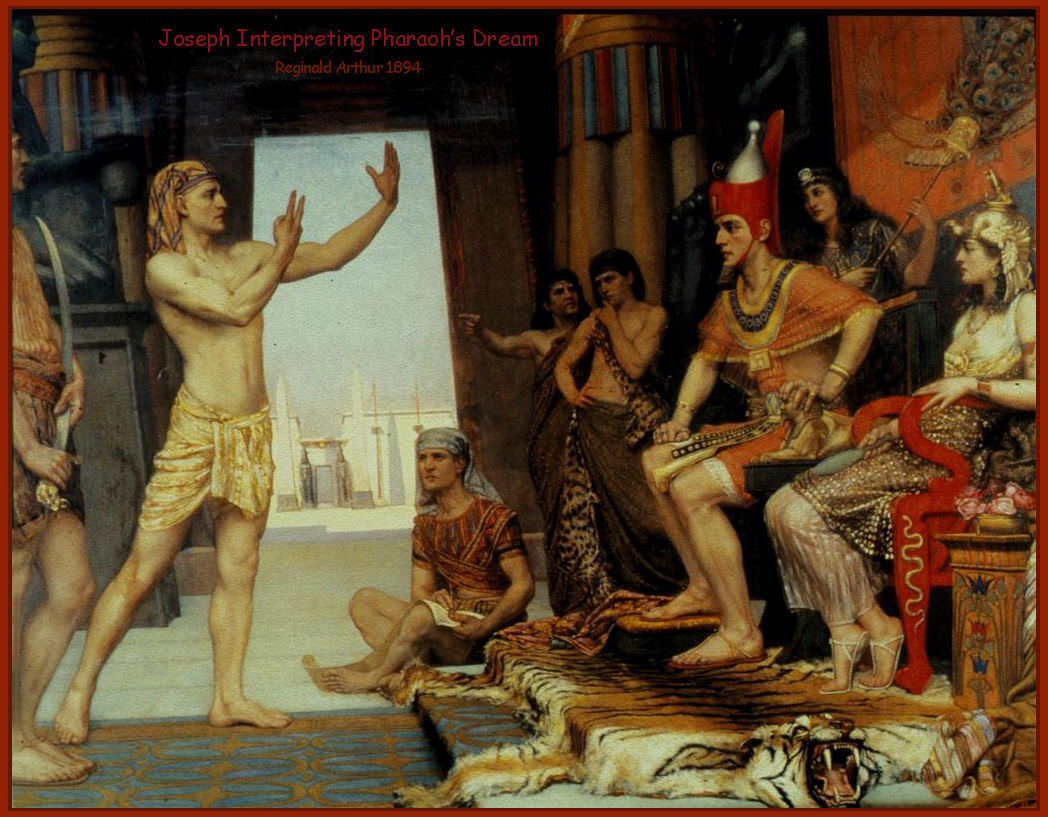
Joseph Interprets Pharaoh's Dream, by Reginald Arthur, 1894
Joseph Interprets Pharaoh’s Dream, by Reginald Arthur, 1894

Joseph explains that Pharoah’s two dreams are prophecies of seven years of plenty followed by seven years of famine. Then he gratuitously advises Pharoah to find a discerning and wise man to appoint a bureaucracy to collect a fifth of Egypt’s harvest during the next seven years and stockpile it against the coming famine.

And Pharaoh said to his servants: Could we find [another] man like this, who has the spirit of God in him? …Then Pharaoh said to Joseph: See, I have placed you over all the land of Egypt. And Pharaoh did more, and placed his signet ring from his hand on the hand of Joseph. And he dressed him in clothes of fine linen, and he put the gold collar over his neck. (Genesis 41:39-42)

Then Pharaoh gives Joseph a new name and an Egyptian wife.

And Pharaoh called the sheim of Joseph: Tzafnat Panei-ach, and he gave to him Asnat, daughter of Poti-Fera, priest of On, for a wife. And Joseph went out over the land of Egypt. (Genesis 41:45)

sheim (שֵׁם) = name; standing, reputation, renown, fame.

Joseph = English for Yoseif (יוֹסֵף) = adding, increasing.

Tzafnat Panei-ach (צָפְנַת פַּעְנֵחַ) = (Phonetic spelling of an Egyptian phrase, probably meaning “The God Speaks, He Lives”.)

The new name and new wife are further symbols of Joseph’s new rank and position, but I believe they serve a second purpose.  In order for the people of Egypt to accept the Pharaoh’s appointee as their ruler, Joseph must seem less foreign, more Egyptian. Besides wearing the fine linen of the Egyptian upper class, he must go by an Egyptian name.  An Egyptian wife makes him look even more assimilated, and may also increase his loyalty to Egypt.

*

Joseph acquires an Egyptian name the day he is appointed viceroy, at age 30. Daniel and his three friends are given Babylonian names when they are still adolescent boys, captives from the conquered city of Jerusalem. King Nebuchadnezzar orders his head eunuch, Ashpenaz, to bring him some descendants of the royalty and nobility of Judah, boys who are attractive, healthy, and educable. For three years Ashpenaz must teach these foreign boys to read and write Chadean (Babylonian), and give them rations from the king’s food and the king’s wine.

Among those from Judah there were Daniel, Chananyah, Misha-eil, and Azaryah. And the head of the eunuchs put sheimot for them; and he put for Dani-el Beilteshatzar, and for Chananyah Shadrakh, and for Misha-eil Meyshakh, and for Azaryah Aved-nego. (Daniel 1:6-7)

sheimot (שֶׁמוֹת) = names. (plural of sheim)

Daniel = English for Danyeil (דָּנִיֵּאל) = Hebrew: My Judge (Dany) is God (Eil).

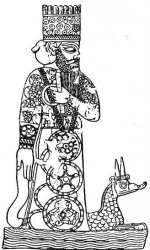
Beil fights the dragon on a Babylonian cylinder seal

Beilteshatzar (בֵּלְטְשַׁאצּר) = Babylonian: ?? Theories include three possible Babylonian phrases: Protect his Life, Beilat Protect the King, and Beil Keeps Secret Treasures. Beil is the Babylonian creator god, and Beilat is the goddess wife of Beil.

All four boys arrive in Babylon with Jewish names that include a word for the God of Israel, either Eil or Yah. But King Nebuchadnezzar hopes to use these boys as advisors, after they have learned the language and culture of Babylon. It is essential to his plan that the four boys switch their loyalty to him, instead of remaining attached to their native land and their native god.

The first step is to give them new names—monikers that contain names for Babylonian gods instead of the God of Israel. (See postscript below for the other three boys.) And the first thing the four boys do after they are renamed is to request a kosher diet! (See Part 2.)

In fact, Daniel and his friends do something Nebuchadnezzar did not expect: they remain faithful to the God of Israel, and they also become loyal servants of the king of Babylon. Daniel rises to become the viceroy of the empire. Although they answer to their Babylonian names in public, in their own hearts their real names are their Jewish names.

*

In the book of Esther, the two Jewish heroes have Persian names from the start. Here is how Esther’s cousin and guardian Mordecai is introduced:

A Jew was in the citadel of Shushan, and shemo was Mordecai, son of Ya-ir, son of Shimi, son of Kish, a man of [the tribe of] Benjamin, who was deported from Jerusalem with the deportees that were deported with Yekanyah, king of Judah, in the deportation of Nebuchadnezzar, king of Babylon. (Esther 2:5-6)

shemo (שְׁמוֹ) = his name.

Mordecai (מַרְדָּכַי) = English for Mordakhai = My Marduks. Marduk was a Babylonian god adopted by the Persians.

Ya-ir (יָאִיר) = He Shines.

Shimi (שִׁמְעִי) = I Listen.

Kish (קִישׁ) = (etymology unknown; also the name of the father of Saul, the first king of Israel.)

Marduk and his snake-dragon, from the reign of Cyrus

Mordecai’s father Yair, his grandfather Shimi, and his great-grandfather Kish all have Hebrew names. But Mordecai, a third-generation exile, seems to have only a Persian name. And what a name! But nobody in the story questions that a Jew carries the name of a foreign god.

And he became the foster parent of Hadassah, who was Esther, the daughter of his uncle, because she had no father or mother. (Esther 2:7)

Hadassah (הֲדַסָּה) = Hebrew: Myrtle.

Esther (אֶסְתֵּר) = English for Esteir = Persian: star.

Esther has a Hebrew name, but this is the only time it is mentioned in the whole book of Esther.  The rest of the time she goes by her Persian name.

God is never mentioned in the book of Esther, and neither Mordecai nor Esther prays or does any specifically religious act. But Mordecai refuses to bow to Haman because it is not his custom as a Jew (see Part 3), and when Haman arranges for the execution of Jews, Esther tells the king she is a Jew, and saves her people.

*

Each of the three stories illustrates a different stage of exile. Joseph embraces Egyptian dress and an Egyptian wife, but he never fully assimilates. When he reveals his identity to his brothers, he says simply I am Joseph.  He lets his father give his two sons the heritage of the children of Israel, and he requests his own burial in Canaan.

Some American Jews who use only one first name, a Hebrew name, for everything. Some feel as though Israel is their real home; they consider emigrating, and they want to be buried there. They remind me of Joseph.

Daniel also serves the country where he was brought as a captive, and he flourishes in exile. He becomes a man of Babylon, and never considers returning to Jerusalem. But he continues to keep kosher and to pray to the God of Israel every day for his whole life. And although he is given a Babylonian name, he remains Daniel in the Bible and in his heart.

Most American Jews today have a Hebrew name we use for religious ritual, and a secular name we use for everything else. My Hebrew name is Tzipporah, and I only use it in religious contexts; the rest of the time I am Melissa. Like Daniel and his friends, I am loyal to my religion, but I am attached to the land of the United States (even when its government goes crazy). I want to make a pilgrimage to Israel, but I would not emigrate there.

Esther and Mordecai apparently use Persian names from birth, and their lives revolve around the Persian court. We do not see them do anything religious. Yet they identify themselves as Jews, even at the risk of death.

Some American Jews also never use a Hebrew name, and do not bother much with religion. Yet when identity is an issue, they affirm that they are Jews.

Thus thousands of years after the stories of Joseph, Daniel, and Esther were written down, Jews are still following all three models for holding a Jewish identity in another land!


Postscript:

Here are the Hebrew and Babylonian names of Daniel’s fellow captives:

Chananyah (חֲנַנְיָה) = Hebrew: Gracious (Chanan) is God (Yah).

            Shadrakh (שַׁדְרַךְ) = Babylonian: Command (Shuddur) of Aku. Aku is a Babylonian moon god.

Misha-eil (מִישָׁאֵל) = Hebrew: Who is (Mi) That Which (She-) is God (Eil).

            Meyshakh (מֵישַׁךְ) = Babylonian: Who is That Which is Aku.

Azaryah (עַזַרְיָה) = Hebrew: Help (Azar) is God (Yah).

            Aved-nego (עֲוֶד נְגוֹ) = Servant of Nego. Nego is a mispronunciation of one of two Babylonian gods: Nabu, co-ruler of Babylon with the god Marduk, or Nergal, a god of death.


The Fall and Rise of Joseph, Daniel, and Esther—Part 3

by Melissa Carpenter, Maggidah

Someone tries to kill Joseph twice in the book of Genesis/Bereishit. When he is seventeen, his jealous older brothers throw him into a pit, then sit down and discuss killing him. This fits the first of seven themes that the stories of Joseph, Daniel, and Esther have in common: Resentful rivals conspire to kill the hero.  (see Part 1.)

Joseph’s brothers sell him into slavery instead of murdering him, but while he is a slave in Egypt a woman tries to get him executed for a different reason. This time, the theme is:

*  The hero is punished for refusing to obey an order because of religious scruples, but God rescues the hero.  *

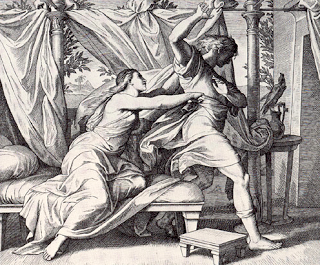
Joseph and Potiphar's Wife, by Schnorr von Carolsfeld
Joseph and Potiphar’s Wife, by Schnorr von Carolsfeld

And it happened after these things, then the wife of his master raised her eyes to Joseph, and she said: Lie with me.  And he mei-ein, and he said to the wife of his master: Hey, having me here, my master has no concern about anything in the house, and everything that belongs to him he has put into my hand. There is no one greater in his house than I am, and he has not withheld anything from me except you, since you are his wife, so how could I do this great evil and transgress against God? (Genesis/Bereishit 39:7-9)

mei-ein (מֵאֵן) = refused. (In Biblical Hebrew, this is not a polite demurral, but a stubborn refusal.)

For Joseph, an ethical transgressions is a transgression against God. He refuses, even though he knows it is dangerous to anger his master’s wife. But she keeps propositioning him day after day, until one day when the house is empty,

…she grabbed him by his garment, saying: Lie with me! But he abandoned his garment in her hand and he fled outside. (Genesis 39:12)

What difference does it make that the house is empty? Potifar’s wife seems unconcerned about whether they are caught in the act, since she propositions him many times when other people are nearby. But the lack of witnesses this time gives her an opportunity to get revenge and slander Joseph. She claims he tried to rape her, and left his garment behind when (she says) she screamed.

The few examples we have of ancient Egyptian law on sexual relations indicate that rape was punished by death (though the punishment might be commuted to exile in the case of a free foreigner). Potifar is the head of the royal executioners, and Joseph is his slave. But instead of arranging a summary execution, Potifar puts Joseph in the king’s prison indefinitely. He is alive, but stuck until God rescues him.

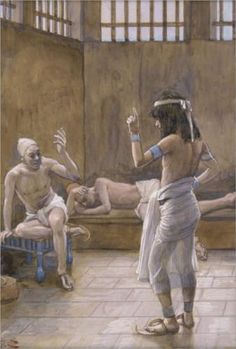
Joseph in Prison, by James Tissot

Then Pharaoh sends his chief cupbearer and chief baker to the prison (see Part 2),

and they said to him: a dream we dreamed, and there is no interpreter. Then Joseph said to them: Do not interpretations belong to God? Recount [your dreams] to me, please. (Genesis 40:8)

Inspired by God, Joseph reads the dreams as prophecies that the chief cupbearer will be restored to his post in three days, but the chief baker will be beheaded. This is exactly what happens.

When Pharaoh has two dreams that his magicians cannot interpret, the chief cupbearer tells him about Joseph, and God gives Joseph the correct interpretation of Pharaoh’s prophetic dreams.  Joseph adds some advice on what to do about it, and Pharaoh elevates Joseph from imprisoned slave to viceroy of Egypt.

Thus God rescues Joseph from his punishment—presumably because he did the right thing by rejecting Potifar’s wife.

*

While Joseph escapes death twice, Daniel is threatened with death only once. In his case, resentful rivals conspire to kill the hero by using his well-known religious scruples against him, immediately bringing in the theme the hero is punished for refusing to obey an order because of religious scruples, but God rescues the hero.

Daniel and three other boys are taken as captives from Jerusalem when King Nebuchadnezzar conquers the city, and spend the rest of their lives in Babylon. Daniel becomes head of the king’s wise men and dream interpreters, and his friends, Shadrach, Meyshach, and Aveid-nego, become administrators of the province of Babylon. At one point, Daniel’s three friends are thrown into a furnace for refusing to bow to a golden idol of Nebuchadnezzar, and God prevents the flames from even singeing their hair. Daniel is not mentioned in the furnace story.

Many years later, when Persia conquers Babylon, Daniel is serving as one of three governors over the Neo-Babylonian Empire. The new king (whom the story identifies sometimes as Cyrus, sometimes as Darius) considers promoting Daniel to viceroy over the entire Persian empire.

Only then do resentful rivals—other high government officials—conspire to kill the hero. They know that Daniel adheres to a kosher diet and prays three times a day, bowing down in the direction of Jerusalem. There are no laws against this, so they persuade the king to decree that anyone who petitions any god or man other than the king during the next 30 days shall be thrown into a lion’s den. (See Part 1.) It does not occur to the king that this decree will affect Daniel.

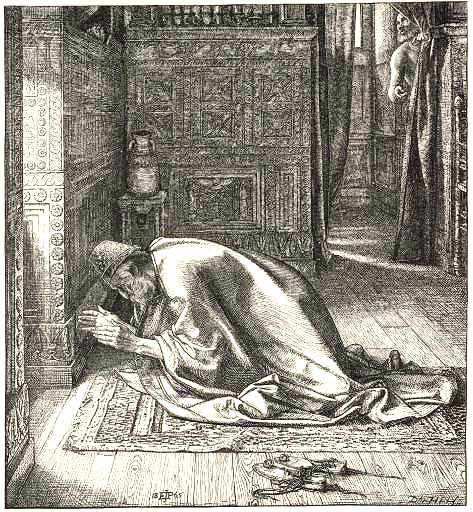
Daniel's Prayer, by E.J. Poynter
Daniel’s Prayer, by E.J. Poynter

When Daniel learned that it had been put in writing, he went to his house, in whose upper chamber he had had windows made facing Jerusalem, and three times a day he knelt down, prayed, and made confession to his God as he had always done. Then those men came thronging in and found Daniel petitioning his God in supplication. (Daniel, 6:11-12, Jewish Publication Society translation of the Aramaic)

As in the book of Esther, the Persian king cannot countermand his own decree, and he cannot find any way around it. Thus the resentful rivals succeed in having Daniel punished for refusing to obey an order because of religious scruples.

By the king’s order, Daniel was then brought and thrown into the lions’ den. The king spoke to Daniel and said, ‘Your God, whom you serve so regularly, will deliver you’.  (Daniel 6:17, JPS translation)

Daniel in the Lions' Den, by Briton Riviere
Daniel in the Lions’ Den, by Briton Riviere

The king worries all night and rushes back at dawn to unseal the den.

Daniel then talked with the king, ‘O King, live forever! My God sent His angel, who shut the mouths of the lions… Daniel was brought up out of the den, and no injury was found on him, for he had trusted in his God. (Daniel 6:22-24, JPS translation)

God rescues Daniel from death because of his dedication to God, expressed in his thrice-daily prayers.

*

The book of Esther also combines the themes of resentful rivals and refusing to obey an order because of religious scruples.

The story has two heroes, the young and beautiful Esther, and her older cousin and guardian Mordecai. When Esther becomes a captive in the king’s harem, she follows her cousin’s instruction and pretends she is not Jewish.

Mordecai, however, incites jealousy in the king’s new viceroy, Haman, by disobeying a royal order to bow down whenever Haman passes through the palace gate. (See Part 1.)

And the royal servants who were in the gate of the king said to Mordecai: Why are you oveir the command of the king? And they spoke to him day after day and he did not listen to them. Then they told Haman, to see if the matter of Mordecai would stand, for he had explained to them that he was a Jew. (Esther 3:3-4)

oveir  (עוֹוֵר) = crossing, going through.

The Bible does not say that Mordecai refused (mei-ein) the king’s command, but rather that he ploughed right across it as if it did not exist. When his fellow royal servants in the gate question him, he says he ignores the order to bow to Haman because he is a Jew.

Nothing in the Bible forbids Jews to bow down to human beings. Esther Rabbah (a collection of midrash from 500-1050 C.E.) claimed Haman must have sewn a picture of a god on his clothing, so Mordecai was really refusing to bow down to an image of an alien god. Other commentary suggests that Mordecai would not bow because Haman was a descendant of King Agag of Amalek (so identified in Esther 3:1), and the Torah calls for eternal enmity between the Israelites and the Amalekites. But the text of Esther does not explain.

Mordecai never bows to Haman

And Haman saw that Mordecai never knelt or bowed down to him, and Haman filled up with rage. And it seemed too contemptible in his eyes to send a hand against Mordecai alone, because they had told him the people of Mordecai, and Haman sought to exterminate all the Jews who were in all the kingdom of Achashveirosh, all the people of Mordecai. (Esther 3:5-6)

Haman talks the king into issuing an irrevocable decree that on a certain date (the 13th of Adar, now the holiday of Purim) every province of the Persian Empire must kill all its Jews. Haman personally erects a tall stake on which to impale Mordecai.

Does God rescue Mordecai and the rest of the Jews in Persia? Not really. Esther reveals that she and Mordecai are Jews, and Haman has arranged their death. She persuades the king to write a second decree (since the first one cannot be revoked) that on the 13th of Adar all Jews may strike down all their enemies, and on the big day nobody touches the Jews. The king impales Haman and promotes Mordecai to viceroy. But God is not mentioned here or anywhere else in the book of Esther.

*

Joseph risks death for a moral principle, and God rescues him. Daniel risks death for the right to pray, and God rescues him. Mordecai risks death to make a point about being Jewish, and Esther rescues him.

What are your religious scruples?  Which ones would you refuse to cross, even at the risk of losing your job? Or even at the risk of death?


The Fall and Rise of Joseph, Daniel, and Esther—Part 2

Two more themes shared by the stories of Joseph, Daniel, and Esther are: “The hero is taken away from home and held captive” and “A court eunuch admires and helps the hero”.

*The hero is taken away from home and held captive.*

Joseph is sold in Dotan, bought in Memphis

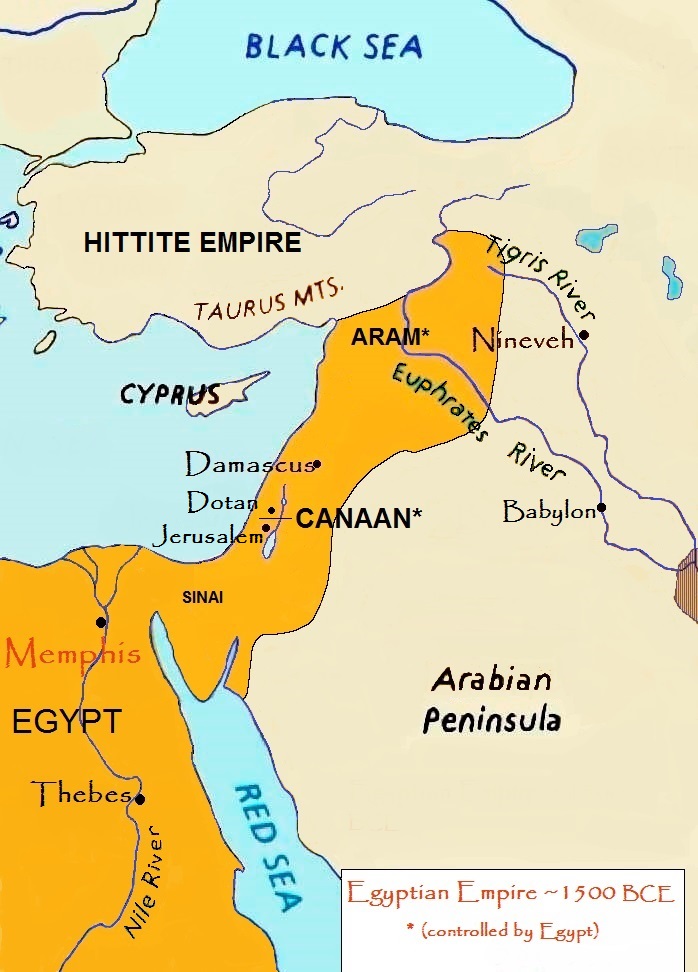
In the first Torah portion devoted to Joseph, Vayeishev, Joseph’s ten older brothers can hardly stand him. (See The Fall and Rise of Joseph, Daniel, and Esther—Part 1.) They take the family flocks to Dotan, about a hundred miles away from their home in Hebron, and their father sends Joseph to check on them.  When he arrives, his brothers throw him into an empty cistern and conspire to kill him.

But Judah said to his brothers: What profit [is there] if we kill our brother and cover up his blood? Let’s go and sell him to the Ishmaelites… So they pulled Joseph and they brought him up from the pit. Then they sold Joseph to the Ishmaelites for 20 pieces of silver, and they brought Joseph to Egypt. (Genesis/Bereishit 37:26-28)

The brothers believe Joseph will never return from slavery in Egypt.

While Joseph is singled out by his brothers, Daniel and Esther are removed from their homes merely because they happen to meet the criteria for a category of people the king summons.

King Nebuchadnezzar brings Daniel from Jerusalem to Babylon

The book of Daniel opens when King Nebuchadnezzar of Babylon captures Jerusalem. The king orders his chief eunuch to transport some young Israelite boys to Babylon. The boys must be:

…from Israel and descended from the royalty and the nobility; boys who have no blemishes, and are tovey mareh, and understand all wisdom, and have practical knowledge and some understanding of academic knowledge, and who have the ability to serve in the palace of the king, and to learn the writing and the tongue of the Chaldeans. (Daniel 1:3-4)

tovey mareh (טוֹבֵי מַרְאֶה) = good-looking (masculine form).

The boys will be educated for three years, and then will serve Nebuchadnezzar in some capacity. Young Daniel is taken away from home and transported to a foreign court merely because he fits the king’s description.

Similarly, in the book of Esther the king of Persia orders a certain class of girls to be rounded up and brought to the royal residence in Shushan. King Achashveirosh wants a new wife, and his advisors respond:

Let the king appoint appointees in every province of his kingdom, and let them gather all the virgin girls tovat mareh to the citadel at Shushan, to the house of the women, to the hand of Heigai, the chief eunuch of the king, guard over the women… And the girl who is good in the eyes of the king will become queen instead of Vashti. (Esther 2:3-4)

tovat mareh (טוֹבַת מַרְאֶה) = good-looking (feminine form).

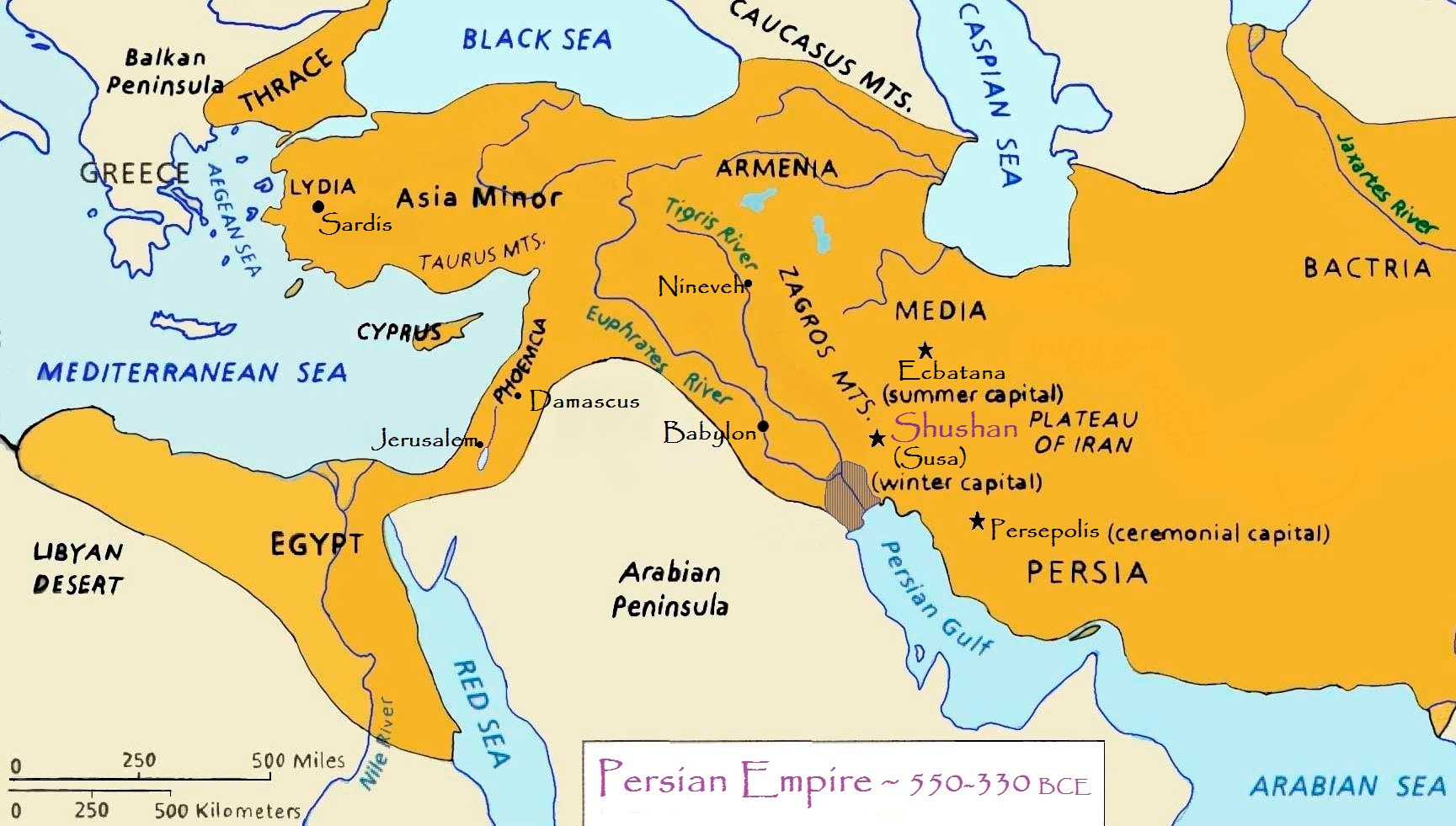
map Persian Empire
Esther is taken to the harem of King Achashveirosh (Xerxes?) in Shushan

Esther happens to live in Shushan with her cousin and guardian Mordecai, but she is taken out of her home and put under guard in the “house of the women”, i.e. the harem, simply because she fits the description:

…and the girl was beautiful in shape and tovat mareh… (Esther 2:7)

Joseph, Daniel, and Esther are all good-looking adolescents when their stories begin. All three live in comfort, Joseph with his doting father, Daniel in the royal court of Jerusalem, and Esther with her fond and wealthy cousin Mordecai.  Then the earth shifts under their feet.  Joseph is sold as a slave in Egypt. Daniel is deported for re-education in Babylon. Esther becomes a captive in the Persian king’s harem.

Yet all three heroes rise from the fall in their fortunes—with some assistance from a eunuch in the royal court.

*A court eunuch admires and helps the hero.*

And Joseph had been brought down to Egypt; and Potifar, a saris of Pharaoh, the sar of the tabachim, acquired him from the hands of the Ishmaelites who had brought him there. (Genesis 39:1)

saris (סָרִיס) = eunuch; court official. Plural=sarisim. (From the Assyrian title sa resi = royal official. In Assyria, as in many ancient Near Eastern empires, employees in the king’s house were often eunuchs, so later in the Bible saris came to mean any eunuch.)

sar (שַׂר) = head, chief, official in charge. (From the Assyrian sarru = king, chieftain, captain.)

tabachim (טַבָּחִים) = meat-handlers (butchers, meat cooks, and meat servers); executioners.

Joseph’s new master, Potifar, owns an estate and reports directly to the Pharaoh as the head of a group of servants.  He is also in charge of the prison where men are detained until their trials.

Since the Torah refers to Potifar as both a saris and a sar, the additional title of saris probably means “eunuch” rather than a repetition of “court official”—even though he is married. Traditional commentary speculates that Potifar was castrated at some point after his marriage.

And his master [Potifar] saw that God was with him [Joseph], and everything that he did, God made a success.  And Joseph found favor in his eyes, and he became his attendant. Then he [Potifar] appointed him over his household, and he gave everything he owned into his hand. (Genesis 39:3-4)

When Potifar’s wife falsely accuses Joseph of trying to rape her, Potifar has to take action to preserve her honor. Normally a slave would be executed for such an attempt, but Potifar appreciates Joseph so much, he imprisons him instead—in the prison for the king’s detainees, which Potifar manages.

Joseph in Prison, by James Tissot

Then Potifar appoints Joseph to wait on two detainees with high court positions.

Pharaoh became angry at two of his sarisim, the sar of the cup-bearers, and the sar of the  bakers.  And he placed them in the custody of the sar of the tabachim [Potifar], in the house of the round prison, the place where Joseph was imprisoned. Then the sar of the tabachim appointed Joseph to be with them, and he waited on them… (Genesis 40:2-4)

Like Potifar, these court officials are called both sar (chief official) and saris (eunuch). Joseph correctly interprets their dreams, and in the Torah portion Mikeitz, the head cup-bearer mentions Joseph when the Pharaoh needs a dream interpreter. Pharaoh calls for him at once, and Joseph’s career takes off.

Thus Joseph is helped along by two different eunuchs, the king’s head executioner and the king’s head cup-bearer.

In the book of Daniel, a Babylonian officer named Ashpenaz is called both the high saris, and the sar of the sarisim. I think the title sar covers his position as a captain, so the word saris gives the additional information that he and those he supervises are eunuchs. After Ashpenaz’s boss, King Nebuchadnezzar, has conquered Jerusalem, he sends his high-ranking eunuch on a mission.

The king said to Ashpenaz, his high saris: Bring some sons of Israel, descendants of the royalty and the nobility. (Daniel 1:3)

Nebuchadnezzar orders Ashpenaz to educate these foreign boys for three years and give them rations from the king’s food and the king’s wine. But Daniel and his three companions from Jerusalem object to eating anything that is not kosher.

Daniel silently vowed that he would not make himself impure with the king’s fine food or with the wine he drank, and he sought to obtain [permission] from the sar of the sarisim that he need not make himself impure. And God disposed the sar of the sarisim to be kind and compassionate toward Daniel. And the sar of the sarisim said to Daniel: As for me, I am afraid of my master, the king, who allotted your food and your drink; what if your faces look pitiful compared to the other boys your age, and they forfeit my head to the king?  (Daniel 1:8-10)

Daniel proposes a ten-day trial during which he and the other three boys from Jerusalem will eat seeds or legumes and drink water.  At the end of ten days, they look healthier than the others. So the chief eunuch lets them continue their religious dietary restrictions. When he brings them to the king at the end of their three years of training, Nebuchadnezzar is pleased with them and appoints them to entry-level jobs among his “wise men”.

In the book of Esther, the head eunuch, Heigai, is the guard over King Achashveirosh’s “house of women” or harem. Esther is delivered to him along with the other beautiful young virgins rounded up for the king.

And she was good in his eyes, and she inspired kindness in him, and he was quick to give her her massage ointments and her rations and the seven girls who were her due from the king’s house. And he moved her and her girls to a better [room] in the house of women. (Esther 2:9)

Esther Present to Ahasuerus. detail by Rembrandt

Each virgin is kept in the harem for one year while she gets beauty treatments, then taken to spend a night with the king. The virgin of the night is allowed any clothes and cosmetics she requests.  When it is Esther’s turn,

she did not seek to obtain anything except what Heigai, saris of the king, guard of the women, said. And it was Esther who inspired favor in the eyes of everyone who saw her. The king loved Esther more than all the other women… And he put a crown of royalty on her head, and he made her queen instead of Vashti. (Esther 2:15, 2:17)

*

The court eunuchs who help Joseph appreciate his competence. According to the Torah, God makes all Joseph’s work successful and gives him dream interpretations that are true prophecies.

The court eunuch who helps Daniel admires his fortitude and his adherence to his religion. Probably due to these qualities, the God of Israel later rescues him from lions and gives him his own dream interpretations and prophecies.

The court eunuch who helps Esther probably appreciates her respect for his advice. He responds by making her life more comfortable and advising her well.

All three young heroes accept their sudden enslavement without complaining, withdrawing, or rebelling.  They do their work and treat the eunuchs overseeing them with respect, making the best of it. Because of their good attitudes, the eunuchs help them to appear in a favorable light before the king.

May we all be blessed with the ability to ride out our misfortunes with realism, patience, and respect!


The Fall and Rise of Joseph, Daniel, and Esther–Part 1

Joseph is sold as a slave and becomes the viceroy of Egypt. Daniel is a war captive and becomes the viceroy of Persia. Esther is imprisoned in a harem and becomes the queen of Persia, while her cousin Mordecai escapes impalement and becomes the empire’s viceroy.

Each of these three rags-to-riches stories has a different plot and different characters. But many of the same themes emerge, appearing in a new light in each story.

The story of Joseph begins in this week’s Torah portion, Vayeishev (“and he stayed”), and continues through three more weekly portions. So this month I am writing a series of posts comparing seven dramatic themes in Joseph’s story, the book of Daniel, and the book of Esther:

          Resentful rivals conspire to kill the hero.

          The hero is taken away from home and held captive.

          A court eunuch admires and helps the hero.

          The hero is punished for refusing to obey an order because of religious scruples, but God rescues the hero.

          The hero gets a foreign name.

          The hero gets revenge on the rivals who wanted him dead.

          Thanks to the hero, the children of Israel prosper in a foreign land.


Vayeishev, the first Torah portion in the Joseph story, introduces the first theme:

*Resentful rivals conspire to kill the hero.*

Joseph’s story in Genesis/Bereishit begins with jealousy.

Israel loved Joseph most out of all his sons, because he was a child of old age to him, and he made him a special long-sleeved tunic. And his brothers saw that their father loved him most out of all his brothers, so they hated him, and they were not able to speak to him in peace. (Genesis/Bereishit 37:3-4)

Upright sheaves
Upright sheaves

Joseph has two dreams in which his brothers (symbolized first by sheaves of grain, then by stars) are bowing down to him, and he makes the mistake of telling them his dreams.

…we were binding sheaves in the middle of the field, and hey! My sheaf stood up and actually stayed [upright], and hey! Your sheaves circled around vatishtachavena my sheaf. (Genesis/Bereishit 37:6-7)

vatishtachavena (וַתִּשְׁתַּחֲוֶיןָ) = and prostrated themselves to, bowed down to the ground toward.

After hearing that, his brothers hate him even more.

When the ten older brothers take the family’s flocks far to the north, their father Israel (also known as Jacob) sends Joseph out to find his brothers and report back.

They saw him from afar, before he reached them, and they plotted against him, to kill him.  And they said to each other: Hey! The master of dreams is coming! Now let’s go and kill him, and we will throw him down into one of the pits, and we will say a wild beast ate him.  Then we shall see what becomes of his dreams! (Genesis 37:18-20)

They do throw Joseph into an empty cistern, though instead of killing him they sell him as a slave to a caravan heading for Egypt. Their intense jealousy causes Joseph’s downfall—down into a pit, down into slavery, and down to Egypt.

Daniel, on the other hand, rises from being a foreign captive to being the viceroy of the Babylonian empire without offending anyone’s pride. King Nebuchadnezzar makes Daniel his chief magician.  A later Babylonian king, Belshazzar, appoints Daniel as one of three administrators over all the provinces in the empire. When Darius conquers the empire, he appoints the same three administrators as supervisors over the 120 district managers.

This man Daniel surpassed the other ministers and satraps by virtue of his extraordinary spirit, and the king considered setting him over the whole kingdom. The administrators and managers looked for some fault in Daniel’s conduct in matters of state, but they could find neither fault nor corruption…

Daniel's Prayer, by E.J. Poynter
Daniel’s Prayer, by E.J. Poynter

Then those men said: We are not going to find any fault with this Daniel unless we find something against him in connection with the laws of his god. (Daniel 6:4-6)

Daniel’s fellow administrators and managers are determined to bring him down. Like Joseph’s brothers, their resentment is so extreme, they want him dead. So they persuade King Darius to issue an edict that for the next 30 days, anyone who petitions any man or god other than Darius will be thrown into a den of lions. Daniel continues to kneel and pray to God three times a day in front of his windows. His rivals rush into his room, then go and inform the king, who reluctantly obeys his own written edict and throws Daniel into the lions’ den, placing a rock over the mouth of the cave so Daniel must spend the night inside.

The book of Esther has two Jewish heroes: Esther, and her cousin and guardian Mordecai. King Achashveirosh makes Esther his queen; Mordecai merely becomes one of the elders who sits in the gate of Shushan and judges minor cases. Meanwhile the king promotes Haman, one of his advisors, to viceroy.

Mordecai refuses to bow

And all the servants of the king who were in the gate of the king were kneeling umishtachavim to Haman, because that was what the king ordered. But Mordecai would not kneel and lo yishtachaveh. …Haman saw that Mordecai was not kneeling umishtachaveh to him, and Haman filled up with rage. (Esther 3:2, 3:5)

umishtachavim (וּמִשְׁתַּחֲוִים) = (plural) and bowing down to the ground.

lo yishtachaveh (לֹא יִשְׁתַּחֲוֶה) = he would not bow down to the ground.

umishtachaveh (וּמִשְׁתַּחֲוֶה) = (singular) and bowing down to the ground.

Haman learns that Mordecai is not bowing because he is a Jew. Commentators generally conclude that he refuses to bow—either because Haman expects the kind of full bow (kneeling, then touching one’s head to the ground) that is reserved for God; or because Haman is a  descendant of Amalek, God’s enemy in every generation.

…Then Haman sought to exterminate all the Jews that were in all the kingdom of Achashveirosh—Mordecai’s people. (Esther 3:6)

He persuades Achashveirosh that “a certain people” in his empire do not obey the king’s laws, and should therefore be eliminated. The king (who is fairly brainless throughout the story, perhaps because of all his drinking feasts) does not question Haman, but immediately gives him permission to issue a royal edict.

So thanks to jealousy and wounded pride, Joseph is thrown into a pit, Daniel is sealed into a lions’ den, and all the Jews in Persia are threatened by an edict of destruction.

Is this theme a warning on the part of the Biblical authors that it is dangerous, even deadly, to threaten the pride of others?

If so, the Joseph story offers a lesson, since Joseph wounds his brothers’ pride further by telling them his dreams of overlordship. If he had considered his brothers’ feelings and kept silent, he would not have been enslaved—but his brothers would still have held a grudge against him because of their father’s favoritism.

In the Daniel story, Daniel is promoted only because of his own excellent work, not because he is lording it over anyone. Although he is caught praying and thrown into the lions’ den, he does not brag about his god, or try to convert anyone else. Sometimes nothing can be done about the jealousy and pride of others.

In the book of Esther, all the Jews in Persia are put under a death sentence because Mordecai insists on following a religious scruple to the letter. Haman is clearly the villain, yet Mordecai is also responsible for the threat to his people. Perhaps Mordecai is emulating Daniel, whose prayers affect only his own fate.  He fails to take into account that when one member of a group offends a prideful person, that person is likely to consider everyone in the group offensive. Prejudice is always dangerous.

Sometimes it is better to be silent in the face of enemies. Sometimes it is even better to bow when everyone else is bowing.

*

The danger of wounding someone’s pride is only one of the themes that the stories of Joseph, Daniel, and Esther have in common.  Watch for my upcoming blogs on the twists and turns of other themes!


Ruth: What’s in a name?

Barley sheaf

This Saturday evening the Jewish holy day of Shavuot (“Weeks”) begins. Shavuot comes at the end of seven weeks of counting of the omer, a measure of harvested barley, every day.  Originally, Shavuot was a summer pilgrimage festival, when farmers brought the “first fruits” of their harvests to the temple. After the fall of the second temple in the year 70, Shavuot became the annual celebration of the giving of the Torah at Mount Sinai.

So why do we read the Book of Ruth, the story of a Moabite convert, on Shavuot?

It was in the days of the judging of the judges, and there was a famine in the land, and a man went from Bethlehem of Judah to be an expatriate in the fields of Moab–he, and his wife, and his two sons. The name of the man was Elimelekh, and the name of his wife was Naomi(Ruth 1:1-2)

Naomi (נָעֳמִי) = My sweetness. She must have lived up to her name, at least in Moab, or her daughters-in-law would not have cried at the idea of parting from her.

Elimelekh died in Moab, and their two sons married Moabite women.  After about ten years with no offspring, the two sons died.   Then only the three widows remained: Naomi and her daughters-in-law Orpah and Ruth. Naomi heard that the famine in Bethlehem was over, and she headed back to her old home.  Her daughters-in-law followed her, but Naomi insisted they should return to their own mothers’ homes instead, where they would be more likely to remarry.

They raised their voice and they wept again.  And Orpah kissed her mother-in-law [goodbye], but Ruth clung to her. (Ruth 1:14)

Orpah (עָרפָּה) = from oref = nape, back of the neck; dripping.  The Talmud claimed that Orpah dripped tears, while Ruth Rabbah (rabbinic commentary compiled around the 6th century) noted that “she turned her back on her mother-in-law”.

Then Ruth said her famous words:  

Do not urge me to leave you, to turn back from following you; because where you go I will go, and where you stay I will stay; your people will be my people, and your god will be my god.  Where you die, I will die, and there I will be buried … for [only] death will separate me from you. (Ruth 1:16-17)

When they came to Bethlehem, Naomi told the women of the city:  Do not call me Naomi; call me Mara, for the bitterness of God to me is extreme. I was full when I went, and God has brought me back empty. (Ruth 1:20-21)

If only Mara were spelled the same way as mar = bitterness, Naomi’s remark would be straightforward.  However, the Hebrew text spells Mara with the letter alef at the end, and that changes the word to “apparition” or “mirror”. Perhaps Naomi had become so empty, so despairing, that she was only a shadow or reflection of her former sweet self. Perhaps she was like a ghost, the walking dead. She did not even introduce Ruth, the young stranger beside her.

Ruth (pronounced “Root” in Hebrew) probably comes from the same root as riutah = she drenched, she provided abundant drink. The Talmud said Ruth’s name foretold that her great-grandson David would drench God with songs and hymns.

Ruth Rabbah traced her name to a similar word with the letter alef in the middle, ra-atah = she saw, she perceived. According to Ruth Rabbah, Ruth was perceptive, considering carefully the words of Naomi.

More recent scholars speculate that Ruth comes from a similar word with the letter ayin in the middle, reut = female neighbor or friend; striving, aspiration.  Ruth was a faithful friend to Naomi even when Naomi gave up hope; and she never stopped striving to improve their lot, always working hard and thinking fast.

Naomi and Ruth arrived in Bethlehem destitute.  Ruth supported them by gleaning barley and wheat, and she chose to glean in the fields of Boaz, one of Elimelech’s relatives. When the harvest ended, Ruth, following Naomi’s instructions, came to Boaz in the night and suggested that he marry her.  As a childless widow, Ruth was entitled under Israelite law to get a son through her dead husband’s closest male relative.  This “levirate marriage” would “redeem” her dead husband’s inheritance.

Boaz was not the closest relative, but he was the most willing, and by the end of the book, he had married Ruth and given her a son. In an all-around happy ending, Naomi’s life was redeemed through her grandson. This boy, Oveid, became the grandfather of King David.

So why do we study Ruth on the holiday of Shavuot?

Like Shavuot, the book is about first fruits: Ruth gleans barley, the grain that is counted before Shavuot, and wheat, the grain the Israelites brought to the Temple on Shavuot in the form of loaves of bread.

The book of Ruth also addresses the other theme of  Shavuot, the giving of Torah at Mount Sinai. Ruth is Judaism’s supreme example of a convert, and not just because of her famous words of commitment to Naomi and her religion. Traditional Judaism sees Ruth as the convert who merited being the great-grandmother of King David. What does conversion have to do with Sinai?  The Vilna Gaon, an 18th-century rabbinic authority, declared that everyone at Mount Sinai was a convert, because there was no Jewish religion until God gave the Torah to the people there–to the Israelites and to those who came with them out of Egypt.

I believe the names of the women in the Book of Ruth also comment on conversion and attachment to a religion. Naomi represents the native Jew, in both her sweetness–the blessing of giving so many blessings –and her bitterness, the mirror of her past suffering. Orpah, who turns her back on her mother-in-law’s religion and stays in Moab, reminds me of someone who converts to Judaism when she marries a Jew, but does not take the religion seriously. Ruth is the passionate convert, always striving. Even if other Jews ignore her, she keeps pouring her soul into the cup of kindness and offering it again and again.  She is also perceptive, seeing when to act, when to speak, and when to hold her peace. May we all be granted Ruth’s passion, her willingness to give, and her insight.

***

Last week we finished the book of Leviticus/Vayikra. This week we begin the book of Numbers/Bemidbar, as the Israelites get their marching orders.  (At least, the tribes are counted and appointed their camping positions on the journey ahead, and the Levites are given their duties for disassembling and transporting the mishkan, God’s dwelling place.  It takes a lot of organization to move all those people and all those holy items  from one camp to the next.)

I will be on a personal retreat during the month of June, organizing my own life, so I won’t be posting any new “Torah sparks” for the next month. If you are looking for a spark of inspiration on any Torah portion in the first half of the book of Numbers, you can go to my website, http://www.mtorah.com, and click on the tab “Blogs by Torah Portion”.  You’ll find my postings for the last two years on Numbers/Bemidbar. I’ll be back with new sparks in July!