Yom Kippur & Isaiah: Ending Slavery

Jews Praying in the Synagogue on Yom Kippur, by Maurycy Goittlieb

We do it every year on Yom Kippur. This Friday at sunset, observant Jews whose health permits will begin a 26-hour fast, accompanied by communal prayer Friday evening and all day Saturday.  One of the readings on Yom Kippur is a passage from second Isaiah1 in which the Israelites ask God:

We fasted; why did you not see?

          Inninu our bodies, but you did not notice!

inninu (עִנִּינוּ) = we overpowered, we subdued, we humiliated, we oppressed. (From the root verb anah, ענה.)

God replies:

Hey, on the day of your fasting, you meet [to do] business,

          and you beat all your laborers!

Hey, you fast with a lawsuit and a quarrel,

          and you strike with a wicked fist!

You cannot, with a fast like today,

          make your voice heard on high.

Is it [only] like this, the fast I would choose:

          a day of humans annot their bodies? (Isaiah 58:3-5)

annot (עַנּוֹת) = overpowering, subduing, humiliating, oppressing. (Also from the root verb anah.)

The divine objection is that while the Israelites are annot their physical appetites by fasting, they are also annot other people. God will pay attention only to people who behave morally toward other human beings.

Is not this the fast I would choose:

          Opening the shackles of wickedness,

breaking the harness ropes of the human yoke,

          and setting free those who are crushed?  (Isaiah 58:6)

Most books of the Bible accept slavery, and issue laws ameliorating it somewhat by providing for the emancipation of Israelite slaves (by redemption2 or after six years3), by limiting who can be sold as a slave4, and by giving all slaves, Israelite and foreign, the day of Shabbat and all festival days off from work.5

But in second Isaiah, God calls for slave-owning Israelites to free all their slaves. God will not pay attention to anyone who is annot other people by owning them as slaves.

Then God implies that neglecting anyone so poor as to be without food, shelter, or clothing is another form of annot. God continues the description of the fast God would choose:

Beggars, by Rembrandt

Is it not sharing your bread with the hungry,

and bringing home the homeless poor?

When you see a naked person, you must cover him,

and not hide yourself from your fellow.  (Isaiah 58:7)

This is a tall order for getting God’s attention. If I take it literally, I at least feel relieved that I have no slaves (or even employees), I never use my fists, and I am not quarreling with or suing anyone. But I would be afraid to invite a homeless stranger into my home unless I had a lot of friends there in case of emergency.

Taken less literally, the reading from second Isaiah encourages me to continue making donations to food banks, giving spare change to beggars, and donating money and goods to charities. It also reminds me that I am happy to pay taxes for programs that assist the poor.

But maybe I could do more about “opening the shackles of wickedness” and “setting free those who are crushed”. In the United States today slavery is illegal, but there are people living here without government papers. “Illegal aliens” who have no other home are not free. Many are oppressed and harassed by their employers or by government employees. Many do not dare complain about inhumane working conditions; what if they got deported? There is no American law to free them after six years of menial and insecure labor, so that they can pursue higher education and better jobs.

Freeing the oppressed resident aliens in America is not only the right thing to do, but the religious thing to do. The Bible repeatedly warns us not to “oppress the stranger”, i.e. resident alien.6 What can ordinary citizens do to free “illegal aliens” from annot? We can keep letting our elected officials know that all shackles are wicked, and that everyone deserves freedom and equality—and therefore legal status in their own country, the country where they have lived for years.

That is when you call and God answers,

            you cry out and [God] says, Here I am:

When you banish the human yoke,

            the pointed finger, and unjust speech. (Isaiah 58:9)

  1. Modern scholars agree that chapters 1-39 of the book of Isaiah were written in the 8th century B.C.E., when the Assyrian Empire conquered the northern kingdom of Israel. Chapters 40-66 are dated to either the 6th century B.C.E., during the Babylonian exile of the prominent families of Judah, or the 5th century, after the Persian Empire had swallowed the Babylonian Empire and given Jews permission to return to Jerusalem and build the second temple.
  2. Leviticus 25:35-37. See my post Mishpatim and Psalms 39 & 119: Foreigners.
  3. Deuteronomy 15:12-13. See my post Haftarat Mishpatim—Jeremiah: False Freedom.
  4. Deuteronomy 21:10-14. See my post Ki Teitzei: You Are What You Wear, Part 1.
  5. Exodus 23:12 for Shabbat. Similar laws are given for each festival day when it is ordered.
  6. Exodus 22:21, 23:9; Deuteronomy 24:17, 27:19; Jeremiah 7:6, 22:3; Zechariah 7:10.

Nitzavim: Secret Idolatry

What happens when you make a solemn promise while secretly planning to betray it?

Moses announces in last week’s Torah portion, Ki Tavo, that as soon as the Israelites cross the Jordan they must enact a ritual in which they all say “amen” to twelve declarations. Each declaration begins “Cursed be the one who—”, but since the people say “amen” at the end of each one, they are actually making covenantal vows. (See my post Ki Tavo: Cursing Yourself.) Thus the whole community must vow to refrain from secretly worshiping idols, to follow six rules about treating other people ethically, to refrain from sex with beasts, to avoid three kinds of incest, and to uphold the teaching (torah) of God.1

Moses says in this week’s Torah portion, Nitzavim (“taking a stand”) that the vows cover everyone: men, women, children, strangers who joined the Israelites leaving Egypt, and everyone’s future descendants. Then he reminds the people that they vowed to give up all gods except the one God of Israel.

Poison hemlock

What if there is among you a man or a woman or a clan or a tribe whose mind is turning this day away from God, our God, to go serve the gods of those nations?  What if there is a root bearing the fruit of rosh and la-anah? (Deuteronomy/Devarim 29:17)

rosh (רֺאשׁ) = poison—sometimes from a plant (perhaps poison hemlock, a highly toxic plant different from a hemlock tree), sometimes from snake venom.2

Wormwood in bloom

la-anah (לַעֲנָה) = wormwood (Artemisia absinthium): a plant used to add a bitter flavor to drinks. (Excess doses of wormwood cause convulsions.)

People who swear fealty to one God while secretly resolving to serve other gods are compared to roots hidden in the ground that inevitably grow into like rosh and la-anah.3 People living a lie may believe they are safe, but their deeds will result in bitterness and poison, for them and the people around them.

And it might be, when one hears the words of this curse, then one will call oneself blessed in one’s mind, saying: “All will be well with me, even though I go with the stubbornness of my mind”—with regard to sefot the drenched with the dry.  (Deuteronomy 29:18)

sefot (סְפוֹת) = sweeping away, destroying; or sweeping together, heaping up. (Either kind of sweeping is a prelude to doom in at least 17 of the 20 times a form of this verb appears in the Hebrew Bible.)

Drenched?

Again the Torah uses vivid language to bring the warning to life, though the phrase “with regard to sefot the drenched with the dry” is more ambiguous. One interpretation is that God punishes all the misdeeds of secret idolaters harshly: the inadvertent misdeeds they do out of carelessness, as if they were drunk (drenched) swept together with the deliberate misdeeds they commit because they are thirsty (dry), i.e. craving the forbidden thing.4

Another is that the clandestine idolaters (the dry) expect to live well by freeloading on the virtues of others (the drenched); they assume that if the community in general is honest and good, God will not single them out for punishment.5

One can also read the verse as a warning that when secret idolaters anger God, God is likely to sweep away everyone, the drenched along with the dry. By any interpretation, all will not be well with the idolater.

God will not be willing to forgive him. For that is when God’s nose will smoke, and [God] will be zealous against that man, and these bad results written in this book will crouch down over him, and [God] will wipe out his name from under the heavens. And [God] will separate him out from all the tribes of Israel for misfortune, according to all the oaths of the covenant in the book of this Torah. (Deuteronomy 29:19-20)

Moses then predicts two misfortunes: an increase in diseases, and devastation of the land belonging to the individual, clan, or tribe that continues worshiping idols despite the covenant with God.

Today we see an increase in devastation of land all over the world, since our air pollution is changing climates and causing bigger storms and floods and forest fires (and this is just the tip of the melting iceberg). But although many countries have laws limiting pollution somewhat, humans are barely beginning to consider a covenant requiring everyone to serve the health of our God-given planet. And there is nothing secret about the thirst for more money and power that leads people with authority to ignore pollution.

But the warning in the portion Nitzavim also applies to millions of individual vows: oaths of office, business contracts, marriage vows and promises to partners, public moral standards for authorities. All too often people deliberately violate these vows, reassuring themselves that no one will find out.

Do these secret sins lead to rosh and la-anah, poison and bitterness?

I believe the answer is yes. Human beings (apart from the rare amoral sociopath) have a built-in desire for integrity. We want family, friends, and leaders we can trust to be honest, trust to be who they appear to be. We want to be trustworthy ourselves.

And we are also thirsty for sensual delights, addictions, luxuries, power, fame, even the thrill of getting away with something.

When we discover someone has fooled us with a false front we feel outraged, then bitter. We can go into denial, but consciously or unconsciously we will abandon or otherwise punish the one who betrayed us.

The secret sinner can also go into denial, saying “All will be well with meor “It’s not really my fault” or “Just one more time”. But even before anyone uncovers the lie, the liar lives with a nagging guilt, a betrayal of the divine will within, a poison that seeps through the wall of denial.

This week’s Torah portion gives hope to all of us who pretend to be saintly, but secretly serve the “gods” we promised to avoid.  Moses says:

And you will turn back to God, your god, and you will listen to [God’s] voice as everything that I commanded you this day, you and your children, with all your mind and with all your soul. Then God, your god, will turn around your condition and have compassion on you… (Deuteronomy 30:2-3)

We can stop and do teshuvah, returning to God, turning back to the right path. One can do teshuvah at any time, but we Jews also dedicate the month before Rosh Hashanah (Elul) and the ten days between Rosh Hashanah and Yom Kippur to examining our behavior during the past year, apologizing to people we have harmed, correcting what we can, and turning back to God. This is a time to recognize and atone for the vows you have secretly broken. This is a time to repent and make honest vows to the divine within.

May we all face ourselves and the divine voice within. May we all turn around and become whole.

  1. Deuteronomy 27:11-26. Joshua 24:1-28 reports that a version of this ceremony was carried out at Shechem, the location of the two hills (Mount Gerezim and Mount Ebal) that Moses specified in Deuteronomy.
  2. Rosh (רֺאשׁ) = poison and rosh (רֺאשׁ) = head are spelled the same way, but the two words are merely homonyms.
  3. The pairing of rosh and la-anah is a Biblical idiom also used in Amos 6:11-12, Jeremiah 9:13-14 and 23:15, and Lamentations 3:19-20. In these instances, God punishes the two Israelite kingdoms for worshiping other gods by letting invading armies conquer them; metaphorically, God is feeding them la-anah and making them drink water of rosh.
  4. Rashi (11th-century Rabbi Shlomo Yistchaki) cites Onkelos in this interpretation.
  5. “Though God may have no intention of watering him with the bounty of His blessings, he must willy-nilly enjoy them as part of the community which receives them. The phrase ‘I shall have peace’ implies therefore two things: (1) the excluding himself from the community in respect of entering into the covenant and the curses; (2) saving himself from retribution because he is part of the community. (Akedat Yizhak)” (Nehama Leibowitz, Studies in Devarim, translated by Aryeh Newman, The World Zionist Organization, Jerusalem, 1980, p. 306)

Haftarat Simchat Torah—Joshua: Strong and Resolute

The standard cycle of Torah readings ends with Moses’ death in the last Torah portion in Deuteronomy/Devarim, Vezot Habrakhah. On the holy day of Simchat Torah, most Jewish congregations read this last portion in a Torah scroll, then roll the scroll all the way back and read the beginning of Genesis/Bereishit. The accompanying haftarah (reading from the Prophets) is Joshua 1:1-18.

Have you ever tried to turn over a new leaf, and found that without a systematic process you soon slide back to your old ways?

One process for changing your life can be found in the Jewish holy days from Rosh Hashanah to Simchat Torah. I realized this year that these days are a recipe for a 23-day period of transformation.

Blowing the Shofar, from Minhagim, 1707
Blowing the Shofar,
from Minhagim, 1707

1) On the two days of Rosh Hashanah (“Head of the Year”), we declare the beginning of a new year. And we wake up when we hear the blast of the shofar, a loud wind instrument made out of a ram’s horn.

2) On Yom Kippur (“Day of Atonement”), having apologized to the people we have wronged and forgiven those who wronged us, we go on to confess our errors to God and forgive ourselves.

3) During the seven days of Sukkot (“Huts”), we eat, sleep, and study (as much as the weather permits) in temporary shelters whose roofs of branches let in some rain and starlight.  The new lives we are creating for ourselves are like these sukkot: fragile, not secure—but open to nature, to other people, and to the presence of the divine.

Hoshana Rabbah, by Bernard Picart c. 1733
Hoshana Rabbah,
by Bernard Picart c. 1733

4) On the seventh day, Hoshana Rabbah (“Great Supplication”), we circle the sanctuary seven times while beating willow branches on the floor to symbolically disperse the last traces of the previous year’s misdeeds.

5) On Shemini Atzeret (“Eighth Gathering”), we pray for rain so that the new seeds we have planted will grow during the winter.

6) On Simchat Torah (“Rejoicing in Torah”), we read the end of the Torah scroll (the last portion in Deuteronomy/Devarim, called Vezot Habrakhah, “And this is the blessing”). Then we roll it back to the beginning and read about the creation of the world in Genesis/Bereishit. In this way we acknowledge the blessings of the old year, close the book on our past mistakes, and launch into creating our new life.

The haftarah for Simchat Torah is the beginning of the book of Joshua, right after Moses has died. Everything must change now. Joshua, who has spent 40 years as Moses’ attendant, must quickly become the de facto king of the Israelites. The Israelites, who have spent 40 years wandering in the wilderness, complaining about the food, learning the rules of their new religion from Moses, and listening to the old folks’ stories about being slaves in Egypt, must now become first a conquering army, then a people who farm, trade, and live in towns—in the unfamiliar land of Canaan.

Moses Appoints Joshua, by Henry Northrop, 1894
Moses Appoints Joshua,
by Henry Northrop, 1894

Both Joshua and the Israelites are unprepared for their new lives.

Moses anticipates this toward the end of Deuteronomy. He legitimizes Joshua as his successor by laying hands on him, and God confirms it with a pillar of cloud. Then Moses tells the Israelites:

Chizku and imetzu! Do not be afraid and do not feel dread in front of them [the Canaanites], because God, your God, is going with you Itself. It will not let go of you and It will not forsake you. (Deuteronomy/Devarim 31:6)

chizku (חִזְקוּ) = (plural) Hold strong! Hold on! Be fortified! Be stalwart! Be strong!

imetzu (אִמְצוּ) = (plural) Be resolute! Be firm! Be strong!

Then Moses called Joshua and said to him, in the sight of all Israel: Chazak and ematz, because you yourself shall bring this people to the land that God swore to their fathers to give to them, and you yourself shall apportion it among them. (Deuteronomy 31:7)

chazak (חֲזָק) = (singular of chizku) Hold strong! (etc.)

ematz (אֱמָץ) = (singular of imetzu) Be resolute! (etc.)

After Moses dies, Joshua may have felt like running run away, but he accepts his new life. The book of Joshua begins with God speaking to Joshua.

It happened after the death of Moses, the servant of God; God spoke to Joshua, son of Nun, Moses’ attendant, saying: My servant Moses is dead. So now get up and cross this Jordan, you and all this people, into the land that I am giving to them, to the children of Israel. (Joshua 1:1-2)

Joshua says nothing, but I imagine him feeling fearful and doomed. He served as a general once, 40 years ago, when Amalek attacked the Israelites; but the untrained ex-slaves won the battle only when Moses raised his hands toward heaven. Joshua has never led a war of conquest or administered a country. When he was one of the scouts Moses sent to report on the land of Canaan, he could not even persuade anyone that the land was worth entering. How can he persuade the Israelites to cross the Jordan and enter it now? And how can he turn himself into a conqueror, judge, and administrator?

God tells him:

No one shall be able to stand against you, all the days of your life. As I was with Moses, I will be with you. I will not let go of you and I will not forsake you. (Joshua 1:5)

I expect it would help to know that God was on your side.  When I embark on a new phase of my life, it helps to know that I am doing the right thing. But that knowledge by itself is not enough to make me step forward.

God continues:

Chazak and ematz, because you shall apportion among this people the land that I swore to their fathers to give to them. Only chazak and ematz very much to guard and do according to all the teaching that My servant Moses commanded to you. Do not deviate from it to the right or to the left, so that you shall act with insight everywhere you go. … Did I not command you: chazak and ematz? You shall not be afraid and you shall not be dismayed, because God, your God, will be with you wherever you go.  (Joshua 1:6-7, 9)

Joshua proceeds to become the leader he never was before. He makes decisions based on the teachings of Moses, he conquers large parts of Canaan (with the help of two divine miracles), and he divides up the land among the tribes of Israel.

Chazak and ematz, he probably reminds himself; hold strong and be resolute! The Bible uses this particular pairing of words only at four times of major change: when Joshua replaces Moses as the leader of the Israelites (in Deuteronomy and Joshua), when Joshua encourages his officers to continue the conquest of Canaan (in Joshua), when Solomon replaces David as the king of Israel (in the first book of Chronicles), and when King Hezekiah encourages his people to defend Jerusalem against the Assyrians (in the second book of Chronicles).

In all four transitions, the people who were told to be resolute felt nervous and insecure. And all four times they succeeded in their new roles.

*

It takes a lot to turn over a new leaf, to embark on a new direction in your life. From the Jewish holy days at this time of year we learn to wake up, face what we did wrong, make amends, and let go; to live for a while in the insecure space of transition as we stay open to guidance and pray for growth; to acknowledge the blessings in our old lives before we begin creating our new lives; and, in this week’s haftarah, to proceed with an attitude that will keep us going on our new path. We must trust that we are doing God’s will or the right thing, and we must be determined to keep going regardless of anything frightening or discouraging along the way.

Chazak and ematz; hold strong and be resolute. Keep going.

Haftarot for Yom Kippur and Ha-azinu—Isaiah, Jonah, & 2 Samuel: Atonement

In this season of Jewish holy days, we once again have three haftarot (readings from the Prophets) in one week.  On Yom Kippur we read Isaiah 57:14-58:14 and the whole book of Jonah.  Then on Saturday we read 2 Samuel 22:1-51, the haftarah for Ha-azinu, the second to last Torah portion in Deuteronomy.

The English word “atone” was first used in the 16th century as a contraction of “at one”. Atonement is the process of making amends for wrongdoing in order to restore unity—especially unity with God.

In Biblical Hebrew, the word for atonement is kippurim (כִּפֻּרִים). It comes from the verb kipper (כִּפֶּר), which means cover, appease, make amends, reconcile.

goat-for-azazelThe first Torah reading on Yom Kippur (the Day of Atonement) is a selection from the Torah portion Acharey Mot in the book of Leviticus/Vayikra. The portion describes an annual ritual of atonement in which the high priest places lots on two goats. He sacrifices one goat to reunite the sanctuary with God, and places the sins of the Israelites on the head of the other goat before sending it off into the wilderness. (See my post Metzorah & Acharey Mot: Doubles.)

Today on Yom Kippur, Jews read this Torah portion about the ancient technology for atonement, but we also confess misdeeds, beg for forgiveness, and pray for atonement with the divine.

All three haftarot this week assume that God rewards the righteous and punishes the wicked—but if those who have been wicked repent and make amends, God welcomes them back.

First Haftarah on Yom Kippur: Isaiah 57:14-58:14

In this passage from second Isaiah, God promises to revive and heal the humble, but:

There is no shalom, said my God, for the wicked. (Isaiah 57:21)

shalom (שָׁלוֹם) = peace, safety, ease, well-being.

I believe this is true even without an all-seeing god who directly interferes in the lives of individuals. Everyone who acts immorally eventually suffers because most of the humans around them come to distrust and reject them.

People who have a moral sense and know they are doing wrong also suffer from nagging uneasiness. They can distract themselves and/or go into denial, but peaceful well-being is not an option for them. They cannot become “at one” with the still, small voice within themselves.

The haftarah from Isaiah goes on to say that fasting and bowing, sackcloth and ashes—the 6th-century B.C.E. formula for Yom Kippur—are useless for atonement unless one also frees the oppressed, feeds the hungry, shelters the poor, clothes the naked, and refrains from violence and evil speech. The way to be heard by God is to do good for your fellow human beings.

            That is when you will call and God will answer;

            You will cry for help and [God] will say: Here I am. (Isaiah 58:9)

Good deeds create atonement.

Second Haftarah on Yom Kippur: Jonah

Jonah Preaching in Nineveh, by Jakob Steinhardt, 1923
Jonah Preaching in Nineveh,
by Jakob Steinhardt, 1923

When the prophet Jonah finally submits to doing the mission God gave him, he walks into Nineveh, the capitol of the Assyria, oppressor of the Israelites, and calls out:

“Another forty days, and Nineveh shall be overthrown!” And the men of Nineveh believed in God, and they proclaimed a fast and they put on sackcloth, from the great to the small. And the word was told to the king of Nineveh, and he rose from his throne and he took off his robe and he put on sackcloth and he sat on the ashes. (Jonah 3:5-6)

The king issues a proclamation that all the human residents, and even the livestock, must fast, wear sackcloth, cry out to God, and repent of doing violence.

And God saw what they did, that they turned away from the evil path; and God had a change of heart about the bad thing [God] spoke about doing to them, and [God] did not do it. (Jonah 3:10)

God forgives the whole Assyrian capitol city of Nineveh even before its people do any good deeds.  It is enough for them to admit their bad behavior and sincerely intend to reform.

Repentance creates atonement.

Third Haftarah: Reading from 2 Samuel for Saturday

The haftarah for the Torah portion Ha-azinu is read on either the Saturday before Yom Kippur or the Saturday afterward, depending on that year’s Hebrew calendar.  This year it comes after Yom Kippur.

This haftarah is a psalm attributed to King David, looking back on his life. (The long poem reappears with only a few minor word changes as Psalm 18.) Most commentary praises David for attributing all his narrow escapes and military successes to God rather than to his own cleverness.

Yet after praising and thanking God for rescuing him from his enemies, David explains:

            He rescues me ki He is pleased with me.

            God treats me according to my righteousness,

            According to the cleanness of my hands He requites me.

            Ki I have kept the ways of God,

            And I have not done evil before my God.

            Ki all His laws are in front of me

            And from His decrees I do not swerve.

            And I am without blame or blemish for Him,

            And I have kept myself from wrongdoing. (2 Samuel 22:20-24)

ki (כִּי) = because, when, if.

How can David describe himself as a paragon? Earlier in the second book of Samuel, he clearly violates two of the Ten Commandments:

You shall not murder.  You shall not commit adultery. (Exodus/Shemot 20:13)

Bathsheba with a letter from King David, by Rembrandt
Bathsheba, by Rembrandt

Earlier in the second book of Samuel, David sees a beautiful woman bathing, and finds out that she is Bathsheba, the wife of Uriah the Hittite, who is one of David’s soldiers. Nevertheless, he summons her to his palace and lies down with her.

When she informs the king that she is pregnant, he sends a message to the battlefront for Uriah to come back to Jerusalem. King David urges Uriah to go home and spend the night with his wife.  But Uriah insists on sleeping with the king’s officers, so David cannot claim he got his own wife pregnant.

David sends Uriah back to the front with a letter for his general, Joab, instructing him to place Uriah in the most dangerous part of the battlefield, then fall back so Uriah will be killed.  General Joab carries out the king’s orders.

As soon as Bathsheba has finished the mourning period for Uriah, King David takes her as his eighth wife. But he has already committed both adultery and murder. The prophet Nathan tells David a parable illustrating why his actions were despicable, and informs him that God said:

Why then did you hold the word of God in contempt, doing what is evil in My eyes? (2 Samuel 12:9)

God then states the consequences: “the sword will not swerve from your household”, and someone from David’s household will lie with the king’s women.

And David said to Nathan: “I did wrong before God.”  Then Nathan said to David: “God will even let your wrongdoing pass; you will not die.  Nevertheless …the son, the one [about to be] born to you, he will die.” (2 Samuel 12:13-14)

So how can David say, in this Saturday’s haftarah: “I have not done evil before my God” and “From His decrees I do not swerve”?

Maybe David is living in a narcissist’s fantasy world, guilty of grandiosity and denial. Yet he did admit wrongdoing when Nathan pointed it out to him. Maybe David believed that God only rescues people who are perfectly good, so David painted himself that way.

But I think David knows he did wrong in the eyes of God when he took Uriah’s wife and had Uriah killed. His confession saved his own life, but he was thoroughly punished.  Bathsheba’s first son sickened and died soon after birth. Later, one of David’s older sons, Absalom, killed his half-brother Amnon, overthrew his father, and lay with his father’s concubines. In the ensuing war between father and son, Absalom was killed despite David’s orders to spare his life.

By the time King David writes the psalm comprising this Saturday’s haftarah, he probably considers that God had punished him enough for his heinous crimes, and his slate has been wiped clean. Since those terrible times, his behavior has been righteous.

When David says:

            He rescues me ki He is pleased with me. (2 Samuel 22:20)

he might mean that God rescues him when God is pleased with him, not because. And when David writes:

God treats me according to my righteousness,

            According to the cleanness of my hands He requites me. (2 Samuel 22:21)

he might mean that when he is righteous and keeps his hands clean, God rewards him, but when he fails to do the right things, God makes him suffer. He knows that God’s response varies according to his behavior, and that he was not always such a paragon. Realizing this, David says,

            I became without blame or blemish for Him,

            And I kept myself from wrongdoing. (2 Samuel 22: 24)

According to this reading, David’s message is that a human being can change. We suffer when we do evil, but we still have the ability to keep ourselves from doing wrong again.  We can still become good and righteous, without blame or blemish.

The two haftarot we read on Yom Kippur show that both good deeds and repentance create atonement with God. The haftarah for Ha-azinu this Saturday shows that even a murderer can repent and change himself into a righteous human being.  The conscientious effort to return to the right path and stay on it creates atonement.

May we all be blessed with the ability to return to oneness with God, and may we all be inscribed and sealed for a good year.

Yom Kippur: Broken Promises

Yom Kippur is the annual day for atonement: for forgiving, being forgiven, and reuniting with God. This year my congregation, P’nai Or of Portland, chose an alternative  Torah reading for the Minchah (afternoon) service, from Shelach Lekha in the Book of Numbers/Bemidbar:

God said to Moses:  How long will this people disrespect Me, and how long will they not trust Me, despite all the signs I have made in their midst?  Let me strike them with the plague and disinherit them, and I will make you a greater and mightier nation than they.  Then Moses said to God: …Please forgive the sin of this people according to the greatness of Your kindness, and as You have carried this people from Egypt until now.  And God said:  I forgive, as you have spoken.  (Numbers/Bemidbar 14:11-12, 14:19-20)

I am pleased to post this thoughtful guest commentary that Chellema Qolus delivered  on Yom Kippur 5776 (2015).


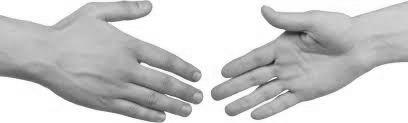
hands reaching

by Chellema Qolus

Our Torah reading today is from the Book of Numbers, or Bamidbar. It’s the one where twelve scouts journey to check out the holy land. Ten come back and say “Oh no! It’s full of giants and scary stuff!” Two come back and say “It’s the land of milk and honey.”

Imagine you are God. You just gave your people some wonderful land. But instead of being grateful, 10 of 12 responses are “oooh no – it’s scary!” God in this case reacts like many of us often do when we feel unappreciated—God gets mad and says to Moses “Oh these people! I’m done with them! Forget it, I’ve changed my mind – I’m not going to play with them anymore!”

This happened before – when the Israelites made the golden calf God said the same thing. And who talked God out if it? Moses. Moses does a repeat performance here. Moses says “You promised—it’ll look bad if you go back on your promise. Come on, please? Forgive your people.”

Now, how is it that the all-knowing omniscient Infinite Oneness makes an agreement, gets mad, wants to break that agreement and then is convinced to keep it? I mean, if God knows everything that’s going to happen, how does this make sense?

God is infinite. All possibilities exist. God makes light and dark, good and evil. How this plays out at this level has a lot to do with us. If we are made in the image of God, then our portrayal of God in the Torah is also a reflection of us. Our relationship with God is a participatory process. That means we have to make the case, like Moses did, that forgiveness is included in the covenant.

If you look at the stories in Torah – the golden calf, the scouts, pretty much every story, people are breaking promises or betraying trusts right, left and sideways – EVERYONE!   Even Moses literally breaks the tablets of the covenant when he comes down from the mountain and sees the people dancing around the golden calf.

Here’s the thing. We ALL break our promises. We ALL betray trusts. We ALL hurt each other whether we mean to or not. That’s the way the world is. That’s the way we are. The great Kabbalist Isaac Luria said that when the universe was first created God’s infinite light was too much for the vessels of existence to hold and they shattered. So our universe has brokenness and so do we. Or, as the ten scouts would say “There’s giants and scary stuff! Oh no!”. The two scouts would say “Our souls are pure—direct from the Infinite. In nature we see the Glory, the cosmic pattern of wholeness of The Eternal. And in our kindness with each other, our hearts are one with God.”

These two perspectives, together, fuel our hopes and fears. We get so hurt and mad sometimes because it means so much. Early in my time with this congregation, I enjoyed a wonderful service and a warm and friendly oneg meal. I was feeling so much love for everyone and it struck me – I saw the patterns, my own patterns: how much community means to me, how much I love  the people here… and how I stumble, make mistakes, am misunderstood, and how inevitably, my heart is broken. After this wonderful service where I felt so much love … I went home and cried. Because I knew—I knew my heart would break with this community. And it did—in small ways, and large ways. But one thing is different from my previous experiences of this—I’m still here. And right now, in this moment, we’re all here.

We are all the characters in the story. Sometimes, like the two scouts Caleb and Joshua, we are in tune with God’s dance and understand how everything fits together and revel in God’s glory. Sometimes, like the ten scouts, we are overwhelmed by our pain and our fears and we project and perpetuate the negative. Sometimes, like God in this story, the God-spark in us feels unappreciated and we are hurt and lash out and just want to call everything off. Sometimes, like Moses, we plead with each other and the Divine Infinite for mercy and compassion.

To call on the Infinite for forgiveness that is attuned to us, here, on this level, we must first forgive ourselves and each other. Our forgiveness is like a homing beacon for God’s forgiveness. It creates a container made from the pieces of our brokenness, made to receive God’s Shalom, God’s Wholeness.handshake

…I call to Torah everyone who wants to bring our broken pieces together, creating a container to receive the Infinite One’s forgiveness and wholeness. Shalom.


Nitzavim & Yom Kippur: Centripetal Force

by Melissa Carpenter, Maggidah

Moses reminds the Israelites at the beginning of this week’s Torah portion, Nitzavim (“taking a stand”), that everyone standing on the bank of the Jordan River made a covenant with God.  They will take over the land of Canaan, with God’s help, but eventually they will forsake the covenant, and God will drive them out again

When all these things have come upon you, the blessing and the curse that I placed before you, vahasheivta to your heart among all the nations where God, your god, has driven you. (Deuteronomy/Devarim 30:1) 

vahasheivta (וַהֲשֵׁבתָ) = then you will return, revert, recall.  (Vahasheivta is a form of the verb shuv (שׁוּב) = return, turn around, turn back, restore.)

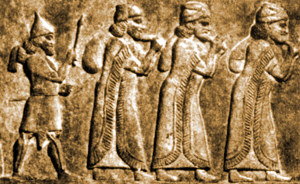
Assyrian soldier drives prisoners into exile
Assyrian soldier
drives prisoners into exile

Why does Moses make such a long-term prediction? Most modern scholars date this section of Deuteronomy to the Babylonian exile, circa 598-520 B.C.E. At that time, Jews had already experienced two exiles from their land.  Assyria conquered the northern kingdom of Israel (Samaria) in 740 B.C.E. and deported many Samarians to distant parts of the Assyrian Empire. Then Babylonia conquered both Assyria and the southern kingdom of Israel (Judah), and conducted its own deportations from 605 to 588 B.C.E.

Thus “all these things” includes multiple conquests and deportations of Jews.  Jews living (and writing) during the Babylonian exile assumed that their all-powerful god had arranged the curses of subjugation and exile because too many Jews had abandoned their religion. Their own people’s misbehavior had triggered a a divine centrifugal force pulling them away from their center.

In this week’s Torah portion, Moses predicts that after 150 years of deportations and exile, a centripetal force would pull them back in to the land of Israel and the presence of God.

Moses lays out five steps to a complete return. In these steps, the people and God take turns moving toward a reunion.

1)  The first step, “vahasheivta to your heart among all the nations where God, your god, has driven you,” is returning to your own heart (the seat of consciousness in Biblical Hebrew) while you still live in a foreign land. In the next verse Moses explains:

Veshavta ad God, your god; and you will listen to [God’s] voice, you and your children, just as I command you today, with all your heart and with all your soul.  (Deuteronomy 30:2)

Veshavta (וְשַׁבְתָּ) = And you will return (also a form of shuv).

ad (עַד) = up to, as far as.

The people must reject the gods of the nations where they are living, and cultivate awareness of their own God by listening for the divine voice and paying full attention to it. They must go as far toward God as they can under the circumstances of their exile.

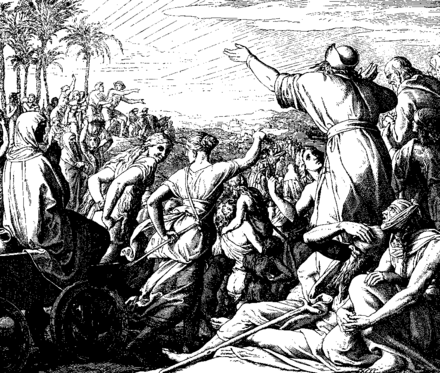
Ezra and exiles return (woodcut by Schnorr von Carolsfeld)
Ezra and exiles return to Jerusalem
(woodcut by Schnorr von Carolsfeld)

2)  Moses predicts that after they have turned their hearts back to God, God will take the second step and return the people to their former land.

God, your god, veshav your fortune and have compassion on you, veshav and gather you from among all the peoples where God, your god, has scattered you.  Even if you strayed to the end of the heavens, from there God, your god, will gather you, and from there [God] will take you back.  And God, your god, will bring you to the land that your forefathers possessed, and you will possess it, and [God] will do you good and make you more numerous than your forefathers. (Deuteronomy 30:3-5)

veshav (וְשָׁב) = will then restore, will then return (also a form of shuv).

3)  Once God has returned them to the land of Israel, the third step is for the Jews to love God.  Loving God is not easy, in this week’s Torah portion; God will have to help humans to do it.

And God, your god, will circumcise your heart, and the heart of your descendants, to love God, your god, with all your heart and with all your soul, so that you will live.  (Deuteronomy 30:6)

“So that you will live” means “so that you will thrive”—perhaps materially, or perhaps spiritually.

4)  The fourth step, Moses says, is up to the people:

And you, tashuv, and you will listen to the voice of God, and you will do all [God’s] commandments that I commanded you today. (Deuteronomy 30:8)

tashuv (תָשׁוּב) = you will return (also a form of the root verb shuv).

Once God returns the exiled Jews to their land, Moses predicts, they will become able to obey all God’s rules, as well as listening to God’s voice. Presumably, the people could have obeyed God’s ethical rules and family laws wherever they lived.  But in order to obey the agricultural laws, and in order to conduct religious worship through the system of sacrifices at the altar, they had to live in and around Jerusalem.

5)  The fifth step of return is up to God again:

And God, your god, will add to all the deeds of your hand: in the fruit of your womb and in the fruit of your livestock and in the fruit of your soil, for good, because God yashuv to rejoice over you for good as [God] rejoiced over your forefathers—because you will listen to the voice of God, your god, to observe [God’s] commandments and decrees, the ones written in the book of this teaching—because tashuv to God, your god, with all your heart and with all your soul. (Deuteronomy 30:9)

yashuv (יָשׁוּב) = he/it will return.

Just as in the first step of return the exiled Jews, called “you”, will bring their hearts back to God, in the final step God will bring Its heart back to the people. The result of God’s rejoicing over the people will be abundant life for the humans, their animals, and their crops.

After this fifth step, both the Jews and God would have made a complete return to one another, in both attitude and practical action.  It sounds like the complete restoration of a marriage after the couple has been estranged and separated.

What if “you” in this week’s Torah portion meant anyone seeking a return from exile, a return to the center, a centripetal path?  The center you return to need not be a particular spot on the globe; it could be a spiritual place.

In the annual cycle of Torah readings, the portion Nitzavim falls either one or two weeks before Yom Kippur, the day Jews dedicate to repentance, forgiveness, teshuvah, and atonement.

teshuvah (תְּשׁוּבָה) = reply, return.  (Yes, it also comes from the root shuv.)

In the Torah and in the time of the first and second temples in Jerusalem, the method used to atone and reach teshuvah with God involved animal sacrifices and sprinkling blood in the Holy of Holies.  (See my post Metzora & Acharey Mot: Doubles.)  For the last two millennia, the teshuvah of Jews on Yom Kippur has been a matter of prayer, fasting, inner examination, and listening for God with all our heart and all our soul.

Although Yom Kippur is the official day of teshuvah for Jews, anyone might return, any day, to the inner divine spark—and open the way for the divine spark to return to us.

May all people who seek forgiveness, atonement, and reunion find a centripetal path to the holy center.

*

I wish all of my Jewish readers Shanah Tovah—a good new year—beginning this Sunday evening. I will be on my own centripetal path from Rosh Hashanah (the beginning of the year) through Yom Kippur (the day of atonement), Sukkot, and Simchat Torah, the night when Jews gather to roll the Torah scroll back to the beginning and read the opening of the book of Genesis/Bereishit.  After Simchat Torah (October 5 in 2105) I will dive into the book of Genesis again myself, even as my husband and I move to a new town. How could I resist writing another post on the beginning of creation?

Haftarah for Ki Tavo–Isaiah: Rise and Shine

I was an alto before I was a Jew. I first sang Handel’s “Messiah” in my high school choir. Now, 27 years after my conversion, I still enjoy Handel’s music, and I still do not take the words seriously. But when you sing words, you remember them.

This week I read the Torah portion, Ki Tavo, and then turned to the haftarah, the passage from the Prophets/Neviyim that is traditionally chanted after the Torah portion at the morning Shabbat service. I glanced at the first line in Hebrew, and I immediately sang:

handel-1

Arise, shine, for thy light has come! (Isaiah 60:1)

This King James Bible translation accurately captures one possible meaning of the Hebrew. But the “Messiah” uses the line for an entirely different purpose than the book of Isaiah. Handel’s friend Charles Jennens, who provided the libretto for the oratorio, was a devout Anglican who wanted to tell a story of Jesus’ life in terms of direct divine intervention in human affairs. So he cut and pasted verses from all over the King James Bible and the Common Book of Prayer to make his point.

Jennens took many lines out of context from the book of Isaiah. At the beginning of the “Messiah”, after setting the scene, he put in a line from the King James version of Isaiah: Behold, a virgin shall conceive and bear a son, and shall call His name Emmanuel: God with us.

This line is now notorious as a bad Hebrew translation. A more accurate translation would be: Behold (or Hey!), the young woman is pregnant and is giving birth to a son; may she call his name Immanu-El (with us God). (Isaiah 7:14)

There is no virgin birth in the original Hebrew, and the young woman is already pregnant. There is no indication here or in the rest of Isaiah that this line has anything to do with the birth of someone called Jesus about 700 years later.

But by using this quote from the King James Bible, Jennens established that the “Messiah” was going to be about Jesus. He proceeded with another out-of-context quote from Isaiah: O thou that tellest good tidings to Zion …say unto the cities of Judah, behold your god! (Isaiah 40:9)

Then Jennens goes directly to the verse at the beginning of this week’s haftarah. The King James translation is: Arise, shine, for thy light is come, and the glory of the Lord is risen upon thee.

Here is my own translation:

Arise! Shine! For your light ba,

And the kavod of God dawns over you. (Isaiah 60:1)

ba = come, has come, is coming

kavod = glory, honor, dazzling splendor, awesome presence

In the “Messiah”, Jennens uncharacteristically chose to follow up Isaiah 60:1 with the next two verses, Isaiah 60:2-3. A solo bass sings the King James version: For behold, darkness shall cover the earth, and gross darkness the people; but the Lord shall arise upon thee, and His glory shall be seen upon thee. And the Gentiles shall come to thy light, and kings to the brightness of thy rising.

Here is my translation from the Hebrew:

For hey! the darkness will cover the earth

And the gloom the peoples;

But God will dawn upon you

And Its kavod will appear over you.

And the nations will walk to your light

And kings to a gleam of your dawn. (Isaiah 60:2-3)

What is the light that either came or is coming? And who is “you”?

These three verses connect “light” with God’s glory. In the previous two chapters of Isaiah, the Israelites who live in exile in Babylonia have been groping in the darkness of ignorance, wondering how to find their god. So “light” may mean both enlightenment and God’s close approach.

The “you” (and all the verbs) in the verses above are in the feminine singular, but no female human is mentioned. “The people” and “God” (and “Jesus”!) would all take the masculine form. However, most place-names in the Torah are feminine. The subject whose light will attract the tribute of many nations is finally named in 60:14: And they will call you City of God, Zion of the Holy One of Israel.

Zion (pronounced Tziyon in Hebrew) is a synonym for Jerusalem. Scholars date the second half of the book of Isaiah (chapters 40-66) to about 550-515 B.C.E., around the time when the Persian king Cyrus  gave the Jews in exile permission to return to Jerusalem and rebuild their temple. The poet in Isaiah chapter 60 apparently rejoiced that Zion’s people and religion were rising again, and hoped that the religion would spread as more and more nations “saw the light”.

So in the 6th century B.C.E., the book of Isaiah saw the rebuilding of Jerusalem as the dawn of an era in which belief in the god of Israel would become universal. In the 18th century C.E., the librettist of Handel’s “Messiah” connected the dawning of God’s light with the birth of Jesus, heralding the new religion of Christianity. Meanwhile, for the last 2,000 years or so, Isaiah 60:1-22 has been the “sixth haftarah of consolation” of Jews; we read it during the sixth week after Tisha B’Av, the day of mourning for the fall of the first and second temples in Jerusalem.

Can this haftarah from Isaiah, which is so hopeful about the rebuilding of the temple, still console us for the fall of both temples in Jerusalem? Personally, I am glad that for the last 2,000 years we have been seeking God through prayer instead of through animal offerings at a temple.  But I am still waiting for enlightenment to dawn over Zion.

Meanwhile, I can use a message of hope during this introspective month of Elul, when Jews are asked to prepare for Yom Kippur by reviewing the past year and acknowledging their misdeeds. As Rabbi Shoshana Dworsky pointed out, it is easy for a woman to take the first few verses of this haftarah personally, since all the language is in the feminine singular! What if the poem is addressing me, as I wonder how I will ever outgrow the shortcomings in my character that I am pondering this month?

Maybe my light is coming, and soon I will arise and shine.

Ki Teitzei: Too Many Vows

When did you last make a vow or swear an oath?  In our society, we often sign contracts and promise to do things; but a solemn, witnessed vow is usually reserved for a wedding, an oath of office, or (in some religions) an initiation into a religious order.  Nevertheless, when we violate solemn promises we have made to ourselves, we find ourselves in the same position as ancient Israelites who failed to fulfill their vows.

One warning about vows appears in this week’s Torah portion, Ki Teitzei (“when you go out”):

When you vow a vow to God, your god, you shall not delay in fulfilling it, because God, your god, will certainly call you to account, and there will be guilt in you. But if you refrain from vowing, there will not be guilt in you. You must guard what comes out of your lips; and you must make any voluntary gift that you spoke with your mouth, as you have vowed to God, your god. (Deuteronomy/Devarim 23:22-24)

The majority of vows mentioned in the Hebrew bible are vows to give something to God. People vow to offer an animal at the altar, or to give money to the Temple treasury, just because they want to do something extra for their religion. Both this week’s Torah portion and a similar passage in Ecclesiastes/Kohelet state that when you vow to make a gift to God, you must fulfill it with minimum delay, or you will be guilty of wrongdoing. Someone today would be guilty of similar wrongdoing if they promised to donate extra money to their congregation, but then took years to get around to it.

Another type of vow is the vow of self-denial. The most common vow of self-denial in the Torah is the vow to be a nazir, someone who abstains from haircuts and from wine (or anything else made with grapes) for a fixed period of time. (See my post Naso: Distanced by Hair.)

But like us, Israelites and Jews thousands of years ago made individual vows of self-denial, which are mentioned in the Hebrew bible and discussed in detail in the Talmud tractate Nedarim (“Vows”).  In modern American one common individual vow of self-denial is to abstain from certain foods.  Two thousand years ago this was also a possible vow, but vows to refrain from sex with your spouse get more coverage in the Talmud.

Carrying out your vow without delay is also a requirement for vows of of self-denial. The book of Numbers/Bemidbar says: If someone vows a vow to God or swears an oath to abstain an abstention for himself, he shall not desecrate his word; according to anything that goes out of his mouth he must do. (Numbers 30:3)

Making a vow before God seems to be a common human impulse.  Yet both Deuteronomy and Ecclesiastes, as well as the Talmud, emphasize that it is better to simply do what you intend without making a vow.

What is so bad about making vows? The Torah and the Talmud discourage vowing because the consequences are terrible if you do not fulfill your vow. All too often, people make vows and then fail to live up to them because of circumstances they did not anticipate.  Some people are simply stymied by bad luck. But others are carried away by their emotions at the time of the vow, and rashly promise more than they can realistically deliver. Some people make vows they regret the next morning.

Traditional commentary points out that people tend to find excuses to justify their failure to deliver on a vow, and comfort themselves with the thought that at least they meant well. This is a form of self-delusion that leads some people to substitute making vows for actually doing the right thing. Thus people who makes rash vows end up behaving less ethically.  They also suffer because other people stop believing what they say.

I have also noticed another reaction to the failure to fulfill a rash vow. I know people who made solemn promises to themselves to increase their Jewish religious observance–not just by adding one daily blessing or one small restriction, but by taking on a full day of orthodox Shabbat observance every week, or by switching from a diet of bacon cheeseburgers to keeping kosher so strictly that they can no longer eat out. And when they failed to fulfill their rash vows, they did not excuse themselves on the grounds of good intentions.  Instead, they gave up on their religion–an easy thing to do, in our modern society. And that, too, can be bad for the soul.

I agree with the Torah and Talmud that it is better to guard your lips and stop yourself from making vows. But if you need to make a vow, consider it carefully, over a period of time, to make sure it is something reasonable that you can fulfill.

But what if you have made a vow you cannot, or no longer want to, fulfill?  In Talmudic times, people called upon rabbis to annul their ill-considered vows of self-denial. Jews today have Yom Kippur, the annual Day of Atonement.  If we break our vows to other people, we can only make things right by going through a process of atonement with those individuals. But if we have failed to carry out our vows to ourselves, or to God, then we can atone in our communal prayers on Yom Kippur.

The holy day begins with the singing of “Kol Nidrei”, which means “All vows” in Aramaic. The Kol Nidrei prayer may have begun as a way to absolve Jews from vows of conversion to another religion, since so many Jews had to pretend to convert to Christianity in order to save their lives. Now it serves as a heartfelt introduction to the day when we can release ourselves from guilt over the personal vows before God that we now wish we had not made.

This week is the second week of Elul, the month leading up to Rosh Hashannah and Yom Kippur. The Jewish tradition is to spend this month examining ourselves, apologizing and atoning for the wrongs we have done to other people, and recognizing where we have failed the God inside each of us.

This month of Elul, may we all catch up on the good deeds we promised to do but never got around to; may we find ways to clear ourselves and start fresh with every person we have wronged; may we recognize and accept our failures to fulfill our personal vows; and may we figure out ways to improve ourselves gently, without making any rash vows.

Tzav: Who Gets the Skin?

When I read all the gory details of the animal sacrifices in the book of Leviticus/Vayikra, I have to work hard to imagine how all that slaughtering, butchering, and throwing blood around could bring anyone closer to God. I believe that when we kill our fellow mammals we should mourn, not celebrate; and I view the slaughter as something we need to atone for, not as a means of atonement.  Thank God we switched to worship through prayer about 2,000 years ago!

It would be easy for me to dismiss the earlier technology as an artifact of an ancient culture.  I could simply address the issues of the present day, and campaign for treating all mammals more humanely, killing them only out of practical necessity, and reforming our diets. But I have dedicated myself to Torah study, and that means I must search for deeper meaning in the text, even the descriptions of animal offerings.

When I reread this week’s Torah portion, Tzav (Command), I noticed that the three basic motivations for offering an animal at the altar correspond to three instructions for what to do with the animal’s skin.

Although the book of Leviticus/Vayikra classifies offerings with five different names, covering at least a dozen different situations, they boil down to three reasons for bringing an animal to the altar:  to express individual gratitude or devotion to God; to atone for individual guilt; and to atone for the whole community and/or its religious leaders.

When a man brought an animal offering to express gratitude or devotion (in the Torah only men bring animals to the altar), after the butchery, burning, and feasting, he got to keep the animal’s skin, which had value because it could be tanned to make leather.

We learn in the Torah portion Tzav that when an individual brought an animal offering to be relieved of guilt over a lapse, a wicked thought, a sin of omission, or an unintentional wrong against God, the priest who performed the atonement got to keep the hide.

As for the priest who brings near a man’s rising-offering, the skin of the rising-offering that the man brought to the priest will become his.  (Leviticus/Vayikra 7:8)

or = skin (either human or animal)

When a priest brought an animal offering to make atonement for himself or for the entire community, the skin was burned on the ash-heap outside the camp where the ashes from the altar were taken.  Moses does this in this week’s Torah portion during the ordination of Aaron and his four sons as the first priests of the Israelites, so they can begin their new offices with a clean slate.

And the bull and its skin and its flesh and its intestinal contents he burned in the ash-heap outside the camp, as God had commanded Moses.  (Leviticus 8:17)

The three ways of disposing of the slaughtered animal’s skin make sense on a practical level.  Someone who wanted to draw closer to God out of a devotional impulse, or gratitude for good fortune, should be allowed to keep any part of the animal not used in the ritual.  Why should he suffer any extra economic loss?

However, someone who was guilty of missing the mark in his relationship with God needed to experience a loss, to give up something in exchange for being freed of his guilt.  The priest got the skin because his service enabled the guilty man’s atonement.  (Priests were not paid salaries, or given land to farm, so they received compensation in the form of meat, skins, and bread from various offerings.)

If a priest erred in his holy service, or if the whole community missed the mark (because the priests did not guide them properly), then it makes practical sense that the priest should get no economic benefit from the sacrificial animal’s skin.  Burning the hide adds dramatic impact to this most serious kind of ritual offering.

I can also see symbolic meaning in the three ways of handling the skins.  In the book of Genesis/Bereishit, God clothes Adam and Eve in skins before sending them out into the world. Skin is like a garment.  It separates and protects an individual from the rest of the world.  And skin, like a garment, also signals the individual’s public identity and role in the world.

Perhaps the skin of an animal offering represents the skin of the man who brings it.  The Torah mandates that the man who brings an animal  to the altar must lean his hands on its head before it is slaughtered.  This gesture apparently connects the human with the animal, so the offering counts as his.

When someone brought an offering of gratitude or devotion, he was already in a good standing with God; the offering expressed his feelings and brought him even closer to the divine.  His public identity did not need to change.  Therefore he could keep the animal skin.

When someone brought an offering out of guilt, he had stumbled in his service to God.  In order to atone and return to good standing, he needed to recognize, in his heart, that his position in the community and his connection with God must not be taken for granted.  I think he gave the animal skin to the officiating priest as an act of humility.

Why was the skin burned when a priest brought an offering to atone for his own guilt, or for the guilt of the whole community?  The Torah requires burning the skin outside the camp when a priest is ordained, when a priest discovers that he or the whole community has committed a lapse in service to God, and once a year on Yom Kippur, the day of atonement for everyone.

The priests of the Israelites, like all religious leaders today, and everyone else who guides people on the level of their souls, have to be meticulous in their service.  If they violate someone’s trust; if they treat other humans without respect; if they preach one thing and do another; if they become so enamored of their role, so dazzled by their own garments, that they fail to examine their inner selves; then their guilt is so great they must burn their animal skins.  That means they must leave their sanctuary and leave the community where they did wrong, going “outside the camp”, and give up their public roles, their animal skins.

What if the animal offering atones for the whole community, like the goat offered to God on Yom Kippur?  Modern Jews do not cast lots on goats on Yom Kippur, but we do spend the day praying.  Our prayers for atonement are in the plural: we have become guilty, we have betrayed, we have robbed, we have slandered, and so on.  No one is isolated; we are all responsible for one another.  We share the good and the bad.  We are our brothers’ keepers.  And our membership in the human community is intrinsic to our connection with the divine.

Therefore, when we want to come closer to God, we must all abandon the garments of our public roles.  Burn those animal skins, and let the smoke rise up to the heavens!