Haftarat Naso—Judges: Restraining the Abstainer

Every week of the year has its own Torah portion (a reading from the first five books of the Bible) and its own haftarah (an accompanying reading from the books of the prophets). This week the Torah portion is Naso (Numbers 4:21-7:89) and the haftarah is Judges13:2-13:25.

Every religion has members who go beyond what is required of the whole community. In ancient Israel, there were priests, prophets, and nezirim.

drunk woman

And I raised up some of your sons for prophets

And some of your young men for nezirim.

Is there nothing in this, Children of Israel?

—declares God.

But you made the nezirim drink wine

And you ordered the prophets not to prophesy!  (Amos 2:11-12)

nezirim (נְזִרִים) = “nazirites”: men and women who are dedicated and separated from the rest of the community as holy because they abstain from grooming their hair and drinking alcohol. Nezirim is the plural of nazir (נָזִיר), from the root verb נזר = separate, dedicate, restrain, abstain.

Samson, whose story begins in this week’s haftarah, is a nazir from the womb to the grave, but he fails to make his life holy. Perhaps that is why this week’s Torah portion lays out strict rules and term limits for living as a nazir.

Although the book of Numbers/Bemidbar is set at an earlier time in history than Samson’s story in the book of Judges, modern scholars agree that Judges was written long before the Torah portion Naso in Numbers.  Judges is a collection of old stories of heroes from the 11th century B.C.E. and earlier, stories which were probably compiled and rewritten in the 8th century B.C.E. Large parts of the book of Numbers, however, including the instructions for the nazir, were written after the Babylonian exile of the 6th century B.C.E., when priests were writing religious instructions for the time of the second temple.

Samson’s story begins in this week’s haftarah when an angel appears to the wife of a Danite named Manoach and announces that she will give birth to a nazir.

A messenger of God appeared to the woman, and he said to her: Hey, please! You are childless and you have not given birth, but you shall conceive and give birth to a son. So now guard yourself, please, and don’t you drink wine or alcohol, and don’t you eat anything ritually impure.  Because you are about to conceive, and you will give birth to a son, and a razor will not go upon his head, because the boy will be a nazir of God from the womb.  And he will begin to rescue Israel from the hand of the Philistines. (Judges 13:3-5)
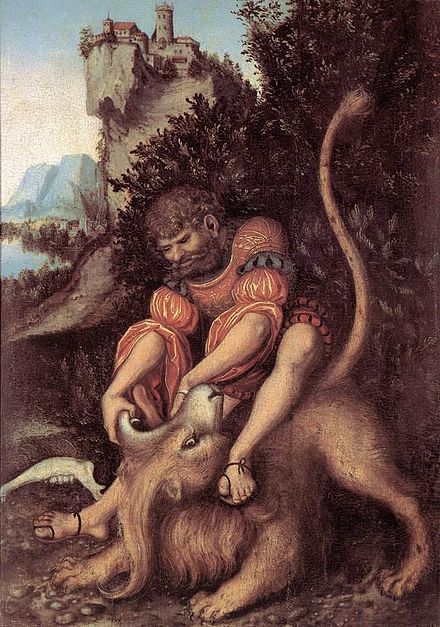
Samson's Fight with the Lion, by Lucas Cranach the Elder, 1525
Samson’s Fight with the Lion, by Lucas Cranach the Elder, 1525

Samson’s first act (after the haftarah’s opening scene) is to ask his parents to marry him to a Philistine woman he finds attractive. They protest feebly that he should marry one of his own people, but they follow him to the Philistine village of Timnah to arrange the marriage. Samson discovers his superhuman strength on the way, when “a strong spirit of God came over him” and he rips apart a lion with his bare hands. (Judges 14:6)  For the wedding a year later, Samson hosts a seven-day drinking-party where he makes a wager and ends up killing 30 strangers in order to pay his gambling debt with their clothing.

As Samson’s adventures continue, the only thing he abstains from is cutting his hair.  His main interests are sex, and inventing spectacular ways of killing people.  He only prays to God at the end of his life, when Delilah has shaved his head and her co-conspirators have blinded and imprisoned him.  Then Samson asks God to return his super-human strength so he can bring down the temple of Dagon and all the Philistines in it—not for the sake of Israel or God, but for his own personal vengeance.

Samson does succeed in killing thousands of Philistines, but he is hardly the holy man that Manoach and his wife expected when the angel said their son would be a nazir.

The book of Numbers makes it clear that a nazir along the lines of Samson is unacceptable. For one thing, this week’s Torah portion says nobody is allowed to be a nazir from birth; only an adult man or woman can vow to live as a nazir, and the person making the vow sets a finite period of time for his or her dedication.  The instructions begin:

If a man or a woman vows the extraordinary vow of a nazir, lehazir for God… (Numbers/Bemidbar 6:2)

lehazir (לְהַזִּיר) = to restrain oneself, to abstain.  (From the root נזר.)

After describing what a nazir must abstain from, the Torah portion continues:

And this is the teaching of the nazir: On the day completing the days of nizro, he shall be brought to the entrance of the Tent of Meeting. (Numbers/Bemidbar 6:13)

nizro (נִזְרוֹ) = his life as a nazir, the term of his vow dedicating him to separateness; his crown. (Also from the root נזר.).

At the Tent of Meeting the nazir makes offerings, shaves his or her head, and returns to ordinary life.  Thus all nezirim consciously dedicate themselves to restraint for a fixed period of time for the sake of God.

Their restraint consists of three kinds of abstention. The first category is alcohol and all grape products.

wine and grapes

From wine and other alcohol yazir; nor shall he drink wine vinegar or vinegar from other alcohol, nor any grape juice; nor shall he eat grapes, wet or dried.  All the days of nizro he must not eat anything that is made from grapevines, from seeds to skin.  (Numbers/Bemidbar 6:3-4)

yazir (יַזִּיר) = he will abstain.  (Also from the root נזר.)

Abstaining from alcohol would not only improve the nazir’s ability to focus on being holy to God, but would also emphasis the nazir’s separation from the rest of society.
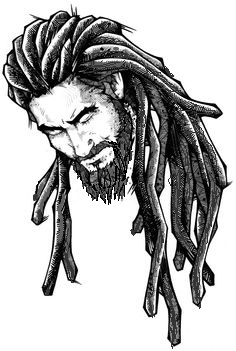
nazir hair

The second thing nezirim must abstain from is cutting, binding, or even combing their hair.

All the days of the vow of nizro, no razor will pass over his head; until the fulfillment of the days that yazir, his big, unbound, bristling hair will be holy to God.  (Numbers 6:5)

In the Bible, the only other people who let their hair grow untrimmed and unbound are mourners. Mourners are expected to disregard the social norms while grief commands all of their attention. Nezirim must let their hair grow wild while God commands all of their attention.  (See my post Naso: Distanced by Hair.)
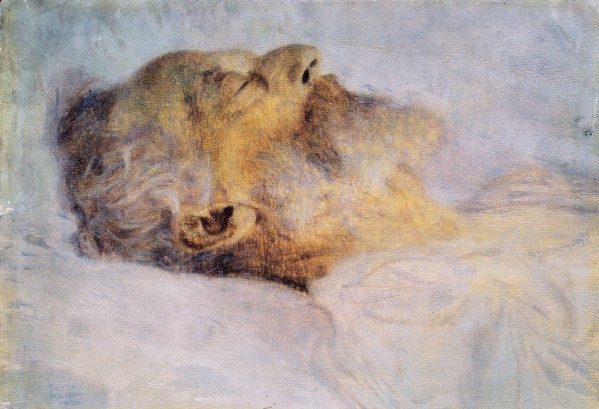
Old Man on his Deathbed, by Gustav Klimt

The third thing a nazir must avoid is contact with the dead. (See my post Emor: The God of Life.)

All the days of hazayro to God, he must not come upon a dead body. For his father or his mother, for his brother or his sister, he will not make himself ritually impure for them in their death, because the neizer of his god is on his head. All the days of nizro he is holy to God. (Numbers 6:6-8)

haziro (הַזִּירוֹ) = his time as a nazir(Also from the root נזר.)

neizer (נֵזֶר) = consecration; crown.  (Also from the root נזר.)

In the book of Numbers ordinary people who touch or come near a dead body are ritually impure for seven days; then a ritual sprinkling restores them to purity and they rejoin the religious community. But for a nazir, the rules are as strict as for the high priest, who must avoid all corpses, even those of his own parents. If a nazir touches or comes close to any corpse, the term of his or her vow ends prematurely. Then after seven days, the would-be nazir must shave his or her head, make offerings, and start all over again. Once again, nezerim must pay attention—and, perhaps, emulate the high priest.

According to these rules, parents cannot say an angel told them their child would be a lifelong nazir, or treat him as especially privileged.  No nezirim can expect God to give them superpowers from time to time.  Staying sober, they have no excuse for wild behavior like Samson’s at the end of his drinking-party.

And since nezirim must avoid being near dead bodies, they cannot kill people.  Although all of the people Samson killed were Philistines, none of them were actual soldiers engaged in war against Israelites. Impulsive murder was no longer acceptable by the time of the second temple.

*

I have known individuals who were overwhelmed by spiritual impulses that cannot be integrated into normal life in modern western society. We have roles for spiritual leaders and teachers, but few outlets for people who would have been prophets or nezirim in ancient Israel.

When prophets in the Bible are overcome by the spirit of God they can at least speak, turning the divine message into human language.  But nezirim have no words.  When Samson feels the divine spirit, he is filled with physical strength that he uses for killing.

In the book of Numbers, nezirim can still be identified by big, unbound, bristling hair, but they are also required to follow extra rules.  Perhaps these rules and abstentions satisfy the spiritual impulse of the nezirim enough so that when the spirit of God comes over them, they can rejoice in their self-discipline—as well as in their neizer, their visible crown of consecration.

I wonder if an equivalent discipline would work today to provide an outlet for those with the spirit of a nazir?


 

Haftarat Beshalach—Judges: Overlooking the Underdog

Every week of the year has its own Torah portion (a reading from the first five books of the Bible) and its own haftarah (an accompanying reading from the books of the prophets). This week the Torah portion is Beshallach (Exodus 13:17-17:16), and the haftarah is Judges 4:4-5:31.

The underdog triumphs in many biblical stories. Jacob, the beardless weakling, outsmarts his strong, hairy brother Esau. Joseph rules over the older brothers who once enslaved him. The boy David kills the giant Goliath.

In this week’s Torah portion, Beshalach (“when he sent out”), the Israelite slaves leave Egypt as free people while Pharaoh’s army drowns behind them. In the haftarah from the book of Judges, two Israelite women triumph over the Canaanite general Sisera and his army.

How do you defeat an enemy stronger than you?  In the Hebrew Bible, two effective ways are by receiving and using inside information from God, like Moses; and by taking action on your own initiative with intelligence, courage, and guile, like Jacob and Joseph.

The haftarah from Judges tells the story of two women, the ultimate underdogs in the patriarchal society of the ancient Israelites, triumphing over Israel’s enemies through both methods. Devorah the prophet gets her people to act on God’s promise to help them defeat the army of their Canaanite overlord, and Jael/Yael the Kenite acts on her own initiative and kills the enemy’s general.

War chariots, ivory plaque from Megiddo

When this week’s haftarah begins, the Israelites are scattered tribes who have been ruled by the chief king of Canaan, Yavin, for twenty years. They are oppressed by King Yavin’s general, Sisera, who commands a force that includes 900 chariots, the most fearsome war technology of the time.

Still, instead of relying on the Canaanite king’s dubious justice, the Israelites go to their own judges, including one outstanding judge.

Devorah was a woman, a prophet, a woman of lapidot; she was a shoftah of Israel at that time. (Judges/Shoftim 4:4)

Devorah (דְבוֹרָה) = “Deborah” in English; honey bee. (From the same root as doveir  = speaker, and divrah  = legal case.)

lapidot (לַפִּידוֹת) = a feminine plural form of the masculine noun lapid = torchlight, torch, flash of light. (Some translations consider lapidot a place-name or the name of Devorah’s husband.)

shoftah (שֹׁפְטָה) = the feminine form of shofet = judge; a man who decides legal cases and resolves disputes.

The bible emphasizes that Devorah is a woman; all the other judges in the bible were men. Moreover, she is a prophet, a woman of flashes of light. Even her name is significant: she is a speaker, both for justice and for God.

Date palm tree
Date palm tree

And she was the one who sat under the Date-Palm of Devorah, between Ramah and Bethel in the hills of Efrayim. And the children of Israel went up to her for the law. (Judges 4:5)

Unlike the judges of villages, Devorah serves as the authority for a wider area, and holds her own law court in a sacred place. In ancient Israel, many holy places were indicated by trees or groves with names, such as the Oak of Weeping (Genesis 35:8), the Grove of Teaching (Genesis 12:6), or the Grove of Mamre (Genesis 13:18). Devorah’s own presence is what makes this particular palm tree the marker of a holy site.

And she sent and summoned Barak, son of Avinoam, from Kedesh in Naftali. And she said to him: Did not God, the god of Israel, command: “Go!—and draw up your position on Mount Tabor, and you shall take with you ten thousand men from Naftali and Zevulun. Then I will draw up to you, to the wadi of Kishon, the commander of the army of Yavin, Sisera, and his charioteers, and his infantry; and I will give them into your hand.” (Judges 4:6-7)

If Barak musters troops from the two Israelite tribes of Naftali and Zevulun and marches them up Mount Tabor, God will arrange for the defeat of the enemy’s army. But Barak is afraid.

And Barak said to her: If you go with me, then I will go; but if you will not go with me, I will not go. (Judges 4:8)

Devorah agrees to go with him, but prophesies that Barak will get no glory from the battle, because

into the hand  of a woman God will deliver Sisera. (Judges 4:9)

Deborah, by Gustave Dore

Devorah walks with Barak both to Kedesh to inspire the men to volunteer for the ad hoc army, and to the top of Mount Tabor to announce when the men should charge down. God panics Sisera’s army (through a flash flood in the wadi, according to the accompanying poem) and the Israelite foot soldiers kill every enemy soldier except General Sisera.

Devorah is supremely successful as the instigator of the battle because she is God’s prophet. Receiving divine communication and cooperating with God both inspires people to trust her and results in a successful campaign—even though she is a woman, who would normally be powerless.

Sisera gets down from his chariot in the middle of the battle and flees on foot. Where can he find refuge? He heads for the nearby camp of Chever the Kenite, a vassal of King Yavin.

Sisera fled on foot to the tent of Yael, wife of Chever the Kenite … (Judges 4:17)

Study of Jael, by Carlo Maratta

Yael (יָעֵל) = a variant of ya-al (יָעַל) = he will ascend, he will climb, he will mount for mating.

Normally, a fugitive would go to the tent of the man who heads the household or encampment, the only person who can take the role of host and decide to shelter the unexpected guest.  In that culture, a woman’s tent was her private domain that no man outside her immediate family would dare to enter. Why does Sisera enter Yael’s tent instead of heading straight for her husband’s tent?

One line of commentary claims that Sisera’s motivation was to rape Yael, and then claim Chever’s household as his own. By taking ownership of a chieftain’s women, a man signaled that he was the new chieftain. Later in the Bible, King David’s son Absalom shows Israel that he is the new king by having sexual intercourse with the concubines King David leaves behind in Jerusalem. Sisera might plausibly decide he would rather be the head of a camp of Kenites than a disgraced ex-general.

But I think Sisera is on his way to Chever’s tent when Yael appears and suggests a different plan.

And Yael went out to meet Sisera, and she said to him: Surah, my lord, surah eilai, do not fear. Vayasar to her, to her tent, and she concealed him with the curtain. (Judges 4:18)

surah (סוּרָה) = turn aside, go away, desert, avoid.

eilai (אֵלַי) = to me.

vayasar (וַיָּסַר) = and he turned aside, went away, deserted, avoided.

Normally a woman would warn an intruder who slipped past the sentries around her husband’s camp to get away from her. But since Yael says surah eilai, she must be saying either “turn aside to me” or “desert to me” (knowing that Sisera has already deserted his own army).

Yael is a quick thinker with a cool head. She may view Sisera as an enemy; the Kenites are usually allies with the Israelites in the Bible, and Chever might have sworn vassalage to King Yavin because he had no alternative. But now Yavin’s army no longer exists, and the time is ripe for change.  Sizing up the situation, Yael steps out of her tent and tempts Sisera with an ambiguous sentence.

And he falls for it. Suddenly he imagines he can take Chever’s wife, and then take over his whole household. He steps inside her tent, and she lets the curtain fall behind him. He asks for water, and she brings him a yogurt drink and puts covers over him. He orders her to stand at the entrance of the tent and tell anyone who comes that there is no one inside. Then, secure in his belief that she is his and they will eventually seal the deal with sex, Sisera falls asleep.

Jael and Sisera, by Jan de Bray

Then Yael, wife of Chever, took a tent peg and took the hammer in her hand, and she came to him quietly, and she drove the peg into his temple, and she hammered it into the ground. And he was fast asleep, exhausted, and he died. (Judges 4:21)

Deborah’s prophesy is fulfilled; Sisera dies by the hand of a woman.

Yael acts on her own initiative, taking advantage of the situation and employing her sharp wits and her ability to deceive without actually lying. The text does not say whether Sisera carries a weapon on his body, but he is a career soldier, and under ordinary circumstances could overpower (and rape) any woman in his path.  Yael courageously uses guile, the weapon of the underdog, to overpower and “rape” him with her tent peg.


Never assume you can take advantage of an underdog who has always held a rank beneath your own. People who have been slaves for hundreds of years might turn out to have God on their side, and defeat you, as in this week’s Torah portion from Exodus. And women who have been ordered around by men for hundreds of years might turn out to be prophets and judges, like Devorah, or extraordinary executioners, like Yael.

Never overlook the underdog.