Haftarat Bemidbar—Hosea: Speaking in Wilderness

Every week of the year has its own Torah portion (a reading from the first five books of the Bible) and its own haftarah (an accompanying reading from the books of the prophets). This week the Torah portion (Numbers 1:1-4:20) has the same name as the book it begins, Bemidbar. The haftarah is Hosea 2:1-22.

The Hebrew name of each of the first five books of the Bible is the first significant word in the first sentence of the book. This week Jews begin studying the book called “Numbers” in English, which begins:
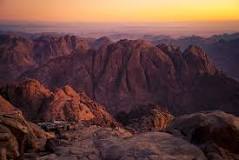
Mount Sinai: one possible location

God vayedabeir to Moses bemidbar of Sinai, in the Tent of Meeting, on the first [day] of the second month, in the second year of their exodus from the land of Egypt. (Numbers/Bemidbar 1:1)

vayedabeir (וַיְדַבֵּר) = (and) he/it spoke.

bemidbar (בְּמִדְבָּר) = be- (בְּ) = in a + midbar (מִדְבָּר) = wilderness; uncultivated and/or uninhabited land.

Although bemidbar by itself means “in a wilderness”, when it is followed by a definite place-name, such as “Sinai”, a better translation is “in the wilderness of Sinai”. A common custom today is to call the book of Numbers Bamidbar (בַּמִדְבָּר), the word for “in the wilderness’ if it is not immediately followed by a place-name. But some commentators, myself included, prefer to take the name Bemidbar directly from the text.

A more important question is whether midbar comes from the same root as vayedabeir. The modern scholarly consensus is that there are at least two root words with the letters דבר, one that has to do with driving away or going behind, and one that has to do with speech, words, and things. Midbar comes from the first root, and could be translated as “back-country”. Vayedabeir comes from the second root, and is a form of the verb dibeir =speak.

But that does not stop a poetic prophet from using the word midbar both to indicate wilderness and to allude to a medabeir (מְדַבֵּר) = “one who speaks, speaker”.

Hosea’s prophesies were composed in the northern kingdom of Israel in the 8th century B.C.E.. Like the later prophets, Hosea keeps warning the people of Israel to stop being unfaithful to God by worshiping other gods. Hosea compares Israel to a woman who abandons her first husband and prostitutes herself with other men. In this week’s haftarah, Hosea passes on God’s warning that Israel must stop soliciting.

drawing by Rembrandt

Or else I will strip her naked,

Bare as the day of her birth,

And I will make her like the midbar

And render her like a waterless land,

And I will let her die of thirst. (Hosea 2:5)

God is threatening not merely to humiliate Israel like a women stripped naked in public, but also to turn the cultivated and inhabited land of Israel into the worst kind of wilderness: an empty desert. This is the midbar that the children of Israel feared when they crossed the wilderness with Moses, and panicked three times when there was no water: twice in the book of Exodus/Shemot, and once in the book of Numbers/Bemidbar:

There was no water for the community, and they congregated against Moses and against Aaron…and they said…Why did you bring the congregation of God to this midbar to die here, us and our livestock? (Numbers 20:2-4)

Their complaint was false on at least three counts: it was God who led the people into the wilderness; God led them from Mount Sinai straight to the border of their promised land, but they refused to cross, so it was their fault that God made them stay in the wilderness for 40 years; and finally, they had no reason to believe that God, who provided water and food throughout their wilderness journey, would fail to do so again.

Apparently the inhabitants of Israel in Hosea’s time were just as full of false beliefs. In this week’s haftarah, Israel (the unfaithful wife) says her other gods (her illicit lovers) gave her vines and fig trees; she does not recognize her crops as a gift from her own God.

God promises to turn Israel into a midbar to punish her. But then God will take her back.

Indeed, here I am, seducing her.

And I will lead her through the midbar,

Vedibarti to her heart. (Hosea 2:16)

vedibarti (וְדִבַּרְתִּי) = and I will speak. (From the same root as dibeir.)

Moses at the Burning Bush by Rembrandt
Moses at the Burning Bush
by Rembrandt

Now we see the midbar in a different light, as the place where God speaks to the Israelites. God first spoke to Moses out of the burning bush in the midbar of Sinai.

And Moses…led the flock to the back of the midbar, and he came to the mountain of the God… (Exodus/Shemot 3:1)

There God commissioned Moses to serve as God’s prophet in Egypt. After the Israelite slaves were freed, God’s pillar of cloud and fire led them back to the midbar of Sinai.

They journeyed from Refidim and they entered Midbar Sinai and they camped bamidbar, and Israel camped there in front of the mountain. And Moses went up to God… (Exodus 19:2-3)

The Israelites stayed in the midbar of Sinai for two years, while God spoke the Ten Commandments, made a covenant, and gave Moses instructions for the sanctuary and the duties of priests and the various holiday observances. That was the midbar where God was a medabeir, one who speaks.

The book of Hosea says that after God has punished Israel for being unfaithful and the land is reduced to a midbar, God will speak to Israel again—but this time, instead of repeating the rules and instructions for the religion, God will “speak to her heart”, “seducing” her to return to God.
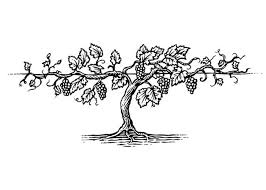
vineyard 1

The haftarah continues:

And I will give her vineyards from there,

And the valley of disturbance for a doorway of hope.

And she will answer there as in the days of her youth,

As the day she came up from the land of Egypt. (Hosea 2:17)

God will speak to Israel’s heart, and Israel will answer as in the days when the Israelites lived in the wilderness. The wild land will grow vineyards, and the wild heart will grow hope.

*

The midbar is the place of insecurity, where no wells are dug and no crops planted. But the midbar is also the place where people can hear the medabeir: God speaking.

Does God speak in your heart when you are well-clothed, well-fed, and secure? Or is that when you attribute your good fortune to other gods, such as your own cleverness or hard work?

Are you more likely to hear God speaking in your heart when you are in a place of insecurity?

Bemidbar: Tribes in Four Directions

by Melissa Carpenter, maggidah

The Israelites leave Egypt in a rush, in a swarm, in no particular order.  At the beginning of the book of Numbers/Bemidbar (“In a wilderness”), they prepare to leave Mount Sinai in orderly formation.

One difference is that now they have made the portable sanctuary for God.  The Levites and priests camp immediately around the sanctuary.  (See my post Bemidbar & Naso: Four Directions of Service.)

Camping Formation

Surrounding the Levites, but at a greater distance from the sanctuary, are the remaining twelve tribes.  They camp and march in four blocks: east, south, west, and north.  Each block has a leading tribe and two supporting tribes.

God spoke to Moses and to Aaron, saying: Each man shall camp next to his banner, with the insignia of their father’s house.  They shall camp at a distance around the Tent of Meeting. And those camping keidmah, mizrachah, shall be the banner of the camp of Yehudah… And those camping next to them: the tribe of Yissachar …the tribe of Zevulun … All those counted for the camp of Yehudah were 186,400, by their legions; the first to pull out. (Numbers/Bemidbar 2:1-9)

keidmah (קֵדְמָה) = to the east, in front, originally. From the root verb kadam (קָדַם) = came toward, went first, confronted, preceded.

mizrachah (מִזְרָחָה) = to the east, toward sunrise. From the root verb zarach (זָרַח) = shone forth.

When the Israelites break camp, the tribe of Yehudah (Judah in English) sets off toward the east, then veers in whatever direction the people will actually travel that day.  In the book of Genesis, Yehudah gradually becomes the leader of all the brothers who confront Joseph.  King David was from the tribe of Yehudah, and after Assyria conquered the northern kingdom of Israel, the kingdom of Yehudah survived for two more centuries.

When one faces east, the south is on one’s right.  That means Reuven is Yehudah’s right-hand man in this week’s Torah portion:

The banner of the camp of Reuven shall be teymanahAnd those camping next to them shall be the tribe of Shimon…and the tribe of Gad… All those counted for the camp of Reuven were 161,450, by their legions; and they shall pull out second. (Numbers 2:10-16)

teymanah (תֵּימָנָה) = to the south.  (From the root yamin, יָמִין, = right side, right hand.)

In the Torah, south is the direction of the Negev desert, the kingdom of Edom in the hills of Sei-ir, Mount Paran, and Mount Sinai. Moses says in his final speech to the Israelites: God came from Sinai, and shone forth from Sei-ir for them, having radiated from Mount Paran… (Deuteronomy/Devarim 33:2)

menorah

All of this divine light dawns in the south.  Inside the sanctuary tent, the menorah (lampstand) is by the south wall.

Reuven is the firstborn of the twelve sons of Jacob, a.k.a. Israel, but he does not inherit the leadership of the extended family. His tribe gets second place, but at least it is close to God’s illumination in the south.

Then the Tent of Meeting shall set out, the camp of the Levites, in the middle of the camps; as they camp, so shall they pull out, each man in position next to their banners. (Numbers 2:17)

Next come the tribes in the back, to the west of the sanctuary:

The banner of the camp of Efrayim by its legions shall be yamah…And next to them shall be the tribe on Menasheh…and the tribe of Binyamin…  All those counted for the camp of Efrayim: 108,100, by their legions; and they shall pull out third. (Numbers 2:18-24)

yamah (יָמָּה) = to the west, toward the (Mediterranean) Sea (yam).

The other Biblical Hebrew word for west is ma-arav (מַעֲרָב), toward the sunset. In the Bible, the west represents the unknown:  the great sea, the future, and death. The western end of the tent sanctuary is the back wall of the Holy of Holies.

In Genesis, Jacob rearranges his hands when he blesses Joseph’s two sons Menasheh and Efrayim, so that even though Menasheh is older, Efrayim receives the blessing of the firstborn.

Thus the chief tribe on the east is named after Yehudah, who took the role of the firstborn by his own leadership.  The chief tribe on the south is named after Reuven, who was the firstborn but lost his position.  And the chief tribe on the west is named after Efrayim, who was born second but promoted to firstborn.

The chief tribe on the north, Dan, does not even care about the rights of the firstborn.

The banner of the camp of Dan shall be tzafonah, by their legions… And those camping next to them shall be the tribe of Asher…and the tribe of Naftali… All those counted for the camp of Dan: 157,600; as the last they shall pull out, next to their banners. (2:25-31)

tzafonah (צָפֹנָה) = to the north. From the same root as the verb tzafan (צָפַן) = hide treasure, hide in ambush.

Mt. Aqra, probably Mt. Tzafon

In the Bible, the north is where the Assyrians came from when they swept down and conquered the kingdom of Israel.  It is also the direction of Mount Tzafon, a peak near the Mediterranean coast in present-day northern Syria. In Canaanite mythology, when Baal became the supreme god, he built a palace on top of Mount Tzafon.

Inside the sanctuary, the table displaying the twelve loaves of bread stands by the north wall. The loaves stand for the tribes of Israel, on display before God.

Dan, Jacob’s fifth son, is unimportant in the book of Genesis.  But in the book of Judges the tribe of Dan abandons its allotted territory and heads north.  As the tribe crosses Efrayim’s territory, it captures a priest and a molten idol.  Then Dan seizes the Canaanite city of Laish.  Both conquests are surprise attacks; perhaps the whole tribe of Dan is good at hiding in ambush.  Laish, renamed Dan, becomes the northernmost city in the kingdom of Israel.

The word for northward, tzafonah, is related not only to hiding, but also to the center of Canaanite religion at Mount Tzafon. In the first book of Kings, the city of Dan has its own temple and its own golden calf.

Maybe when the Israelites break camp the tribe of Dan pulls out last because it is not wholehearted about either the community of Israel or its God.  Dan goes its own way, then follows the rest of Israelite and its sanctuary after all.

When the Israelites leave Mount Sinai, they march and camp in a formation that positions each tribe in relation to the four directions and to the sanctuary in the center.  Today, we also need to put what is holy to us at the center of our lives. Otherwise we will swarm about aimlessly.

In addition to holding a holy center, we need to operate in the world.  The four cardinal directions might indicate four ways of operating. If we are fortunate, our primary strategy is represented by the east and Yehudah: taking the lead in our own lives and setting off on new ventures. A second strategy is represented by the south and Reuven: seeking and remembering moments of illumination. Third is the strategy represented by the west and Efrayim: humbly accepting the unknown future, as well as unexpected blessings from those wiser than we.  Finally there is the strategy represented by the north and Dan: stepping away when we need to, or coming out of hiding and doing the unexpected.

May we be able to use all these strategies when we organize our own lives.