
In this season of Jewish holy days, we once again have three haftarot (readings from the Prophets) in one week. On Yom Kippur we read Isaiah 57:14-58:14 and the whole book of Jonah. Then on Saturday we read 2 Samuel 22:1-51, the haftarah for Ha-azinu, the second to last Torah portion in Deuteronomy.
The English word “atone” was first used in the 16th century as a contraction of “at one”. Atonement is the process of making amends for wrongdoing in order to restore unity—especially unity with God.
In Biblical Hebrew, the word for atonement is kippurim (כִּפֻּרִים). It comes from the verb kipper (כִּפֶּר), which means cover, appease, make amends, reconcile.
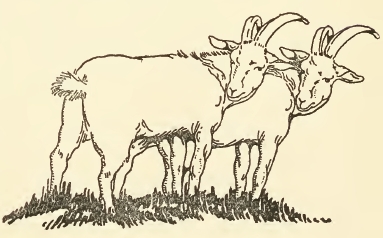
 The first Torah reading on Yom Kippur (the Day of Atonement) is a selection from the Torah portion Acharey Mot in the book of Leviticus/Vayikra. The portion describes an annual ritual of atonement in which the high priest places lots on two goats. He sacrifices one goat to reunite the sanctuary with God, and places the sins of the Israelites on the head of the other goat before sending it off into the wilderness. (See my post Metzorah & Acharey Mot: Doubles.)
Today on Yom Kippur, Jews read this Torah portion about the ancient technology for atonement, but we also confess misdeeds, beg for forgiveness, and pray for atonement with the divine.
All three haftarot this week assume that God rewards the righteous and punishes the wicked—but if those who have been wicked repent and make amends, God welcomes them back.
First Haftarah on Yom Kippur: Isaiah 57:14-58:14
In this passage from second Isaiah, God promises to revive and heal the humble, but:
There is no shalom, said my God, for the wicked. (Isaiah 57:21)
shalom (שָׁלוֹם) = peace, safety, ease, well-being.
I believe this is true even without an all-seeing god who directly interferes in the lives of individuals. Everyone who acts immorally eventually suffers because most of the humans around them come to distrust and reject them.
People who have a moral sense and know they are doing wrong also suffer from nagging uneasiness. They can distract themselves and/or go into denial, but peaceful well-being is not an option for them. They cannot become “at one” with the still, small voice within themselves.
The haftarah from Isaiah goes on to say that fasting and bowing, sackcloth and ashes—the 6th-century B.C.E. formula for Yom Kippur—are useless for atonement unless one also frees the oppressed, feeds the hungry, shelters the poor, clothes the naked, and refrains from violence and evil speech. The way to be heard by God is to do good for your fellow human beings.
That is when you will call and God will answer;
You will cry for help and [God] will say: Here I am. (Isaiah 58:9)
Good deeds create atonement.
Second Haftarah on Yom Kippur: Jonah

by Jakob Steinhardt, 1923
When the prophet Jonah finally submits to doing the mission God gave him, he walks into Nineveh, the capitol of the Assyria, oppressor of the Israelites, and calls out:
“Another forty days, and Nineveh shall be overthrown!” And the men of Nineveh believed in God, and they proclaimed a fast and they put on sackcloth, from the great to the small. And the word was told to the king of Nineveh, and he rose from his throne and he took off his robe and he put on sackcloth and he sat on the ashes. (Jonah 3:5-6)
The king issues a proclamation that all the human residents, and even the livestock, must fast, wear sackcloth, cry out to God, and repent of doing violence.
And God saw what they did, that they turned away from the evil path; and God had a change of heart about the bad thing [God] spoke about doing to them, and [God] did not do it. (Jonah 3:10)
God forgives the whole Assyrian capitol city of Nineveh even before its people do any good deeds. It is enough for them to admit their bad behavior and sincerely intend to reform.
Repentance creates atonement.
Third Haftarah: Reading from 2 Samuel for Saturday
The haftarah for the Torah portion Ha-azinu is read on either the Saturday before Yom Kippur or the Saturday afterward, depending on that year’s Hebrew calendar. This year it comes after Yom Kippur.
This haftarah is a psalm attributed to King David, looking back on his life. (The long poem reappears with only a few minor word changes as Psalm 18.) Most commentary praises David for attributing all his narrow escapes and military successes to God rather than to his own cleverness.
Yet after praising and thanking God for rescuing him from his enemies, David explains:
He rescues me ki He is pleased with me.
God treats me according to my righteousness,
According to the cleanness of my hands He requites me.
Ki I have kept the ways of God,
And I have not done evil before my God.
Ki all His laws are in front of me
And from His decrees I do not swerve.
And I am without blame or blemish for Him,
And I have kept myself from wrongdoing. (2 Samuel 22:20-24)
ki (כִּי) = because, when, if.
How can David describe himself as a paragon? Earlier in the second book of Samuel, he clearly violates two of the Ten Commandments:
You shall not murder. You shall not commit adultery. (Exodus/Shemot 20:13)

Earlier in the second book of Samuel, David sees a beautiful woman bathing, and finds out that she is Bathsheba, the wife of Uriah the Hittite, who is one of David’s soldiers. Nevertheless, he summons her to his palace and lies down with her.
When she informs the king that she is pregnant, he sends a message to the battlefront for Uriah to come back to Jerusalem. King David urges Uriah to go home and spend the night with his wife. But Uriah insists on sleeping with the king’s officers, so David cannot claim he got his own wife pregnant.
David sends Uriah back to the front with a letter for his general, Joab, instructing him to place Uriah in the most dangerous part of the battlefield, then fall back so Uriah will be killed. General Joab carries out the king’s orders.
As soon as Bathsheba has finished the mourning period for Uriah, King David takes her as his eighth wife. But he has already committed both adultery and murder. The prophet Nathan tells David a parable illustrating why his actions were despicable, and informs him that God said:
Why then did you hold the word of God in contempt, doing what is evil in My eyes? (2 Samuel 12:9)
God then states the consequences: “the sword will not swerve from your household”, and someone from David’s household will lie with the king’s women.
And David said to Nathan: “I did wrong before God.” Then Nathan said to David: “God will even let your wrongdoing pass; you will not die. Nevertheless …the son, the one [about to be] born to you, he will die.” (2 Samuel 12:13-14)
So how can David say, in this Saturday’s haftarah: “I have not done evil before my God” and “From His decrees I do not swerve”?
Maybe David is living in a narcissist’s fantasy world, guilty of grandiosity and denial. Yet he did admit wrongdoing when Nathan pointed it out to him. Maybe David believed that God only rescues people who are perfectly good, so David painted himself that way.
But I think David knows he did wrong in the eyes of God when he took Uriah’s wife and had Uriah killed. His confession saved his own life, but he was thoroughly punished. Bathsheba’s first son sickened and died soon after birth. Later, one of David’s older sons, Absalom, killed his half-brother Amnon, overthrew his father, and lay with his father’s concubines. In the ensuing war between father and son, Absalom was killed despite David’s orders to spare his life.
By the time King David writes the psalm comprising this Saturday’s haftarah, he probably considers that God had punished him enough for his heinous crimes, and his slate has been wiped clean. Since those terrible times, his behavior has been righteous.
When David says:
He rescues me ki He is pleased with me. (2 Samuel 22:20)
he might mean that God rescues him when God is pleased with him, not because. And when David writes:
God treats me according to my righteousness,
According to the cleanness of my hands He requites me. (2 Samuel 22:21)
he might mean that when he is righteous and keeps his hands clean, God rewards him, but when he fails to do the right things, God makes him suffer. He knows that God’s response varies according to his behavior, and that he was not always such a paragon. Realizing this, David says,
I became without blame or blemish for Him,
And I kept myself from wrongdoing. (2 Samuel 22: 24)
According to this reading, David’s message is that a human being can change. We suffer when we do evil, but we still have the ability to keep ourselves from doing wrong again. We can still become good and righteous, without blame or blemish.
The two haftarot we read on Yom Kippur show that both good deeds and repentance create atonement with God. The haftarah for Ha-azinu this Saturday shows that even a murderer can repent and change himself into a righteous human being. The conscientious effort to return to the right path and stay on it creates atonement.
May we all be blessed with the ability to return to oneness with God, and may we all be inscribed and sealed for a good year.

 Questioning Torah