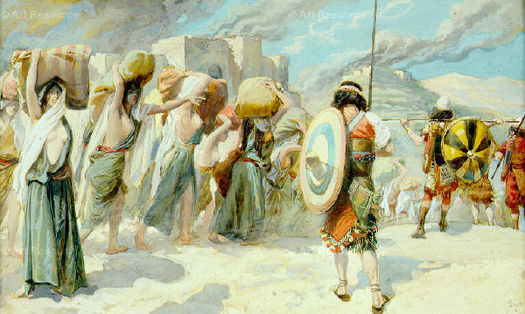
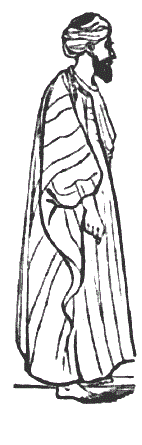
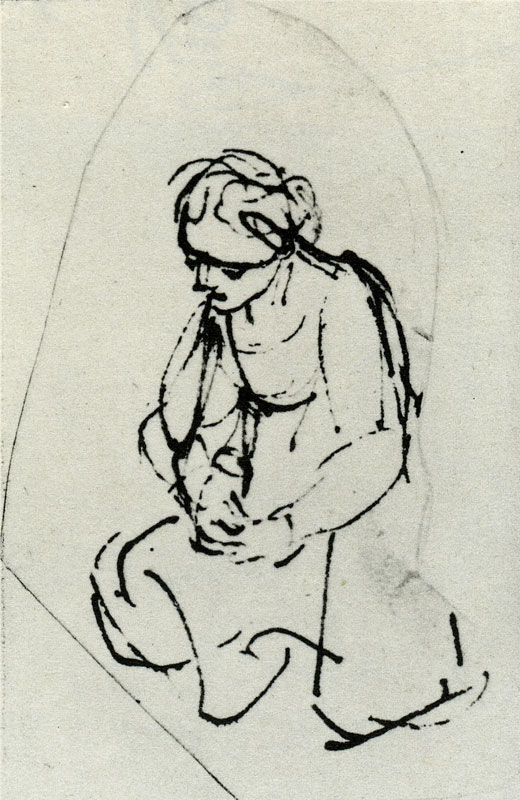
Ki Tavo: The Curse of Frustration

What are the worst curses you can imagine?

A slew of curses that will result if the people do not obey God appear in this week’s Torah portion, Ki Tavo (Deuteronomy 26:1-29:8). This section begins:

But it will be, if you do not heed the voice of God, your God, by observing and doing all [God’s] commands and decrees which I command you today, then all these curses will come upon you and overtake you. (Deuteronomy 28:15)

The first curses in this section of the Torah portion use general language, such as:

Cursed will you be in your comings, and cursed will you be in your goings. (Deuteronomy 28:19)

But then the Torah moves to curses about specific areas of life, including the curse of failure in whatever you try to accomplish.

God will send against you the malediction, the vexation, and the reproach, against every undertaking of your hand that you do, until you are annihilated and you perish quickly because of your evil deeds when you abandoned me.  (Deuteronomy 28:20)

This sentence ends in the first person, with God reacting personally to being disobeyed, feeling abandoned.

But it opens in the third person, stating that God will reproach the disobedient Israelites by thwarting every effort they make to thrive. 19th-century rabbi Hirsch explained: “Consequent to the sin, inner serenity disappears and is replaced by inner disquiet, and by a constant feeling of reproach, self-reproach, the consciousness that one deserves God’s censure. … Inner disquiet and a constant mood of self-reproach will prevent the success of your labors.”1

This is an apt psychological explanation for why some people cannot bring their undertakings to completion. But what about the threat of being annihilated and perishing quickly? Many people live with guilt and self-reproach for decades, depressed but not annihilated.

Next the Torah describes how the disobedient Israelites will be cursed by diseases, drought, and defeat in battle—all potentially deadly. Then we return to the failure of people’s enterprises.

The Scream, by Edvard Munch, 1893

And God will strike you with shiga-on and with blindness and with confusion of mind. And you will grope around at midday the way the blind grope around in their [own] darkness, and your ways will not prosper; and indeed you will be exploited and robbed all the time, and there will be no rescuer. (Deuteronomy 28:28-29)

shiga-on (שִׁהָּעוֹן) = madness, insanity. (From the root verb shaga, שָׁגַע = acted insane.)

Since blindness is listed between insanity and confusion, it probably means the inability to foresee or understand anything, rather than a literal lack of vision.

Hirsch explained: “You will not have a clear perception of things and of the circumstances; hence, nothing that you do will achieve the desired end. Others, first and foremost the neighboring nations, will take advantage of your perplexity so as to rob you of your rights.”2

Three milestones
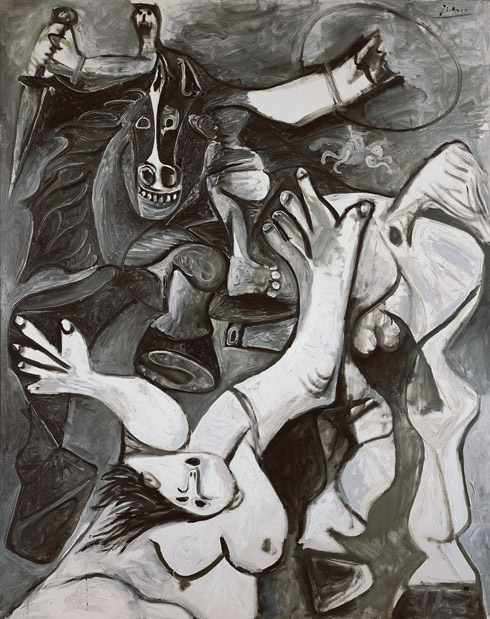
Rape of the Sabines, by Pablo Picasso,1962

The portion Ki Tavo then lists three deeds that require a major investment of a man’s time and money in order to reap a deeply satisfying reward. For all three, the disobedient Israelites will never get the reward.  

A woman you will betroth, and another man will use her for sex. A house you will build, and you will not live in it. A vineyard you will plant, and you will not use it. (Deuteronomy 28:30)

Arranging a marriage in the Torah included negotiations with the woman’s family and the payment of a bride-price; the reward was not only a sex partner, but a companion, a worker, and a  mother of one’s children. Building a house was also a big enterprise with a long-term reward. And grape vines, like fruit trees, had to be cultivated for three years without a harvest; only in the fourth year could they be picked for food, wine, and profitable trade.

The Torah portion Shoftim, earlier in Deuteronomy, treats the same three things as milestones in a man’s life. Officials who are recruiting troops are supposed to say:

“Who is the man that has built a new house and has not dedicated it? Let him go and return to his house, lest he die in the battle, and another man dedicate it. And who is the man that has planted a vineyard and has not used it? Let him go and return to his house, lest he die in the battle, and another man harvest it. And who is the man that has betrothed a woman and has not taken her [in marriage]? Let him go and return to his house, lest he die in the battle, and another man take her.” (Deuteronomy 20:5-7)3

No man wants to die before marrying, moving into his own house, and harvesting from his own grapevines (or fruit trees). If the Israelites are behaving well, following God’s directions, men can be excused from military service in order to enjoy reaching these milestones. Other men can go off to invade towns outside Israel’s borders, and God will give them success in battle.4

But if Israelites are behaving badly, flouting God’s directions, then they will be invaded by outsiders who seize their fiancées, their houses, and their vineyards.

Last week’s Torah portion, Ki Teitzei, expands on one of these military exemptions:

When a man takes a new wife, he must not go out with the troops, and he must not cross over to them for any matter. He will be exempt for his household one year and give joy to his wife whom he has taken. (Deuteronomy 24:5)

We can imagine the recruits crossing the town square to stand on one side, while the men who are staying home remain on the other side. This verse also informs us that the exemption from military service lasts for a year, and that a man must “give joy” to his new wife.

A wife in ancient Israel was not just a baby-making, bread-kneading, thread-spinning machine. She was supposed to be able to enjoy sex with her husband, and to be content with her new life in his household.

The Talmud adds that the exemptions for a new house and a newly mature vineyard also last for a full year.

“Since the wife needs twelve months, also all of them need twelve months.” (Talmud Yerushalmi, Sotah 8:8:2)5

“Those who are exempt for these reasons do not even provide water and food to the soldiers, and they do not repair the roads.” (Talmud Bavli, Sotah 43a)5

Thwarted by enemies

But when the Israelites disobey God, no one will get a year off for settling into a new marriage, a new house, or a new addition to their livelihood. Instead, God will let outsiders invade Israel and win. This week’s Torah portion continues:

Your ox will be slaughtered in front of your eyes, and you will not eat from it. Your donkey will be stolen in front of you, and it will not return to you. Your flock will be given to your enemies, and there will be no rescuer for you. Your sons and your daughters will be given to another people, and your eyes will be seeing and longing over them every day, but there will be no strength in your hand. The fruit of your land, and everything you toiled for, will be consumed by a people you do not know, and you will only be exploited and crushed all the time.  (Deuteronomy 28:31-33)

The laws laid down by God through Moses mandate returning stray animals to their owners,6 provide redemption for children sold as slaves, and even make the sale of land temporary.7 But invaders from other countries would disregard the local laws, and act only for their own benefit. Ironically, God will let the invaders succeed because the Israelites have been disregarding laws and acting only for their own benefit!

The curses that result from invasion by enemies are communal punishments, occurring when the people as a whole disobey God’s laws. Ethical and law-abiding individuals or families do not get special treatment when enemies invade.

Insanity

And you will be meshuga from the sight that you see with your eyes. (Deuteronomy 28:34)

The Sleep of Reason Produces Monsters, by Francisco de Goya, circa 1797

meshuga (מְשֻׁגָּ֑ע) = insane, crazy, raving. (Also from the root verb shaga, שָׁגַע, otherwise used only in the hitpael form: hishtaga-a, הִשְׁתַּגַּעַ = behaved like an insane person, or mishtaga-a, מִשְׁתַּגַּעַ = was behaving like an insane person.)

Ha-Emek Davar, a collection of 12th and 13th-century commentary, explained: “You will be amazed that you have become like this. That a few bandits have done so much damage, and your strength cannot save you, even though really it should have been strong enough against them. From this you will become insane and go out of your minds.”8

If the conquerors were merely a group of bandits, the Israelites might be driven mad by an inability to understand why they had not been able to defeat them. Only a few Israelites would attribute their unlikely failure to defend their land to a divine curse. If the conquerors were a large army, more Israelites might realize that God was no longer on their side, and remember that they needed God’s help. Either way, the Israelites could only explain their defeat if they acknowledged that they had done wrong and disobeyed their God.


It is human nature to cling to the belief that you are right and righteous, and to resist admitting that your actions have been unethical.

In a world-view with a God who administers rewards and punishments for collective behavior, the only responses to the total frustration of our plans and dreams are to admit our own bad behavior, to blame only the people around us, or to plunge into the mental blindness of believing that everything you are suffering is all for the best.

Without a God-centered world-view, there is a fourth option: to believe that tragedies sometimes happen when no one is at fault. This belief is easy to maintain when inexplicable tragedies are happening to people you don’t know. But it could lead to a mental breakdown when tragedies happen to you.

No wonder we feel cursed when undertakings we have nurtured for years are suddenly annihilated. Admitting collective guilt, blaming others, believing it’s all for the best, shrugging it off as bad luck, and going a little crazy are all possible responses. If, God forbid, it happened to you, what would your response be?


  1. Samson Raphael Hirsch, The Hirsch Chumash: Sefer Devarim, translated from German by Daniel Haberman, Feldheim Publishers, Jerusalem, 2009, p. 667.
  2. Ibid., p. 670.
  3. See my post Shoftim: More Important than War, Part 1.
  4. Deuteronomy 20:1.
  5. Translations of both Talmud Yerushalmi and Talmud Bavli are from www.sefaria.org.
  6. Deuteronomy 22:1-3.
  7. Deuteronomy 25:25-46.
  8. Ha-Emek Davar, commentary by the 12th to 13th-century Tosafists, translated in www.sefaria.org.

Ki Teitzei: Virginity

In ancient Israel, a bride who is not divorced or widowed1 was supposed be a virgin at her wedding. What if the groom accused her the next morning of not being a virgin? Or what if an unmarried virgin was raped?

This week’s Torah portion, Ki Teitzei (Deuteronomy/Devarim 21:10-25:19), provides rules for dealing with these situations.

A spiteful groom

If a man takes a wife and comes into her, and then he hates her, and he places a charge of wantonness on her, speaking out against her [giving her] a bad name, and says: “This woman I married, I approached her and I did not find betulim in her!”— (Deuteronomy 22:13-14)

betulim (בְּתוּלִים) = virginity.

In this example, the man claims publicly that his new bride did not bleed when he had intercourse with her on their wedding night; therefore she must have wantonly lost her virginity to someone else after they were betrothed but before the wedding night. A woman was considered betrothed once the marriage contract was written and the bride-price was paid to her father. After that, if she had sex with anyone else it counted as adultery.

If the husband’s accusation is accepted as true, the bride is guilty of a capital offense, and the bride’s parents are shamed, since she was supposed to be under their control while she was living under their roof.

Then the father of the na-arah, and her mother, take and bring out the betulim of the young woman to the elders of the town at its gate. (Deuteronomy 22:15)

Na-arah (נַעֲרָה orנַעֲרָ) = a female human during the years between puberty and marriage. (Na-arah overlaps, but is not the same as “teenage girl”; girls in ancient Israel were often married in their early teens.)

What do her parents bring out to the elders? Commentators from the Talmud (5th century C.E.) to Rabbi Samson Raphael Hirsch (19th century) declared that the groom would bring witnesses to the town gate to support his claim that the bride was not a virgin. Her parents would “take and bring” witnesses who would disprove the testimony of the groom’s witnesses. After all, the previous Torah portion, Shoftim, states that an accusation must be corroborated by at least two witnesses before a death sentence can be decreed.2

But how could witnesses observe either the consummation of the marriage, or any previous illicit sex act? Both acts would be done in private. Furthermore, the example in this week’s Torah portion refers to a different form of evidence. The bride’s father says to the elders in the gate:

Deuteronomy 22:17, King James Bible illustration

“But these are the betulim of my daughter!” And he will spread out the simlah before the elders of the town. (Deuteronomy 22:17)

simlah (שִׂמְלָה) = garment, wrapper, cloth.

It seems obvious that the bride’s father takes the nightgown or sheet that was stained with blood when the bride’s hymen broke, and brings it from the groom’s bedroom out to the town gate as evidence. Yet Hirsch claimed:

“The witnesses called by the girl’s father confront the witnesses cited by the man, and then the whole matter ius spread out for all to see, like a new garment without folds of creases.”3

It was hard for commentators to abandon a traditional explanation, especially one that reinforced a favorite rabbinic principle like the requirement for two witnesses. Modern commentators have advanced the straightforward explanation that the bride’s father must exhibit the blood stain.4

After seeing the evidence, the portion Ki Teitzei continues, the elders judging the case must decree three penalties for the slandering husband. The first is physical punishment.

Then the elders of that town will take the man and discipline him. (Deuteronomy 22:18)

Although Deuteronomy does not specify the type of discipline, the Talmud says the man is flogged.5

The second penalty for slandering the bride is monetary.

And they will fine him a hundred of silver, and they will give it to the father of the na-arah, because he gave a bad name to a betulah of Israel— (Deuteronomy 22:19)

betulah (בְּתוּלָה) = female virgin. (From the same root as betulim.)

The portion Ki Teizei mentions later that a disappointed husband could get rid of his wife at any time by writing a bill of divorce.6 But since the husband who hates his new bride does not do this, a divorce probably required a payment even when Deuteronomy was written, sometime during the 7th to 5th centuries B.C.E. (From Talmudic times to the present, a marriage document (ketubah) includes the statement that in the event of a divorce, the husband will give the wife a large sum of money.)

The slandering husband probably hoped to get rid of his bride for free. The requirement that he pay a large fine frustrates his purpose, and deters future slandering husbands. According to Hirsch, the fine also rewards the bride’s father, since:

“…the daughter’s chastity, manifested by her innocence, is first and foremost the merit of the father, the merit of the home that understood how to inculcate and instill in his daughter the pearl of Jewish national wealth, the Jewish chastity of woman.”7

Hirsch’s commentary demonstrates more than two thousand years after Deuteronomy was written, 19th-century European men still assumed not only that virginity was crucial in a daughter (but not in a son), and that the father was responsible for the behavior of his wife and daughters, whom he had to train so they would not do something foolish.

The third penalty prohibits the slandering man from ever divorcing his wife.

—and she will remain his wife; he is not able to send her away all his days. (Deuteronomy 22:19)

This certainly punishes the husband, who must live with a woman he hates for the rest of his life. But what about the wife, who faces a lifetime under the roof of a man who hates her? The writers of Deuteronomy considered this clause a protection for her, since she would at least have a home and the social status of a wife—the highest status available to a woman at that time, better than being an unmarried extra in her father’s house, a concubine, a slave, or a prostitute.

But if this thing was true—betulim was not found for the na-arah —then they will bring the na-arah to the entrance of her father’s house, and the men of the town will stone her with stones, and she will die. For she did a disgraceful thing in Israel, to be a harlot in her father’s house. And you will burn out the evil from your midst! (Deuteronomy 22:21)

No allowance is made for an accidental hymen breakage; the bride is deemed guilty. The husband who hates her is free of any penalty, the young woman is killed painfully, her parents are publicly shamed, and the whole kingdom of Israel is disgraced. Hirsch explained:

“The immorality of the young wife incriminates the upbringing she received in her parents’ home, and disgraces the entire nation … The enormity of this offense and depravity lies in the fact that a girl, still in the legal custody of her parents, still living under her parents’ supervision, committed knowingly an act of adultery!”8

A virgin who is not betrothed

What if a young woman loses her virginity before her father has betrothed her to anyone? The portion Ki Teitzei also considers this situation.

If a man finds a na-arah betulah who is not betrothed, and he seizes her and lies down with her, and they are found, then the man who lay with her will give to the father of the a na-arah fifty of silver, and she will be his as a wife. And since he overpowered her, he is not allowed to send her away, all his days. (Deuteronomy 22:28-29)

If there is no betrothal, there is no adultery, and there is no death penalty for either party. But a single adolescent girl is still someone’s property: she belongs to her father. (If her father is deceased, she belongs to the male relative who is her guardian.) The man who deflowers her is damaging another man’s property. In ancient Israel, a daughter was an investment which a father could cash in by marrying her off, thereby acquiring both a bride-price and an alliance with the groom’s family. A non-virgin had a lower market value.

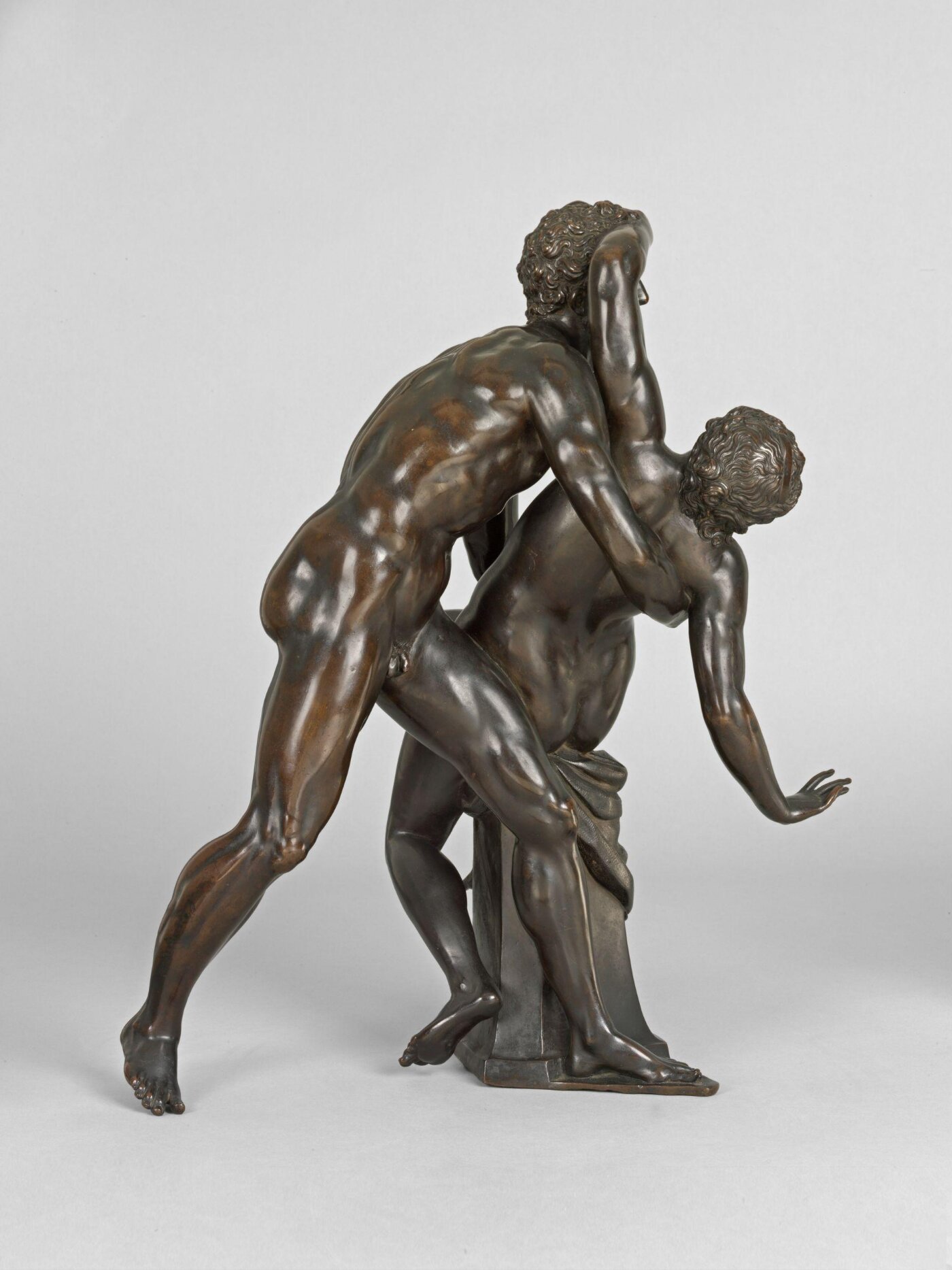
Rape of Sabine Woman, Giovanni Bologna, late 16th century

Since the man seizes the virgin and overpowers her; it is a rape.9 The rapist’s payment counts as marriage, and she is never allowed to return to her father’s house, because the man is never allowed to divorce her. Whereas the penalty for raping a betrothed virgin is death, the penalty for raping an unbetrothed virgin is a bride-price and marriage. The young woman who was raped must live with her rapist until he dies, just like the young woman whose husband slandered her. Her father does not have the option of rejecting the rapist as his son-in-law. As in the first example in the portion Ki Teitzei, the woman at least has a home and the social status of wife. For the writers of Deuteronomy, that was enough.


The laws about virginity in this week’s Torah portion are rooted in the same two principles: that it is evil for a female to have sex with anyone except her eventual husband, and that women are controlled by their men—first their fathers, then their husbands. These two assumptions are not found in all cultures, but they have been the norm in western civilization through the 19th century, and continue to be the norm in many Muslim countries.

An anthropological explanation I have often encountered is that a man objected to raising another man’s child as his own, unless he had already chosen to adopt the child. Therefore he did not want to marry a woman who was already pregnant, and he did not want his wife to commit adultery. And therefore men, who made the rules, decided that brides must be virgins and adultery is a sin.

I do not find this argument convincing. The examples in Ki Teitzei do not say anything about children. And today, after five decades of very reliable birth control methods, virginity before marriage and adultery after marriage are still hot topics.

(Virginity until the wedding remains a goal for fundamentalist Christians and orthodox Jews, but not for the majority of Americans. There are more experiments with non-monogamous and open marriages today, but monogamy without adultery remains the goal for the majority. The biggest change is that in 21st century America, husbands as well as wives are expected to limit their sex to one another, and gay and lesbian couples face the same decisions regarding sexual fidelity.)

If the strict laws in the bible regarding female chastity (virginity before the wedding night and sexual fidelity after) were not the result of concerns about fatherhood, then what motivated them? I suspect it was a question of purity. An emission of semen was ritually impure, and required a period of cleansing before one could enter the sacred space of the temple or sanctuary courtyard. The same applied to menstrual blood and other icky discharges from the body.10

Ritual impurity easily became associated with moral impurity. And as long as men dominated a society, there was a double standard, and the rules for a female to count as morally good were stricter than the rules for a male.

During my lifetime, the rights and responsibilities of men and women have become more and more equal. I consider this an unqualified moral good. But the work is not finished. I hope that someday the double standard will completely disappear, and no one will say “Boys will be boys!” again; and that despite testosterone surges, everyone will master self-control and follow the same rules about both keeping marriage vows and respecting the rights of others.


  1. A woman could remarry after being divorced or widowed; the only caveat was that she could not marry the high priest, who was only allowed to marry a virgin (see Leviticus 21:13-14).
  2. Deuteronomy 17:5-6. See my post: Shoftim: To Do Justice.
  3. Rabbi Samson Raphael Hirsch, The Hirsch Chumash: Sefer Devarim, translated by Daniel Haberman, Feldheim Publishers, Jerusalem, 2009, p. 525.
  4. E.g. Everett Fox and Rabbi Adin Even-Israel Steinsaltz.
  5. Talmud Yerushalmi Ketubot 3:1, Talmud Bavli Makkot 4b, Talmud Bavli Sanhedrin 71b.
  6. Deuteronomy 24:1.
  7. Hirsch, pp. 527-528.
  8. Hirsch, p. 529.
  9. Unlike a superficially similar example in Exodus 22:15-16, in which a man seduces a virgin.
  10. Leviticus 15:1-32.

Ki Teitzei & Kedoshim: Adultery


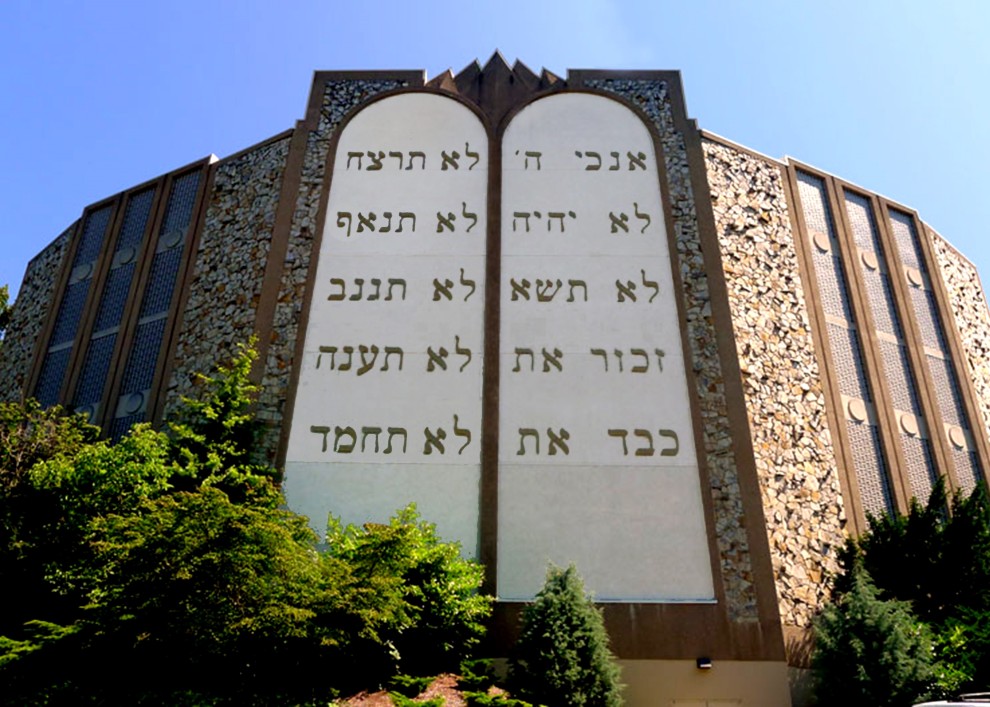
The Ten Commandments (abridged) at Neveh Shalom in Portland, Oregon. “Lo tinaf” is the second one on the left.

You must not murder.

            Velo tinaf.

            And you must not steal.

            And you must not testify against your fellow as a false witness. (Exodus/Shemot 20:13 and Deuteronomy/Devarim 5:17)

Velo tinaf  = You must not commit adultery. (ve-, וְ = and + lo, לֺא = not + tinaf, תִנְאָף = you shall commit adultery.)

Tinaf is a form of the verb na-af, נָאַף = violated the rule of exclusivity regarding either sexual intercourse with a human, or the worship of God.1

English uses the word “adultery” for violating a rule of sexual exclusivity, and “idolatry” for violating a rule of religious exclusivity. Biblical Hebrew uses the same word for both types of violations. The prohibition velo tinaf appears in the second half of the list of “ten commandments”, the half that covers relationships with other people. Therefore in this seventh commandment, adultery means a sexual violation.

What sexual liaisons count as adultery in the bible? Why does the bible consider adultery unethical?

Stealing a woman

For the society portrayed in the Hebrew Bible, adultery is a form of stealing. Although women and girls are depicted as individuals, most of them are the property of men. Only prostitutes own themselves.

Thus using another man’s woman for sex is a theft of his property. (Sex between two women is never mentioned in the Hebrew Bible.)

The penalty for this kind of theft depends on the category the woman belongs to. If she is a wife or a fiancée, her rapist or seducer must die. If she is a virgin adolescent with no marriage arranged yet, no one gets the death penalty for adultery—but her rapist or seducer must marry her.2 And if she is a slave whose owner assigned her to one man, but she was caught with another, it is not a case of true marriage or of adultery, so her seducer must merely sacrifice a ram at the temple altar.3

A wife

According to the Torah portion Kedoshim in Leviticus, the “Holiness Code”,

A man who yinaf with a man’s wife, who yinaf with his fellow’s woman, will certainly be put to death: hano-eif and hano-afet. (Leviticus 20:10)

yinaf (יִנְאַף) = he commits adultery. (Also a form of the verb na-af.)

hano-eif (הַנֺּאֵף) = adulterer (male). (From the verb na-af.)

hano-afet (הנֺּאָפֶת) = adulteress (female). (Also from the verb na-af.)4

This week’s Torah portion in Deuteronomy, Ki Teitzei, explains the adultery penalty in Kedoshim.

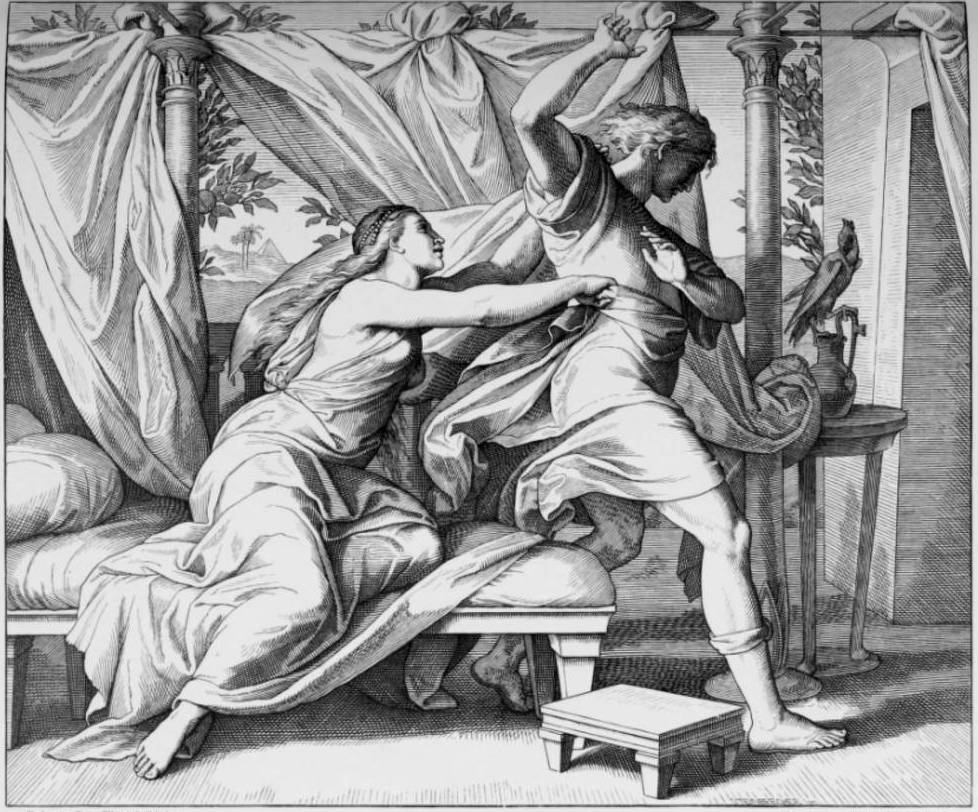
Joseph Flees Potifar’s Wife, by Julius Schnorr von Carlsfeld, 19th cent.

If a man is found lying with a woman [who is]a  ba-alah of a ba-al, then they shall die, also both of them: the man who lay with the woman, and the woman. And you will burn out the evil from Israel. (Deuteronomy 22:23)

ba-alah (בַּעֲלָה) = female owner or possessor, wife.

ba-al (בַּעַל) = male owner or possessor, husband, master of a craft; a Canaanite god.

Often the Torah refers to a wife as a “woman” (ishah, אִשָּׁה) and a husband as a “man” (ish, אִישׁ). But in this verse the Torah uses the words for “wife” and “husband” that indicate they are owners; they possess one another. Having sexual intercourse with another man’s wife means stealing his possession.

In the ancient society described in the Torah, a man has exclusive ownership of his wives and concubines. A married woman partly owns her husband, but she does not have exclusive ownership, since her husband is free to take other wives and to have sex with prostitutes. If an unmarried female prostitute has intercourse with a married man, it does not count as adultery and there is no penalty.

Traditional commentary interprets the words “also both of them” in the verse above to mean that the man and the married woman both get the death penalty only if they were both consenting adults. The Talmud5 says if one of them is a minor, the underage partner shall live.

And Rashi6 wrote that in “a case of unnatural intercourse from which the woman derives no gratification” only the man should die, since the woman would not have consented to such an act.

A fiancée

A man also gets the death penalty when he rapes a woman who is betrothed to someone else, even if her marriage has not yet been consummated.  (Betrothal in the Torah is the legal contract between a man and his future wife, including a bride-price paid to the woman’s father or guardian. Marriage occurs when the betrothed couple first has sexual intercourse.)

If a man seduces, rather than rapes, a woman betrothed to someone else, both of them are both put to death. Since the woman consented, she, too, is guilty of violating the contract between her father and her future husband which sets the terms for the transfer of property (the woman).

How does a judge determine whether the act was rape or mutual consent? The Torah portion Ki Teitzei explains that it depends on whether the deed happened in a town where other people could hear a cry for help, or out in a field where no one could hear.

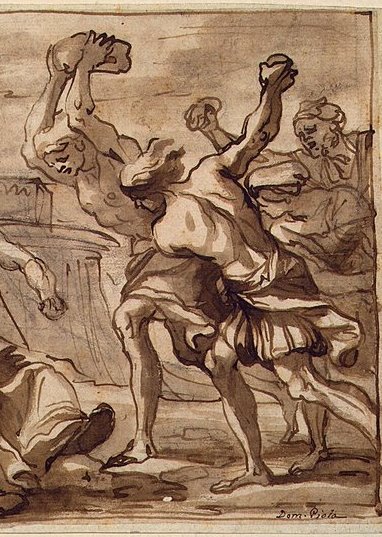
Stoning, from a sketch by Piola Domenico, 17th cent.

If a virgin adolescent girl is betrothed to a man, and [another]a man encounters her in the town and he lies with her, then you shall bring both of them to the gate of that town and stone them with stones and they will die—the adolescent girl because she did not cry for help in the town, and the man because he overpowered the wife of his fellow. And you will burn out the evil from your midst. (Deuteronomy/Devarim 22:23-24)

If the same event occurs “in the open field” only the man is executed, since the Torah gives the woman the benefit of the doubt and presumes that she cried for help, but nobody heard her.7

Stealing property, or breaking a vow?

If adultery in the bible were only about ownership, all those examples would be irrelevant in a modern world that prizes individuals and equal rights. In the west today, all adults own themselves, and no one else.8 I am grateful to live in a society in which no adult is another person’s property.  

Then if adultery is not a form of theft, is it immoral for some other reason?

This week’s Torah portion gives us a clue by addressing the question of making vows. The vows discussed in Ki Teitzei are vows to make donations to God and/or the sanctuary, not marriage vows. Nevertheless, the Torah says:

If you refrain from vowing, you will not become guilty. The utterance of your lips you must keep, and you must do as you have vowed of your own free will to God, your God, speaking with your own mouth. (Deuteronomy 23:23-24)

If we apply this principle to marriage, then a sexual liaison with a person who is married to someone else is unethical—if and only if that marriage included a mutual vow of sexual exclusivity. Violating the vow of exclusivity would be a betrayal of the marriage promise, and grounds for divorce. That is adultery. However, if the marriage happened without any promises of exclusivity, there is no vow to violate.

Personally, I am grateful for my long exclusive marriage. An “open marriage” is something I could not handle. But I respect all those who are careful about making vows—and who fulfill the promises they do make.


  1. For examples of na-af in reference to committing idolatry, see Jeremiah 3:9, 5:7, and 13:27, as well as Ezekiel 23:37.
  2. Deuteronomy 22:28-29.
  3. Leviticus 19:20-21.
  4. For more discussion of this passage, see my post Yitro, Mishpatim, and Va-etchanan: Relative or Relevant? Part 2.
  5. Talmud Bavli, Sanhedrin 66b.
  6. 11th-century rabbi Shlomoh Yitzchaki.
  7. Deuteronomy 22:25-27.
  8. The extent to which parents own their children is still a matter of debate.

Vayechi: First Versus Favorite

Jacob on his Deathbed, 1539

Jacob dies at age 147 in Vayechi (“and he lived”), the final Torah portion in the book of Genesis. Next week Jews begin the book of Exodus in the annual cycle of Torah readings.

As for me, I am still working on my book about moral mistakes in Genesis. Recent research on moral psychology has made me eager to add new explanations for why many of the characters in Genesis keep acting shady.

Meanwhile, here is an essay from my first draft about how Jacob challenges the rules of his society regarding the firstborn son.

Primogeniture and favoritism

In ancient Mesopotamian towns including Mari, Nuzi, and Nippur,1 a man’s firstborn son was obligated to: “Carry on the father’s name (patronym); Manage the family estate;  Provide for minors in the family; Provide a dowry for unmarried sisters; Pay for his parents’ burial and mourning ceremonies and maintain their grave afterwards.”2

In return, the firstborn would receive a double portion of the father’s inheritance, while his brothers and half-brothers received a single portion each.

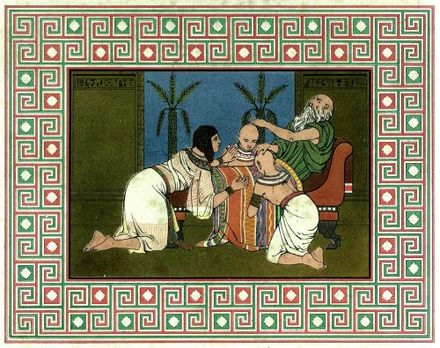
Jacob blesses Ephraim and Manasseh, by Owen Jones, 1865

The Torah indicates that the firstborn had similar duties and rights among the ancient Israelites. When Jacob adopts Joseph’s two sons in Vayechi, he entreats God:

“Bless the young men!

And may they be called by my name,

And the names of my fathers, Abraham and Isaac.” (Genesis 48:16)

In the Torah a son carries his father’s name when he is called “Isaac ben Abraham” or “Jacob ben Isaac”; ben means “son of”. Here, Jacob assumes the right to carry the name of his own father, Isaac. And he gives that right to the family of Joseph, his favorite son and the oldest son of his favorite wife, not to the family of Reuben, his actual firstborn son.

The firstborn son serves as the family’s priest in the Torah (until this duty is given to the Levites in Numbers 3:5-13). And as in Mesopotamia, a man’s estate was divided into shares equal to the number of his sons plus one, and his firstborn son inherited two shares.

A law in the book of Deuteronomy decrees that a man can assign the extra duties and extra inheritance only to his firstborn son, not to his favorite son.

If a man has two wives, the one loved and the other hated, and they have [both] borne him sons, the loved one and the hated one, and the [man’s] bekhor is the son of the hated one: on the day of bequeathing what he owns to his sons … he must recognize the bekhor, the son of the hated one, giving to him two shares out of all that is found to belong to him, because he [the man’s actual firstborn] is the first of his virility. The law of the bekhorah applies to him. (Deuteronomy 21:15-17)

bekhor (בְּכוֹר) = firstborn son.

bekhorah (בְּכֺרה) = rank and rights as firstborn. (From the same root as bekhor.)

This law is intended to protect the firstborn from losing his rights.

Jacob’s early maneuvers

From birth to death, Jacob maneuvers to circumvent the rule of the bekhorah.

He and Esau are twins, but Esau is born first, while Jacob emerges holding onto his brother’s heel, as if he does not want to be left behind. Nevertheless, Esau ranks as firstborn.3 When the twins are young men, Jacob covets the role and rank of the firstborn. One day Esau comes home famished and asks Jacob for some of the stew he is cooking.

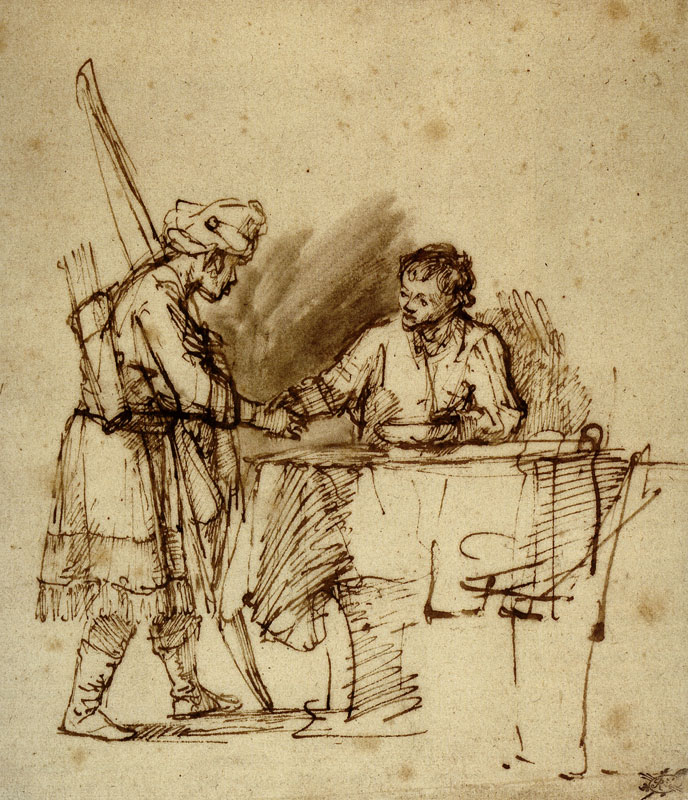
Esau Sells his Birthright, by Rembrandt

And Jacob said: “Sell today your bekhorah to me.” And Esau said: “Hey, I am going to die, so why this [bother about] my bekhorah?” And Jacob said: “Swear to me today.” And [Esau] swore to him and he sold his bekhorah to Jacob. Then Jacob give Esau bread and lentil stew … (Genesis 25:31-34)

Thus Jacob cheats his twin out of his rights. But by the time their father dies (at age 180), both brothers are already wealthy from their own efforts. Both Jacob and Esau bury Isaac.4 They have no sisters to marry off, and each brother takes care of his own children. The only firstborn right that Jacob inherits is God’s promise to give Canaan to his descendants. God made the same promise to Abraham, to his younger son Isaac, and finally to Isaac’s younger son Jacob.5

Jacob’s deathbed maneuvers

Despite his wealth and God’s promise, Jacob does not forget his resentment about the bekhorah. In fact, he challenges the rule during his two deathbed scenes in the portion Vayechi.

In the first deathbed scene, Jacob adopts Joseph’s two sons, Menasheh and Efrayim.

“And now, your two sons who were born to you in the land of Egypt before I came to you in Egypt, they shall be mine; Efrayim and Menasheh shall be mine like Reuben and Simeon.” (Genesis 48:5)

In effect, the adoption gives Joseph the double inheritance of the firstborn.  Instead of getting one share, as Joseph, he will get two shares, in the name of his two sons.

Then Israel said to Joseph: “Hey, I am dying, but God will be with you [all] and return you to the land of your fathers. And I myself give to you one shekhem over your brothers, which I took from the hand of the Emorites with my sword and my bow.” (Genesis 48:21-22)

shekhem (שְׁכֶם) = shoulders and upper back; an Amorite town about 30 miles (50 km) north of Jerusalem, where Jacob bought a plot of land in Genesis 33:18-19.

The campsite that Jacob bought near the town of Shekhem could not be of any interest to Joseph, the viceroy of all Egypt. But the author of the story knew that by 900 B.C.E. the two kingdoms of Israel would consist of the territories of twelve tribes. Three tribes (Judah, Benjamin, and Simeon) would occupy the southern Kingdom of Judah, while nine tribes (Efrayim, Menasheh, Reuben, Gad, Dan, Issachar, Zebulun, Asher, and Naphtali) would own territories in the northern Kingdom of Israel.

So what Jacob is really bequeathing to Joseph is a future double portion of the lands of the Israelite tribes in Canaan, lands they do not even begin to conquer until the book of Joshua.  When Joseph is on his own deathbed at the end of the book of Genesis, he asks to be embalmed and buried in Canaan when the Israelites return there someday.6 Joshua buries Joseph at Shekhem.7 By 900 B.C.E., Shekhem is an important city-state in the territory of Efrayim.

Jacob’s firstborn

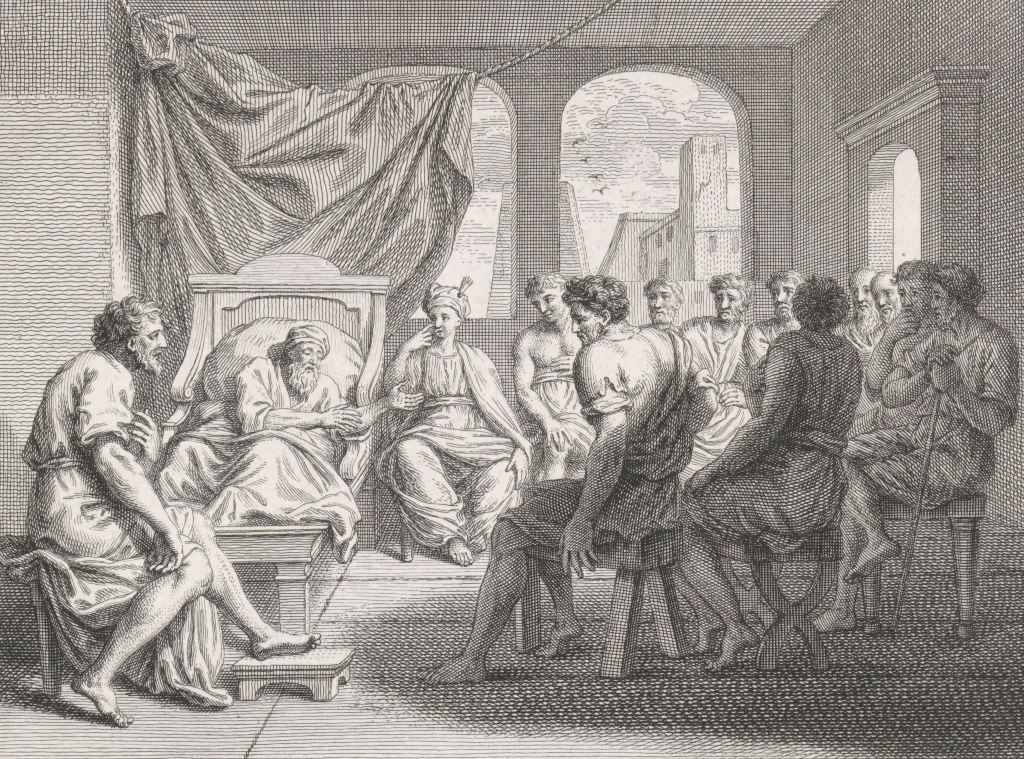
Jacob Blesses his Twelve Sons, by Pieter Tanje, 1791

Jacob’s second deathbed scene consists of prophesies about his twelve sons and the tribes that will descend from them.  In his first prophesy he explicitly demotes his oldest son, Reuben.

“Reuben, you are my firstborn,

            My might and the first of my virility,

            Prevailing in rank

            And prevailing in strength.

Reckless like water, you will no longer prevail,

            Because you mounted your father’s couch.

            That was when you profaned my bed.

            He mounted it!”  (Genesis 49:3-4)

Here Jacob’s reason for stripping Reuben of his firstborn rights is Reuben’s incest with Bilhah, one of Jacob’s two concubines.8

The first book of Chronicles explains:

… Reuben, the firstborn of Israel—for he was the firstborn, but when he profaned his father’s couch, his firstborn-right was given to the sons of Joseph son of Israel, and he is not pedigreed as the firstborn, because Judah was more powerful as a leader than his brothers, and the firstborn-right [went] to Joseph— …  (1 Chronicles 5:1-3)

In other words, although Reuben was the first of Jacob’s sons to be born, he does not get either the duty to lead his brothers nor the right to inherit an extra share of their father’s property. Judah is the leader, and Joseph gets the double inheritance.

Sleeping with one’s father’s concubine amounted to a challenge to the father’s authority over the household.9 Yet for decades Jacob and Reuben behaved as if it had never happened. There is no indication in the Torah that Jacob ever punished Reuben or Bilhah, that Reuben ever apologized, or that Jacob ever forgave him.

For decades Reuben retains his position as the firstborn. Although his fractious brothers do not treat him as their leader, Reuben can still expect a larger inheritance when their father dies.

But at the end of Jacob’s life, all he wants is a pretext for  giving the firstborn’s extra inheritance to Joseph, his favorite son. He is not interested in either justice or mercy where Reuben is concerned.

Jacob could use Reuben’s long-ago attempt at usurpation through incest to disinherit his firstborn son altogether. But he does not.  He takes away Reuben’s birthright, but still leaves him one portion of the inheritance, like any of his other sons except Joseph.  In a way, this counts as unspoken and partial forgiveness.

Yet Jacob remains guilty of playing favorites, from the day he gives a fancy tunic only to Joseph, to the day he gives Joseph the double share. He also violates a social institution by depriving Reuben of the role and property he expected to inherit, leaving him in an embarrassing position.

On his deathbed, Jacob remains too self-absorbed to achieve a higher ethical resolution.


  1. The Mesopotamian towns of Mari, Nuzi, and Nippur were all extant during the Akkadian period, the 24th to 22nd centuries B.C.E., and continued as population centers in subsequent empires. Mari was a Semetic town later occupied by the Amorites, with whom the Israelites traded.
  2. Kristine Henrickson Garroway, “Does the Birthright Law Apply to Reuben? What about Ishmael?”, https://www.thetorah.com/article/does-the-birthright-law-apply-to-reuben-what-about-ishmael.
  3. Genesis 25:24-26.
  4. Genesis 35:28-29.
  5. Genesis 35:12.
  6. Genesis 50:24-26.
  7. Joshua 24:32.
  8. Genesis 35:22.
  9. 2 Samuel 16:20-22.


Ki Teitzei & Kedoshim: Two Kinds

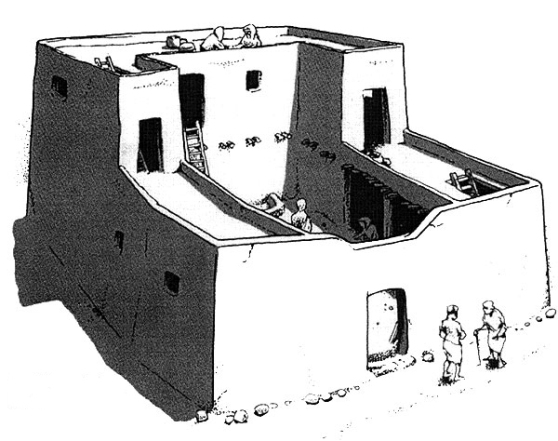
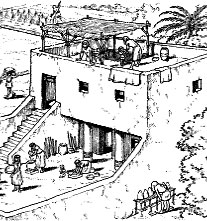
House in ancient Israel with parapets

This week’s Torah portion, Ki Teitzei (“If you go”), is packed with ethical rules.  But right after the law about building a parapet around your roof so no one can fall off, Moses gives a apparently senseless rule about segregating different crops.

The contrast is more pronounced in a similar passage in the portion Kedoshim (“Holiness”) in the book of Leviticus/Vayikra.  Right after the command to love your neighbor as yourself, the Torah switches to rules about segregating different species of animals, plants, and even fibers.

In Kedoshim

You shall love your neighbor as yourself; I am God.  My chukot you shall observe: You may not breed together livestock of kilayim, you may not plant your field with kilayim, and clothing of woven material of kilayim may not go over you.  (Leviticus 19:18-19)

chukot (חֻקֺּת) = decrees, fiats.  (Early commentators wrote that chukot are the divine rules that humans cannot figure out using reason, but that Jews must obey anyway.1)

kilayim (כִּלְאָיִם) = two kinds; an enforced mixture of two different kinds.  (Kele, כֶּלֶא = imprisonment + ayim= a suffix meaning a pair.2)

Were these three rules about forbidden mixtures always chukot, or was there an early rationale behind them that was lost over the centuries?  No definite reason for the rules has yet been discovered, but many commentators have argued that these rules instill respect for God the Creator.

Attempting to crossbreed two different species of animals (or even a wild donkey with a domesticated donkey3) insults God by implying that the animals God created are insufficient or imperfect.4  Growing crops of two different species without a clear separation between them, or grafting a branch from one tree onto another kind of tree, gives an observer the impression that species of plants that God created have been altered—another insult.5

19th-century rabbi Samson Raphael Hirsch even applied this argument to clothing made with kilayim (mixed wool and linen, according to the Torah portion Ki Teitzei) when he wrote: “…every seedling and fiber of organic life does the Will of its Creator, without deviating from its assigned task.”6

In Ki Teitzei

The three chukot from Leviticus change a bit when Moses repeats them in Deuteronomy, right after the law about the parapet.

You may not plant your vineyard with kilayim, or else it will be holy: [both] the full yield of the seeds that you plant, and the produce of the vineyard.  You may not plow with an ox and with a donkey together as one.  You may not wear material woven of wool and linen together as one.  (Deuteronomy/Devarim 22:9-11)

The version in Ki Teitzei refers to mixing seeds in a vineyard rather than a field, and adds the warning that such a mixture is holy.  (Usually when something is holy in the Torah, it is prohibited from ordinary use and reserved for God, but here the grapes and other produce are merely prohibited from use.)

The next change in the Deuteronomic version is that plowing with two different animals is banned, instead of breeding them.  Finally, Ki Teitzei specifies that only woven material that mixes wool and linen is forbidden.7

Commentators have used these changes or clarifications to generate additional explanations for the inexplicable chukot.  If the rationale that the rules enforce respect for God the Creator is not convincing, we can read arguments that the chukot about kilayim are instructions for distinguishing between the traits of Cain and Abel, or for segregating the holy from the ordinary.  The second rule, about plowing with two kinds of animals, has also been interpreted as an ethical command.

Distinguishing Cain from Abel

The distinction between linen and wool suggests the story of Cain and Abel, in which God rejects Cain’s offering of plants, but accepts Abel’s offering of a sheep, and Cain kills his brother Abel.8  In the 8th or 9th century C.E., the author of  Pirkei DeRabbi Eliezer wrote: “Rabbi Joshua ben Ḳorchah said: The Holy One, blessed be He, said: Heaven forbid ! Never let the offerings of Cain and Abel be mixed up (with one another), even in the weaving of a garment …”9

13th-century Rabbi Hezekiah ben Manoah went farther.  Besides identifying Cain’s offering as flax (the raw material for linen), and Abel’s as sheep which grow wool, he declared that Cain’s father was the serpent in the Garden of Eden, while Abel’s father was Adam, so Cain and Abel were themselves kilayim, as well as the first murderer and the first murder victim.10

Segregating the holy

Another explanation is suggested by the reference to holiness in the rule about vineyards.  In the 19th century, Hirsch wrote that only wine from grapes grown in observance of God’s rule could be taken into the sanctuary as a libation to God.11  In that case, holy means prohibited for any use.

But in the 21st century, Richard Elliott Friedman speculated that all three chukot might forbid those particular combinations because they are associated with gods, and therefore holy.  “The law against cooking a kid in its mother’s milk may be because that was regarded as a food for a deity, since a Ugaritic text pictures the chief god, El, having kid cooked in milk …  The law against wearing wool and linen together may be because they were both used in the Tabernacle …  And so it may be in the case of mixed seeds, as well: the prohibition of mixing them may not be because the mixing is bad in some way but rather because some mixtures are regarded as divine.”12

Wool and linen are combined for several sacred uses in the Torah.  In God’s portable sanctuary, both the screen at the entrance of the tent and the curtain concealing the Holy of Holies inside must be made out of “sky-blue and red-violet and red and linen”.13  The technology to dye linen was unavailable in the Ancient Near East, so the colored threads must be wool.14

High priest vestments

A priest’s vestments are woven out of the same combination of colored wool and linen,15 and priests dedicate their lives to serving God at the sanctuary.

In the book of Numbers/Bemidbar, men are required to wear fringes on the four corners of a garment, and each fringe must include a cord of blue wool.  Whenever they glance at it, they will remember God’s commandments.16

In this week’s Torah portion, people may not wear or cover themselves with material woven of wool and linen together.  The mixture is prohibited for these ordinary uses of fabric, and reserved for holy purposes.

Ethical plowing

The need to separate the holy and the profane does not explain the middle rule: You may not plow with an ox and with a donkey together as one.  (Deuteronomy 22:10)

Some commentators claimed this rule was derived from the prohibition in Leviticus about breeding different species of animals.  If a farmer used two different animals to plow together, he would house both in the same shed, where they might try to mate.17

But by the 13th-century, Chizkuni offered: “An alternate interpretation; G-d’s mercy extends not only to human beings but to all of His creatures. Therefore these two categories of beasts being mismatched as one is far stronger than the other, it would be causing the donkey pain to be part of such a team pulling the plough.”18  This is the dominant interpretation today.

*

I confess that until this week I was only interested in the prohibition against yoking a donkey and an ox to plow together.  This rule not only opposes cruelty to animals, but can also be extended to cover situations in which human beings with unequal abilities are expected to perform the same tasks.  How often have you heard people with good jobs or inherited wealth accusing the poor of being lazy or careless?  We need to oppose cruelty to humans, too.

Now that I have studied the chukot about kilayim, I am also pondering the human need to make distinctions.  We want clear choices and definite rules so we can navigate our ordinary daily lives without unnecessary anxiety.  Here is a vineyard, over there is a field of wheat.  Here are the foods on my diet, over there are the things I don’t eat.

But when it comes to our spiritual lives, we embrace paradoxes and non-rational unifications.  So although we try to avoid kilayim in mundane things, we celebrate merging on a spiritual level.  God fills the universe, God once lived inside the Tent of Meeting, and today God spoke to me.  God creates disasters and approves of wars, and God is good and loves every individual.

Are these good approaches to mundane and spiritual life?

  1. The Tanchuma (circa 500 C.E.) and subsequent commentaries, including Rashi.
  2. Following 19th-century rabbi Samson Raphael Hirsch, The Hirsch Chumash: Sefer Vayikra Part II, translated by Daniel Haberman, Feldheim Publishers, Jerusalem, 2002, pp. 629-630.
  3. Mishnah Kilayim 1:6 (circa 200 C.E.).
  4. g. 12th-century rabbis Abraham Ibn Ezra and Ramban (Moses ben Nachman); Rabbeinu Bachya ben Asher (1255-1340).
  5. Mishnah Kilayim 3:5, translated in sefaria.org : “One may plant a cucumber and a gourd in one hole, as long as this [species] inclines in one direction, and the other [species] in the opposite direction. And he should tip the leaves of one [species] one way, and the other the opposite way, since all that the sages prohibited [in matters of kilayim] they only decreed because of appearance.”
  6. Hirsch, ibid., p. 633. He then launched into an argument that this divine decree is a reminder that a man’s (sic) animal nature should rule over his vegetative nature—unless he is a priest, who can wear wool and linen in the same garment because his whole self is dedicated to God.
  7. The word sha-atnez (שַׁעַטנֵז), probably a loan-word from Egyptian, appears only in Leviticus 19:19 and Deuteronomy 22:11. It may mean “woven material”, in which case Leviticus prohibits material woven with any kilayim.  Or it may mean “woven material combining wool and linen”, in which case Leviticus and Deuteronomy agree.
  8. Genesis 4:1-8.
  9. Pirkei DeRabbi Eliezer 21:6, translated in sefaria.org.
  10. Hezekiah ben Manoah, Chizkuni, (13th century) translated in sefaria.org.
  11. Samson Raphael Hirsch, The Hirsch Chumash: Sefer Devarim, translated by Daniel Haberman, Feldheim Publishers, Jerusalem, 2002, p. 516.
  12. Richard Elliott Friedman, Commentary on the Torah with a New English Translation, HarperCollins, 2001, p. 632.
  13. Exodus 26:31, 26:36.
  14. Friedman, ibid., p. 633.
  15. Exodus 28:5-6.
  16. Numbers 15:38-39.
  17. g. Abraham Ibn Ezra.
  18. Hezekiah ben Manoah, Chizkuni, translated in sefaria.org.
 

Shoftim: More Important Than War, Part 2

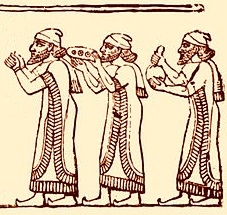
Israelite Soldier (artist unknown)

Once the Israelites have taken over most of Canaan and established their own country, Moses says in last week’s Torah portion, Shoftim (“Judges”), a king will have more important duties than wars of conquest, and some men will have more important duties than being soldiers.  Battles are inevitable in the Torah, and advantageous to the winners; winning king expands his kingdom, and his soldiers get shares of the booty.  But the portion Shoftim opens a door to an attitude that values peace.

In last week’s post, Shoftim: More Important Than War, Part 1, I covered the four rules a good king must follow, all of which would make a war of conquest more difficult—unless God intervened.

Later the portion Shoftim says:

If you go out to battle against your enemies and you see horse and chariot, more troops than you have, you must not be afraid of them, because God, your God who brought you up from the land of Egypt, is with you.  (Deuteronomy/Devarim 20:1)

Individual men must still be prepared to die, but they should know that God is on the side of their country and their comrades.

If the war is defensive, protecting the kingdom from attack, then all able-bodied men who are age 20 and older must serve in the military.1  But if the war is offensive, designed to expand Israel’s border or its prestige, then four kinds of circumstances excuse men altogether from going to battle.2

Israelite house, artist unknown

1) Then the officials will speak to the troops, saying: “Who is the man that has built a new house and not chanako?  He must leave and return to his house, lest he die in the battle and another man yachnekhenu.”  (Deuteronomy 20:5)

chanakho (חֲנָכוֹ) = dedicated it, inaugurated it.  yachnekhenu (יַחְנְכֶנּוּ) = he will dedicate it, inaugurate it.  (From the same root as chanukah, חֲנֻכָּה = dedication; the name of the winter solstice holiday.)

According to Talmud Bavli (Sotah 43b) this exemption applies to any man who has not dedicated a new house, whether he built it, bought it, inherited it, or received it as a gift.  What does it mean to dedicate a new house?  According to Targum Yonatan, it means putting a mezuzah on the doorpost.3  But this takes only a few minutes, not long enough to stop a man from going to battle.  Rashi wrote that dedicating a house means living in it.4

If the new owner died in battle, he would never know that another man was living there.  But the Torah does not want to deprive the owner of the satisfaction of moving into the new house.  In the Torah, a man who lives in his own house is the head of a household, no longer a dependent on an older family member.  He should not be denied the joy of his new status.

2) “And who is the man that has planted a vineyard and not chilelo?  He must leave and return to his house, lest he die in the war and another man yechalilenu.” (Deuteronomy 20:6)

Grape vine, artist unknown

chilelo (חִלְּלוֹ) = made profane use of it; made personal use of it.  yechalilenu (יְחַלְּלֶנּוּ) = he will make profane/personal use of it.

The Talmud defines a vineyard as at least five grape vines, and extends the exemption to include those who had planted at least five fruit trees.5  No fruit may be harvested from a grape vine or a fruit tree for the first three years after it is planted.  In the fourth year, all of its fruit must be donated to God—either brought to the priests at the temple, or exchanged for silver which is brought to the temple.  Only in the fifth year can the owner eat the fruit himself, or sell it for profit.6

The book of Leviticus/Vayikra, in which these rules are laid out, is primarily concerned with the holy rather than the profane.  But here in Deuteronomy, Moses emphasizes the importance of feeding yourself and your own household.  After waiting four years for his vines or trees to mature, farmer should not be denied the joy of making a living from them.

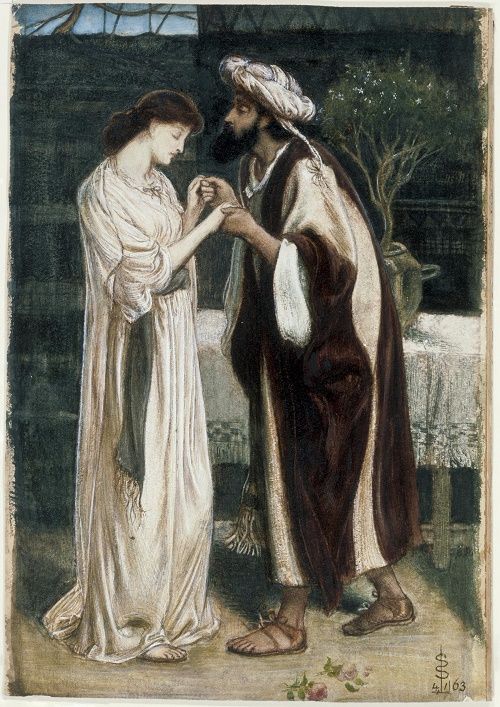
Isaac and Rebekah, by Simeon Solomon, 1863

3) “And who is the man that has paid the bride-price for a wife and not lekachah?  He must leave and return to his house, lest he die in the war and another man yikachenah.” (Deuteronomy 20:7)

lekachah (לְקָחָהּ) = taken her, had sexual intercourse with her, married her.  yikachenah (יִקָּחֶנָּה) = he will take her, have sex with her, marry her.

Is the fiancé exempt from battle so that he is not deprived of intercourse with his bride, or so that he can beget children with her?  This week’s Torah portion, Ki Teitzei, says:

When a man takes a new wife, he must not go out with the army for any purpose; he shall be exempt for his household for one year, and make his wife glad. (Deuteronomy 24:5)

This implies that a new wife must not be deprived of the joy of intercourse with her husband.

The Talmud, Sotah 43b, says that the bridegroom is sent home whether he paid the bride-price for a virgin or a widow, or he is doing his duty for his deceased brother’s widow.  Under Israelite and Canaanite law, a childless woman whose husband died was is entitled to get a son through her husband’s brother.  “And even if there are five brothers, and one of them dies in the war, they all return for the widow.”7  Perhaps giving the widow a son is so important that if one brother fails, another must be available.  This Talmud passage implies that the purpose of the exemption is to get a new wife pregnant.

Whether the goal is to make the wife glad, or to have a child, a husband should not be denied the joy of living with his new wife.

Rembrandt history painting detail, 1626

4) “And the officials will continue to speak to the people, and they will say: “Who is the man who is yarei and rakh of heart?  He must leave and return to his house, and not melt the heart of his brother [soldier] like his heart.”  (Deuteronomy 20:8)

yarei (יָרֵא) = afraid, fearful.

verakh (רַךְ) = sensitive, tender, weak, delicate.

The Talmud (Sotah 44a) offers two reasons why a man might be fearful: Rabbi Akiva said the man would be terrified by the sight of a drawn sword; Rabbi Yosei HaGelili said the man would be afraid because of his sins (implying a view of the afterlife that was invented after the Hebrew Bible was written).8  Both of these reasons address fear, but not sensitivity.  Perhaps the rabbis of the Talmud interpreted the sentence as describing the man as “fearful and weak-hearted”, making weak-hearted a synonym for fearful.

Talmud tractate Sotah 44b says the reason for this fourth exemption is that fear spreads, making formerly brave and hard-hearted soldiers feel qualms about going to battle.

But the officials could also be asking “Who is the man who is afraid and tender-hearted?”  Since the adjective rakh applies to a mental attitude as well as physical condition, this man would feel tenderness toward all human beings, and be afraid of killing them rather than of being killed.

A tender-hearted man’s reluctance to kill could also spread to other soldiers if he were allowed to march with the troops.

According to the Talmud (Sotah 44a), all four exemptions are announced at once to spare a fearful man from embarrassment; for all the other men know, he is leaving the ranks and going home because of a house or vineyard or wife.

But what if the exemption for a fearful or tender-hearted man is parallel to the other three exemptions?  Then perhaps he must also leave and return home for his own good.  Maybe a peaceful, gentle man must not be denied the joy of living in peace.


What is more important than going to war?

Home.

Livelihood.

Family.

Peace.


  1. Numbers 1:2-3.
  2. The Talmud distinguishes between optional wars of conquest, and obligatory wars to defend the kingdom of Israel or Judah from invasion. (Sotah 43b-44b)
  3. Targum Yonasan (a.k.a.Targum Pseudo-Jonathan, between 4th and 13th centuries C.E.) as cited by Rabbi Elie Munk, The Call of the Torah: Devarim, trans. by E.S. Mazer, Mesorah Publications, Brooklyn, NY, 1995, p. 205.
  4. Rashi is the acronym for 11th-century C.E. Rabbi Shlomoh Yitzchaki.
  5. Talmud Bavli, Sotah 43b.
  6. Leviticus 19:23-25.
  7. Talmud Bavli, Sotah 44a, William Davidson translation, www.sefaria.com.
  8. See Talmud Bavli, Eiruvin 19a.  Jews did not adopt the idea that souls survive death until the second century B.C.E.  The idea of souls burning in an underground fire came from Greek and Persian sources, which Jews developed into the myth of Gehinnom (later called Gehenna) and Christians developed into the myths of Hell and Purgatory.  The Talmud was written during the third through fifth centuries C.E.


Ki Teitzei: Virtues of a Parapet

When you build a new house, then you shall make a ma-akeh for your roof; then you will not put blood-guilt on your house if the faller falls from it.  (Deuteronomy/Devarim 22:8)

ma-akeh (מַעֲקֶה) = parapet: a low wall along the edge of a roof or another structure.

This verse appears in a compilation of practical laws in this week’s Torah portion, Ki Teitzei (“When you go out”).  At the most literal level, it simply requires a parapet around a roof as a safety precaution to prevent anyone from falling.  If the faller were being injured or killed the owner of the house would be liable, bearing the “blood-guilt”.

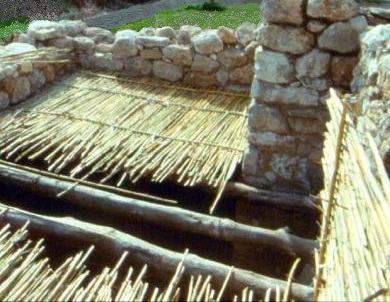
Roofs from Egypt to Babylon (as well as in other parts of the world with dry climates and mild winters) were usually flat and built to bear weight, so people could walk, sit, sleep, and work on them.  In the Ancient Near East, builders ran wooden beams or whole logs from wall to wall.  They covered the beams with framed straw or reed mats, then topped the roof with several layers of clay compacted with stone rollers.  Sometimes they added latticed rooftop structures to provide shade for people using the roof.  A parapet around the edge made the top layer more durable, as well as improving safety.

The Hebrew Bible mentions using rooftops for private conversations,1 for sleeping,2 for storage,3 and for making sacrifices at altars for other gods.4  The Talmud also mentions keeping small lambs or goat kids on one’s roof.5

Safety

A roof without a parapet is unsafe not only because a person might fall off, but also because something might fall, or get pushed, from the roof onto a person below.  When an unsavory king in the book of Judges, Avimelekh of Shechem, captures the town of Teiveitz, its residents flee to the tower in the middle of their town.

And they shut themselves inside and they went up onto the roof of the tower.  And Avimelekh came up to the tower… to set it on fire.  Then a woman sent down an upper millstone onto the head of Avimelekh, and it cracked his skull.  (Judges 9:51-53)

The Talmud (Bava Kamma 15b) extends the requirement for a parapet around a roof to all other hazards in a house, such as keeping a vicious dog or setting up an unstable ladder.  If the owner does not remove the hazard, he is liable for damages and a court can even excommunicate him.

Even if the owner is the only person who lives in the house, he must still make it safe for the benefit of guests and future residents.6

Privacy

A sufficiently high parapet also provides privacy.  According to the Talmud (Bava Batra 2b) if the roof of one house adjoins the courtyard of another house, the owner of the first house must build a parapet four cubits high,7 so he cannot look into the neighbor’s courtyard when he is using his roof.  A similar ruling is that a wall separating the courtyards of two adjacent houses should be four cubits high, so neighbors cannot see into each other’s courtyards  (Bava Batra 5a).

Even if houses are not adjacent, a higher parapet may be needed for privacy.  If two houses are on opposite sides of a public road (Bava Batra 6a), both owners are likely to build a parapet high enough to prevent anyone on the road below from seeing them; but each owner must also build one side of his front parapet high enough to block the view from the opposite roof.  Then both families will have privacy (and share the expense equally).

A story in the bible illustrates another situation in which a high parapet would have provided privacy.

Bathsheba, by Jean-Leon Gerome, 1889

It was evening time, and David rose from his bed and walked around on the roof of the king’s house.  And he saw a woman bathing, from up on the roof, and the woman was very good in appearance.  (2 Samuel 11:2)

For the sake of privacy, Bathsheba would have been bathing either on her own lower roof, or in the enclosed courtyard of her own house.  But King David’s view was not blocked by a high enough parapet.  Enamored of her naked beauty, he found out who she was and sent for her, assuming that since  her husband Uriah was away at war, he would never know.  When Bathsheba became pregnant, King David had Uriah sent home from the front, but he refused to sleep with his wife until the war was over.  So David arranged for the death of the innocent man.  None of this would have happened if King David’s parapet had been four cubits high.

Metaphor for pride

The original injunction in this week’s Torah portion has also been interpreted allegorically, with the rooftop standing for pride.  Philo of Alexandria wrote in the first century C.E. that when people give themselves credit for intellectual and social advancement, instead of crediting God, they are likely to fall from their high positions and be destroyed.

For the most grievous of all falls is for a man to stumble and fall from the honour due to God; crowning himself rather than God, and committing domestic murder. For he who does not duly honour the living God kills his own soul …8 

A Poet’s Fall, 1760

The Hassidic commentator Dov Baer Friedman interpreted Deuteronomy 22:8 by applying the metaphor of pride before a fall9 to a Torah scholar’s pride in coming up with a new interpretation:

This refers to one offering a new interpretation of Torah.  “Make a railing for your upper storey.”  If the verse were referring to a literal house, it would have said: “for its upper storey.”  As it is, the upper storey is on you, referring to the swelling of your pride at this new teaching.  Do not let your head get turned by pride!  Even though this is a bit of Torah that no ear has ever heard, it comes not from you, but from God. “Should somebody fall from it.”  You are all set for such a fall.10


Building a Mental Parapet

Safety: We can be dangerous to ourselves when we get so carried away by our emotions that we act without thinking it through. Burning with anger, we hurl words, or worse, at the enemy we think is below. Overcome by sexual attraction, we throw ourselves at another person, and fall off. Thick with bitterness, we trudge ahead without looking where we are going.

The ensuing disasters could all be avoided if we built a strong mental parapet: a habit of stopping until our passion fades enough so we can rationally consider consequences and alternatives.

Privacy:  We can also find an inner meaning of the Talmud’s extension of the law in Ki Teitzei to cover privacy. Besides physical privacy, humans need privacy in our mental lives.  We can share personal information, random thoughts, and emotional reactions with a trusted partner who knows us well.  But sharing these things with neighbors, friends, or strangers can cause them to feel uncomfortable, to make false assumptions about us, or to feel burdened by our apparent neediness.  It can even give false friends information they can use against us or against people we know.

We can build a mental parapet, a habit of pausing before sharing something that might be out of bounds, so that we do not reveal the wrong things–whether in response to an inappropriate question, or in a gush of good will or exhibitionism.

Pride: As both Philo of Alexandria and Dov Baer Friedman wrote, we can fall into the self-delusion of pride over any personal achievement. If giving God credit for our deeds does not work for us, we can build a mental parapet out of reminders that all our successes depend on the deeds of other human beings, on the family and society we inherit, and on the genes that we are born with.

Those of us who actually live in buildings with flat, inhabitable roofs still need parapets to prevent people and things from falling off.  But we all need parapets when it comes to the contents of our own minds.

  1. Examples of using a roof for private conversations: Joshua 2:6, 1 Samuel 9:25-26.
  2. Examples of using a roof for sleeping: Joshua 2:6, 2 Samuel 11:2.
  3. A roof is used for storing flax in Joshua 2:6.
  4. Examples of using a roof for altars to worship other gods: 2 Kings 23:12, Jeremiah 19:13 and 32:29, Zephanaiah 1:5.
  5. Talmud Bavli, Bava Batra 6b.
  6. 19th-century rabbi Samson Raphael Hirsch, The Hirsch Chumash: Sefer Devarim, translated by Daniel Haberman, Feldheim Publishers, Jerusalem, 2009, p. 513.
  7. A cubit is the length of a forearm from elbow to fingertips. Four cubits would be over 6 feet, or almost 2 meters.  (Bava Batra 2b also provides rules for window and courtyard partition placements to prevent a neighbor from being able to look inside the house next door.)
  8. Philo of Alexandria, The Works of Philo, trans. by C.D. Yonge, “XXXIX, On Husbandry, 171”.
  9. Proverbs 16:18.
  10. Dov Baer Friedman of Miedzyrzec, Or Torah (1804), translated by Arthur Green in Arthur Green, Speaking Torah, vol. 2, Jewish Lights Publishing, Woodstock, Vermont, 2013, p. 124.

Ki Tavo & Ki Teitzei: You Are What You Wear, Part 2

A person’s inner state and outer garment should match, according to the Torah.

And God said to Moses: Go to the people and consecrate them, today and tomorrow, and they shall wash their semalot. Then they shall be ready for the third day, for on the third day God is coming down before the eyes of all the people on Mount Sinai. (Exodus/Shemot 19:10-11)

semalot (שְׂמָלוֹת) = plural of simlah (שִׂמְלַה) = a long, loose outer garment resembling a caftan or cloak. (A variant spelling is salmah (שַׂלְמָה), plural salmot (שַׂלְמֹת).)

If you are consecrated, made holy enough to behold God, then your simlah must also be purified. Although men remove their semalot to do physical labor, stripping down to a less bulky garment underneath, the Israelites in the Bible wear their semalot for public appearances, as well as for protection from wind, sun, and rain. At night one’s simlah serves as a blanket.

Three of the laws in last week’s Torah portion, Ki Teitzei, assume every individual has the right to a simlah. Even an impoverished debtor and a captive of war must be allowed to sleep in their semalot. Depriving someone of a simlah would not only expose them to the elements, but deprive them of human dignity. (See my post Ki Teitzei: You Are What You Wear, Part 1.)

Two other laws in the portion Ki Teitzei (4 and 5 below) show how a simlah can reveal something about the essential nature of the person who wears it. And this week’s Torah portion, Ki Tavo (“When you enter”), ends with miraculous semalot that reveal the nature of humankind.

  1. Abominable or godly?

One of the laws about the simlah in Ki Teitzei has become notorious:

The equipment of a man shall not be on a woman, and a man shall not put on the simlah of a woman, because anyone doing this is to-eivah to God, your God. (Deuteronomy/Devarim 22:5)

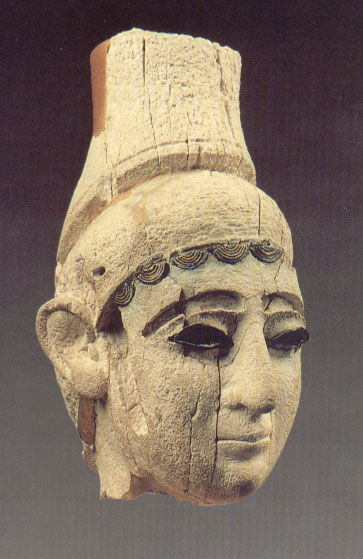
Head of a prince or princess from Ugarit, 13th century B.C.E.

to-eivah (תוֹעֲבַה) = abhorrent, abominable, anathema.

The first clause in this verse may be a reaction against a Canaanite myth (discovered in the ruins of Ugarit) about Paghat, a young woman who wears weapons under her female clothing and sets out to avenge her brother’s murder.1 The Bible frequently denounces Canaanite religions, and the Talmud (Nazir 59a) agrees that the “equipment of a man” consists of weapons of war.

The second clause in the verse may be a reaction against a Canaanite practice in which male temple functionaries cross-dressed and offered themselves as surrogates for gods in homosexual religious acts. According to the Bible, this happened even at the Temple in Jerusalem until King Josiah put an end to it.2

A man wearing a woman’s simlah may be to-eivah because the only men who appeared that way in public were those paid for sexual rituals from another religion—a practice God clearly abhors according to a later law in Ki Teitzei:

No daughter of Israel shall be a female religious prostitute, and no son of Israel shall be a male religious prostitute. You shall not bring into the house of God, your God, the fee of a harlot [female prostitute] or the price of a dog [male prostitute] for any vowed offering, because both of them are to-eivah to God, your God. (Deuteronomy 23:18-19)

Nevertheless, for more than two millennia people have used the law in Ki Teitzei about cross-dressing to promote the traditional gender roles in their own societies. (See my post Ki Teitzei: Crossing Gender Lines.)

Today many people reject the idea that every individual must squeeze into one of two gender roles defined by a particular society. Some individuals in the 21st century C.E. choose apparel that blurs gender lines in order to reveal their own nuanced identities.

In the 7th century B.C.E. kingdom of Judah, a man who wore the simlah of a woman also revealed an essential part of his identity: he was dedicated to gods other than the God of Israel, and he served these gods by providing ritual sex for worshipers.

  1. Fraud or honesty?

The remaining law in Ki Teitzei that mentions a simlah is about the virginity of a bride. It begins:

If a man takes a wife and he comes into her, and then he hates her, and he brings charges against her and gives her a bad name, and he says: “I took this woman, and I approached her, but I did not find evidence of virginity in her!”— (Deuteronomy 22:13-14)

Detail of “Hymen” by Marc Chagall

This was a serious charge in ancient Judah. A marriage was a contracted alliance between two households. The legal contract included the dowry paid to the groom’s household, and the bride-price paid to the bride’s household. When the bride and groom had intercourse, the marriage was completed. The bride (but not the groom) was expected to be a virgin (unless the contract stipulated otherwise).

So if a man claimed, after the wedding, that his bride was not a virgin, he was not only defaming her and her parents, but also suing her family for contract fraud. If the village elders ruled in his favor, he got a divorce, the bride (if she was permitted to live4) became unmarriageable, and the bride’s father had to return the bride-price to the groom. The grooms’ household, on the other hand, got to keep the dowry, the bride price, and the family’s good name.3

What if a groom tells a lie in order to get a divorce with a lucrative financial settlement? Then, according to Ki Teitzei, the bride’s parents should bring “evidence of the girl’s virginity” to the elders sitting as judges, and the bride’s father should say:

“But this is evidence of the virginity of my daughter!” And they shall spread the simlah before the elders of the town. (Deuteronomy 22:17)

The evidence is the simlah the bride wore on her wedding night. When the couple goes to bed, she lies on top of her own simlah—and leaves a bloodstain if her hymen breaks.

In much of the ancient Near East, a bride’s parents collected her wedding simlah the morning after—just in case they would need to display it.

The law in Ki Teitzei affirms that a bloodstained simlah is evidence of virginity, and punishes the lying husband. He is flogged; he pays 100 shekels of silver to the bride’s father (to compensate for impugning his honor); and he may never divorce the bride.

The good name of the bride’s family is restored. The bride herself at least has the consolation of a salvaged reputation and a guaranteed home (even if she might prefer to be the property of a different man).

Thus the condition of the bride’s simlah proves something about her character: she was honest when she affirmed she was a virgin.

  1. Natural or miraculous?

At the end of this week’s Torah portion, Ki Tavo, Moses quotes God:

“And I led you forty years through the wilderness. Your salmot did not wear out upon you, and your sandal did not wear out upon your foot. Bread you did not eat, and wine or alcohol you did not drink, so that you would know that I, God, am your God.” (Deuteronomy 29:4-5)

During their 40 years in the wilderness, the Israelites did not need to grow grain and grind it into flour; manna miraculously appeared every morning. They did not need to cultivate grapes and make wine; God provided fresh drinking water in the desert. They did not need to make leather for sandals, or weave cloth for semalot; God continuously renewed their clothing.5

Instead, the Israelite women wove cloth to make God’s sanctuary. All the weavers were generous volunteers.6  And God generously volunteered the small miracles that kept the people clothed and fed. All God wanted was acknowledgement “he” was their god.

The Israelites in the books of Exodus and Numbers did praise God for saving them at the Reed Sea and for giving them victories in battles. But in ordinary daily life, they complained about the food, were impatient when they ran out of water, and did not even notice the condition of their semalot.

Moses introduces God’s words at the end of Ki Tavo by saying:

But God did not give you a mind to know, or eyes to see, or ears to hear, until this day. (Deuteronomy 29:3)

Only at the end of 40 years in the wilderness to the people notice God’s daily generosity.

The portrayal of God’s character must be taken with a grain of salt. The Torah sometimes portrays God as a patient parent, sometimes as an angry mass murderer. This is the result of trying to explain everything in terms of an anthropomorphic god.

Yet the passage at the end of Ki Tavo does offer insight into the character of human beings. Human nature takes good situations for granted—until we are deprived of them, or until we grow wise enough to see how fragile our lives are. To find that wisdom—a mind to know, eyes to see, ears to hear—might take 40 years. And we cannot force ourselves to become wise.  It comes as a gift.

  1. She emerges, dons a youth’s raiment, puts a k[nife] in her sheath. A sword she puts in her scabbard, and over all dons woman’s garb. (“The Tale of Aqhat”, The Ancient Near East, Vol. 1, by James B. Pritchard, Princeton Univ. Press, 1958, p. 132)
  2. And he smashed the houses of the male religious prostitutes that were inside the house of God, where the women wove fabrics for Asherah. (2 Kings 23:7).  The book of Deuteronomy was probably written during the reign of King Josiah (640-609 B.C.E.), and encouraged his campaign to wipe out the practice of other religions in Judah.
  3. Victor H. Matthews & Don C. Benjamin, Social world of Ancient Israel 1250-587 BCE, Hendrickson Publishers, Peabody, Mass., 1993, p. 127-128.
  4. But if this charge is true, evidence of the girl’s virginity was not found, then they shall bring the girl out to the entrance of her father’s house, and the men of the town shall stone her with stones. And she will die because she did a serious offense in Israel, fornicating in the house of her father. (Deuteronomy 22:20-21)
  5. Deuteronomy 8:2-6 and Nehemiah 9:20-21 report similar miracles. (See my post Eikev: Not by Bread Alone.)
  6. Exodus 35:20-29.

Ki Teitzei: You Are What You Wear, Part 1

If he is a man overwhelmed by poverty, you must not lie down with his pledge. You must definitely return the pledge to him when the sun sets, and he shall lie down in his salmah, and he will bless you, and you will be righteous before God, your God. (Deuteronomy/Devarim 24:12-13)

Semites, tomb of Knumhotep II, painted circa 1900 BCE

simlah (שִׂמְלַה) or salmah (שַׂלְמָה) = a long, loose outer garment resembling a caftan or cloak (two variant spellings).

The Torah assumes everyone has at least one simlah or salmah. At night one sleeps in a simlah instead of a sheet or blanket. By day one might wear it over other clothes to provide protection from cold, sun, rain, or blowing sand—or to dress formally in public. But a man takes off his simlah to do physical labor.

What does a simlah look like? Around 1900 B.C.E. a simlah was a single rectangular cloth wrapped around the body, leaving one shoulder bare.

Three men from Israel wearing simlahs over tunics; Assyrian relief, 850 BCE

By 640-610 BCE, when most scholars believe the book of Deuteronomy was written, a man’s simlah was an ample cloak or caftan. One common pattern was to sew two long rectangles of cloth together up the back, but leave the front open, and belt the whole thing with a sash.

Assyrian woman, 700 BCE

All we know about a woman’s simlah is that it looked different from a man’s, and that she wore a tunic under it. So far, archaeologists have found neither art nor text describing the clothing of women in Judah. But clothing styles might have imitated those in Assyria, the empire to which Judah paid tribute.

The simlah or salmah appears in five of the laws given in this week’s Torah portion, Ki Teitzei (“If you go out”). In the three laws under discussion in Part 1, the difference between justice and injustice hinges on whether a person gets to be home with his or her personal simlah.

  1. Uncompromising or compassionate?

You must definitely return the pledge to him when the sun sets, and he shall lie down in his salmah(Deuteronomy 24:13)

salmah appears in this excerpt from the passage opening this post as a typical item used by an impoverished man as security for a loan.

The poor had to repay loans with labor. One repayment method was to give a wife or child to the creditor as a temporary slave. Then that family member also served as security for the loan. Another method was for a man to work as a day-laborer for the lender. In this case, he generally gave the lender his simlah as a pledge; he not have any other item of value.

But the lender is obliged to return the cloak every night, so the borrower has something to sleep in.1 He may be impoverished, but he is still a human being with a right to protection from the elements. A minimum level of compassion is a legal part of the justice system.

The verse immediately before the rule about returning a poor man’s salmah at night declares:

If you make a loan to a poor person who gives you something as security, do not enter his house to seize it. Stay outside and let the debtor bring the pledge to you. (Deuteronomy 24:11-12)

And later in the Torah portion, a creditor is forbidden to take any garment belonging to a widow as a pledge.2

Considered together, these laws about pledges for loans assume that all citizens (including temporary slaves) are entitled not only to food, clothing, and shelter, but also to human dignity.

  1. Loot or person?

The requirement for granting human dignity to an impoverished citizen also applies to a woman forcibly brought into the country as a potential wife. The Torah portion Ki Teitzei opens with the instruction:

Women of Midian Led Captive by the Hebrews, by James Tissot

If you go out to battle against your enemies, and God, your God, gives [them] into your hand … and you see among the captives a shapely woman, and you desire her and you would take her as a wife, then you shall bring her inside your house, and she shall shave her head and do her nails and remove the simlah of her captivity. And she shall stay in your house and cry for her father and mother for a month, and afterward you may justly come into her [have intercourse] and you may marry her as a wife. And if you do not like her, then you shall let her go free; you definitely may not sell her for silver, since you have violated her. (Deuteronomy/Devarim 21:10-14)

Female war captives are often raped, enslaved, and/or killed in the Torah. (For example, see my post Mattot: Killing the Innocent.) However, this week’s portion prescribes a more humane treatment. The soldier who wants a captive as his concubine must treat her as a mourner; after all, she has lost her parents (either when they were killed or when she was forced to move to another country). He must give her food and shelter in his house as she goes through the rituals of head-shaving, fingernail-trimming, and weeping for a full month. Moreover, he must replace her simlah of captivity.

We can only guess the meaning of “simlah of captivity”. Maybe it is a torn and bloodied garment, the simlah she was wearing when the Israelite soldiers captured her town and dragged off the women. Or maybe she was stripped of her own clothing and given a cheap cloth to wrap herself in.

Either way, the change of clothing is important because when someone wears a captive’s garment, she is seen as a captive, a foreign slave. If she wears other clothing, she can be seen as a person, an individual who will either become a full-fledged wife or be set free.

  1. Finder or keeper?

The Torah portion Ki Teitzei also mentions a simlah as a lost and found item.

You shall not watch an ox or a lamb belonging to your brother [fellow man] going astray, and hide yourself from it; you must definitely return it to your brother.  And if your brother is not in your vicinity, and you do not know him, then you shall hold it inside your house, and it shall be with you until your brother inquires about it. Then you shall return it to him.  And thus you shall do for his donkey, and thus you shall do for his simlah, and thus you shall do for any lost item of your brother’s that goes astray and that you find.  You shall not dare to hide yourself!  (Deuteronomy 22:1-3)

This law defends the right to personal property. If you find a stray farm animal or a simlah, you may neither keep it for yourself nor leave it abandoned. You must guard it until you can return it to the owner, even if you have to wait a long time.

Keeping a stray animal safe includes feeding it, though the Talmud notes that one can also use its labor until the owner shows up.3 I would argue that keeping a simlah safe includes not wearing it yourself. The practical reason would be to avoid tearing it or wearing it out. The psychological reason would be to avoid the appearance of theft or of impersonating the owner of the simlah. Garments are expensive in the Torah. Only kings and their chief advisors could afford large wardrobes. Anyone else might be recognized from a distance by their simlah. Just as you must respect the owner’s personal property, you must respect the owner’s identity and reputation.

These three examples of laws involving a simlah or salmah recognize the rights of people who are otherwise powerless: the impoverished, the war captive, the person who has lost something valuable. The other two examples in the portion Ki Teitzei, about cross-dressing and about a bride’s virginity, are more problematic. I will discuss them in next week’s post, along with the salmah in next week’s Torah portion, Ki Tavo.

Meanwhile, may we all be inspired to extend the ethical principle of these three laws in Deuteronomy, and grant every human being the right to respect and dignity, as well as health and safety. May we view all people as if they are wearing their own inviolable simlah.

  1. An earlier version of this law is given in Exodus 22:24-26.
  2. Deuteronomy 24:17. Perhaps it would shame a woman to be seen outside wearing only a tunic, without a simlah.
  3. Talmud Bavli, Bava Metzia 28b, which also says that the finder of an animal that does no productive work can be sold, and the money set aside to return to the owner whenever the owner is discovered.


Haftarat Ki Teitzei—Isaiah: Owners and Redeemers

Every week of the year has its own Torah portion (a reading from the first five books of the Bible) and its own haftarah (an accompanying reading from the books of the prophets). This week the Torah portion is Ki Teitzei (Deuteronomy 21:10-25:19) and the haftarah is Isaiah 54:1-10).

            For a little while I abandoned you,

            But with great compassion I will gather you in. (Isaiah 54:7)

This week’s haftarah is a poem in which the husband is God, and the wife is the Israelites living in exile in Babylon.

I discussed the portrayal of God as a defective husband in my post Haftarah for Re-eih—Isaiah: Song of the Abuser, so this week I will focus on a verse in which the poet, second Isaiah, tells the Israelites they will no longer experience public disgrace—

            Because your be-alim is your Maker;

                        “God of Tzevaot” is His name.

            And your go-eil is the Holy One of Israel;

                        “God of all the earth” He will be called. (Isaiah 54:5)

be-alim (בְּעָלִים) = plural of ba-al (בַּעַל) = owner, husband, lord, master; or a god in other Canaanite religions. (A noun related to the verb ba-al (בָּעַל) = possess, rule over, take into possession as a wife.)

tzevaot (צְבָאוֹת) = armies. (“Sabaoth” in older English translations.)

go-eil (גֺּאֵל) = (singular) redeemer, ransomer, avenger.

Ba-al

The word ba-al in this context does not mean a Canaanite god, but rather lord or husband. The eighth-century B.C.E. prophet Hosea introduced the idea of God as Israel’s husband, and it became a popular prophetic motif in the Bible. Hosea uses two words for “husband”: ba-al and ish. God tells “his” straying wife (the Israelites) that when she returns to him,

            You will call Me “my ish”,

            And no longer will you call Me “my ba-al”. (Hosea 2:18)  

sketch by Rembrandt
sketch by Rembrandt

ish (אִישׁ) = man, husband, person, someone.

The term ish puts the husband and wife on friendly and equal footing. The term ba-al makes the husband the wife’s owner and ruler.

This week’s haftarah uses the plural of majesty, calling God be-alim. The plural of majesty is appropriate for the kind of husband who owns and rules over his wife, a ba-al rather than an ish.

When second Isaiah then calls God “your Maker” (osayikh(עֺשַׂיִךְ)—also a plural of majesty), the prophet may be implying that God owns them because “he” created them in the first place.

Tzevaot

Next comes the name “God of Armies”, commonly translated as “Lord of Hosts”. The Bible uses the word tzevaot both for the armies of nations at war, and for the constellations of stars in the sky—considered as formations of God’s angelic servants. God has ultimate power over the success or failure of all armies. The time when God rejects “his wife” in the haftarah corresponds to the beginning of the Babylonian exile in 587 B.C.E., when the Babylonian army razed Jerusalem and deported its leading families to Babylon, which they were not allowed to leave.

Second Isaiah was written around the end of the exile in 538 B.C.E., when the Persian army captured Babylon and its king, Cyrus, decreed general freedom of religion and movement. The prophet’s agenda was to encourage the Israelite exiles who had been assimilating in Babylon to return to their own religion and their own former home. By using the name “God of Armies”, second Isaiah might be saying, “Do not despair! Your husband, owner, and maker also has the power to replace the army that punished you with an army that will rescue you!”

(Another reason for including the name “God of tzevaot” might be to counter the Babylonian view of stars as gods, and remind the people that the God of Israel controls the stars.)

Go-eil

A go-eil in the Bible is the kinsman whose duty is help his close relatives in one of three ways. When an impoverished relative sells himself into slavery, the nearest kinsman who can afford it is the go-eil who must buy him back. When an impoverished relative sells a field, the go-eil buys back the land to keep it in the family, and lets his relative farm it. And when a judge orders the death of a relative’s murderer, the go-eil serves as the executioner.

The Israelites in exile are like slaves because they are unable to leave Babylon, the house of their master. And they are landless because the Babylonians now rule their own former kingdom of Judah.

When second Isaiah calls God the go-eil of the Israelites, it means that God will rescue them from their captivity in Babylon and return them to the land of Judah and its capital, Jerusalem. But it also implies that God’s relationship to the Israelites is not only like that of a husband-owner, but also like that of a brother or uncle who is responsible for rescuing them.

This intimate view of God probably did comfort and inspire some of the Israelites in Babylon. I can imagine that other exiles would prefer either an abstract “God of all the earth”, or a friendlier sort of divine husband, an ish.

After all, when God’s wife and possession (the Israelites) did not obey him, her ba-al punished her by arranging for the Babylonian army to seize Jerusalem. Now, when God is in a better mood, he will be the ba-al who takes his wife back to rule over her again, and the go-eil who redeems her by executing her Babylonian enemies and arranging for the Persian army to seize Babylon. The Israelites are in the same position as the wife of a despot; they must meekly accept whatever God does, and be grateful when anything good comes their way.


Last week, in Haftarah for Shoftim—Isaiah: A New Name, I wrote that each of the seven haftarot of consolation (the readings from second Isaiah during the seven weeks between Tisha B’Av and Rosh Hashanah) offers a different view of God. This is the fifth haftarah of consolation, and its view of God is open to several interpretations.

I think there is some truth in the idea that all human beings, not just the Israelites in Babylon, are like the wife of a despot who must meekly accept whatever our God does, and be grateful when anything good comes our way. After all, we can take actions that change our lives, but we cannot make our lives from scratch. “Whatever God does” could mean everything that is out of our hands, from the laws of physics to our genes and the world we were born into. If we do not accept reality, we doom ourselves to perpetual anger and misery.

But besides taking whatever actions we can to improve ourselves, our lives, and our world, we can also be grateful for the good that happens to come our way. I am grateful I happened to meet my beloved husband. And on another level, I am grateful for the sight of marigolds in the sunlight outside my window.

But I am also ready to say “God of all the earth” instead of thinking of God as an autocratic family member!