(This is my fifth post in a series about the interactions between Moses and God on Mount Sinai, a.k.a. Choreiv, and how their relationship evolves. If you would like to read one of my posts about this week’s Torah portion, Mishpatim, you might try: Mishpatim: The Immigrant.)
The first conversation between God and Moses on Mount Sinai leads to frustration on both sides. God keeps ordering Moses to go back to Egypt and lead the Israelites out; Moses keeps trying to excuse himself from the mission.
First he protests that he is unworthy of the job. Then he asks what he can tell the Israelites when they demand the name of the god who sent him. His third excuse is that the Israelites will not trust him, and his fourth is that he does not speak well.1
The first words Moses hears God speak out of the fire in the bush that burns but is not consumed are “Moses! Moses!” Moses manages to answer: “Here I am.” (Exodus 3:4)

And [God] said: “Don’t come closer! Take off your sandals from upon your feet, because the place that you are standing on, it is holy ground!” And [God] said: “I am the God of your father; the God of Abraham, the God of Isaac, and the God of Jacob.” And Moses hid his face, because he was afraid of looking at God. (Exodus 3:5-6)
Two other prophets in the Hebrew Bible, Isaiah and Jonah, try to get out of the job when God first calls them.2 But Moses is the only one who hides his face in fear.
Moses also seems to be afraid to tell God no. He can suggest reasons why he is not the right person to be God’s agent, but a flat refusal is more than he wants to risk. And a large part of the reason Moses is so reluctant to return to Egypt is fear. This fear is not irrational. After Moses killed an Egyptian overseer for beating an Israelite laborer, a pair of Israelites taunted him about what he had thought was compassionate act, the pharaoh charged him with murder, and he fled the country.3 Even though a new pharaoh is now the king of Egypt,4 Moses is naturally nervous about returning there.
His overriding emotion, fear, is accompanied by a conviction of his own unworthiness for God’s mission. If Moses is an introvert, as I argued in my post Shemot: Not a Man of Words, he would find the prospect of persuading the Israelites in Egypt that he is really God’s agent, and persuading the new pharaoh to change his domestic policy regarding Israelites, a challenge too terrifying to face. Naturally he longs to continue his safe and peaceful life as a trusted son-in-law, husband, father, and shepherd who never has to speak to strangers.
But God answers Moses’ first four objections with reassurances—which fail to reassure him. Finally he resorts to begging God to send someone else.
Anyone but me
And he said: “Please excuse me, my lord! Send, please, by the hand [of whomever] you will send!” (Exodus 4:13)
He is still too afraid of God to say baldly: “I will not go, send someone else!” But that is his underlying message. Twentieth-century commentator Nehama Leibowitz called Moses’ fifth objection a “blank refusal, a final almost desperate rebuttal, as if all his arguments had been silenced and he was left with a barren, bewildered no.”5
Yet many commentators view Moses’ final objection as an expression of his humility. Ramban (13th-century Rabbi Moshe ben Nachman, also called Nachmanides) wrote that what Moses means is: “for there is not a person in the world who is not more fit for the mission than I.”6
Nineteenth-century rabbi Samson Raphael Hirsch elaborated Moses’ reasoning: “Ultimately the mission will be accomplished; but if undertaken by me, it will initially falter, and You will then have to send ((NP)) someone who is better, more efficient than I am. Rather, send this other one even now.”7
Considering how God responds patiently to Moses’ first four objections, he might expect God to be patient with his clumsy “Send, please, by the hand you will send” and infer that Moses is overwhelmed by his own incompetence. Or HaChayim, written by Chayim ben Moshe ibn Attar in the 18th century, argued: “Moses felt that God had given him leeway and would reply to any reservations he had about accepting such a mission. God wanted that when Moses would finally accept the mission he should do so because he wanted to and not because he had been forced to do so.”8
But according to Midrash Tanchuma, a collection of commentary dating as early as the 8th century C.E., God interprets Moses’ refusal as sheer obstinacy. “The Holy One, blessed be He, rebuked him, saying: Do you believe that your feet are under your control? Thereupon, Moses went to Pharaoh against his will.”9 And the next verse in Exodus reports God’s anger (using the biblical idiom of a burning nose).
A human assistant
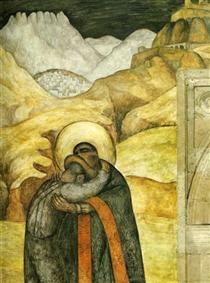
Then God’s nose burned against Moses, and [God] said: “Isn’t your brother Aaron, the Levite? I know that he can certainly speak, and also, hey! he is going out to meet you. And he will see you, and he will rejoice in his heart. And you will speak to him, and put the words in his mouth. And I, I will be with your mouth and with his mouth, and I will teach you both what you must do.” (Exodus 4:14-15)
Even though God loses patience with Moses, God remains determined to send him to Egypt, and does not punish him. The God character in the Torah is anthropomorphic and does not know ahead of time what humans will do. Although later in the book of Exodus the God character sometimes explodes with anger and kills thousands with sudden diseases, here God remains calm and quickly thinks of a solution.
By this time, God must have noticed that Moses is terrified of speaking to either the Israelites or the pharaoh. But God still wants to use Moses to accomplish the rescue of the Israelites from Egypt. The solution is to recruit a fluent speaker as an intermediary between Moses and the people he is afraid to face. An obvious recruit would be an Israelite elder, a man who is already respected in the community that must be persuaded to follow Moses out of Egypt, as well as knowledgeable about how the Egyptian government operates. The best elder, God decides, is Moses’ older brother Aaron, even though the two brothers have not seen one another for decades. I think God is gambling that the family relationship will make Moses feel safer with Aaron, and Aaron feel more inclined to help Moses.
But why does God mention that Aaron is a Levite, when Moses comes from the same Levite family? According to Ibn Ezra,10 it is merely a way to distinguish Moses’ brother from other Israelites named Aaron (Aharon, אַהֲרֺן, in Hebrew). Yet God has already distinguished this Aaron from any others by saying “your brother”.
The separation of the tribe of Levi into two categories, Levites and Kohanim (priests who supervise Levites) comes later in the Torah,11 but that did not stop some classic commentators from bringing it in here. Many classic commentators wrote that calling Aaron “the Levite” is a subtle way for God to indicate that in the future Moses and Aaron will change positions. They wrote that God decides to make Aaron, not Moses, the future high priest when Moses begs God to send someone else.12
Classic commentators also argued that Moses objected five times to serving as God’s agent not because he was reluctant to do the job, but only because he somehow knew God’s alternative agent would be Aaron, and he did not want his big brother to feel slighted.13 (After all, the tradition in the Torah is that the firstborn son holds a higher position than any of his younger brothers, in terms of both inheritance and service as the priest of the extended family.)
According to this argument, God adds that when Aaron sees Moses, “he will rejoice in his heart”, to reassure Moses that he need not object to becoming God’s agent on Aaron’s account.
However, hearing “he will rejoice in his heart” could also reassure Moses that Aaron will be easy to work with. Aaron the friendly extravert will be patient while Moses speaks to him hesitantly, and faithful to Moses’ messages when he transmits them to the Israelites or to Pharaoh.
Moses does not reply to God’s statement that Aaron will speak for him. God proceeds to explain how the process will work:
“And he will speak for you to the people, and it is he [who] will be a mouth for you; and you, you will be as a god for him. And you will take in your hand this staff, with which you will do the signs.” (Exodus 4:16-17)
Moses still does not reply to God. He sees no alternative but to do what God wants. At least God has rearranged the assignment to make it easier for him. He may or may not know that now God is angry with him.
And Moses went and returned to Yitro, his father-in-law, and said to him: “Let me go, please, and I will return to my kinsmen who are in Egypt, and I will see: Are they still alive?” And Yitro said to Moses: “Go with peace.” (Exodus 4:18)
Two characterizations
What is Moses like when he has his first conversation with God?
Above all, he is anxious and fearful. He hides his face when God speaks out of the fire; after God orders him to persuade the Israelites to leave Egypt he asks “What should I say to them?” (Exodus 3:13), objects “But they, they will not trust me, and they will not pay attention to my voice” (Exodus 4:1), and pleads “I am not a man of words.” (Exodus 4:10) In my opinion, Moses is an introvert who knows he cannot put together words fast enough for a conversation with strangers. He is both afraid of facing the Israelite elders, and certain that he will fail to persuade them.
Moses also asks God: “Who am I that I should go to Pharaoh and that I should bring out the Israelites from Egypt?” (Exodus 3:11) Even though he grew up in an Egyptian palace and was the adopted son of the previous pharaoh’s daughter, he is not merely humble, but meek and unassertive. He is familiar with court procedures, but he does not expect the pharaoh or his advisers to respect him. Perhaps his lack of an illustrious Egyptian father affected how he was treated when he was growing up.
Moses’ final attempt to excuse himself from being God’s agent is a cry of desperation: “Send, please, by the hand [of whomever] you will send!” (Exodus 4:13) Then he gives up.
What is God like during this first conversation?
The God who speaks out of the fire in the thornbush is like a kind parent trying to reassure an unnecessarily anxious child. When Moses asks “Who am I to go to Pharaoh?”, God says soothingly: “But I will be with you.” (Exodus 3:12) When Moses asks what name of God he should give the Israelites, God’s first answer is too abstract; he tells Moses to say: “Ehyeh sent me to you.” (Exodus 3:14). Ehyeh could mean I will be, I will become, I have not finished being, or I have not finished becoming. Then God remembers that Moses needs a simpler answer, and orders him to tell the Israelites that the god of their forefathers Abraham, Isaac, and Jacob sent him. When Moses objects that the Israelites will not trust him, God gives him three miraculous signs he can demonstrate to them.
When Moses tries to excuse himself a fourth time, by saying he is not a man of words, God tries to reassure him by saying “I myself will be with your mouth, and I will instruct you regarding what you will speak.” (Exodus 4:12) Even that reassurance does not calm Moses’ anxiety, and he resorts to asking God to send someone else, anyone but him.
Momentarily God feels a flare of anger—as all parents do when their best efforts fail to make their little ones calm down and cooperate. But then God thinks of a work-around using Moses’ long-lost brother, Aaron. From the God character’s point of view, Moses’ silence might seem sullen. But at least Moses stops resisting and sets off for Egypt.
To be continued …
- See the last three posts in this series: Shemot: Empathy, Fear, and Humility, Shemot: Names and Miracles, and Shemot: Not a Man of Words. (My first post in the series, about when God initiates the conversation by calling to Moses from the fire in the thorn-bush, is: Shemot: A Close Look at the Burning Bush.)
- Isaiah 6:1-8; Jonah 1:1-3 and 4:1-2.
- Exodus 2:12-15.
- Exodus 2:23.
- Nehama Leibowitz, Studies in Shemot (Exodus), Part 1, translated by Aryeh Newman, The Joint Authority of Jewish Zionist Education, Jerusalem, 1996, p. 66-67.
- Ramban, translation in www.sefaria.org.
- Rabbi Samson Raphael Hirsch, The Hirsch Chumash: Sefer Shemos, translation by Daniel Haberman, Feldheim Publishers, Jerusalem, 2005, p. 54-55.
- Or HaChayim, translation in www.sefaria.org.
- Midrash Tanchuma, translation in www.sefaria.org.
- 12th-century rabbi Abraham ben Meir ibn Ezra.
- The first priests are Aaron and his sons. The first indication that they give directions to the Levites is in Exodus 28:21, but their duties are formally distinguished from those of the priests in the book of Numbers.
- E.g. Shemot Rabbah 3:17, Talmud Bavli Zevachim 102a, Rabbeinu Bachya.
- E.g. Midrash Tanchuma, Shemot Rabbah, Rashi, Da’at Zekinim.

 Questioning Torah
5 thoughts on “Shemot: Moses Gives Up”