The rules for insiders have been different from the rules for outsiders since human history began. The difference is obvious in this week’s Torah portion, Shoftim (Deuteronomy 16:18-21:9).
Rules about insiders
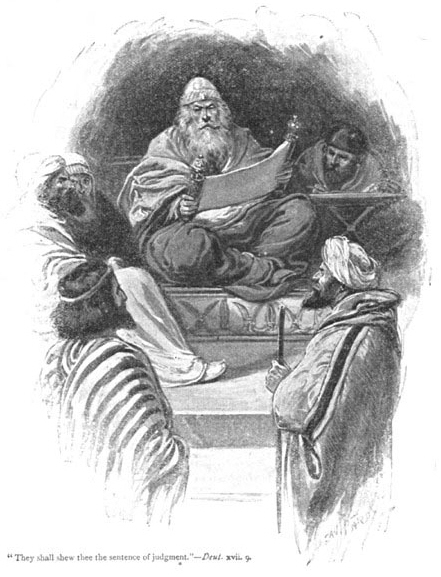
The portion Shoftim includes several rules for justice among fellow Israelites: judges must be unbiased, two witnesses are required for any sentence, accidental manslaughter must not be punished with death, and a disputed case should be referred to a higher court.1
The Torah portion also includes rules for assembling troops to initiate a battle, providing a humane alternative to the draft. Every man who has just built a new house, planted a new vineyard, or become engaged to a woman—or who is fearful—is excused from joining the troops.2
But the rules for attacking a town are not so humane—at least not to the outsiders being attacked. This week’s Torah portion considers two categories of towns of outsiders. The first category covers “far-away” towns: any town outside the national border that God decreed for Israel. The second category includes any remaining towns of native Canaanites within the land that God promised to the Israelites.
Rules about far-away towns that surrender
The Torah assumes that, like everyone else in the Ancient Near East, Israelites will raid towns outside their own borders to bring home booty, and sometimes kings of Israel will assemble larger armies and try to conquer a neighboring kingdom in order to skim off its resources. The portion Shoftim moderates this “normal” behavior somewhat by distinguishing between towns that surrender immediately, and towns that fight back.
If you approach a town to wage battle against it, then you must call out to it [terms] for peace. And it will be, if it answers you with peace, and opens [its gates] to you, then all the people that are found in it will become yours for mas, and they will serve you. (Deuteronomy 20:10-11)
mas (מַס) = compulsory labor (corvée labor) imposed on a subjugated people.
The Israelites were subjected to mas in Egypt.3 Now Moses passes on the rule that if the Israelites threaten a town and it surrenders, the Israelites (insiders) will subject the town’s whole population (outsiders) to the same kind of oppression. But although the citizens of a town that immediately surrenders are treated like slaves, they are not killed or driven off their land.
Rules about far-away towns that fight back
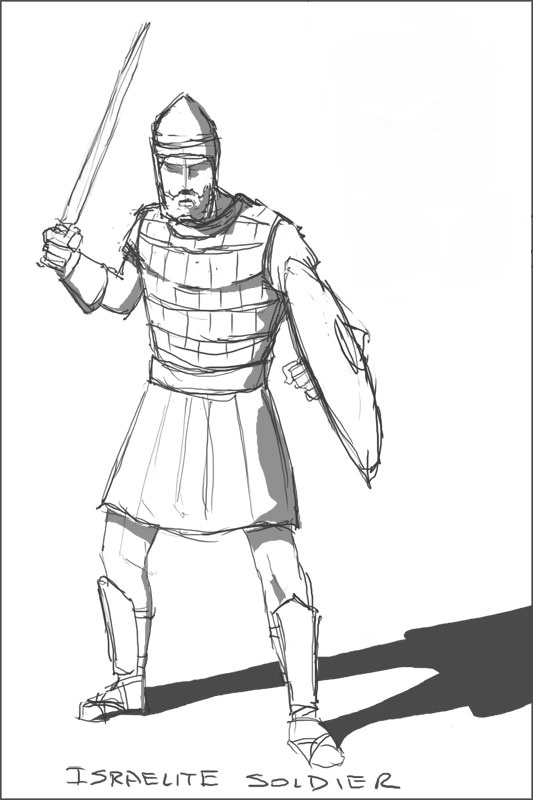
But if it does not make peace with you, and it does battle with you, then you may besiege it. And [when] God, your God, gives it into your hand, then you must strike down all its males with the edge of a sword. Only the women and the little children and the animals and everything that is in the town—all its spoils—you may plunder for yourself. And you may consume the spoils of your enemies, which God, your God, gives you. (Deuteronomy 20:12-13)
The town’s men are called enemies here, even though the Israelites start the hostilities. The women and children are part of the spoils, since in that culture they were the property of the men. Female captives, who were useful for sex as well as labor, and their children, who could be trained to be good slaves when they got older, were taken away from their homes and brought to Israel as permanent slaves.4
Rules about natives of Canaan
Next we learn that the rules about far-away towns do not apply to towns in the land of Canaan.
Thus you will do to all the towns that are very far away from you, that are not the towns of these nations [in Canaan]. Only in the towns of these peoples that God, your God, is giving to you as a possession, you must not leave alive anything that breathes, because hachareim!—You must hecharim them … as God, your God, commanded you. (Deuteronomy 20:14-16)
hachareim (הַחֲרֵם), hecherim (הֶחֱרִים) = prohibit for human use and dedicate to destruction for God.
Why are the Israelites obligated to exterminate the entire native population of Canaan? The reason for genocide is religious:
So that they do not teach you to do according to all their to-avot that they do for their gods, and then you wrong God, your God. (Deuteronomy 20:18)
to-avot (תּוֹעֲבֺת) = abominations, acts that are acceptable in one culture but taboo in another.
When the Israelites arrived at the Jordan River in the book of Numbers, many of them engaged in sex with the native women and worshiped their god, Ba-al Peor.5 Judging by the rest of the Hebrew Bible, Israelites could hardly resist the temptation to worship other gods.
Rules about fruit trees
The next verse applies to any walled town that Israelites are besieging, whether in Canaan or far away.

When you besiege a town for many days, to battle against it to capture it, you must not destroy its trees by swinging an axe against them. For you will eat from them, so you must not cut them down. For is a tree of the field a human being, to come in front of you in the siege? (Deuteronomy 20:19)
Why must the Israelites refrain from chopping down fruit trees?
One answer is for you will eat from them. Even if the fruit is not in season while the Israelites are conducting the siege, if they succeed in taking the town, they will appreciate the local source of fruit. Trampled fields can be sown for a crop the next year, but fruit trees take a long time to grow.
A 13th-century commentary, probably considering the case of a far-away town, added: “Since the object of the siege is not to kill all its inhabitants, but to make them subservient to you, depriving them of their fruit bearing trees would be neither in your interest and certainly not in their interest.” (Chizkuni)6
Why would besiegers want to cut down a town’s orchards anyway? One answer is in the next verse:
Only trees which you know are not trees for eating, those you may destroy and cut down, and build siege-works against the town that is doing battle with you, until it falls. (Deuteronomy 20:19)
A 14th-century commentator explained: “You are free to cut down such a tree without restriction whether in order to build platforms to shoot arrows from, or for whatever reasons, such as to build a fire at night to keep warm.” (Tur HaArokh)7
The Talmud generalizes the prohibition against cutting down fruit trees in a siege to ban any wasteful destruction, including tearing fabric when you are not in mourning (Kiddushin 32a), or scattering your money in anger (Shabbat 105b).8
For is a tree of the field a human being, to come in front of you in the siege?
No. In this week’s Torah portion, trees are treated pragmatically, in terms of their value to the humans who are insiders, the Israelite besiegers. Fruit-bearing trees must be unharmed in order to provide food for both the conquerors and the survivors of the town who will be subjugated. Other trees are more useful for building siege-works or burning as fuel.
Humans in far-away towns are treated with the same pragmatism as trees. If the town under attack fights back (and the Israelites win), then all its men and older boys must be killed to prevent future attempts at revenge, but the rest of the residents are useful as slaves. Humans in far-away town that surrenders are useful as a compulsory work force.
But humans who are natives of Canaan are treated with less respect than trees; they must all be chopped down and not used. The policy is wasteful, but it prevents the Israelites from being tempted to adopt any Canaanite religions.
Furthermore, although individual Israelites accused of crimes are protected by laws that require fair judges and witnesses, there is no justice for individuals who are outsiders because they live in Canaanite towns or “far-away” towns.
The text of chapters 12-26 in Deuteronomy was written in the 7th century B.C.E., then reframed as the central section of Moses’ series of speeches to the Israelites at the Jordan River. I am writing this blog post in the year 2024 C.E., more than 26 centuries later.
Are we more humane to outsiders now? Western intellectuals condemn genocide by conquering settlers who view the natives of a land view as outsiders, “not like us”. Subcultures in many countries disapprove of initiating a war for any reason.
Yet in this year of 2024, the Russian government continues to attack Ukraine, ignoring the rights of Ukrainians to democratic self-rule and to life itself. The governments of other nations, such as Myanmar, attack minority groups of citizens who happen to be outsiders because of ethnicity and religion, forcing them to leave their homes and land. Modern Israel uses other methods to force members of an Arab minority to leave their homes and land—including, ironically and poignantly, destroying their olive trees.
This week’s Torah portion says: “Justice, justice you must pursue!”9 But when will people pursue justice for insiders and outsiders alike?
- Deuteronomy 16:18-20, 17:6 and 19:15-19, 19:1-7, and 17:8-12. See my post: Shoftim: To Do Justice.
- Deuteronomy 20:5-9. See my post: Shoftim: More Important Than War, Part 2.
- Exodus 1:11.
- Leviticus 25:39-54 decrees that when poverty forces native Israelites to sell themselves as slaves, their owners must treat them like hired workers, release them if a relative pays a fair amount to redeem them, and free them in the yoveil (jubilee) year without payment. But foreign slaves and their children can be kept in slavery indefinitely, and passed on to the owners’ heirs.
- Numbers 25:1-9. See my post: Balak: Wide Open.
- Chizkuni, compiled by Chizkiah ben Manoach, translated in www.sefaria.org.
- Tur HaArokh, by Jacob ben Asher, translated in www.sefaria.org.
- For more on the Jewish prohibition against waste that originated in the Talmud, see my post: Shoftim: Saving Trees.
- Deuteronomy 16:20.

 Questioning Torah