Darkness is bad; light is good. Darkness means ignorance, light means understanding.
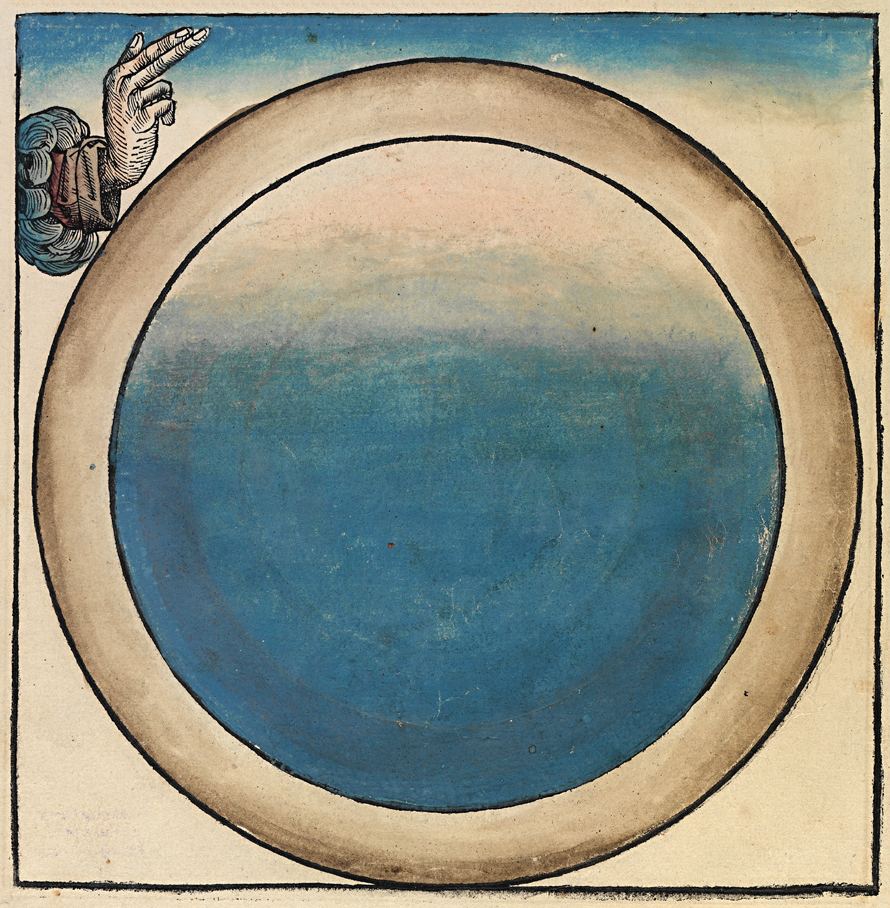
These pairings are common in biblical Hebrew and in English today—probably because humans function better when we can see clearly. The book of Genesis begins with darkness.
And God said “Let light be!” and light was. And God saw the light, that it was good, and God separated the light from the darkness. (Genesis 1:3-4)
Both meanings of darkness versus light appear in this week’s haftarah reading, Isaiah 49:14-51:3, which accompanies the Torah portion Eikev in Deuteronomy. Jews call this week’s reading the “Second Haftarah of Consolation”—consolation after the annual fast of Tisha Be-Av, which commemorates the destruction of Jerusalem’s temple by the Babylonians in 587 B.C.E. (See my post two weeks ago: Isaiah & Lamentations: Any Hope?)
Babylonian King Nebuchadnezzar II deported most of the leading citizens of Judah and its capital, Jerusalem, to Babylon. About fifty years later, in 539 B.C.E., the Persians conquered Babylon and gave all the exiles there permission to return to their homelands. Many of the Judahites did not want to return; they were comfortable in Babylon, and Persian rule was benign.
The prophet of Second Isaiah1 does not challenge the biblical assumption that God punishes disobedient populations of Israelites by letting their enemies win wars. But his main message is that God’s punishment is now over, and if only they return to Jerusalem and rebuild its temple, God will reward them.
In this week’s haftarah, the prophet imagines God puzzling over why so many Israelites in Babylon have not returned.2 God asks:
"Why, when I came, was nobody there?
          I called, and nobody answered!
Is my hand really too short to redeem?
          And is there no power in it to rescue?” (Isaiah 50:2)
God can make darkness
Second Isaiah reminds his audience that God has plenty of power, enough to dry up the sea, and adds that God said:
“I clothe the skies in kadrut,
          And turn their coverings into sackcloth!" (Isaiah 50:3)
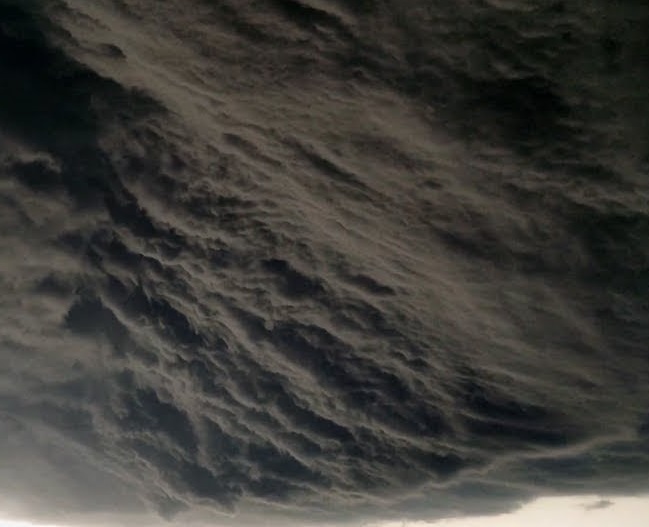
kadrut (קַדְרוּת) = darkness (in most English translations; but this word is a hapax legomenon, appearing only here in the Hebrew Bible, so the translation cannot be cross-checked. The more common words for darkness are choshekh and chasheikhah).
The skies are normally covered with diaphanous clouds, but God can turn them into sackcloth, the crude black fabric worn for mourning in the Hebrew Bible. One 12th-century commentator explained: “Some understand it to refer to an eclipse of the sun, when the sky becomes obscure in the middle of the day, and appears as if covered with sackcloth, which is usually black.” (Ibn Ezra)3
A 17th-century explanation is: “The Holy One said: I have done even more in Egypt. I clothed the skies in black. That is to say, I caused three days of darkness in Egypt.” (Tze-enah Ure-enah)4
Either way God, who created light and saw that it was good, also has the power to afflict whole populations with miraculous darkness, which is bad.
People walk in darkness
The prophet of Second Isaiah points out that he keeps on patiently communicating what God tells him, and ignores the people who yank his beard and spit on him. Then he asks them to trust God despite the lack of visible evidence—a metaphorical darkness.
Who among you is in awe of God,
	Paying attention to the voice of [God’s] servant?
Though he walks in chasheikhim,
And there is no radiance for him,
Yivtach in the name of God,
	And lean on his God. (Isaiah 50:10)
chasheikhim (חֲשֵׁכִים) = darknesses. (Plural of chasheikhah, חֲשֵׁכָה = darkness, a variant of the common Hebrew noun for darkness, choshekh, חֺשֶׁךְ.)
yivtach (יִבְטַח) = he will trust, he trusts, let him trust.
Commentators have interpreted this verse two different ways. One interpretation is that the prophet asks a rhetorical question, recognizing that nobody in Babylon is paying attention to him. The prophet trust in the name of God and leans on his God even though he “walks in darknesses”—in other words, bad things happen to him while he is prophesying.5
The other interpretation is that the prophet’s question is genuine, and he goes on to address anyone who actually is paying attention to him and does revere (but does not quite trust) God. Second Isaiah recognizes that such a person “walks in darknesses” of ignorance and misunderstanding, and begs him to have faith that God will reward him for returning to Jerusalem. Those who subscribe to this interpretation of the verse translate yivtach as “Let him trust”.
False enlightenment
In the next verse, Second Isaiah warns the exiles against inventing their own enlightenment.
But hey, all of you igniters of fire,
	Clasping burning arrows!
Walk by the flame of your fire,
	By the burning arrows you lit!
This comes from my hand to you:
	In a place of grief you will lie down. (Isaiah 50:11)
What kind of fire are these Judahites igniting? Rashi wrote that the fire is God’s wrath, and that my hand in the fifth line refers to God’s hand, which will punish them.6
Other commentators have identified the fire in this verse as the manufactured light of false understanding, and my hand as the prophet’s hand warning the exiles that they will come to grief if they persist in their false beliefs . For example, 21st century commentator Robert Alter wrote:
“The poet now turns around the imagery of the light 180 degrees. Instead of the radiance God provides that liberates from darkness, there are those who prefer the light generated by their own fire. Whether this is simply arrogant self-reliance or the false light of fabricated gods is not clear. But this is a destructive source of light, its burning rather than its illumination salient in the language of these lines.” (Alter)7
I believe that this verse is from the prophet’s point of view. He address the exiles who are in the dark about God’s plans, and invent their own version of reality, believing they are enlightened when they choose to stay and assimilate in Babylon. But ignoring God’s prophet and following your own opinion is as dangerous as hugging burning arrows. The false light of their self-ignited fires will only lead to grief.
Ibn Ezra wrote that the last line, In a place of grief you will lie down, means: “You shall die in sorrow.”8
Tze-enah Ure-enah says it means: “You will all be burned with wrath from the Holy One. This is to say, the fire from His nose [and therefore] … You will lie in mourning; you will lie in every sickness. You will have no strength against your enemies.”9
In the 21st century, Rabbi Steinsaltz wrote that Second Isaiah is saying: “You, however, mistakenly consider yourselves enlightened. … Guard your flimsy light as best you can and follow it. … you will lie in suffering, without peace, consumed by worry and doubt. The light you produced will fade, and you will be left in the dark.”10
Walking in darkness is not easy. How do you pick your direction? How do you find the light switch, get to the place of enlightenment, or arrive at a good future?
I confess I am like the exiles from Judah whom Second Isaiah keeps pleading with. I may be in awe of God, but I do not trust God to do anything for me personally, because I cannot view God as a person. I do not trust any prophet who claims God-given authority, either. Instead, I try to use verifiable facts and my own reason to create my own illumination so I can choose my own way through life. Am I actually clasping burning arrows?
I doubt it. As I reflect back on my seventy years of life, I can see where I stumbled in the darkness of ignorance. I subjected myself to the most danger and grief when I was young and naïve, and trusted other people’s opinions too much. But I survived, and made better decisions, and grew. And now my life is good, sometimes even radiant.
Back in the 6th century B.C.E., some of the exiles in Babylon did return and rebuild Jerusalem and its temple under the leadership of Ezra and Nehemiah, who have their own books in the bible. Others stayed in Babylonia under the Persians, and became a thriving community with many rabbis and scholars. By 500 C.E. there were two versions of the Talmudic collection of Jewish laws, legends, and arguments: the Jerusalem Talmud and the Babylonian Talmud.
Maybe there is more than one path to enlightenment.
- “Second Isaiah” (or Deutero-Isaiah) starts with chapter 40 of the book of Isaiah. The first 39 chapters of the book report the prophecies of Isaiah (Yeshayahu) son of Amotz in the 8th and 7th centuries B.C.E. in Judah. A later scribe appended the poetry of one or more unknown prophets living among the Judahites in Babylon in the 6th century B.C.E. For convenience, I refer to that narrator in Second Isaiah as “he”.
- See my post: Hafatarat Eikev—Isaiah: Homesick or Scared?
- Rabbi Abraham ben Meir ibn Ezra, translation in www.sefaria.org.
- Tze-enah Ure-enah, compiled by Rabbi Jacob ben Isaac Ashkenazi, translation from Yiddish in www.sefaria.org.
- This is the view of Ibn Ezra (see footnote 3).
- Rashi is the acronym of 11th-century Rabbi Shlomoh Yitzchaki, consulted by all subsequent Jewish commentators.
- Robert Alter, The Hebrew Bible, Volume 2: Prophets, WE.W. Norton & Co., New York, 2019, p. 793.
- Ibid. ibn Ezra, my footnote 2.
- Ibid. Tze-enah Ure-enah, my footnote 3.
- Rabbi Adin Even-Israel Steinsaltz, The Steinsaltz Nevi-im, Koren Publishers, Jerusalem, 2016, quoted in www.sefaria.org.

 Questioning Torah