Enlightenment is a theme in both this week’s Torah portion, Ki Tavo (Deuteronomy 26:1-29:8) and this week’s haftarah reading (Isaiah 60:1-22). At any other time of year, this synchrony would be no accident. When the rabbis of the second century C.E. paired haftarah readings from the prophets with the weekly readings from the Torah proper (Genesis through Deuteronomy), they picked haftarot that had related themes—at least most of the year.
But during seven weeks in late summer, between Tisha B’Av1 and Rosh Hashanah2, the Torah readings continue working through the book of Deuteronomy, while the haftarot all explore the same theme in second Isaiah—an unknown prophet recorded in chapters 40-66 of the book of Isaiah. Second Isaiah addresses the Israelites who were deported to Babylon when King Nebuchadnezzar captured and razed Jerusalem.3
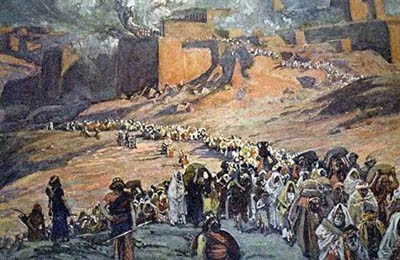
The prophet promises the exiles that if they return, God will forgive them for their past disobediences, and their ruined city will become glorious. This week we read the Sixth Haftarah of Consolation, which describes how God will make Jerusalem shine like a beacon to other nations.
Ki Tavo: Enlightenment
At Mount Sinai, when Moses led the Israelites through a formal covenant ritual with God (including splashing blood on the altar and the people),
Moses came and recounted to the people all God’s words and the laws, and all the people answered with one voice, and they said: “All the things that God has spoken, we will do!” (Exodus 24:3)
In this week’s Torah portion, Moses gives instructions for conducting another covenant ritual once the Israelites have entered Canaan.4 But first he declares:
Today you have affirmed God to be your god, and to walk on [God’s] paths, and to keep [God’s] decrees and commands and laws, and to pay attention to [God’s] voice. (Deuteronomy 26:17)
The Israelites do not shout out their agreement in the book of Deuteronomy, the way they did in the book of Exodus, but neither do they grumble. Moses continues as if everyone agrees.
And God has affirmed to you today that you are [God’s] treasured people, as [God] spoke to you, and keeping all [God’s] commands. And [God will] set you high above all the nations that [God] made, in praise and in reputation and in splendor. And you will become a holy people to God, as [God] spoke. 5 (Deuteronomy 26:18-19)
Moses is describing a covenant, originating at Sinai and affirmed on the east bank of Jordan River where the people can see Canaan. The Israelites as a people promise to single out God as their only god, and to obey God. God promises to single out the Israelites as God’s unique treasure, and to elevate them relative to other nations.
Including the phrase “and keeping all [God’s] commands” makes the statement of God’s side of the covenant awkward reading. Probably it means that God promises to give the Israelites special treatment only if they keep their promise to obey all of God’s commands. But the commentary includes alternate interpretations. One is that God gives all the rules to the people Israel, and only some of them to the other, lesser nations.6 Another is that God will act to help the Israelites achieve the difficult task of keeping all God’s laws and decrees.7
Next Moses recites the blessings God will give those who obey God’s rules, and the curses God will inflict on those who disobey. Then he says:
You have seen all that God did before your eyes in the land of Egypt, to Pharaoh and to all his attendants and to all his land—the great trials that your eyes saw, the great signs and marvels. Yet God has not given you a leiv for da-at, or eyes for seeing, or ears for listening, until this day. (Deuteronomy 29:1-3)
leiv (לֵב) or leivav (לֵבָב) = the heart; the seat of both thinking and feeling, therefore the conscious mind.
da-at (דַעַת) = knowledge; intimate acquaintance, insight, understanding. (From the root verb yada, יָדַע = notice, find out, recognize, become acquainted, know, understand.)
In Egypt, the Israelite slaves witnessed the trials of Pharaoh and his advisors when God afflicted Egypt with ten miraculous plagues. Forty years later, the next generation of Israelites includes many who were children in Egypt and can vouch for God’s miracles.
But during the Israelites’ long journey through the wilderness, they often complained about God and said they were better off as slaves in Egypt. In the last of the forty years, many of the men went to Moabite feasts and worshiped Ba-al Pe-or, disobeying their own God’s repeated command that they must not worship other gods.8
They heard, but did not have “ears for listening” to God’s words as transmitted by Moses. They saw more divine miracles on their journey, but did not have “eyes for seeing” that God was still taking care of them, leading the way with the pillar of cloud and fire, and providing water to drink and manna to eat. They did not use their leiv to think about the evidence of their senses, and so they did not reach any understanding about God’s long-term plan. They did not find any enlightenment.
The Torah switches briefly to God’s point of view9:
And I brought you up, all of you, for forty years in the wilderness. Your cloak did not wear out from upon you, and your sandal did not wear out from on your foot. You did not eat bread or drink wine or liquor—in order that teide-u that I am God, your God. (Deuteronomy 29:4-5)
teide-u (תֵּדְעוּ) = you would know, you would understand. (Also from the root verb yada.)
But God’s demonstration did not result in any enlightenment. As Moses has just said, “Yet God has not given you a leiv for da-at, or eyes for seeing, or ears for listening, until this day.”
What has changed now that the Israelites are about to cross the Jordan into Canaan? The answer in this week’s Torah portion is not that Moses’ long oration has enlightened them. Moses hints at a different answer when he concludes:
And you came up to this place. And Sichon, king of Cheshbon, and Og, king of the Bashan, went out to meet us in battle, but we struck them down. And we took their land and gave it as hereditary property to the Reubenites and to the Gadites and to half of the tribe of Menashe. So you must keep the words of this covenant and you must do them, in order that taskilu everything that you do. (Deuteronomy 29:6-8)
taskilu (תַּשְׂכִּילוּ) = you (plural) will succeed; understand; act with religious insight. (A form of the verb sakhal, שָׂכַל; its meaning overlaps but does not coincide with yada.)
In this context, taskilu means “you will succeed”. Yet the success depends on the understanding and religious insight that would motivate the Israelites to keep the covenant and obey God.
When the Israelites defeat the armies of kings Sichon and Og and take their lands, they learn in the most direct way that God’s pledge to give them the much larger land of Canaan is not an empty promise. They could actually do it!—with God’s help. There is nothing like an exciting experience to change your thinking. Now, at last, they see the light.
And for a while, at least through the whole book of Joshua, they enthusiastically obey God’s rules.
Second Isaiah: Illumination
In the chapter of Isaiah before the sixth haftarah of consolation, the prophet repeats his or her message that the people of Judah were defeated and exiled because they disobeyed God; but now God will forgive and redeem all of them who repent and head back to Jerusalem.10
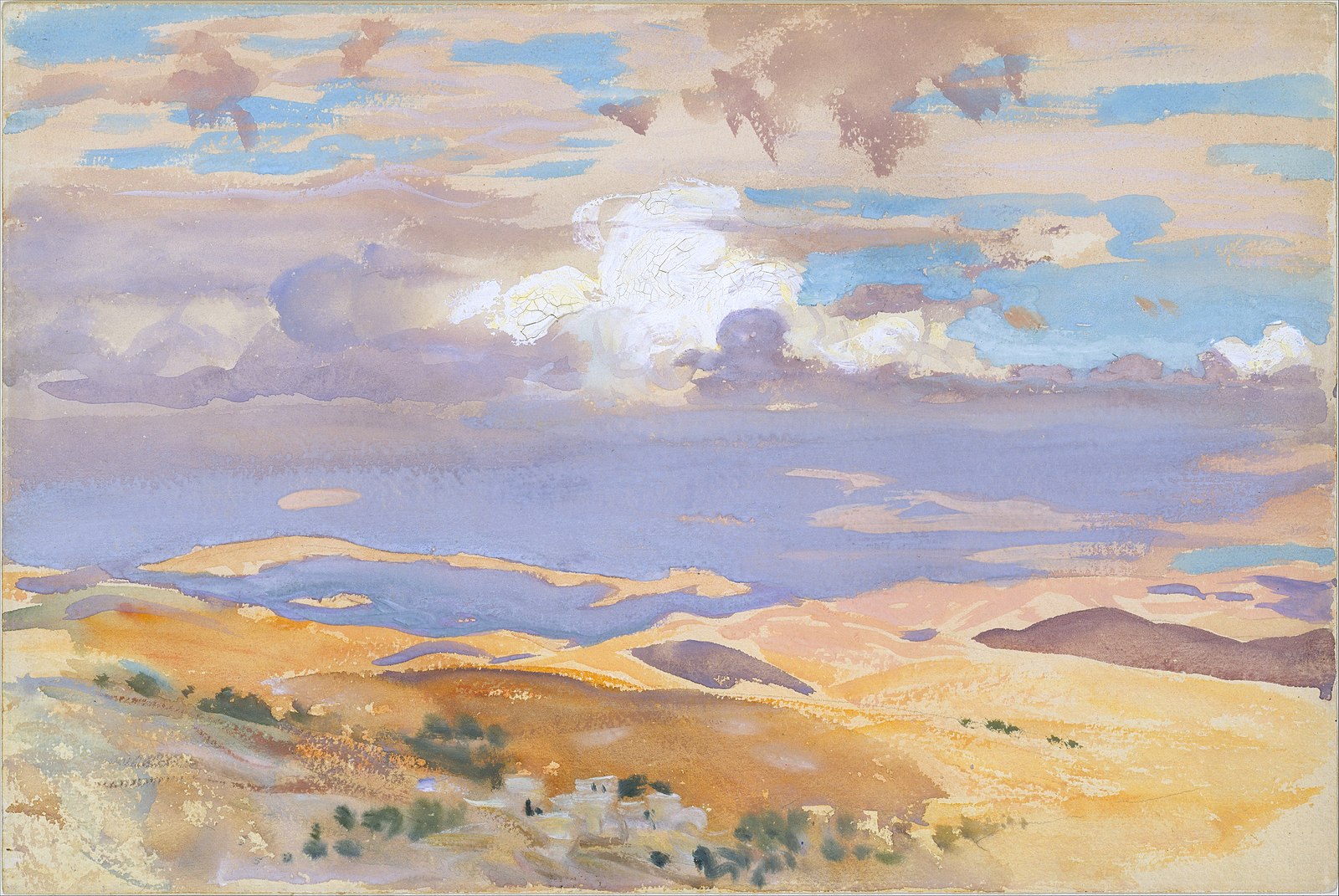
This week’s haftarah then opens with imagery of light:
Arise! Brighten! For your light is coming,
And the glory of God shines on you.
Because hey! The darkness will cover the land,
And thick fog, the peoples.
But upon you God will shine
And [God’s] glory will be seen upon you. (Isaiah 60:1-2)
We can see sources of light, such as stars, and every material thing that light shines on. But without light, we are blind. No wonder cultures around the world associate light with knowledge. No wonder the English language calls understanding “enlightenment”.
Many cultures also associate light with good behavior, and darkness with bad behavior. The book of Proverbs says:
The route of the righteous is like radiant light,
Going on and brightening until the day is established.
The path of the wicked is like darkness;
They do not know what they stumble on. (Proverbs 4:18-19)
The wicked—which in the bible means not only those who wrong their fellow humans, but all those who disobey God—stumble and fall in the darkness. But the righteous, who can see everything in front of them, know how to avoid tripping.
Furthermore, when the righteous settle in Jerusalem, God will shine light on the city, and the people of other nations will notice it. Second Isaiah continues:
And nations will walk by your light,
And kings, by the radiance of your shining. (Isaiah 60:3)
Ibn Ezra commented: “He who is in darkness usually sees those that are dwelling in light.”11 Naturally they are drawn to the clarity and well-being that light provides.
According to second Isaiah, peace and prosperity will govern Jerusalem, and riches will flow into the city from places as far away as Sheba and Tarshish.
Because God will be your light forever,
And your days of mourning will be done.
And your people, all of them righteous,
Will possess the land forever. (Isaiah 60:20-21)
According to Ibn Ezra, “The mourner sits, as it were, in darkness.” Death is associated with darkness, and a good life with light.
This week’s Torah portion, Ki Tavo, points out that despite all of God’s efforts at enlightening the Israelites in the wilderness, they do not fully throw in their lot with God until they win a couple of battles and camp across the Jordan River from Canaan. Only then do they understand God’s plan; only then do their minds open to illumination. Only then do they settle into obeying God. On the other hand, this week’s haftarah, Isaiah chapter 60, declares that the reward of obeying God’s commands is illumination.
Today we no longer receive signs from the God-character in the bible. We must make do with telling coincidences and unforeseen results that are enlightening in retrospect. Individuals stumble along in the darkness, making mistake after mistake. Nations are governed by politicians who cannot agree on, or even see, a path to peace and prosperity. And world-wide climate change is accelerating because we humans have fouled our own nest and failed to cooperate enough to clean it.
What would a Moses or a second Isaiah say to us? What would make us stop and reconsider? How do get enough illumination to see the right path and redeem ourselves?
- Tisha B-Av is the annual day of mourning for the destruction of the temple in Jerusalem. See my post: Lamentations: Seeking Comfort.
- Rosh Hashanah is the first day of the Jewish year. See my post: Rosh Hashanah: Remembering.
- The Babylonian campaign to eliminate rebellion in their vassal state of Judah included deporting all of its leading citizens to Babylon in two waves, after each of Nebuchadnezzar’s successful sieges of Jerusalem in 597 and 587 B.C.E.
- On two hills in front of the Canaanite town of Shekhem. See my posts: Ki Tavo: Making It Clear, and Ki Tavo: Cursing Yourself.
- Moses is alluding to God’s statement at Mount Sinai: And now, if you really pay attention to my voice and keep my covenant, then you will be my treasure among all the peoples. For all the earth is mine, but you will be my kingdom of priests and a holy nation. (Exodus 19:5-6)
- See Ovadiah Sforno (16th century) on Deuteronomy 26:18.
- See Or HaChayim (18th century) on Deuteronomy 26:18
- Numbers 25:1-9.
- Probably because of an error in editing when a 6th-century BCE redactor revised an older text to frame it as part of Moses’ oration.
- Isaiah 59:9-21.
- 12th century rabbi Abraham ben Meir ibn Ezra, translation in www.sefaria.org.

 Questioning Torah