My lord God opened my ears,
          And I, I did not rebel;
          I did not shrink back.
I gave my back to floggers,
          And my cheeks to [beard-] pullers.
I did not hide my face
          From shaming and spittle. (Isaiah 50:5-6)
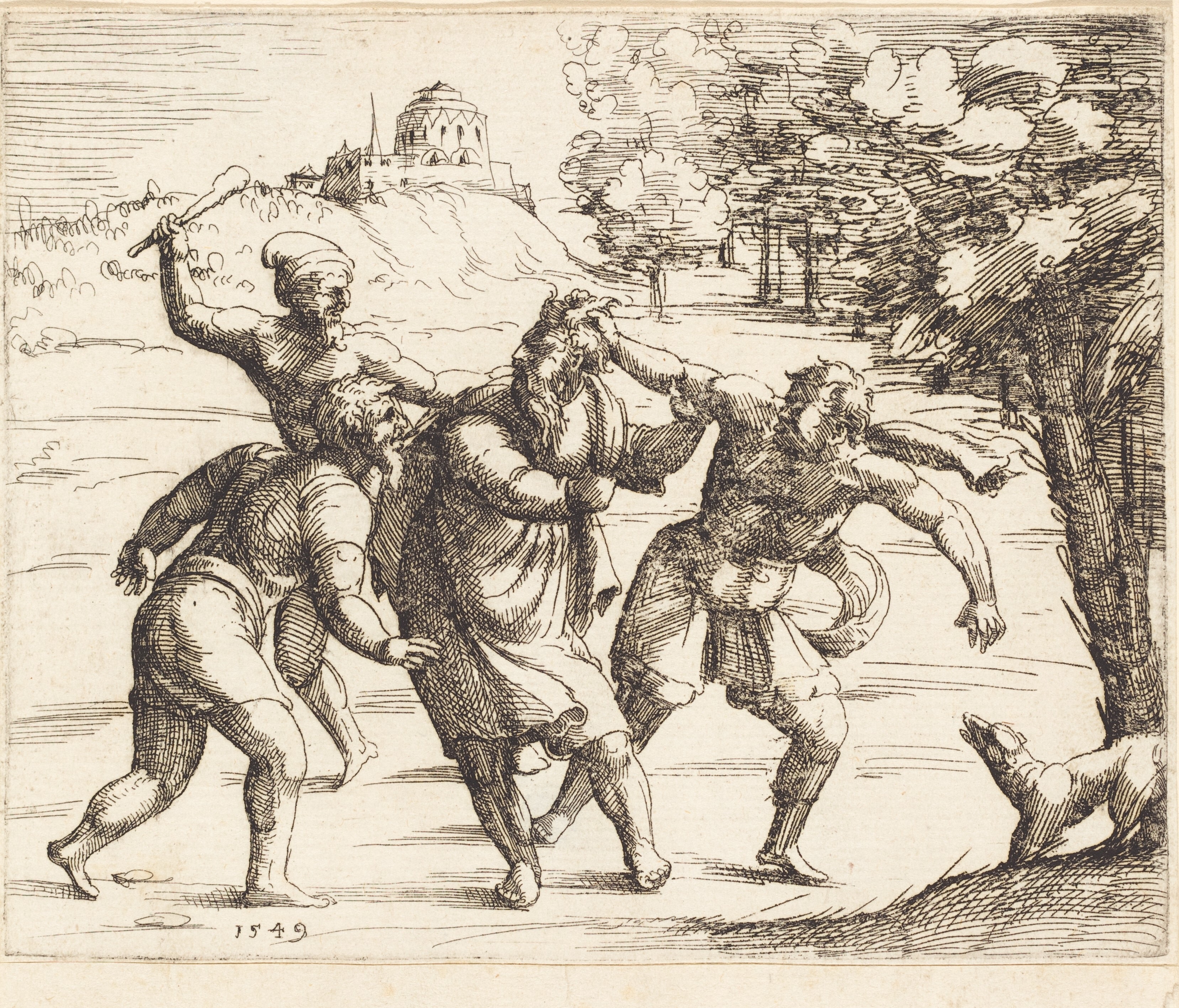
Many prophets in the Hebrew Bible report being abused because people do not want to hear their message—usually that if they don’t stop worshiping idols and cheating the poor, God will punish them. The unnamed prophet known as “second Isaiah” has a different message, but it, too, is unpopular.
This prophet probably wrote Isaiah chapters 40-66 after the Persian emperor Cyrus took Babylonia in 539 B.C.E., which was about 47 years after the Babylonians burned down Jerusalem and finished deporting the survivors to their own capital. Cyrus instituted a policy allowing his new subjects to return to their homelands, rebuild their temples, and engage in local self-rule. Some of the exiles from Jerusalem did return, under the leadership of Ezra and Nehemiah. But many more remained in Babylon, where life was not bad under the Persians.
Second Isaiah tries to persuade all the exiles to return—especially in the passages known as the seven “Haftarot of Consolation”, which Jews read at Shabbat services between Tisha Be-Av (the annual day of mourning for the Babylonian destruction of Jerusalem and its temple in in 586 B.C.E.) and Rosh Hashanah (the Jewish new year).
This week’s haftarah, Isaiah 49:14-51:3, is the second “Haftarah of Consolation”. Second Isaiah offers two different reasons why the people from Judah should abandon their new lives in Babylon and return to Jerusalem—and then he reports that his audience is abusing him.
First reason to return: Homesickness
At the beginning of the second Haftarah of Consolation, second Isaiah personifies “Zion”: the name of a hill in Jerusalem that is often used poetically to refer to the whole city, or even all of Judah. He depicts Zion as the mother of the Judahites in Babylon, forlorn because she has lost her children. She is also forlorn because she thinks she has lost her God. Zion says:
"God has forsaken me,
          My lord shekheichani!" (Isaiah 49:14)
shekheichani (שְׁכֵחָנִי) = has wiped out all memory of me. (A piel form of the verb shakhach, שָׁכַח = forget.)
God replies to Zion:
"Does a woman tishkach the baby she bore,
          Lose compassion for the child of her womb?
Even if tishkachnah,
          I myself, lo eshkacheikh.
Hey, I have engraved you on my own palms.
          Your walls are always in front of me.
Your children hasten.
          Those who ravaged and ruined you will leave." (Isaiah 49:15-19)
tishkach (תִשְׁכַּח) = she forgets. (A kal form of shakhach.)
tishkachnah (תִשְׁכָּחְנָה) = she would forget her. (A kal form of shakhach.)
lo eshkacheikh (לֺא אֶשְׁכָּחֵךְ) = I would not forget you. (lo = not + a kal form of shakhach.)
When Zion’s children arrive, God says, she will be crowded with settlers. Furthermore, her children will be tended and returned by the kings of foreign nations—an allusion to the rulers of the new Persian empire.
"And they will bring your sons in their bosoms,
          And your daughters they will carry on their shoulders.
Kings will be your babysitters,
          And their princesses will be your wet-nurses." (Isaiah 49:22-23)
Picturing the land of Zion as a mother longing for her missing children might soften the hearts of the exiles living in Babylon. (See my post: Haftarat Eikev—Isaiah: Abandonment or Yearning?) If they believe their country misses them, they might discover they miss their country. And homesickness can be a strong motivator.
Then second Isaiah’s focus shifts to the estrangement between Zion and God.
Second reason to return: Safety in obedience
Addressing the Judahite expatriates, the children of Zion, second Isaiah reports:
Thus said God:
"Where is the divorce document of your mother, whom I sent away?
          And to which of my creditors did I sell you?
Hey, you were sold because of your sins,
          And your mother was sent away because of your revolts." (Isaiah 50:1)
Several prophets compare the relationship between God and the Israelites to a marriage in which the wife (Israel) cheats on her husband (God). They imagine God divorcing Israel by sending her out of the house, then welcoming her back later.1 Sometimes the unfaithful wife stands for the Israelites; sometimes the Israelites are called the children of the unfaithful wife.
In second Isaiah’s iteration of this analogy, being “sent away” expresses both the metaphorical divorce and the actual relocation of the Israelites from Judah to Babylon.
Many prophets in the Hebrew Bible predict that if the Israelites persist in worshiping other gods and/or being unethical to the poor, God will punish them by granting foreign armies victory in battle. Here, second Isaiah reports that God carried out that punishment—and then some. After the Babylonian army devasted Judah, God divorced Israel and sold her into slavery.
There is no divorce document, and God has no creditors to pay off by selling a family member as a slave. God simply reacted to the sins and revolts of the Judahites, which were so bad they deserved two more punishments after military defeat: exile and slavery under the Babylonians.
But now things have changed; the Persians have taken over the empire, and the people deported from Judah are no longer slaves. The punishment has ended, and God wants them back. God asks:
"Why, when I came, was nobody there?
          I called, and nobody answered!" (Isaiah 50:2)
If second Isaiah had stopped there, perhaps the Judahite expatriates would have wondered if their God loved them after all. After all, children who are punished need to believe that Daddy still loves them.
Instead, the prophet returns to the theory in the first Haftarah of Consolation that the Israelites are reluctant to return to Jerusalem because they doubt God is powerful enough to rescue them and restore Jerusalem. (See my post: Haftarat Va-etchanan—Isaiah: Faith in the Creator.) God demands:
"Is my hand really too short to redeem?
          And is there no power in it to rescue?
Hey, when I rebuke, I dry up the sea!
          I turn rivers into desert!
The fish stink where there is no water,
          And they are dead of thirst.
I clothe the skies in black,
          And turn their robes to sackcloth!" (Isaiah 50:2-3)

Uh-oh. The ancient Israelites enjoyed images of God destroying their enemies in various gory ways, judging by other poetry in the Hebrew Bible.3 But images of God drying up rivers and turning the sky into black sackcloth are not so thrilling. What kind of God destroys nature? Is it the same kind of God who destroyed God’s own people in Jerusalem?
According to second Isaiah and Jeremiah, it was all God’s punishment: that the common people starved to death during the two-year siege; that the Babylonians burned down the temple, the palace, and every house in Jerusalem; that the remaining residents (those who had not died of starvation or been deported to Babylon during previous siege) were killed or marched off into exile, leaving only the poorest to work as field hands; and that the Judahites in Babylon were treated like slaves.2 Did they really deserve all that? Or was it a divine overreaction?
Even if God does want them back now, how could they be sure God would not destroy them again?
Children whose father had starved them, destroyed all their belongings, and sold them as slaves, might console themselves with the belief that the punishment was all their own fault, and their father really loved them underneath. Psychologically, it is easier for the powerless to blame themselves than to blame the ruler of their universe. But if a different adult liberated those children and took them into a benign household, the way the Persians did to the Judahites in Babylon, the children might arrive at a different opinion.
Then they would not want to go back God’s house. It would be safer to stay in Babylon under the Persians.
Back to the first reason: Homesickness
Right after second Isaiah delivers God’s disturbing rant about power, he switches to the aside in which he declares he is true to God’s message even though the Judahite expatriates are flogging and spitting on him. It does not occur to the prophet that their abuse might be a reaction to being urged to return to a God of desertification and mourning. Instead he tells them to fear and trust God in the darkness, instead of trying to see by kindling their own lights.4
The haftarah ends with a positive image, one that returns to the draw of homesickness and the personification of the land of Zion as a woman feeling forsaken by her children.
For God has comforted Zion,
          Comforted all her ruins.
And [God] has made her wilderness like Eden,
          And her desert like the garden of God.
          Thanksgiving and the sound of singing! (Isaiah 51:3)
However God treated the people of Jerusalem, God cannot forget the city. So God uses God’s vast power not for destruction, but to turn the wasteland into a garden. And, the prophet’s listeners would remember, Zion cannot forget her missing children. When Jerusalem is like the Garden of Eden, those who return to her will be glad and thankful.
Going home to Jerusalem sounds better now.
- Hosea 2, Jeremiah 3:1-10, and Ezekiel 16.
- According to 2 Kings 25:1-21.
- And by God’s promise to Zion in this haftarah: “I myself will contend with your contender/And I myself will rescue your children./And I will make your oppressors eat their own flesh/And like grape juice their own blood will make them drunk.” (Isaiah 49:25-26)
- Isaiah 50:10-11.

 Questioning Torah
One thought on “Haftarat Eikev—Isaiah: Homesick or Scared”