How do you mourn a national disaster? Do you weep? Do you ask why it happened? Do you find someone to blame?
Next week Jews will observe Tisha Be-Av, the annual day of mourning for the destruction of Jerusalem and its temple by the Babylonian army in 586 B.C.E.1 On Tisha Be-Av we read the book of Lamentations/Eykhah, five poems that grieve over Jerusalem. The book begins:

Eykhah! She sits alone,
The city once great with people.
She is like a widow … (Lamentations 1:1)
The cry eykhah, “Oh, how can it be?”, also appears in both readings on the shabbat before Tisha Be-Av: the Torah portion Devarim, which opens the book of Deuteronomy, and the haftarah from the Prophets, Isaiah 1:1-27. (See my post: Devarim, Isaiah, & Lamentations: Desperation.) Both the beginning of Isaiah and the book of Lamentations express desperate amazement that the city of Jerusalem could be destroyed.
How could it be? Why would it happen? Who is to blame?
Isaiah’s poetic prophecy warns the men of Judah that if they do not reform, the Assyrians who have been destroying the countryside will destroy the capital itself. In fact, the army of King Sennacherib of Assyria did besiege Jerusalem in 701 B.C.E., but withdrew without taking the city.) The book of Lamentations is set shortly after the army of King Nebuchadnezzar of Babylonia burned down Jerusalem in in 586 B.C.E. Yet for both Isaiah and Lamentations, the enemy army is only the immediate cause of the destruction. The proximate cause is that God arranged it all as a punishment because the Israelites in power persisted in disobeying God. And in this week’s haftarah, Isaiah states what kind of disobedience deserves such severe punishment.
The first message from God that Isaiah communicates compares the people of Judah to children who refuse to heed their parents.
Listen, heavens, and use [your] ears, earth,
Because God has spoken:
“I raised children, and I elevated them;
And they? They rebel against me!
An ox knows his owner,
And a donkey the feeding-trough of his master.
Israel does not know;
My people have not hitbonan.” (Isaiah 1:2-3)
hitbonan (הִתְבּוֹנָן)= paid attention, considered, had insight. (A form of the root verb bin, בִּין = notice, heed, consider, understand.)
The ox is the most knowledgeable animal in these verses because it recognizes its owner. Next comes the donkey, which at least recognizes the place where its owner provides nourishment. Last come the Israelites, who do not even recognize that someone has been taking care of them. The only reason for their ignorance is that they have not bothered to pay attention.
The widely-quoted commentator Rashi imagined God thinking: “Even after I took them out of Egypt and fed them the manna and called them ‘My people, the children of Israel,’ they did not consider even as a donkey [does]!”2
In the book of Genesis, God elevates human beings above other animals by endowing us with the intelligence to consider, analyze, and understand, as well as the desire to distinguish between good and bad. Thus, like all humans, the Israelites of Judah have the God-given ability to figure out that God is their owner, sustainer, and parent. But they do not take the trouble to think about it.
Isaiah says God views this willful ignorance as rebellion, not laziness. The Judahites “heavy with iniquity” and scorn God.3 The only thing that keeps Judah from being like Sodom and Gomorrah, Isaiah reports, is that God has not completed the destruction. Although the rest of Judah has become a wasteland, Jerusalem remains intact—so far.
Next Isaiah addresses the guilty Judahites as “chieftains of Sodom” and “people of Gomorrah”, and tells them what they have been doing wrong.
“Why do I need all your slaughter-offerings?”
Says God.
“I am sated with burnt offerings of rams
And the fat of fattened cattle;
And the blood of bulls and lambs and goats
I do not desire. (Isaiah 1:11)
What? Slaughter-offerings, especially burnt offerings, are essential rituals for serving God throughout the Torah, as essential as prayers are in services today. Moses is always quoting God’s orders for various animal sacrifices. Why would God suddenly tell the prophet Isaiah that they are no longer wanted?
Rashi explained that God only rejects these sacrifices if they are made by wicked people, citing Proverbs:
The slaughter-offering of the wicked one is abominable,
Even more because he brings it with cunning intent. (Proverbs 21:27)
Isaiah adds that God does not even want oblations, incense, or observances for the shabbat or for holy days from these people.4 Even prayers are unacceptable:
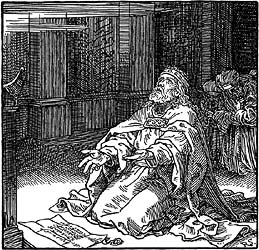
“And when you spread out your palms,
I avert my eyes from you.
Even if you pray at length
I am not listening.
Your hands are full of bloodshed! (Isaiah 1:15)
In other words, God does not listen to the prayers of murderers. In the next two verses, we learn about some other crimes that God finds revolting.
Wash, cleanse yourselves!
Take away your evil deeds from in front of my eyes.
Stop doing evil!
Learn to do good.
Seek just laws.
Bring good fortune to the oppressed.
Defend the fatherless child.
Argue the case of the widow. (Isaiah 1:16-17)
We can assume that God is not disgusted with the prayers or the small burnt offerings of the oppressed, the fatherless child, or the widow. The evildoers whom God despises are those who pervert justice and oppress the powerless. These selfish and powerful people have not considered (hitbonan) what God really wants from them. They believe they can satisfy God by going through the prescribed rituals, regardless of how they treat their fellow Judahites. They do not bother to think about right and wrong.
Isaiah informs them that no show of piety can compensate for unethical behavior. After declaring that Jerusalem has become a city of murderers, Isaiah elaborates on God’s condemnation:
Your rulers are rogues
And companions to thieves.
All of them loving bribes
And pursuing gifts.
They do not judge the case of the fatherless child
Nor argue for the widow; [her cause] never reaches them.
Therefore, thus says the lord God of Armies, the Mighty One of Israel:
“Oh! I will console myself over my enemies
And I will take vengeance on my foes.
I will turn my hand against you!” (Isaiah 1:23-25)
The Assyrian army is merely God’s tool for vengeance against God’s true enemies: all the unethical rulers and powerful men of Jerusalem, who refuse to repent and reform.
We have all observed powerful people paying lip service to religion, the rule of law, or the ideals of a nation—while taking bribes, oppressing the disadvantaged, and not caring whether anyone dies in the process.
The viewpoint of the powerful Jerusalemites in Isaiah’s time was easily updated by a 21st-century Yeshiva University professor, who wrote: “They could certainly claim that they had upheld ‘traditional, conservative values.’ They could have called Isaiah a ‘socialist’ or a ‘bleeding heart liberal.’”5
If God punishes societies whose leaders pervert justice and oppress the poor, as the biblical prophets claim, then the powerful people in Jerusalem must have reformed just enough by 701 B.C.E. to inspire God to stop the Assyrian siege before Jerusalem succumbed. A hundred years later, the prophet Jeremiah preached the same warning as Isaiah, but the Babylonian siege succeeded and Jerusalem was burned down in 586 B.C.E. According to the theology of the prophets, that meant the king of Judah and his cronies did not reform.
And what about the fate of the oppressed citizens of Jerusalem is when their city is destroyed? This is not a separate subject of concern in either Isaiah or Lamentations. Punishment of the guilty matters more than rescuing innocent individuals. Perhaps Isaiah hopes that if the powerful believe that God will arrange for enemies to seize and destroy their home county, they will stop and reconsider their actions.
Yet it strains belief. The theological stand that God arranges the destruction of countries whose leading citizens are unethical is not borne out by history—unless the timeline is stretched to allow many generations of unjust leaders before the disaster hits.
For example, Frederick Douglas quoted Isaiah 1:13-17 in his 1852 speech in Rochester, New York, urging an end to American slavery—a paradigm of oppression. Europeans had owned African slaves in what is now the United States of America since the 1500’s, and slavery was not abolished nationwide until the 13th amendment in 1865. Other forms of oppression and discrimination against Americans with African ancestry have continued into the 21st century. Yet all this time, the United States has not been conquered or destroyed.
However, sometimes when the powerful have not hitbonan, the punishment of the whole population is built in. For example, the destruction of many parts of the world through global climate change has already begun, and although some might call it an “act of God”, it is happening because people with political and economic power around the world have failed to consider the environment during the pursuit of profit over the past hundred years. And as in Isaiah’s time, the powerless suffer because the powerful are unethical.
Oh, how could it be?
- Over time, Jews added mourning the Roman destruction of the second temple in 70 C.E. and various other disasters to the day of Tisha Be-Av (usually transliterate Tisha B’Av), the 9th of the month of Av in the Hebrew calendar.
- Rashi (11th century rabbi Shlomoh Yitzchaki) on Isaiah 1:3, translation in www.sefaria.org.
- Isaiah 1:4.
- Isaiah 1:13-14.
- Yaakov Elman, in From Within the Tent (Mitokh Ha-Ohel): The Haftarot, Yeshiva University, 2011.

 Questioning Torah