Song of Songs & 2 Isaiah: Love Sacred and Profane

A single word can mean attraction, desire, passion, affection, or devotion.

In English, that word is “love”.  In Biblical Hebrew, it is ahavah (אַהֲבָה).
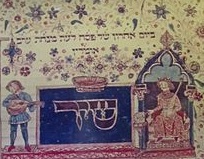
Song of Songs, Rothschild machzor, 15th century CE

The noun ahavah and its related verb, ahav (אָהַב), appear eighteen times in The Song of Songs/Shir Hashirim, the short biblical book that Jews traditionally read during the week of Passover/Pesach.  The first line in this series of interlocking poems sets the tone:

            Let him kiss me with kisses of his mouth …  (The Song of Songs 1:2)

Soon the female speaker cries:

            Revive me with raisin cakes,

            Refresh me with quinces,

            Because I am faint with ahavah!  (Song of Songs 2:5)

The book frequently expresses erotic attraction by using metaphors from nature.  The woman’s breasts are compared to twin gazelle fawns, date clusters, grape clusters, and towers.1  In another example, the man says:

            A locked garden is my sister, my bride;

            A locked well, a sealed spring.

            Your limbs are an orchard of pomegranates

            And choice fruit …  (Song of Songs 4:12-13)

And the woman responds:

            Let my beloved come into his garden,

            And let him eat its choice fruit.  (Songs of Songs 4:16)

What is a book like this doing in the bible?  God is never mentioned in The Song of Songs.  Yet subsequent commentators, including Rashi,2 have argued that the whole book is an allegory for the love between the Israelites and God.

There is a precedent for this analogy.  In the 8th century BCE, Hosea portrayed the northern kingdom of Israel as the unfaithful wife of God.3  After him, several other biblical prophets portrayed the southern kingdom of Judah as God’s unfaithful wife, and the covenant between God and the people as a marriage contract.4  So the idea of using a human marriage as an analogy for the relationship between a people and God was well-known by the third or second century BCE, when The Song of Songs was written.  But the poetry in this book focuses on sexual love, not on the covenant of marriage.

Nevertheless, Rabbi Akiva argued for the inclusion of The Song of Songs in the biblical canon, declaring, “All eternity is not as worthwhile as the day the Song of Songs was given to Israel, for all biblical books are holy, but the Song of Songs is the holy of holies.”5
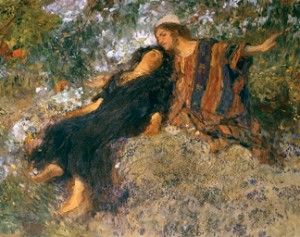
Song of Songs, artist unknown

Perhaps some human beings have loved God with an ahavah similar to the sensual yearning of the lovers in The Song of Songs.  Maimonides wrote: “What is the proper form of the love of God?  It is that one should love God with a great, overpowering, fierce love as if he were love-sick for a woman and dwells on this constantly … for the whole of Song [of Songs] is a parable on this theme.”6

But it is hard to imagine God loving human beings that way.  Although the Torah presents us with an anthropomorphic God who feels rage, jealousy, and compassion, the God of Israel is different from other ancient Near Eastern gods in that God does not partner with a goddess, and never engages in sex.

Then how does God love humans?  In the Hebrew Bible divine love is not individual, but collective.  God loves the people of Israel, or Judah, or Jerusalem.  God loves those who follow God’s rules.  The reader is encouraged to be like God and love concepts such as justice and compassion.

The love of God sometimes seems like immature favoritism to a modern reader.  Out of love, God destroys the rivals or enemies of the Israelites.7  When the Israelites are “unfaithful” and worship other gods, God lashes out in jealousy and destroys them, either by afflicting them with plagues or making their enemies victorious.  Neither the people nor God seem mature enough for marriage.

In other biblical passages, God’s love is more like a good parent’s devotion.

            For Israel was a boy and ohaveihu

            And from Egypt I called to my son …  (Hosea 11:1)

ohaveihu (אֺהֲבֵהוּ) = I loved him.

Similarly, the second book of Isaiah recalls a time when God was kind to the people of Judah, the southern kingdom of Israelites.

            And [God] said: “Surely they are my people,

            Children who do not betray.”

            And [God] became their rescuer.  (Isaiah 63:8)

            … In ahavah and compassion, [God] redeemed them,

            Plucked them up and carried them all the days of old.

            But they, they rebelled

            And pained [God’s] holy spirit.

            And [God] turned against them as an enemy;

            [God] made war against them.  (Isaiah 63:9-10)

Then the people of Judah yearn to come home again to an affectionate “father” who is devoted to their welfare. They recall that:

            “… You, God, are our father,

            Our redeemer of old …  (Isaiah 63:16)


Why do we read The Song of Songs during Passover?  The Passover seder retells the story of God taking the Israelite slaves out of Egypt.  We repeat God’s promise:

I will take you as my people, and I will be your God.  (Exodus 6:7)

This could mean taking the Israelites as a metaphorical wife; the bible sometimes uses the word “take” (lakach, לָקַה) to mean have intercourse with or marry.  But it could also mean God adopts the Israelite slaves and their fellow-travelers out of compassion, as if they are children who need special care.  Then God treats them with affection and devotion, the ahavah of a parent—at least until they reject God and worship other gods.

Is there anything in The Song of Songs to connect human sensual desire with God’s ahavah?  I found one hint.  Three times in The Song of Songs, the erotic poetry is interrupted by this verse:

            I make you swear, daughters of Jerusalem,

            By deer or by gazelles of the field:

            Do not rouse or lay bare ahavah until it pleases!  (The Song of Songs 2:7, 3:5, and 8:4)

The female speaker is warning her friends not to rush into consummating a sexual attraction; wait until the ahavah is ripe.  She does not say what a ripe love is.  A more overpowering attraction?  Or a fuller relationship with the beloved that includes tenderness, friendship, affection, and devotion, as well as carnal desire?  For human beings, physical ahavah and spiritual ahavah are often inseparable.

May each of us find ahavah in our lives, whether it is passionate desire or affectionate devotion.  And may each of us learn how to turn toward the world with an open heart and ahavah.


  1. The Song of Songs 4:5, 7:4, 7:8, 7:9, 8:10.
  2. 11th-century rabbi Shlomoh Yitzchaki.
  3. Hosea 2:18-22.
  4. See Jeremiah 2:2, Ezekiel 16:3-14, and Second Isaiah 54:4-10 and 62:5.
  5. Rabbi Akiva ben Yosef (50-135 CE), quoted in Mishnah Yadayim 3:5.
  6. Maimonides, a.k.a. Moses ben Maimon or Rambam (12th century CE), Mishnah Torah, I: The Book of Knowledge, 10:3, Laws Concerning Repentance.
  7. For example, see Malachi 1:2.
Pesach: Changing Four Sons

The wise one, the wicked one, the simple one, and the one who does not know how to ask.

These are the “Four Sons” in the haggadah (הַגָּדָה = The Telling), the guide to the Passover/Pesach seder.  Even haggadot that leave out many traditional sections still include the Four Sons (or in modern versions, Four Children) and label them that way.  If you go to a Pesach seder this Friday evening, you will encounter them.

pesach (פֶּסַח) =  the animal sacrifice for Passover, the festival of Passover.  Plural: pesachim (פְּסָחִים).

Neither the  four types of children, nor what we should tell them, come from the story of the exodus from Egypt in the Torah–even though telling that story is what Pesach is all about.

The Torah does prescribe what a father should say to a son on Pesach four times.  Three of these instructions are preceded by a hypothetical question from a child. But the answers in the Haggadah are different from the answers in the Torah.  By about 200 CE the Jewish community in Babylon had labeled the sons in the four passages and changed the answers to be given by their fathers.

“The Four Sons” Pesach tradition is first reported in the Mekhilta di Rabbi Yishmael.1  Who knows, maybe even Rabbi Yishmael ben Elisha was the one who invented this section in the second century CE, and it became popular after his students recorded it.  The passage begins:

Four Sons in French haggadah, 1880’s

There are four sons: a wise son, a wicked son, a simple son, and one who does not know how to ask.  (Mekhilta di Rabbi Yishmael, 13:14)2

A parental answer follows for each type of son.

Is it possible to combine the four explanations to children in the Torah with the Four Sons found in the Mekhilta and all traditional haggadot?  Here is my attempt.

The “Wise” One

The question of the first child comes from the book of Deuteronomy/Devarim:

If your son asks you in the future, saying: “What are the terms and the decrees and the regulations that God, our God, has commanded you?”  Then you shall say to your son: “We were slaves to Pharaoh in Egypt, and God brought us out from Egypt with a strong hand …  And then God commanded us to do all these decrees, to be in awe of God, our God, for our own good always, to keep us alive as on this day.”  (Deuteronomy 6:20-21, 6:24)

For about 1,800 years the haggadah has applied the child’s question to the rules of the Pesach seder:

Breaking off the afikoman

What does the wise son say?  “What are the testimonies and the statutes and the judgments that God, our God, commanded us?”  You, likewise, open to him with the Pesach rule: “Nothing should be eaten after the Pesach afikoman.”2

Later haggadot say the parent should tell the child all the rules of Pesach, including the one that nothing must be eaten after the afikoman.  Although in the Torah this child says “commanded you”, the Mekhilta rewrites his question as “commanded usin order to make the boy look better.

Answering the child’s question in the context of Deuteronomy 6:20-25 would be a bootless enterprise.  If you responded with every rule in the Torah and how it is applied, both you and the child would fall asleep long before you could finish the task.  You could limit your list to the rules of the Pesach seder, including the afikoman; but why not bring up each rule when you actually apply it during the evening?

I recommend saying: “We were slaves to Pharaoh in Egypt, and God brought us out from Egypt with a strong hand.  So if we are wise we obey God’s rules, in awe and gratitude, and for our own good.  Because here we are, alive today!”  (Deuteronomy 6:21-24)

The “Wicked” One

The question of the second child comes from the book of Exodus/Shemot:

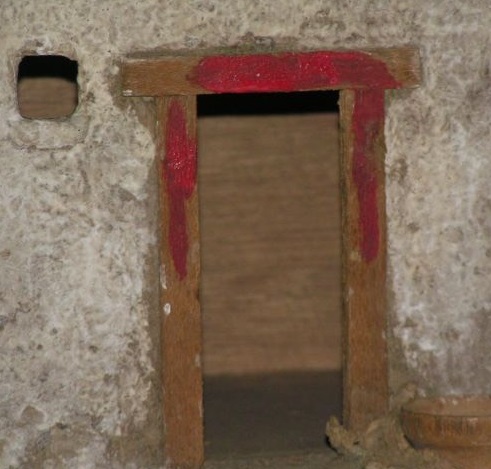
Take for yourselves an animal from the flock for your families and slaughter the pasach.  And you shall take a bunch of hyssop and dip it in the blood that is in the basin, and daub it on the lintel and the two doorposts …  And God will pass through to strike the Egyptians, and will see the blood on the lintel and the two doorposts, and God will pasach over the entrance …  And when your children say to you: “What is this service to you?”  Then you shall say: “It is a pasach slaughter for God, who pasach the houses of the Israelites in Egypt when [God] struck the Egyptians, but preserved our households.”  (Exodus/Shemot 12:21-23, 12:26-27)

pasach (פָּסַח) = (verb) limped, skipped; (noun) an alternate spelling of pesach (פֶּסַח).

In context, the children are asking about the service of daubing blood on the outside frame of the front door, to commemorate the action in the book of Exodus.  (Although pesach animals were slaughtered annually at the temple in Jerusalem until the second temple was destroyed in 70 CE, there is no evidence to date other than this passage in Exodus that the daubing of blood around doors was ever re-enacted.)

But the Mekhilta completely changes the meaning of the children’s question:

What does the wicked son say?  “What is this service to you?”—to you, and not to him.  Because he disassociated himself from the congregation and denied the foundation, you, likewise, blunt his teeth and tell him: “Because of this [that] God did for me when I went out of Egypt.”  For me and not for you.  Had you been there, you would not have been redeemed.

The father’s reply here sounds to me as if the questioner is not “the wicked son”, but “the son whose father hates him”.

The father makes the “wicked son” look bad by correctly quoting “What is this service to you?” and leaping to the conclusion that “to you” means the boy is disassociating himself from his parents and from other Jews.

This is a prejudiced assumption.  Perhaps the child is merely expressing curiosity about a particular Pesach service and its meaning to an adult.  The service in question is what the Israelites did in Egypt the night before they were freed: slaughtering a sheep or goat and daubing its blood on the lintel and doorposts of the front door.

I recommend answering: “Thanks to that service, God “skipped over the houses of the Israelites in Egypt when [God] struck the Egyptians, but preserved our houses.  (Exodus 12:27)   And that is why we call this week Passover; the Hebrew name, Pesach, means skipped over.”


The “Simple” One

The third child’s question appears in Exodus after the instructions to sacrifice every firstborn male animal in the herd and flock to God, in commemoration of the tenth and final plague in Egypt.  A firstborn donkey is redeemed with a sheep sacrificed in its place.  The firstborn son of each human mother is also dedicated to God.

Death of the Firstborn, haggadah by Judah Pinḥas, Germany, 1747

But every firstborn human among your sons you shall redeem.  And when your son asks you in the future, saying: “What is this?”  Then you shall say to him: “By strength of hand God brought us out from Egypt, from the house of slavery.  And when Pharaoh hardened against sending us out, then God killed every firstborn in the land of Egypt, from the firstborn of humans to the firstborn of livestock.  Therefore I am slaughtering for God every male womb-opener, but every firstborn of my sons I must redeem.”  (Exodus 13:14-15)

The Mekhilta takes the question out of context and shortens the answer:

What does the simple son say?  “What is this?”  And you shall tell him: “With a mighty hand did God take us out of Egypt from the house of bondage.”

The best answer depends on what the simple child cannot find the words to describe.  If “this” is the Pesach seder, it suffices to answer: “This is the way we tell the story of how God rescued us from slavery in Egypt.”

But what if the child has qualms about God’s tenth plague in Egypt, the death of the firstborn?  I recommend reassuring your child (or your inner child) by explaining: “That was a miracle in the story.  Moses told our ancestors to commemorate it by sacrificing the firstborn of each cow, sheep, or goat at the altar, but to redeem every firstborn son by giving something different to God instead.  (Exodus 13:15)  Today we give money in honor of the firstborn.”

The Speechless One

Exodus tells the father what to say to his son about the festival of matzah without including any prompting question.

Seven days you shall eat matzah, and on the seventh day will be a festival for God.  Matzah shall be eaten for seven days, and nothing leavened shall be seen with you, and no sourdough shall be seen with you, throughout all your territory.  And you shall tell your son on that day, saying: “For the sake of what God did for me in taking me out from Egypt.”  (Exodus 13:6-8)

Modern biblical scholars suspect that there was already a festival of matzah in the spring, before the first grain harvest, and the Torah absorbed the pre-existing festival into the Pesach observance.4

Nevertheless, the Torah instructs us to explain the presence of matzah and the absence of leavened food during the week of Pesach in terms of the exodus.  And you shall tell your son on that day, saying: “For the sake of what God did for me in taking me out from Egypt.”  So does the Mekhilta:

And he who does not know how to ask, you open for him, as it is written: “And you shall tell your son on that day, etc.”

Like the answers for the “wicked” child and the “simple” child, the invented “son who does not know how to ask” gets an answer that ignores the point of the corresponding passage in the Torah—in this case instructions for the festival of matzah.

I recommend telling the speechless child: “For seven days we eat matzah, and avoid any baked goods with leavening.  Why do we do this?  For the sake of what God did for me in taking me out from Egypt.  (Exodus 13:6-8)  That’s what it says in the Torah, but what do you think it means?”  In this way you may encourage your child to ask questions and generate possible answers.

*

Pesach is when we must tell the story of the exodus from Egypt in a way that engages our children and the “children” inside us.  In order to do that, we can combine the traditions with our own creativity.  The Babylonian Talmud tractate Pesachim gives examples of spur-of-the moment alternatives to traditional sections.5  But if you would like to plan some alternatives in advance, you are welcome to use this blog post as a starting point.

  1. The Mekhilta di Rabbi Yishmael collection of commentary on the books of Exodus through Deuteronomy written during the first through fourth centuries CE and by Rabbi Yishmael ben Elisha, his students, and subsequent commentators and redactors. The rules and customs of Passover in the Mekhilta were probably written in the early third century CE, about the same time as Rabbi Yehudah Ha Nasi collected the mishnah of the Talmud.  The fours sons in the Mekhilta are alluded to in the Jerusalem Talmud, but not in the Babylonian Talmud.
  2. This quote and all subsequent quotes from the Mekhilta use the translation in sefaria.org/Mekhilta_d’Rabbi_Yishmael. They are all from 13:14.
  3. The afikomen is the final course or dessert of the Passover meal, consisting of half a piece of matzah separated and hidden early in the ritual.
  4. The only reason given in Exodus for observing the festival of matzah during Pesach is the sentence: “And they baked the dough that they had taken out of Egypt, flat rounds of matzah, because it had not leavened, because they were driven out from Egypt and they could not delay. They did not even make provisions for themselves.”  (Exodus 12:39)  But the Israelites have two week’s notice, and their only leaven is sourdough starter, which never runs out as long as a little is saved from each batch of bread.
  5. For example, Babylonian Talmud, Pesachim 115b: “Abaye was sitting before Rabba when he was still a child. He saw that they were removing the table before him, and he said to those removing it: “We have not yet eaten, and you are taking the table away from us?”  Rabba said to him: “You have exempted us from reciting the questions of ‘Why is this night different’, as you have already asked what is special about the seder night.”  (Translation from www.sefaria.or/Pesachim 115b.)

Metzora & Habakkuk: Torn Houses

Metzora

When a priest diagnoses the skin disease tzara-at in a human being, that person is isolated from family, community, and God’s sanctuary, and must live outside the camp or town.  (See last week’s post, Tazria & Psalms 38 & 88: Isolation of the Sick.)  Tzara-at is also the name of a green or red mark that appears and grows in fabric or leather, requiring the article to be burned.

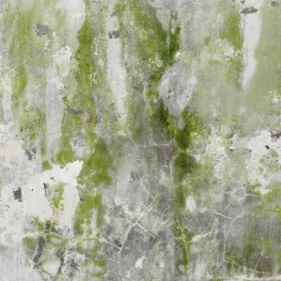
This week’s Torah portion, Metzora (“someone with tzara-at”) applies the name tzara-at to an infection (probably mold) in the walls of a house.   But how do you remove a house from society, or from normal use?

When the owner of the house sees something that looks like a mark of tzara-at, he must inform a priest.

Green mold in a wall

And he will see the mark, and hey! [if] the mark is sunken into the walls of the bayit, thin-greens or blood-reds, and appears deep in the wall, the priest shall go out from the bayit to the entrance of the bayit, and he shall close up the bayit for seven days.  (Leviticus/Vayikra  14:37-38)

bayit (בַּיִת) = house, building; household (consisting of family and servants living together).

Seven days is also how long a priest must quarantine a human tentatively diagnosed with tzara-at before a re-examination.

The priest shall return on the seventh day, and he shall look, and hey! [if] the mark in the walls of the bayit has spread, then the priest shall give an order, and they shall take out the stones that are in the marked part, and throw them away outside the town in a ritually impure place.   (Leviticus 14:39-40)

Members of the household must also scrape off and throw away the clay or whitewash1 coating the stones inside the house.  Then they can rebuild that section of the wall with new stones and a new coating.

But if the mark returns and spreads in the bayit after taking out the stones and after hiketzot the house and after re-coating, then the priest shall come and look, and hey!  [if] the mark has spread in the bayit, it is tzara-at from a hurt in the bayit; it is ritually impure.  And he shall demolish the bayit …  (Leviticus 14:43-45)

hiketzot (הִקְצוֹת) = scraping?  tearing apart?  (Probably a defective hifil form of the verb katz, קוץ = tore apart.)

In an earlier post, Metzora: A Diseased Family, I suggested that since the word bayit means a household as well as a house, tzara-at of a house might represent a serious malfunction in the household that lives there.  Then if replacing an obviously diseased part of the family’s life does not solve the problem, the household should be disbanded.

Habakkuk

Bayit can also mean the household of a king.  The prophetic poetry of Habakkuk may include a reference to the tzara-at of an imperial household.

The book of Habakkuk is set in the late 7th century BCE., after the Neo-Babylonian Empire had conquered much of the Ancient Near East, including the northern kingdom of Israel, and made Judah a vassal state.  It was written shortly before the Babylonian army marched on Jerusalem in 598 BCE. Part of Habakkuk’s prophecy addresses the king of Babylon:

           Since you gutted many nations

            All the remaining peoples shall gut you

            for the bloodshed of humans and the violence to the land,

            The city and all who dwell in it.  (Habakkuk 2:8)

Rashi2 wrote that “the violence of the land” means the violence done to the land of Israel, and that the city in the next line is Jerusalem.  Habakkuk did live in Judah, so this interpretation fits the prophet’s frame of reference.

          Hoy!3  Who is cutting off a cut-off slice,4

           [Bringing] evil to his own bayit

           To set his nest on high?  (Habakkuk 2:9)

The king in Babylon (probably Nabopolassar, regnant 658-605 BCE) is not bringing evil to the stones of the palace building.  He is corrupting his household, including his son, general, and successor, Nebuchadnezzar II (regnant 605-562 BCE).

           Your plan has shamed your own bayit,

           Ketzot many peoples,

           And your soul was guilty.  (Habakkuk 2:10)

ketzot (קְצוֹת) = feeling disgust; tearing apart.  (A form of the verb katz, probably related to hiketzot in Leviticus 14:43 above.)

Rashi wrote that the shameful thing the ruler of Babylon plotted was to “strip and peel” many peoples, as in the treatment of walls in Leviticus 14:43.

           For a stone from a wall will cry an alarm,

           And a wooden rafter will answer:

           Hoy!  Who builds a town through bloodshed

           And founds a city through injustice?  (Habakkuk 2:11-12)

Images in poetry often refer to several things at once.  Here the parts of a house cry out when the house is being torn apart, like the house in this week’s Torah portion in which the disease of tzara-at reappeared.

But the countries that the Babylonians have been tearing apart are also crying out.  And if the injustice perpetrated by the king of Babylon’s household is the evil brought home to roost in Habakkuk 2:9, as well as the shame and guilt in verse 2:10, then the stone and the rafter respond as if they are the soul and conscience of the royal family crying out in alarm.

In Habakkuk, God promises that eventually the rulers from Babylon will be overturned.

           You shall be sated with dishonor rather than glory …

           The cup in the right hand of God will come around to you,

            And disgrace instead of your glory.  (Habakkuk 2:16)

The royal line of kings from Nabolpolasser to Nebuchadnezzar and four kings after him ended in 539 BCE, when Cyrus I expanded his Persian Empire by conquering Babylon.  Elsewhere the Hebrew Bible claims that God sent Cyrus to rescue the Jews from Babylonian rule.5  Cyrus ruled his empire with a lighter hand, giving a measure of autonomy to local regions and letting deportees such as the Jews in Babylon return home and rebuild their temples.

*

Ancient Israelites and classic Torah commentators believed that some diseases are a divine punishment for bad behavior.  Today some people still see physical disease as an expression of a psychological issue, though as medical science advances fewer and fewer diseases are classified as psychosomatic.  Neither white patches of skin nor mold in the walls is caused by negative thoughts.

But poetry can use the imagery of unnatural patches of skin, and creeping mold in walls, to convey truths about the psyche.  Habakkuk transmits God’s message that rulers bent on conquest regardless of the price in terms of the destruction of human lives or the devastation of the land may build their “nest in the heights”, but the evil they do will infect their own household—their own ruling family and its confederates—with a disease of the soul.

Habakkuk adds that eventually God will bring down the Babylonian empire.  I would add that those who rule without regard for justice, the suffering of human beings, or the plight of the earth cannot experience real happiness or meaning in life.  As we rant against such a ruler and his collaborators our own time, may we also feel pity for those with diseased souls.

  1. The bible uses the word eifer (אֵפֶר) for the material coating the stones. Usually eifer means dust, ashes, or fine dirt. As a wall coating, it might be clay refined from dirt, or whitewash made with lime from ashes of animal bones.
  2. Rashi is the acronym for 11th-century rabbi ShlomohYitzchaki.
  3. The biblical Hebrew interjection Hoy (הוֹי) means the same as the Yiddish interjection Oy: a combination of “Oh!”, “Woe!”, “Oh no!”, and a deep sigh.
  4. “Cutting off a slice” is a biblical idiom for enriching oneself by cheating.
  5. Jeremiah 29:10, Ezra 1:1, Isaiah 45:1-3.

Tazria & Psalms 38 & 88: Isolation of the Sick

Tazria

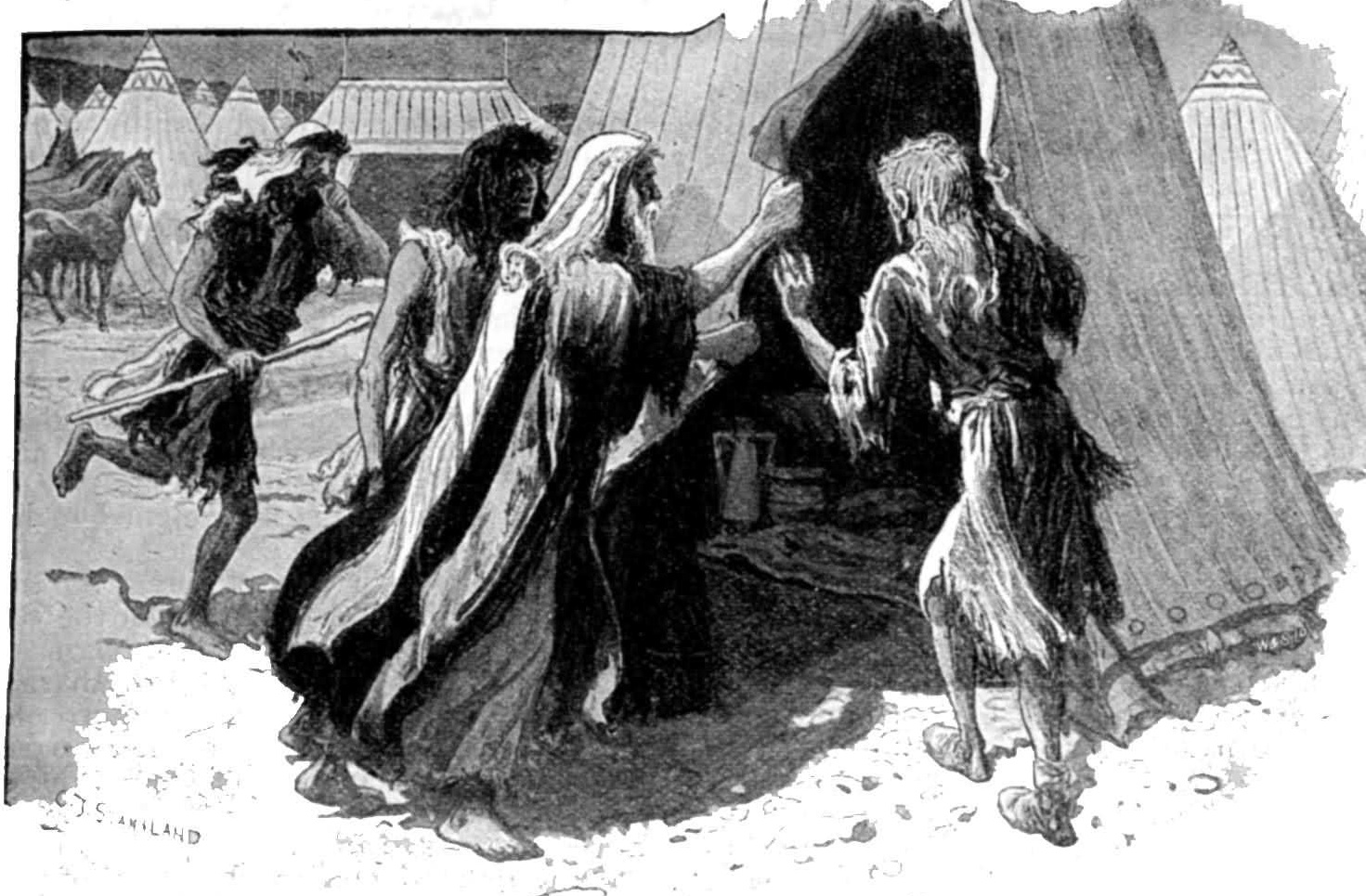
Four men with tzara-at plunder an empty tent in 2 Kings 7:8

Instructions for diagnosing the biblical skin disease of tzara-at (צָרַעַת) fill most of this week’s Torah portion, Tazria (“She makes seed”).  The end of the portion finally says what happens to people who have tzara-at.

And the person marked with tzara-at, his clothes shall be torn and his head [of hair] shall be disheveled, and he shall cover his lips, and he shall call out: “Tamei!”  All the days that the mark is on him he shall be continually tamei.  Alone he shall dwell; outside the camp is his dwelling-place.  (Leviticus/Vayikra 13:45-46)

tamei (טָמֵא) = contaminated, ritually impure, unfit for worshiping God.

Jewish mourners still tear clothing

Torn clothes, wild hair, and covered lips are all signs of mourning in the Hebrew Bible.1  People afflicted with tzara-at are not dead.  But like those who mourn a family member’s death, they mourn their separation from those they love. They can no longer live together, or even come within touching distance.  Calling out “Tamei” keeps people away, since the condition of being tamei (though not the skin disease itself) is contagious.  Being tamei also prevents people with tzara-at from approaching God in the sanctuary courtyard.

Once a priest diagnoses tzara-at, the person with the disease is isolated from the camp, the community, and the service of God.  The isolation may not be permanent; next week’s Torah portion, Metzora, includes the rituals for removing the tamei status of those who have recovered from tza-arat and reintegrating them back into the community.  Later in the bible are examples of two people healed by divine intervention,2 four men who do not expect they will ever recover,3 and a king who has tzara-at until he dies.4

The Psalms never mention tzara-at, but two psalms consider the anguish of someone with a serious disease—not because of pain, but because of isolation.

Psalm 38

The bible generally assumes that disease is a punishment God inflicts when one has done the wrong thing.  The speaker in Psalm 38 declares:

          There is no sound spot in my flesh thanks to your curse,

                        There is no peace in my bones thanks to my error.

            For my crimes pass through my head

                        Like a heavy burden, too heavy for me.         

            My wounds are making a stench

                        Through my own folly.  (Psalm 38:4-6)

After complaining about a twisted body, burning guts, numbness, a violent heartbeat, and weakness, the speaker brings up another problem:

           My loving ones and my friends stand apart from my affliction;

                       Those who are close to me stand meirachok.  (Psalm 38:12)

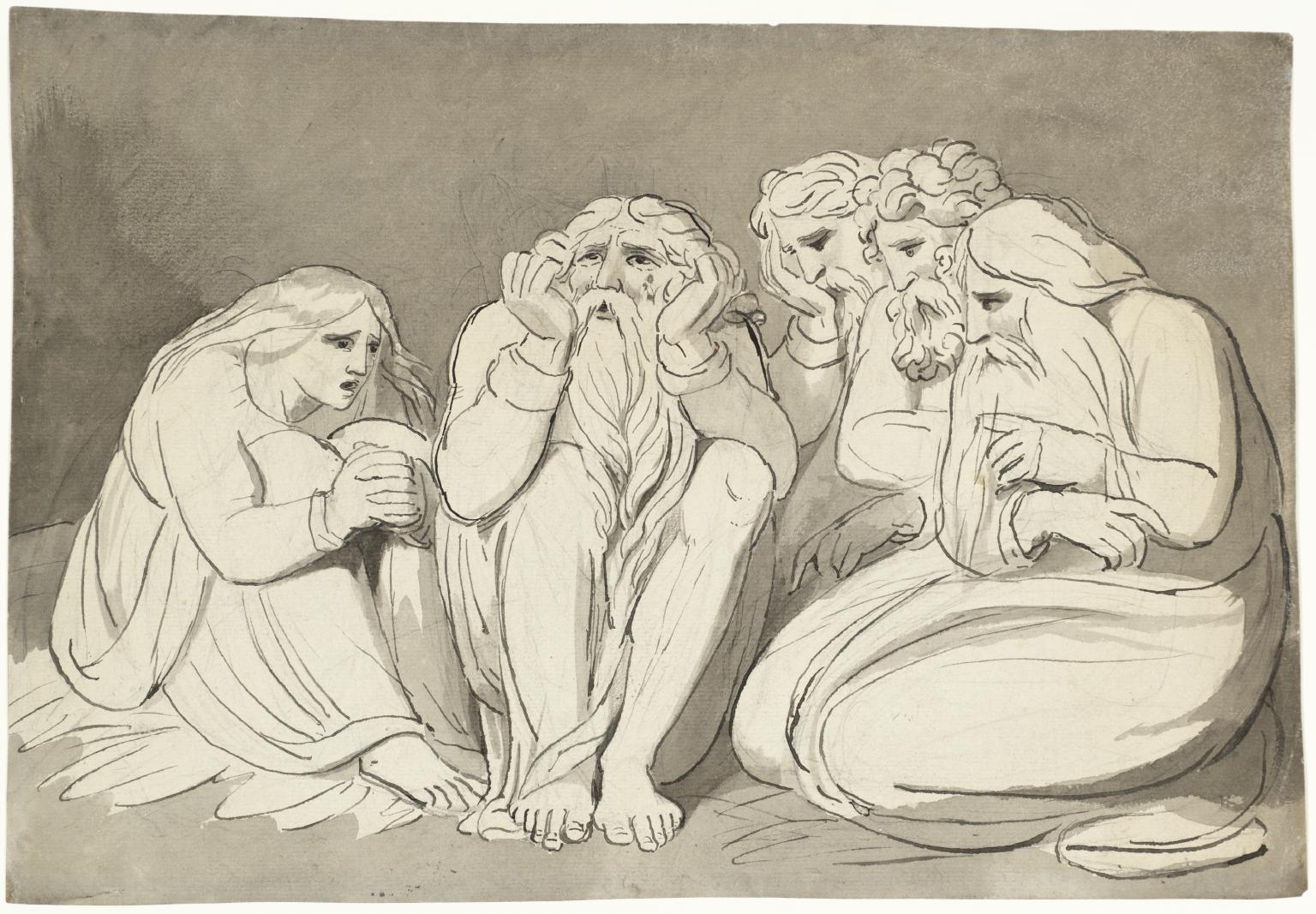
Job, his Wife and his Friends. by William Blake, ca. 1785

meirachok (מֵרָחֺק) = at a distance, from away, staying far away.  (A form of the verb rachak, רָחַק = was distant, drifted away from, kept far away.)

In the book of Job, the afflicted person’s “comforters” cluster around to tell him his sickness is his own fault, since God only sends disease to those who have sinned.  In Psalm 38, the speaker believes the sickness is a well-deserved punishment, but the speaker’s friends stay away.

Meanwhile, the speaker’s enemies plot to take advantage of his illness, and the speaker is unable to hear or rebuke them.  The only one left to listen to an appeal is God.

           Because for you, God, I have hoped.

                        You will answer me, my master, my God.

            Because I thought: “Lest they rejoice over me

                        When my foot staggers, magnify themselves over me!”

            For I am certainly stumbling,

                        And my anguish is in front of me always.  (Psalm 38:16-17)

The psalm ends:

           Do not give up on me, God!

                        My God, do not tirechak from me!

            Hasten to my aid,

                        My master, my rescuer.  (Psalm 38:22-23)

tirechak (תִּרְחַק) = you stay distant, you keep away.  (Another form of the verb rachak.)

The speaker is isolated from friends and family, who therefore cannot provide comfort; isolated from enemies, who scheme outside the speaker’s hearing range; and isolated from God, who does not seem to be present.

Psalm 88

Psalm 88 opens with a sick person’s plea to God.    

            May my prayer come before you,

                        Stretch out your ears to my cry!

            Because my living body is sated with bad things;

                        And my life has reached the brink of death.

            I am counted among those who go into the pit.

                        I have become a strongman without strength.  (Psalm 88:3-5)

This speaker blames God—who made him sick—for isolation from friends.

           Hirechakta from me those who know me;

                       You make me abhorrent to them;

                        Imprisoned, I cannot go out.  (Psalm 88:9)

hirechakta (הִרְחַקְתָּ) = you removed to a distance, you kept (something) far away.  (Another form of the verb rachak.)

Then the sick person offers God a motivation for healing, pointing out that only the living can praise God.

           Do you do wonders for the dead?

                        Do ghosts rise and praise you?  (Psalm 88:10)

Yet the speaker remains isolated from God as well.

           Why, God, do you reject me,

                        Do you hide your face from me?  (Psalm 88:15)

The psalm ends with the pain of isolation.

          Hirechakta my loving ones and my friends from me,

                        Those who know me—[into] darkness.  (Psalm 88:19)

The worst thing about death is that it cuts off any possibility of communication, with humans or with God.5

*

Some people today have visible diseases, irregularities, or deformities, like the people with tzara-at in the bible.  Although we no longer have a law isolating them, it is human nature to stare—or to carefully avoid looking at them.  Meeting their eyes, smiling, and starting a normal conversation is harder, especially when the defect is on the face.  Doing so anyway is the only ethical approach; yet because humans are weak and easily spooked, these people still suffer isolation.

Others today have invisible diseases; I am one.  Reading Psalms 38 and 88 brings tears to my eyes.  I can pass for healthy, and engage in society and communal worship like a healthy person (except that I cannot make a living because I’d need too many sick days, and I have to pace my activities to prevent exhaustion).  I am grateful that I am not isolated from human company, and I have dear family and friends.

But with my whole heart I can speak or chant those words begging God: “Do not give up on me!  Hasten to my aid!  Why do you hide your face from me?”

I do not believe God afflicts us with physical problems as a punishment for disobedience or wrongdoing.  Sometimes, in our misery, we expand our own set of physical problems with unwise behaviors.  On the other hand, we may benefit from new scientific knowledge that repairs some of the things that go wrong in our bodies.

Nevertheless, I know that often bad things happen to good people, and good things happen to bad people.  There is no divine justice for individuals.                        

Then why do we beg God to heal us?  Why do we fix our hope on God?                                

Who else is there?      

  1. Mourners customarily tear their clothes in Leviticus 10:6-7 and 21:10-11, leave their hair loose and disheveled in in Leviticus 10:6-7 and 21:10-11 and Ezekiel 24:17, and cover their lips in Ezekiel 24:17.
  2. The bible only records healing from tzara-at when there is divine intervention. In Numbers 12:10-15 God afflicts Miriam with tzara-at and then heals her.  In 2 Kings 5:1-11, the prophet and miracle-worker Elisha heals General Na-aman of tzara-at.
  3. 2 Kings 7:3-16. The four men with tzara-at must stay outside the city walls even when the enemy is approaching to attack the city.
  4. 2 Kings 15:5. King Azaryah lives in an isolated house while his son Yotam does the king’s business in the palace and on the battlefield.
  5. Walter Brueggemann points out in The Message of the Psalms, Augburg Publishing, Minneapolis, 1984, p. 79: “This is the voice of a dying one crying out to the only source of life. ‘The Pit’ [see Psalm 88:5] is not final judgment or a fiery place of punishment. It is only beyond the range of communion. For this speaker, communion with God is clearly everything.” I would amend this statement to say communion, with both human beings and God, is everything.

(P.S. I am transferring my domain name today.  Future posts will be e-mailed to everyone following my blog, as before.  Thank you, subscribers!)