Before Moses dies, he teaches the Israelites a long song. The words are recorded in this week’s Torah portion: Ha-azinu (“Use your Ears”).
The two main messages in the song are that God is all-powerful, and that God wreaks vengeance on the Israelites when they worship other gods. This is not news; the God-character portrayed in the Torah has no concept of modern educational methods.
Yet within the song are some gems of inspiration. One of them employs the relatively rare word tohu.
 [God] found it/him in a land of wilderness
And in the tohu of a howling desolation;
[God] surrounded it/him and gave it/him understanding,
[God] protected it/him like the pupil of [God’s] eye. (Deuteronomy/Devarim 32:10)
tohu (תֹהוּ) = chaos, nothingness, formlessness, unreality.
Hebrew prefixes and suffixes indicating the third person singular can be translated as either “it” or “him”. So what or who did God find in the wilderness of chaotic, howling desolation?
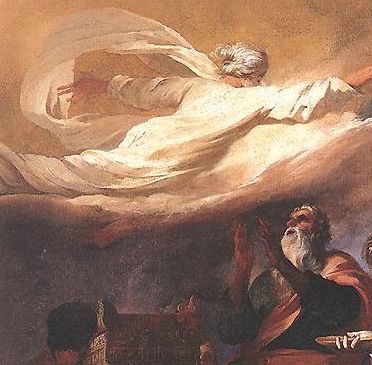 One third-century commentary says God found, or encountered, Abraham there.1 But the book of Genesis/Bereishit states that God called to Abraham when he was living in Charan and told him to go to Canaan.2 Charan was a civilized town, not a howling wilderness.
Most commentaries take their cue from the preceding line of the song, Because God’s portion is [God’s] people, Jacob … (Deuteronomy 32:9) and assume that “it” is the people named after their ancestor “Jacob” or “Israel”. (The Torah often refers to a people, an ethnic or political group, in the singular.)
Yet in the book of Exodus/Shemot, God does not find Israel in the wilderness. God notices the Israelite slaves in Egypt when God hears their cries of distress. Then God leads them out of Egyptian civilization and into the wilderness.
Modern scholars who take the verse about tohu literally explain these discrepancies by attributing the poem in Deuteronomy and the stories in Genesis and Exodus to different myths explaining the origin of the Israelite people.
But why get stuck on a literal reading? The Torah often uses metaphor and analogy, especially in its poetry. I think the word tohu in this verse points toward a more profound meaning.
This is only the second occurrence of the word tohu in the Torah. The first use of tohu is in the sentence just before God says “Let there be light”:
And the earth was tohu and vohu, and darkness over the face of the deep, and the wind/spirit of God hovering over the face of the deep. (Genesis/Bereishit 1:2)
vohu (בֹהוּ) = a poetic extension of tohu, translated as “unformed”, “void”, “empty”. (The word vohu appears only three times in the Hebrew bible, always paired with tohu; here, in Isaiah 34:11, and in Jeremiah 4:24.)
I think the meaning that best fits all 19 appearances of the tohu in the Hebrew Bible is “unreal” or “unreality”.
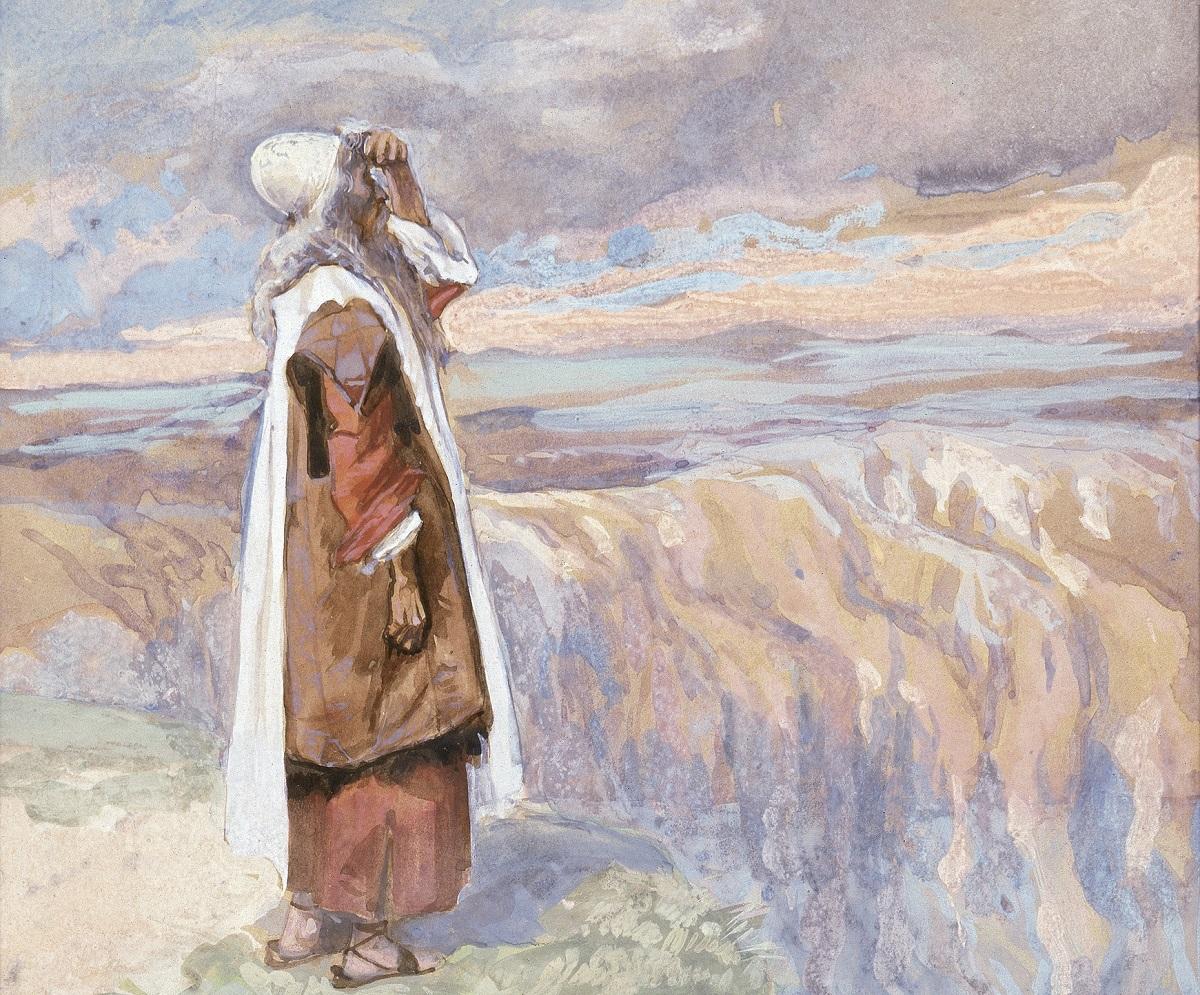
Translating tohu as “unreality” in this week’s Torah portion is awkward if you take our verse literally. But if “wilderness”, tohu, and “howling desolation” all describe a psychological state, tohu as “unreality” makes sense. When you feel desperate and desolate, as if there is no hope and you are utterly alone, you experience an inner howling, and your mind no longer anchors itself in familiar habits and beliefs. You wander in a mental wilderness, and your former world-view seems unreal.
What if someone in a mental state of unreality and howling desolation encounters God? What if God then encircles them, gives them understanding, and protects them until they pull themselves together and reorganize their lives to fit their new outlook? During this process, God protects the person’s soul as if it were the pupil of an eye, which can perceive reality and apply insights only if it is both uncovered and unharmed.
Atheists today might object that God itself is unreal, so believing that God is finding and protecting you is an indulgence in unreality. I don’t blame them. I am an atheist myself, if you define God as either the anthropomorphic jealous king who lives in the sky, or as the omni-being of medieval theologians. But many people, including me, use the word “God” for something else, something we have no better word for in English. Something that defies a clear definition, a mystery that we experience or intuit.
Connecting with this holy mystery is a real experience, one in which the phrases “God finds you” and “you find God” mean the same thing. I have found that if it happens when my life is falling apart, the connection really does protect me, stabilize me, and give me understanding.
These days, when my emotions begin to overwhelm me, I don’t wait for God to find me. I take preemptive action by singing prayers, singing until the tightness in my throat relaxes. Then my mind becomes calmer and clearer, and understanding becomes possible.
So here is my version of the verse from Ha-azinu, with different pronouns. Maybe this interpretation will ring true for you.
I found God in a land of wilderness
And in the unreality of a howling desolation;
God surrounded me and understanding came;
God protected me like the pupil of an eye, and I saw.
—
- Sifrei Devarim 313:1.
- Genesis 12:1-5.

 Questioning Torah